Free Printable Equivalent Expressions Worksheets for Year 6
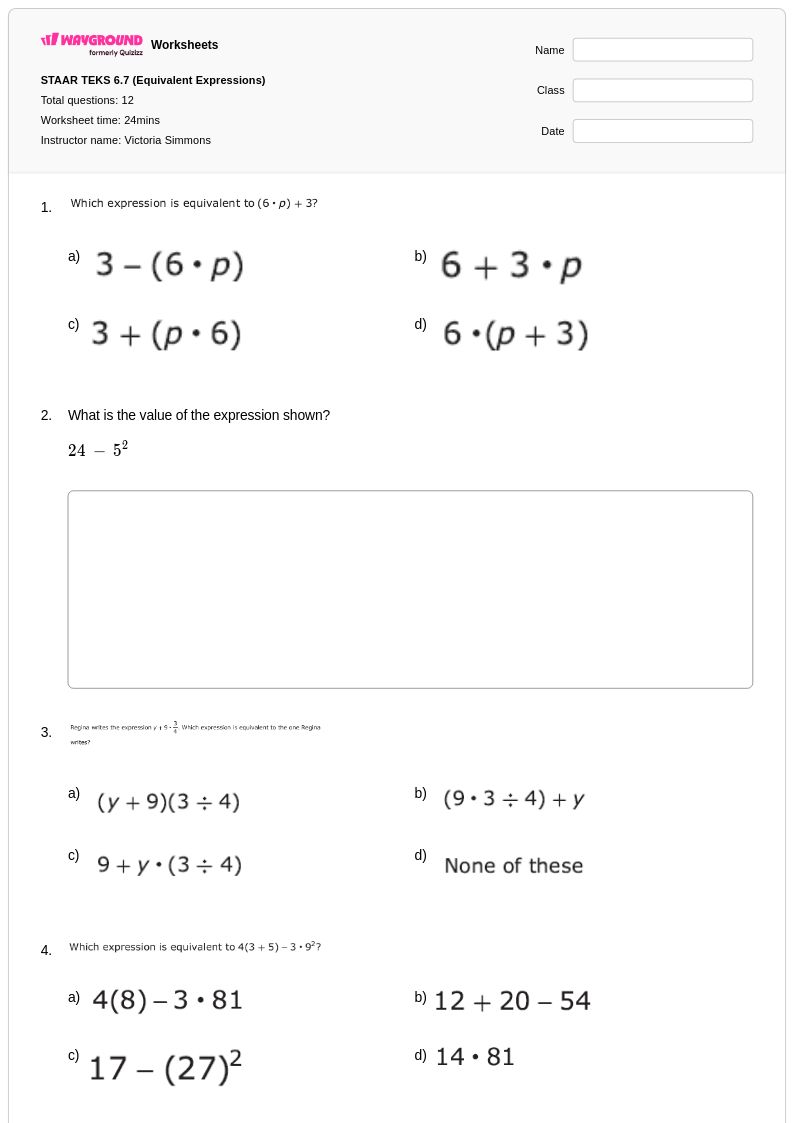
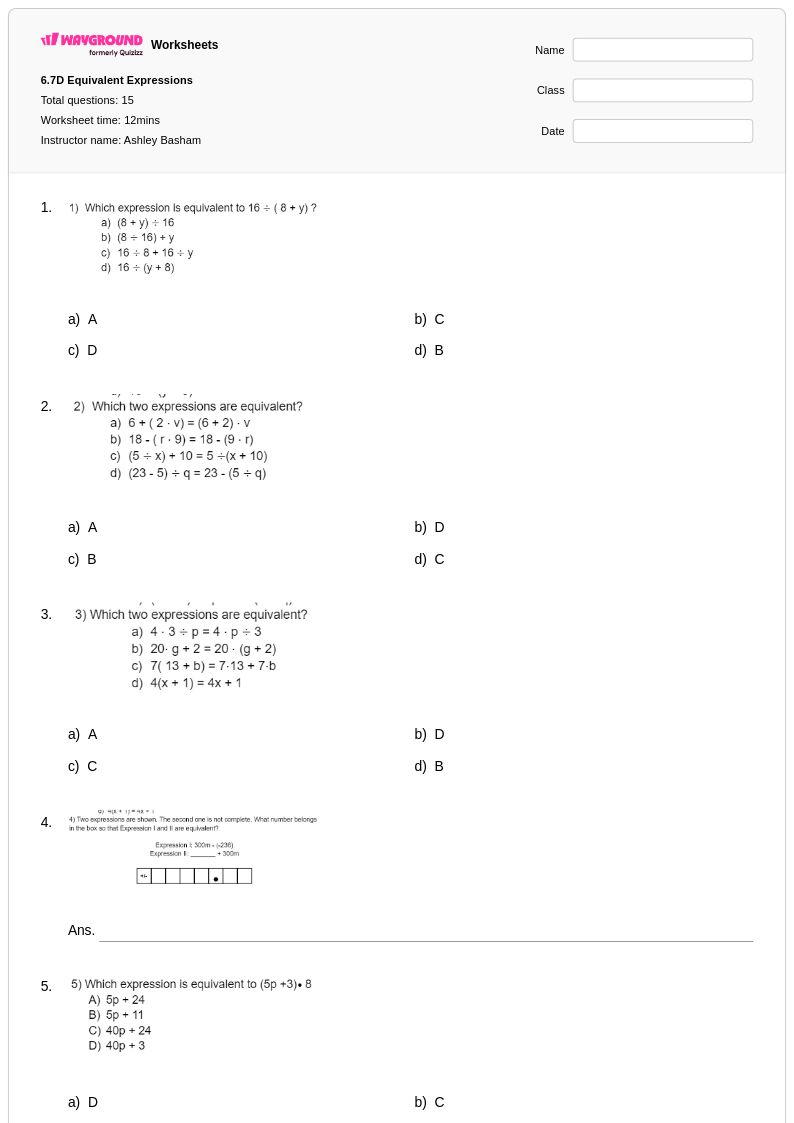
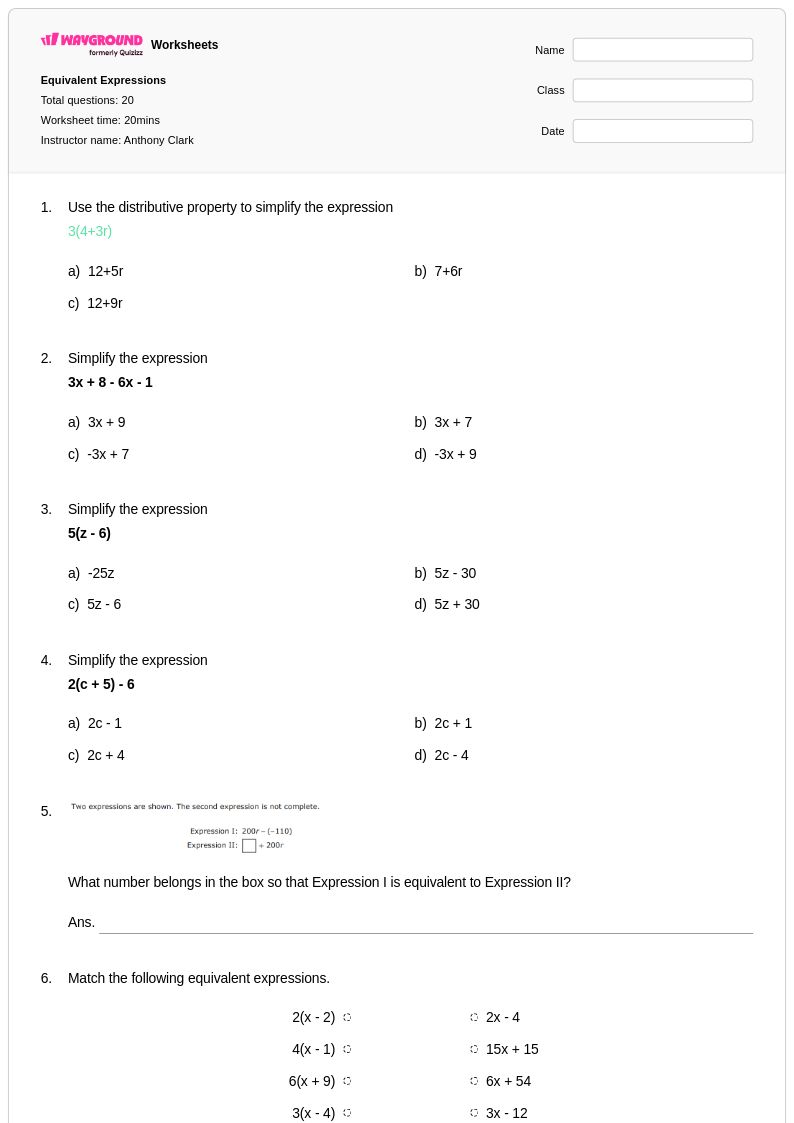
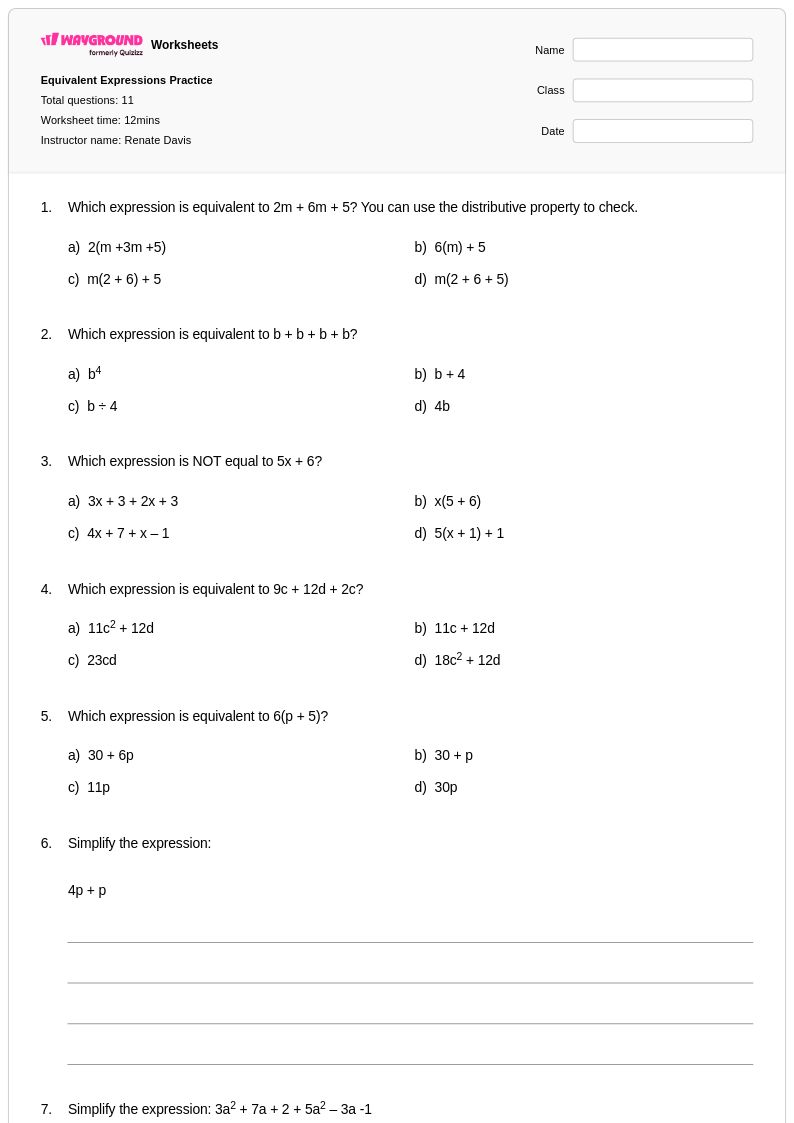
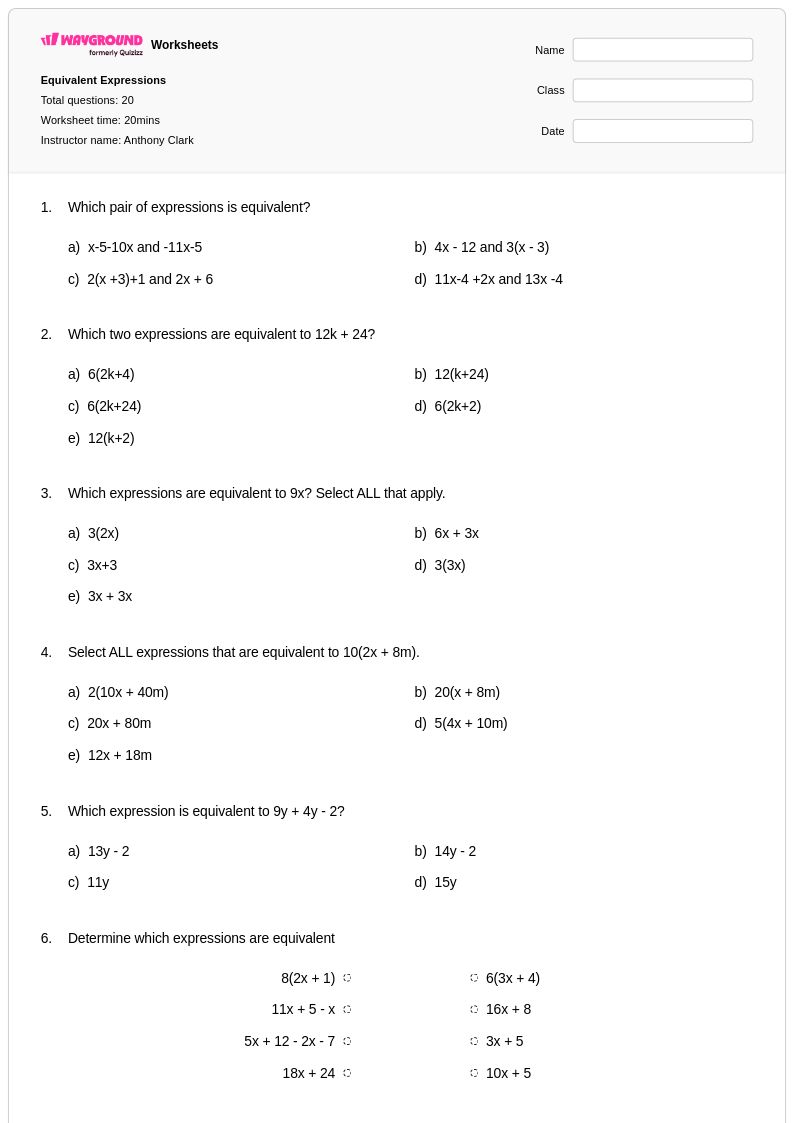
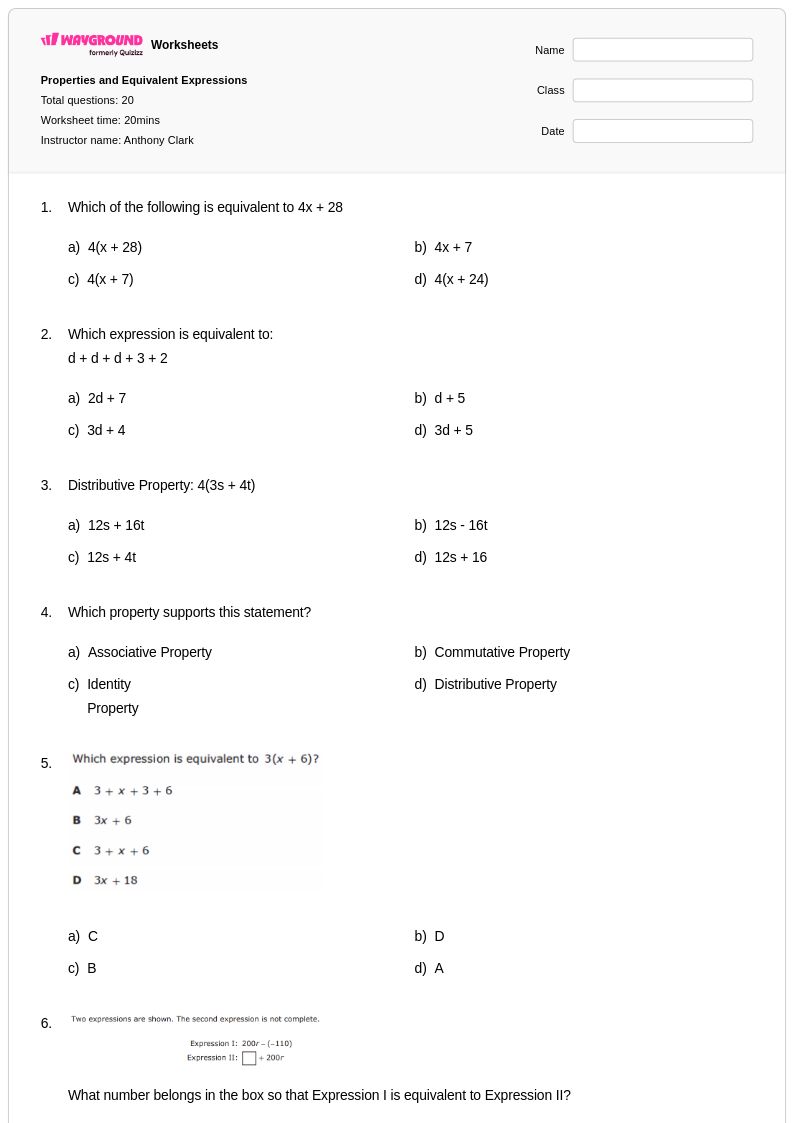
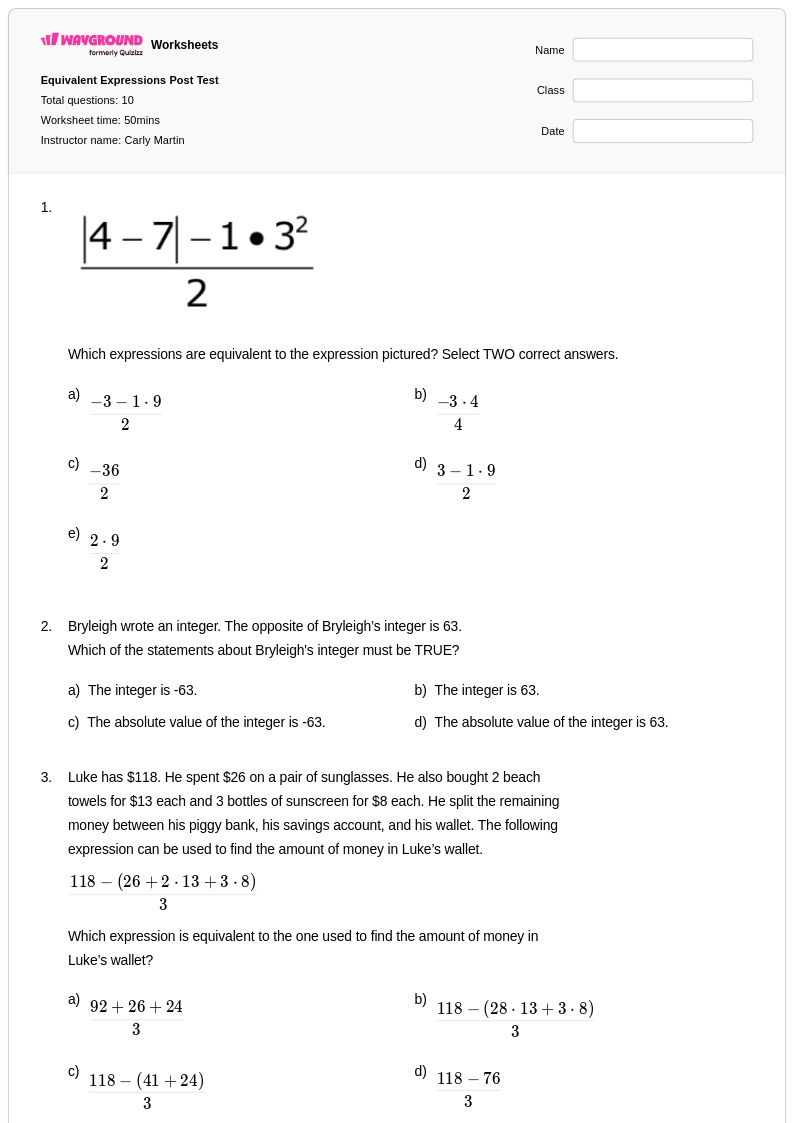
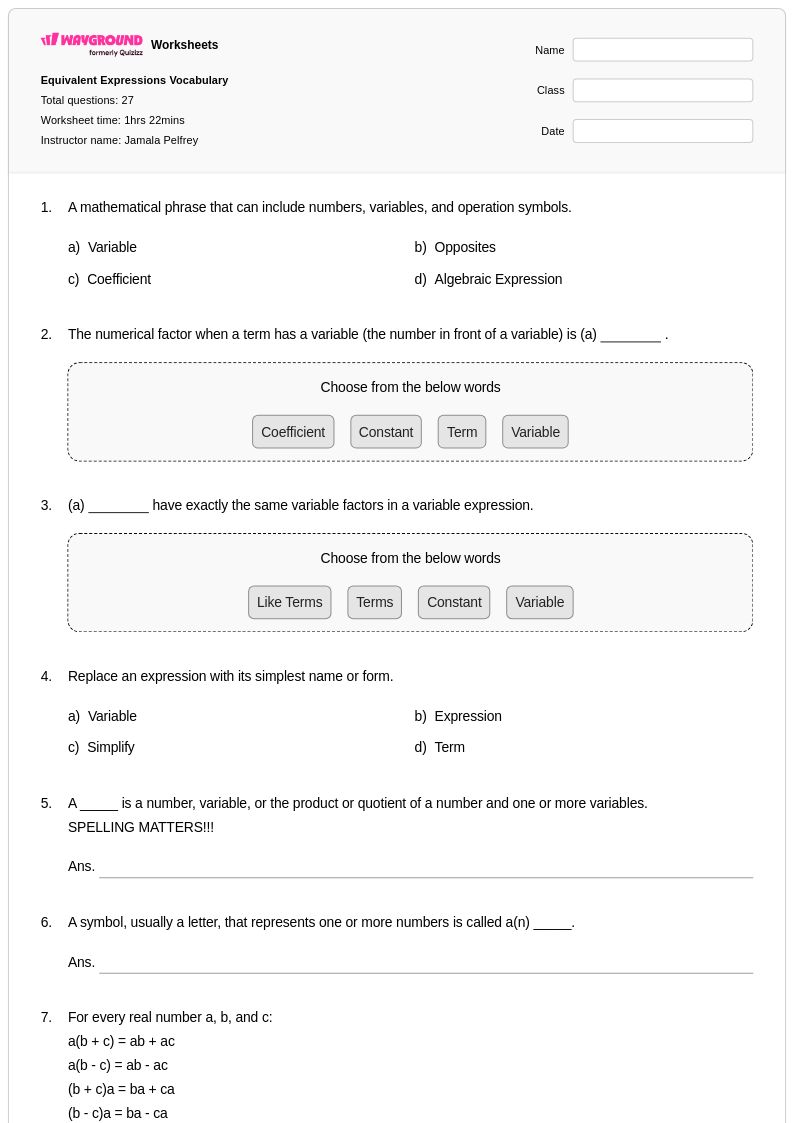
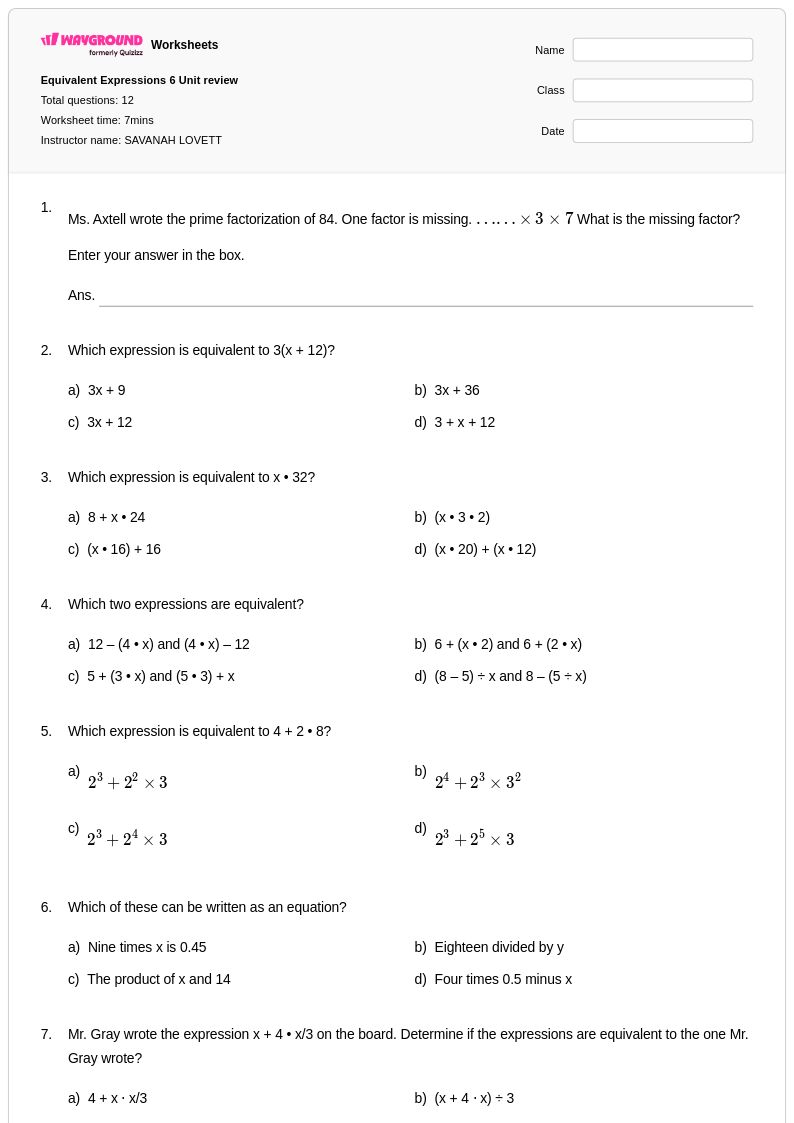
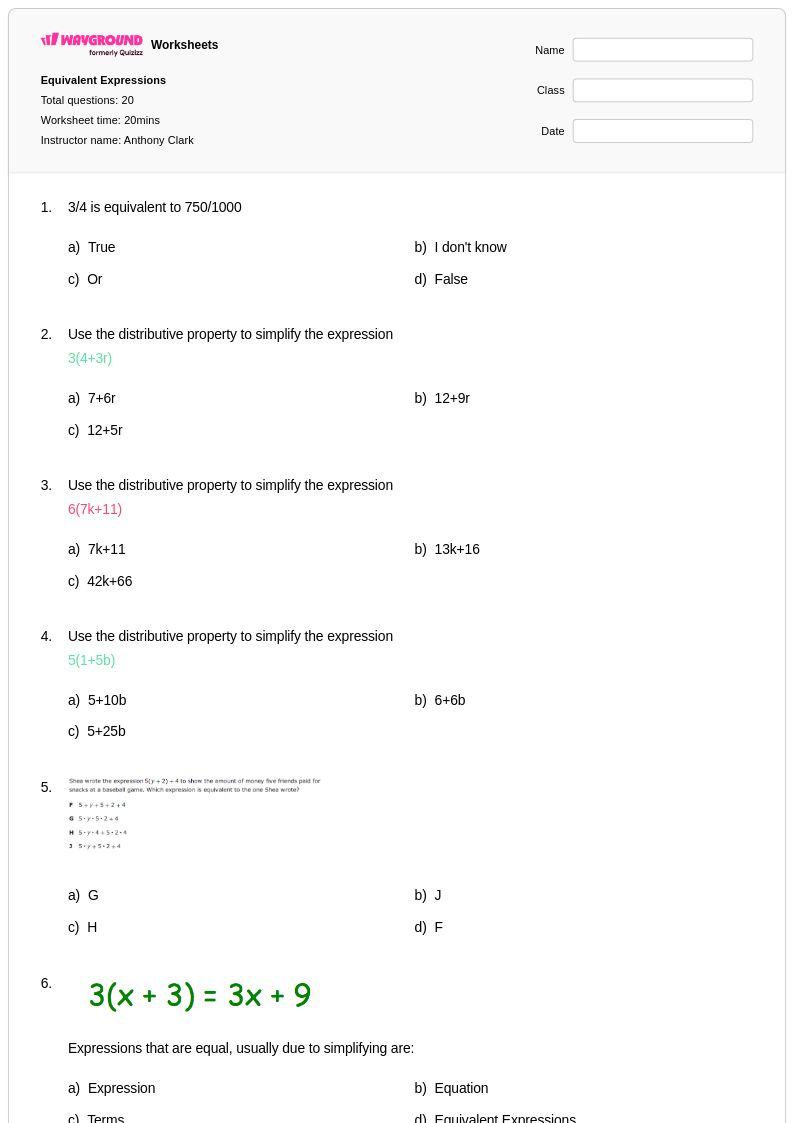
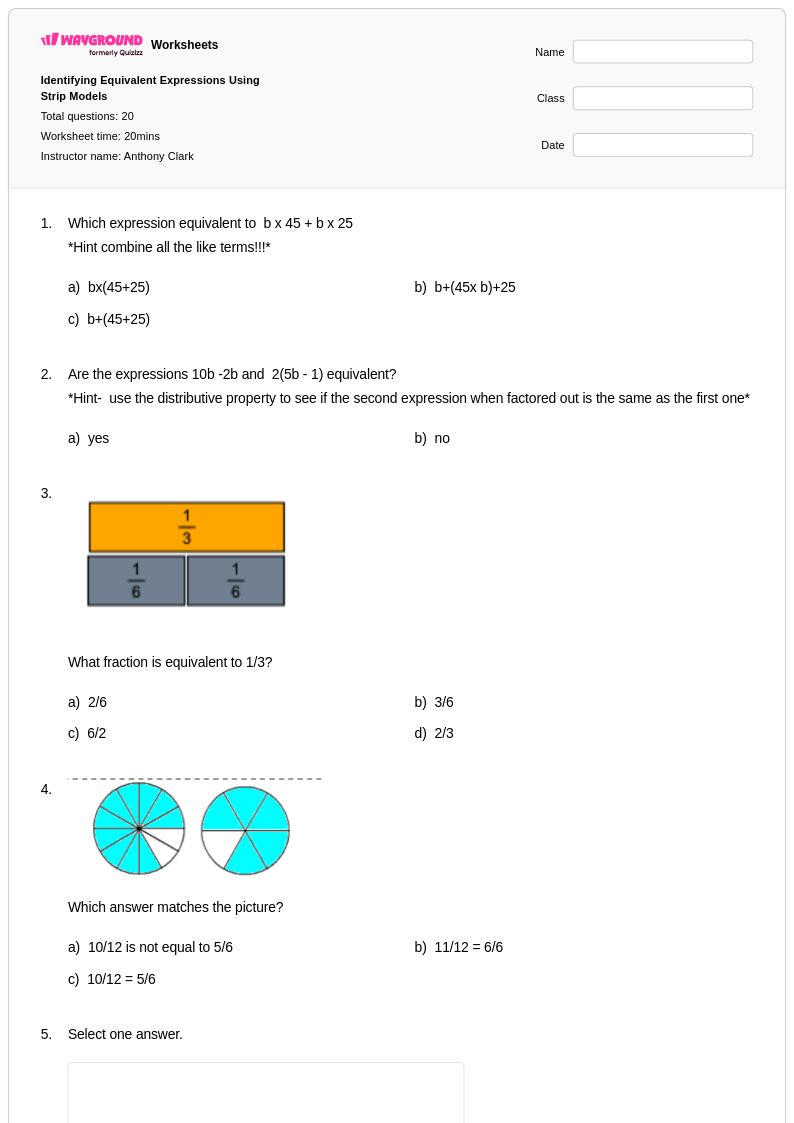
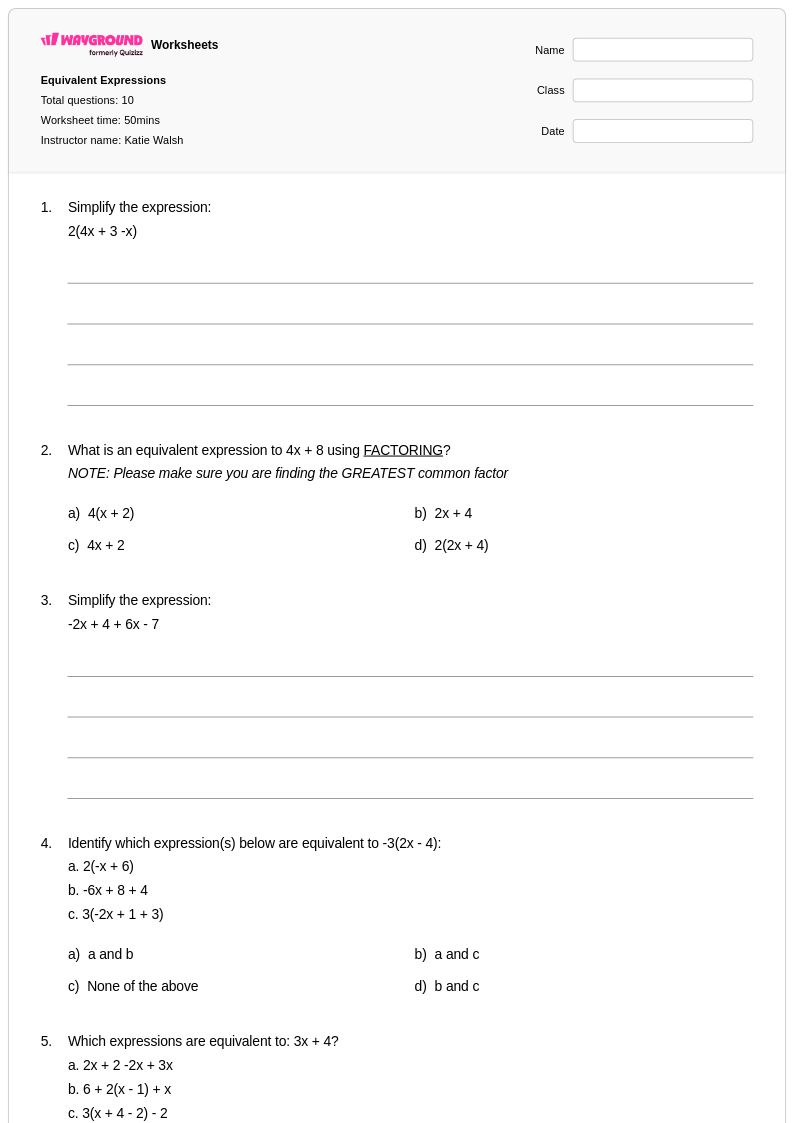
Year 6 equivalent expressions worksheets from Wayground help students master identifying and creating equivalent mathematical expressions through engaging printables, practice problems, and comprehensive answer keys.
Explore printable Equivalent Expressions worksheets for Year 6
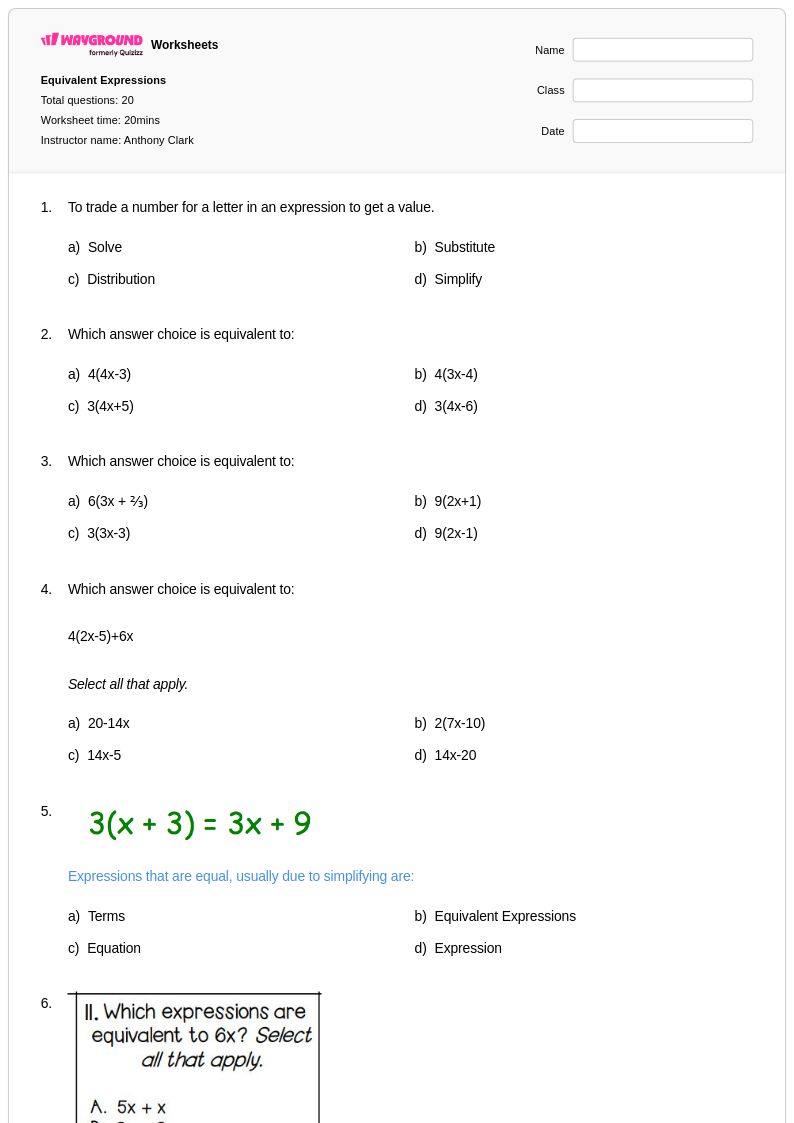
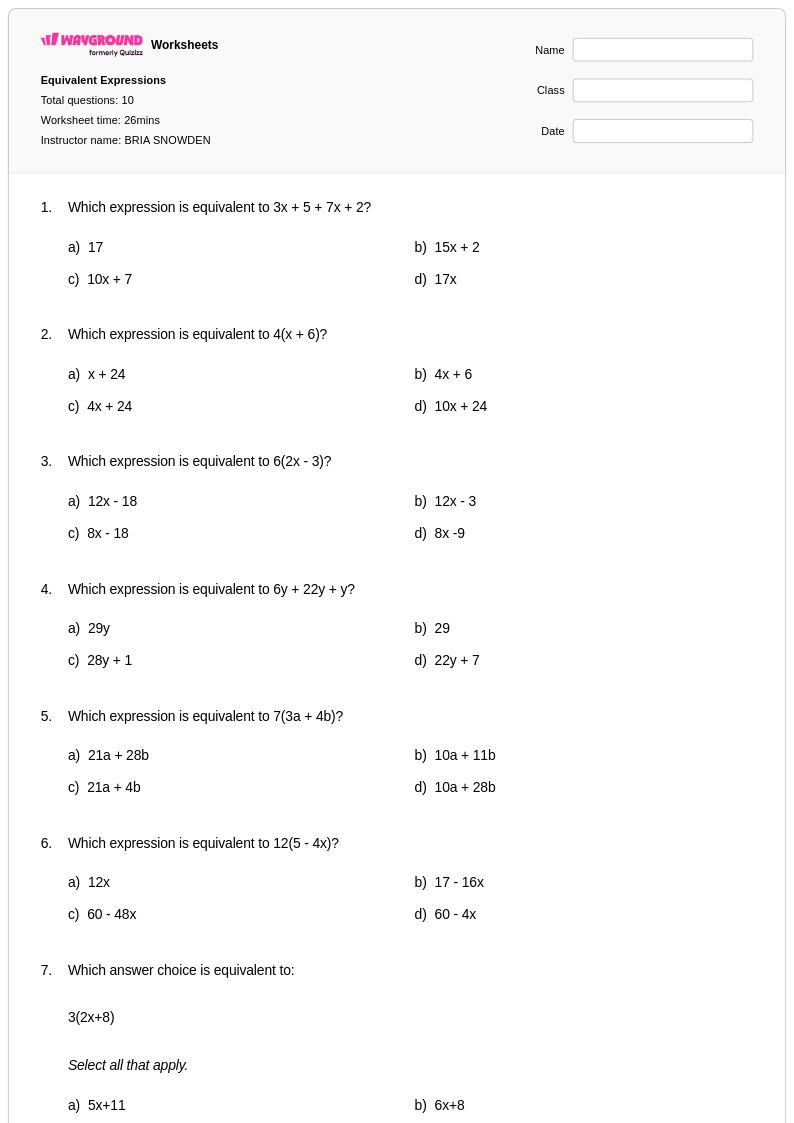
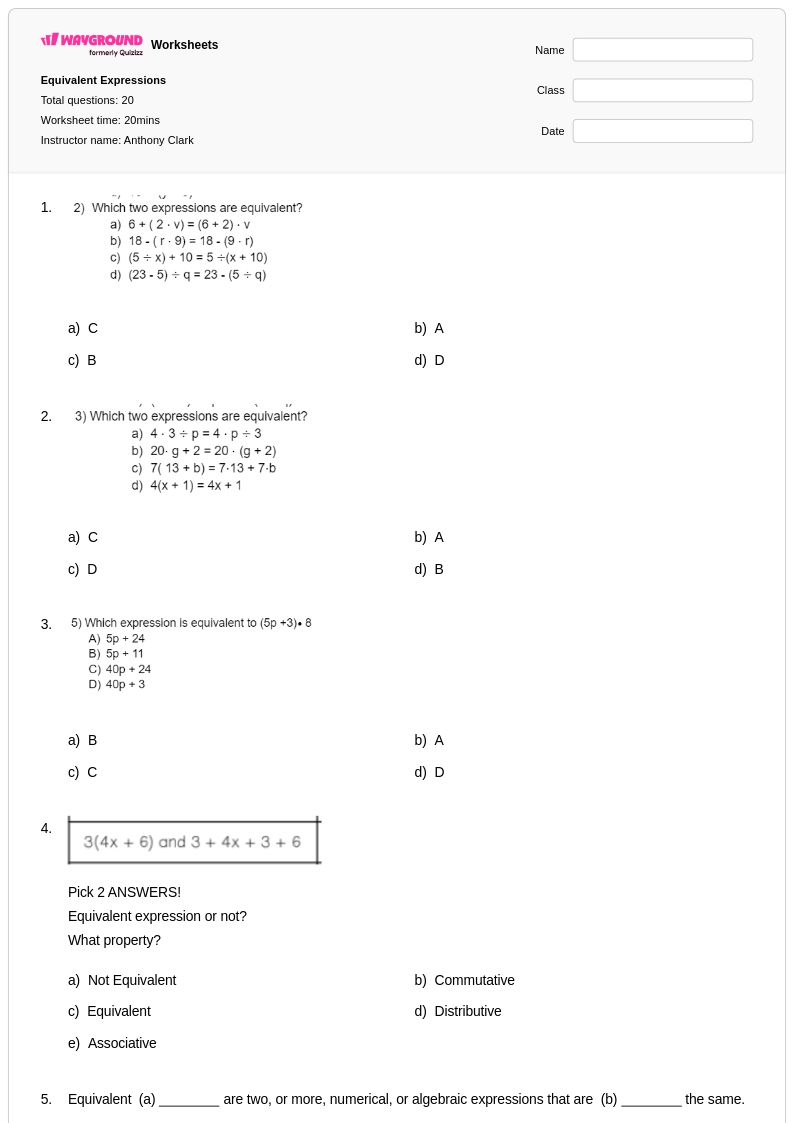
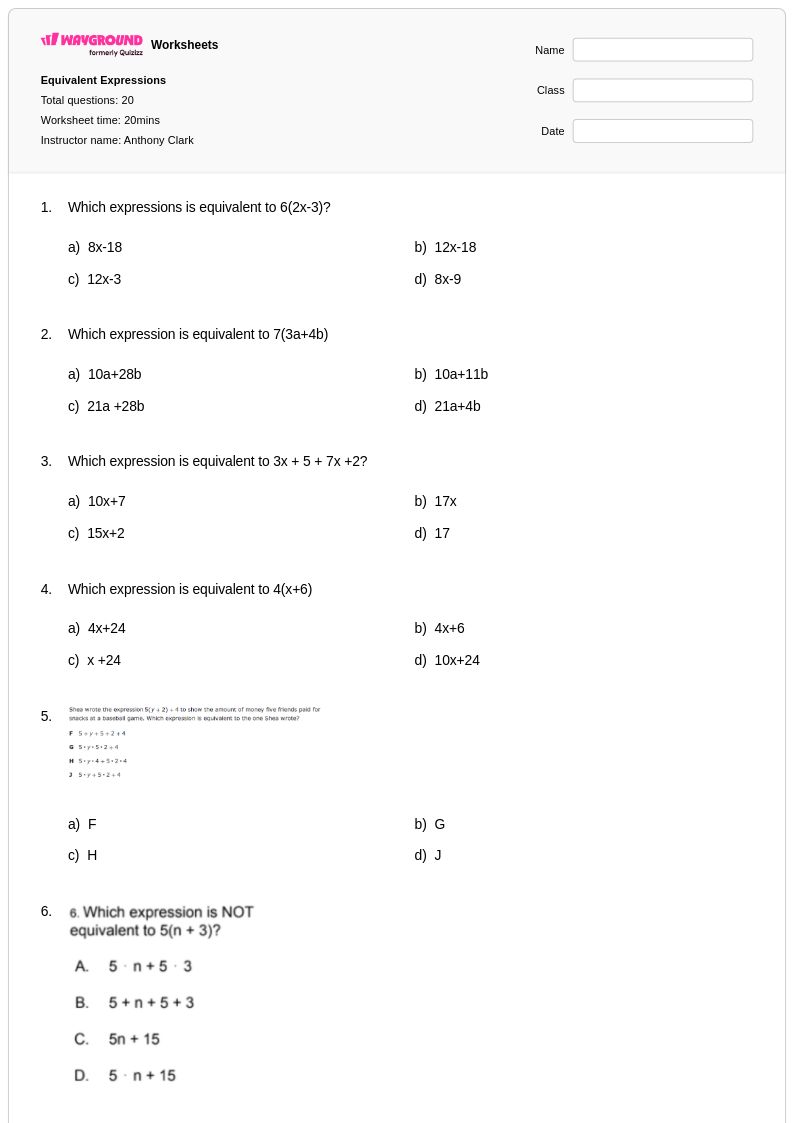
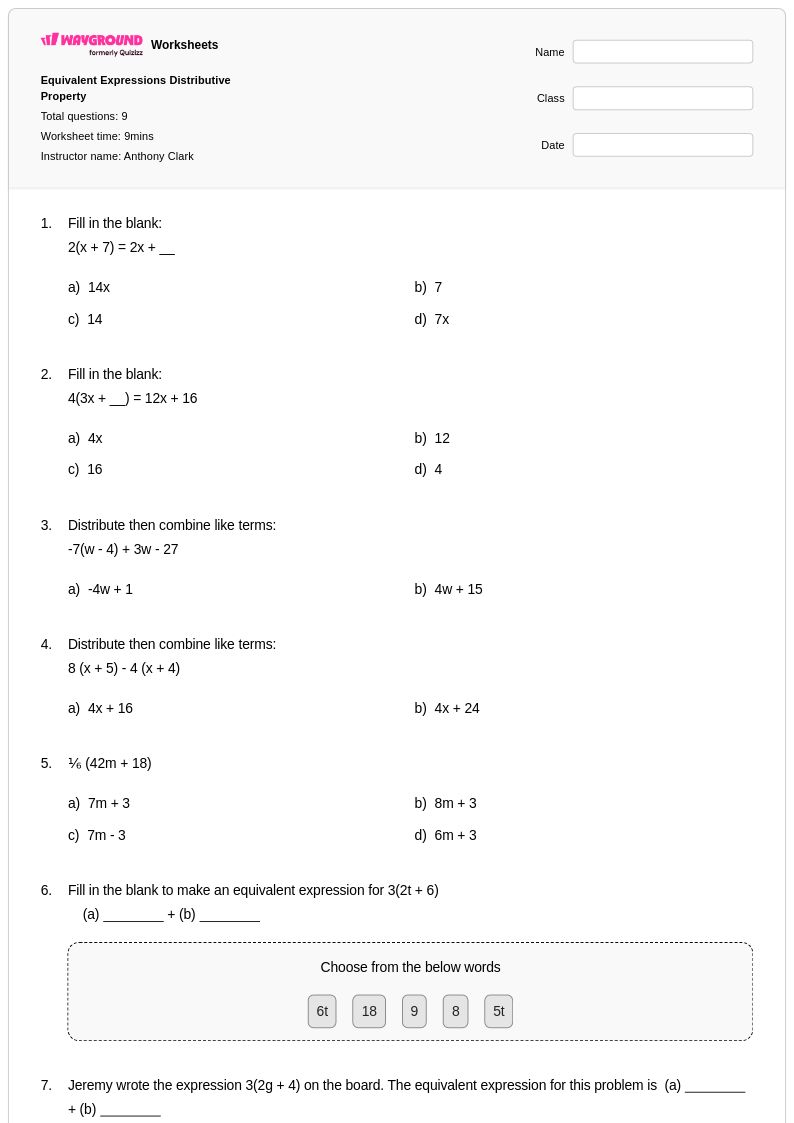
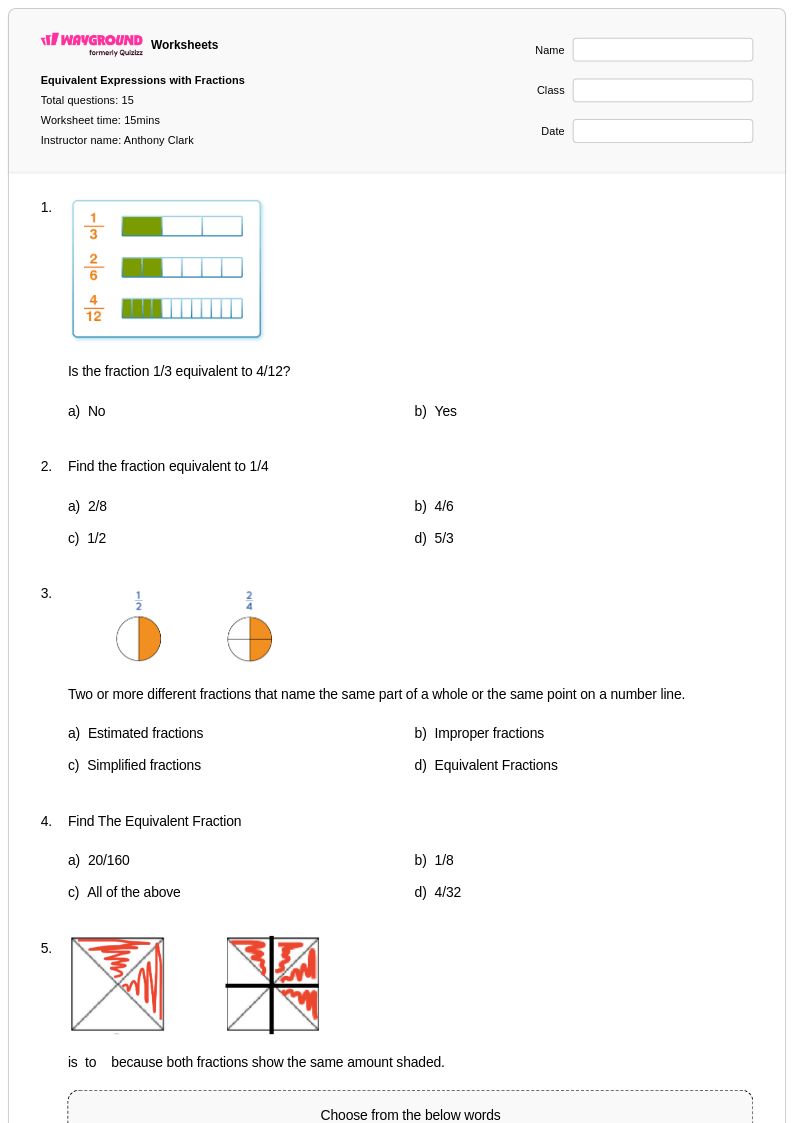
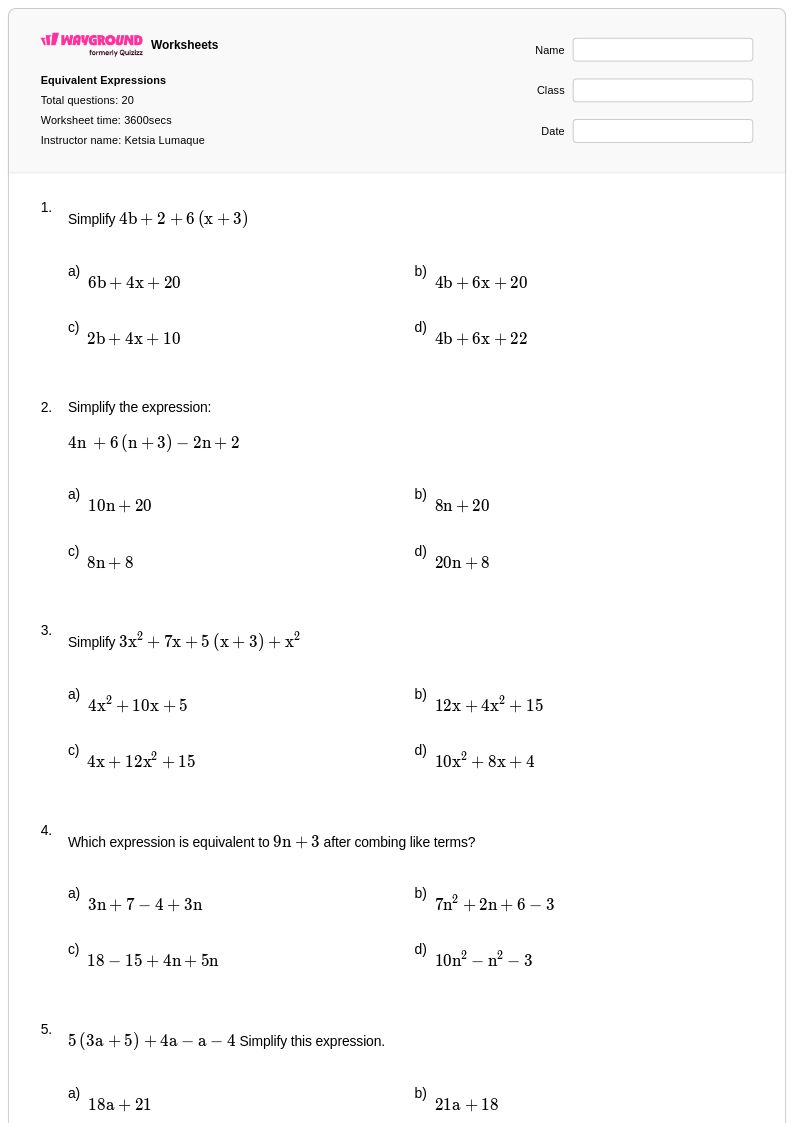
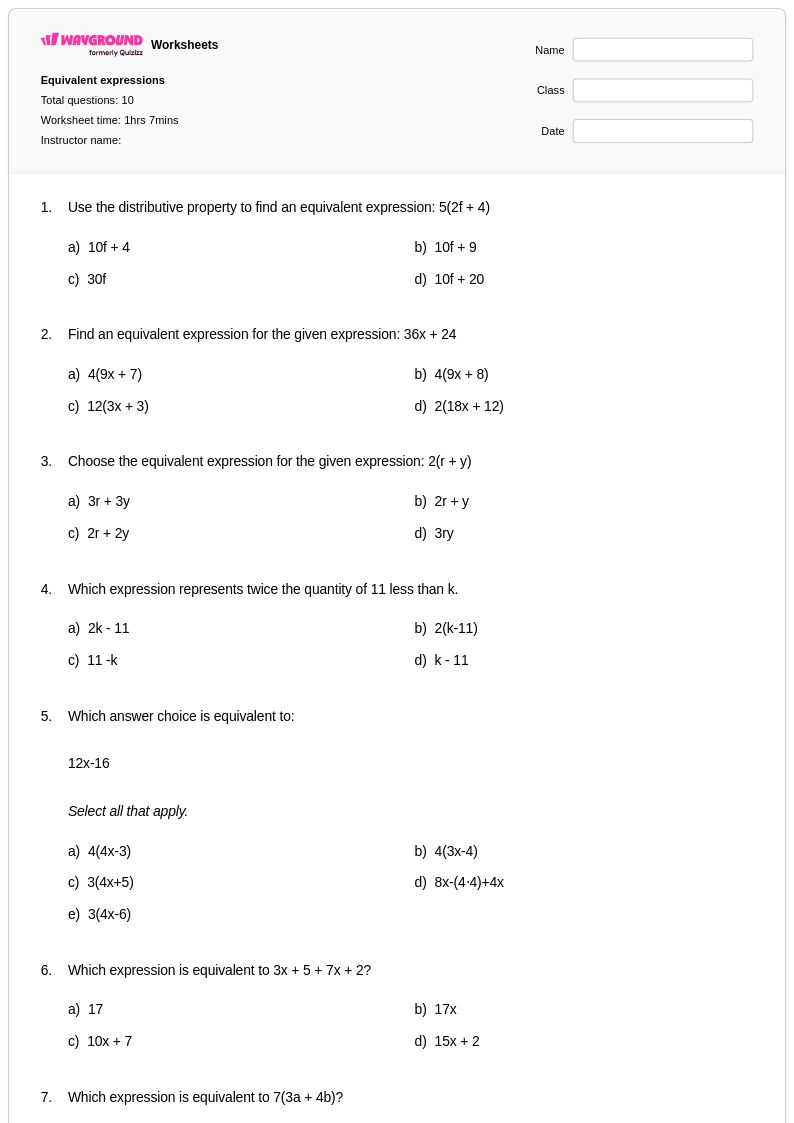
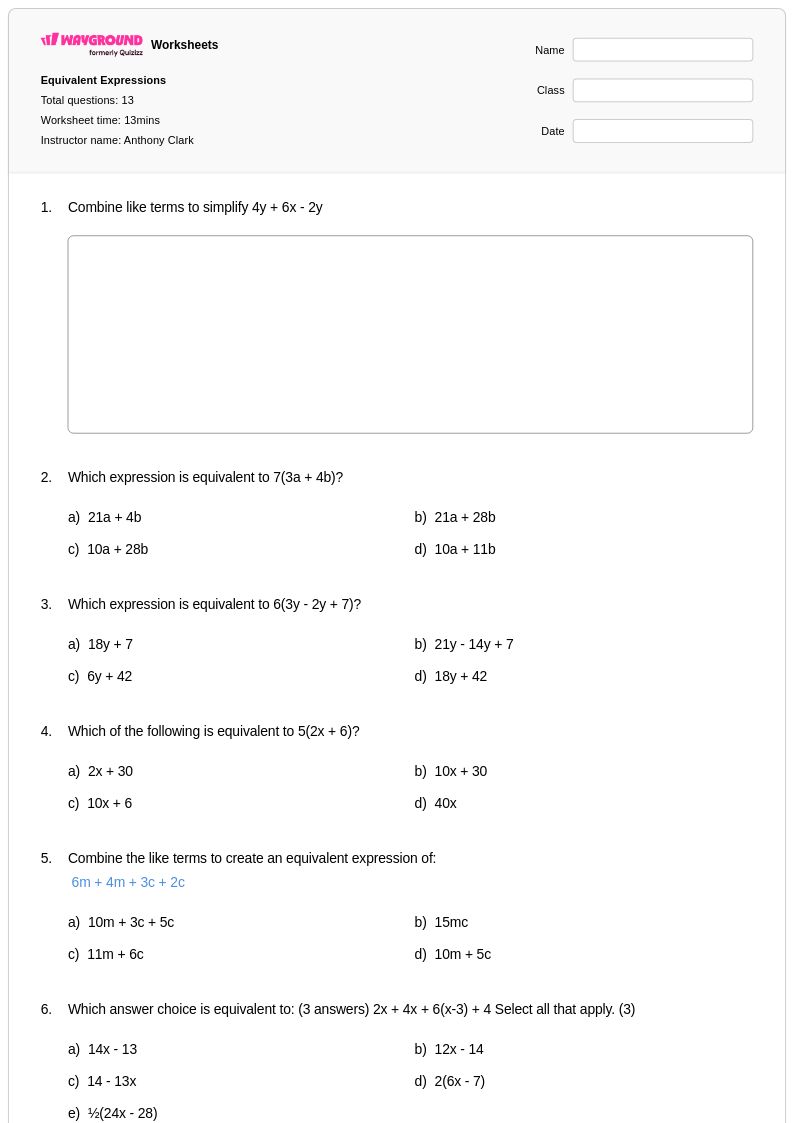
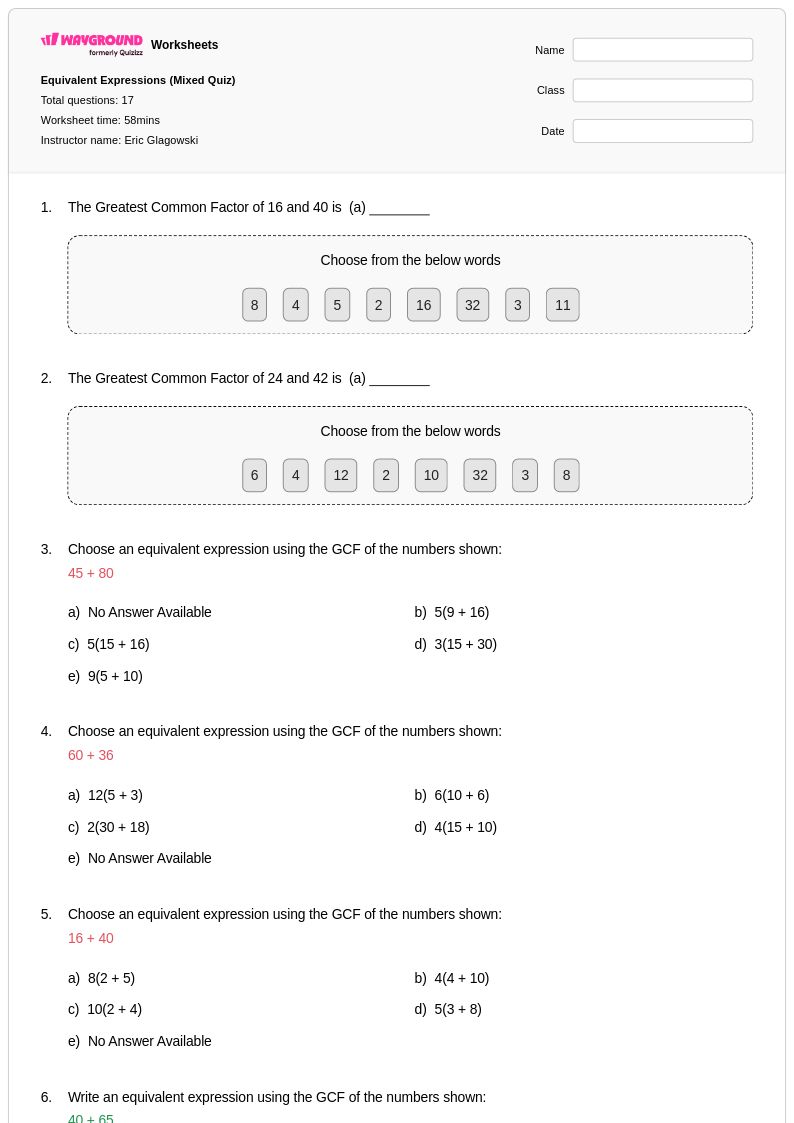
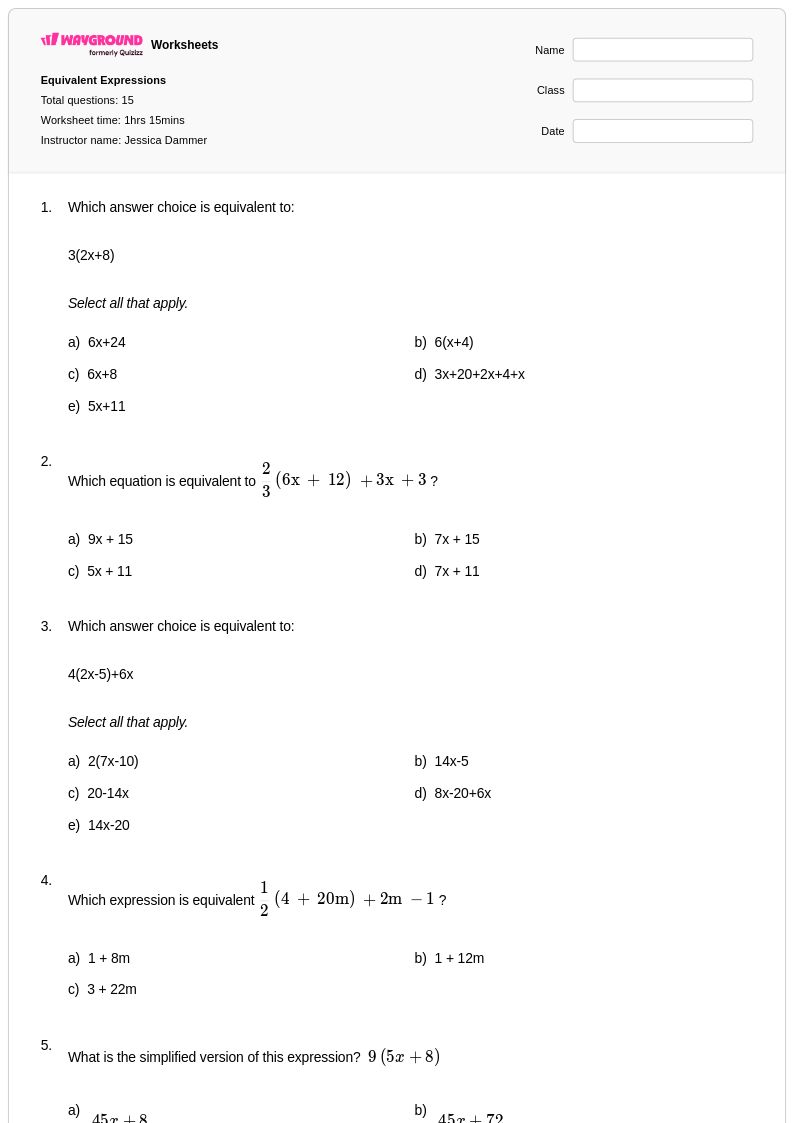
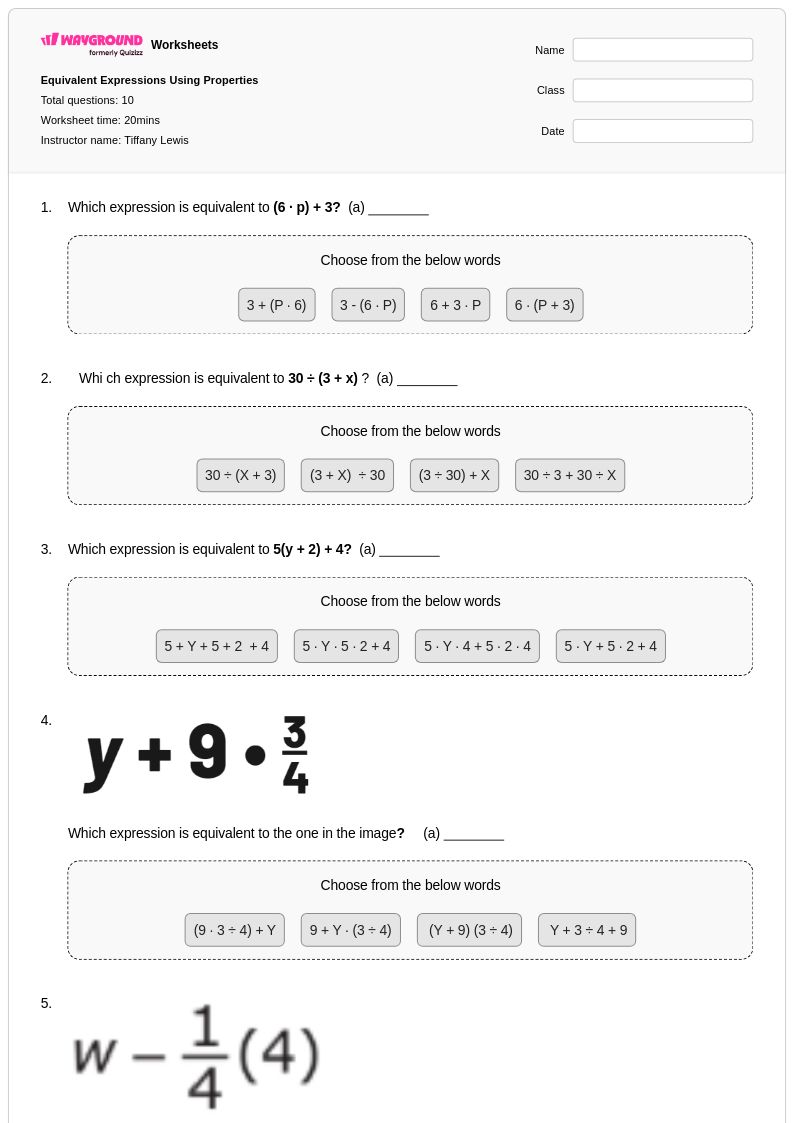
Equivalent expressions worksheets for Year 6 students available through Wayground (formerly Quizizz) provide comprehensive practice in identifying, creating, and manipulating algebraically equivalent mathematical expressions. These carefully designed worksheets strengthen fundamental algebraic reasoning skills by guiding students through systematic exploration of expressions that maintain equal value despite different forms, such as 3(x + 2) and 3x + 6. Students develop critical mathematical thinking as they learn to apply the distributive property, combine like terms, and recognize when expressions represent identical relationships between variables and constants. Each worksheet includes detailed practice problems that progress from basic identification exercises to more complex transformation challenges, complete with answer keys that support both independent learning and teacher-guided instruction. These free printable resources serve as essential tools for building the algebraic foundation students need for advanced mathematics courses.
Wayground (formerly Quizizz) empowers educators with access to millions of teacher-created equivalent expressions worksheets specifically aligned to Year 6 mathematics standards and curriculum requirements. The platform's robust search and filtering capabilities allow teachers to quickly locate materials that match their students' current skill levels and learning objectives, while built-in differentiation tools enable seamless customization for diverse classroom needs. Teachers can access these resources in both printable PDF format for traditional paper-based instruction and digital formats that integrate seamlessly with modern classroom technology systems. This extensive collection supports effective lesson planning by providing ready-to-use materials for initial skill introduction, targeted remediation for struggling learners, and enrichment opportunities for advanced students, ensuring that all Year 6 students receive appropriate practice with equivalent expressions concepts that align with their individual mathematical development needs.
FAQs
How do I teach equivalent expressions to 6th graders?
Grade 6 is where equivalent expressions shift from numerical to algebraic, so the distributive property needs to be re-established with variables. Use a concrete example like 3(x + 2) = 3x + 6 and verify it by substituting a number for x — students who see that both sides give the same result for x = 4 (and x = 10, and x = 0) start to trust the algebra. From there, move to combining like terms and then to factoring as the reverse of distributing. Keeping expansion and factoring visually paired — side by side on the board — helps students see them as two directions of the same process rather than two separate skills.
What exercises help 6th graders practice equivalent expressions?
Three task types build the skill progressively: identifying equivalent pairs from a set, rewriting a given expression in a specified form (expand or factor), and error analysis — showing a worked problem with a mistake and asking students to find and fix it. Error analysis is especially effective at Grade 6 because it forces students to articulate why an expression is not equivalent, which deepens understanding more than correct-answer practice alone. Wayground's Grade 6 worksheets include factoring as a subtopic alongside expansion and simplification.
What mistakes do 6th graders commonly make with equivalent expressions?
Forgetting to distribute to every term is the most frequent error — 3(x + 2) becomes 3x + 2 rather than 3x + 6. Students also conflate combining like terms with combining all terms, adding 3x + 4 to get 7x. A subtler misconception: students think an expression must be 'simplified' to be equivalent, so they don't recognize that 3x + 6 and 3(x + 2) are the same — they see the factored form as somehow incomplete.
How do I use Wayground's Grade 6 equivalent expressions worksheets?
Host the worksheet as a digital quiz on Wayground for instant results you can use to guide the next day's instruction. Alternatively, print the PDF — every worksheet includes a complete answer key — and use it as a classwork or homework assignment. If you go the paper route, the Wayground for Teachers app lets you scan student submissions for grading without manually entering scores.
How does Common Core sequence equivalent expressions at Grade 6?
Common Core places equivalent expressions at the center of Grade 6 algebra work. Students arrive having used properties of operations with numbers; at Grade 6 they apply those same properties — distributive, associative, commutative — to algebraic expressions with variables. The key progression step is moving from verifying equivalence numerically to justifying it symbolically, which is what makes Grade 6 the bridge between arithmetic reasoning and formal algebra. This work feeds directly into Grade 7's focus on rational number operations within expressions and Grade 8's equation solving.
How can I differentiate equivalent expressions practice for my Grade 6 class?
For students who are still shaky on the distributive property, Wayground's reduced answer choices accommodation helps by limiting distractors so they can focus on the transformation rather than the selection. For students with reading difficulties or IEPs requiring read-aloud support, the read-aloud feature covers question text. On the worksheet itself, you can switch to a larger font size or dyslexia-friendly font for specific students — same math content, more accessible format — without creating a separate assignment.