
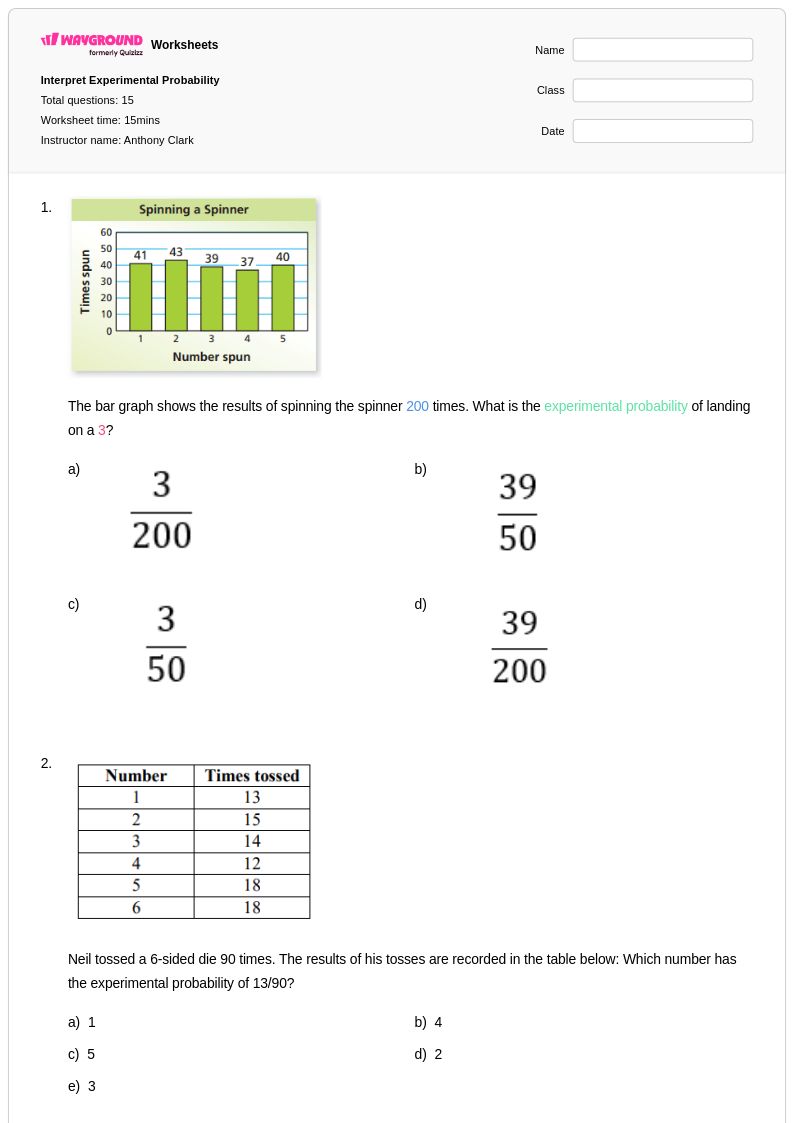
15 Q
7th - Uni
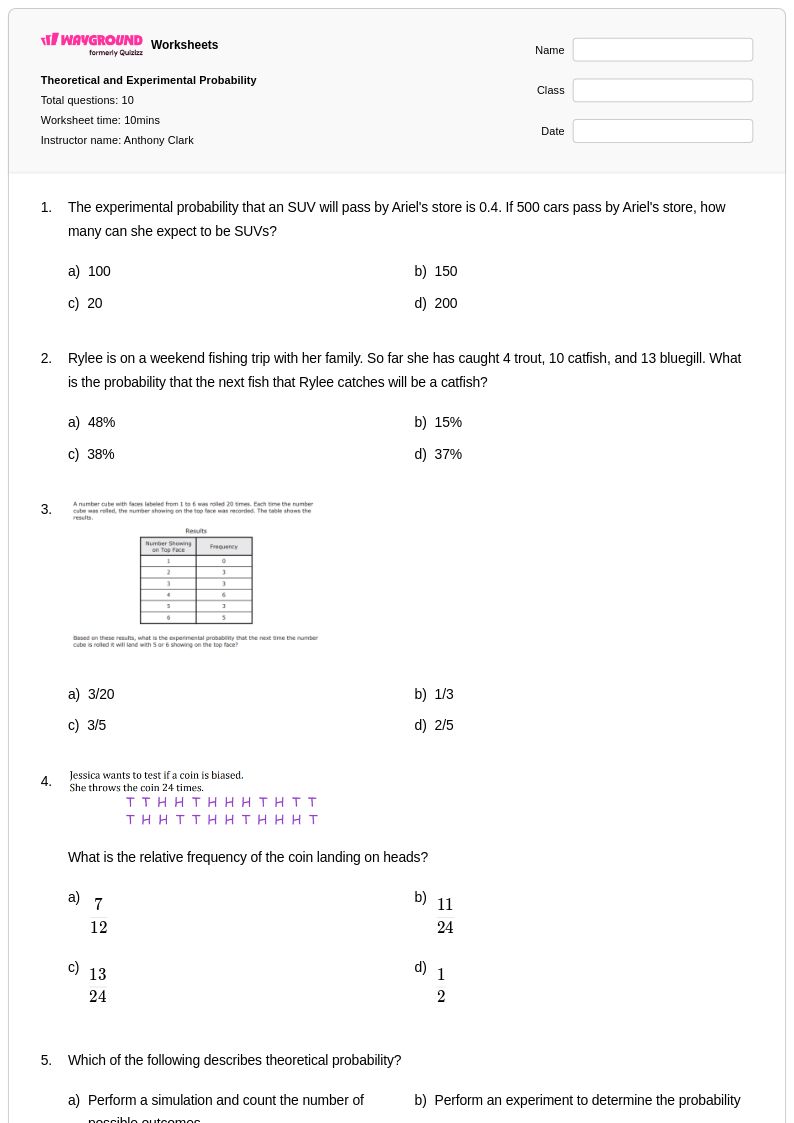
10 Q
7th - Uni
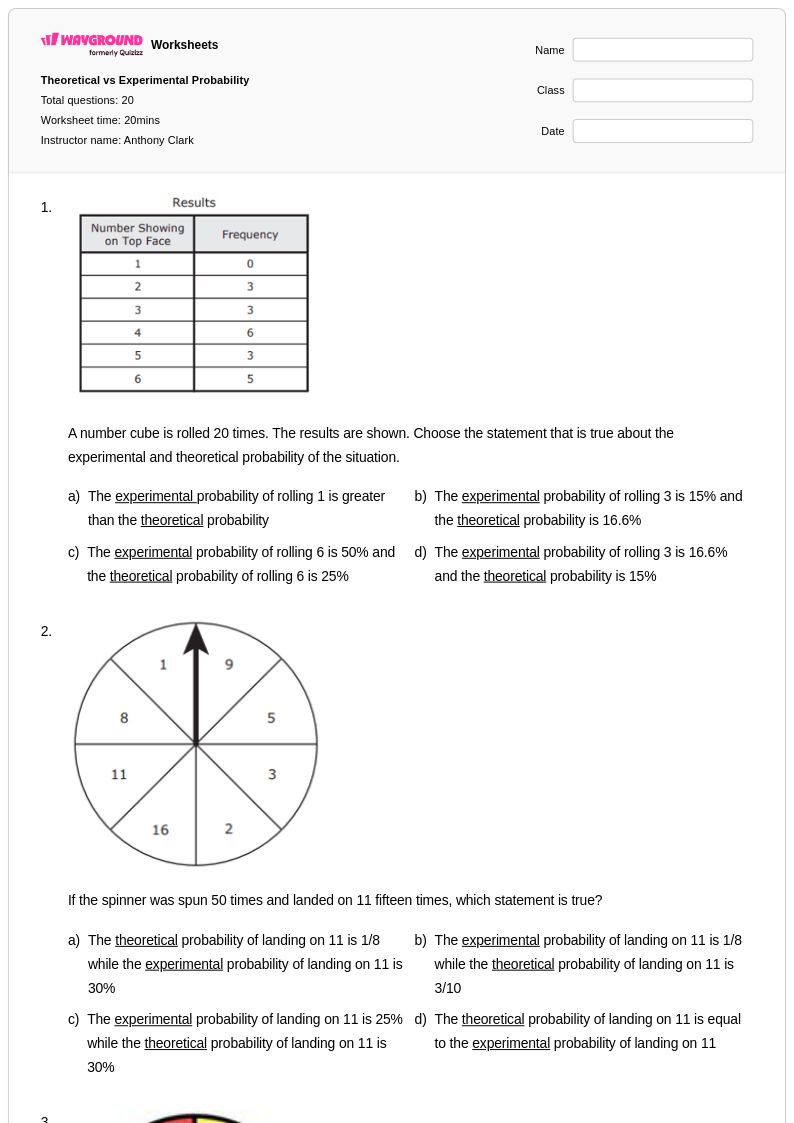
20 Q
7th - Uni
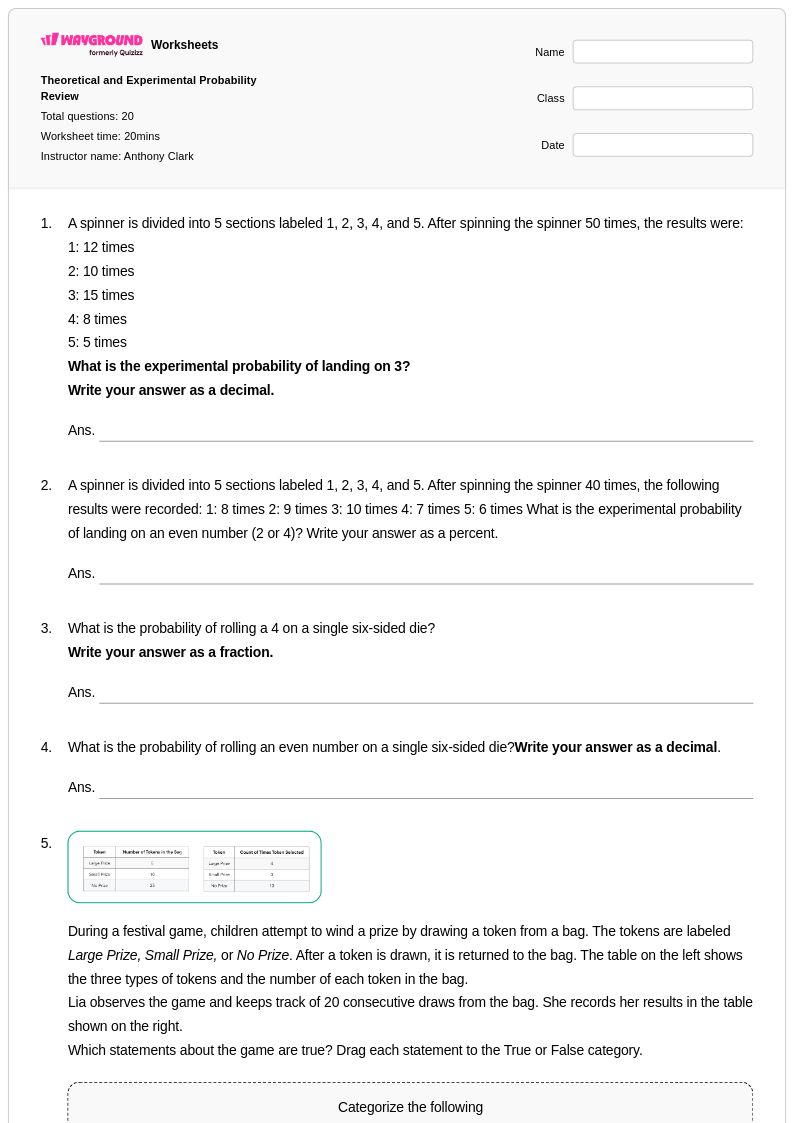
20 Q
7th - Uni
15 Q
7th - Uni
20 Q
7th - Uni
20 Q
7th - Uni
13 Q
7th - Uni
17 Q
7th - Uni
20 Q
7th - Uni
20 Q
7th - Uni
20 Q
7th - Uni
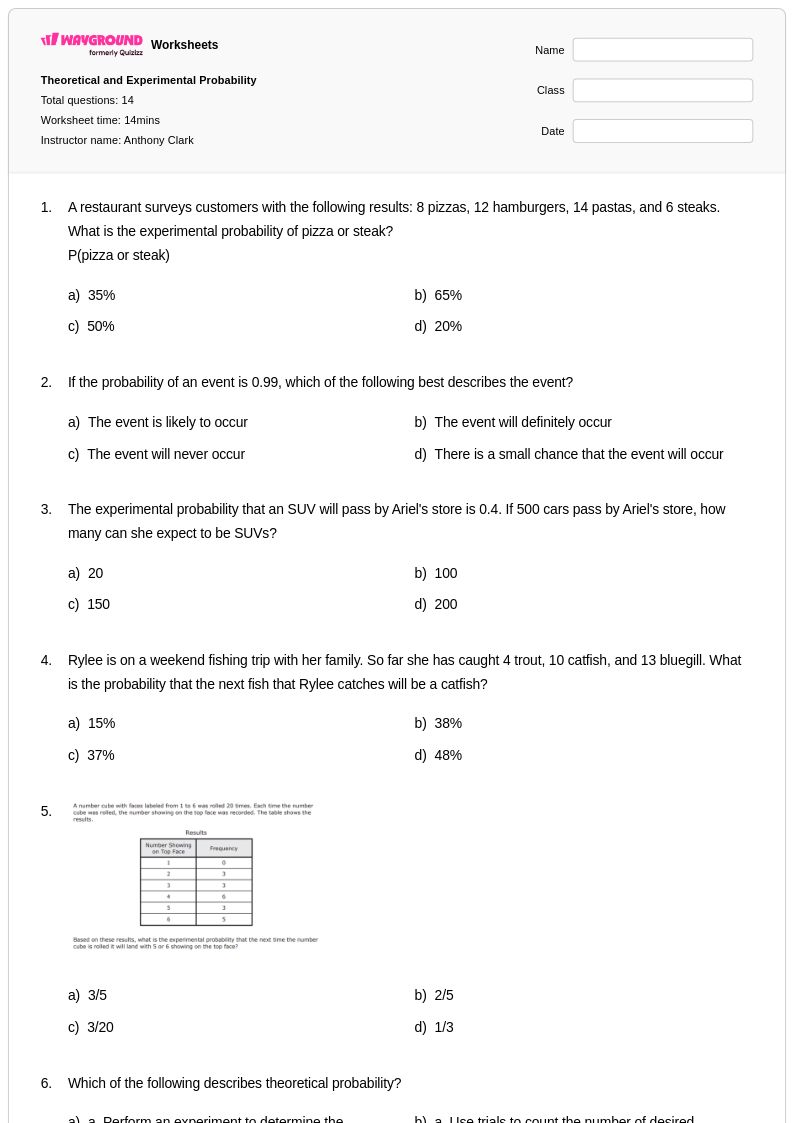
14 Q
7th - Uni
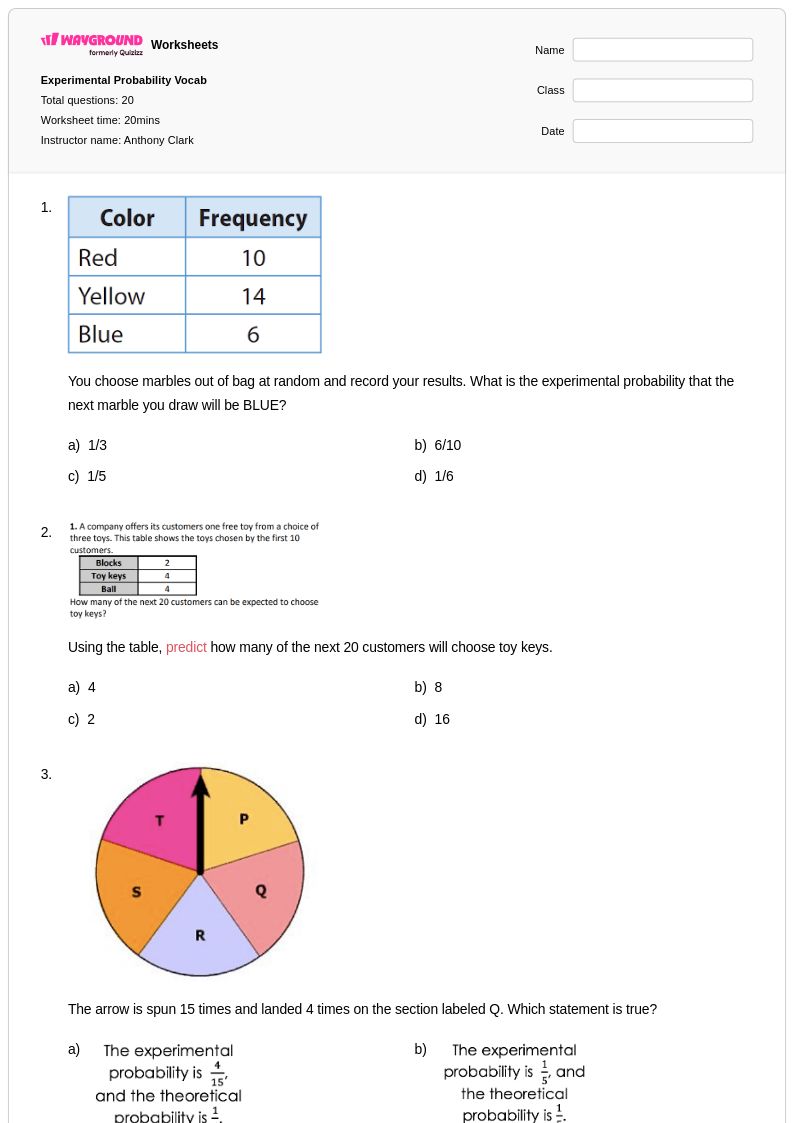
20 Q
7th - Uni
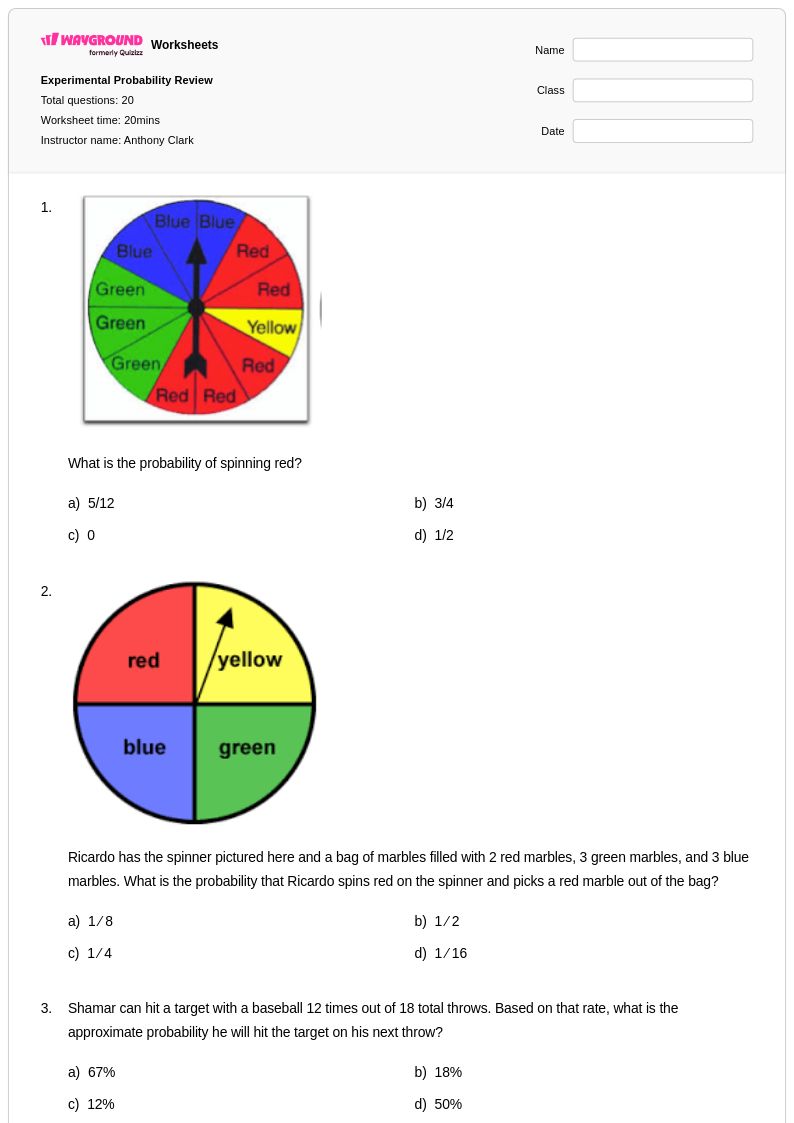
20 Q
7th - Uni
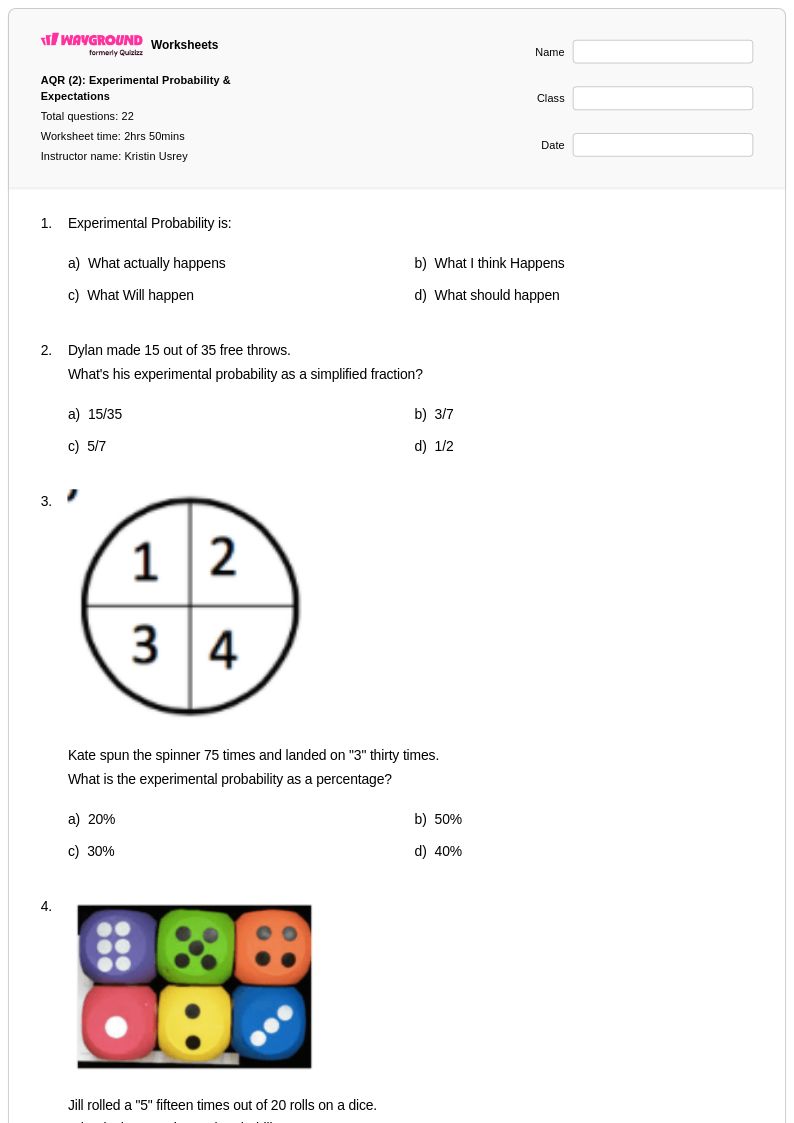
22 Q
12th
15 Q
7th - Uni
20 Q
7th - Uni
20 Q
7th - Uni
19 Q
7th - Uni
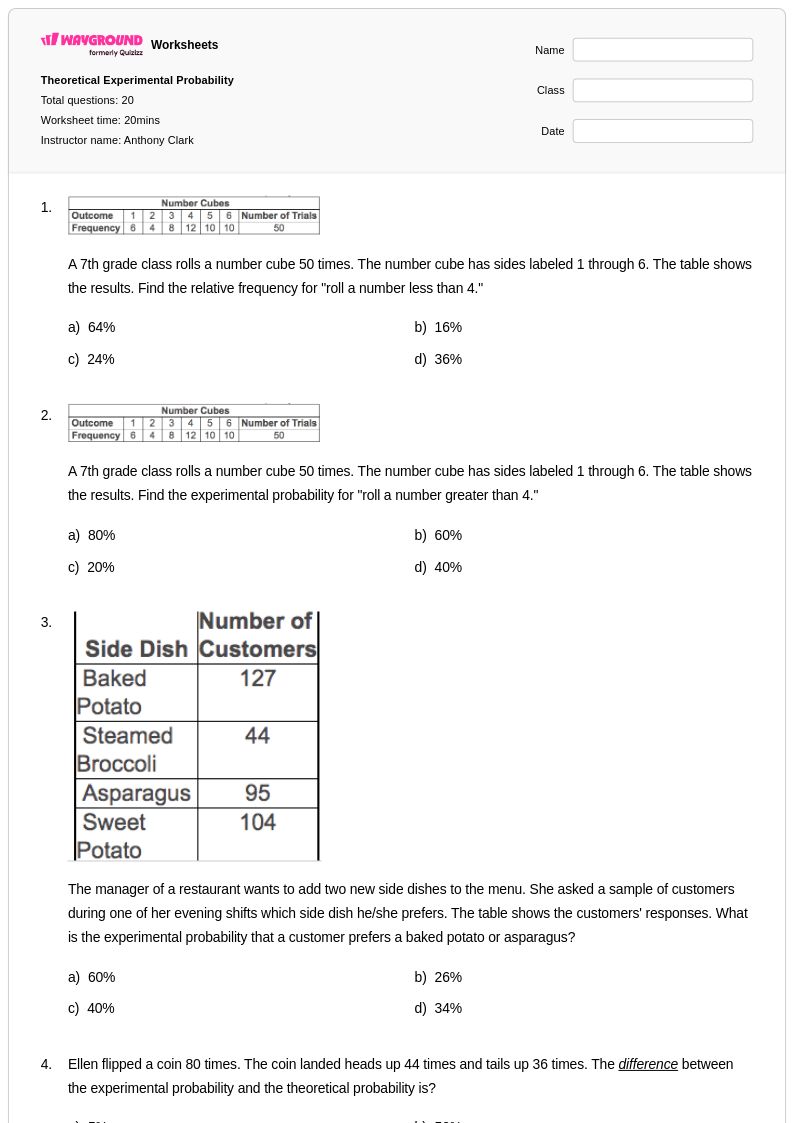
20 Q
7th - Uni
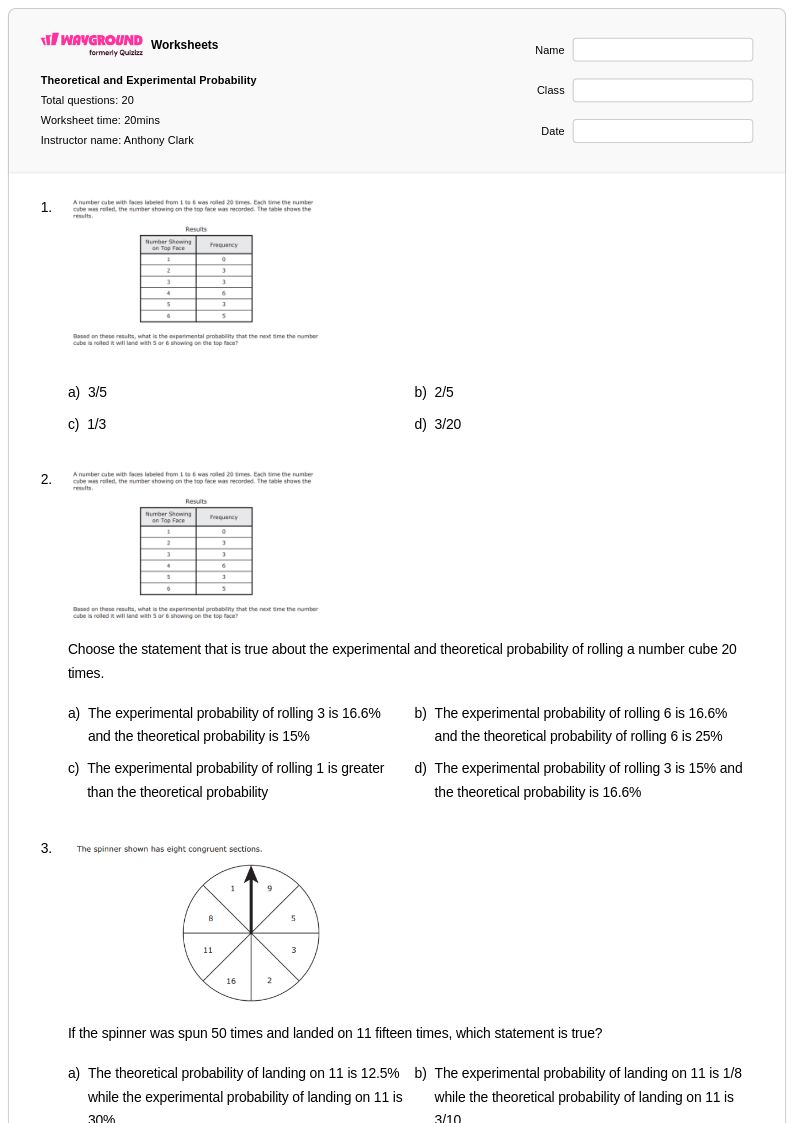
20 Q
7th - Uni
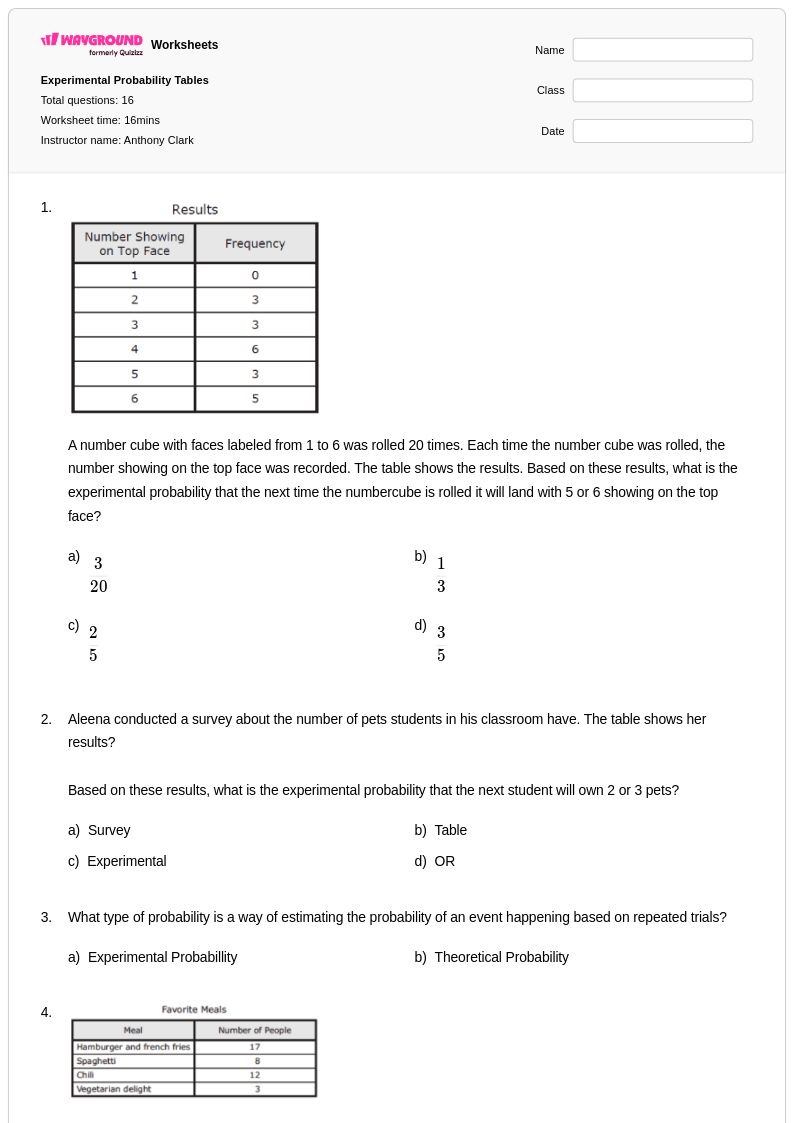
16 Q
7th - Uni
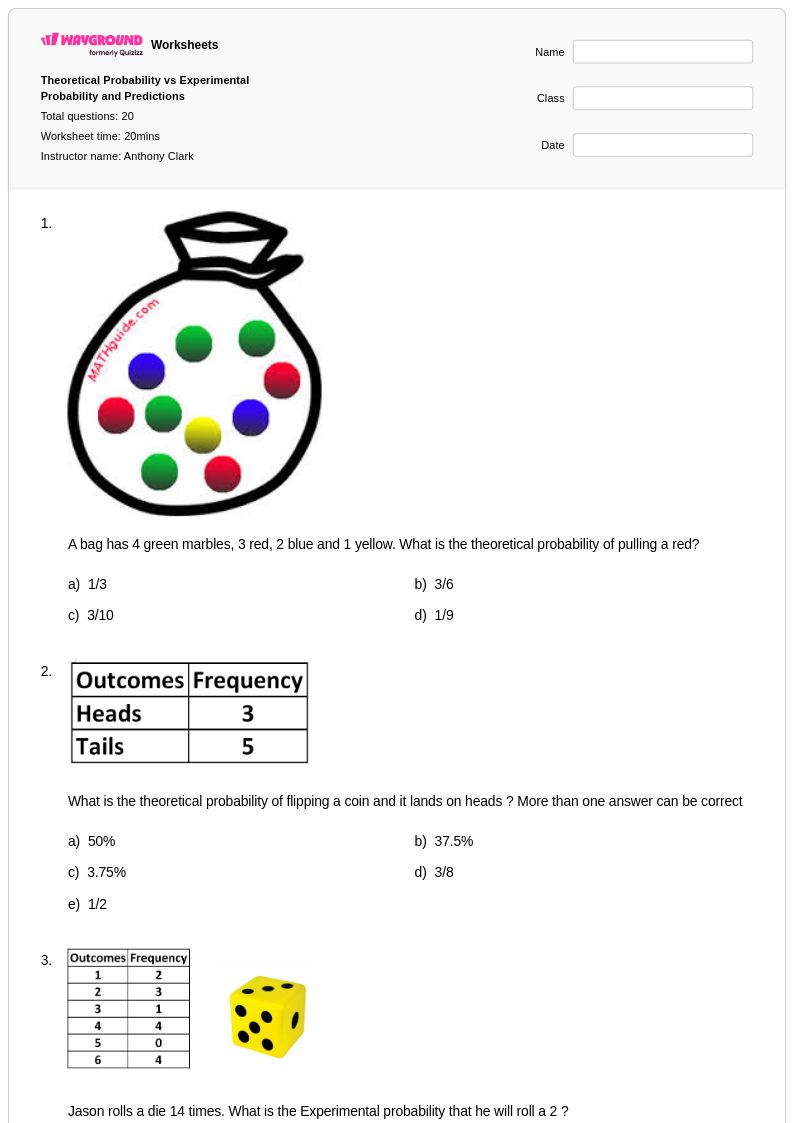
20 Q
7th - Uni
Explore Other Subject Worksheets for year 12
Explore printable Experimental Probability worksheets for Year 12
Experimental probability worksheets for Year 12 students provide essential practice in analyzing real-world data collection and statistical outcomes through hands-on mathematical investigations. These comprehensive resources strengthen students' ability to conduct probability experiments, calculate empirical probabilities based on observed frequencies, and compare experimental results with theoretical predictions. The worksheets feature diverse practice problems that challenge students to design experiments, collect and organize data, interpret results, and draw meaningful conclusions about probability distributions. Each printable resource includes detailed answer keys that support independent learning and self-assessment, while the free pdf format ensures accessibility for both classroom instruction and homework assignments.
Wayground (formerly Quizizz) empowers educators with an extensive collection of millions of teacher-created experimental probability worksheets specifically designed for Year 12 mathematics instruction. The platform's robust search and filtering capabilities enable teachers to quickly locate resources that align with curriculum standards and match their students' specific learning needs. Advanced differentiation tools allow educators to customize worksheets for varying ability levels, supporting both remediation for struggling learners and enrichment opportunities for advanced students. Available in both printable and digital formats, including downloadable pdf versions, these materials seamlessly integrate into lesson planning while providing flexible options for skill practice, formative assessment, and comprehensive review of experimental probability concepts.
FAQs
How can I teach experimental probability to Grade 12 students?
What experimental probability activities work well for Grade 12 practice?
What errors do Grade 12 students commonly make with experimental probability?
How can teachers use these Grade 12 experimental probability worksheets?
How does experimental probability align with the Common Core math curriculum?
How can I differentiate a Grade 12 experimental probability worksheet?
Is experimental probability appropriate for Grade 12?