
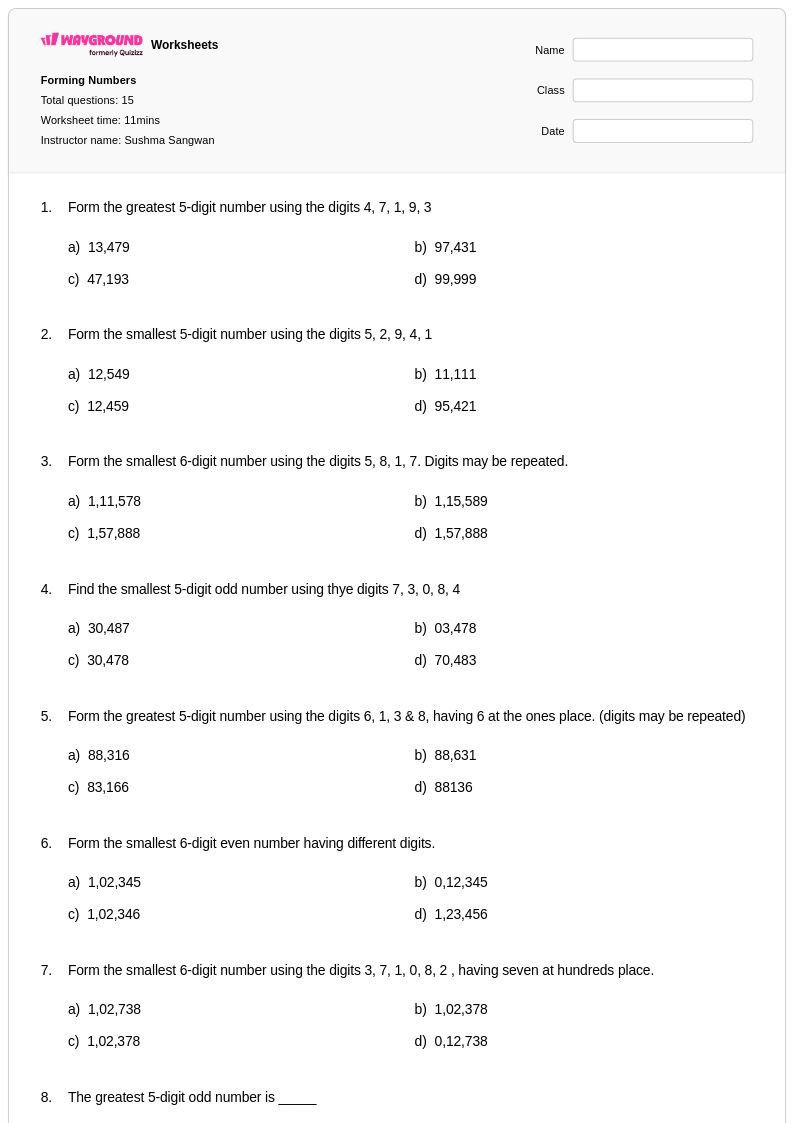
15 Q
4th
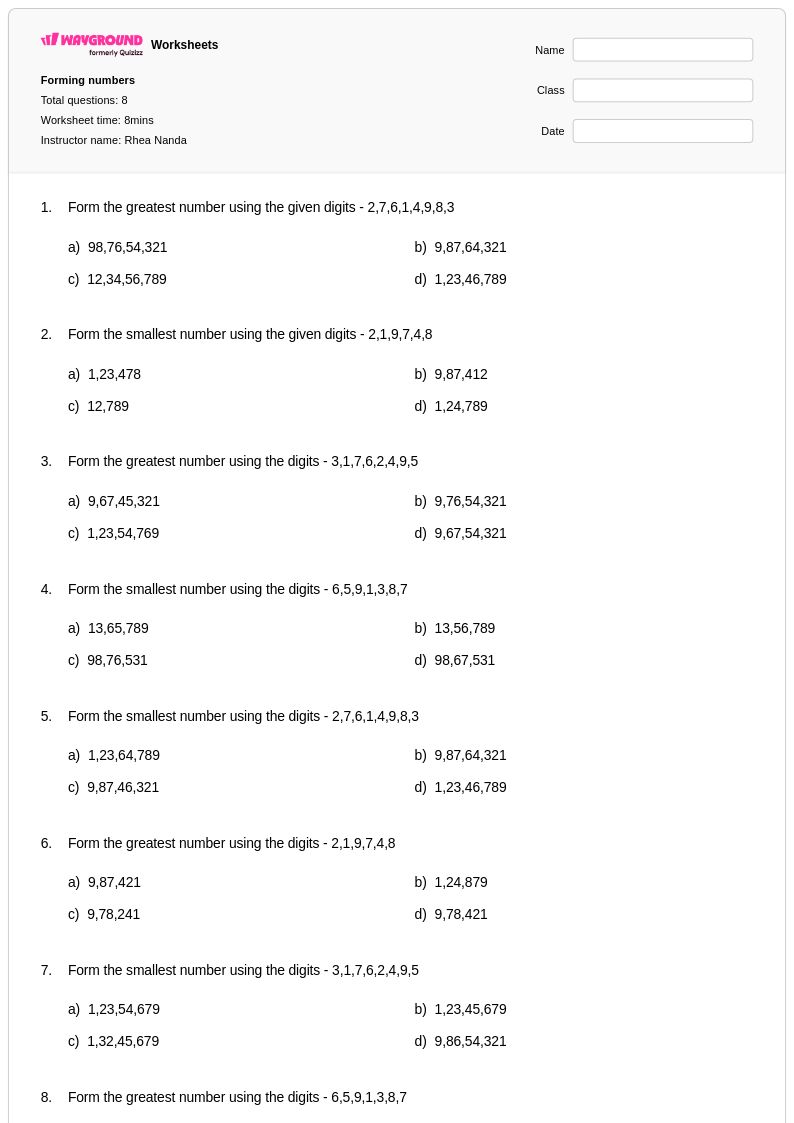
8 Q
4th - 5th
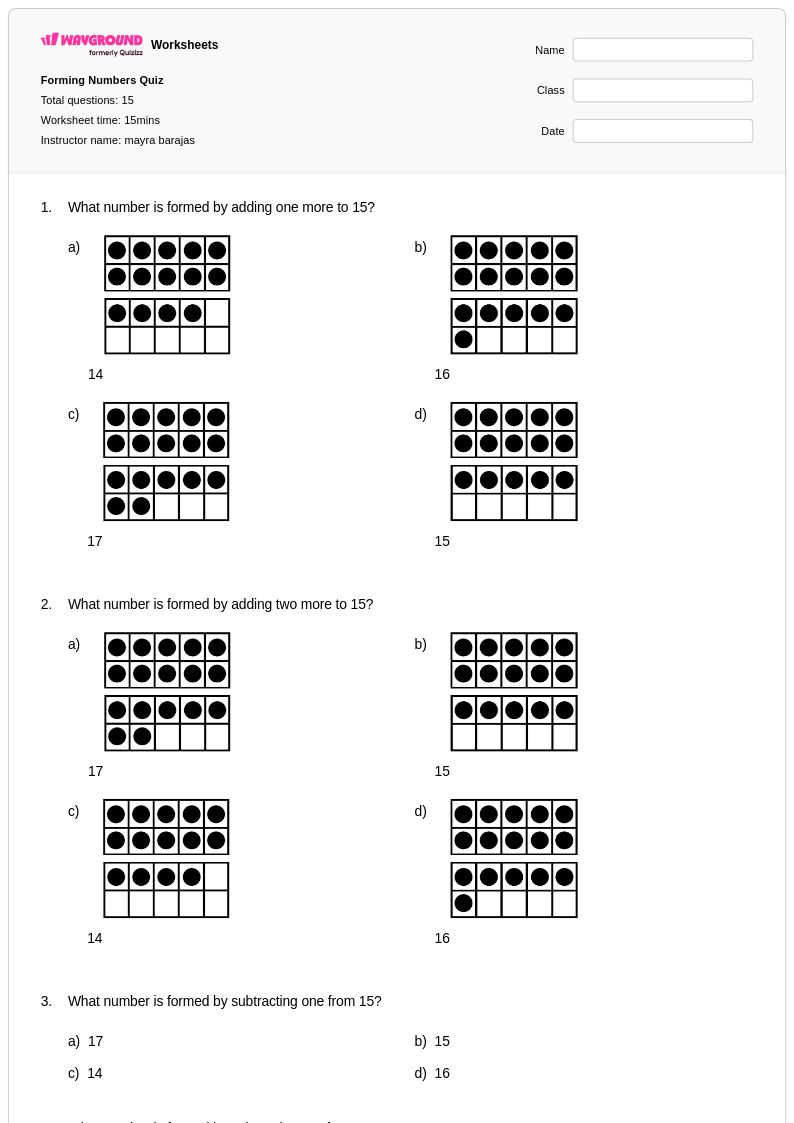
15 Q
1st
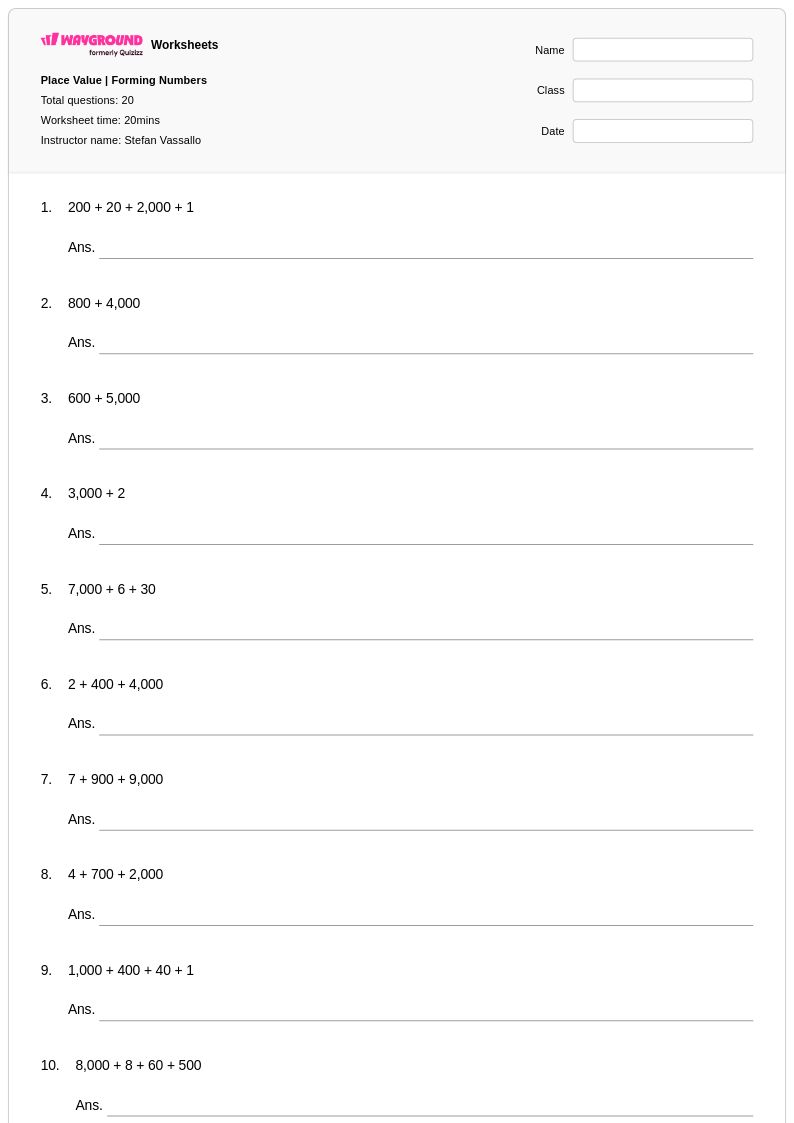
20 Q
4th
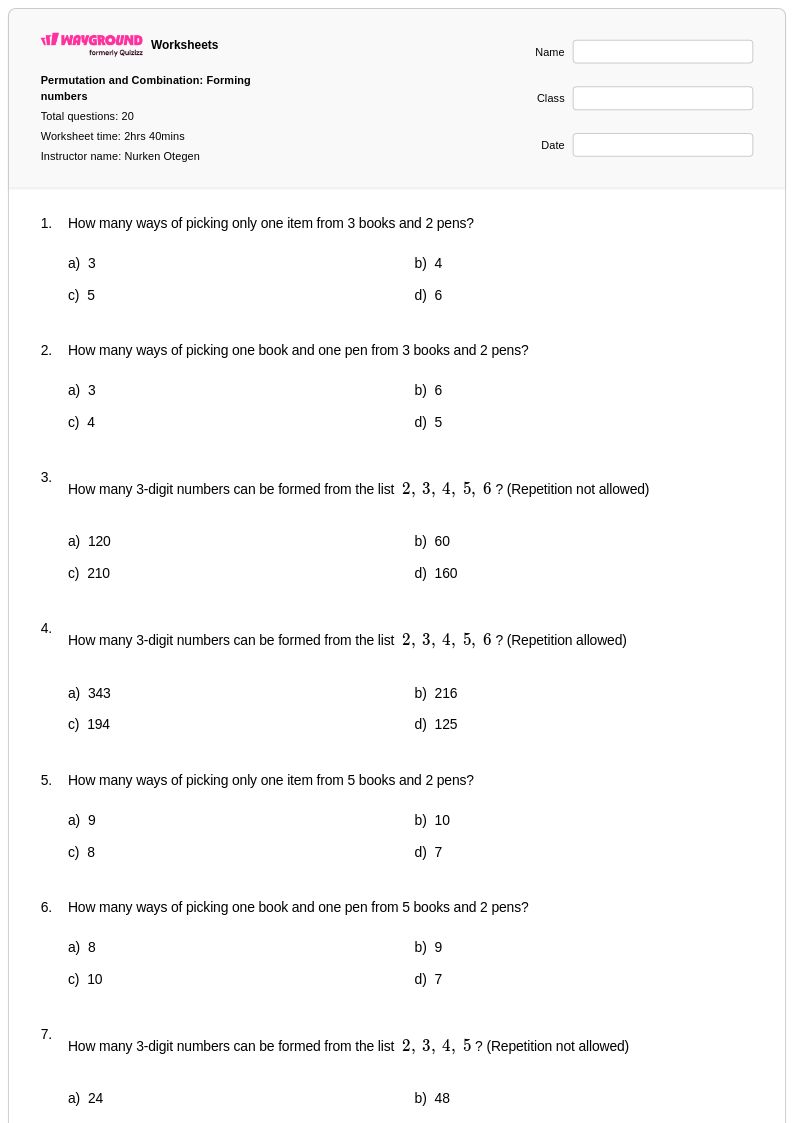
20 Q
10th
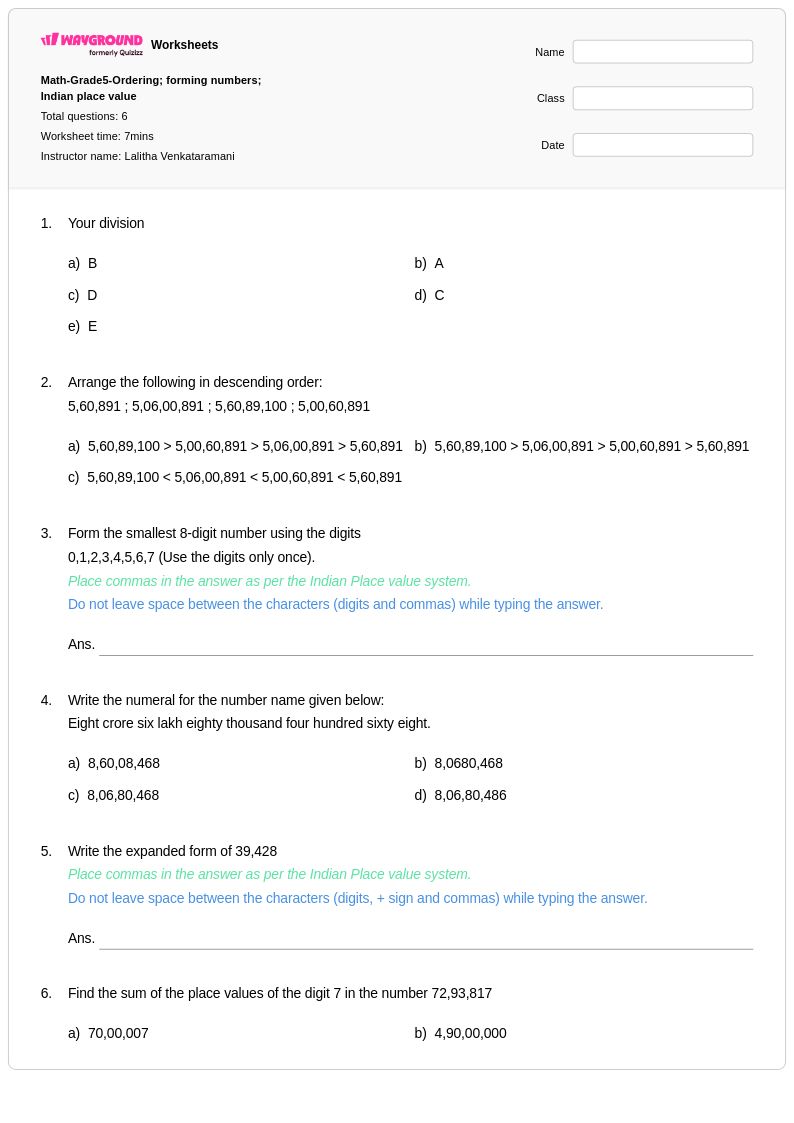
6 Q
5th
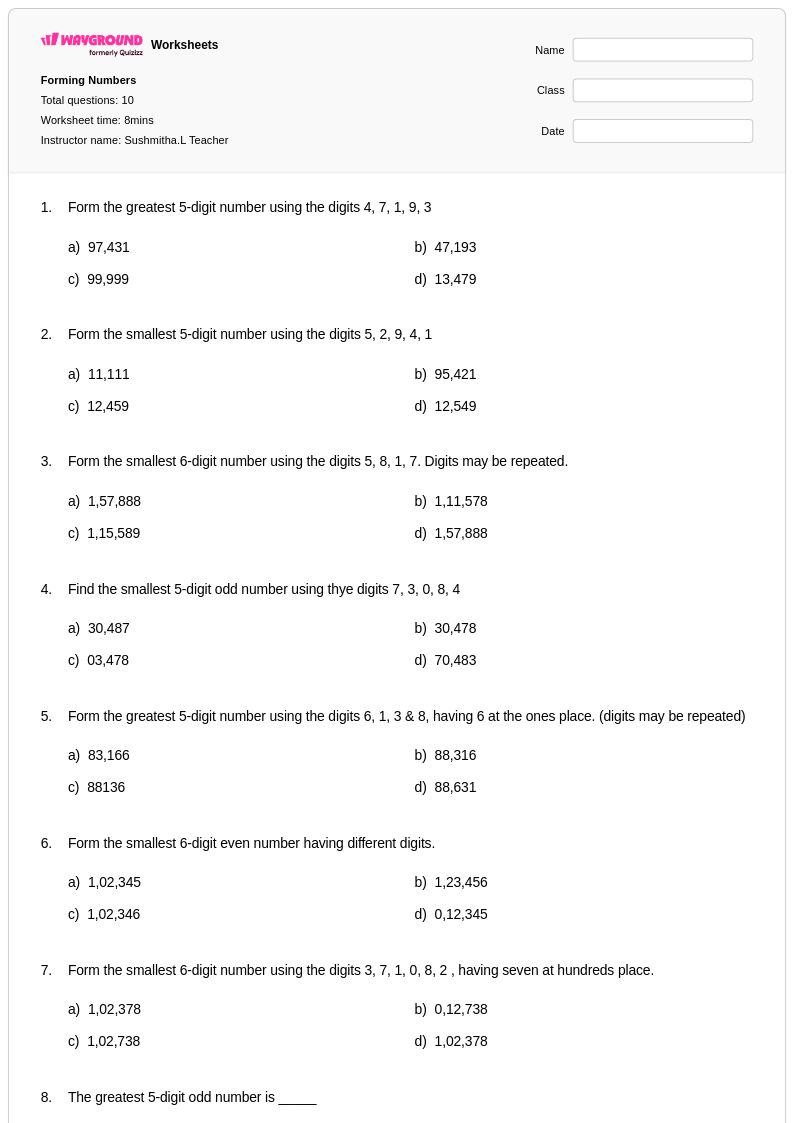
10 Q
KG - Uni
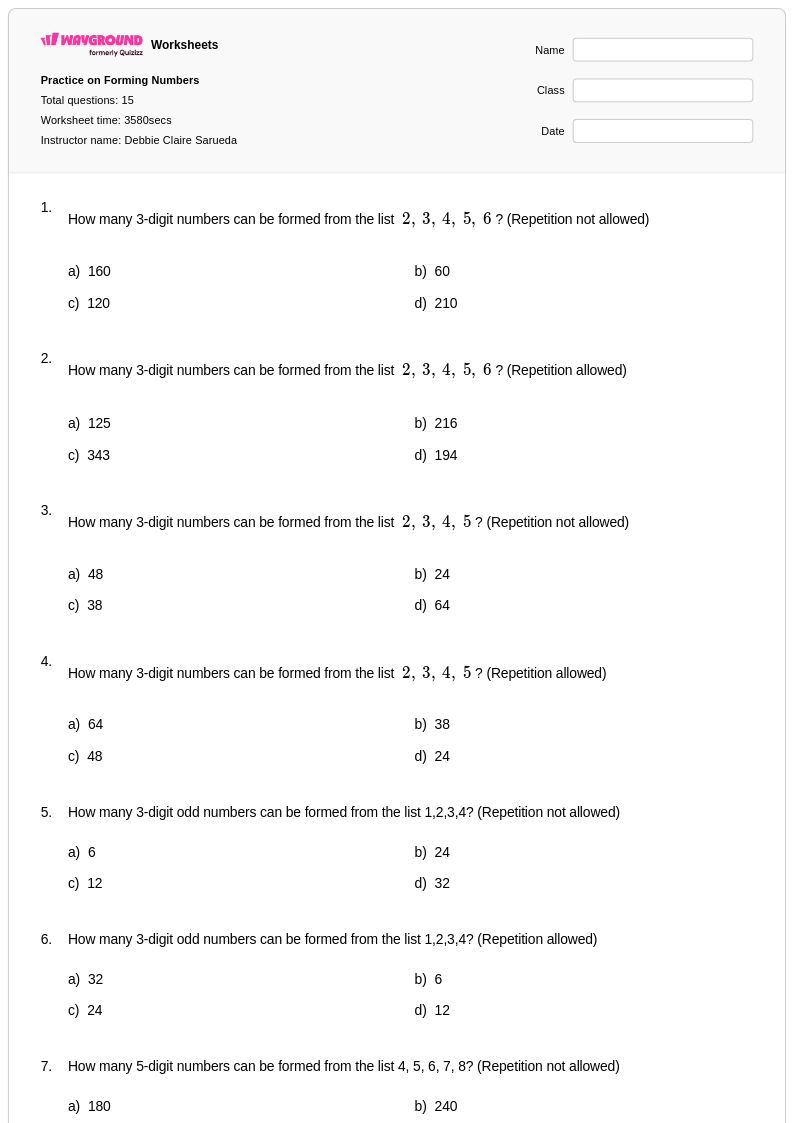
15 Q
10th
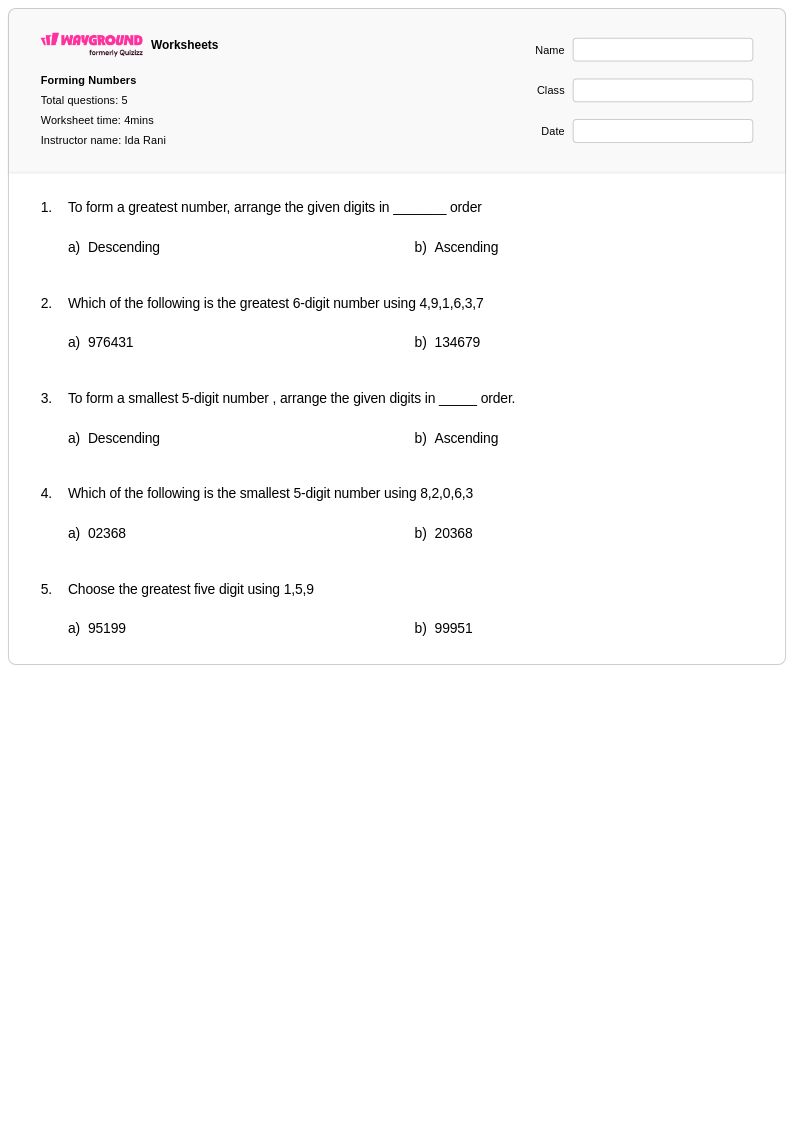
5 Q
4th
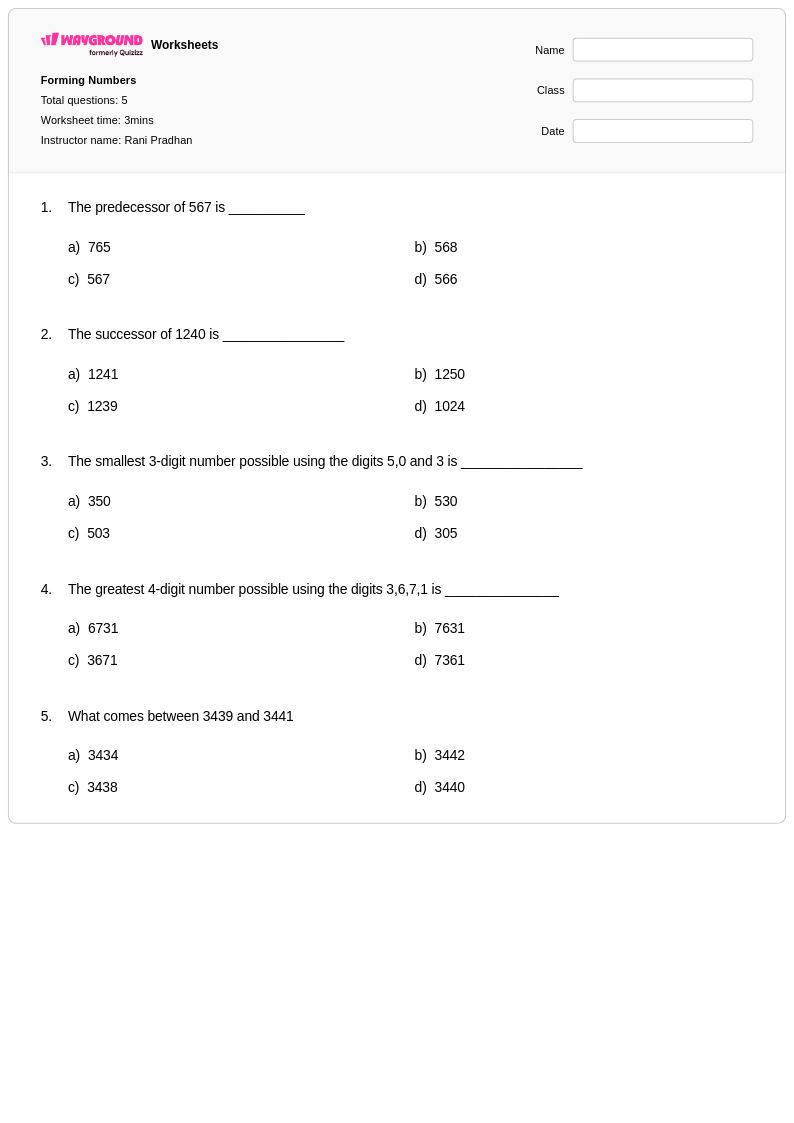
5 Q
3rd
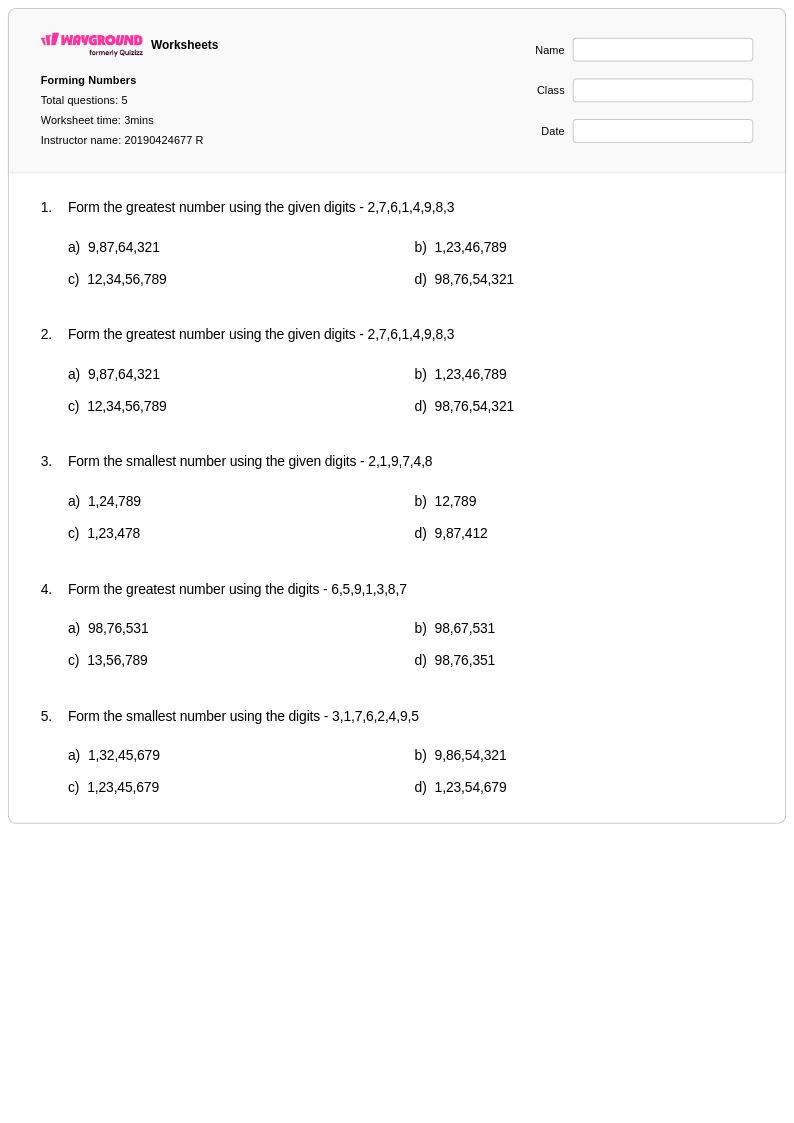
5 Q
4th
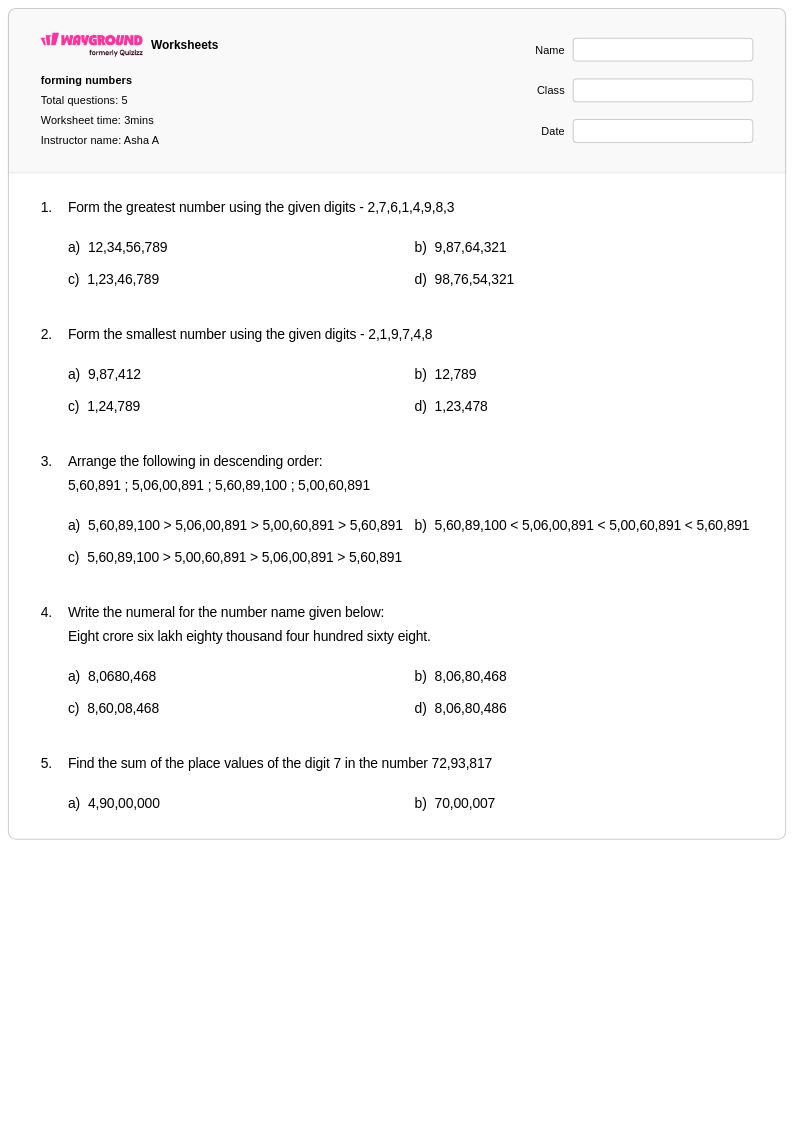
5 Q
6th
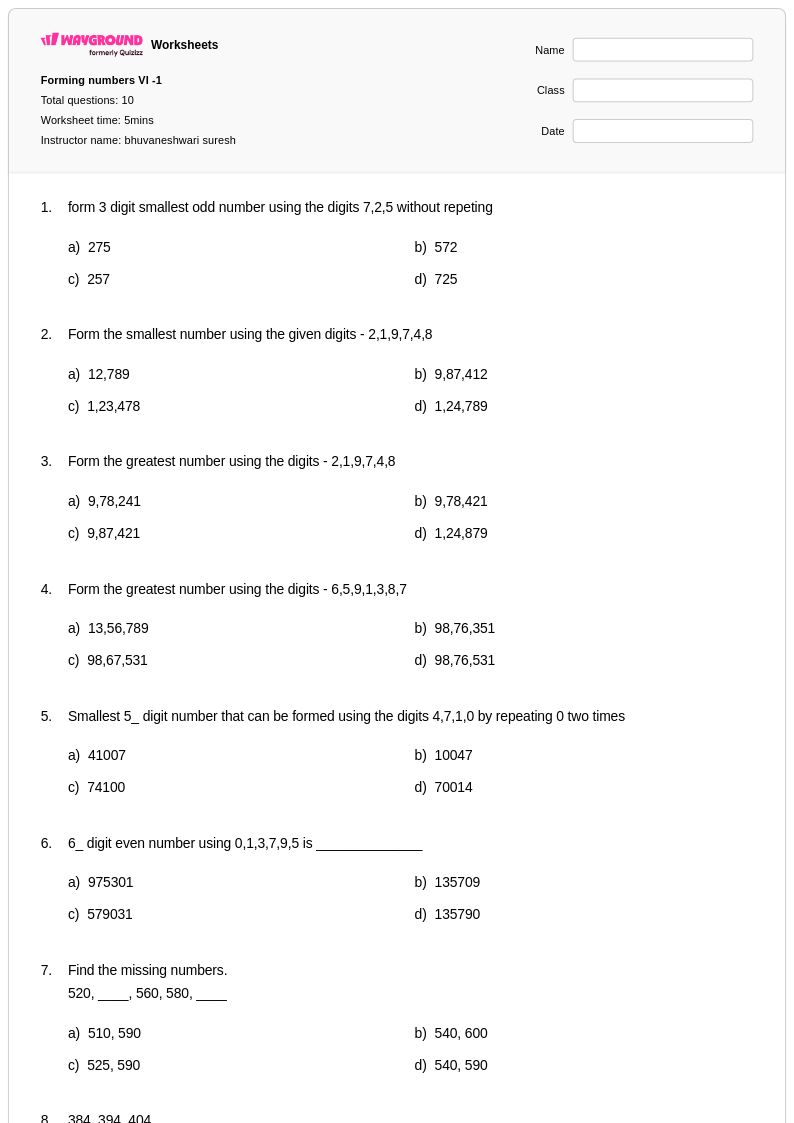
10 Q
5th - 6th
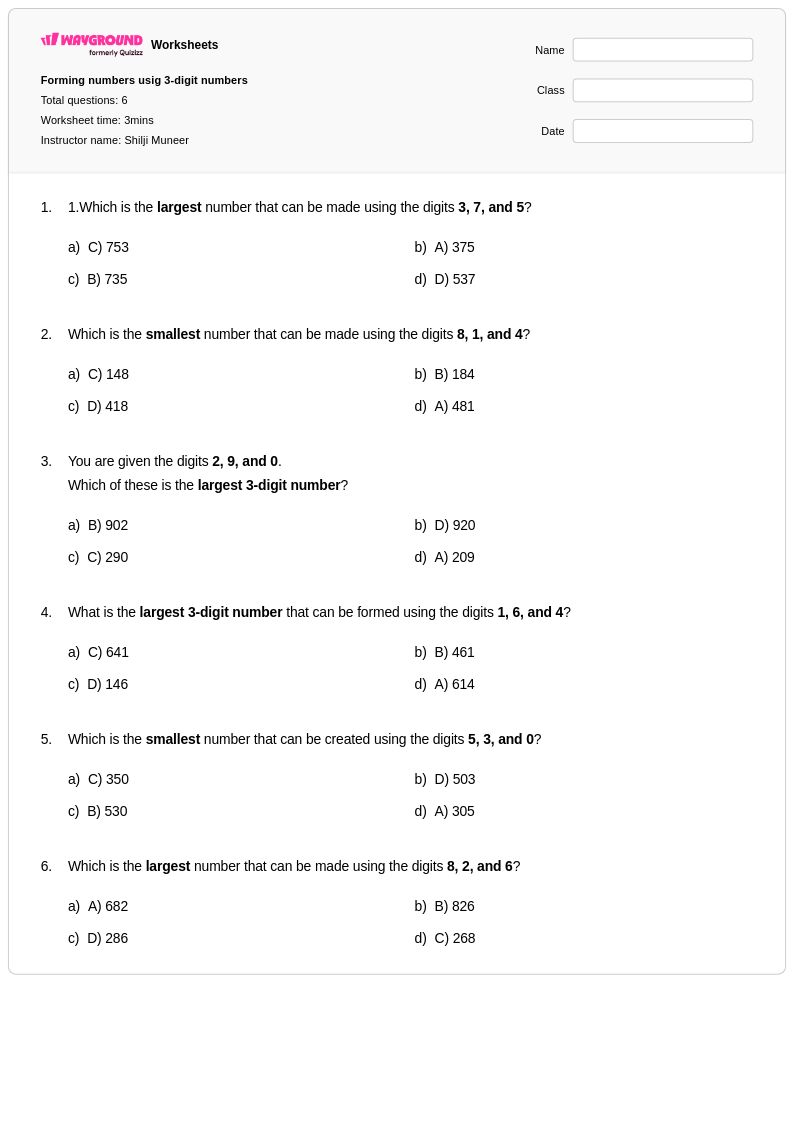
6 Q
2nd
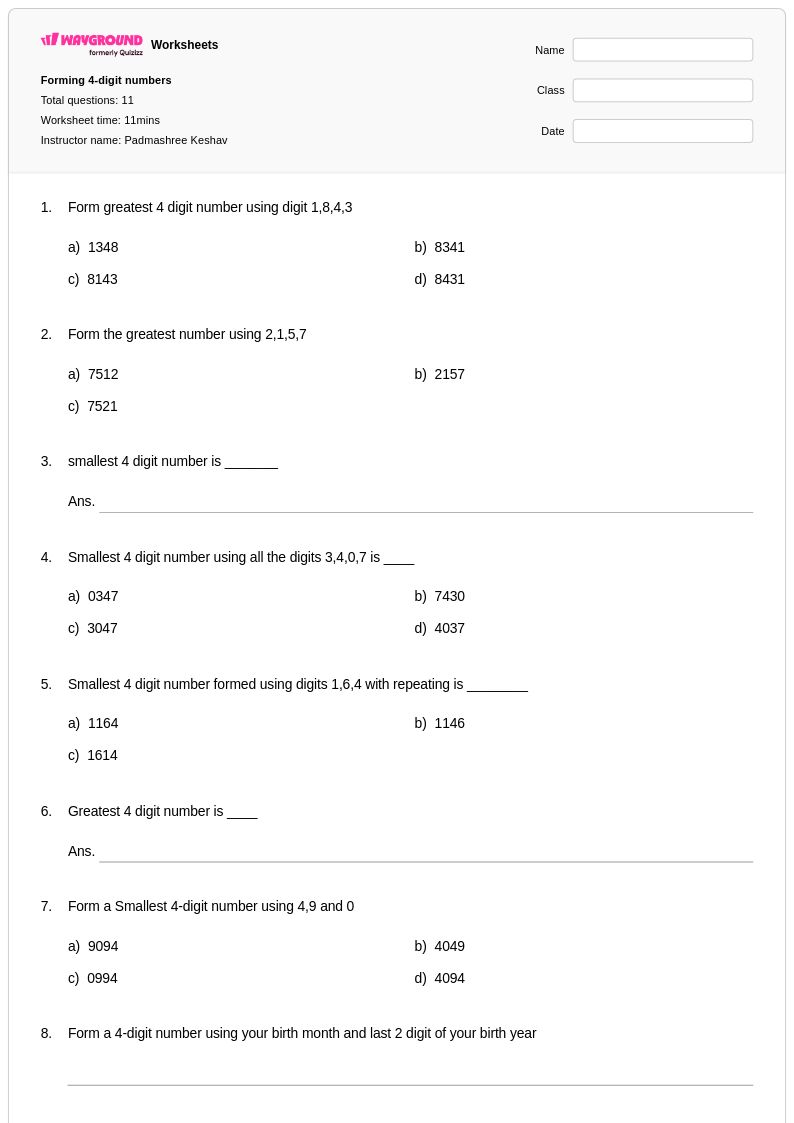
11 Q
3rd
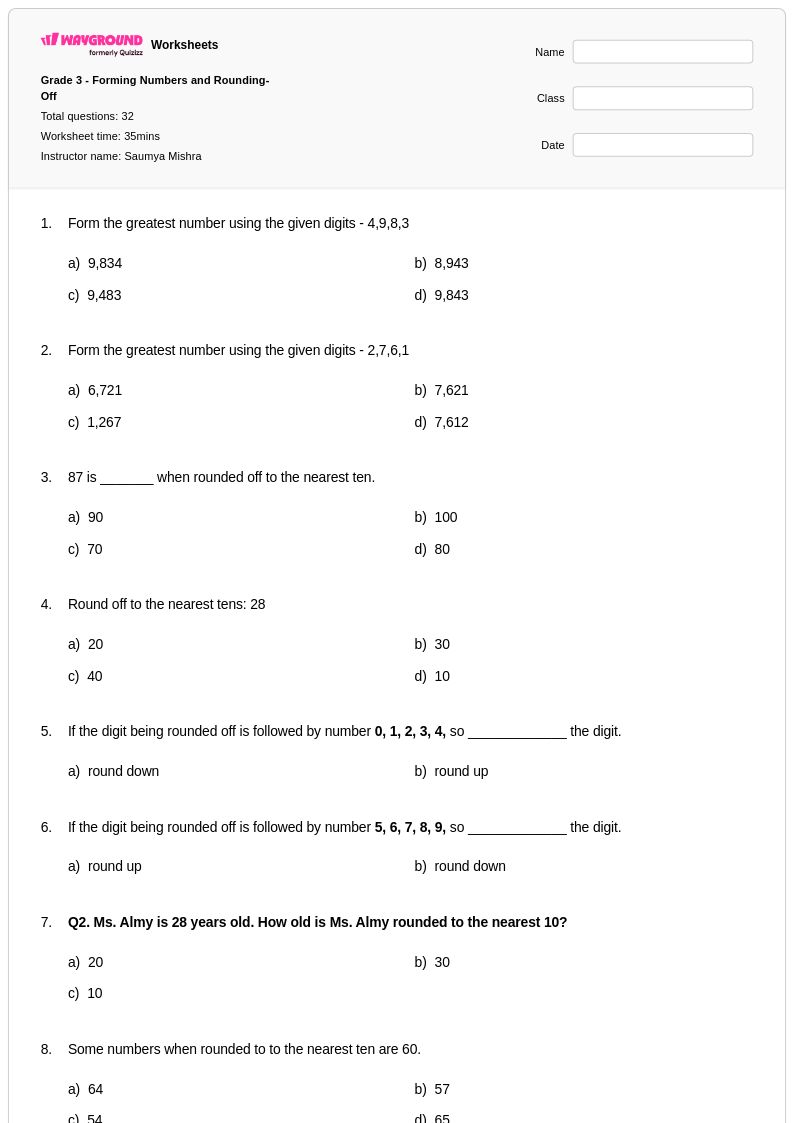
32 Q
4th
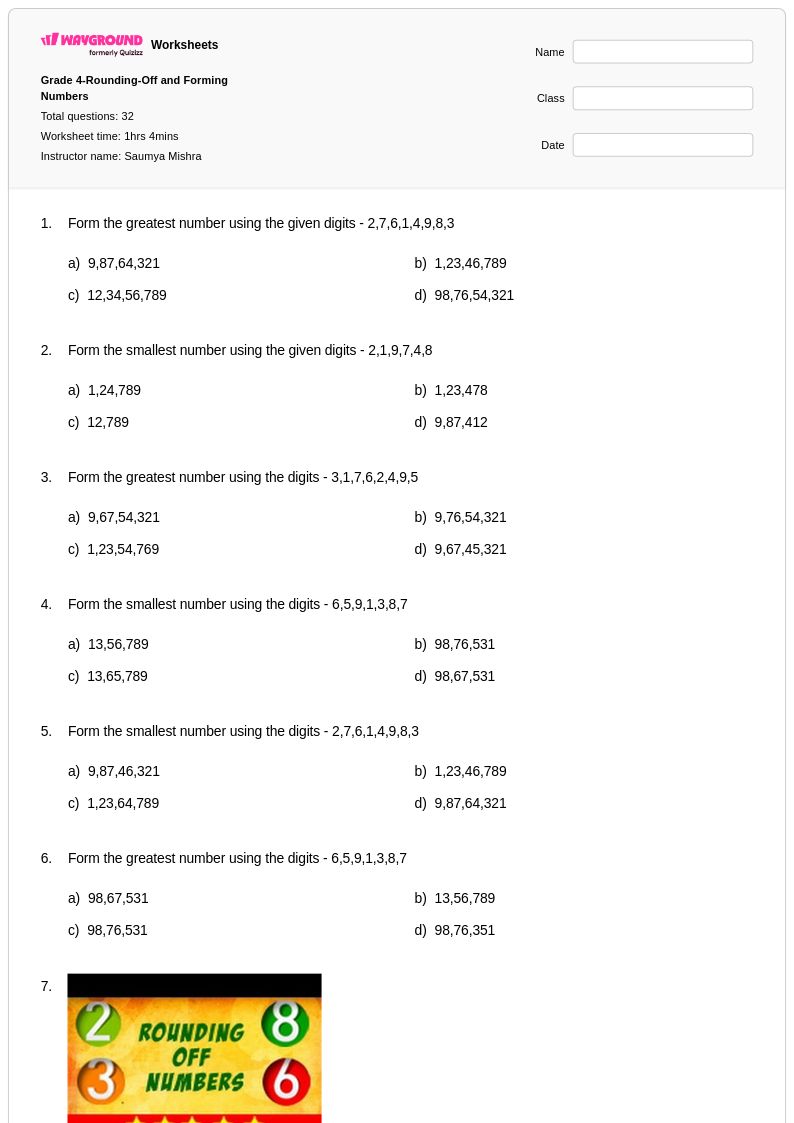
32 Q
4th
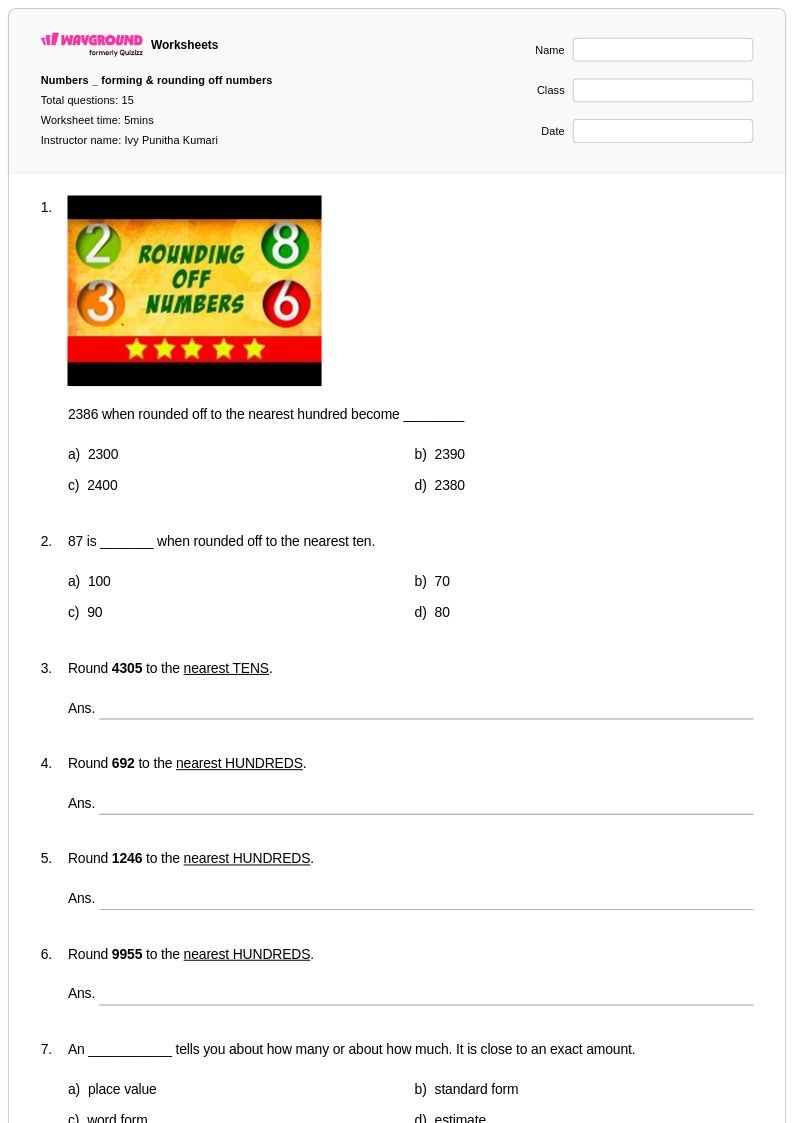
15 Q
4th
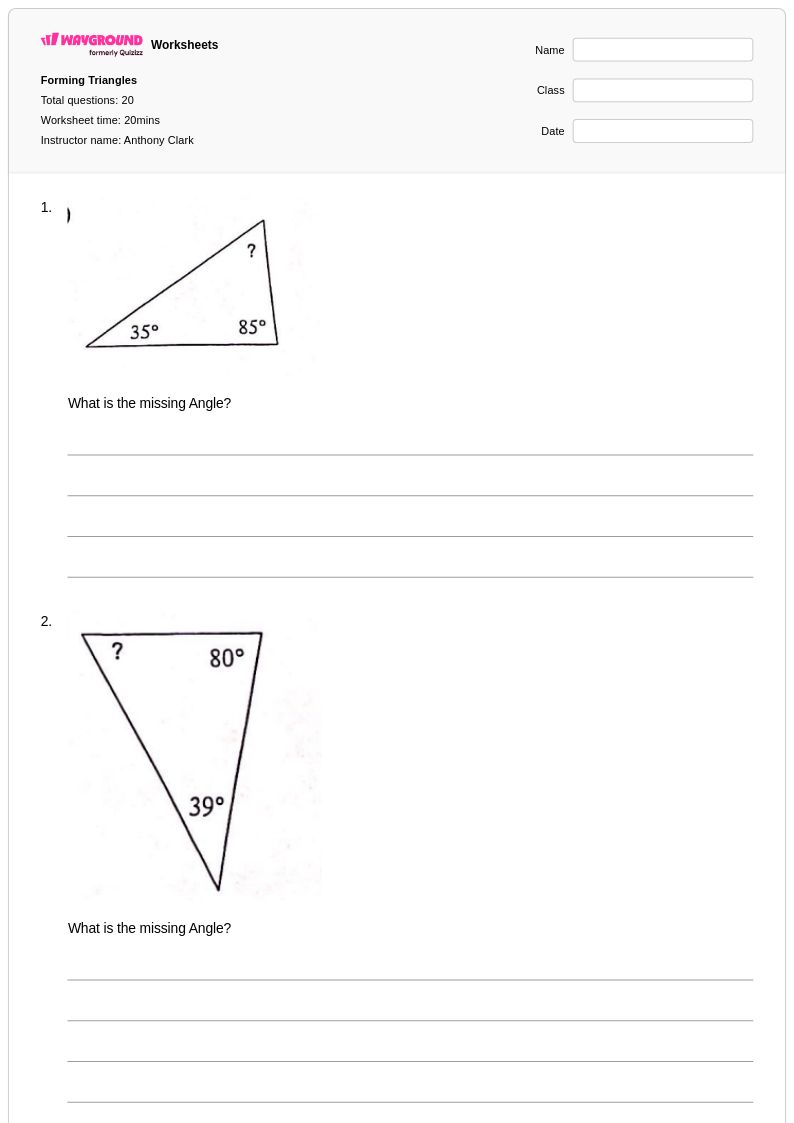
20 Q
6th - Uni
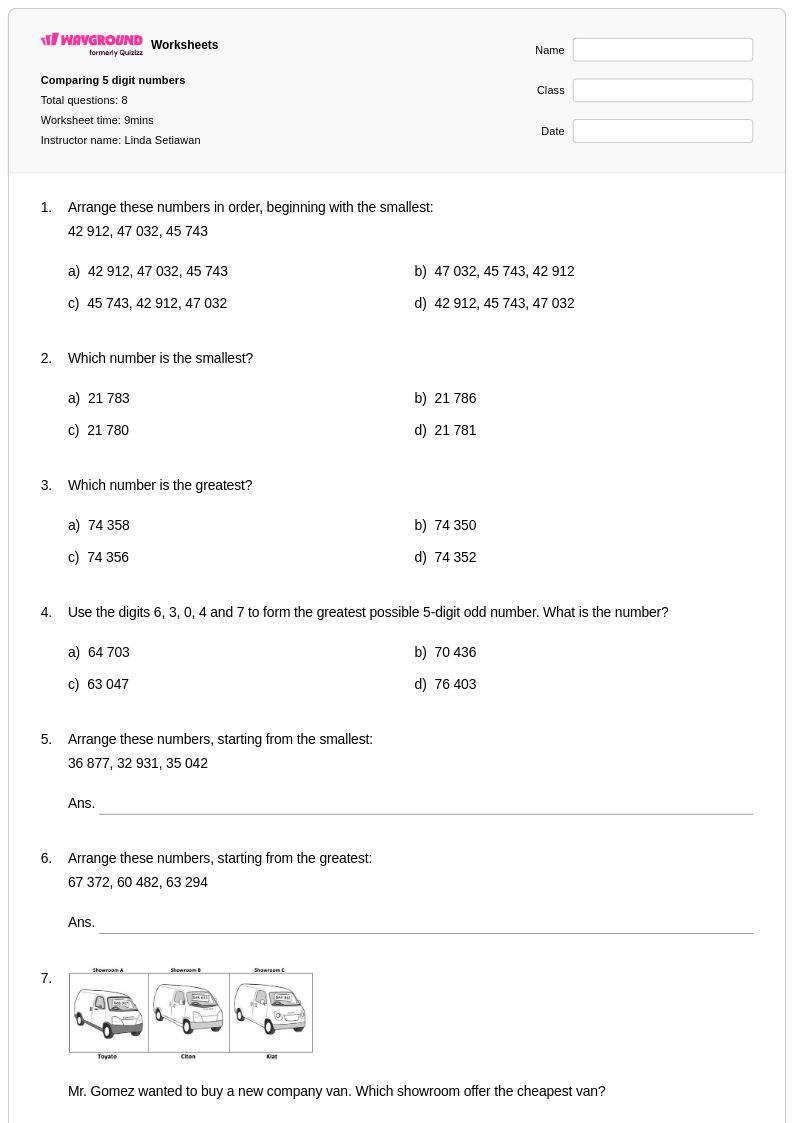
8 Q
4th
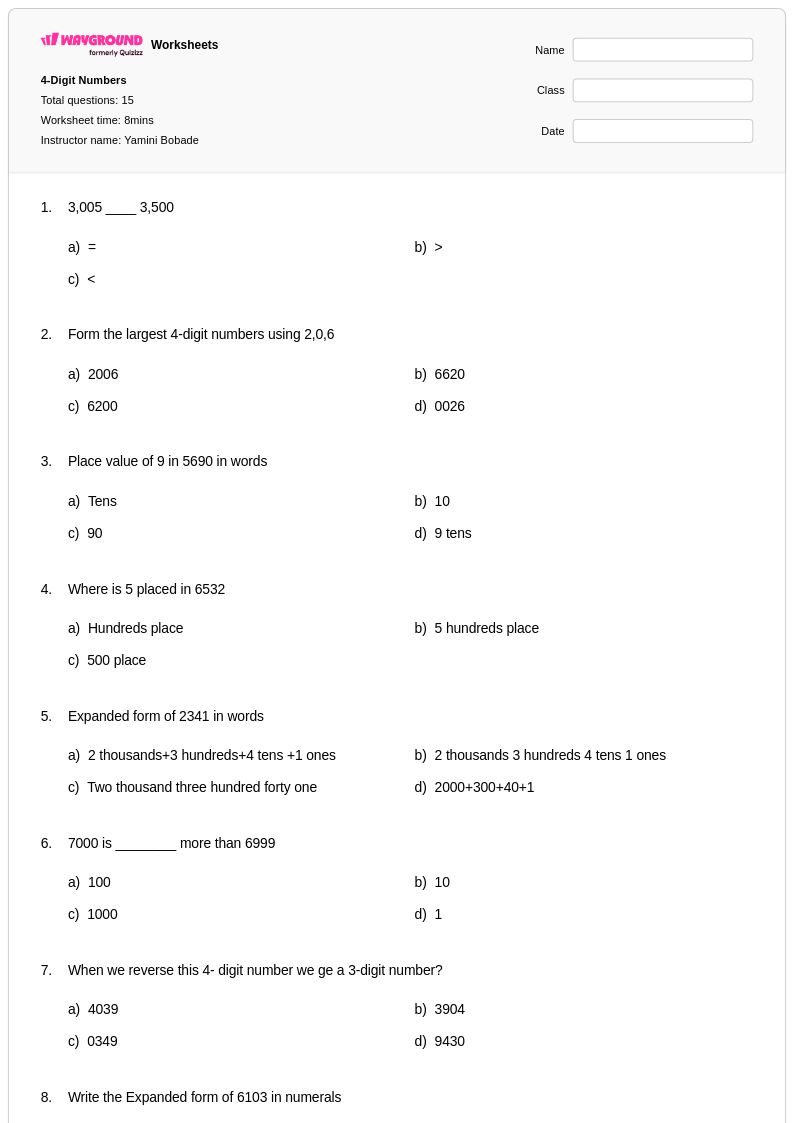
15 Q
3rd - 4th
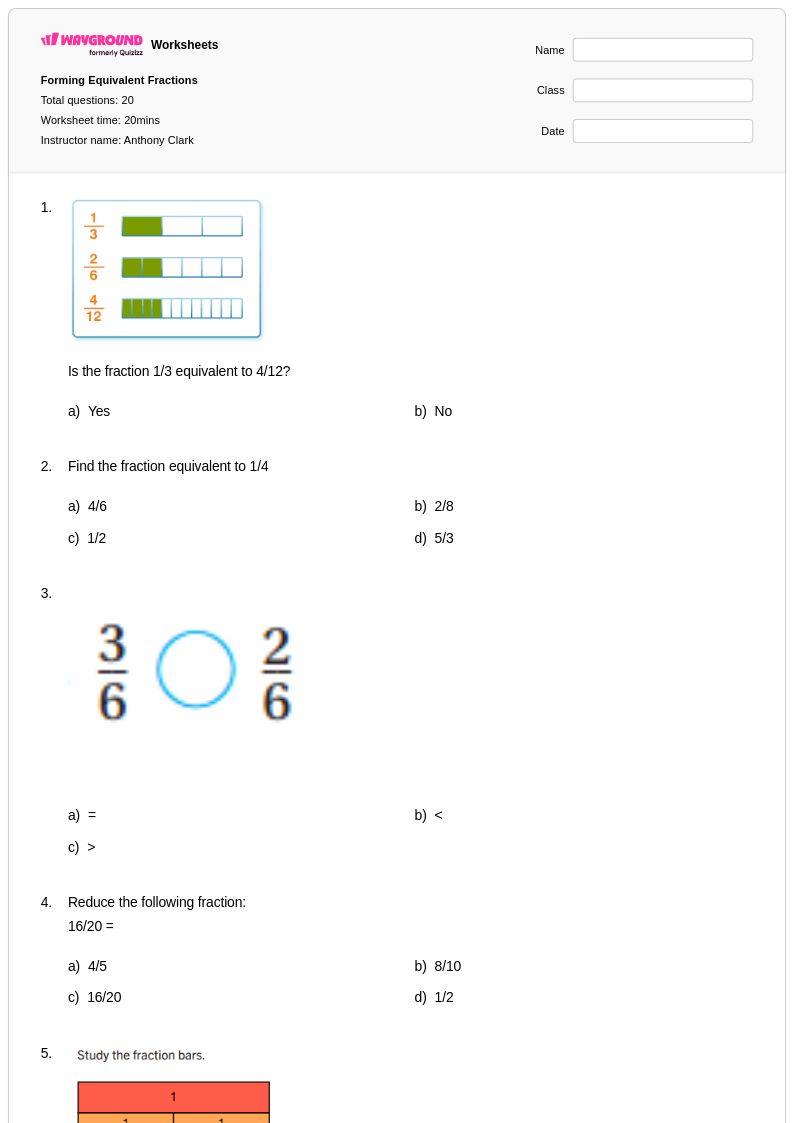
20 Q
4th - Uni
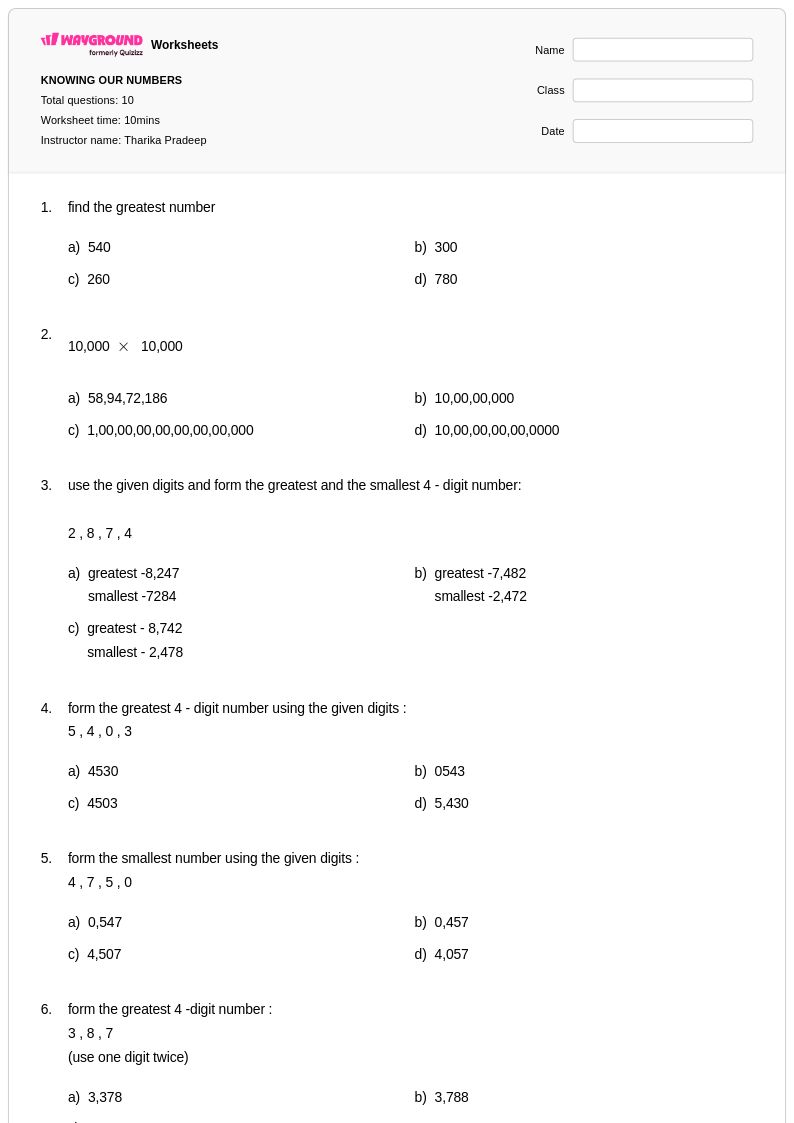
10 Q
6th - 8th
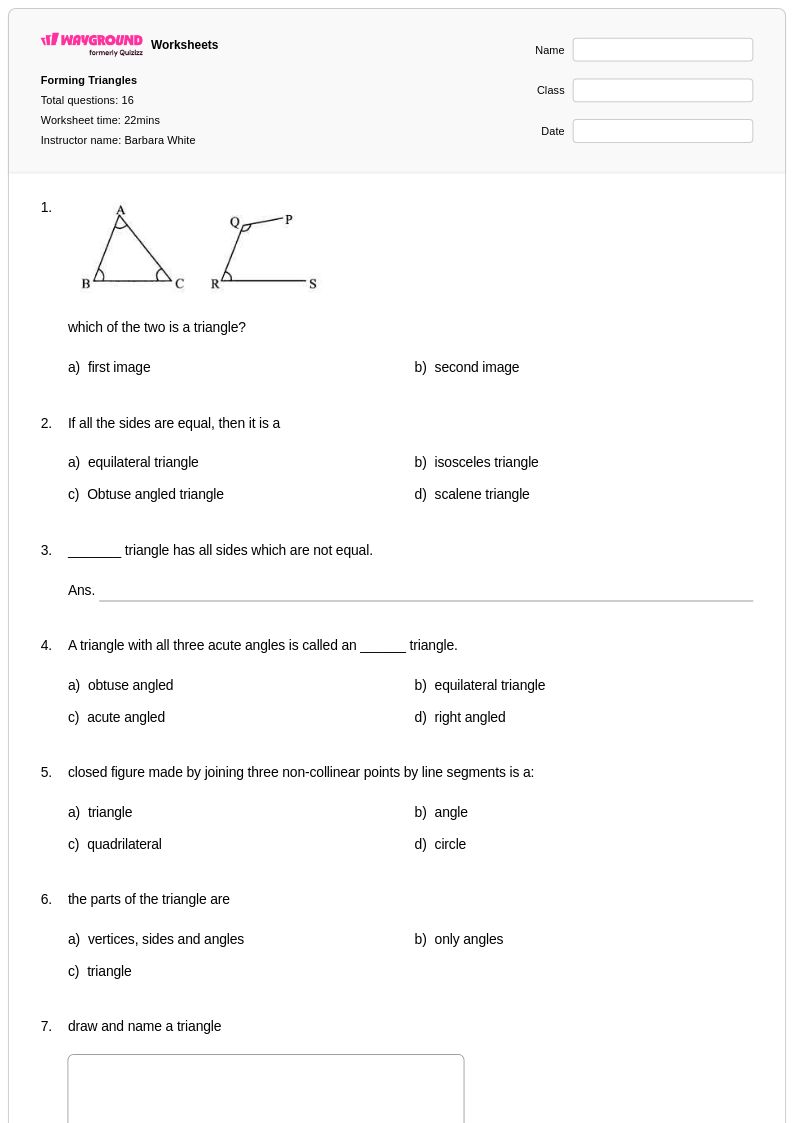
16 Q
6th
Explore Worksheets by Subjects
Explore printable Forming Numbers worksheets
Forming Numbers worksheets available through Wayground (formerly Quizizz) provide students with essential practice in understanding how digits combine to create meaningful numerical values and place value relationships. These comprehensive mathematics resources strengthen foundational skills including digit recognition, place value understanding, number construction from written and verbal forms, and the relationship between numbers and their component parts. Students work through carefully structured practice problems that guide them from basic single-digit recognition to more complex multi-digit number formation, with each worksheet including a complete answer key for immediate feedback and self-assessment. The free printable pdf format makes these resources accessible for both classroom instruction and independent practice, allowing educators to seamlessly integrate number formation exercises into their mathematics curriculum.
Wayground (formerly Quizizz) empowers teachers with millions of educator-created resources specifically designed to support number sense instruction through comprehensive search and filtering capabilities that help locate age-appropriate forming numbers content. The platform's robust collection includes worksheets aligned to mathematics standards, offering differentiation tools that allow educators to customize difficulty levels and modify practice problems to meet diverse learning needs. Teachers can access these resources in both printable and digital pdf formats, providing flexibility for classroom instruction, homework assignments, remediation sessions, and enrichment activities. The extensive library of forming numbers worksheets supports strategic lesson planning by offering varied approaches to number construction concepts, enabling educators to provide targeted skill practice that builds confidence and mathematical understanding through systematic, scaffolded learning experiences.
FAQs
How do I teach the concept of forming numbers?
What exercises help students practice forming numbers?
What are common mistakes students make when forming numbers?
How can I use this forming numbers worksheet with my class?
How does the concept of forming numbers fit into the Common Core math standards?
How can I differentiate instruction for forming numbers?