
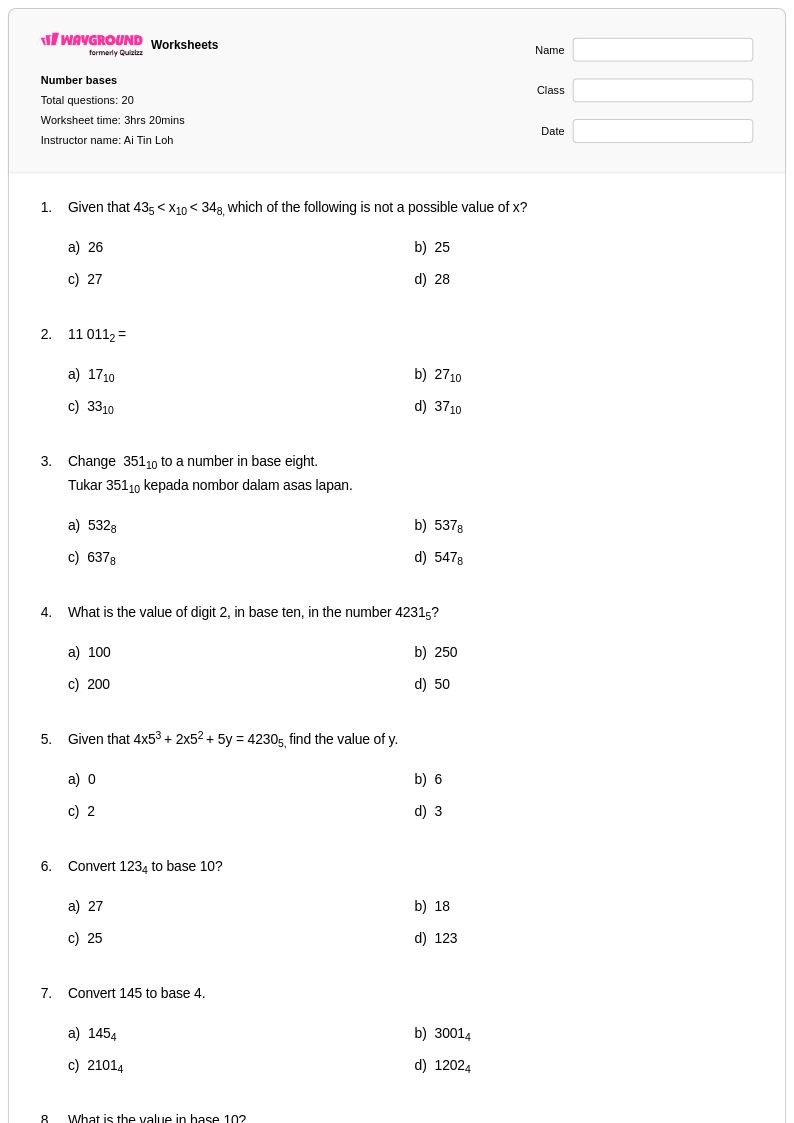
20 Q
7th
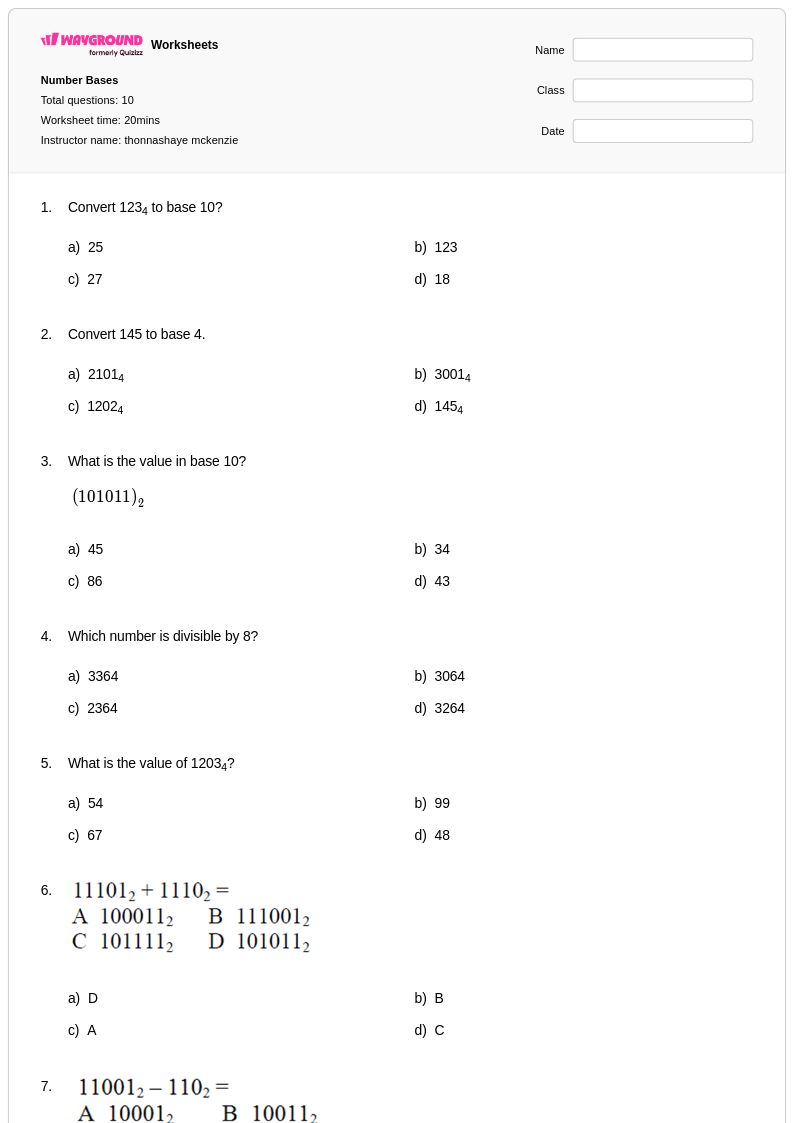
10 Q
8th - 9th
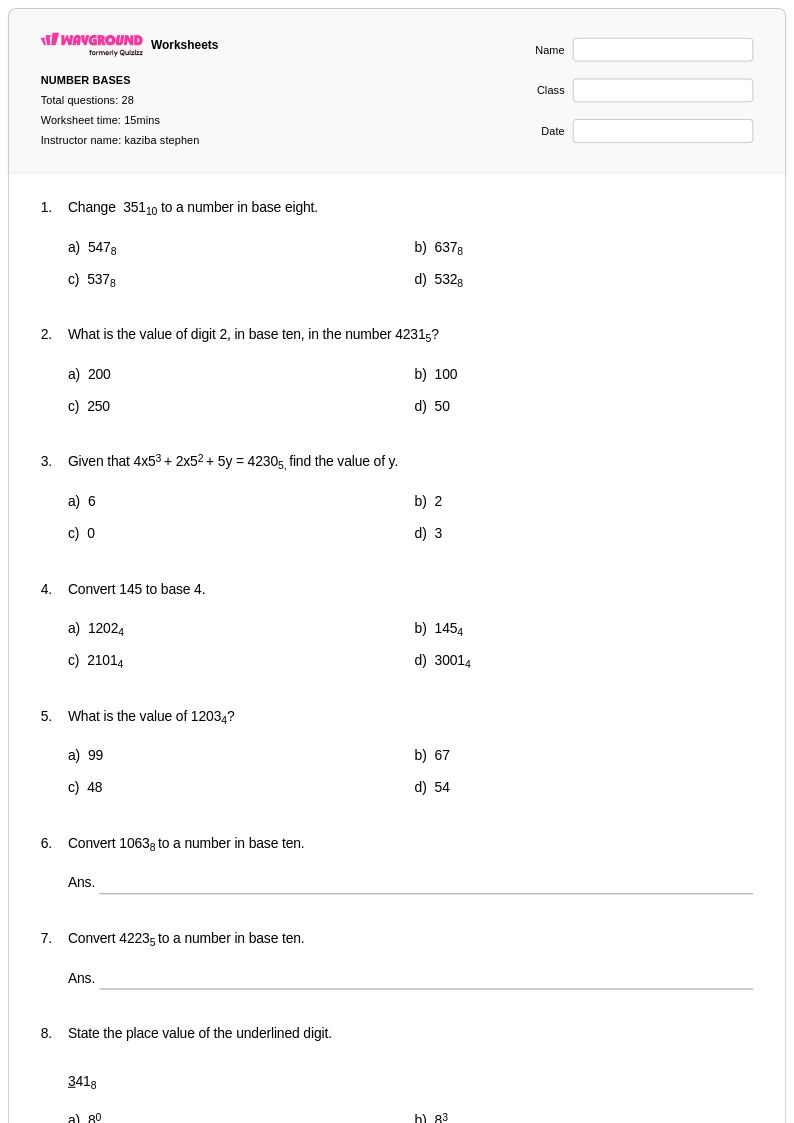
28 Q
10th
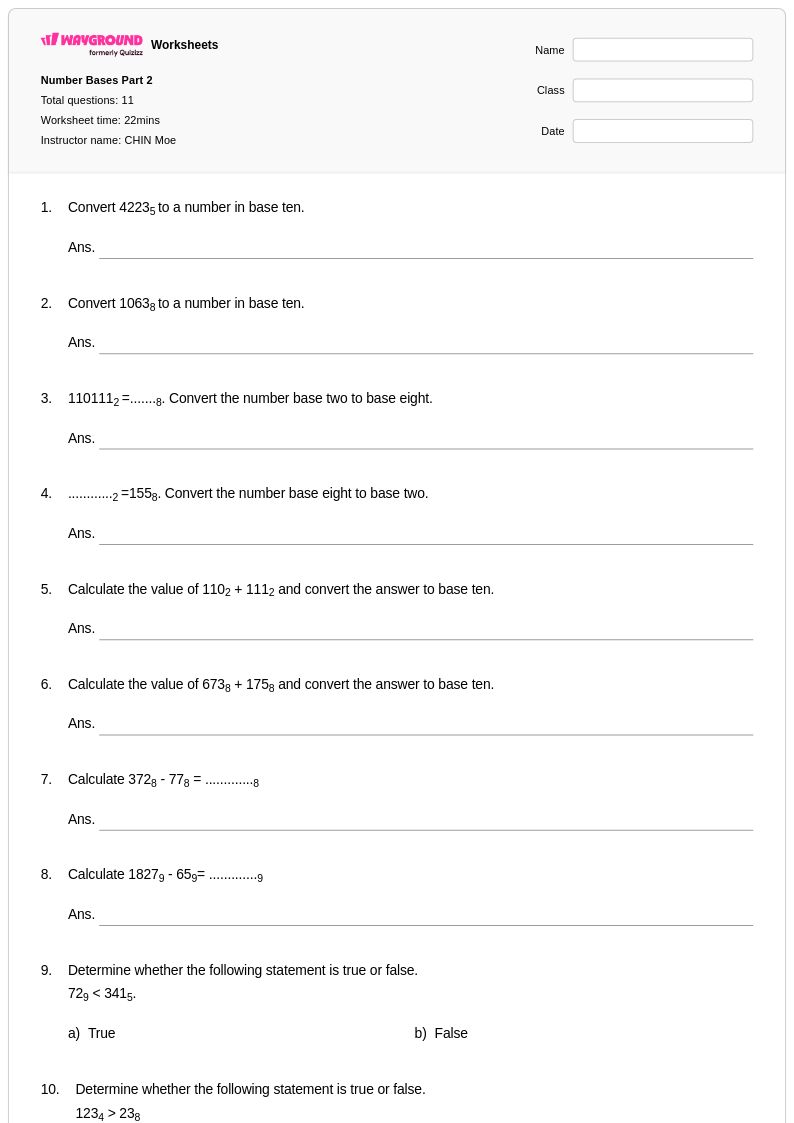
11 Q
4th
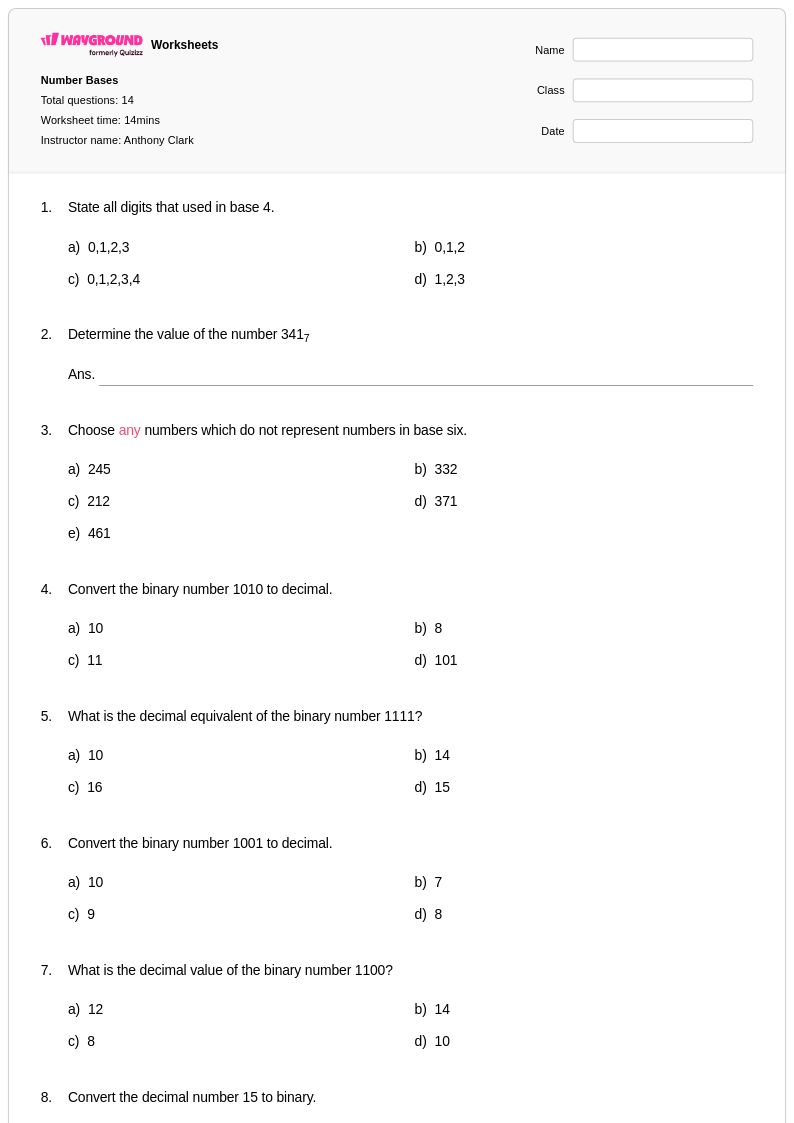
14 Q
9th - Uni
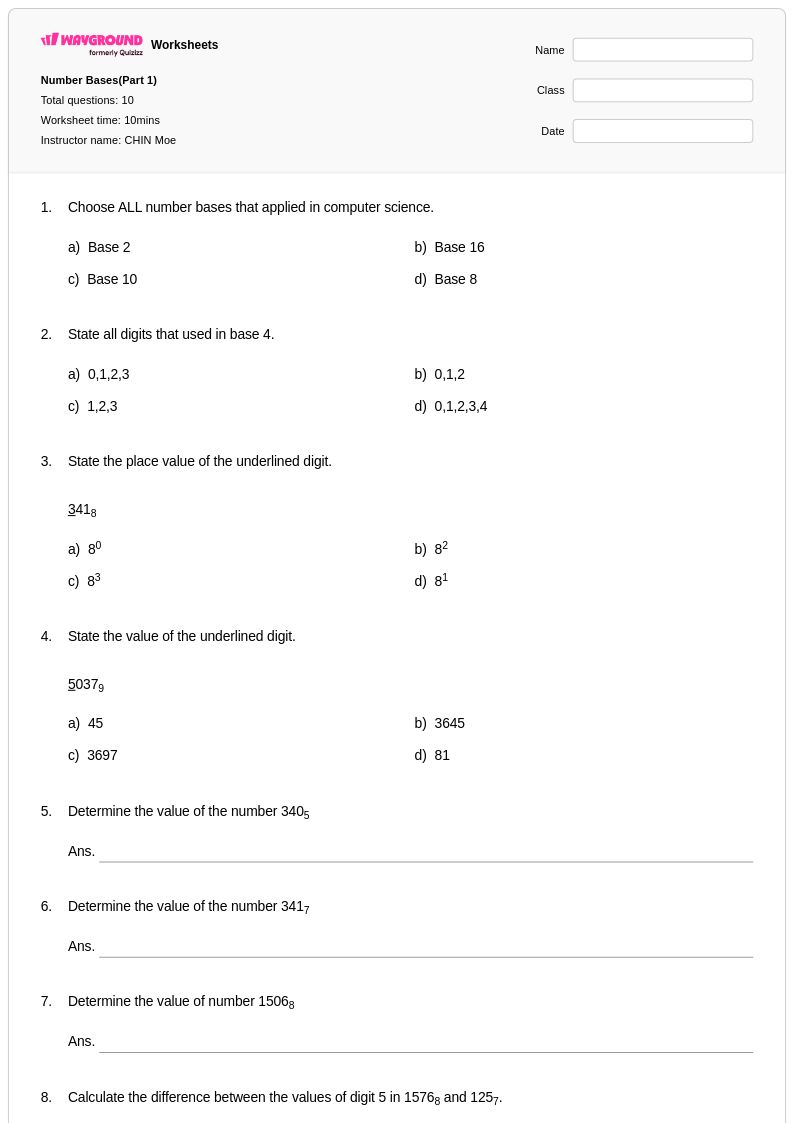
10 Q
4th
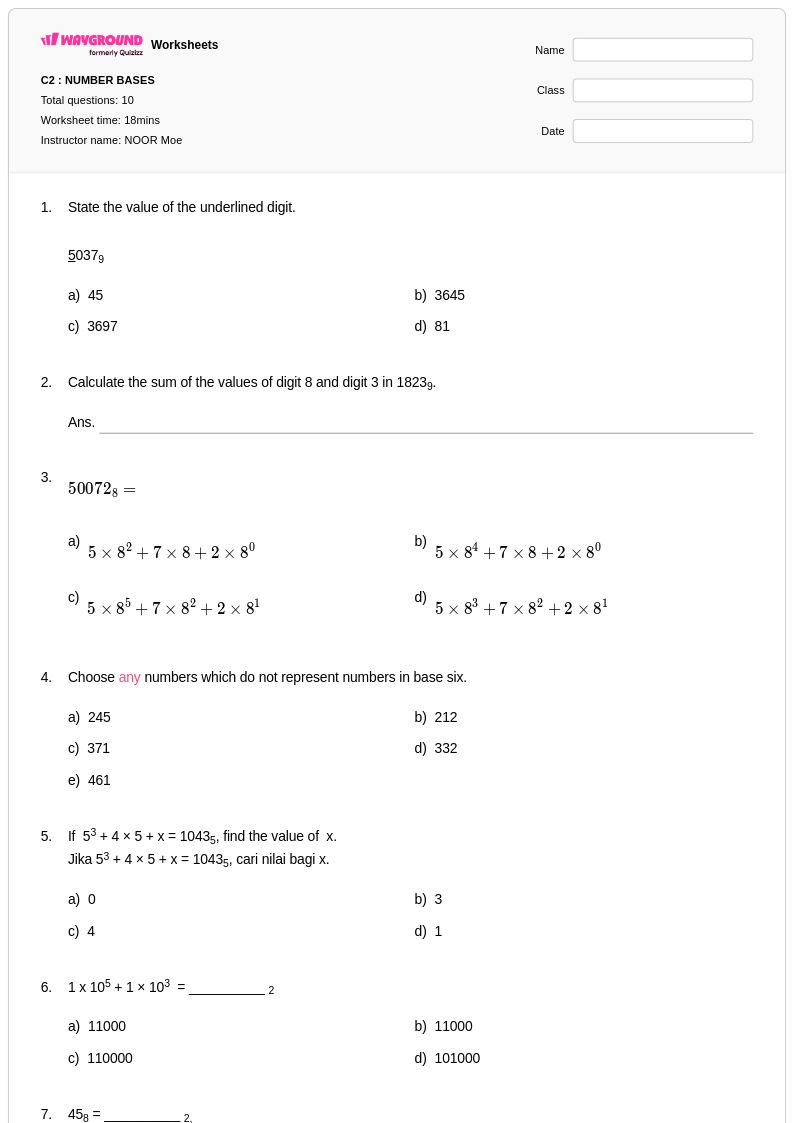
10 Q
11th
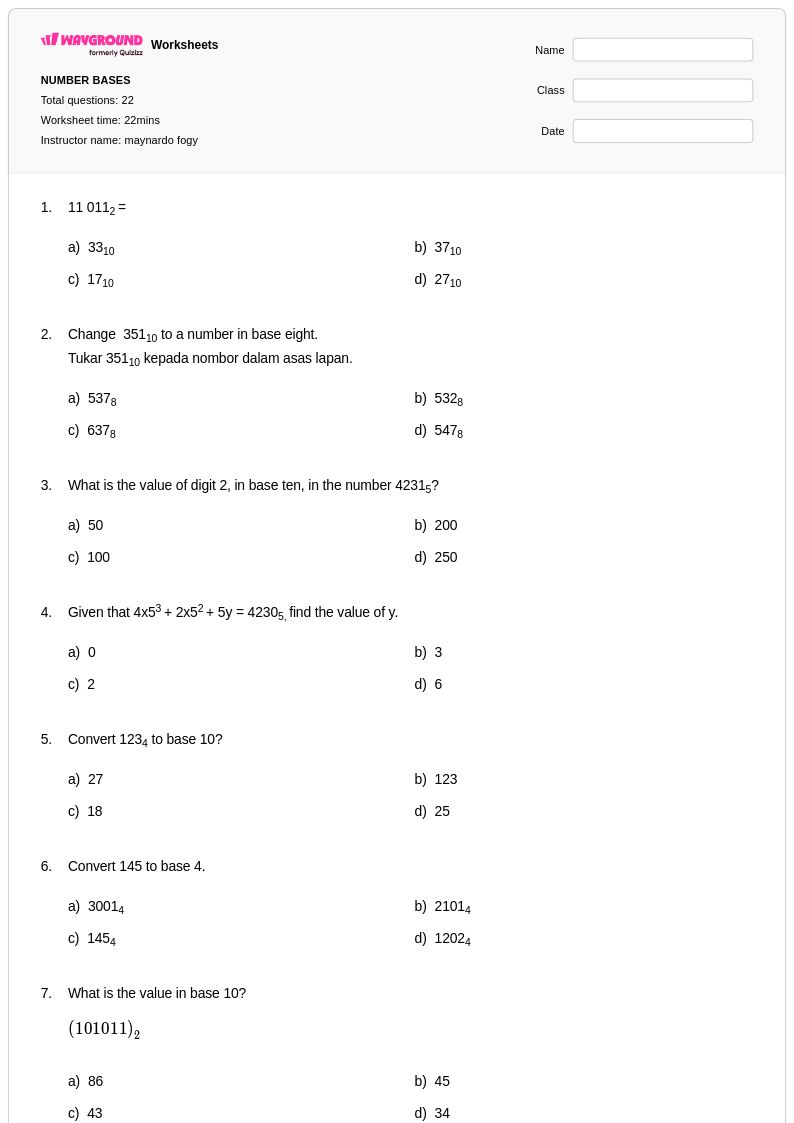
22 Q
7th
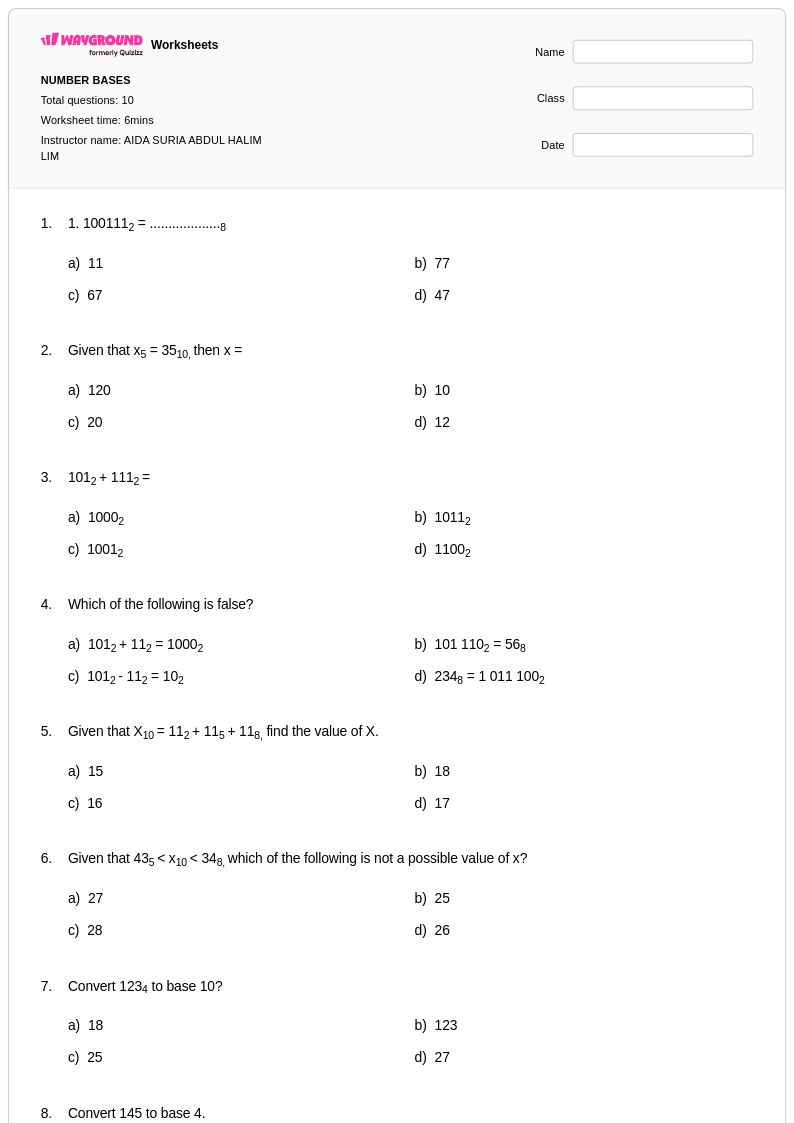
10 Q
5th
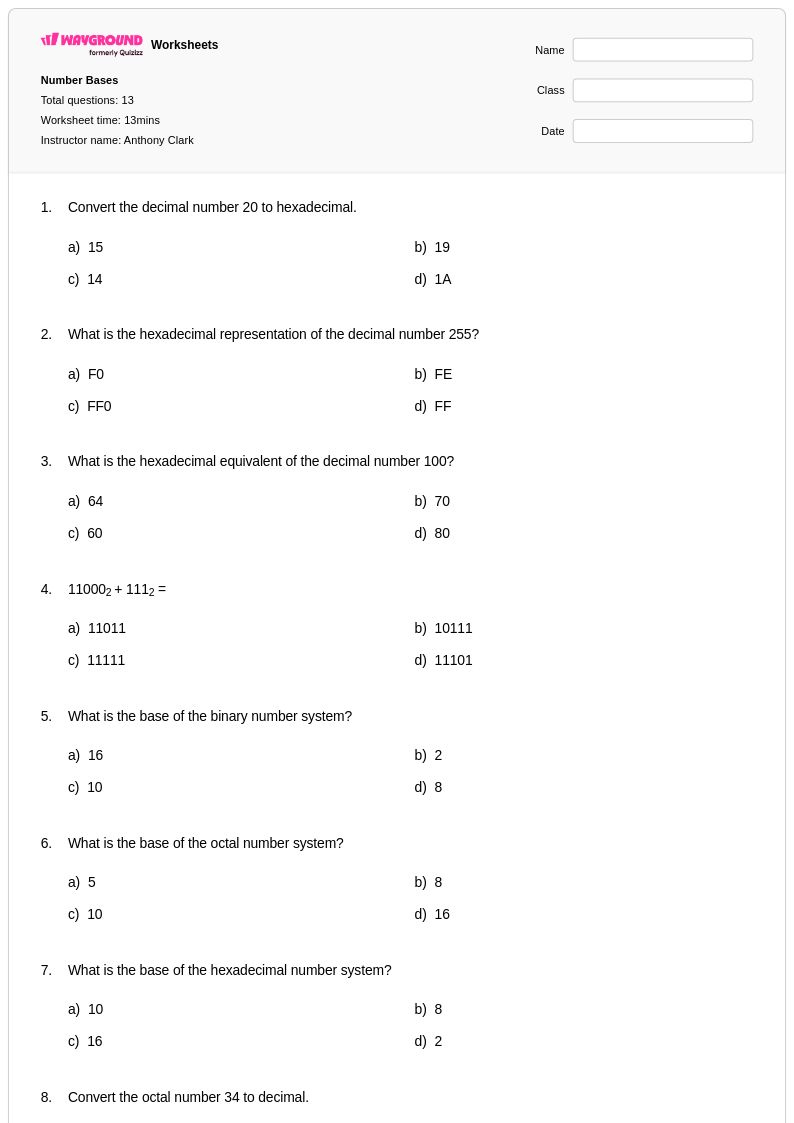
13 Q
9th - Uni
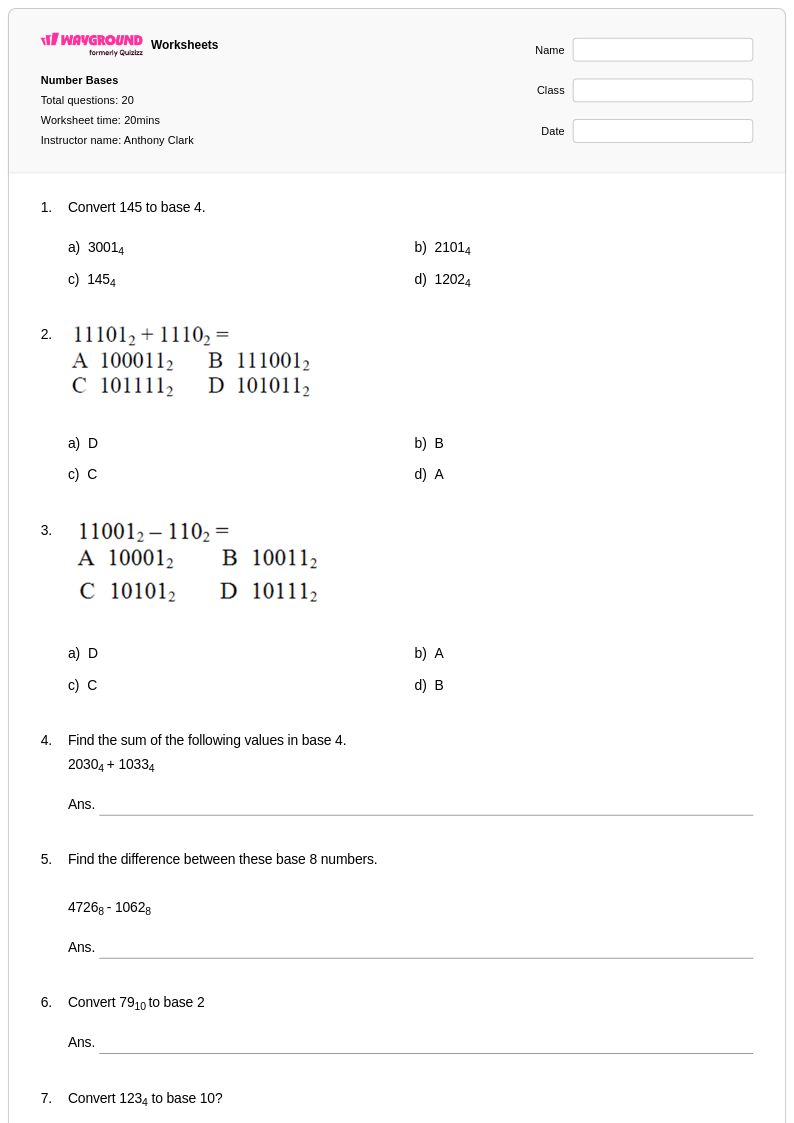
20 Q
9th - Uni
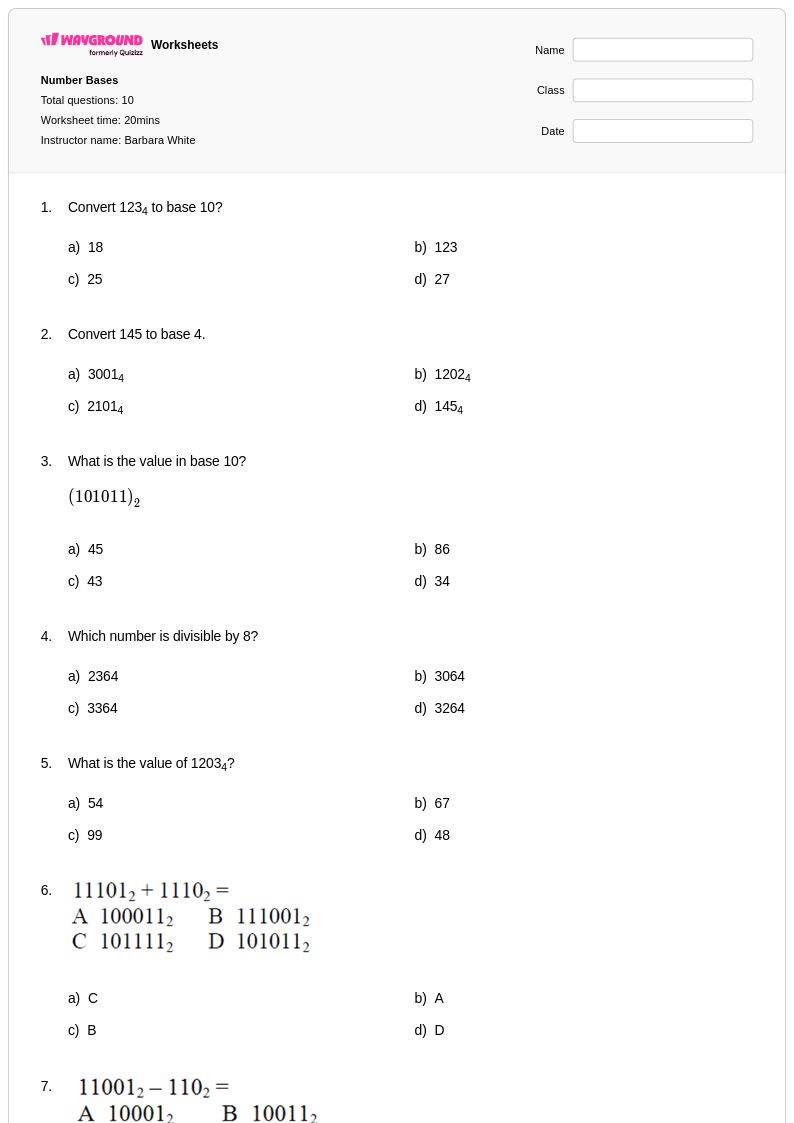
10 Q
8th - 9th
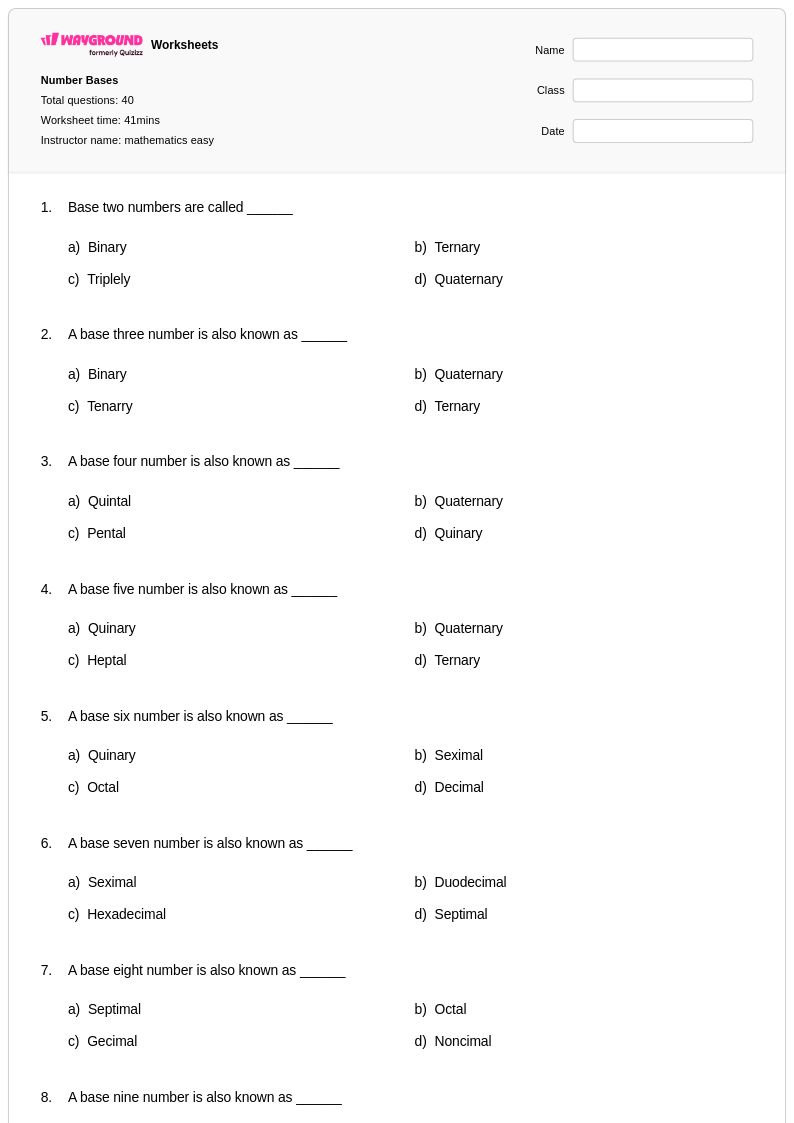
40 Q
8th
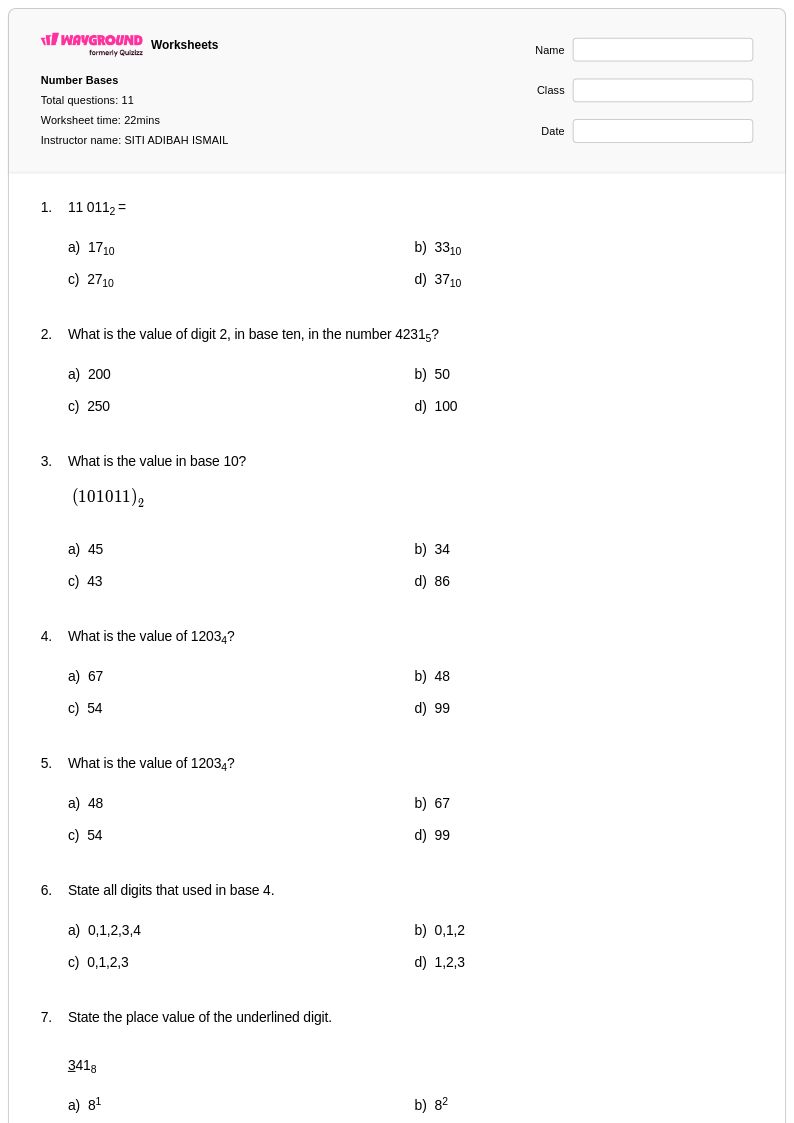
11 Q
2nd - 9th
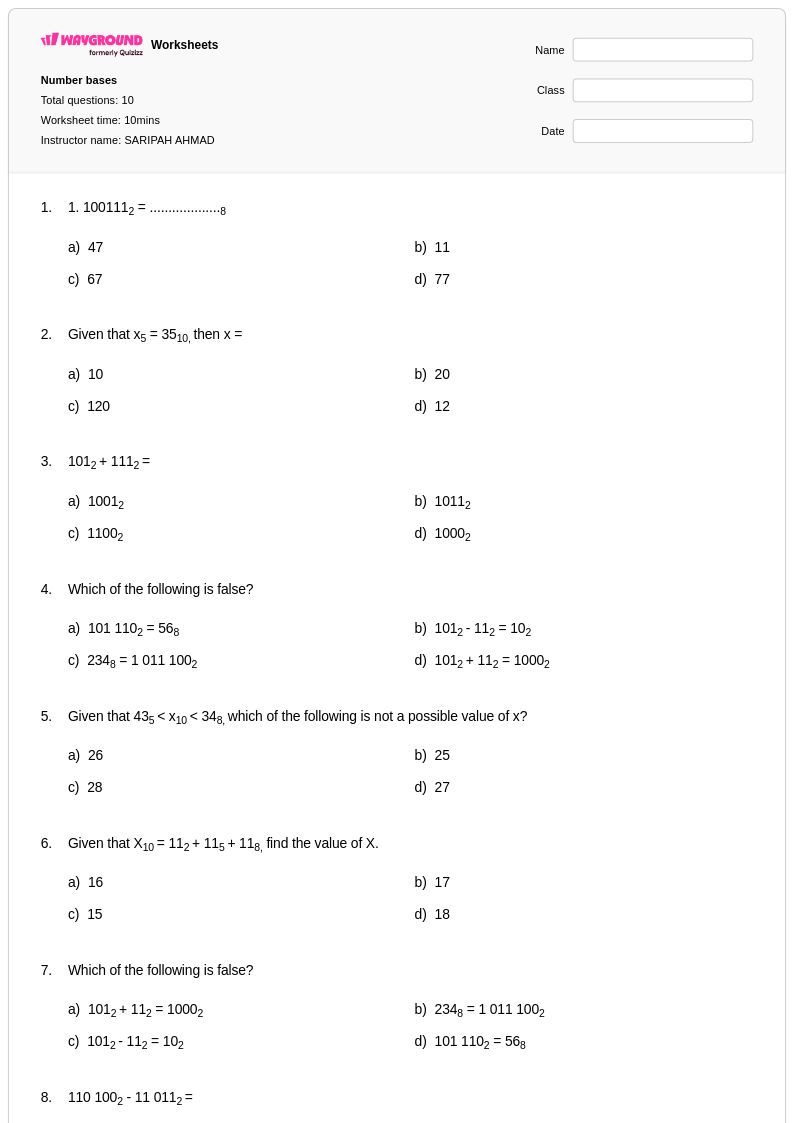
10 Q
8th - 9th
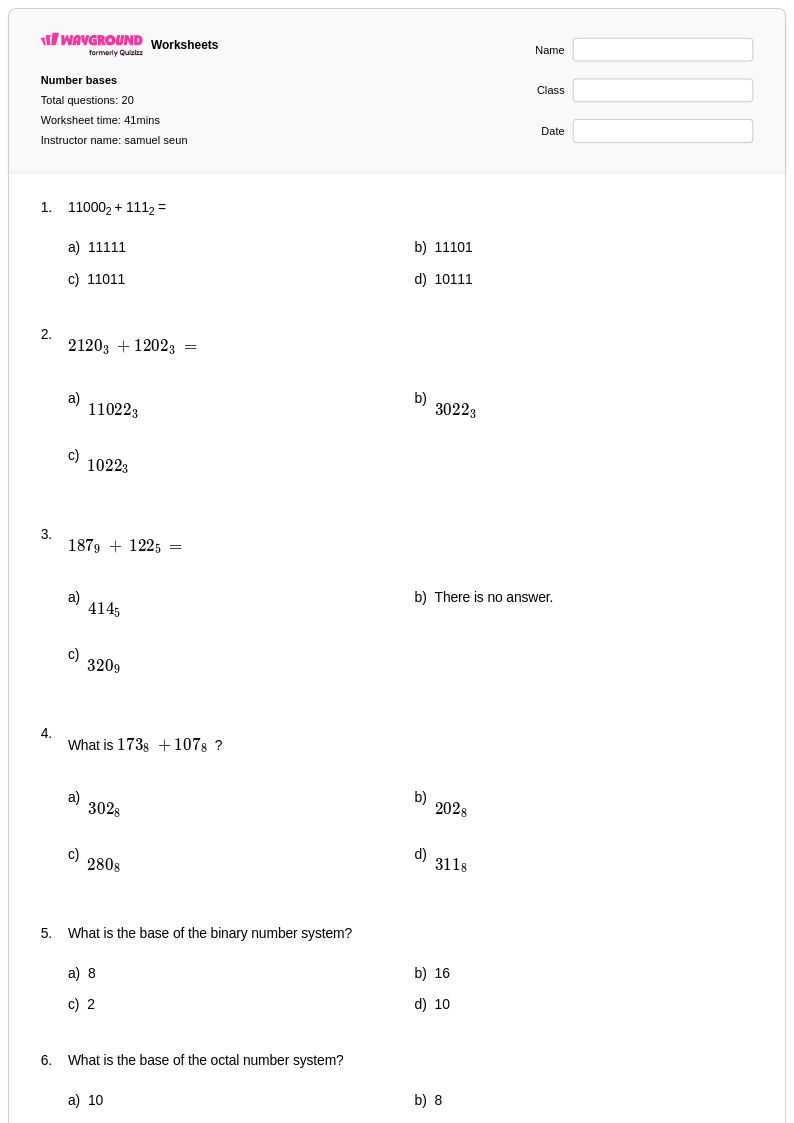
20 Q
9th - 12th
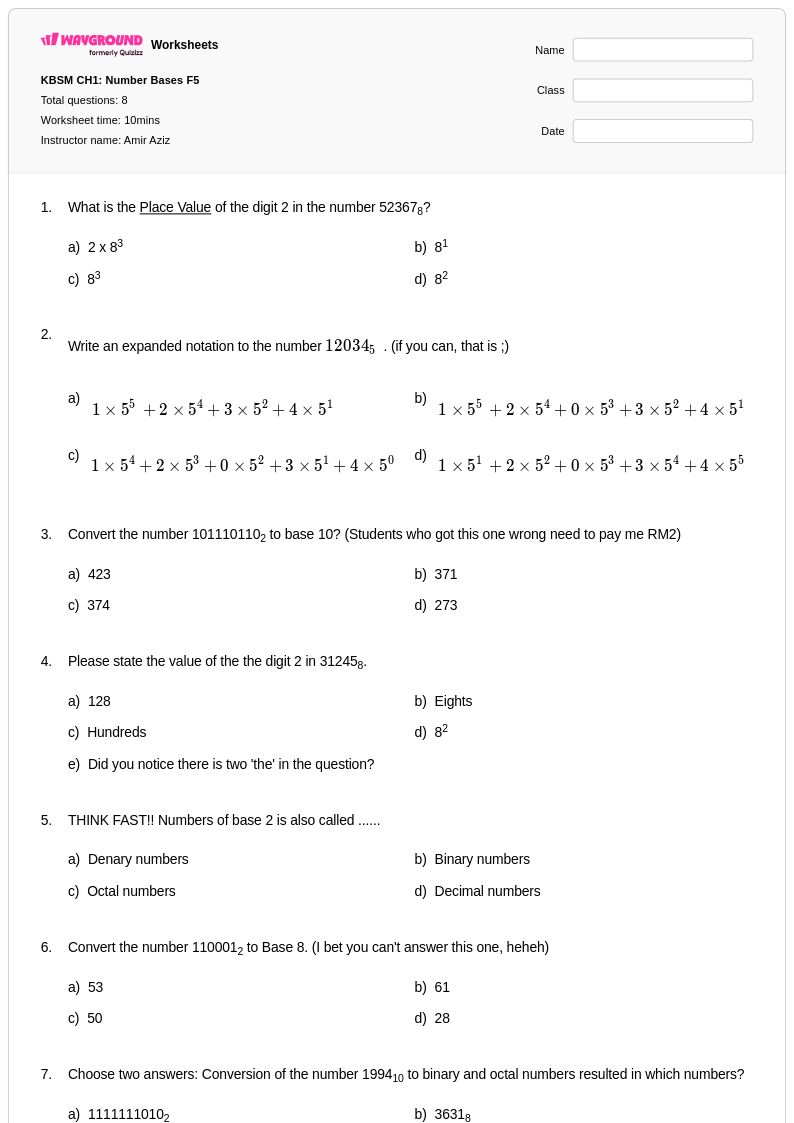
8 Q
10th - 11th
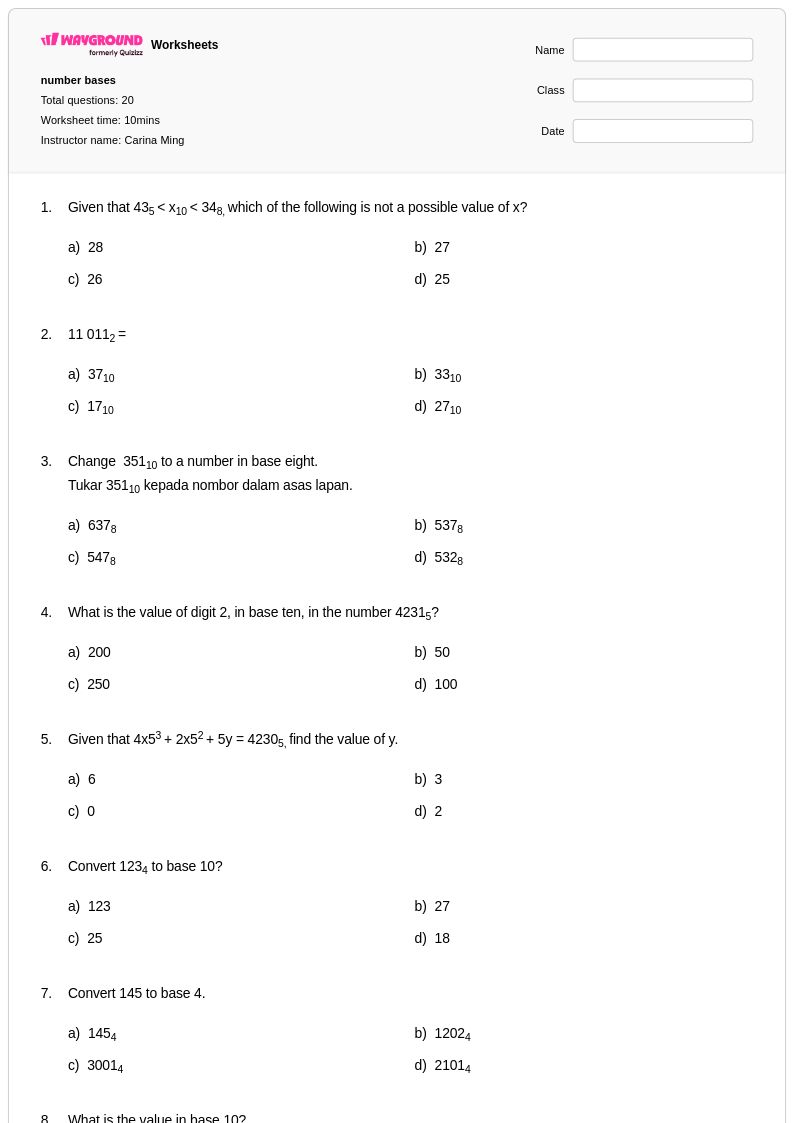
20 Q
10th - 11th
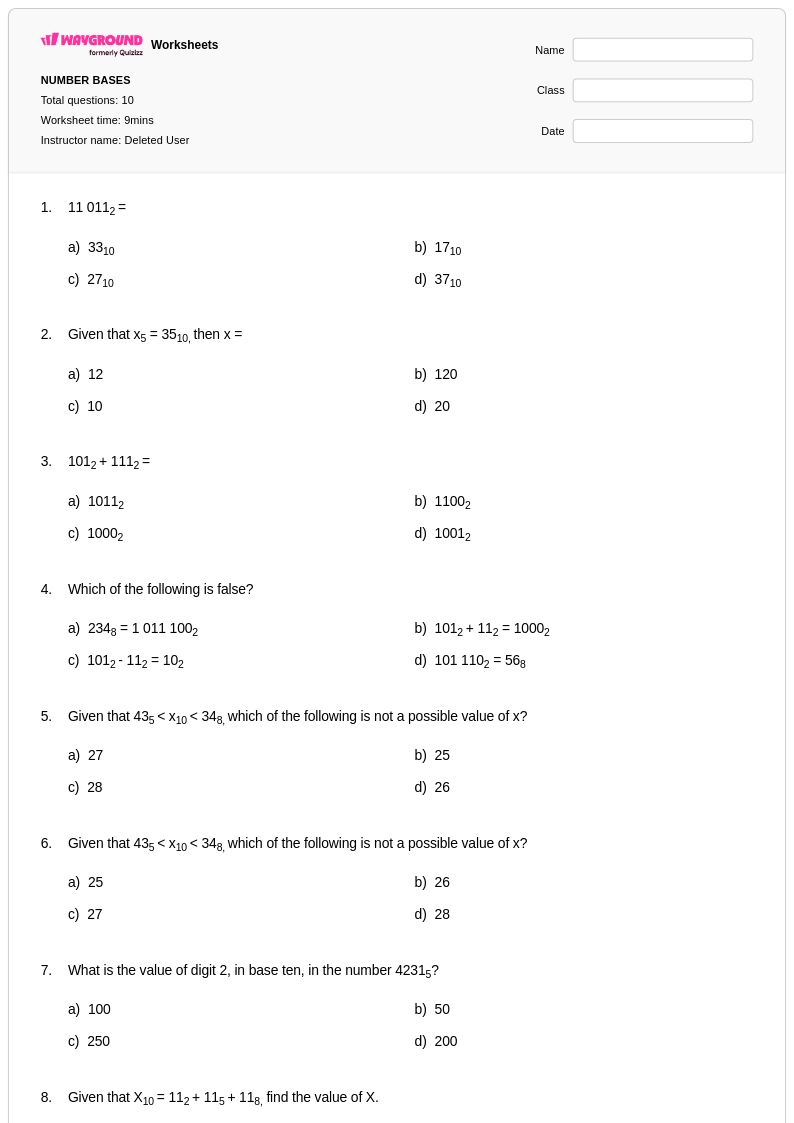
10 Q
12th
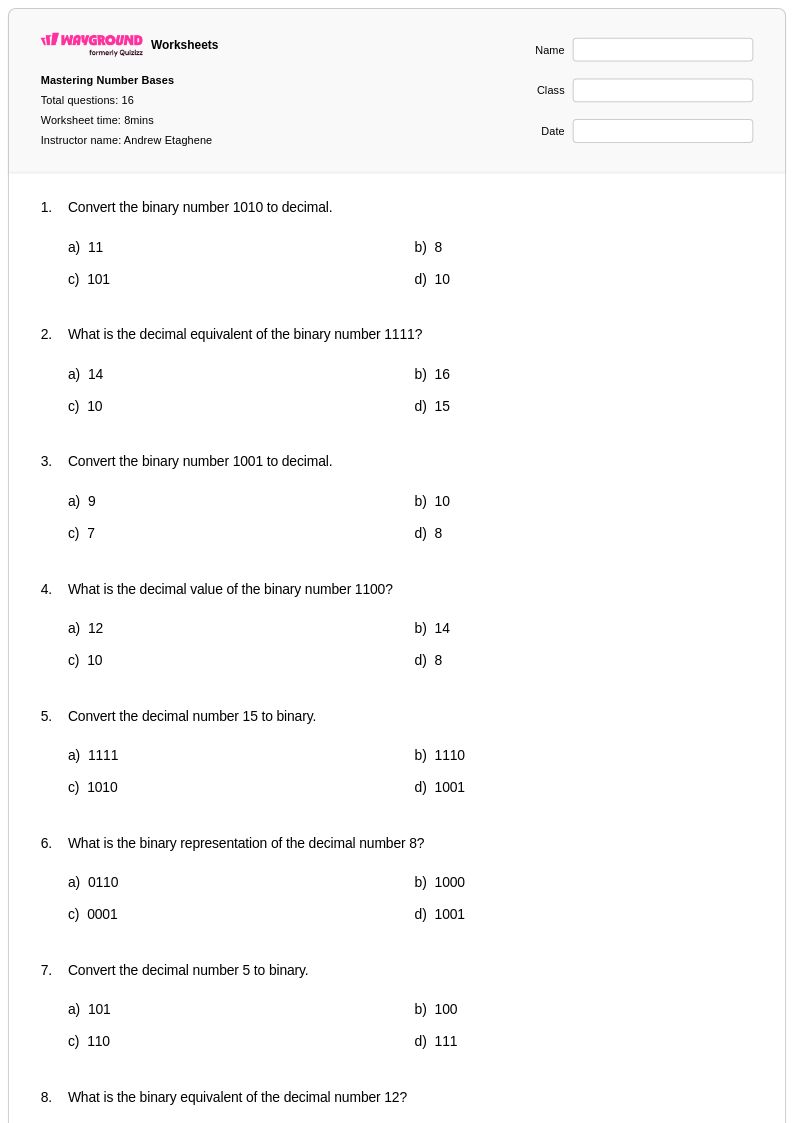
16 Q
9th
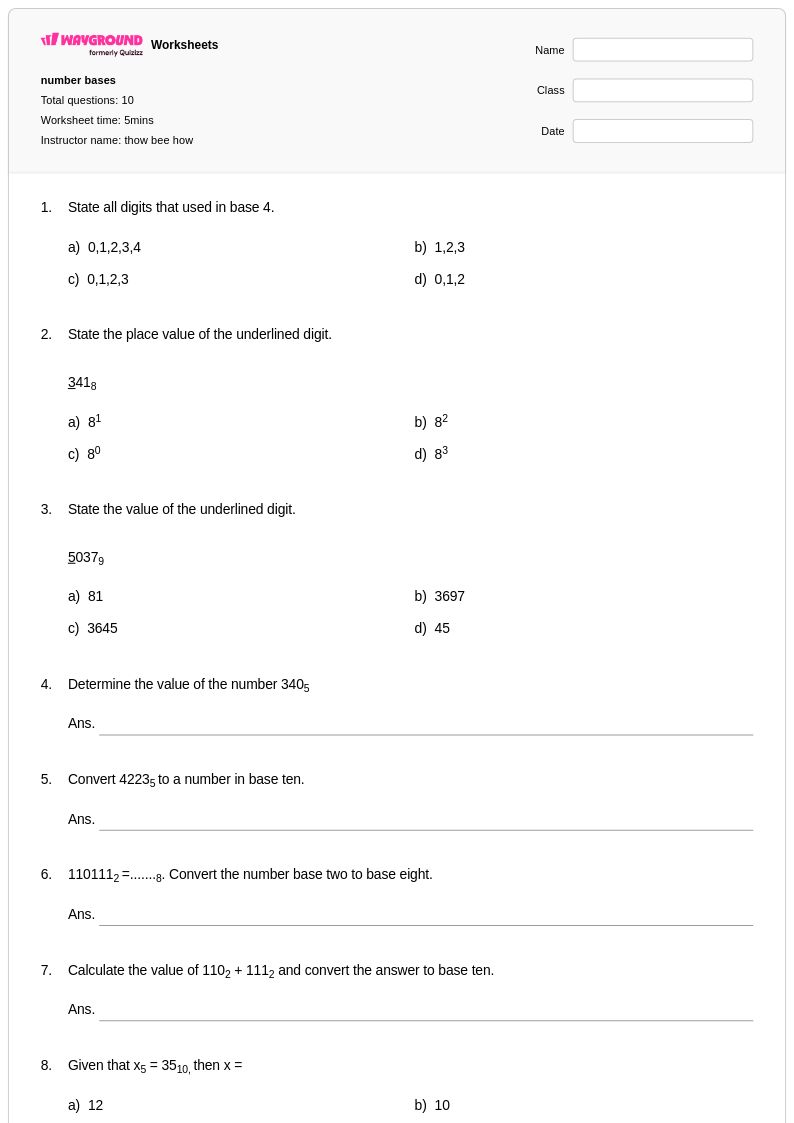
10 Q
1st
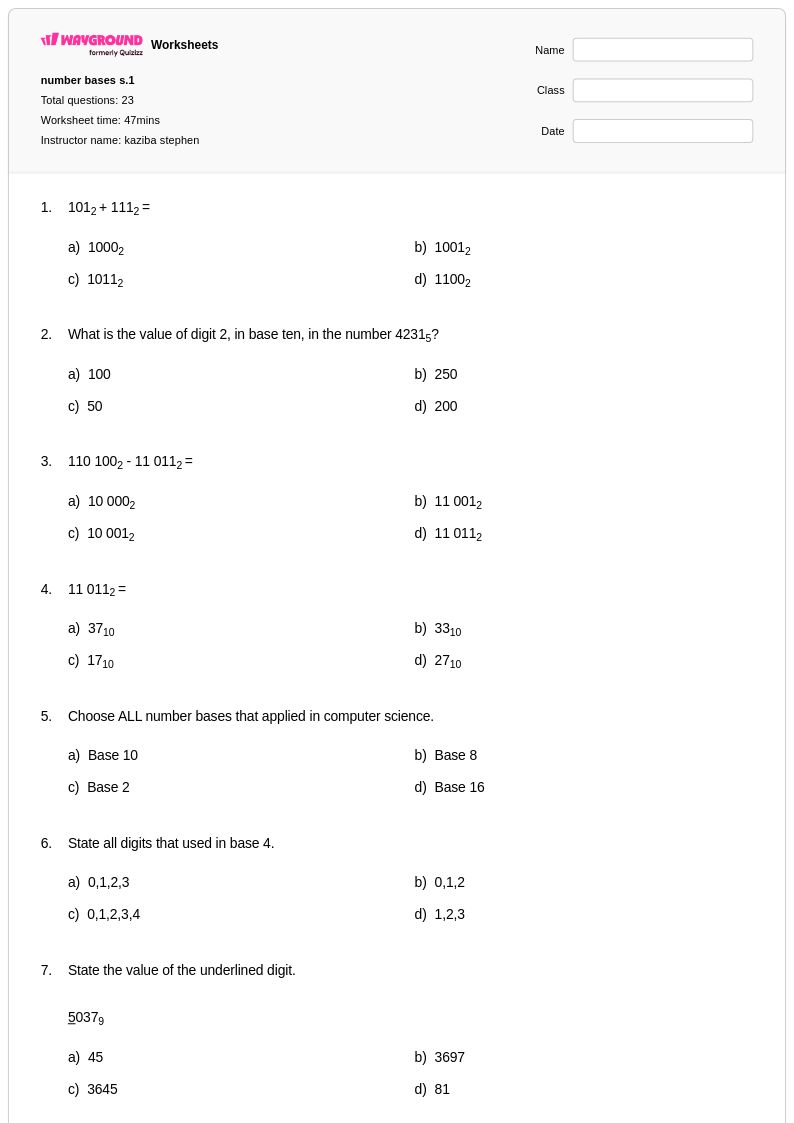
23 Q
6th
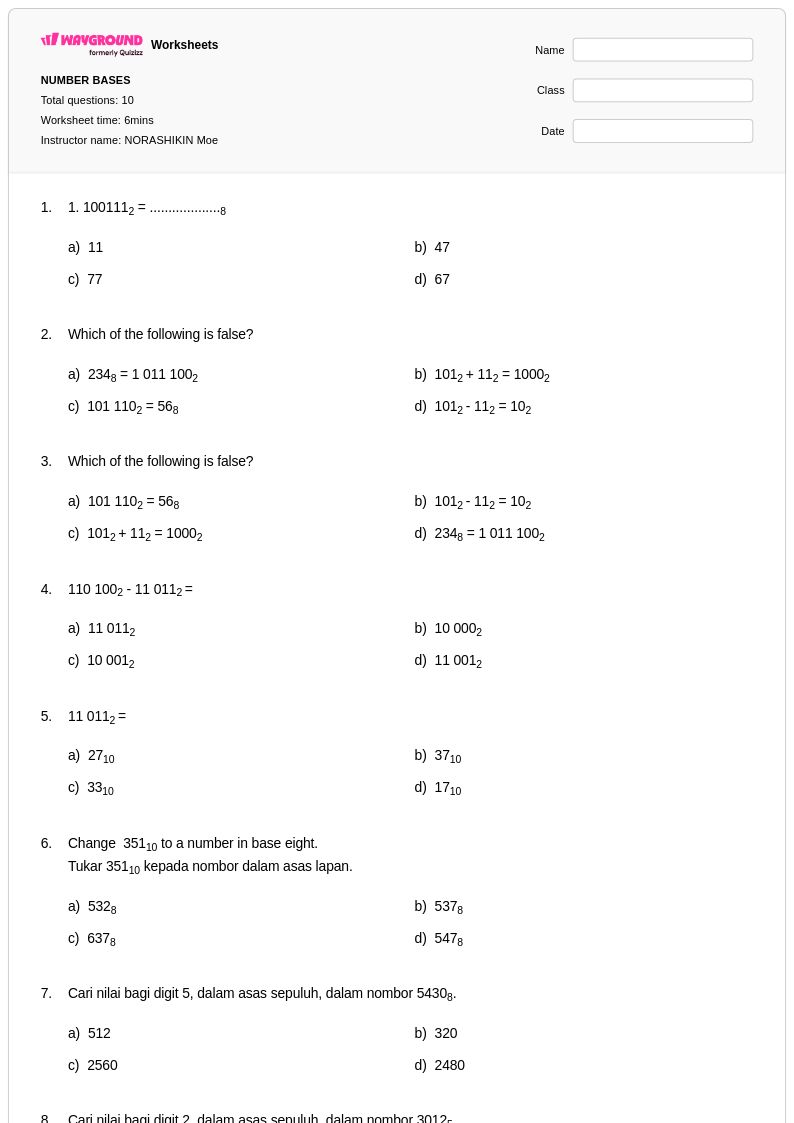
10 Q
12th
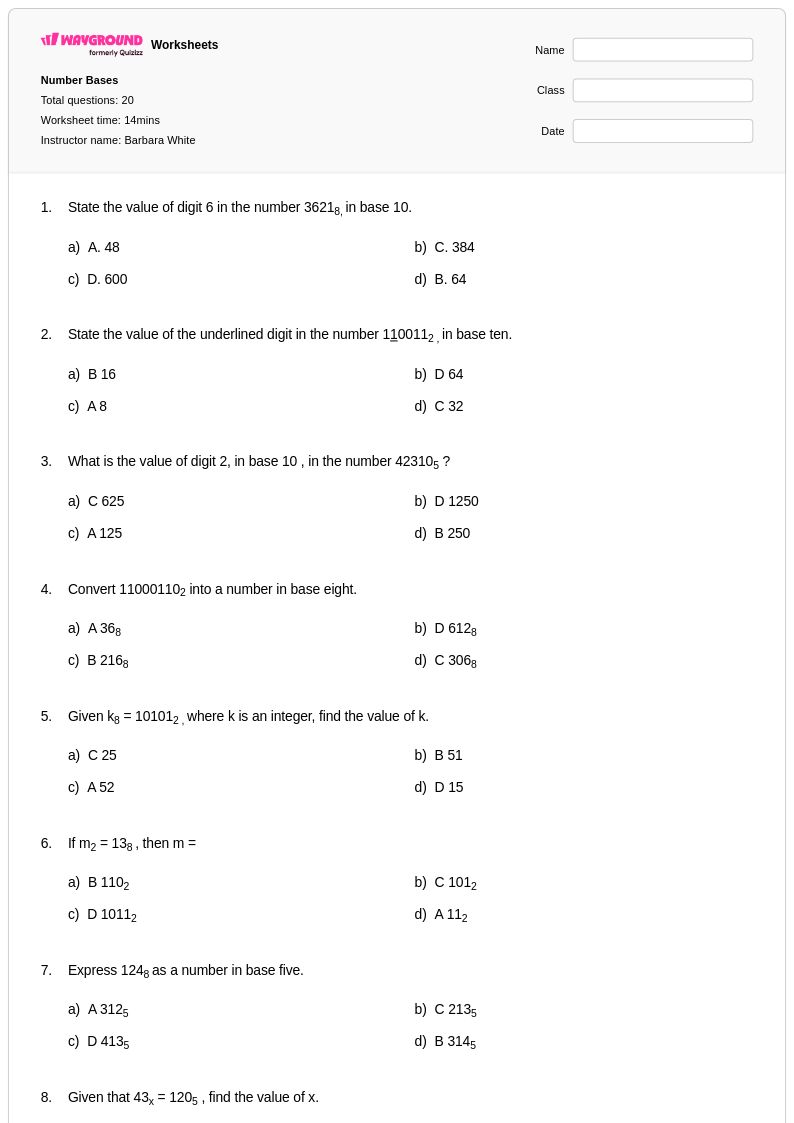
20 Q
5th
Explore Worksheets by Subjects
Explore printable Number Bases worksheets
Number bases worksheets available through Wayground (formerly Quizizz) provide comprehensive practice for students learning to work with different numeral systems beyond the familiar base-10 system. These carefully designed resources strengthen critical mathematical reasoning skills by guiding students through conversions between binary, octal, hexadecimal, and other base systems while building deep conceptual understanding of place value principles. Each worksheet collection includes detailed answer keys and structured practice problems that progress from foundational concepts like identifying place values in different bases to more advanced operations such as arithmetic calculations and multi-step conversions. These free printables and pdf resources systematically develop students' ability to recognize patterns across number systems, perform base conversions accurately, and understand the underlying mathematical structure that governs all positional notation systems.
Wayground (formerly Quizizz) supports mathematics educators with an extensive collection of millions of teacher-created number bases resources that streamline lesson planning and differentiated instruction. The platform's robust search and filtering capabilities allow teachers to quickly locate worksheets targeting specific base conversion skills, from introductory binary concepts to complex multi-base problem solving, while standards alignment features ensure content matches curriculum requirements. Teachers can customize these digital and printable pdf materials to accommodate diverse learning needs, creating targeted practice sets for remediation or enrichment activities that address individual student gaps in number system understanding. This flexible approach enables educators to provide systematic skill practice that builds computational fluency across different bases while supporting students who need additional reinforcement in place value concepts or challenging advanced learners with complex conversion problems.
FAQs
How do I introduce the concept of different number bases?
What exercises help students master number base conversions?
What's a common mistake students make when learning number bases?
How can I use this number bases worksheet with my students?
How do number bases connect to the standard math curriculum?
How can I support students who struggle with the abstract nature of number bases?