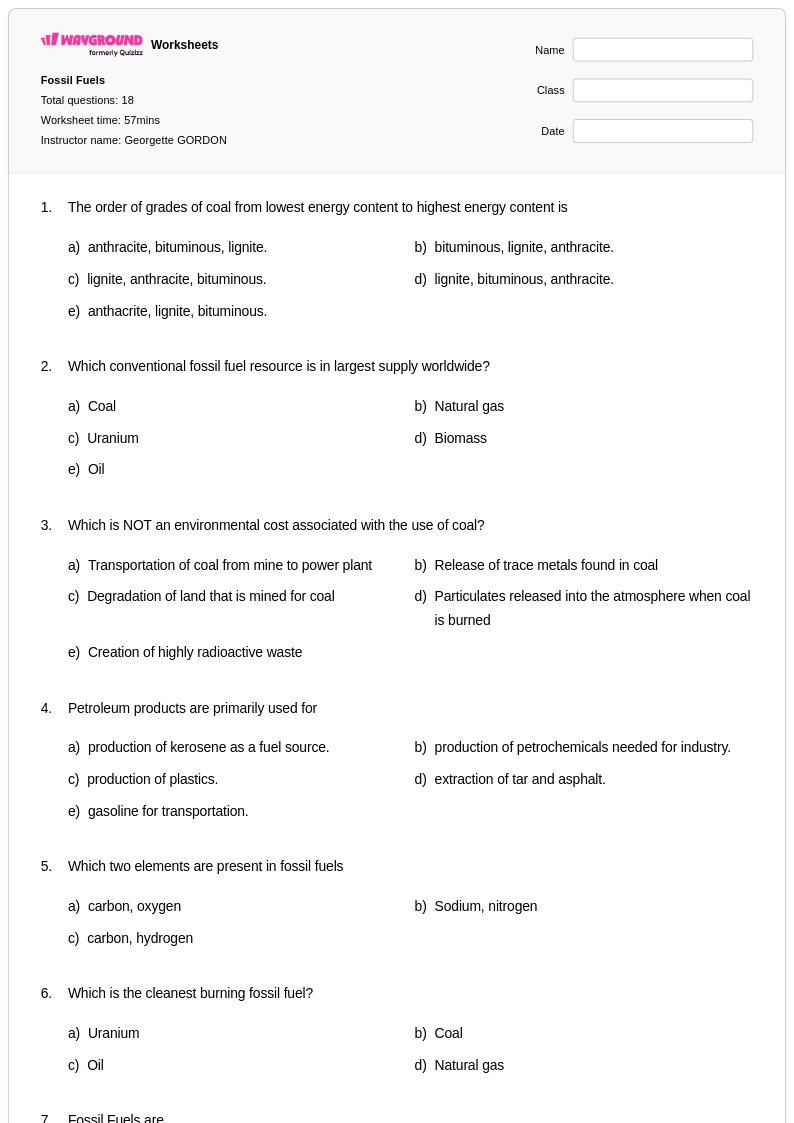
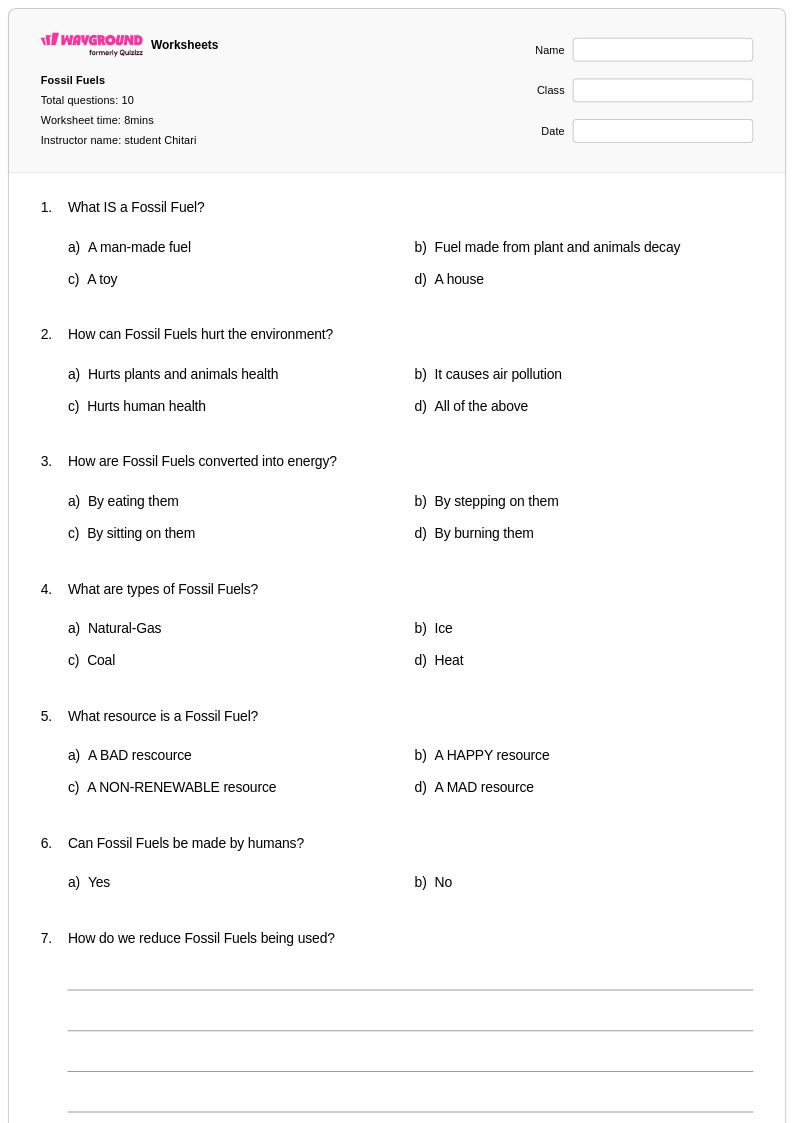
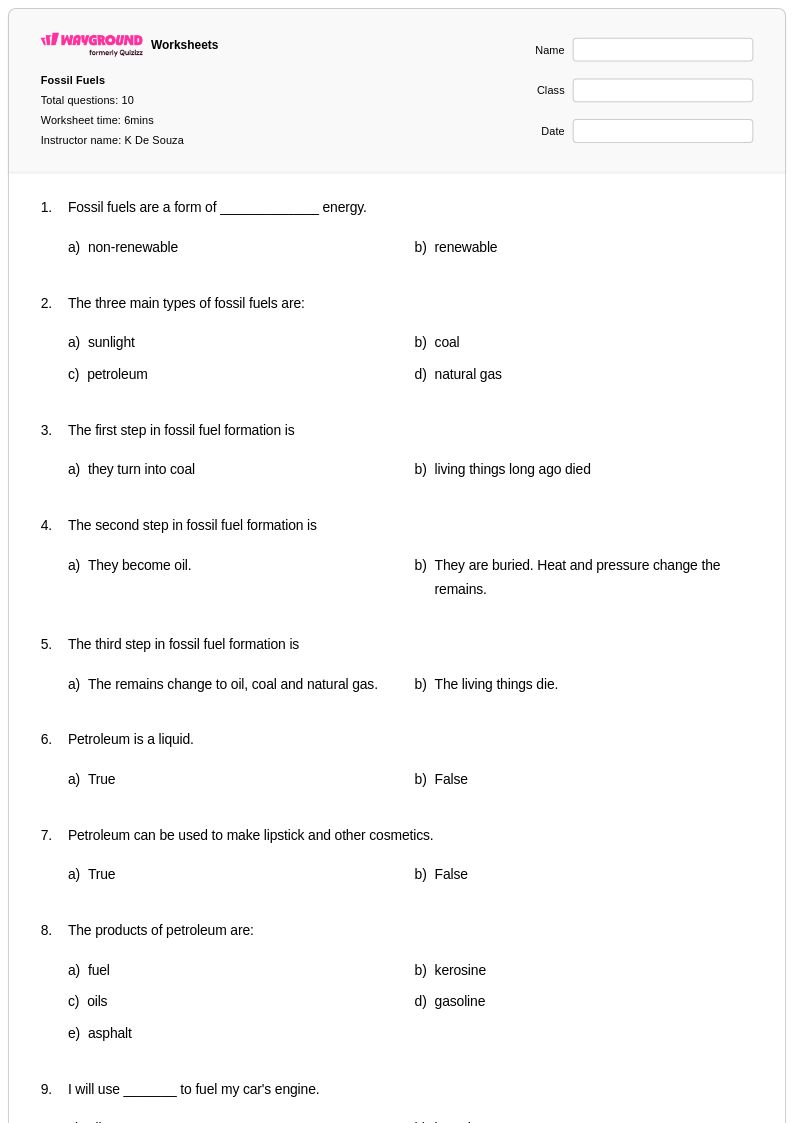
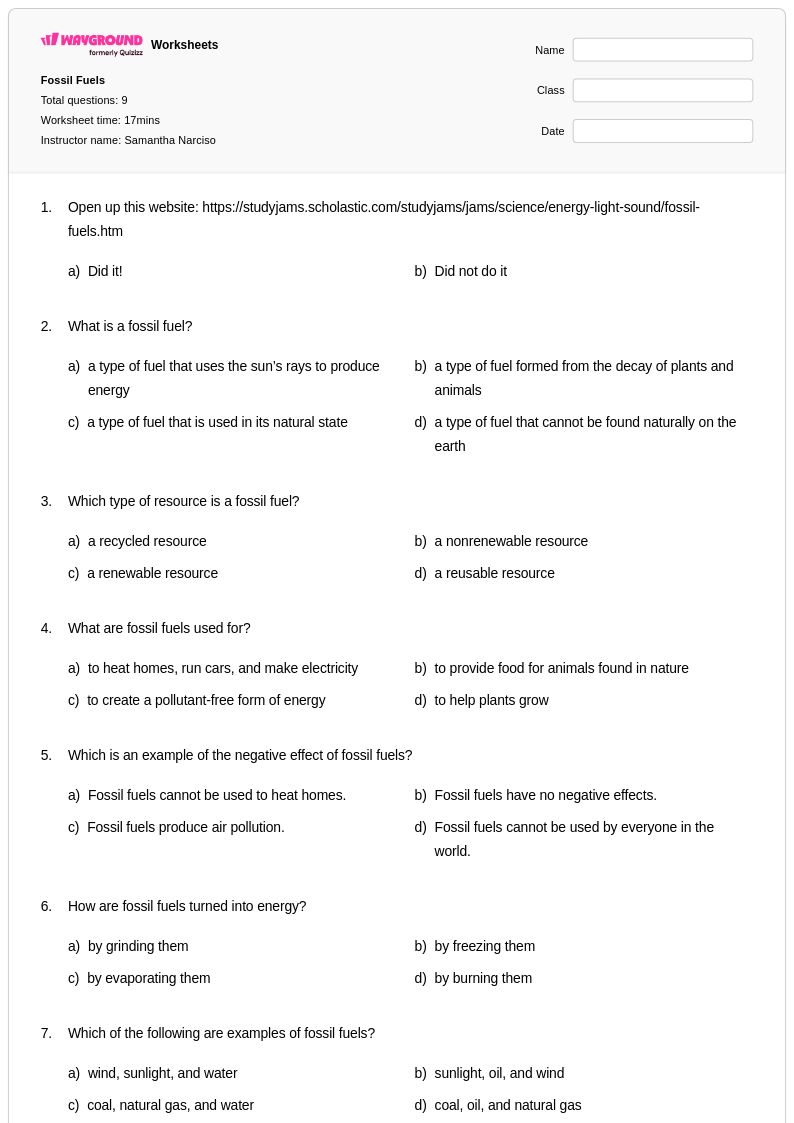
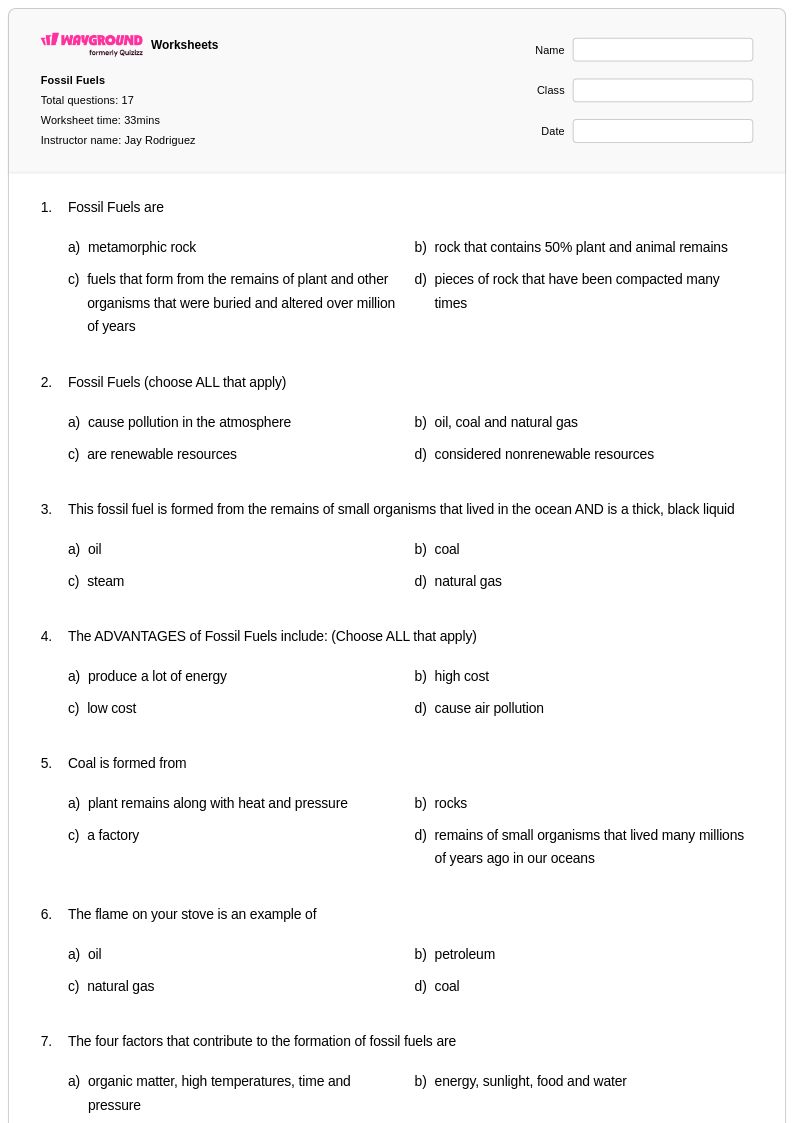
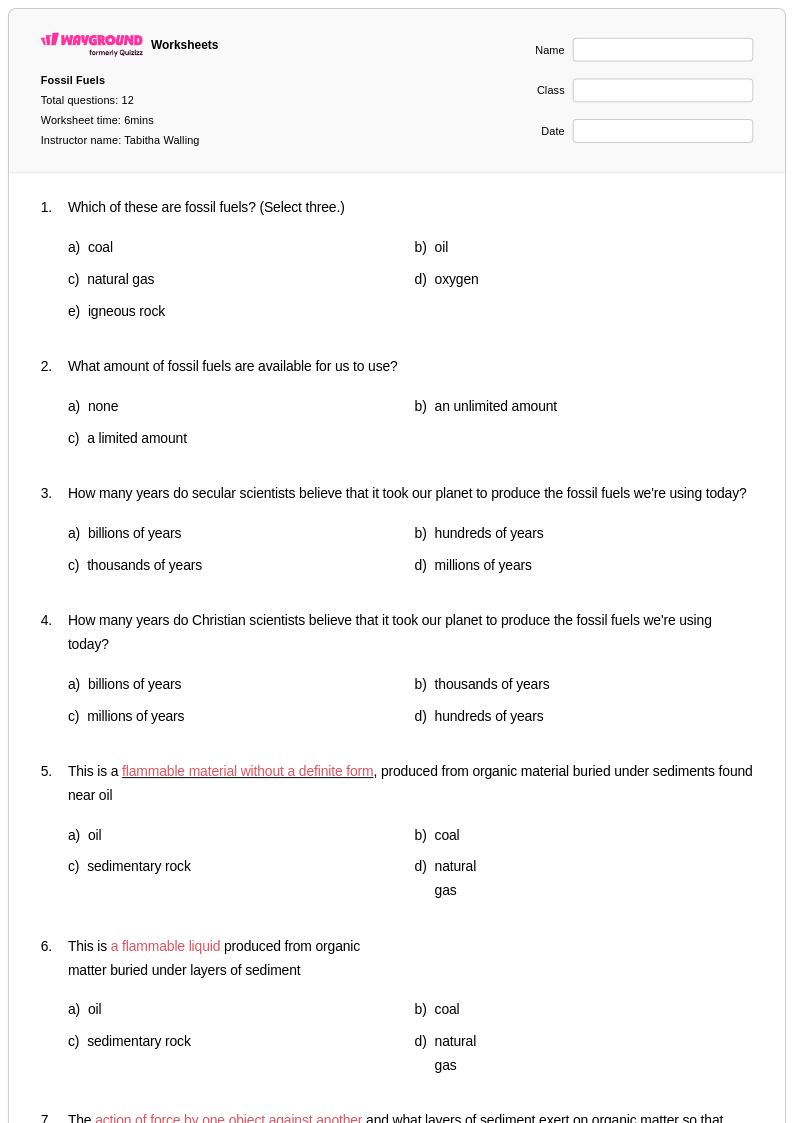
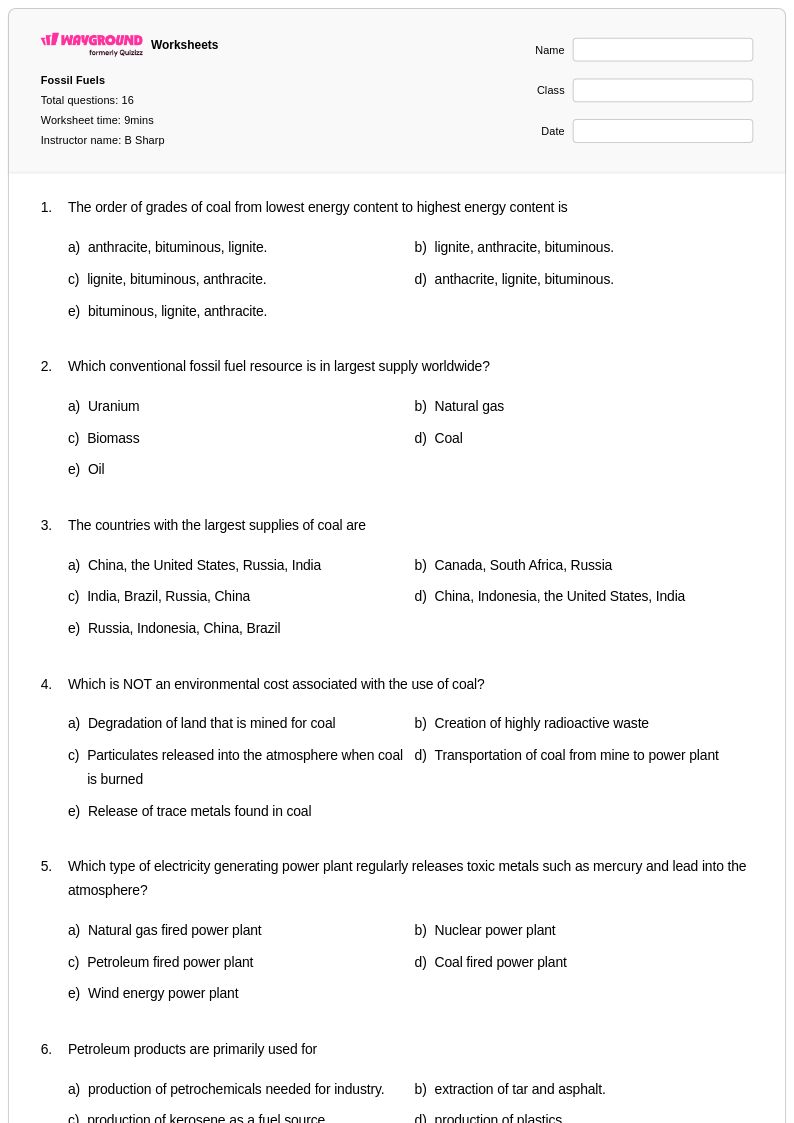
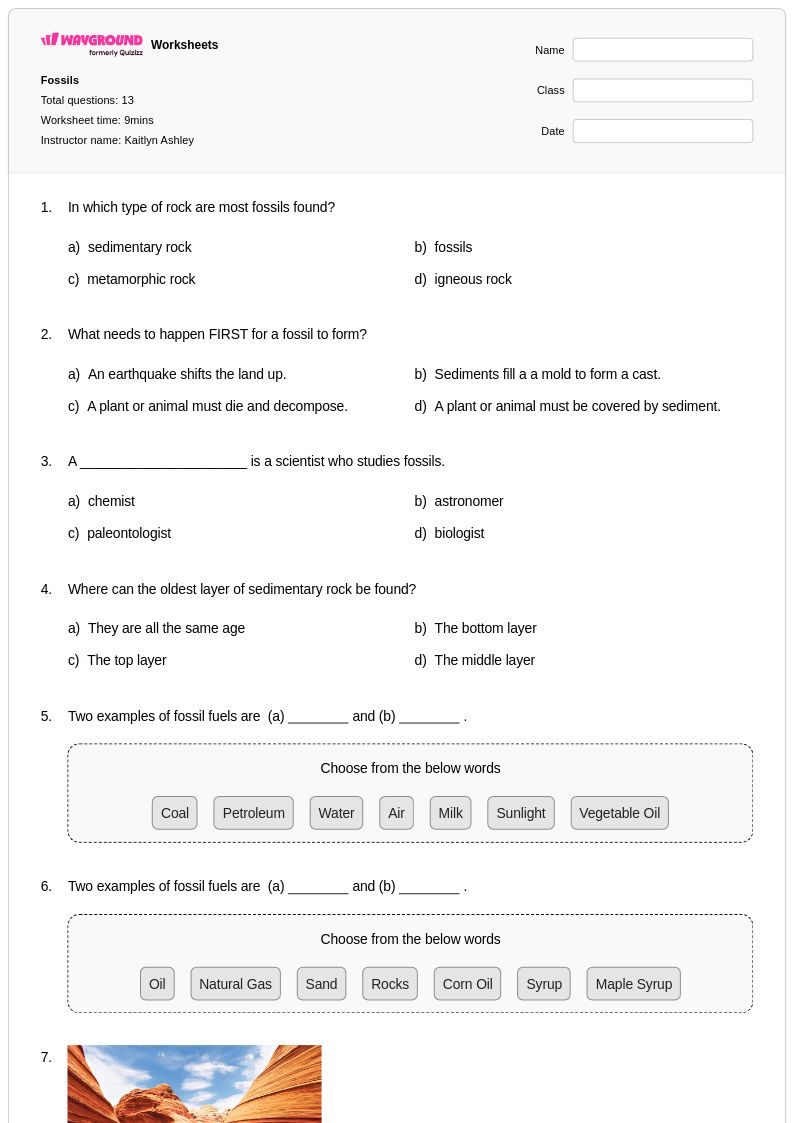
Explore Wayground's comprehensive collection of free fossil fuels worksheets and printables that help students master energy sources, formation processes, and environmental impacts through engaging practice problems with complete answer keys.
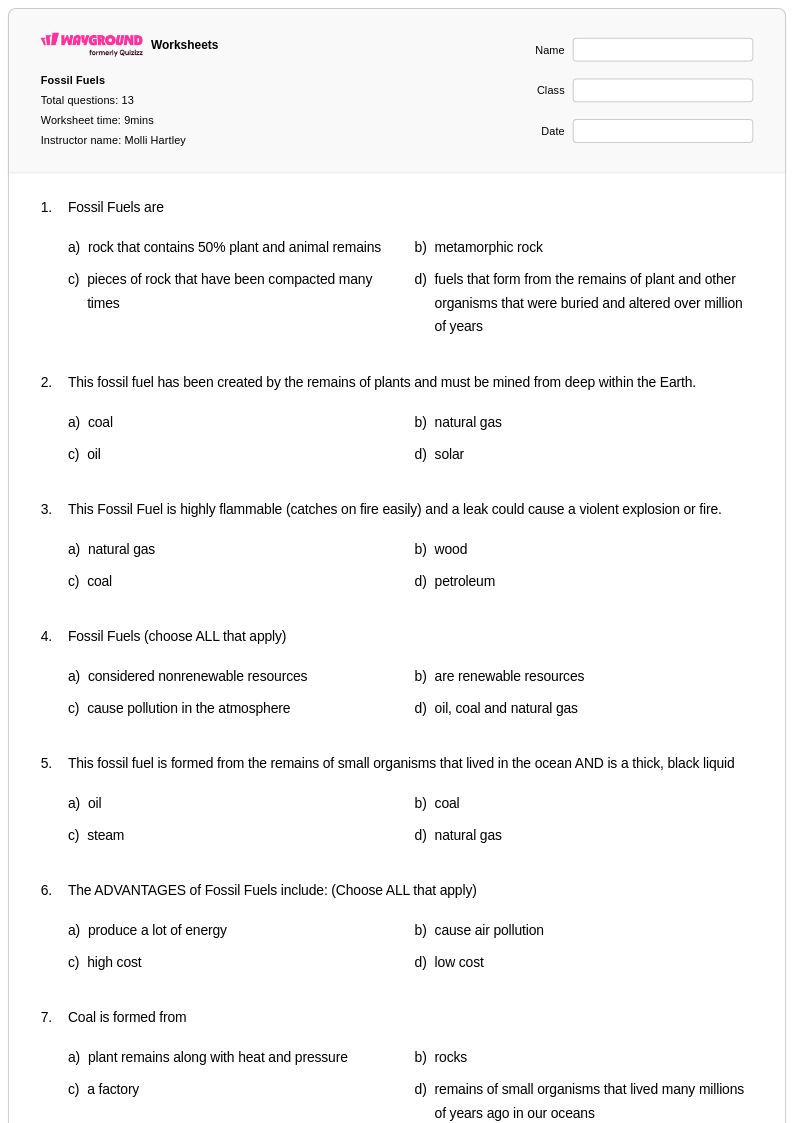
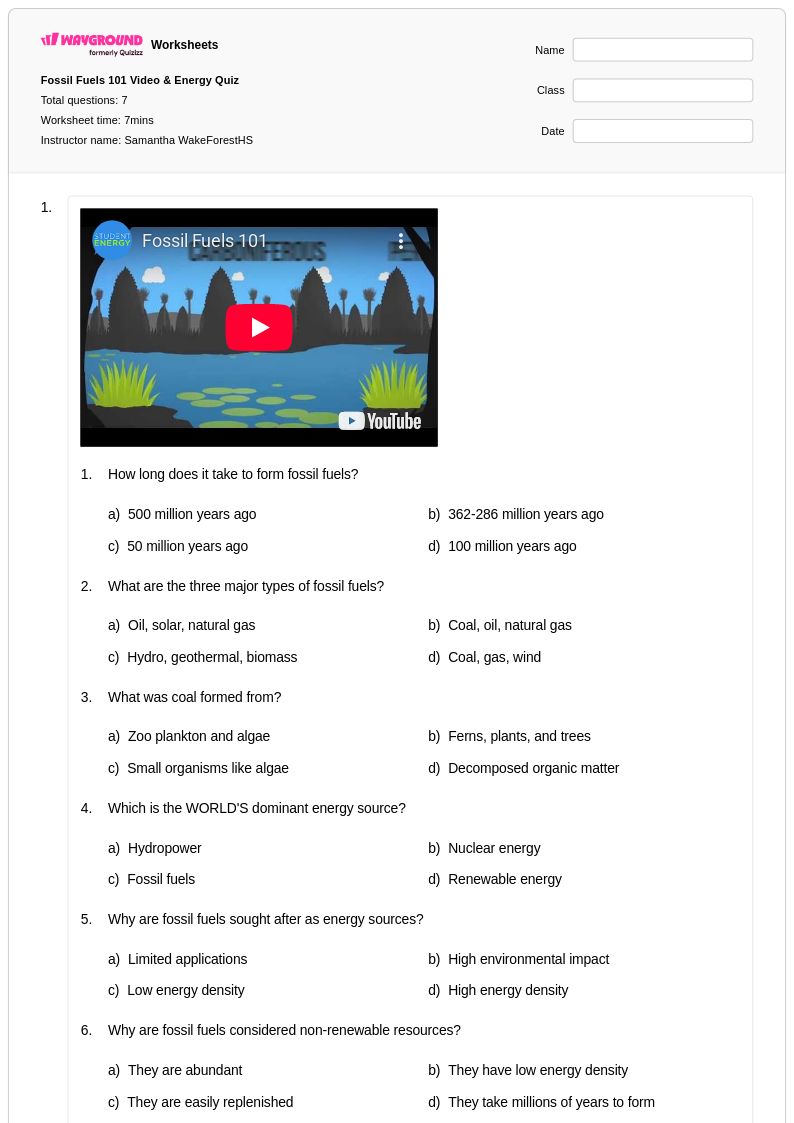
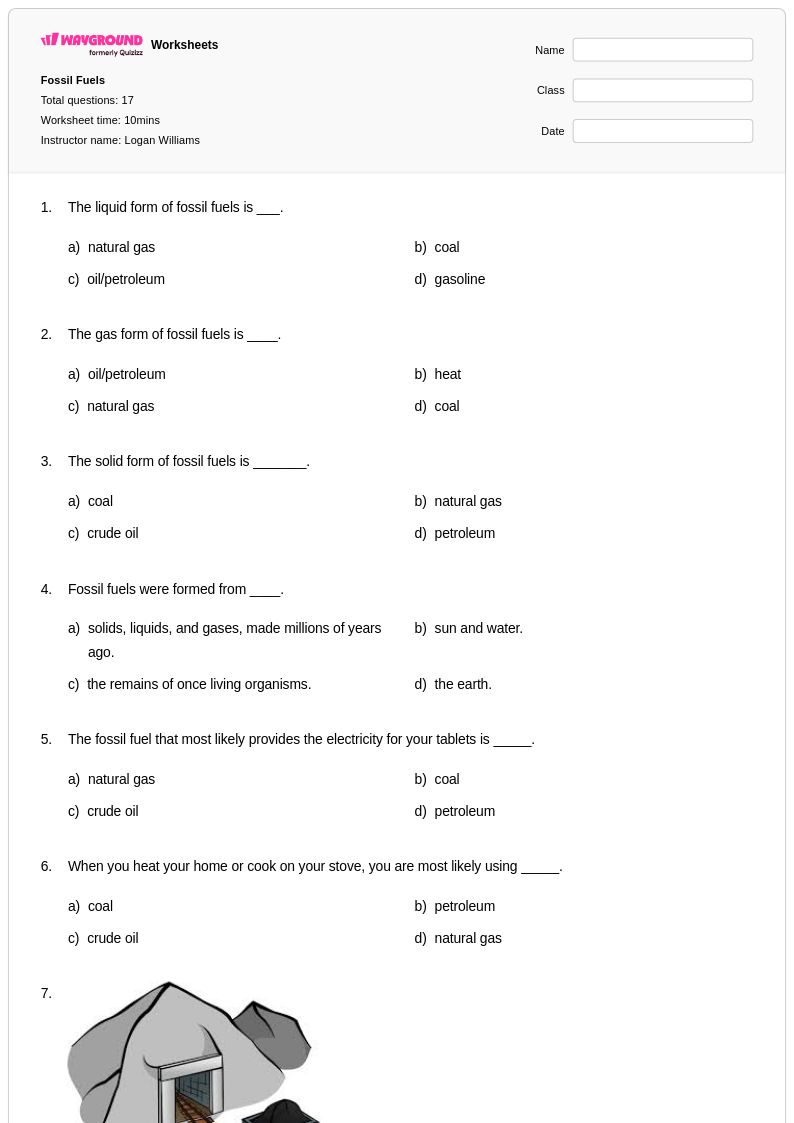
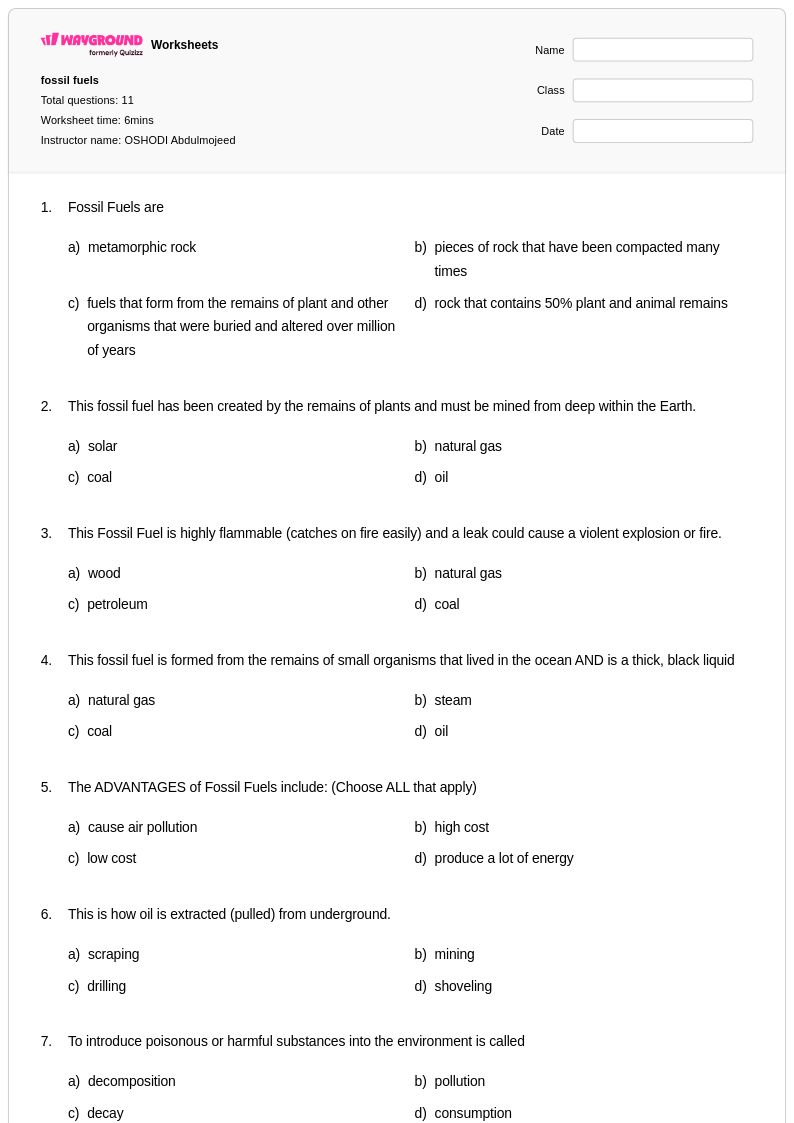
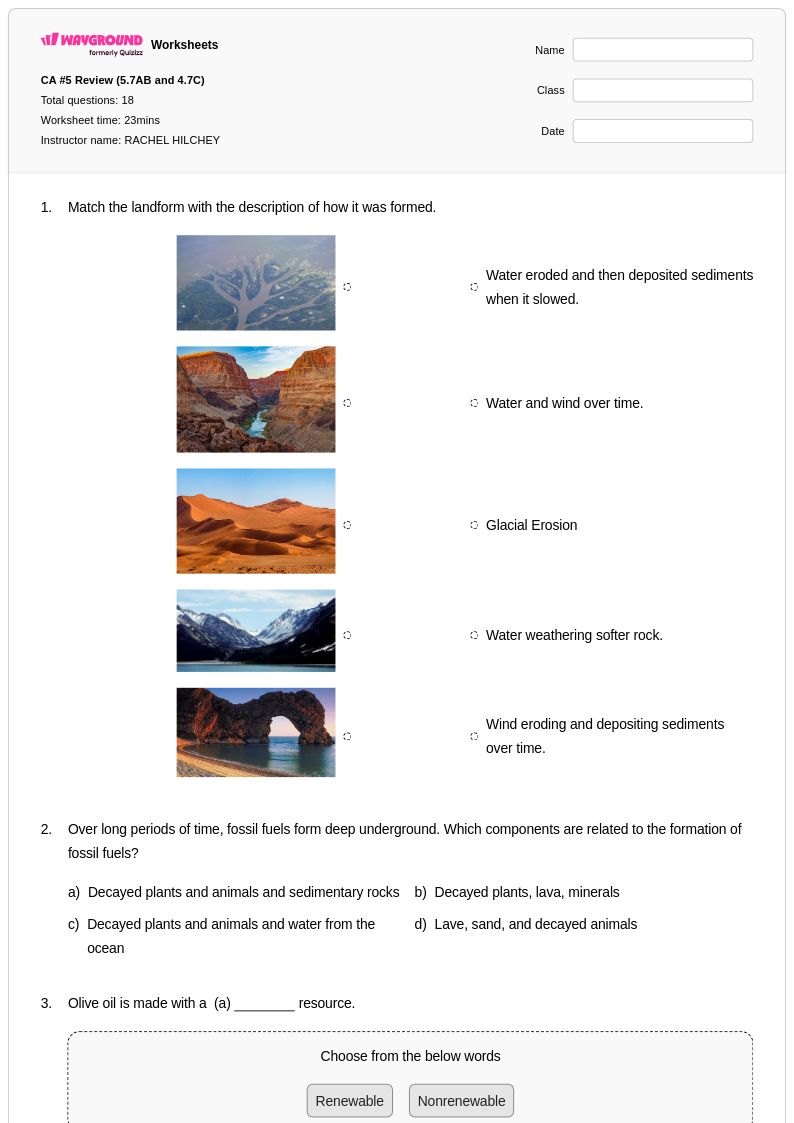
Fossil fuels worksheets available through Wayground (formerly Quizizz) provide comprehensive educational resources that help students understand the formation, types, and environmental impact of coal, oil, and natural gas. These carefully crafted materials strengthen critical thinking skills by engaging students with practice problems that explore the geological processes behind fossil fuel creation, their role in modern energy systems, and the scientific principles governing their extraction and use. The collection includes detailed answer keys that support both independent study and classroom instruction, while free printables offer educators flexible options for distributing content in various learning environments. Students develop analytical skills as they examine data related to fossil fuel consumption, evaluate the advantages and disadvantages of different energy sources, and investigate the chemical properties that make these resources valuable for human civilization.
Wayground (formerly Quizizz) empowers teachers with millions of educator-created fossil fuel worksheets that can be easily discovered through robust search and filtering capabilities, allowing instructors to locate materials that align with specific curriculum standards and learning objectives. The platform's differentiation tools enable teachers to customize content complexity and format, ensuring that worksheets meet diverse student needs while maintaining academic rigor in earth and space science instruction. These resources are available in both printable pdf formats for traditional classroom use and digital versions that support modern learning environments, making lesson planning more efficient and effective. Teachers can seamlessly integrate these materials into their instruction for initial concept introduction, targeted remediation for struggling learners, enrichment activities for advanced students, or regular skill practice that reinforces understanding of fossil fuel science and its broader implications for environmental stewardship.
FAQs
How do I teach fossil fuels to middle or high school students?
Start by grounding students in the geological processes that form coal, oil, and natural gas over millions of years under heat and pressure. From there, connect formation to extraction and combustion, helping students understand why these resources are finite. Pairing the science with data on energy consumption and carbon emissions gives students a complete picture of fossil fuels in modern energy systems.
What worksheets or activities help students practice fossil fuel concepts?
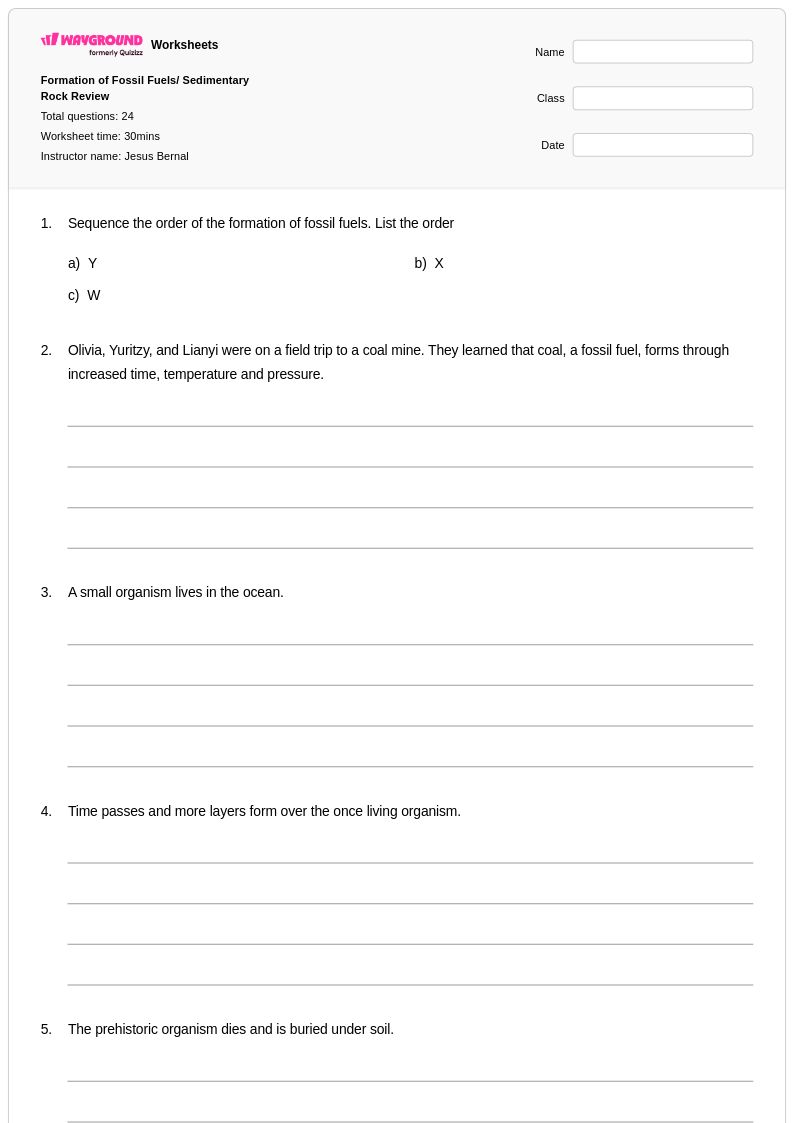
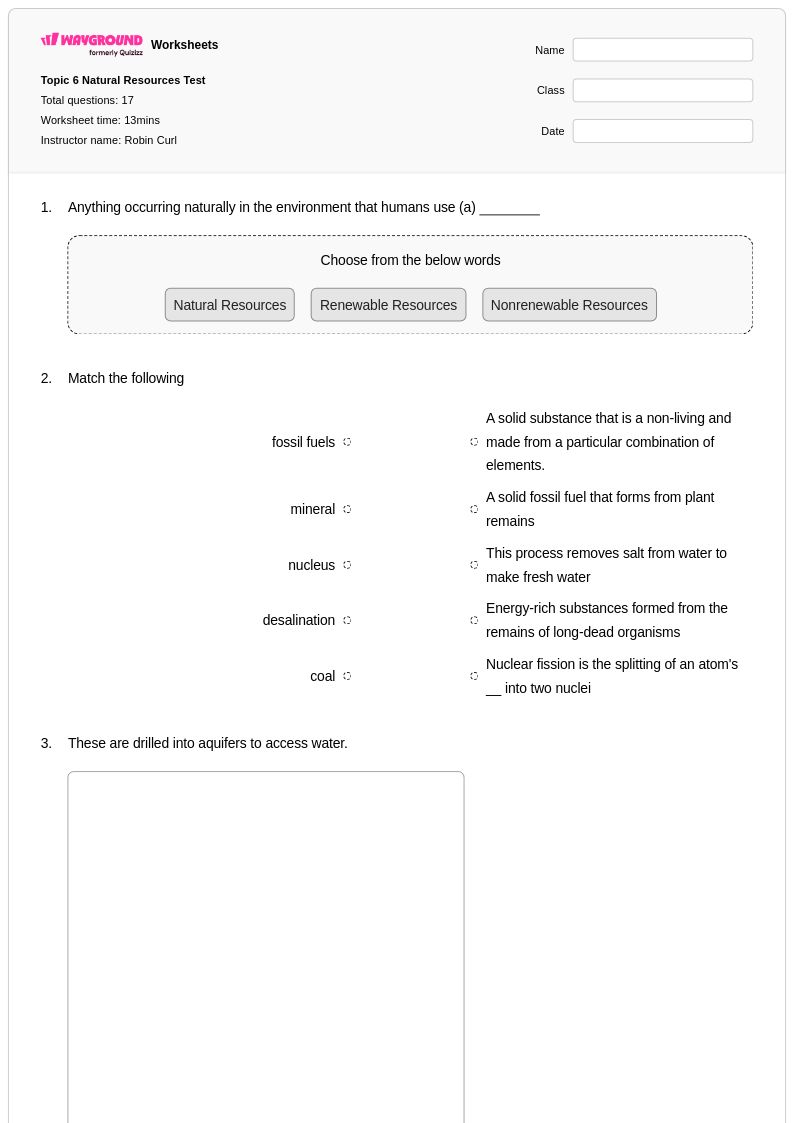
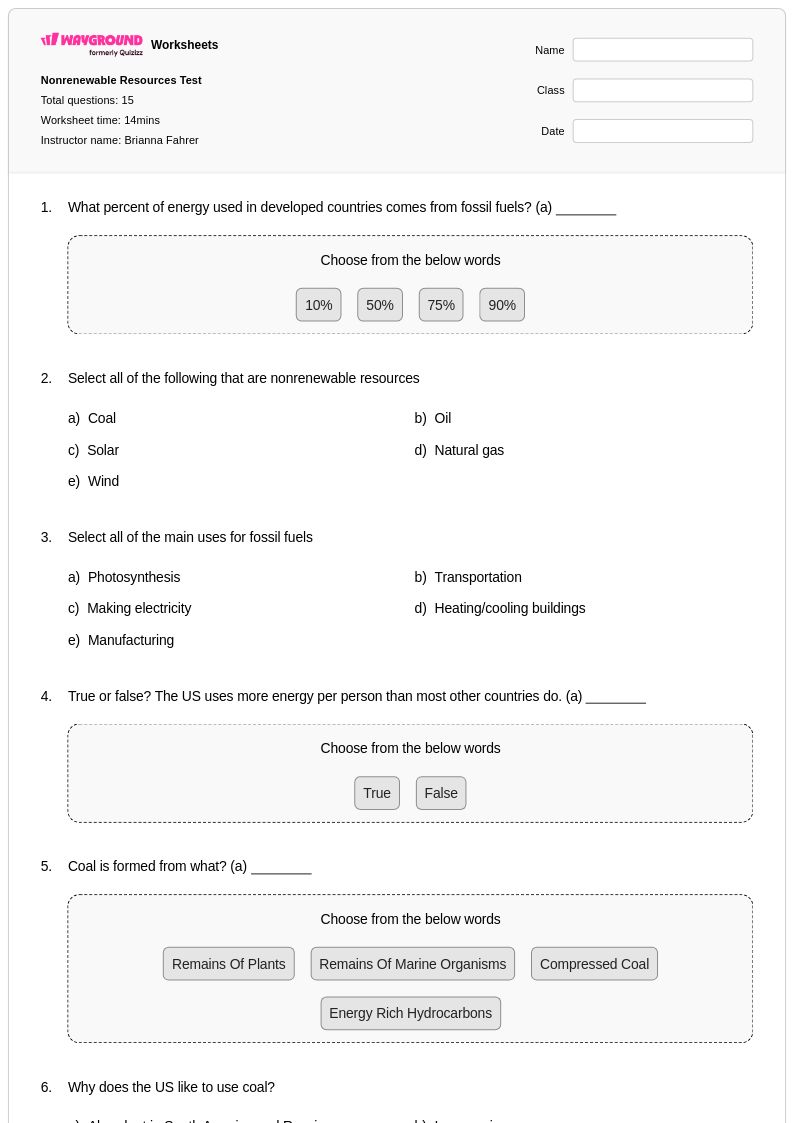
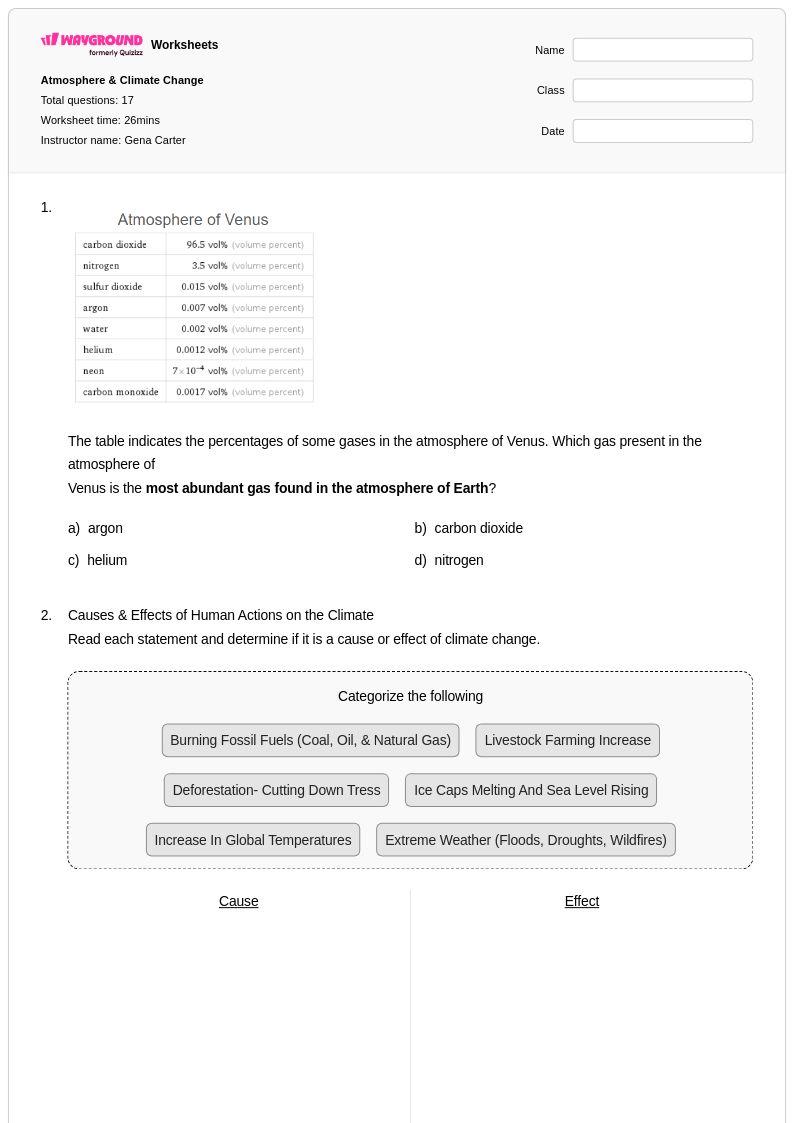
Effective practice activities include diagram labeling exercises for coal, oil, and natural gas formation layers, data analysis tasks comparing fossil fuel consumption across countries or sectors, and comparison charts weighing the advantages and disadvantages of each energy source. Practice problems that ask students to evaluate chemical properties or trace the extraction-to-energy pipeline also reinforce core concepts with analytical depth.
What misconceptions do students commonly have about fossil fuels?
A common misconception is that fossil fuels are made from dinosaurs — in reality, they form primarily from ancient marine organisms and plant matter compressed over geological timescales. Students also frequently confuse fossil fuels as a single category rather than three chemically distinct resources with different extraction processes and energy outputs. Another error is treating fossil fuels as infinitely renewable because they exist in large quantities, rather than understanding their formation rates make them effectively non-renewable on human timescales.
How do I use Wayground's fossil fuels worksheets in my classroom?
Wayground's fossil fuels worksheets are available as printable PDFs for traditional classroom use and in digital formats for technology-integrated environments, giving teachers flexibility regardless of their setup. Teachers can also host worksheets as a quiz directly on Wayground, which allows for streamlined student responses and easier progress tracking. This makes the materials suitable for whole-class instruction, independent practice, or assigned homework without requiring format changes.
How can I differentiate fossil fuels instruction for students with different learning needs?
On Wayground, teachers can apply student-level accommodations including Read Aloud for students who benefit from audio support, reduced answer choices to lower cognitive load for struggling learners, and extended time settings configurable per student. These accommodations can be assigned individually without alerting other students, and they carry over to future sessions automatically. This makes it practical to support diverse learners during fossil fuels instruction without creating separate lesson plans.
What grade level is appropriate for fossil fuels worksheets?
Fossil fuels topics appear across multiple grade bands depending on depth of coverage. Basic identification of coal, oil, and natural gas as energy sources is typically introduced in upper elementary, while geological formation processes, extraction science, and environmental impact analysis are more commonly addressed in middle and high school earth science or environmental science courses. The appropriate worksheet should match the conceptual depth expected at the student's current level.