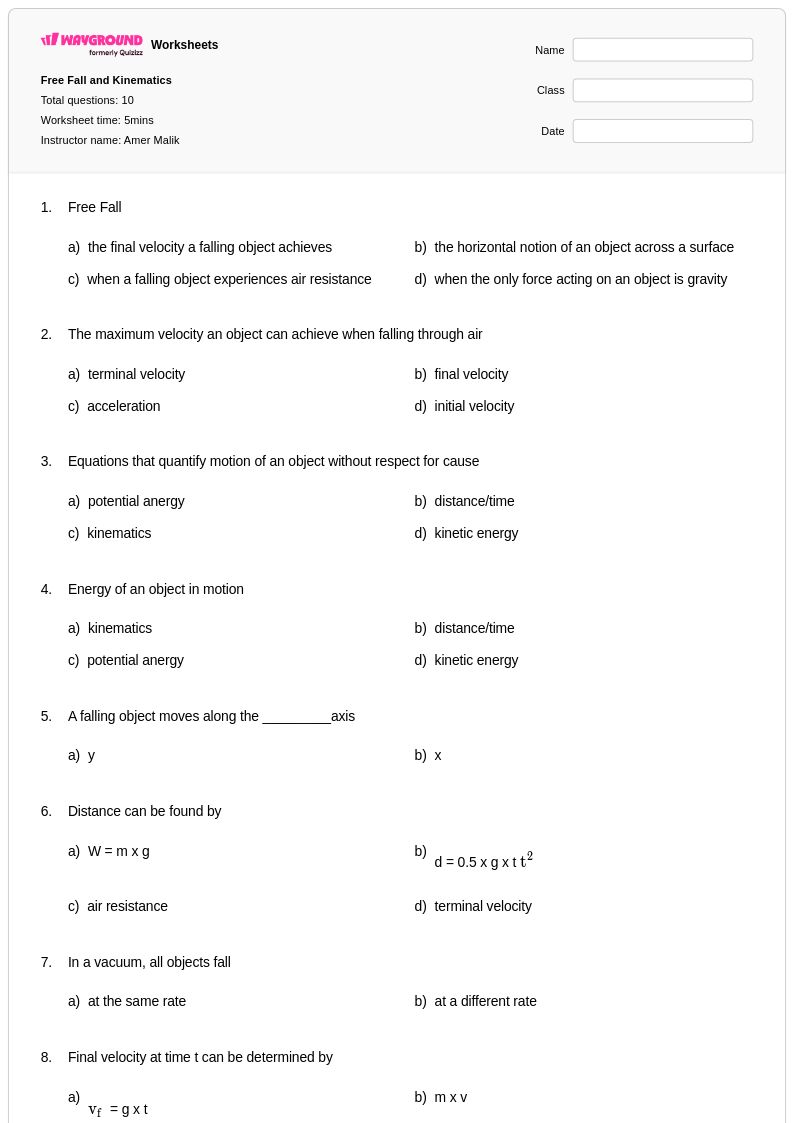
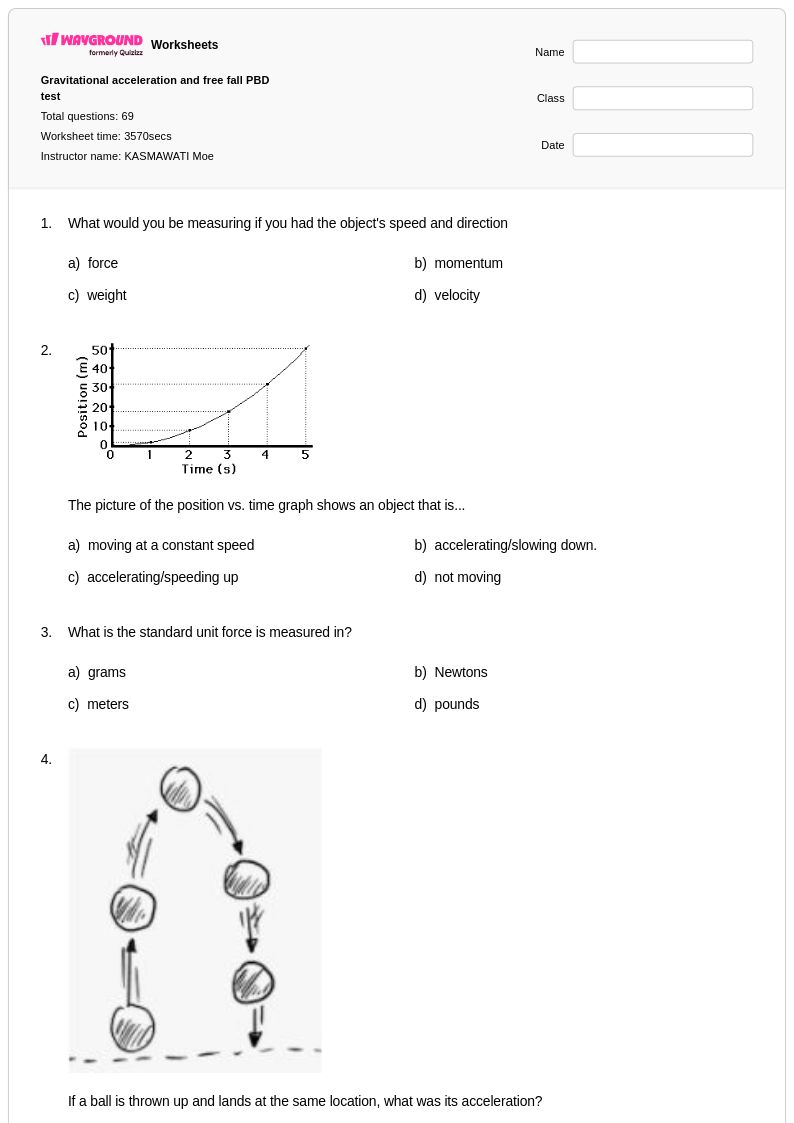
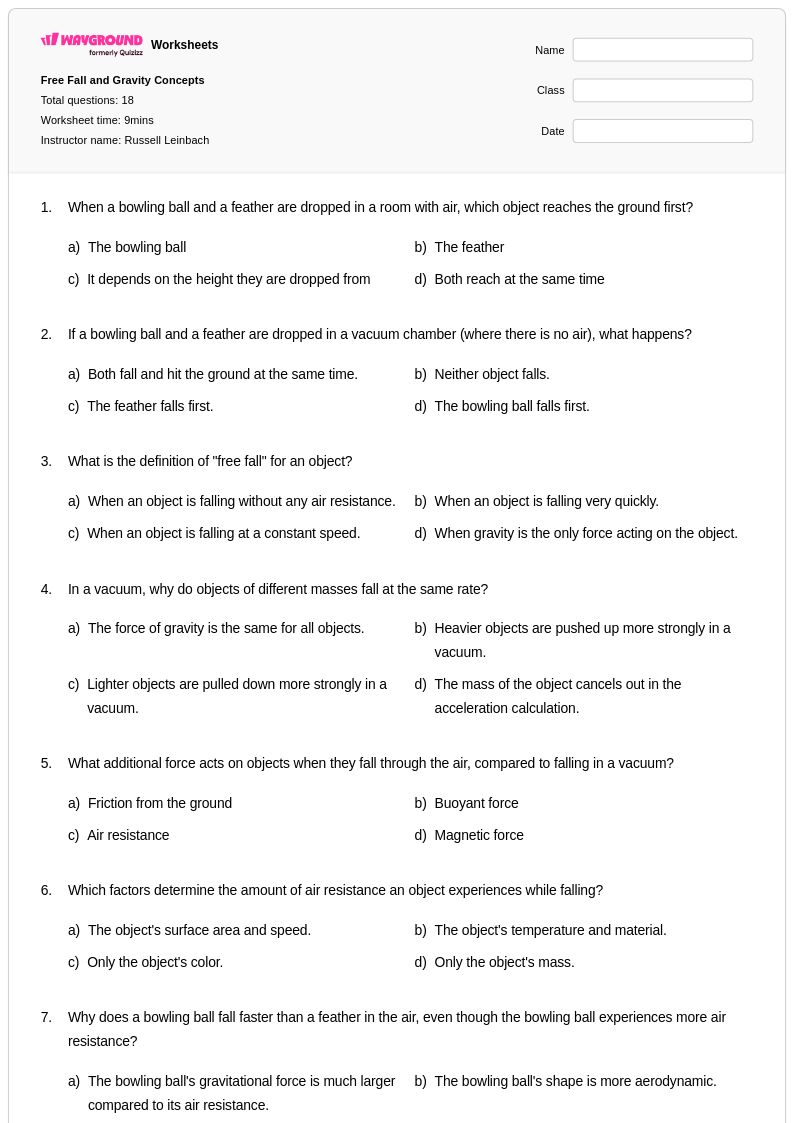
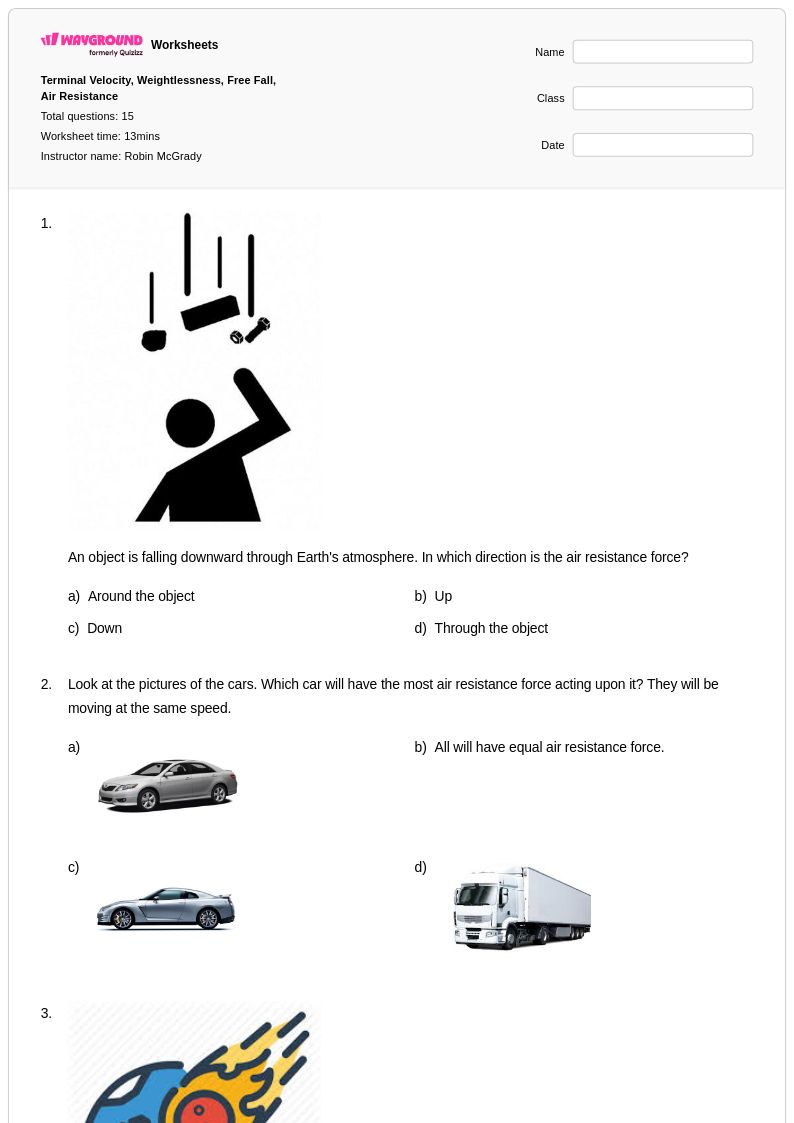
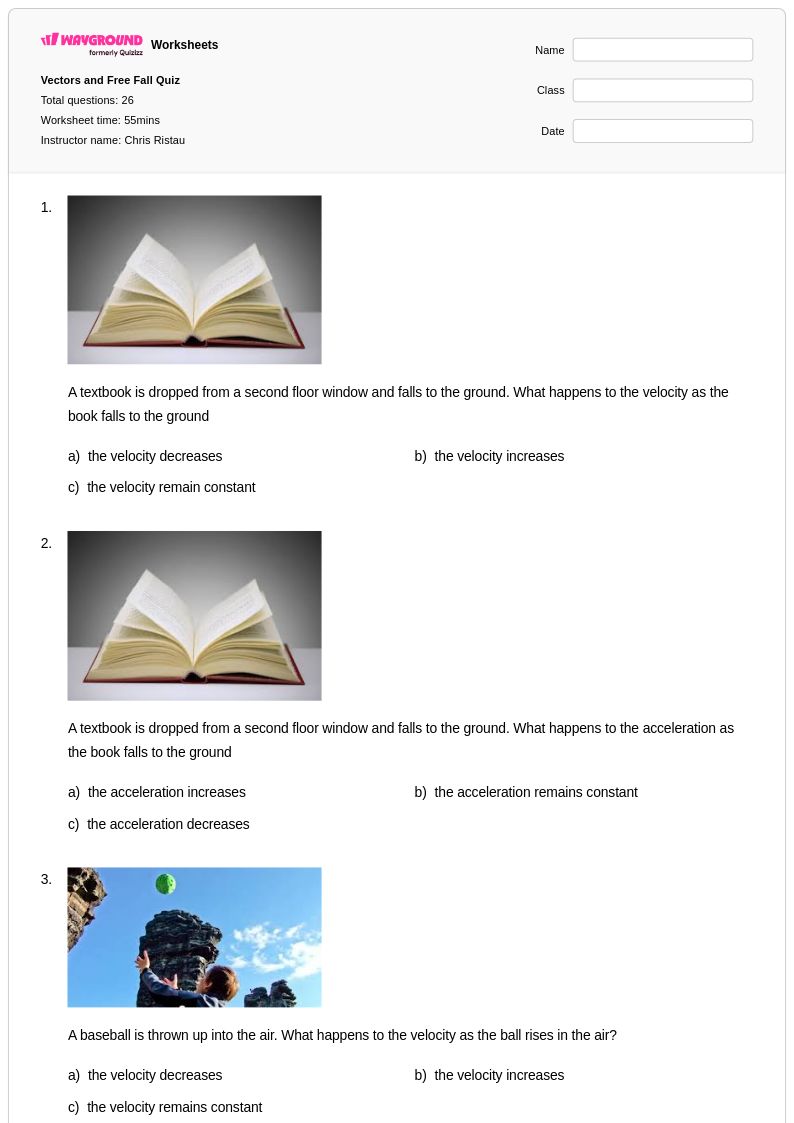
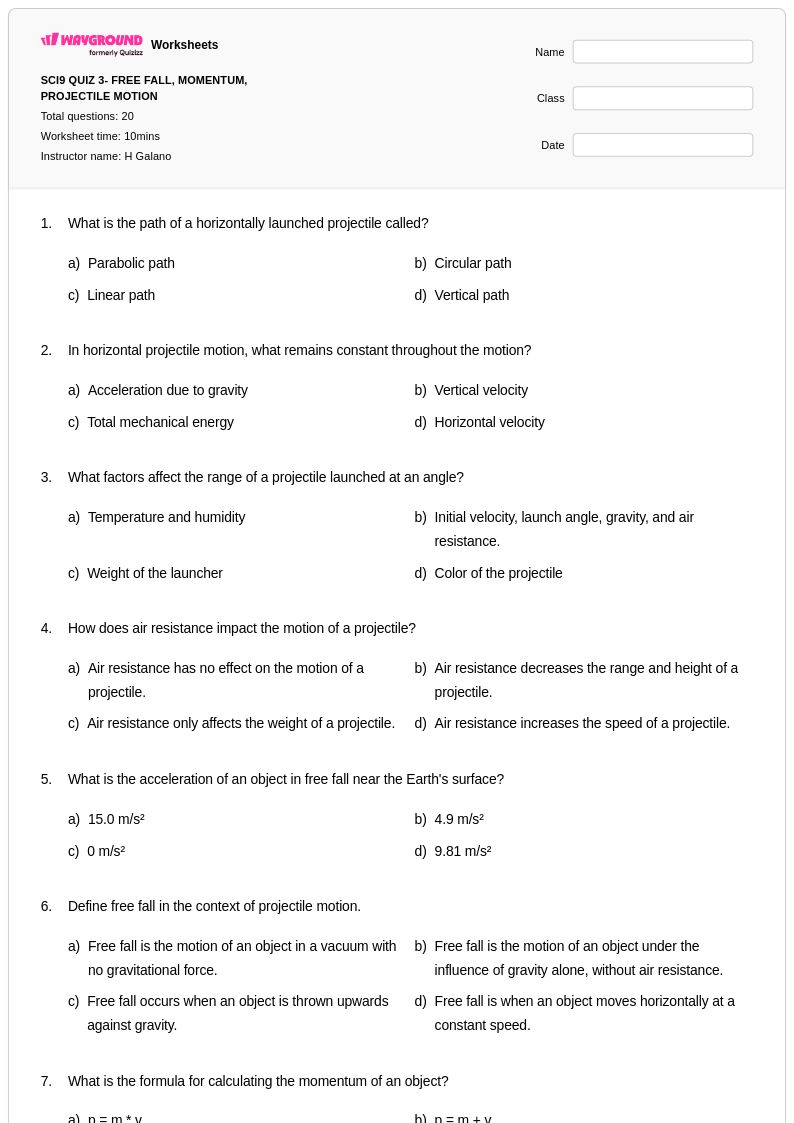
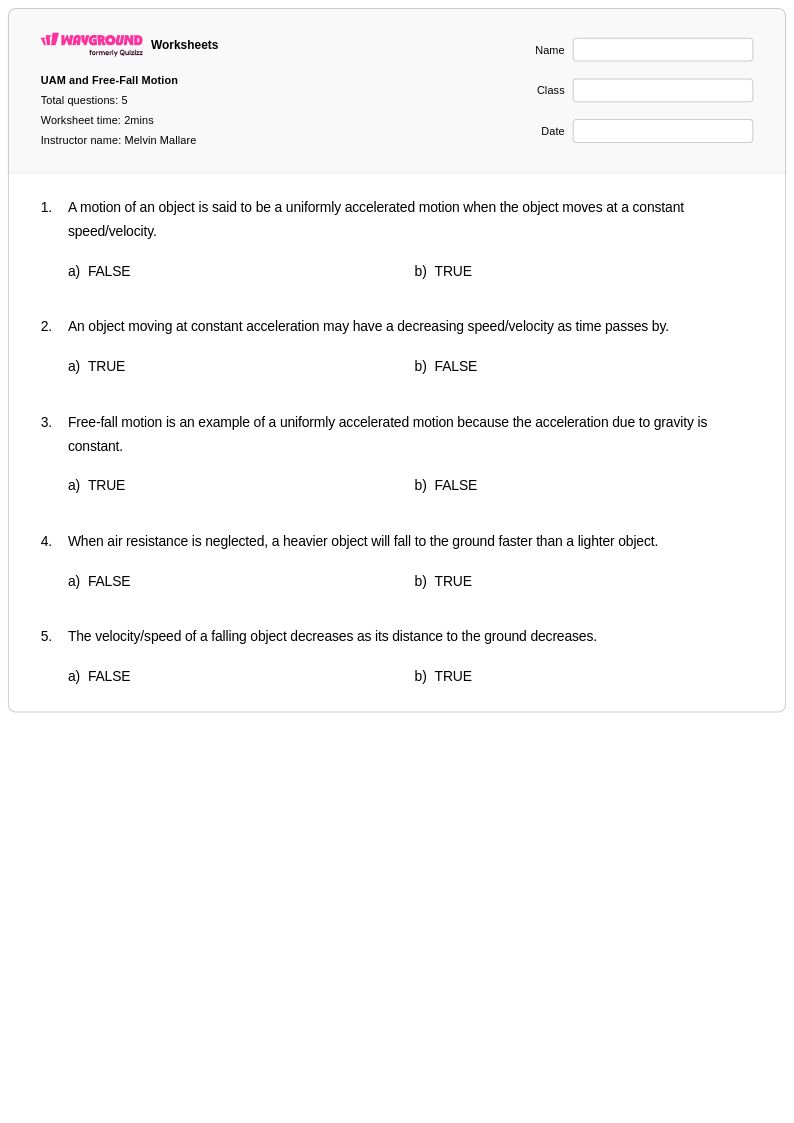
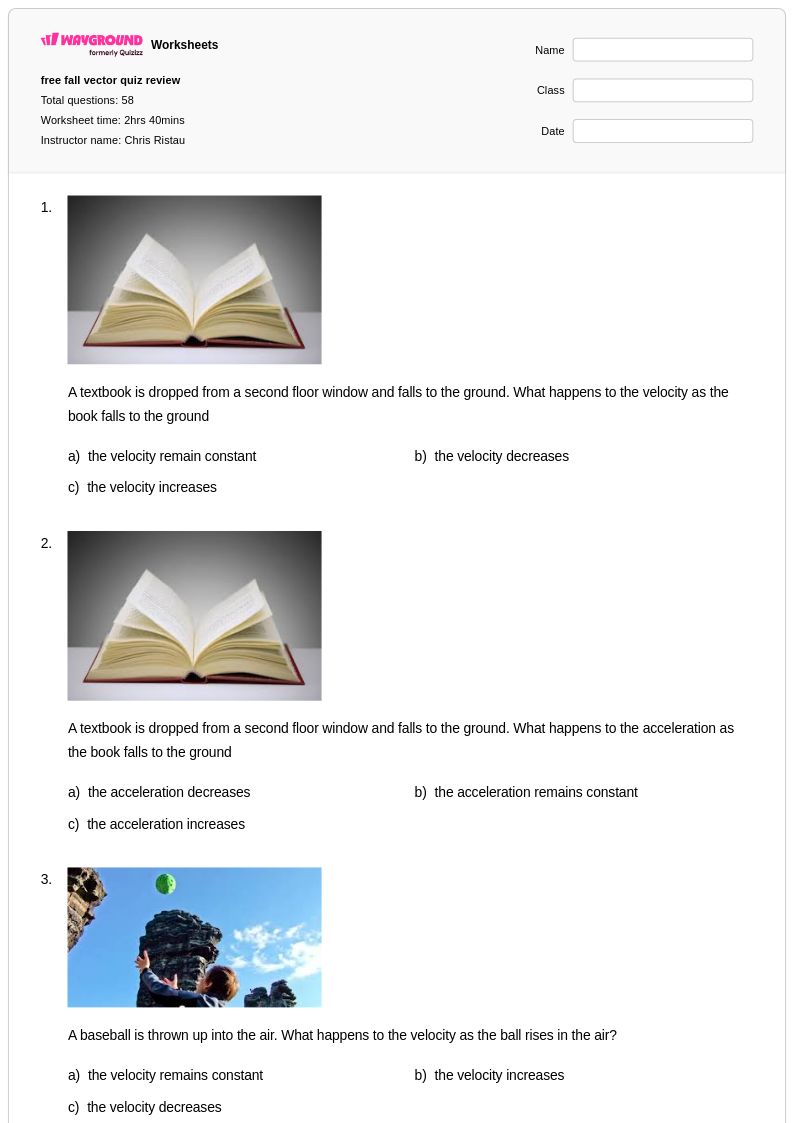
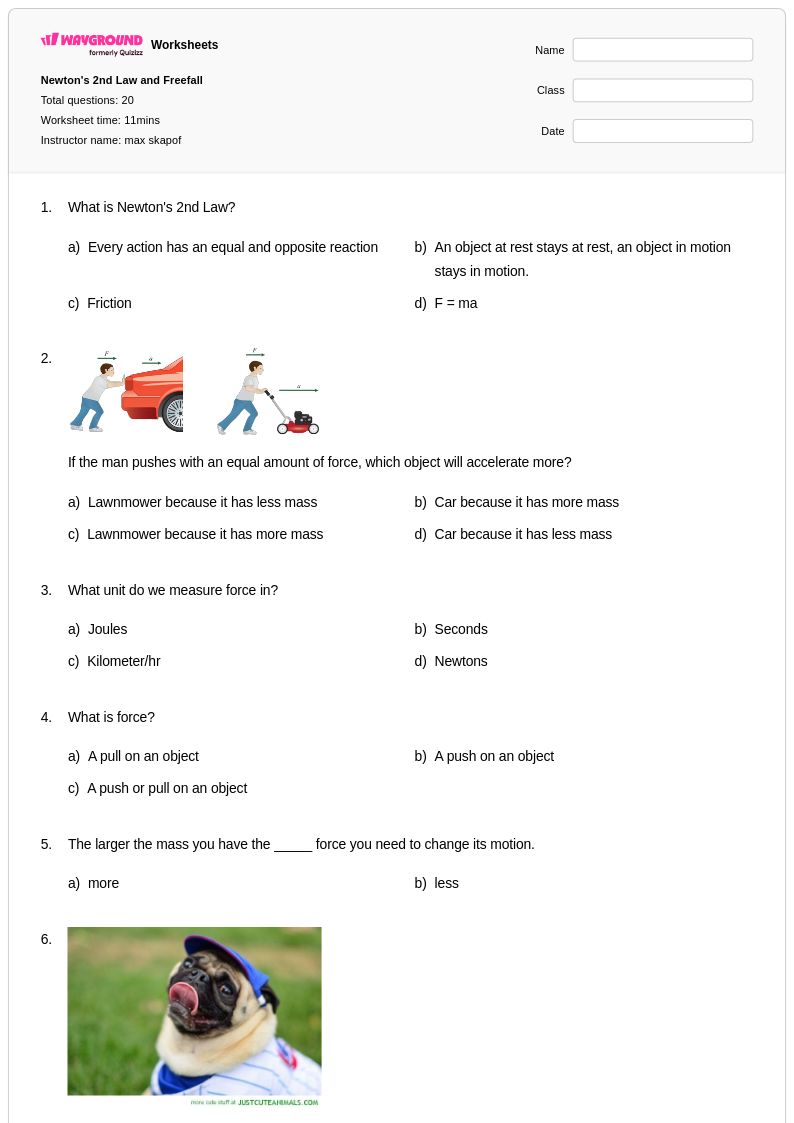
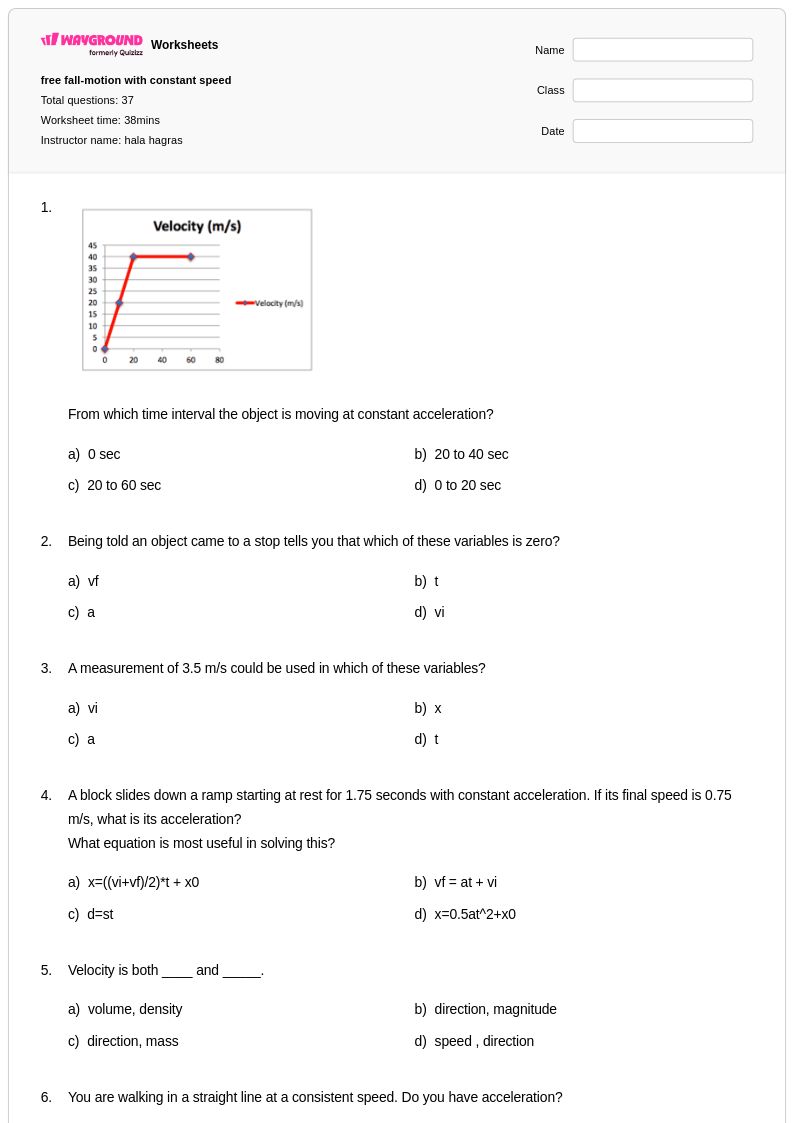
Year 9 free fall physics worksheets provide comprehensive printables and practice problems with answer keys to help students master gravitational acceleration, velocity calculations, and motion equations through Wayground's expertly designed PDF resources.
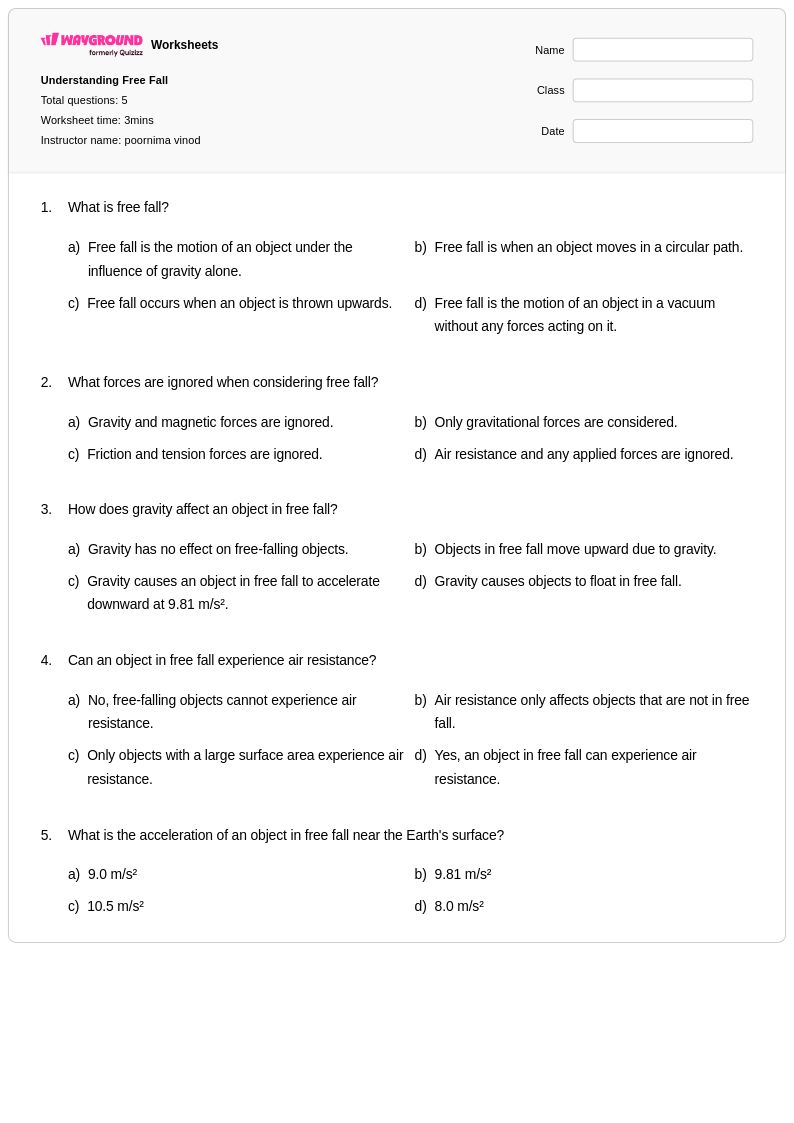
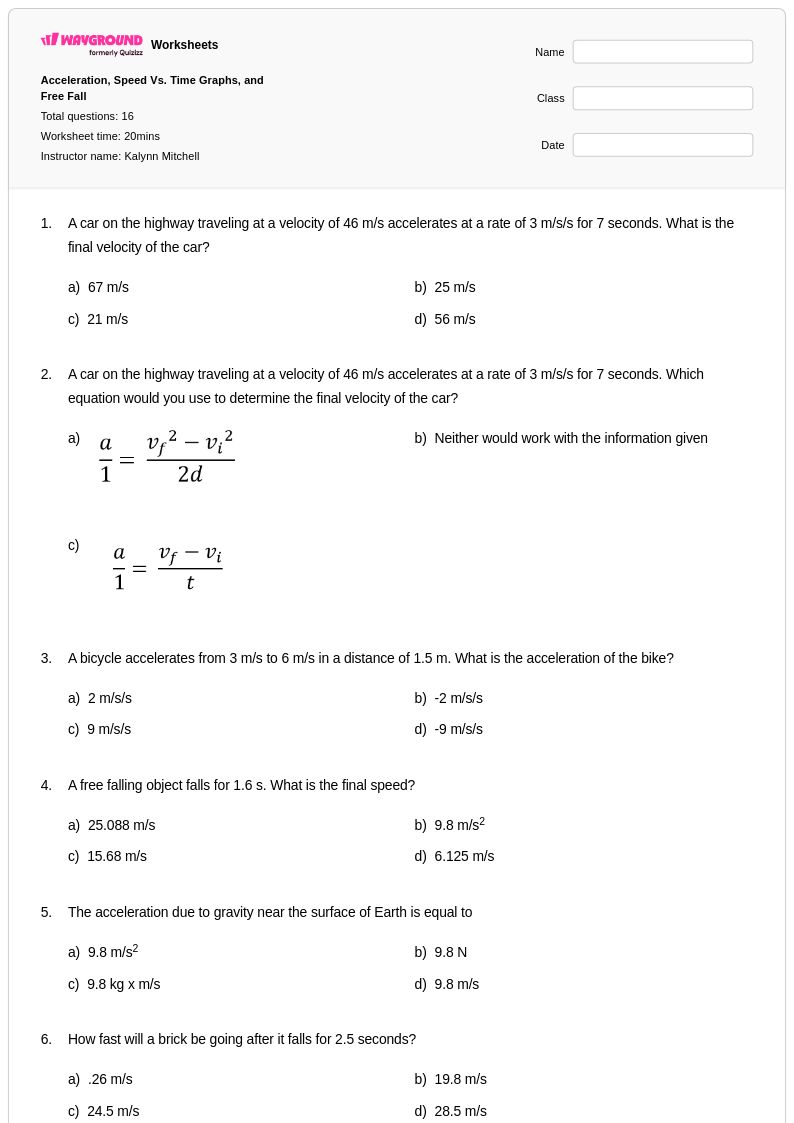
Free fall worksheets for Year 9 students available through Wayground (formerly Quizizz) provide comprehensive practice with one of physics' most fundamental concepts, helping students master the principles of gravitational motion and kinematics. These carefully designed resources strengthen critical analytical skills as students work through practice problems involving objects dropped from various heights, calculating velocity, acceleration, and displacement during free fall motion. The worksheet collections include detailed answer keys that guide students through step-by-step solutions, while printable pdf formats ensure accessibility for both classroom instruction and independent study. Students develop proficiency in applying kinematic equations, understanding the constant acceleration due to gravity, and analyzing real-world scenarios where air resistance is negligible, building the mathematical foundation essential for advanced physics concepts.
Wayground (formerly Quizizz) empowers educators with millions of teacher-created free fall worksheet resources that streamline lesson planning and support differentiated instruction for Year 9 physics courses. The platform's robust search and filtering capabilities allow teachers to quickly locate materials aligned with specific learning standards and customize content to match diverse student needs and ability levels. These digital and printable worksheet collections facilitate targeted skill practice, enabling teachers to address individual learning gaps through focused remediation while providing enrichment opportunities for advanced learners. The flexible format options support various teaching approaches, from traditional paper-based assignments to interactive digital activities, ensuring that educators can effectively reinforce free fall concepts through repeated practice and assessment in ways that best serve their classroom dynamics and student learning preferences.
FAQs
How do I teach free fall in physics class?
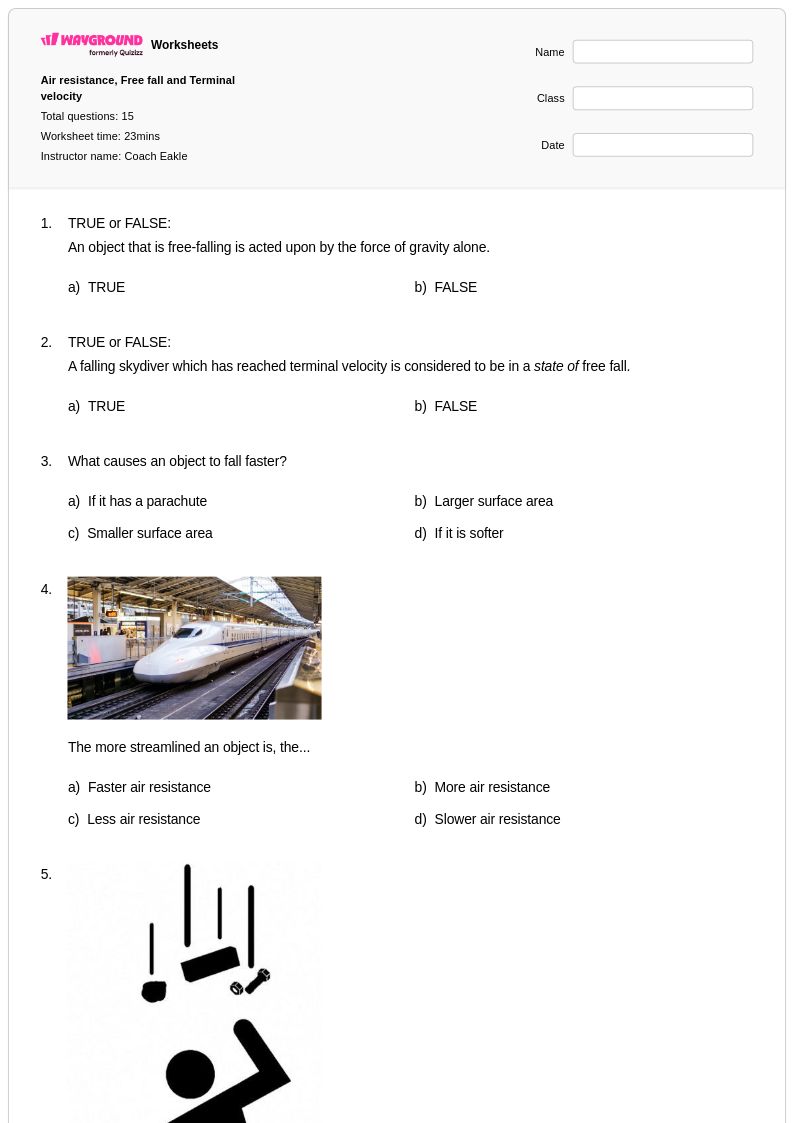
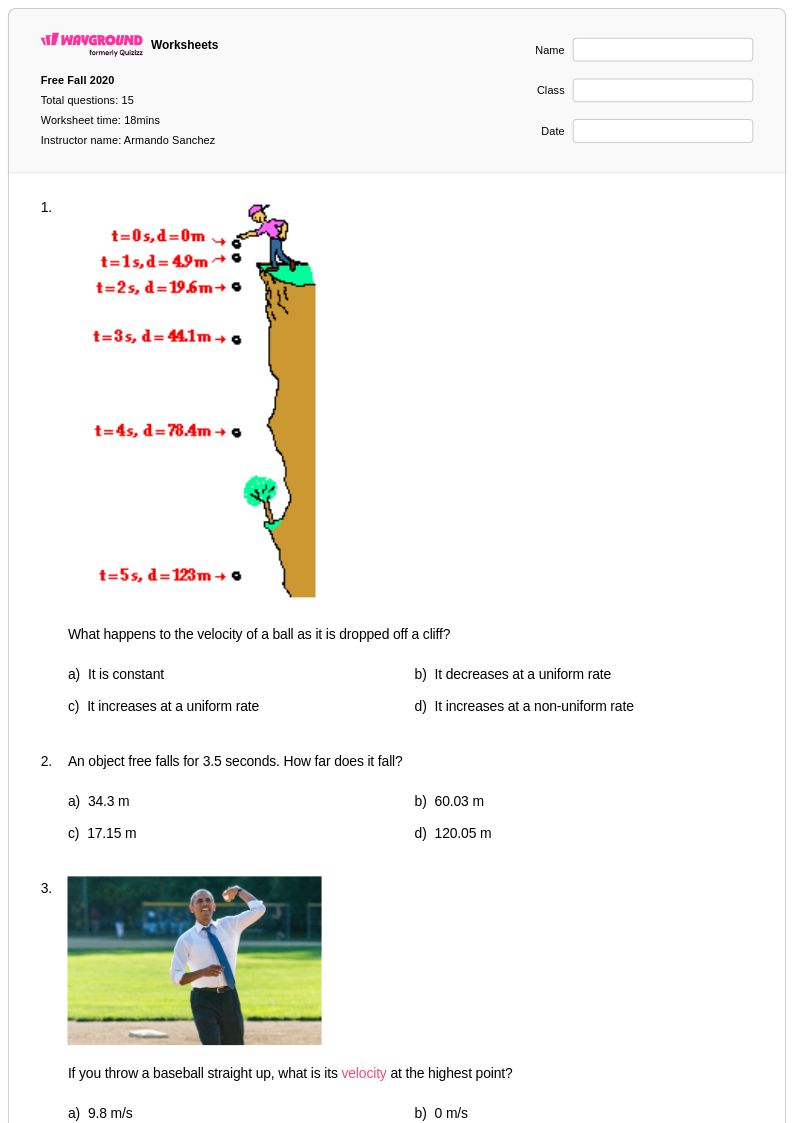
Teaching free fall effectively starts with establishing that all objects accelerate downward at 9.8 m/s² in the absence of air resistance, regardless of mass. Begin with conceptual demonstrations, such as dropping objects of different masses simultaneously, before introducing kinematic equations. From there, progress students through worked examples involving displacement, velocity, and time before assigning independent practice problems that build in complexity.
What equations do students need to know for free fall problems?
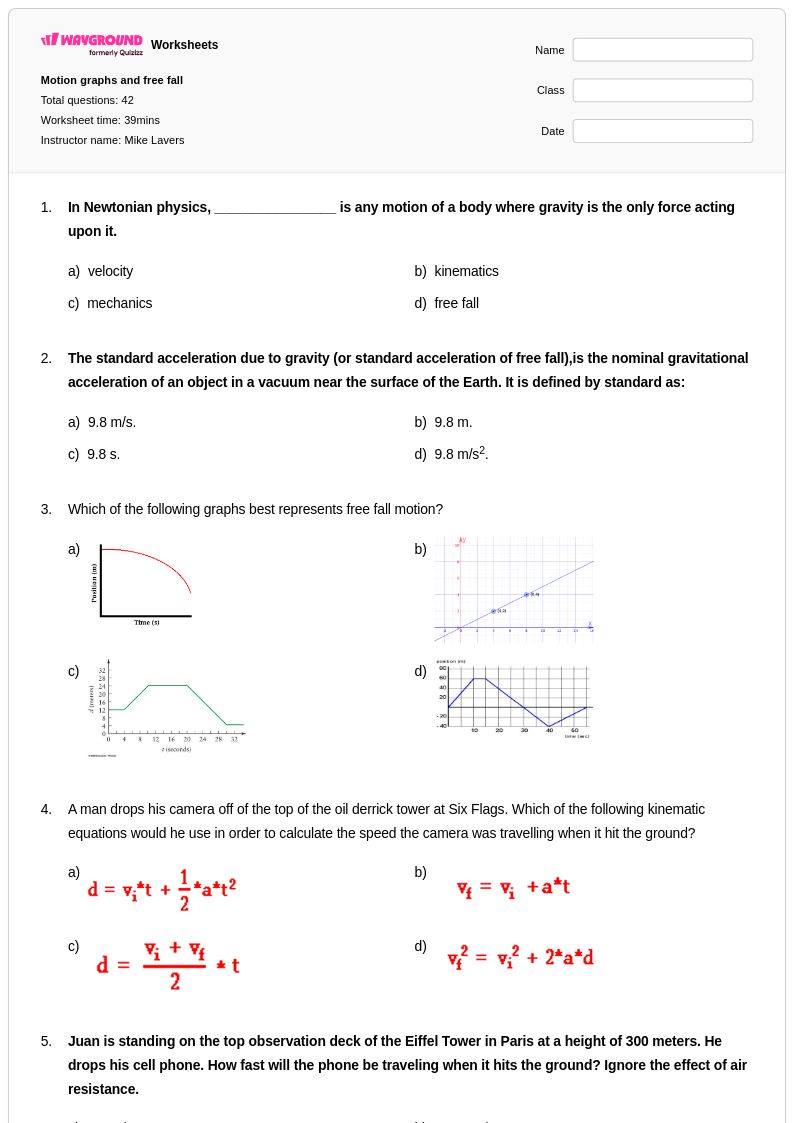
Students need to apply the kinematic equations adapted for free fall, where acceleration equals 9.8 m/s² downward. The most commonly used are v = v₀ + gt, d = v₀t + ½gt², and v² = v₀² + 2gd. Problems involving objects dropped from rest simplify further since initial velocity is zero, making these a strong starting point before introducing cases with non-zero initial velocities.
What mistakes do students commonly make when solving free fall problems?
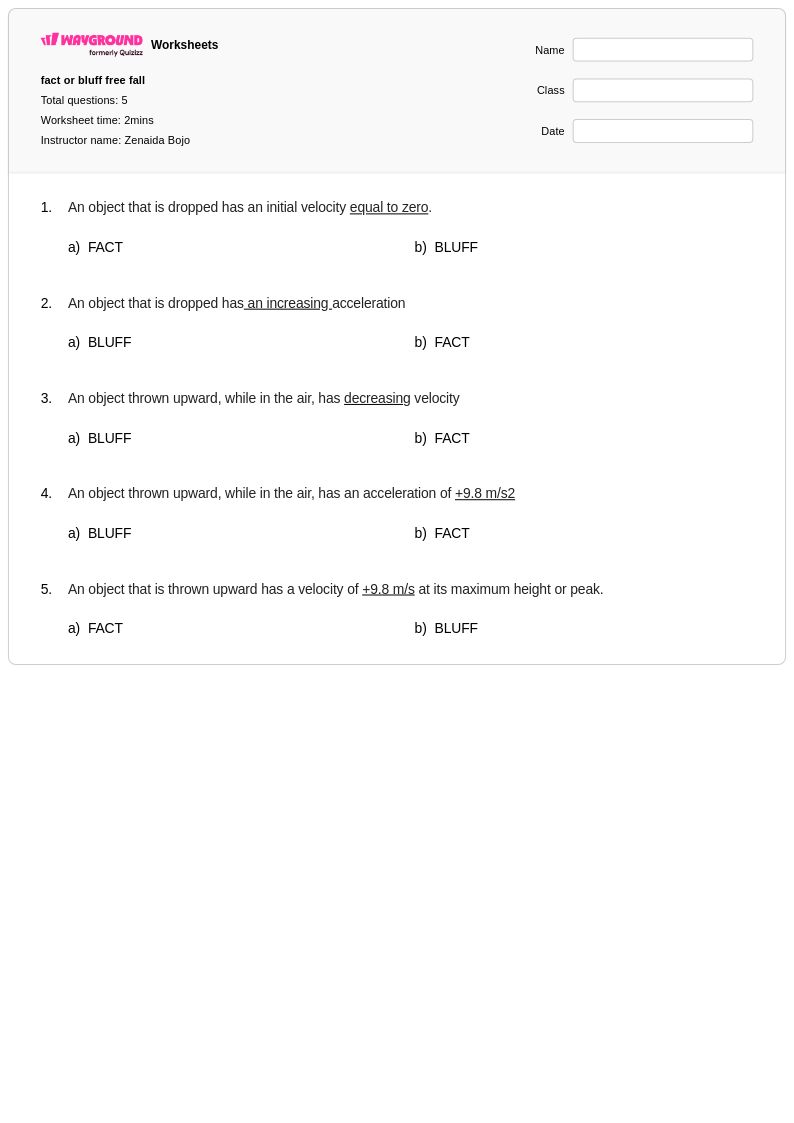
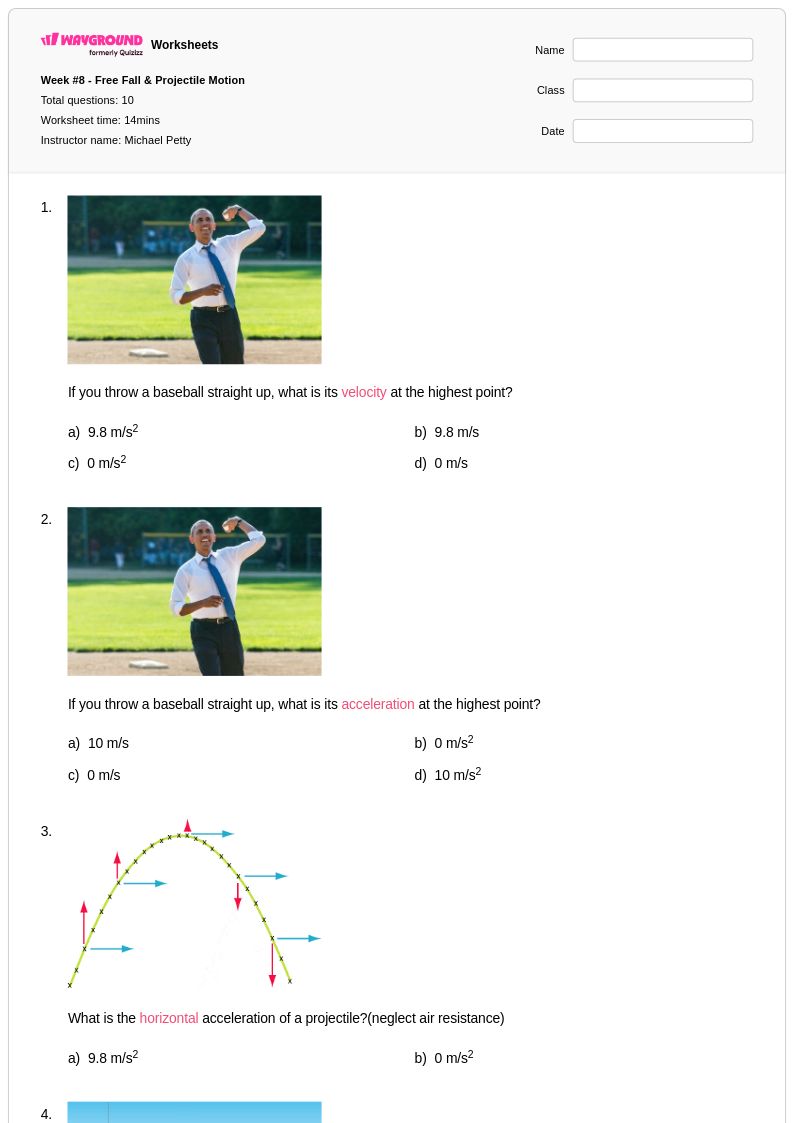
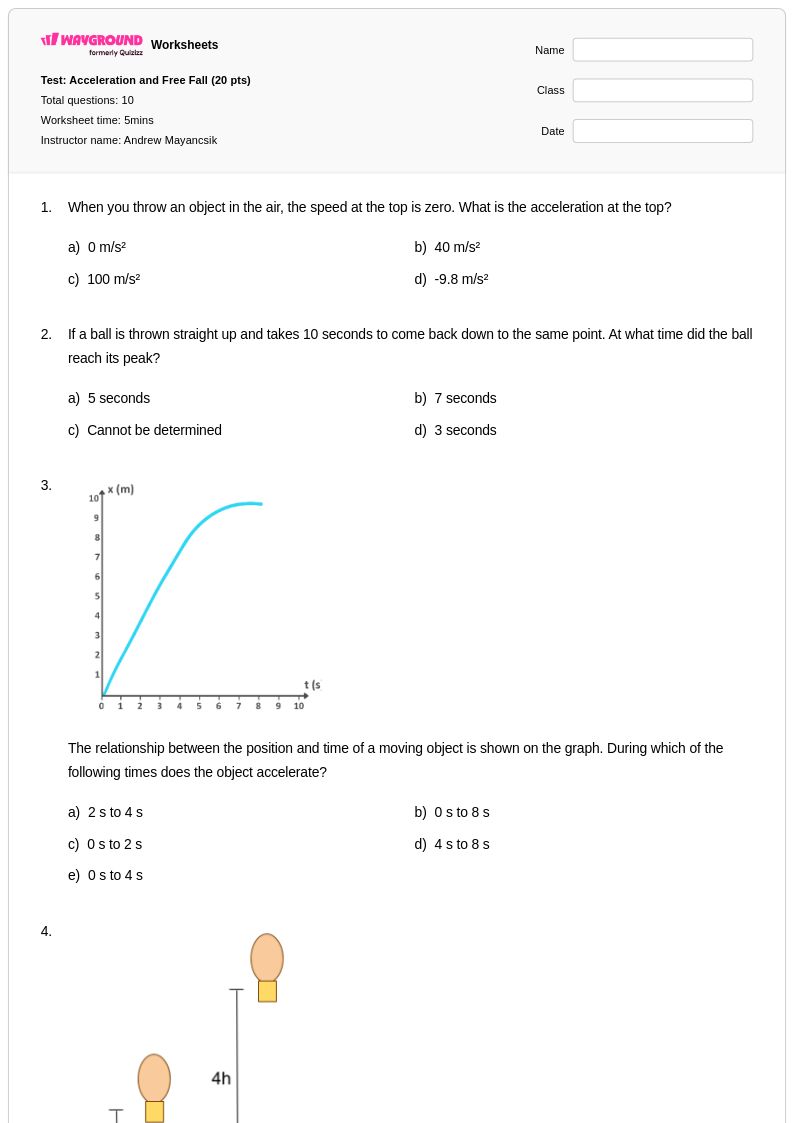
The most frequent error is treating upward and downward directions inconsistently, which leads to sign errors throughout a calculation. Students also frequently forget that an object thrown upward still experiences downward acceleration at 9.8 m/s², even at its peak where velocity is momentarily zero. A third common mistake is confusing displacement with total distance traveled, especially in problems where an object goes up before coming down.
What practice exercises help students get better at free fall calculations?
Structured problem sets that begin with objects dropped from rest and gradually introduce initial velocities give students a clear progression to build confidence. Multi-step problems that ask for time, velocity, and displacement within the same scenario reinforce how the variables are interrelated. Practice problems that require students to first identify knowns and unknowns before selecting an equation are especially effective at developing systematic problem-solving habits.
How can I use free fall worksheets in my physics classroom?
Free fall worksheets on Wayground are available as printable PDFs for direct classroom distribution and in digital formats for technology-integrated or hybrid learning environments, and can also be hosted as a quiz on Wayground. Printable versions work well for in-class practice and homework assignments, while digital formats support immediate self-assessment and remote learning. Answer keys are included with each worksheet, allowing students to check their own work and supporting independent review.
How do I differentiate free fall instruction for students at different levels?
For students who are still developing fluency with kinematic equations, start with single-variable problems where only one unknown needs to be solved. More advanced students can be challenged with multi-step scenarios involving objects launched upward or problems requiring unit conversion. On Wayground, teachers can apply accommodations such as read aloud, reduced answer choices, and extended time on a per-student basis, allowing the same worksheet set to serve learners across a range of ability levels without drawing attention to individual differences.