Free Printable Ions and Formula Units Worksheets for Year 7
Master Year 7 ions and formula units with Wayground's comprehensive collection of free chemistry worksheets, featuring engaging practice problems, detailed answer keys, and printable PDF resources to strengthen students' understanding of ionic compounds.
Explore printable Ions and Formula Units worksheets for Year 7
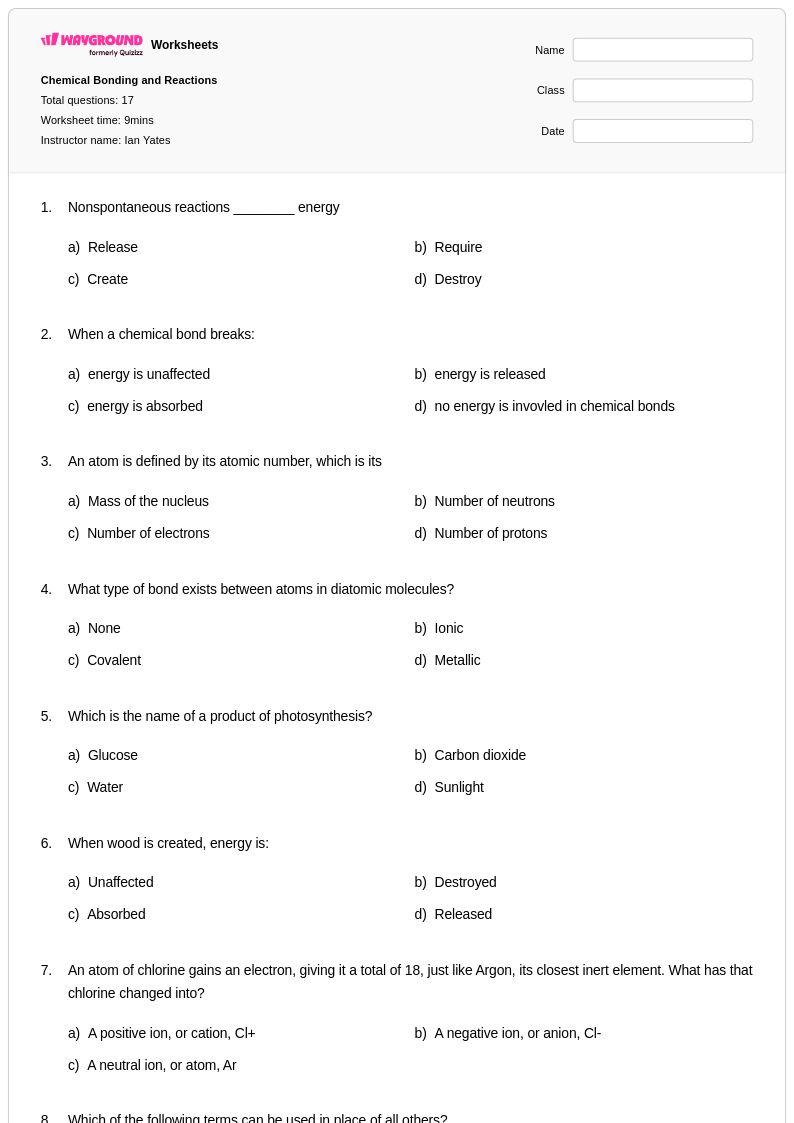
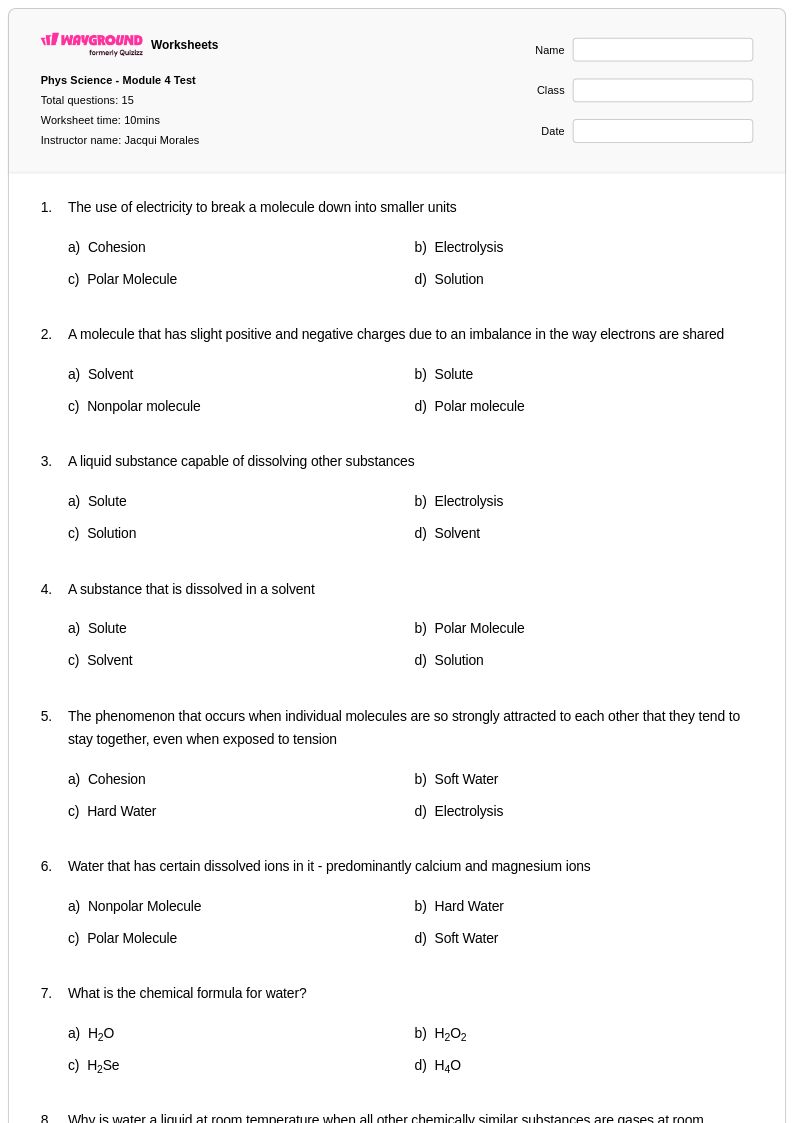
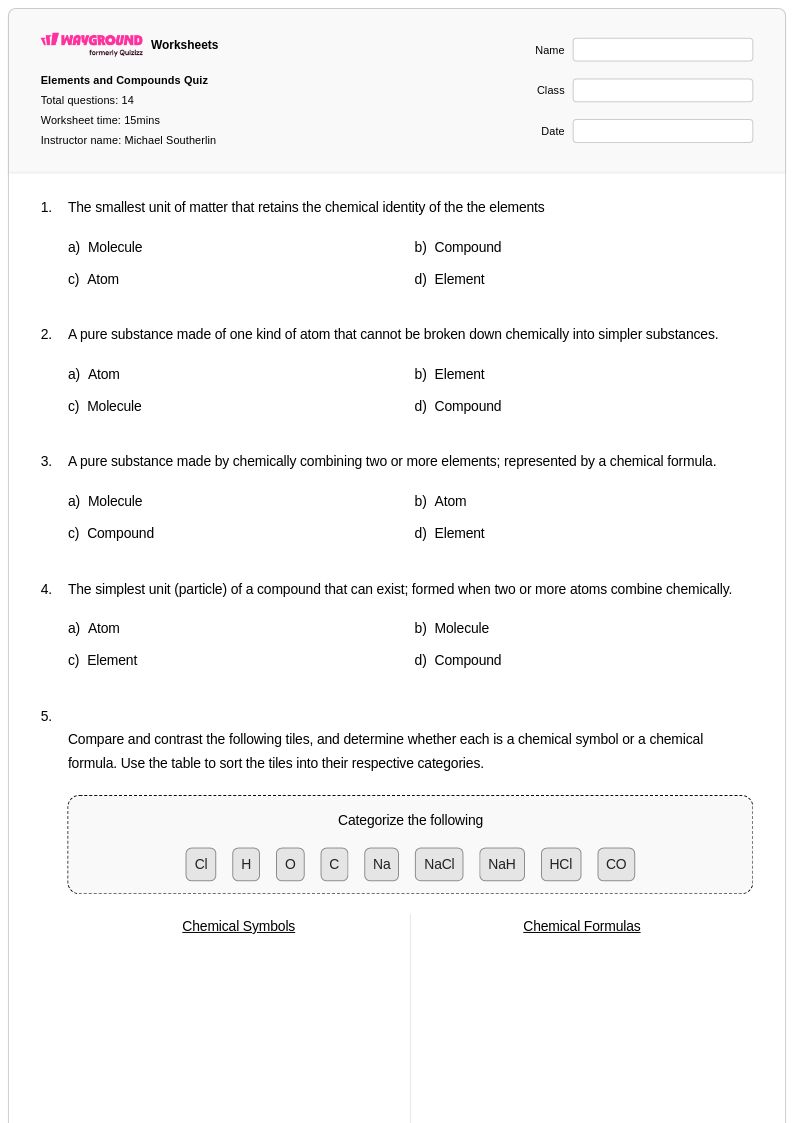
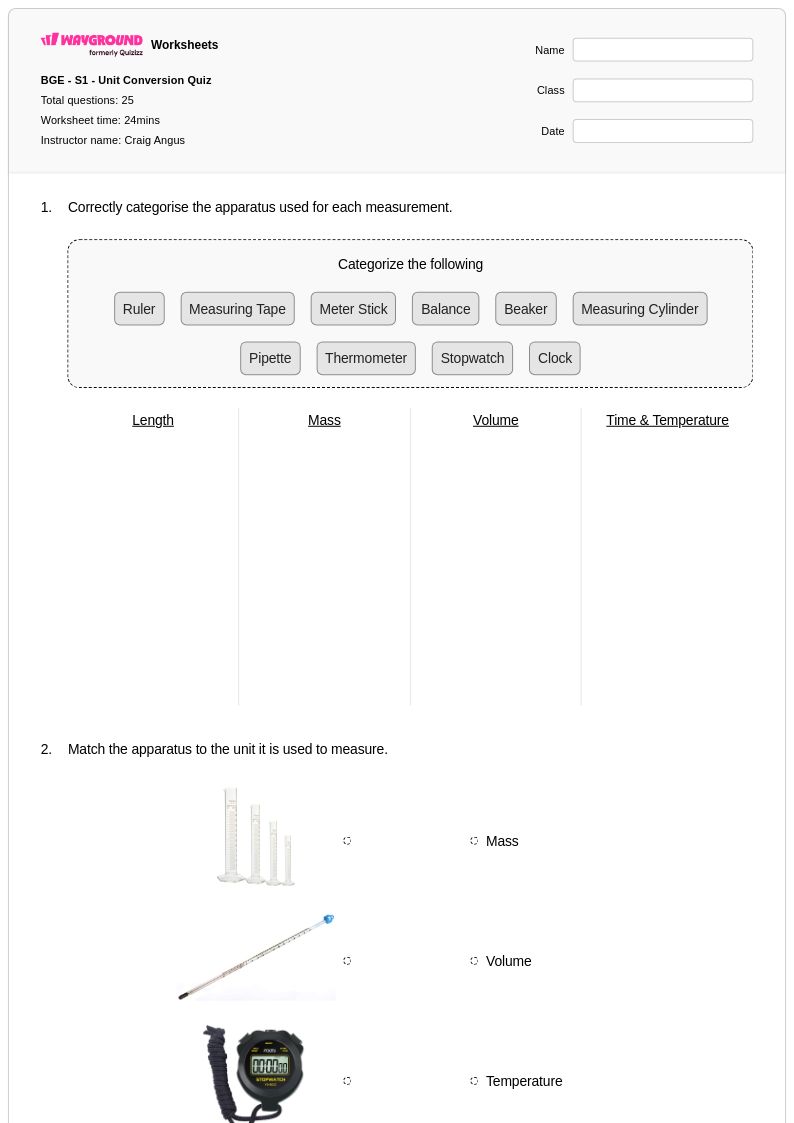
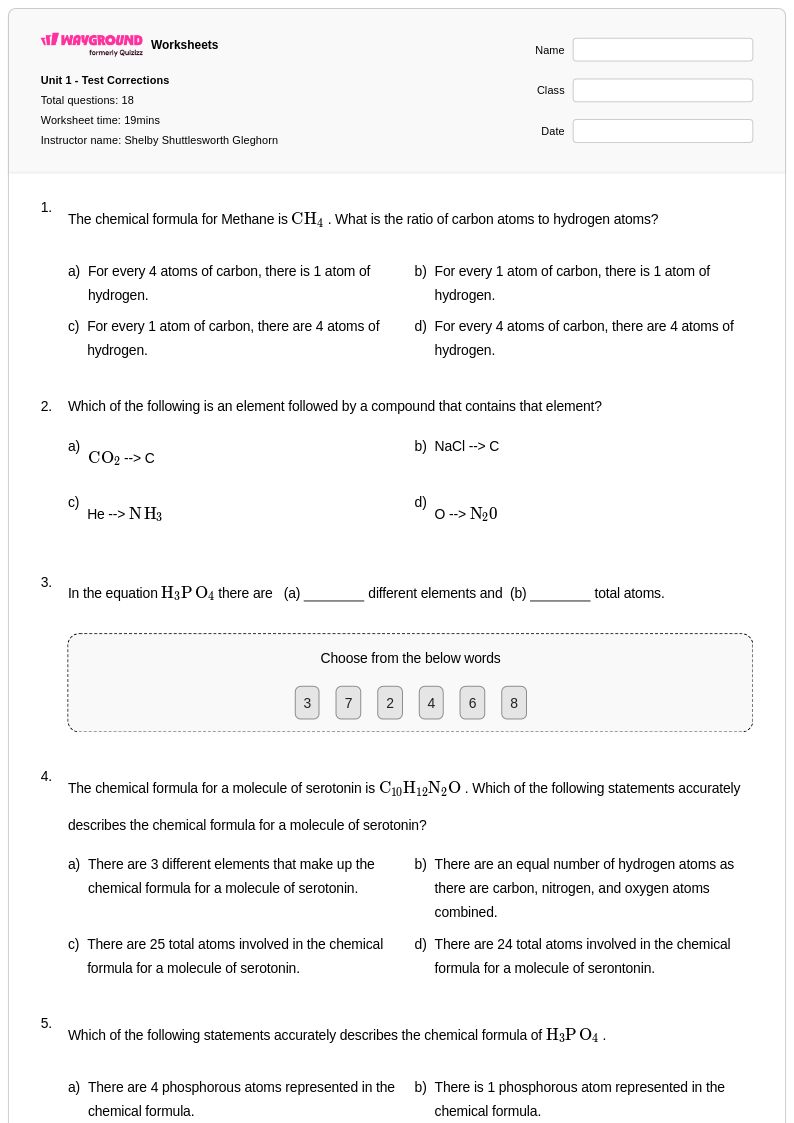
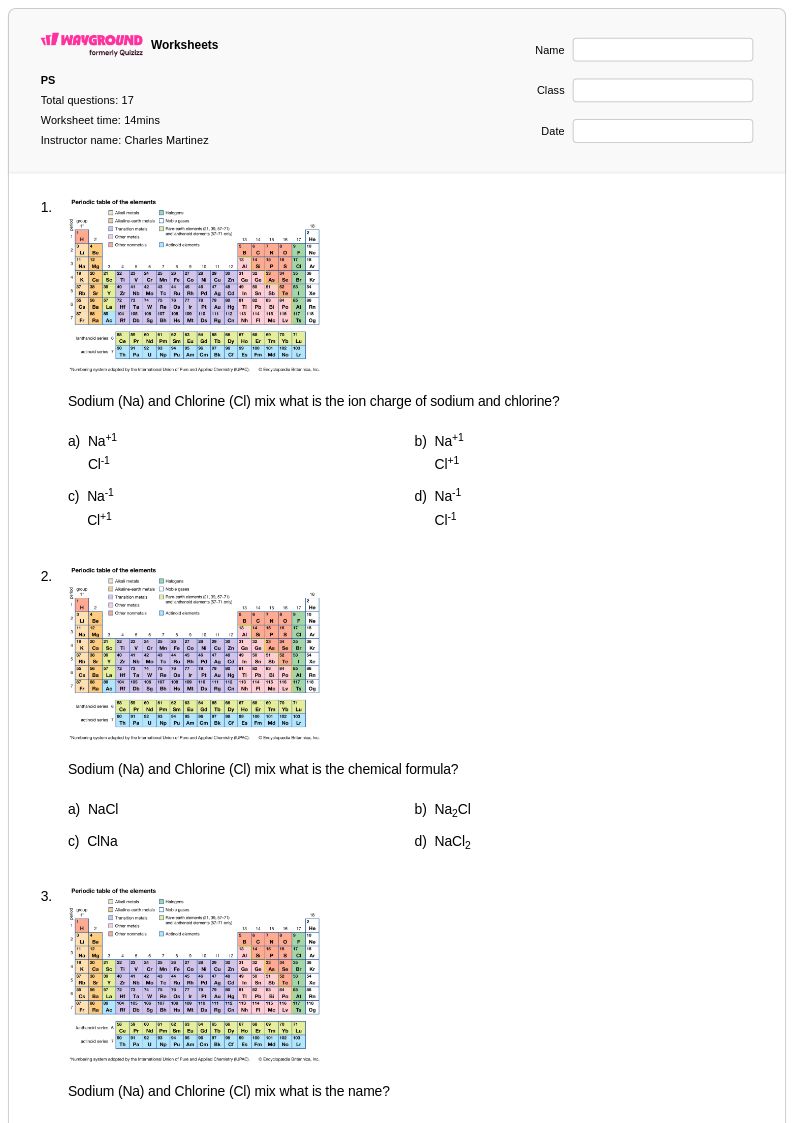
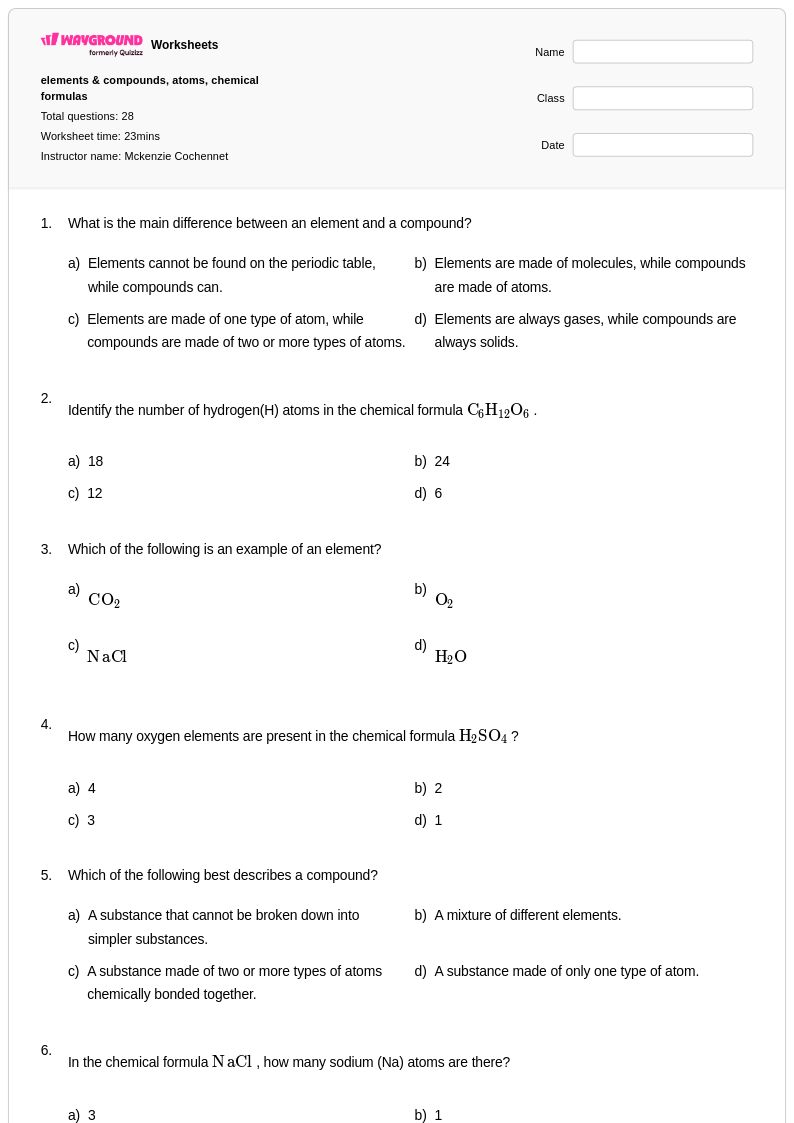
Ions and formula units represent fundamental concepts in Year 7 chemistry that bridge the gap between atomic structure and chemical compound formation. Wayground's comprehensive worksheet collection addresses these critical topics through carefully designed practice problems that help students master ionic bonding, understand how atoms gain or lose electrons to form ions, and learn to write correct chemical formulas for ionic compounds. These printable resources strengthen essential skills including identifying common ions, determining ionic charges, writing formula units using the crisscross method, and calculating formula masses. Each worksheet comes with a complete answer key, allowing students to check their work independently while building confidence in chemical nomenclature and formula writing. The free pdf materials provide structured practice that reinforces classroom learning through systematic exercises covering monatomic ions, polyatomic ions, and the formation of neutral ionic compounds.
Wayground's extensive library draws from millions of teacher-created resources specifically designed to support Year 7 chemistry instruction on ions and formula units. The platform's robust search and filtering capabilities enable educators to quickly locate worksheets that align with specific learning objectives and curriculum standards, whether focusing on basic ion identification or more complex formula unit calculations. Teachers benefit from built-in differentiation tools that allow customization of difficulty levels, making it easy to provide targeted remediation for struggling students or enrichment activities for advanced learners. Available in both printable pdf format and interactive digital versions, these materials seamlessly integrate into lesson planning while supporting diverse learning preferences. The comprehensive collection helps educators efficiently address varying skill levels within their classrooms, ensuring all students develop proficiency in this foundational chemistry concept through focused skill practice and assessment.
FAQs
How do I teach students to write ionic formulas from ion names?
Start by ensuring students can identify ionic charges from an element's position on the periodic table before they attempt formula writing. Teach the charge-balancing process explicitly: students must find the least common multiple of the two ion charges and use subscripts so the compound is electrically neutral. Using a structured criss-cross method alongside periodic table reference charts helps students develop this skill systematically before moving to more complex polyatomic ions.
What practice exercises help students master identifying ionic charges?
Effective practice involves three progressive stages: first, identifying charges for main-group elements using their periodic table group number; second, applying those charges to write simple binary ionic formulas; and third, translating between chemical names and formulas in both directions. Worksheets that present ions in isolation before combining them into formula units help students build confidence incrementally rather than being overwhelmed by multi-step problems from the start.
What mistakes do students commonly make when writing formula units for ionic compounds?
The most frequent error is forgetting that the overall formula unit must be electrically neutral, leading students to write formulas with unbalanced charges. Students also commonly confuse the subscript placement, applying a subscript to a polyatomic ion without using parentheses, such as writing CaNO32 instead of Ca(NO3)2. A third common mistake is assuming that the subscripts match the charge numbers directly rather than using the criss-cross or LCM method to determine the correct ratio.
How do I help students who struggle to distinguish between ions and neutral atoms?
Students often confuse ions with neutral atoms because they share the same elemental symbol, so it helps to explicitly teach that ions are formed by gaining or losing electrons, which changes the charge but not the element's identity. Using visual models that show electron dot structures before and after ionization can make this distinction concrete. Practice problems that ask students to categorize particles as ions or neutral atoms, and justify their reasoning using charge notation, reinforce this conceptual boundary effectively.
How can I use Wayground's ions and formula units worksheets in my classroom?
Wayground's ions and formula units worksheets are available as printable PDFs, making them easy to distribute for in-class practice, homework, or remediation sessions in traditional classroom settings. They are also available in digital formats, allowing teachers to assign them for interactive practice in technology-integrated environments. Teachers can host any worksheet as a quiz directly on Wayground, giving students immediate feedback and allowing teachers to track performance data across the class.
How do I differentiate ions and formula units instruction for students at different skill levels?
For students who are still developing foundational skills, reduce cognitive load by providing an ion charge reference sheet and starting with binary compounds that use single-digit charges. More advanced students can work with polyatomic ions, transition metals with variable charges, and naming conventions simultaneously. On Wayground, teachers can apply student-level accommodations such as reduced answer choices or read aloud settings for individual students, while the rest of the class receives standard materials, so differentiation happens without singling anyone out.