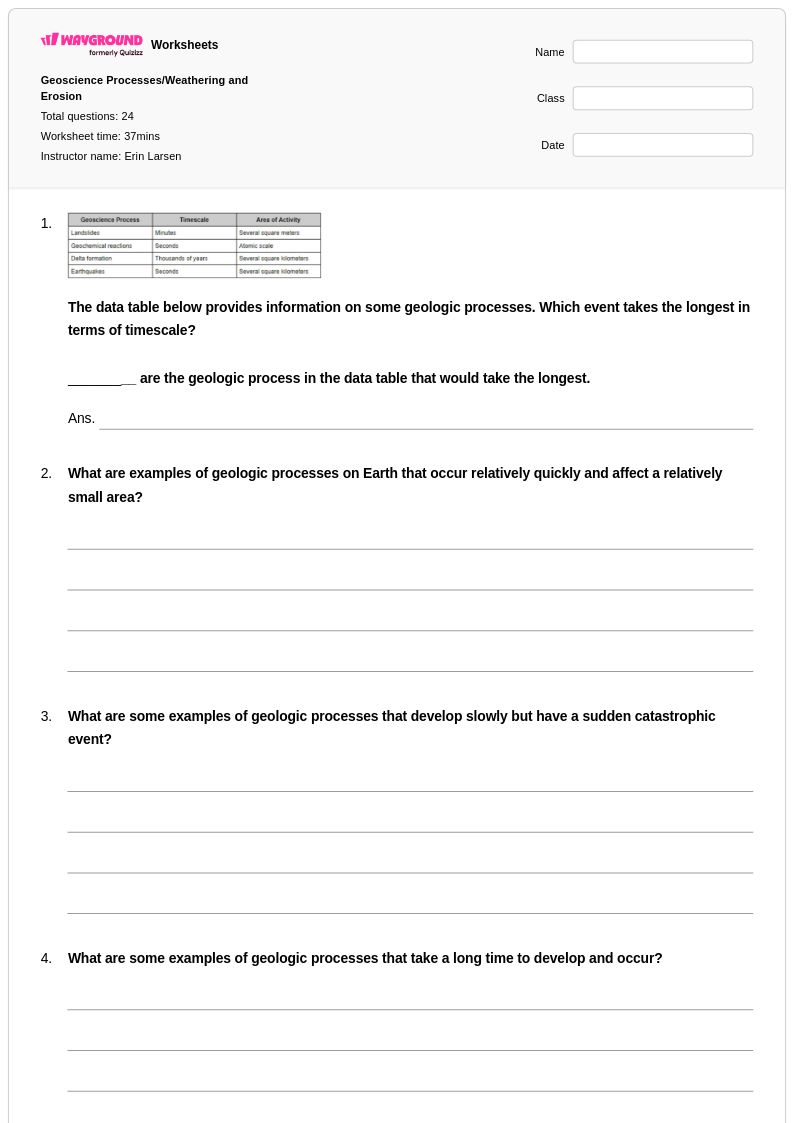
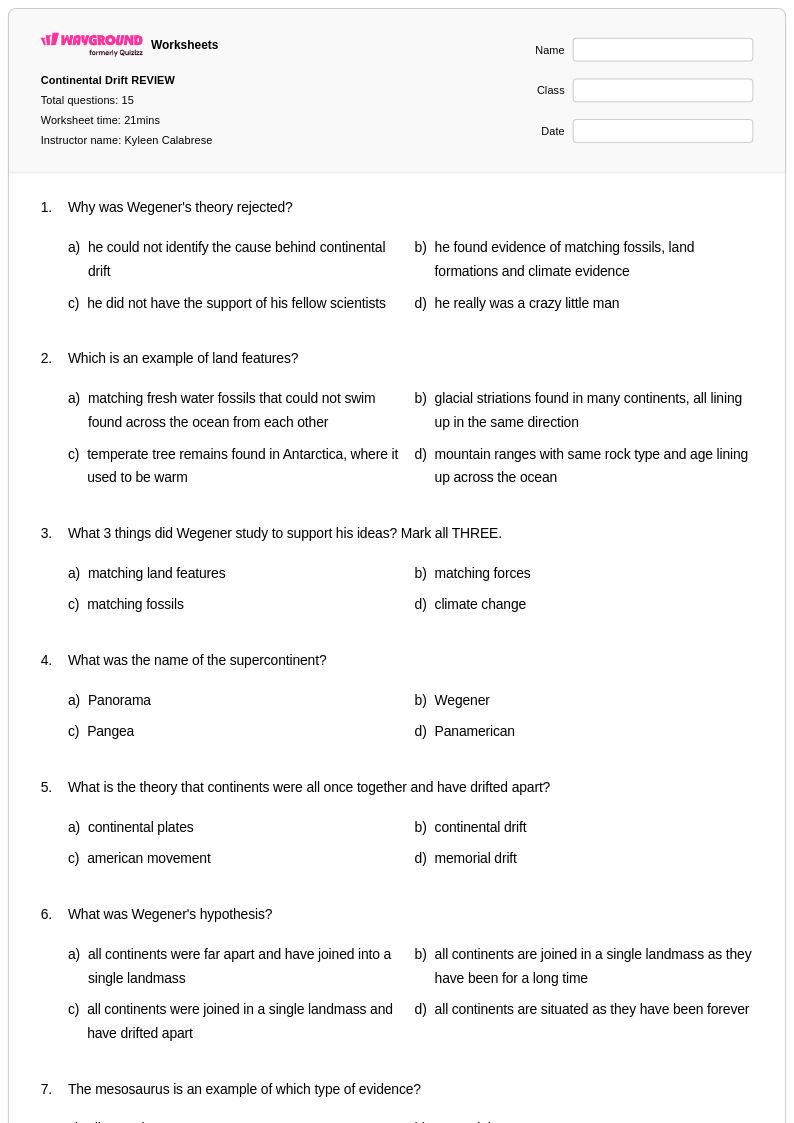
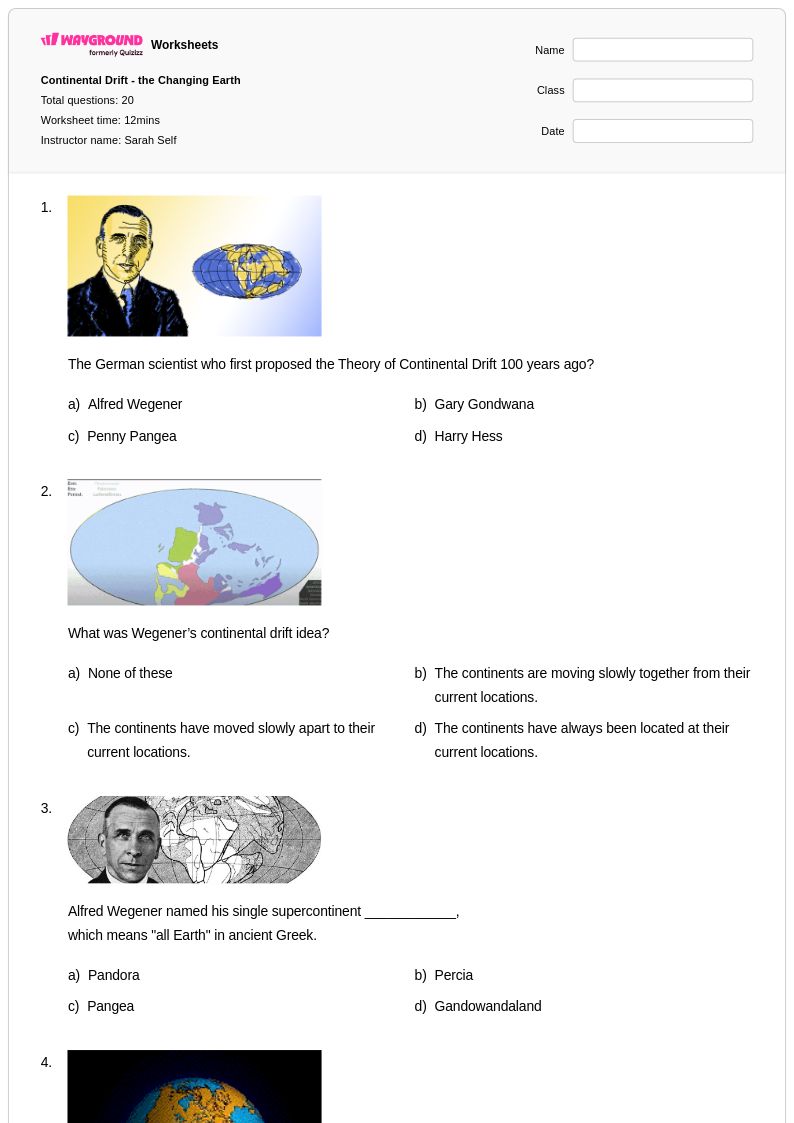
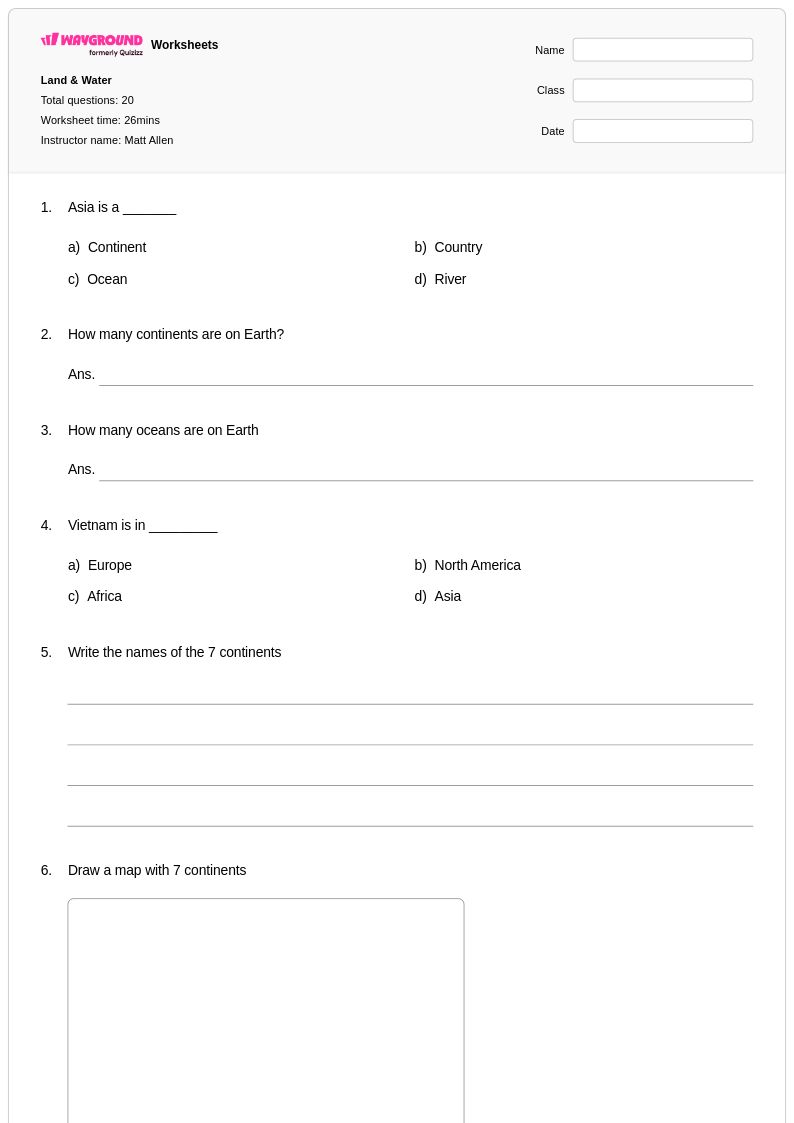
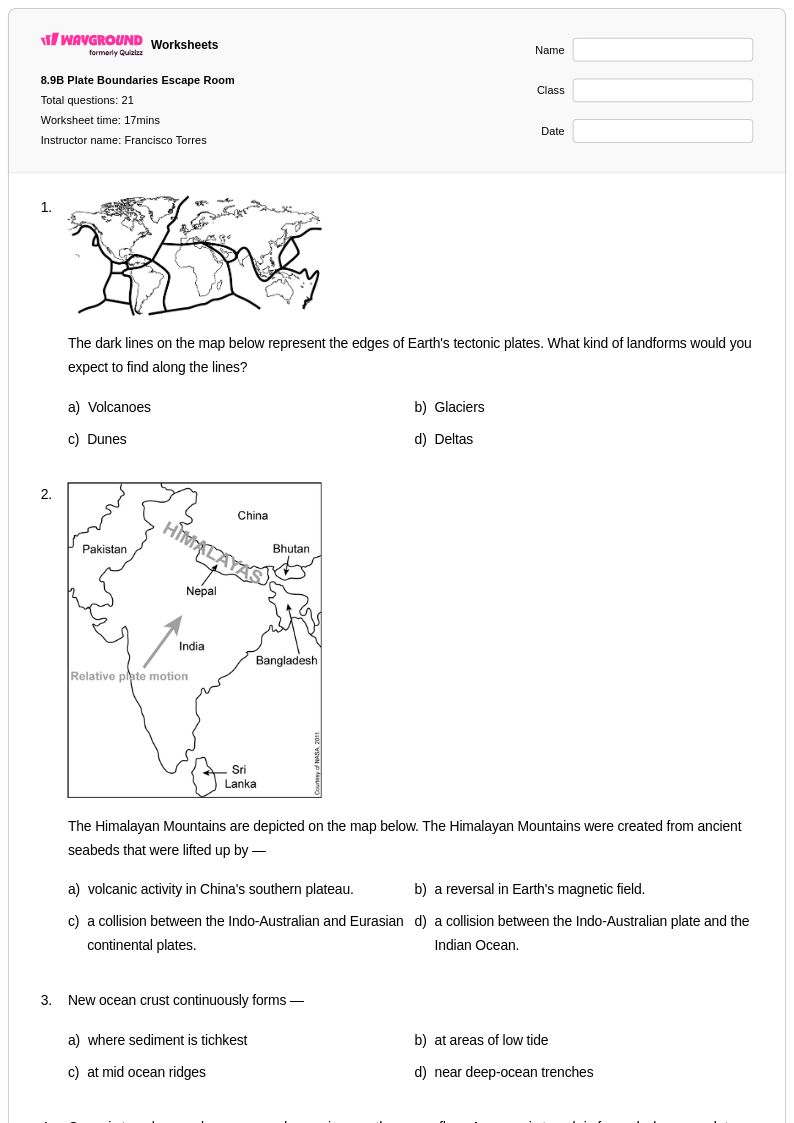
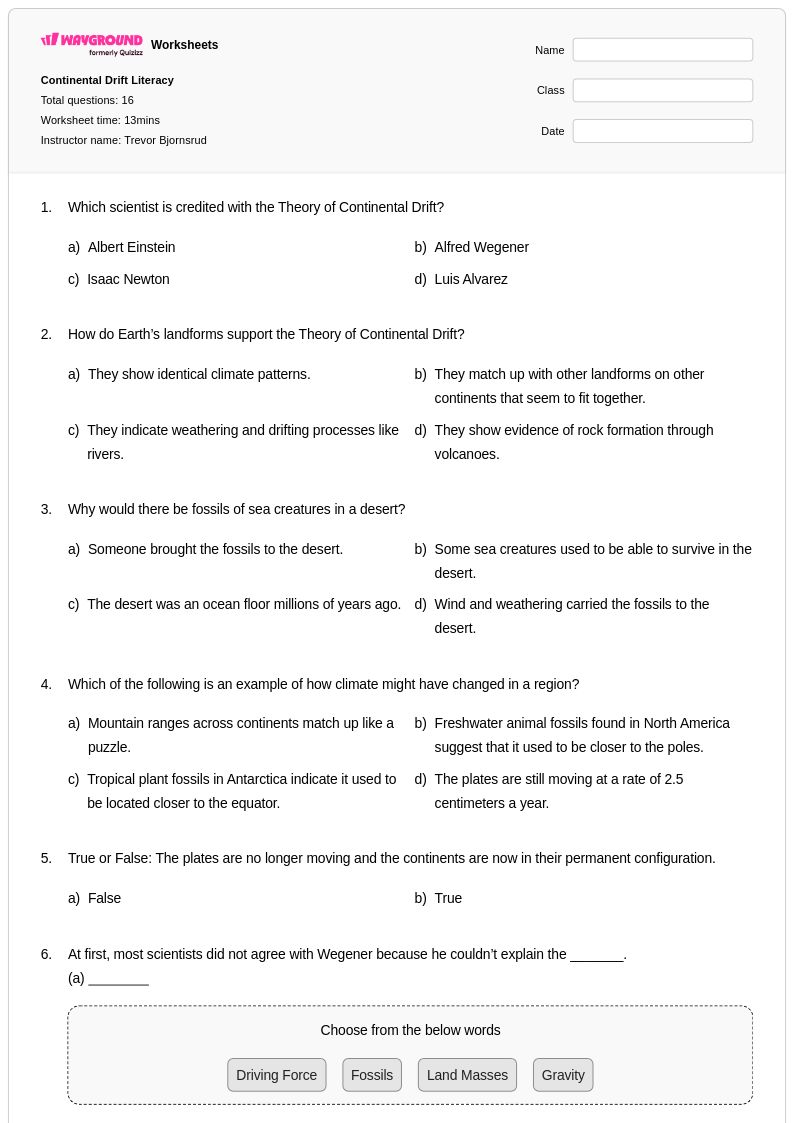
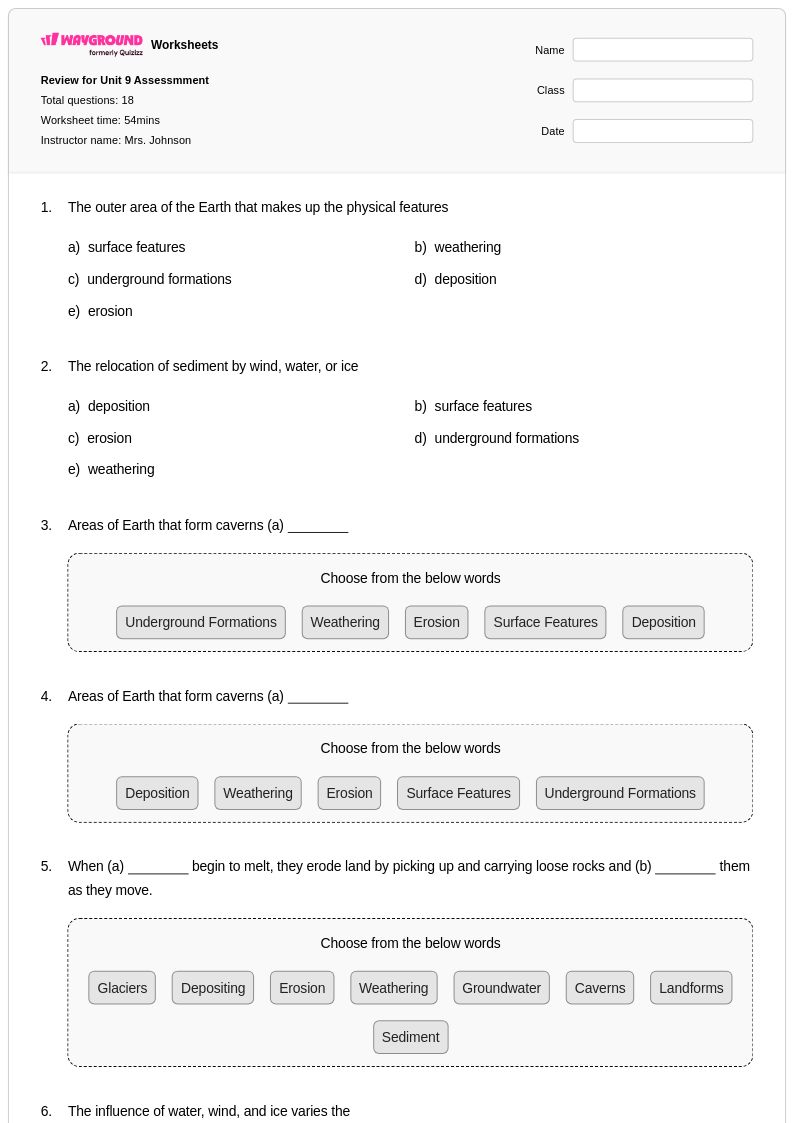
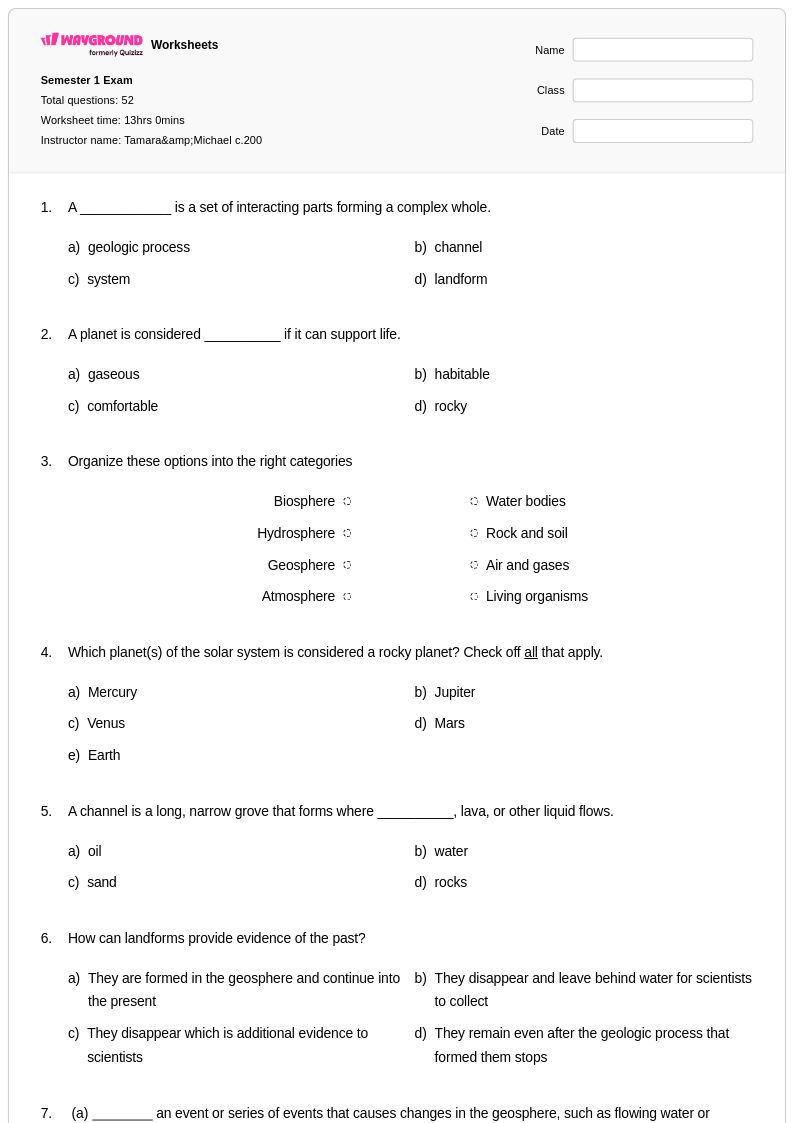
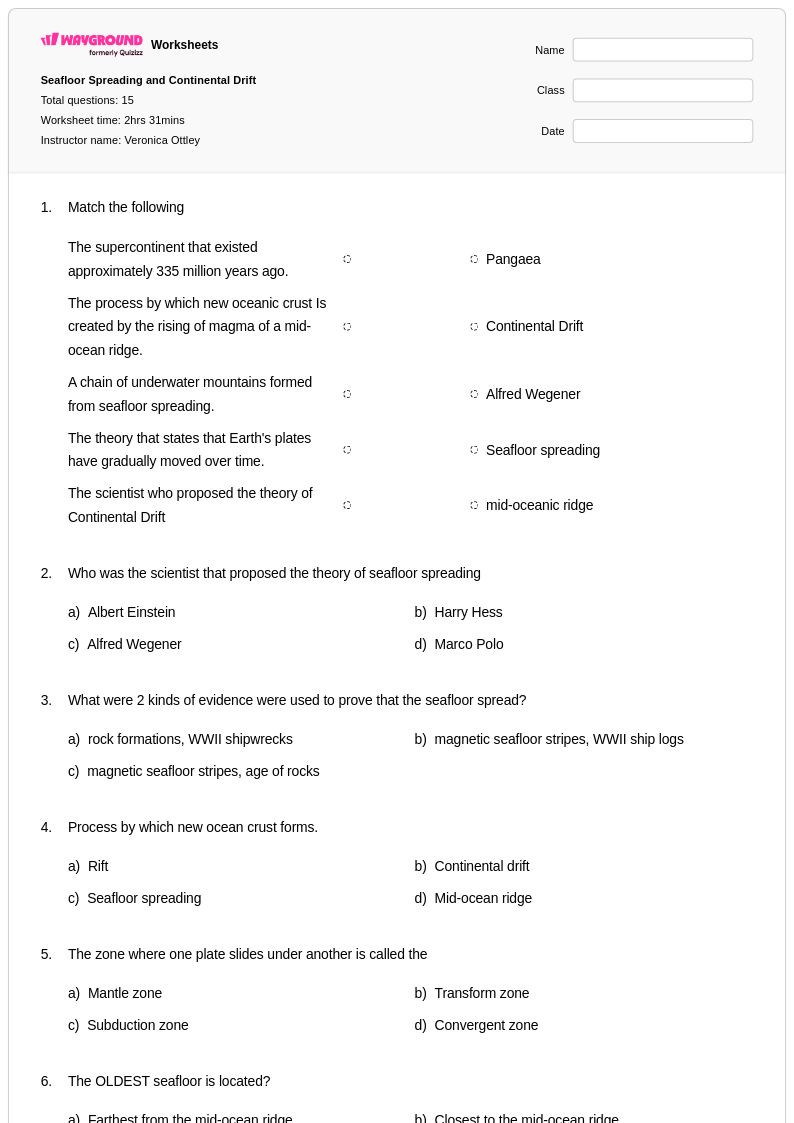
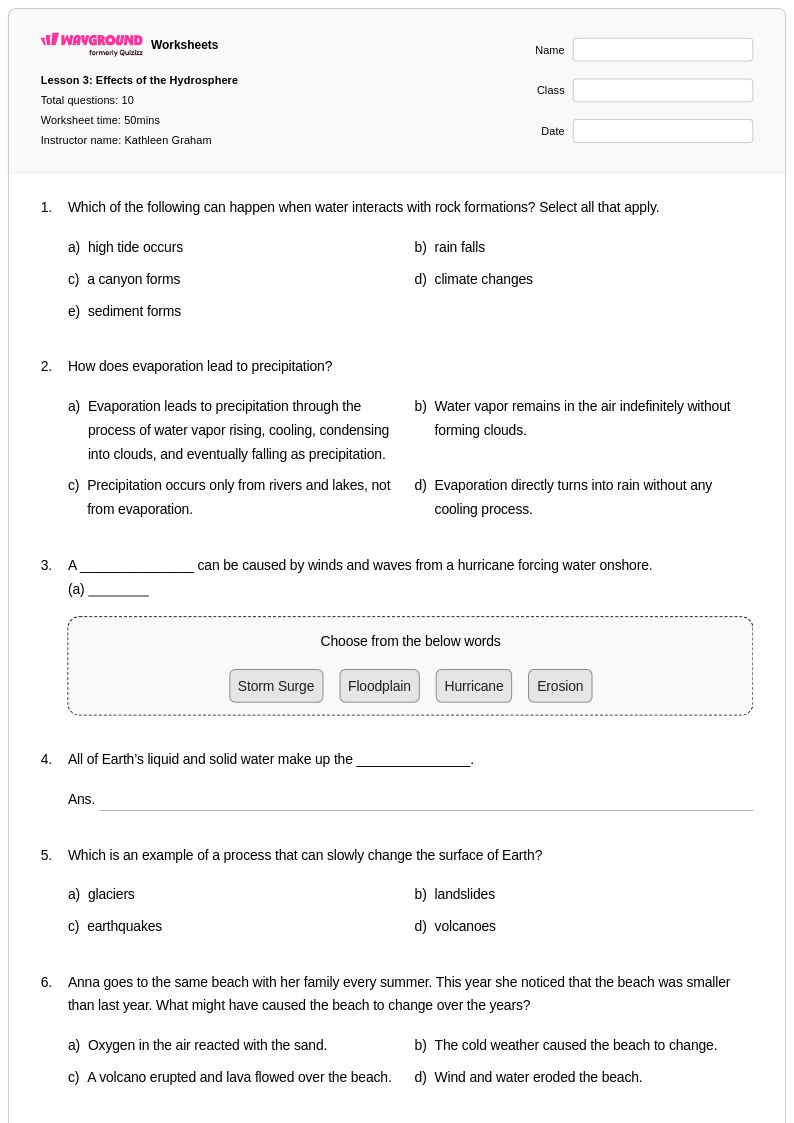
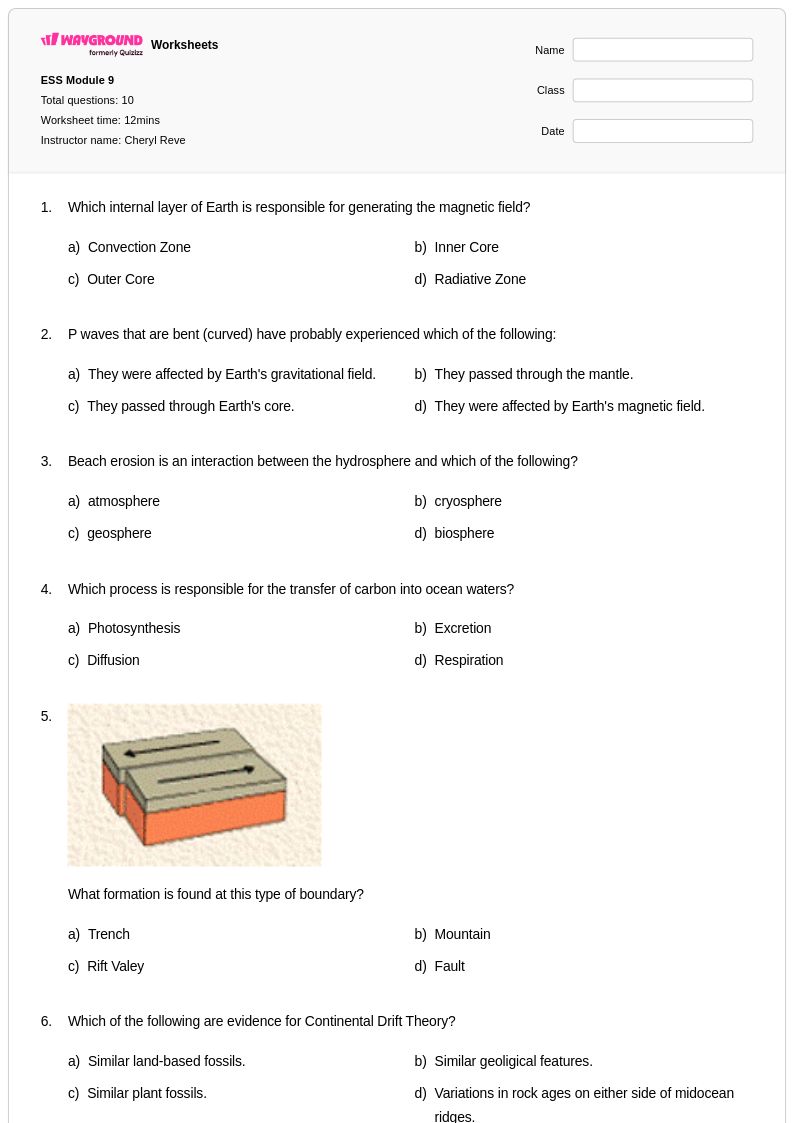
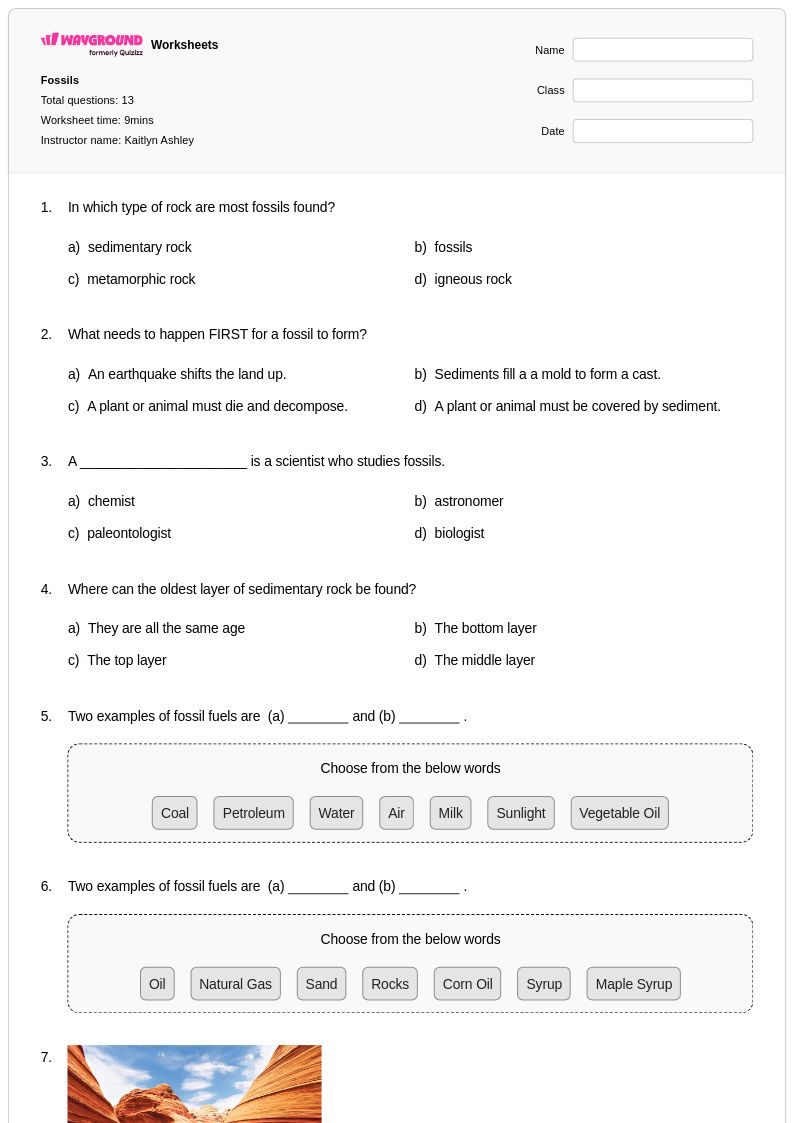
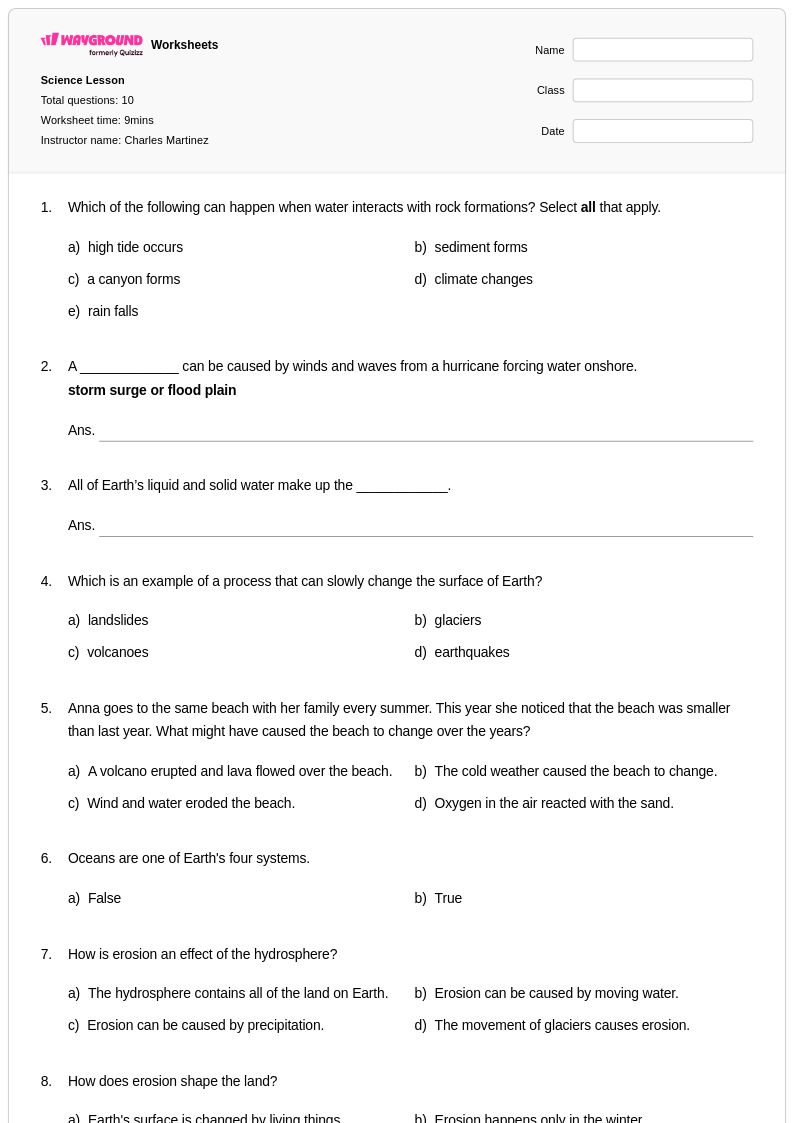
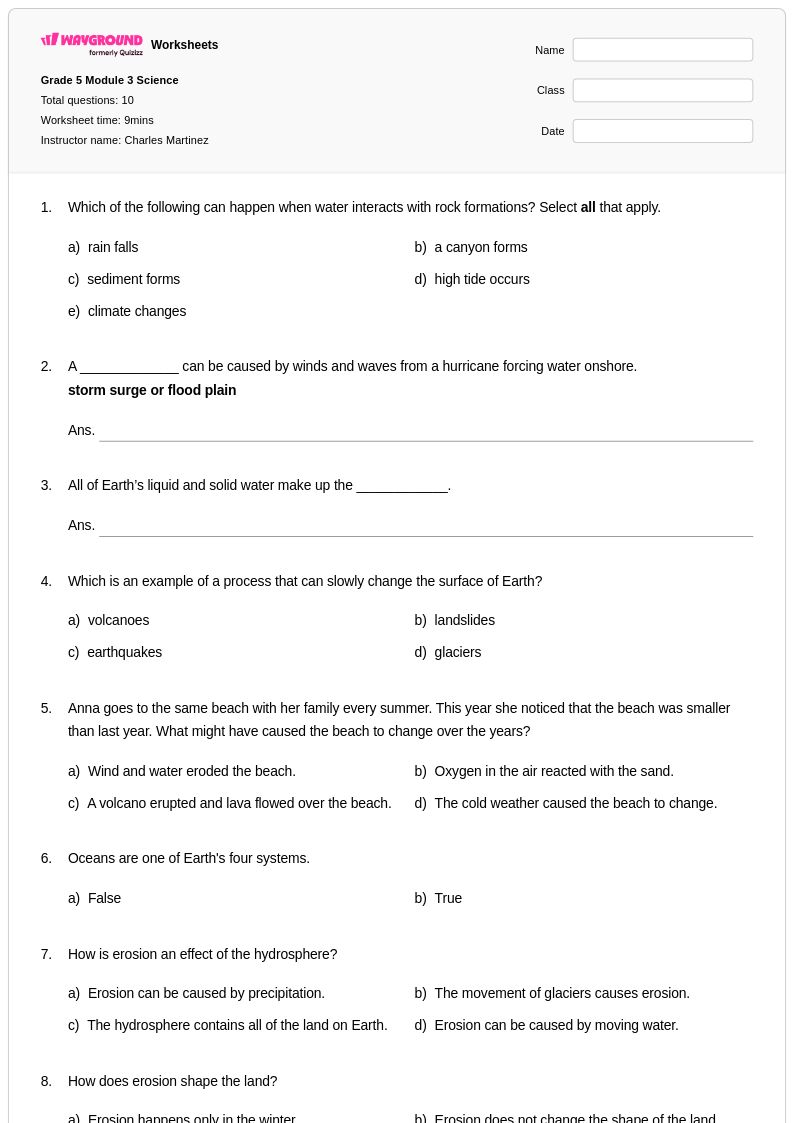
Explore Wayground's comprehensive collection of free land formations worksheets and printables that help students understand geological processes, identify different landforms, and master Earth science concepts through engaging practice problems with answer keys.
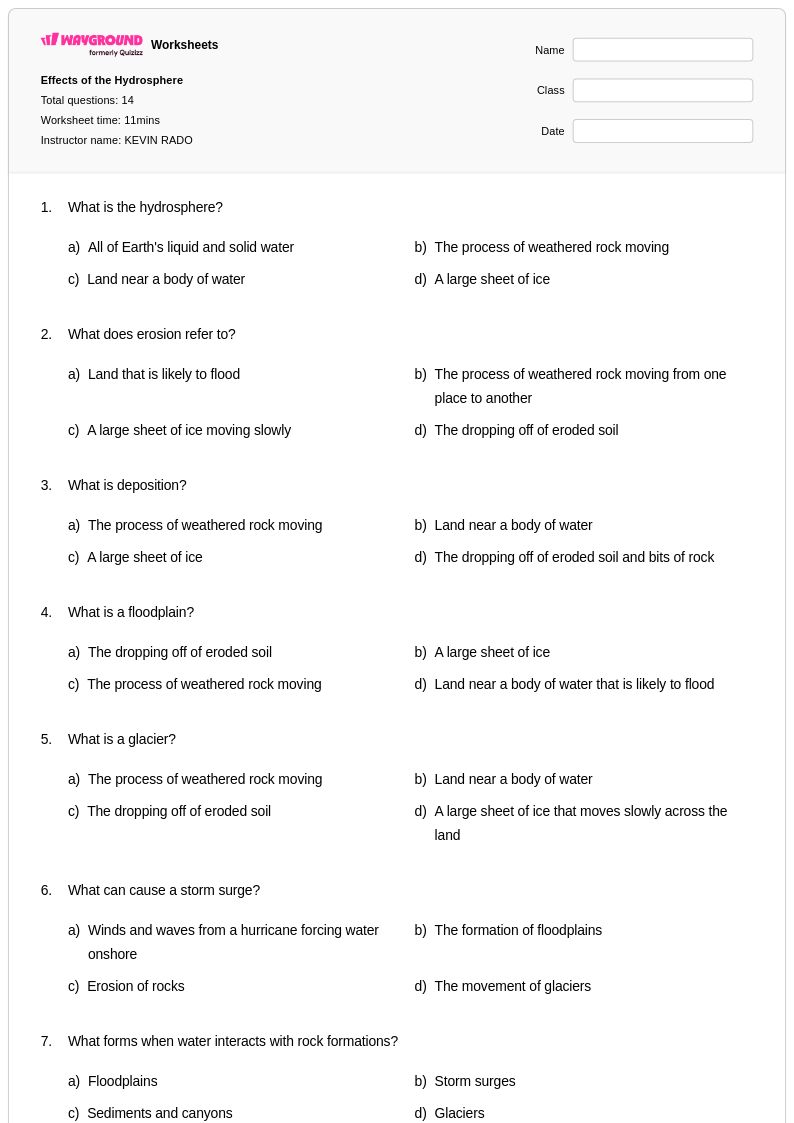
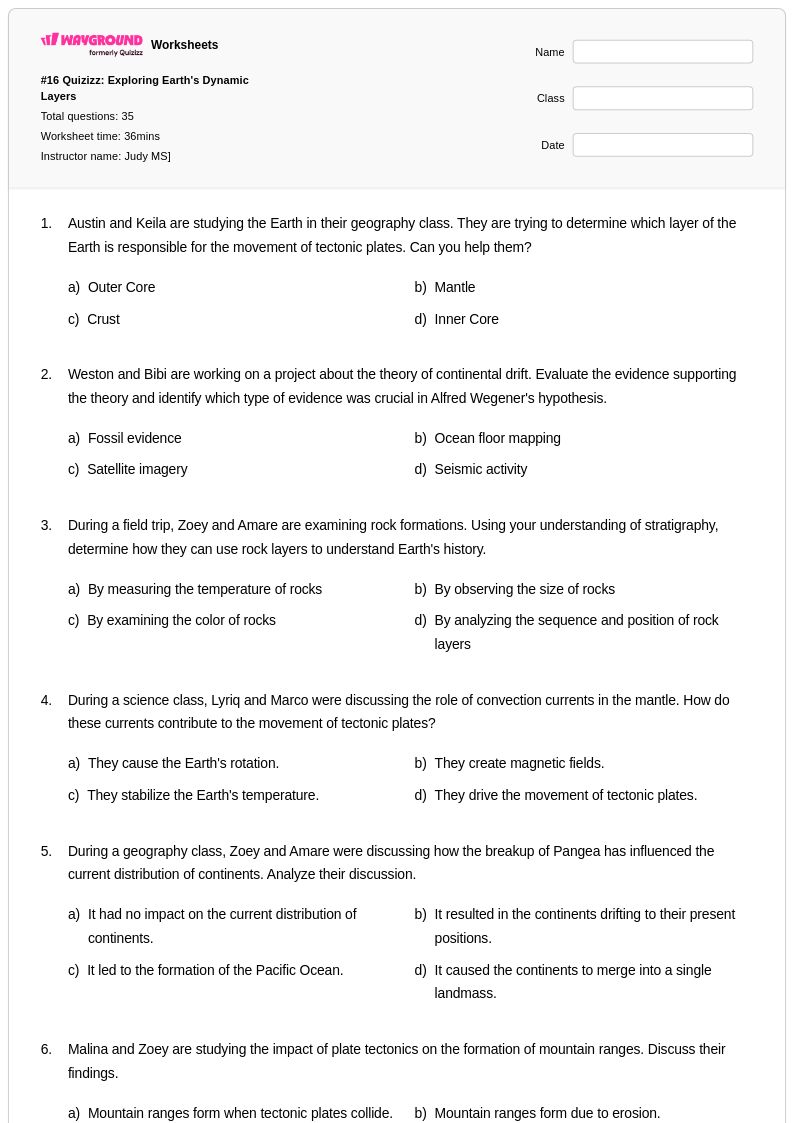
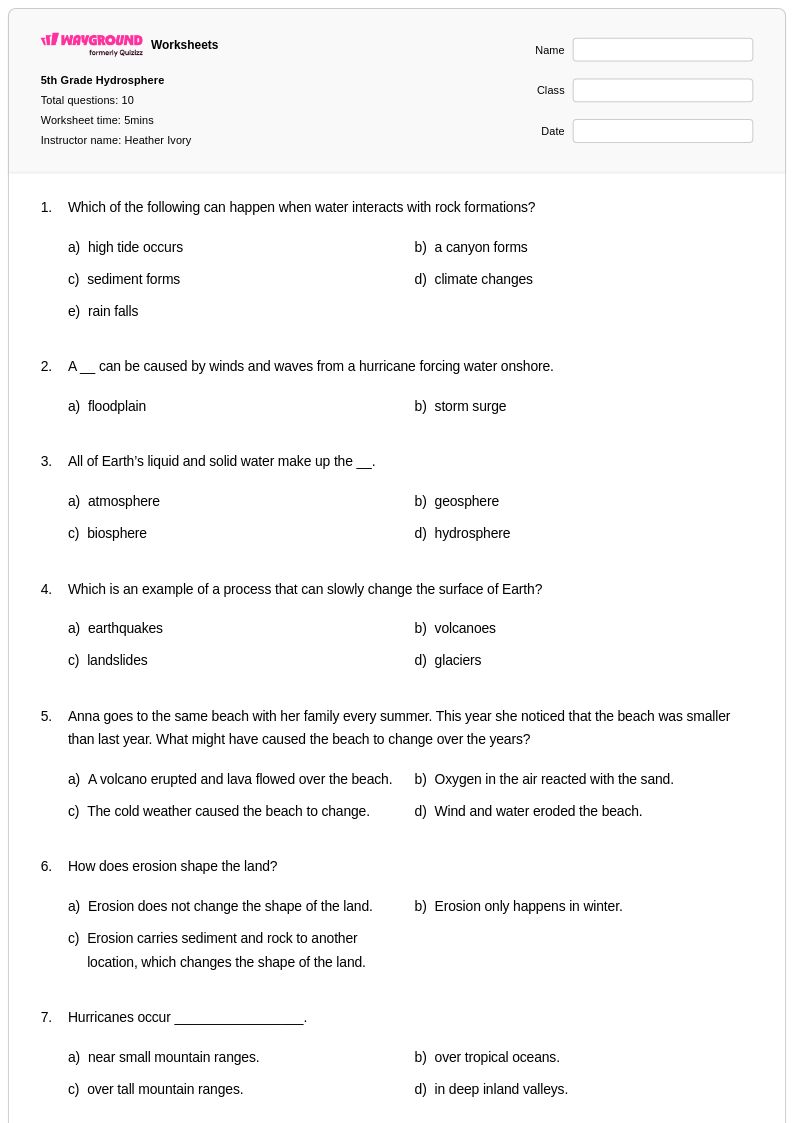
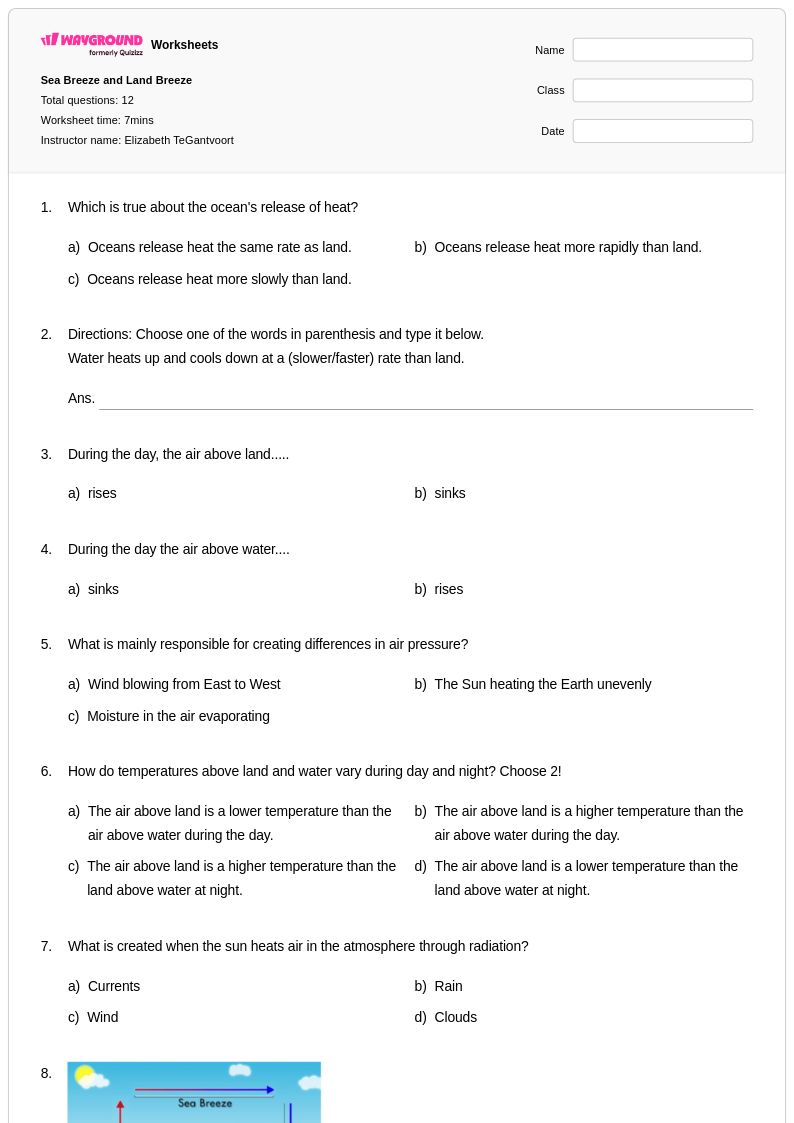
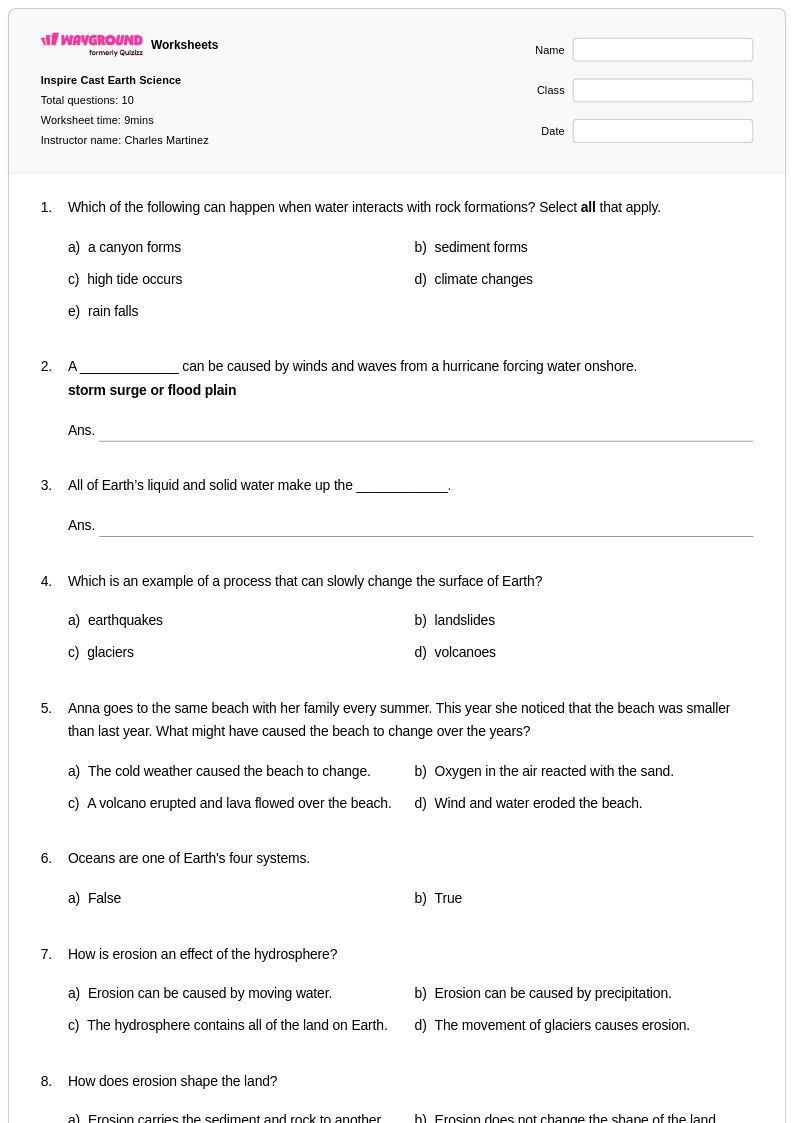
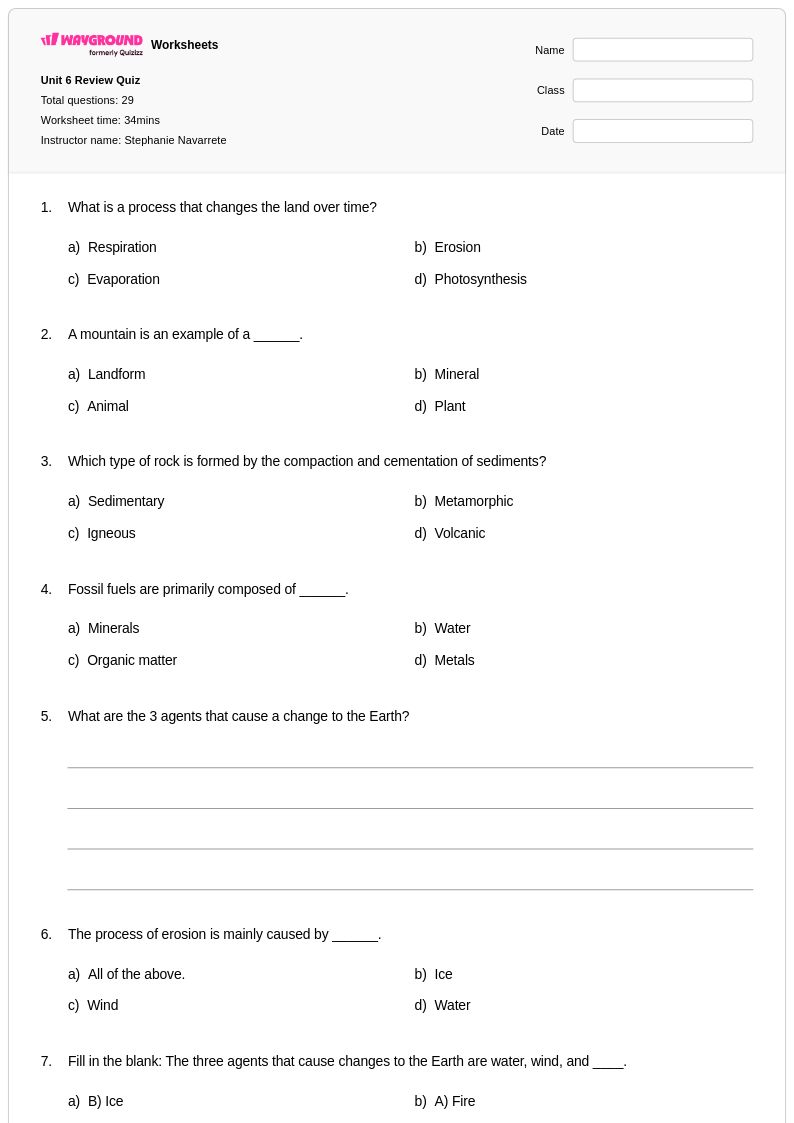
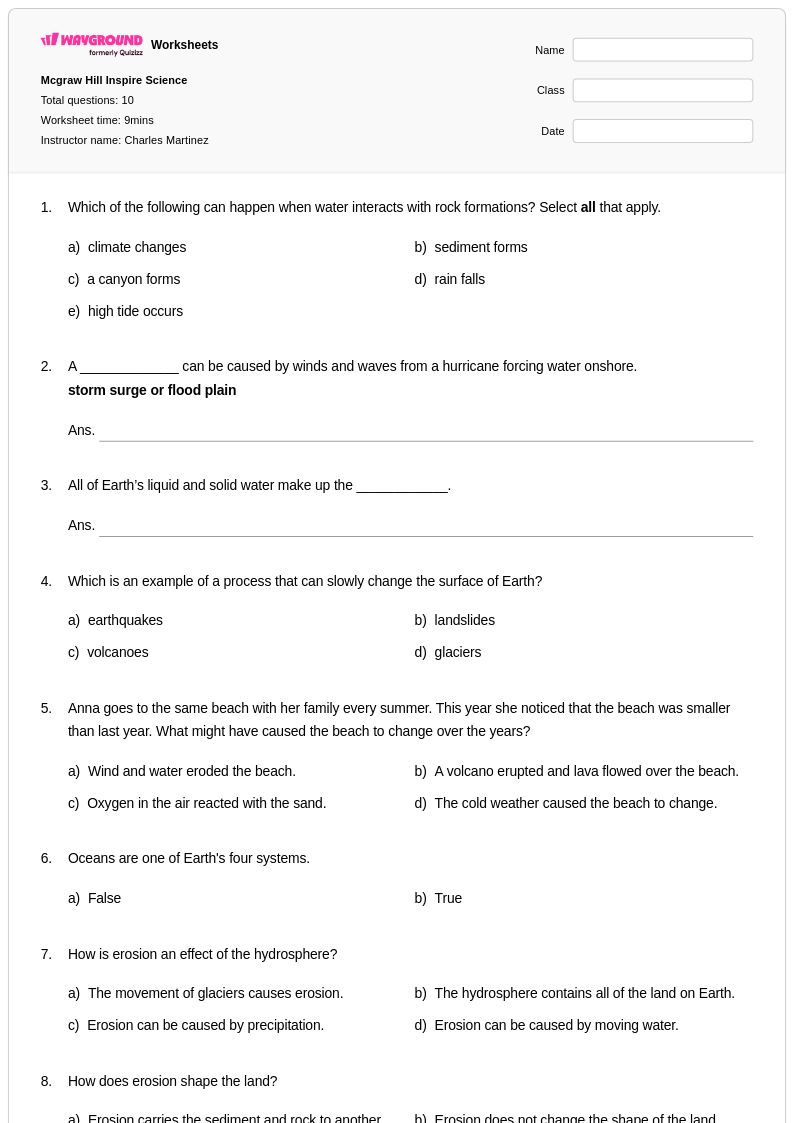
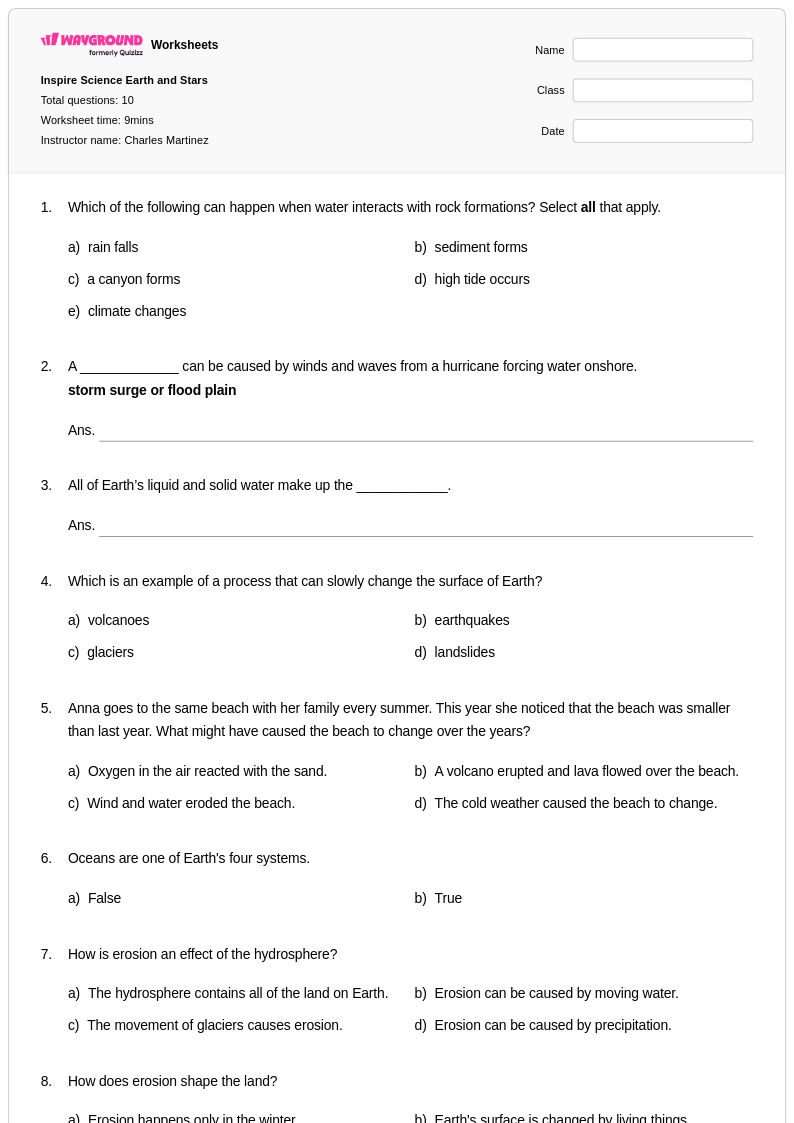
Land formations worksheets available through Wayground (formerly Quizizz) provide comprehensive educational resources designed to help students explore and understand the diverse geological features that shape our planet's surface. These carefully crafted worksheets strengthen essential skills in geological observation, landform identification, and understanding of erosional and depositional processes that create mountains, valleys, canyons, deltas, and other significant terrain features. Students engage with practice problems that challenge them to analyze topographic maps, interpret geological cross-sections, and explain the formation processes behind various landforms, while teachers benefit from complete answer keys that facilitate efficient grading and meaningful feedback. The collection includes both free printables and digital formats, ensuring accessibility for diverse classroom environments and learning preferences.
Wayground's extensive collection of land formations worksheets draws from millions of teacher-created resources, providing educators with an unparalleled selection of high-quality materials aligned with earth and space science standards. The platform's robust search and filtering capabilities enable teachers to quickly locate worksheets targeting specific landforms, geological processes, or skill levels, while built-in differentiation tools support customized learning experiences for students with varying abilities and needs. These resources are available in both printable pdf formats for traditional classroom use and interactive digital versions that accommodate modern learning environments, making them invaluable for lesson planning, targeted remediation of geological concepts, enrichment activities for advanced learners, and regular skill practice that reinforces understanding of how natural forces continuously reshape Earth's surface features.
FAQs
How do I teach land formations to students who struggle with abstract geological concepts?
Start with visual anchors: photographs, topographic maps, and geological cross-sections help students connect abstract processes to real terrain features. Sequence instruction from familiar landforms like hills and rivers before moving to complex features like deltas and rift valleys. Pairing visual analysis with process explanations, such as how erosion carves canyons or deposition builds deltas, gives students a cause-and-effect framework that makes abstract geology concrete.
What exercises help students practice identifying and distinguishing different landforms?
Effective practice includes topographic map interpretation, geological cross-section analysis, and landform classification tasks where students match features to their formation processes. Exercises that ask students to explain why a landform looks the way it does, rather than simply naming it, build deeper understanding. Worksheets that integrate erosional and depositional processes alongside landform identification are especially useful for reinforcing the cause-and-effect relationships central to Earth science.
What misconceptions do students commonly have about how land formations are created?
A common misconception is that landforms are static and permanent, when in reality they are continuously shaped by erosional and depositional forces. Students also frequently confuse erosion with weathering, or assume all mountains form the same way, without distinguishing between tectonic uplift, volcanic activity, and differential erosion. Another error is misreading topographic maps, where students interpret closely spaced contour lines as flat terrain rather than steep slopes.
How can I use land formations worksheets to assess student understanding of geological processes?
Use worksheets that require students to explain formation processes in writing rather than just identify features by name, since explanatory tasks reveal whether students understand underlying mechanisms. Tasks involving topographic map reading and geological cross-section interpretation are strong indicators of spatial reasoning and conceptual understanding. Complete answer keys included with quality land formations worksheets allow teachers to give targeted, efficient feedback on specific misconceptions.
How do I use Wayground's land formations worksheets in my classroom?
Wayground's land formations worksheets are available as printable PDFs for traditional classroom use and in digital formats for technology-integrated environments, giving teachers flexibility regardless of their classroom setup. Teachers can also host worksheets as a quiz directly on Wayground, enabling interactive digital assessment. Wayground's search and filtering tools let teachers quickly locate worksheets by specific landform type, geological process, or skill level, making it straightforward to match materials to a particular lesson objective or student need.
How can I differentiate land formations instruction for students with varying skill levels?
For students who need additional support, reduce the complexity of tasks by focusing on a single landform type before introducing comparative or process-based questions. Wayground's built-in accommodation tools allow teachers to enable Read Aloud for students who need text read to them, reduce answer choices to lower cognitive load, or extend time for individual students, all without notifying the rest of the class. Advanced learners can be challenged with tasks that require synthesizing multiple geological processes or interpreting complex topographic maps independently.