
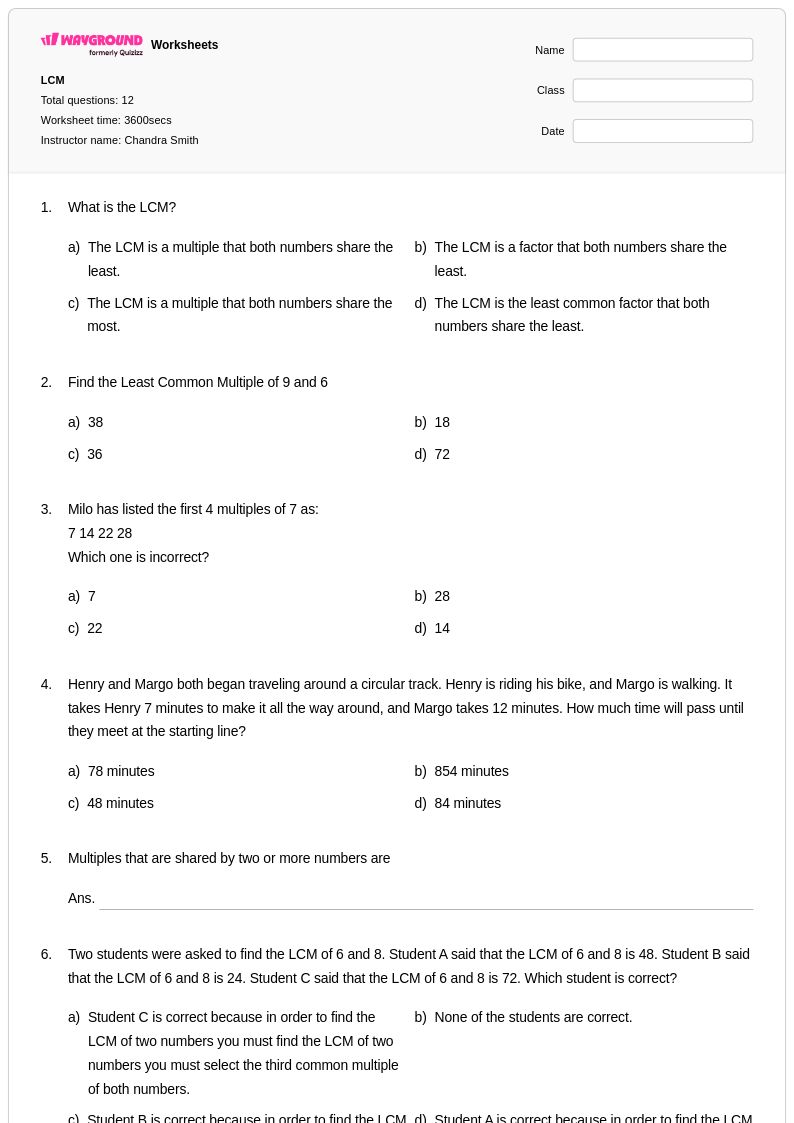
12 Q
6th

6 Q
5th - 6th
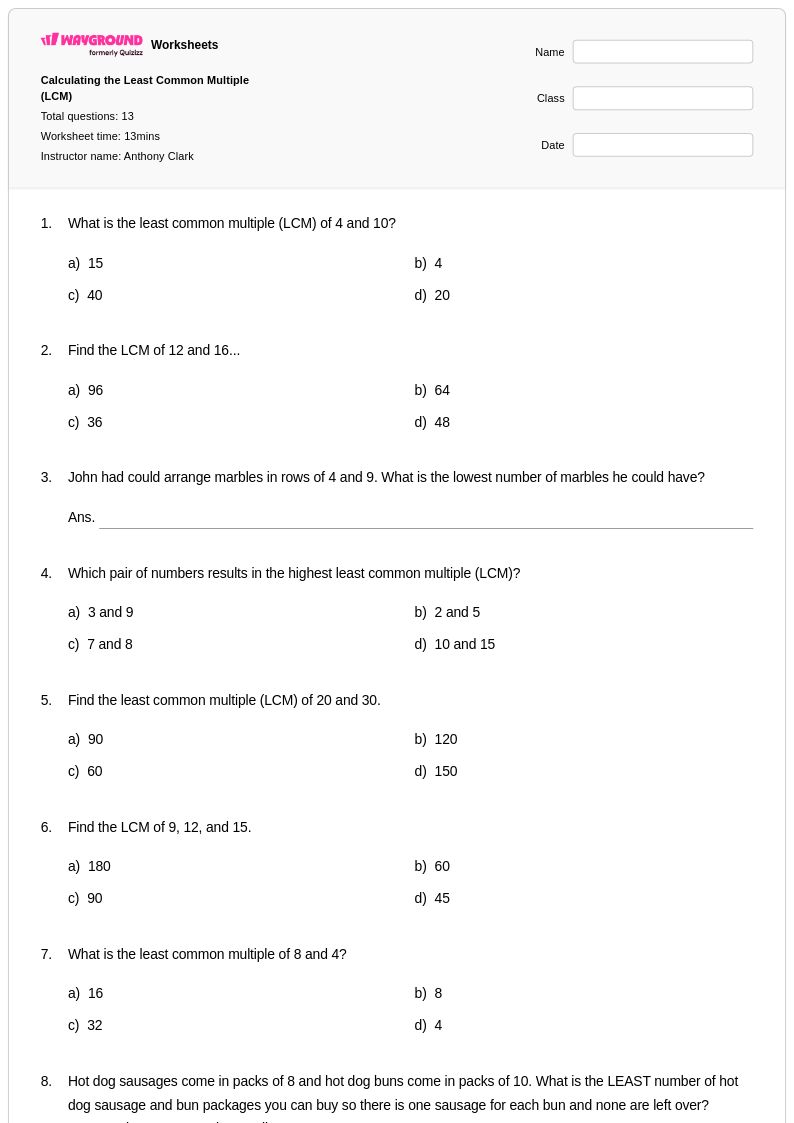
13 Q
6th - Uni

20 Q
5th - 6th
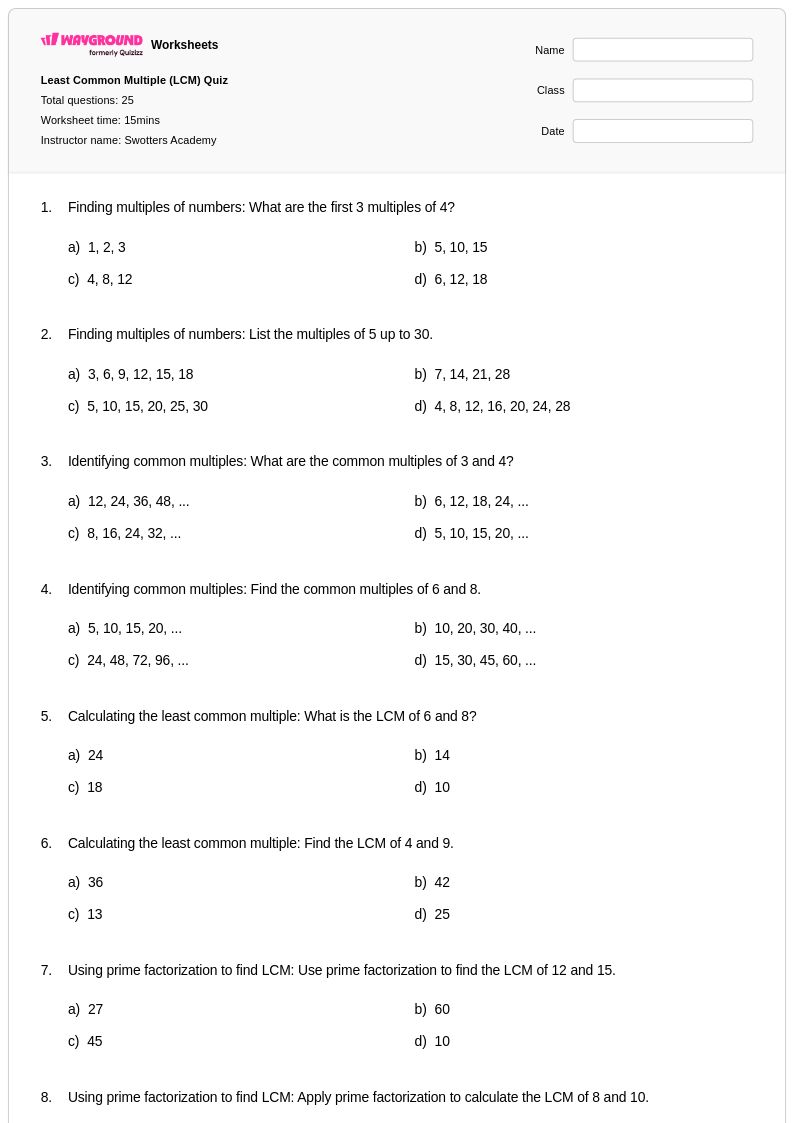
25 Q
6th - 8th

10 Q
6th

21 Q
6th

20 Q
6th - Uni

9 Q
6th

23 Q
6th
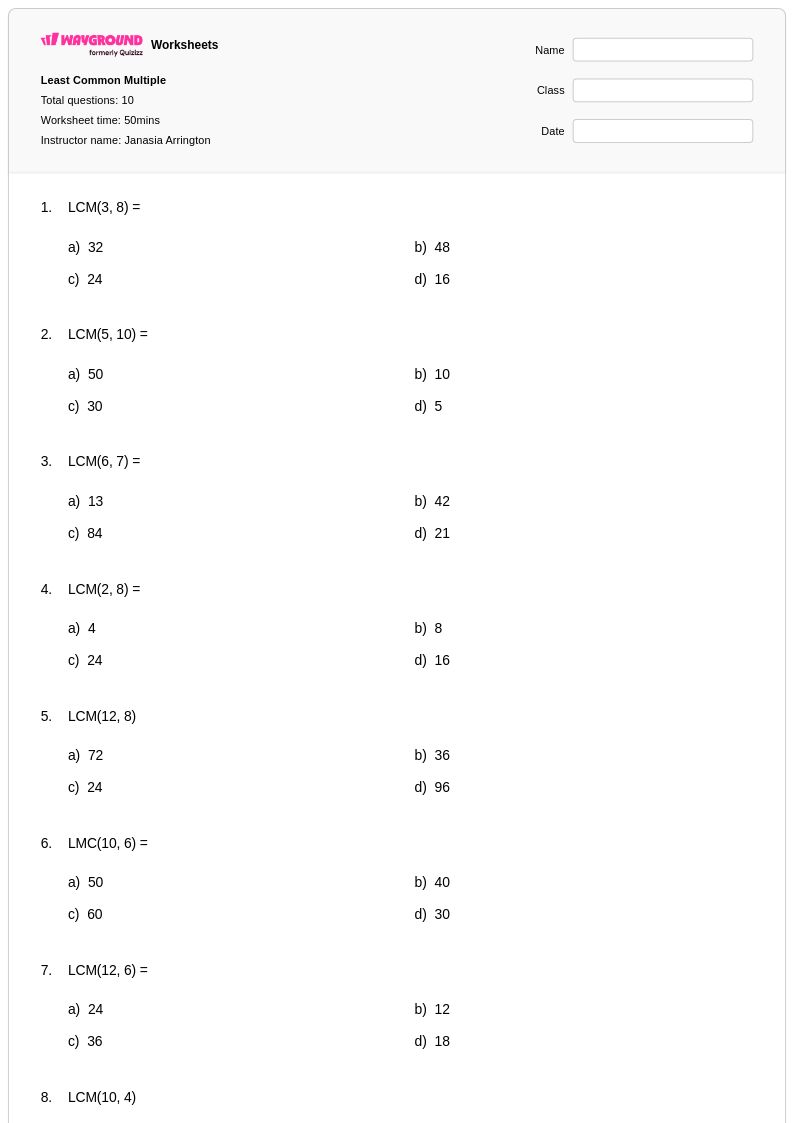
10 Q
6th

20 Q
6th

18 Q
6th
22 Q
6th
20 Q
6th - Uni
20 Q
5th - Uni
20 Q
6th - Uni

15 Q
5th - 6th

9 Q
6th

10 Q
6th
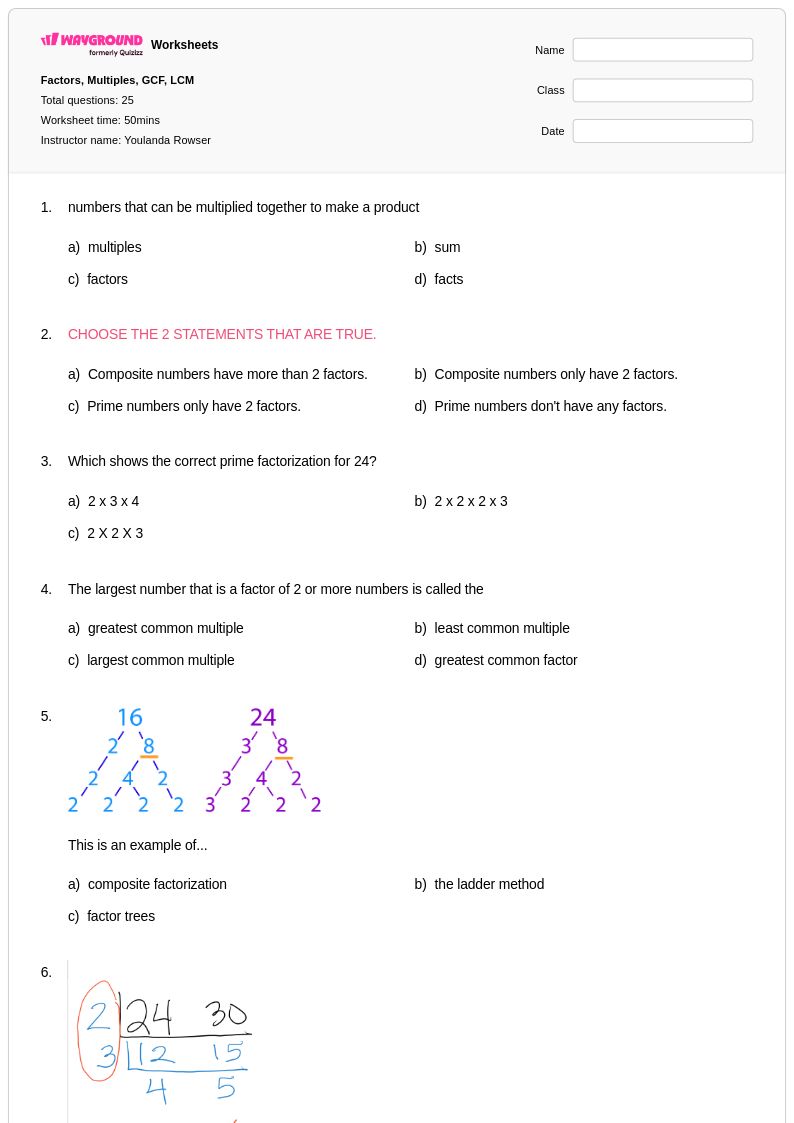
25 Q
6th

10 Q
6th

14 Q
6th - 8th
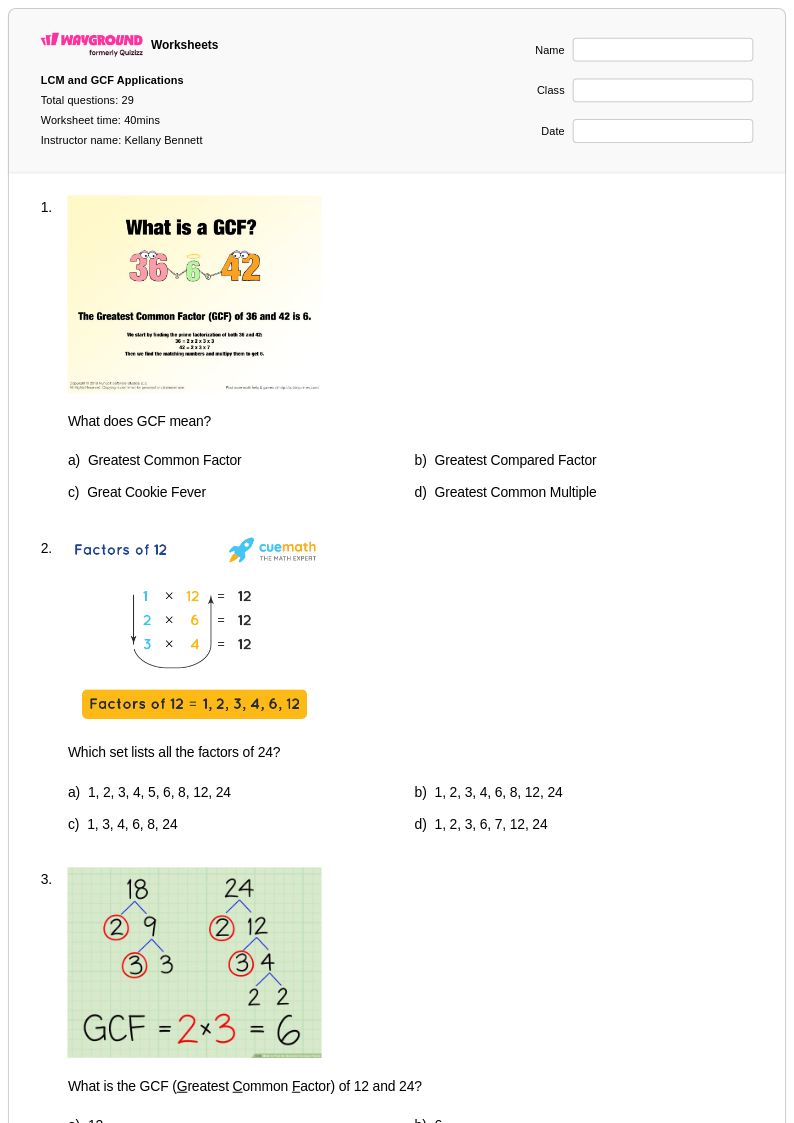
29 Q
6th
Explore Other Subject Worksheets for year 6
Explore printable Least Common Multiple (LCM) worksheets for Year 6
Least Common Multiple worksheets for Year 6 students available through Wayground provide comprehensive practice with this fundamental number theory concept that serves as a building block for fraction operations and advanced mathematical reasoning. These carefully crafted resources help students master the systematic approaches to finding LCM, including prime factorization methods, listing multiples, and using division ladders, while strengthening their understanding of how numbers relate to one another through shared multiples. Each worksheet collection includes detailed answer keys and step-by-step solutions that guide students through the problem-solving process, with free printables offering diverse practice problems ranging from basic two-number LCM calculations to more complex multi-number scenarios that challenge students to apply their skills in various mathematical contexts.
Wayground's extensive library of millions of teacher-created LCM worksheets empowers educators with robust search and filtering capabilities that allow them to quickly locate resources aligned with specific learning standards and student needs. Teachers can easily differentiate instruction by selecting from worksheets that progress from foundational concepts to advanced applications, with flexible customization tools enabling modifications to problem difficulty, number ranges, and question types to match individual student abilities. Available in both printable PDF formats for traditional classroom use and digital formats for interactive learning, these resources streamline lesson planning while providing targeted options for remediation, enrichment, and ongoing skill practice that helps students build confidence and proficiency in working with least common multiples across various mathematical contexts.
FAQs
What should be the focus when teaching LCM in 6th grade?
What kind of LCM practice is best for 6th graders?
What are common mistakes 6th graders make with LCM and GCF?
How can I use this Grade 6 LCM worksheet?
How does LCM fit into the 6th grade math curriculum?
Is LCM still taught in 6th grade?