
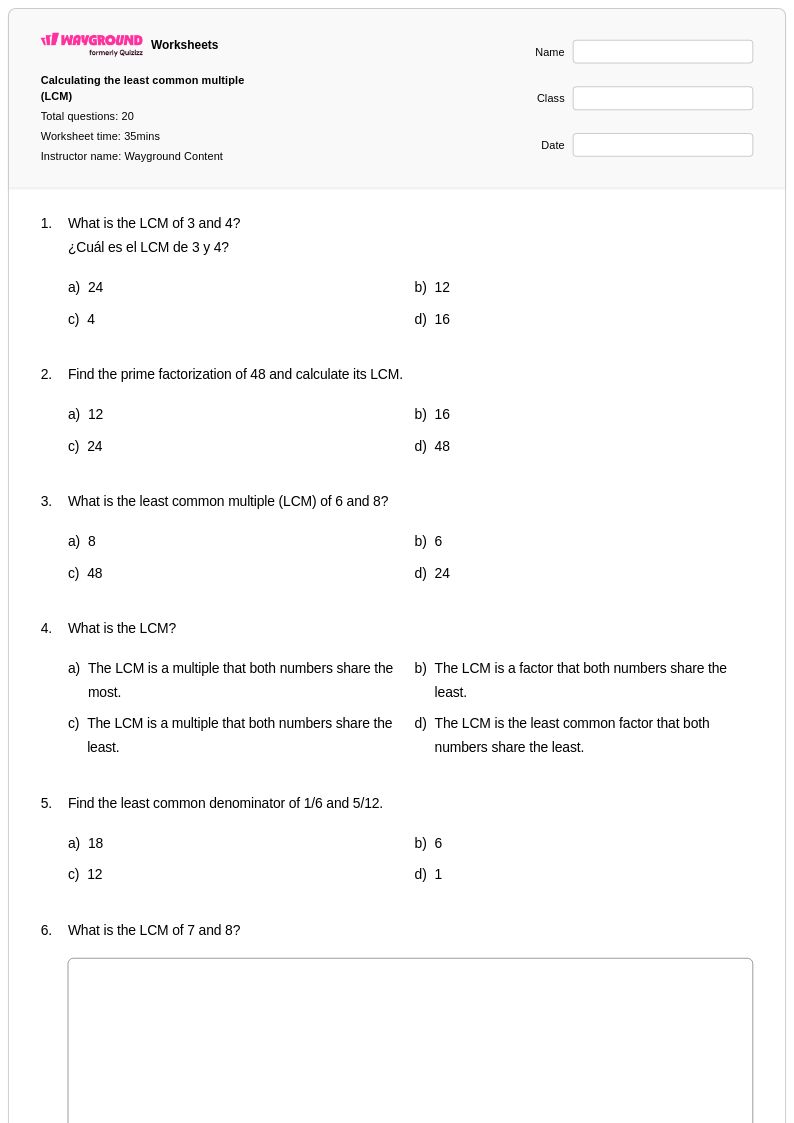
20 Q
KG - 12th

15 Q
5th

20 Q
KG - 12th

20 Q
KG - 12th
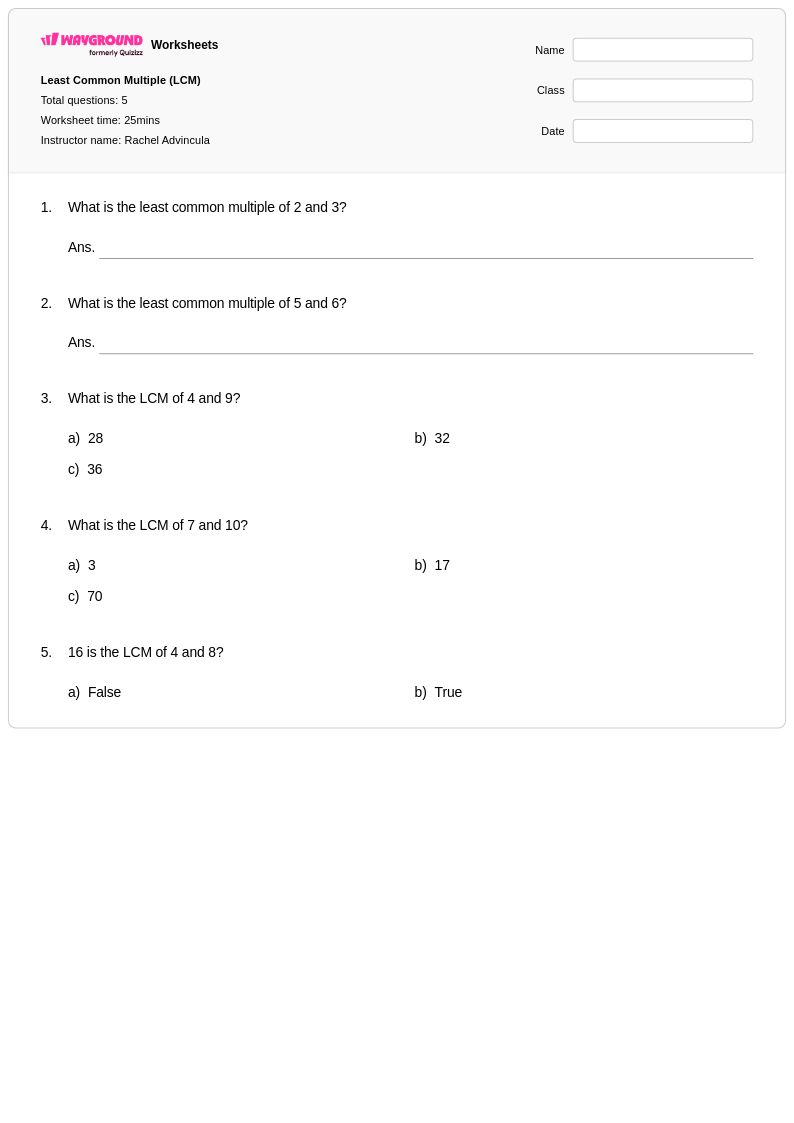
5 Q
4th
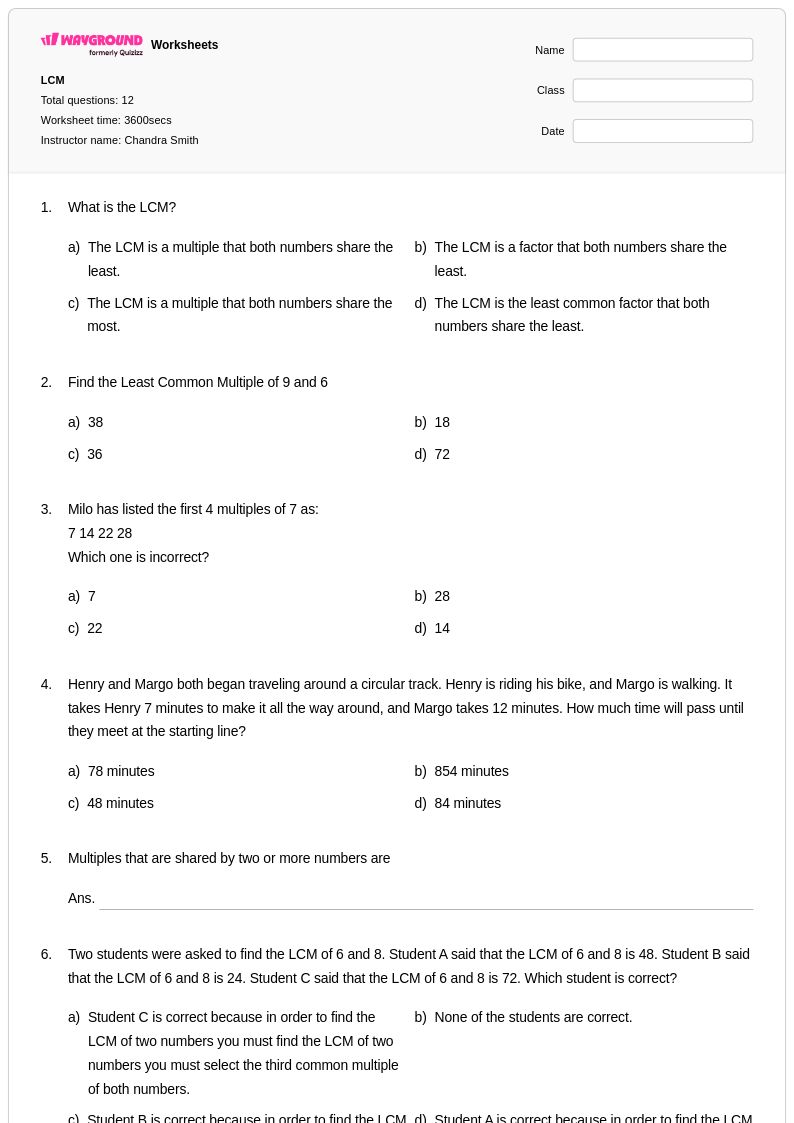
12 Q
6th

6 Q
5th - 6th
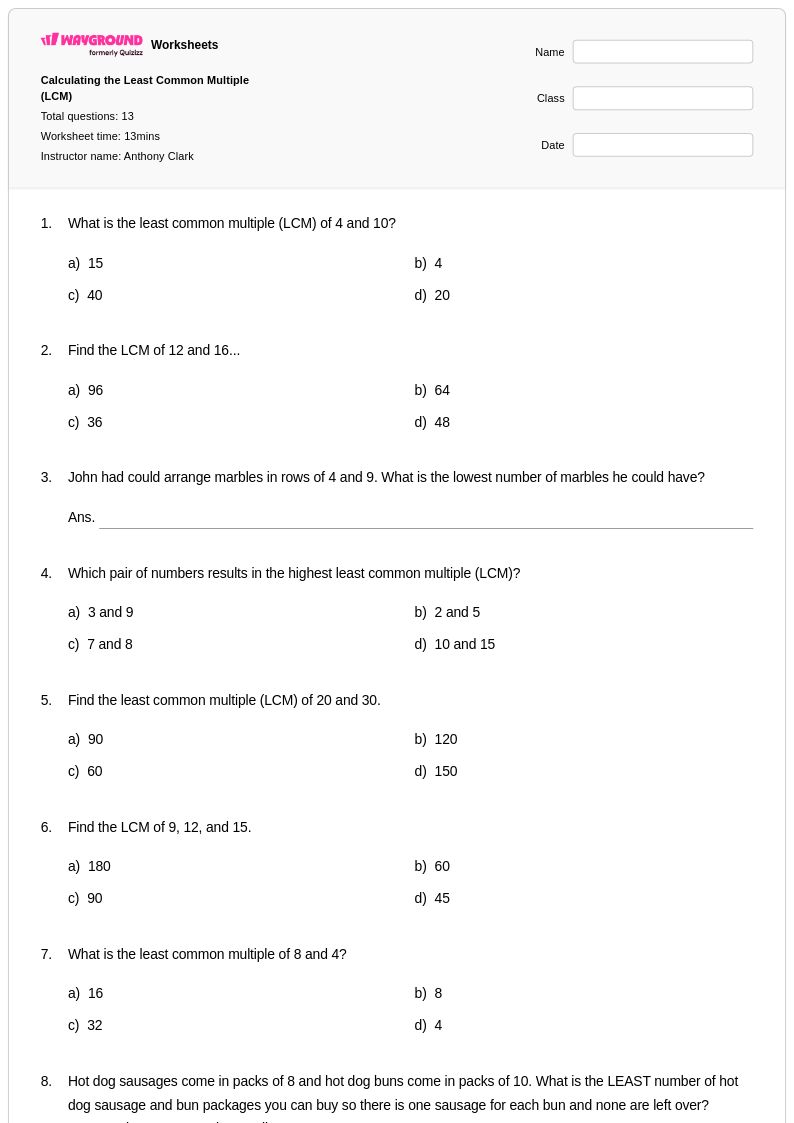
13 Q
6th - Uni

20 Q
5th - 6th
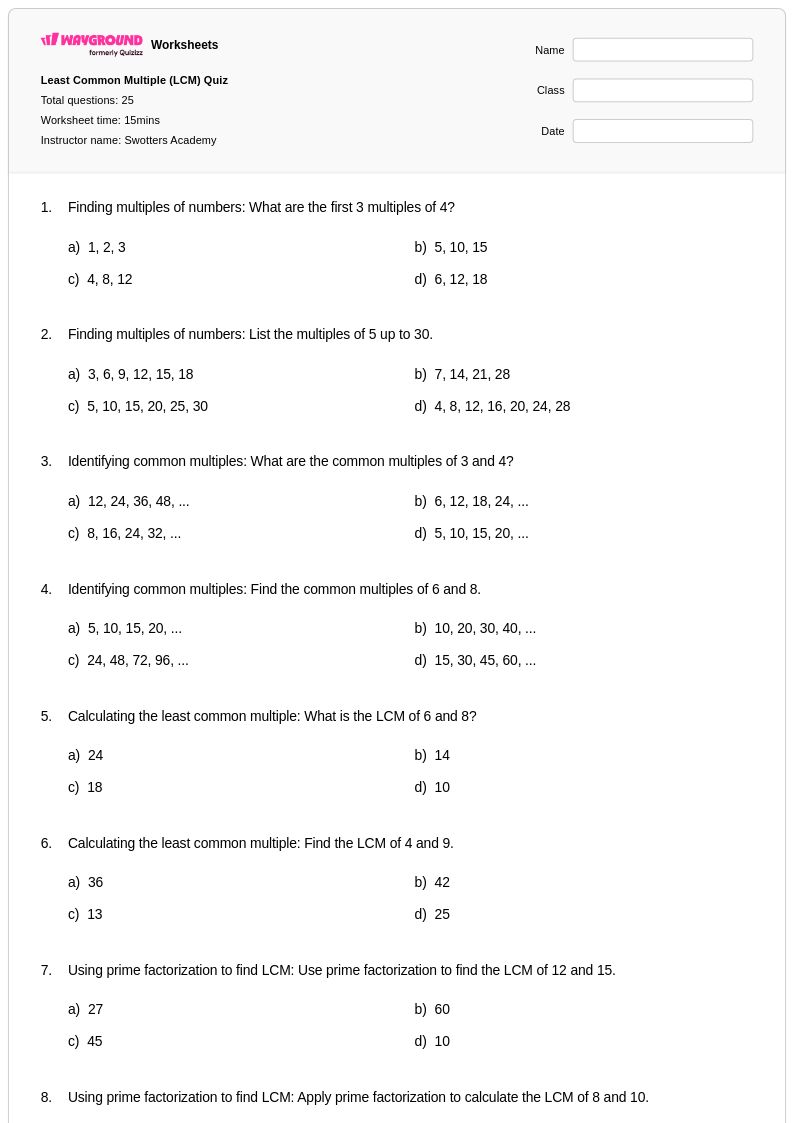
25 Q
6th - 8th

10 Q
6th

21 Q
6th

20 Q
6th - Uni

9 Q
6th
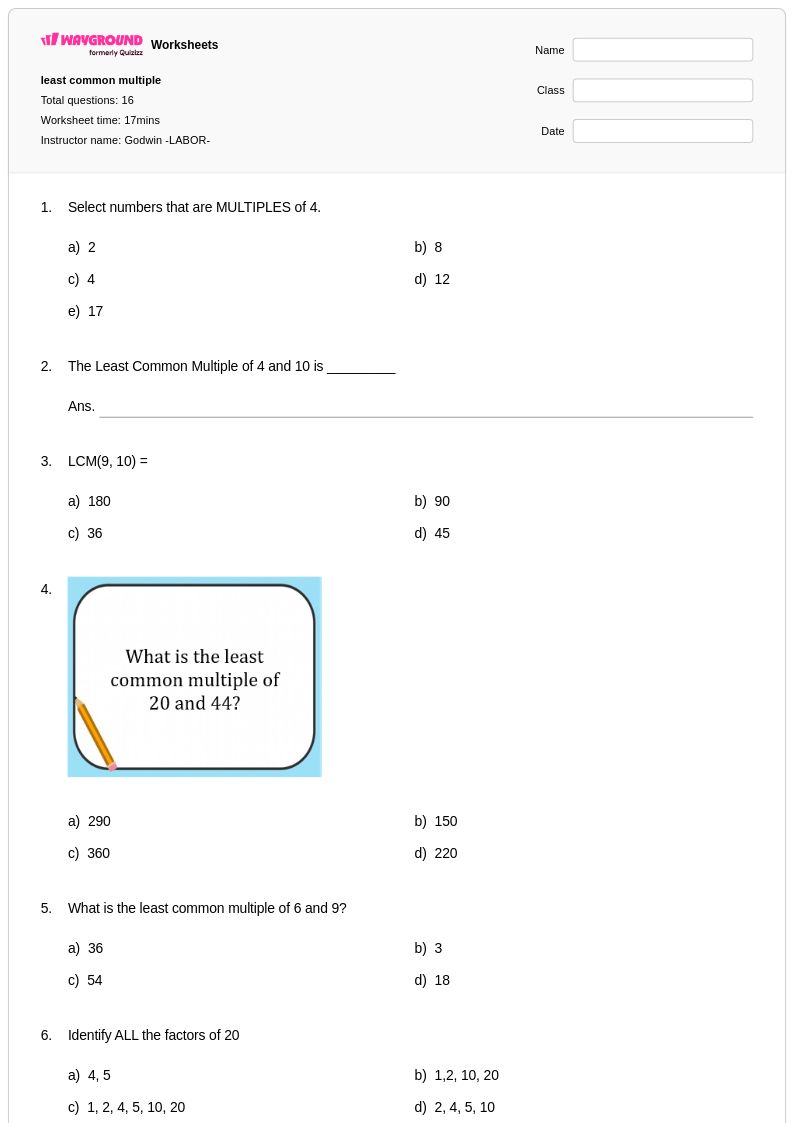
16 Q
7th

15 Q
5th

23 Q
6th
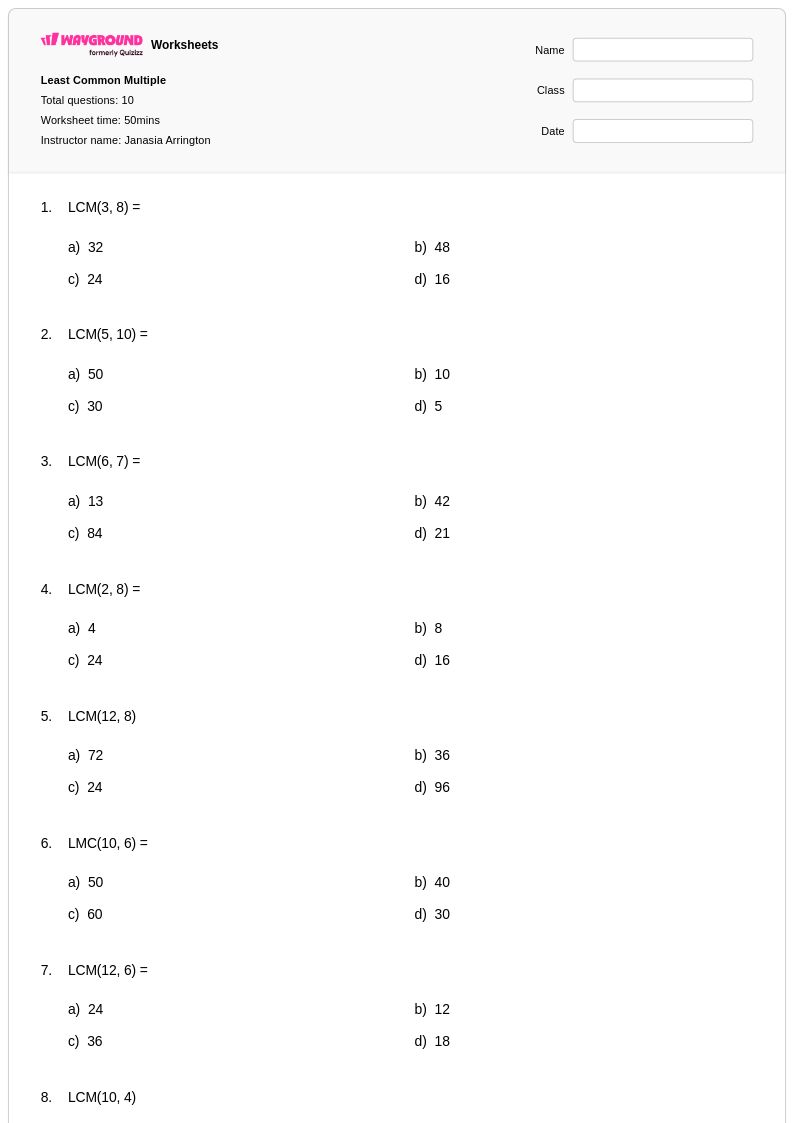
10 Q
6th

18 Q
6th

20 Q
6th

22 Q
6th
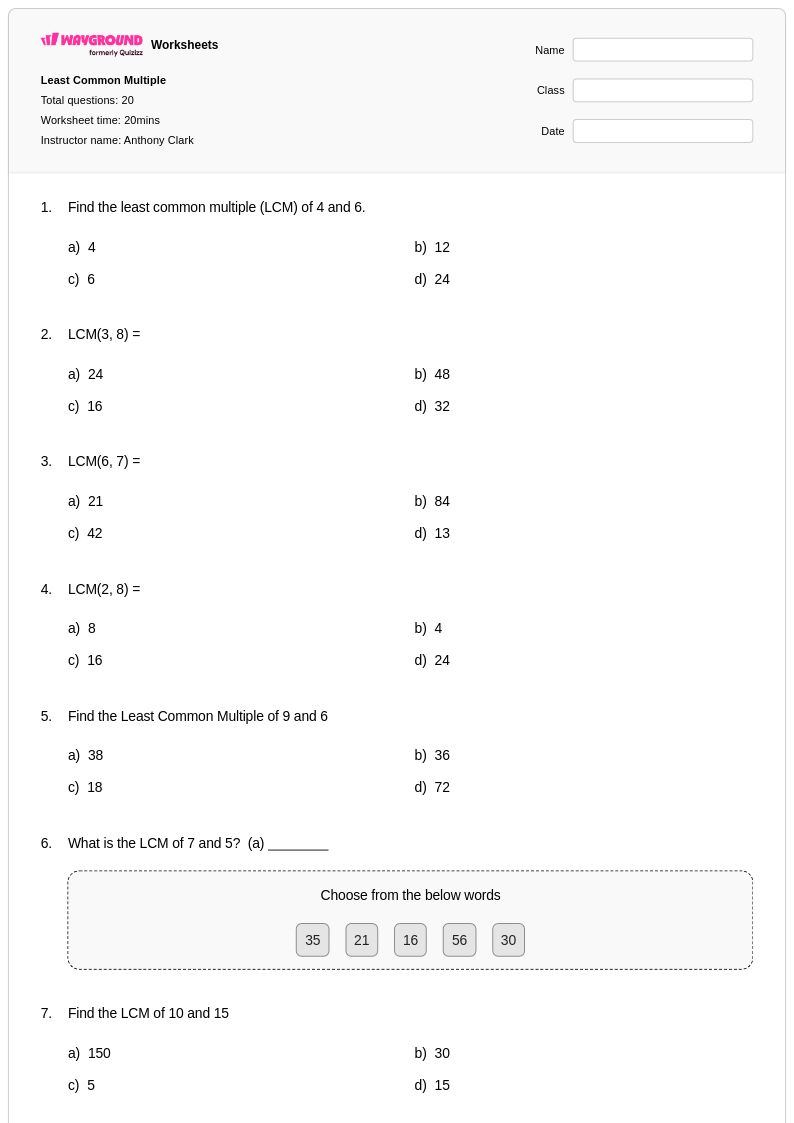
20 Q
6th - Uni
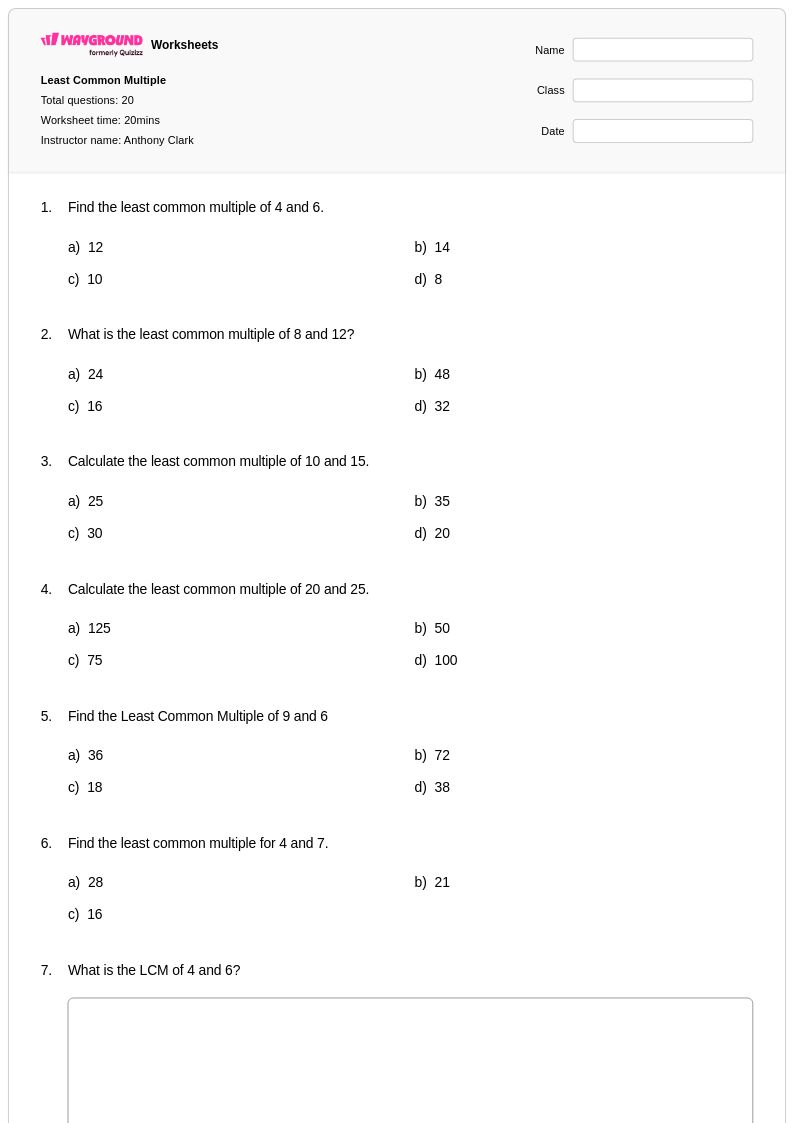
20 Q
5th - Uni
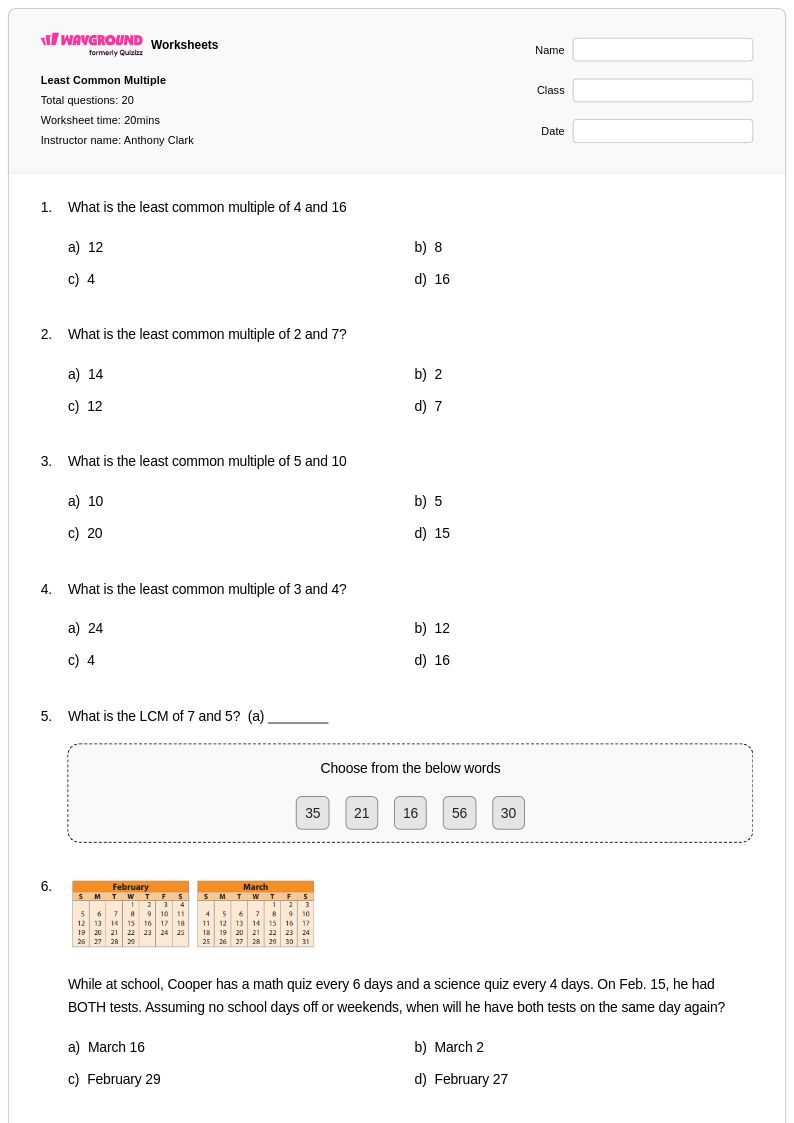
20 Q
6th - Uni
Explore Worksheets by Subjects
Explore printable Least Common Multiple (LCM) worksheets
Least Common Multiple (LCM) worksheets available through Wayground (formerly Quizizz) provide comprehensive practice opportunities for students to master this fundamental number theory concept. These educational resources strengthen critical mathematical skills including prime factorization, multiple identification, and systematic problem-solving approaches that form the foundation for advanced algebraic concepts. The collection includes diverse practice problems ranging from finding the LCM of two numbers to complex multi-step applications involving real-world scenarios. Each worksheet comes with a complete answer key, and teachers can access these materials as free printables in convenient pdf format, making it easy to distribute targeted practice that reinforces classroom instruction and builds computational fluency.
Wayground (formerly Quizizz) empowers educators with millions of teacher-created LCM worksheet resources that feature robust search and filtering capabilities, allowing instructors to quickly locate materials aligned with specific mathematical standards and learning objectives. The platform's differentiation tools enable teachers to customize worksheets based on individual student needs, whether providing remediation for struggling learners or enrichment challenges for advanced students. These flexible resources are available in both printable and digital formats, including downloadable pdfs, supporting diverse classroom environments and instructional preferences. Teachers can seamlessly integrate these LCM worksheets into lesson planning, homework assignments, assessment preparation, and skill-building practice sessions, ensuring students develop strong conceptual understanding and procedural fluency in number theory fundamentals.
FAQs
What are the best methods for teaching Least Common Multiple (LCM)?
What types of problems help students practice finding the LCM?
What's a common mistake students make when finding the LCM?
How can I use this LCM worksheet in my classroom?
How does learning LCM fit into the math curriculum?
How can I support students who struggle with finding the LCM?