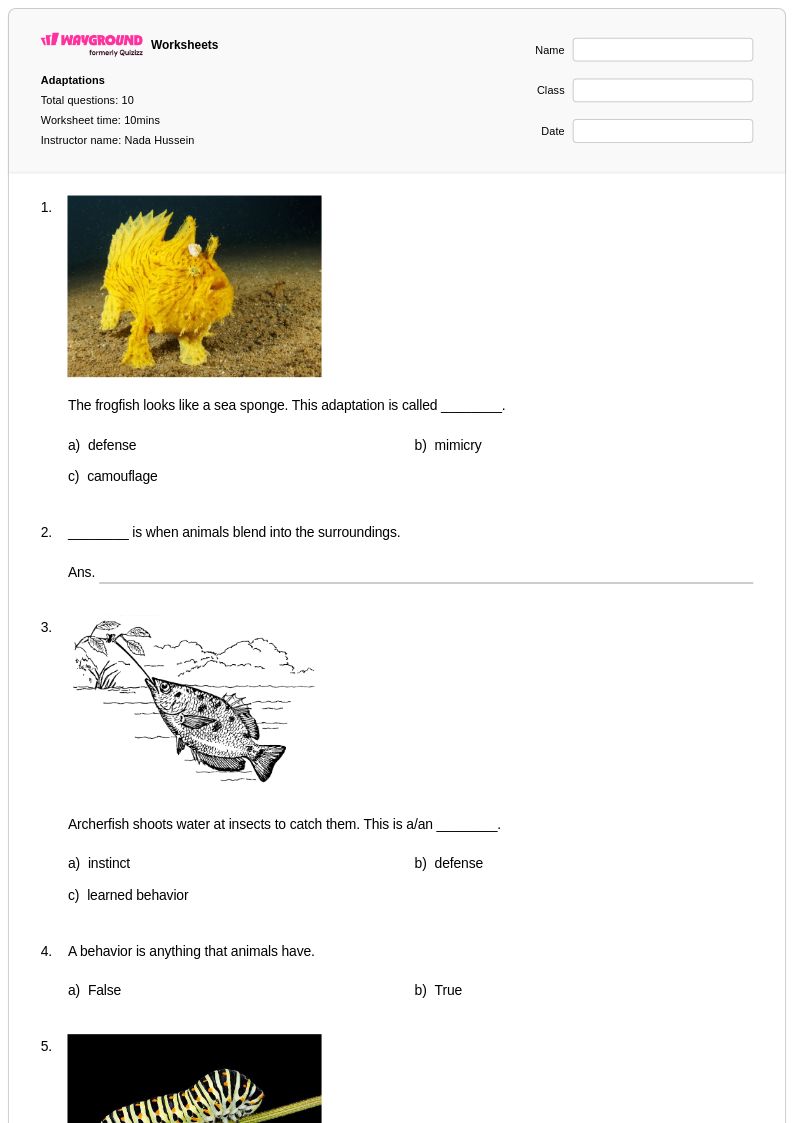
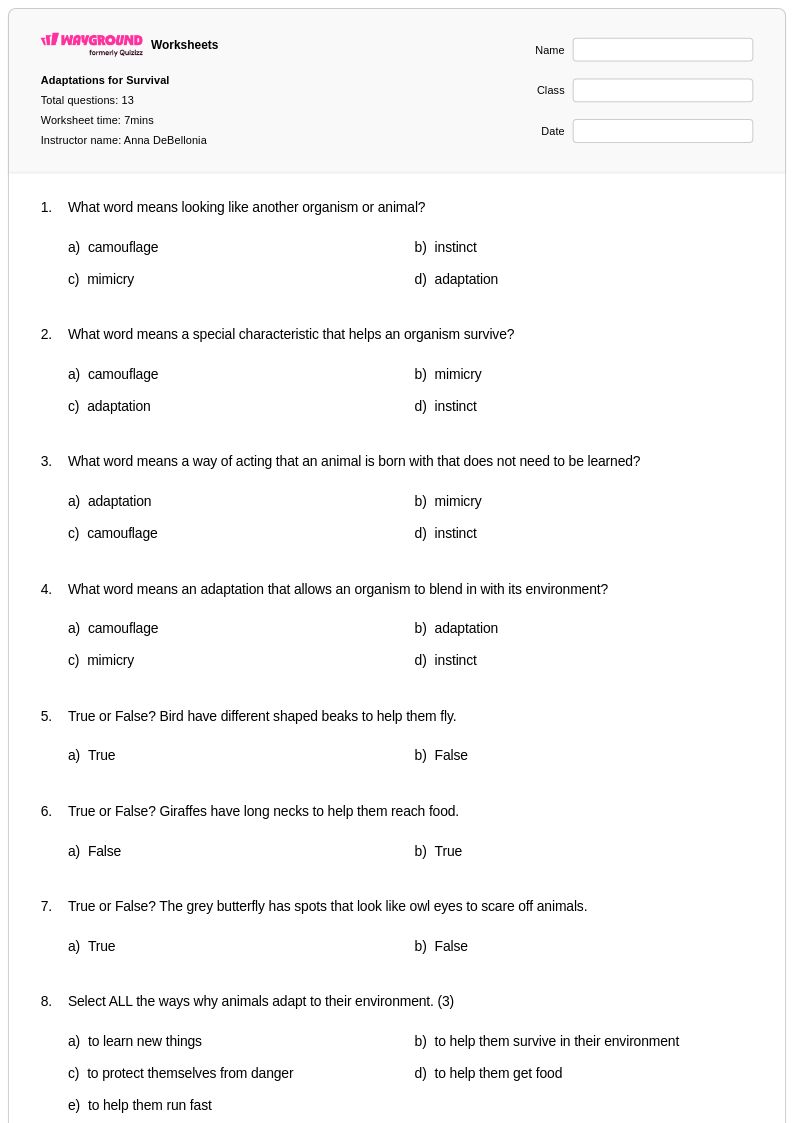
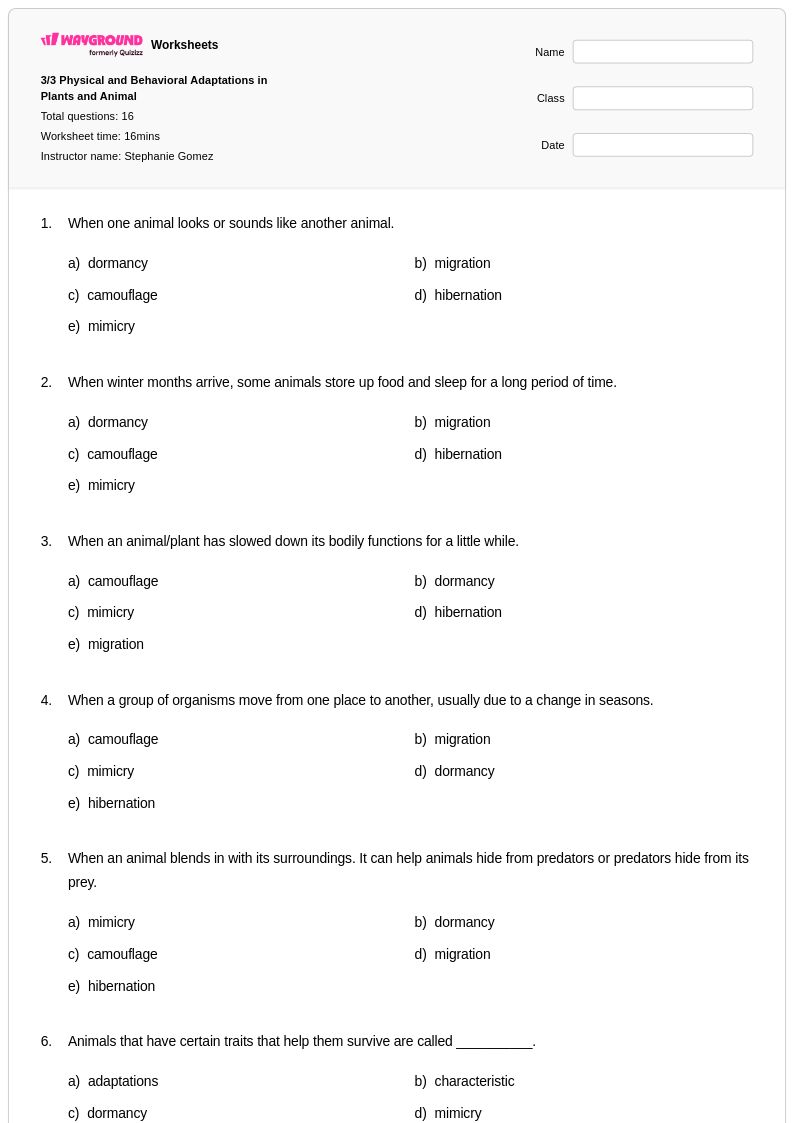
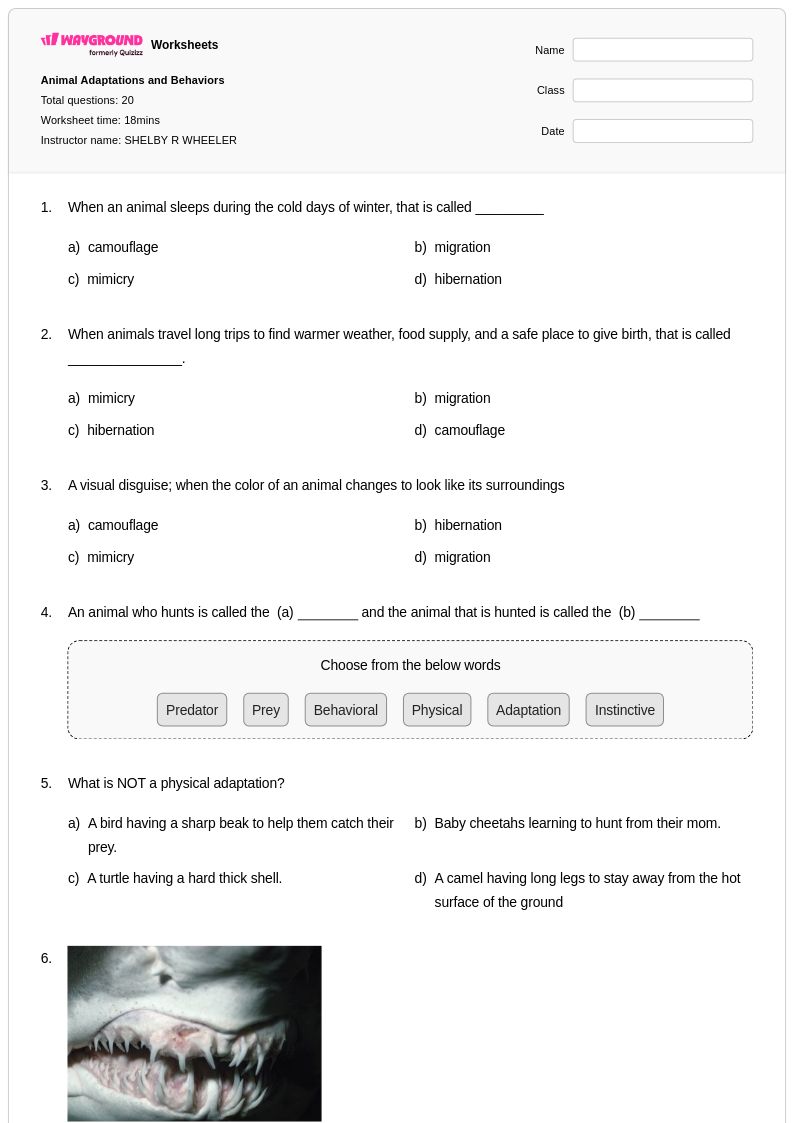
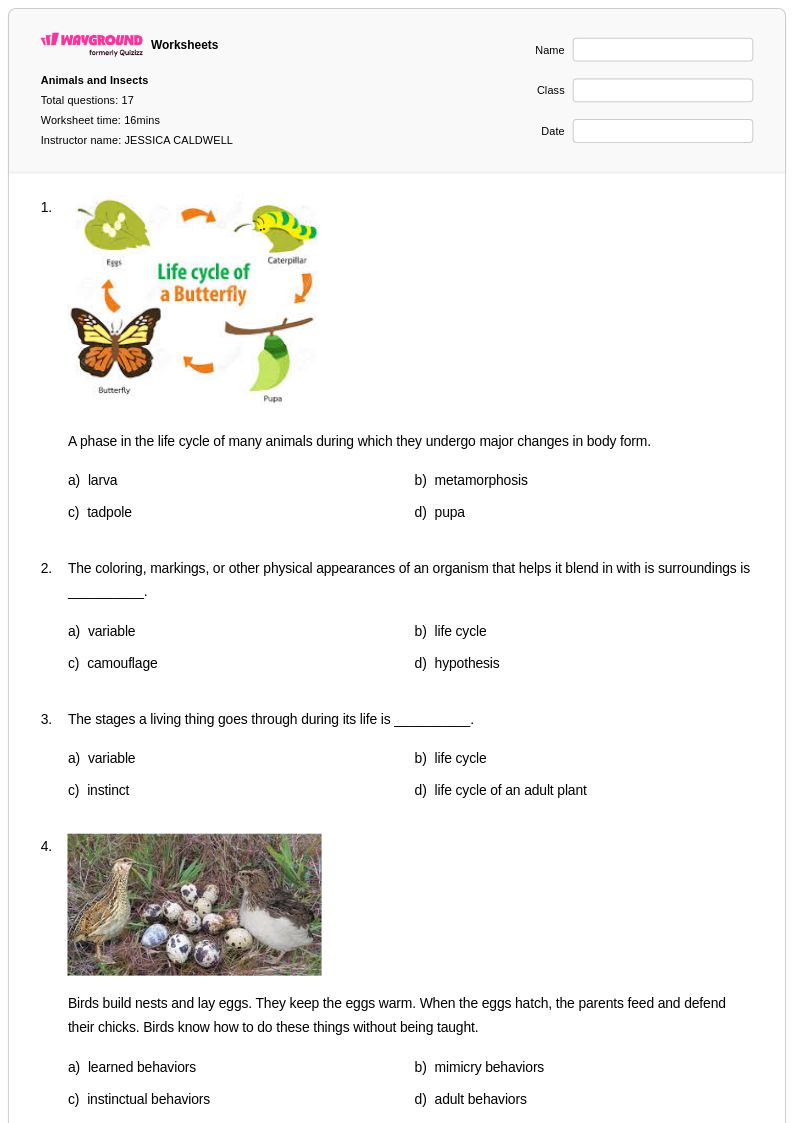
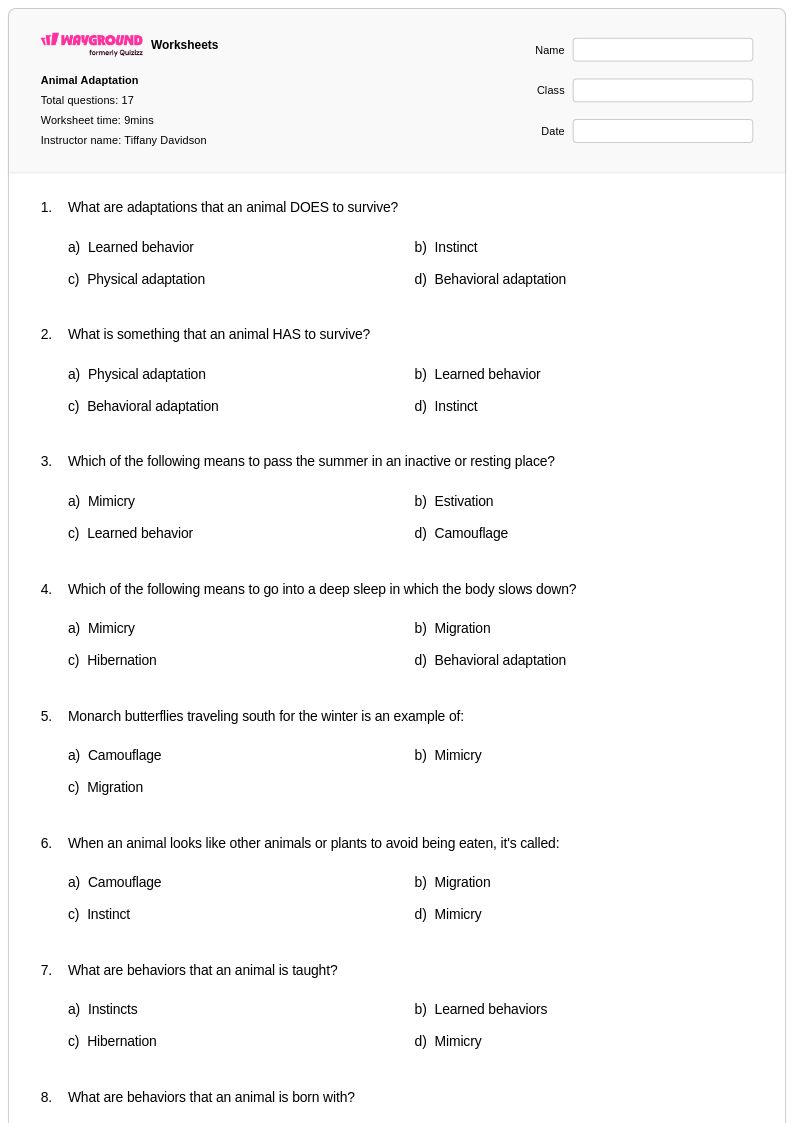
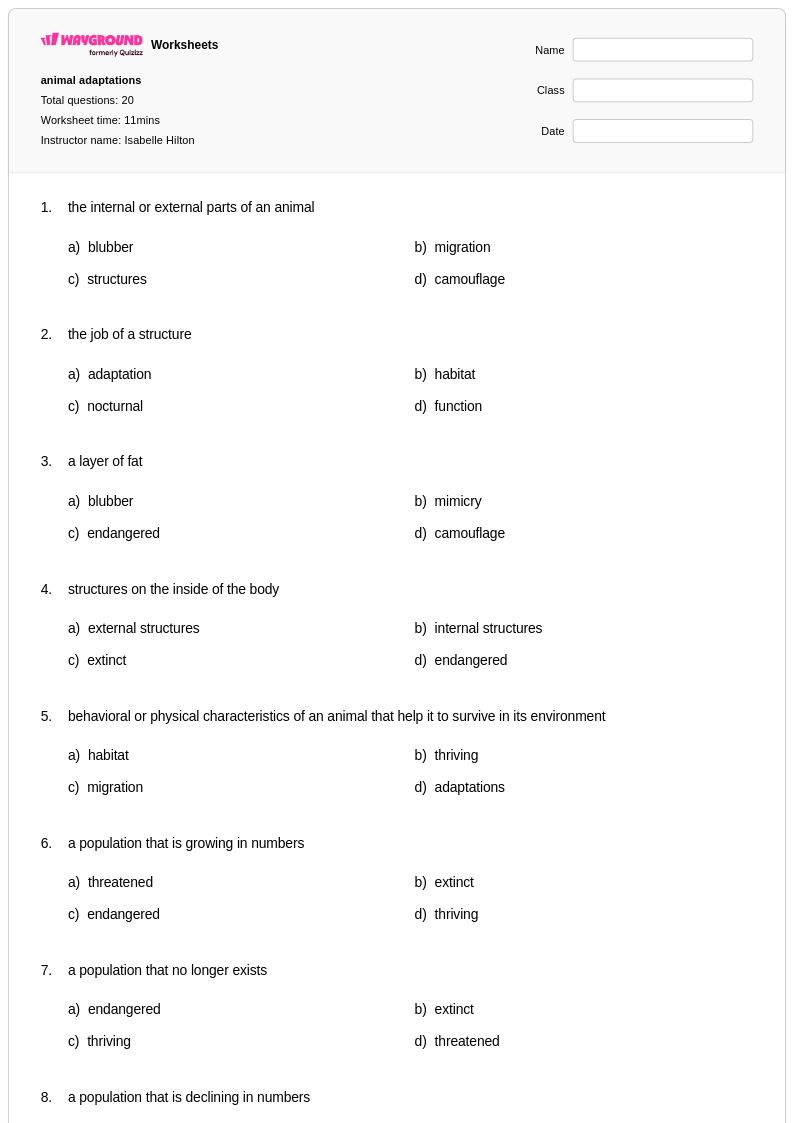
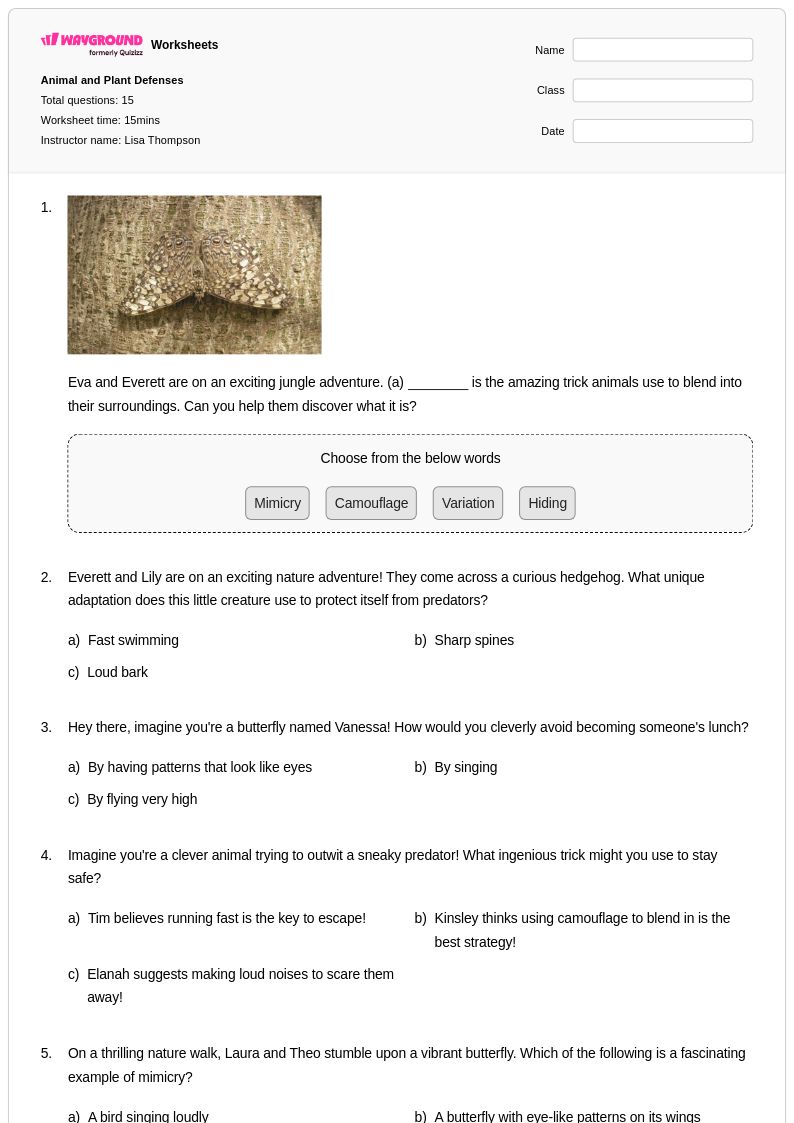
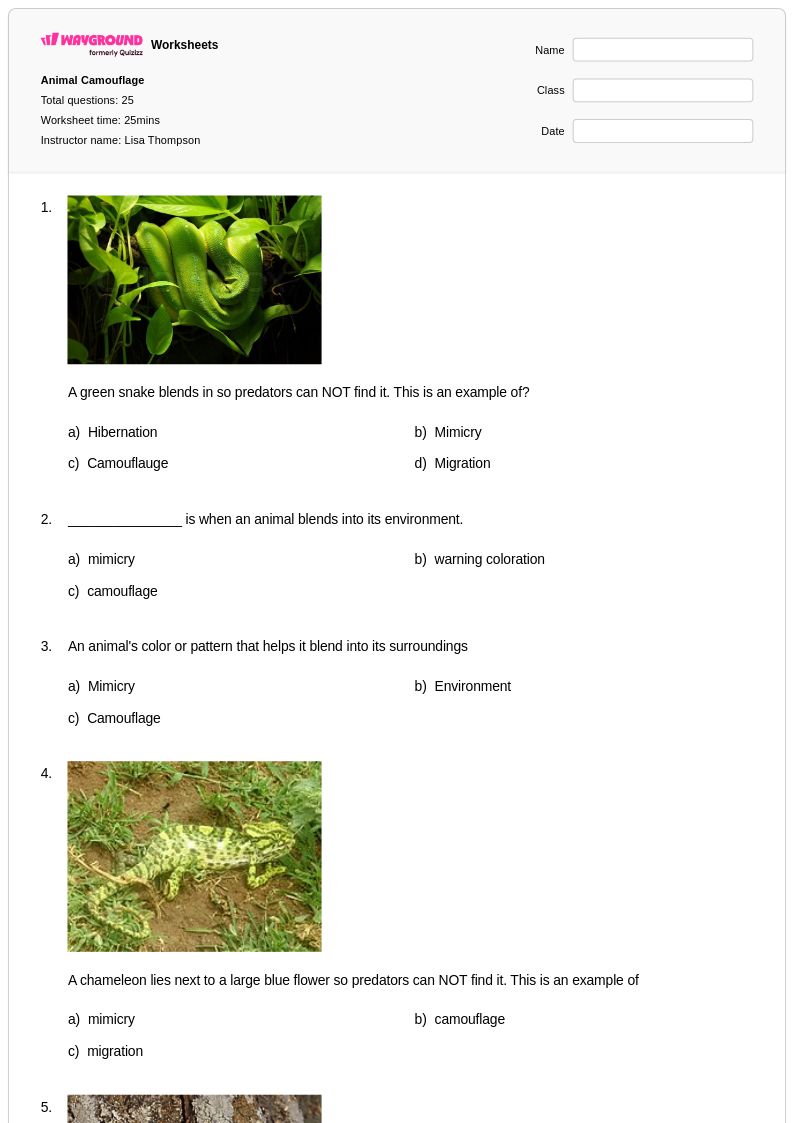
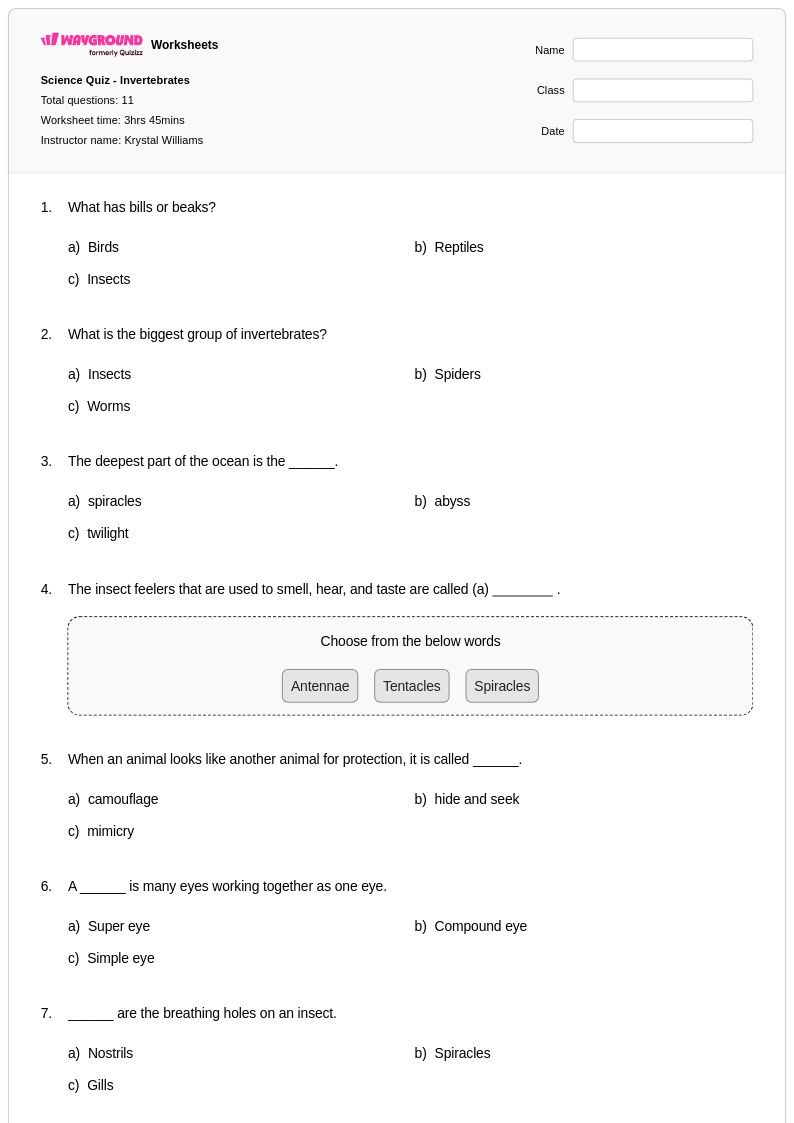
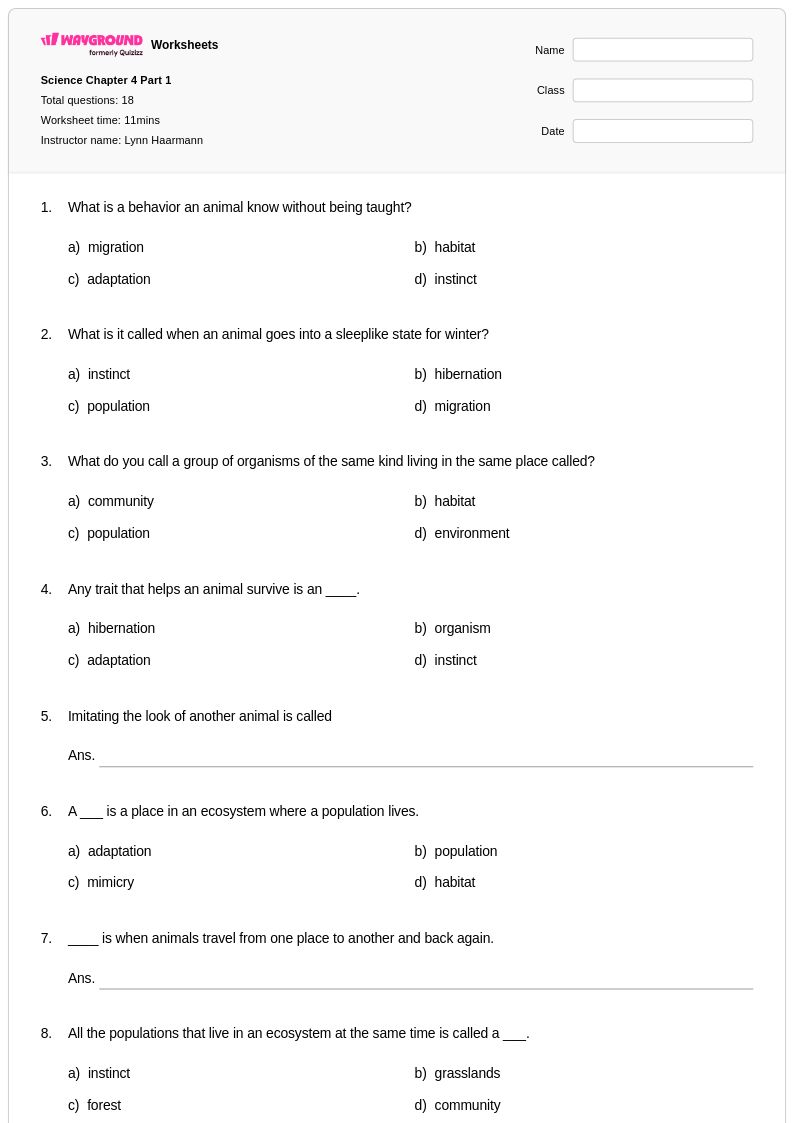
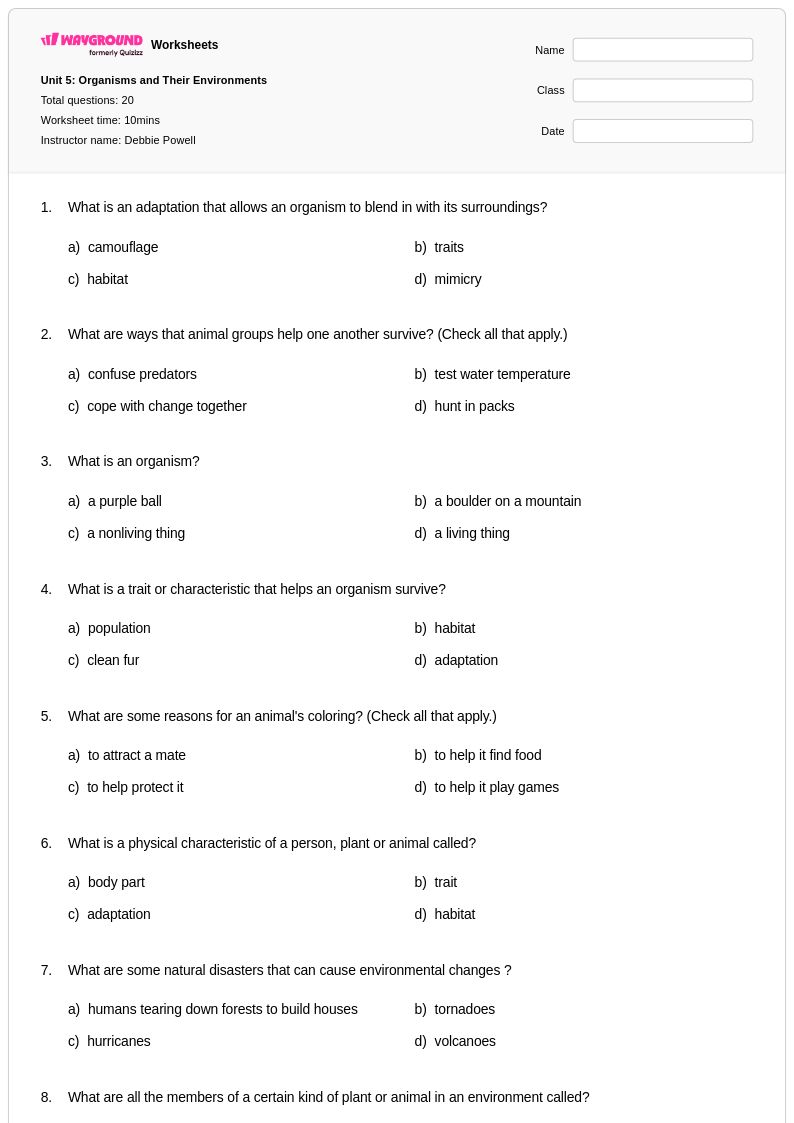
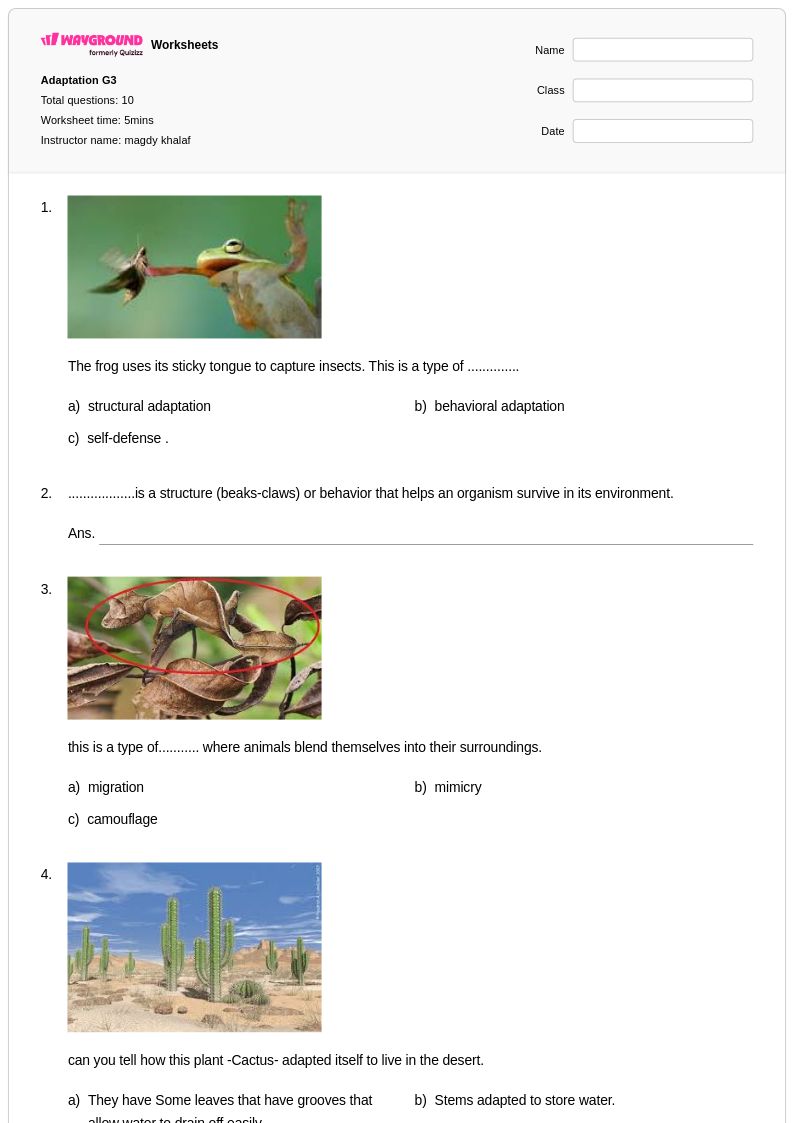
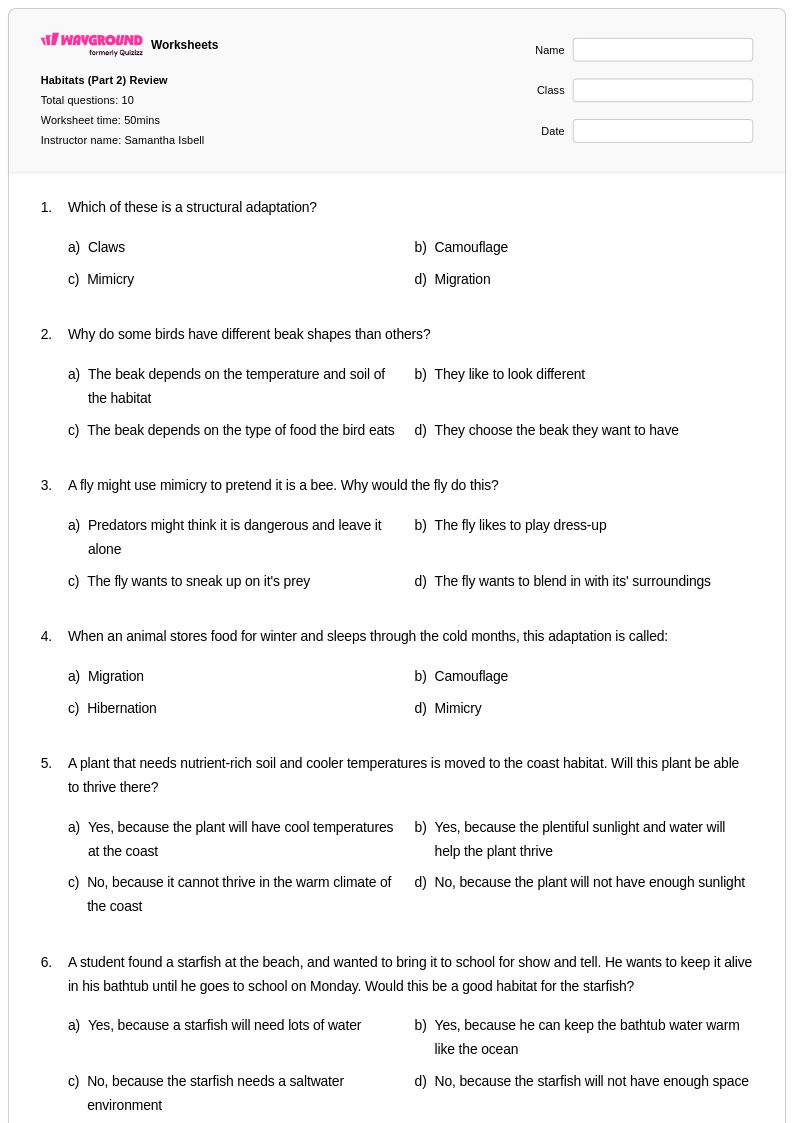
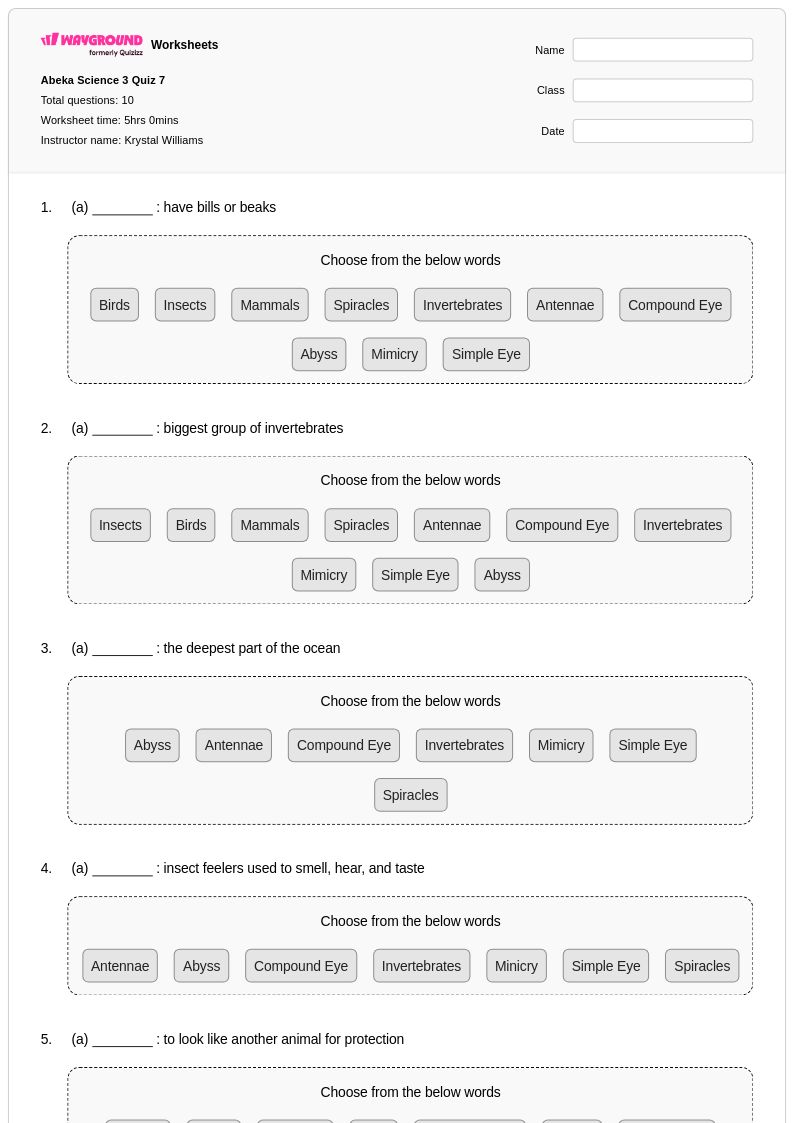
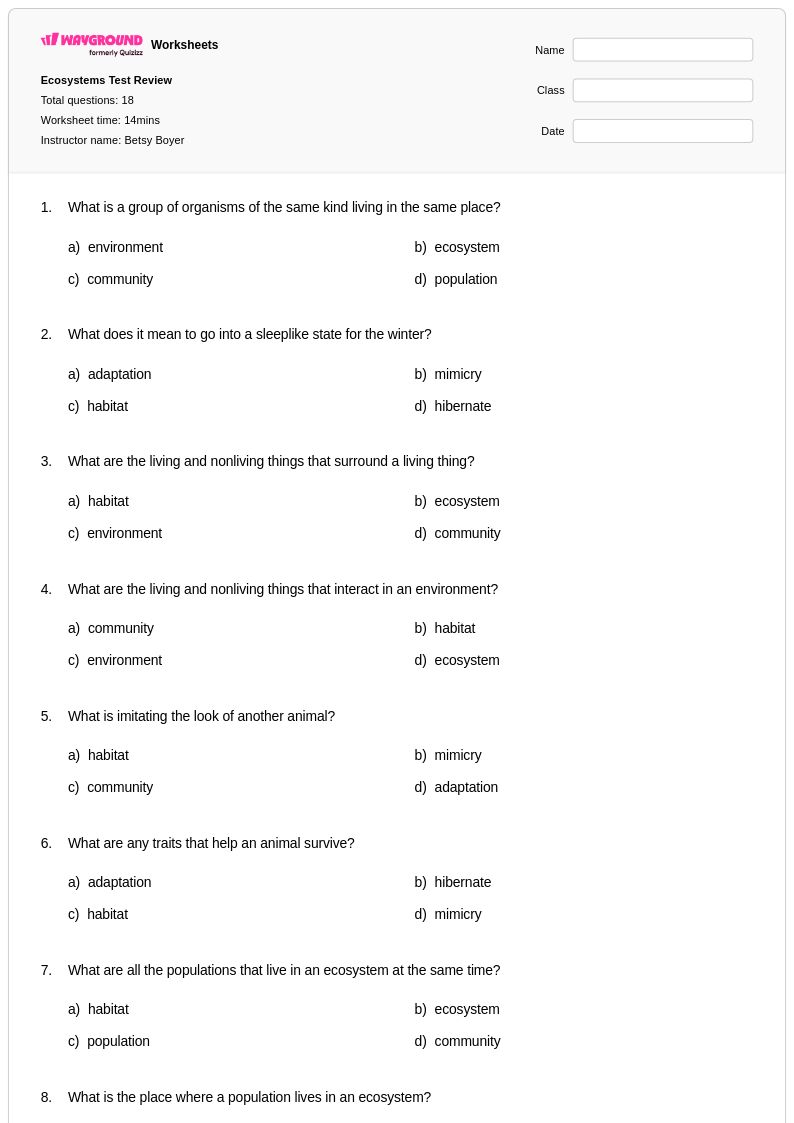
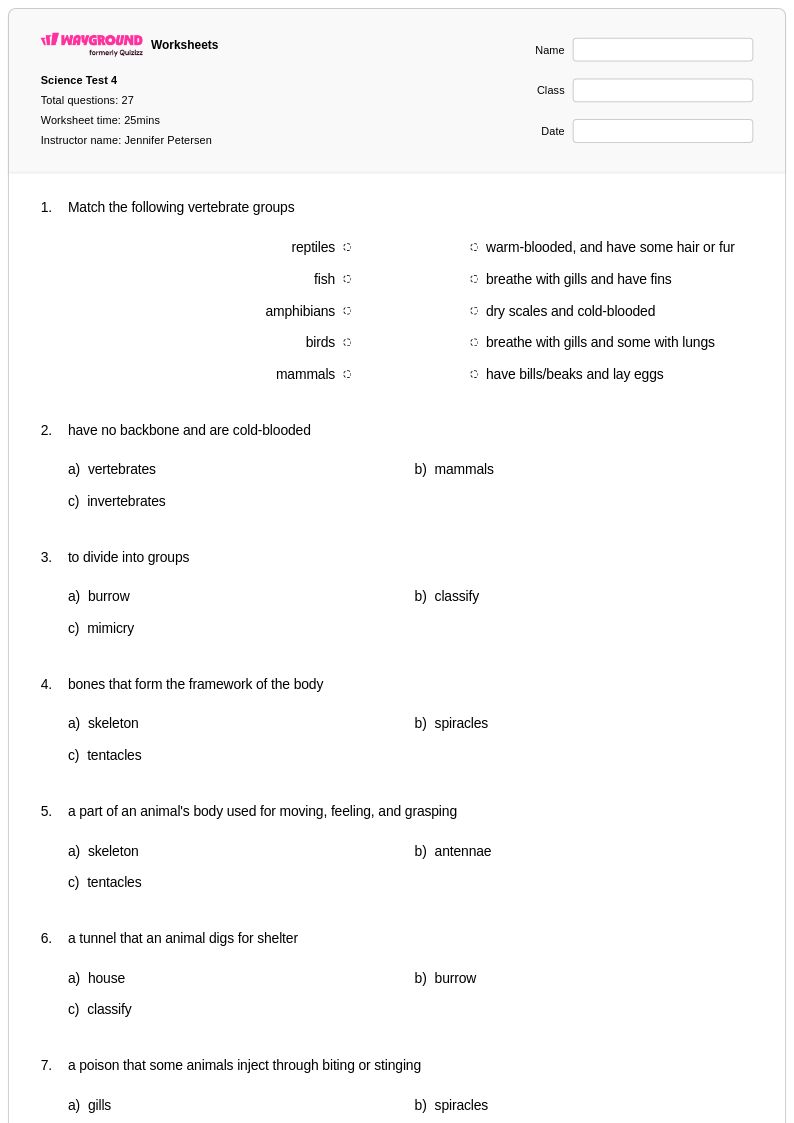
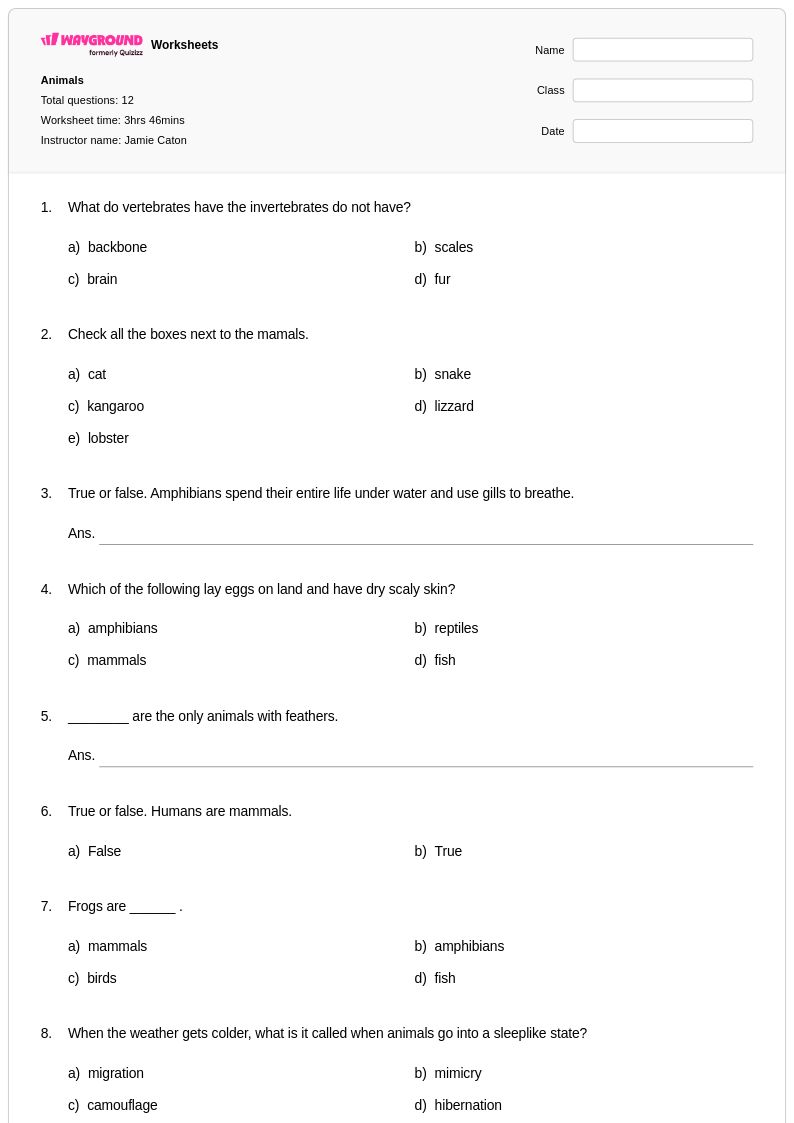
Year 3 biology mimicry worksheets and printables help students discover how animals copy other species for survival through engaging practice problems, free PDF downloads, and comprehensive answer keys.
Mimicry worksheets for Year 3 students available through Wayground (formerly Quizizz) provide young learners with engaging opportunities to explore one of nature's most fascinating survival strategies. These educational resources help students understand how animals and plants use mimicry to protect themselves from predators or to hunt more effectively, strengthening critical thinking skills and observational abilities essential for scientific inquiry. The worksheets feature age-appropriate content that introduces concepts like camouflage, warning coloration, and behavioral mimicry through interactive activities and practice problems designed to reinforce learning. Teachers can access comprehensive materials including detailed answer keys, free printable resources, and pdf downloads that make classroom implementation seamless while supporting diverse learning styles and pacing needs.
Wayground (formerly Quizizz) empowers educators with an extensive collection of teacher-created mimicry resources, drawing from millions of high-quality materials that have been developed and refined by classroom professionals. The platform's robust search and filtering capabilities allow teachers to quickly locate worksheets aligned with specific learning standards and objectives, while differentiation tools enable customization to meet individual student needs and skill levels. These flexible resources are available in both printable and digital formats, including convenient pdf options, making them ideal for traditional classroom instruction, homework assignments, or remote learning environments. The comprehensive nature of these worksheet collections supports effective lesson planning while providing valuable tools for remediation, enrichment activities, and targeted skill practice that helps students master fundamental concepts about animal and plant adaptations.
FAQs
How do I teach Batesian vs. Müllerian mimicry in a biology class?
Start by establishing the core distinction: in Batesian mimicry, a harmless species gains protection by resembling a harmful one, while in Müllerian mimicry, two or more genuinely harmful species share warning signals to reinforce predator avoidance. Use visual comparison activities with real-world examples, such as the viceroy and monarch butterflies for Batesian mimicry and co-mimicking poison dart frogs for Müllerian mimicry. Anchoring each type to a concrete organism pair helps students move beyond memorization toward conceptual understanding.
What are good practice exercises for helping students understand mimicry as an evolutionary adaptation?
Effective exercises include comparative analysis tasks where students examine photos or diagrams of mimic and model species and identify the survival advantage at play. Classification activities that ask students to sort real-world mimicry examples into Batesian or Müllerian categories reinforce the key distinction. Visual identification problems, where students analyze coloration and physical traits to determine mimetic relationships, also build strong observational and analytical skills.
What misconceptions do students commonly have about mimicry in biology?
A frequent misconception is conflating mimicry with camouflage. Mimicry involves resemblance to another species for a specific survival advantage, whereas camouflage involves blending into a background environment. Students also often assume all mimics are harmless, not recognizing that Müllerian mimicry involves genuinely dangerous species mutually reinforcing each other's warning signals. Addressing these distinctions explicitly and early prevents confusion when students encounter more complex ecological examples.
How can I use mimicry worksheets to support different skill levels in my classroom?
Mimicry worksheets can be differentiated by task complexity, moving from basic identification of mimic versus model to more analytical questions about the selective pressures driving each type of mimicry. On Wayground, teachers can apply student-level accommodations such as read aloud, extended time, and reduced answer choices, which are particularly useful for supporting students with learning differences or English language learners. These settings can be applied to individual students without disrupting the experience of other learners in the same session.
How do I use Wayground's mimicry worksheets in my classroom?
Wayground's mimicry worksheets are available as free printable PDFs for traditional classroom use and in digital formats for technology-integrated or hybrid learning environments. Teachers can also host worksheets as a quiz directly on Wayground, allowing for interactive student completion and immediate feedback. The platform's search and filtering tools make it straightforward to locate resources aligned with specific curriculum standards or lesson objectives.