
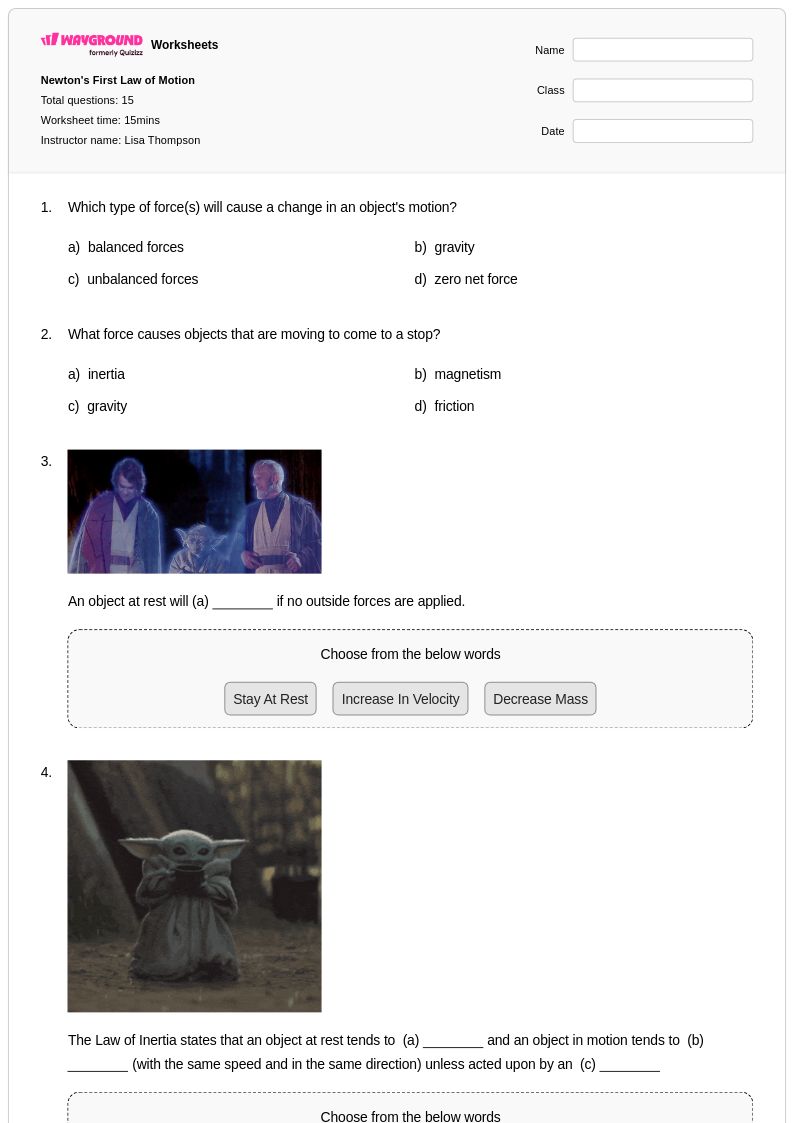
15 Q
8th - Uni
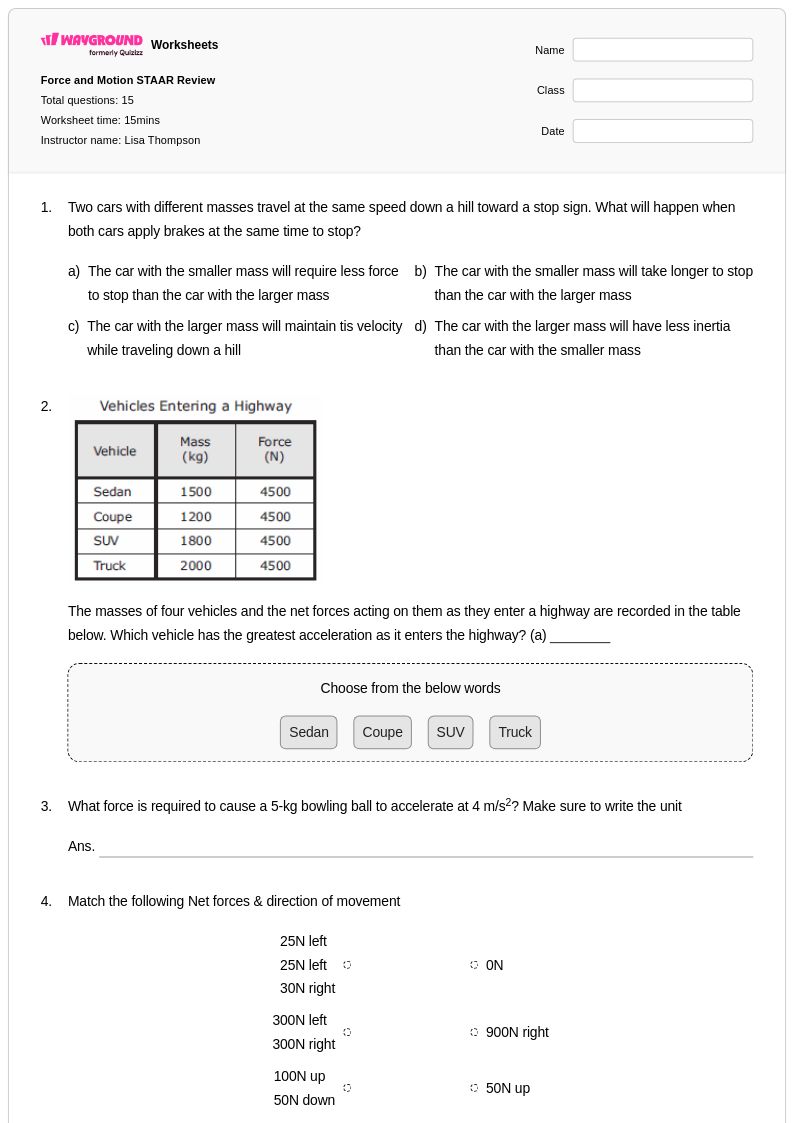
15 Q
8th - Uni
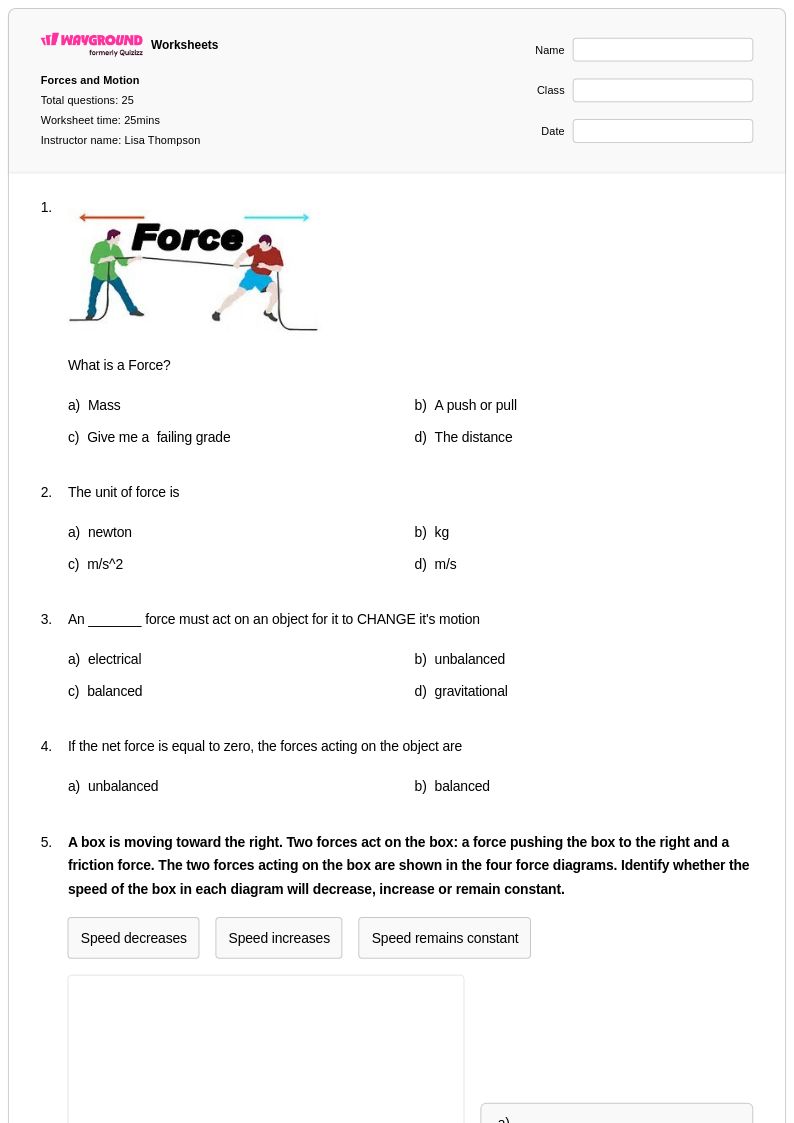
25 Q
6th - Uni
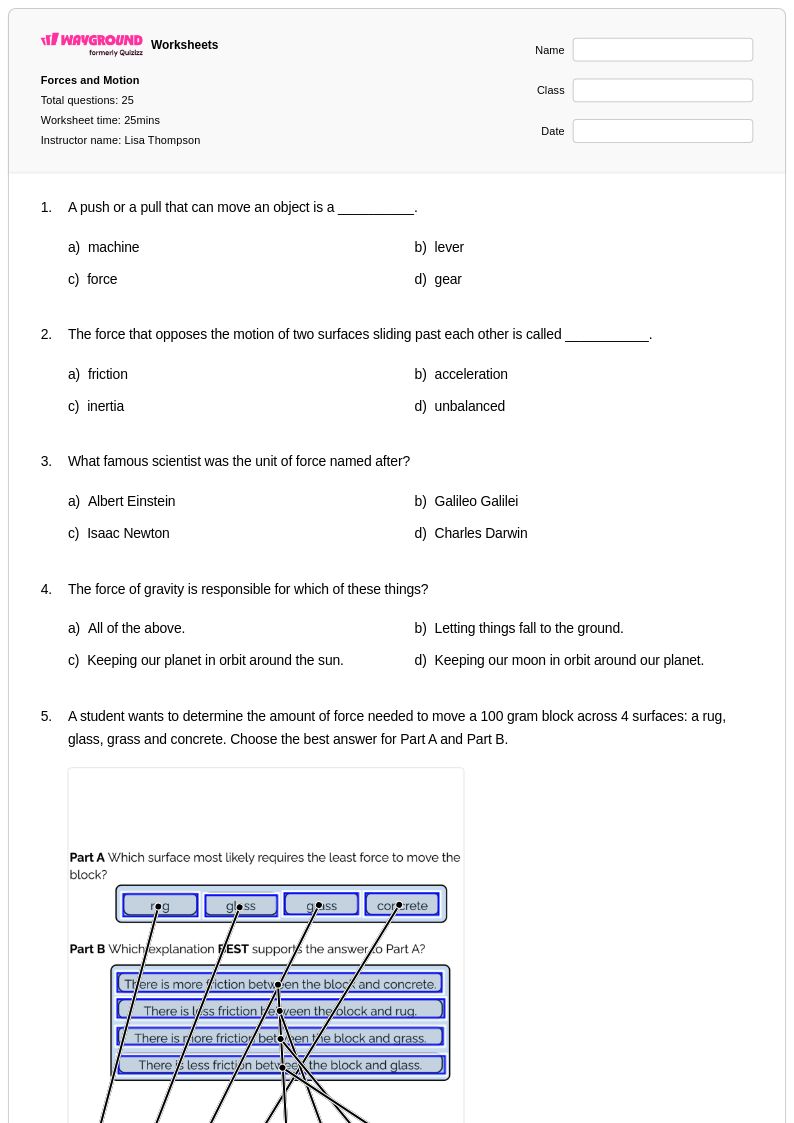
25 Q
5th - Uni
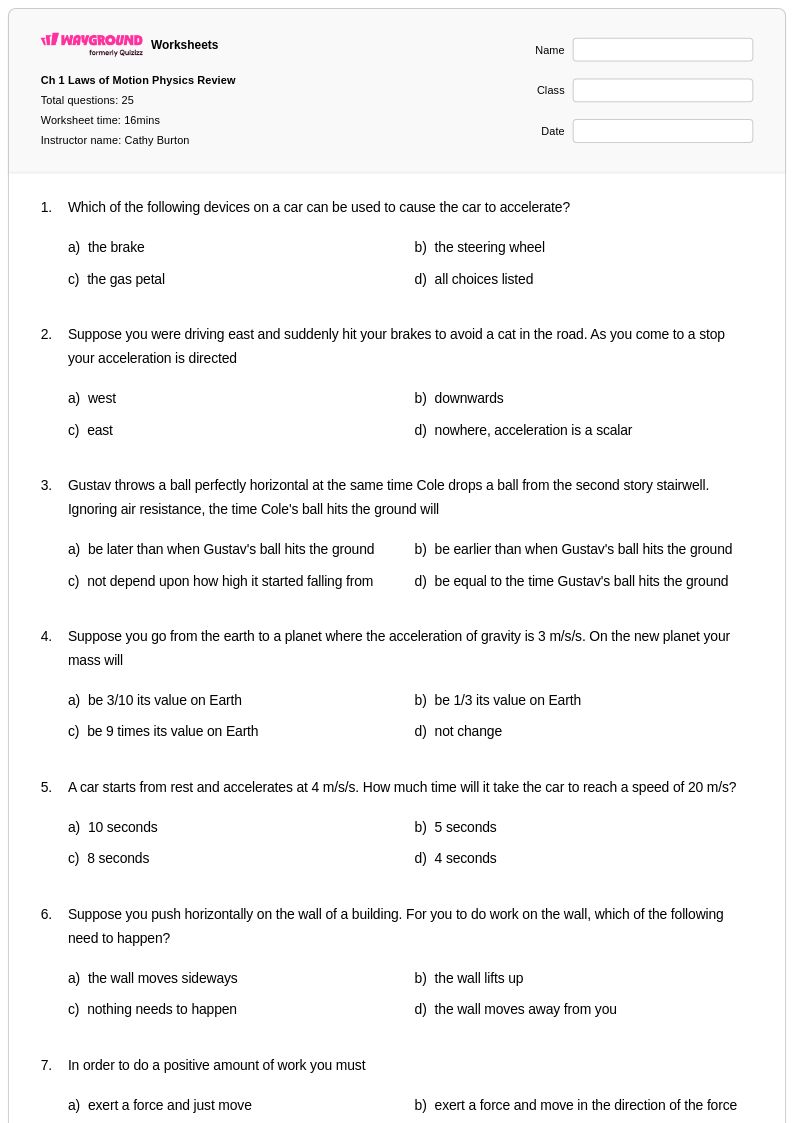
25 Q
7th - 9th
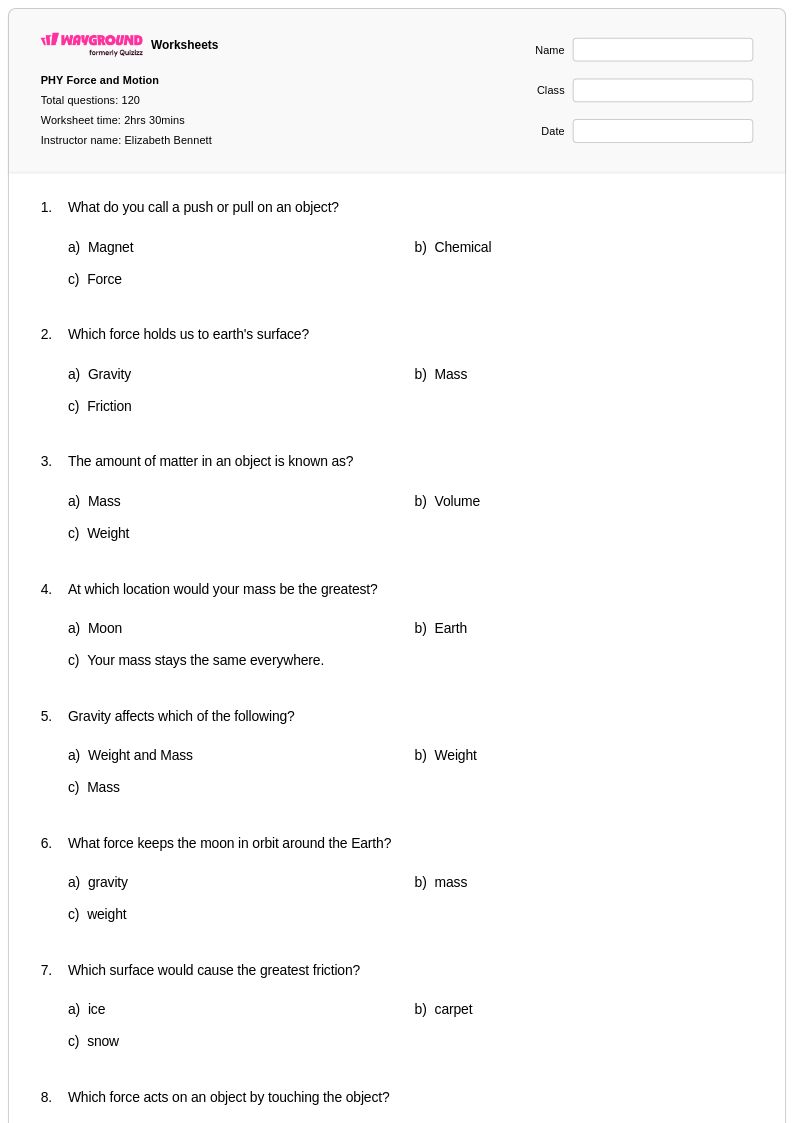
120 Q
9th - 12th
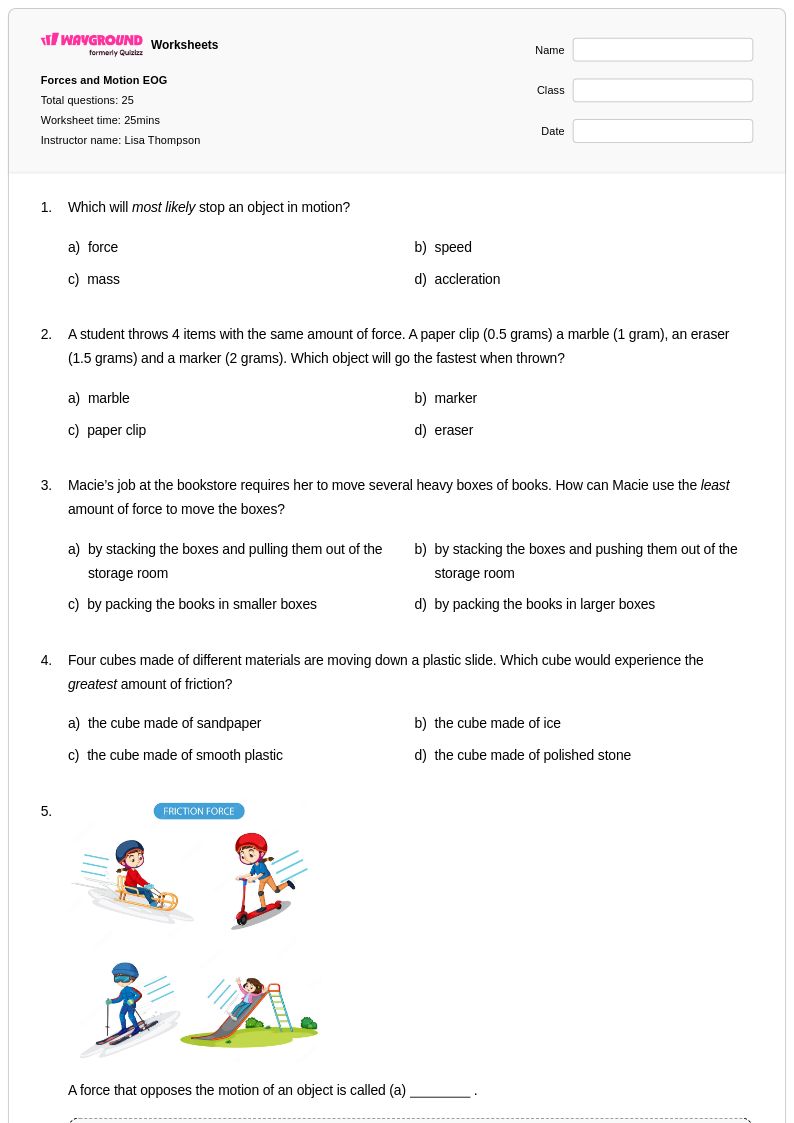
25 Q
5th - Uni
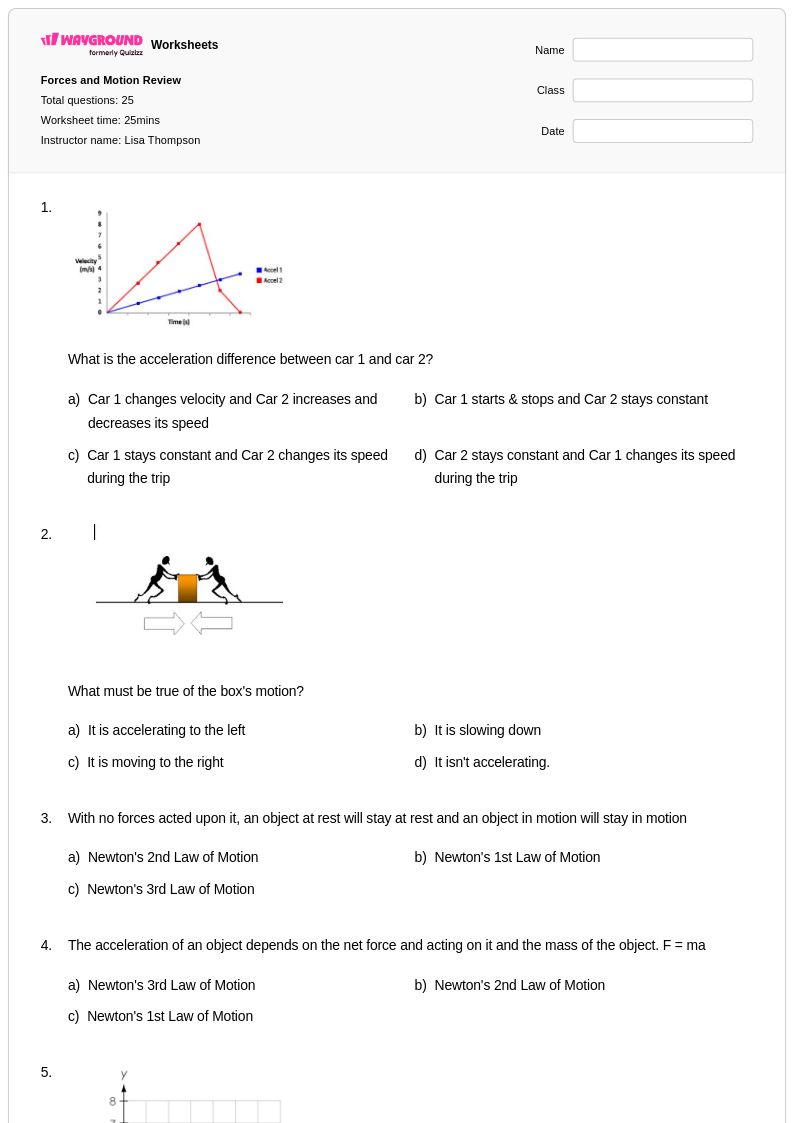
25 Q
8th - Uni
25 Q
8th - Uni
24 Q
9th
20 Q
9th - 12th
11 Q
9th
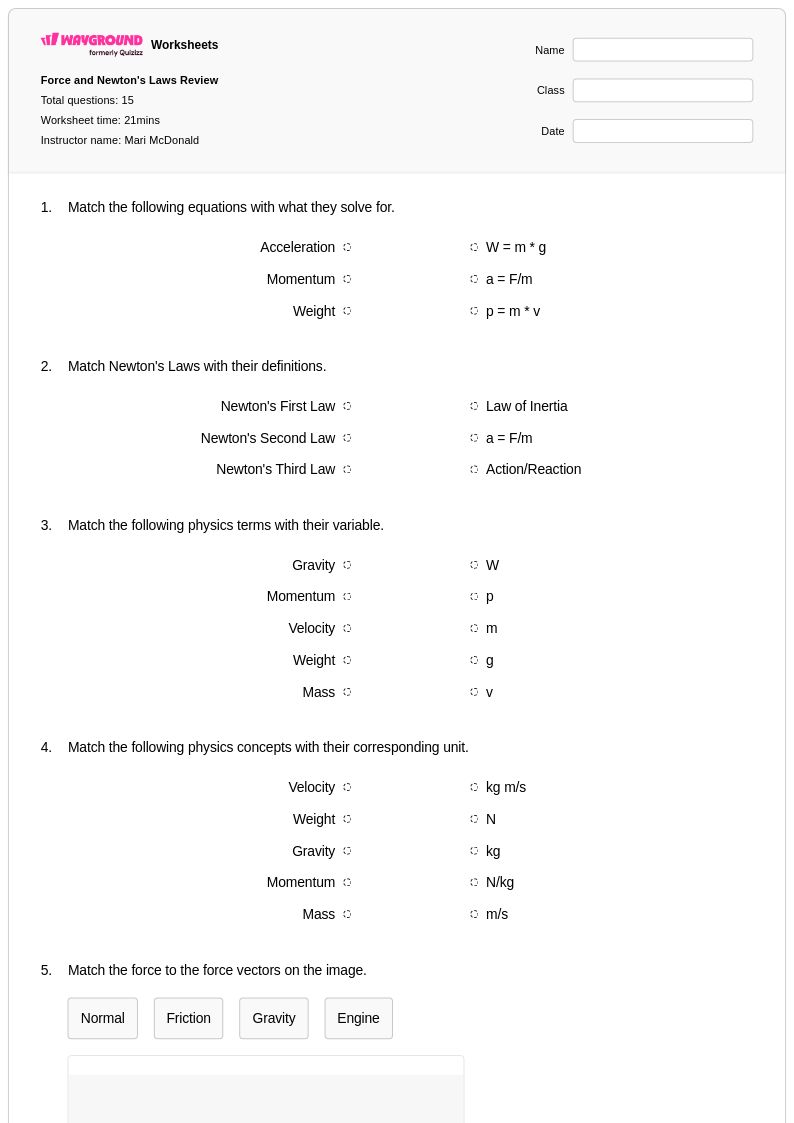
15 Q
9th
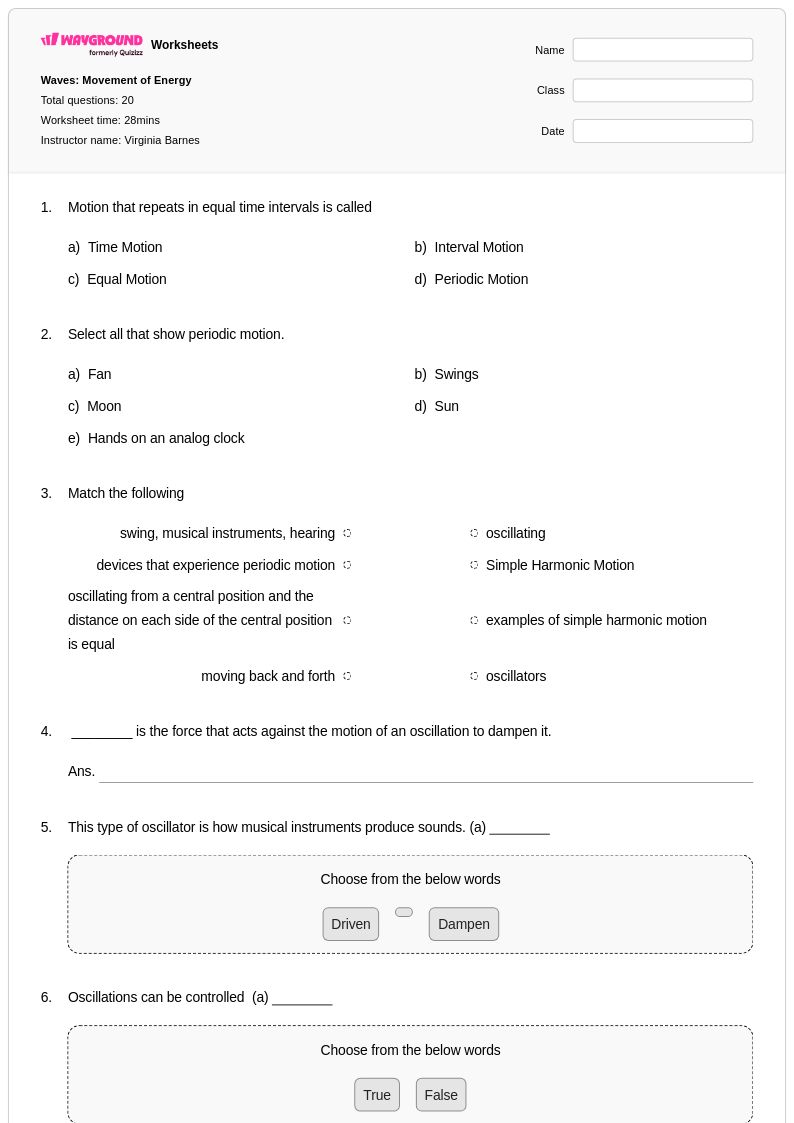
20 Q
9th
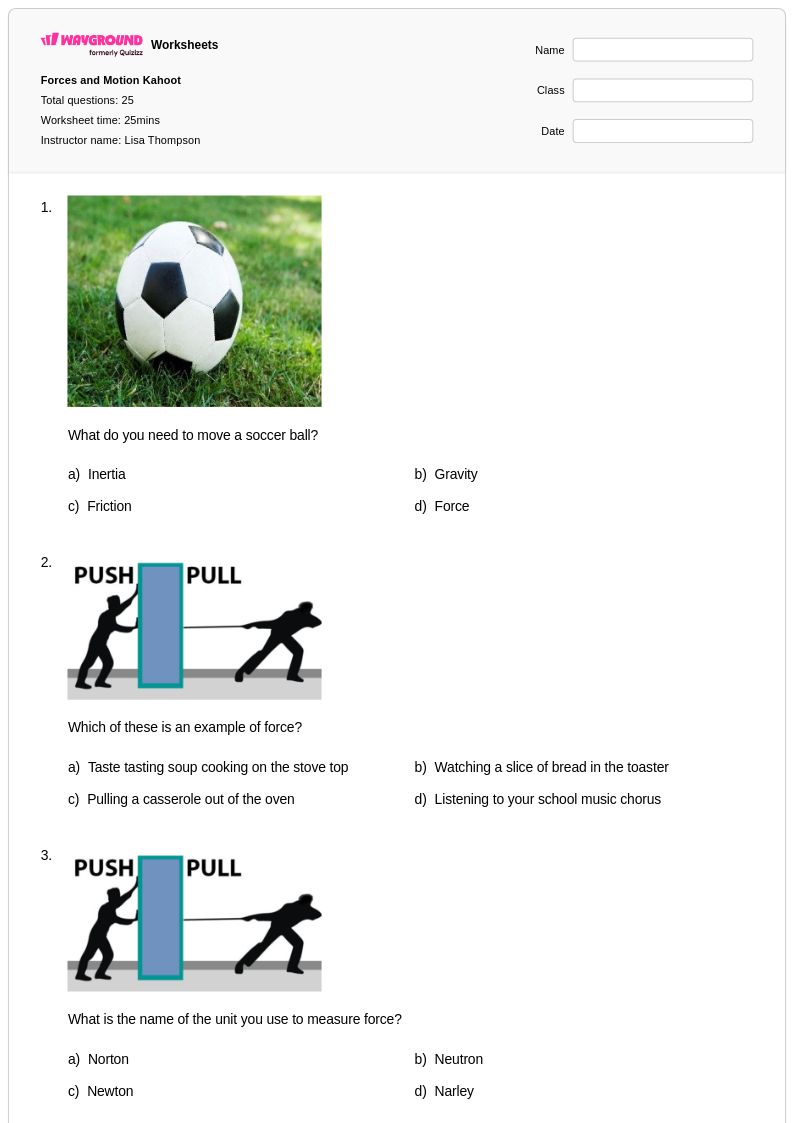
25 Q
6th - Uni
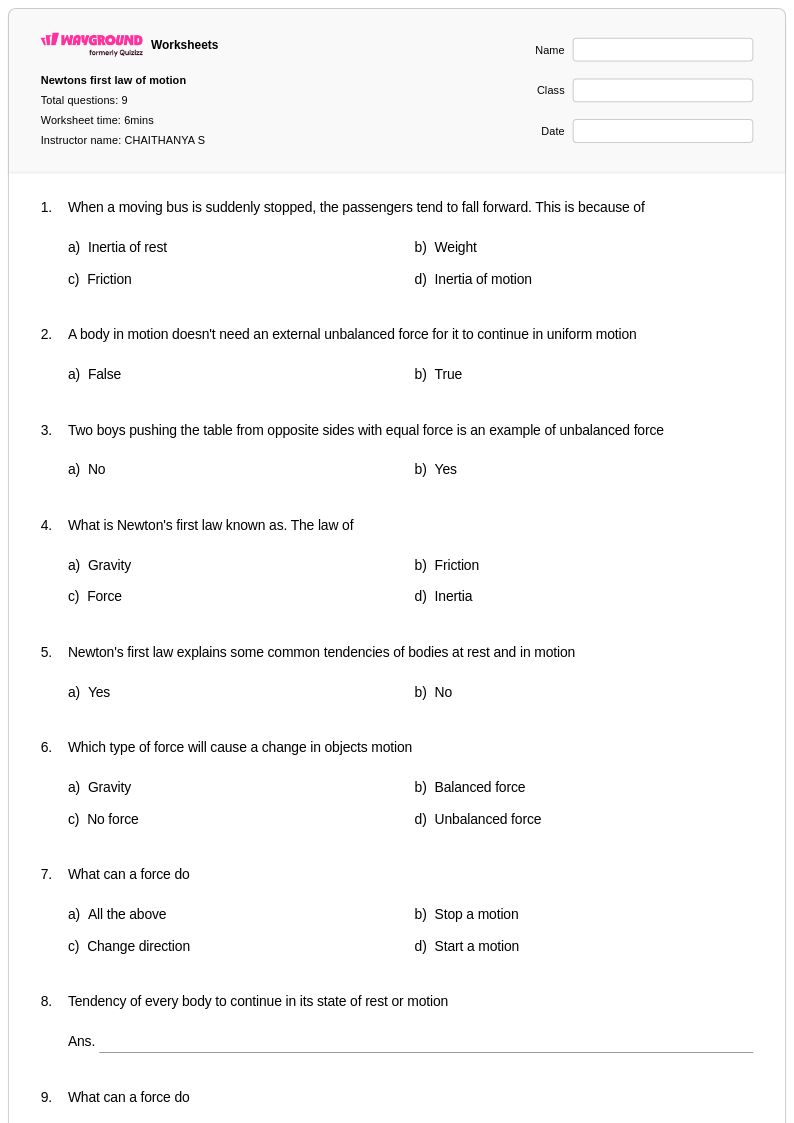
9 Q
8th - 9th
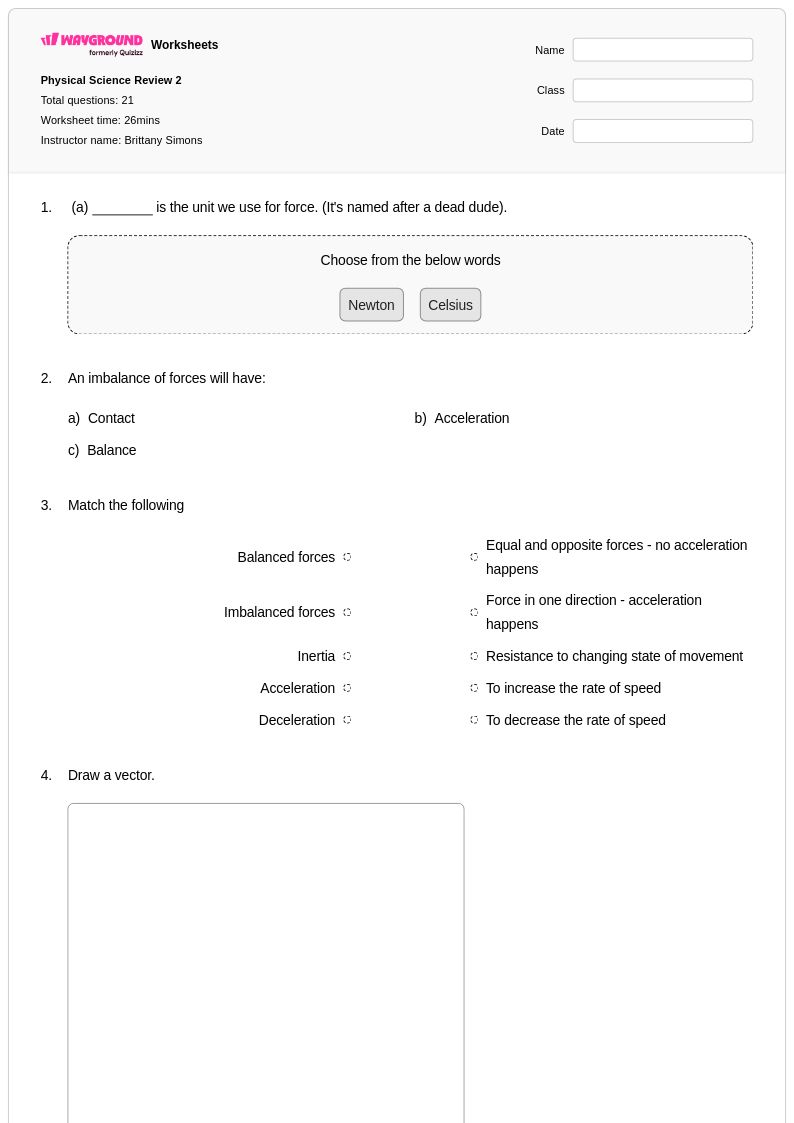
21 Q
9th
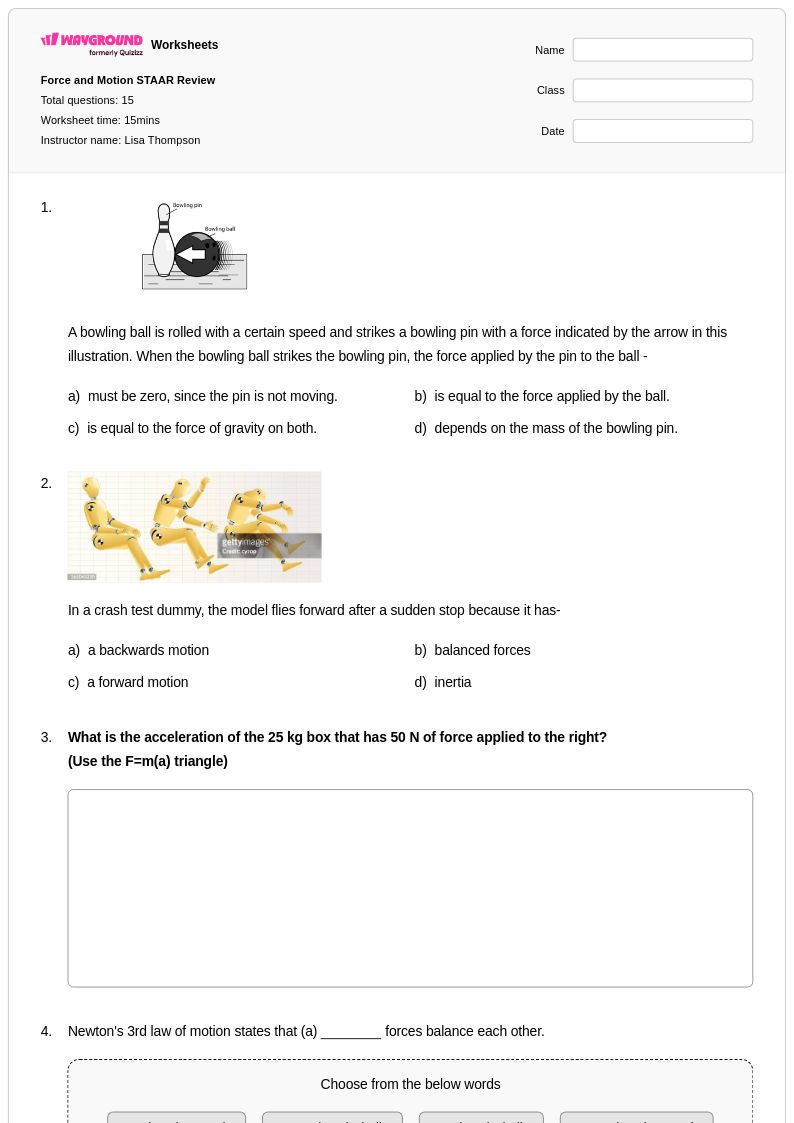
15 Q
8th - Uni
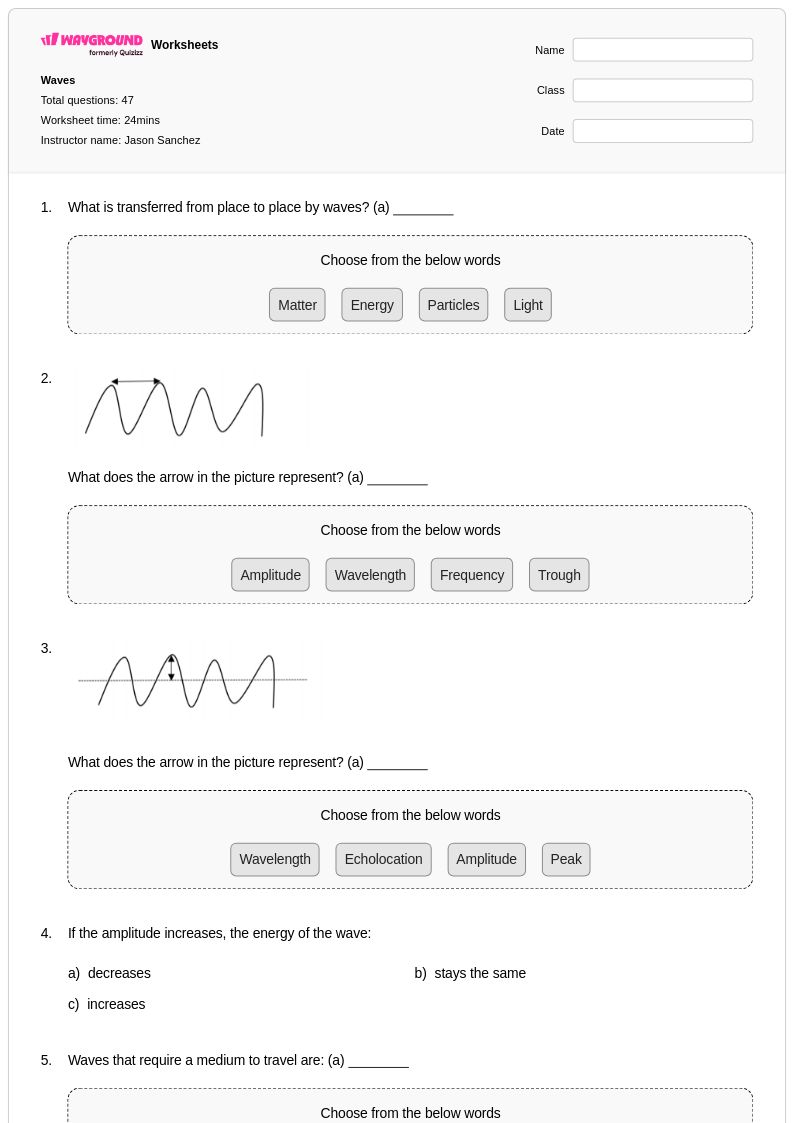
47 Q
8th - 9th
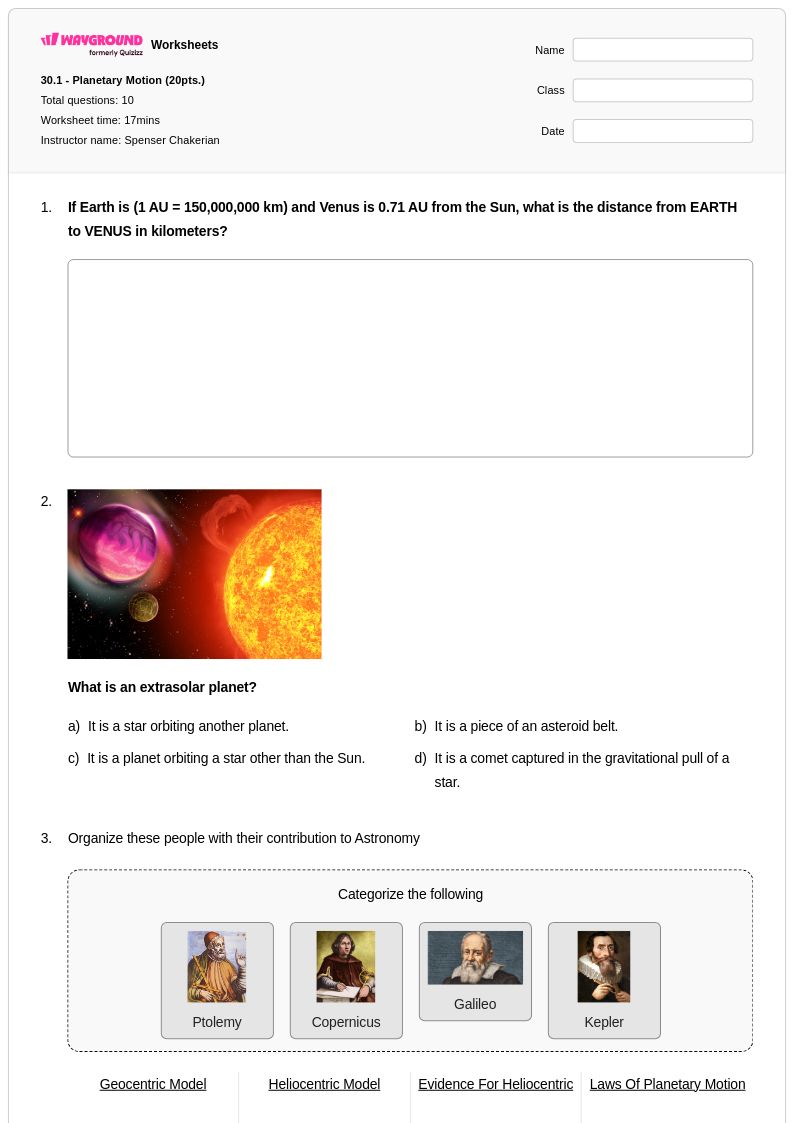
10 Q
9th - 12th
22 Q
6th - Uni
15 Q
8th - Uni

15 Q
4th - Uni
47 Q
8th - Uni
Explore Multiple Representations of Motion Worksheets by Grades
Explore Other Subject Worksheets for year 9
Explore printable Multiple Representations of Motion worksheets for Year 9
Multiple representations of motion worksheets for Year 9 physics students through Wayground (formerly Quizizz) provide comprehensive practice with analyzing and interpreting motion using graphs, equations, data tables, and verbal descriptions. These expertly crafted worksheets strengthen students' ability to translate between position-time graphs, velocity-time graphs, acceleration-time graphs, and kinematic equations while developing critical thinking skills essential for understanding complex motion scenarios. Students engage with practice problems that challenge them to convert motion information from one representation to another, analyze real-world scenarios involving constant and changing velocities, and interpret the physical meaning behind mathematical relationships. Each worksheet collection includes detailed answer keys and is available as free printable pdf resources, enabling students to master the fundamental skill of recognizing how the same motion can be expressed through multiple mathematical and graphical formats.
Wayground (formerly Quizizz) supports Year 9 physics educators with an extensive library of millions of teacher-created multiple representations of motion worksheets, featuring robust search and filtering capabilities that allow instructors to quickly locate resources aligned with specific learning objectives and standards. The platform's differentiation tools enable teachers to customize worksheets for varying skill levels, ensuring that struggling students receive targeted remediation while advanced learners access enrichment activities that deepen their understanding of motion analysis. These resources are available in both printable and digital formats, including downloadable pdf versions, providing maximum flexibility for classroom instruction, homework assignments, and independent study. Teachers can efficiently plan lessons that build sequential understanding of motion concepts, implement formative assessments to gauge student comprehension, and provide focused skill practice that helps students develop confidence in translating between different representations of the same physical phenomenon.