
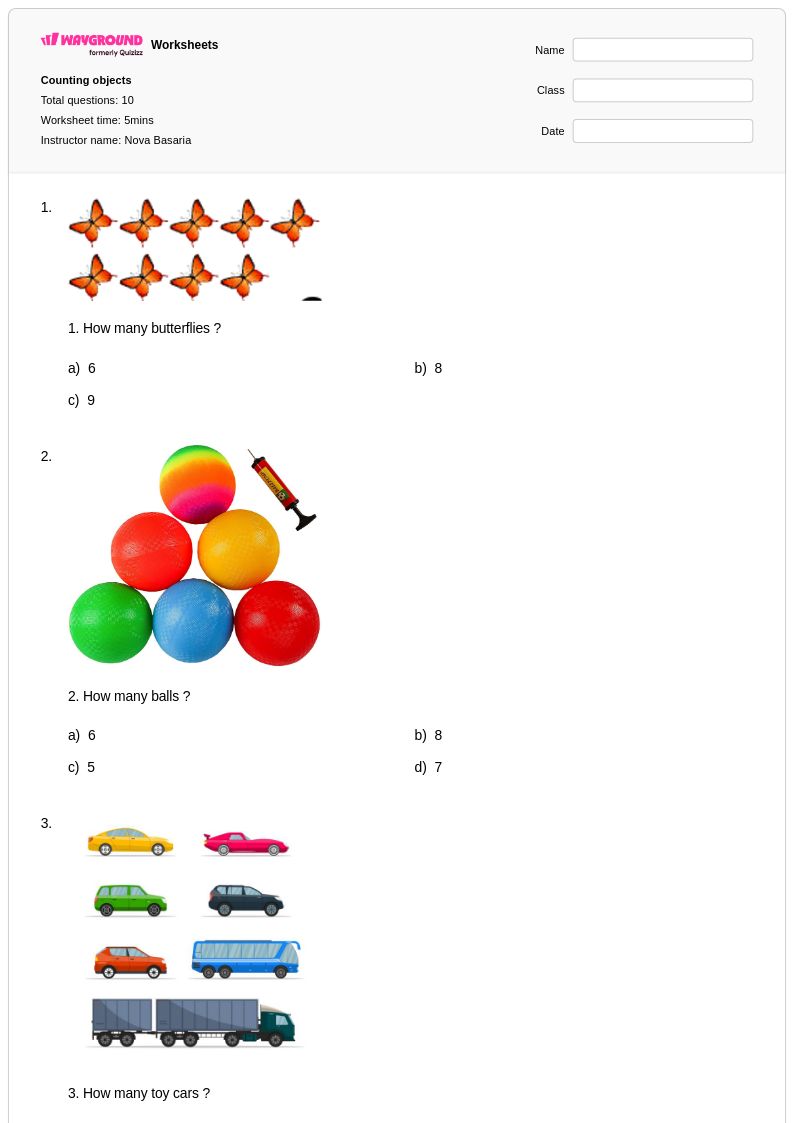
10 Q
1st
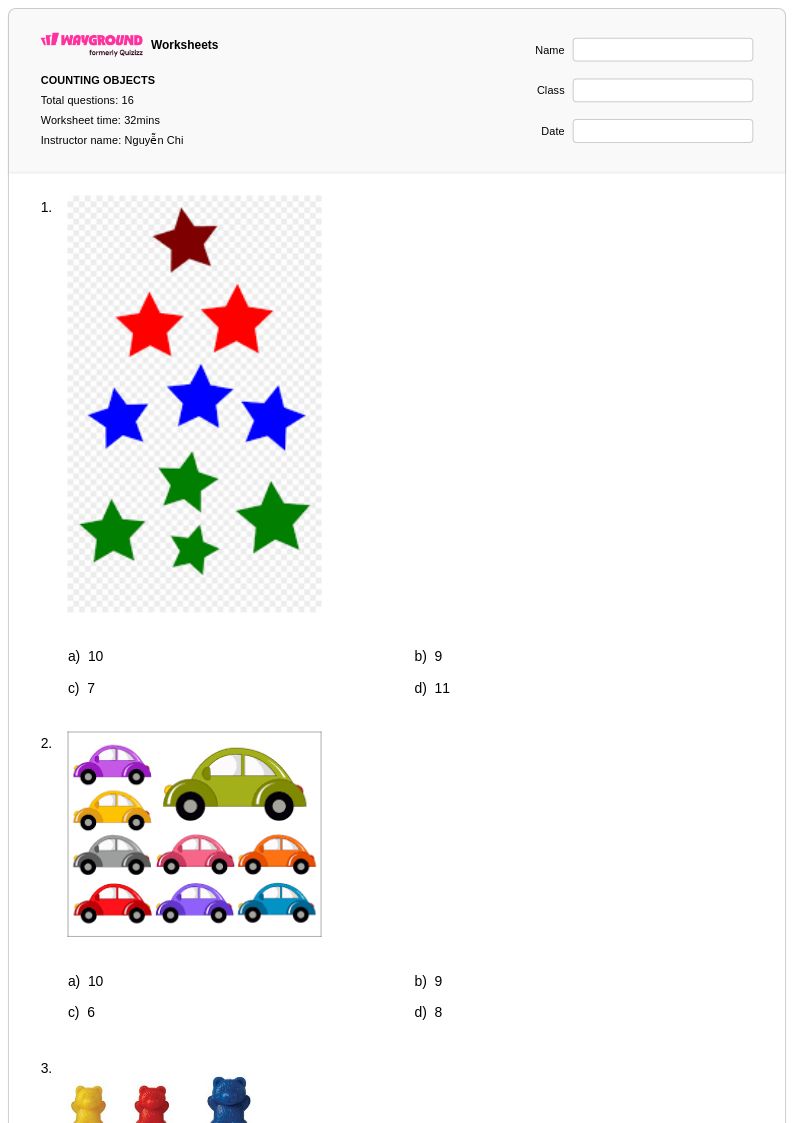
16 Q
1st - 5th
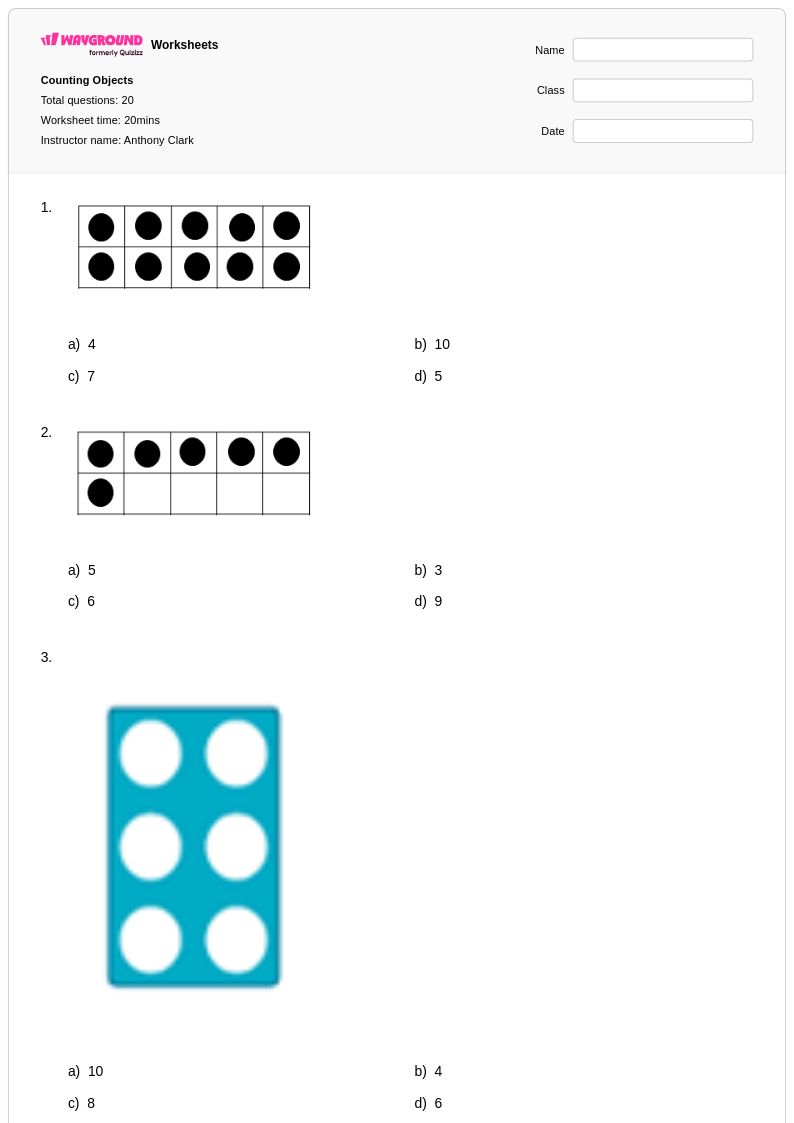
20 Q
1st - Uni
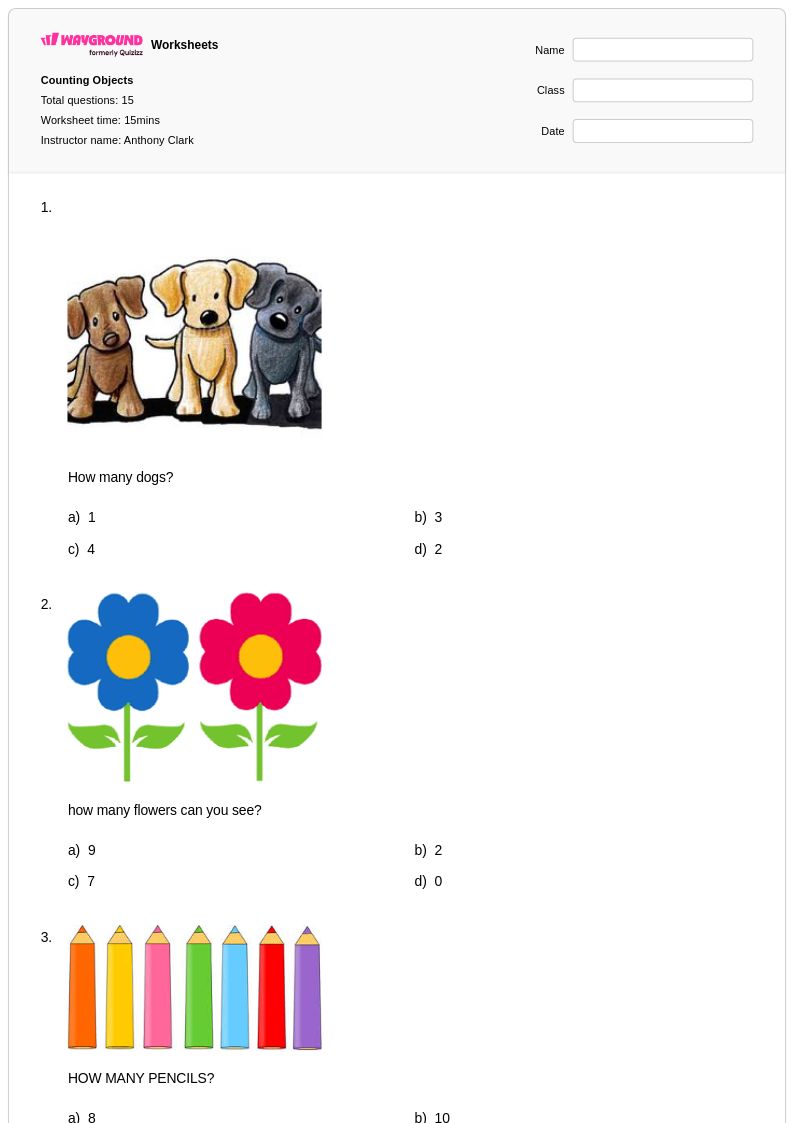
15 Q
1st - Uni
14 Q
1st - Uni
18 Q
1st - Uni
6 Q
1st
10 Q
KG - 1st
10 Q
1st
20 Q
KG - 2nd
20 Q
1st
10 Q
1st
20 Q
1st - 3rd
10 Q
1st
21 Q
1st
11 Q
1st
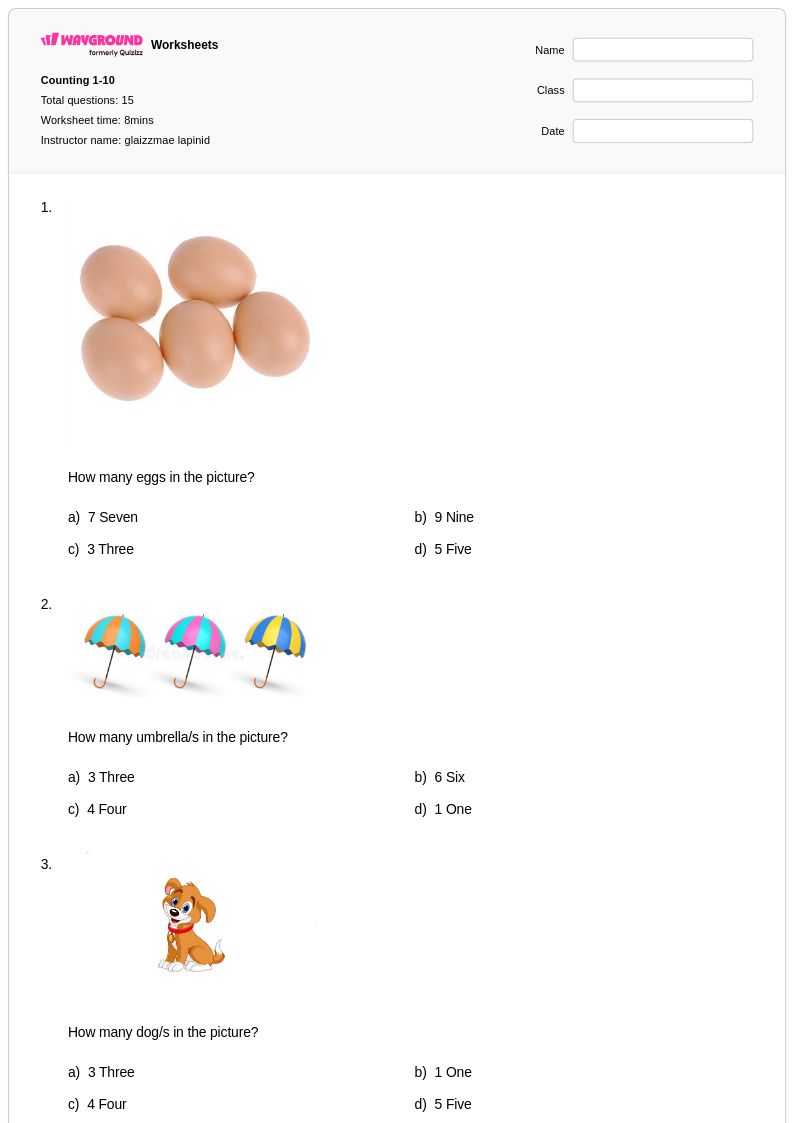
15 Q
1st
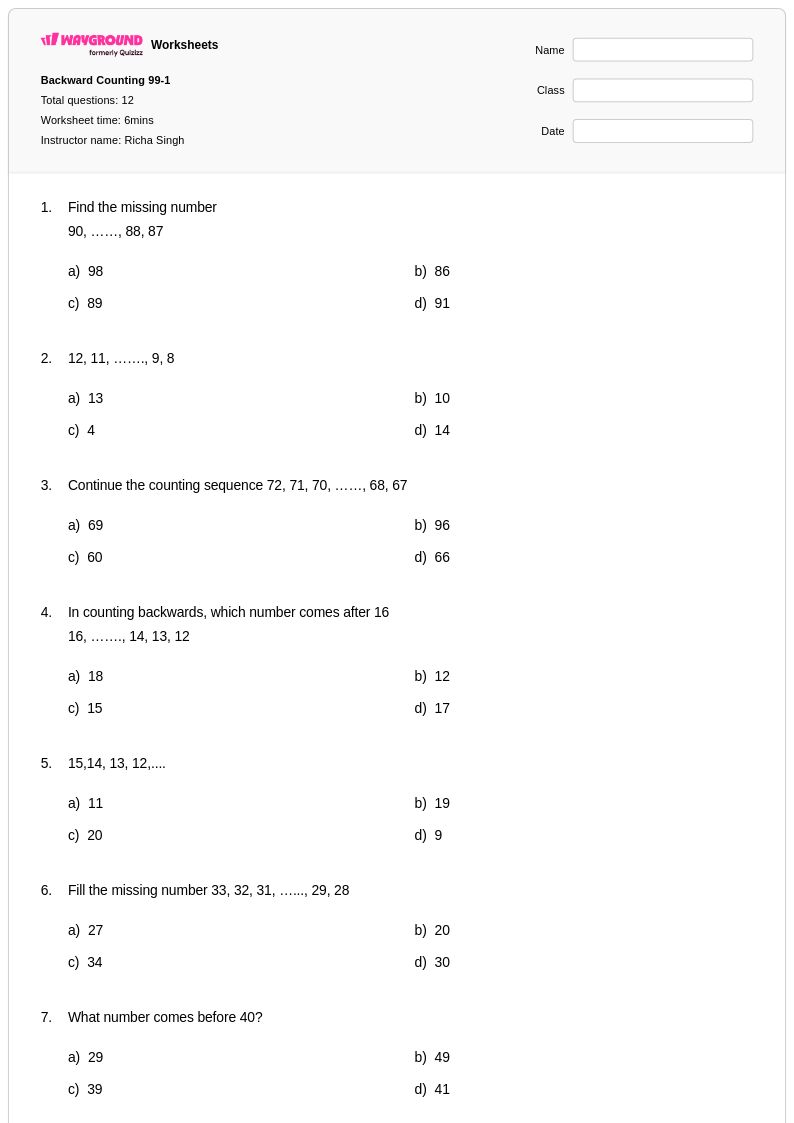
12 Q
1st
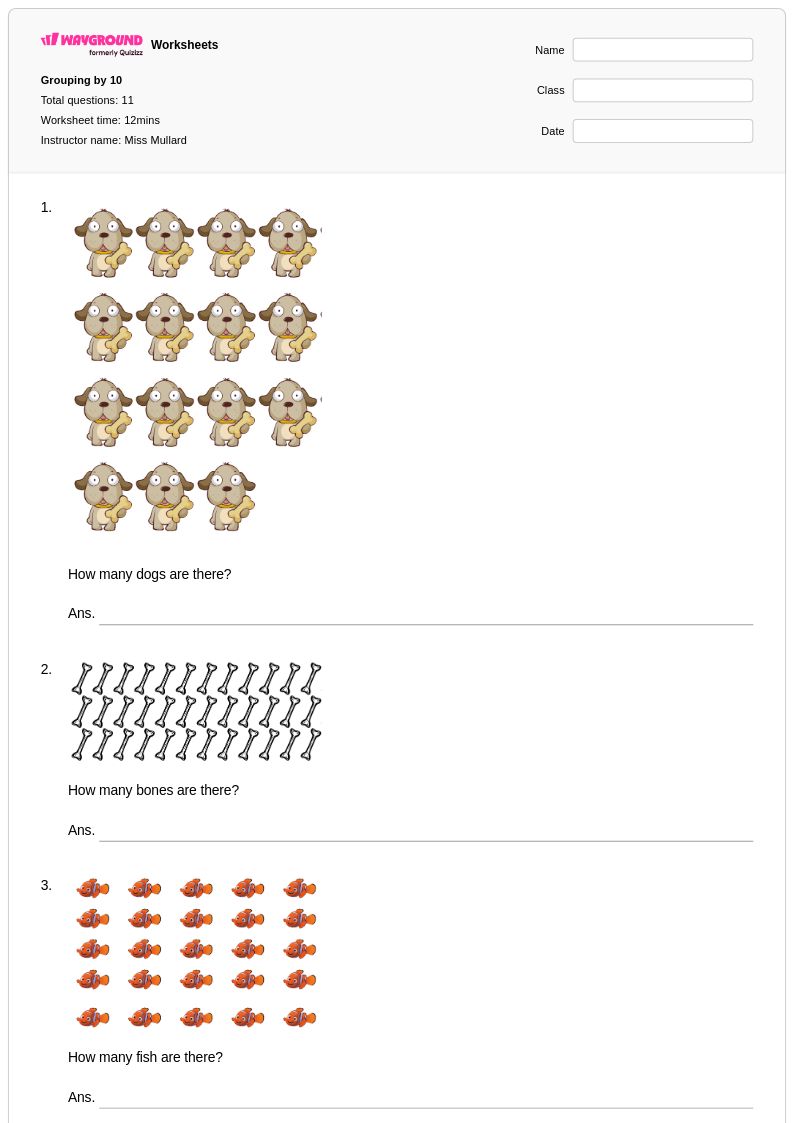
11 Q
1st - 2nd
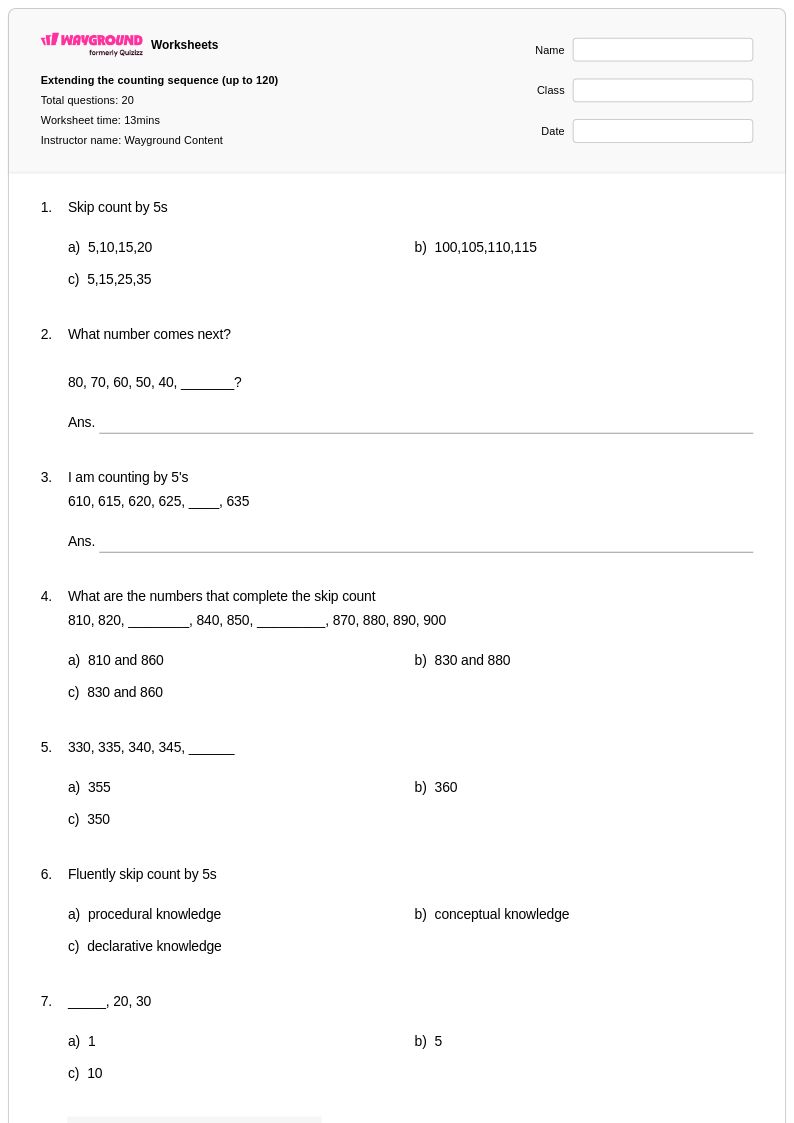
20 Q
1st
20 Q
1st
10 Q
1st
20 Q
1st
10 Q
1st - 2nd
Explore Object Counting Worksheets by Grades
Explore Other Subject Worksheets for year 1
Explore printable Object Counting worksheets for Year 1
Object counting worksheets for Year 1 students through Wayground (formerly Quizizz) provide essential foundational practice for developing early mathematical understanding and number recognition skills. These carefully designed printables focus on helping young learners master the fundamental concept of one-to-one correspondence while building confidence in their ability to accurately count and quantify sets of objects. Each worksheet contains thoughtfully structured practice problems that progress from simple counting exercises with familiar items like toys, animals, and everyday objects to more complex scenarios involving grouped items and visual arrays. Teachers can access comprehensive answer keys alongside each printable resource, ensuring efficient grading and immediate feedback opportunities that support student learning and mathematical growth.
Wayground (formerly Quizizz) empowers educators with an extensive collection of millions of teacher-created object counting resources that streamline lesson planning and provide targeted skill practice for Year 1 mathematics instruction. The platform's robust search and filtering capabilities allow teachers to quickly locate worksheets that align with specific learning standards and curriculum requirements, while built-in differentiation tools enable customization based on individual student needs and varying ability levels. Whether used for initial skill introduction, remediation support, or enrichment activities, these versatile resources are available in both printable PDF format for traditional classroom use and digital formats for technology-integrated learning environments, giving teachers the flexibility to adapt their instruction to diverse learning preferences and classroom settings.
FAQs
How does counting in 1st grade differ from kindergarten?
How can I use counting practice to introduce addition?
What specific skills do these 1st-grade counting worksheets target?
What counting errors should I look for in first graders?
How can I use this 1st-grade worksheet in my classroom?
How does this topic support the 1st-grade math curriculum?