
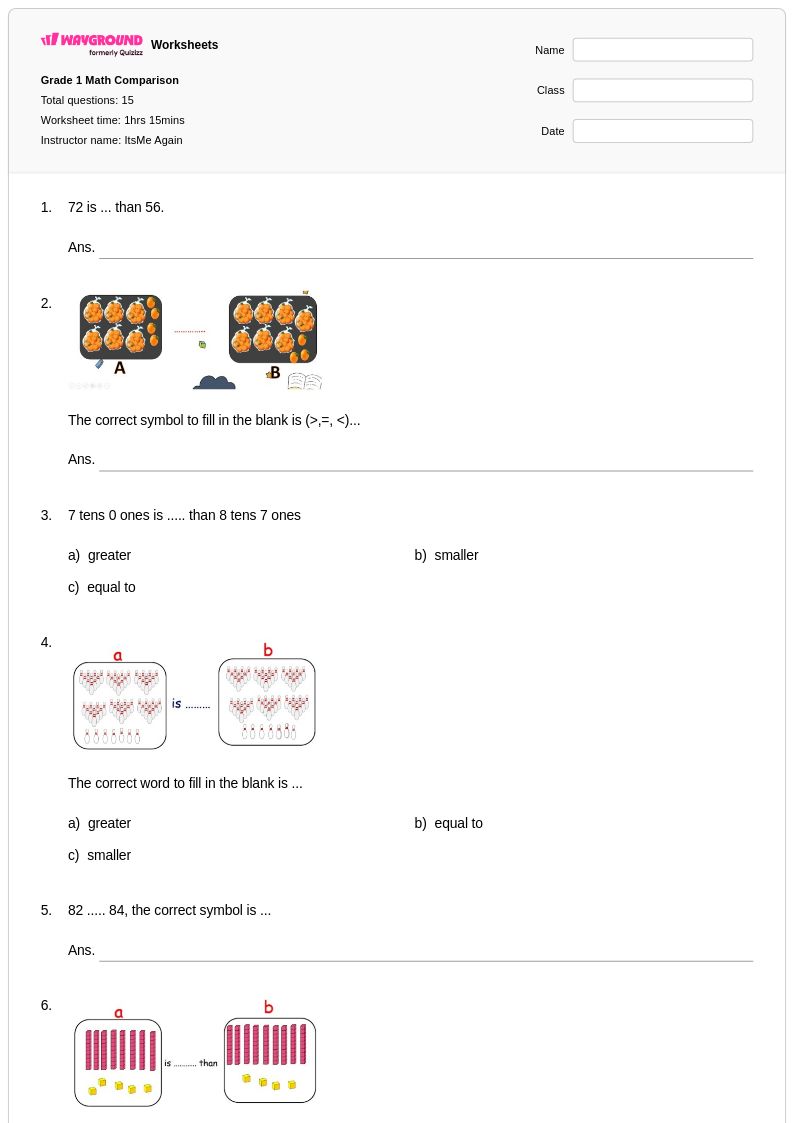
15 Q
1st
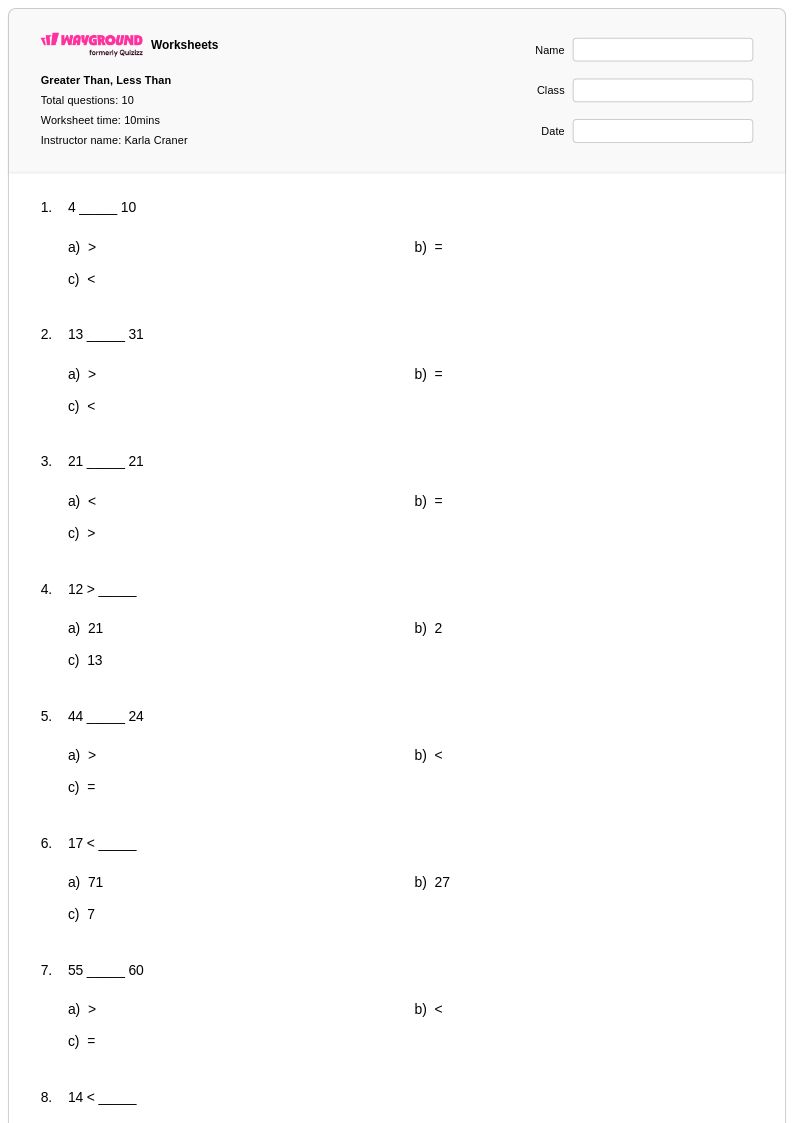
10 Q
1st
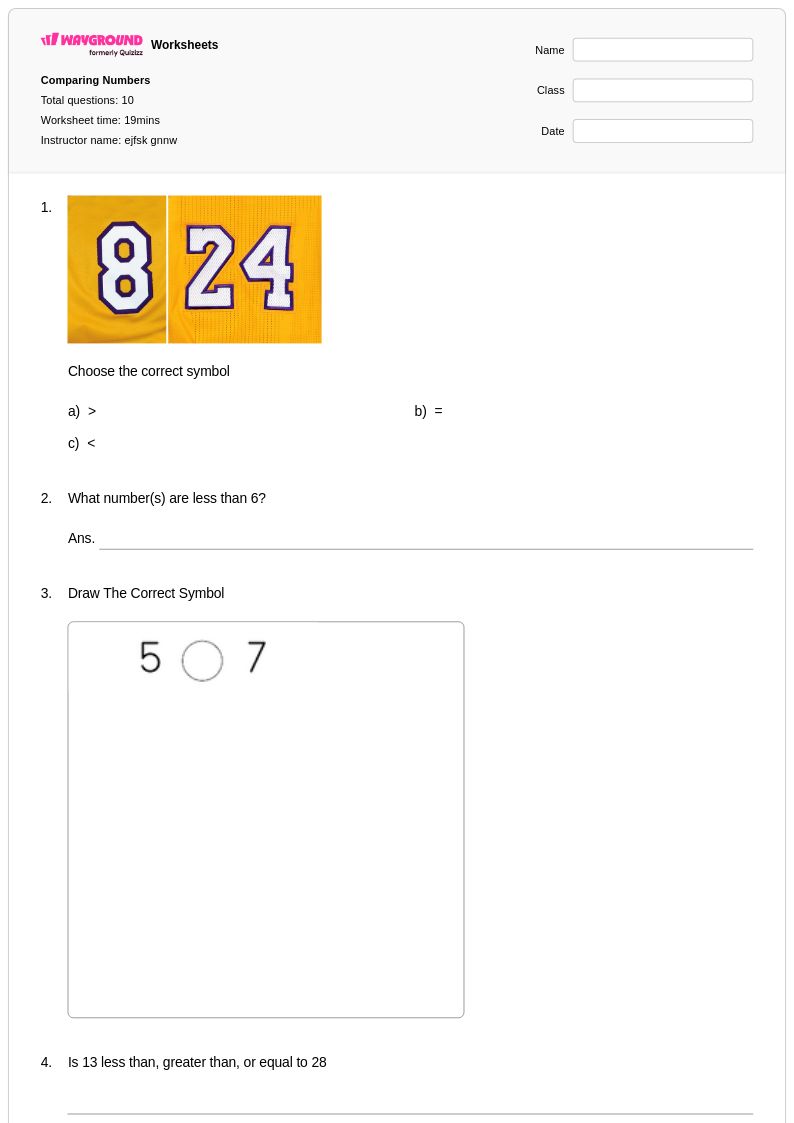
10 Q
1st - 2nd
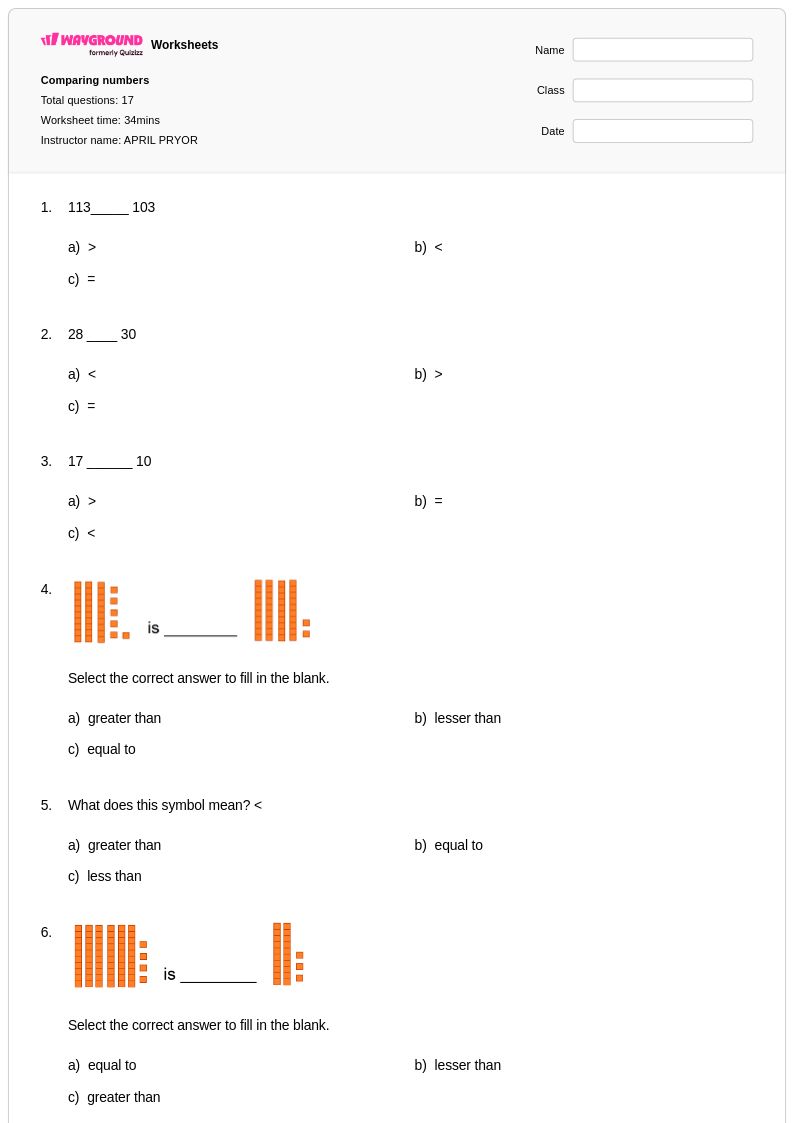
17 Q
1st

10 Q
1st - 2nd
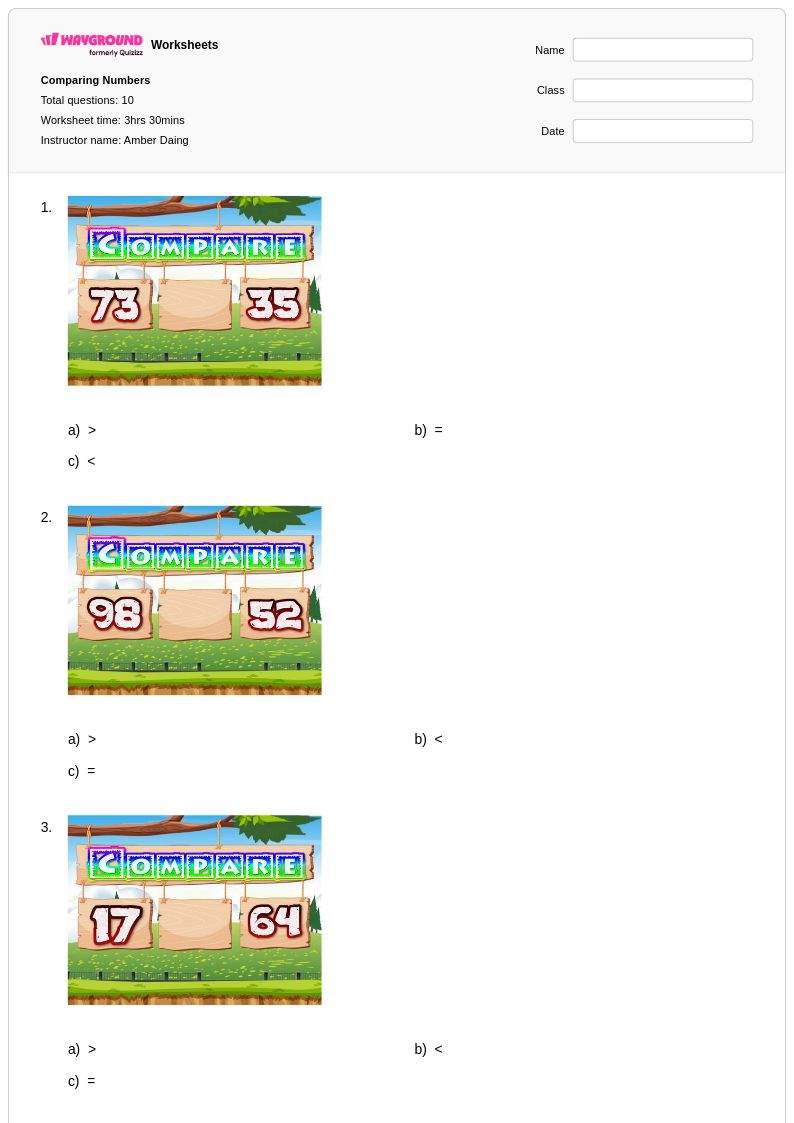
10 Q
1st
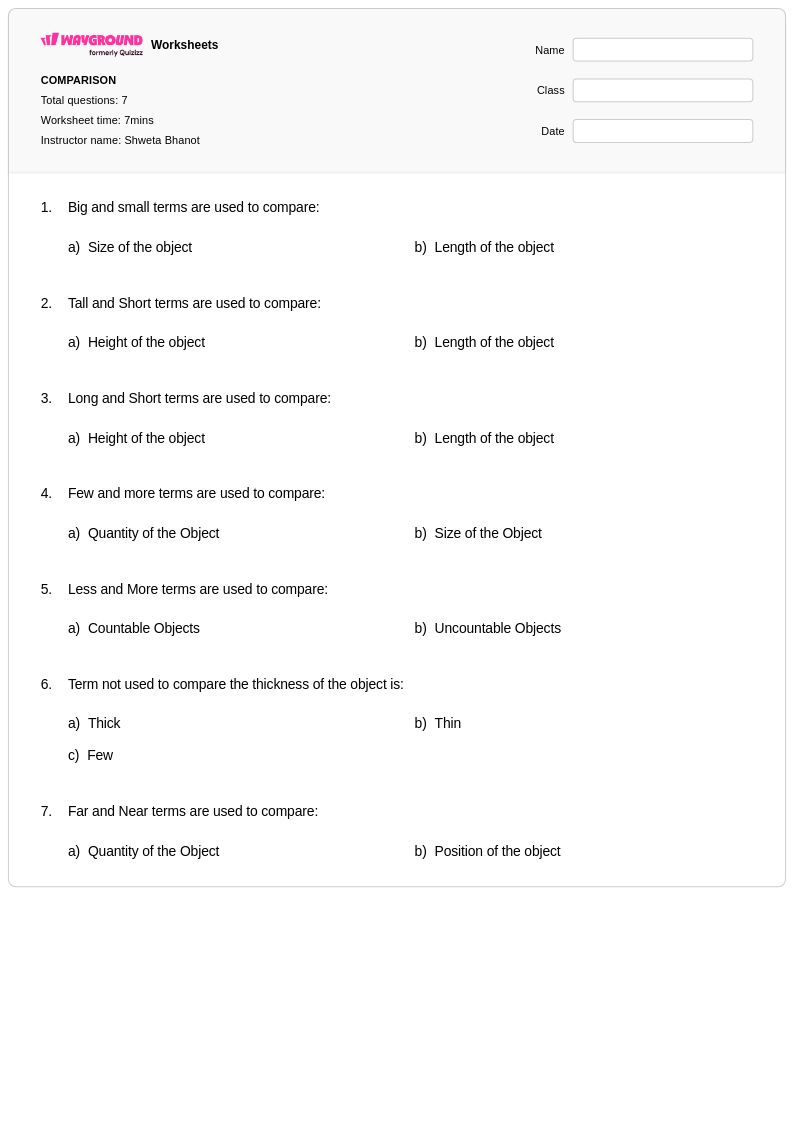
7 Q
1st - 2nd
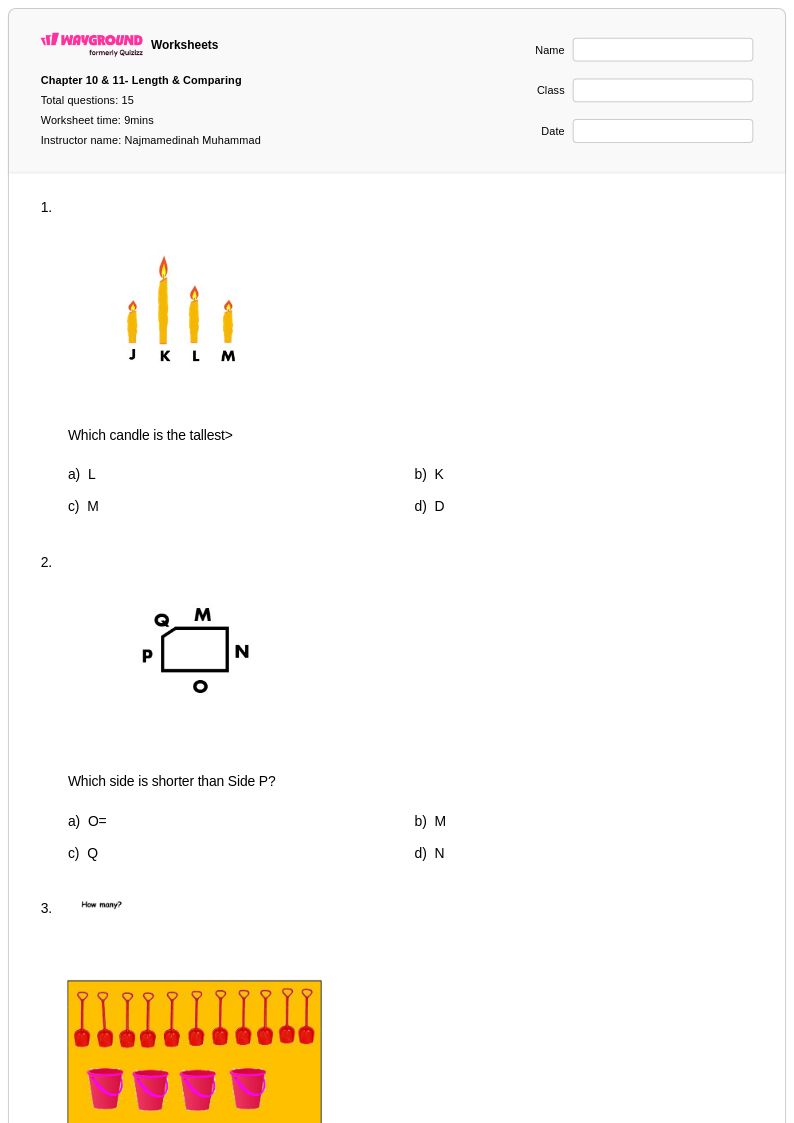
15 Q
1st
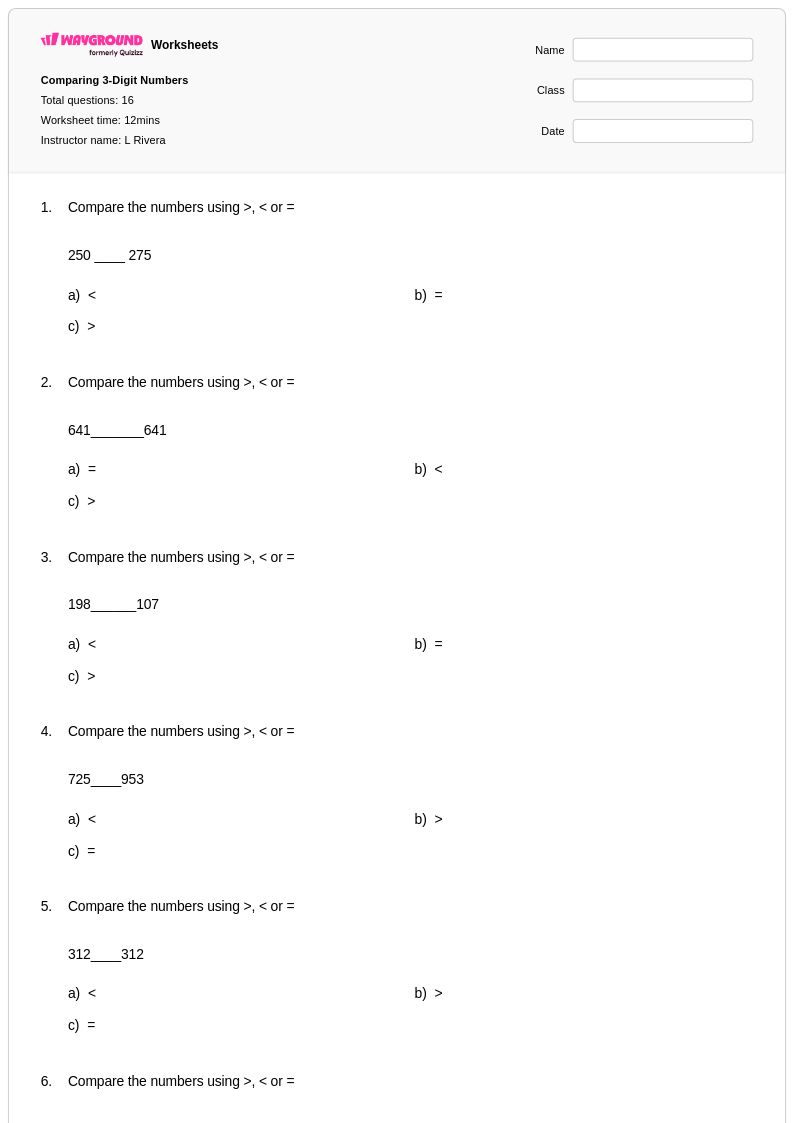
16 Q
1st - 2nd
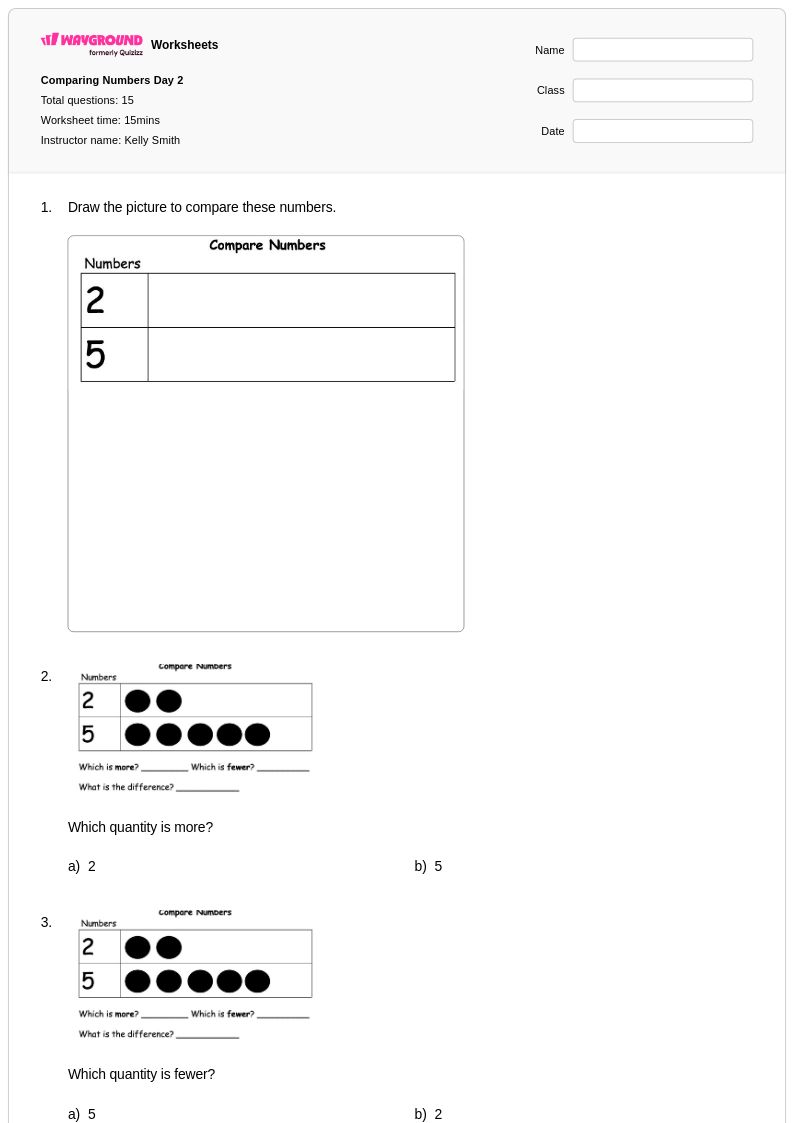
15 Q
1st
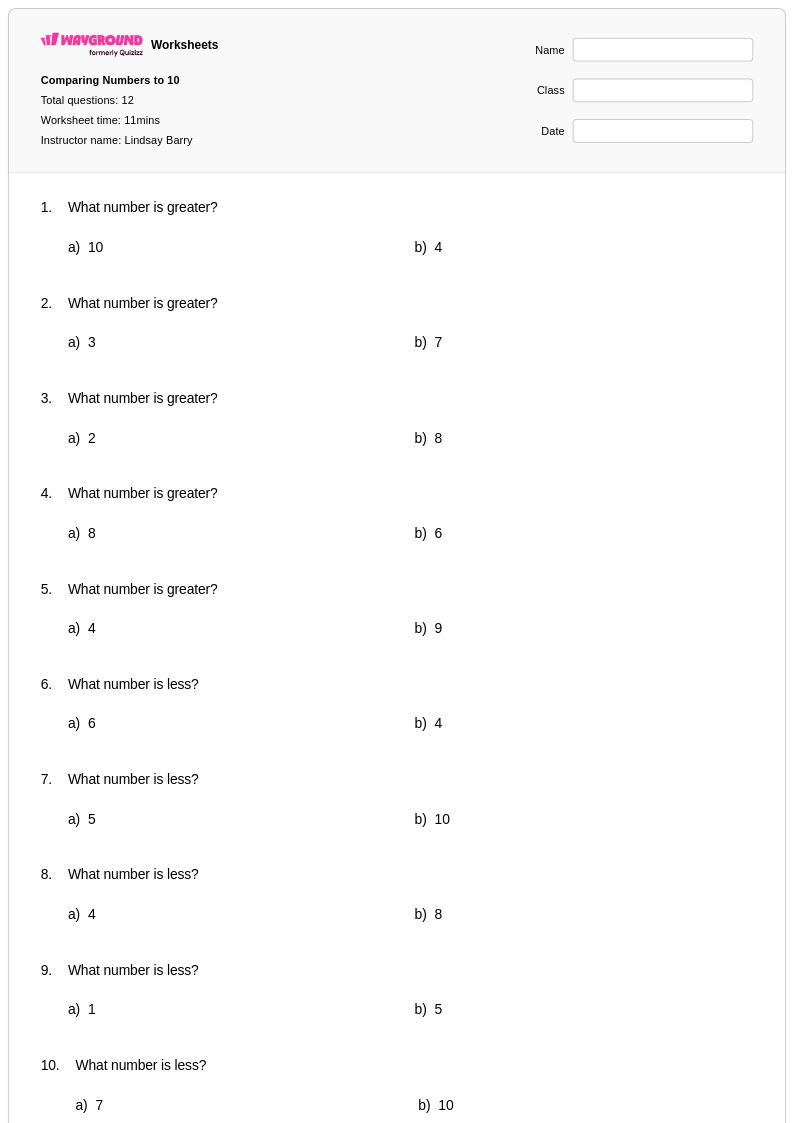
12 Q
1st
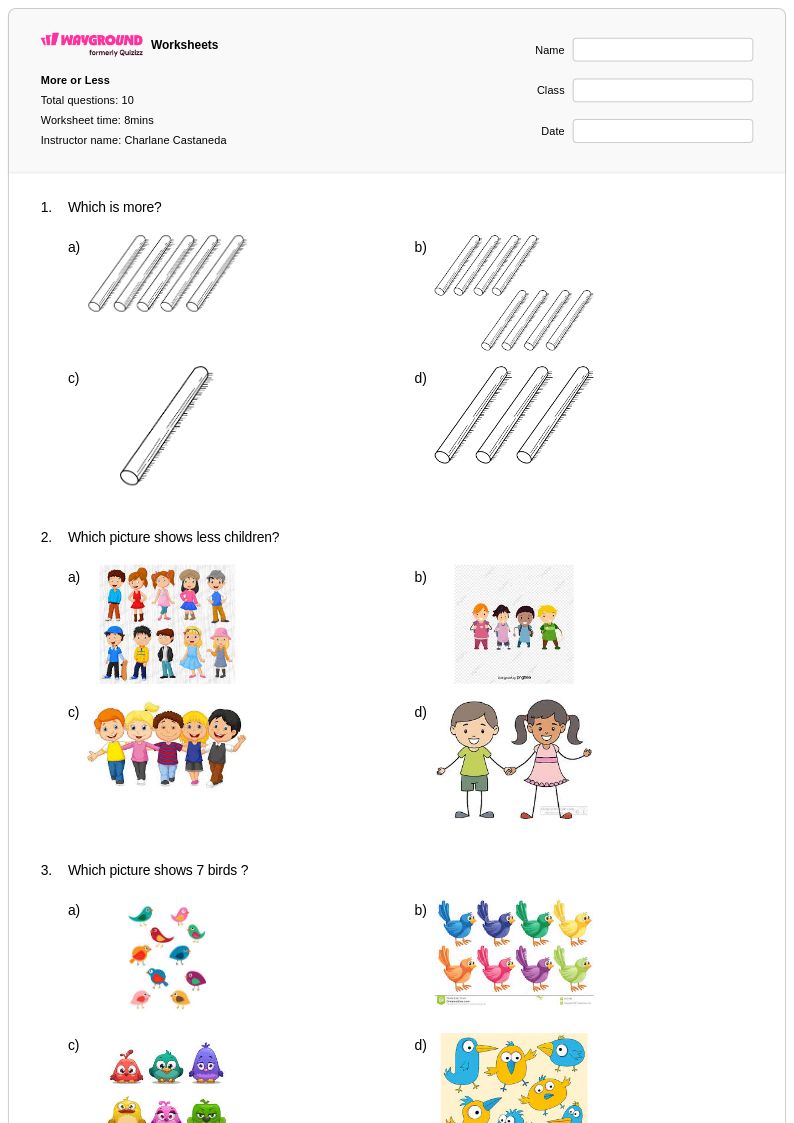
10 Q
KG - 2nd
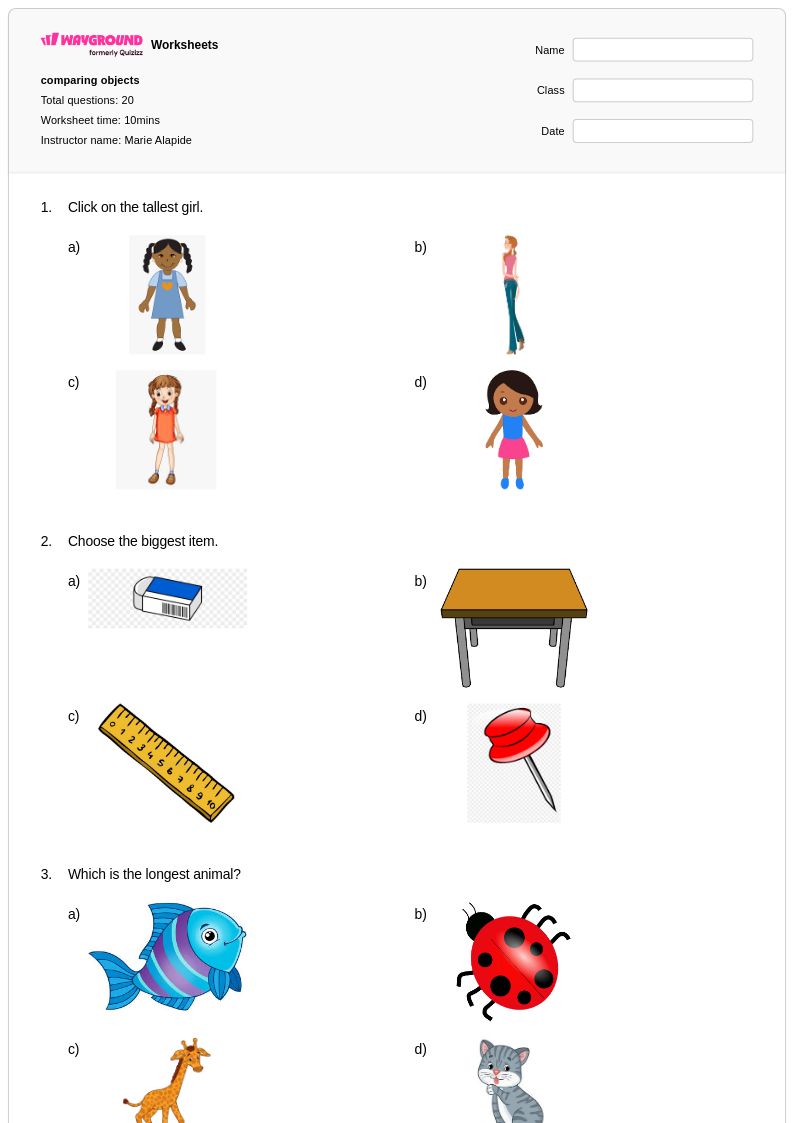
20 Q
1st
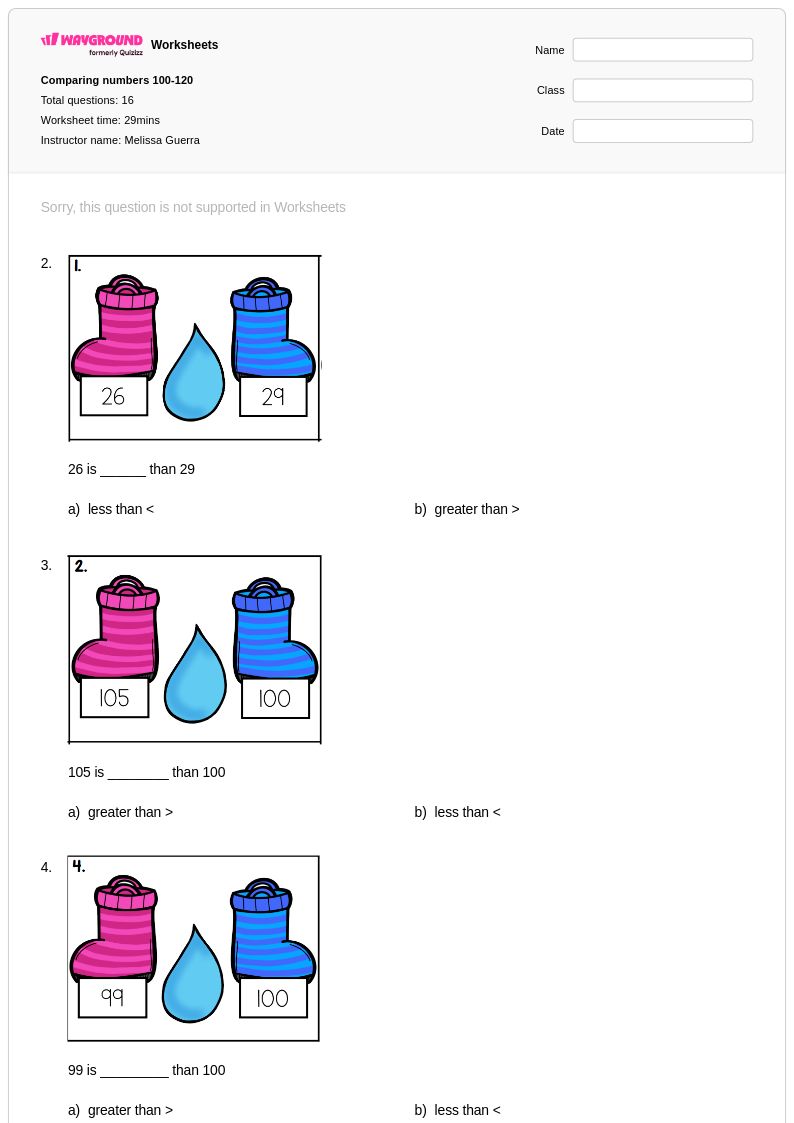
17 Q
1st - Uni
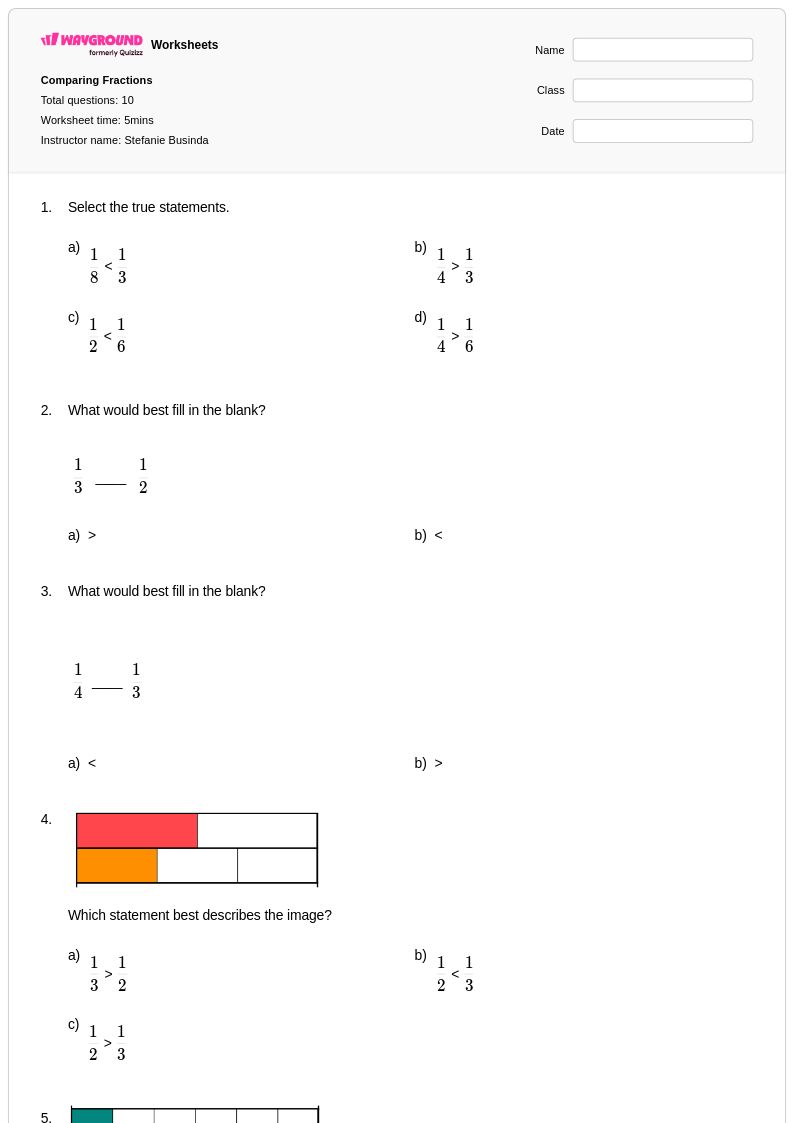
10 Q
1st - 3rd
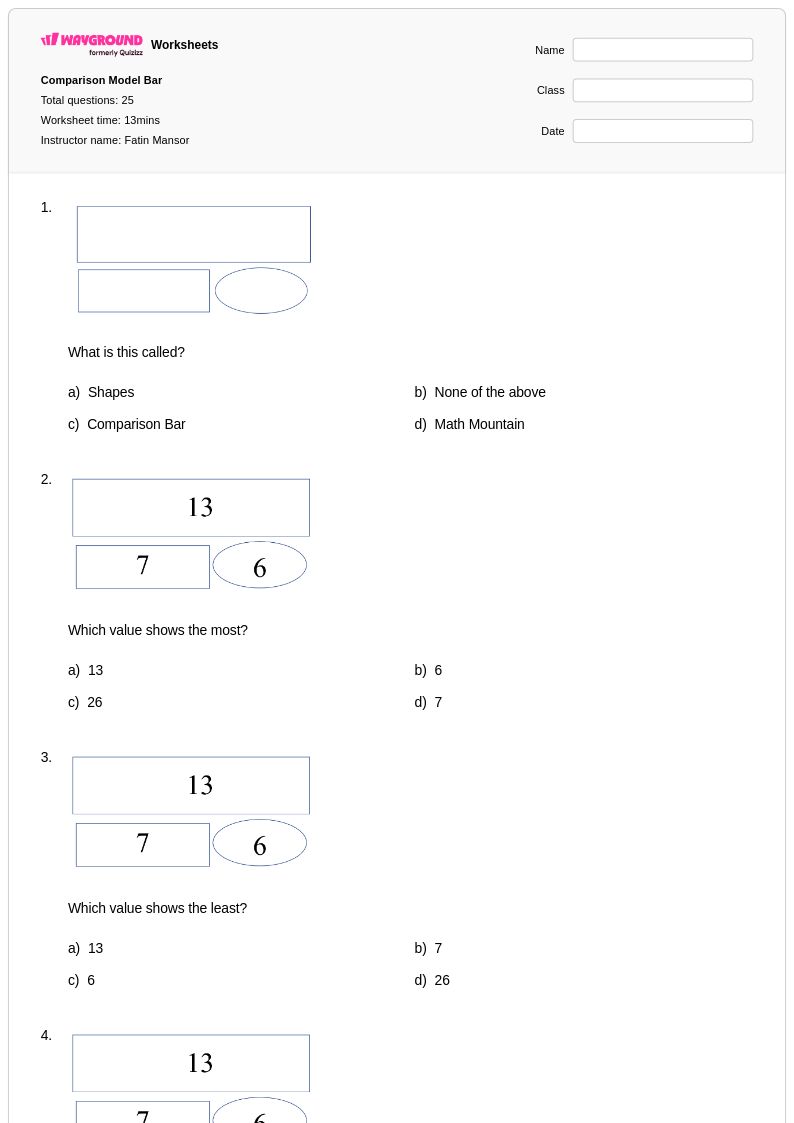
25 Q
1st - 2nd
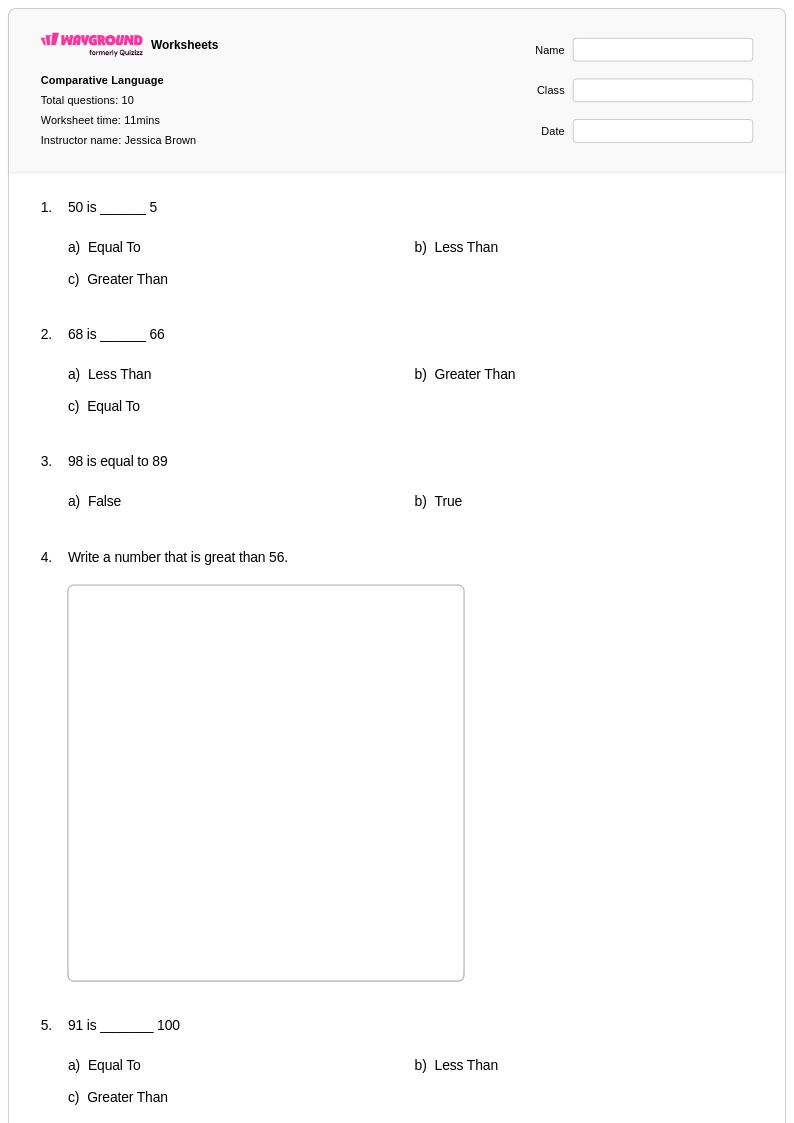
10 Q
1st
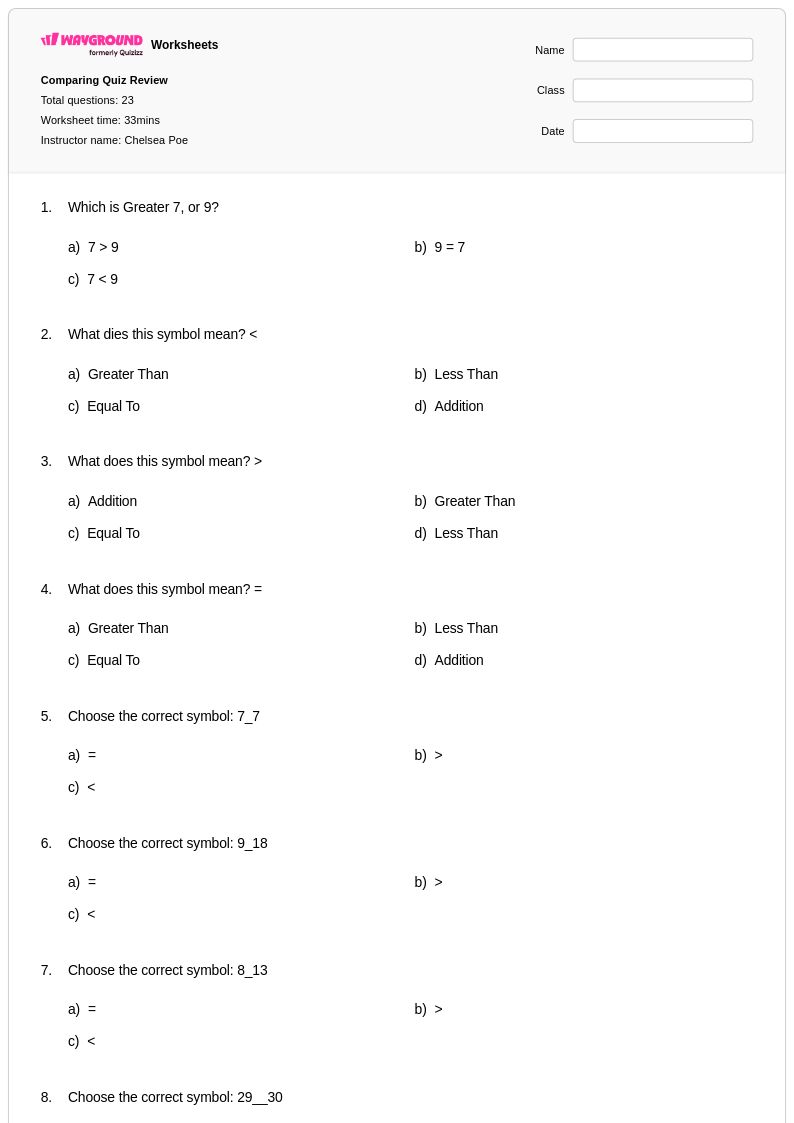
23 Q
1st
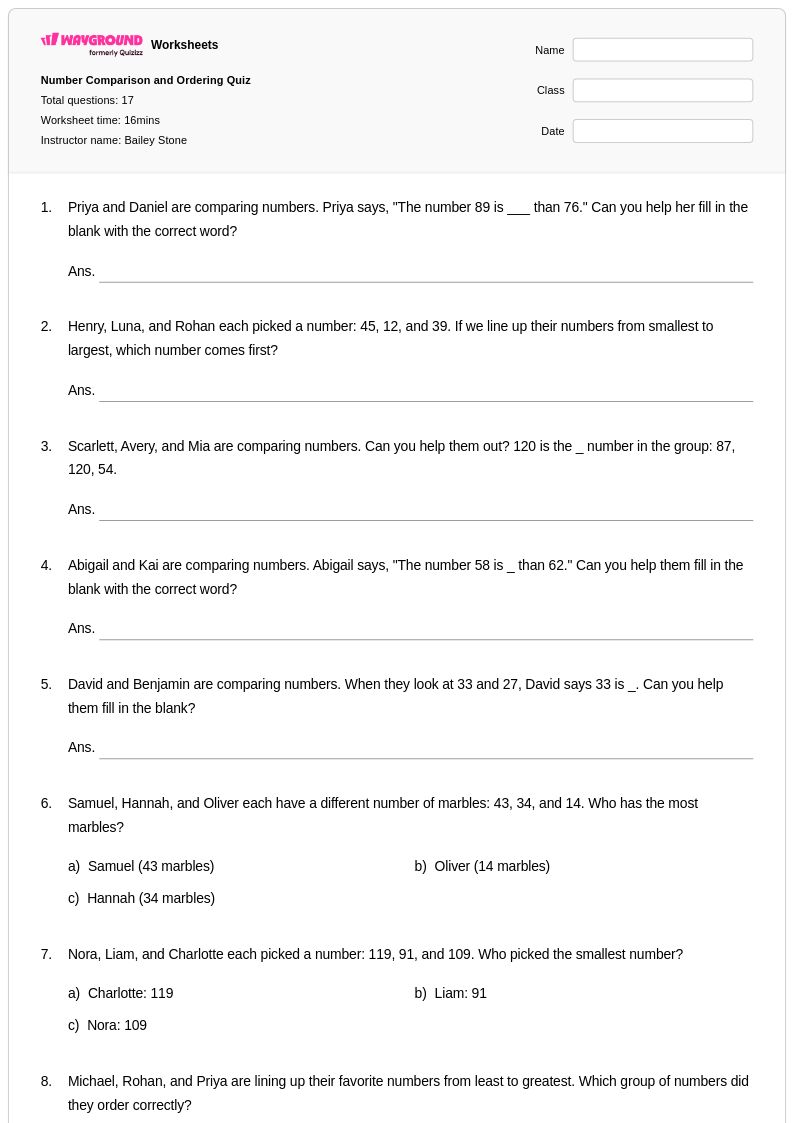
17 Q
1st
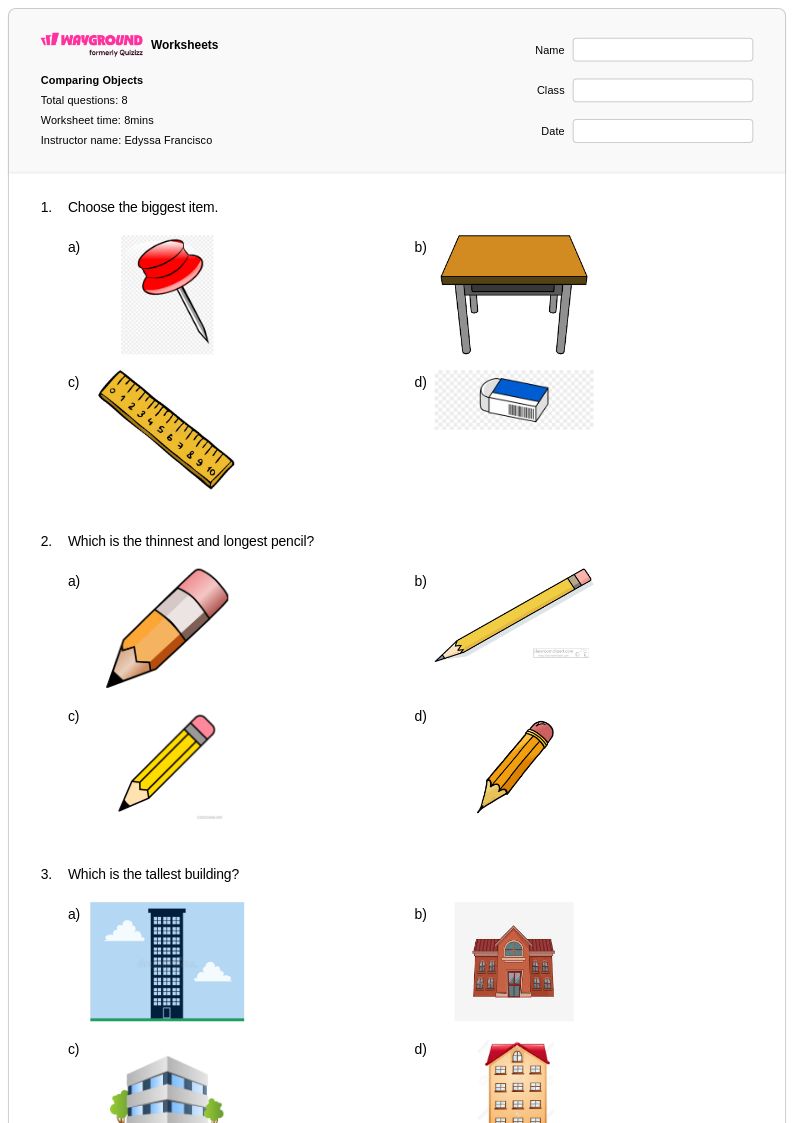
8 Q
KG - 1st
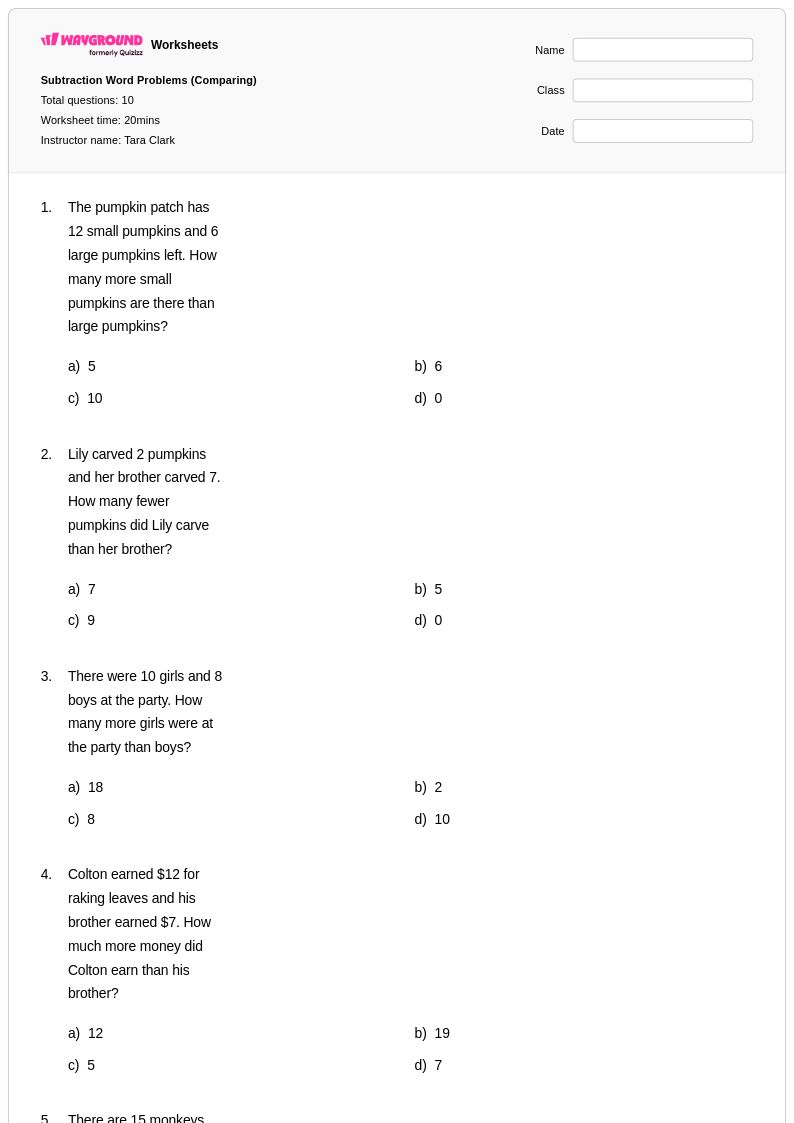
10 Q
1st
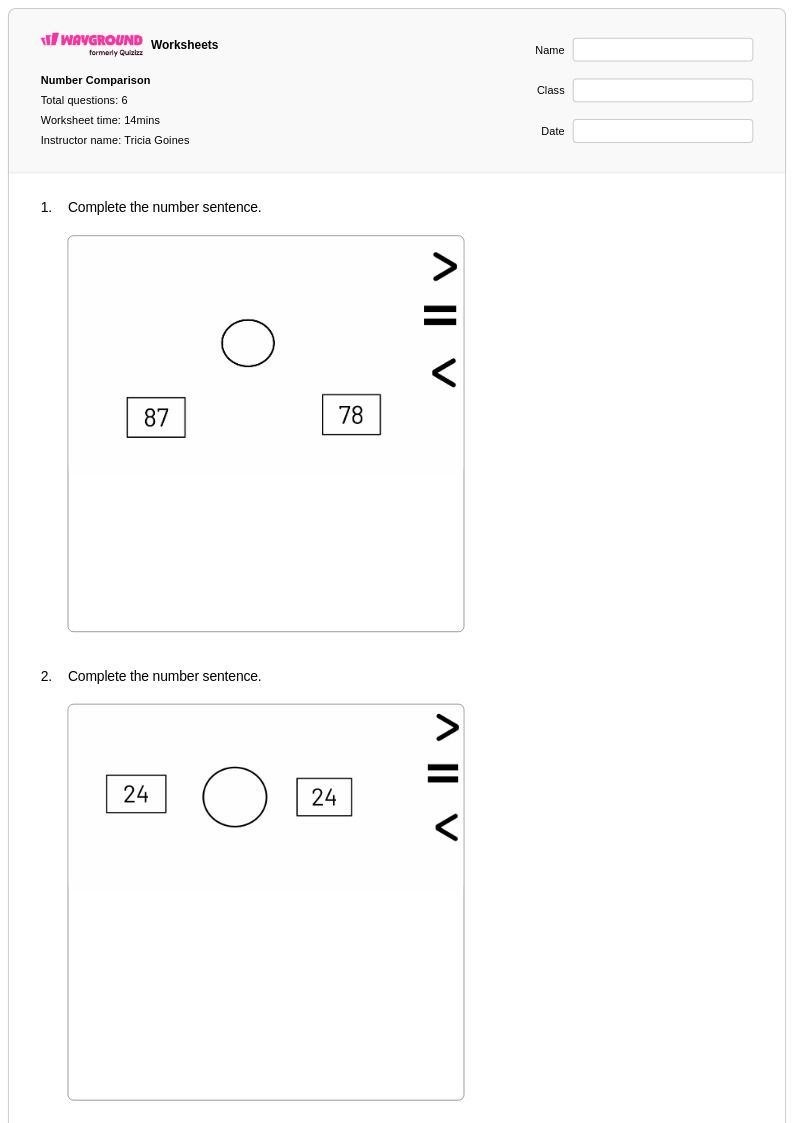
6 Q
1st
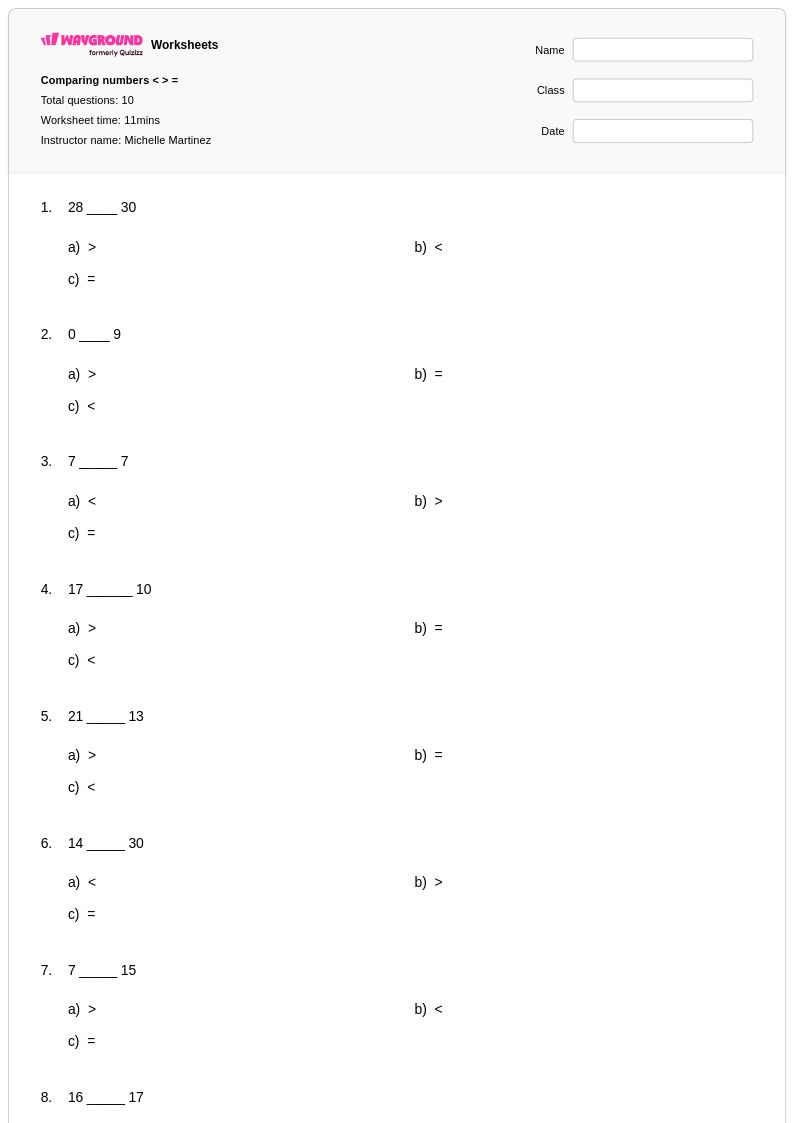
10 Q
1st
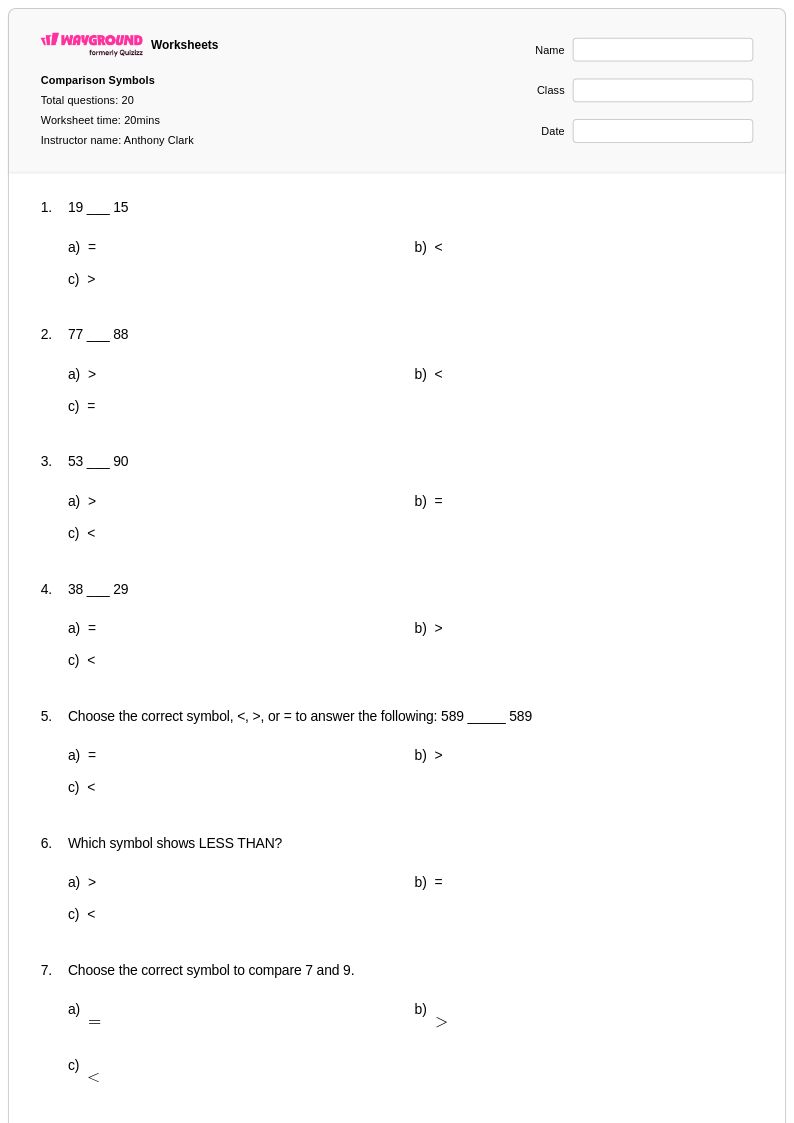
20 Q
1st - Uni
Explore Other Subject Worksheets for year 1
Explore printable Quantity Comparison worksheets for Year 1
Quantity comparison worksheets for Year 1 students available through Wayground (formerly Quizizz) provide essential foundational practice in developing early mathematical reasoning skills. These carefully designed printable resources help young learners master the fundamental concept of comparing quantities using visual representations, manipulatives, and numerical symbols to determine which groups have more, fewer, or the same number of objects. Each worksheet includes engaging practice problems that progressively build students' ability to analyze and compare sets of items, whether through direct counting, one-to-one correspondence, or visual estimation strategies. Teachers can access comprehensive answer keys in PDF format, making assessment and feedback efficient while ensuring students receive immediate reinforcement of correct quantity comparison techniques that form the cornerstone of number sense development.
Wayground (formerly Quizizz) empowers educators with millions of teacher-created quantity comparison resources specifically aligned with Year 1 mathematics standards and developmental expectations. The platform's robust search and filtering capabilities allow teachers to quickly locate worksheets that match their specific instructional needs, whether targeting basic quantity recognition or more advanced comparative analysis skills. These versatile materials are available in both printable PDF formats for traditional classroom use and digital formats for interactive learning experiences, with built-in differentiation tools that enable teachers to customize difficulty levels for diverse learners. This comprehensive collection supports systematic lesson planning, targeted remediation for struggling students, enrichment opportunities for advanced learners, and consistent skill practice that reinforces quantity comparison concepts across multiple learning contexts and teaching approaches.
FAQs
What's the best way to teach the greater than (>) and less than (<) symbols in first grade?
What types of problems help first graders practice quantity comparison?
What mistakes do first graders make when comparing numbers?
How can I use these first-grade quantity comparison worksheets?
How does this topic fit into the first-grade math curriculum?