
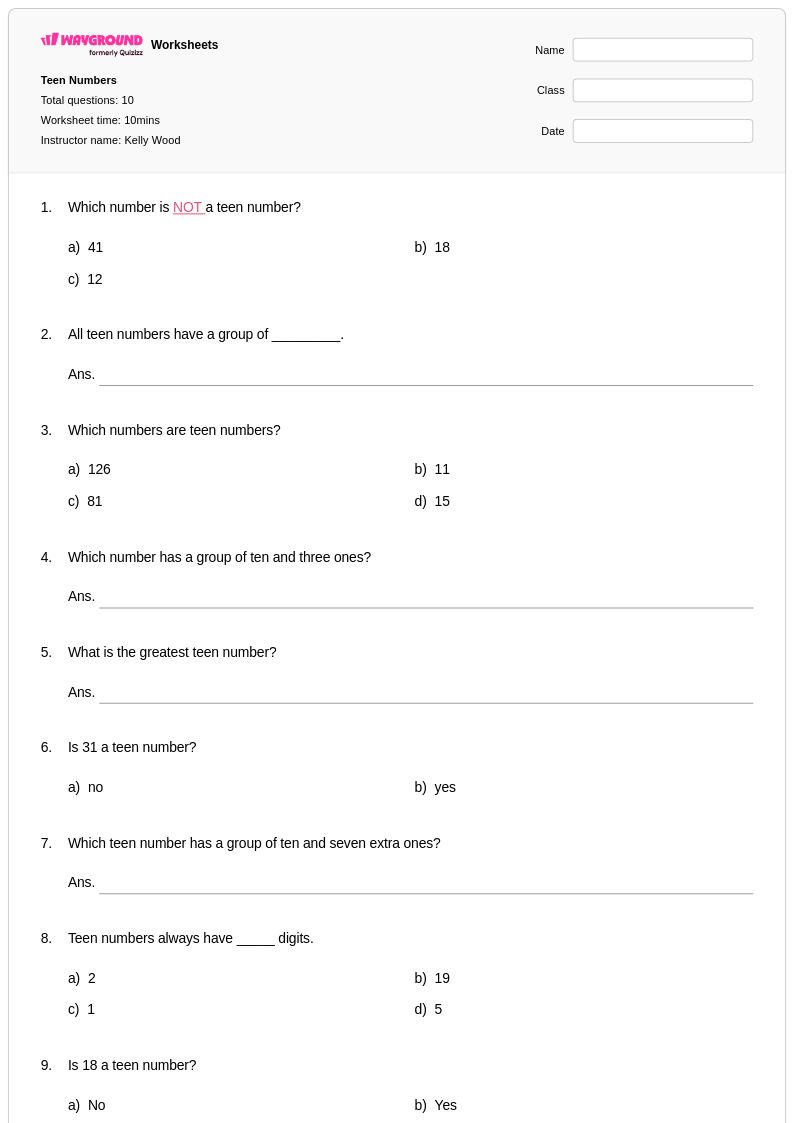
10 Q
KG - 1st
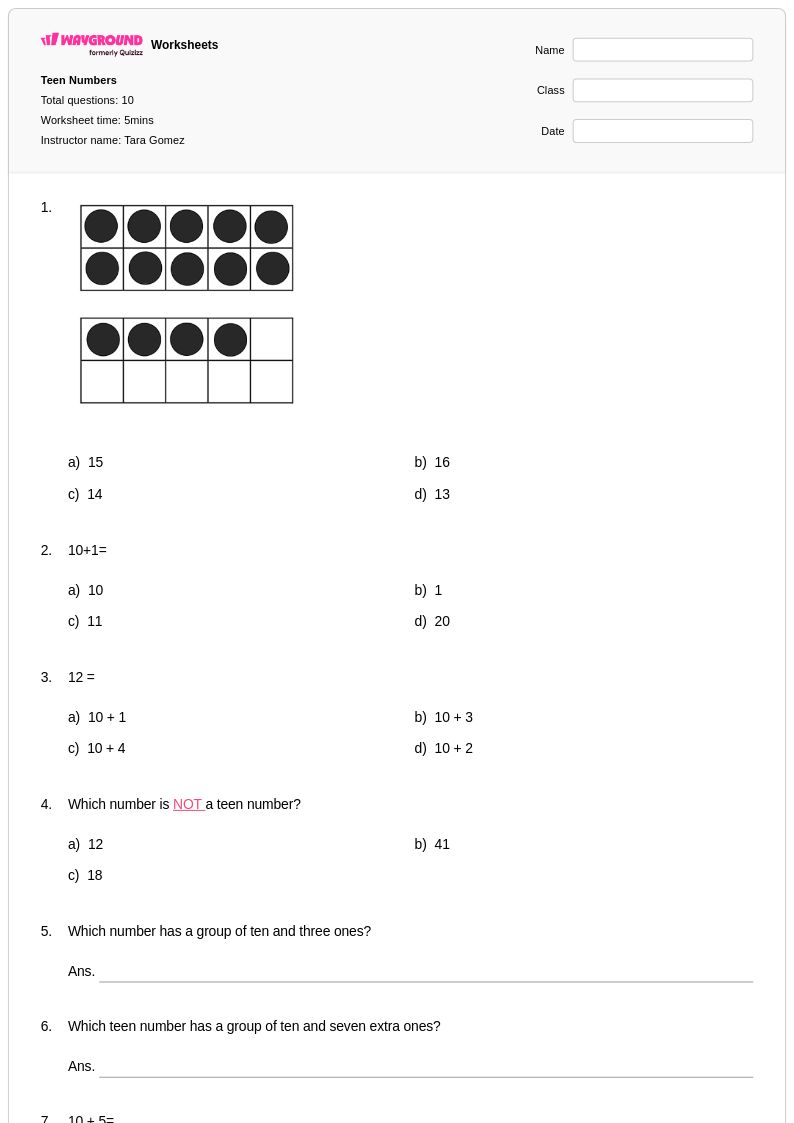
10 Q
KG - 1st
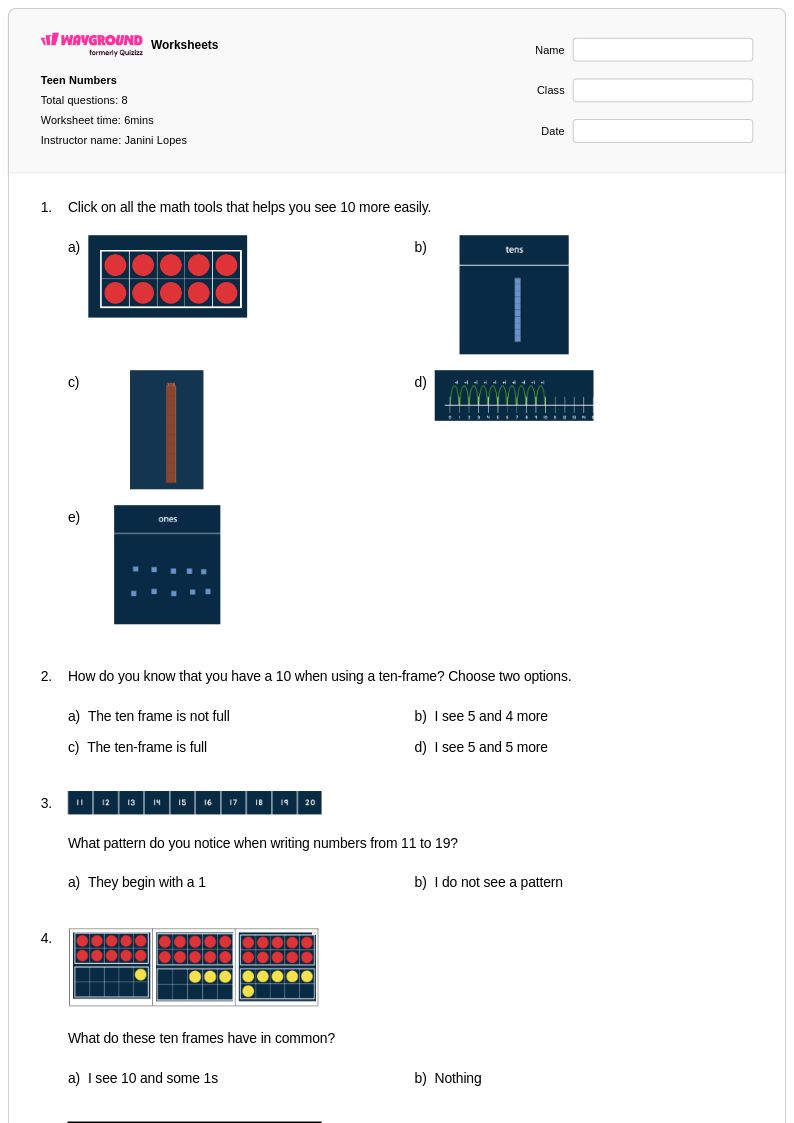
8 Q
KG - 1st
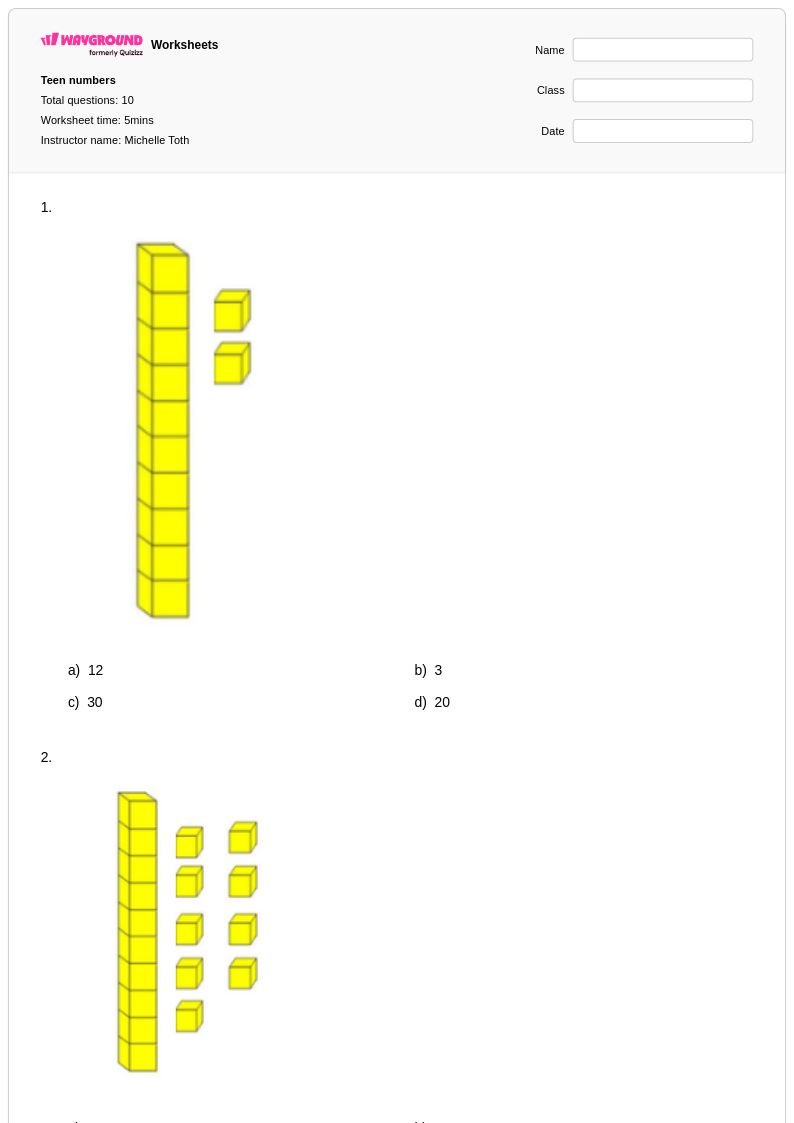
10 Q
1st
10 Q
1st
12 Q
KG - 1st
10 Q
KG - 1st
12 Q
KG - 1st
9 Q
KG - 1st
27 Q
1st
10 Q
1st
8 Q
KG - 3rd
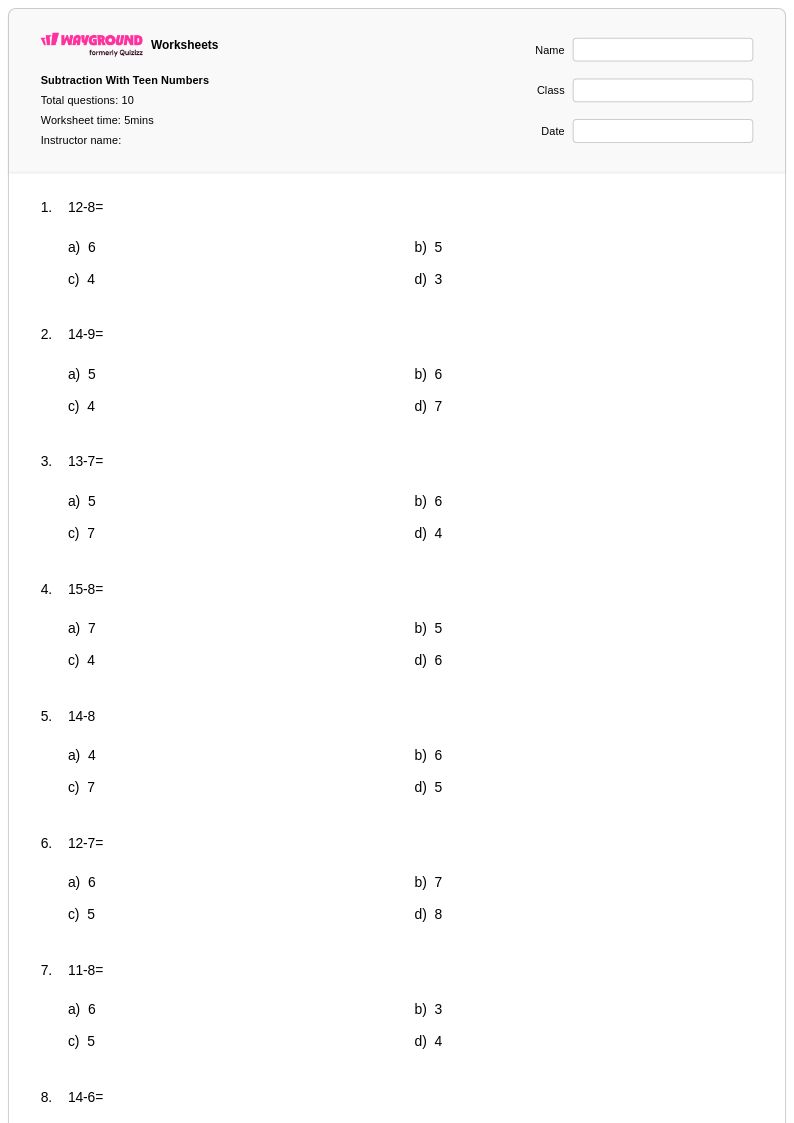
10 Q
1st - 2nd
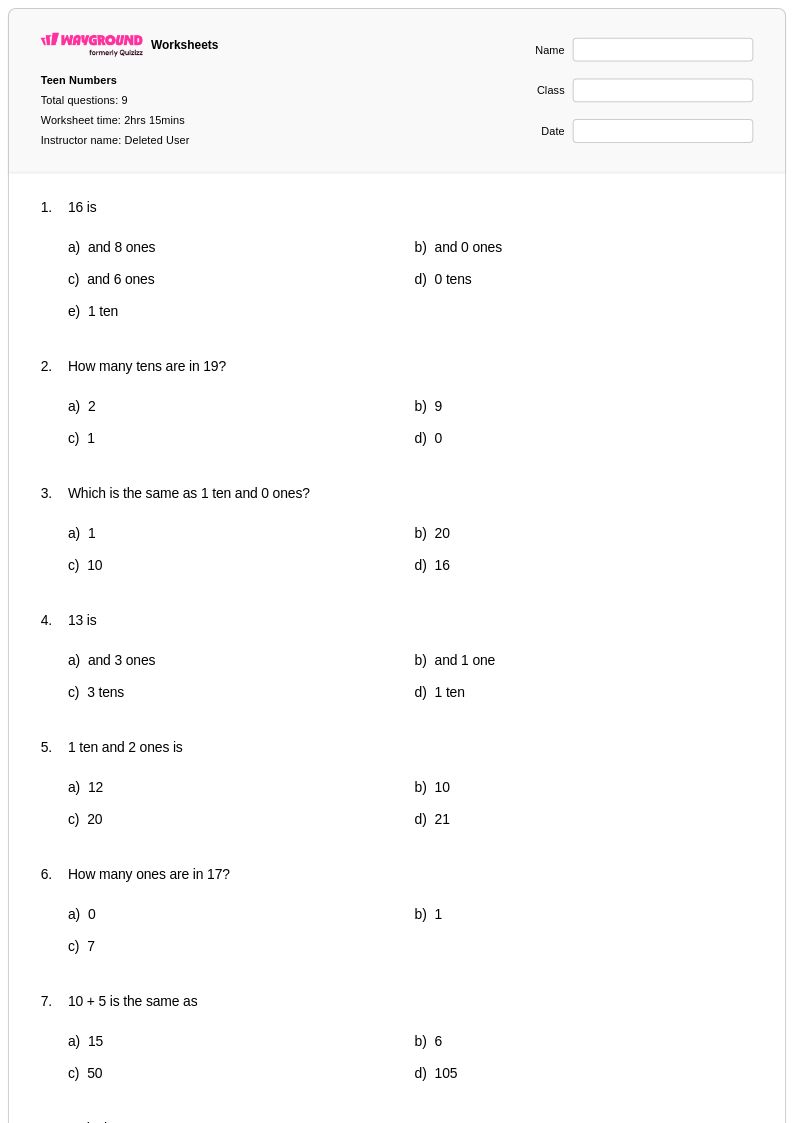
9 Q
1st
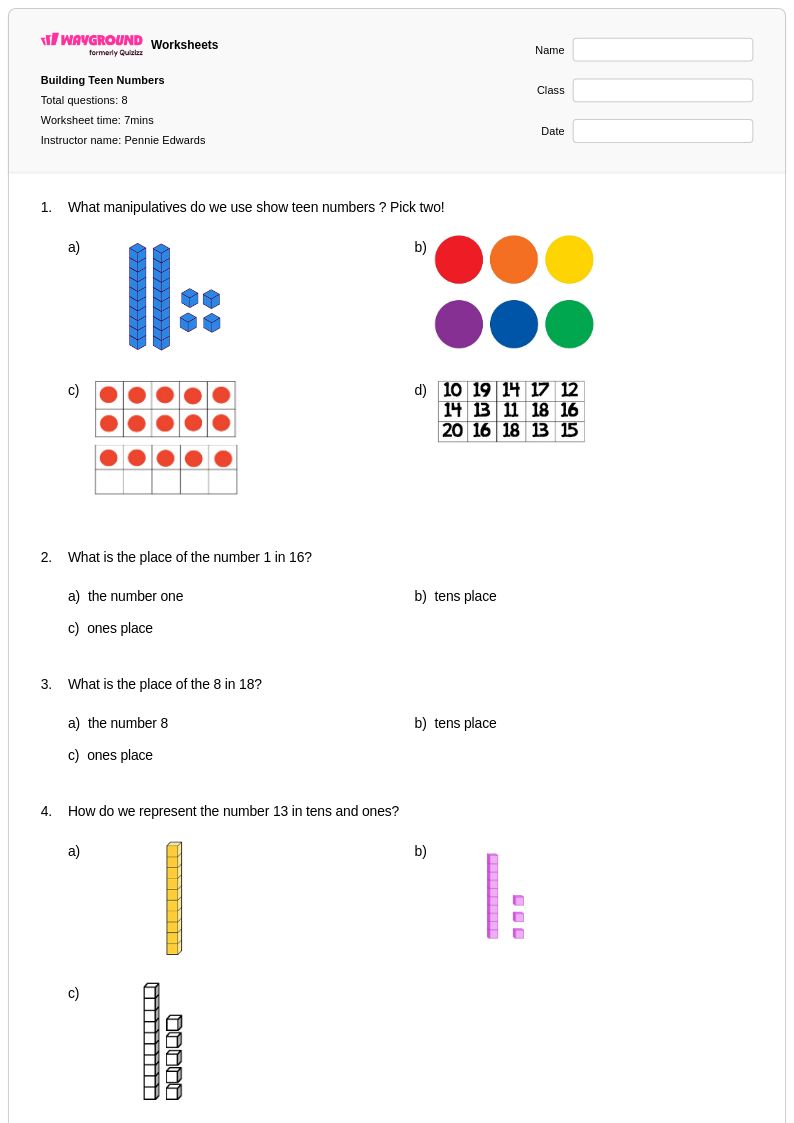
8 Q
1st
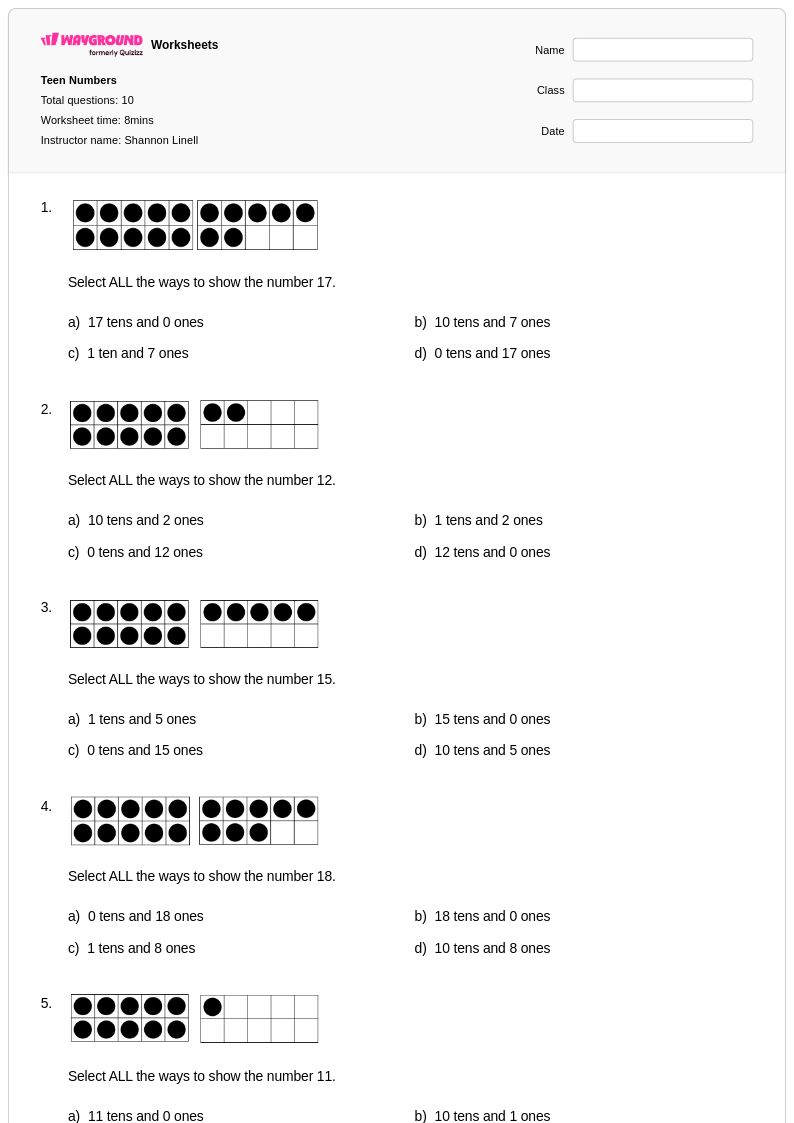
10 Q
KG - 2nd
10 Q
KG - 1st
10 Q
KG - 1st
20 Q
KG - 1st
28 Q
1st
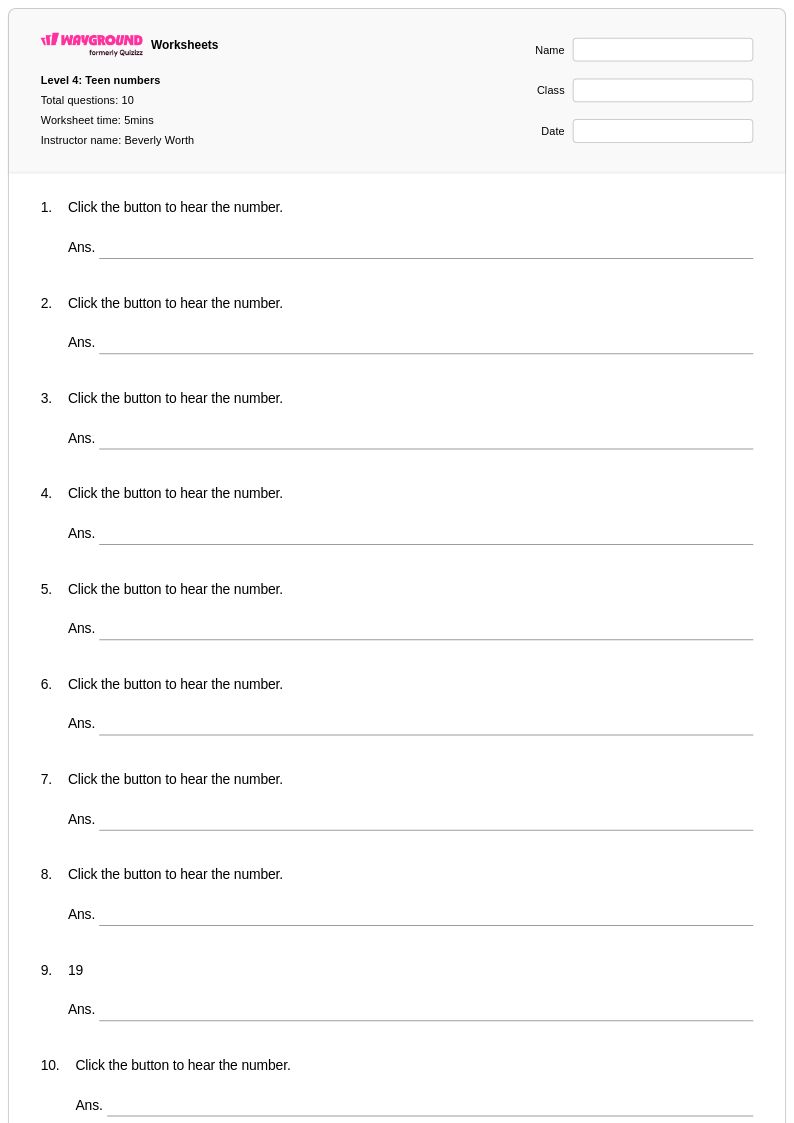
10 Q
KG - 1st
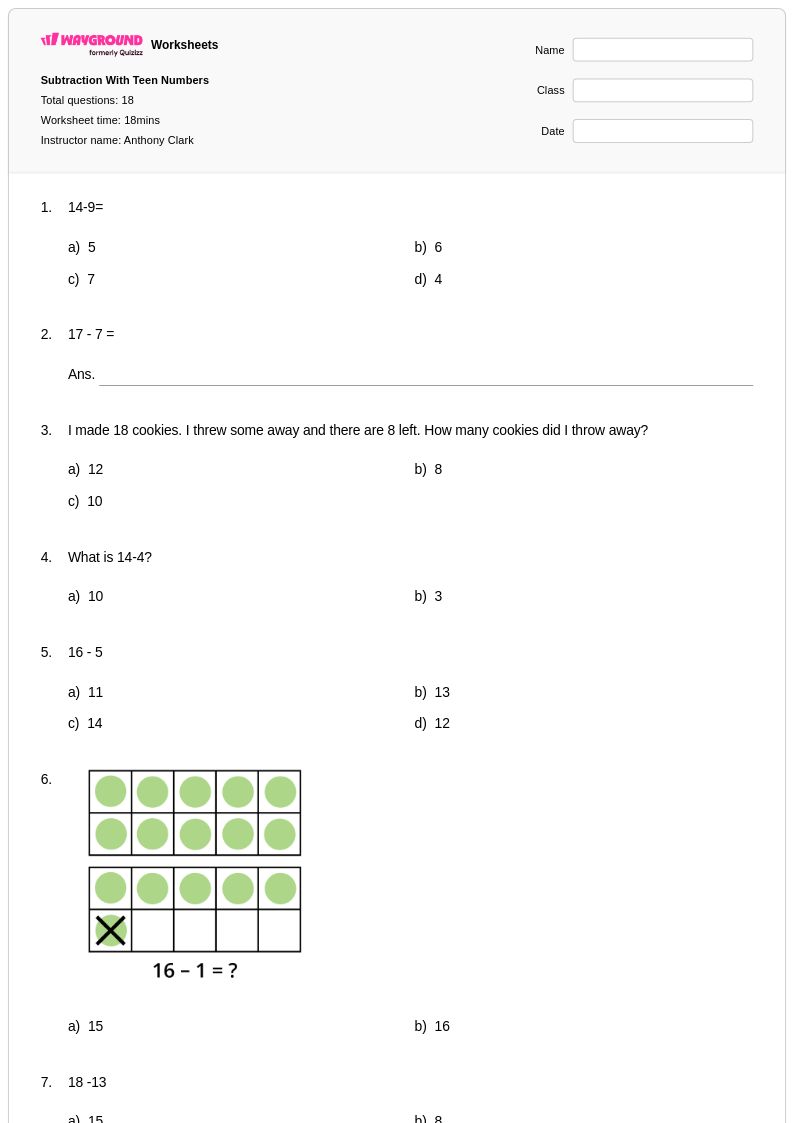
18 Q
1st - Uni
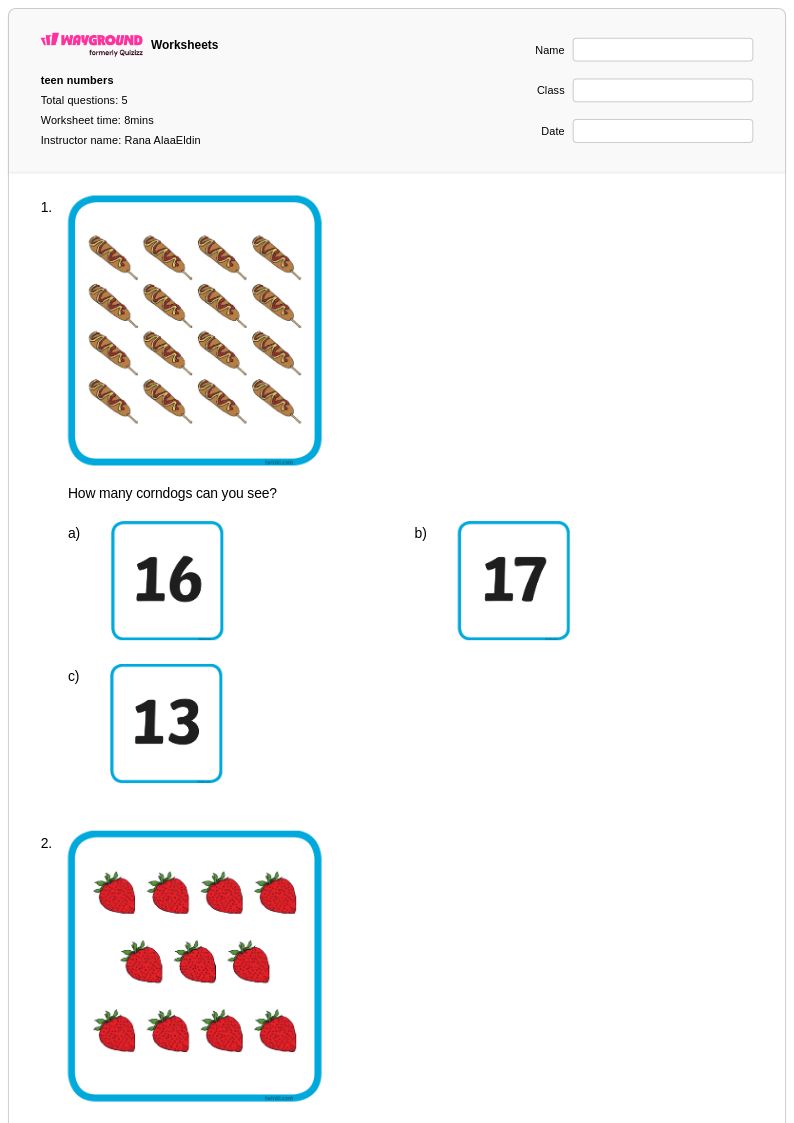
5 Q
1st
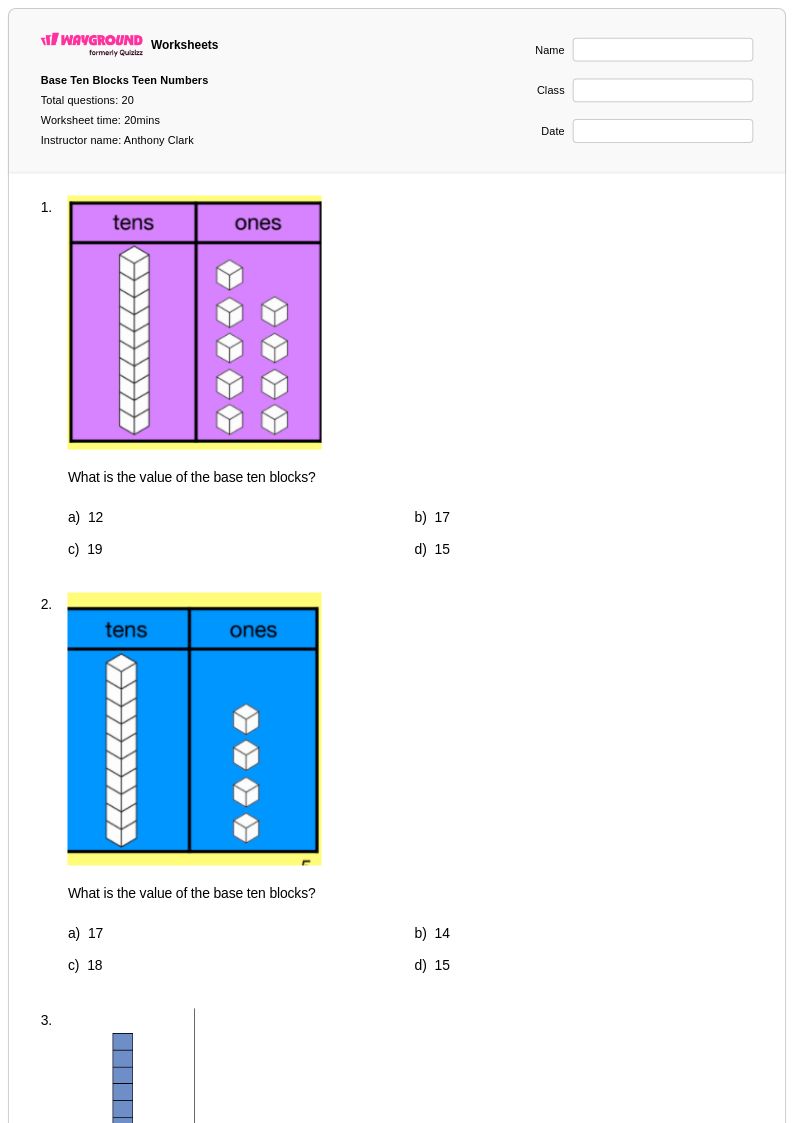
20 Q
1st - Uni
Explore Teen Numbers Worksheets by Grades
Explore Other Subject Worksheets for year 1
Explore printable Teen Numbers worksheets for Year 1
Teen numbers worksheets for Year 1 students available through Wayground (formerly Quizizz) provide essential foundational practice for understanding numbers 11 through 19, a critical milestone in early mathematical development. These comprehensive worksheets strengthen students' ability to recognize, write, and manipulate teen numbers while building crucial place value concepts that distinguish between the tens and ones places. The collection includes engaging practice problems that help first graders master teen number formation, sequencing, and basic operations, with each worksheet featuring detailed answer keys to support accurate assessment and immediate feedback. These free printables offer systematic skill-building exercises that reinforce number recognition patterns and help students develop fluency with teen numbers through repetitive practice and visual representations.
Wayground (formerly Quizizz) empowers teachers with millions of educator-created teen number resources that streamline lesson planning and provide targeted skill practice for Year 1 mathematics instruction. The platform's robust search and filtering capabilities allow teachers to quickly locate worksheets aligned with specific standards and learning objectives, while built-in differentiation tools enable customization for diverse learner needs within the classroom. Teachers can access these materials in both printable pdf format for traditional classroom use and digital formats for interactive learning experiences, making them ideal for remediation sessions with struggling students or enrichment activities for advanced learners. The extensive collection supports flexible instructional approaches, allowing educators to select from varying difficulty levels and problem types to match their students' developmental stages and provide consistent practice opportunities that reinforce teen number mastery.