Free Printable Plant Structure Worksheets for Year 3
Explore Year 3 plant structure worksheets and printables that help students learn about roots, stems, leaves, and flowers through engaging practice problems with answer keys available as free PDF downloads.
Explore printable Plant Structure worksheets for Year 3
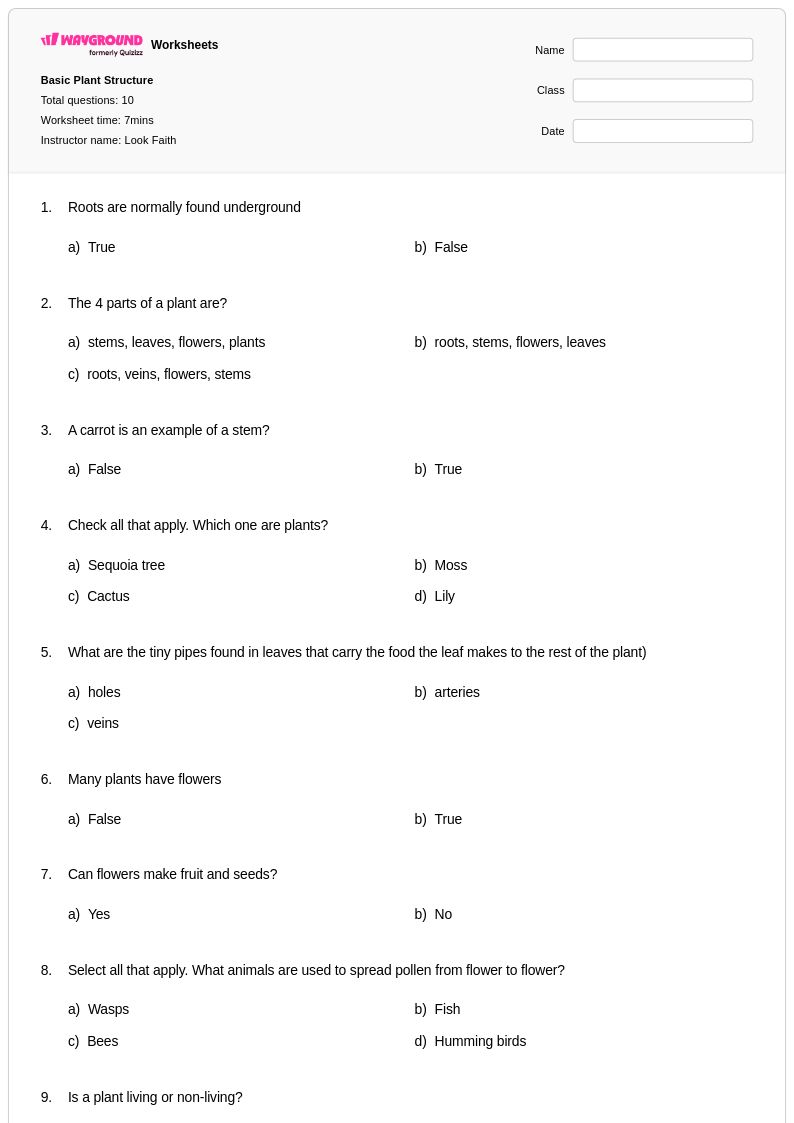
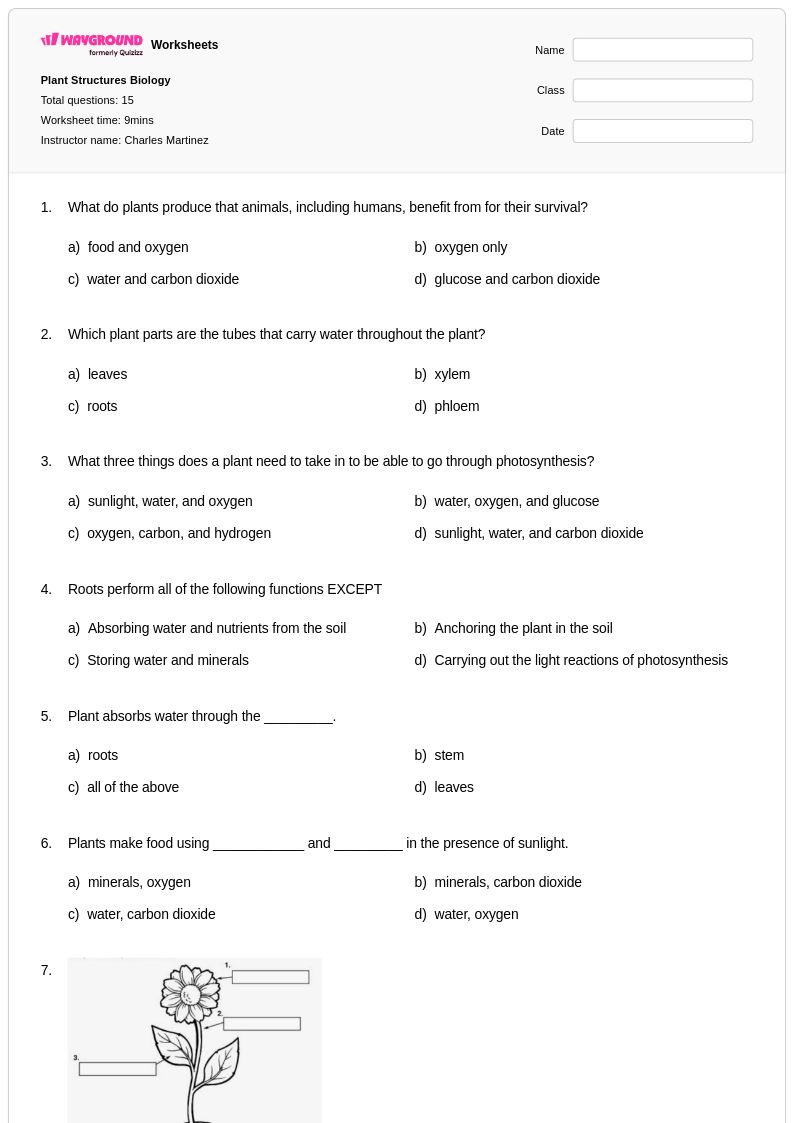
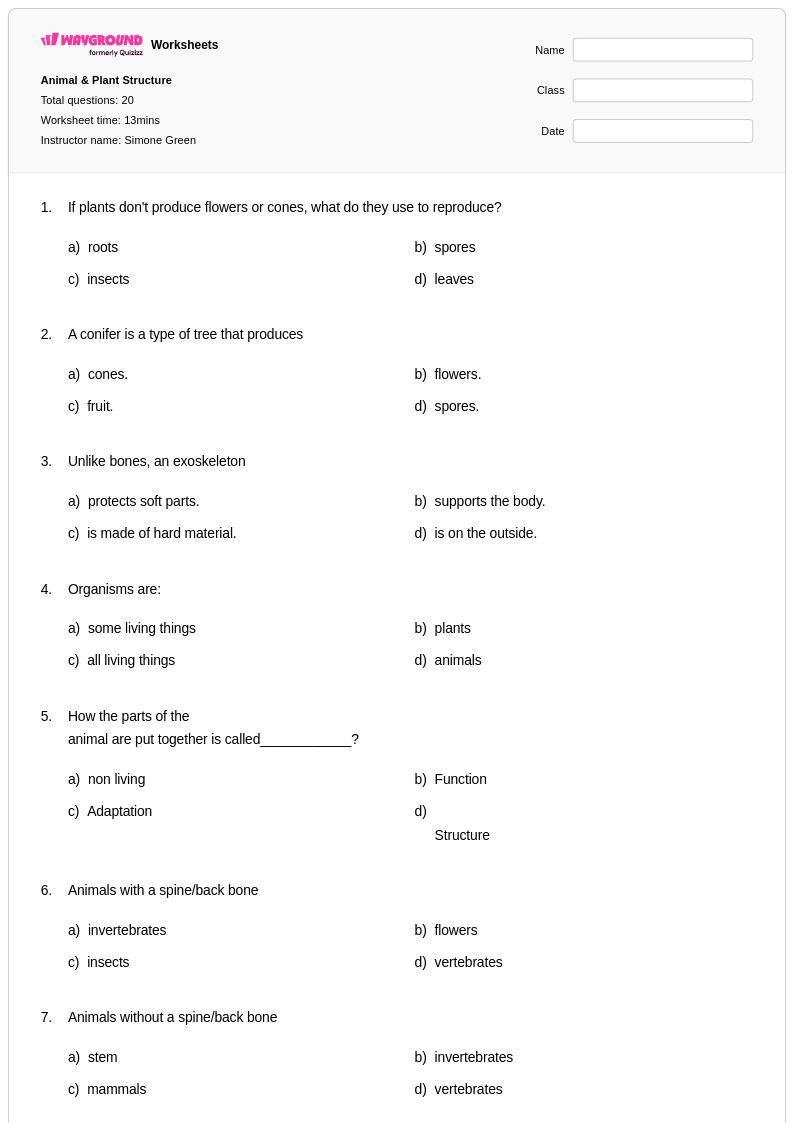
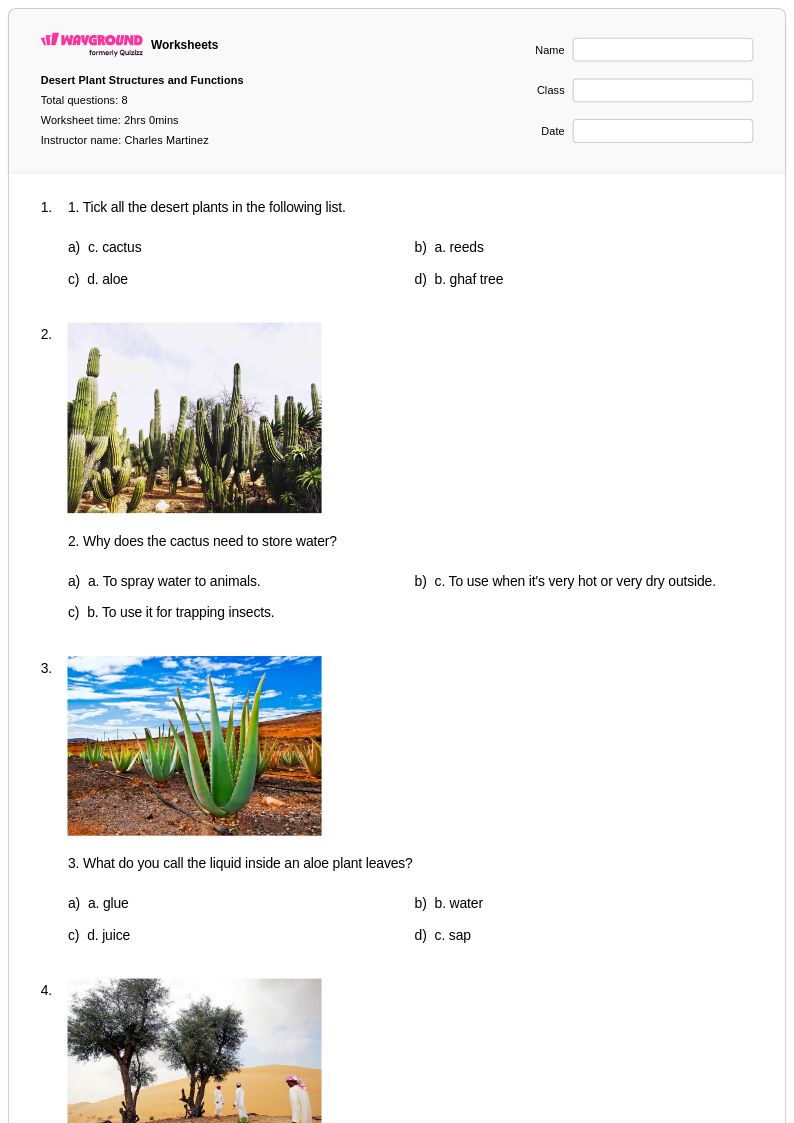
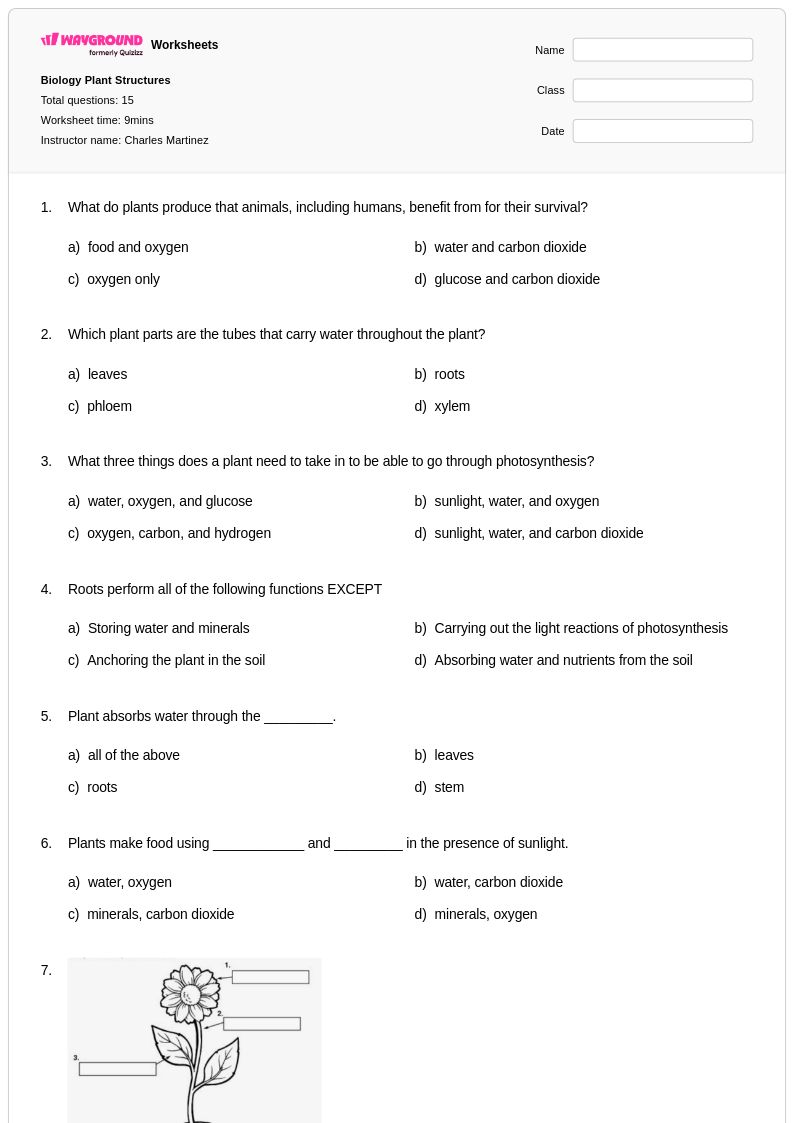
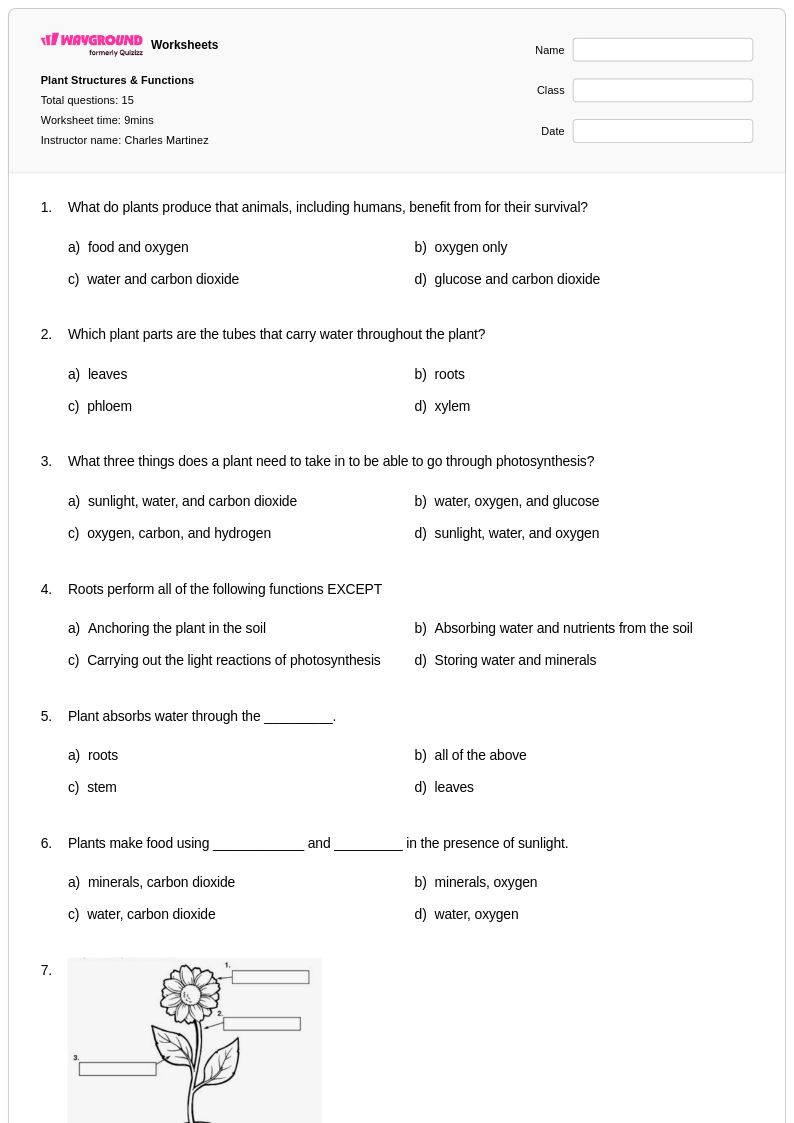
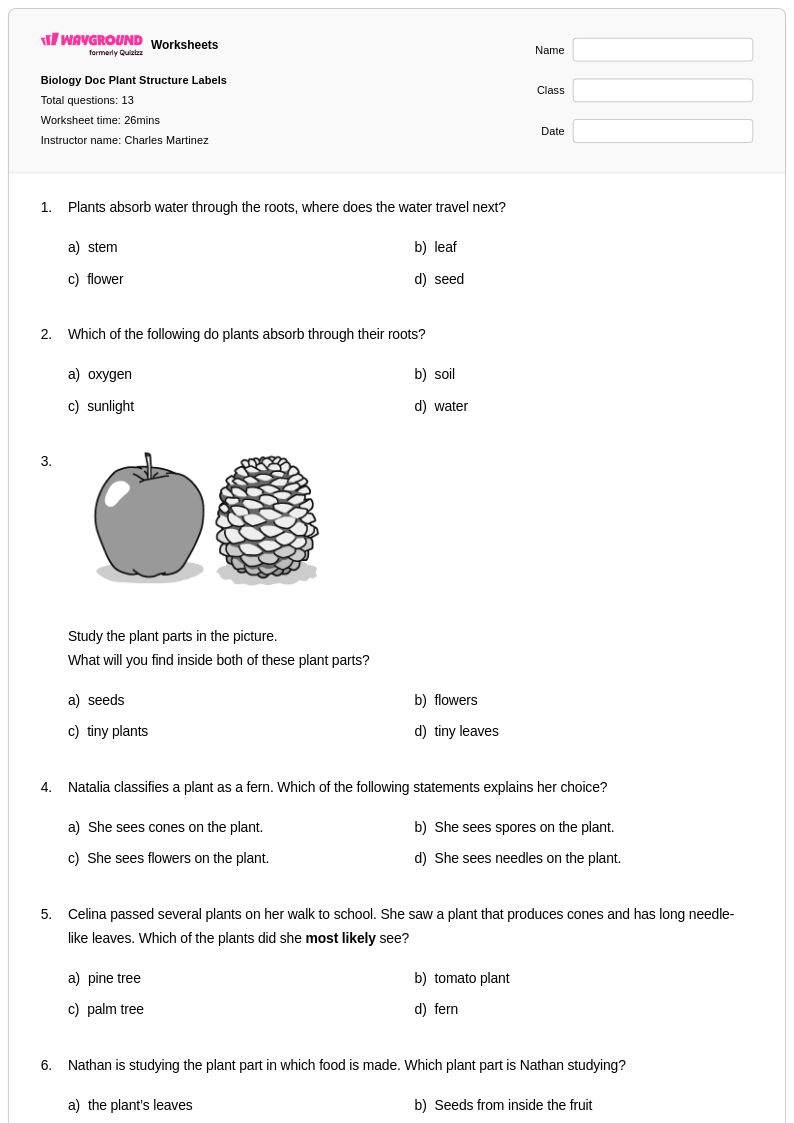
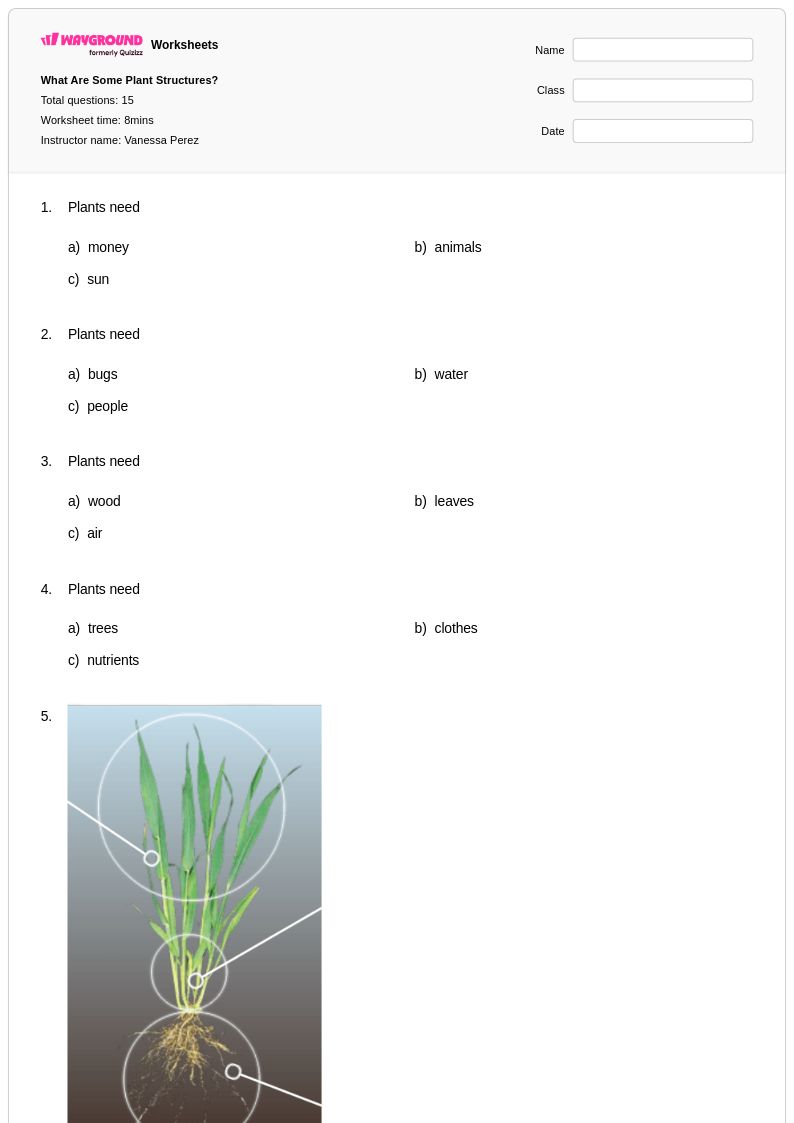
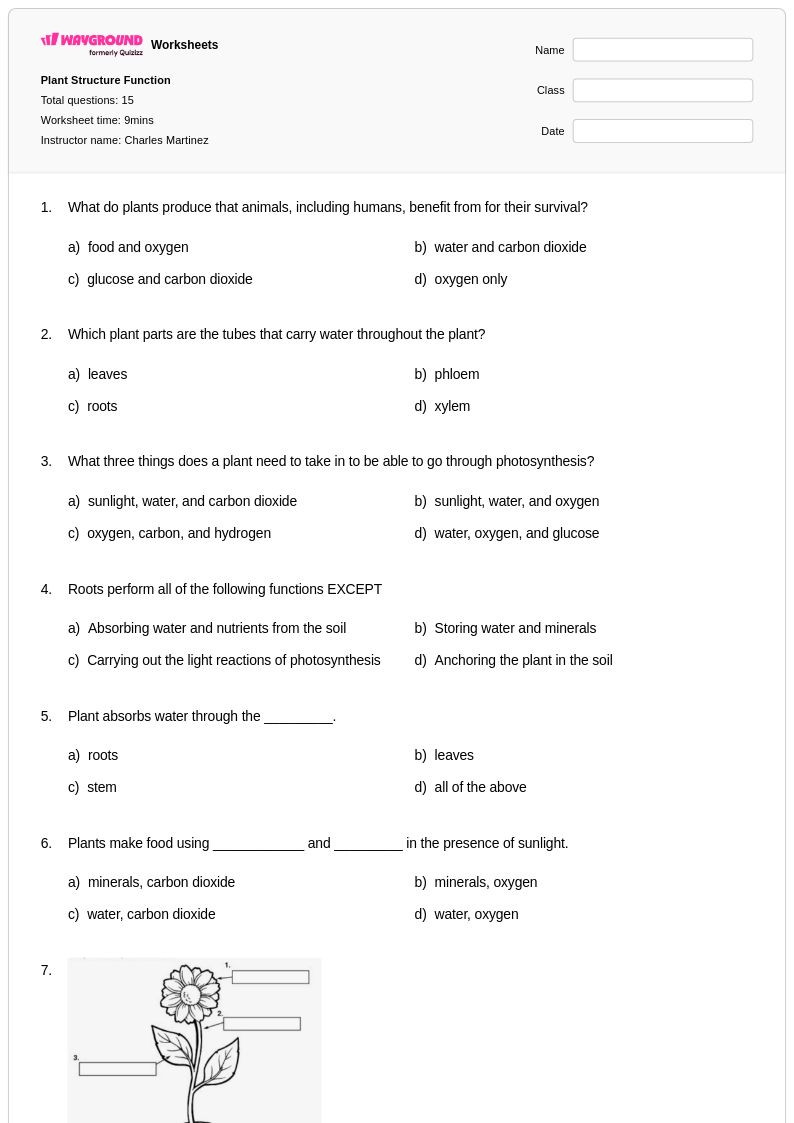
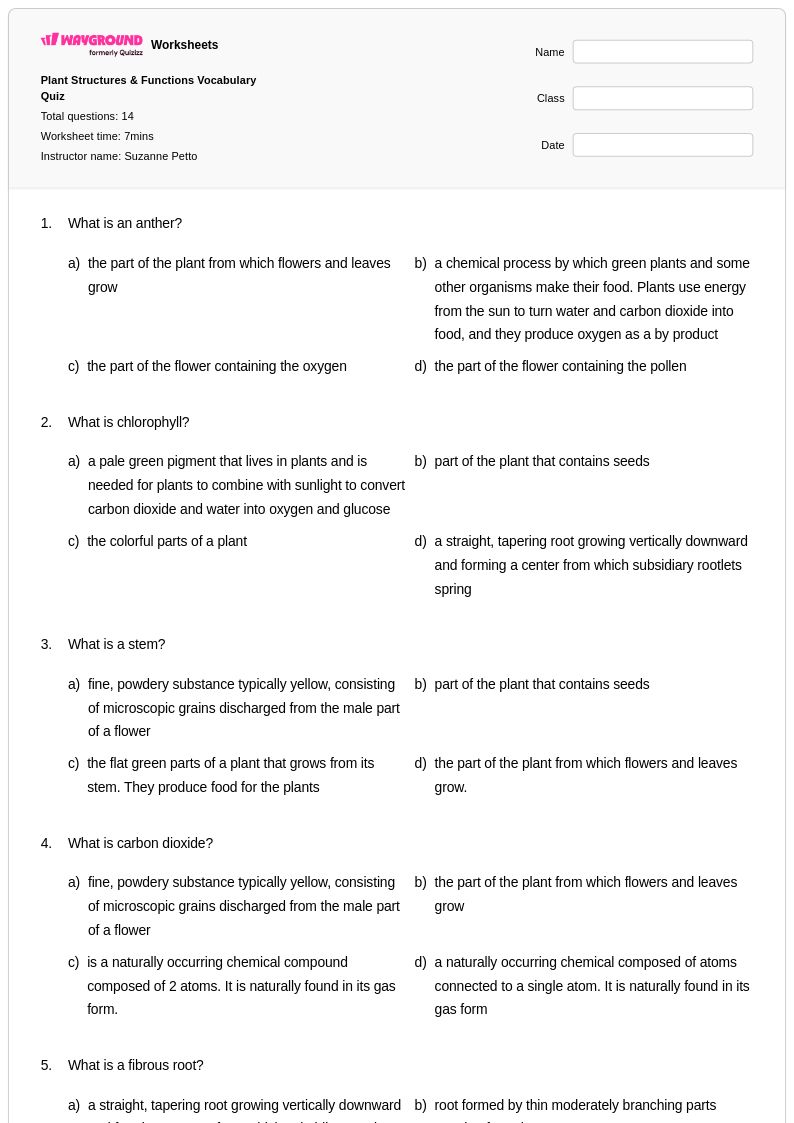
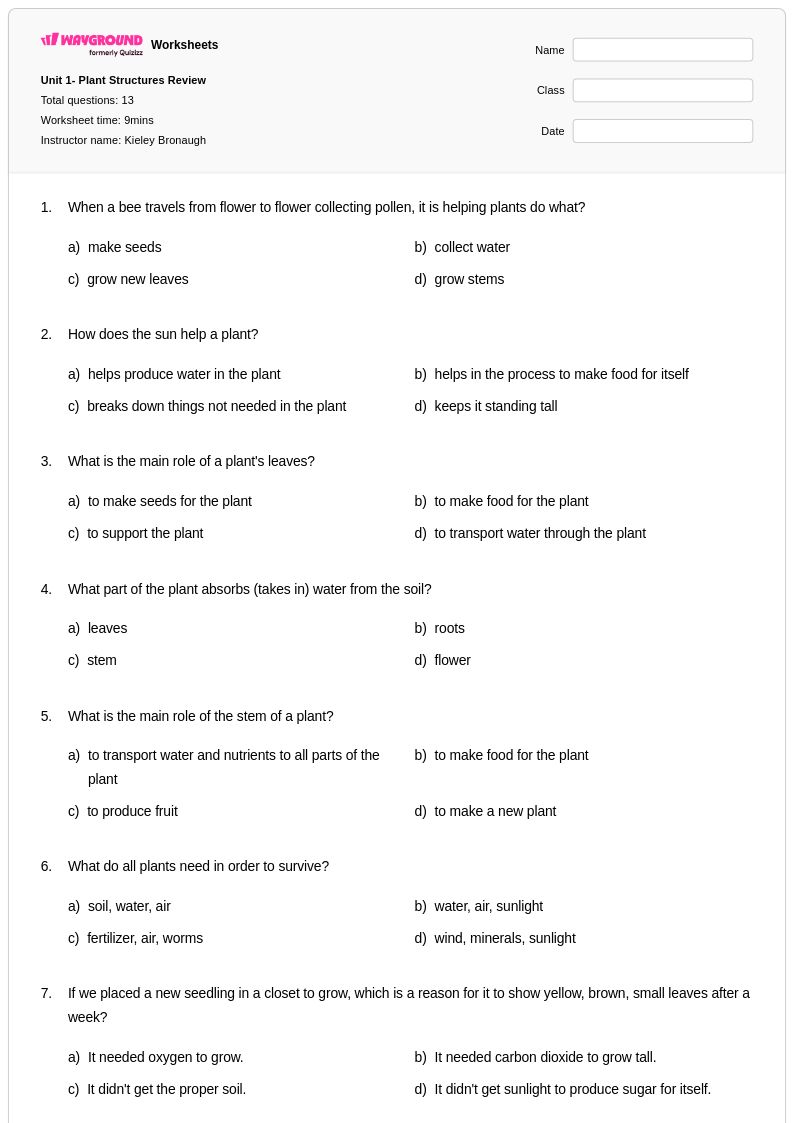
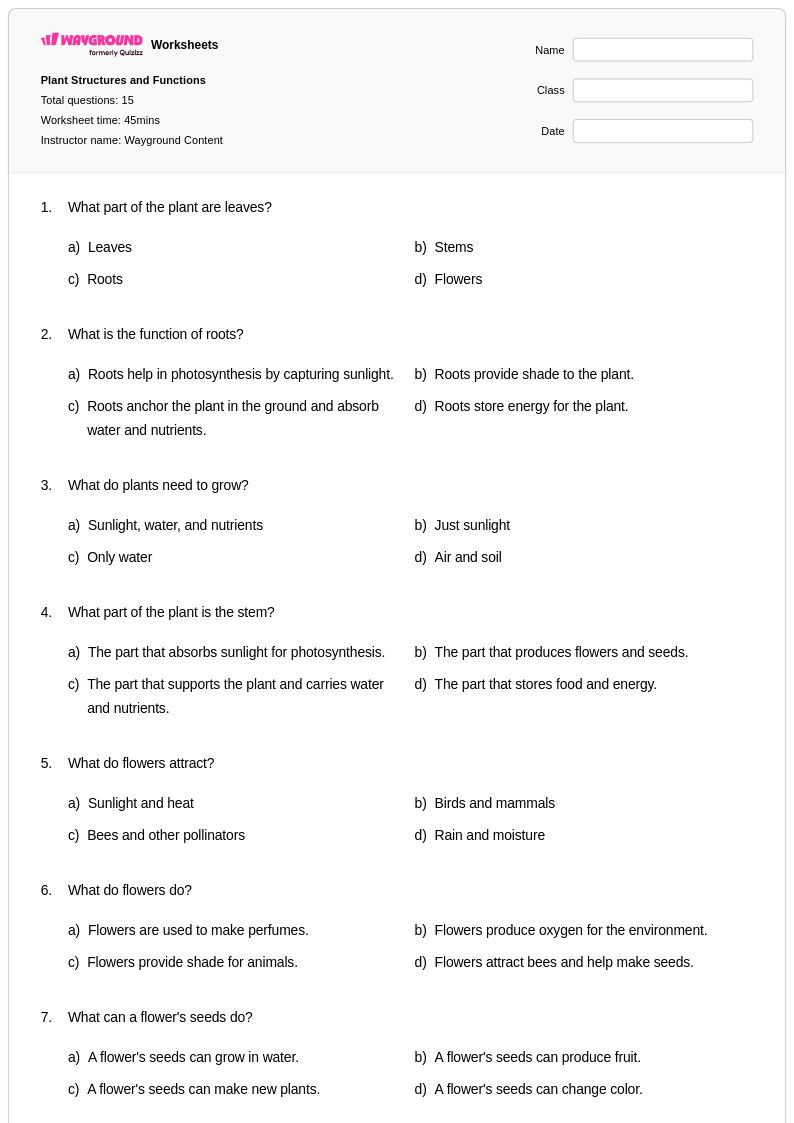
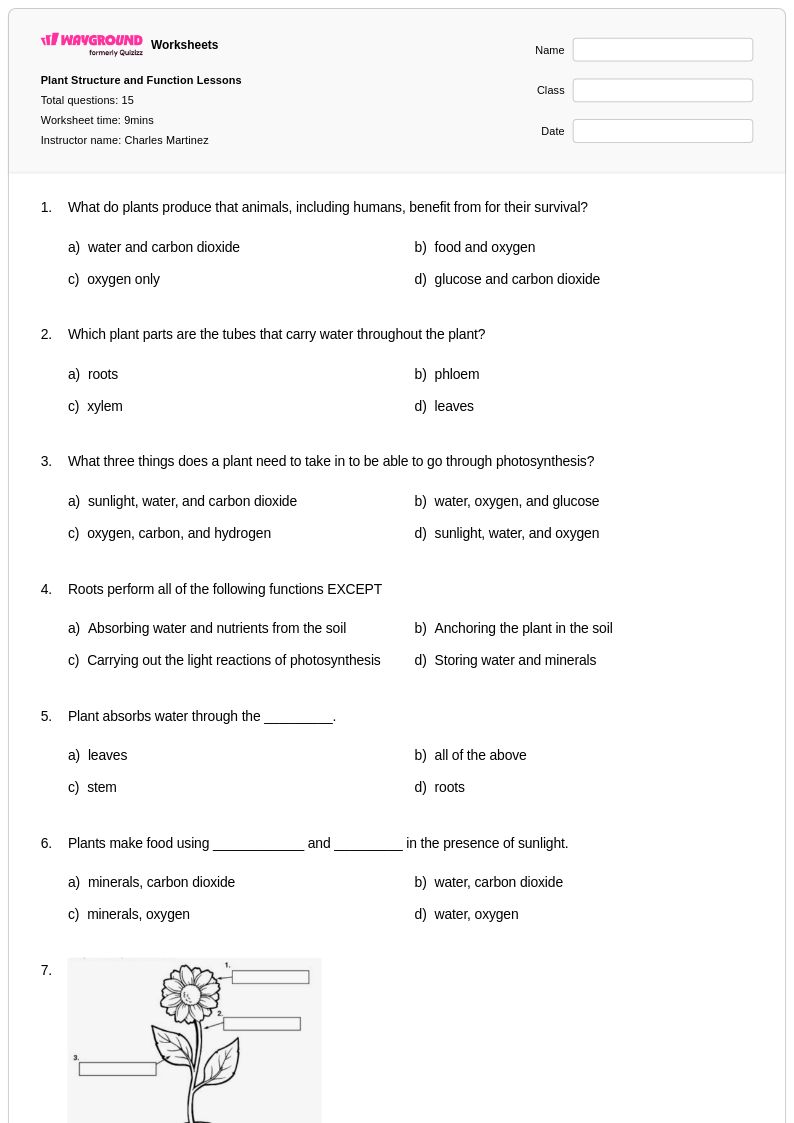
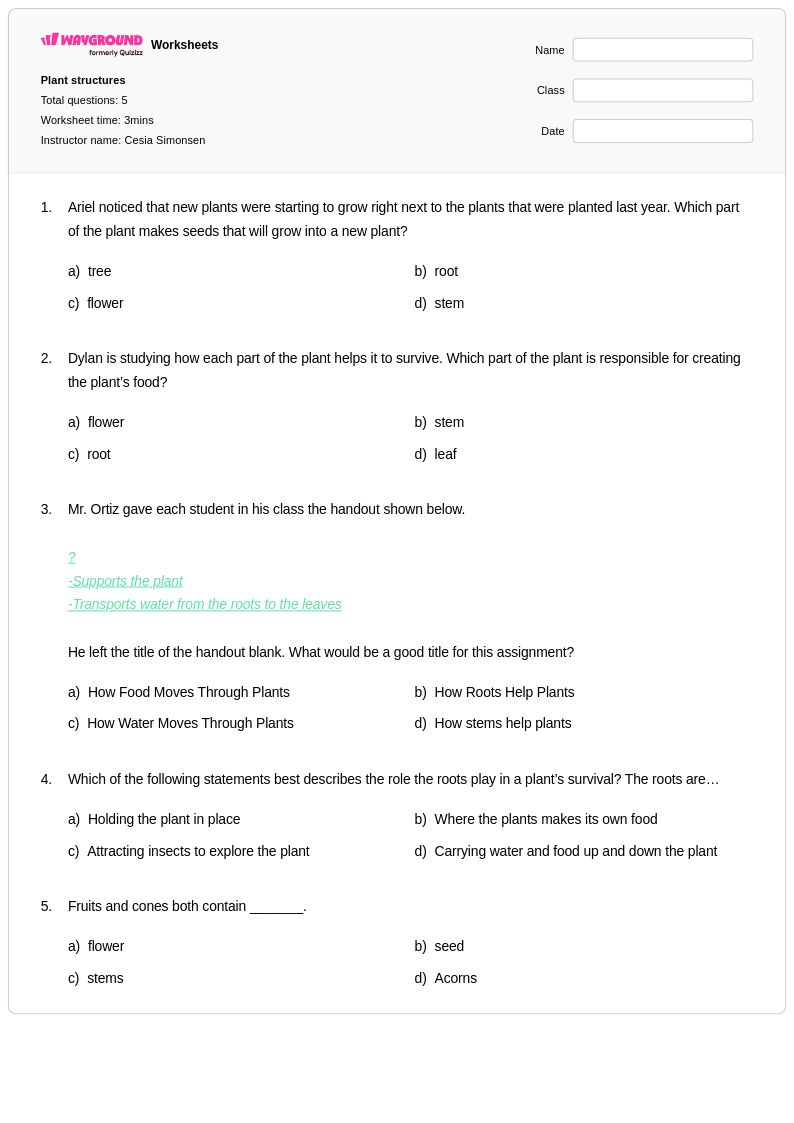
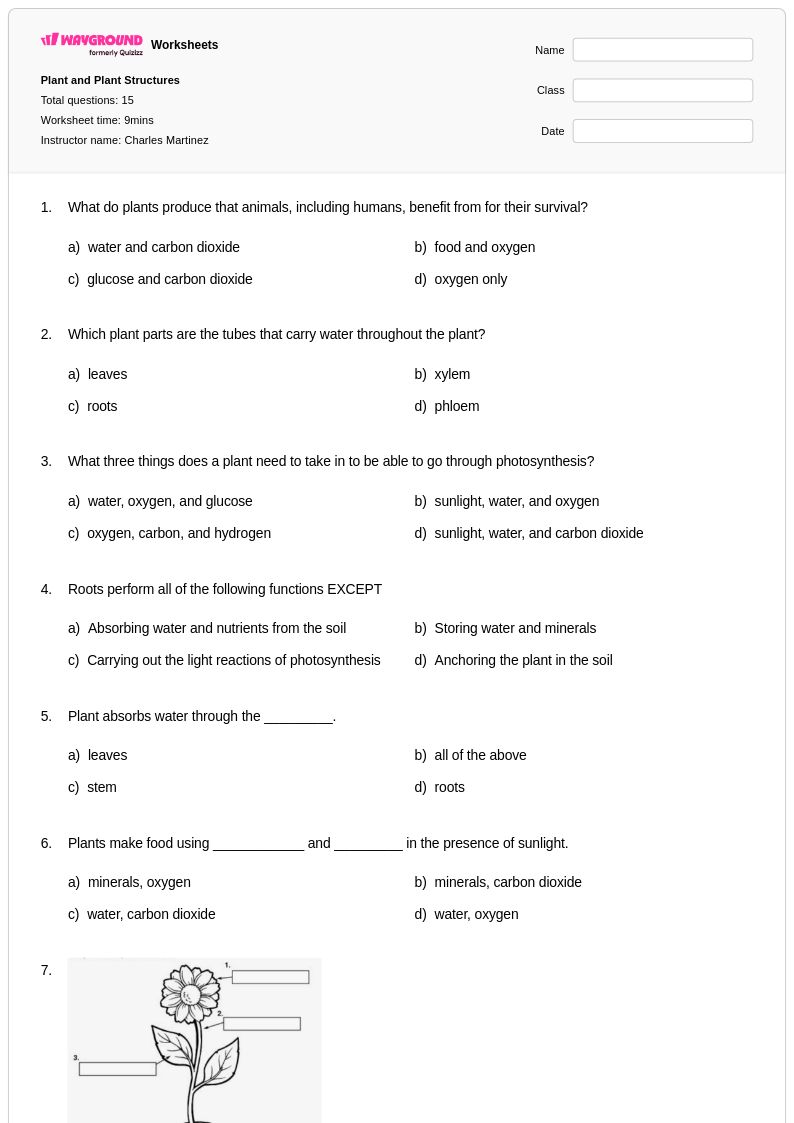
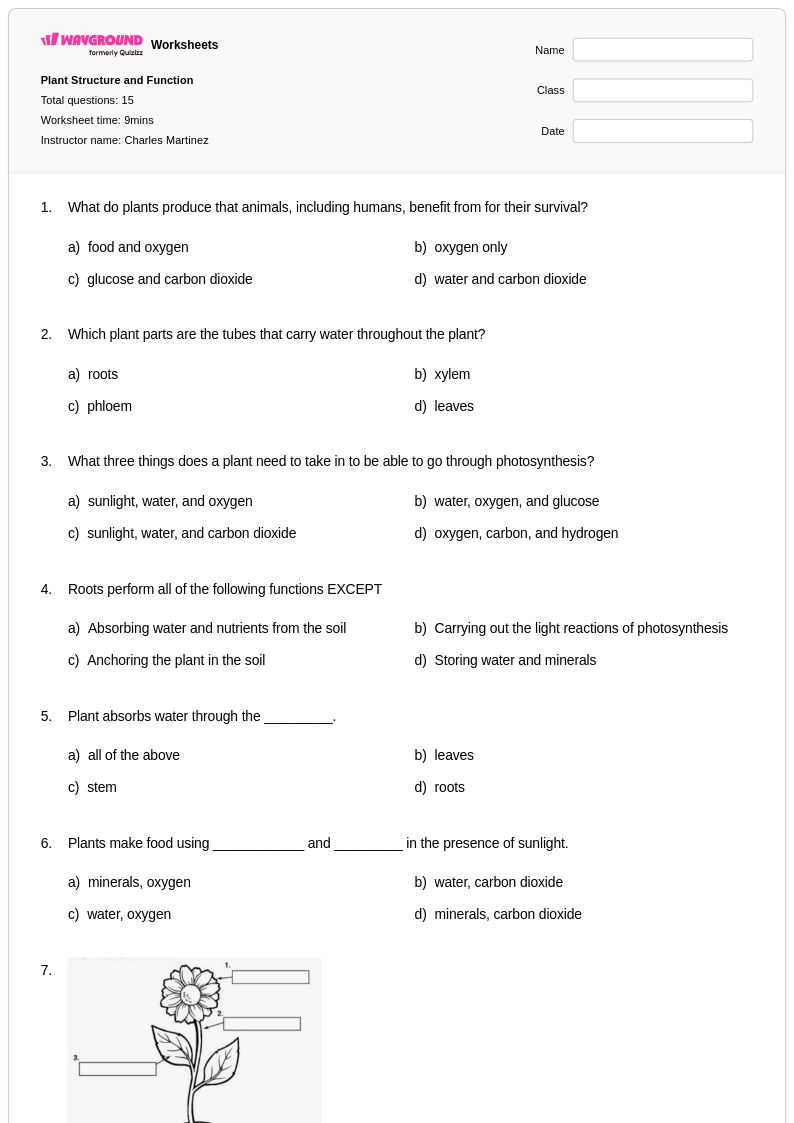
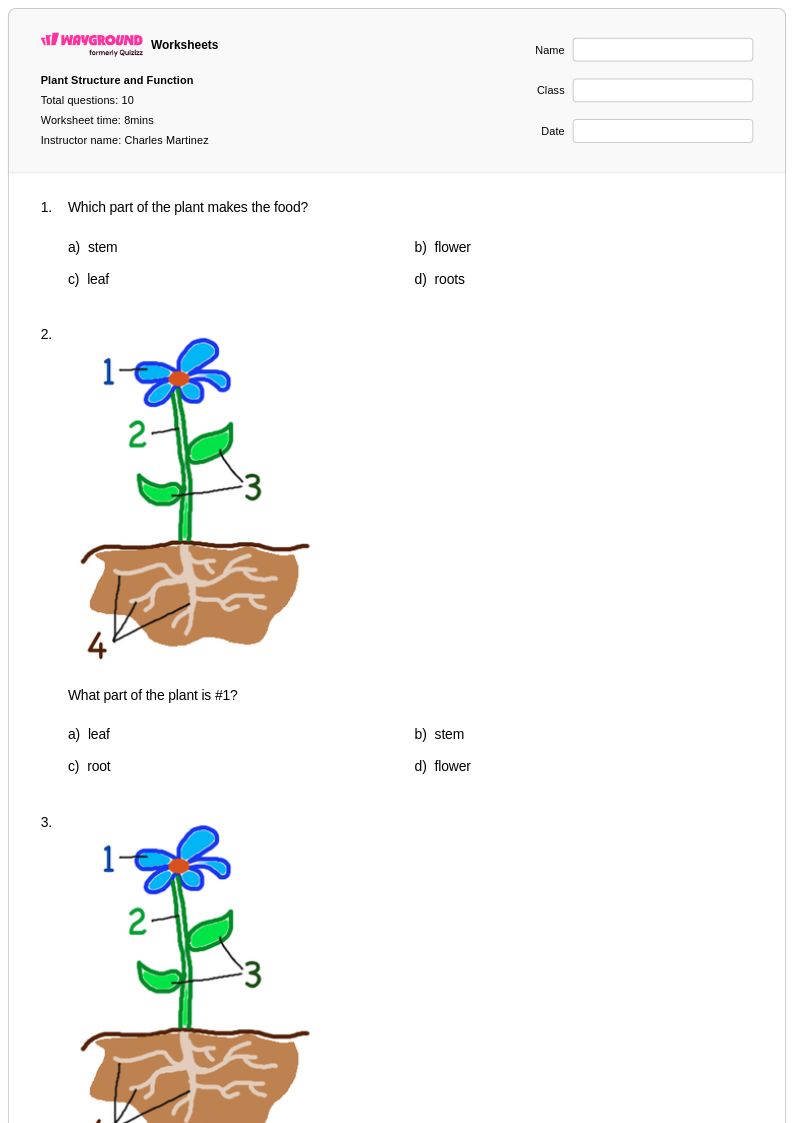
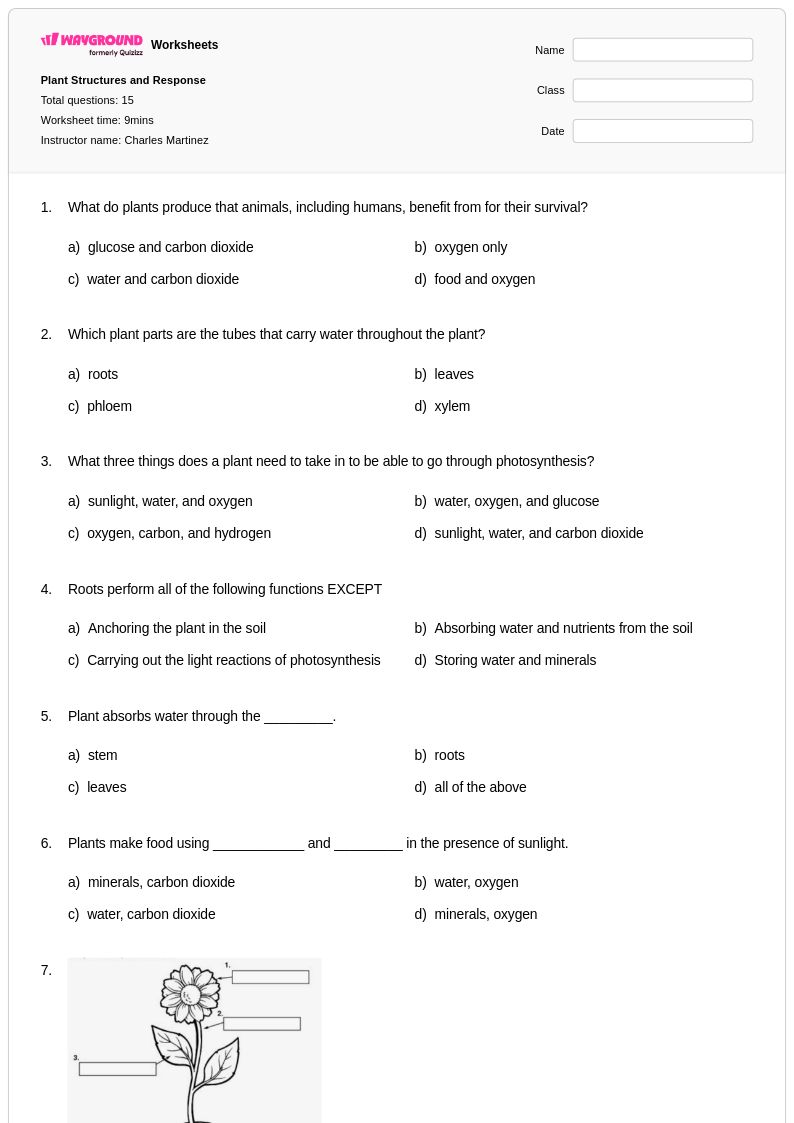
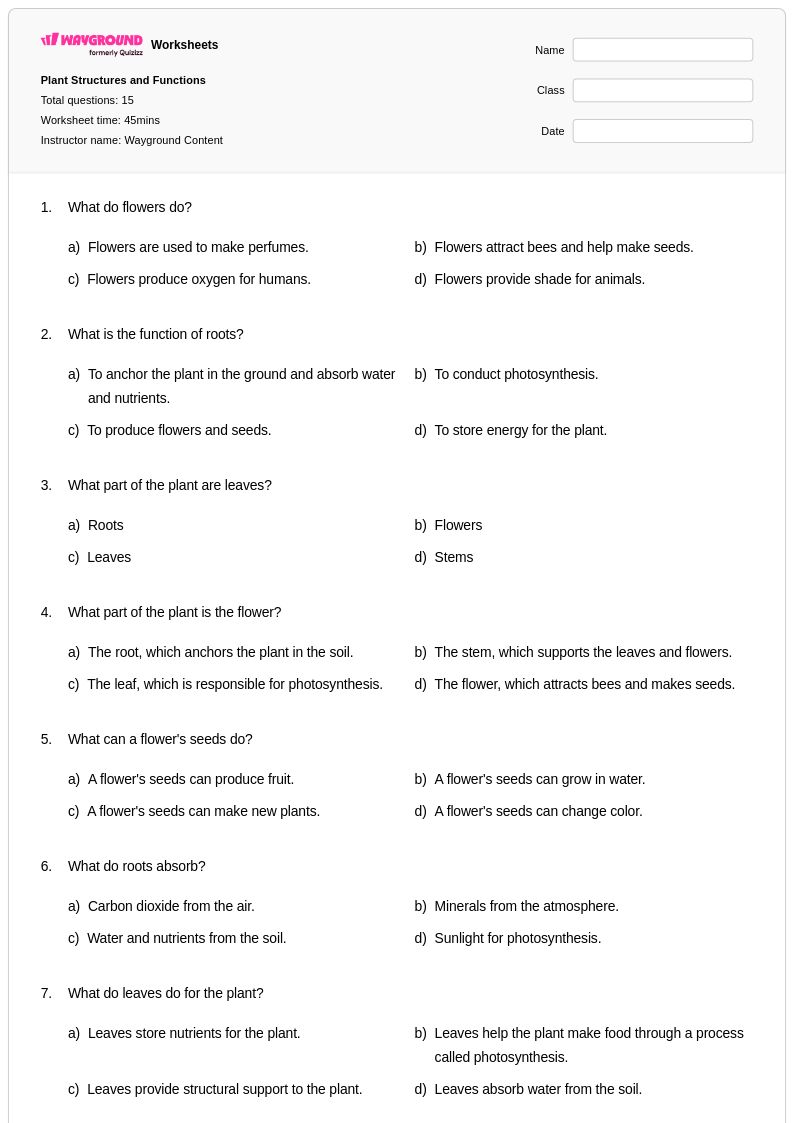
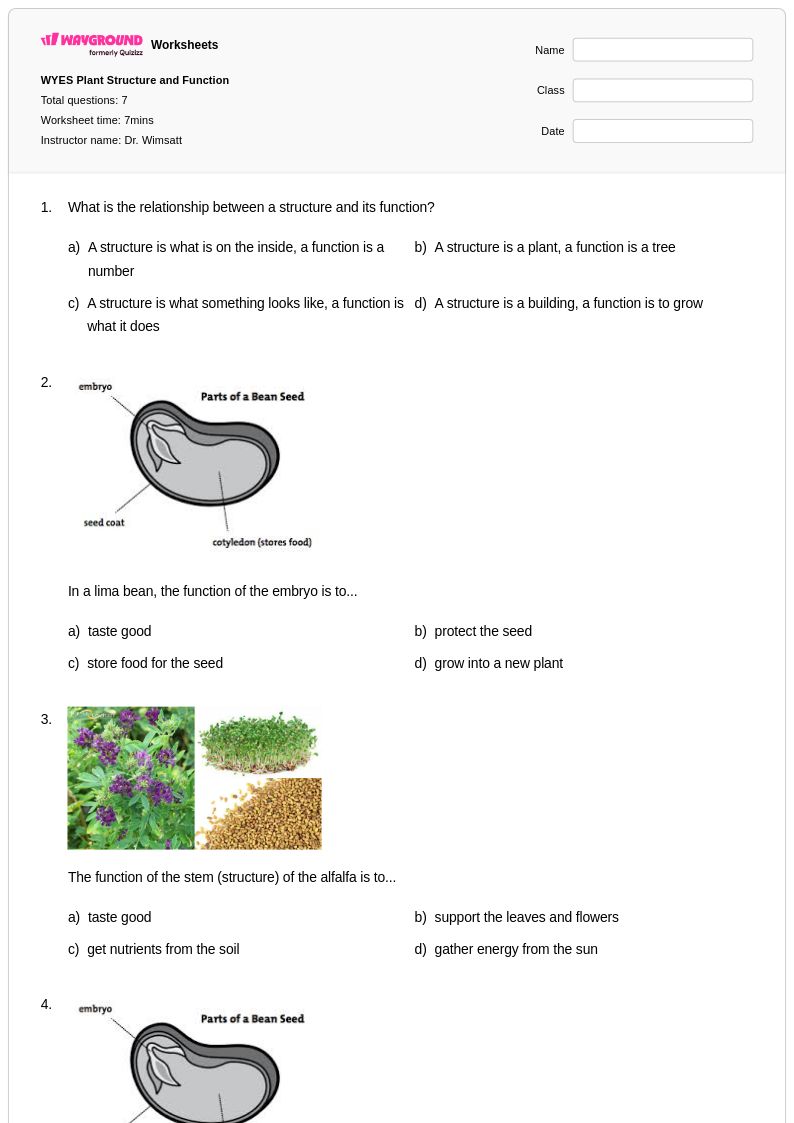
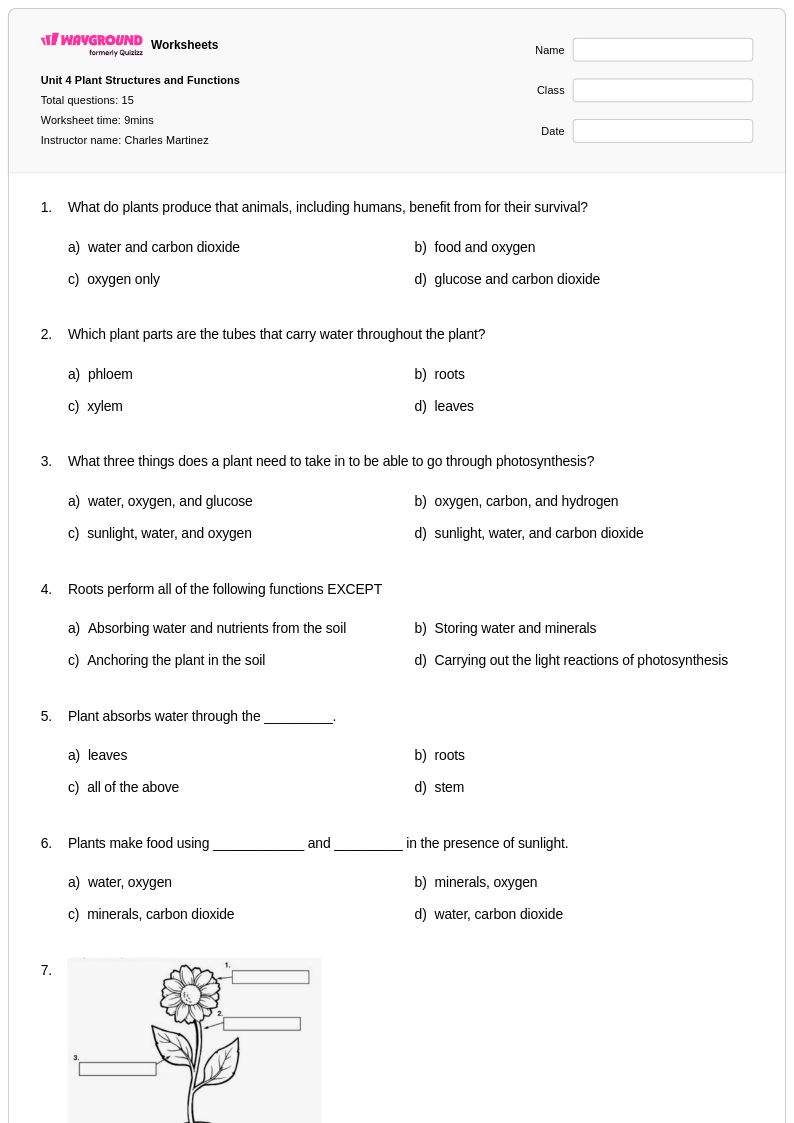
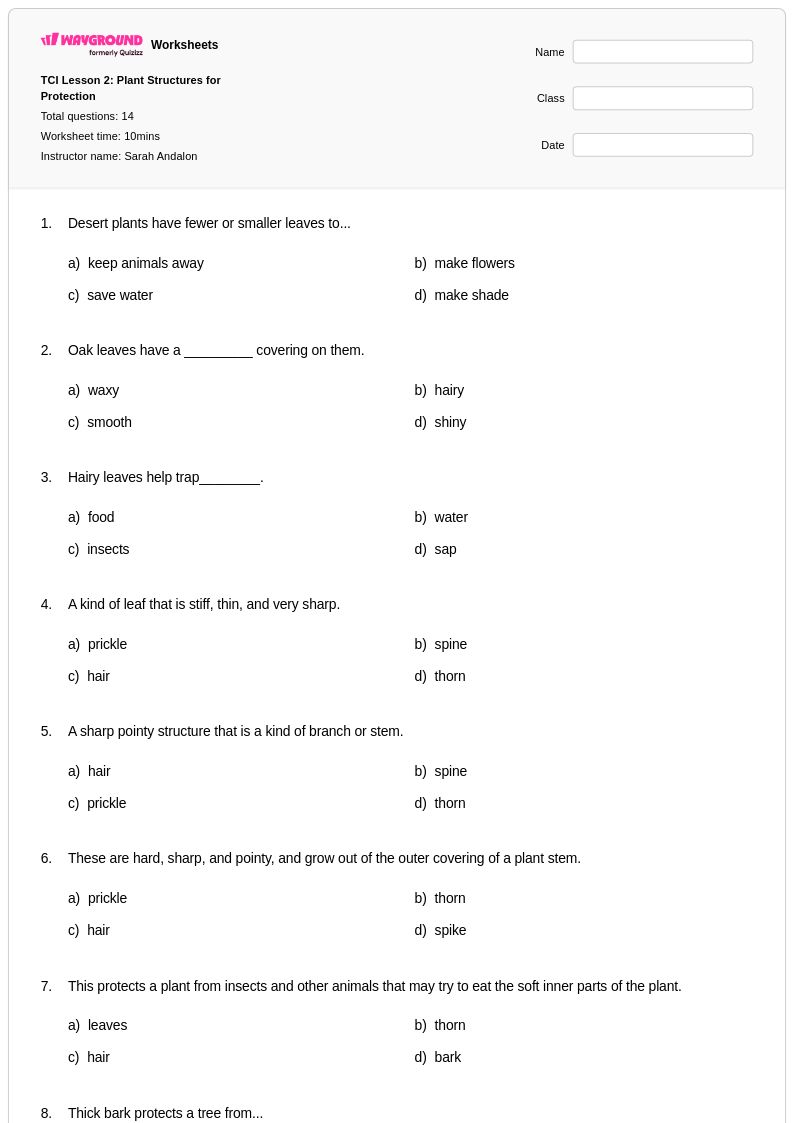
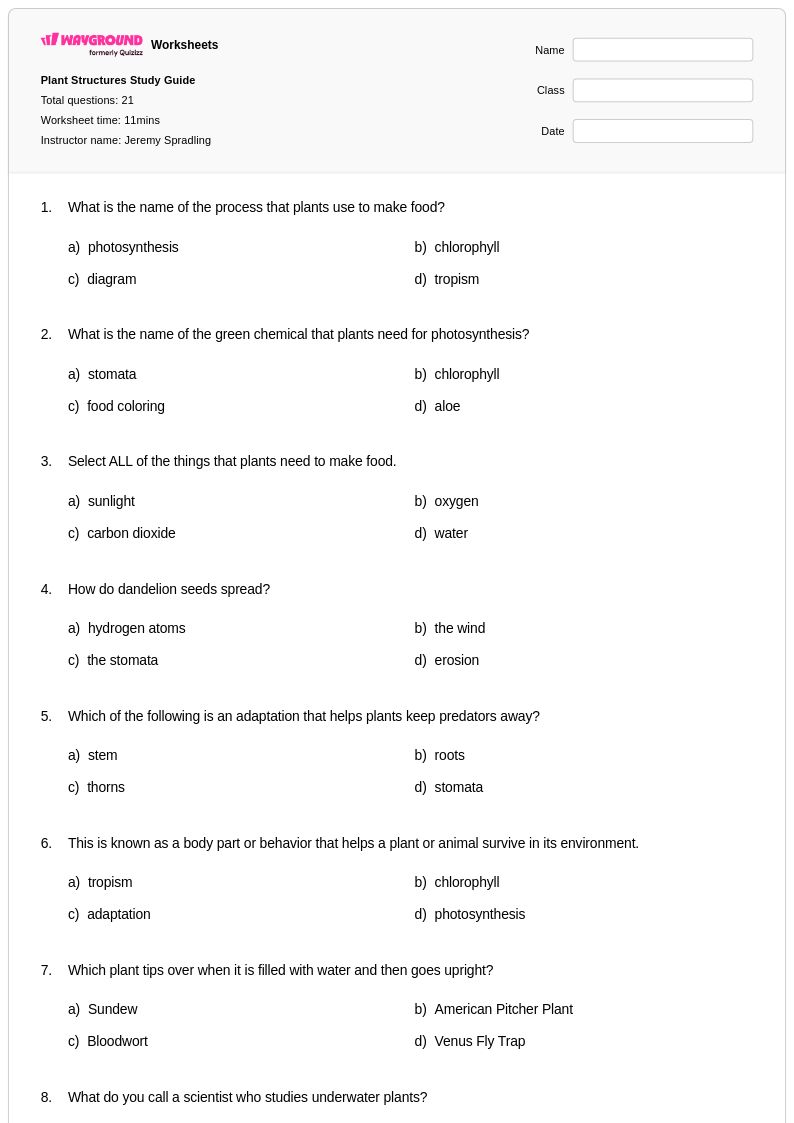
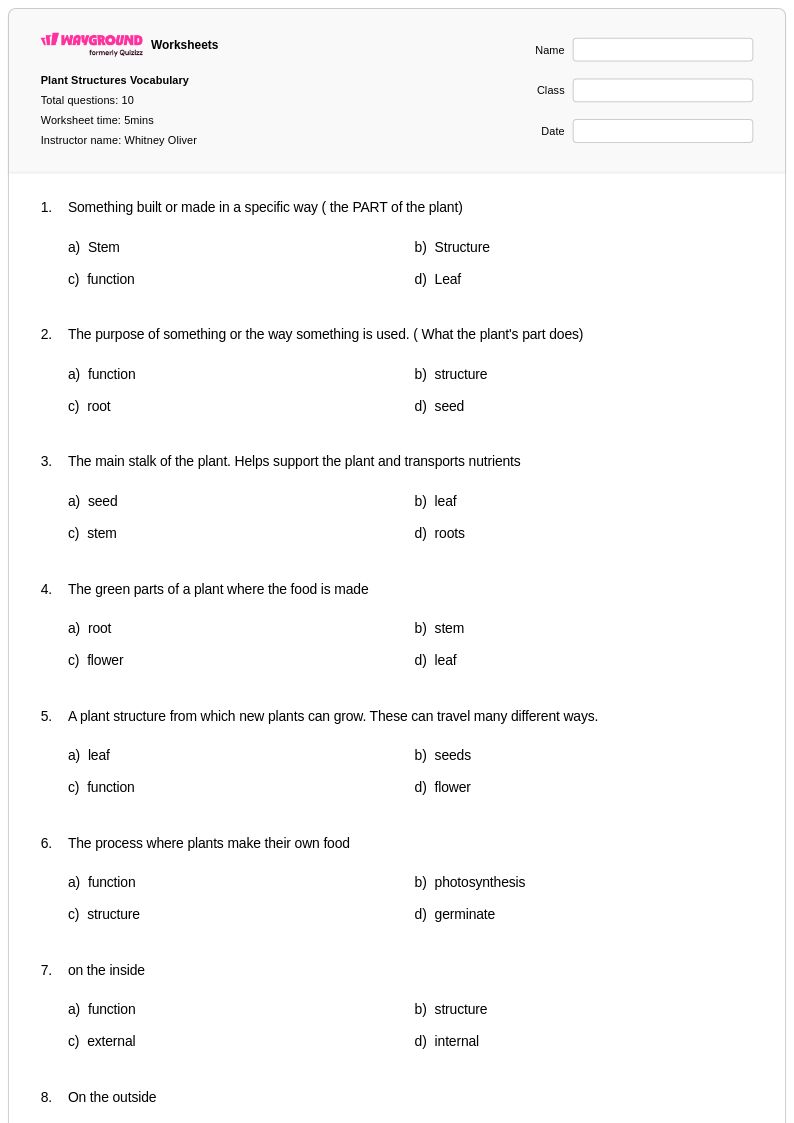
Plant structure worksheets for Year 3 students available through Wayground (formerly Quizizz) provide comprehensive coverage of fundamental botanical concepts that young learners need to master. These educational resources focus on helping third-grade students identify and understand the basic parts of plants, including roots, stems, leaves, flowers, and seeds, while exploring how each component contributes to plant survival and growth. The worksheets strengthen essential scientific observation skills, vocabulary development, and critical thinking abilities as students learn to compare different plant structures and their functions. Teachers can access complete materials including detailed answer keys, ready-to-use pdf formats, and free printables that offer structured practice problems designed to reinforce learning objectives through hands-on activities and visual identification exercises.
Wayground (formerly Quizizz) supports educators with an extensive collection of teacher-created plant structure resources, drawing from millions of high-quality materials that have been developed and refined by classroom professionals. The platform's robust search and filtering capabilities allow teachers to quickly locate worksheets that align with specific learning standards and accommodate diverse student needs through built-in differentiation tools. These customizable resources are available in both printable and digital formats, including downloadable pdf versions that seamlessly integrate into lesson planning workflows. Whether teachers need materials for initial concept introduction, targeted remediation for struggling learners, enrichment activities for advanced students, or ongoing skill practice throughout the unit, the comprehensive plant structure worksheet collection provides flexible solutions that adapt to various instructional approaches and classroom environments.
FAQs
How do I teach plant structure to middle or high school biology students?
Teaching plant structure effectively starts with connecting form to function — students retain the material better when they understand why roots absorb water, why leaves have stomata, or why vascular tissue is arranged the way it is. Begin with macroscopic structures like roots, stems, and leaves before moving into specialized structures such as flowers and reproductive organs. Diagram labeling activities, followed by comparative analysis of different plant types, build vocabulary and observational skills simultaneously. Anchoring each structure to a real biological function prevents rote memorization and promotes deeper conceptual understanding.
What are common mistakes students make when learning plant anatomy?
One of the most frequent errors is confusing the functions of similar-sounding structures, such as mixing up xylem and phloem, or misidentifying the roles of sepals versus petals. Students also tend to treat plant structures as isolated parts rather than understanding them as integrated systems — for example, not connecting leaf structure to gas exchange or root hair morphology to absorption efficiency. Another common misconception is assuming all plants share identical structural arrangements, which breaks down when students encounter monocots versus dicots. Targeted practice problems that require students to explain function alongside identification help address these gaps.
What types of exercises help students practice identifying plant structures?
Labeling diagrams of roots, stems, leaves, and flowers is the most direct form of practice and builds scientific vocabulary quickly. Comparative exercises that ask students to analyze structural differences between plant types — such as fibrous versus taproot systems, or simple versus compound leaves — push beyond identification into analysis. Practice problems that pair a structure with its function require students to demonstrate understanding rather than just recall. Progressing from basic labeling to more complex comparative analyses creates a scaffolded learning sequence that builds confidence and competence.
How can I differentiate plant structure worksheets for students with different learning needs?
For students who need additional support, reducing the complexity of diagrams, pre-labeling some structures, or limiting answer choices can lower cognitive load without removing the core learning objective. Advanced learners benefit from tasks that require them to compare plant adaptations across environments or explain the evolutionary significance of structural differences. On Wayground, teachers can apply individual accommodations such as read aloud support, reduced answer choices, and extended time to specific students while the rest of the class works with default settings — all configurable from the Students tab or session settings page.
How do I use Wayground's plant structure worksheets in my classroom?
Wayground's plant structure worksheets are available as printable PDFs for traditional classroom use and in digital formats for technology-integrated environments, giving teachers flexibility in how they deploy the material. Teachers can host the worksheets as a quiz directly on Wayground, making it easy to assign work digitally, track student responses, and review results in one place. Each worksheet includes a complete answer key, so grading and feedback can be handled efficiently. The materials work equally well as formative practice, homework assignments, or structured review activities before assessments.