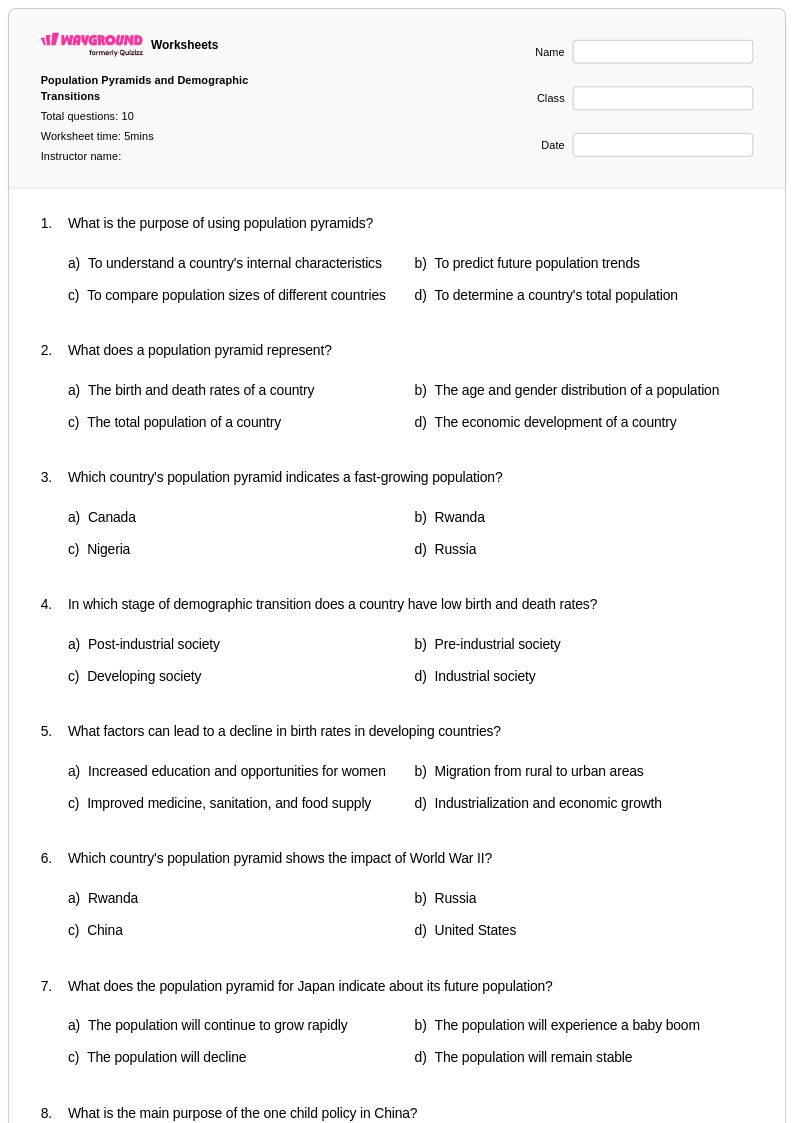
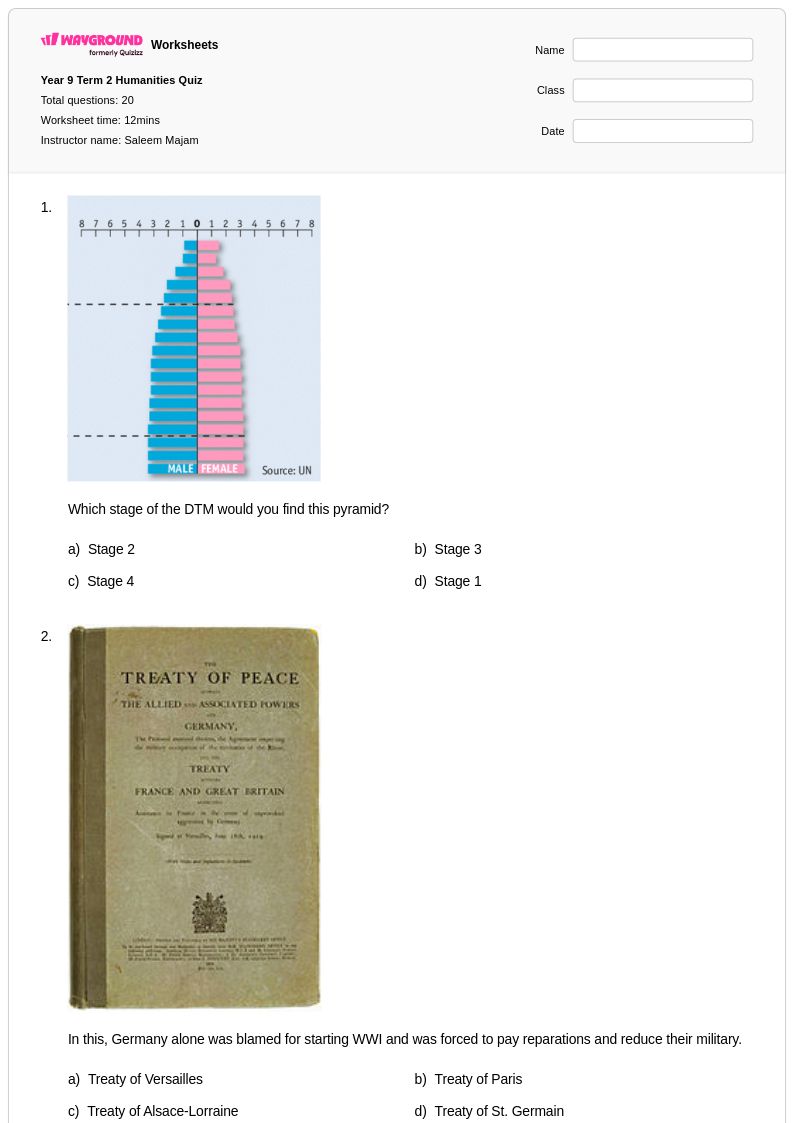
Discover free population pyramid worksheets and printables from Wayground that help students analyze demographic data, interpret age-sex structures, and practice essential geography skills with comprehensive answer keys.
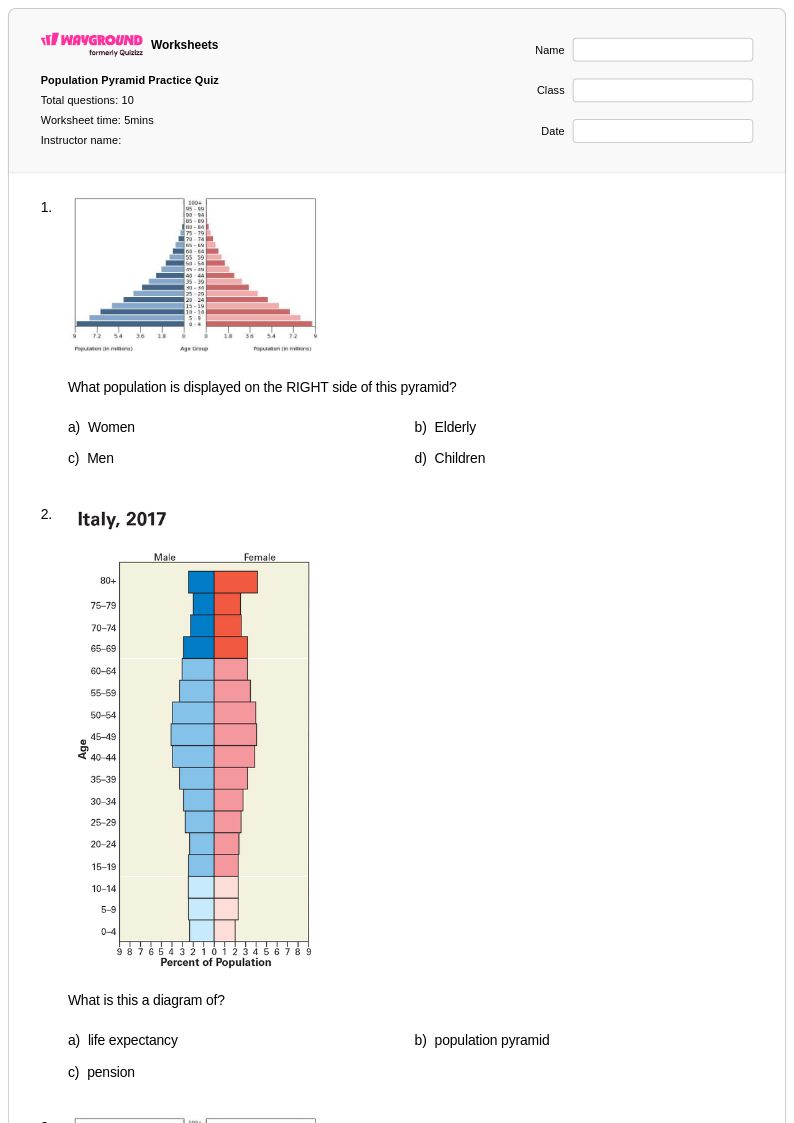
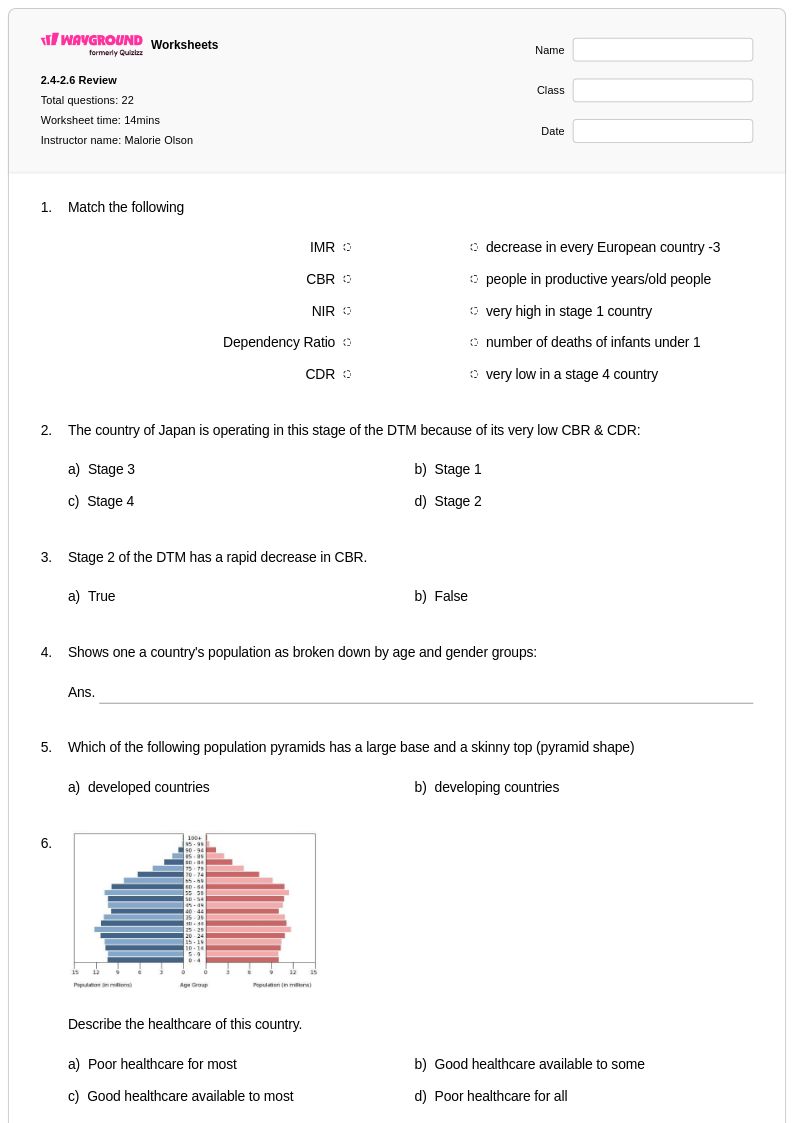
Population pyramid worksheets available through Wayground (formerly Quizizz) provide students with essential tools for analyzing demographic data and understanding population structures across different countries and time periods. These comprehensive resources strengthen critical geography skills including data interpretation, comparative analysis, and demographic trend identification as students examine age-sex distribution patterns, birth and death rates, and population growth scenarios. The collection features detailed practice problems that guide students through reading population pyramids for developed and developing nations, calculating dependency ratios, and predicting future demographic changes. Each worksheet includes a complete answer key and is available as free printable PDFs, making it easy for educators to incorporate authentic demographic analysis into their social studies curriculum while building students' quantitative reasoning abilities.
Wayground (formerly Quizizz) supports educators with millions of teacher-created population pyramid resources that streamline lesson planning and enhance student understanding of demographic concepts. The platform's robust search and filtering capabilities allow teachers to quickly locate worksheets aligned with specific geography standards and differentiate instruction based on student readiness levels. These versatile materials are available in both printable and digital PDF formats, enabling flexible implementation whether for in-class practice, homework assignments, or assessment preparation. Teachers can customize existing worksheets or create new ones using the platform's comprehensive tools, supporting targeted skill practice, remediation for struggling learners, and enrichment opportunities for advanced students ready to explore complex demographic transitions and their socioeconomic implications.
FAQs
How do I teach population pyramids in a geography class?
Start by introducing the structure of a population pyramid: the horizontal bars represent age cohorts, the left side shows males, the right side shows females, and the width of each bar reflects population size or percentage. From there, guide students to compare pyramids from developed and developing nations to identify patterns in birth rates, death rates, and overall population growth stages. Using real demographic data from countries at different development levels helps students connect abstract concepts to tangible geographic and socioeconomic contexts.
What exercises help students practice reading and interpreting population pyramids?
Effective practice exercises include reading and labeling age-sex distribution bars, calculating dependency ratios from pyramid data, and comparing pyramids from two or more countries to identify demographic differences. Students also benefit from predicting future population structures based on current trends, which reinforces analytical thinking alongside geographic content knowledge. Structured worksheet practice that progresses from basic identification to comparative and predictive tasks helps students build fluency with demographic data interpretation.
What mistakes do students commonly make when analyzing population pyramids?
A common error is confusing the direction of demographic indicators: students often misread a wide base as automatically indicating a young, growing population without accounting for high infant mortality, which can narrow the youngest cohort in some developing nations. Students also frequently struggle to distinguish between absolute population counts and percentage-based pyramids, leading to inaccurate comparisons across countries of different sizes. Another persistent misconception is assuming that an aging population structure is inherently negative rather than understanding it as a demographic transition outcome linked to improved healthcare and declining fertility rates.
How do I use population pyramid worksheets to assess student understanding of demographic concepts?
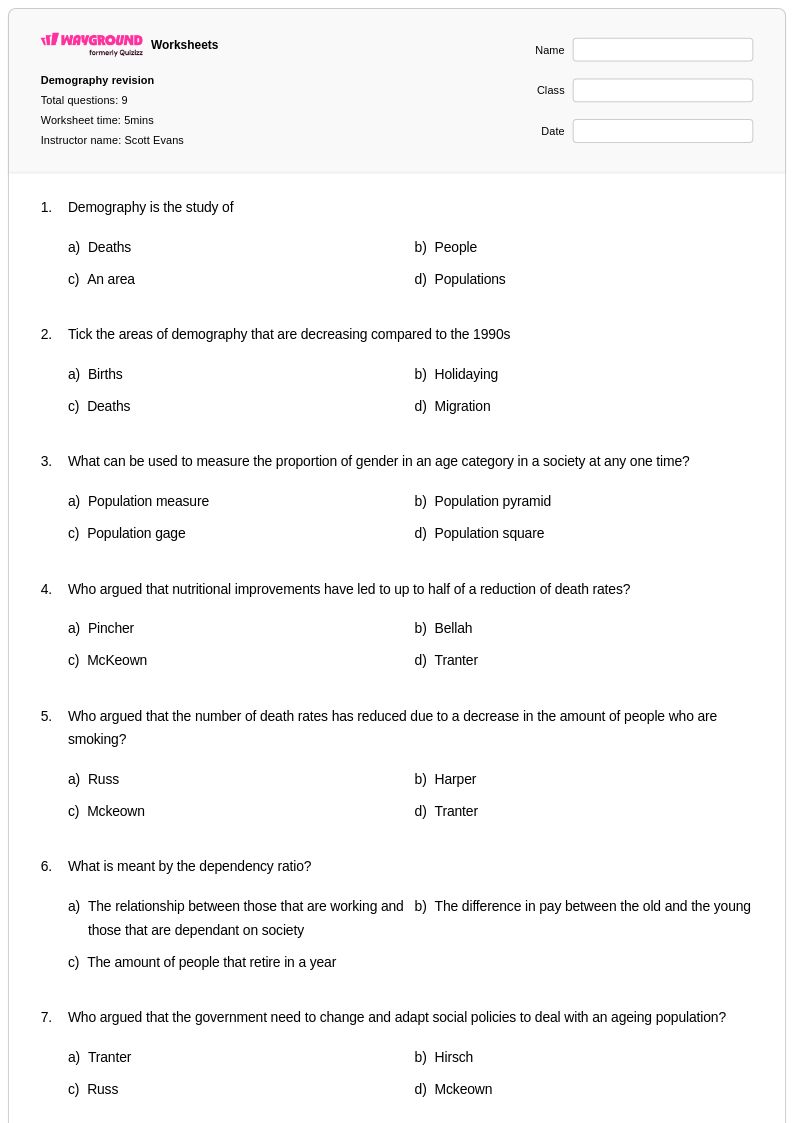
Population pyramid worksheets work well as formative assessments when students are asked to interpret an unfamiliar pyramid and explain what it reveals about a country's birth rate, death rate, and age structure in writing. Tasks that require students to calculate dependency ratios or predict demographic shifts 20 years forward reveal whether they can apply concepts rather than simply recall definitions. Using worksheets as exit tickets or short in-class assessments gives teachers quick diagnostic data on which students need additional support with quantitative reasoning or demographic terminology.
How can I use Wayground's population pyramid worksheets in my classroom?
Wayground's population pyramid worksheets are available as printable PDFs for traditional classroom use and in digital formats for technology-integrated learning environments, giving teachers flexibility for in-class practice, homework, or assessment preparation. Teachers can also host worksheets as a quiz directly on Wayground, enabling real-time tracking of student responses. Each worksheet includes a complete answer key, reducing grading time and making it straightforward to review answers with the class after completing an activity.
How do I differentiate population pyramid instruction for students at different readiness levels?
For students who need additional support, reduce the complexity of the pyramid by focusing on a single country with clearly contrasting age cohorts before introducing comparative tasks. On Wayground, teachers can apply accommodations such as reduced answer choices or read-aloud support to individual students without alerting the rest of the class, which keeps the experience low-stress for students who need scaffolding. Advanced students can be extended toward analyzing demographic transitions, calculating specific dependency ratios, and evaluating the socioeconomic implications of aging or rapidly growing populations.