
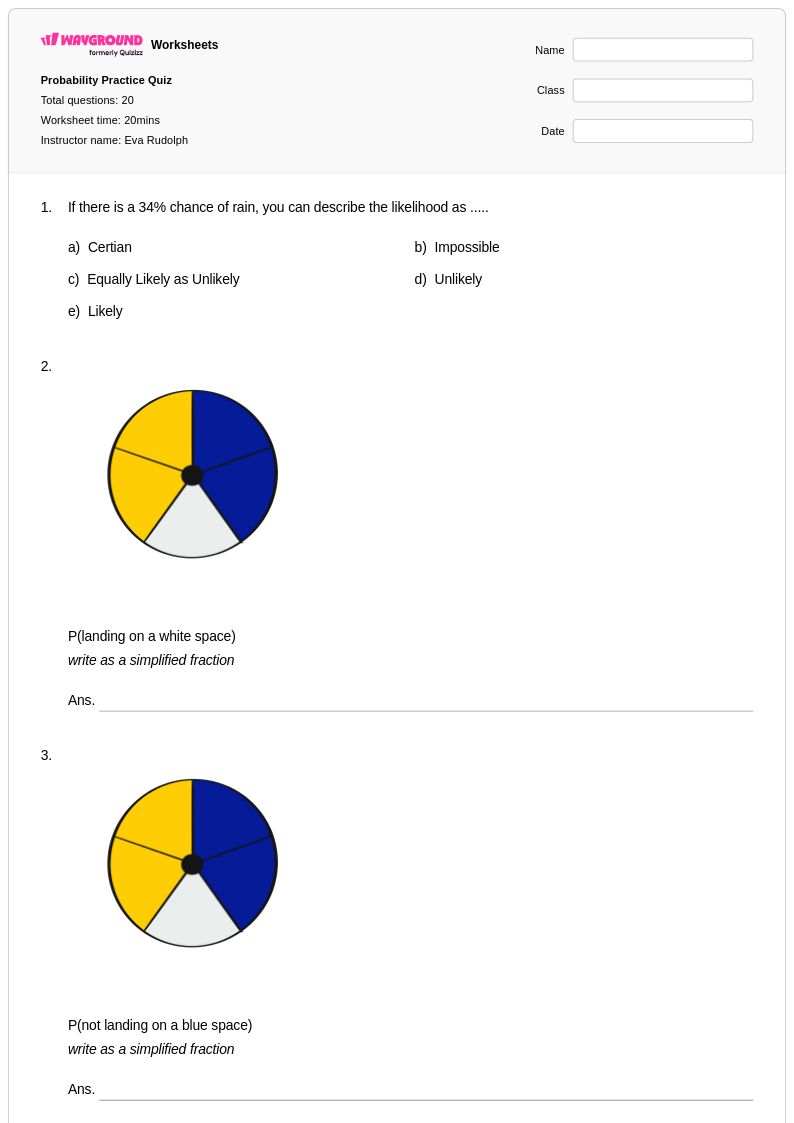
20 Hỏi
6th - 8th
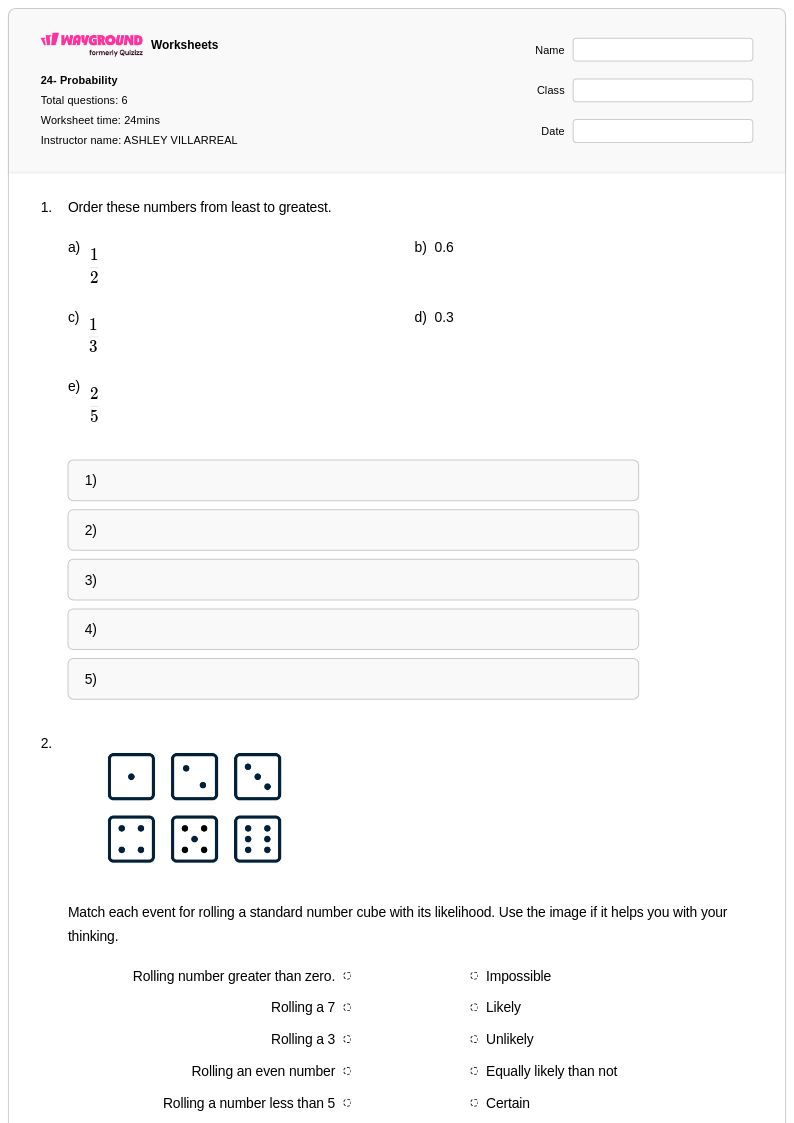
6 Hỏi
6th - 8th
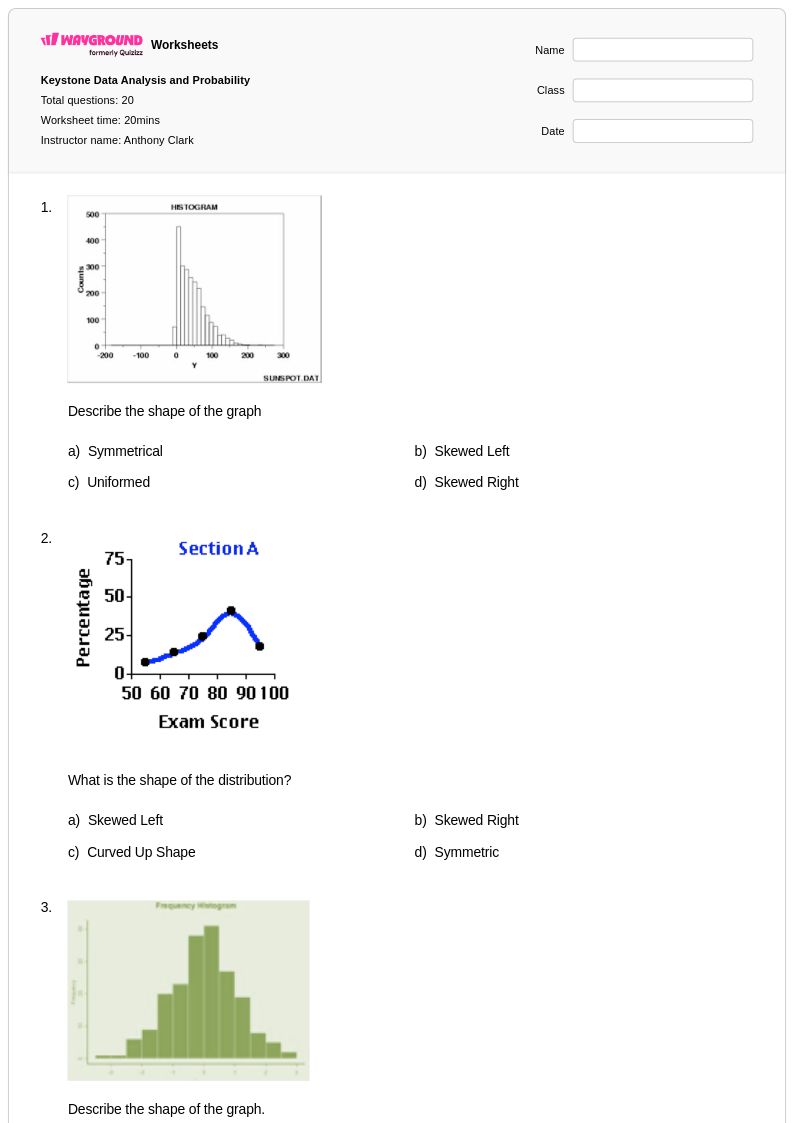
20 Hỏi
6th - Uni
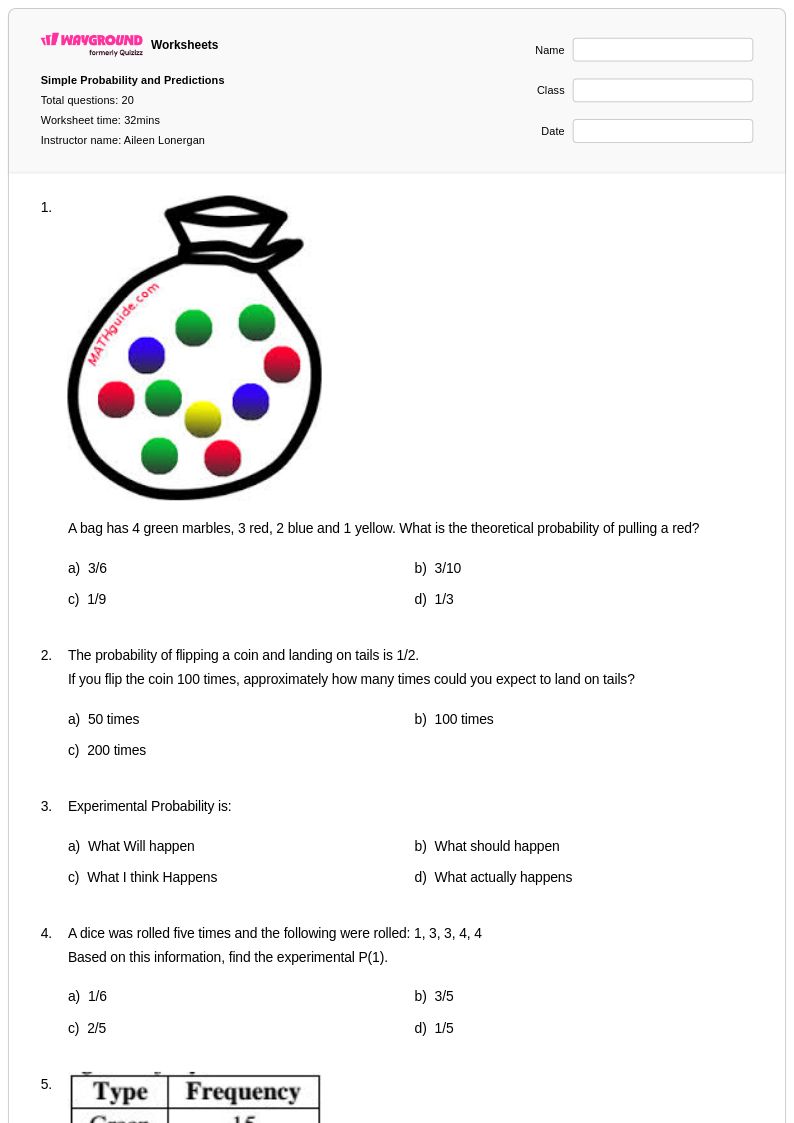
20 Hỏi
6th
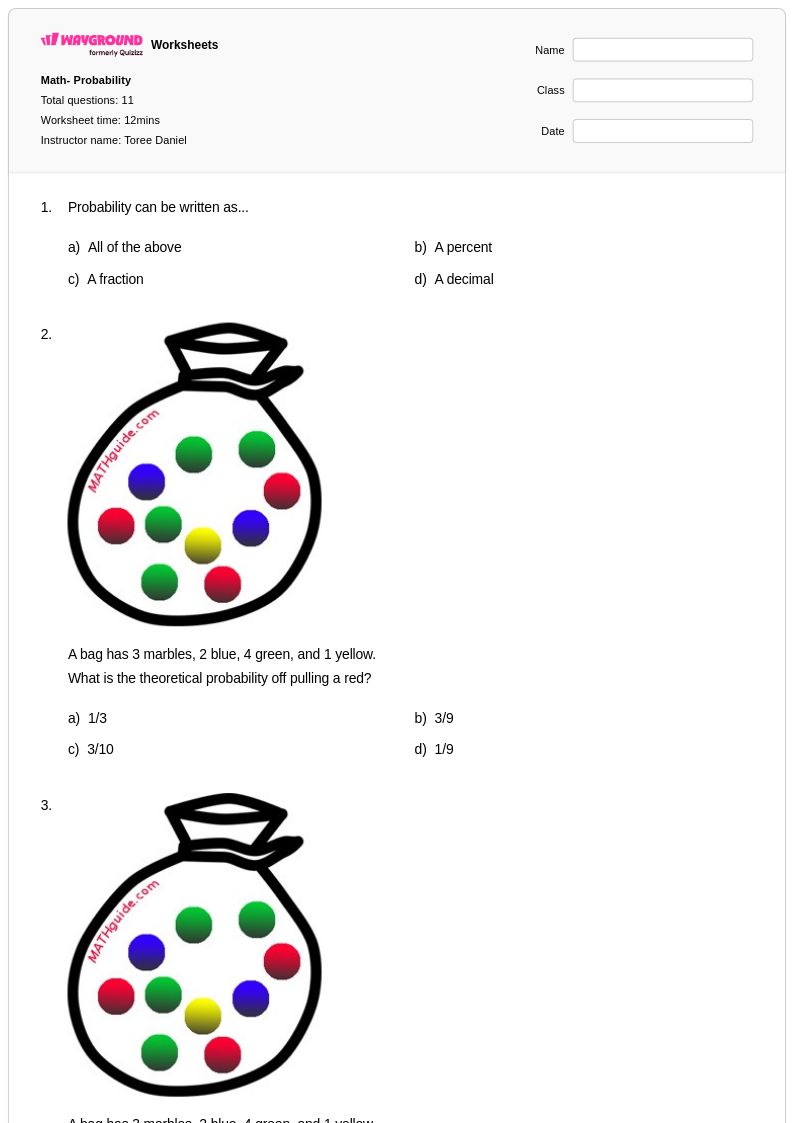
11 Hỏi
6th - 7th
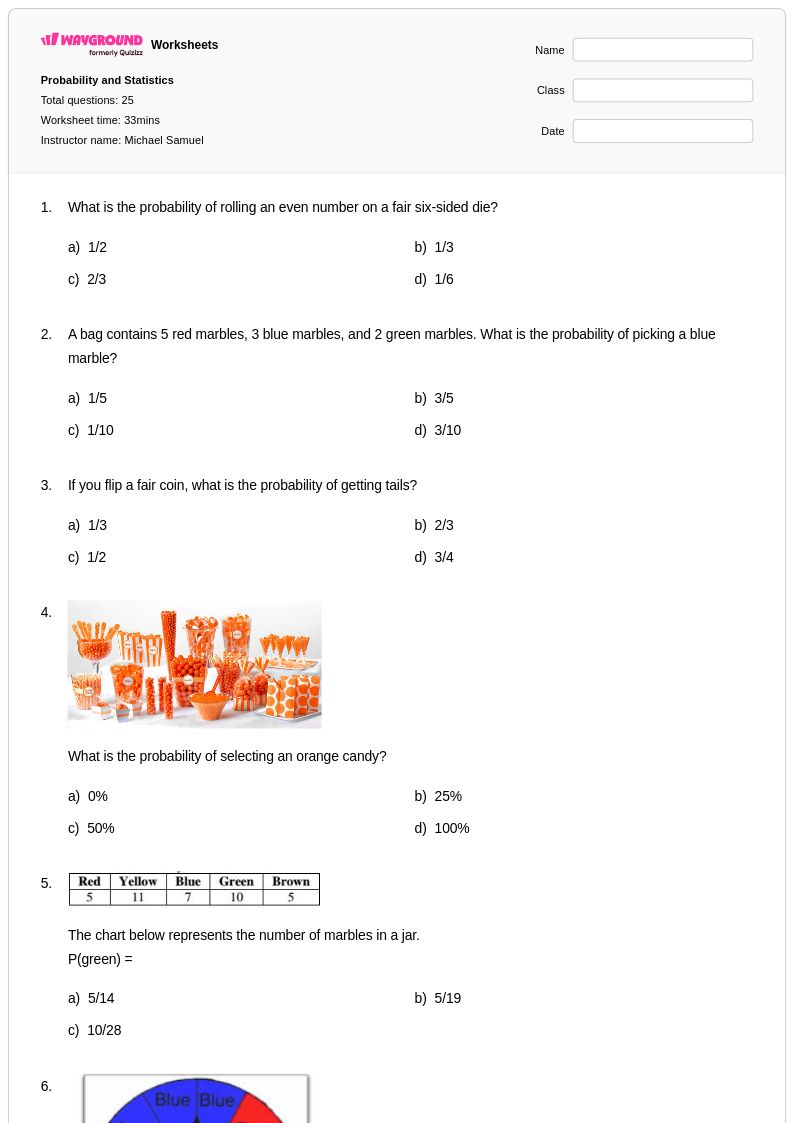
25 Hỏi
6th
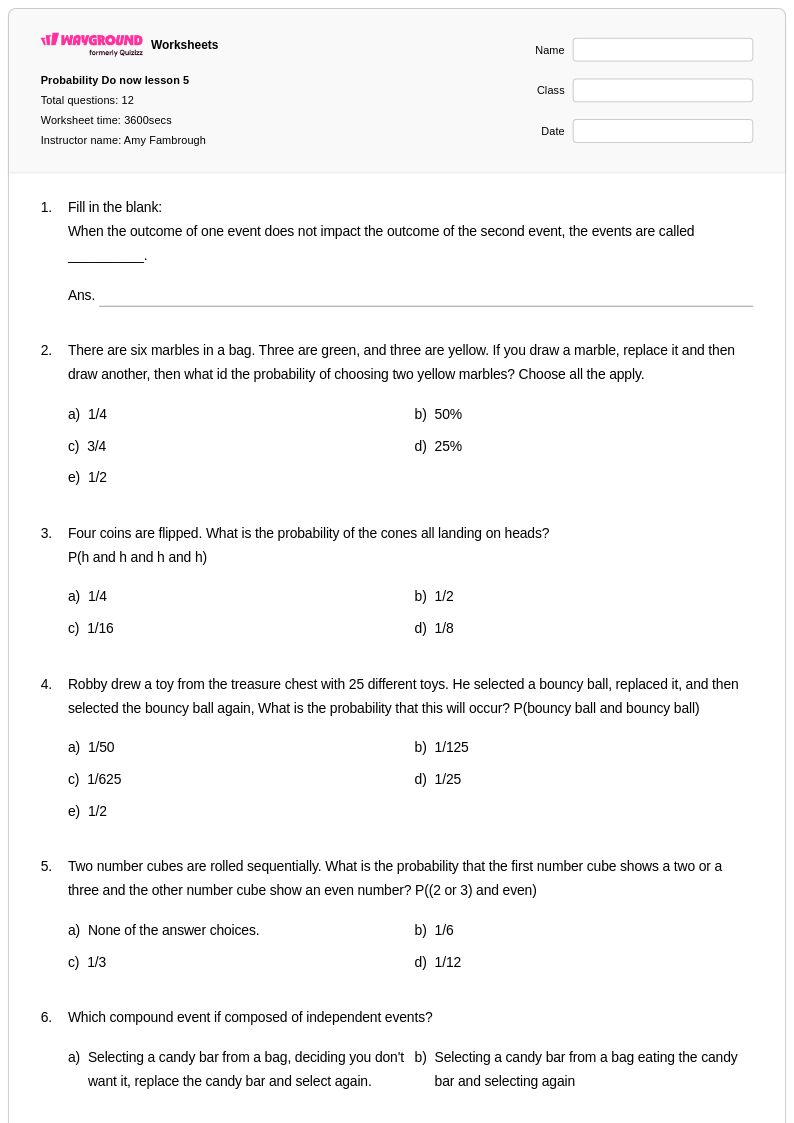
12 Hỏi
6th - 7th
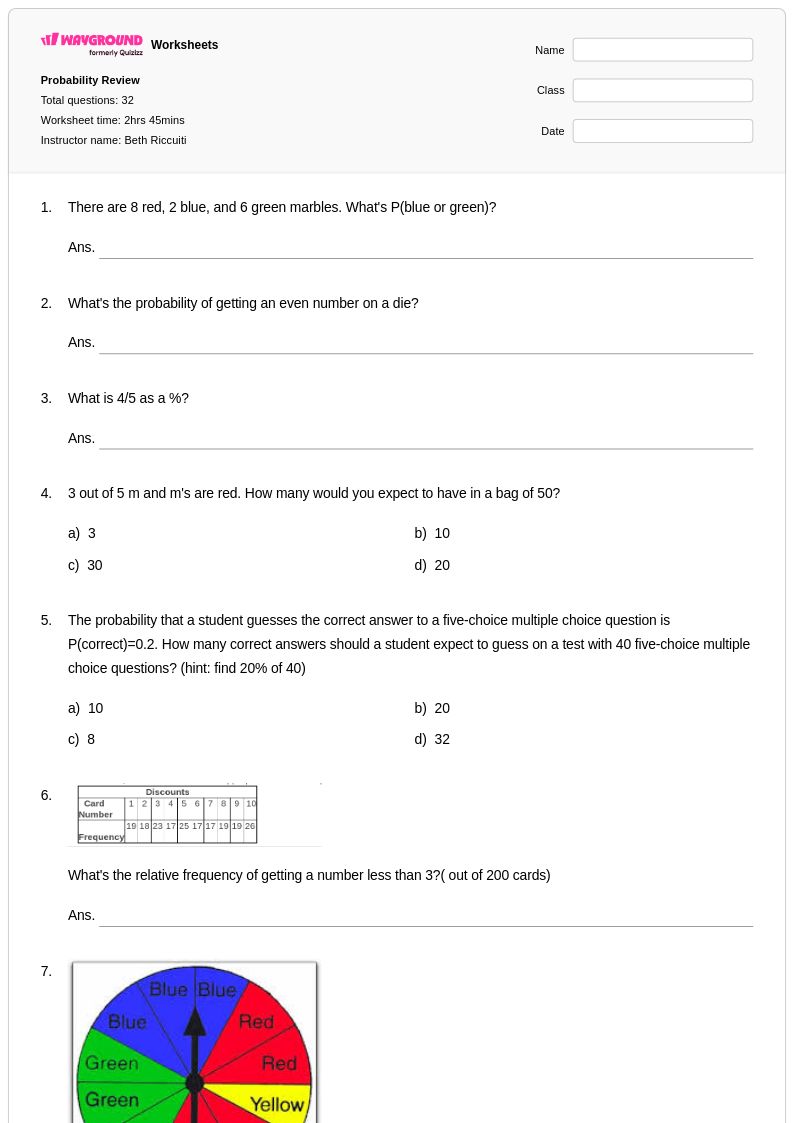
32 Hỏi
6th
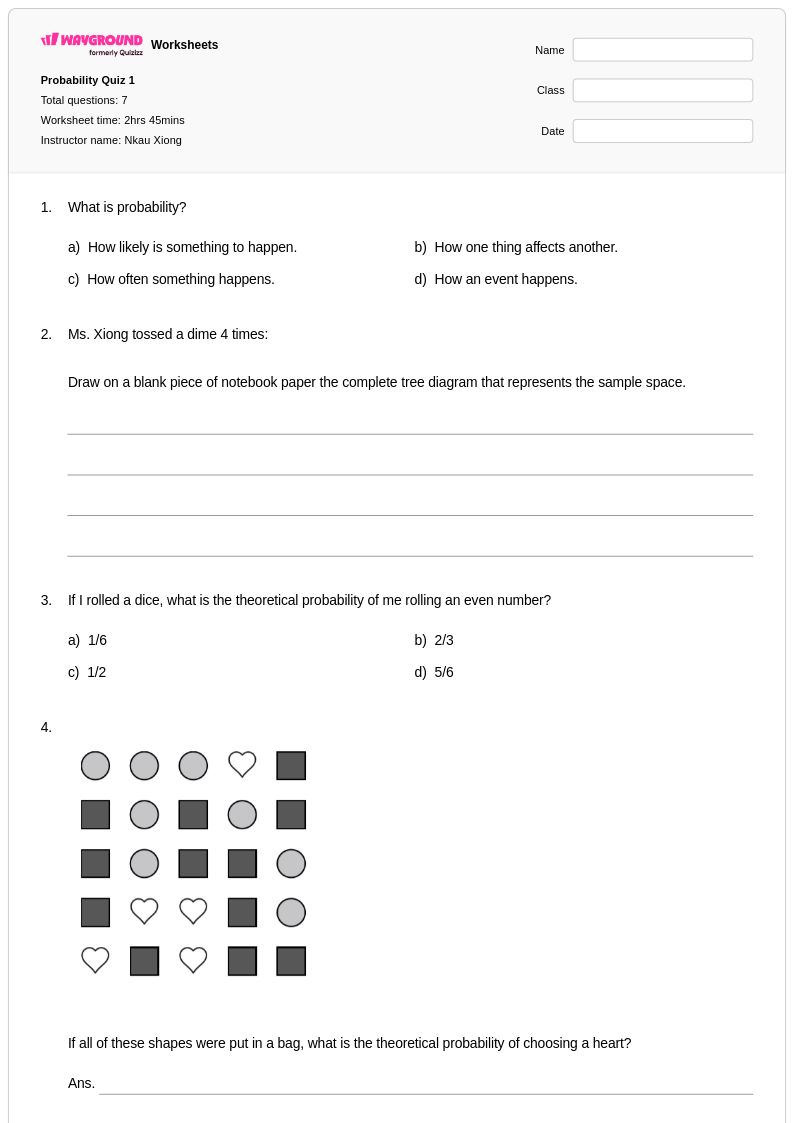
7 Hỏi
6th
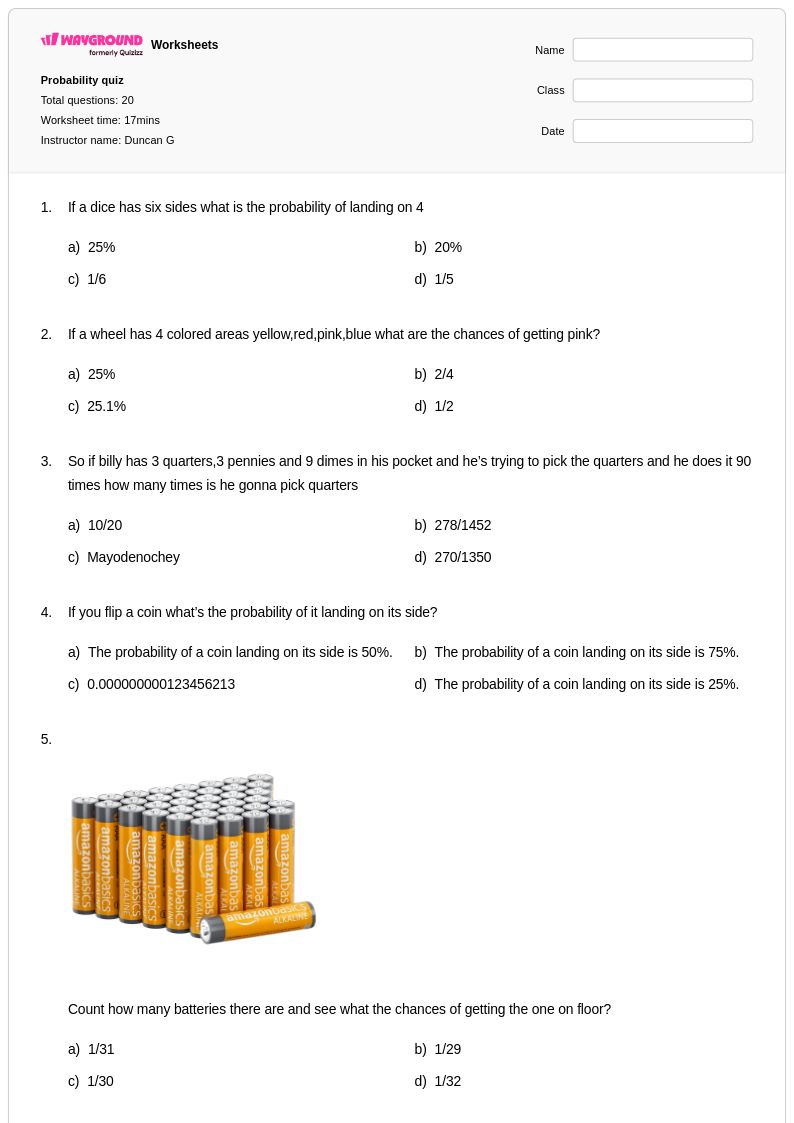
20 Hỏi
6th
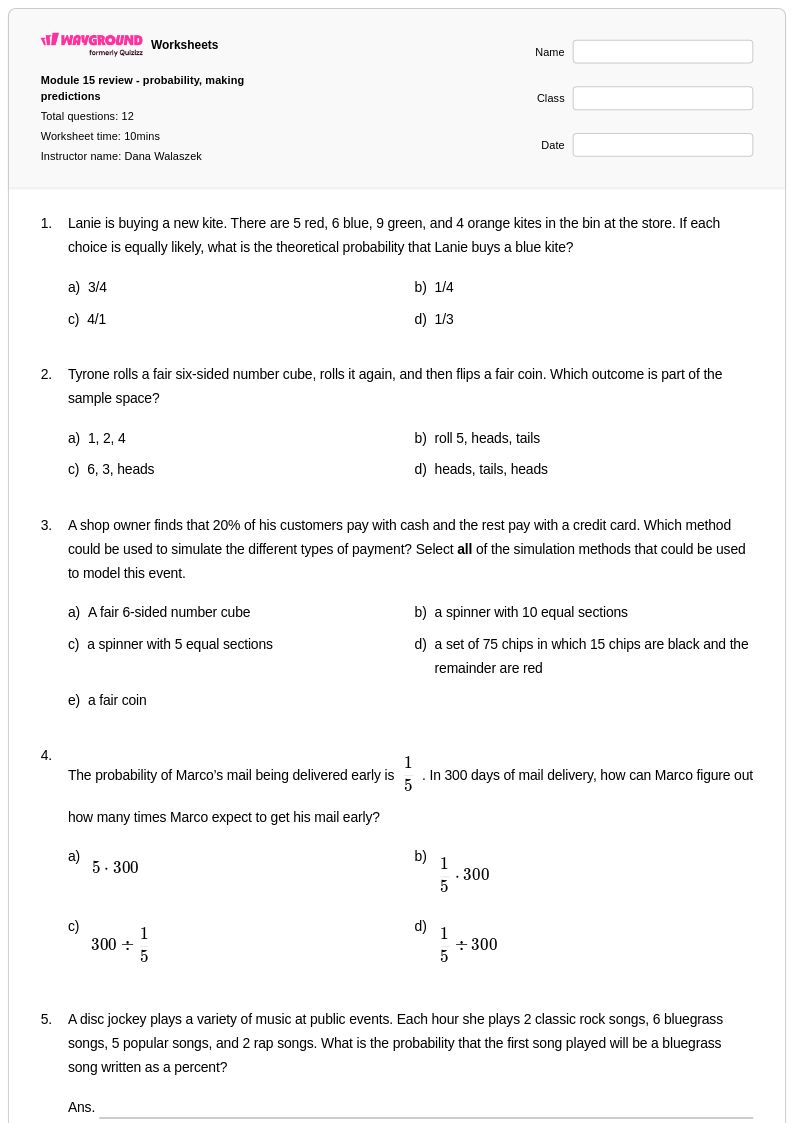
12 Hỏi
5th - 8th
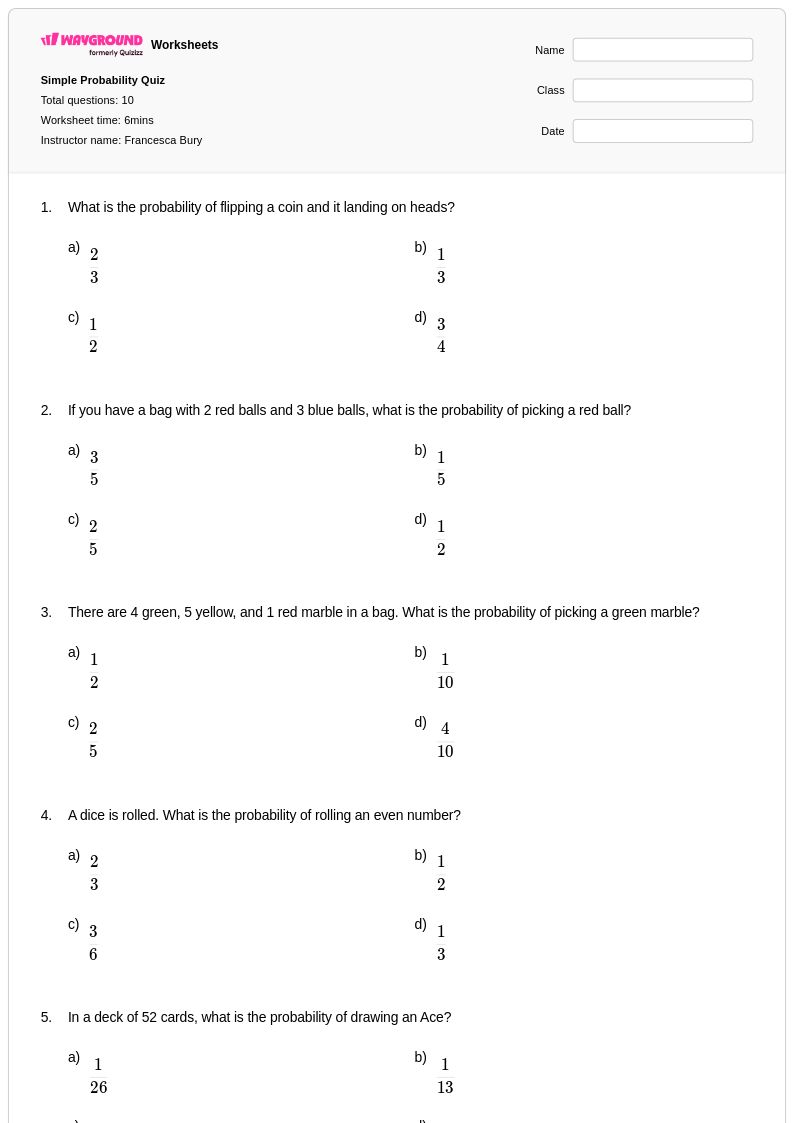
10 Hỏi
4th - Uni
12 Hỏi
4th - 7th
12 Hỏi
6th - 8th
15 Hỏi
6th - 7th
16 Hỏi
5th - 7th
11 Hỏi
1st - 12th
31 Hỏi
6th - 8th
20 Hỏi
6th
17 Hỏi
6th
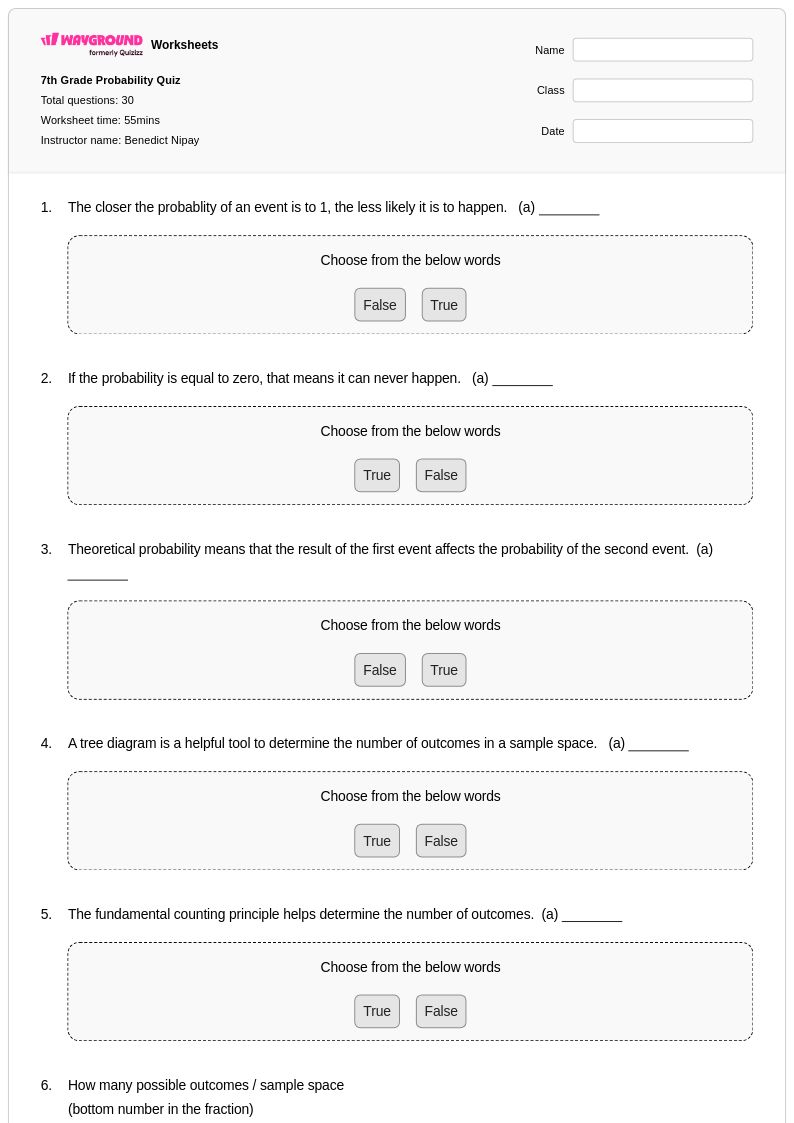
30 Hỏi
6th - 8th
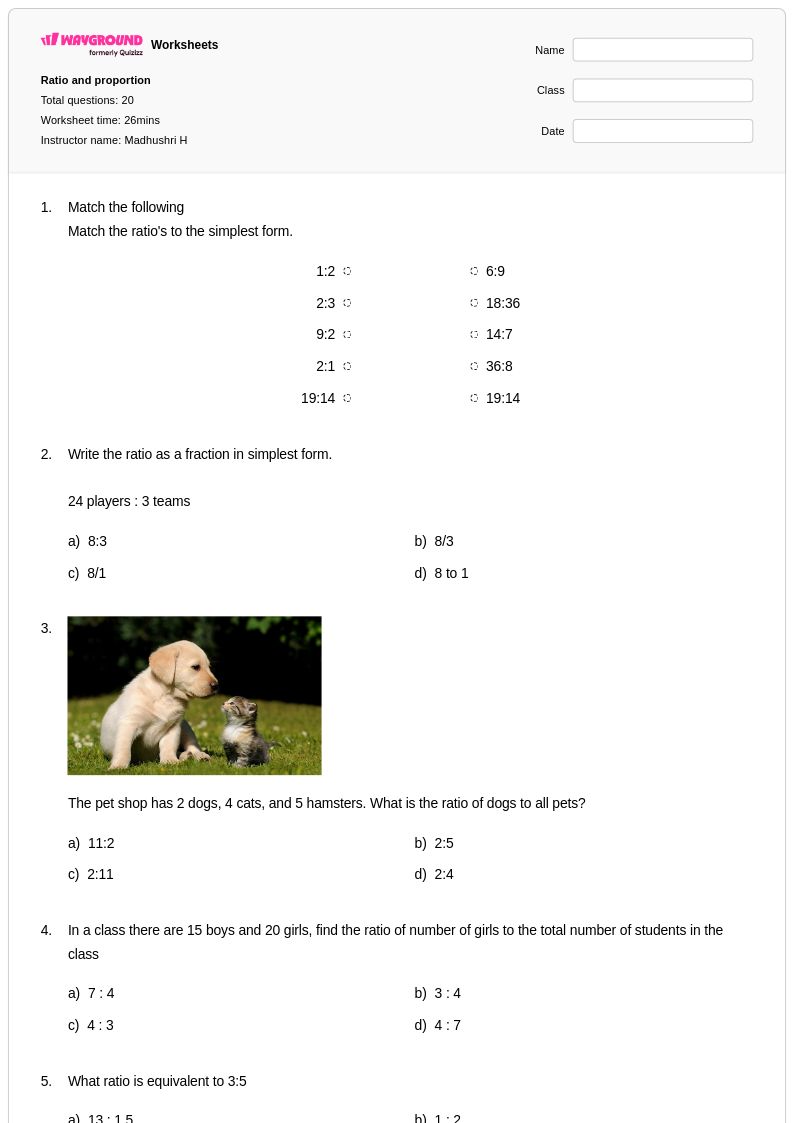
20 Hỏi
6th
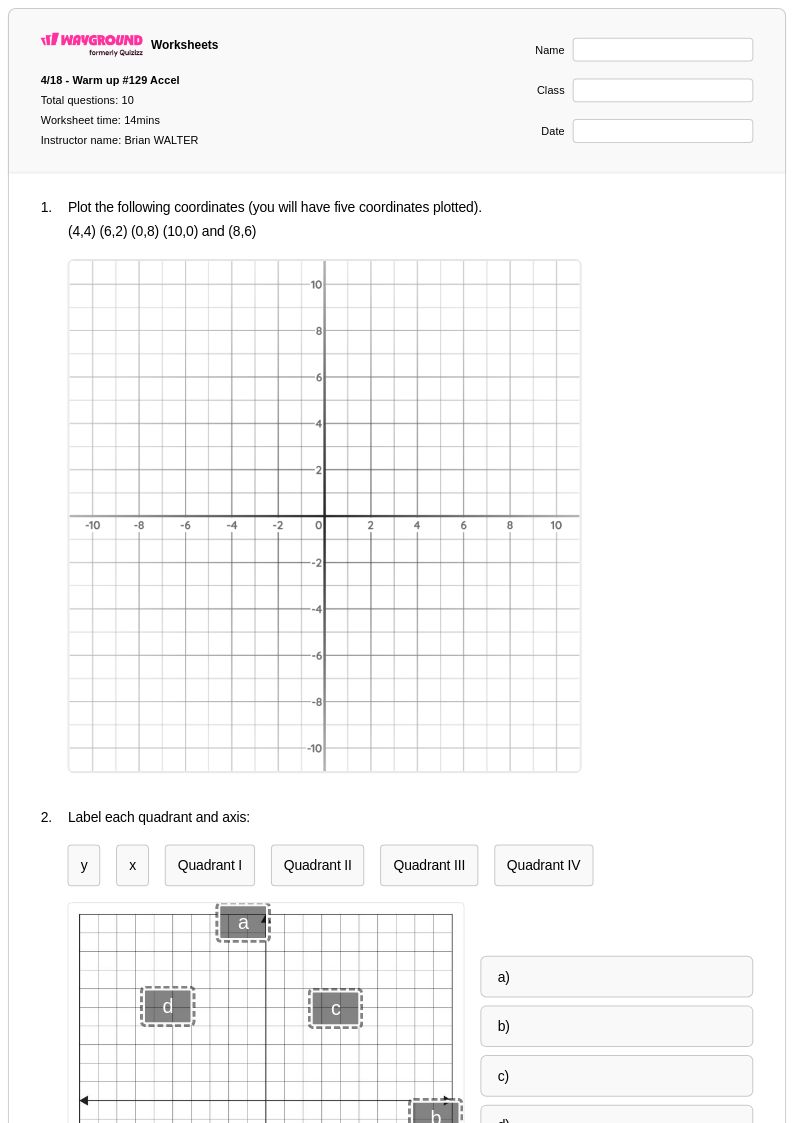
10 Hỏi
6th
Khám phá Probability and Combinatorics Bảng tính theo cấp độ
Khám phá các bảng tính chủ đề khác cho year 6
Explore printable Probability and Combinatorics worksheets for Year 6
Probability and Combinatorics worksheets for Year 6 through Wayground provide students with essential practice in fundamental concepts of chance, outcomes, and systematic counting methods. These carefully designed resources help sixth-grade students develop critical thinking skills as they explore simple probability experiments, calculate theoretical and experimental probabilities, and learn basic combinatorial principles such as tree diagrams and organized lists. Each worksheet collection includes comprehensive practice problems that guide students through hands-on activities like coin flips, dice rolls, and spinner experiments, while building their understanding of favorable outcomes versus total possible outcomes. Teachers can access complete answer keys and free printable materials that support both classroom instruction and independent study, ensuring students master these foundational mathematical concepts that will serve them throughout their academic careers.
Wayground's extensive library of teacher-created Probability and Combinatorics resources offers educators millions of high-quality materials specifically designed to meet diverse classroom needs and learning objectives. The platform's robust search and filtering capabilities allow teachers to quickly locate worksheets aligned with specific standards and skill levels, while built-in differentiation tools enable customization for students requiring additional support or enrichment opportunities. These materials are available in both printable pdf format and interactive digital versions, providing flexible options for various instructional settings and learning preferences. Whether planning comprehensive unit lessons, creating targeted remediation activities, or developing supplemental practice sessions, teachers can efficiently organize and distribute these research-based resources to strengthen student understanding of probability concepts and combinatorial reasoning skills essential for mathematical success.
FAQs
What probability concepts are taught in 6th grade?
How can I introduce probability to 6th graders in an engaging way?
What exercises help 6th graders practice foundational probability?
What's a common misconception for students new to probability?
How do these worksheets fit into the 6th-grade math curriculum?
How can I use this Wayground worksheet with my students?