Free Printable Projectile Motion Worksheets for Year 10
Enhance Year 10 physics understanding with free projectile motion worksheets and printables featuring comprehensive practice problems, step-by-step solutions, and answer keys from Wayground's expert-designed PDF collection.
Explore printable Projectile Motion worksheets for Year 10
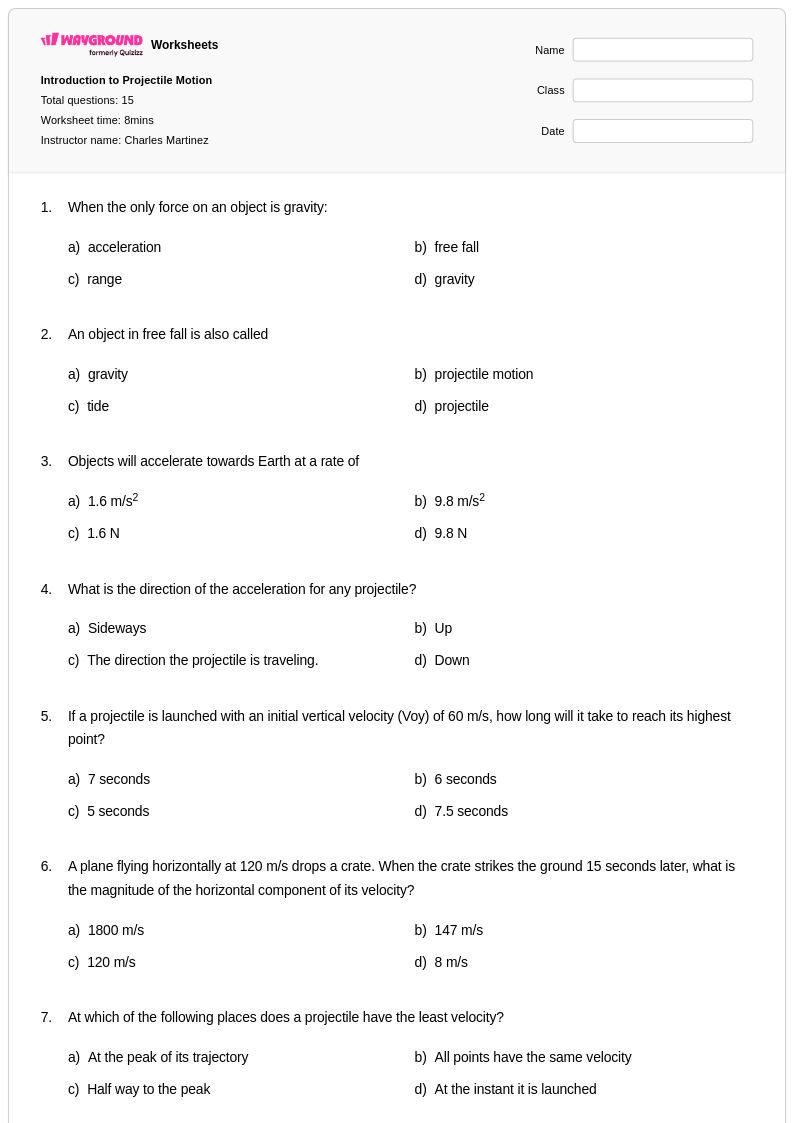
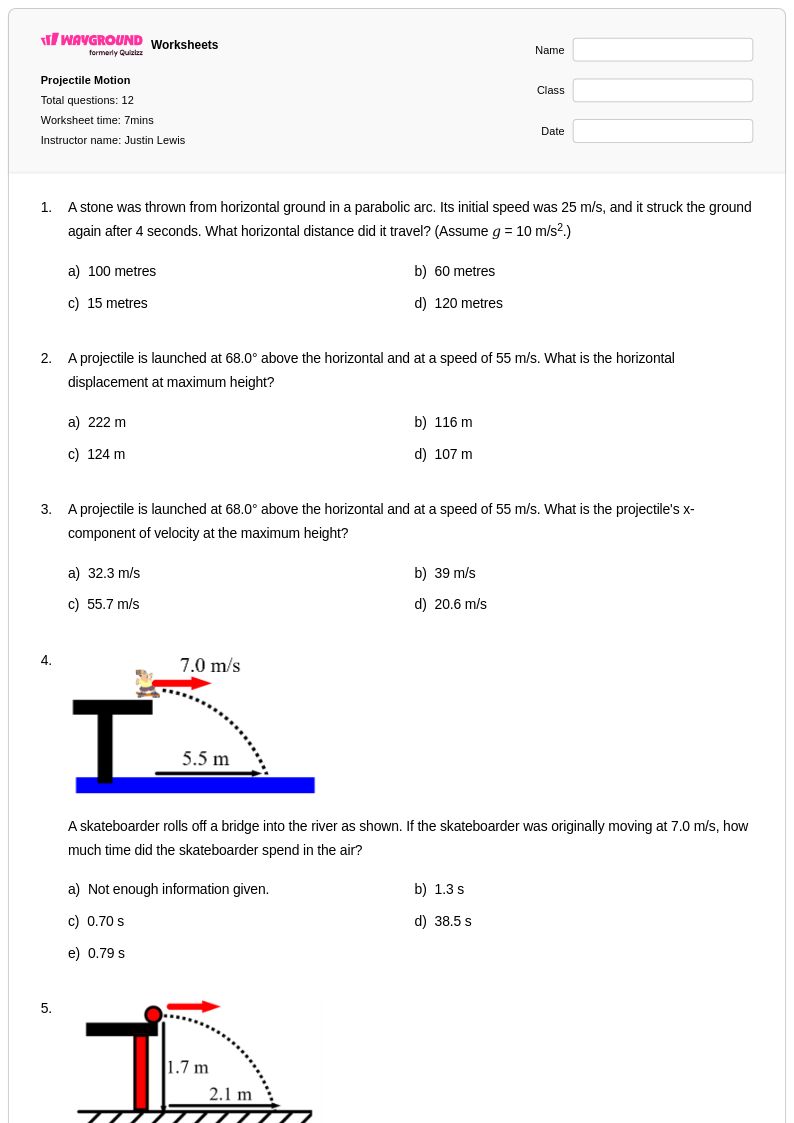
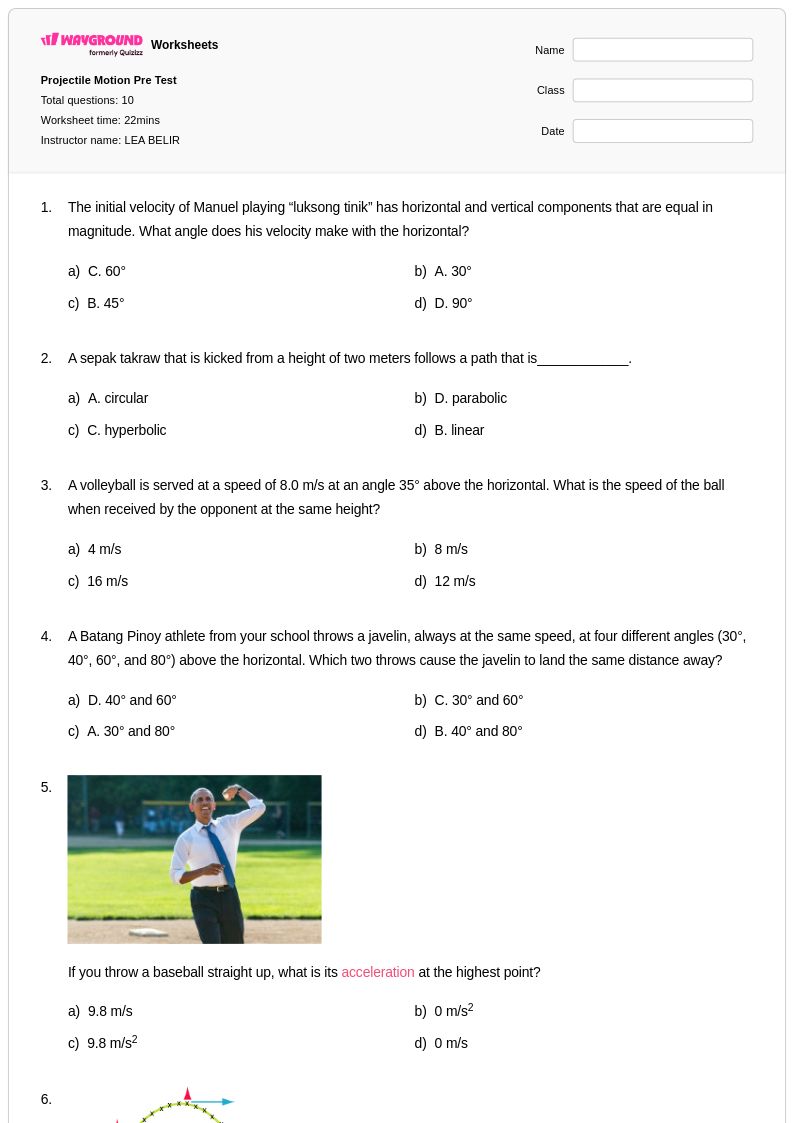
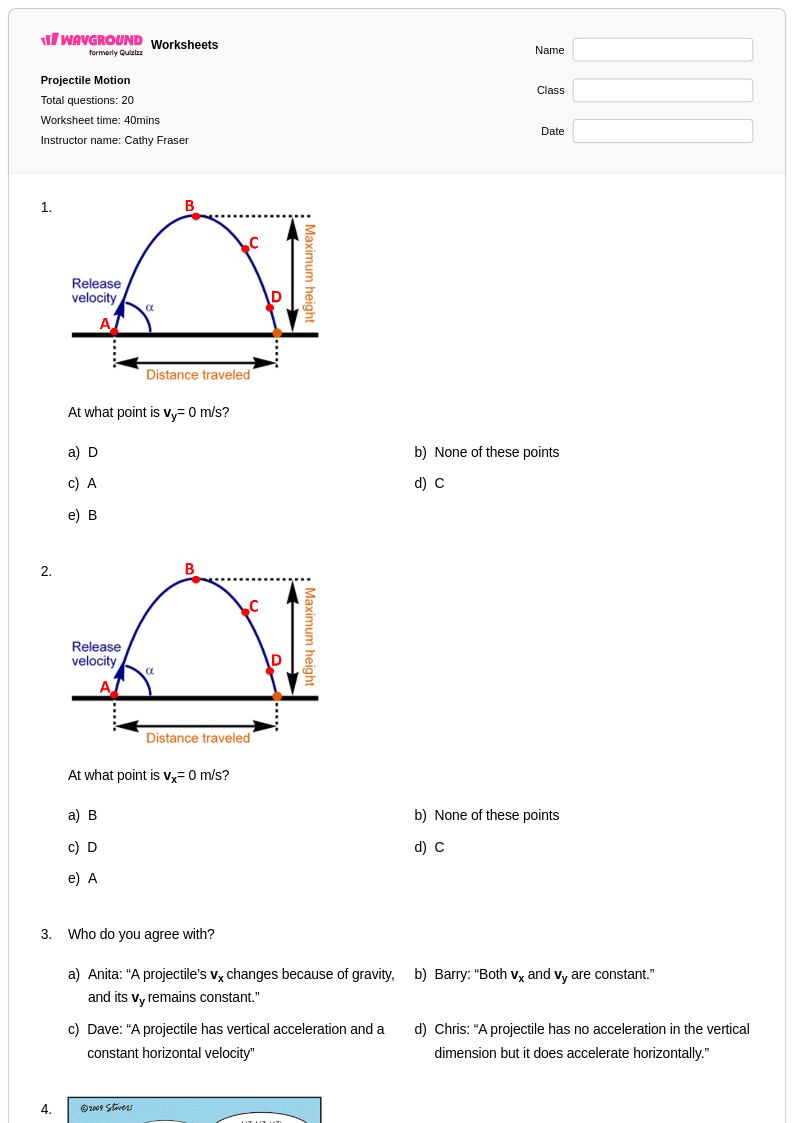
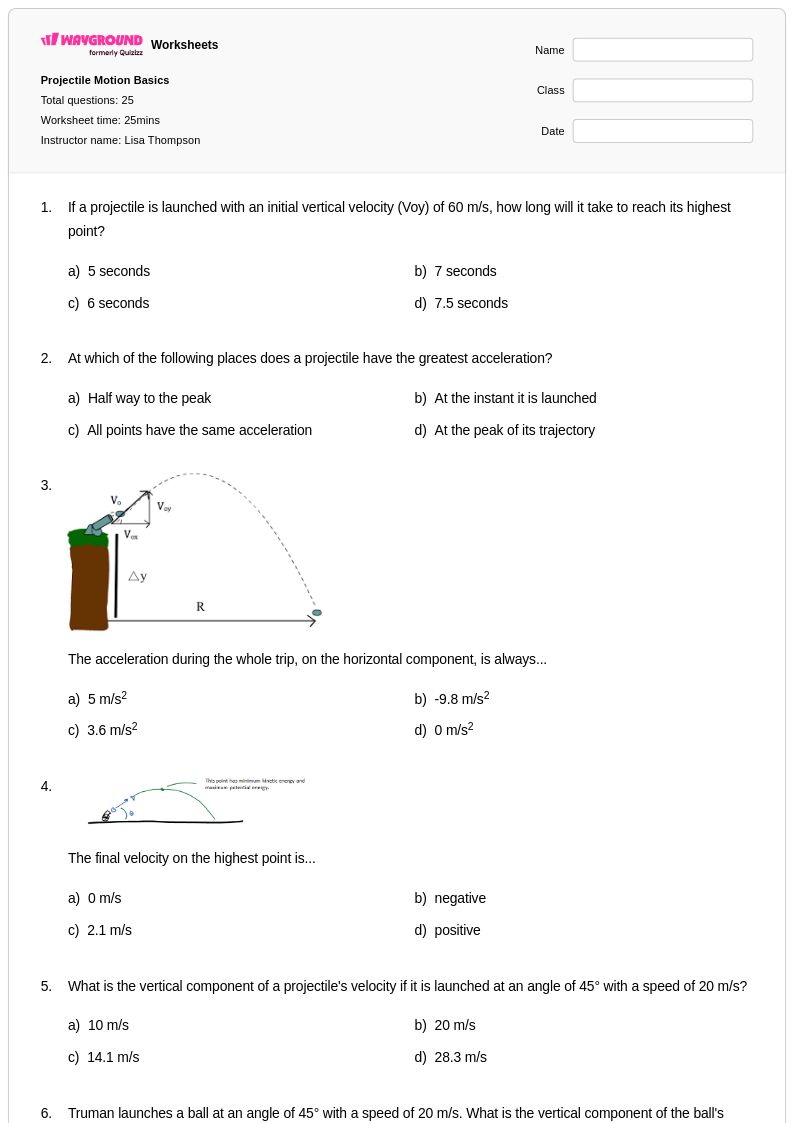
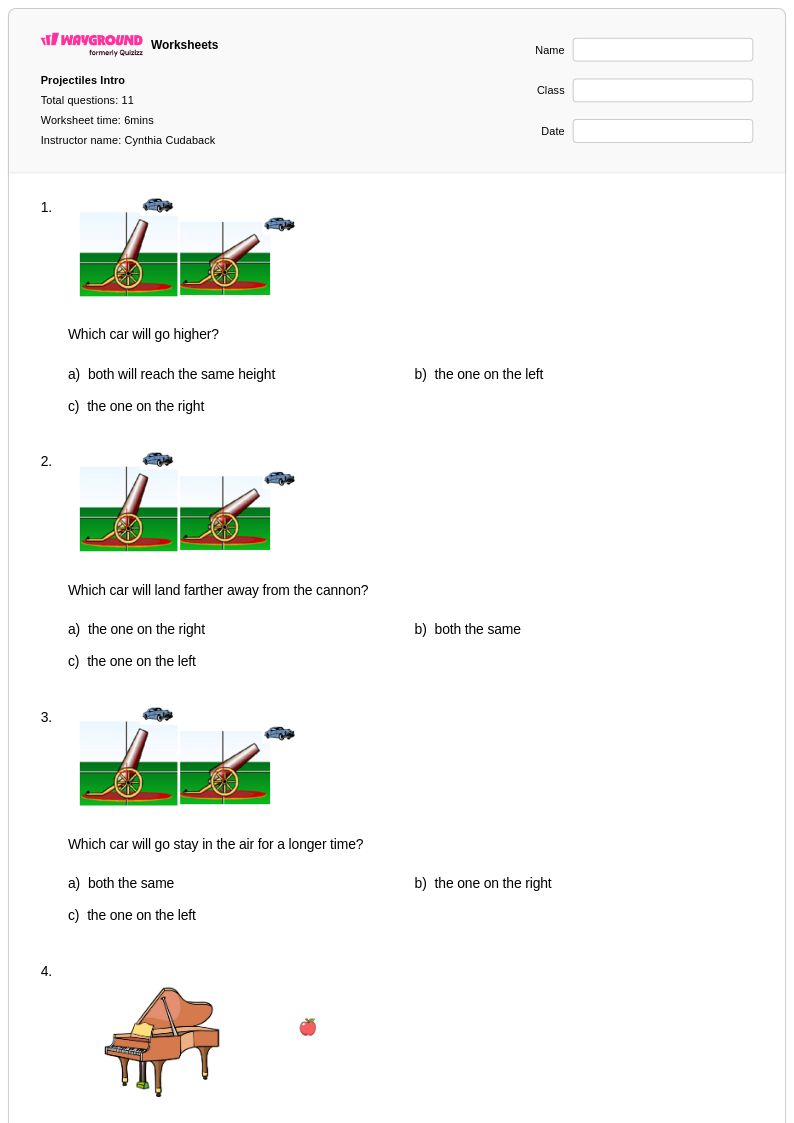
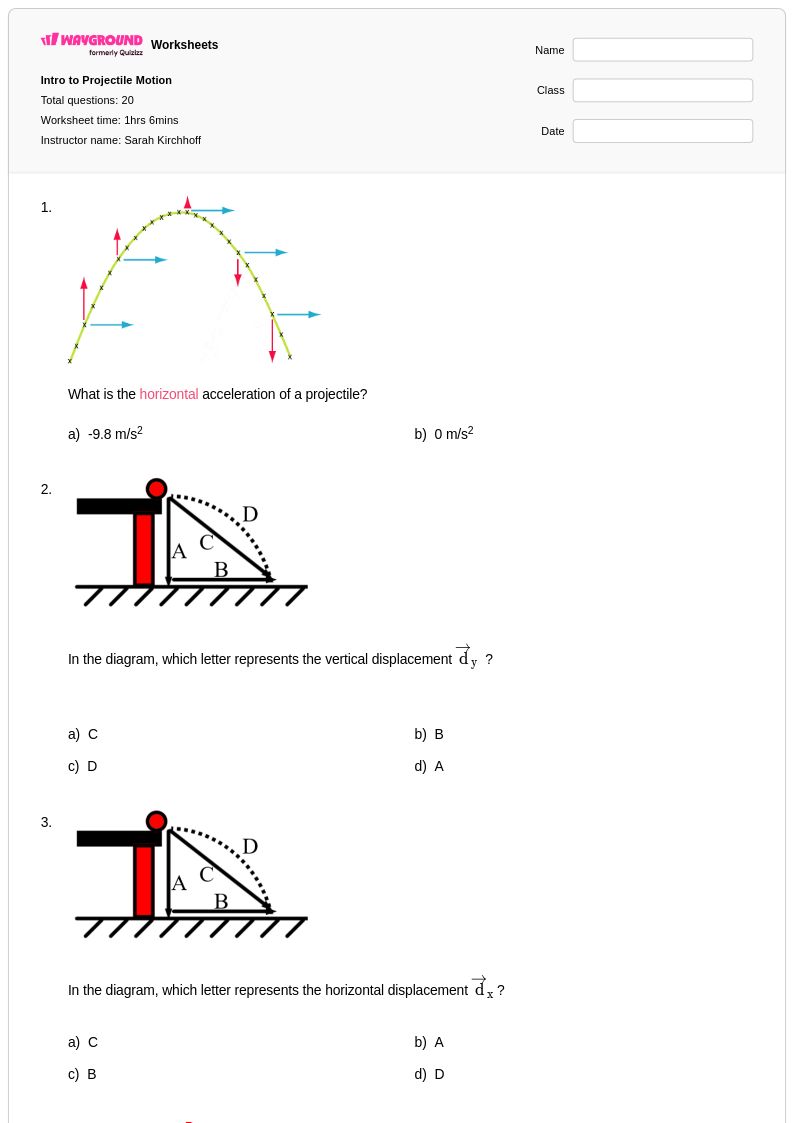
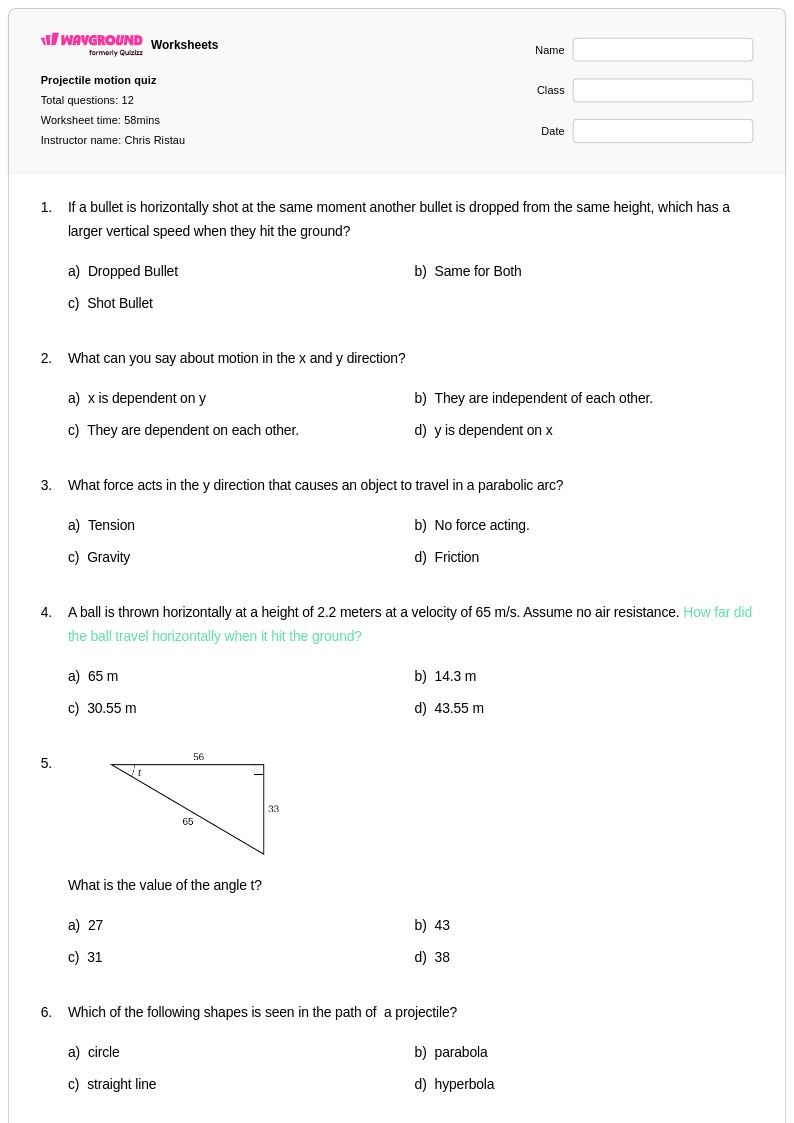
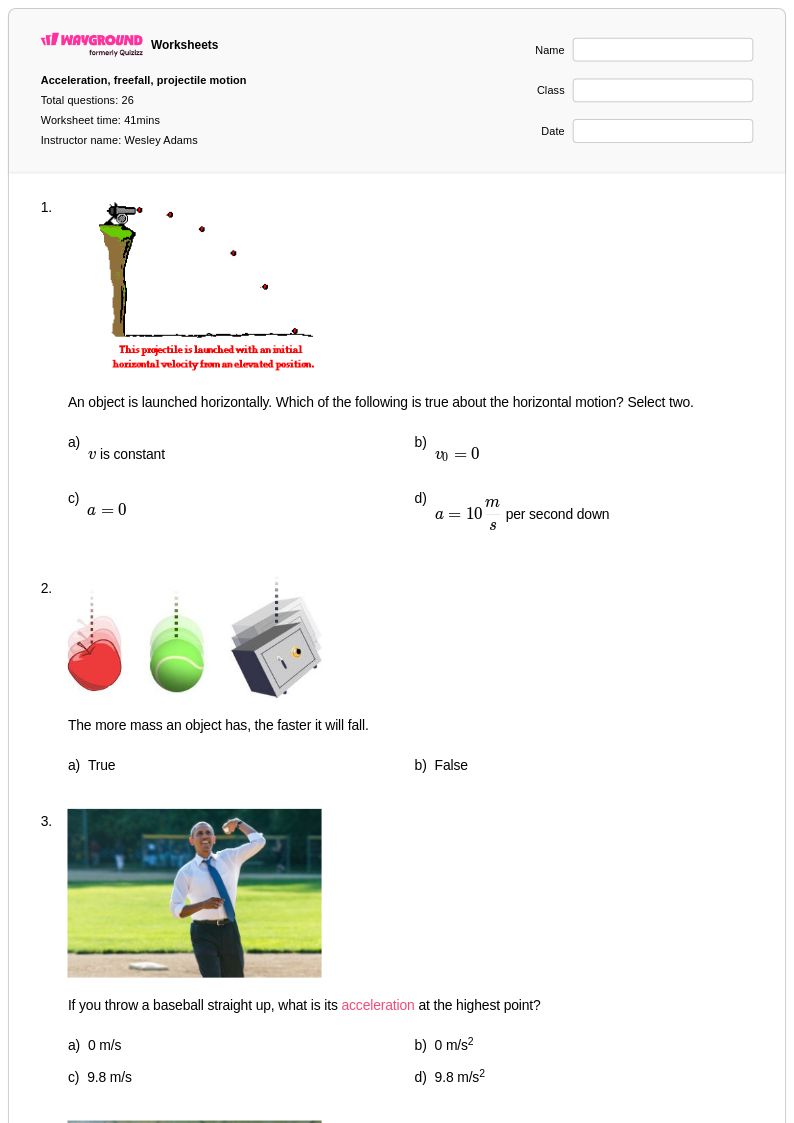
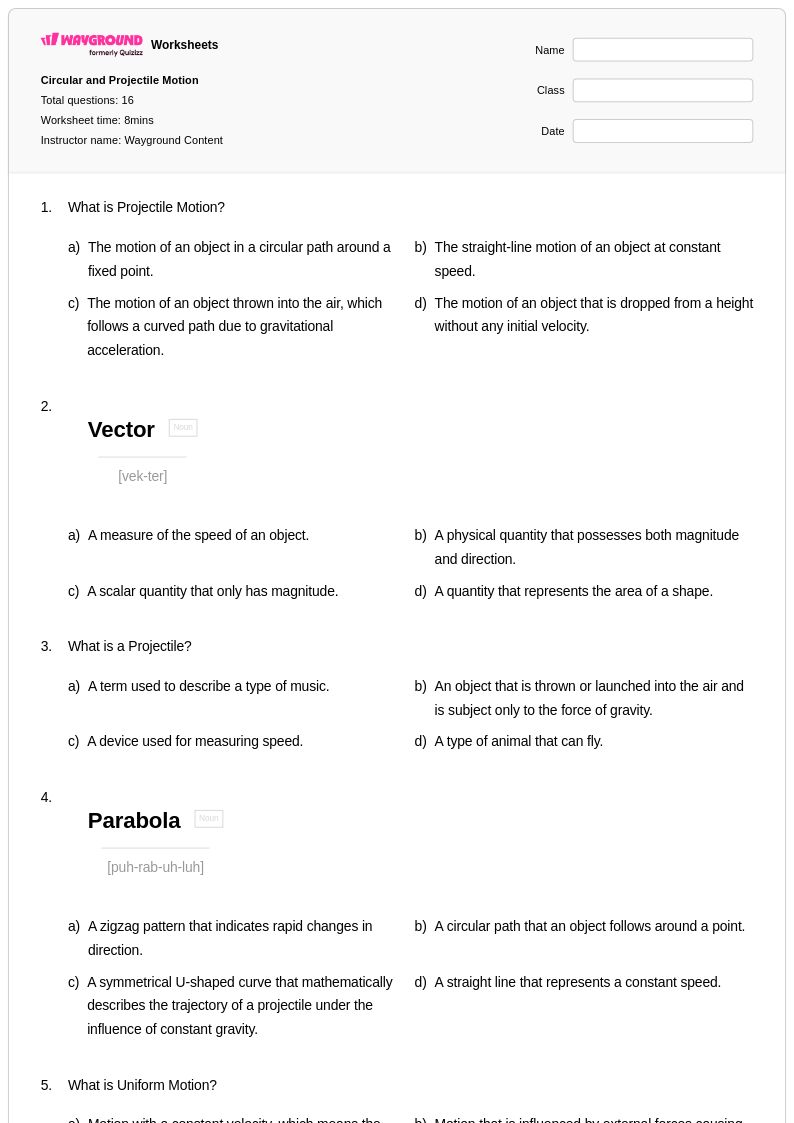
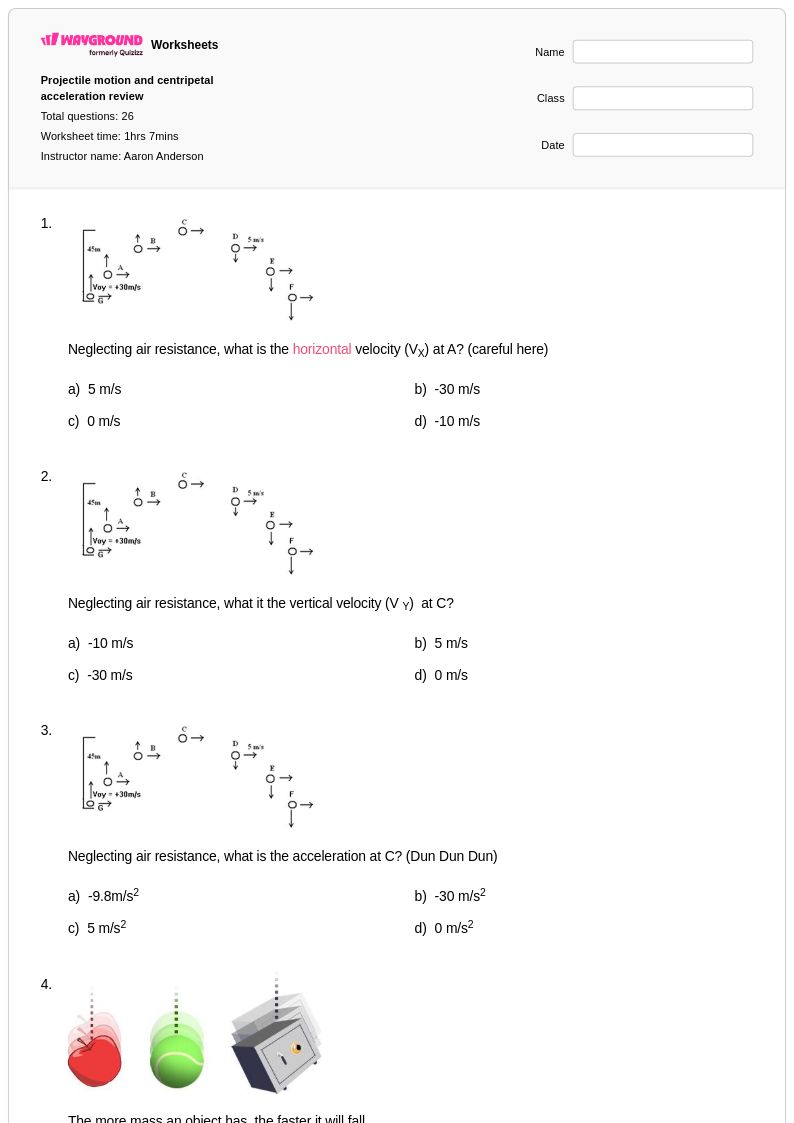
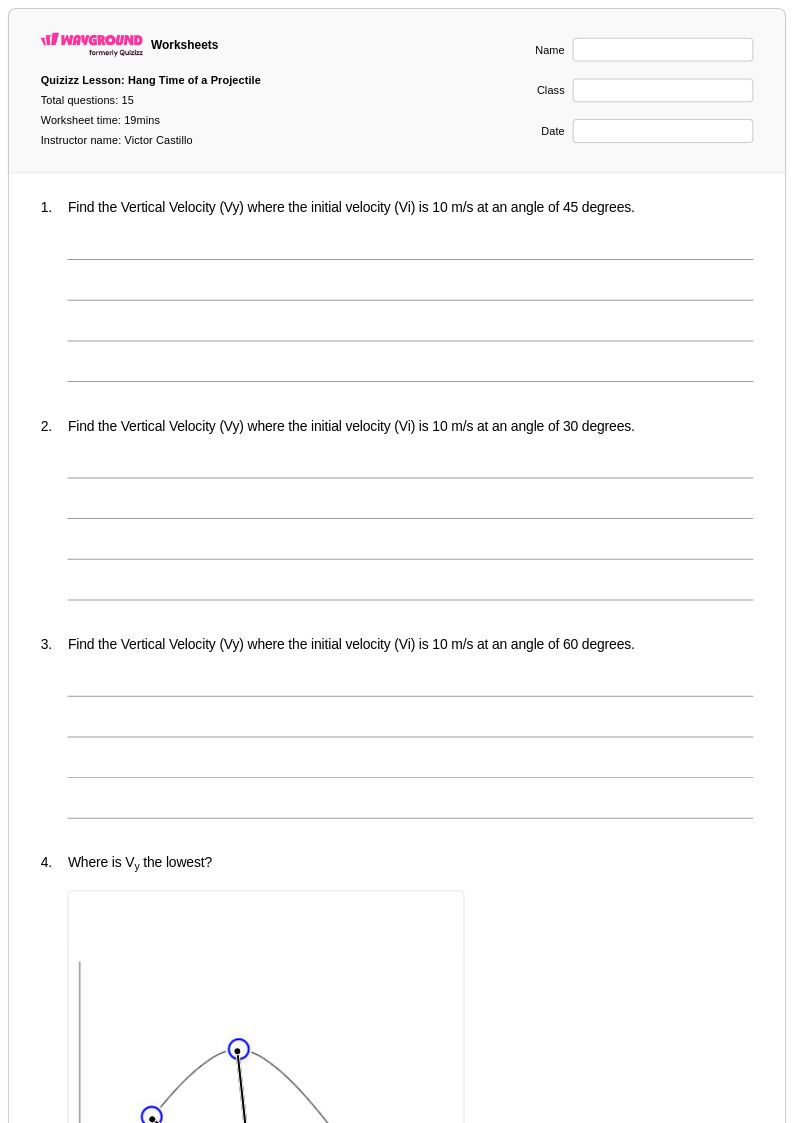
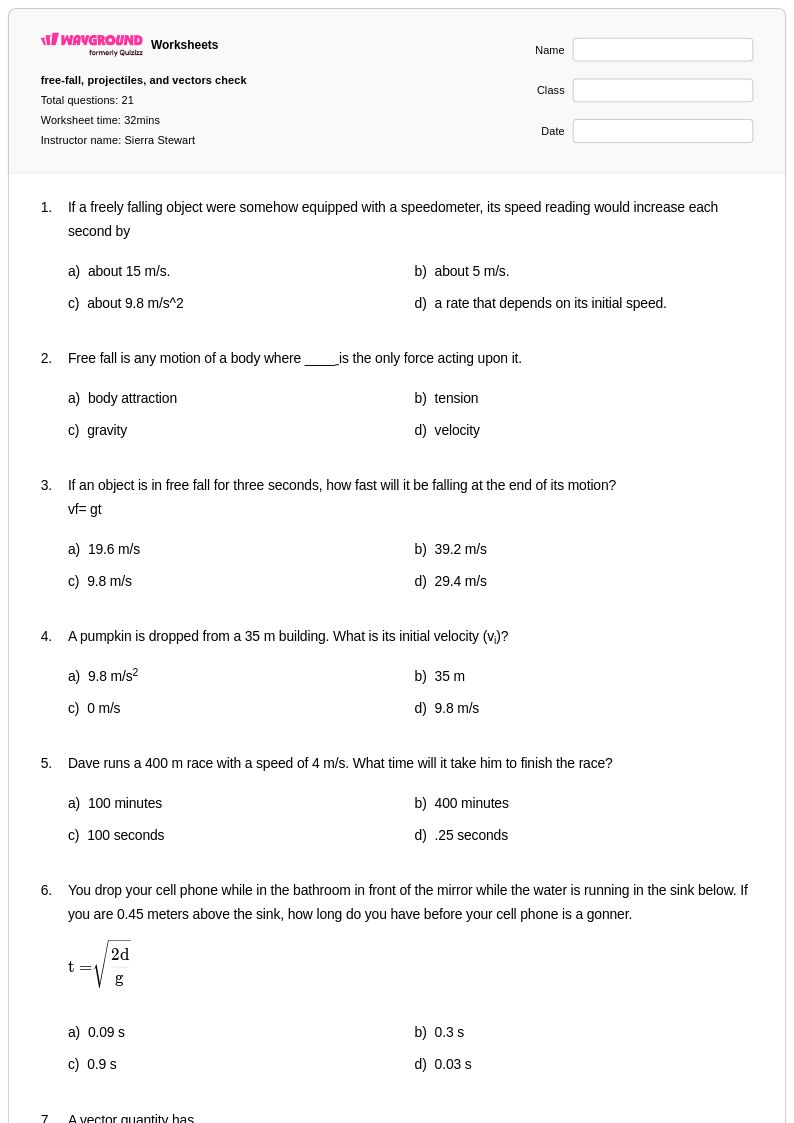
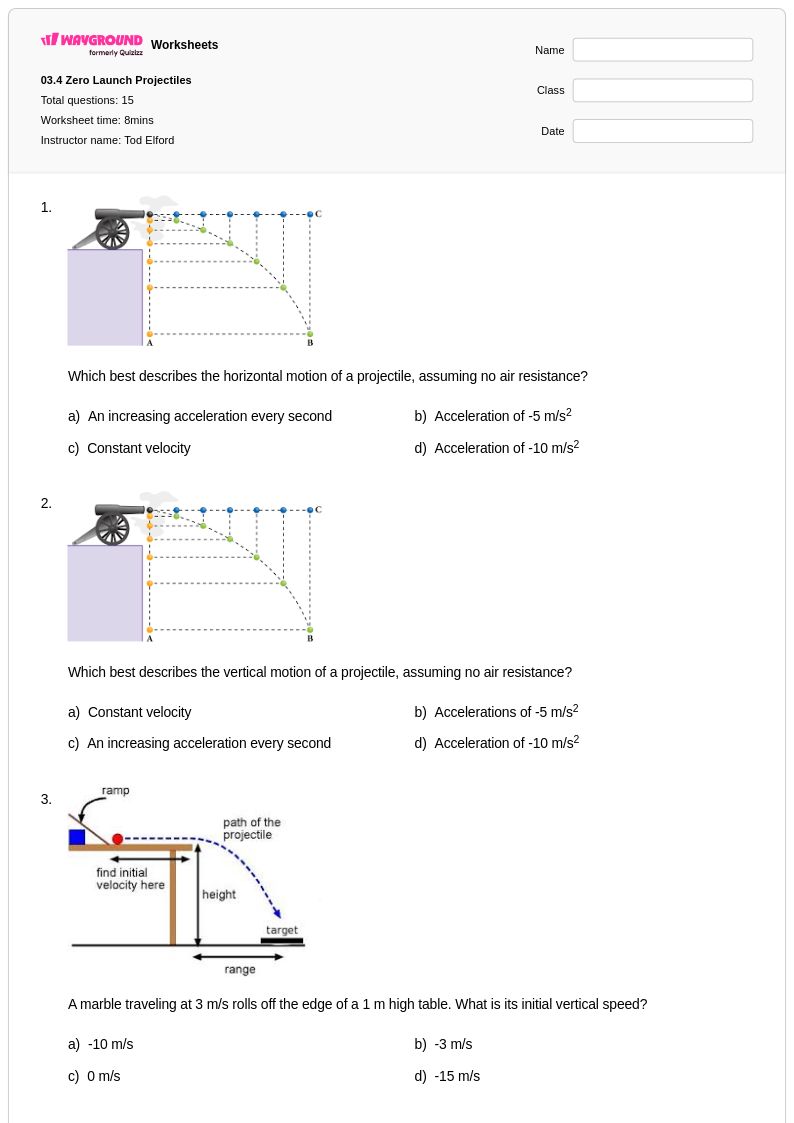
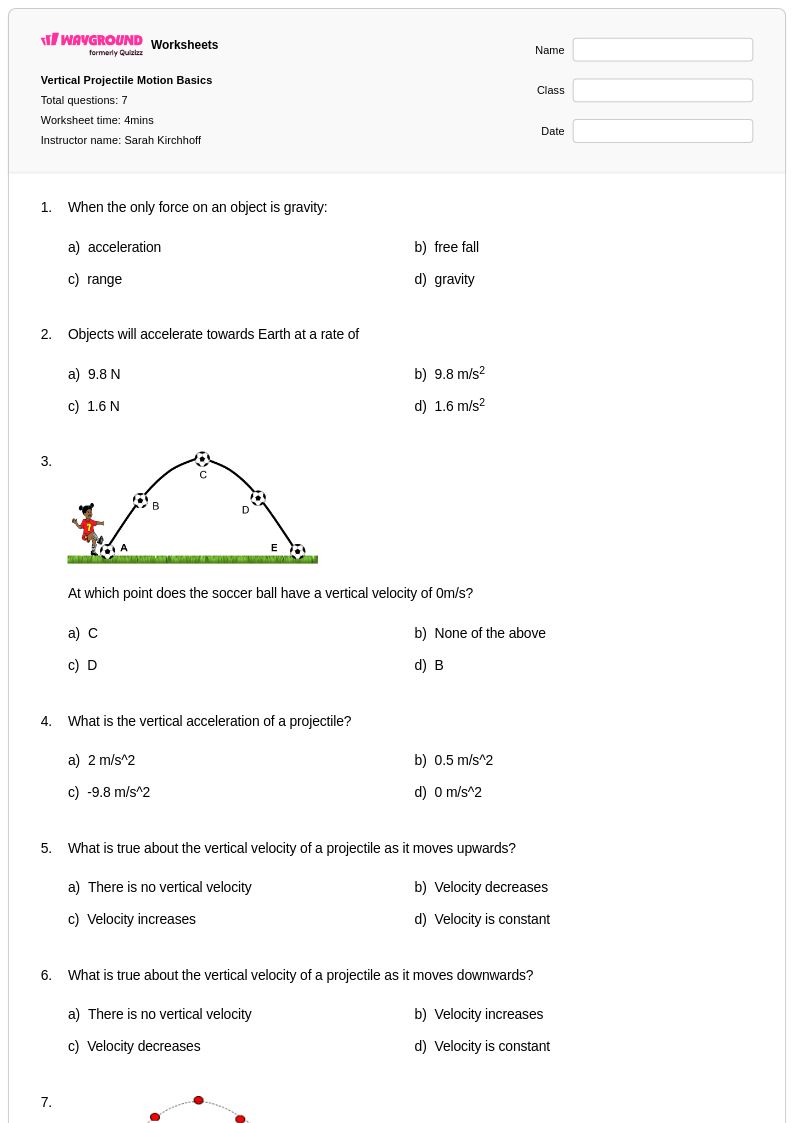
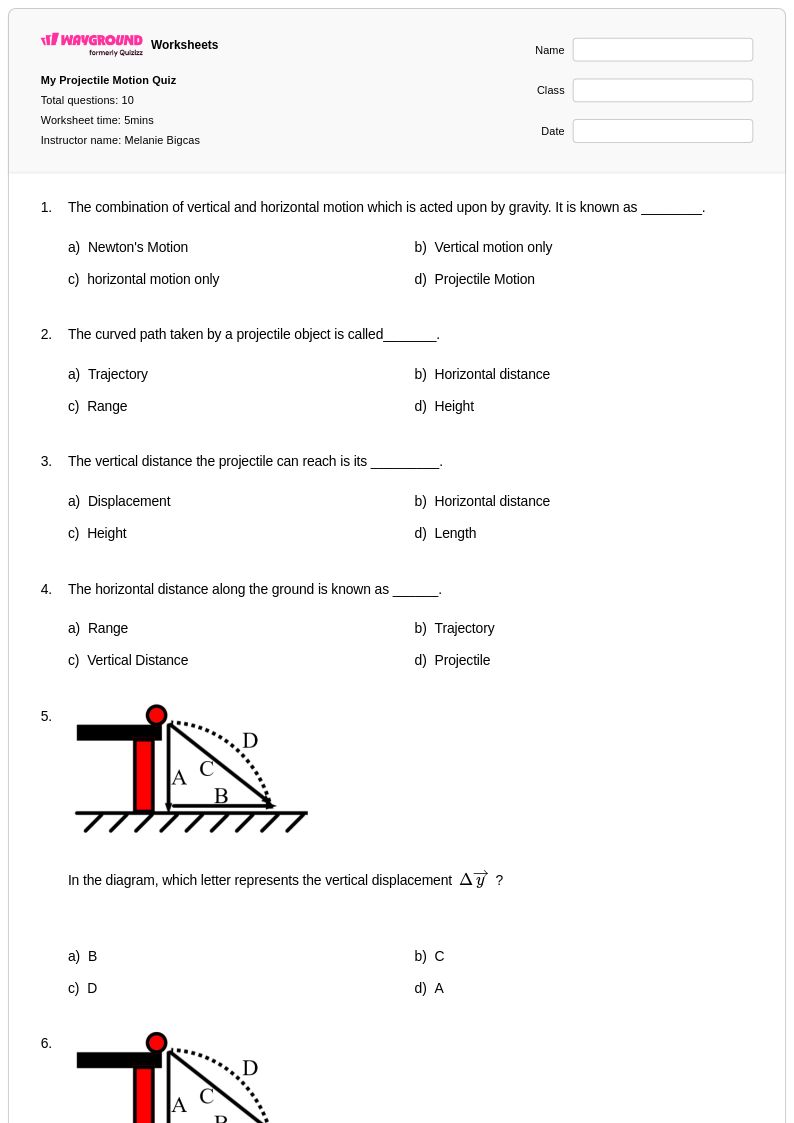
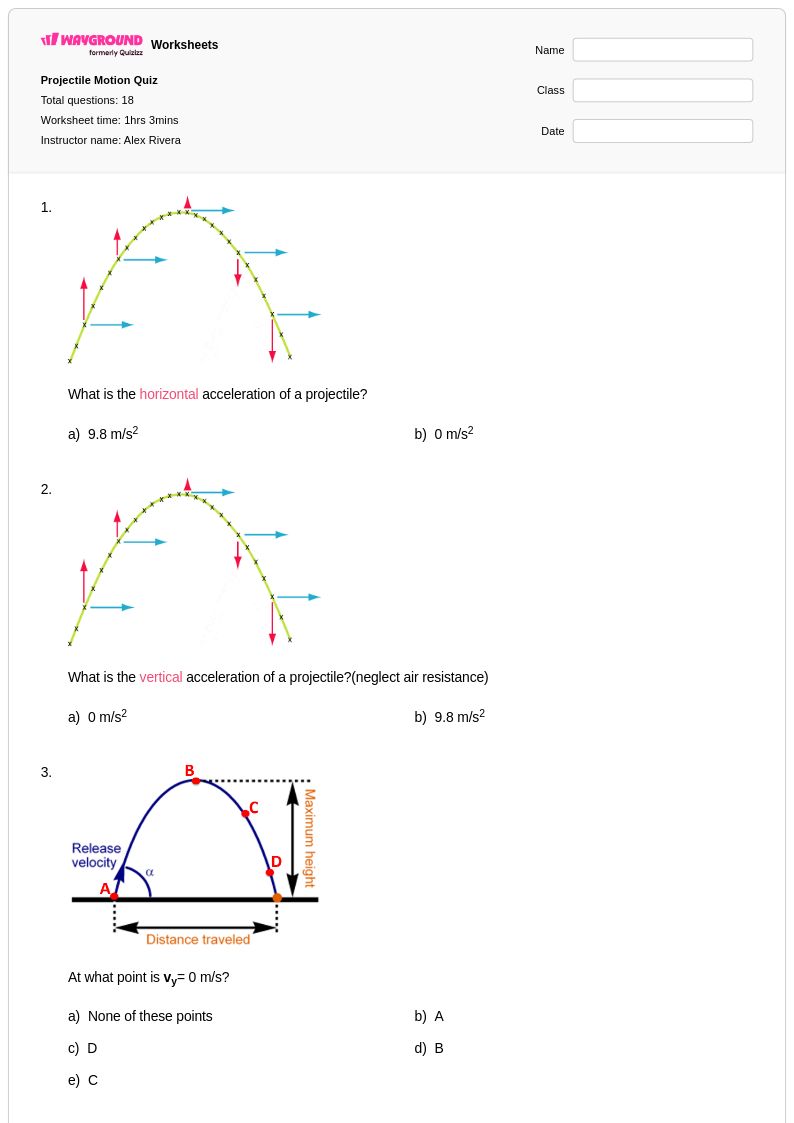
Projectile motion worksheets for Year 10 students available through Wayground (formerly Quizizz) provide comprehensive practice with the fundamental physics concepts governing objects moving through two-dimensional space under the influence of gravity. These carefully designed educational resources strengthen critical analytical skills including vector decomposition, kinematic equation application, trajectory analysis, and problem-solving techniques essential for understanding how projectiles behave in real-world scenarios. Students work through practice problems involving horizontal and vertical motion components, maximum height calculations, range determinations, and time-of-flight analysis, with each worksheet including detailed answer keys that support independent learning and self-assessment. The free printable materials cover essential subtopics such as launch angle optimization, air resistance effects, and practical applications from sports to engineering, ensuring students develop both conceptual understanding and computational proficiency in this cornerstone area of classical mechanics.
Wayground (formerly Quizizz) supports physics educators with millions of teacher-created projectile motion resources that streamline lesson planning and enhance student engagement through robust search and filtering capabilities aligned with national and state science standards. The platform's differentiation tools allow teachers to customize worksheets based on individual student needs, offering multiple difficulty levels and problem types that support both remediation for struggling learners and enrichment opportunities for advanced students. These versatile materials are available in both printable pdf formats for traditional classroom use and interactive digital versions that provide immediate feedback, enabling flexible implementation across diverse learning environments. Teachers can efficiently locate specific projectile motion concepts, modify existing worksheets to match their curriculum pacing, and access comprehensive solution sets that facilitate effective skill practice and formative assessment throughout their physics instruction.
FAQs
How do I teach projectile motion to physics students?
Teach projectile motion by first building student fluency with vector decomposition, establishing that horizontal and vertical motion are independent of one another. Start with purely horizontal or vertical scenarios before combining components, and use real-world contexts like basketball shots or cliff launches to anchor the abstract math. Once students can separate initial velocity into components using trigonometry, introduce time of flight as the linking variable between the two axes.
What practice problems help students master projectile motion calculations?
Effective practice problems progress from basic scenarios, such as an object launched horizontally from a known height, to multi-step problems involving launch angles, initial velocity, and range optimization. Students should practice solving for time of flight, maximum height, and horizontal range independently before tackling problems that require finding multiple unknowns. Problems grounded in real contexts, such as ballistics, sports physics, or projectile motion on other planets with varying gravitational fields, deepen conceptual understanding alongside procedural fluency.
What mistakes do students commonly make when solving projectile motion problems?
The most common error is failing to treat horizontal and vertical motion as independent, leading students to incorrectly apply vertical equations to horizontal displacement or vice versa. Students also frequently forget to decompose initial velocity into components when a launch angle is given, or they misidentify the direction of gravitational acceleration. A subtler error occurs at maximum height, where students assume total velocity is zero rather than recognizing only the vertical component equals zero at that point.
How do I differentiate projectile motion instruction for students at different skill levels?
For students who are still developing fluency, scaffold problems by providing partially completed diagrams showing velocity components, or reduce the number of unknowns per problem so they build confidence incrementally. Advanced students benefit from optimization problems, such as finding the launch angle that maximizes range, or scenarios involving air resistance and non-uniform gravitational fields. On Wayground, teachers can apply accommodations such as reduced answer choices or read-aloud support to individual students, allowing the rest of the class to work at standard settings without disruption.
How can I use Wayground's projectile motion worksheets in my classroom?
Wayground's projectile motion worksheets are available as printable PDFs for traditional classroom use and in digital formats for technology-integrated environments, making them flexible for in-class practice, homework, and remediation. Teachers can also host worksheets directly as a quiz on Wayground, enabling real-time student progress tracking. Each worksheet includes a complete answer key, supporting both teacher-led instruction and independent student self-assessment.
How does launch angle affect the range and trajectory of a projectile?
For a projectile launched from ground level with a fixed initial speed, a 45-degree angle produces the maximum horizontal range because it optimally balances the vertical and horizontal components of velocity. Angles greater or less than 45 degrees produce shorter ranges, and complementary angles such as 30 and 60 degrees yield identical ranges. Increasing the launch angle increases maximum height and time of flight while decreasing horizontal velocity, which is why understanding the trade-off between these variables is central to projectile motion analysis.