Explore Wayground's comprehensive collection of free sedimentary rocks worksheets and printables with answer keys, featuring practice problems that help students master rock formation, classification, and Earth's geological processes through engaging PDF activities.
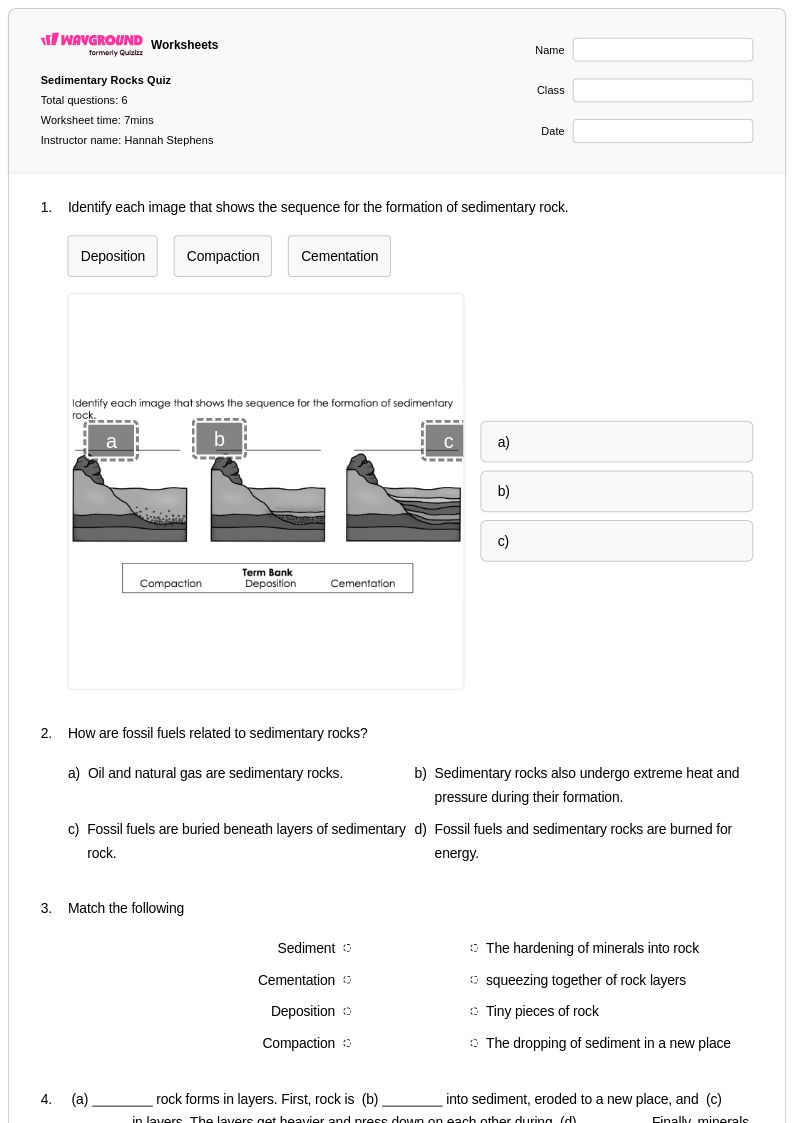
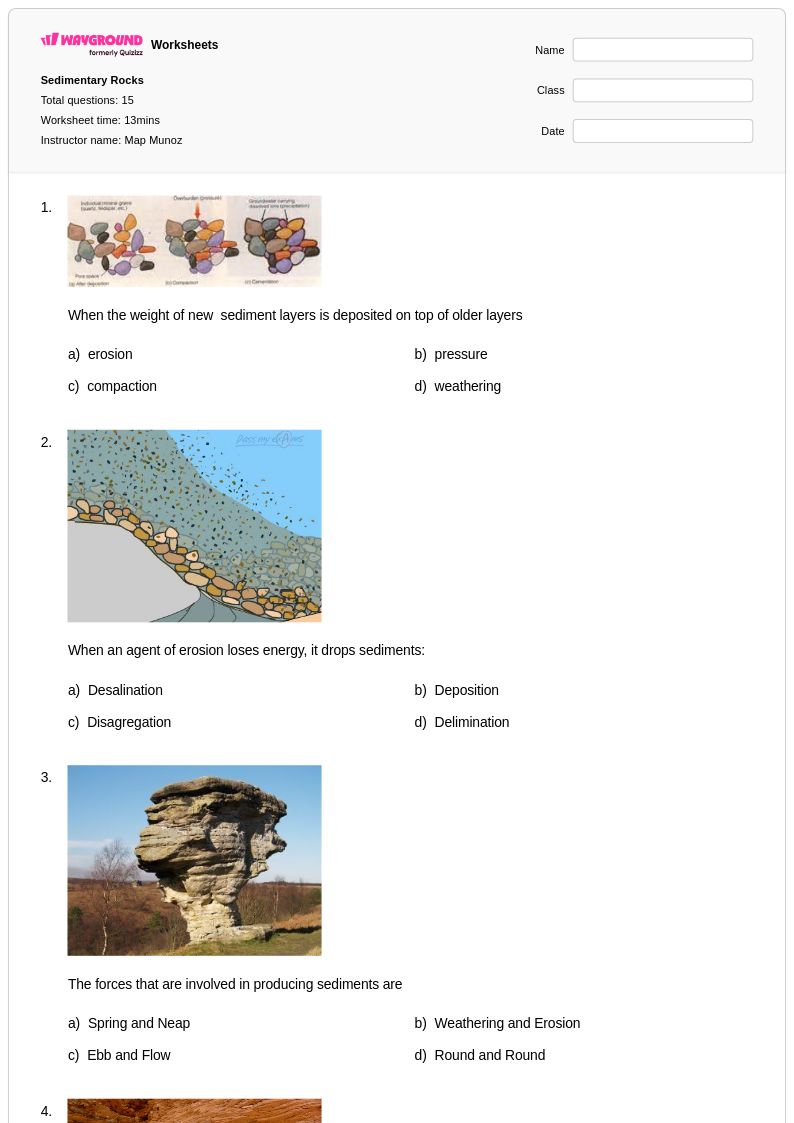
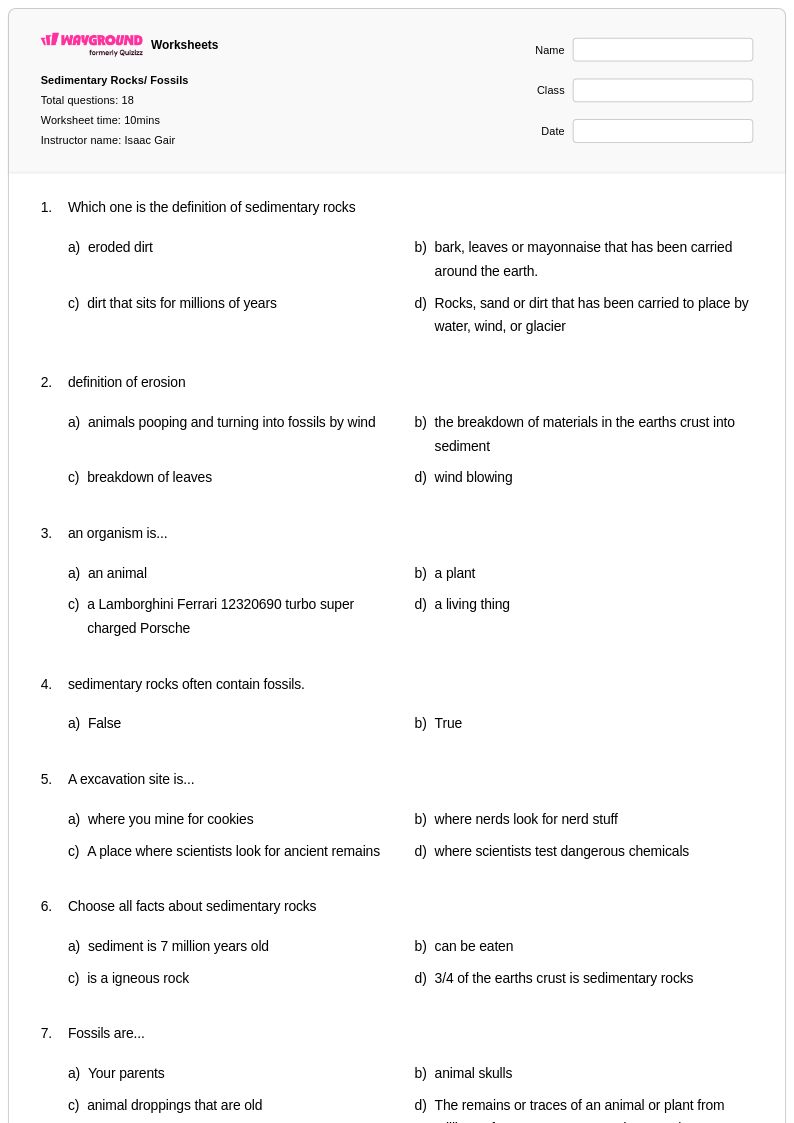
Sedimentary rocks worksheets available through Wayground (formerly Quizizz) provide comprehensive coverage of one of Earth's most important rock formations, helping students understand the processes of weathering, erosion, deposition, and lithification that create these layered geological structures. These educational resources strengthen critical thinking skills as students analyze how sedimentary rocks form in different environments, identify common types like sandstone, limestone, and shale, and interpret the stories these rocks tell about Earth's past climates and conditions. The practice problems guide learners through hands-on activities such as classifying rock samples, understanding grain size and sorting patterns, and connecting sedimentary rock characteristics to their formation environments. Teachers benefit from having access to answer keys and free printables that support both classroom instruction and independent study, with pdf formats ensuring easy distribution and consistent formatting across different devices and printing systems.
Wayground (formerly Quizizz) supports educators with an extensive collection of teacher-created sedimentary rocks resources, drawing from millions of high-quality materials that have been developed and refined by classroom professionals. The platform's robust search and filtering capabilities allow teachers to quickly locate worksheets that align with specific learning standards and match their students' ability levels, while differentiation tools enable customization for diverse learning needs within the same classroom. These resources are available in both printable and digital formats, including downloadable pdf versions, giving teachers the flexibility to adapt their instruction whether conducting hands-on laboratory work or remote learning sessions. The comprehensive nature of these worksheet collections supports effective lesson planning by providing materials suitable for initial concept introduction, skill reinforcement, remediation for struggling learners, and enrichment opportunities for advanced students exploring connections between sedimentary rocks and broader Earth science concepts.
FAQs
How do I teach sedimentary rocks to my students?
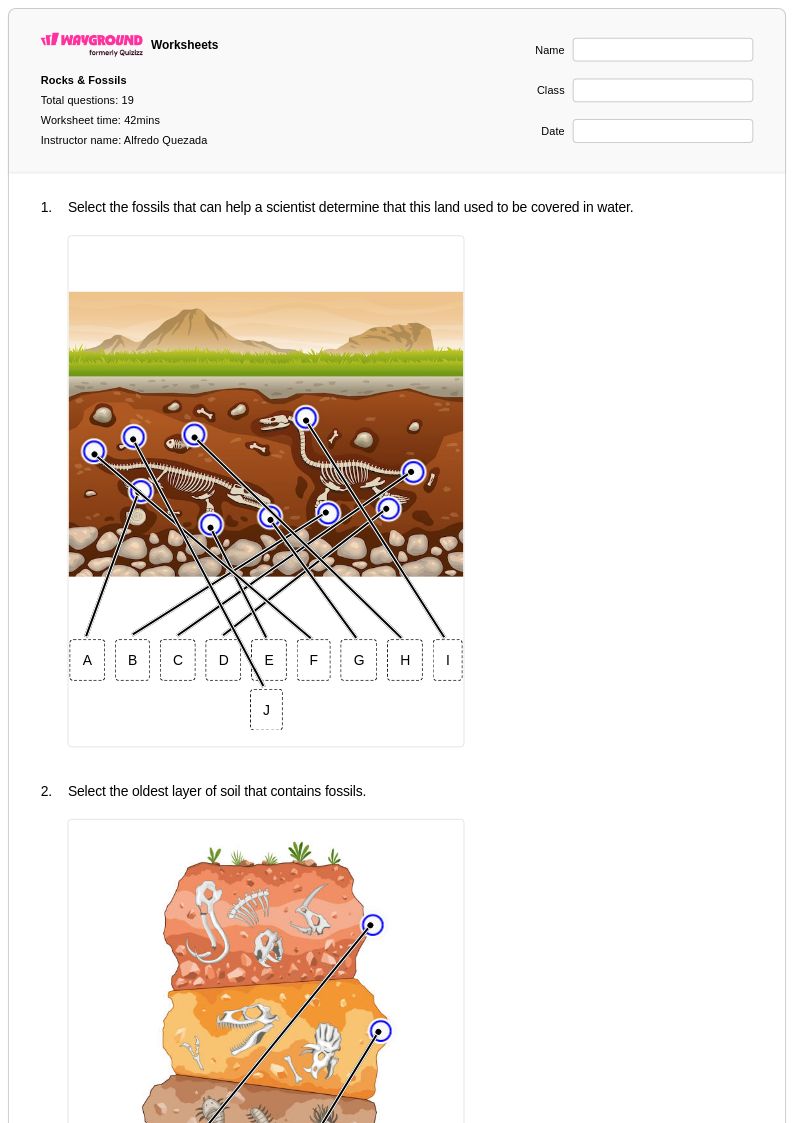
Start by grounding students in the four-stage formation process: weathering, erosion, deposition, and lithification. Use visual cross-sections to show how sediment layers accumulate over time, then introduce common rock types like sandstone, limestone, and shale as concrete examples of each environment. Connecting rock characteristics to the conditions that formed them, such as grain size indicating water energy or fossil content suggesting ancient ocean floors, helps students move beyond memorization toward genuine geological reasoning.
What exercises help students practice identifying sedimentary rocks?
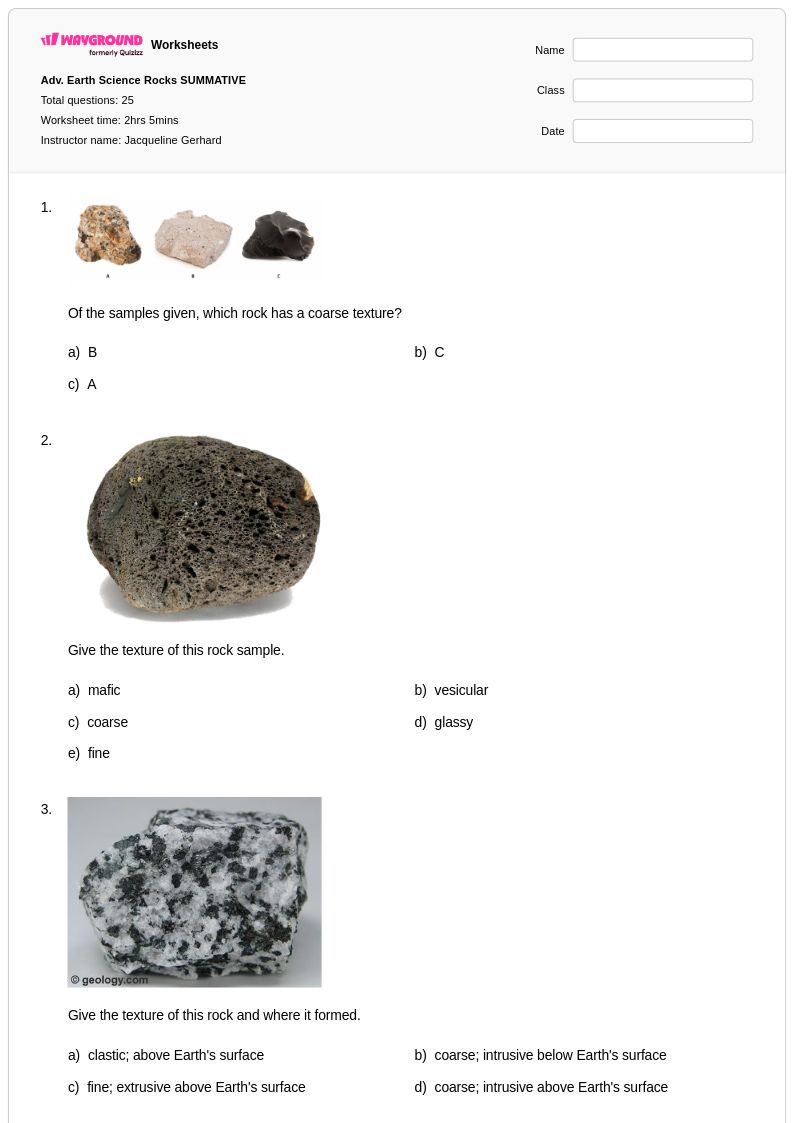
Classifying rock samples by grain size, texture, and composition is one of the most effective practice exercises because it requires students to apply formation knowledge rather than just recall names. Worksheets that ask students to match rock characteristics to their depositional environments, such as linking limestone to shallow marine settings or shale to quiet, deep water, reinforce the cause-and-effect logic behind sedimentary geology. Practice problems involving sorting patterns and layering sequences also build analytical skills that transfer well to reading real geological profiles.
What mistakes do students commonly make when learning about sedimentary rocks?
A common misconception is that sedimentary rocks form quickly, when in reality lithification occurs over thousands to millions of years under pressure and cementation. Students also frequently confuse the three rock types by focusing only on appearance rather than origin, so it helps to anchor sedimentary rocks specifically to surface processes like erosion and deposition. Another frequent error is treating grain size as purely a physical trait without connecting it to the energy of the depositional environment, which is a key interpretive skill in Earth science.
How can I use sedimentary rocks worksheets to assess student understanding?
Use worksheets that ask students to interpret rock characteristics and infer formation conditions rather than simply label or name rock types, since this reveals whether they understand the underlying processes. Questions that require students to sequence the stages of rock formation or explain what a rock's features tell us about past environments are particularly effective for revealing gaps in conceptual understanding. Reviewing common errors in grain size classification or environment matching can also guide targeted reteaching before moving into the broader rock cycle.
How do I use Wayground's sedimentary rocks worksheets in my classroom?
Wayground's sedimentary rocks worksheets are available as printable PDFs for traditional classroom use and in digital formats for technology-integrated or remote learning environments. You can also host the material as a quiz directly on Wayground, which allows for interactive student engagement and immediate feedback. All worksheets include answer keys, making them practical for both guided instruction and independent student work.
How can I differentiate sedimentary rocks instruction for students with different learning needs?
For students who need additional support, Wayground offers built-in accommodation tools including read-aloud functionality for question text, reduced answer choices to lower cognitive load, and extended time settings that can be configured per student. These accommodations can be applied individually while the rest of the class works under default settings, so differentiation happens seamlessly without singling students out. For advanced learners, worksheets that explore connections between sedimentary rock evidence and Earth's past climates or conditions provide meaningful enrichment beyond standard classification tasks.