
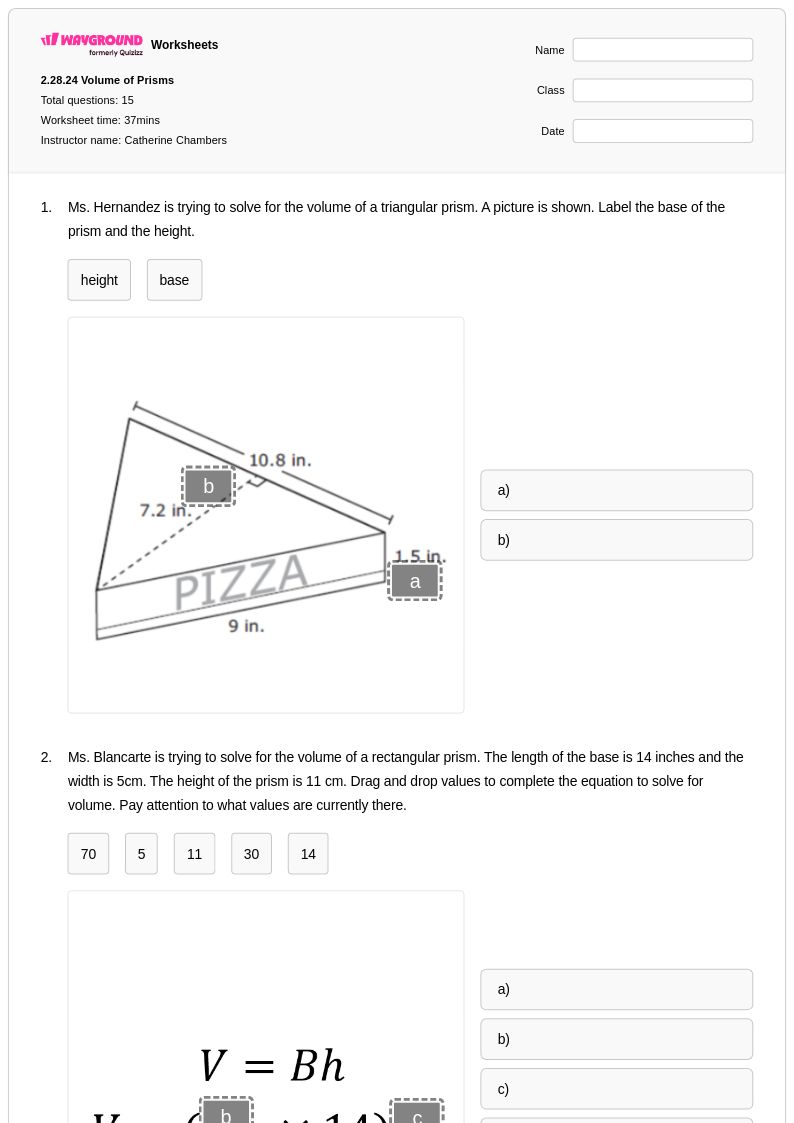
15 Q
7th
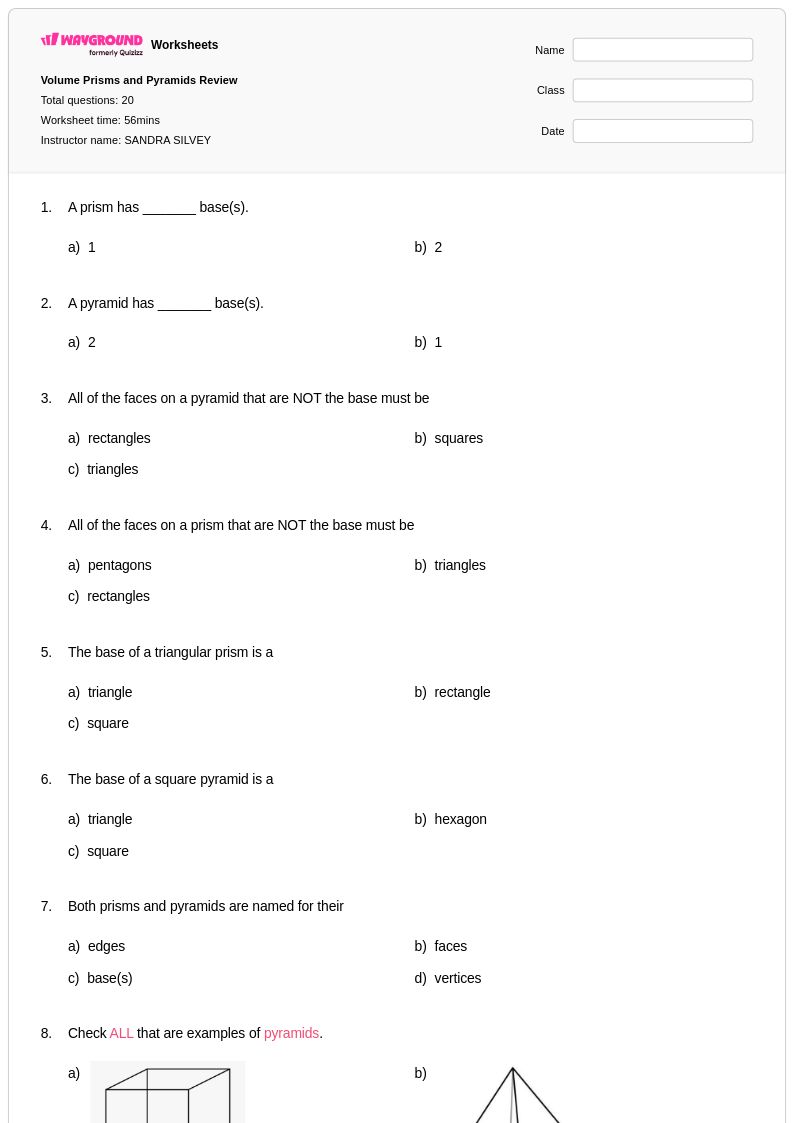
20 Q
7th
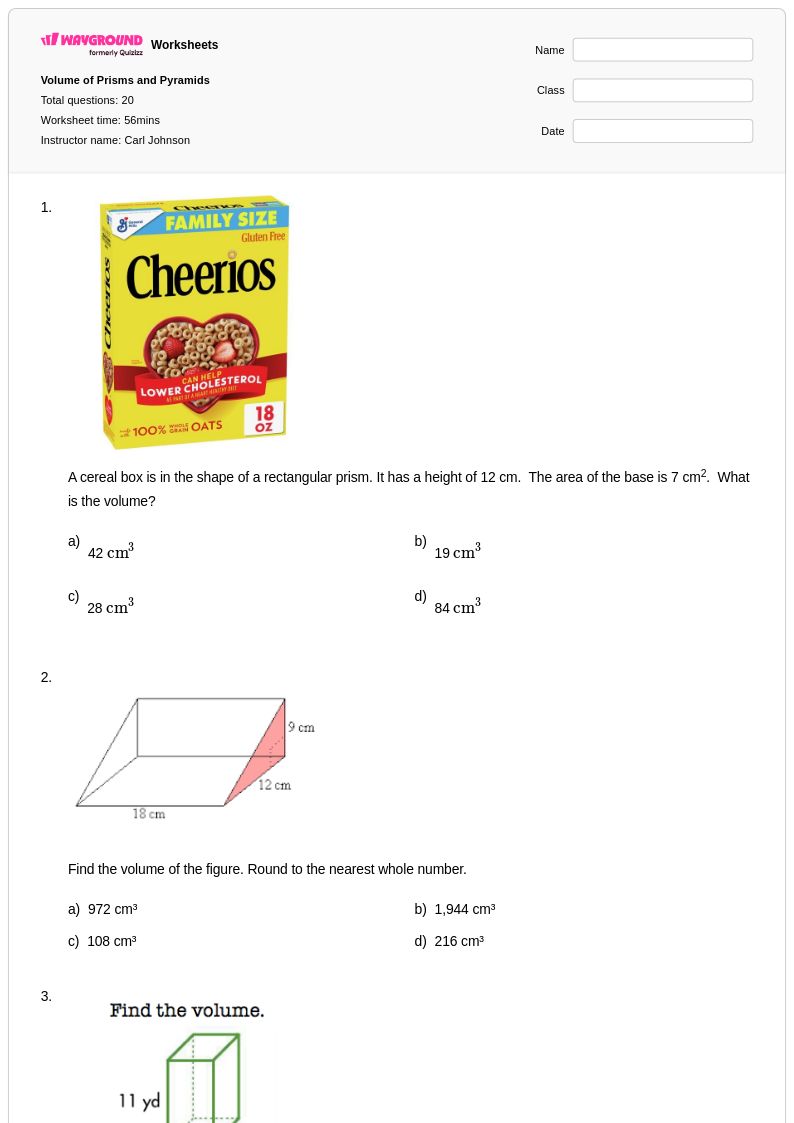
20 Q
7th
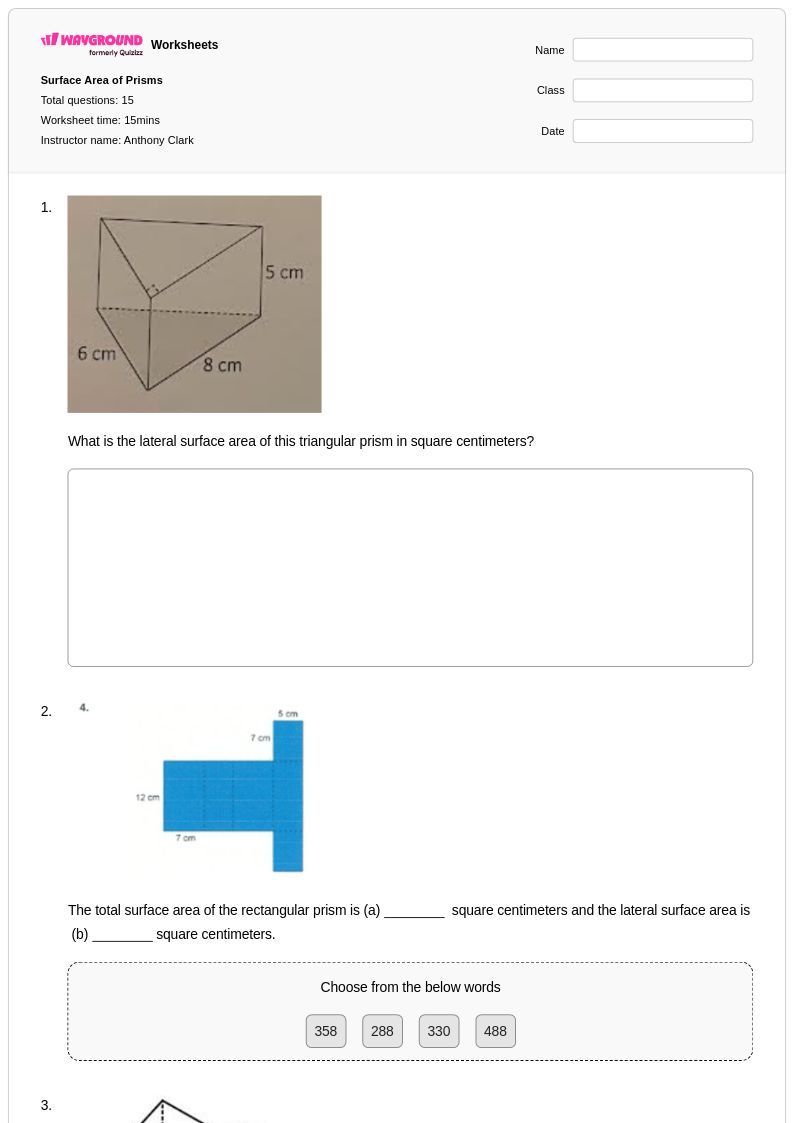
15 Q
7th - Uni
20 Q
7th - Uni
10 Q
7th
14 Q
7th
20 Q
7th - Uni
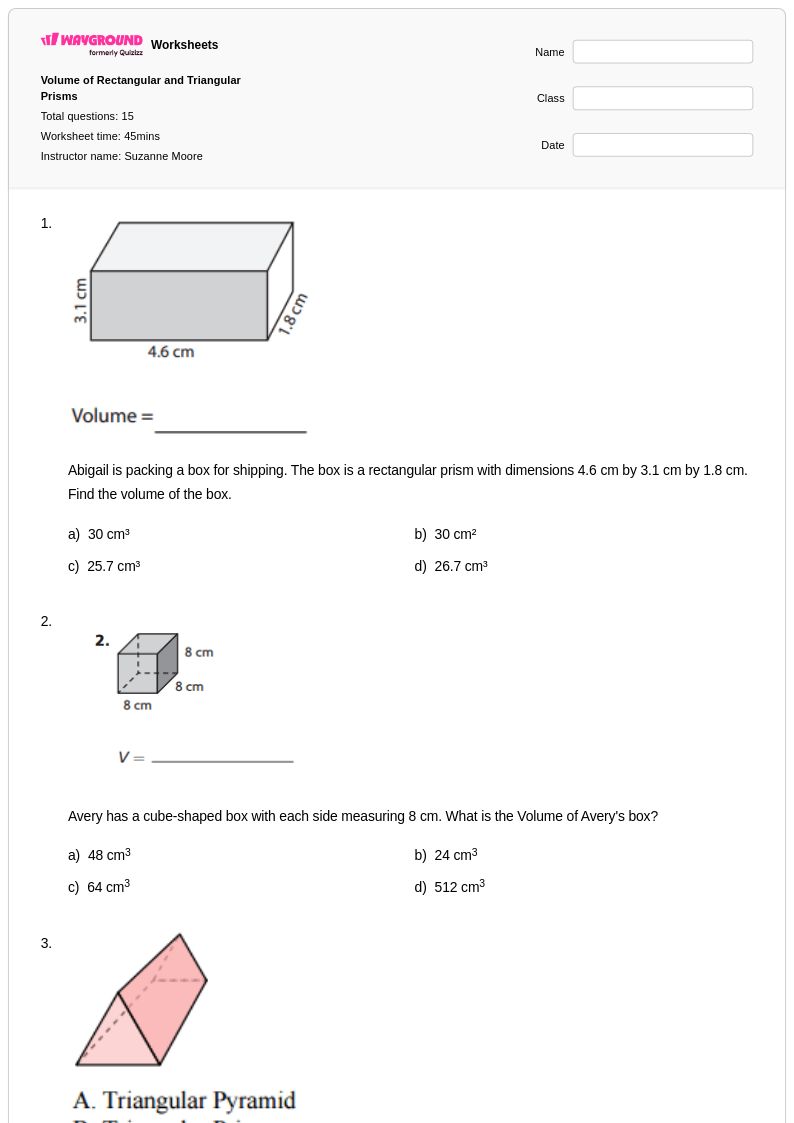
15 Q
7th
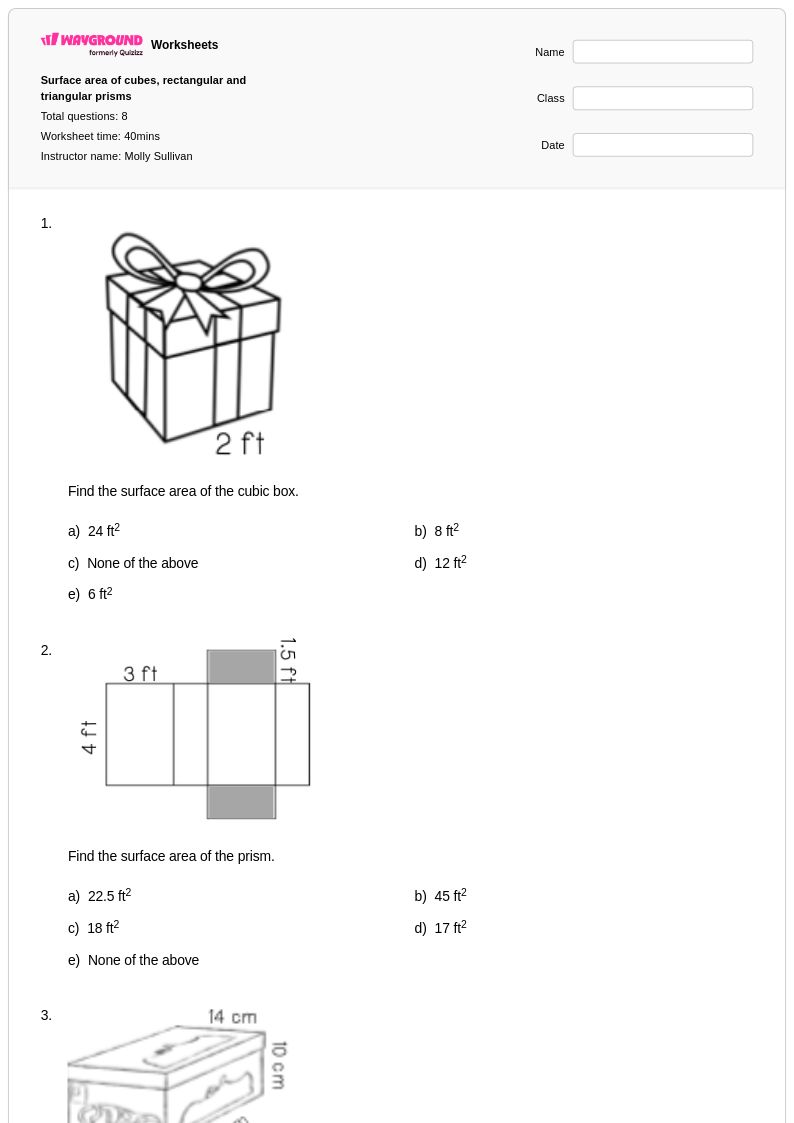
8 Q
7th
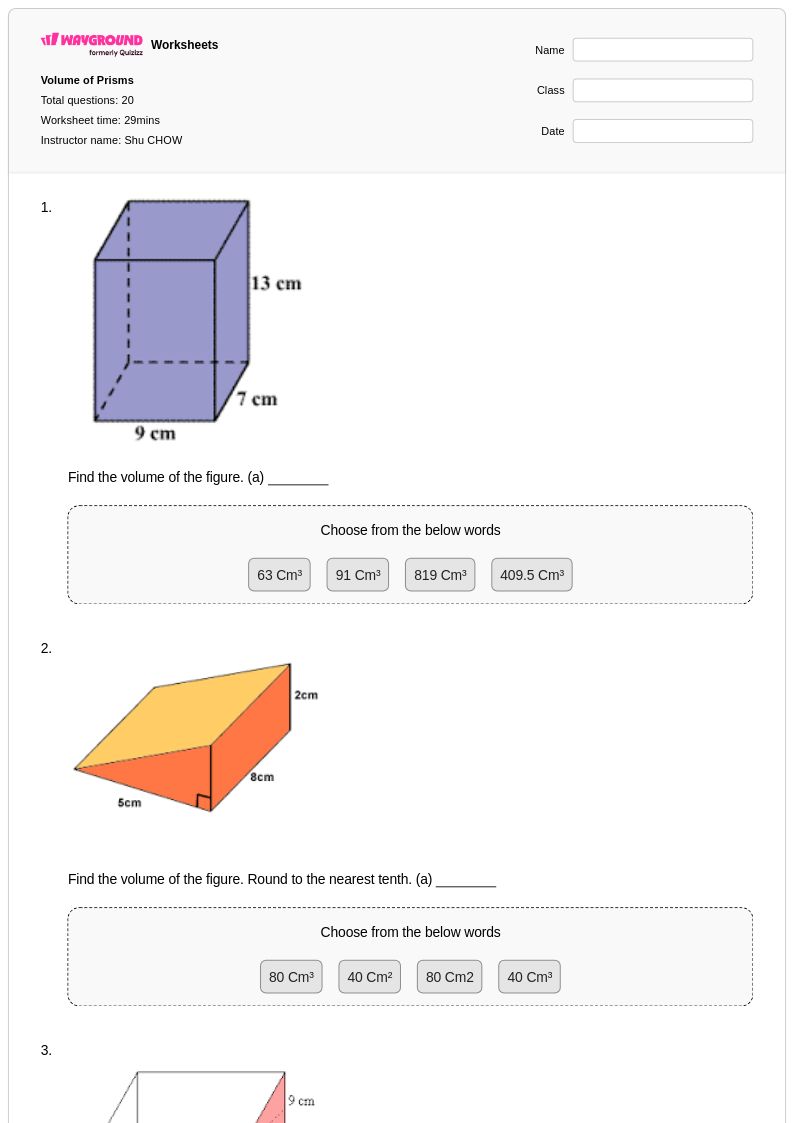
20 Q
7th
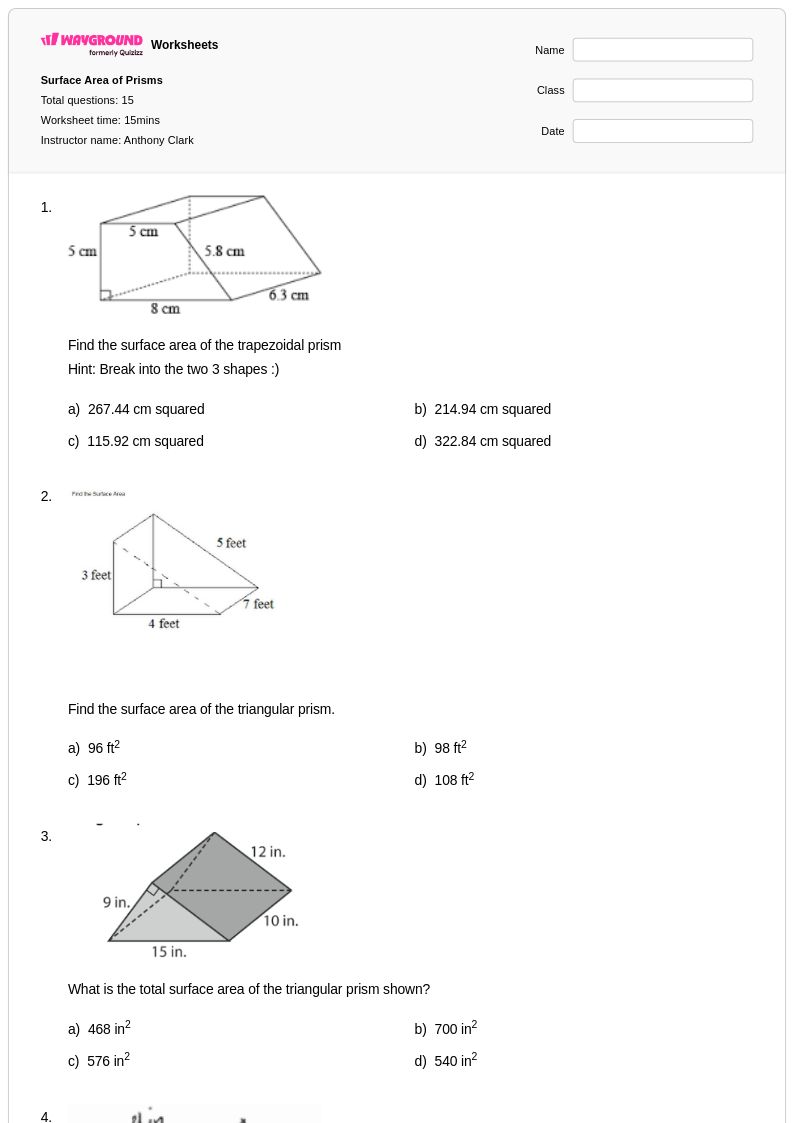
15 Q
7th - Uni
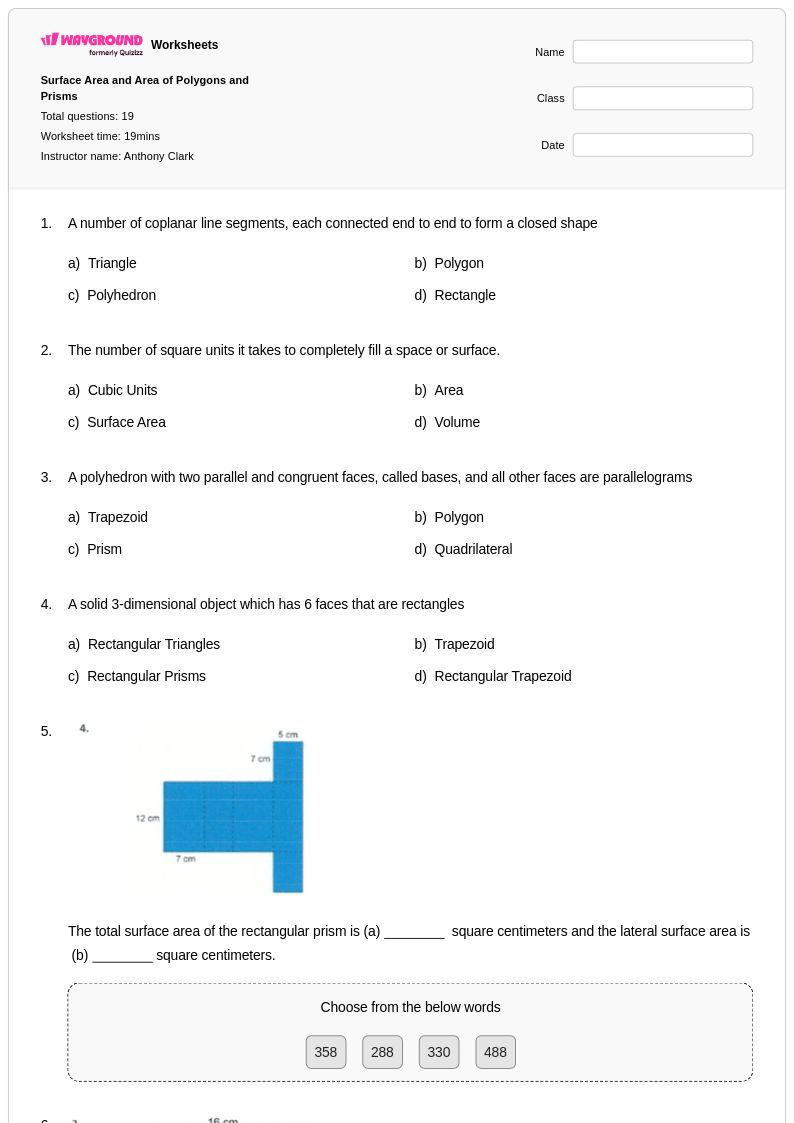
19 Q
6th - Uni
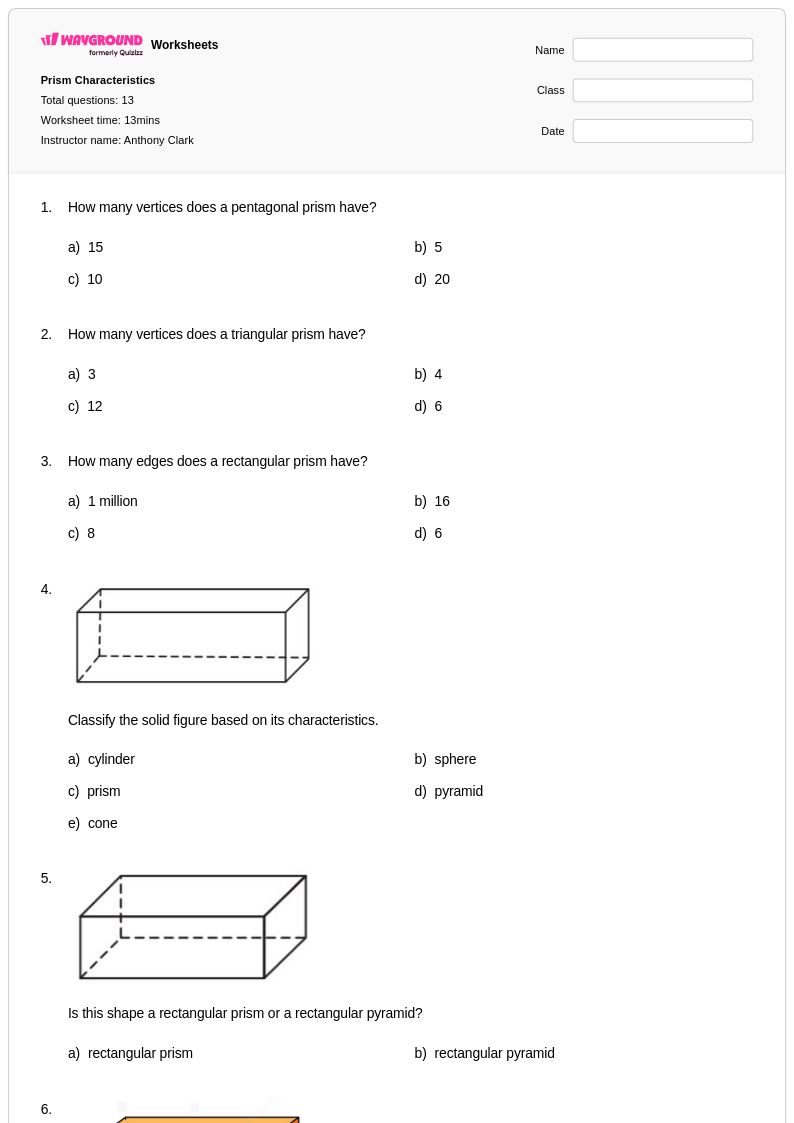
13 Q
6th - Uni
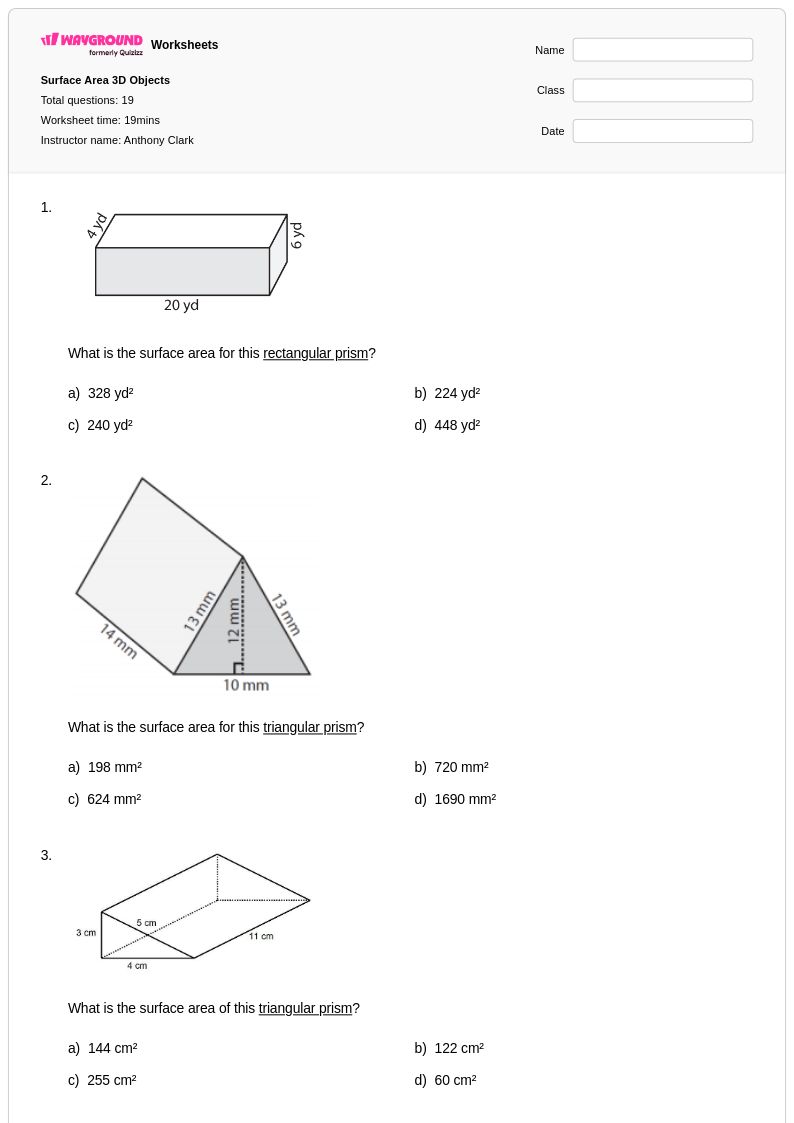
19 Q
7th - Uni
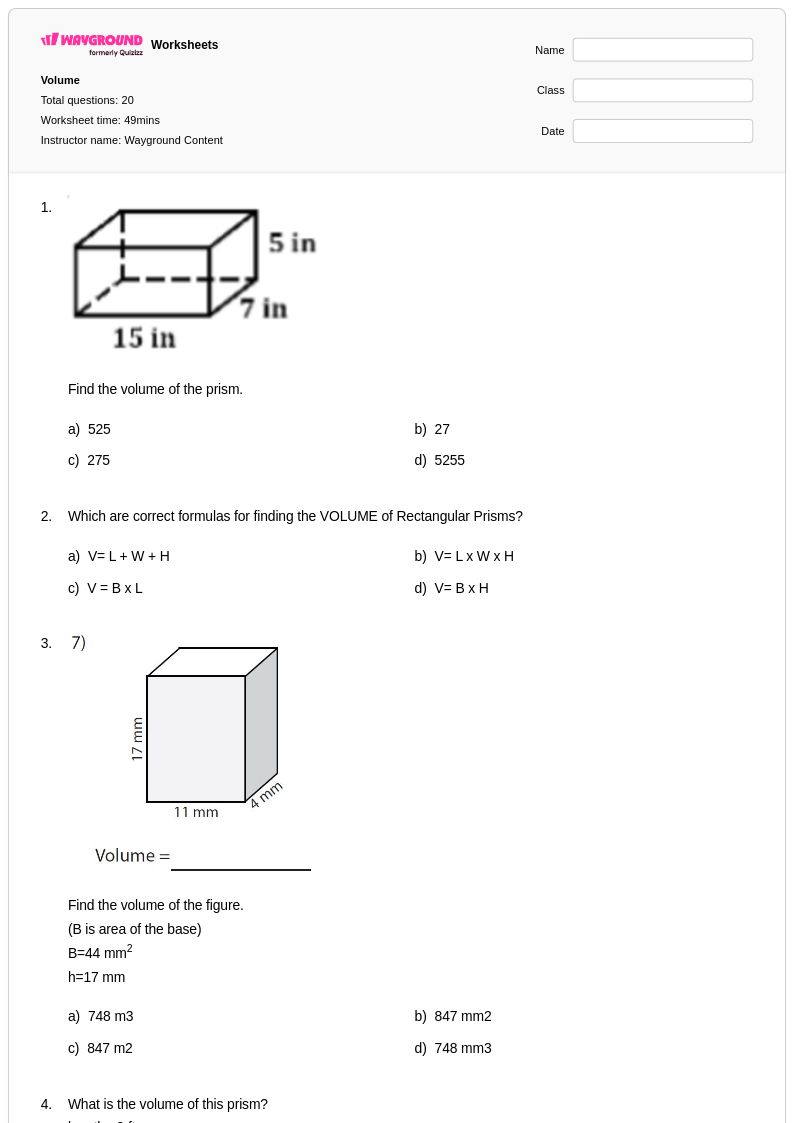
20 Q
7th
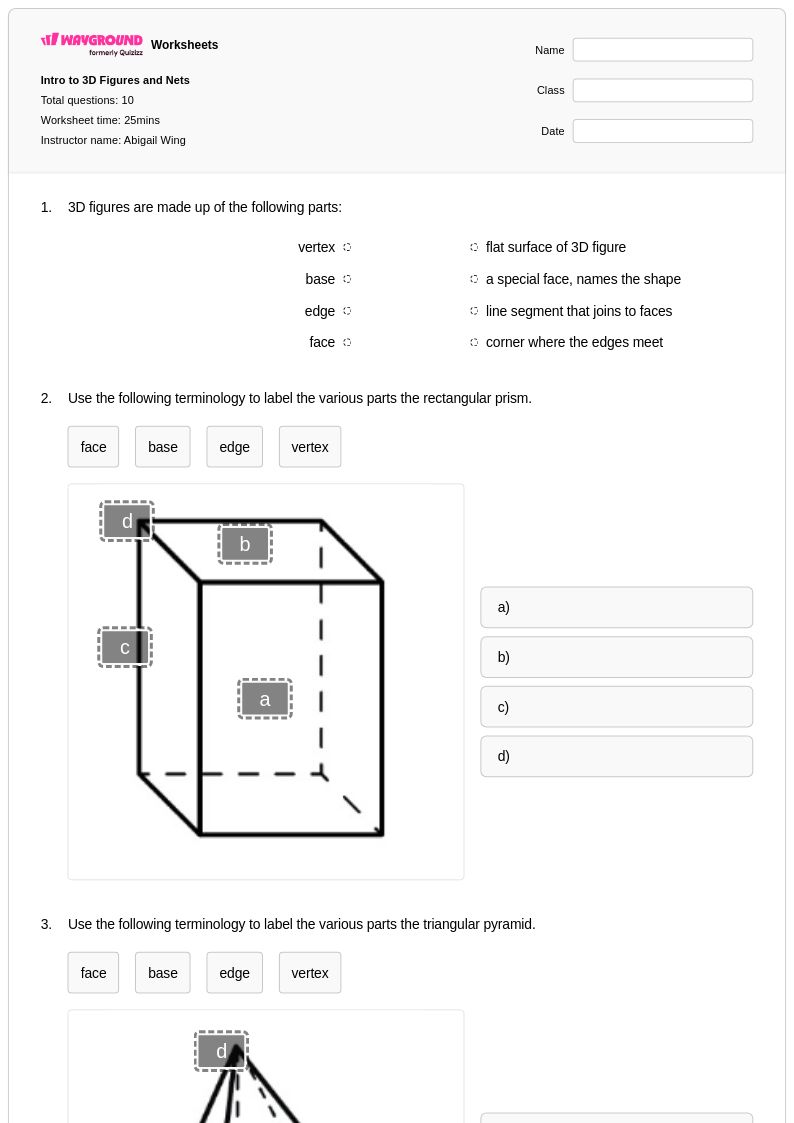
10 Q
7th
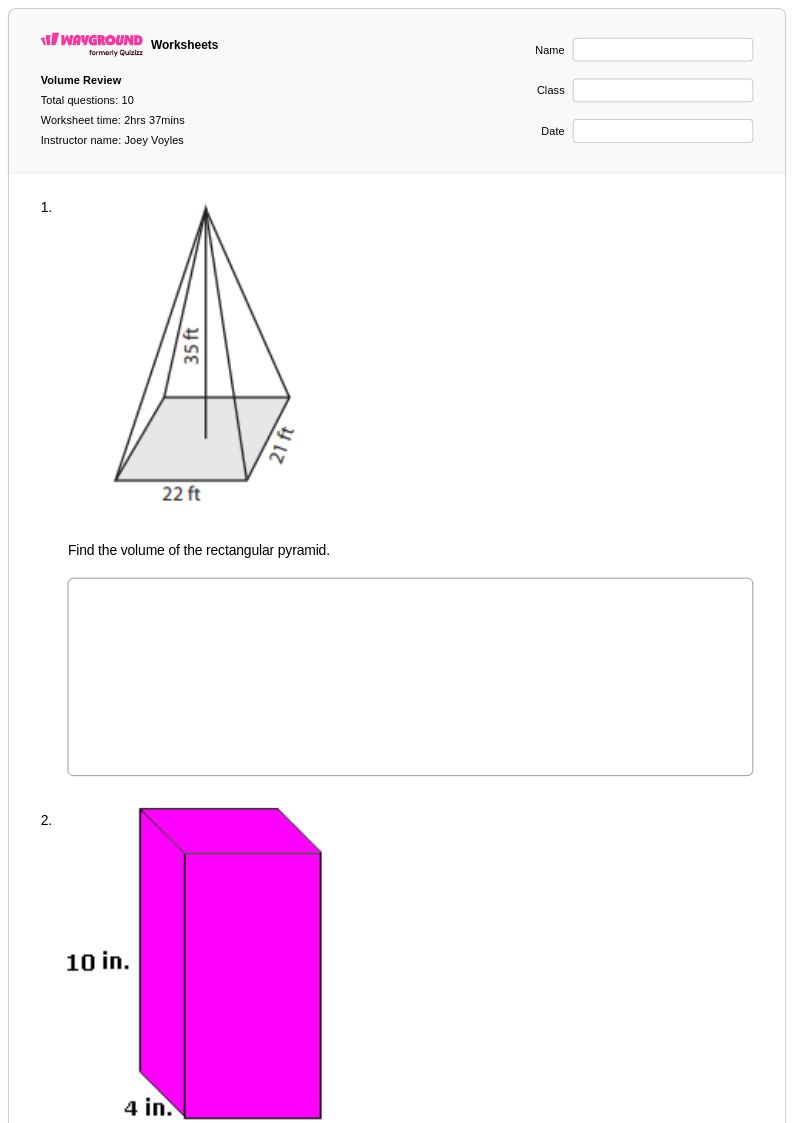
10 Q
7th
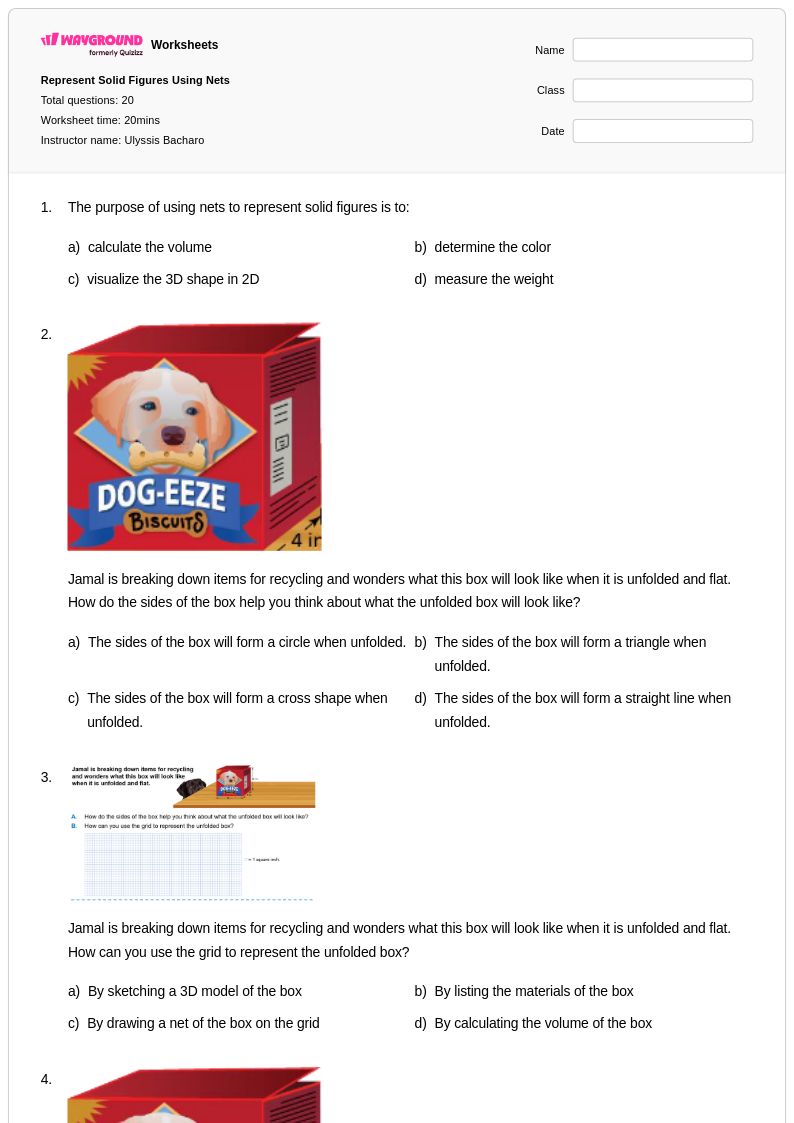
20 Q
6th - Uni
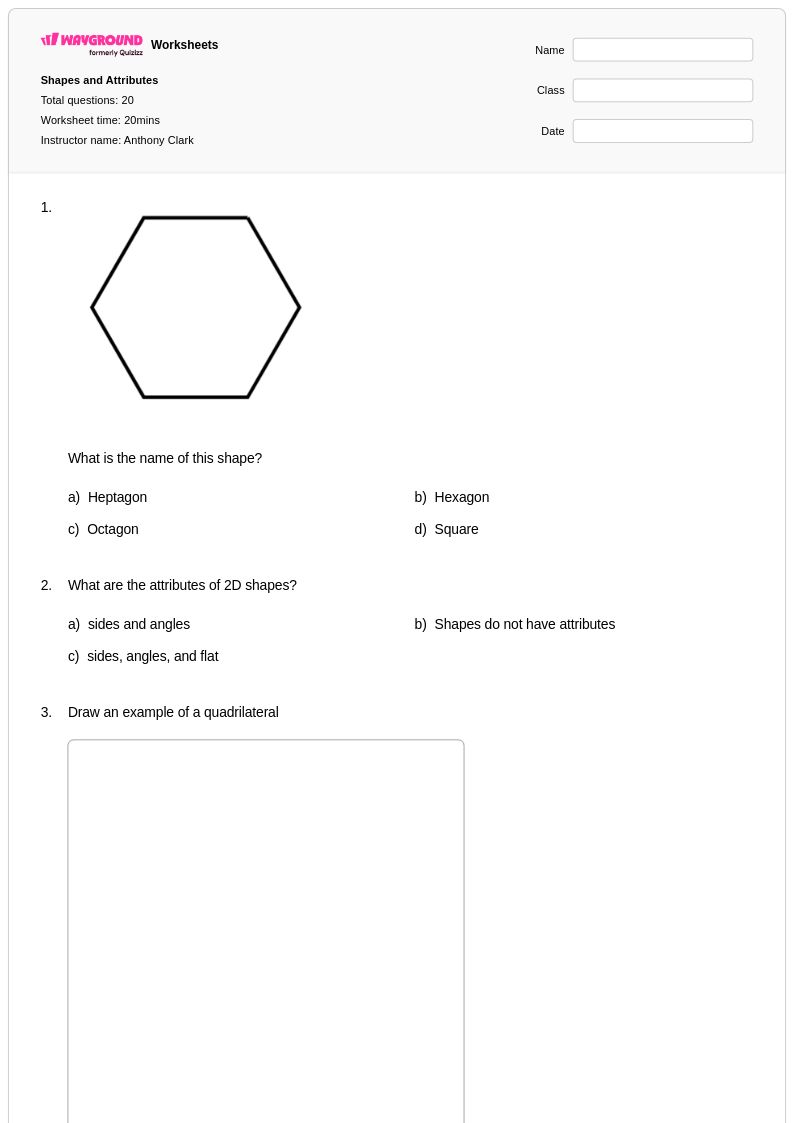
20 Q
3rd - Uni
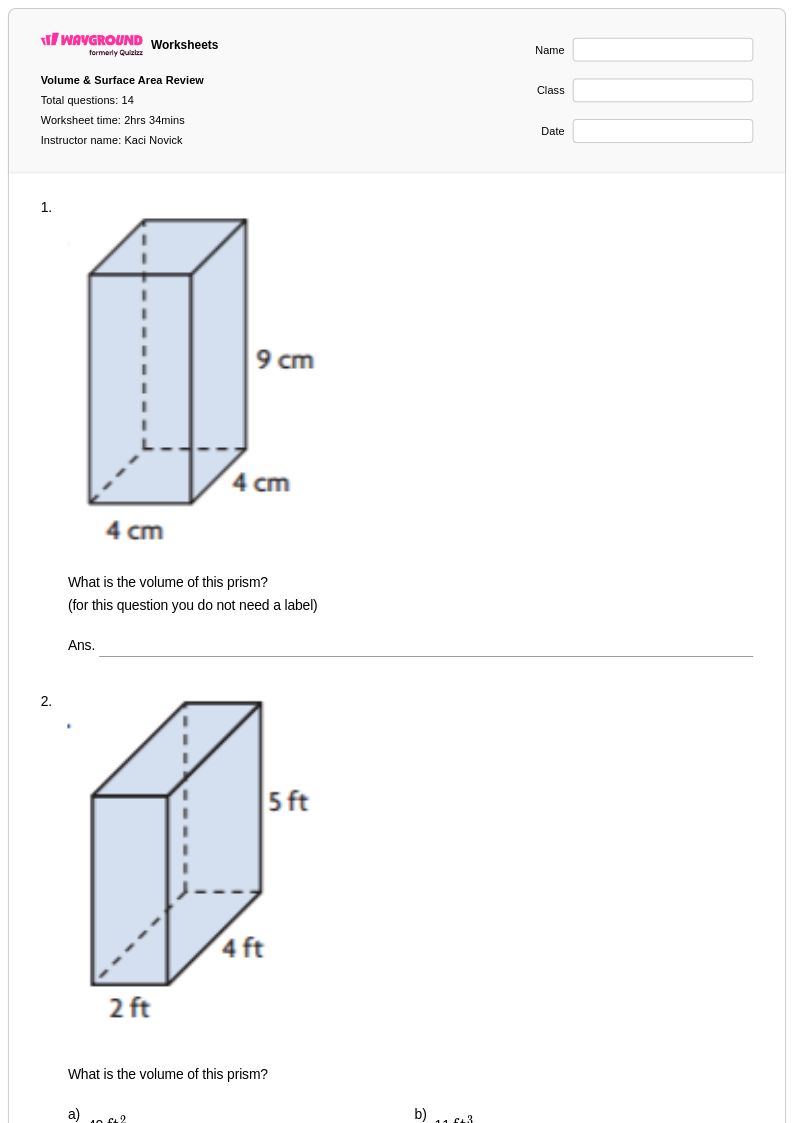
14 Q
7th
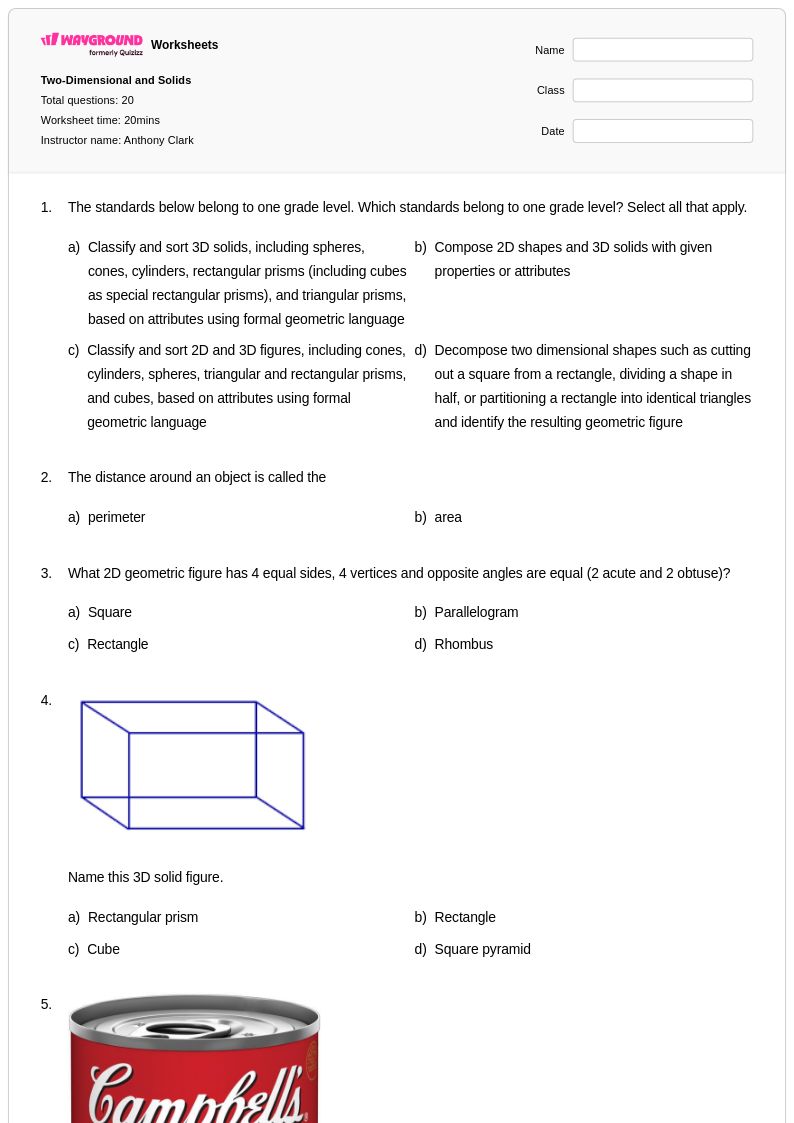
20 Q
3rd - Uni
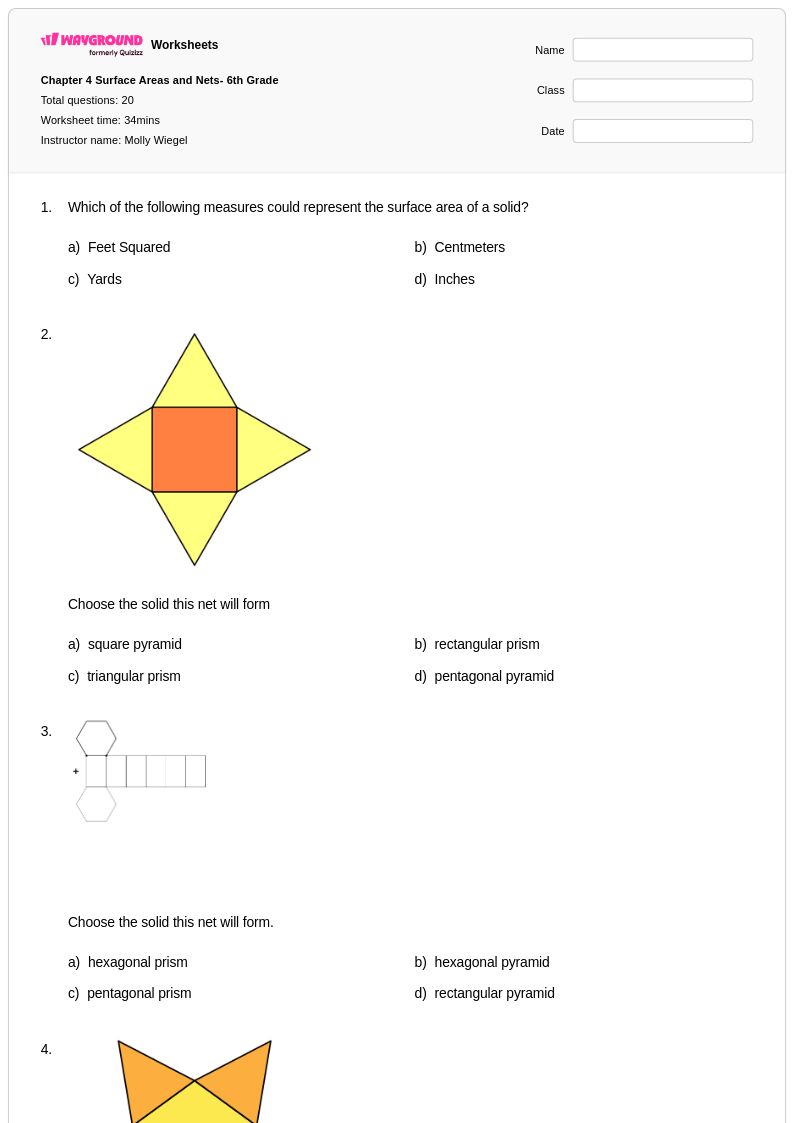
20 Q
6th - 8th
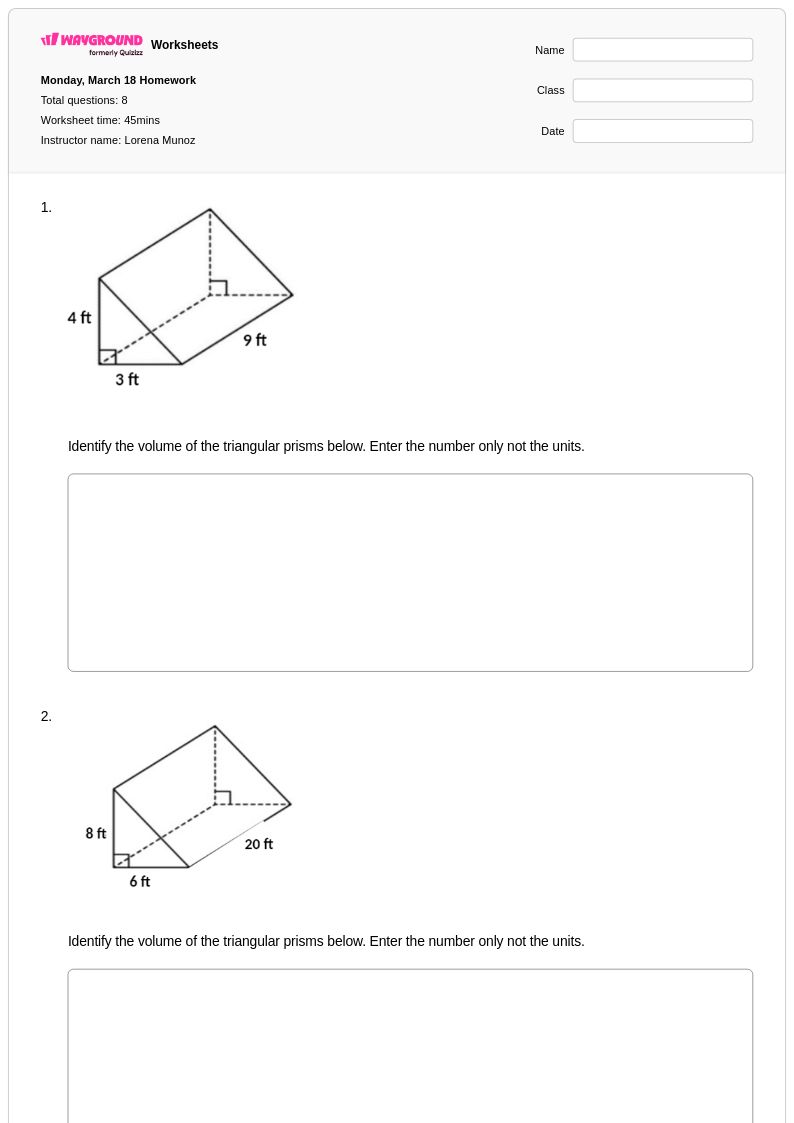
9 Q
7th
Explore Other Subject Worksheets for year 7
Explore printable Triangular Prisms worksheets for Year 7
Triangular prisms represent a fundamental three-dimensional shape that Year 7 students must master as they advance through geometric concepts. Wayground's comprehensive collection of triangular prism worksheets provides students with structured practice opportunities to develop essential skills including calculating surface area, determining volume, identifying nets, and understanding the relationship between two-dimensional faces and three-dimensional forms. These carefully designed practice problems guide students through step-by-step processes for finding the area of triangular bases and rectangular faces, then combining these measurements to solve complex geometric problems. Each worksheet collection includes detailed answer keys that support independent learning and self-assessment, while the free printable format ensures accessibility for all classroom environments and home study sessions.
Wayground's extensive library contains millions of teacher-created resources specifically designed to support geometry instruction at the Year 7 level, with robust search and filtering capabilities that allow educators to quickly locate triangular prism materials aligned with state standards and curriculum requirements. The platform's differentiation tools enable teachers to customize worksheets based on individual student needs, whether providing additional scaffolding for struggling learners or enrichment challenges for advanced students. These resources are available in both digital and printable PDF formats, offering maximum flexibility for lesson planning, targeted remediation sessions, and skill practice assignments. The comprehensive filtering system helps educators efficiently identify materials that match specific learning objectives, from basic prism identification to advanced surface area and volume calculations, ensuring that every student receives appropriate geometric instruction tailored to their developmental level.