
Recommended Topics for you
- Flat Shapes
- Hexagons
- Identifying Shapes
- Kite
- Pentagons
- Quadrilaterals
- Rectangles
- Squares
- Trapezoids
- Triangles
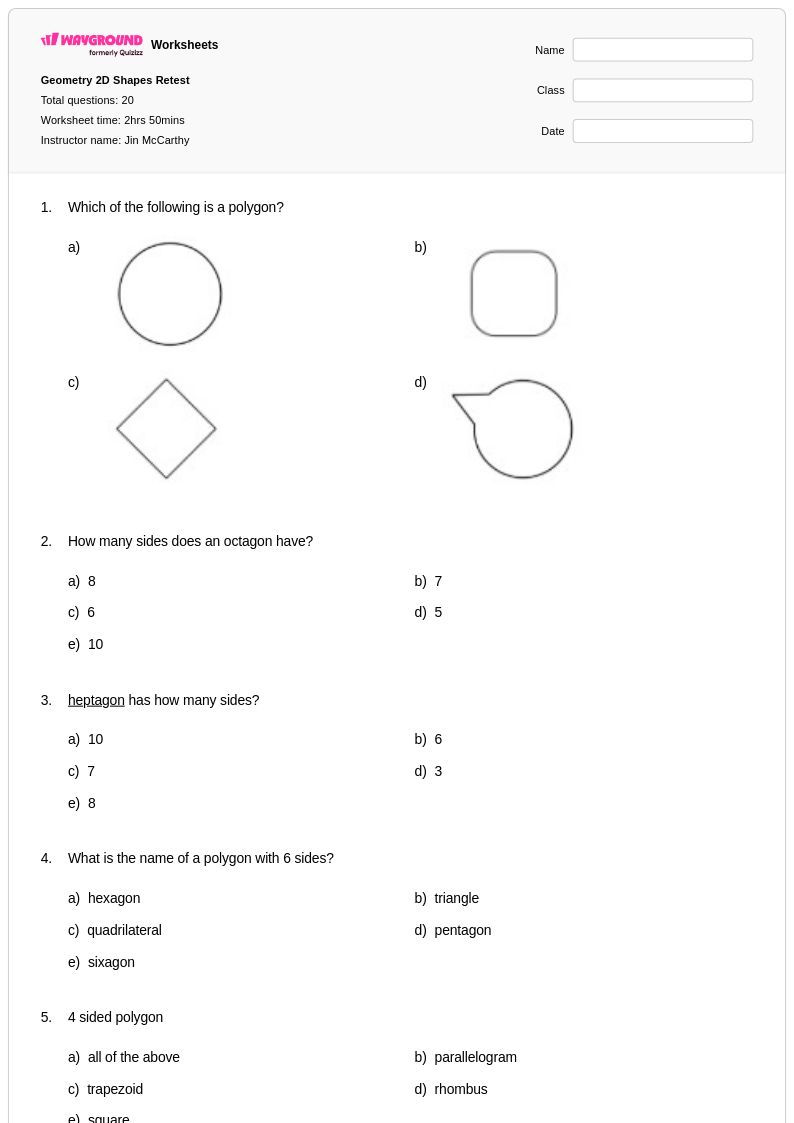
20 Q
5th
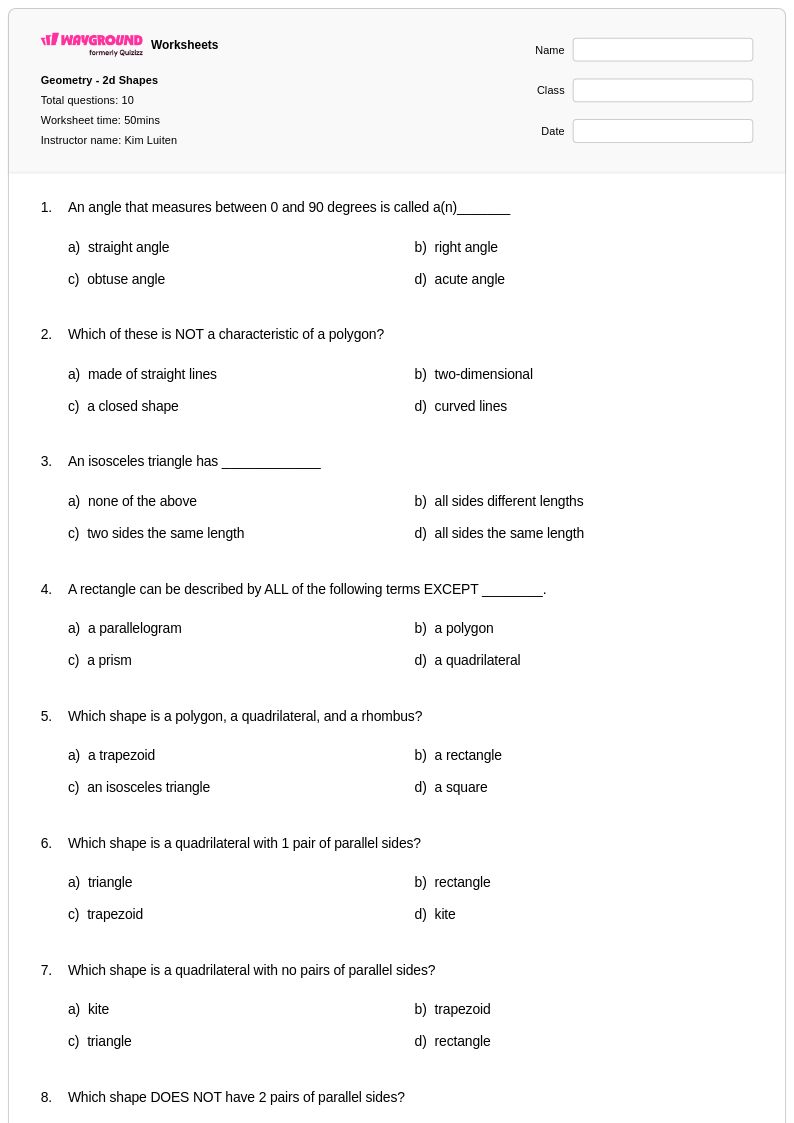
10 Q
5th
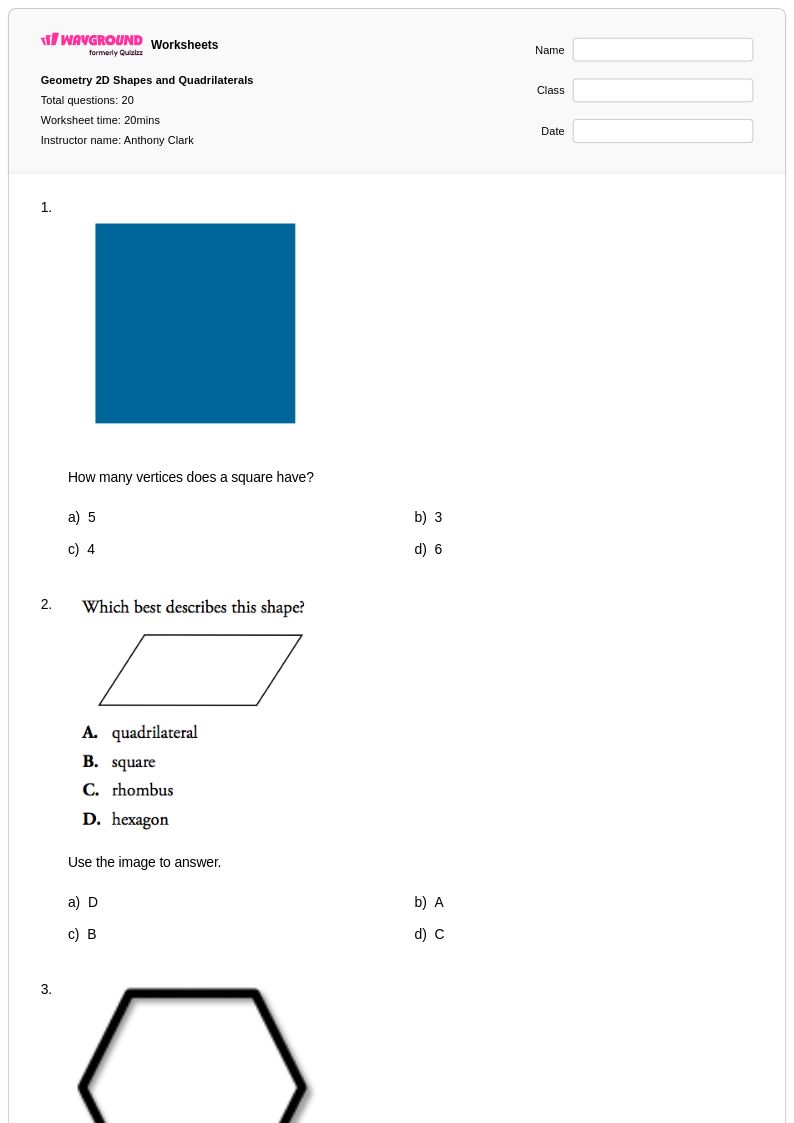
20 Q
3rd - Uni
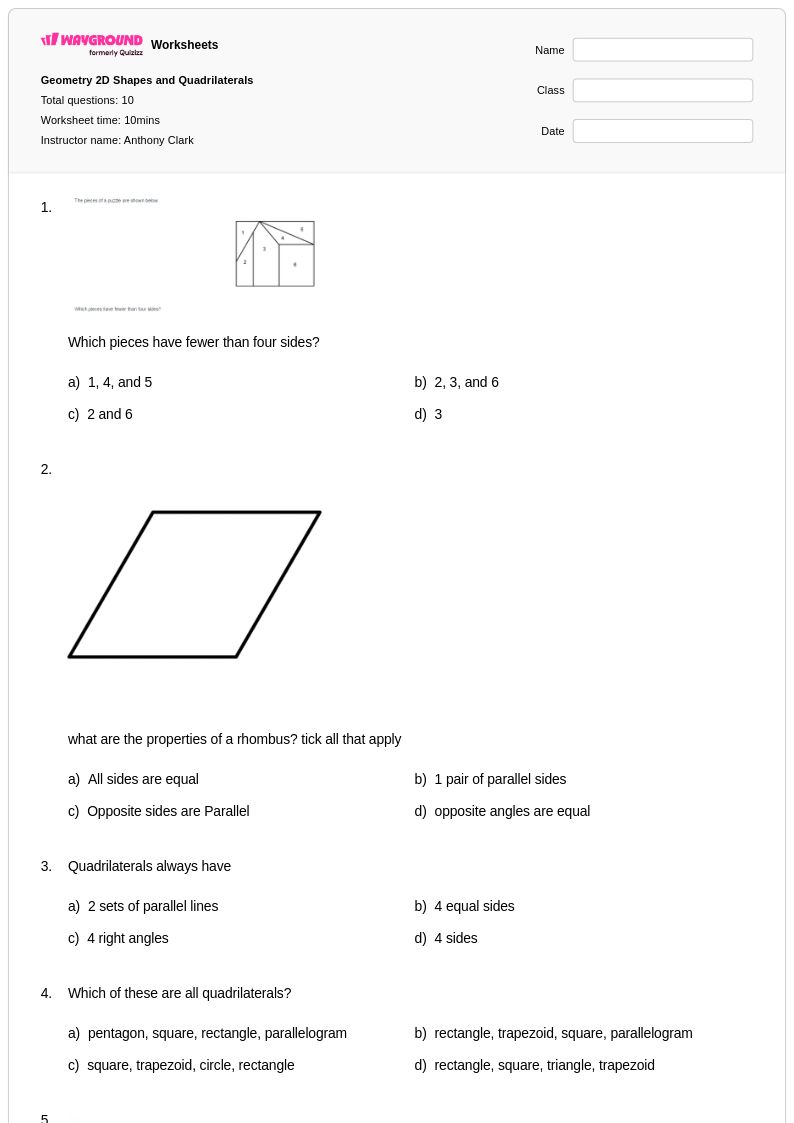
10 Q
3rd - Uni
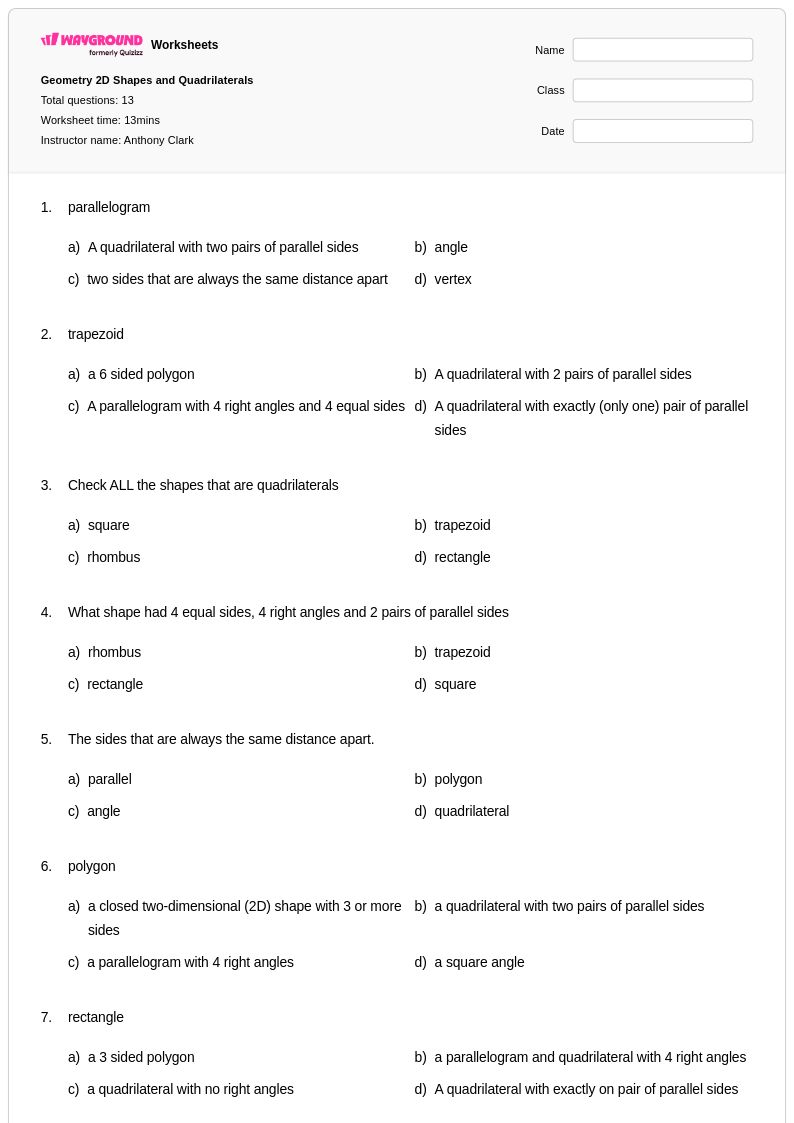
13 Q
3rd - Uni
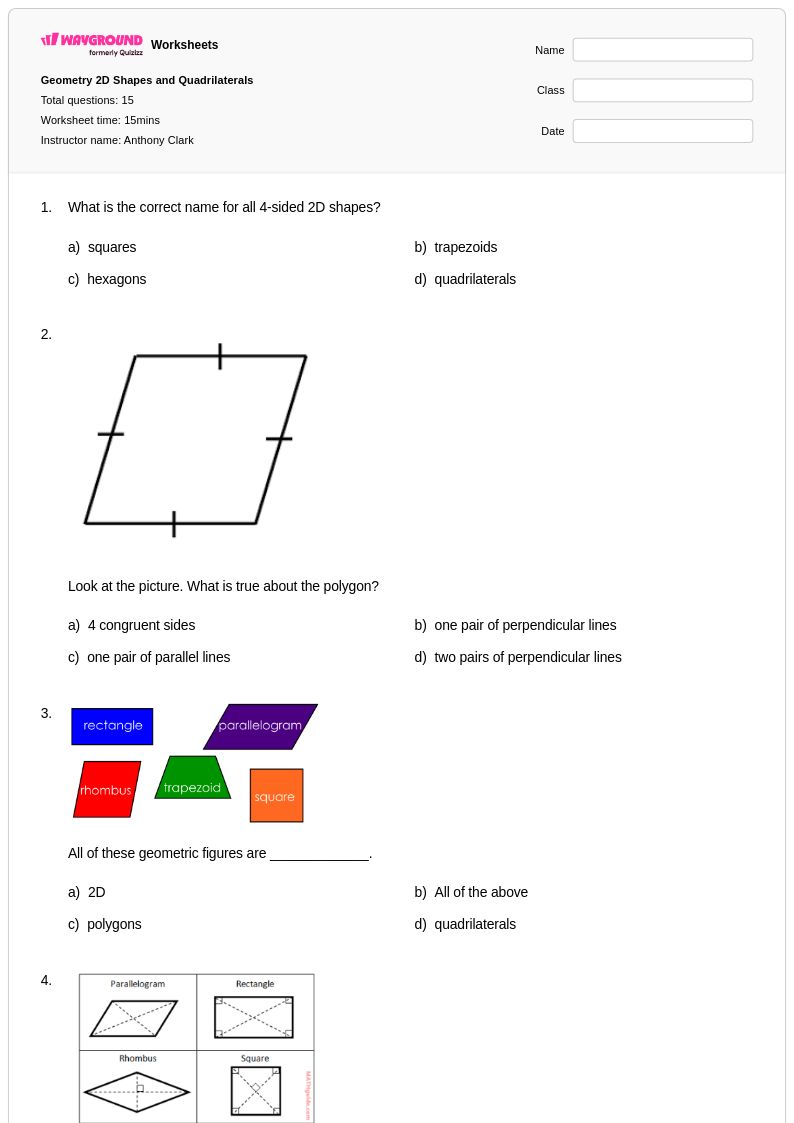
15 Q
3rd - Uni
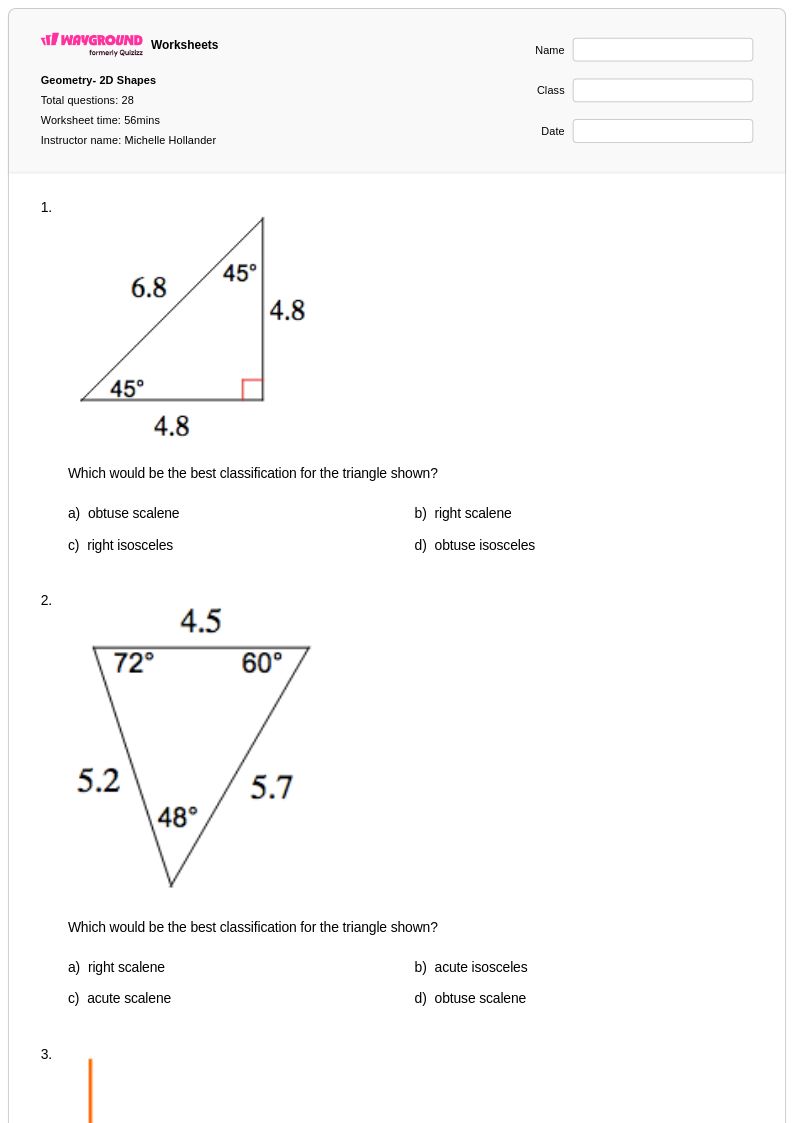
28 Q
3rd - 5th
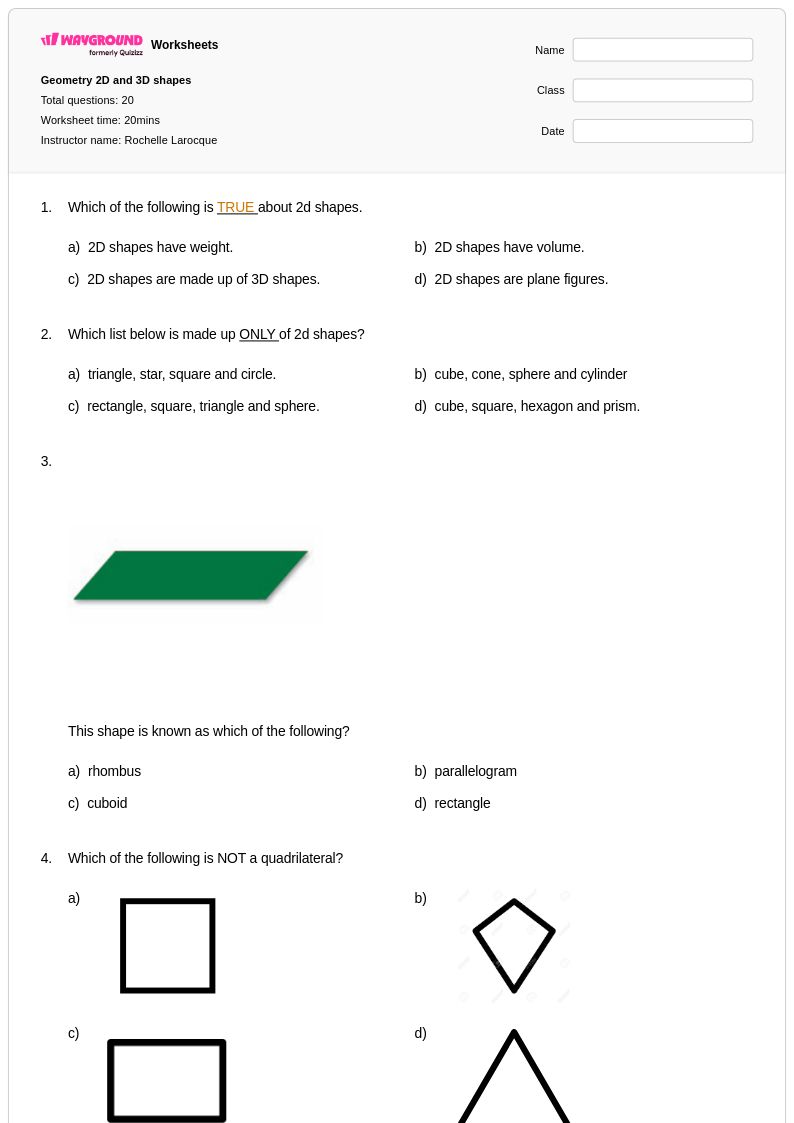
20 Q
5th
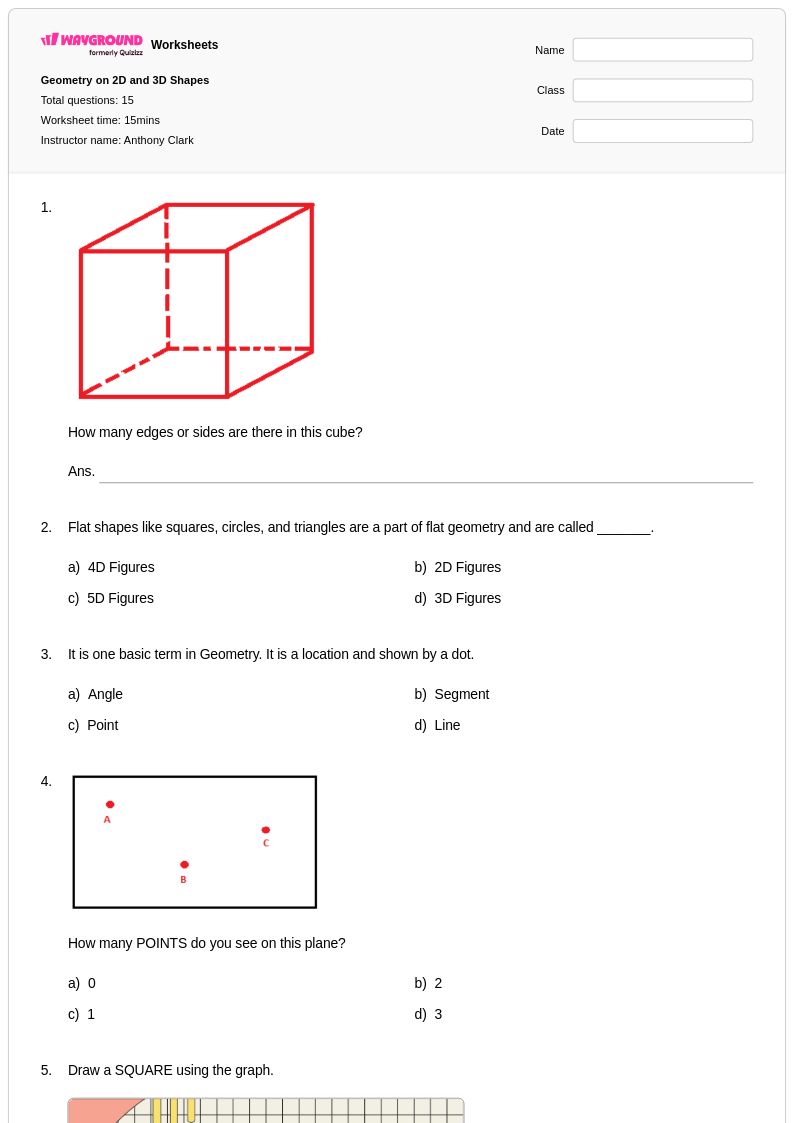
15 Q
3rd - Uni
17 Q
3rd - Uni
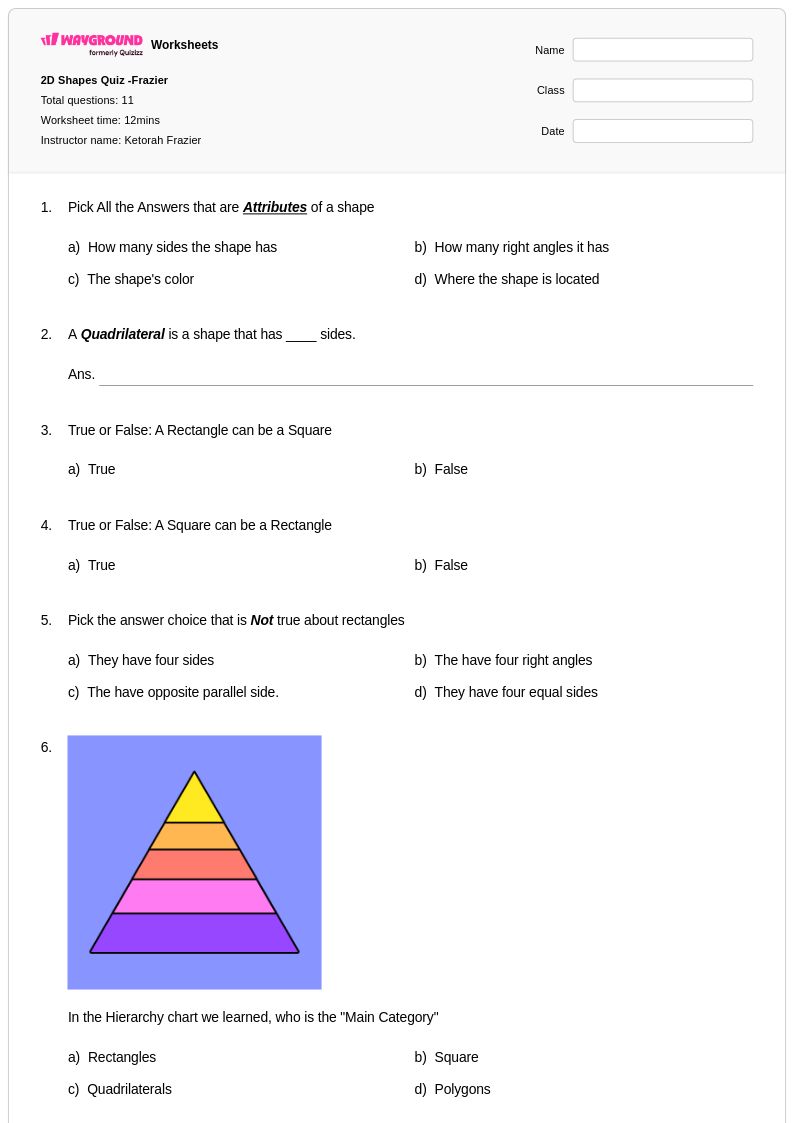
12 Q
5th
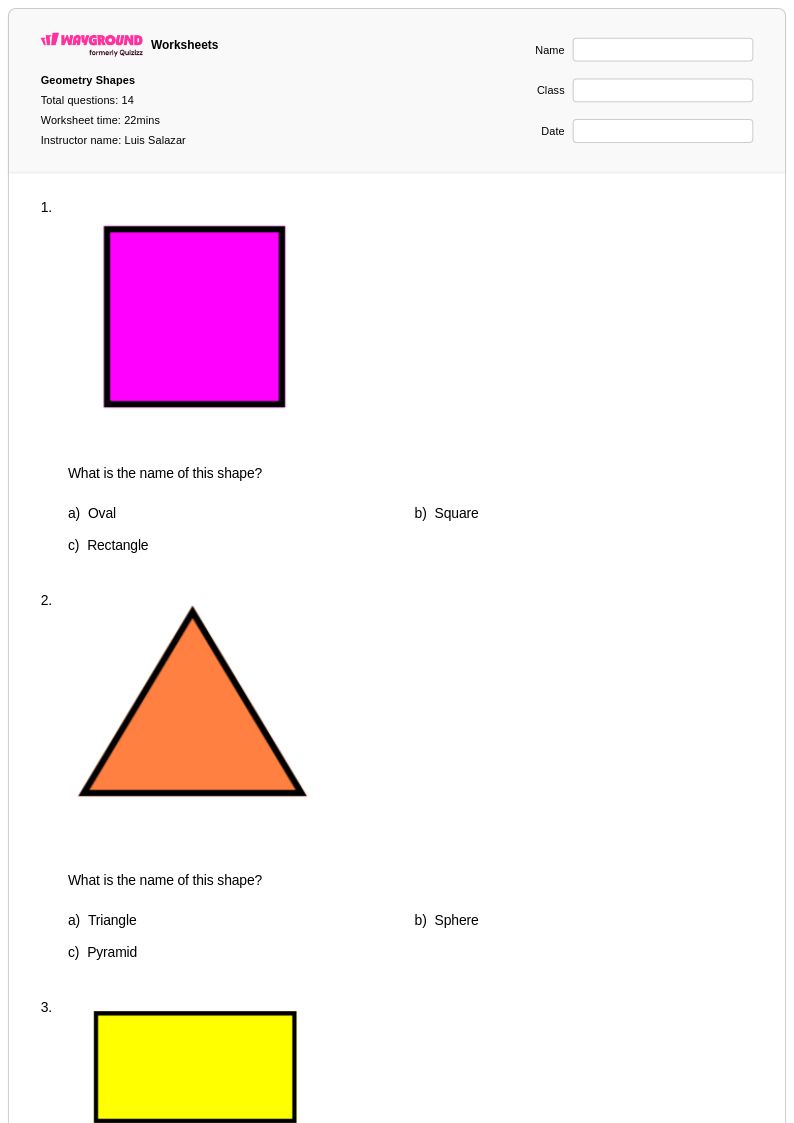
14 Q
1st - 5th
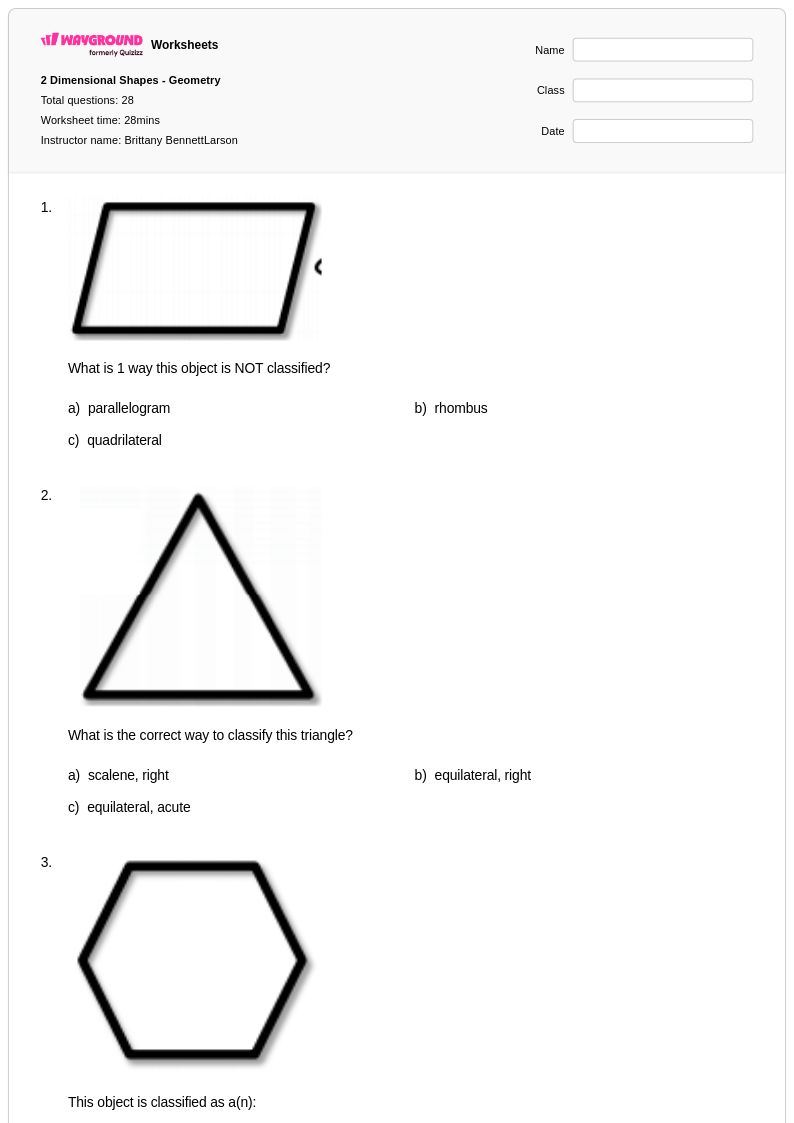
28 Q
5th
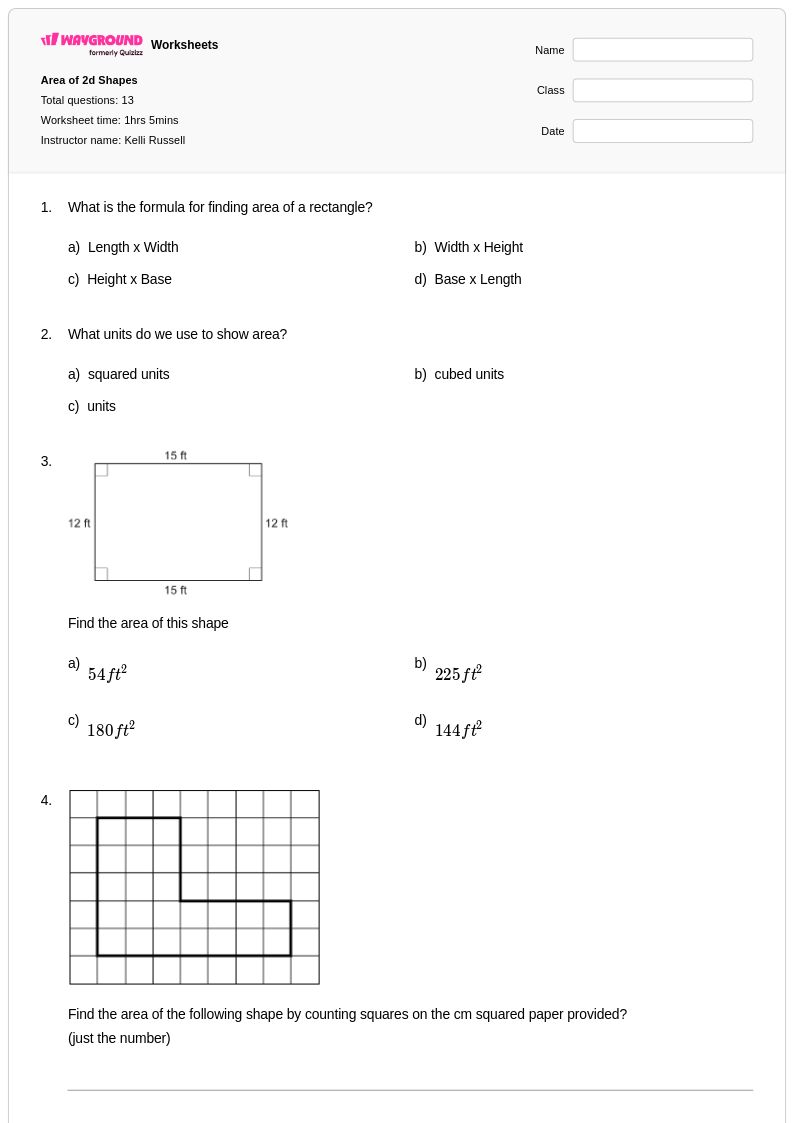
13 Q
5th - 6th
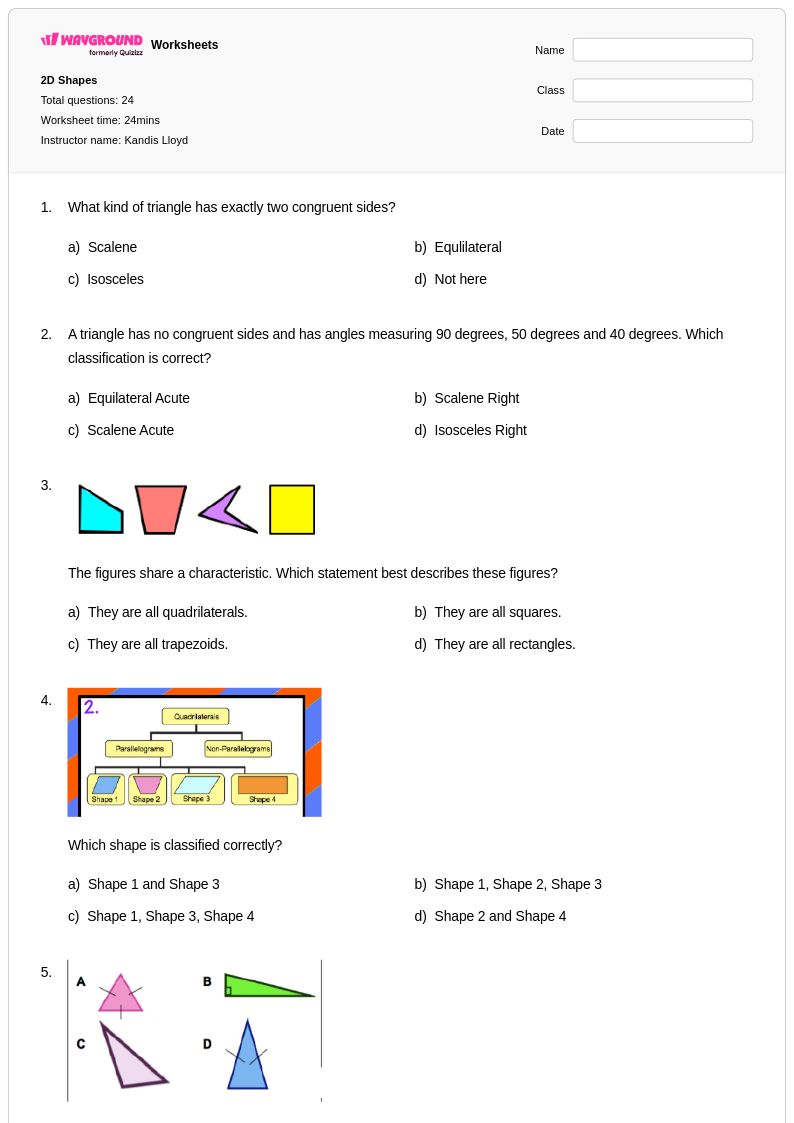
36 Q
5th
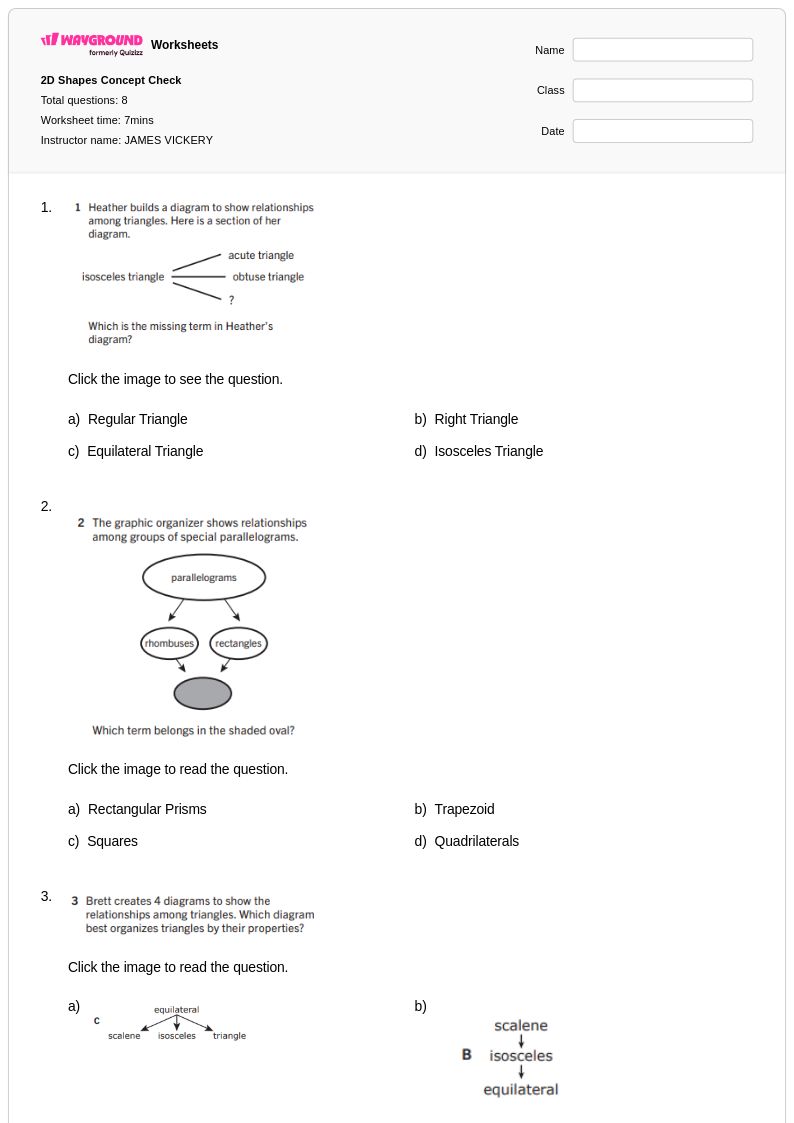
8 Q
5th
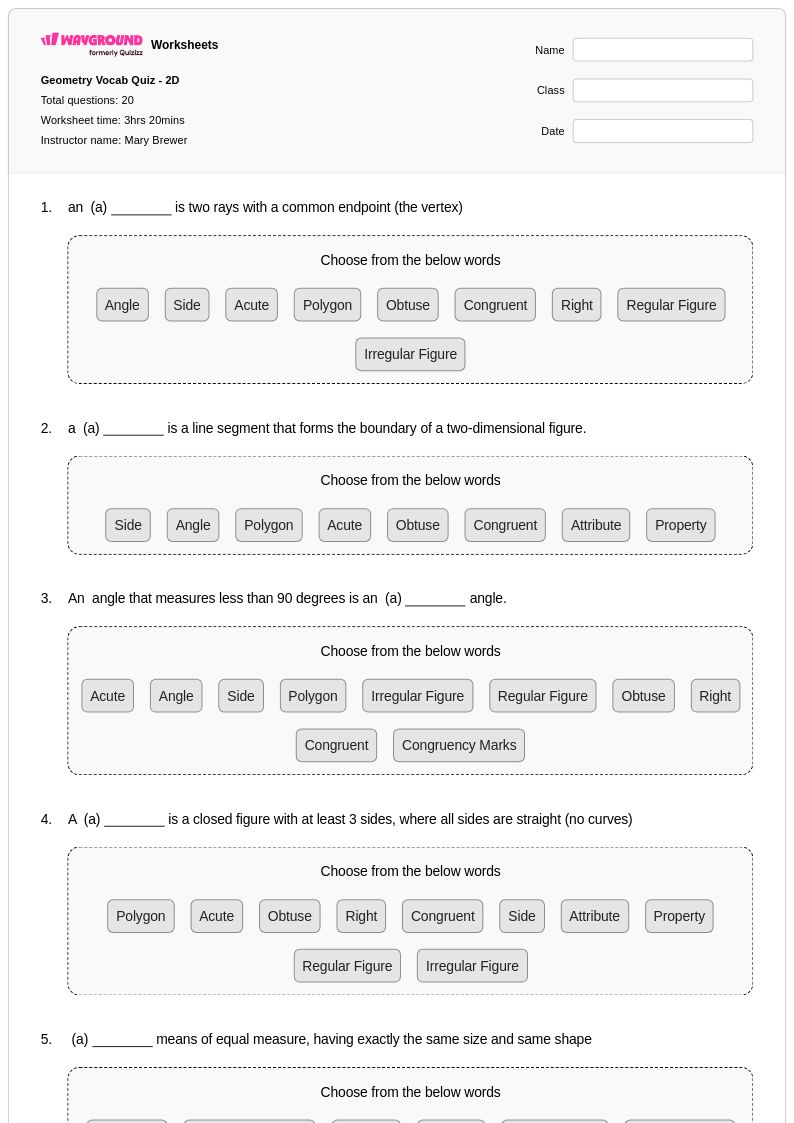
20 Q
5th
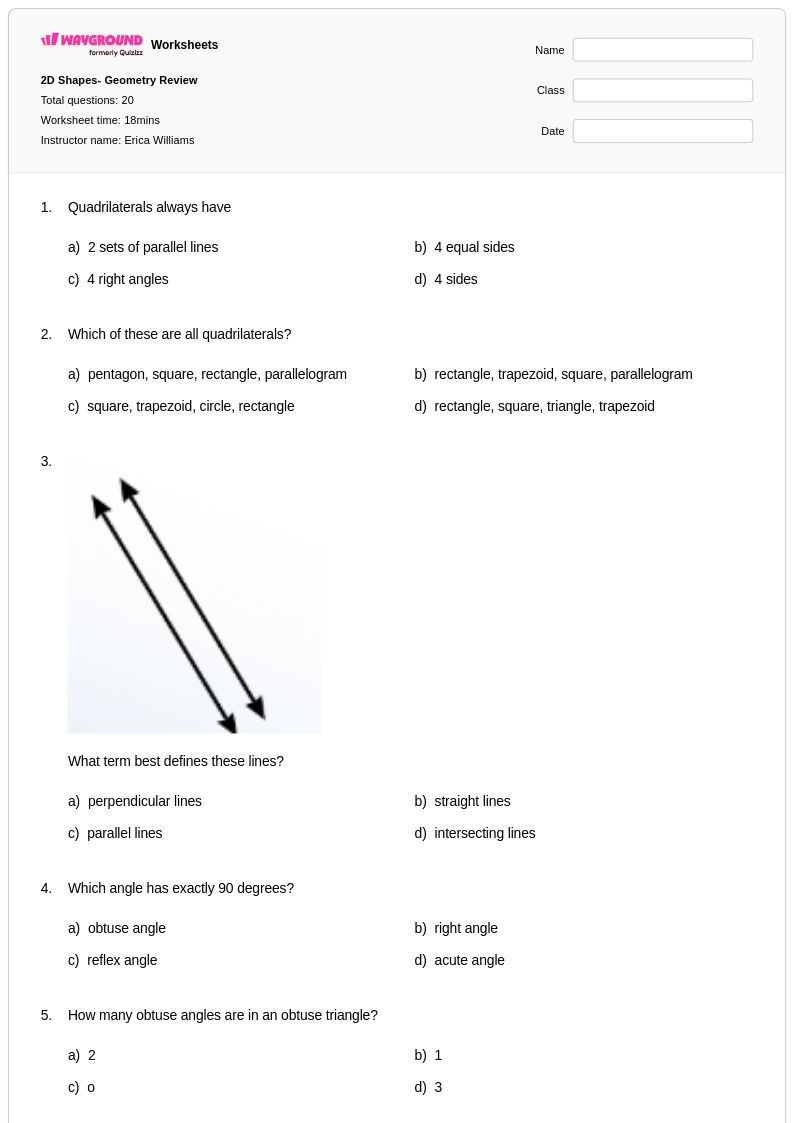
20 Q
5th
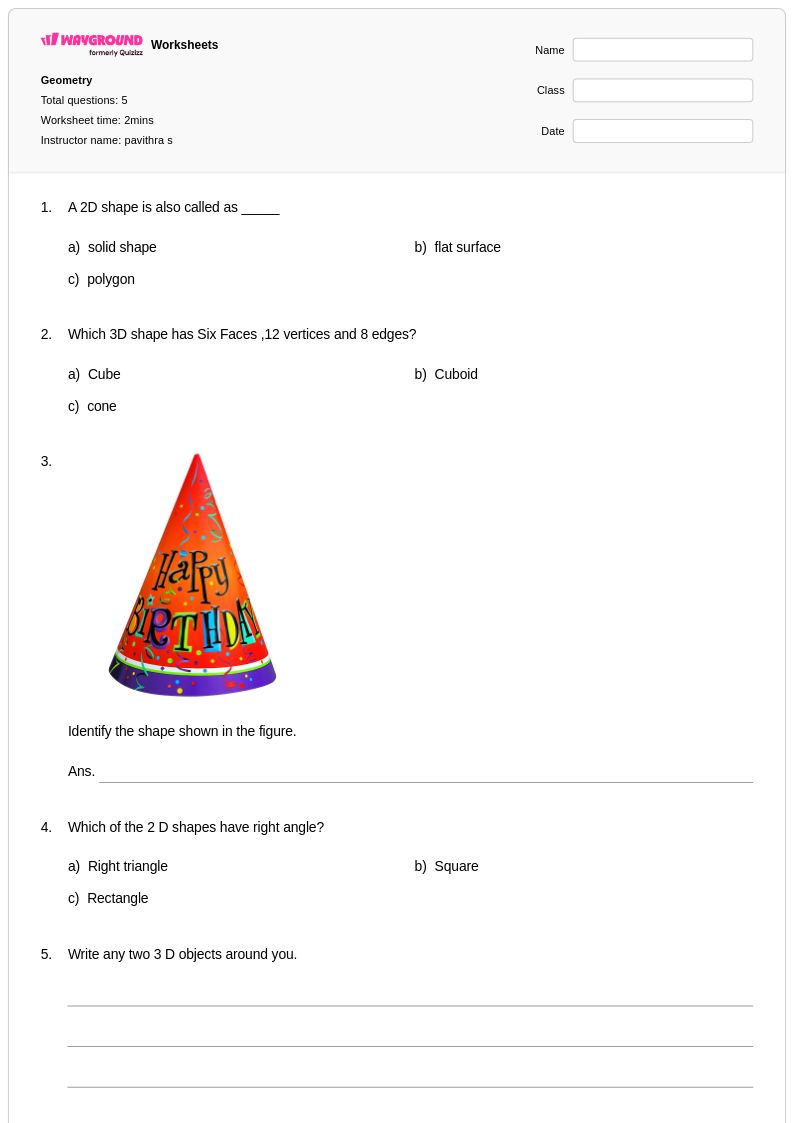
5 Q
3rd - 5th
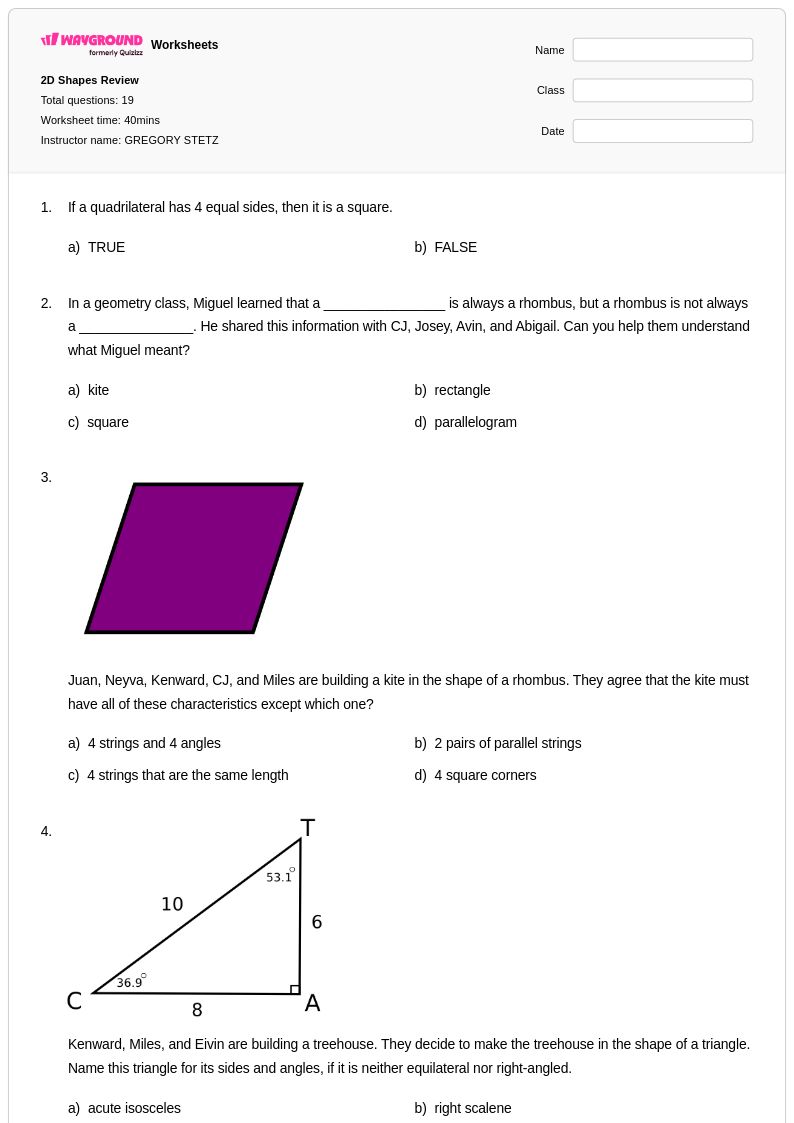
19 Q
5th
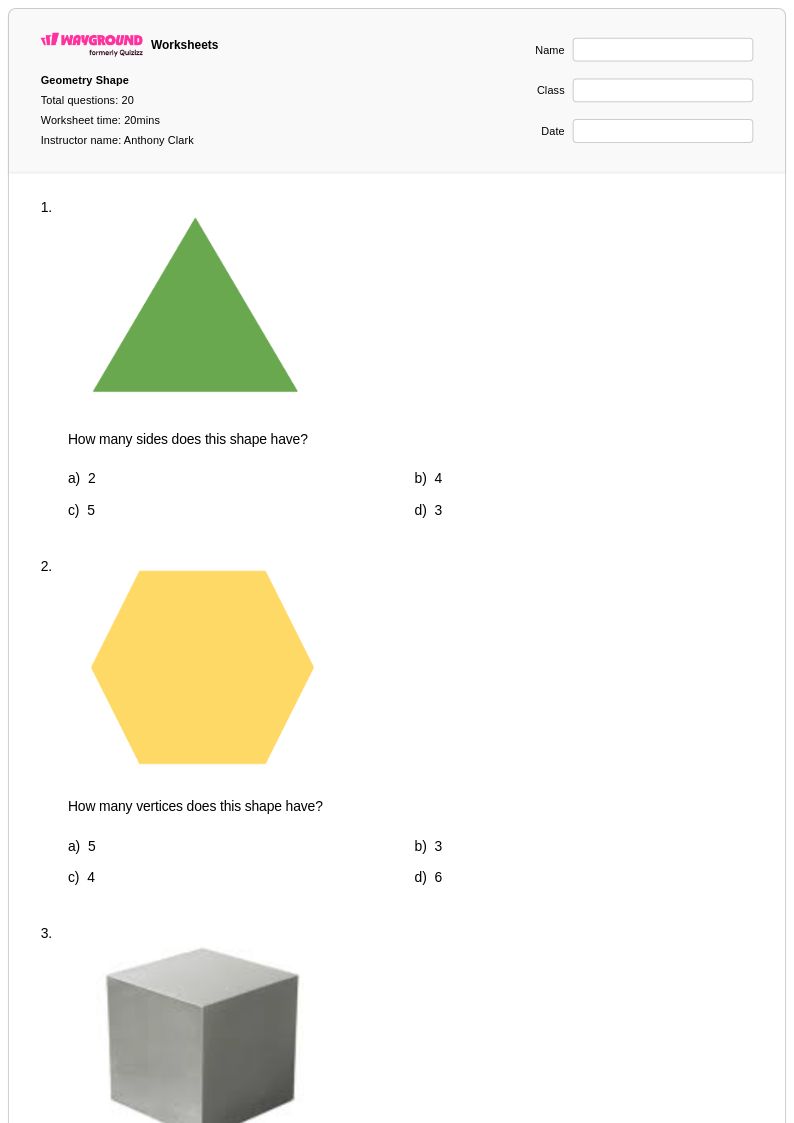
20 Q
5th - Uni
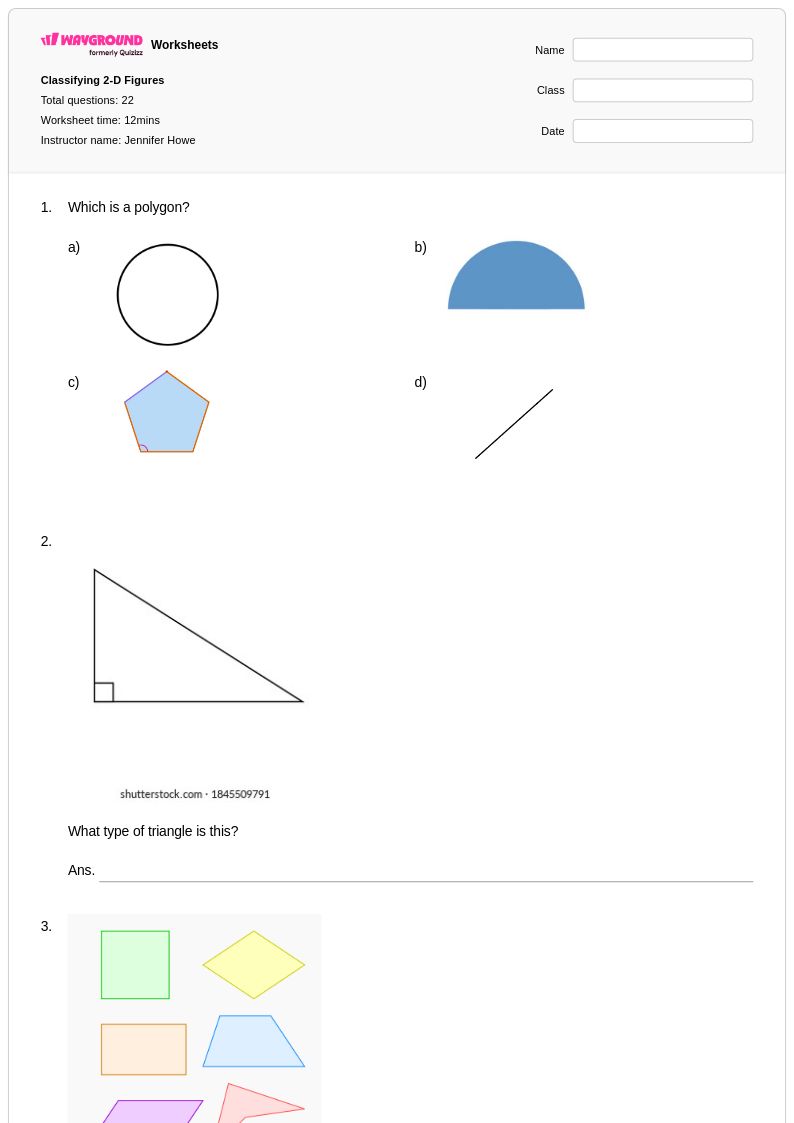
22 Q
5th
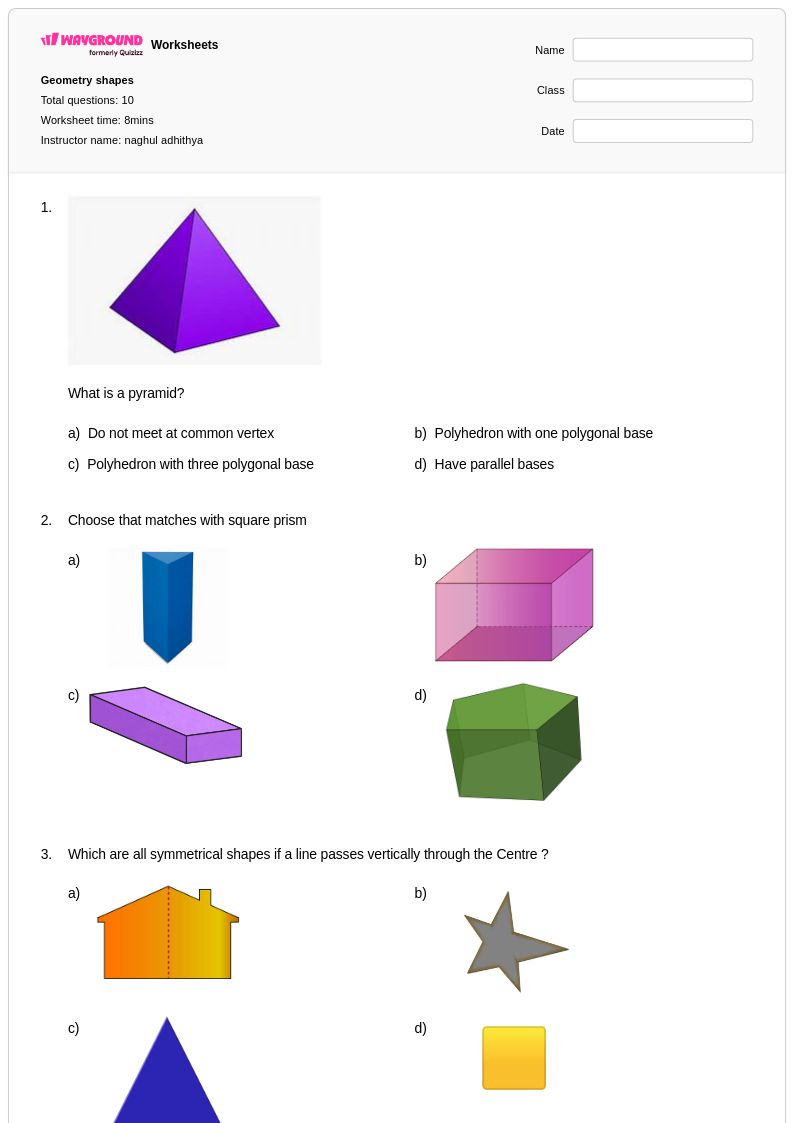
10 Q
5th
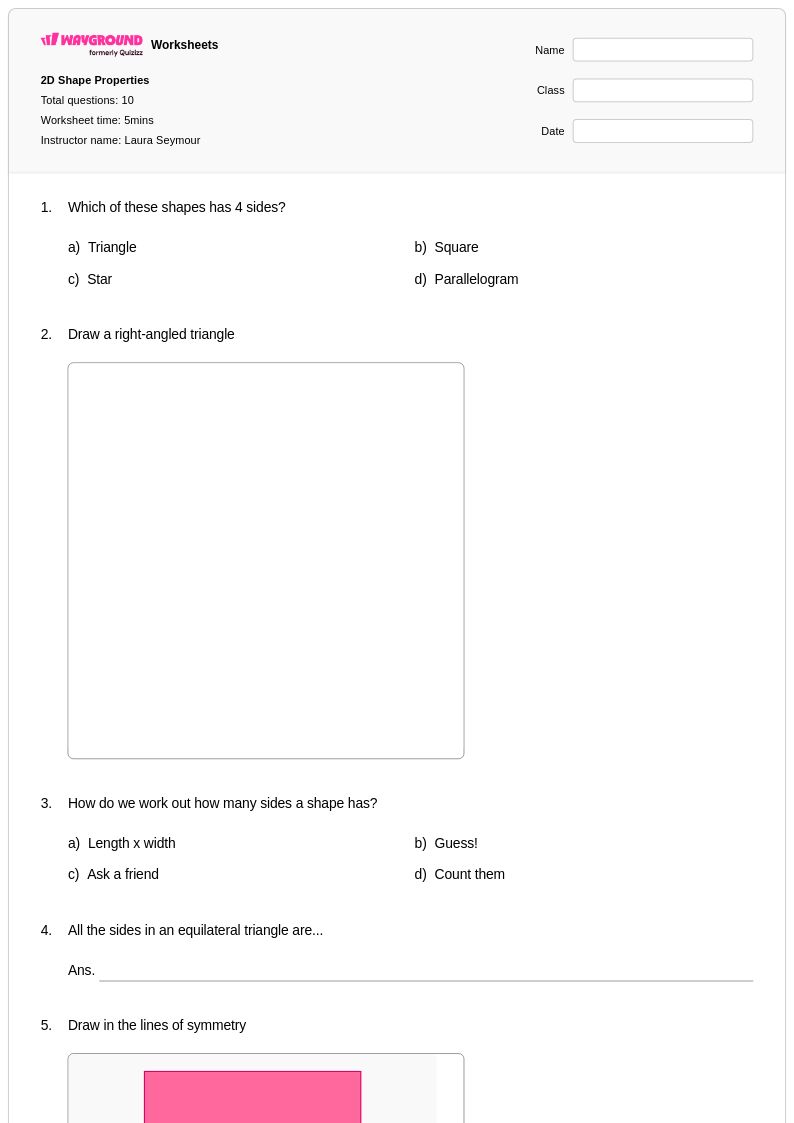
10 Q
5th
Explore Geometry 2D Shapes Worksheets by Grades
Explore Geometry 2D Shapes Worksheets for class 5 by Topic
Explore Other Subject Worksheets for class 5
Explore printable Geometry 2D Shapes worksheets for Class 5
Class 5 geometry 2D shapes worksheets available through Wayground (formerly Quizizz) provide comprehensive practice opportunities for students to master fundamental geometric concepts and spatial reasoning skills. These carefully designed worksheets focus on identifying, classifying, and analyzing two-dimensional shapes including triangles, quadrilaterals, pentagons, hexagons, and circles, while developing critical thinking about their properties such as sides, angles, vertices, and lines of symmetry. Students engage with practice problems that reinforce shape recognition, attribute comparison, and geometric vocabulary development, building the foundation for more advanced mathematical concepts. Each worksheet includes a complete answer key and is available as a free printable pdf, making it easy for educators to incorporate meaningful geometry practice into their instructional routines.
Wayground (formerly Quizizz) supports teachers with an extensive collection of millions of teacher-created resources specifically designed for Class 5 geometry 2D shapes instruction. The platform's robust search and filtering capabilities allow educators to quickly locate worksheets that align with specific learning standards and match their students' developmental needs. Teachers can customize these digital and printable materials to provide targeted remediation for struggling learners or enrichment opportunities for advanced students, while the flexible pdf format ensures seamless integration into both classroom and remote learning environments. These differentiation tools enable educators to efficiently plan lessons, assess student understanding, and provide focused skill practice that addresses individual learning gaps in geometric concepts and spatial visualization abilities.