Discover free Class 5 enlargement worksheets and printables from Wayground that help students master scaling shapes and understanding proportional relationships through engaging practice problems with complete answer keys.
Explore printable Enlargement worksheets for Class 5
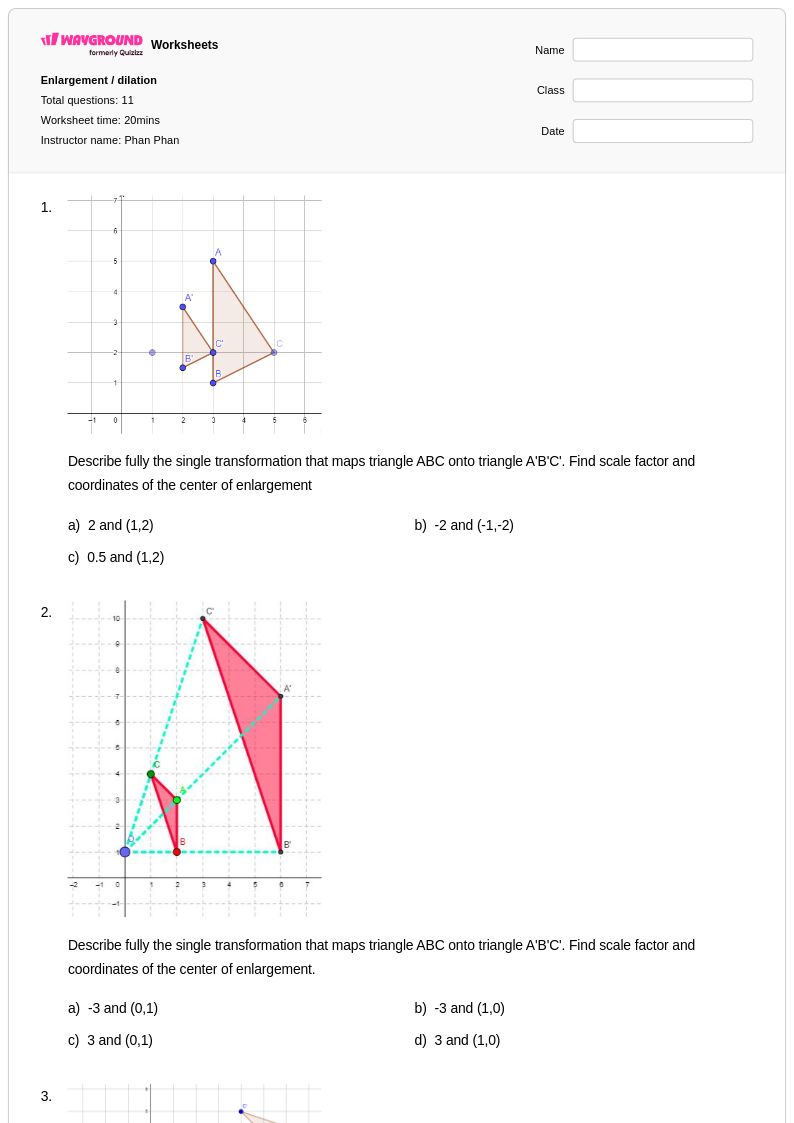
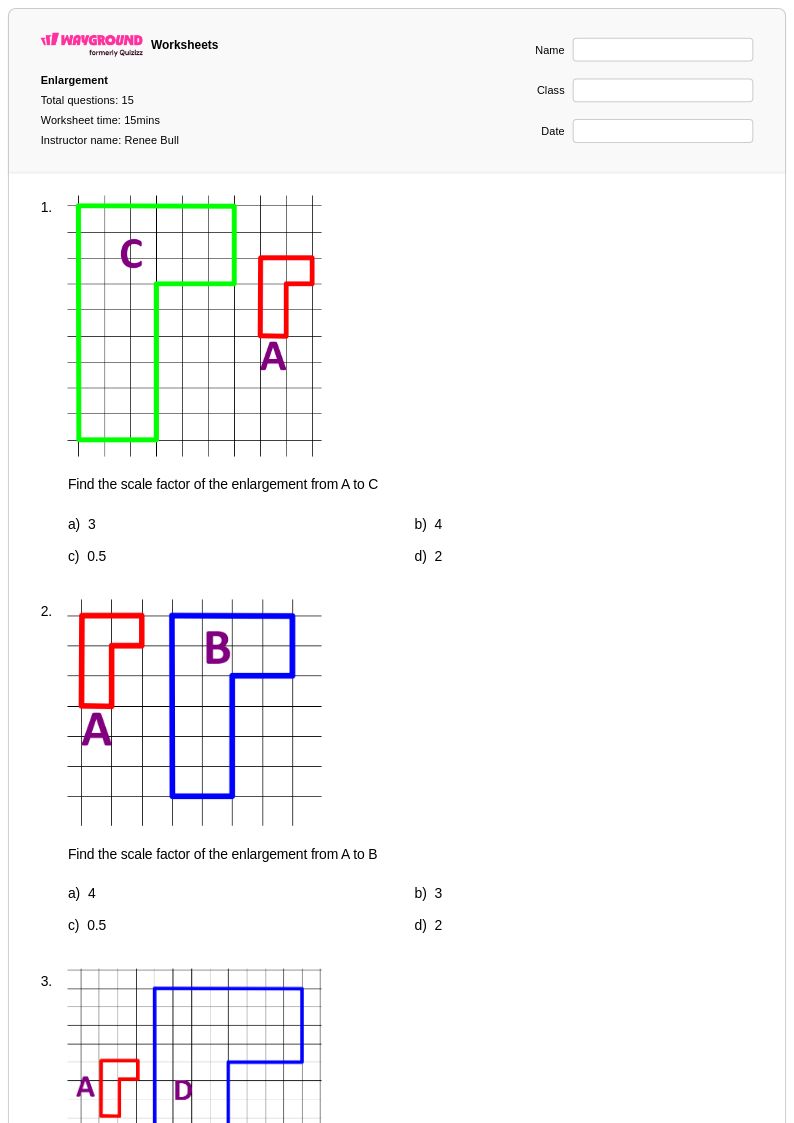
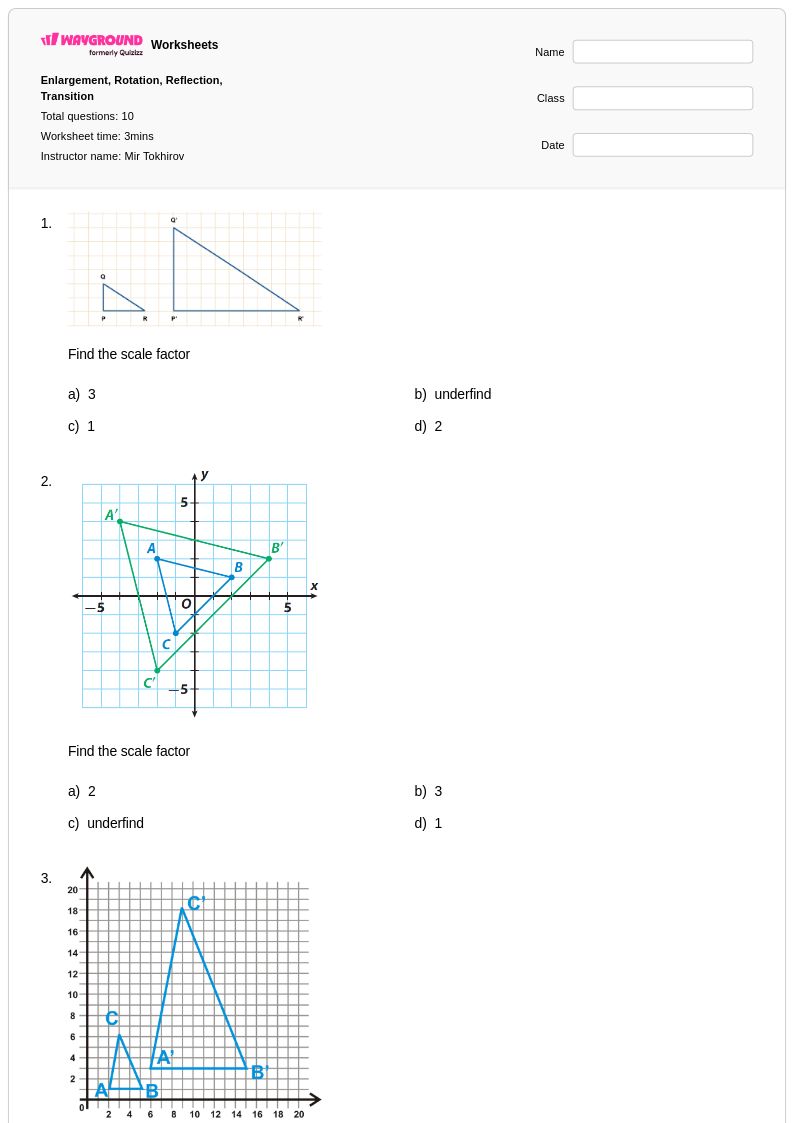
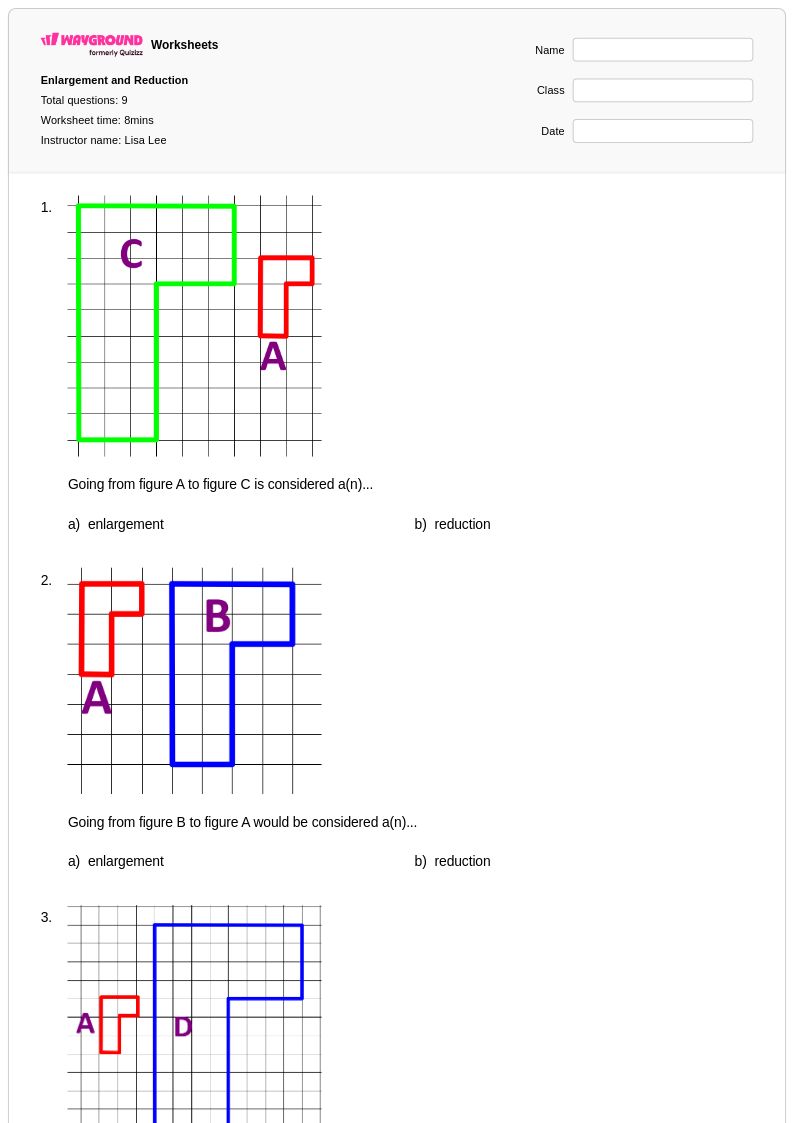
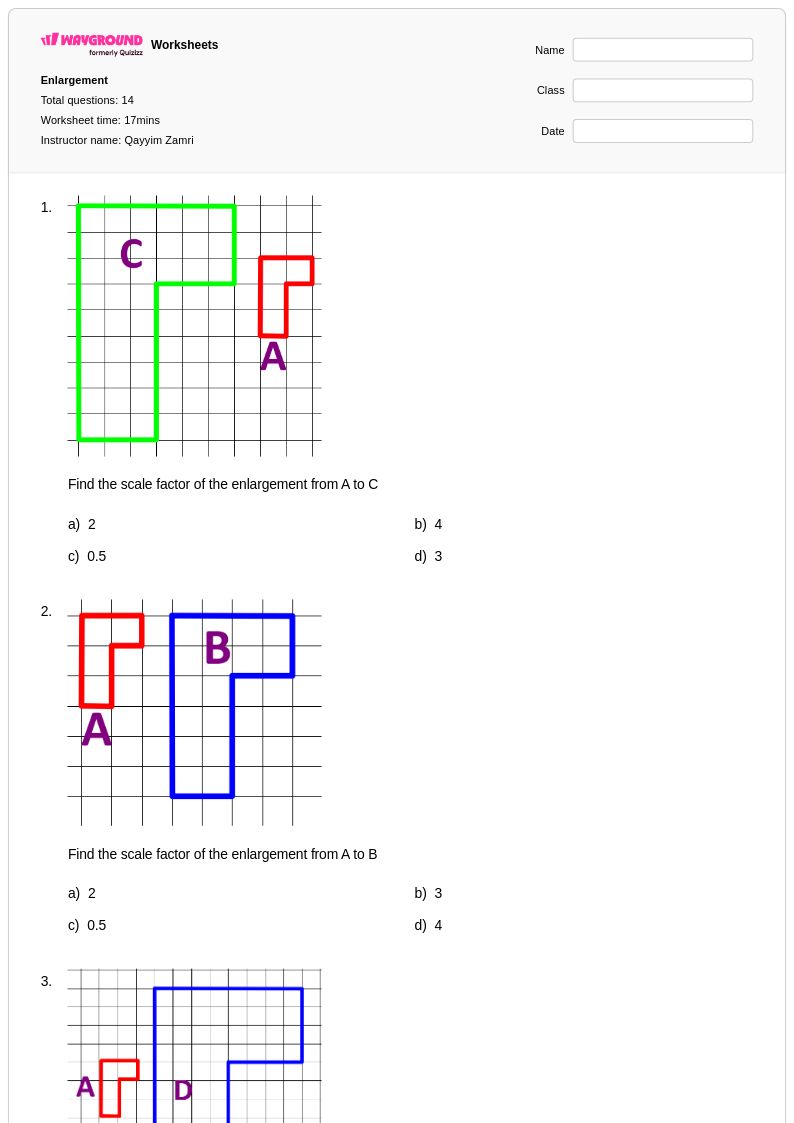
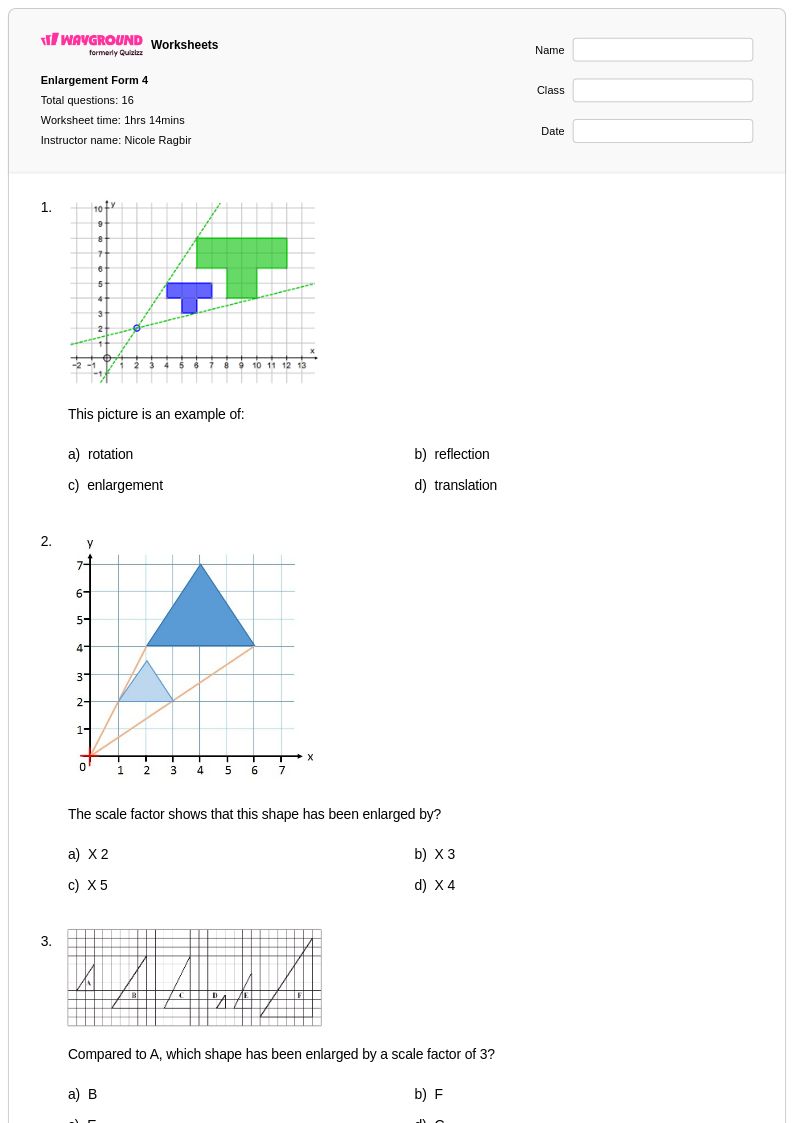
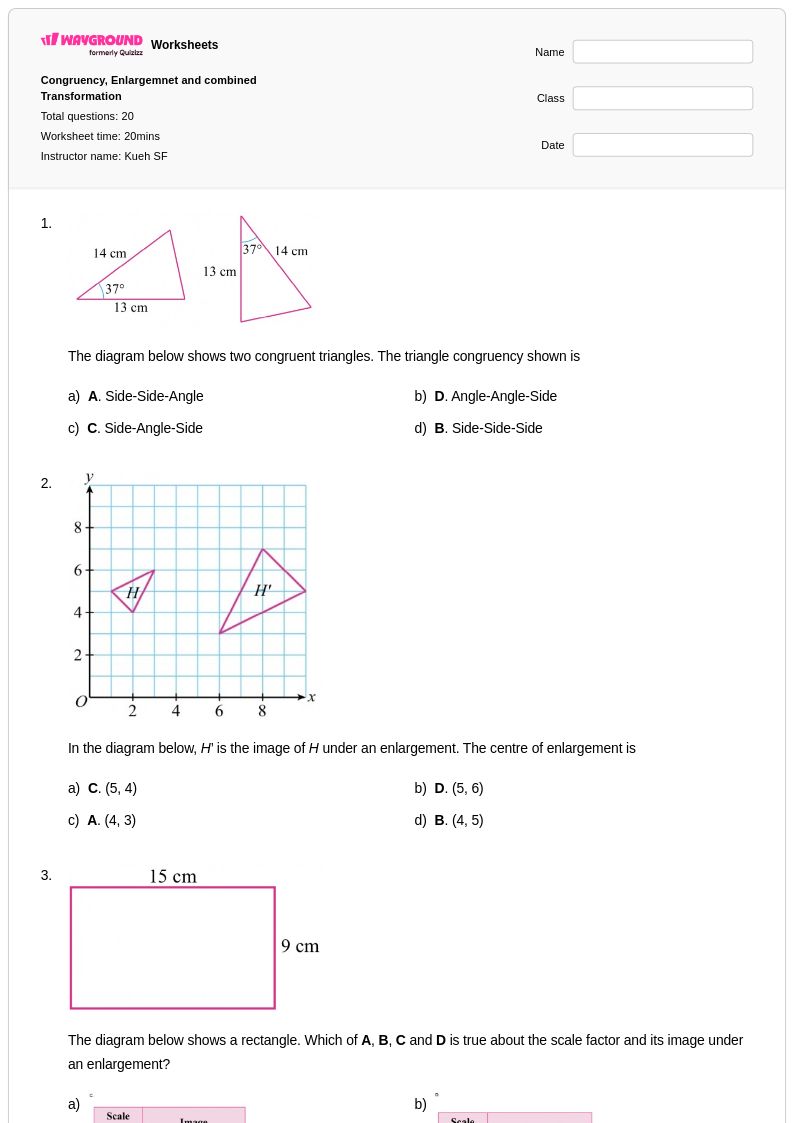
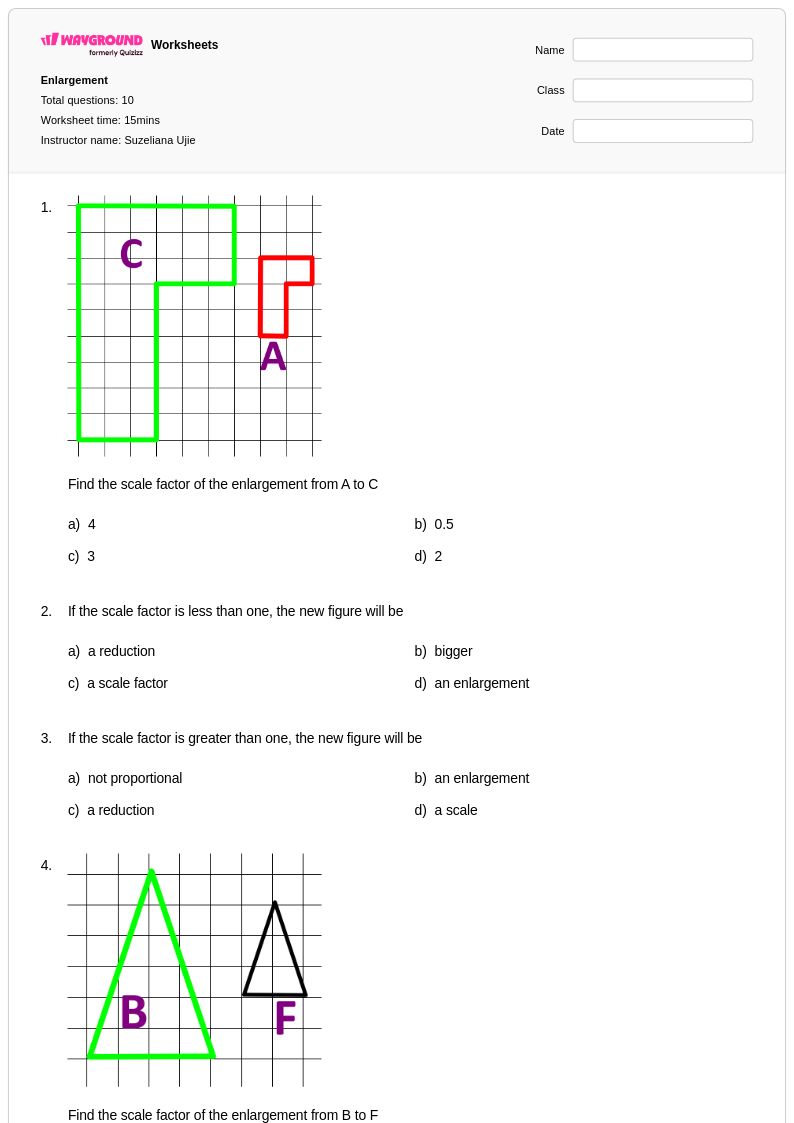
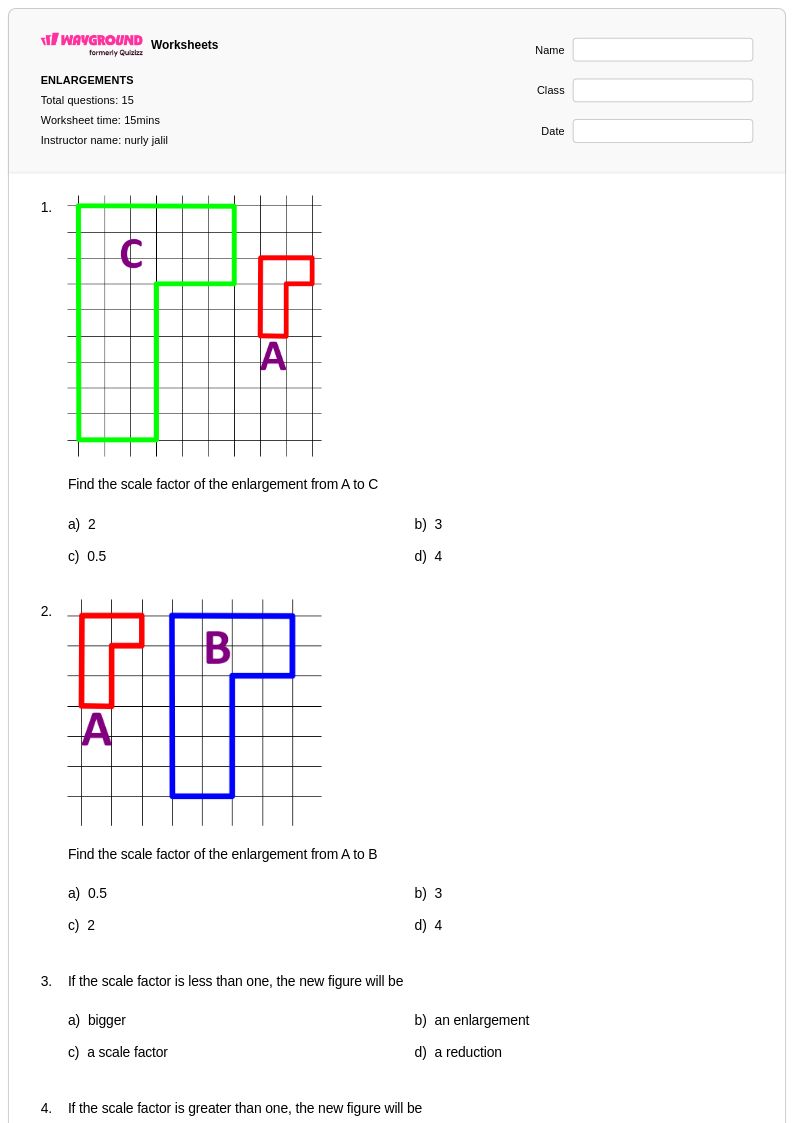
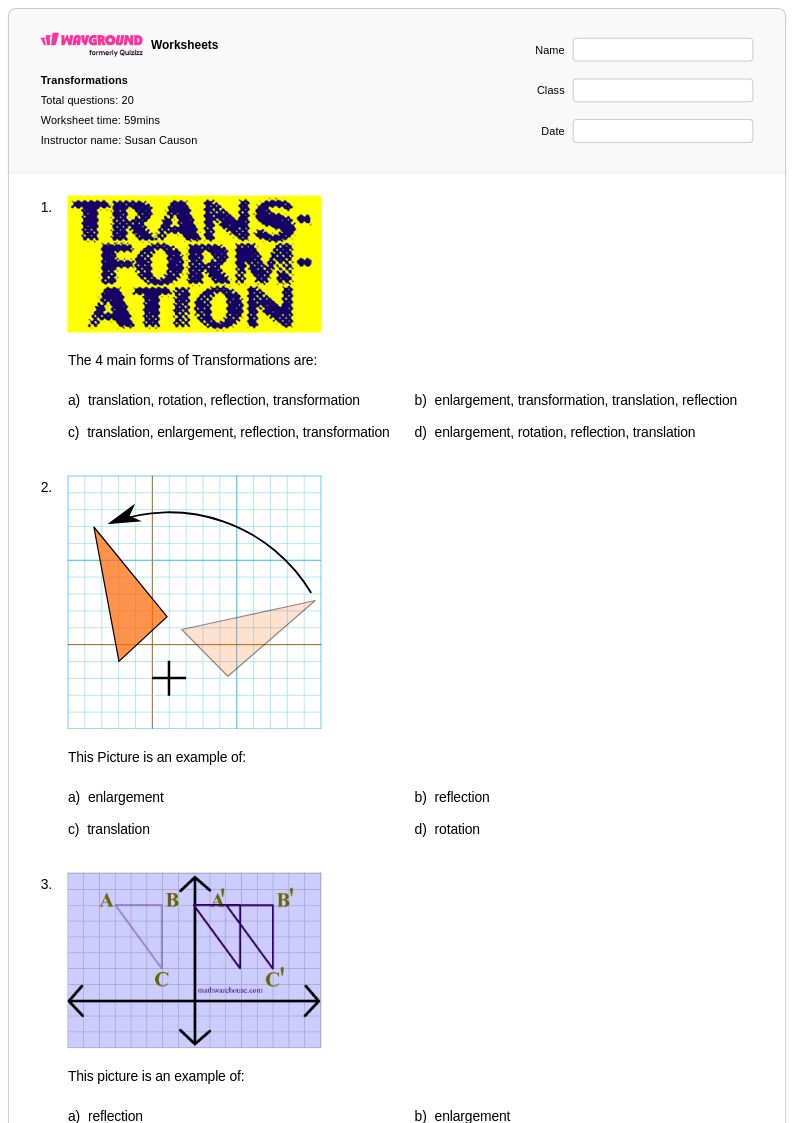
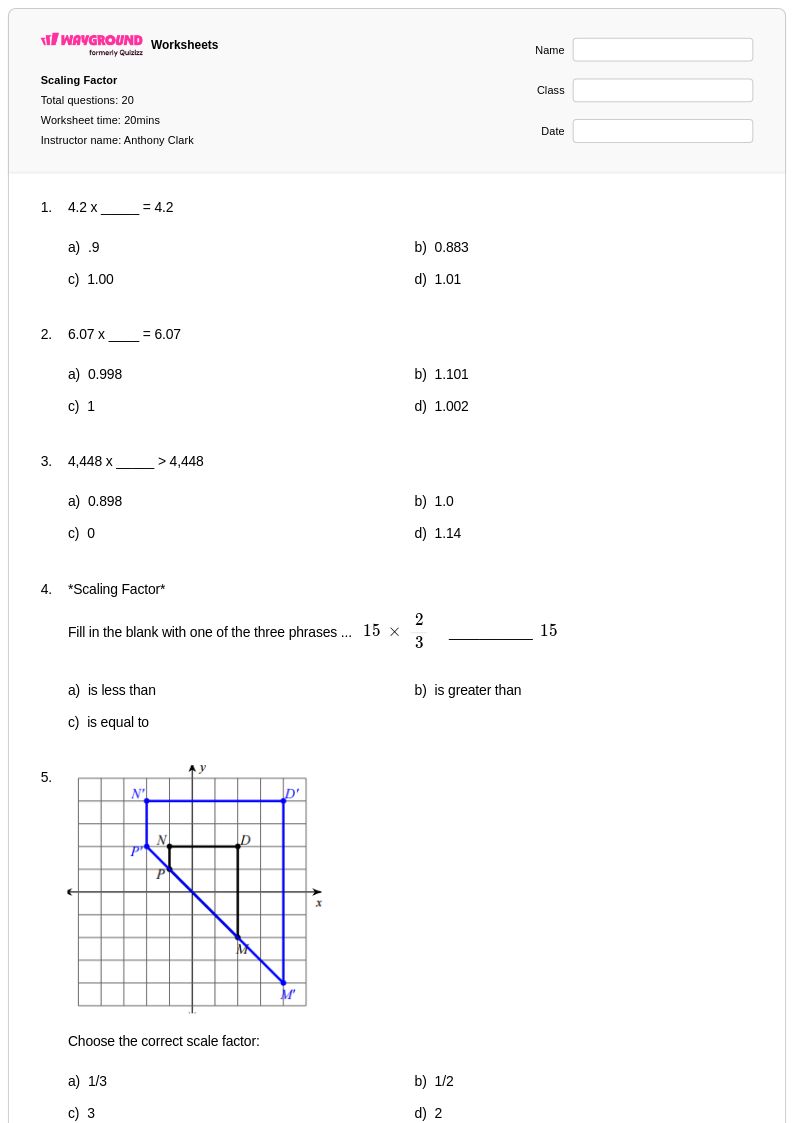
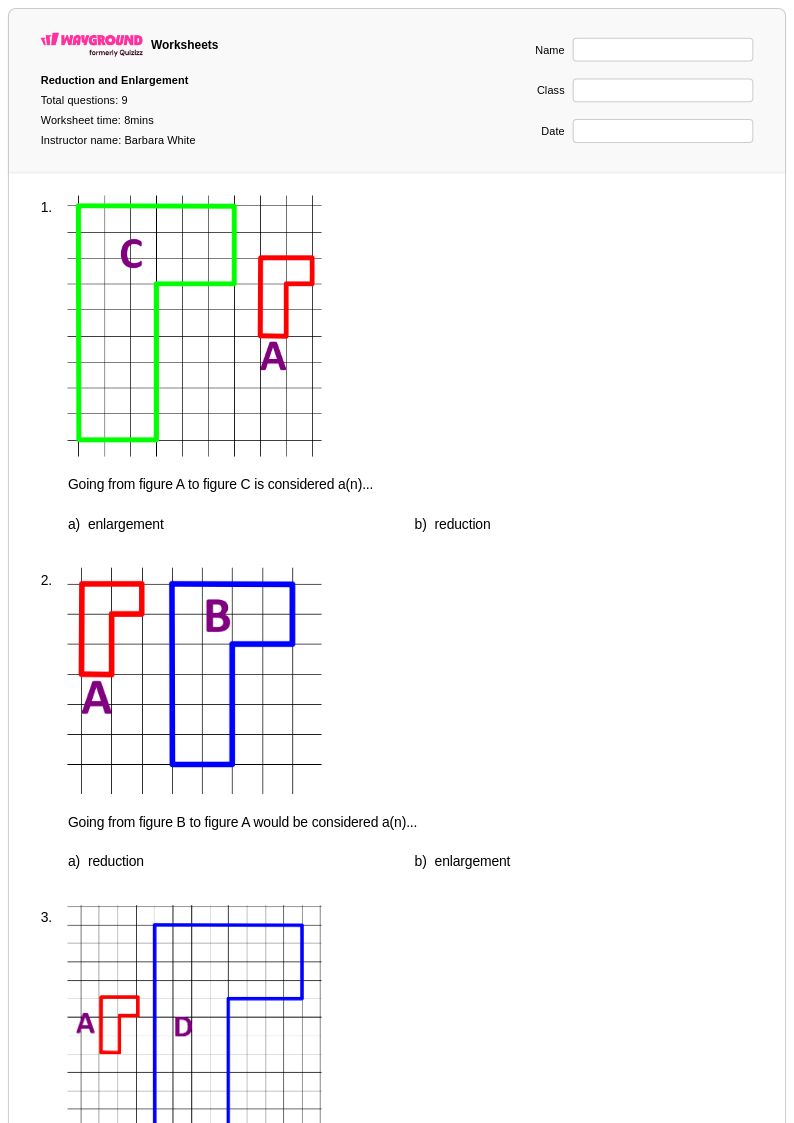
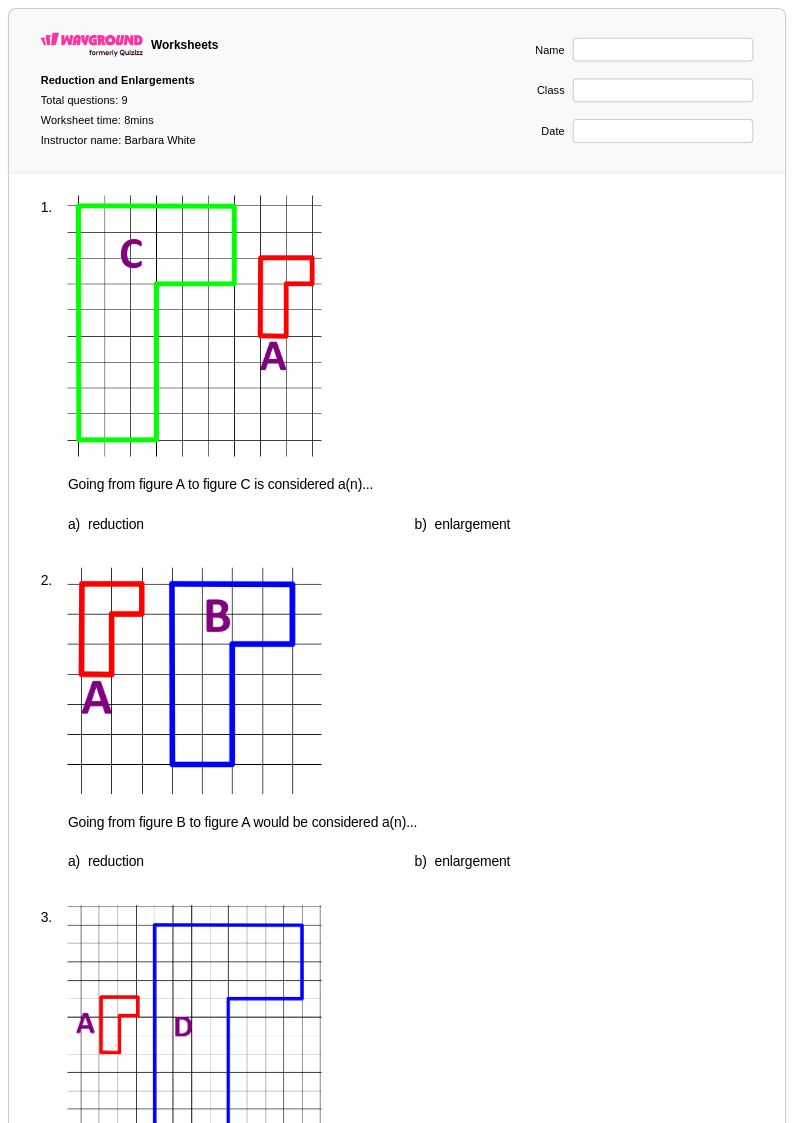
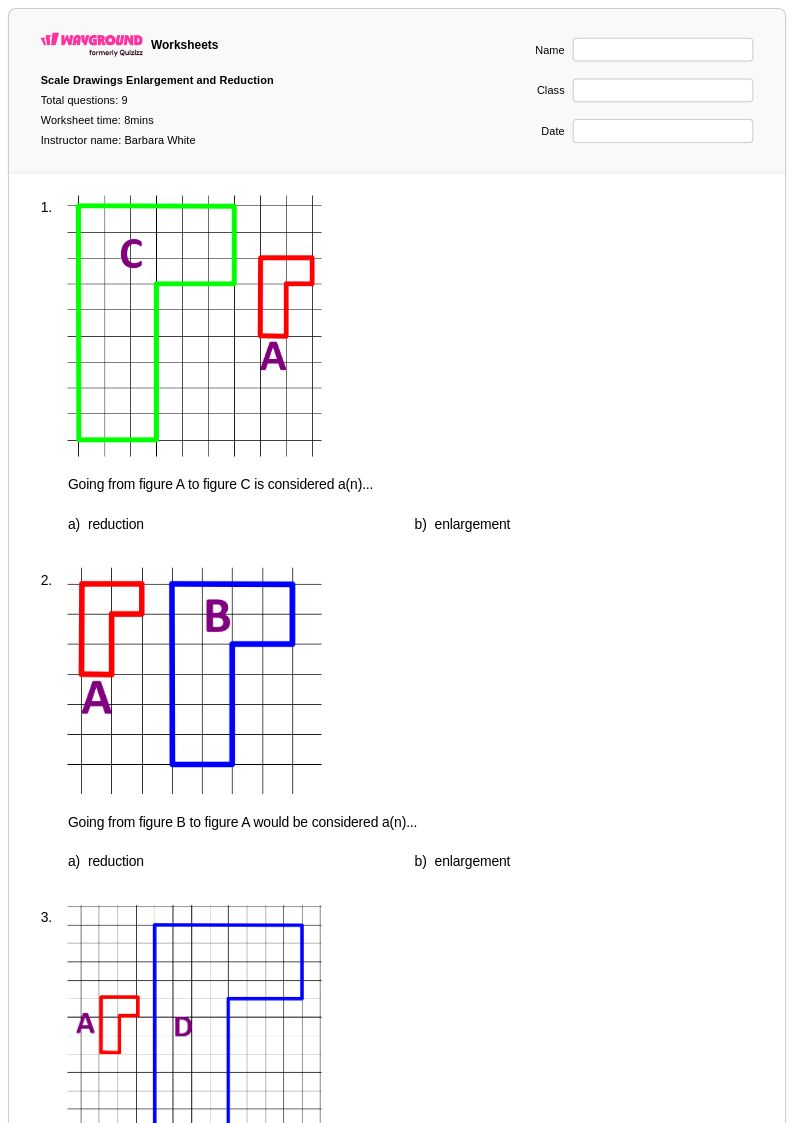
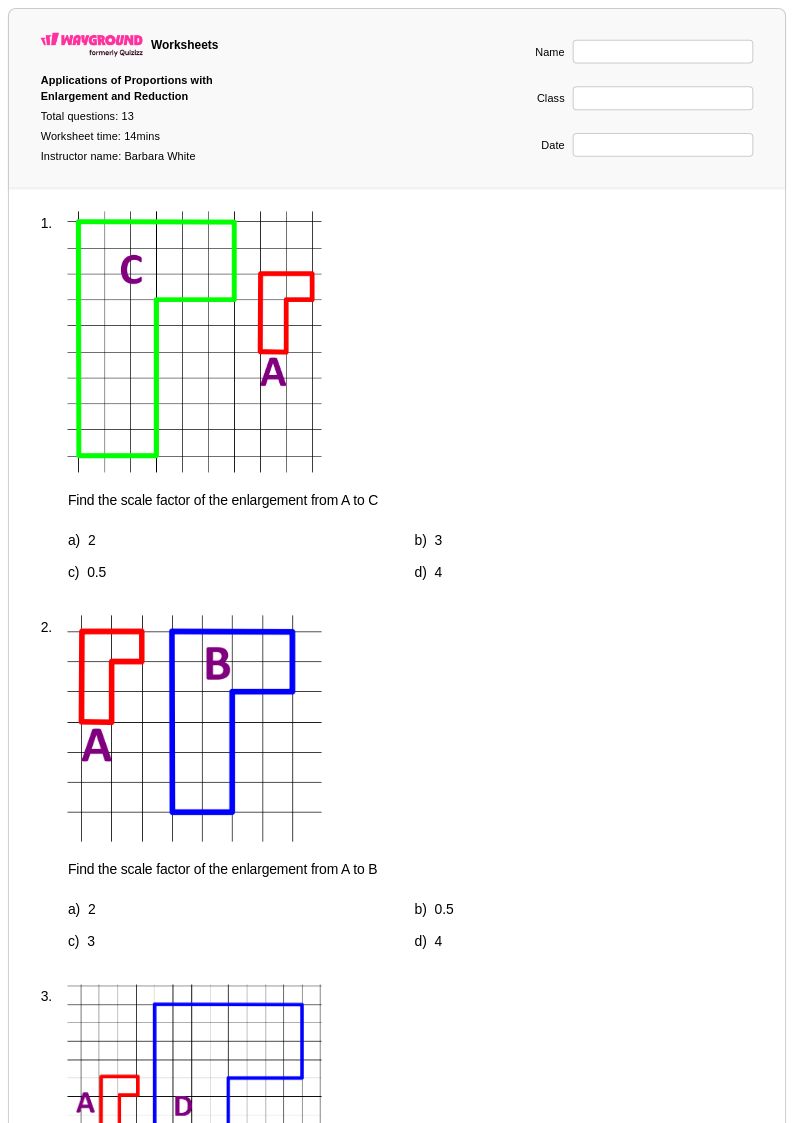
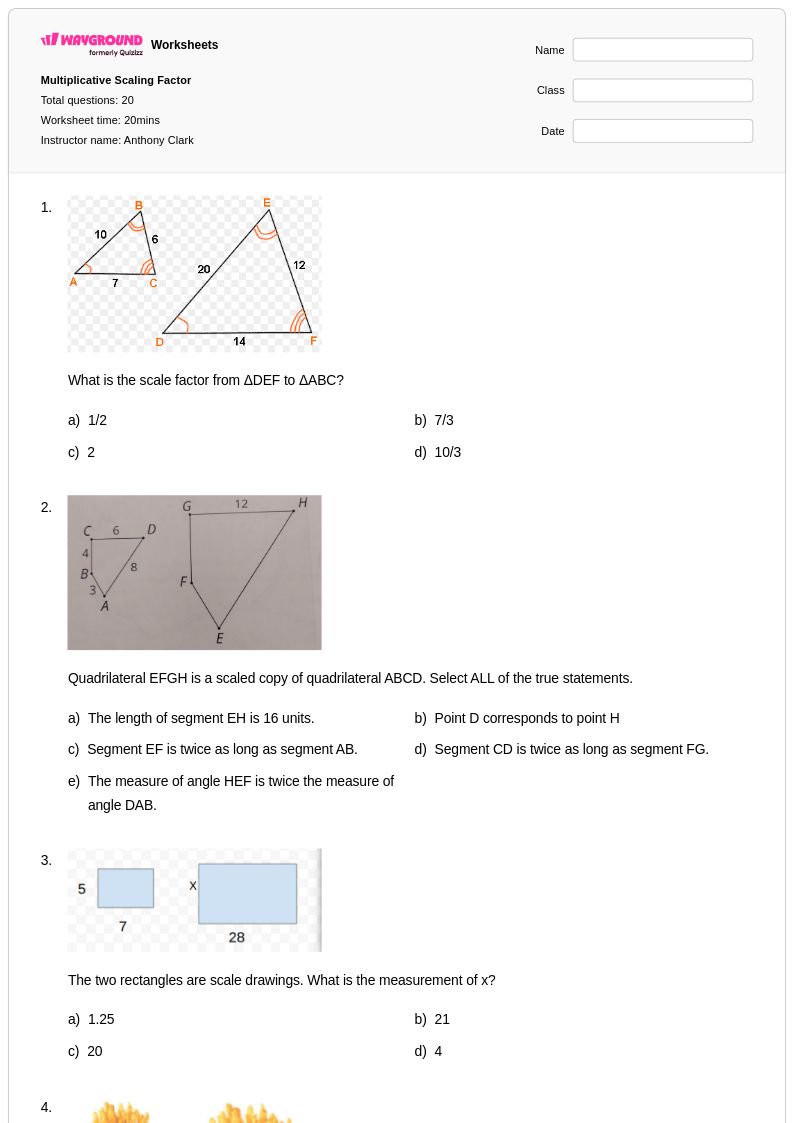
Enlargement worksheets for Class 5 students available through Wayground (formerly Quizizz) provide comprehensive practice in understanding how geometric shapes can be scaled up proportionally while maintaining their essential properties. These carefully designed printables help students develop spatial reasoning skills by working with enlargement ratios, identifying corresponding vertices and sides, and recognizing how measurements change when shapes are scaled. Each worksheet includes practice problems that progress from simple whole number scale factors to more challenging decimal multipliers, with complete answer key materials provided to support independent learning and self-assessment. Students work with grids, coordinate planes, and measurement tools to create enlarged versions of triangles, rectangles, and other polygons, building foundational understanding of similarity and proportional relationships that will serve them throughout their mathematical education.
Wayground (formerly Quizizz) empowers teachers with millions of educator-created enlargement resources that can be easily searched, filtered, and customized to match specific classroom needs and standards alignment requirements. The platform's differentiation tools allow teachers to modify worksheets for various skill levels within Class 5, ensuring that struggling learners receive appropriate scaffolding while advanced students encounter enriching challenges. Teachers can access these materials in both printable pdf format for traditional classroom use and digital formats for interactive learning experiences, making lesson planning efficient and flexible. The extensive collection supports targeted remediation for students who need additional practice with scale factors, enrichment activities for those ready to explore complex enlargement scenarios, and regular skill practice to reinforce geometric transformation concepts throughout the school year.
FAQs
How do I teach enlargement to Grade 5 students?
By Grade 5, students can handle scale factors beyond whole numbers, so the teaching emphasis shifts to precision and method. Working on a coordinate grid is the most effective approach: students plot the original vertices, apply the scale factor to each coordinate, and plot the enlarged image. This makes the proportional relationship visible and gives students a reliable procedure they can check. Introduce decimal scale factors (like 1.5) once the whole-number grid work is fluent — the procedure is identical, just with decimal multiplication.
What do Grade 5 enlargement worksheets help students practice?
Wayground's Grade 5 enlargement worksheets progress from whole-number scale factors to decimals, and from simple shapes like rectangles and triangles to polygons with more vertices. Students work on grids and coordinate planes, identifying corresponding vertices, calculating new dimensions, and constructing the enlarged figure. That combination of calculation and construction is important — students who can only compute scale factors but can't draw the result don't yet have a complete understanding of the transformation.
What mistakes do fifth graders commonly make with enlargement?
Two errors stand out at this level. First, when working on a coordinate grid, students sometimes apply the scale factor to only the x-coordinates and forget to scale the y-coordinates, or vice versa. Second, with decimal scale factors like 1.5, students often round carelessly or revert to adding instead of multiplying, especially under time pressure. A quick diagnostic: give students a triangle with vertices at known coordinates and a scale factor of 2.5, then check whether all three image vertices are correctly placed.
How do I use these Grade 5 enlargement worksheets in my class?
These worksheets are available as printable PDFs with full answer keys, making them easy to assign for independent practice or homework. For classes working on coordinate-plane problems, the printed grid format is often cleaner than a screen — students can draw directly on the page. If you collect paper submissions, the Wayground for Teachers app lets you scan and grade them without manually entering scores. Digital hosting is also available if you want instant results or are running a remote session.
How does Grade 5 enlargement connect to the broader math curriculum?
Common Core positions Grade 5 as the point where students formalize their work on the coordinate plane, and enlargement is a natural application of that. Scaling coordinates by a factor is the same multiplicative reasoning students use in fraction multiplication and decimal operations — subjects they're working on simultaneously. The concept of similar figures that emerges from enlargement then becomes foundational in Grade 7, where students formally define similarity in terms of proportional side lengths and congruent angles.
How can I differentiate enlargement practice for my Grade 5 class?
For students who find multi-step coordinate problems overwhelming, Wayground's reduced answer choices accommodation narrows the options they see in digital sessions, letting them focus on the geometry rather than the decision load. For students who need more visual support, you can generate a version of the worksheet with larger font and wider spacing so the grid and labels are easier to read. Advanced students who finish early can be directed to problems with decimal scale factors or asked to work backwards — finding the scale factor from a given original and image.