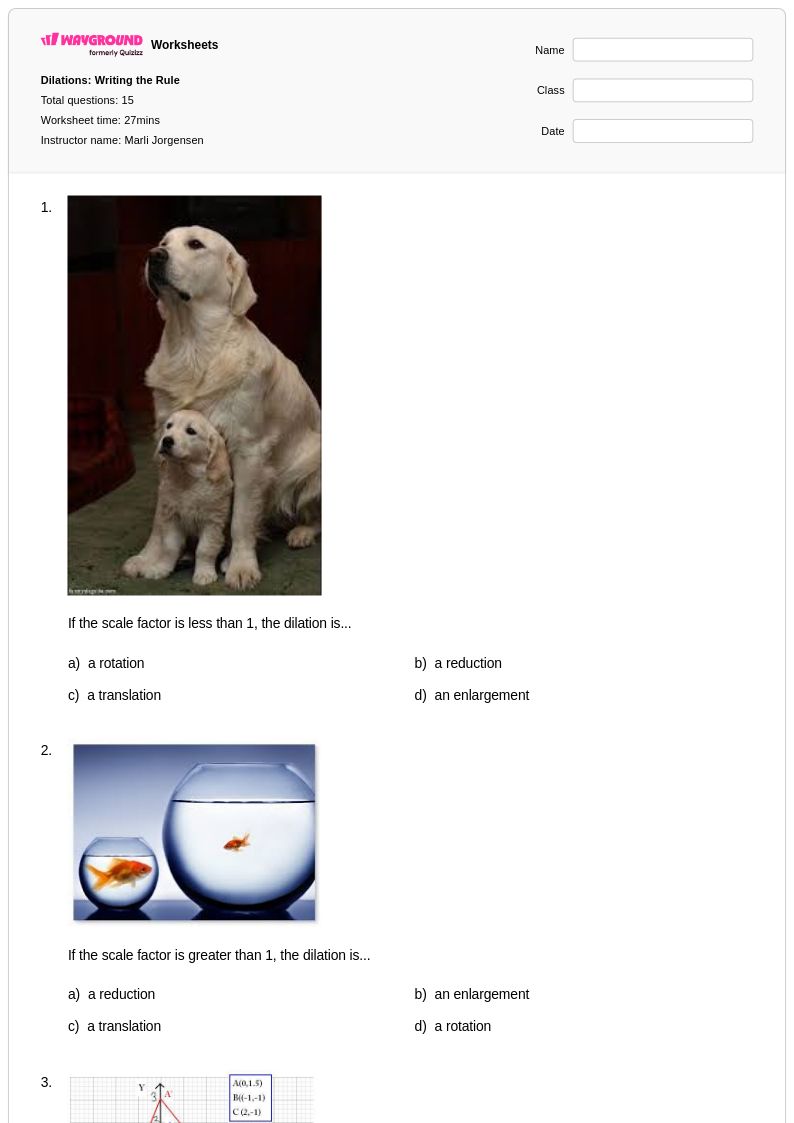
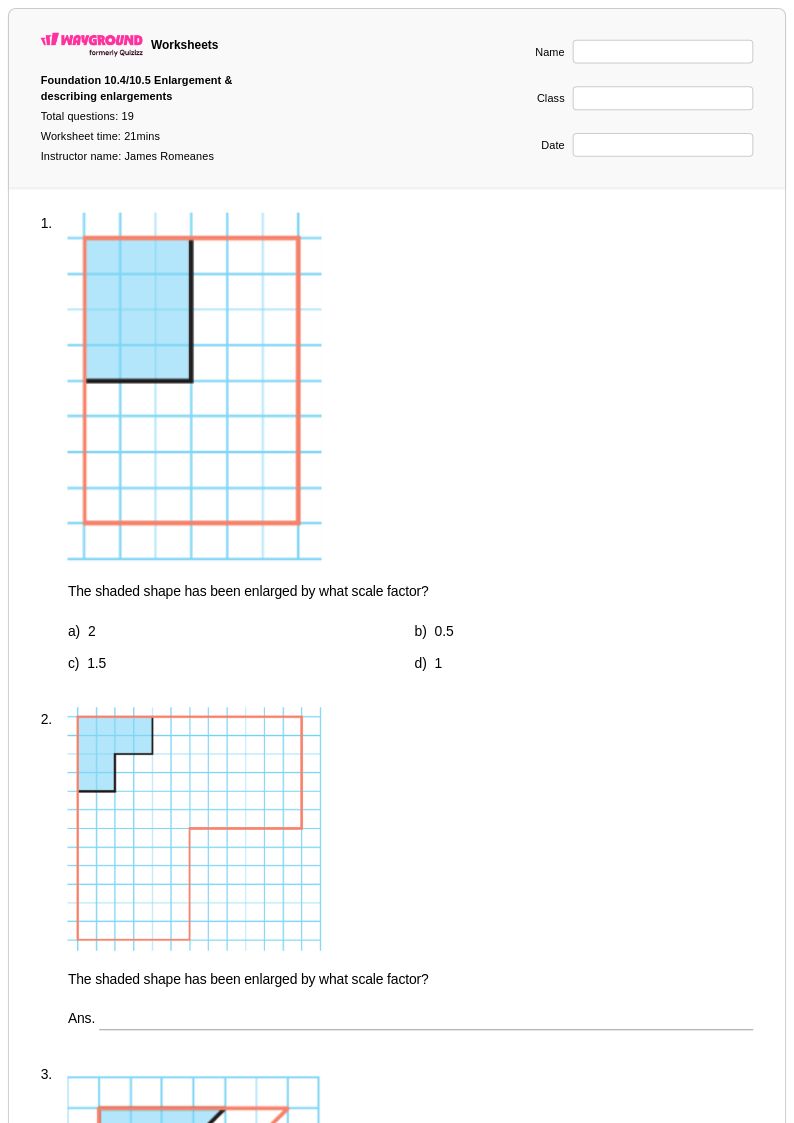
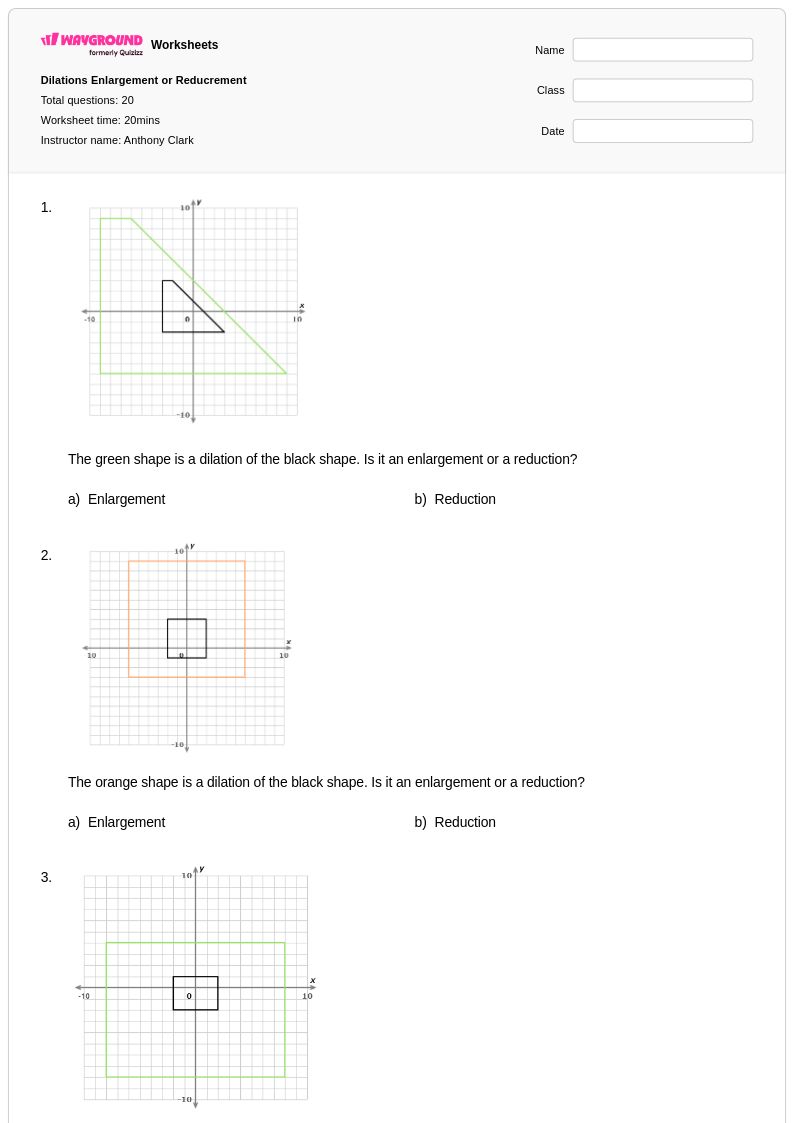
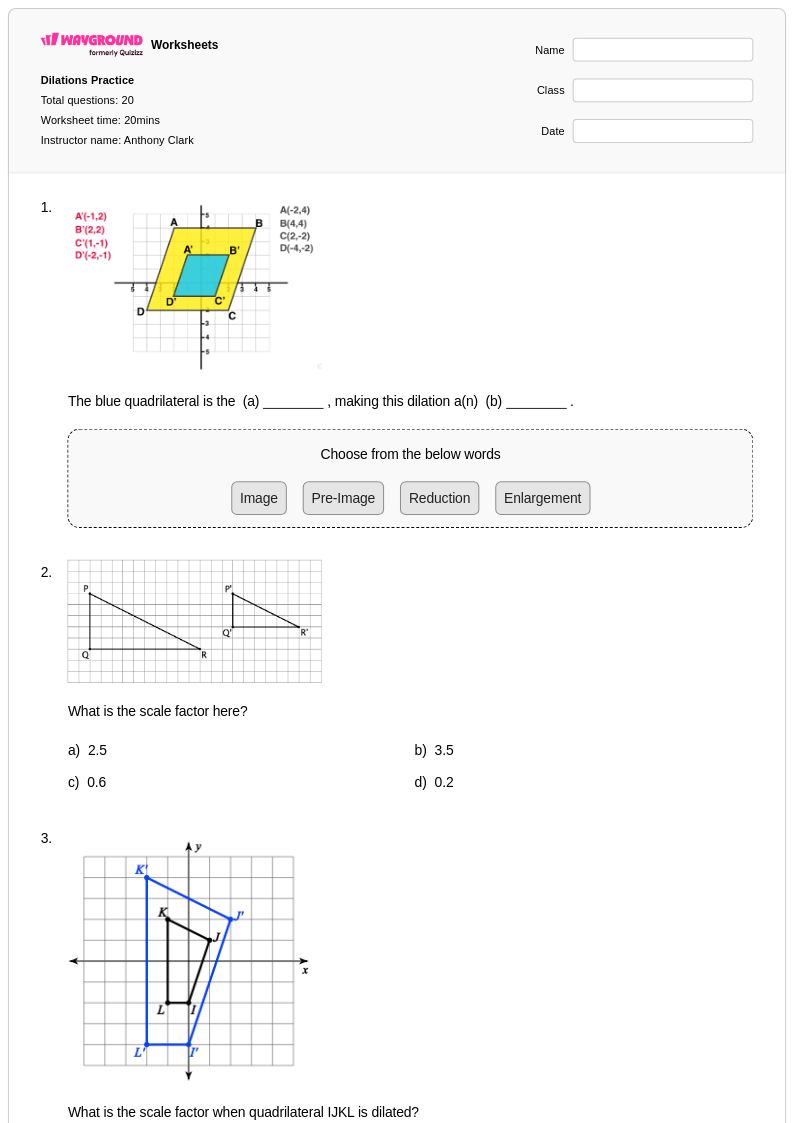
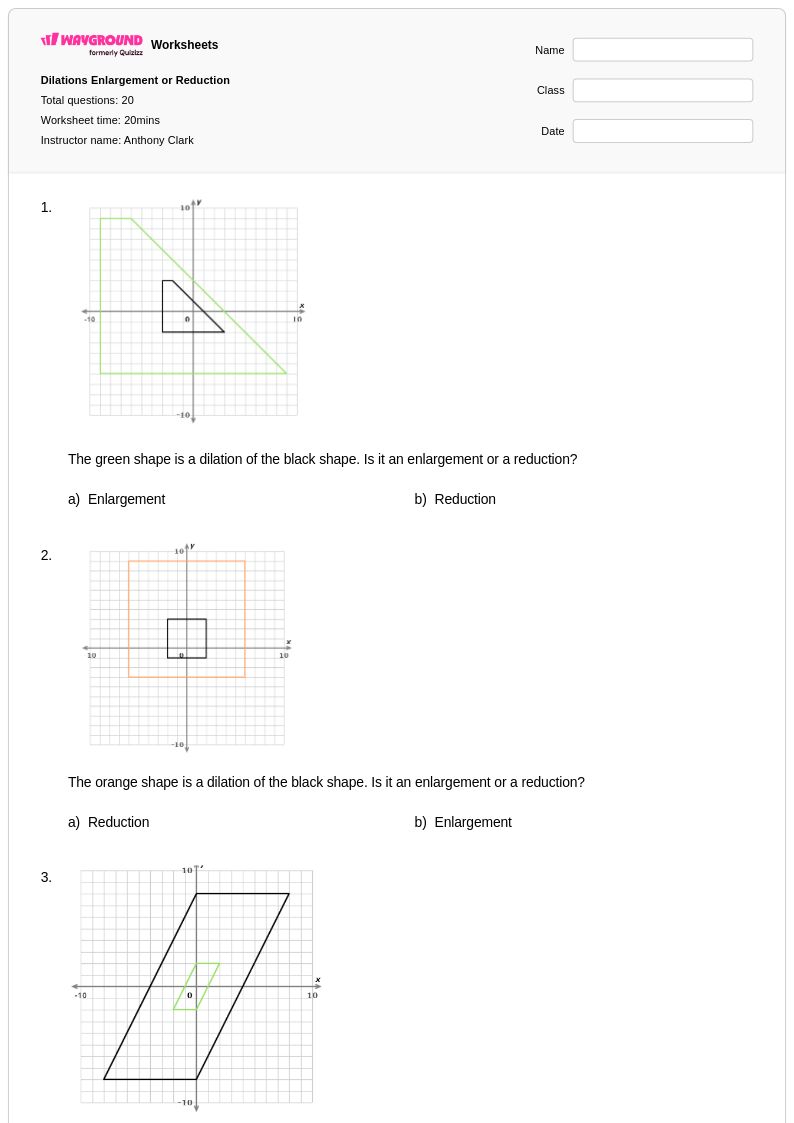
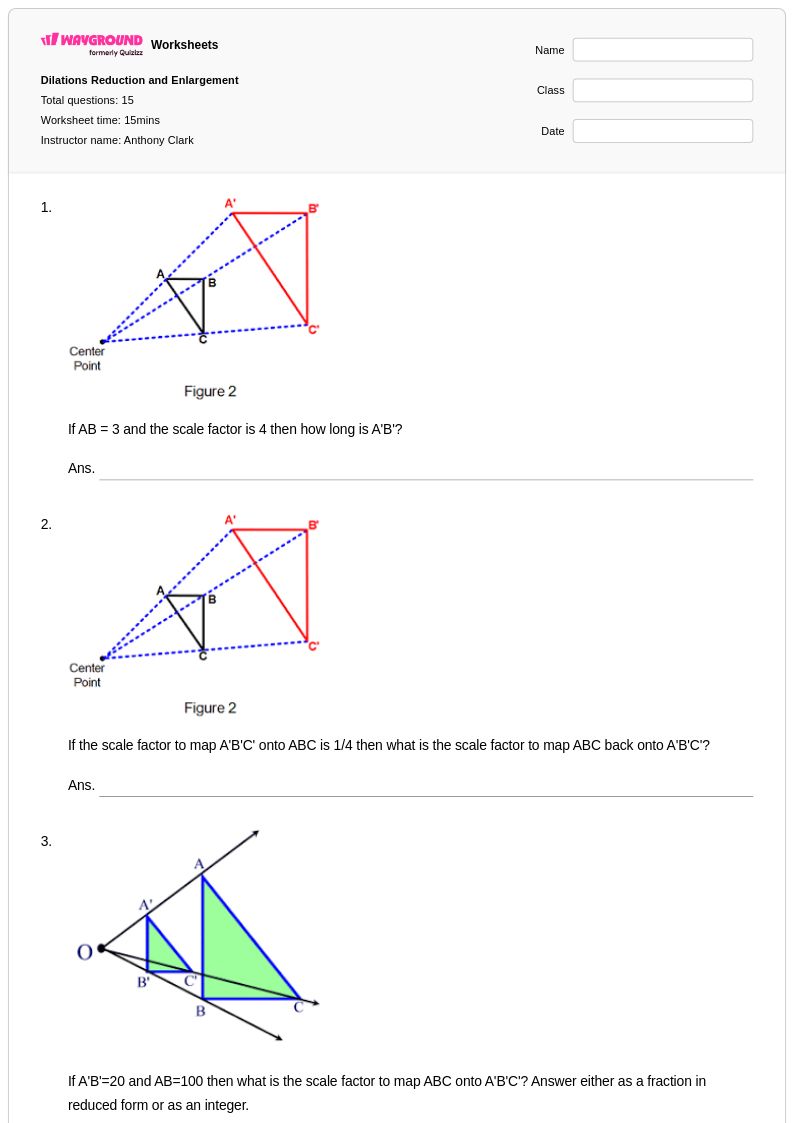
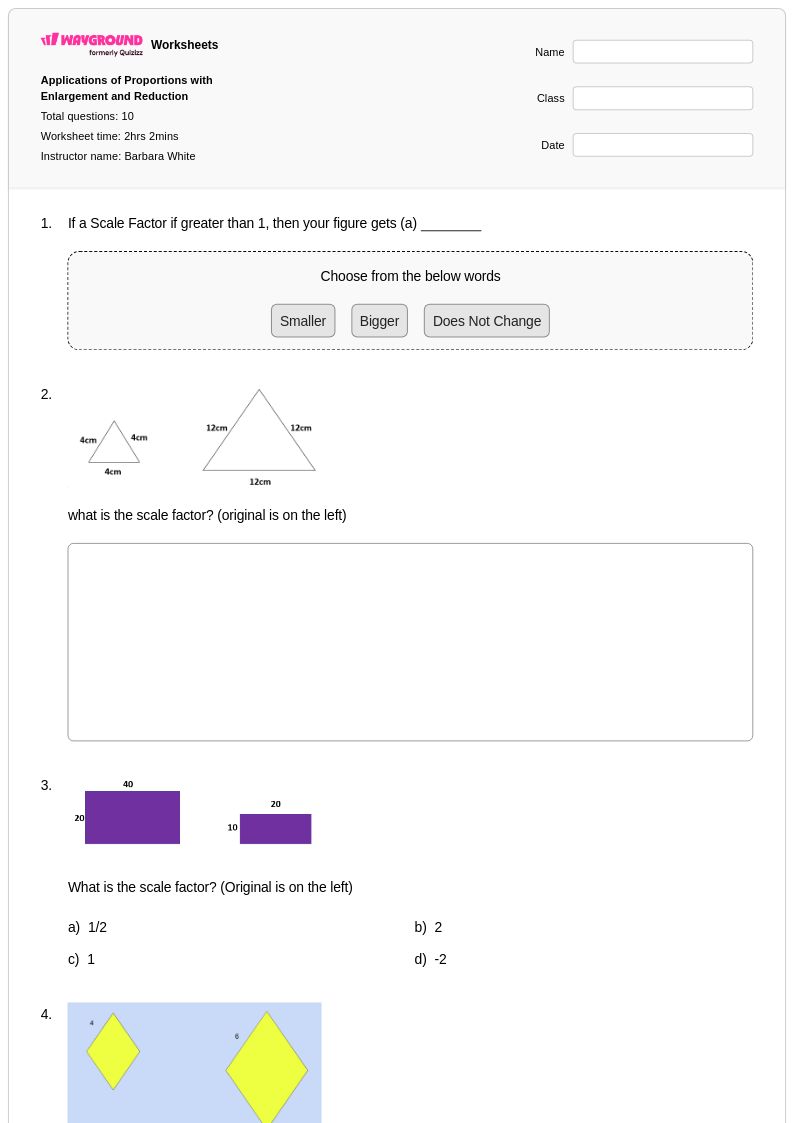
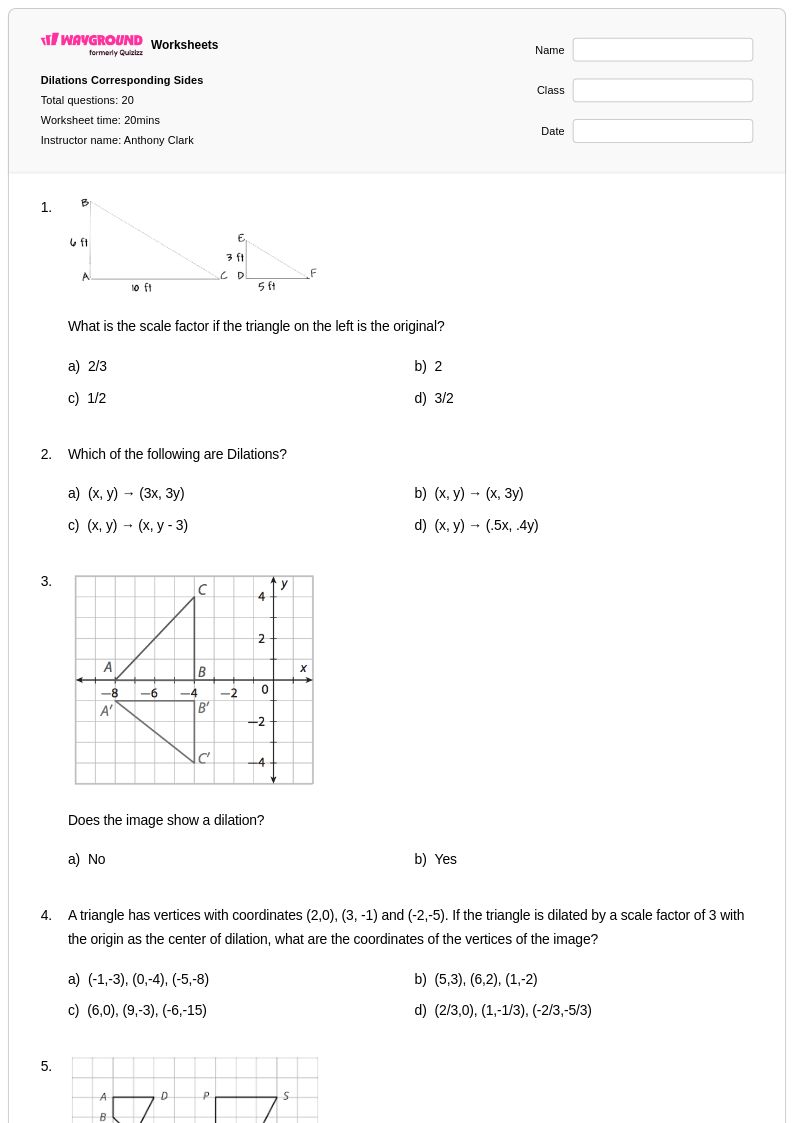
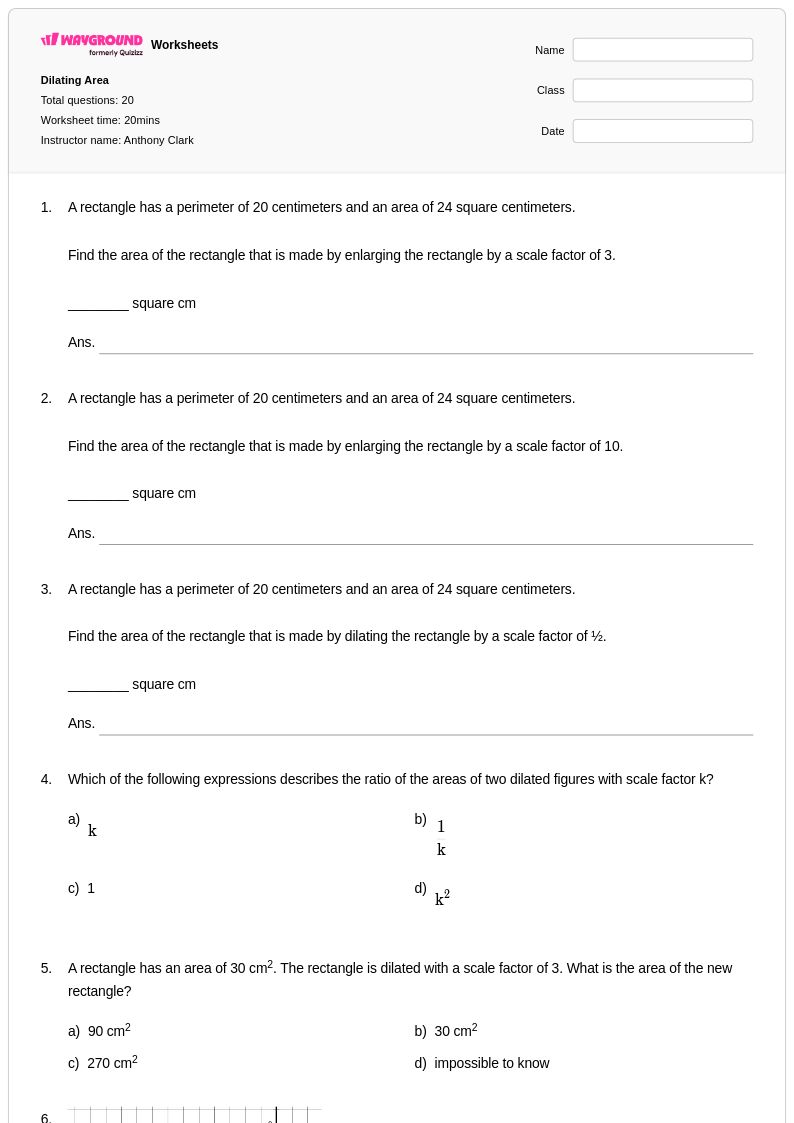
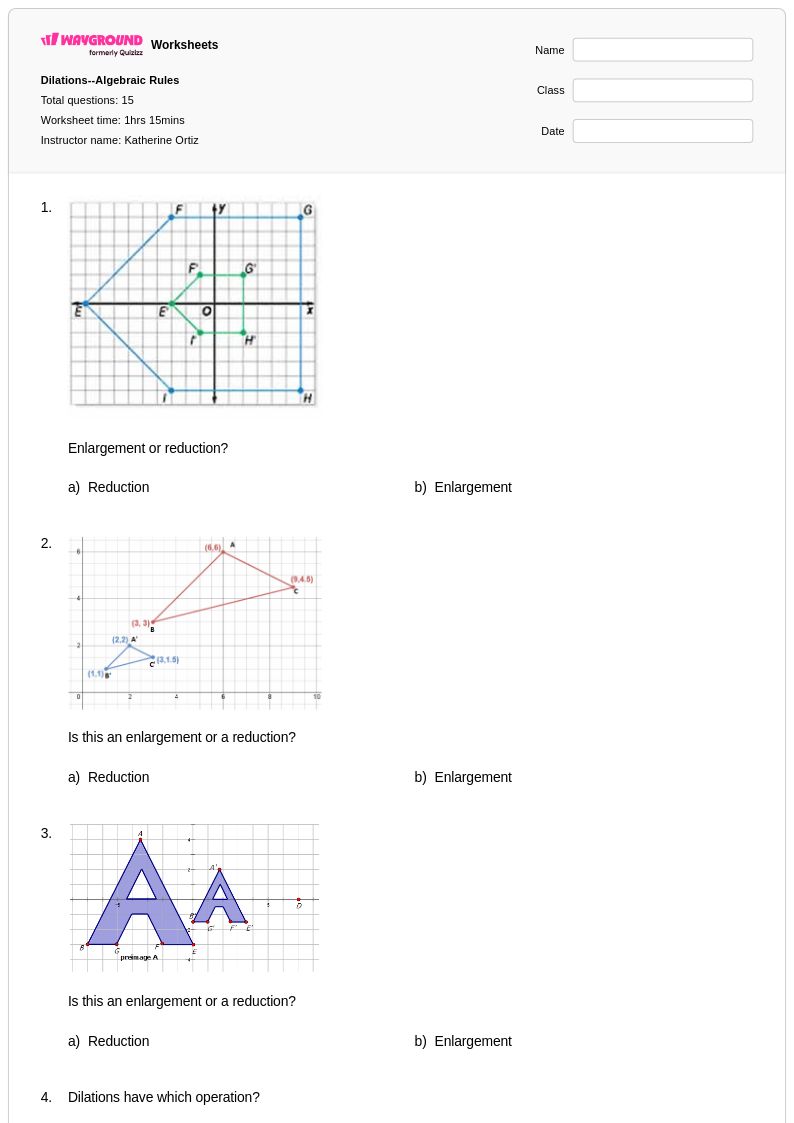
Discover free enlargement worksheets and printables from Wayground that help students master geometric transformations through engaging practice problems with comprehensive answer keys included.
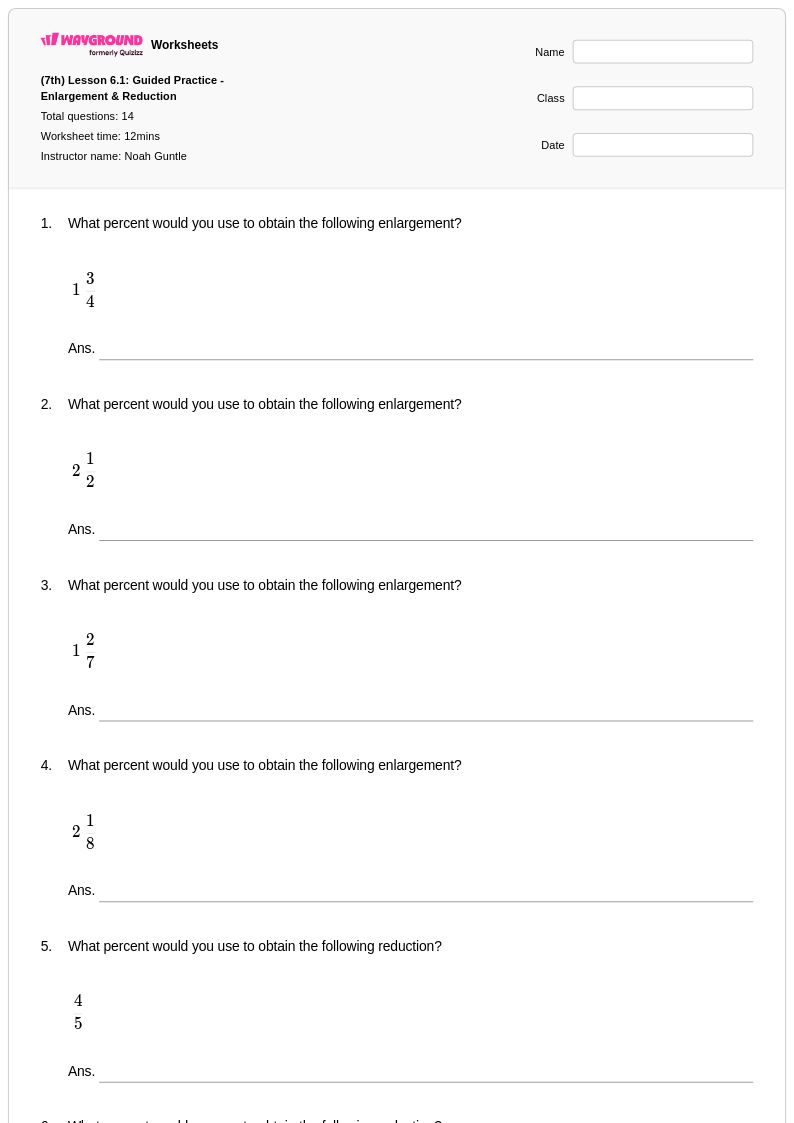
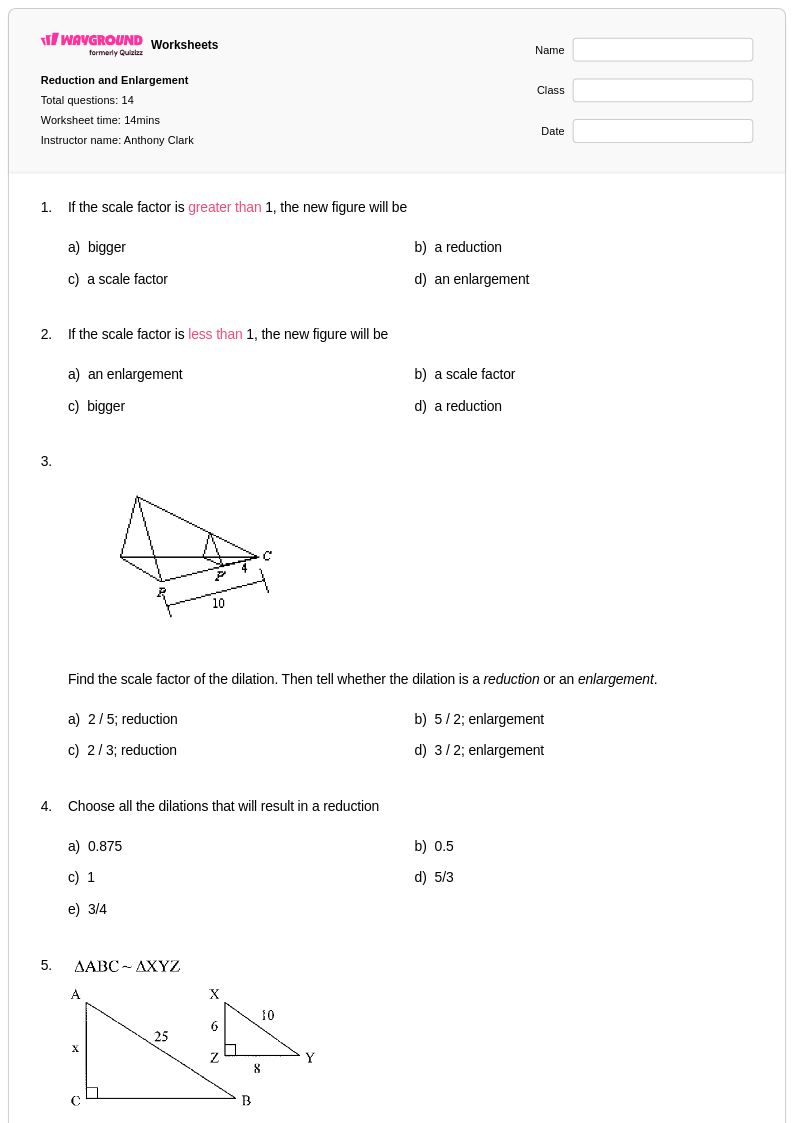
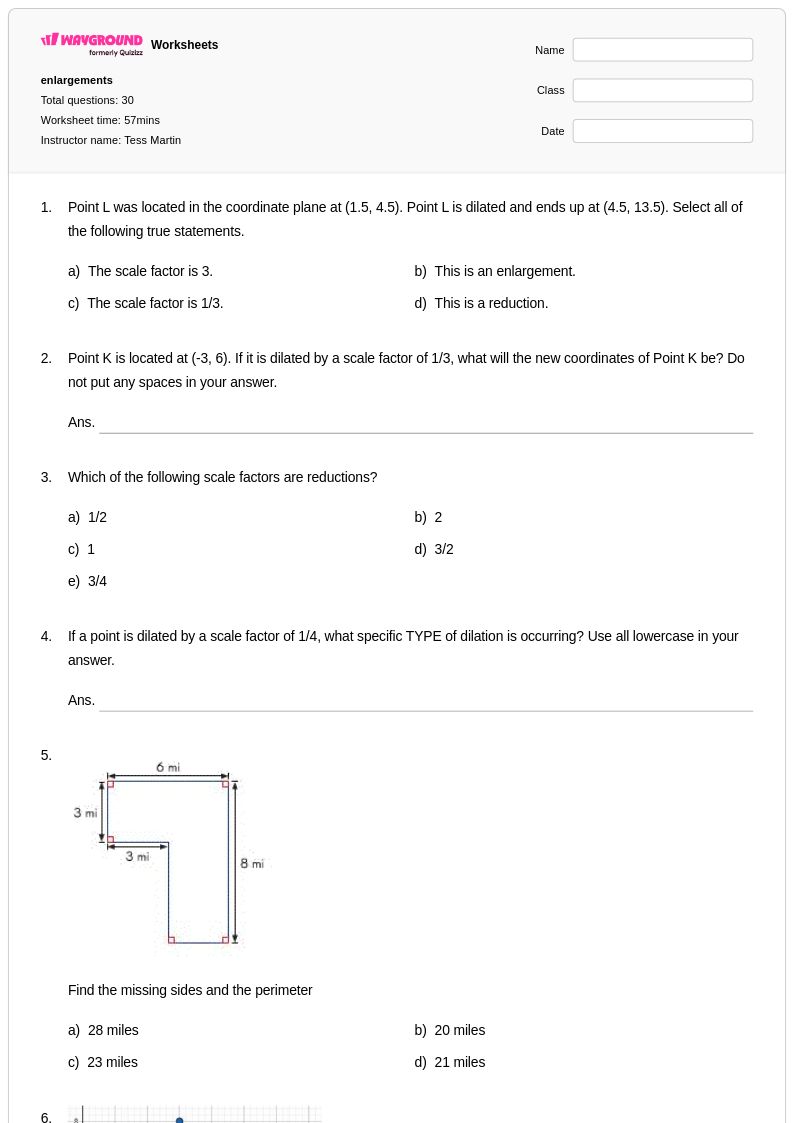
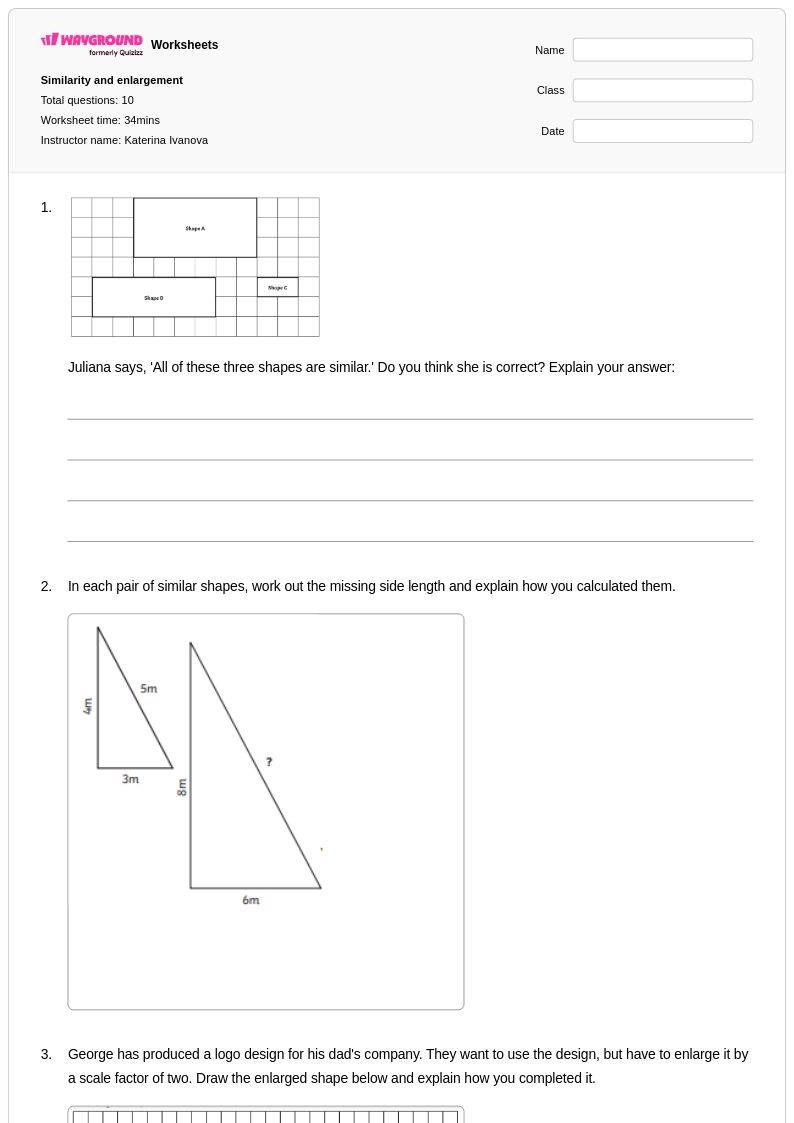
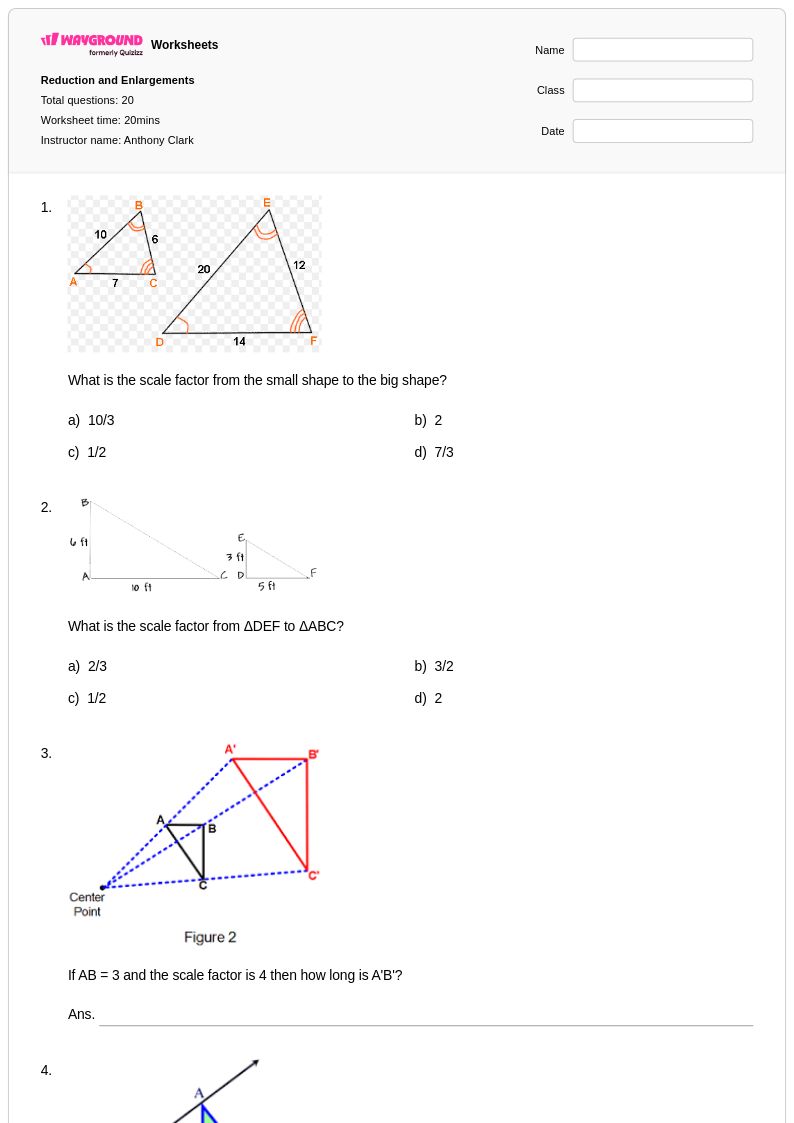
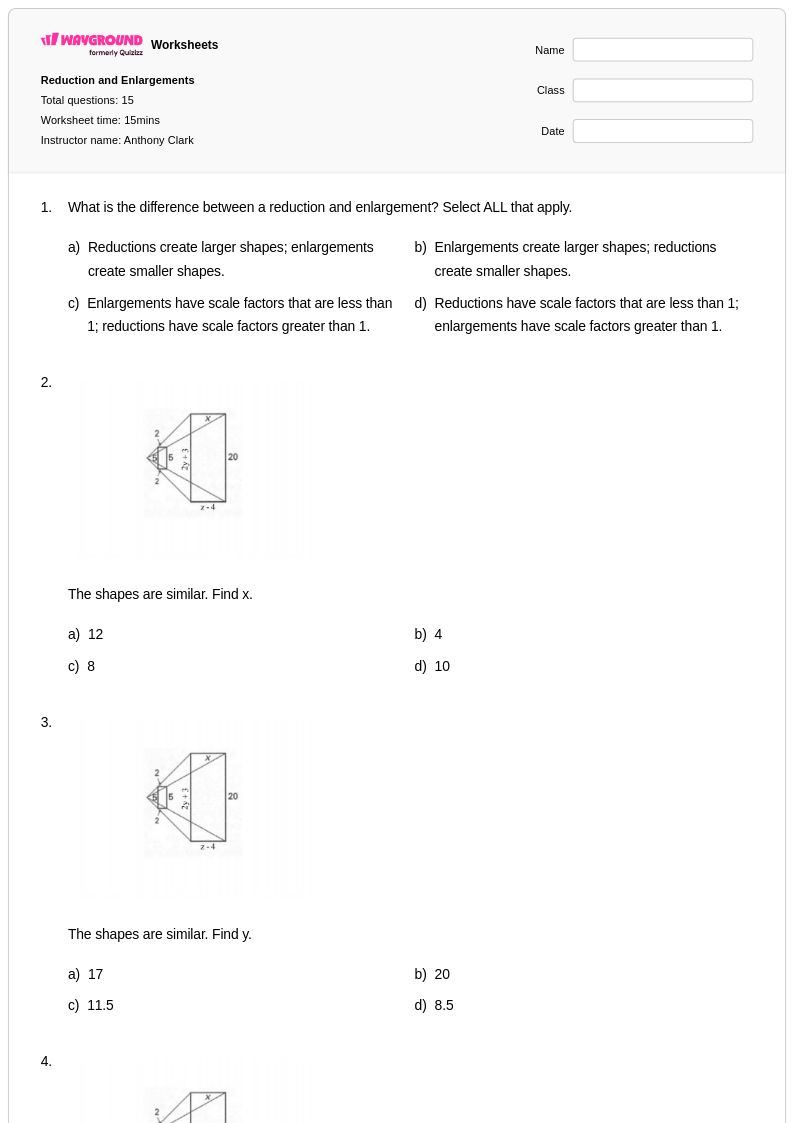
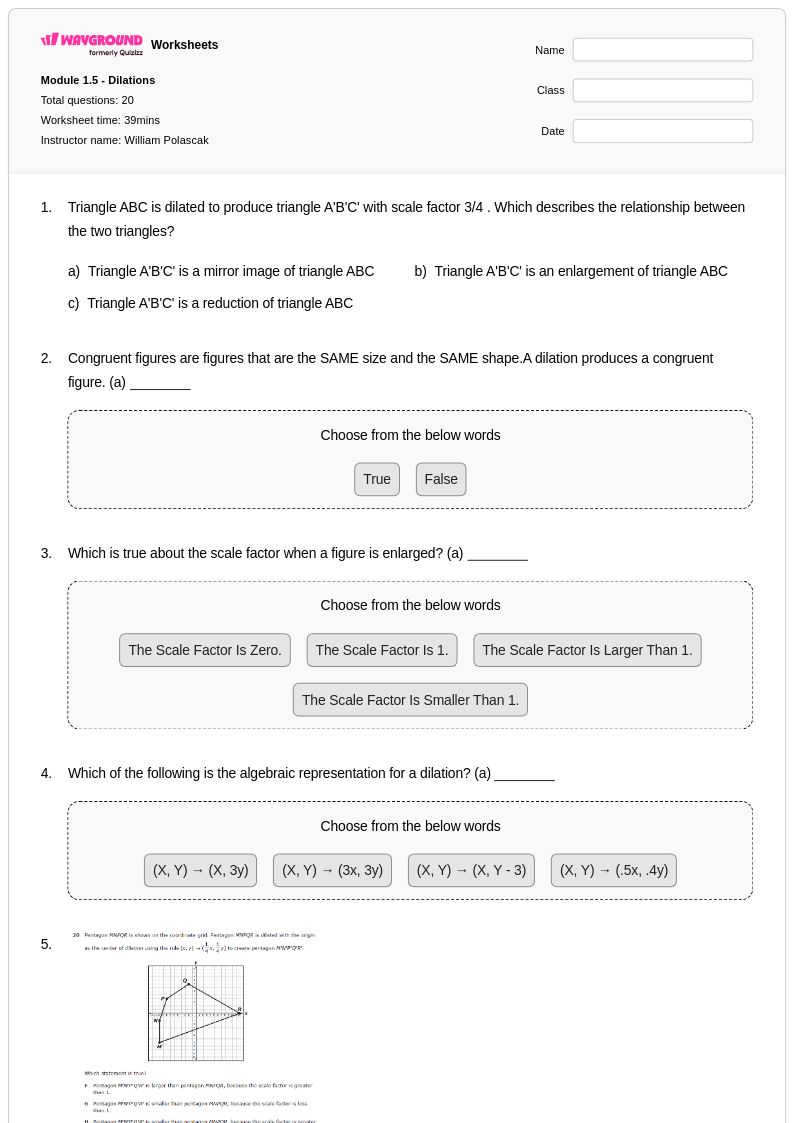
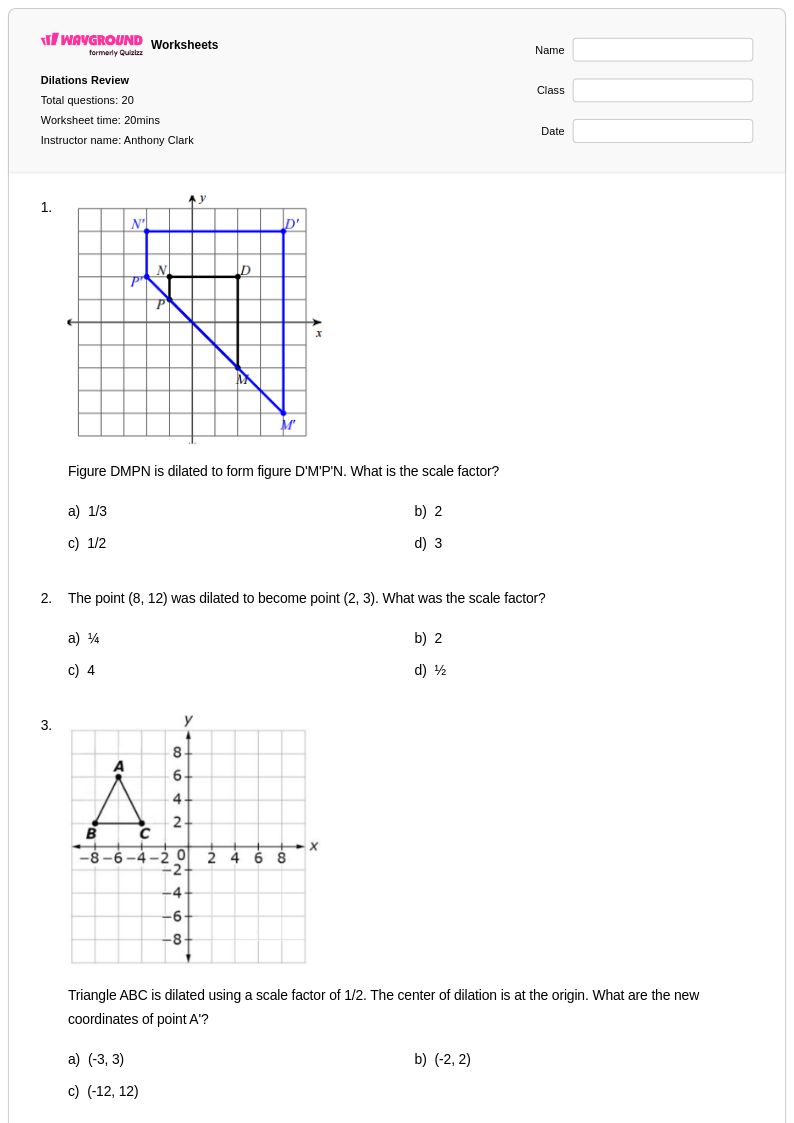
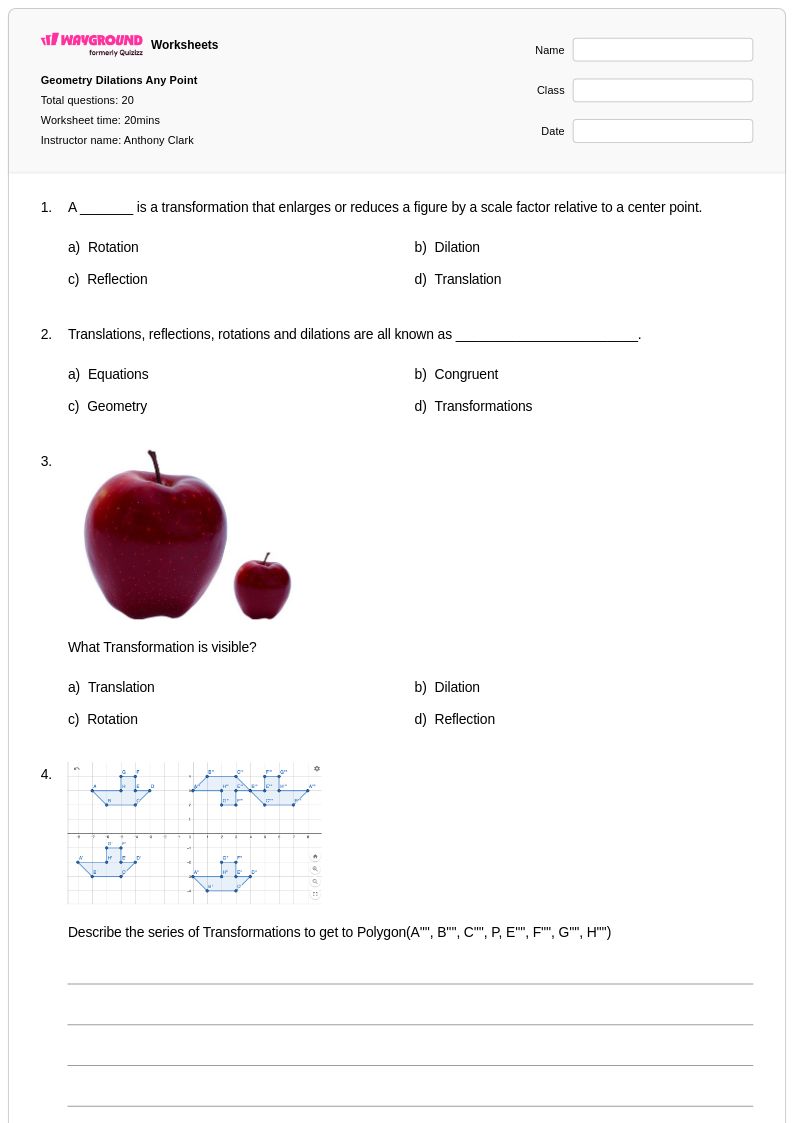
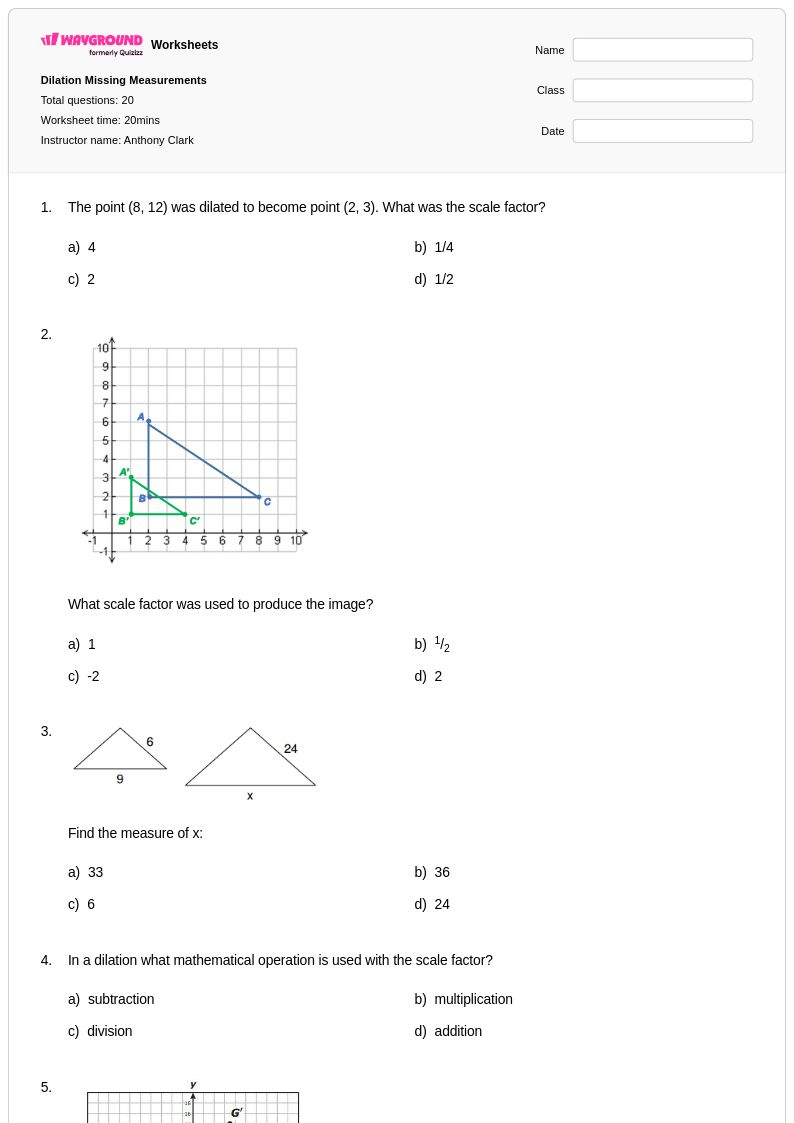
Enlargement worksheets available through Wayground (formerly Quizizz) provide comprehensive practice opportunities for students to master this fundamental transformation in geometry. These carefully designed resources focus on developing critical skills including identifying scale factors, calculating dimensions of enlarged shapes, determining centers of enlargement, and understanding the relationship between original figures and their enlarged counterparts. Students work through systematic practice problems that progress from basic enlargements with positive scale factors to more complex scenarios involving fractional scale factors and negative enlargements. Each worksheet collection includes detailed answer keys and step-by-step solutions, making these free printables invaluable for both independent study and classroom instruction, while pdf formats ensure easy distribution and consistent formatting across different devices and printing systems.
Wayground (formerly Quizizz) empowers mathematics teachers with access to millions of teacher-created enlargement resources that streamline lesson planning and enhance student learning outcomes. The platform's robust search and filtering capabilities allow educators to quickly locate worksheets aligned with specific curriculum standards and tailored to diverse skill levels within their classrooms. Teachers can customize existing materials or create differentiated versions to support remediation for struggling students while providing enrichment opportunities for advanced learners. The flexibility of both printable and digital formats, including downloadable pdf versions, enables seamless integration into various teaching environments, whether for homework assignments, in-class practice, assessment preparation, or targeted skill reinforcement, ultimately supporting educators in delivering comprehensive geometry instruction that builds student confidence and mathematical understanding.
FAQs
How do I teach enlargement in geometry?
Start with the center of enlargement and a single positive integer scale factor before introducing anything else. Have students draw rays from the center through each vertex of the original shape, then measure and multiply to locate the new vertices. Once that process is solid, move to fractional scale factors (which shrink rather than enlarge) and finally to negative scale factors, which rotate the image through the center. Keeping those three cases clearly separated prevents the confusion that trips most students up.
What exercises help students practice enlargement?
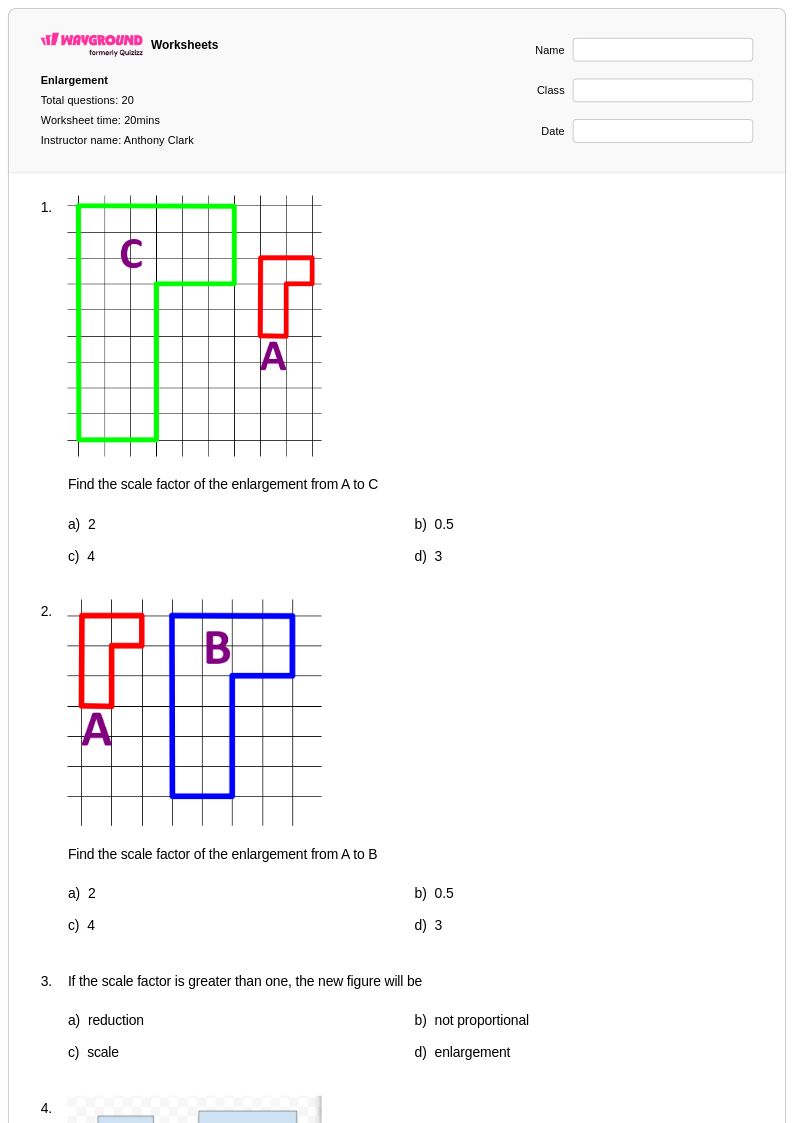
The most effective practice moves through three stages: identifying the scale factor from a given original and image, constructing an enlargement on a grid from a specified center and scale factor, and working backwards to find the center when only the two figures are given. Wayground's enlargement worksheets cover all three, progressing from whole-number scale factors to fractional and negative ones so students build confidence before tackling the harder cases.
What mistakes do students commonly make with enlargement?
Three errors come up repeatedly. First, students measure distances from the wrong point — they measure from the shape itself rather than from the center of enlargement. Second, they apply the scale factor to only some sides and leave others unchanged, producing a distorted figure instead of a similar one. Third, with fractional scale factors less than 1, students expect the image to be larger (because the word 'enlargement' implies growth) and are thrown when the result is smaller than the original.
How do I use Wayground's enlargement worksheets in my class?
Each worksheet comes with a complete answer key, so you can assign it for independent practice without extra prep. For digital use, host it as a self-paced quiz on Wayground and students submit answers online. If you prefer paper, download the PDF, print it, and grade submissions using the Wayground for Teachers app, which lets you scan or capture student work directly. Both routes work off the same content, so switching between them mid-unit is straightforward.
How does enlargement fit into the geometry curriculum progression?
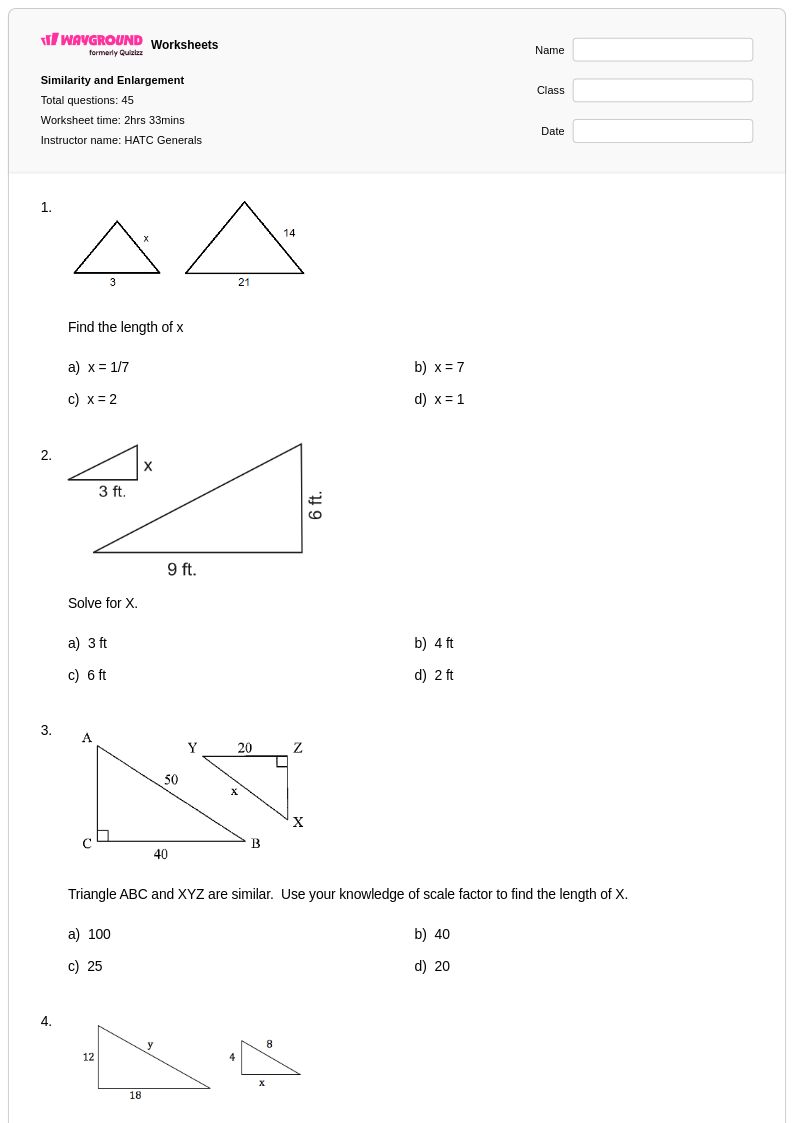
In Common Core-aligned curricula, enlargement sits within the broader study of similarity and geometric transformations. Students typically arrive at enlargement having already worked with rigid motions (translations, reflections, rotations) and are expected to understand that enlargement changes size but preserves angle measures and the ratios of corresponding side lengths. That understanding of proportional relationships then feeds directly into formal similarity proofs and, later, trigonometric ratios, where the constant ratio between sides of similar right triangles is the foundation.
How can I differentiate enlargement practice for mixed-ability classes?
For students who struggle with the spatial demands of enlargement, Wayground lets you apply a dyslexia-friendly font and increase font size so the grid diagrams and measurements are easier to read. The Read Aloud accommodation helps students who have difficulty parsing multi-step written instructions independently. For digital sessions, you can also reduce the number of answer choices for selected students, lowering cognitive load while keeping them working on the same core concept as the rest of the class.