Master geometry skills with Wayground's comprehensive collection of finding missing sides worksheets, featuring printable PDFs with practice problems and answer keys to help students confidently solve for unknown measurements in triangles and polygons.
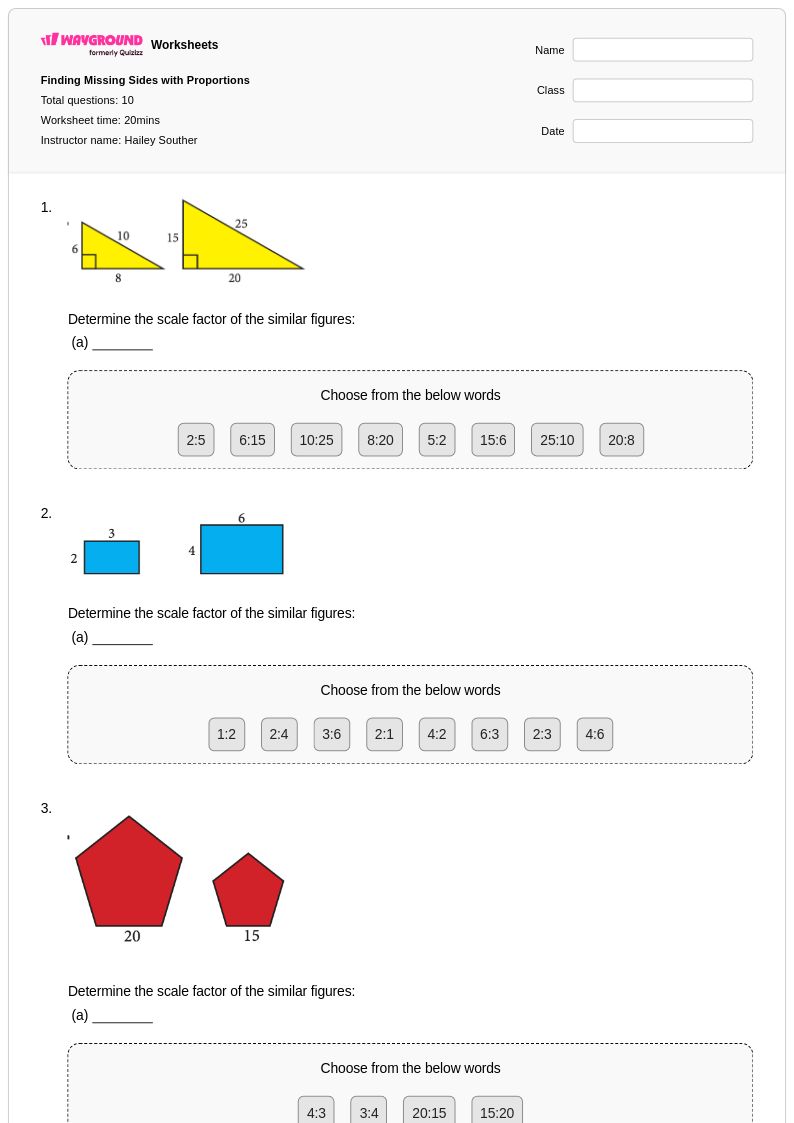
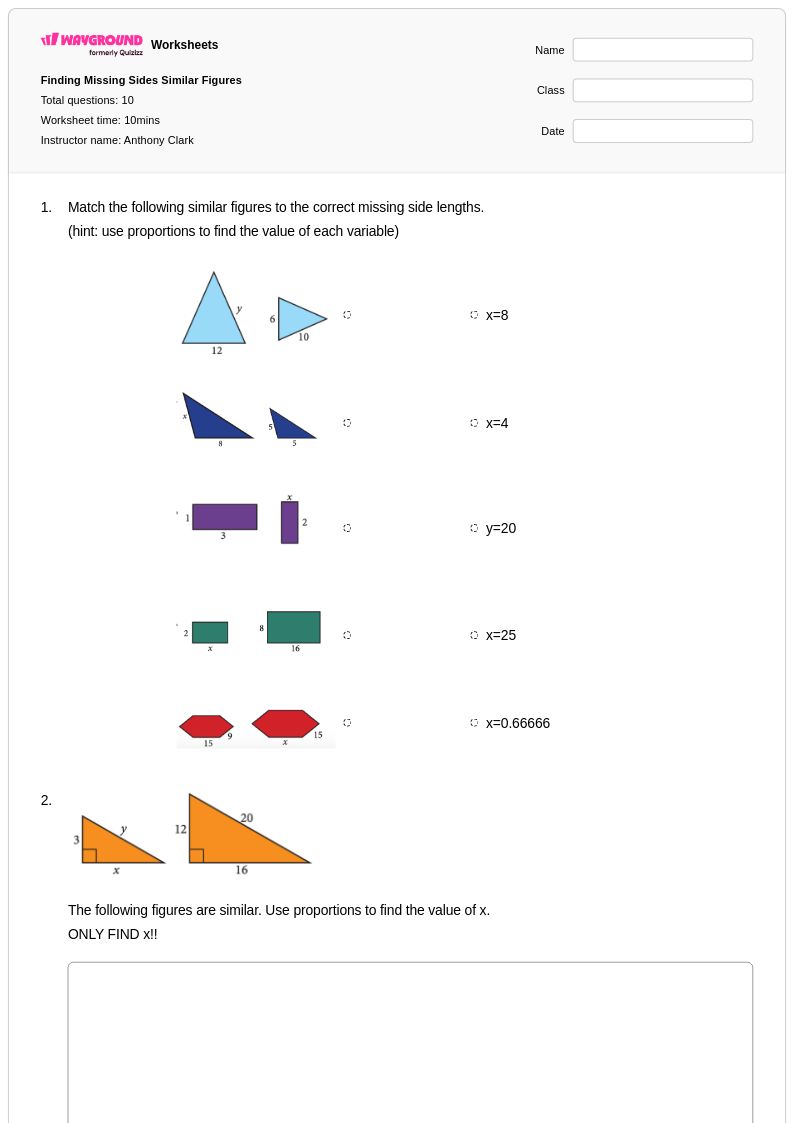
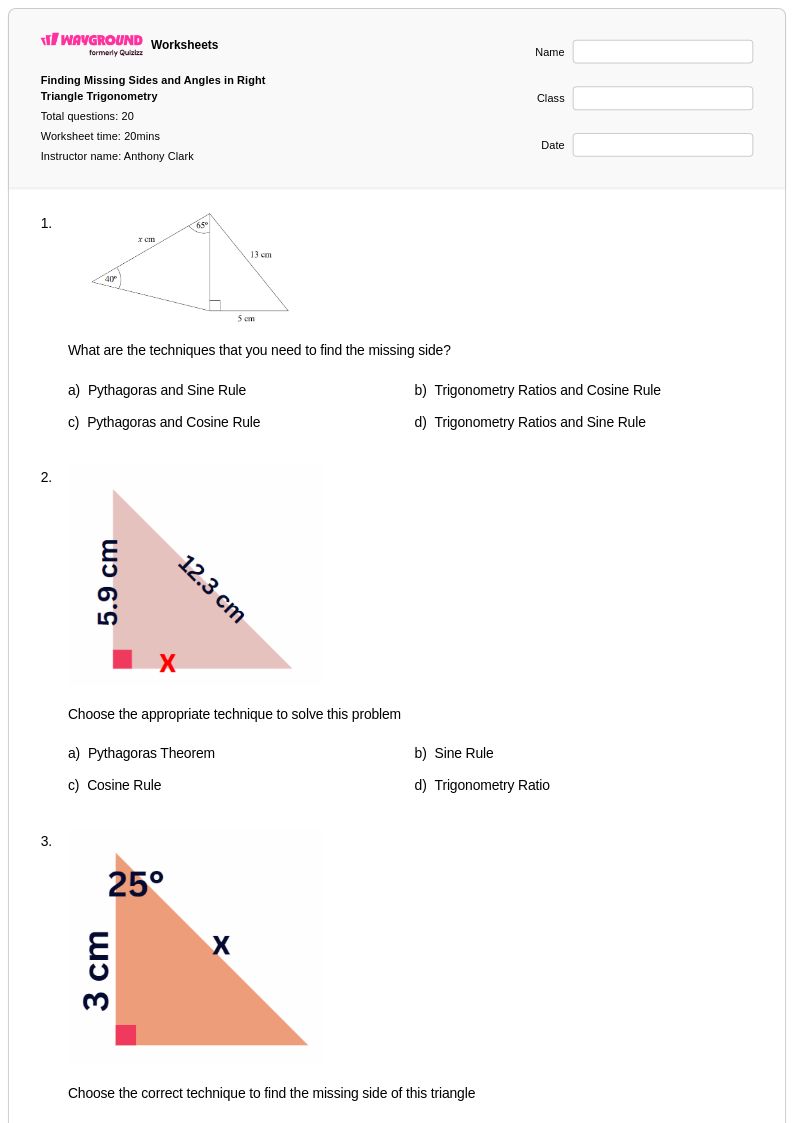
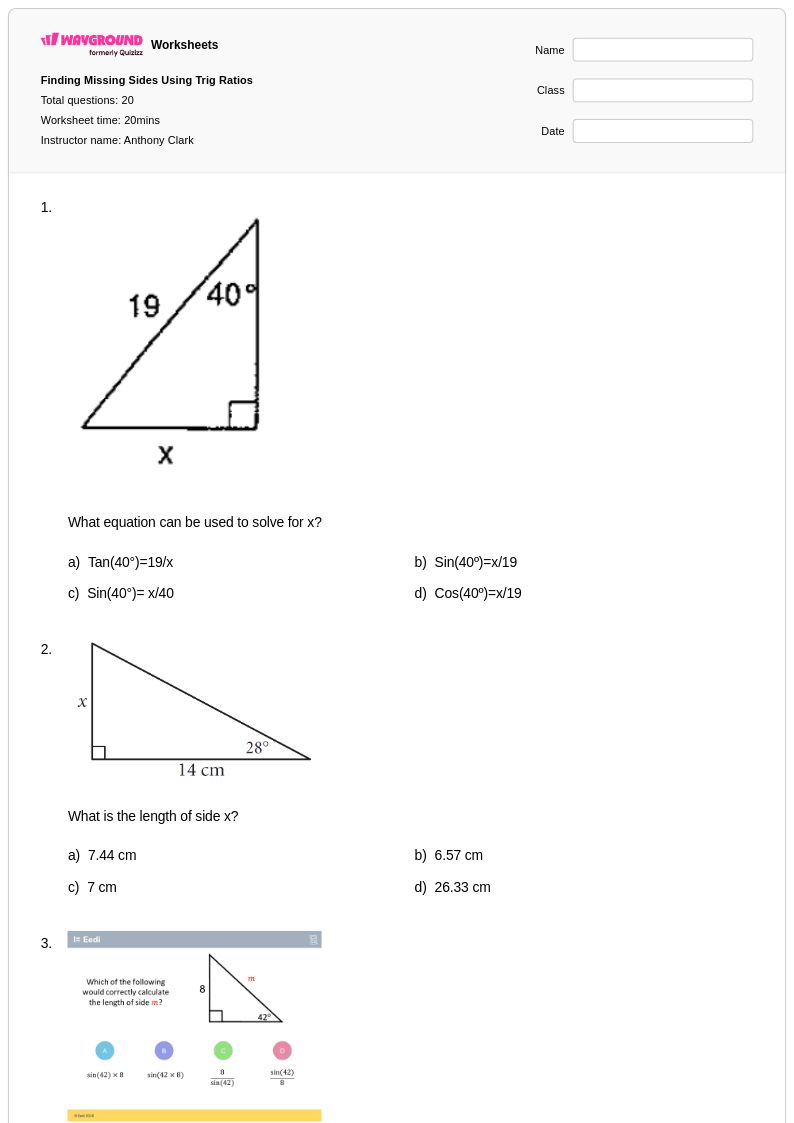
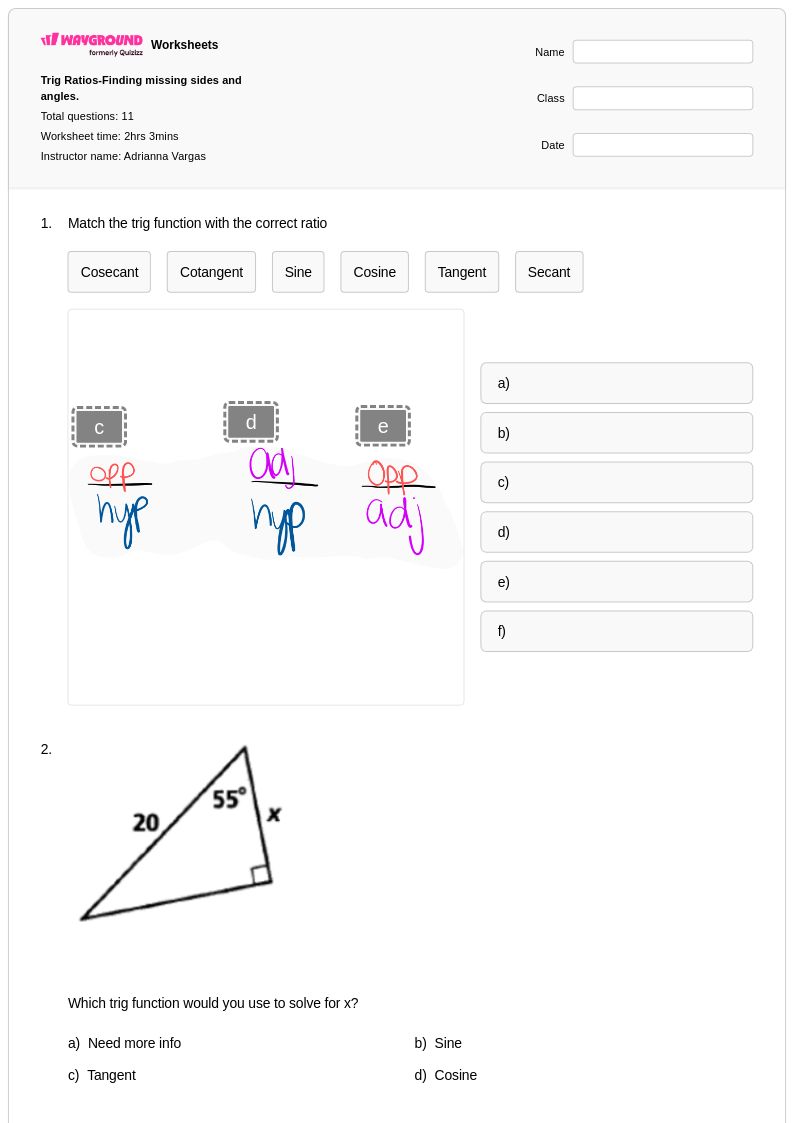
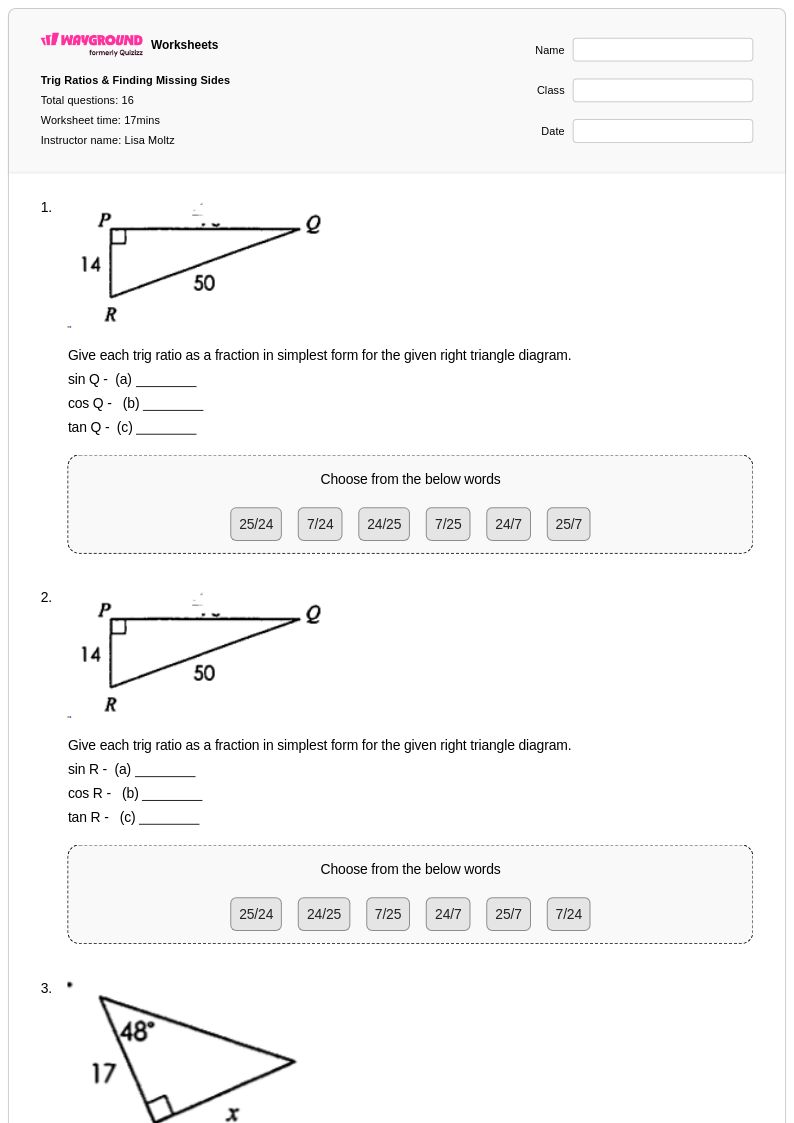
Finding missing sides in geometry represents a fundamental skill that bridges basic geometric concepts with advanced mathematical reasoning. The comprehensive worksheet collection available through Wayground (formerly Quizizz) provides educators with expertly crafted practice problems that guide students through systematic approaches to calculating unknown side lengths in various geometric figures. These free printable resources strengthen critical thinking abilities as students apply the Pythagorean theorem, trigonometric ratios, and properties of similar triangles to solve increasingly complex problems. Each worksheet includes a detailed answer key that supports both independent study and classroom instruction, while the pdf format ensures convenient access for teachers seeking reliable geometry practice materials that reinforce essential problem-solving strategies.
Wayground (formerly Quizizz) empowers mathematics teachers with millions of teacher-created resources specifically designed to support geometry instruction focused on finding missing sides. The platform's robust search and filtering capabilities allow educators to quickly locate worksheets that align with specific curriculum standards and match their students' skill levels, while built-in differentiation tools enable seamless customization for diverse learning needs. These versatile resources are available in both printable and digital formats, including downloadable pdf versions, making them ideal for classroom activities, homework assignments, remediation sessions, and enrichment opportunities. Teachers can efficiently plan targeted skill practice sessions, assess student understanding, and provide additional support where needed, all while drawing from a vast library of high-quality geometry worksheets that consistently deliver meaningful learning experiences.
FAQs
How do I teach students to find missing sides in geometry?
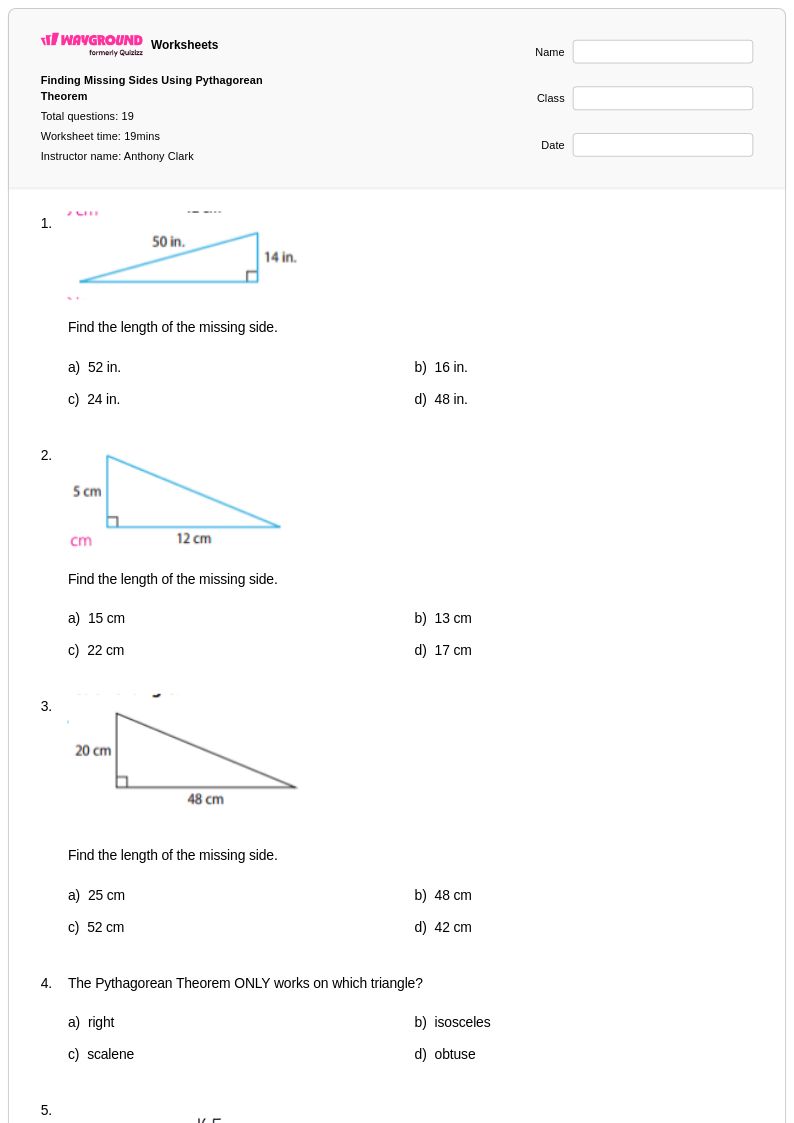
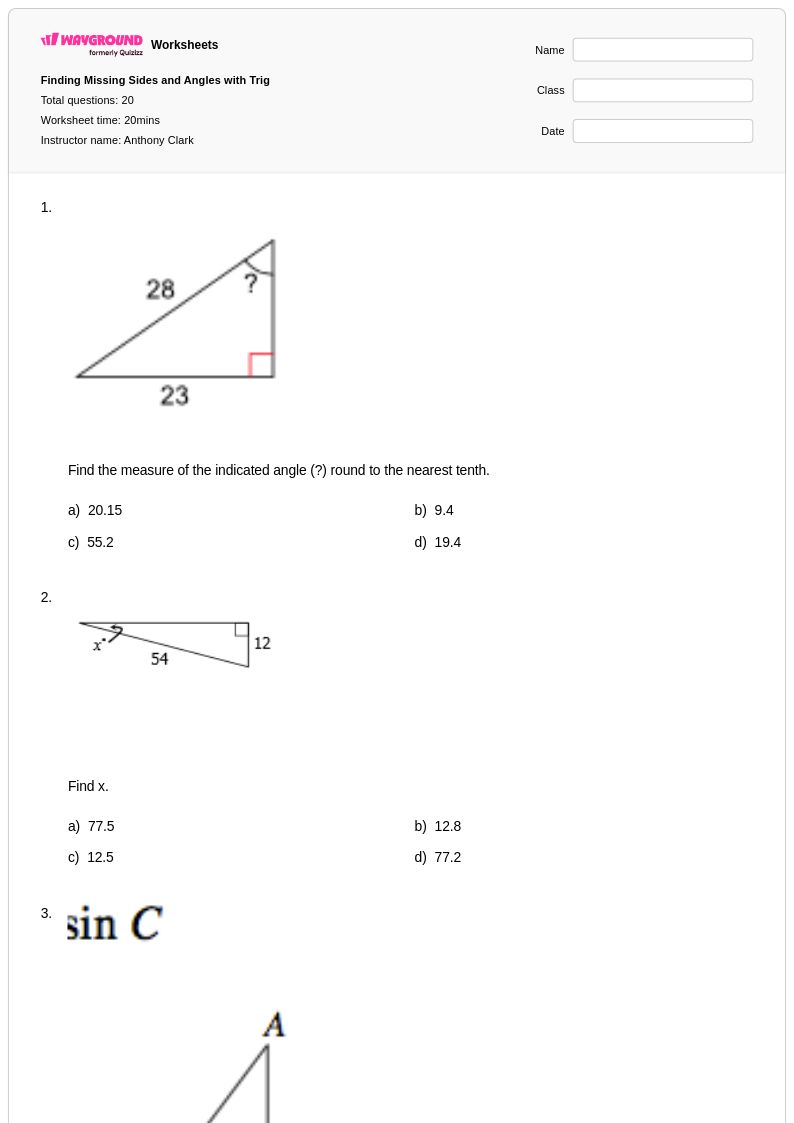
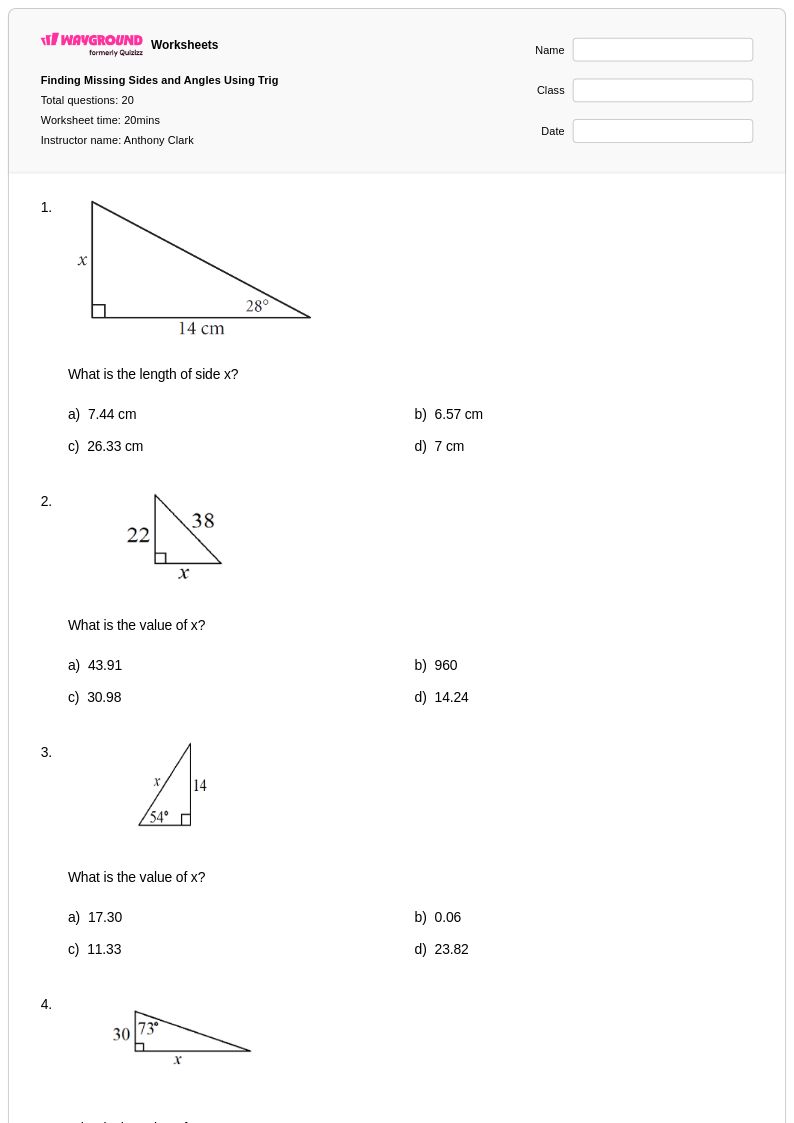
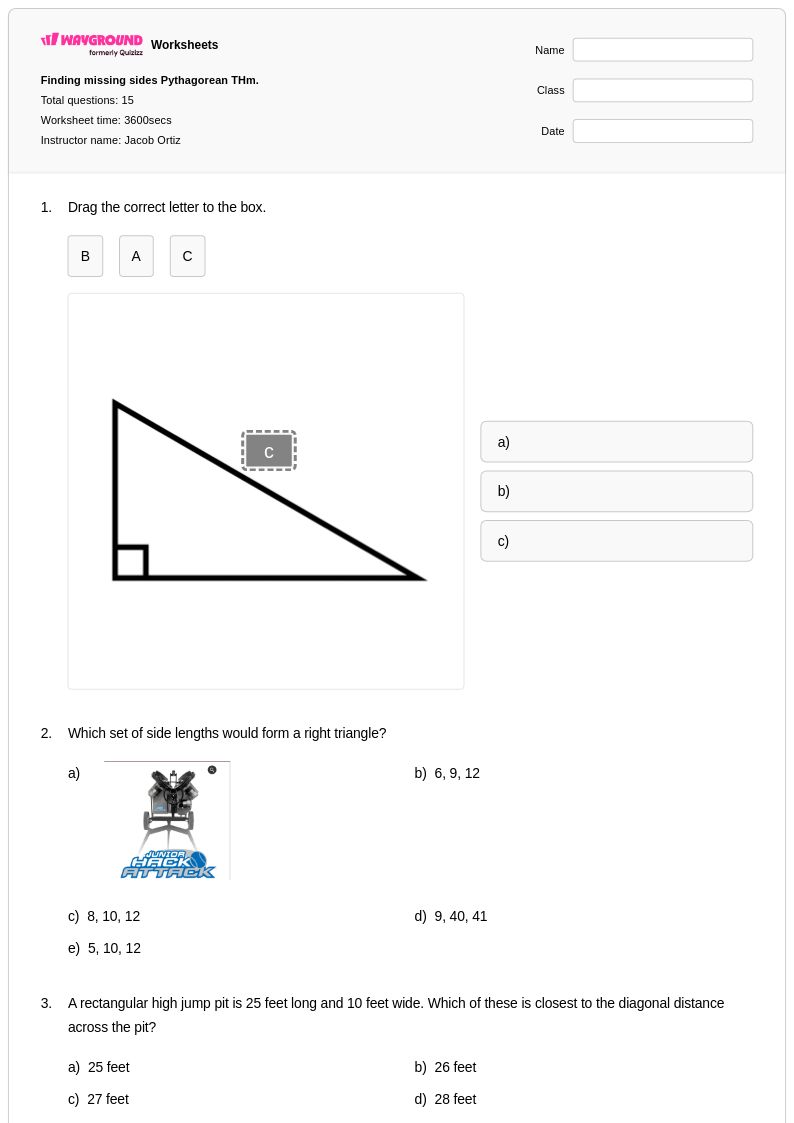
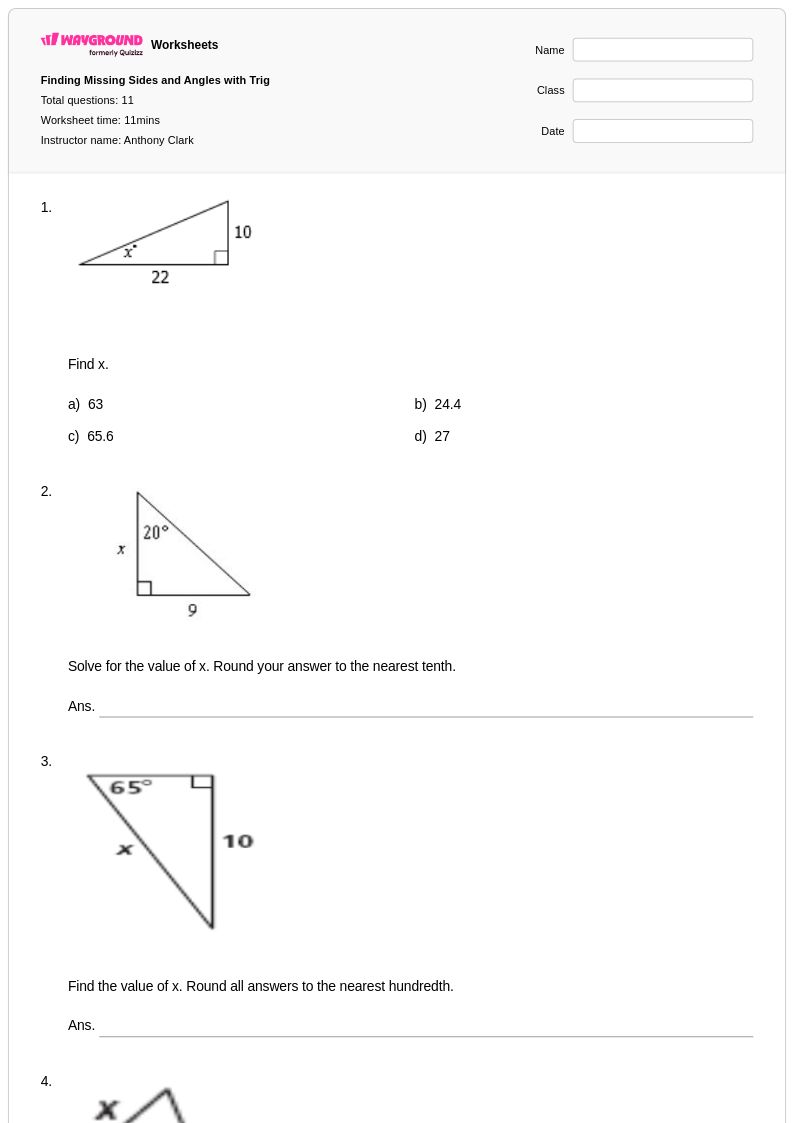
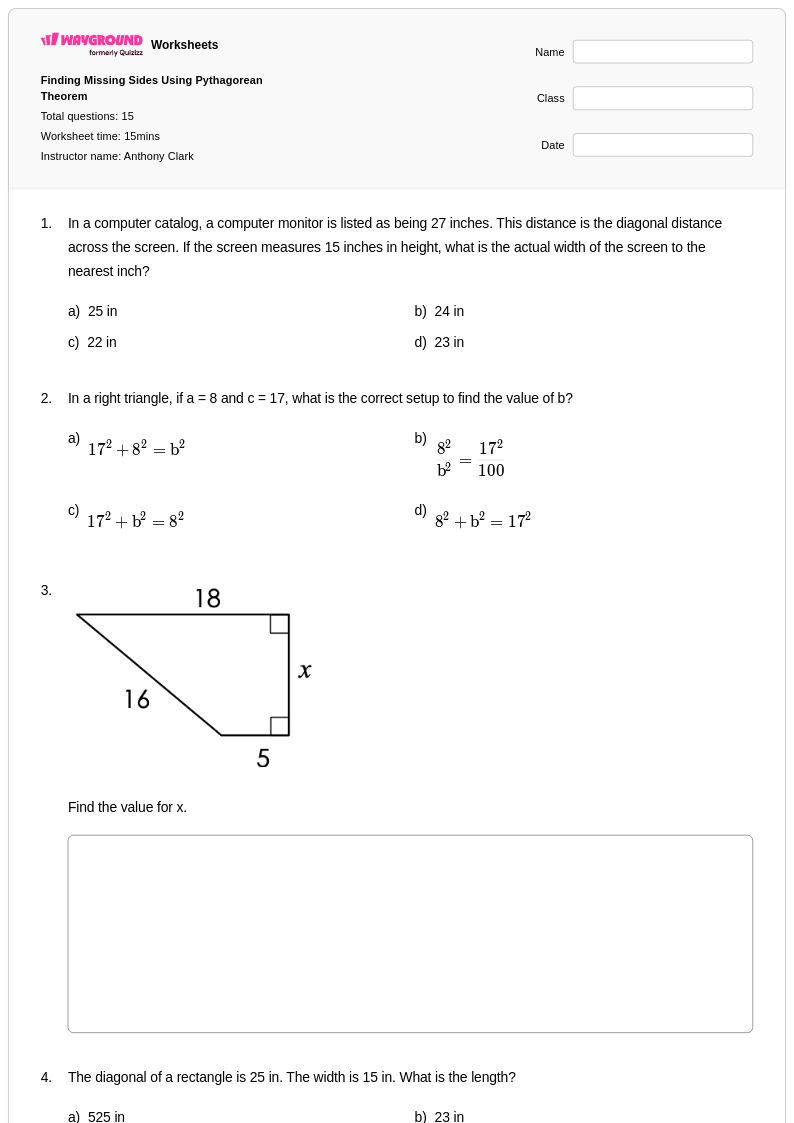
Start by building a decision-making habit: before students touch a calculation, have them identify what information is given and what type of figure they're working with. From there, the method follows naturally — Pythagorean theorem for right triangles with two known sides, trigonometric ratios when an angle is involved, and proportional reasoning for similar figures. Students who skip this classification step tend to grab the wrong tool and get stuck. Worked examples that model the thought process out loud, before students practice independently, make a real difference.
What exercises help students practice finding missing sides?
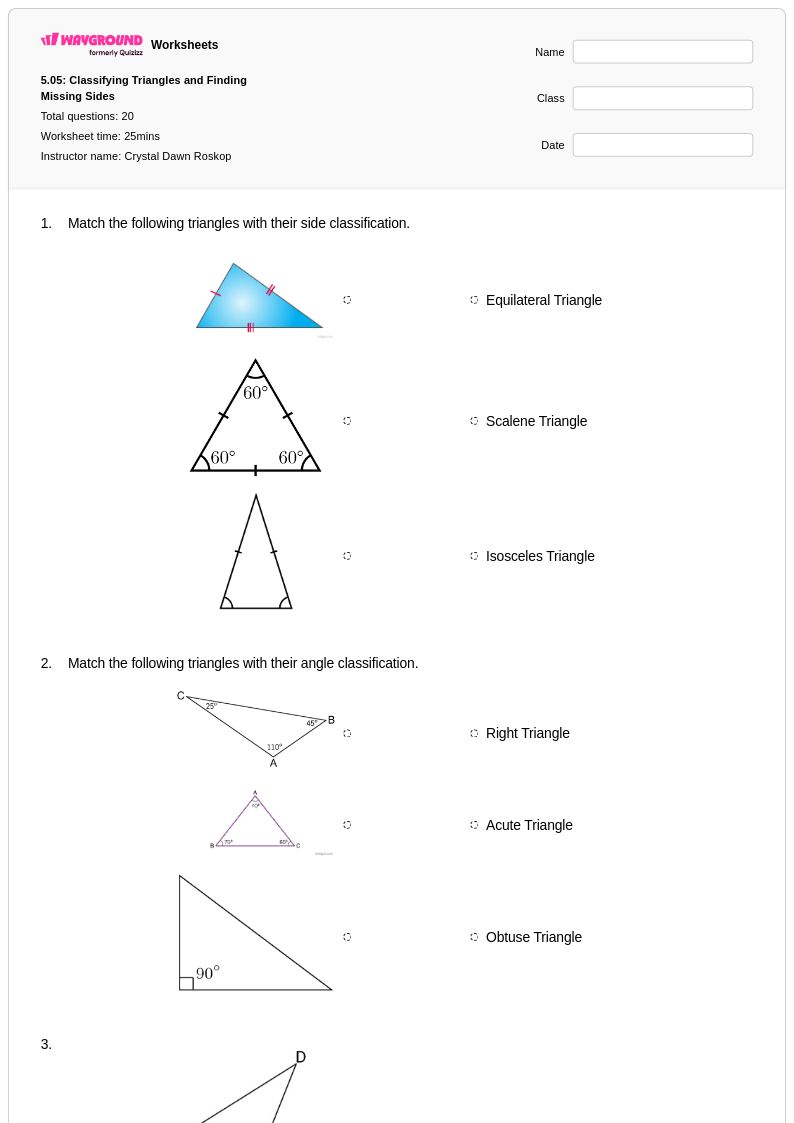
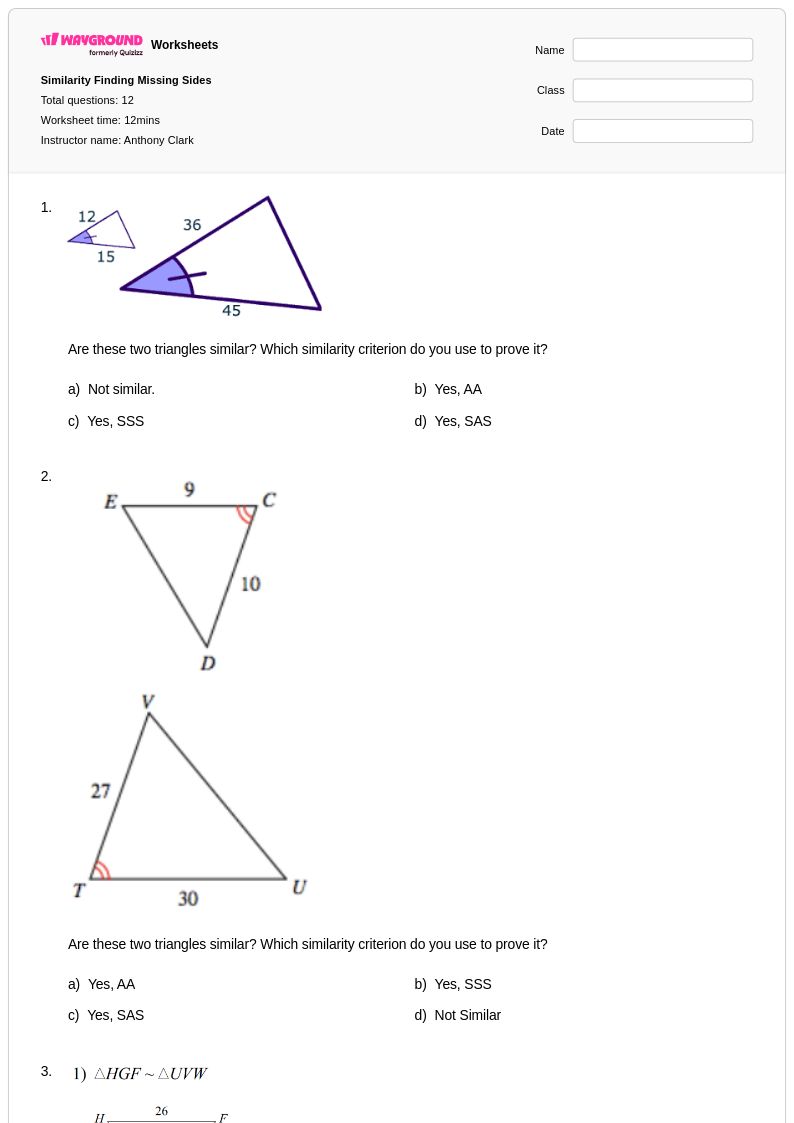
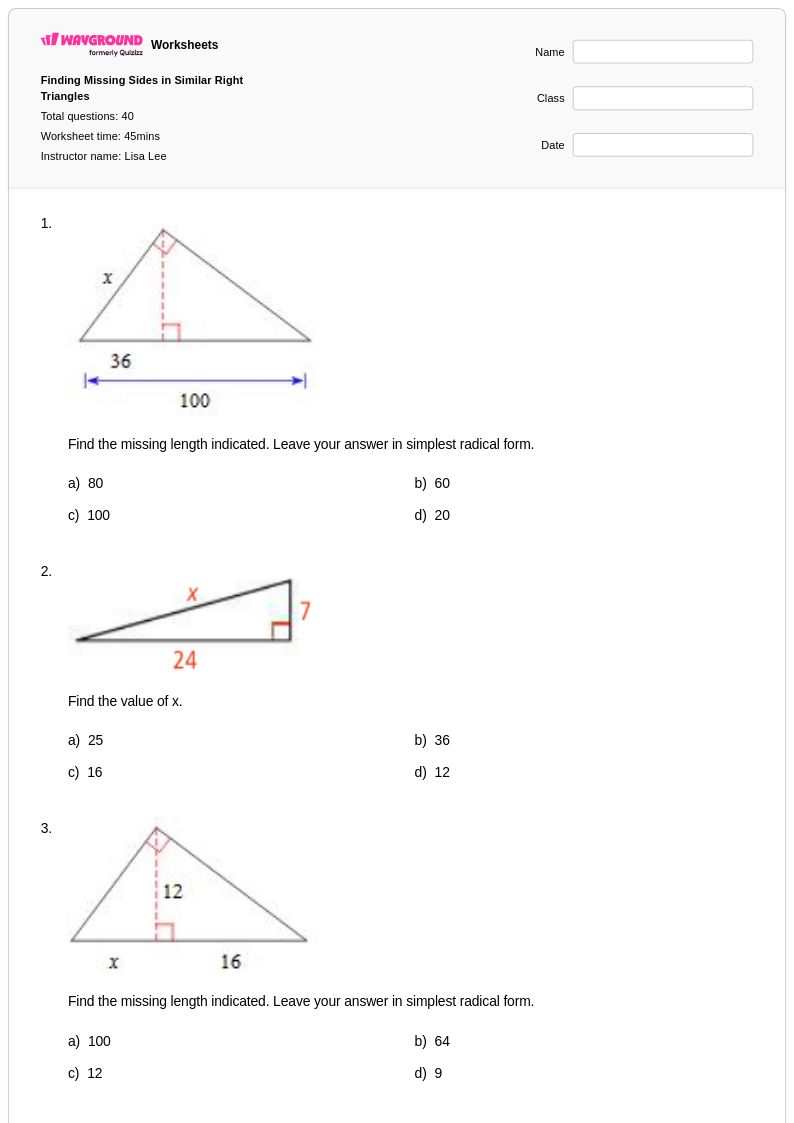
The most effective practice mixes figure types so students can't rely on pattern-matching from the previous problem. A good set moves from right triangles (Pythagorean theorem) to similar triangle problems requiring proportions, then to problems where students must first identify which method applies. Wayground's worksheet collection covers this range, with problems that progress in complexity so students build confidence before hitting the harder scenarios.
What mistakes do students commonly make when finding missing sides?
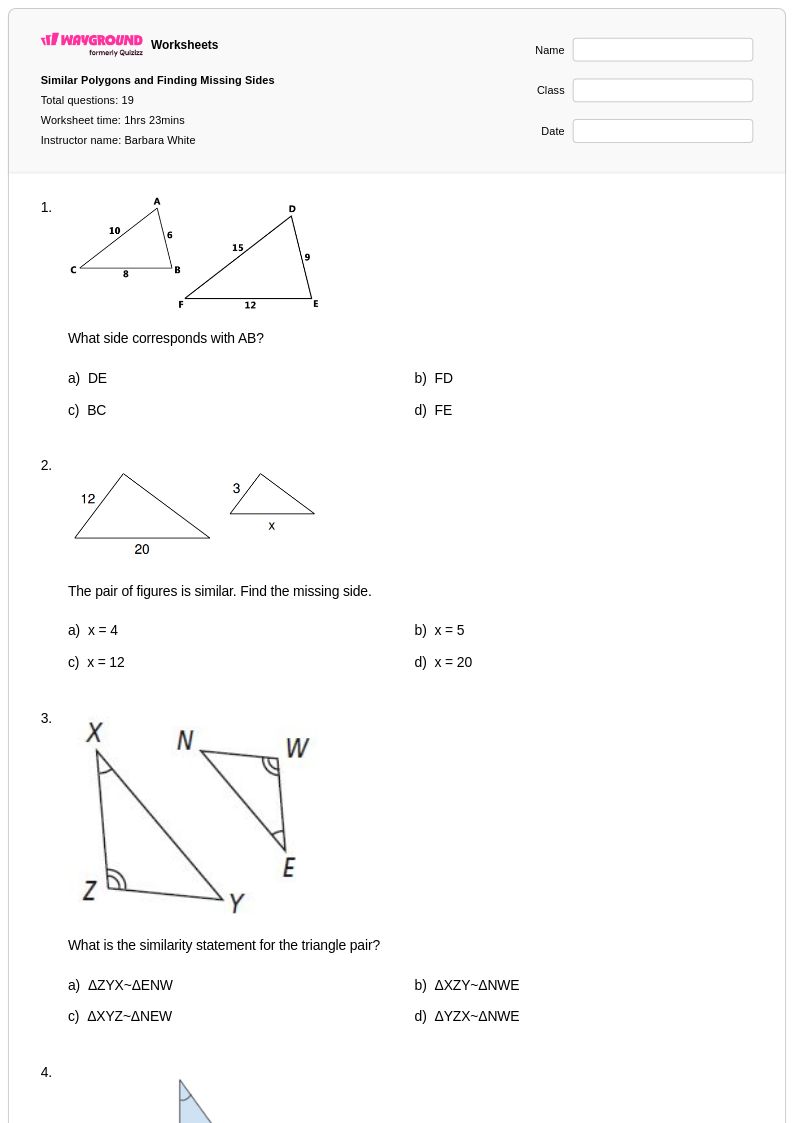
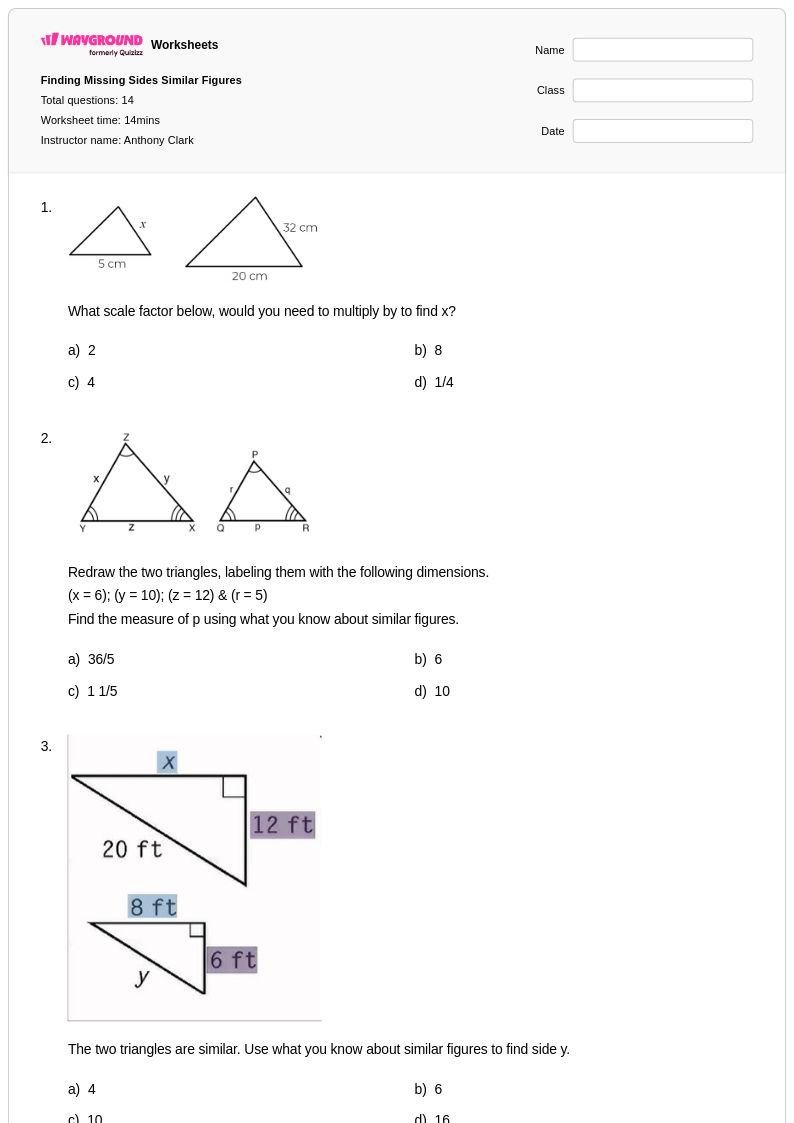
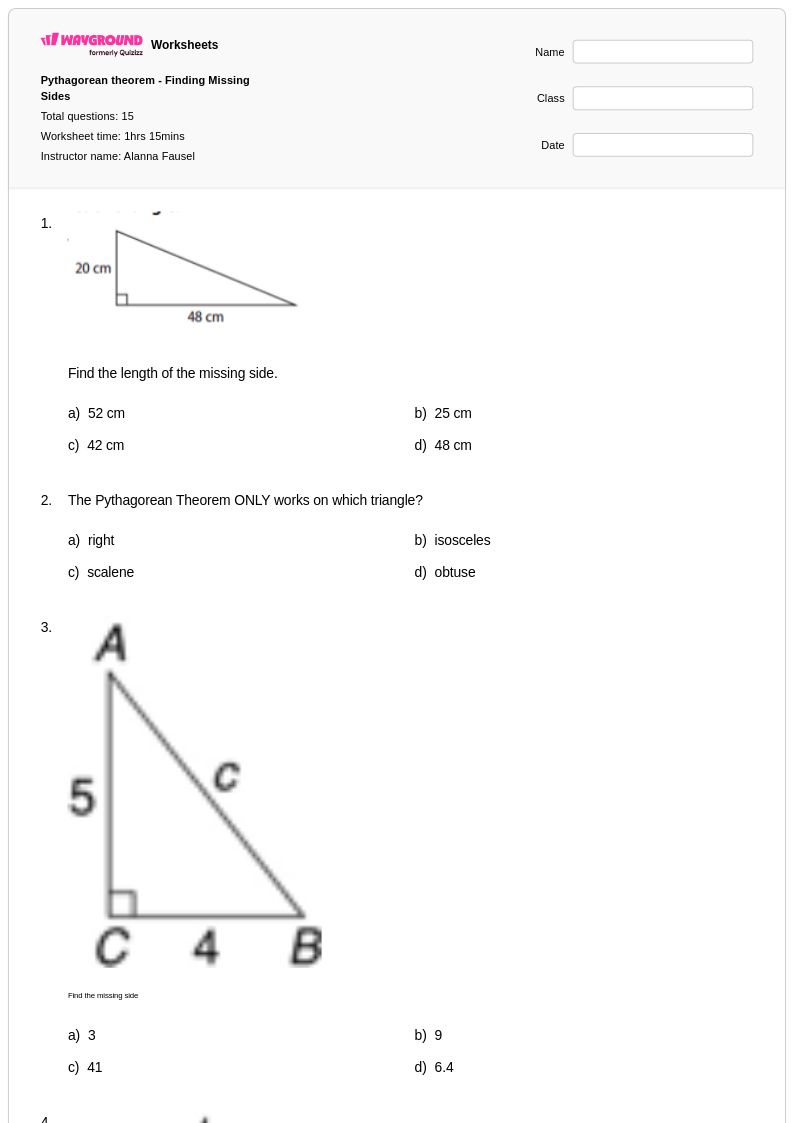
Three errors come up constantly. First, students misidentify the hypotenuse — they label a leg as c in the Pythagorean theorem and get a wrong answer that looks plausible. Second, when working with similar triangles, they set up the proportion with mismatched sides (pairing a short side from one triangle with a long side from the other). Third, students round intermediate values too early, which compounds into a noticeably wrong final answer. Catching these early with targeted practice problems — especially ones designed to surface these exact traps — saves a lot of reteaching later.
How do I use Wayground's finding missing sides worksheets in my class?
You can run these as a digital quiz hosted on Wayground — students work through problems on their devices and you see results in real time — or download the PDF and print it for paper practice. Every worksheet includes a complete answer key, so both routes work for independent work or homework. If you go the print route, the Wayground for Teachers app lets you scan or capture student submissions for grading without re-entering everything by hand.
Is finding missing sides aligned to Common Core standards?
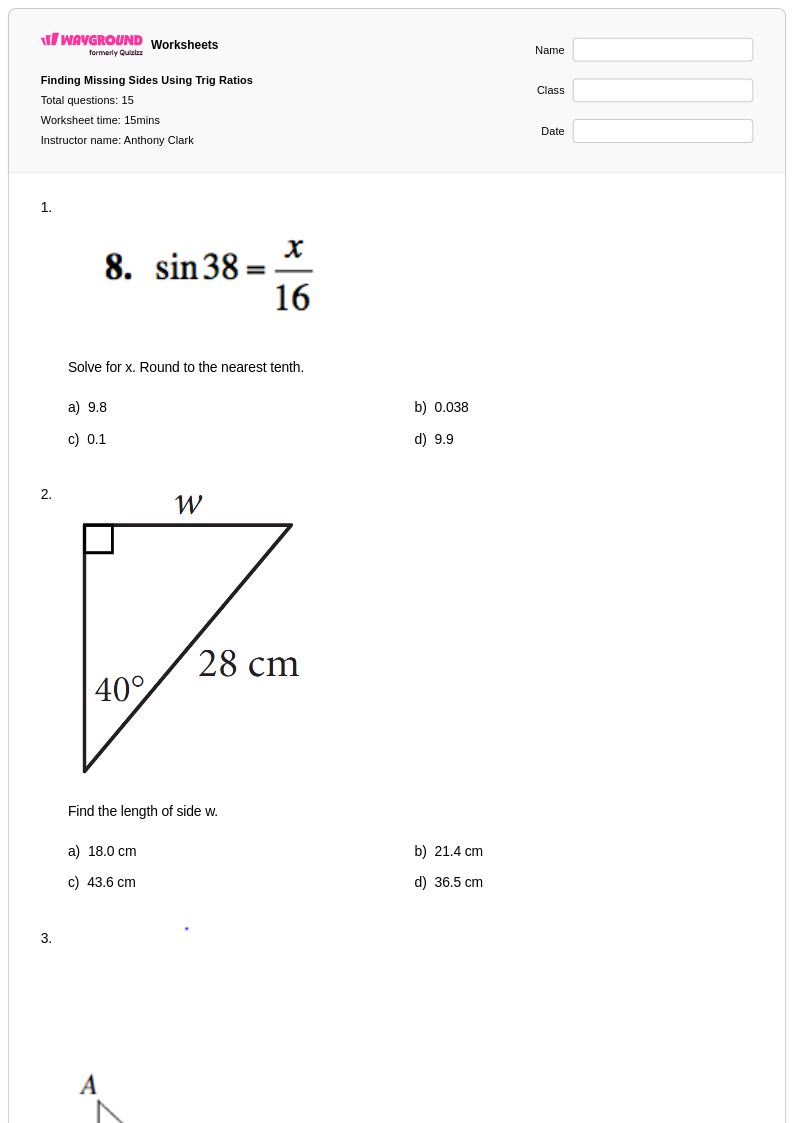
Yes. Common Core sequences this skill across middle and high school geometry. Students first work with proportional relationships and scale to find unknown lengths in similar figures, then apply the Pythagorean theorem to right triangles — including in coordinate geometry contexts. By high school, the expectation expands to using trigonometric ratios (sine, cosine, tangent) to solve for missing sides in non-right triangle situations. Each stage builds directly on the last, so gaps in proportional reasoning at the earlier level tend to surface as errors when students hit trig.
How can I differentiate finding missing sides practice for mixed-ability classes?
The core challenge with this topic is that some students are still shaky on proportional reasoning while others are ready for trigonometry — so the same worksheet genuinely doesn't serve everyone. On Wayground, you can create alternate versions of a worksheet with adjusted font size or spacing for accessibility, or apply a dyslexia-friendly font for students who need it. For students who need more support during a digital session, the reduced answer choices accommodation lowers the cognitive load on multiple-choice problems, and extended time can be set per student without other students being notified.
What grade level covers finding missing sides?
The skill spans several grade levels. Students typically begin finding missing sides using perimeter relationships and properties of polygons around grades 5–6, move into the Pythagorean theorem in grade 8, and work with trigonometric ratios to find missing sides in grade 9–10 geometry. The method required depends entirely on what information is given, which is why the topic keeps reappearing at higher levels with new tools attached.