
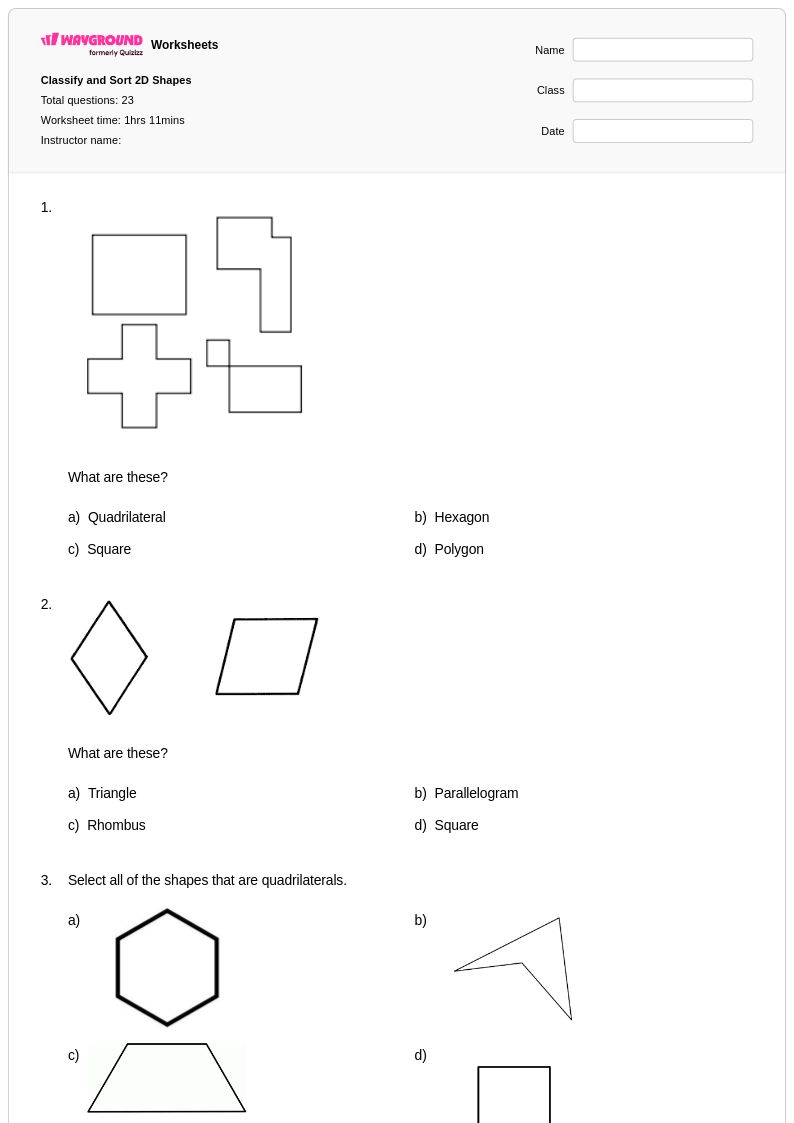
23 Q
3rd
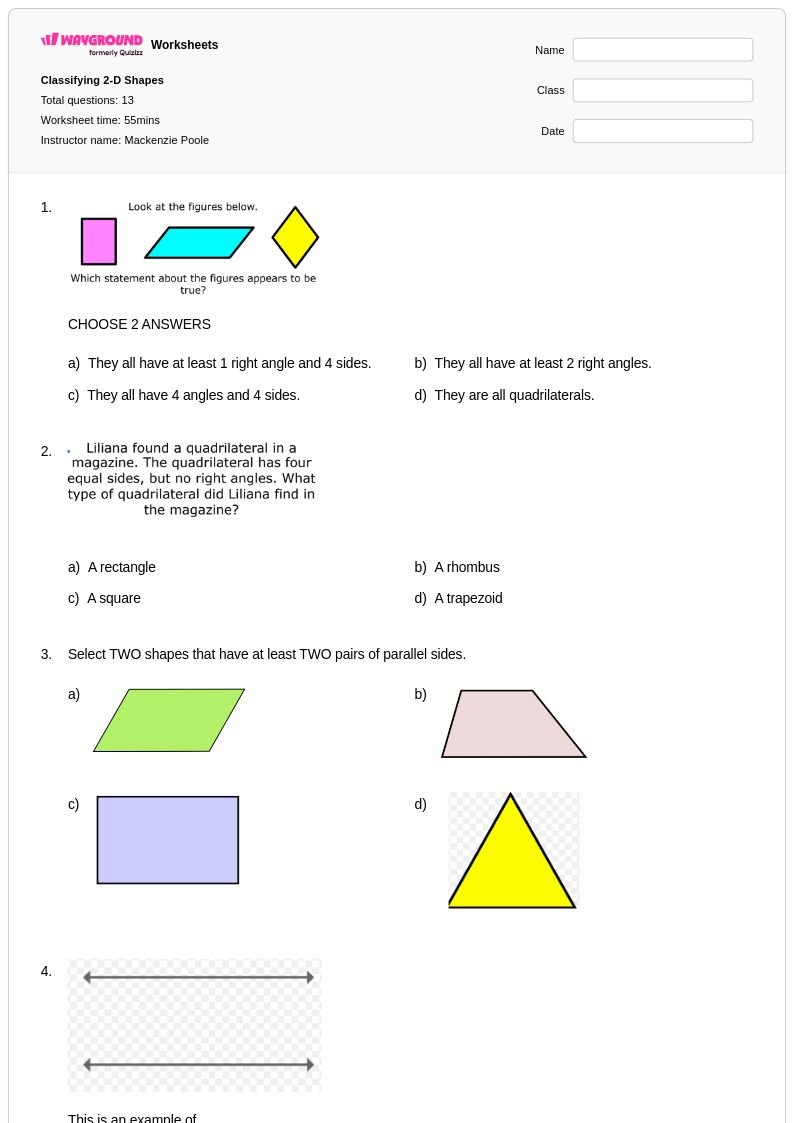
13 Q
3rd
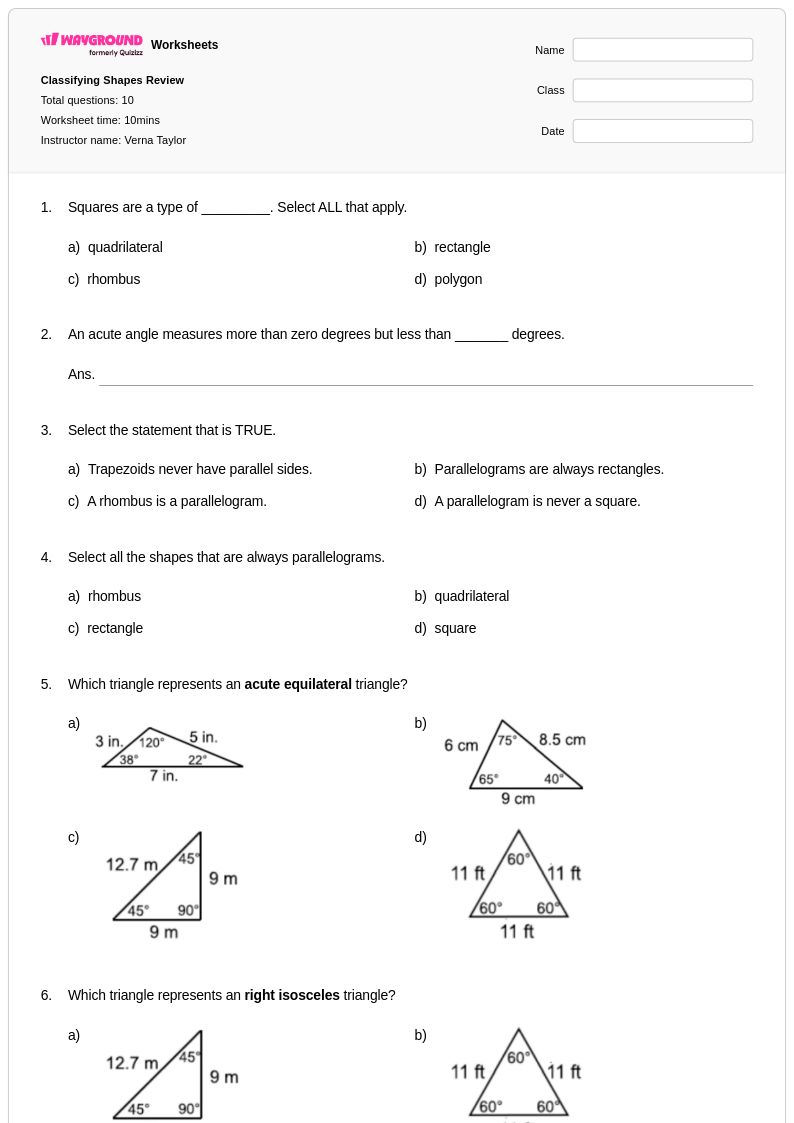
10 Q
5th
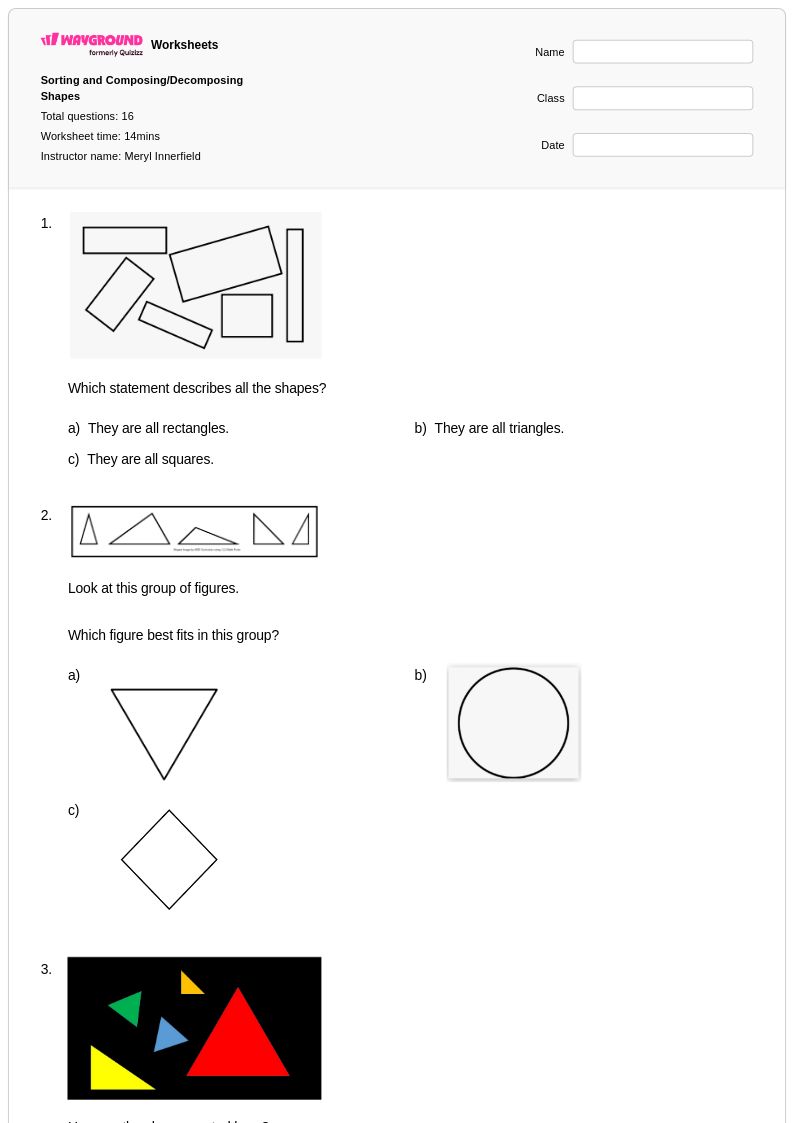
16 Q
1st
25 Q
1st
14 Q
5th
25 Q
5th
7 Q
KG
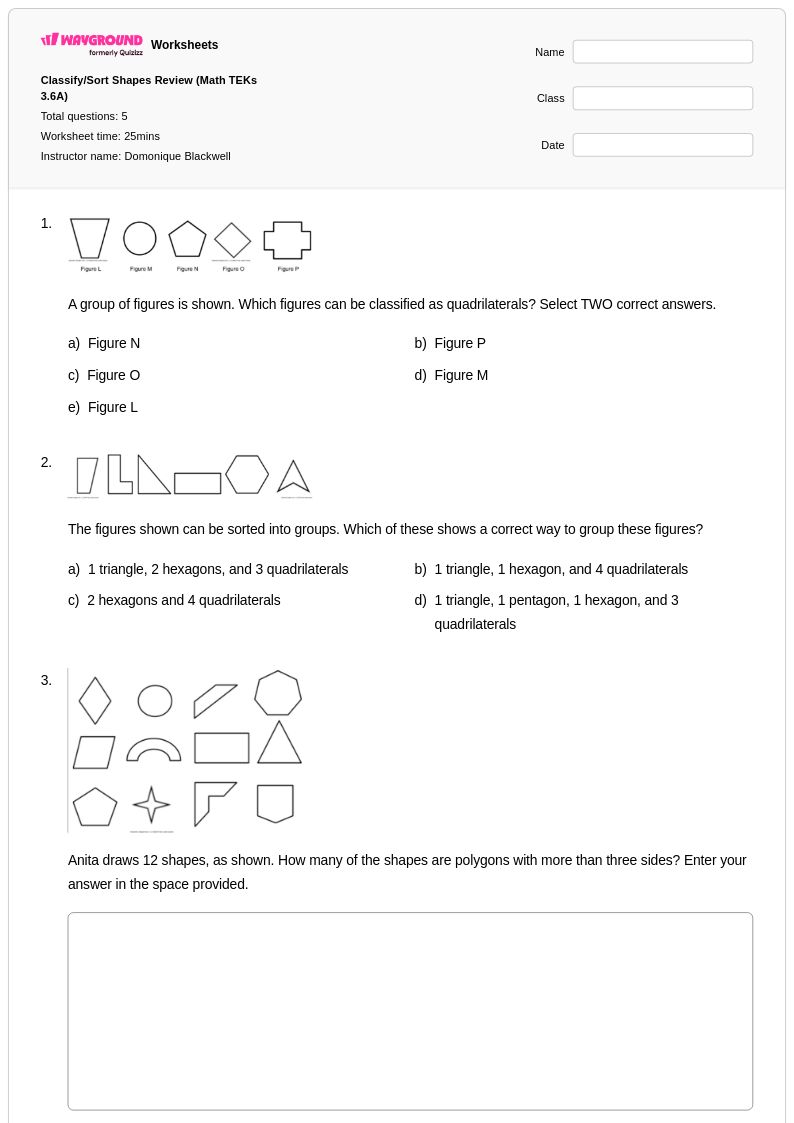
5 Q
3rd
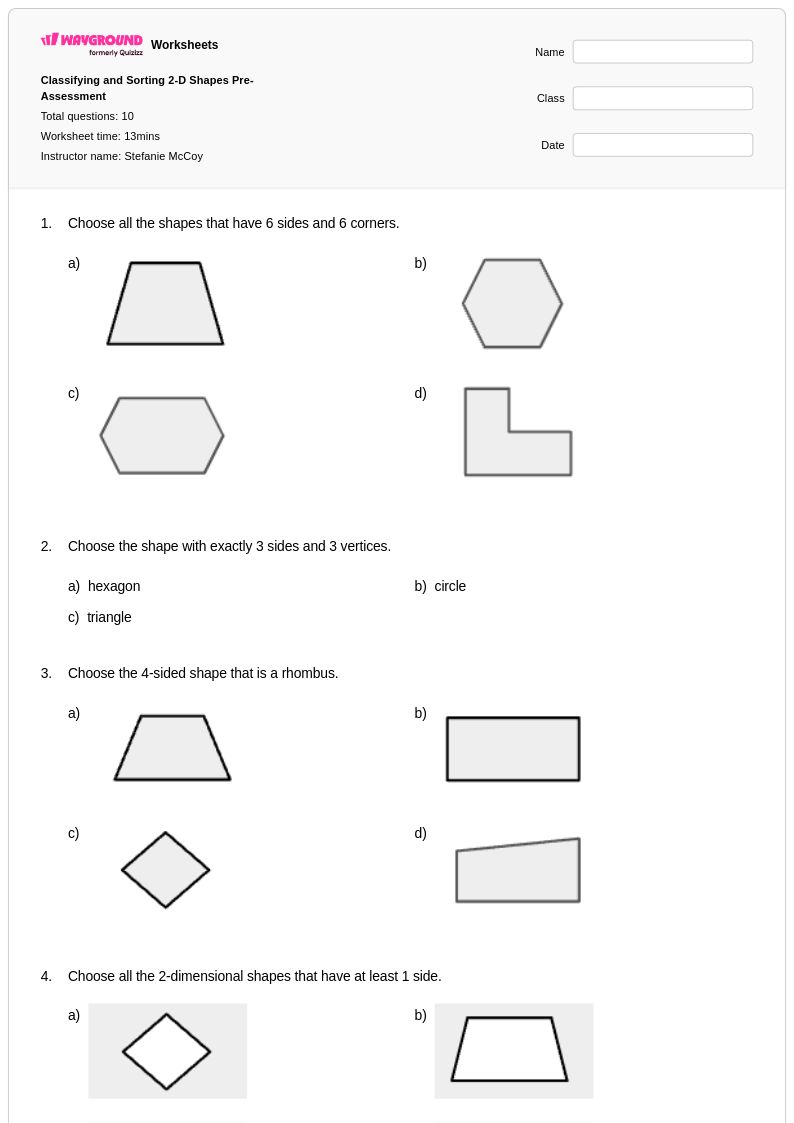
10 Q
1st
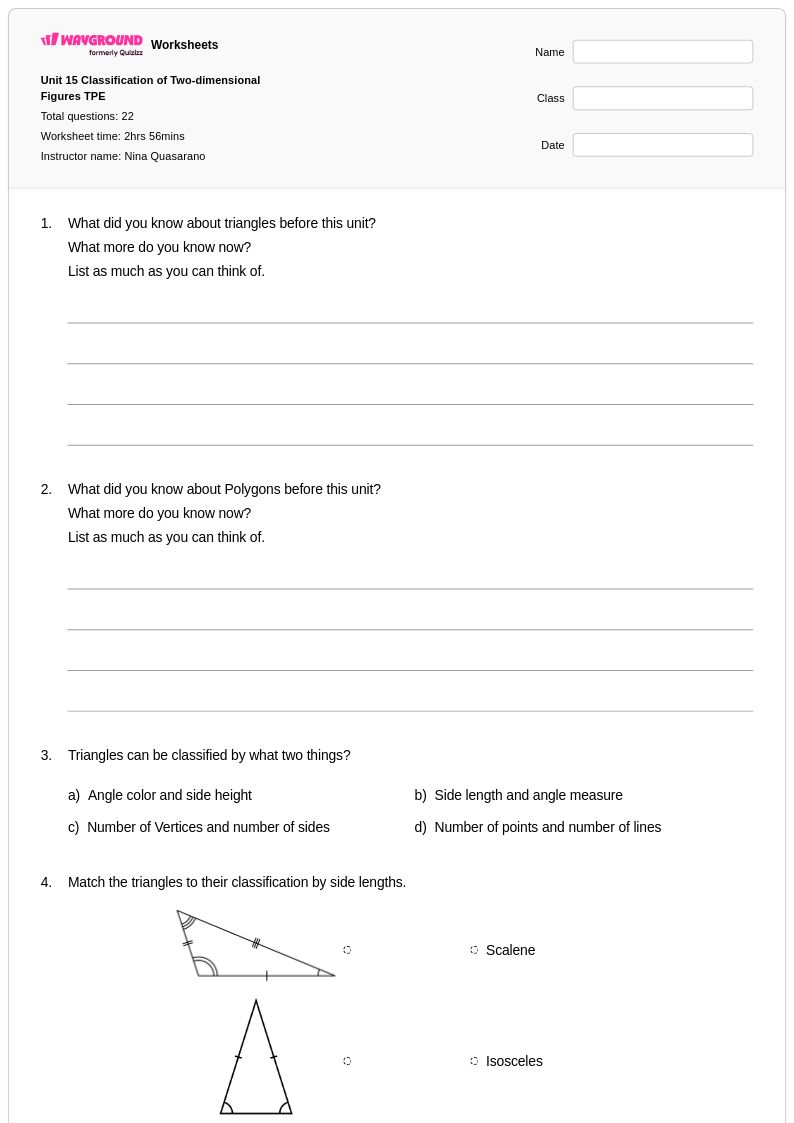
22 Q
5th
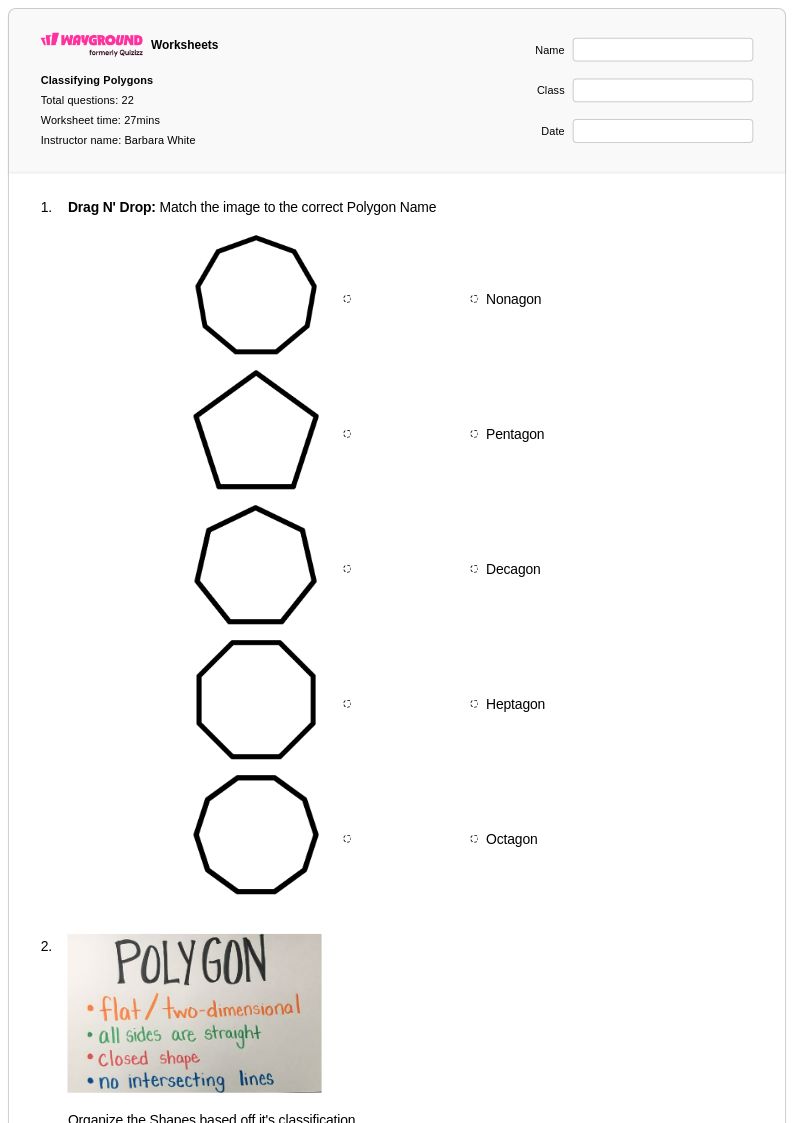
22 Q
5th
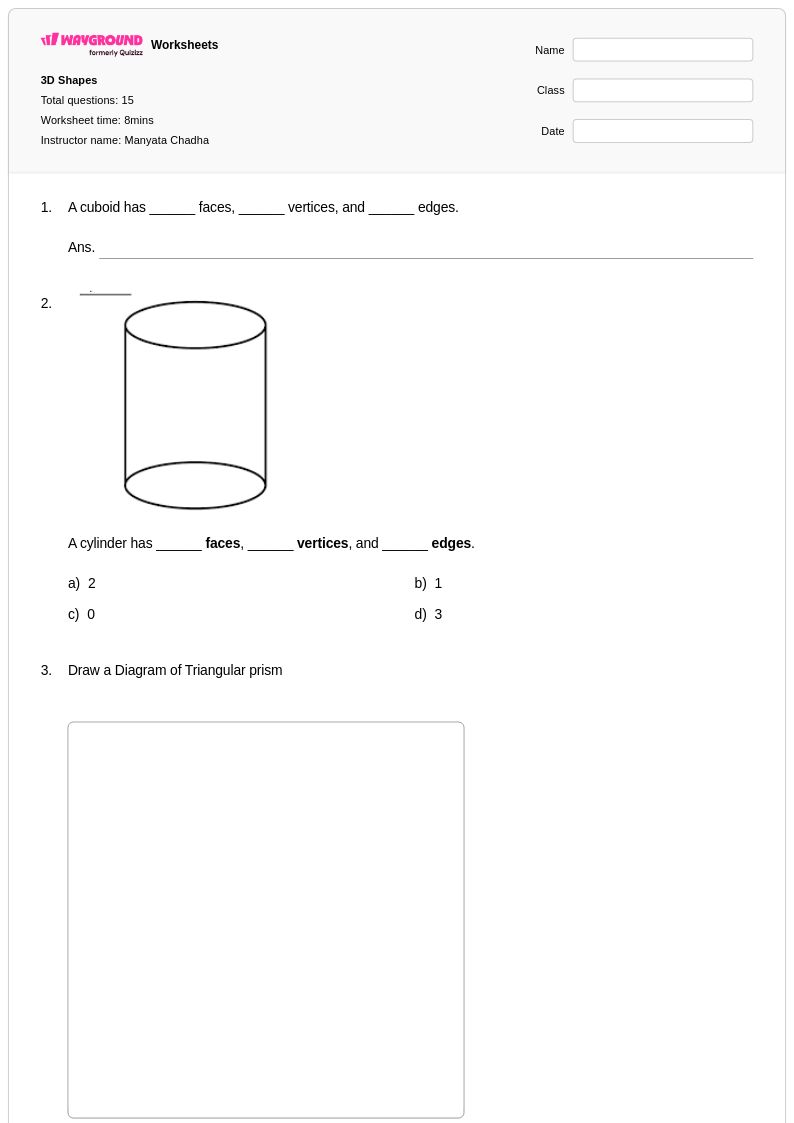
15 Q
7th
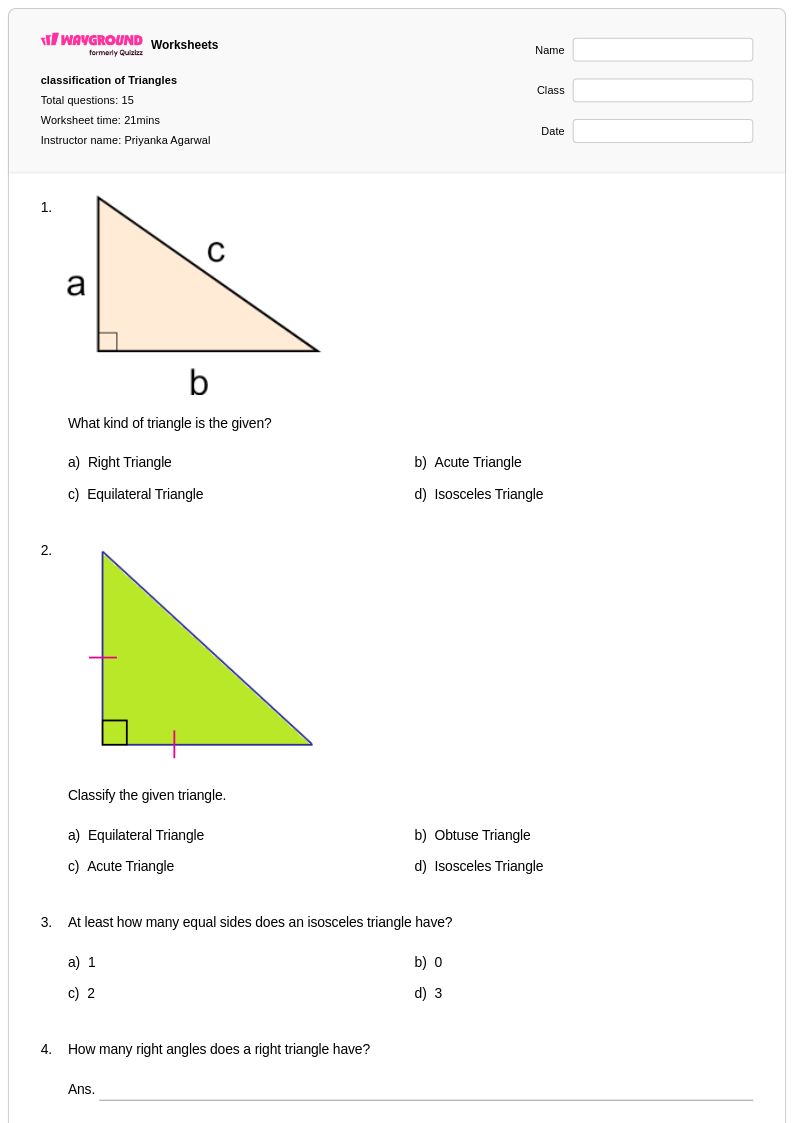
15 Q
6th
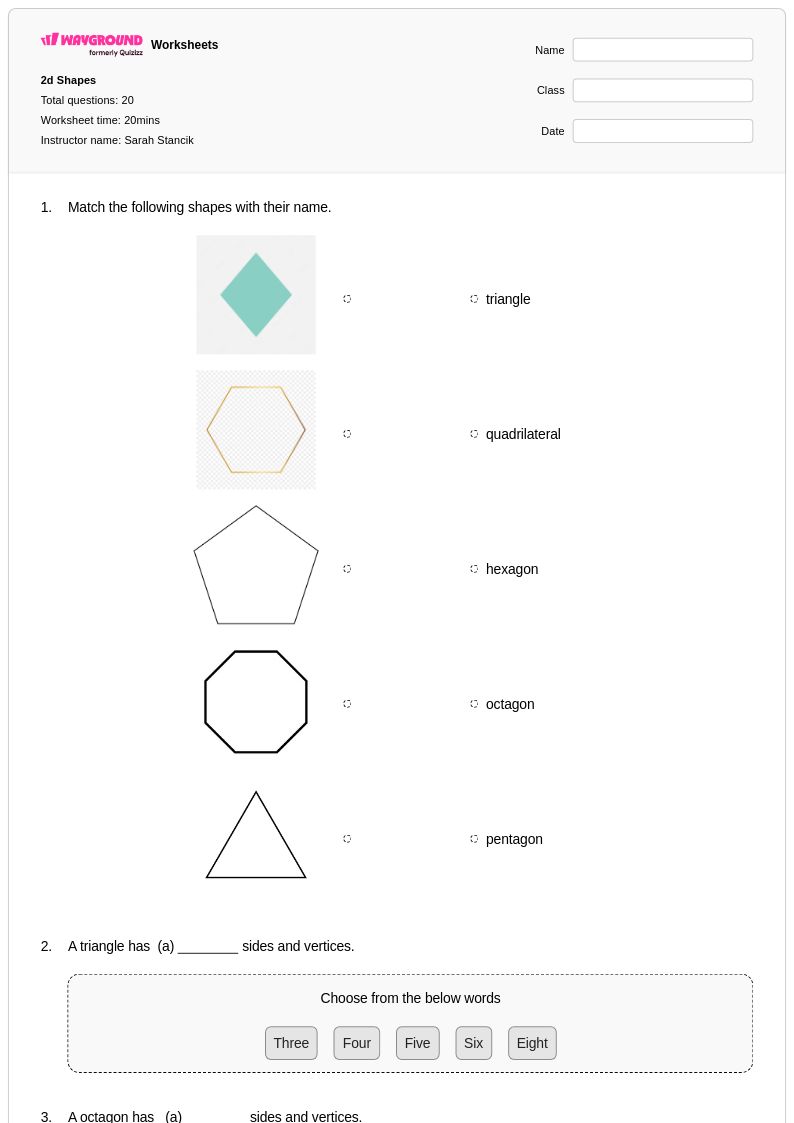
20 Q
3rd
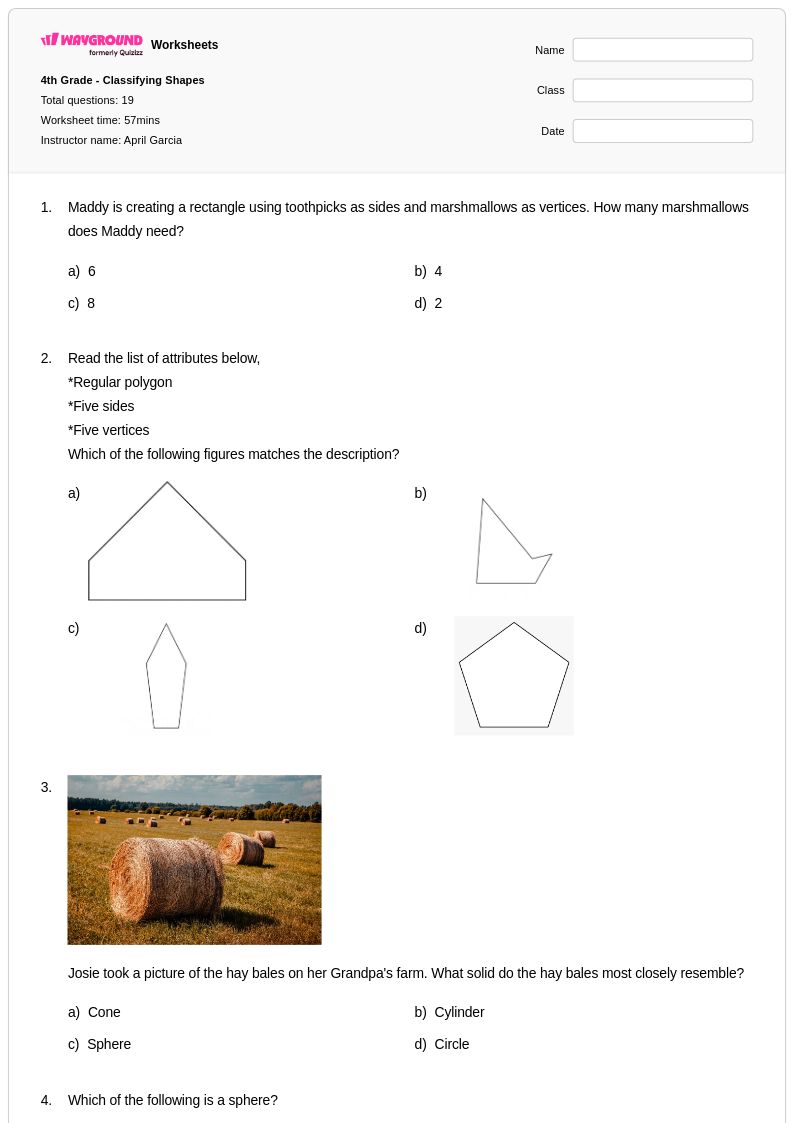
19 Q
3rd - 5th
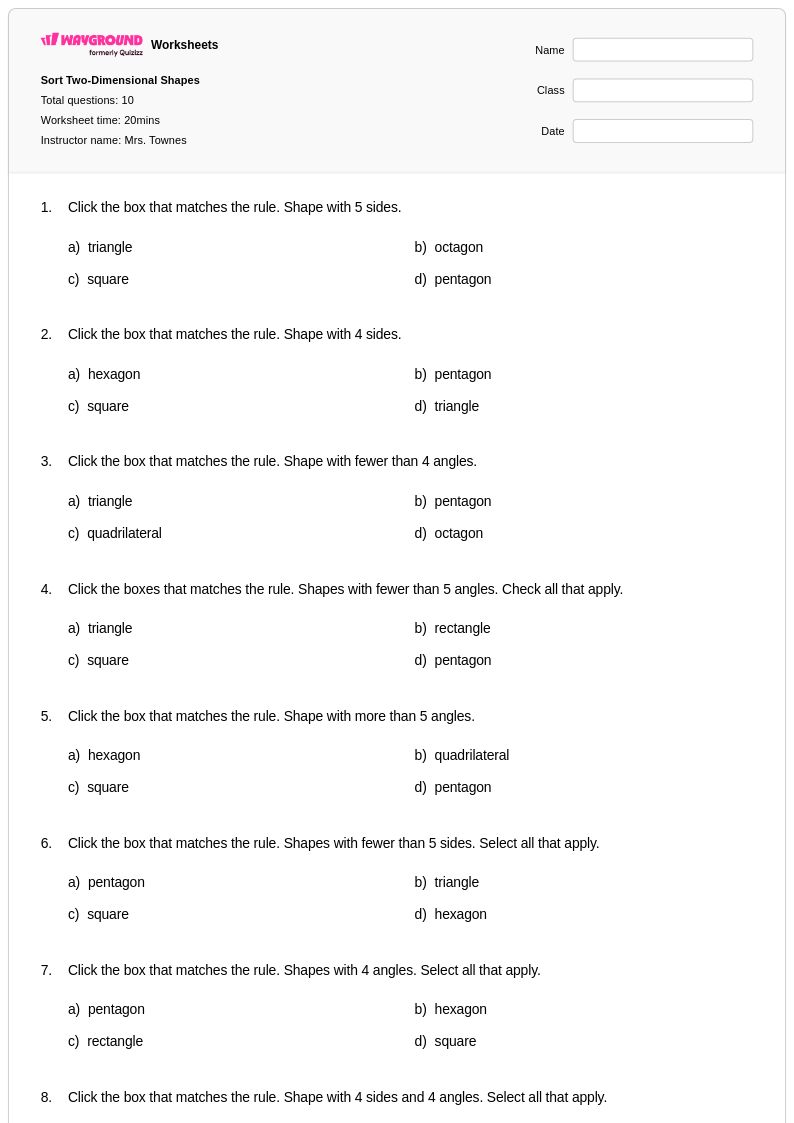
10 Q
2nd
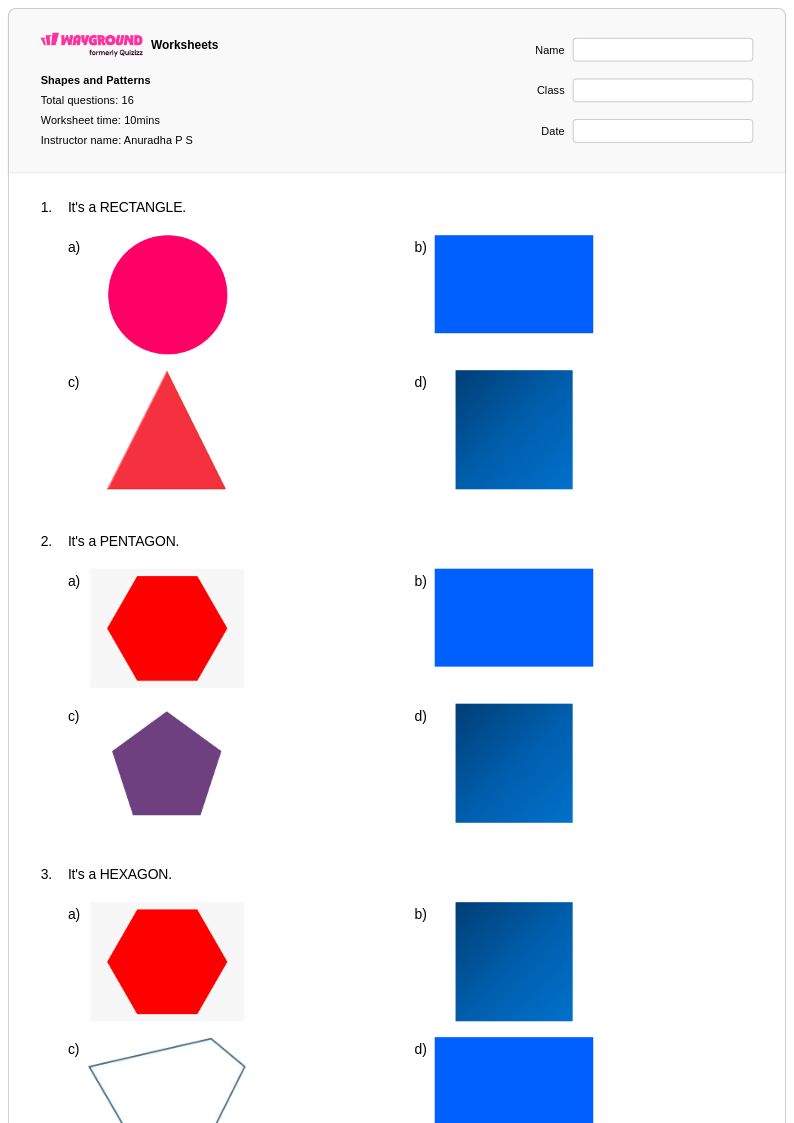
16 Q
1st
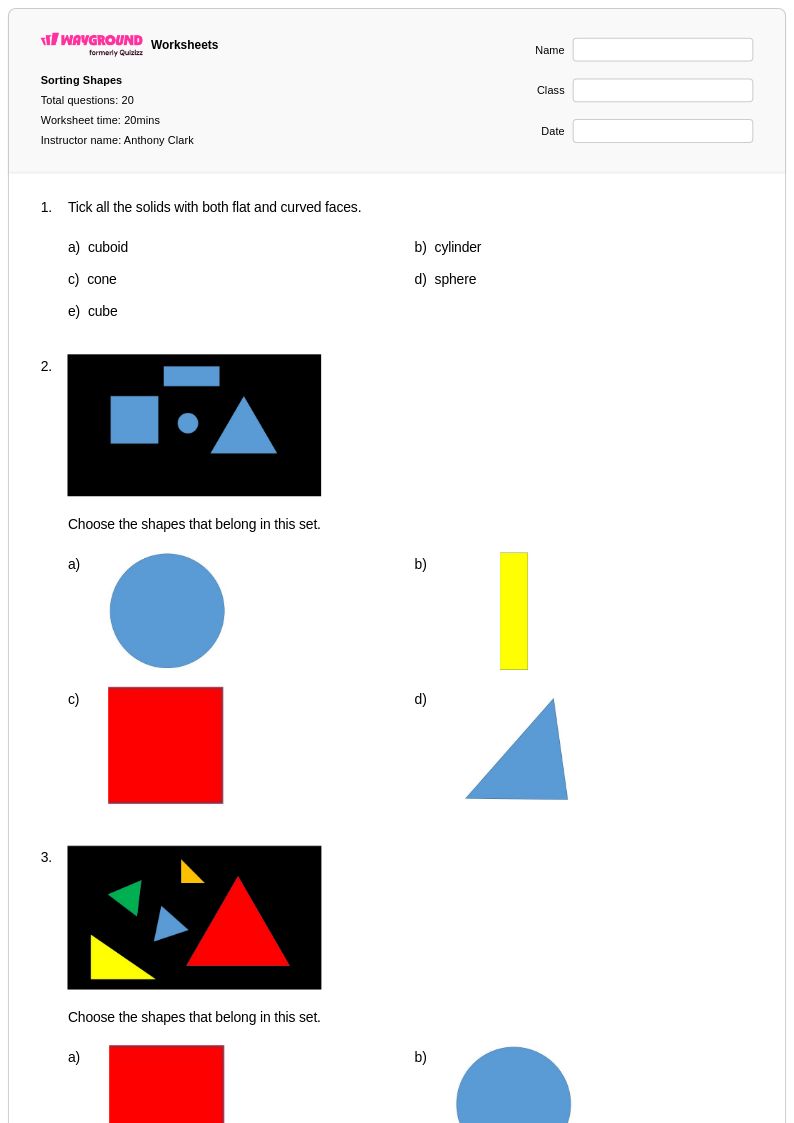
20 Q
1st - Uni
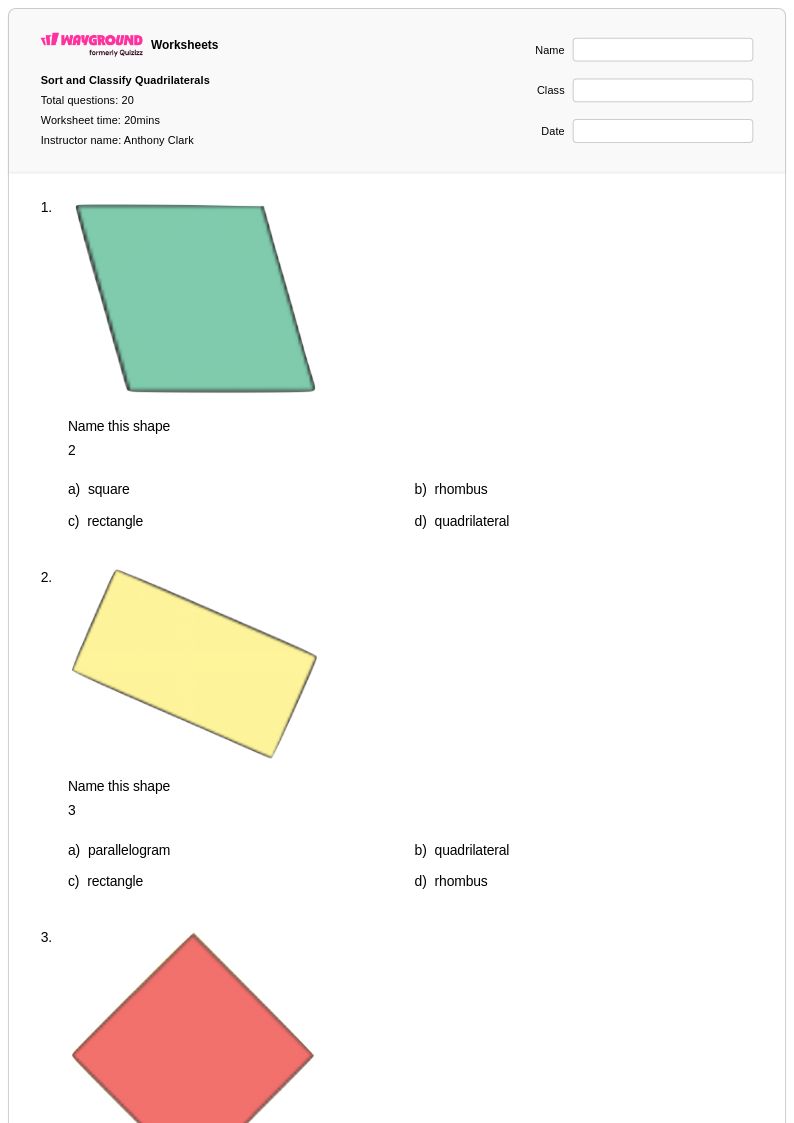
20 Q
5th - Uni
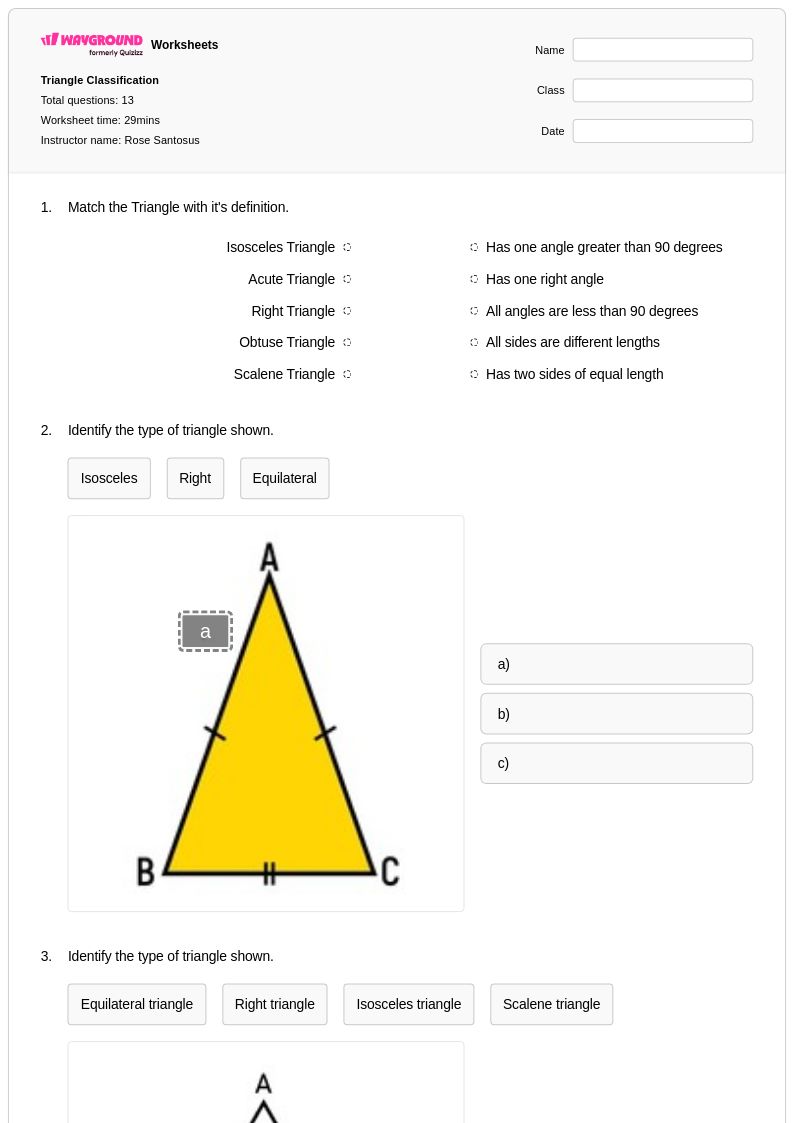
13 Q
10th
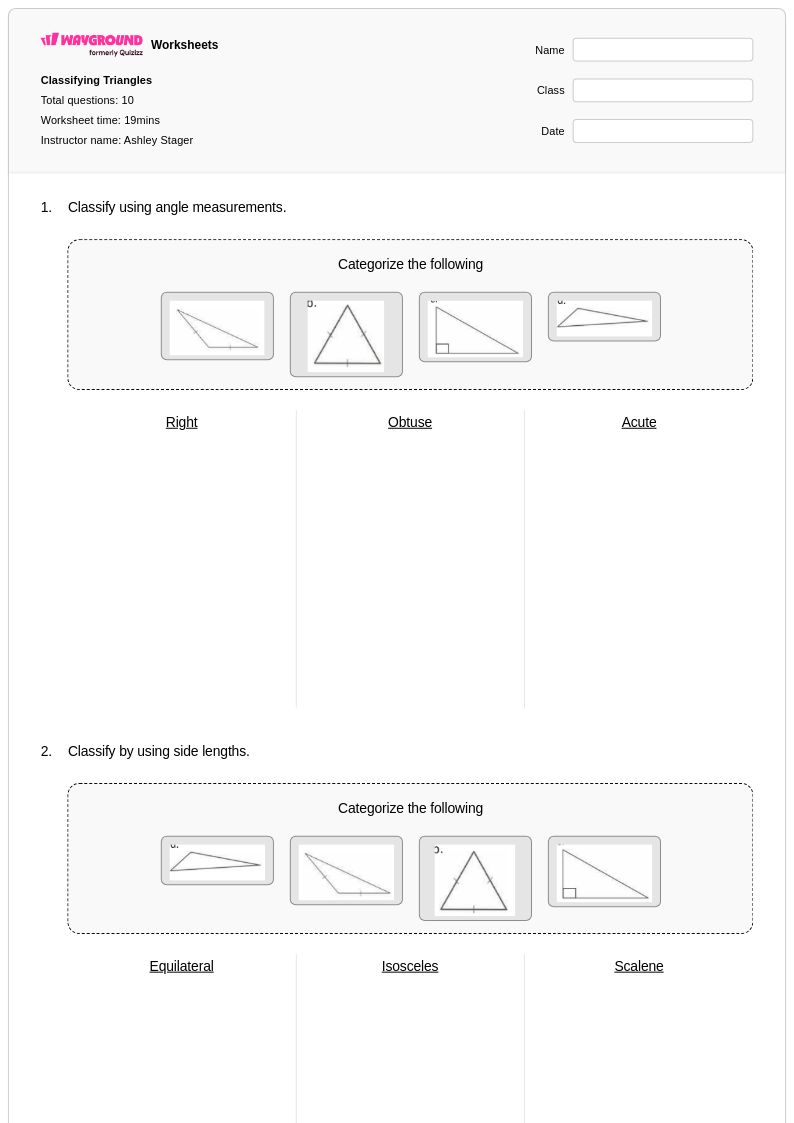
10 Q
5th
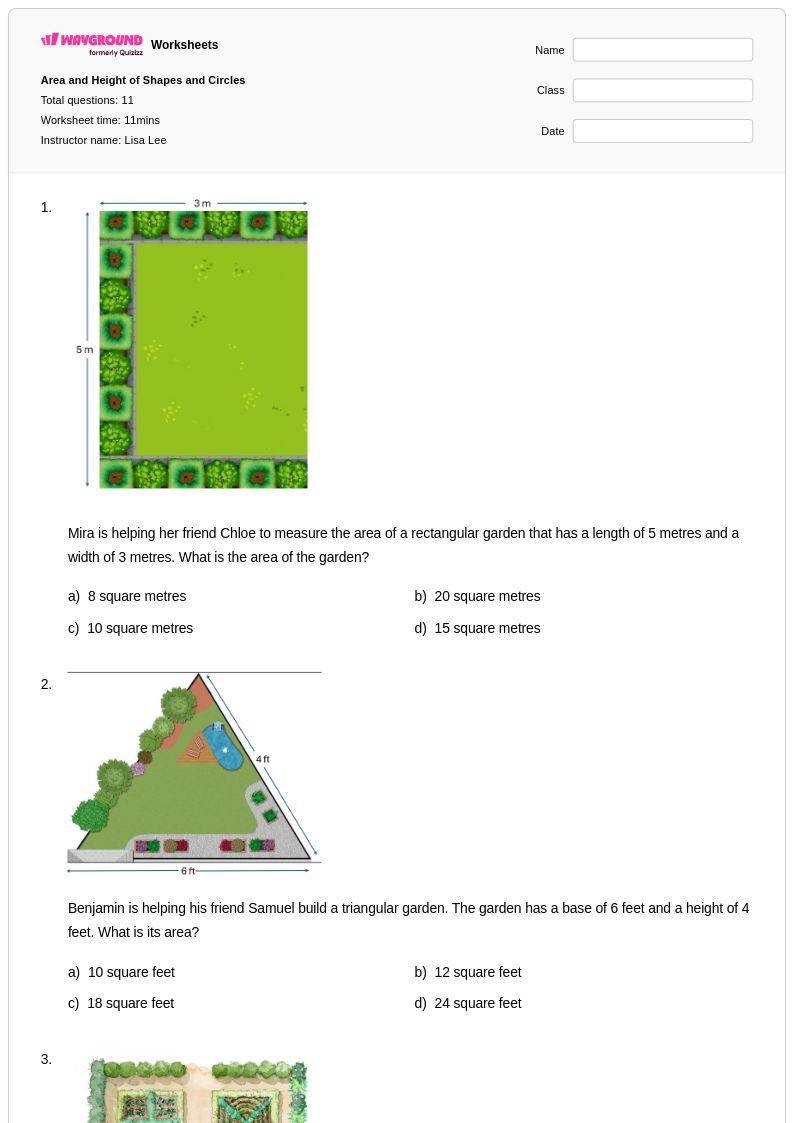
11 Q
6th
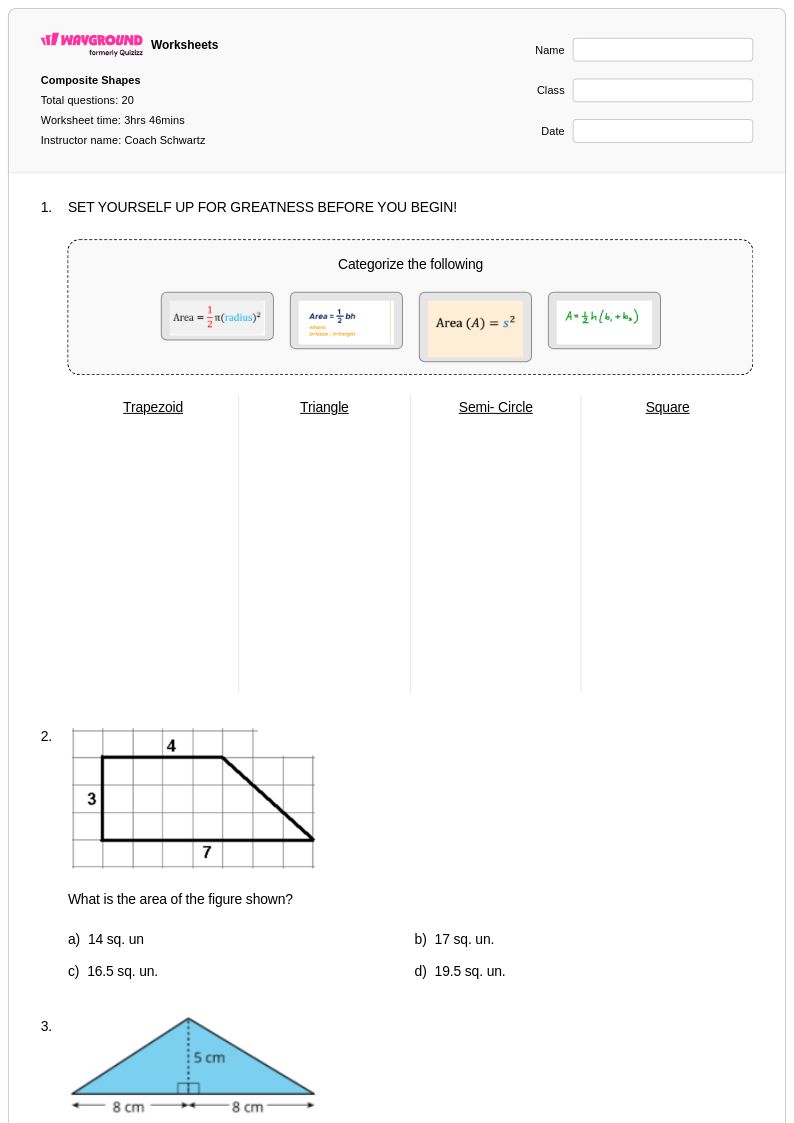
20 Q
7th
Explore Worksheets by Subjects
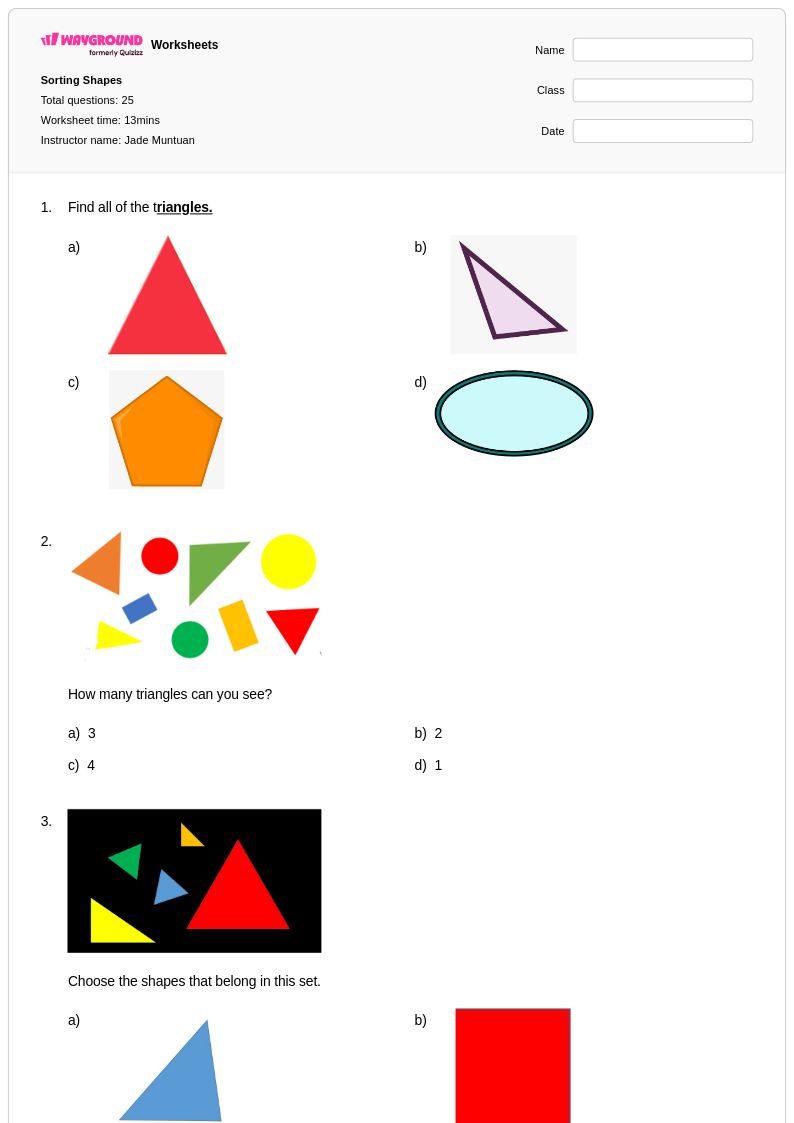
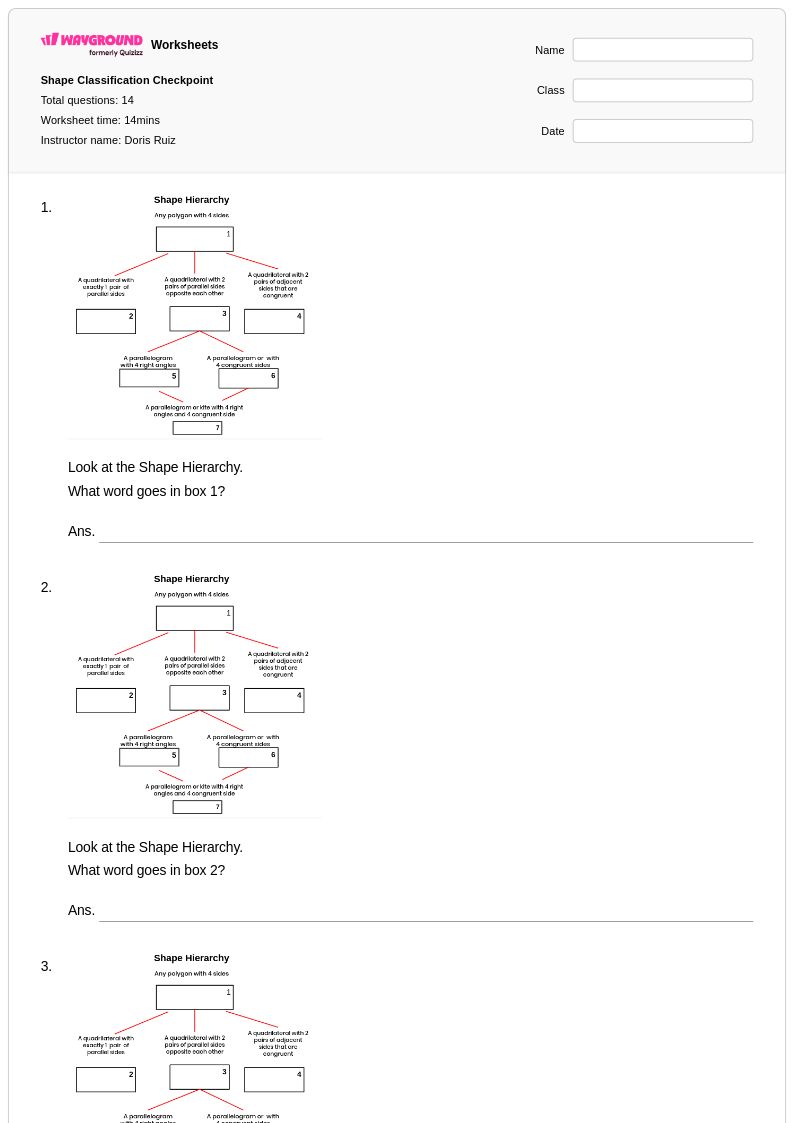
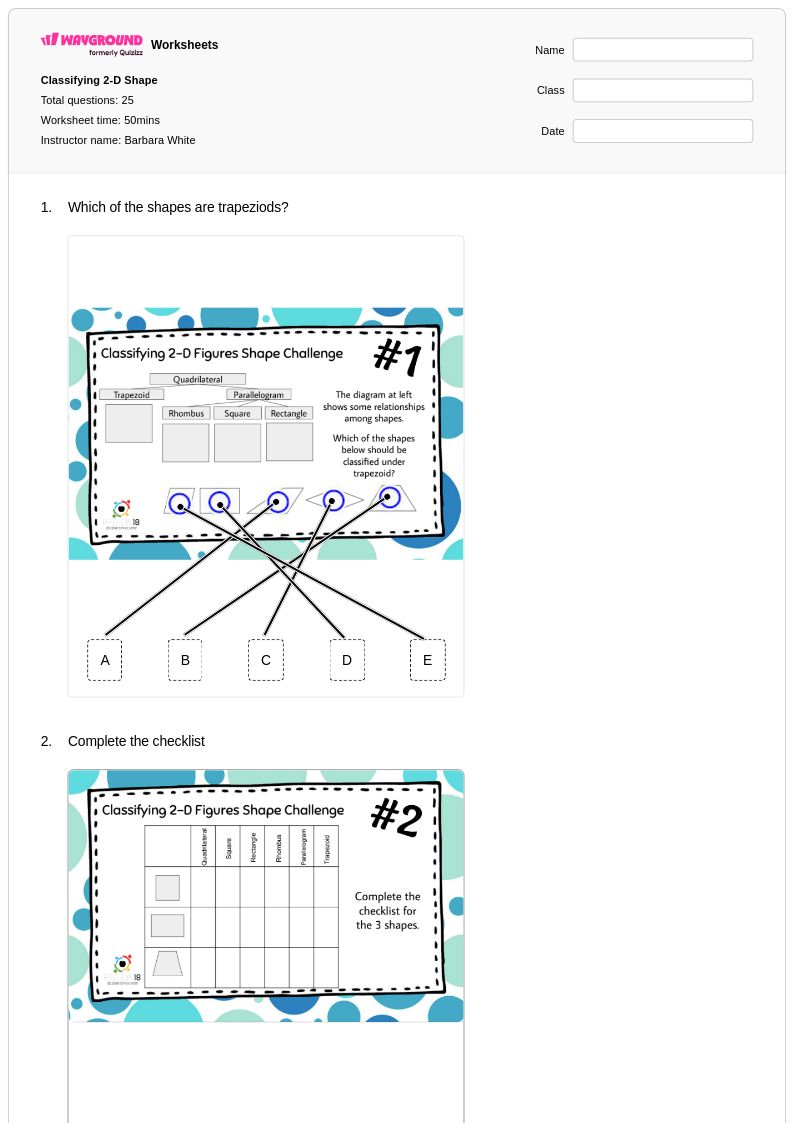
Explore printable Shape Sorting and Classification worksheets
Shape sorting and classification worksheets available through Wayground (formerly Quizizz) provide essential foundational practice for students developing geometric reasoning and spatial awareness skills. These comprehensive resources focus on helping learners identify, categorize, and distinguish between various two-dimensional and three-dimensional shapes based on their defining attributes such as number of sides, angles, and vertices. The worksheets strengthen critical thinking abilities as students analyze geometric properties, recognize patterns, and make logical connections between different shape families. Each printable resource includes carefully structured practice problems that progress from basic shape recognition to more complex classification tasks, with accompanying answer keys that support both independent learning and teacher assessment. These free educational materials serve as valuable tools for reinforcing shape vocabulary, developing visual discrimination skills, and building the conceptual understanding necessary for advanced geometric concepts.
Wayground (formerly Quizizz) empowers educators with an extensive collection of millions of teacher-created shape sorting and classification resources that streamline lesson planning and enhance mathematical instruction. The platform's robust search and filtering capabilities allow teachers to quickly locate materials that align with specific learning objectives and standards requirements, while differentiation tools enable seamless customization to meet diverse student needs and ability levels. These versatile worksheets are available in both printable pdf formats for traditional classroom use and digital formats for interactive learning experiences, providing flexibility for various teaching environments and learning preferences. The comprehensive resource library supports effective remediation by offering targeted practice opportunities for struggling learners, while also providing enrichment activities that challenge advanced students to explore more sophisticated classification systems and geometric relationships, ultimately ensuring that all students develop strong foundational skills in shape recognition and mathematical reasoning.
FAQs
How do I introduce shape sorting to young learners?
What exercises help students practice shape classification?
What are common misconceptions when students learn to sort shapes?
How can I use these shape sorting worksheets in my classroom?
How does shape classification fit into the math curriculum?
How can I support diverse learners with shape sorting activities?