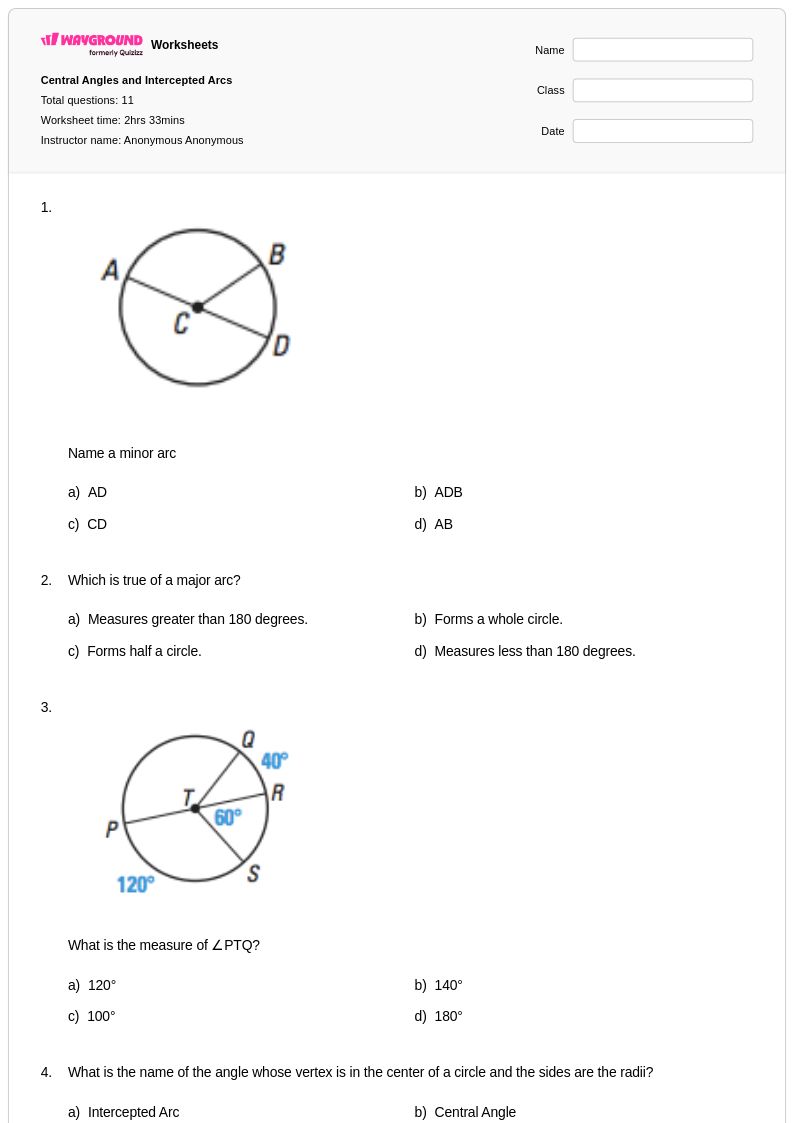
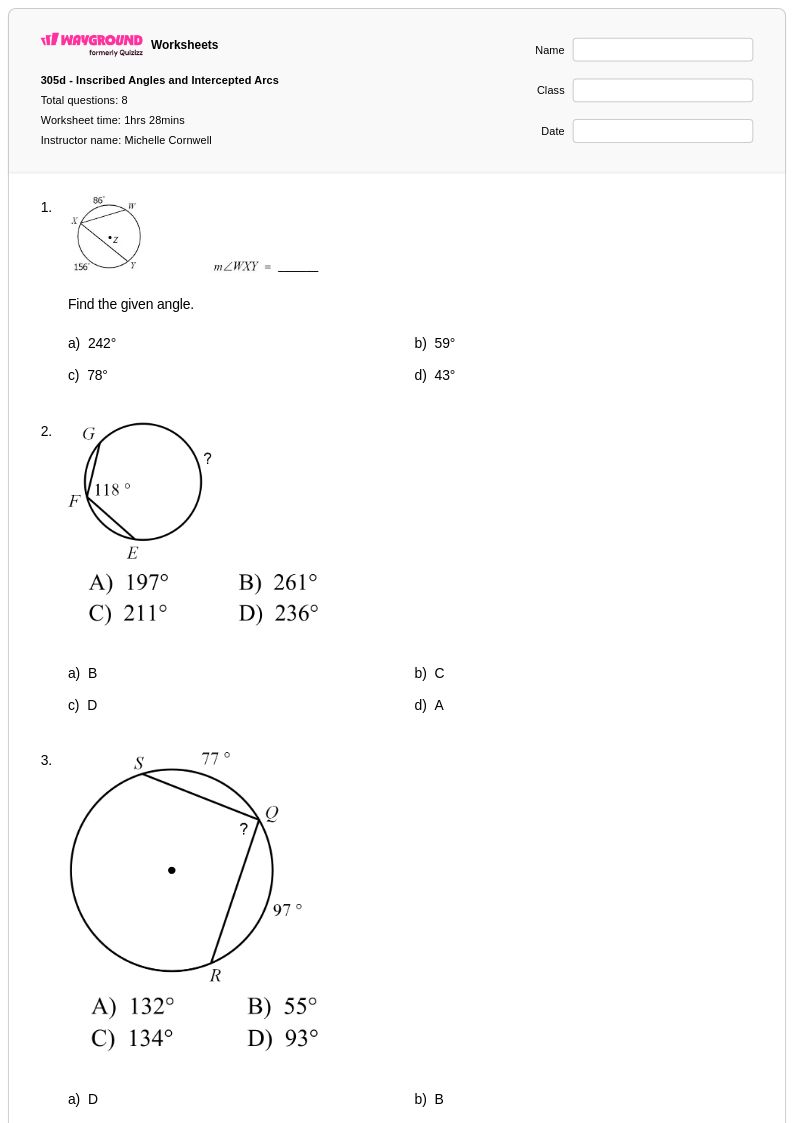
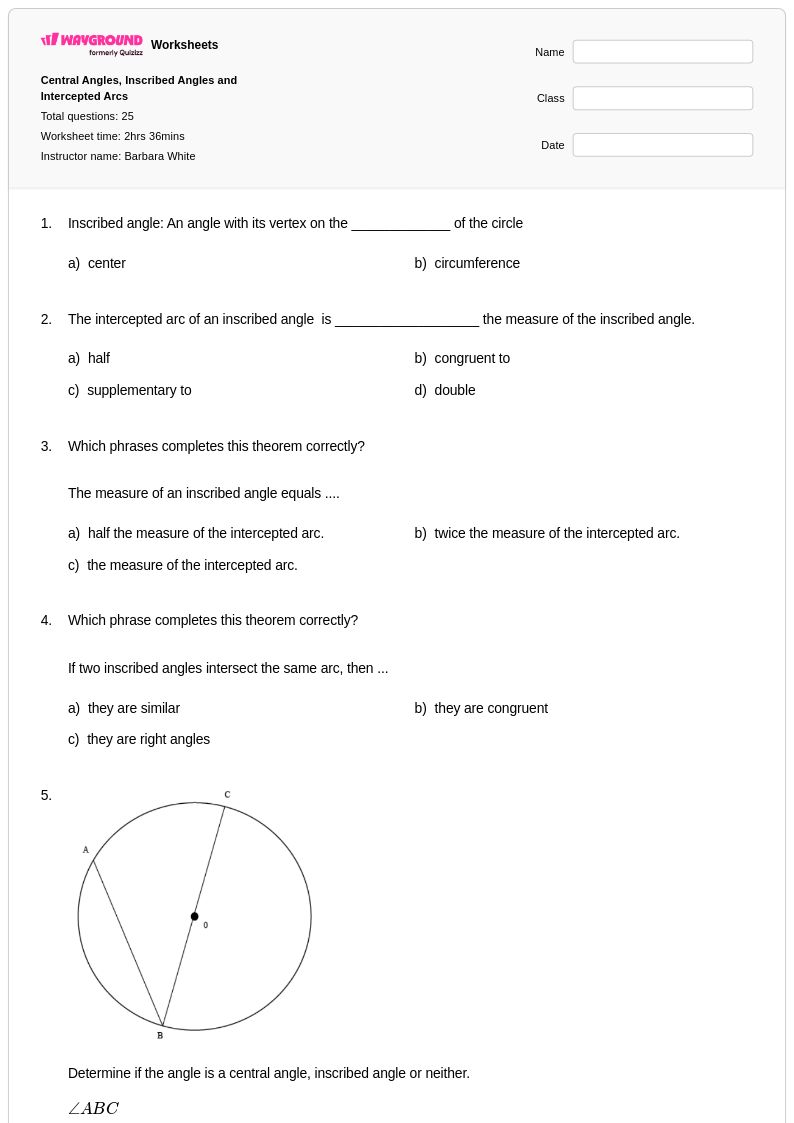
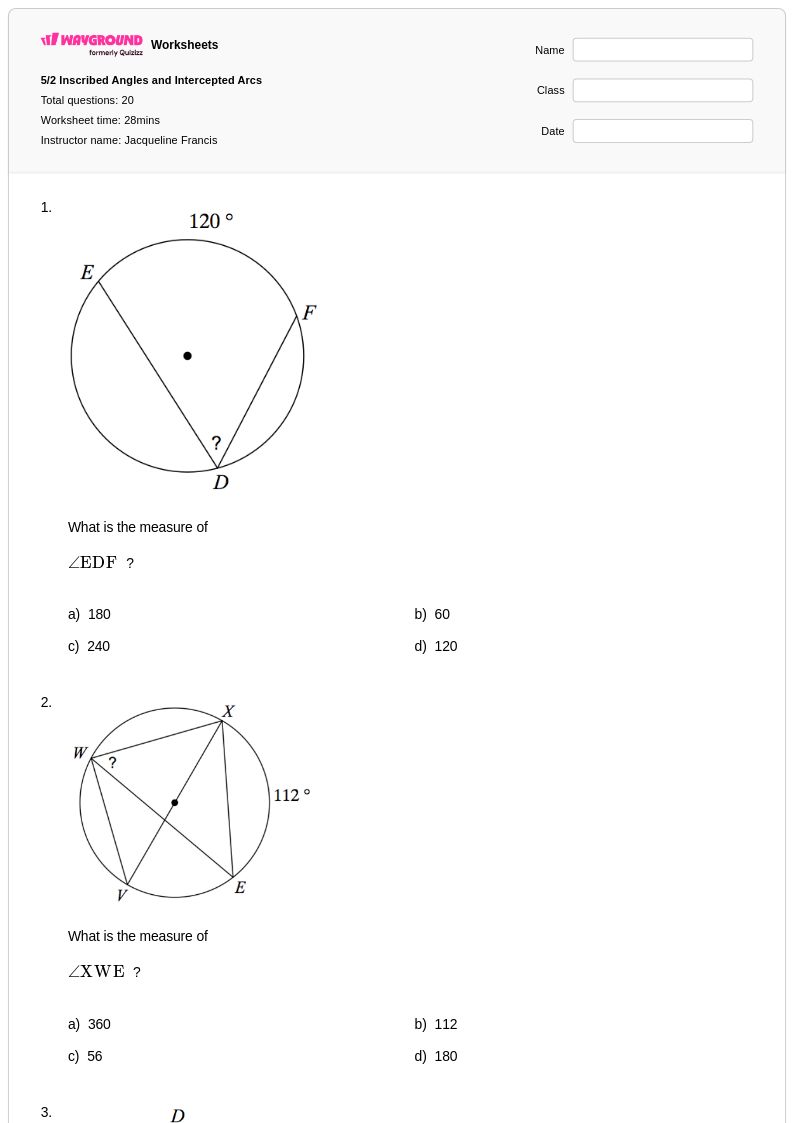
Enhance student understanding of intercepted arcs with Wayground's comprehensive collection of free geometry worksheets, featuring printable PDFs with practice problems and complete answer keys for effective mathematical learning.
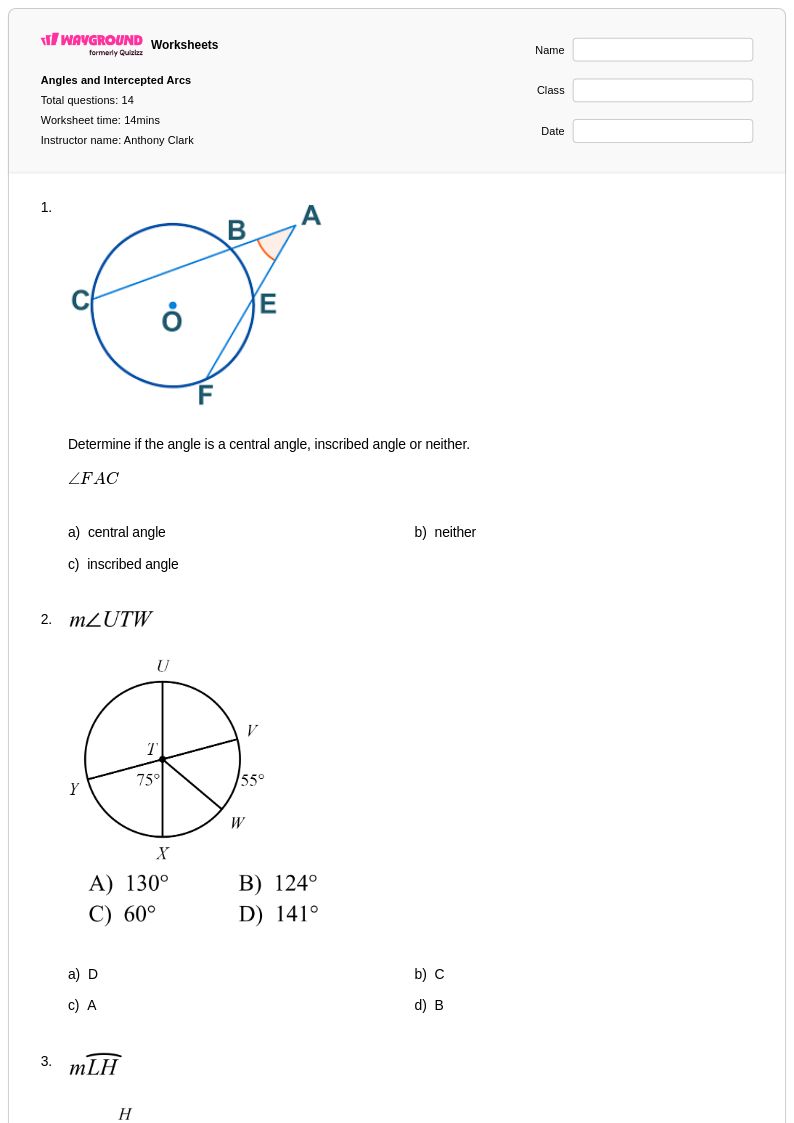
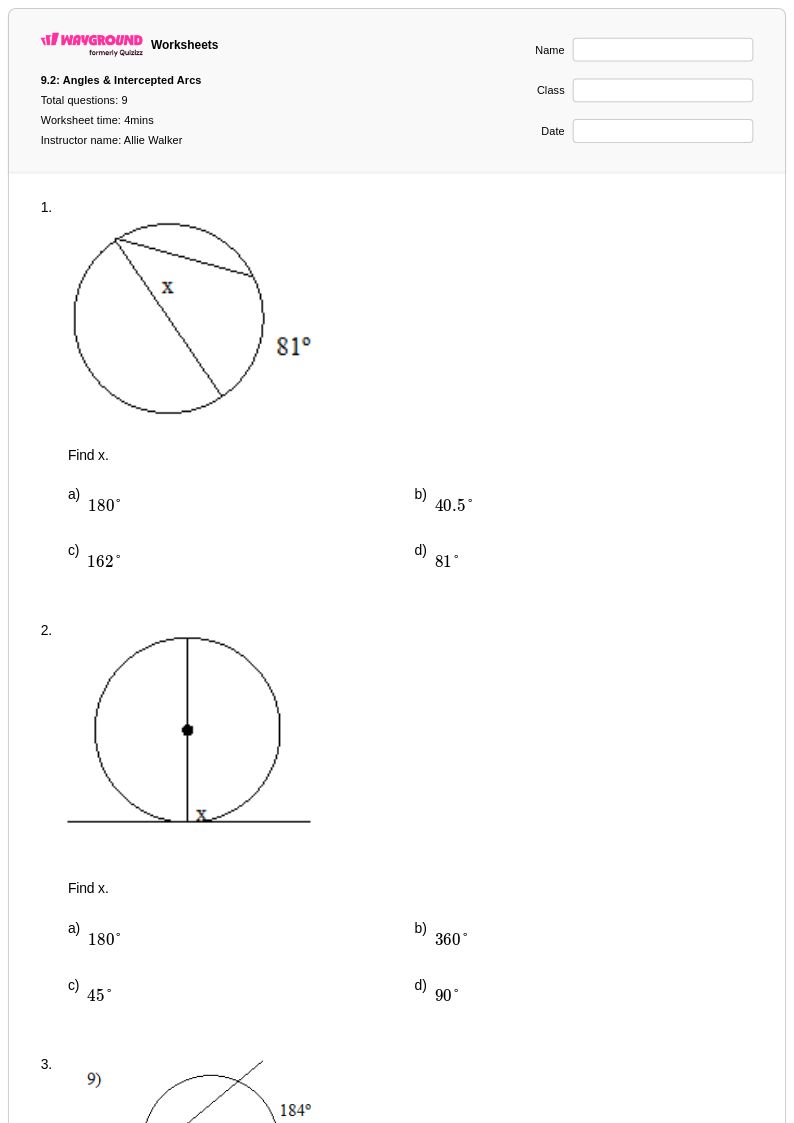
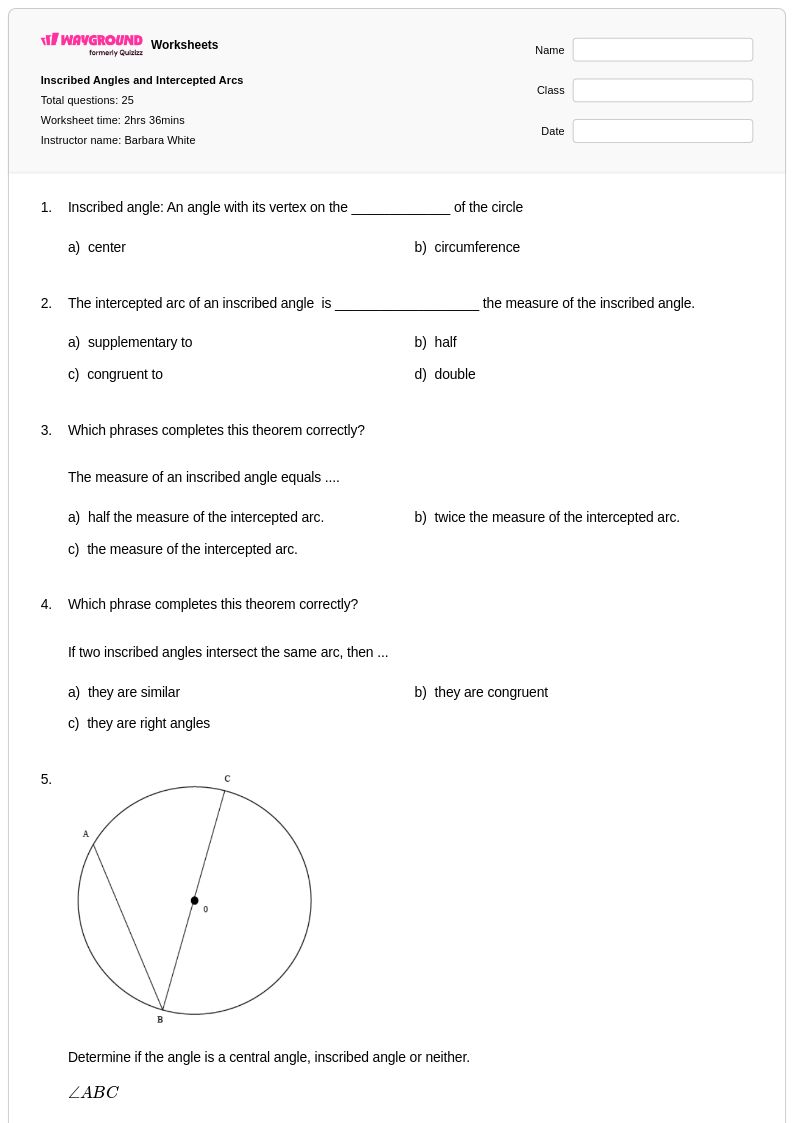
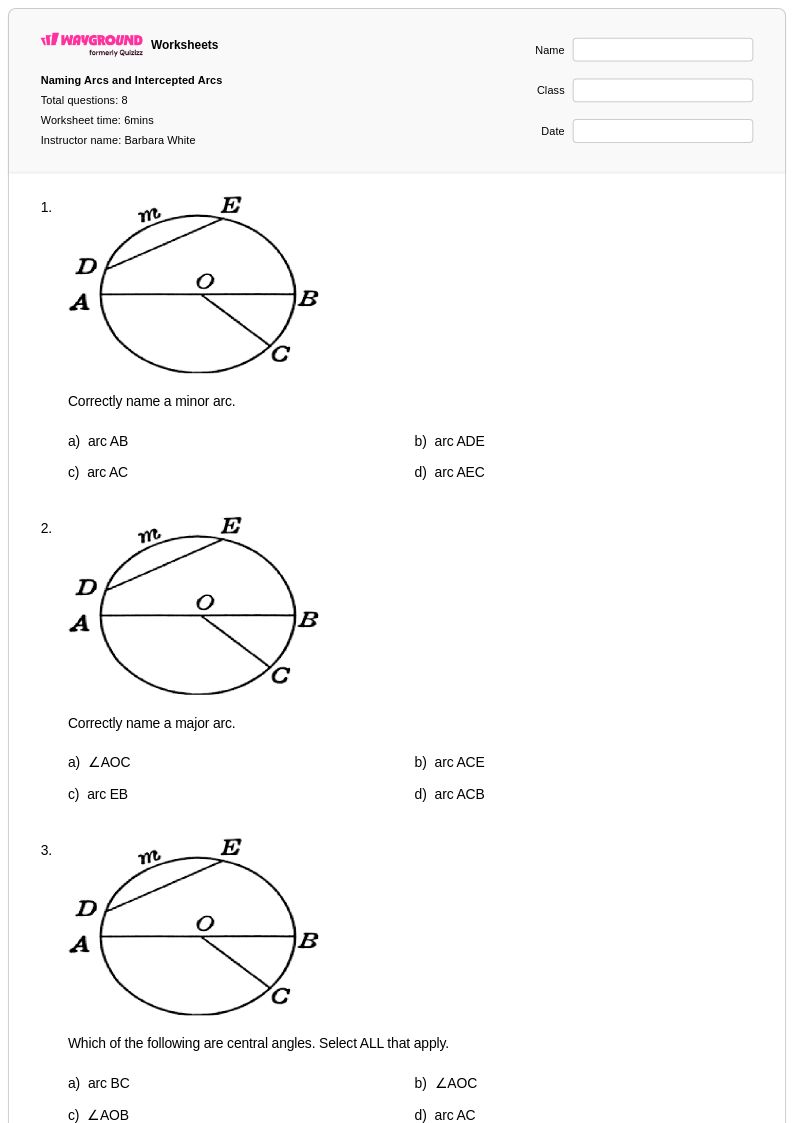
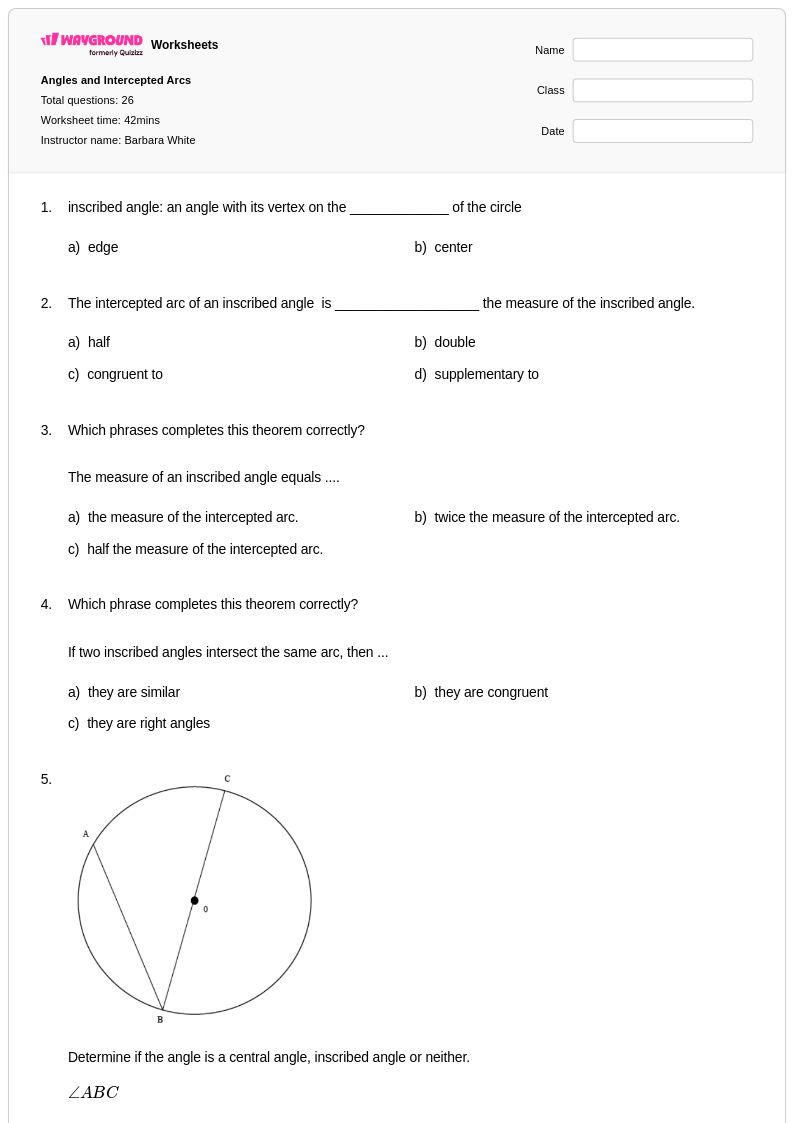
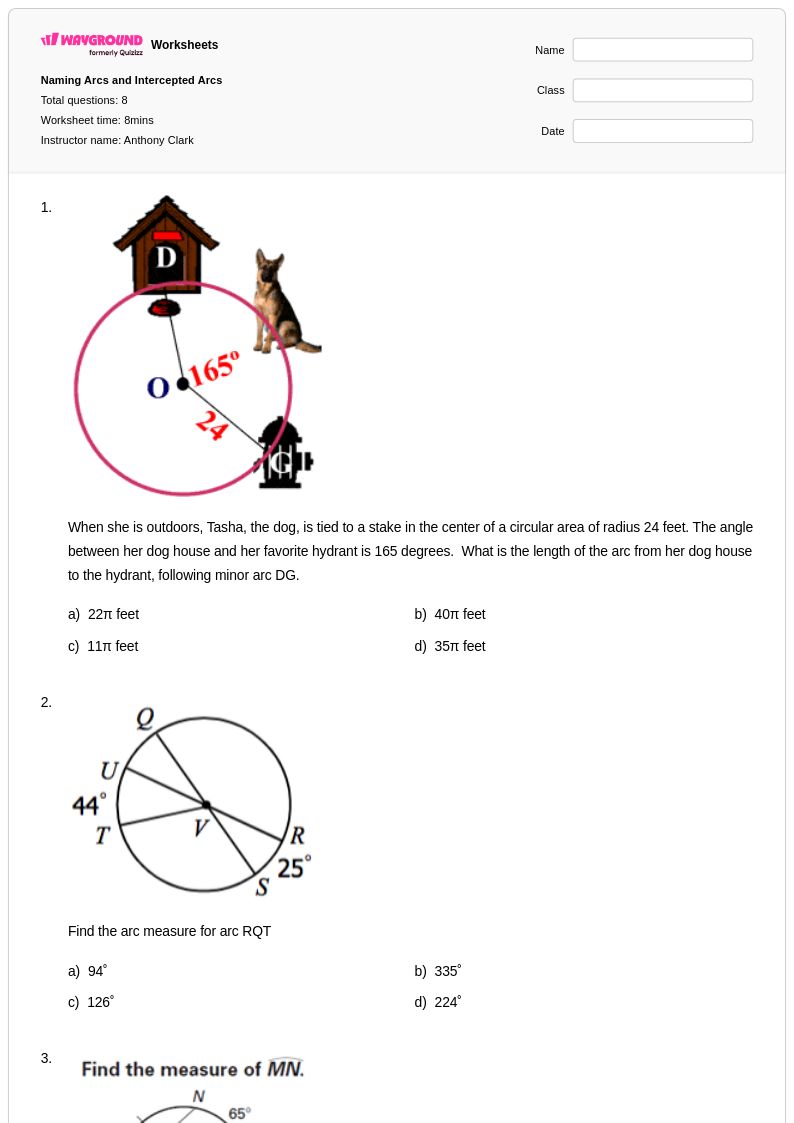
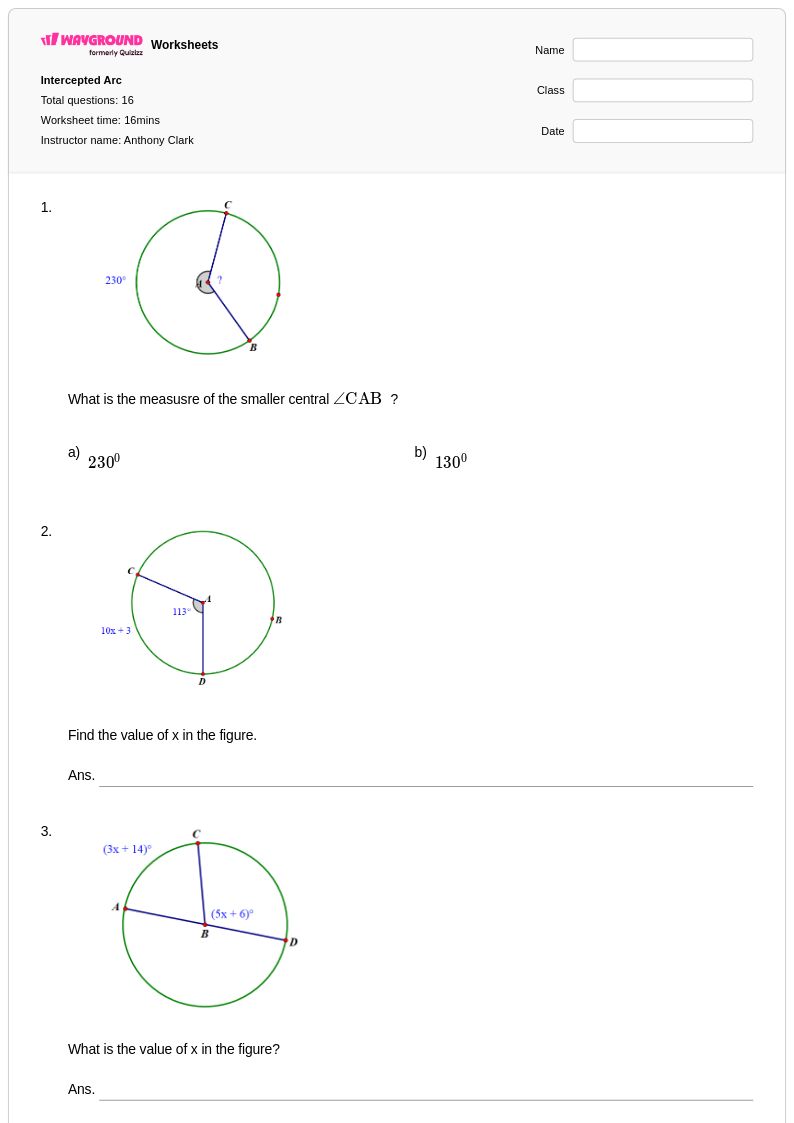
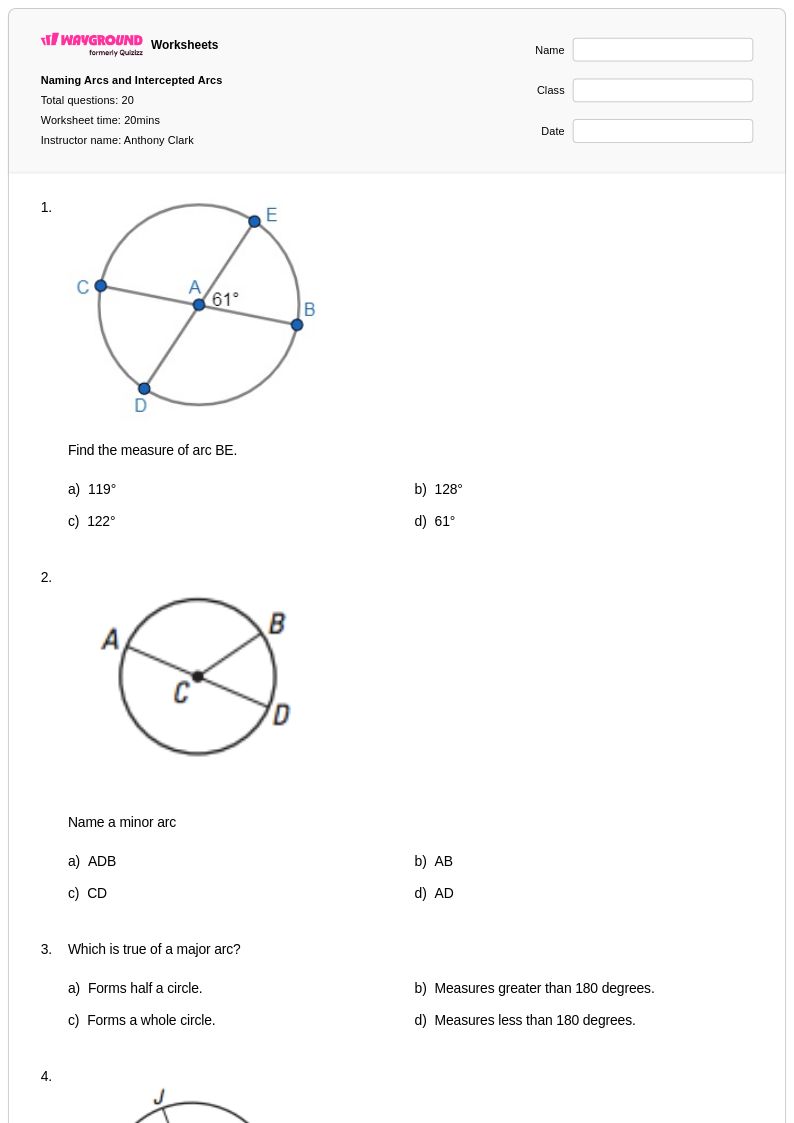
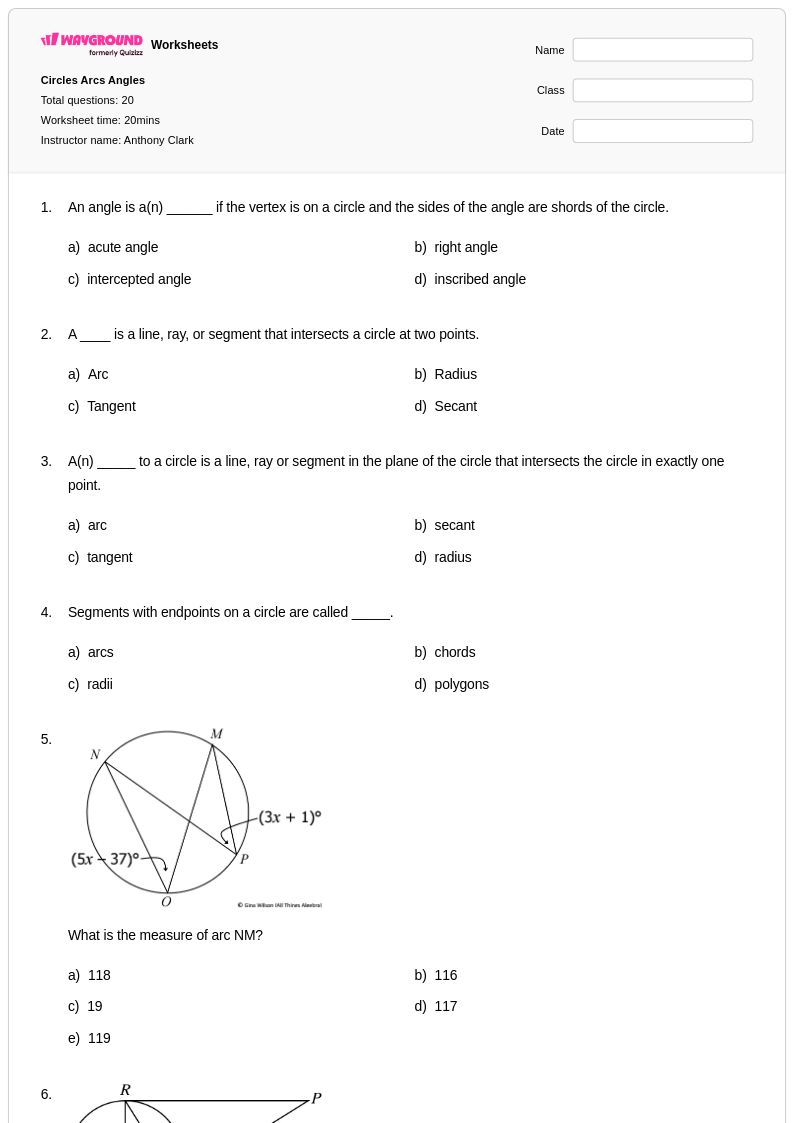
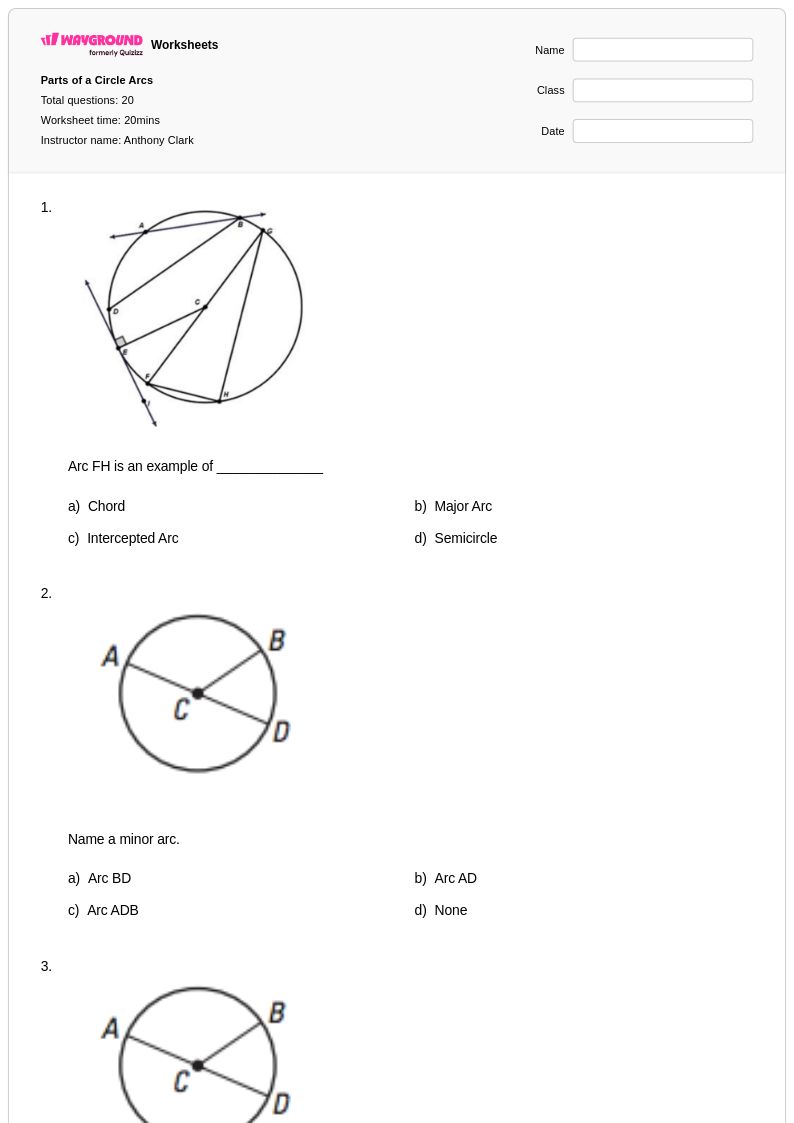
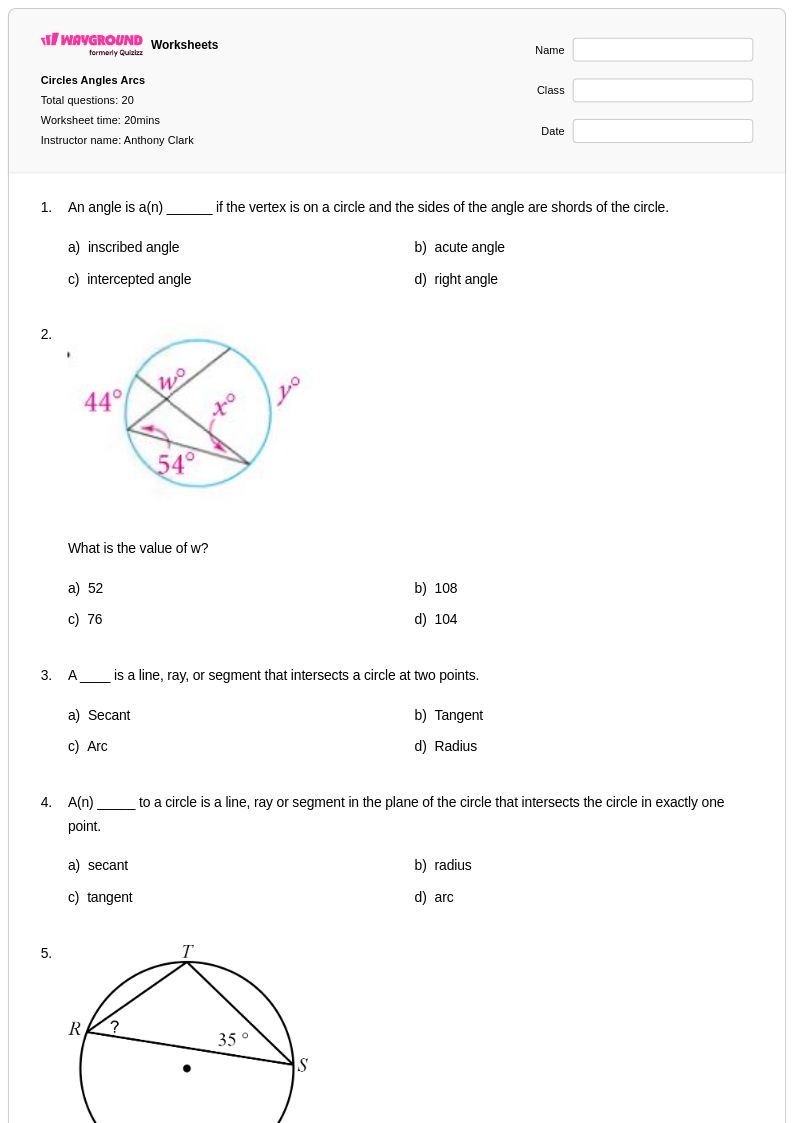
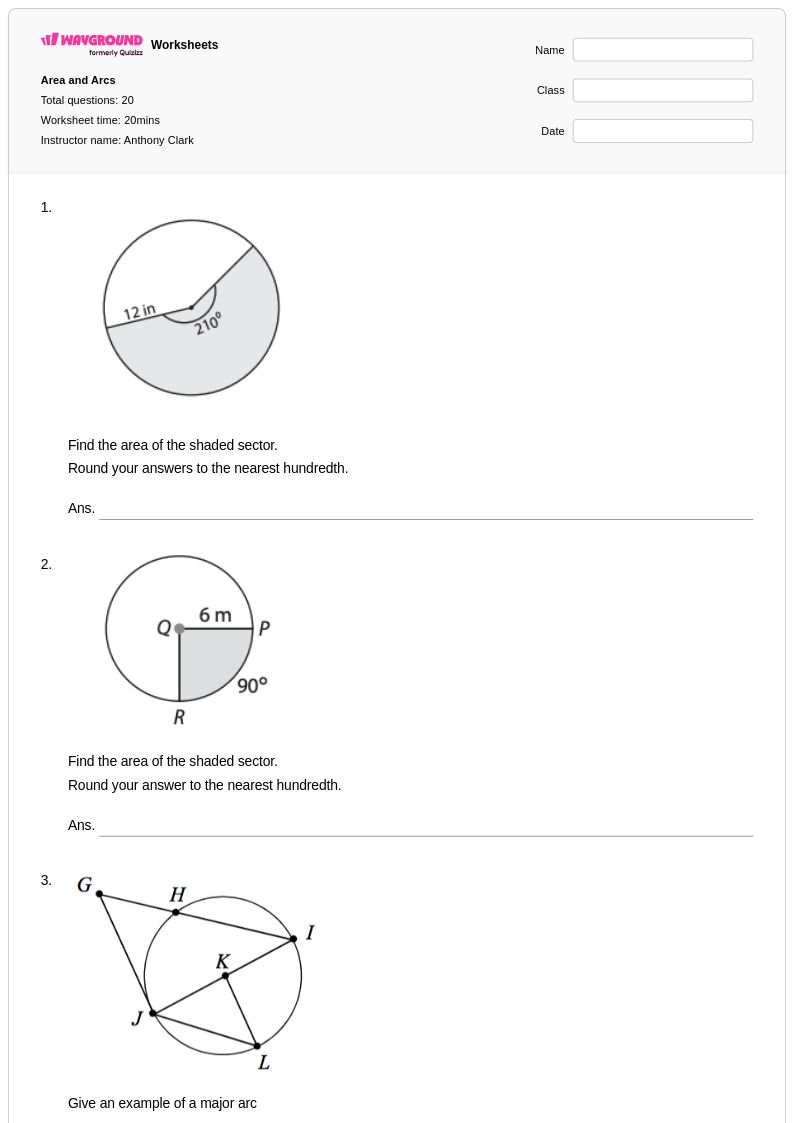
Intercepted arcs represent a fundamental concept in geometry that requires students to understand the relationship between central angles, inscribed angles, and the arcs they create within circles. Wayground's comprehensive collection of intercepted arcs worksheets provides students with structured practice problems that build proficiency in calculating arc measures, identifying arc relationships, and applying theorems related to inscribed and central angles. These printable resources include detailed answer keys that allow students to verify their understanding of complex geometric relationships, while the free pdf format ensures accessibility for both classroom instruction and independent study. The practice problems systematically progress from basic arc identification to advanced applications involving multiple intersecting chords and secants.
Wayground, formerly Quizizz, empowers educators with millions of teacher-created resources specifically designed to support geometry instruction and intercepted arcs mastery. The platform's robust search and filtering capabilities enable teachers to quickly locate worksheets that align with specific curriculum standards and student skill levels, while built-in differentiation tools allow for seamless customization to meet diverse learning needs. Available in both printable and digital pdf formats, these worksheet collections facilitate flexible lesson planning, targeted remediation for struggling students, and enrichment opportunities for advanced learners. Teachers can efficiently organize skill practice sessions, assess student progress through varied problem types, and maintain instructional momentum with readily accessible materials that support comprehensive understanding of circular geometry concepts.
FAQs
How do I teach intercepted arcs?
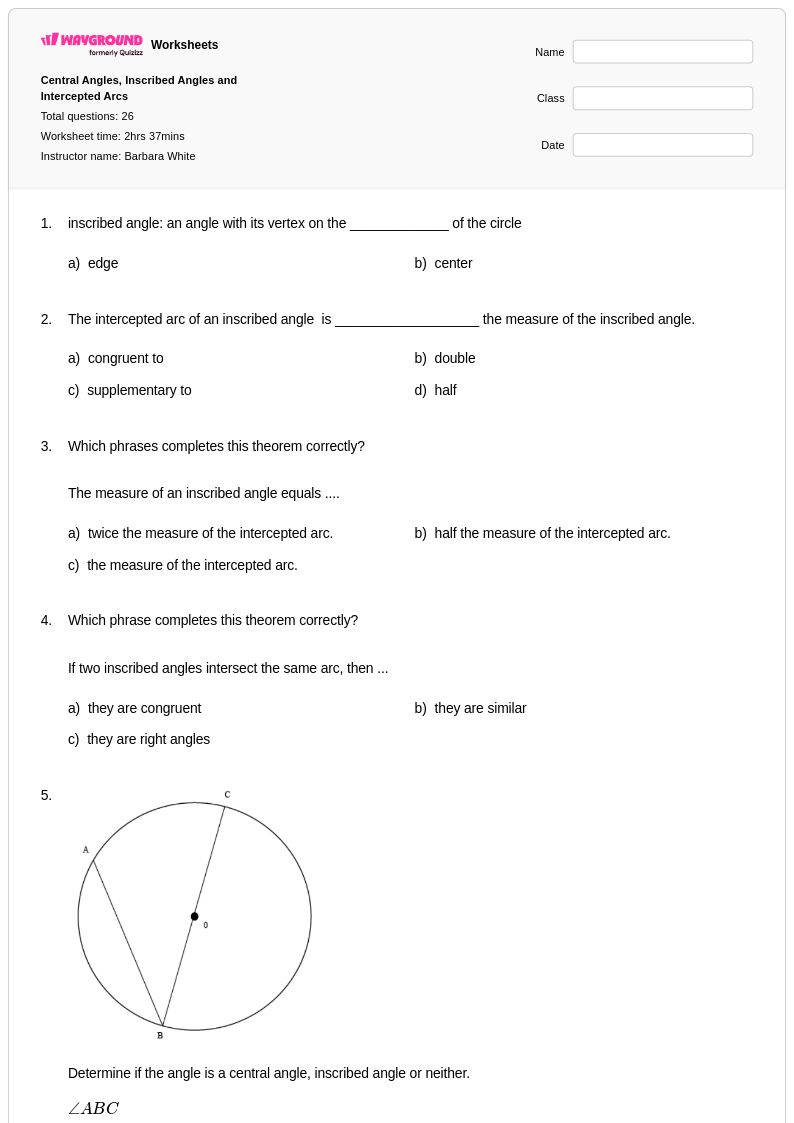
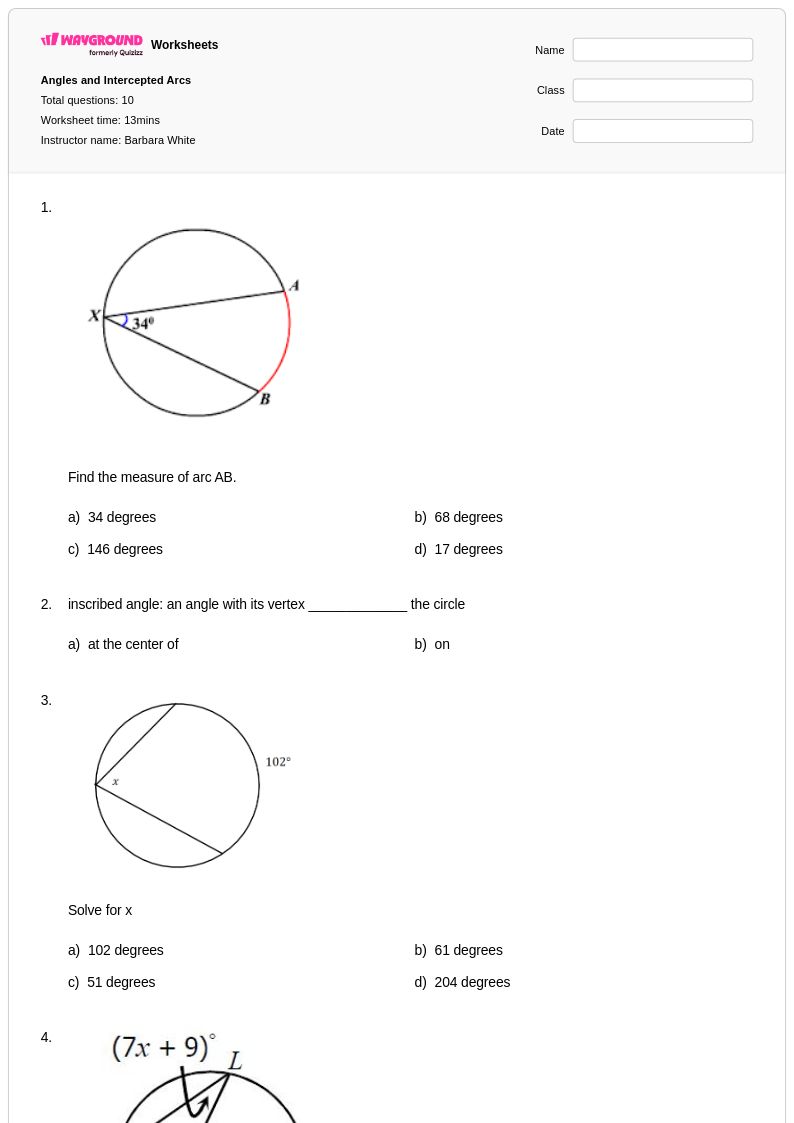
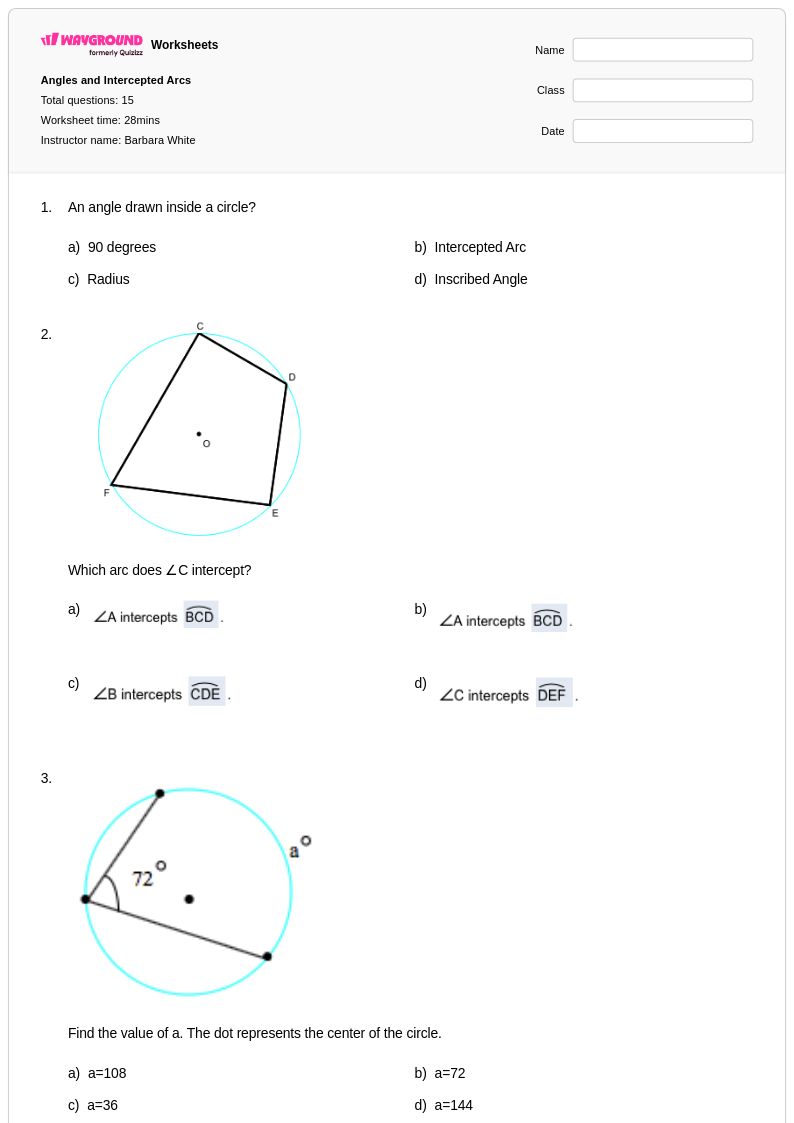
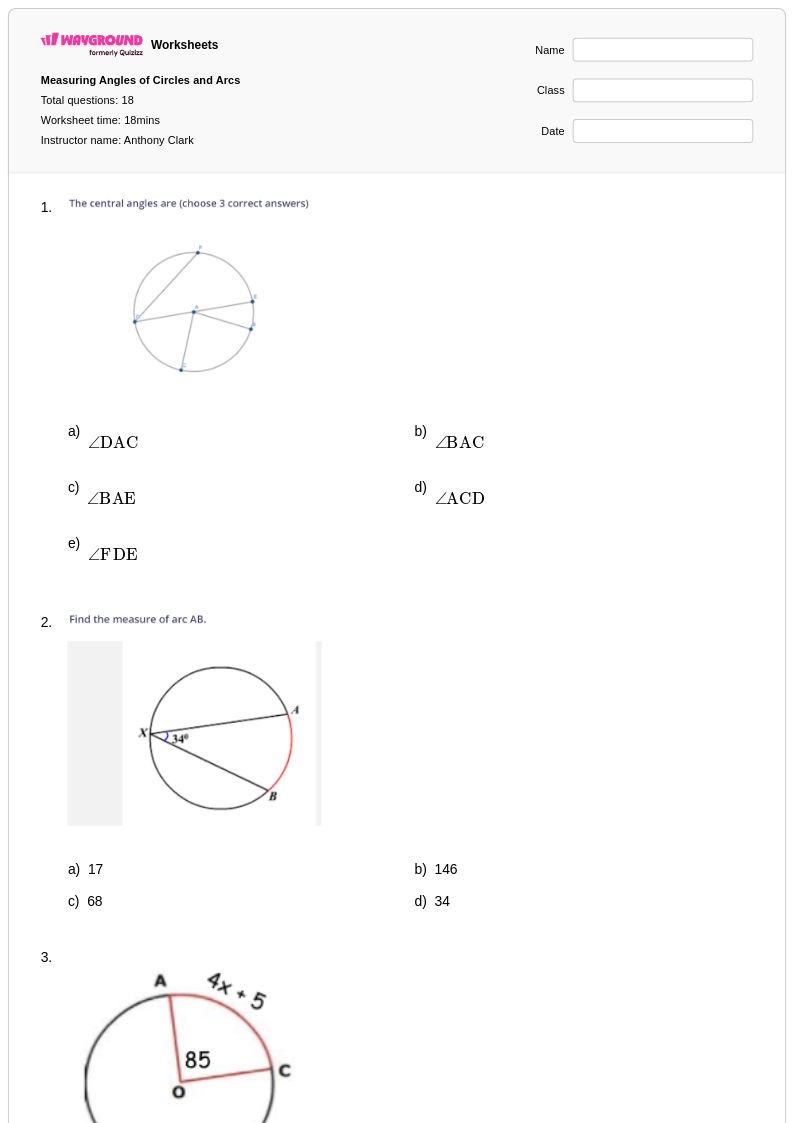
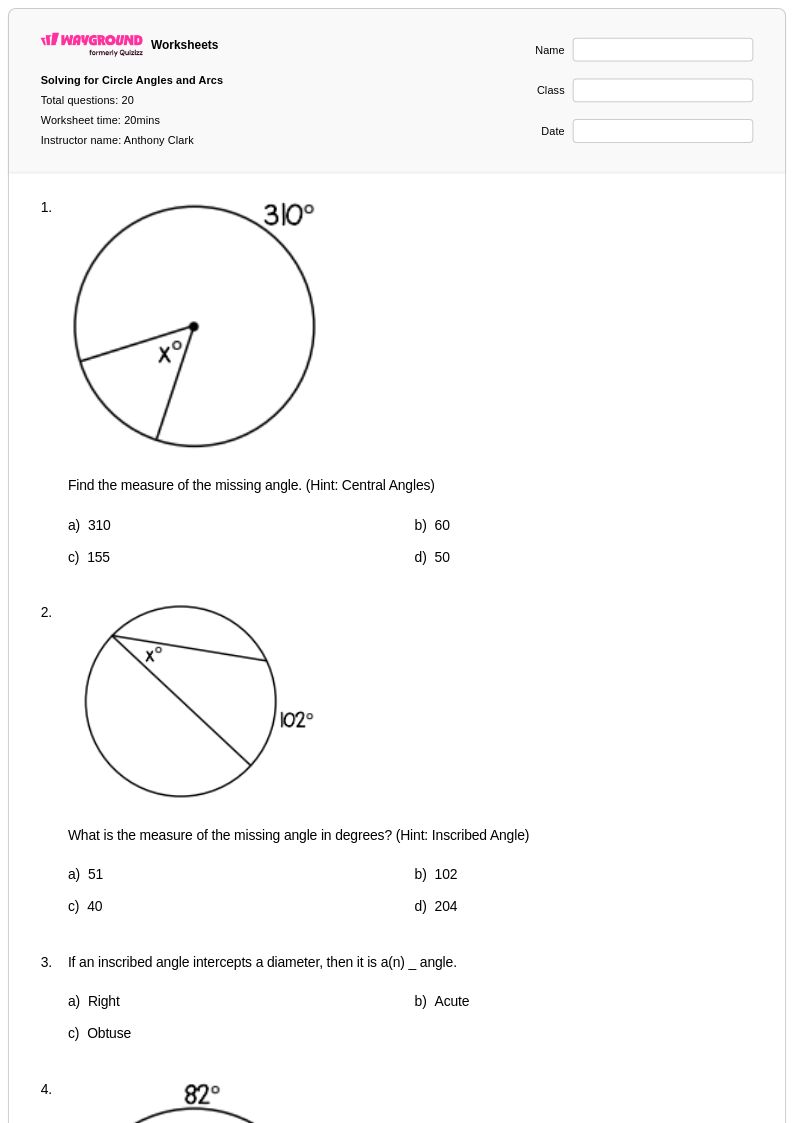
Start by establishing the relationship for central angles, where the angle measure is equal to the intercepted arc's measure. Then, introduce inscribed angles, emphasizing that their measure is exactly half the intercepted arc. Using dynamic geometry software can be very effective for showing students how the inscribed angle measure remains constant even as its vertex moves along the circle, as long as it subtends the same arc.
What exercises help students practice intercepted arcs?
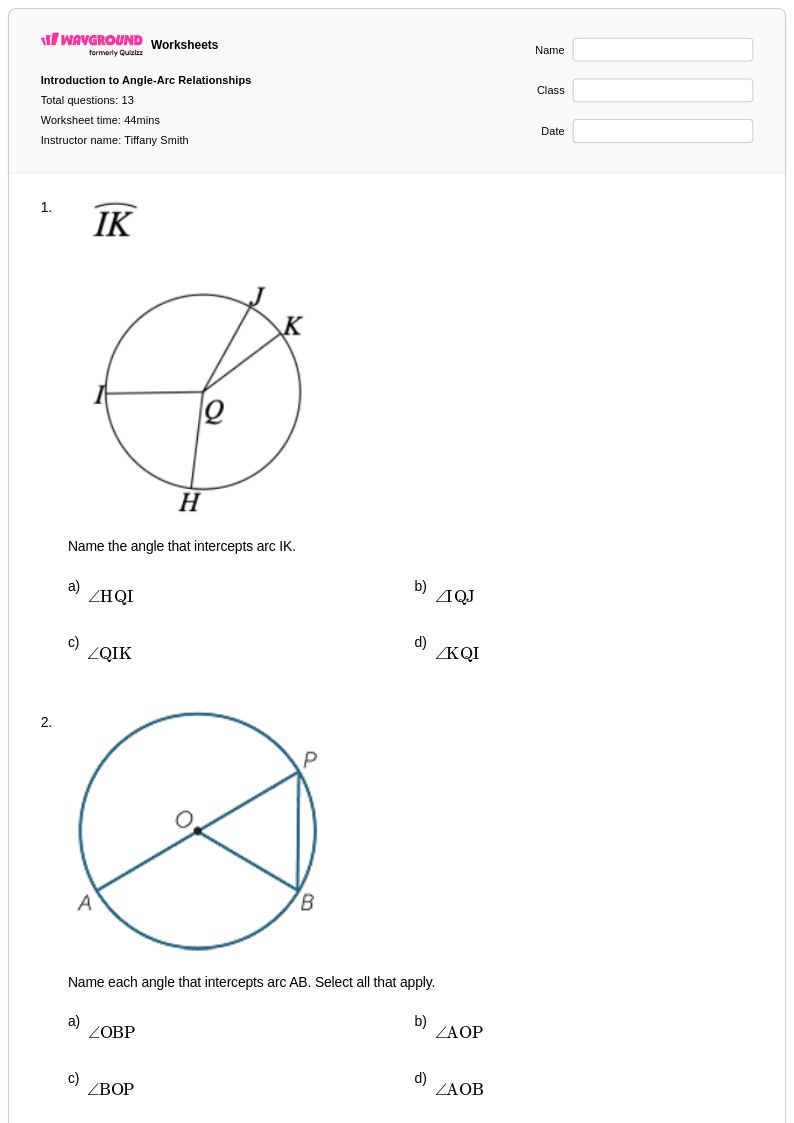
Effective practice progresses from simple identification to complex application. Begin with exercises where students identify the intercepted arc for a given angle. Then, move to calculating a missing angle from a known arc, and vice versa. Finally, introduce problems involving intersecting chords, secants, and tangents, which require students to apply multiple theorems in a single diagram.
What are the most common student errors with intercepted arcs?
A frequent mistake is confusing the inscribed angle theorem with the rule for central angles. Students often forget to halve the arc measure for an inscribed angle or incorrectly apply the half-measure rule to a central angle. Another common issue is misidentifying the correct intercepted arc, especially in complex diagrams with multiple intersecting lines.
How can I use this intercepted arcs worksheet with my class?
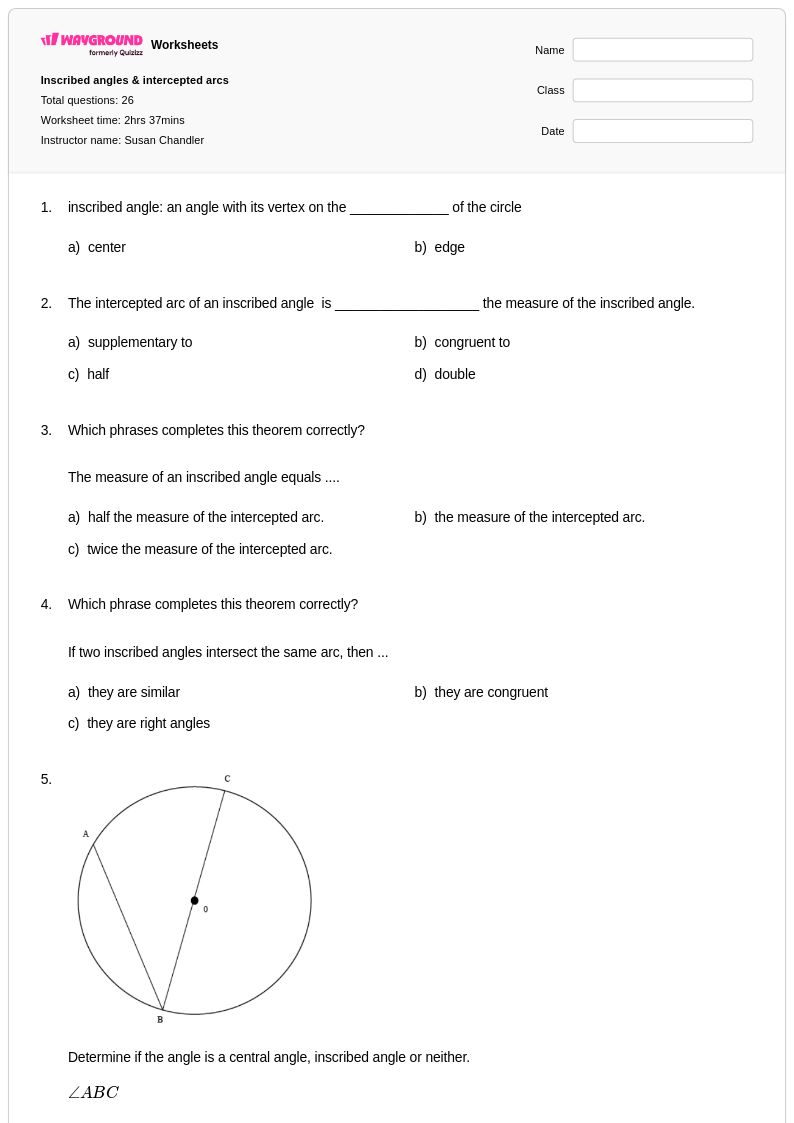
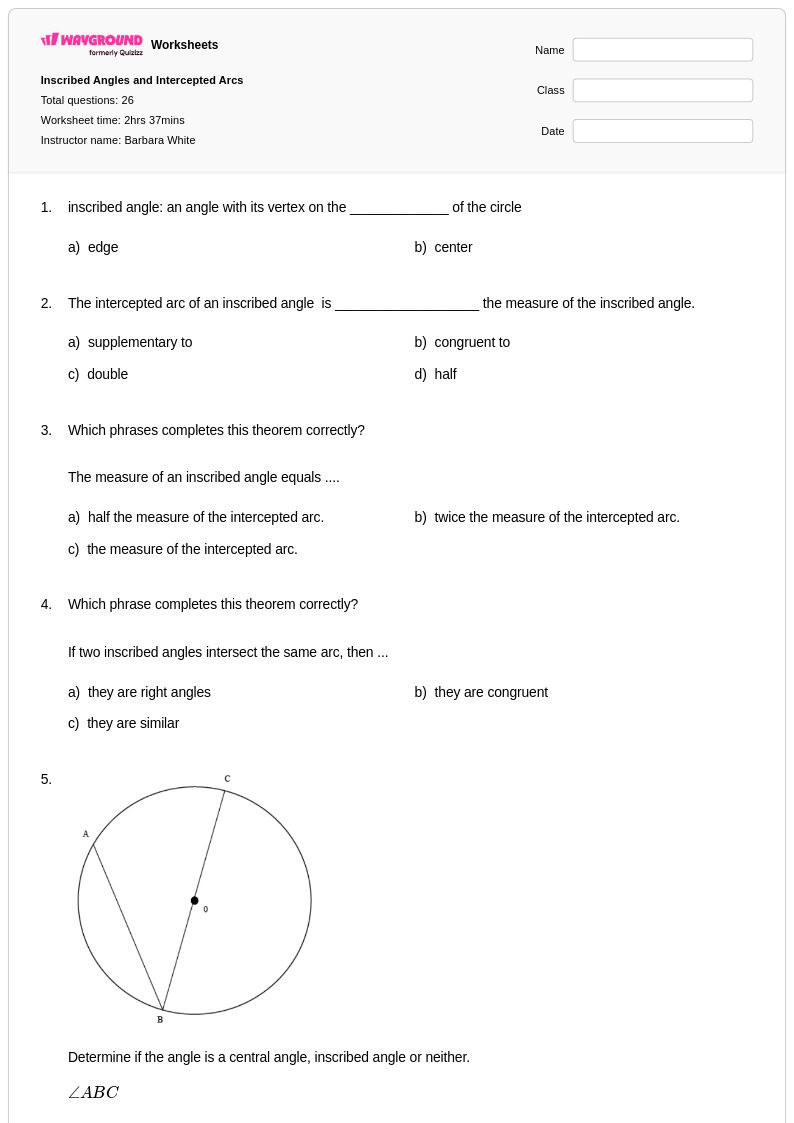
This worksheet is available as a printable PDF for hands-on practice or as a digital assignment on the Wayground platform. Every worksheet includes a complete answer key for efficient grading. For paper assignments, you can use the Wayground for Teachers app to scan and grade student work directly from your phone.
How do intercepted arcs fit into the Common Core math standards?
The Common Core State Standards for Geometry (CCSS-M) address this in the "Circles" (G-C) domain. Students first learn to identify and describe relationships among inscribed angles, radii, and chords. This worksheet directly supports the standard that requires students to understand the relationship between inscribed angles and their intercepted arcs, which is a prerequisite for proving properties of inscribed quadrilaterals.
How can I differentiate this topic for diverse learners?
For students needing support, use Wayground's "Reduced answer choices" feature on digital assignments to simplify multiple-choice questions. You can also provide a version of the worksheet with key theorems or formulas included at the top as a reference. For advanced learners, assign problems that involve algebraic expressions for angle and arc measures.