
20 Q
8th - 10th
10 Q
9th
7 Q
6th
50 Q
5th
12 Q
5th
20 Q
6th
20 Q
7th
13 Q
6th - Uni
20 Q
6th
25 Q
7th
10 Q
6th
20 Q
6th
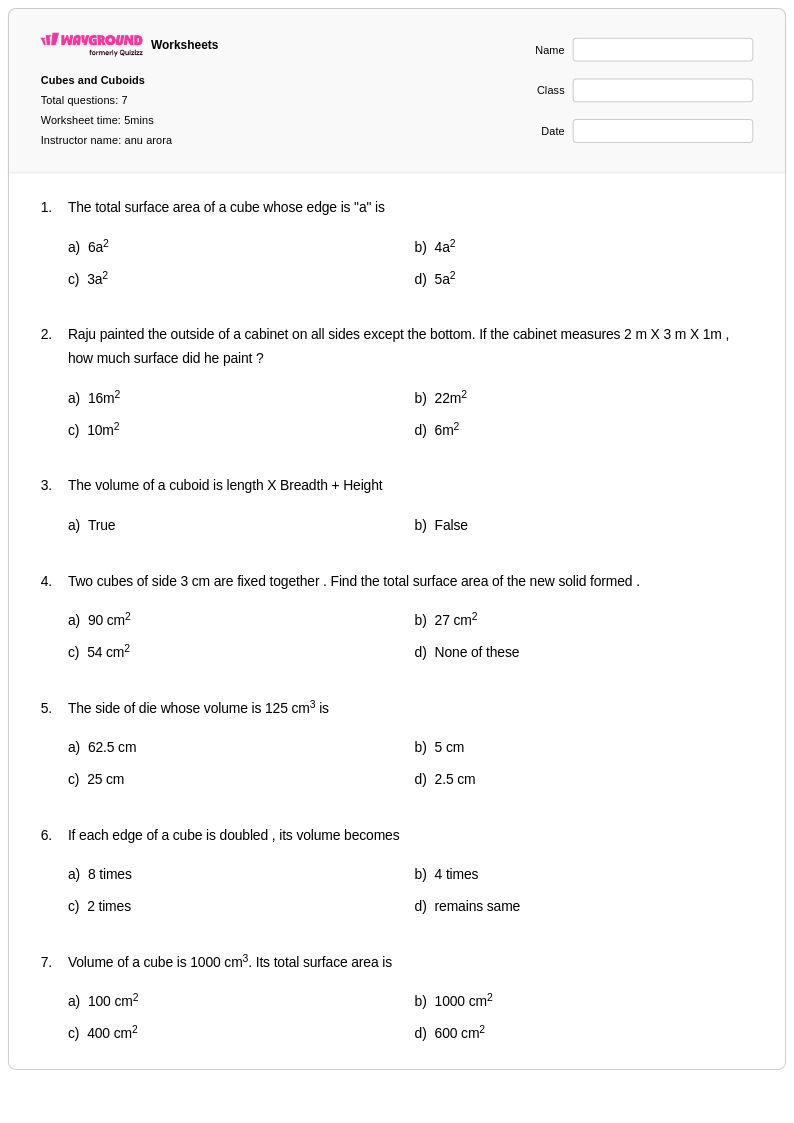
7 Q
8th
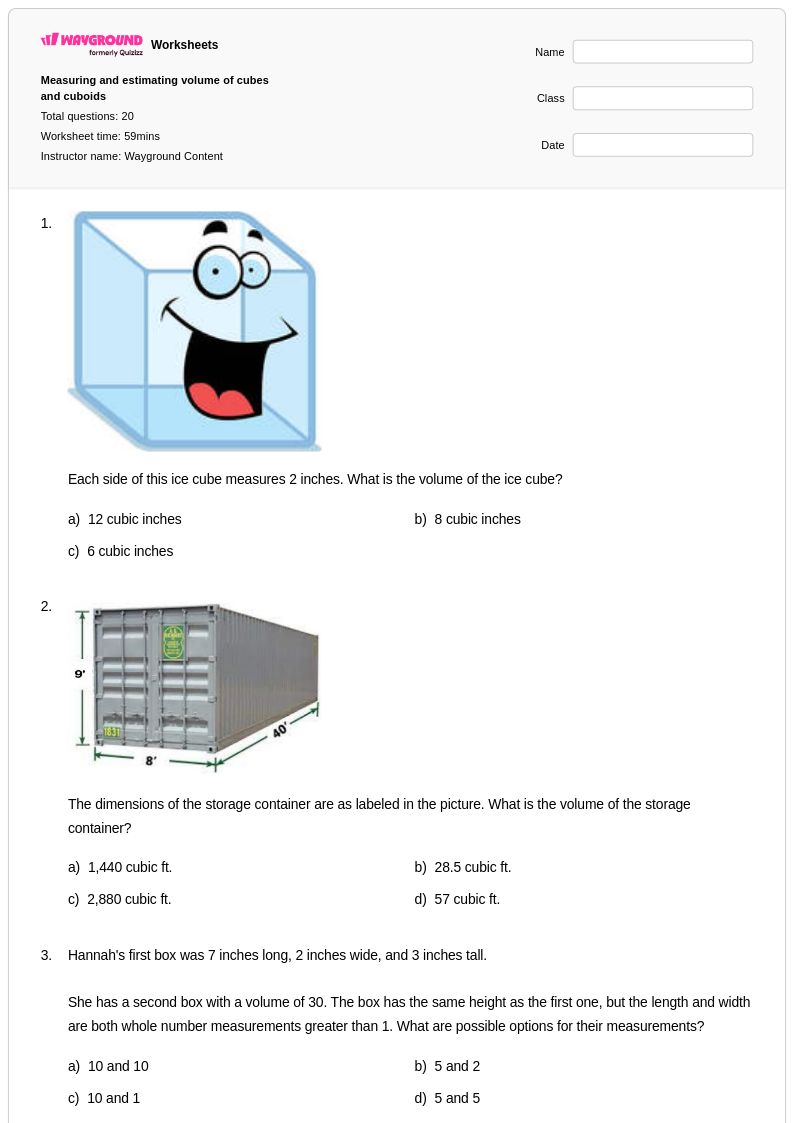
20 Q
5th - 6th
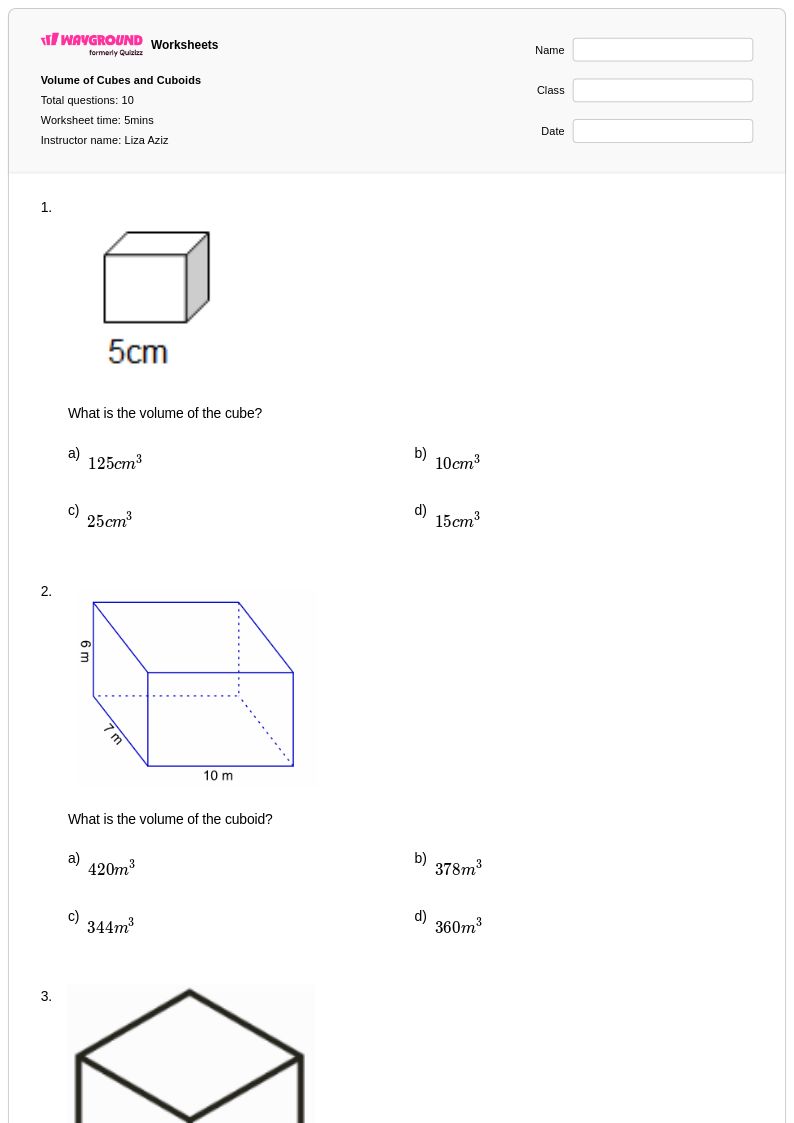
10 Q
6th
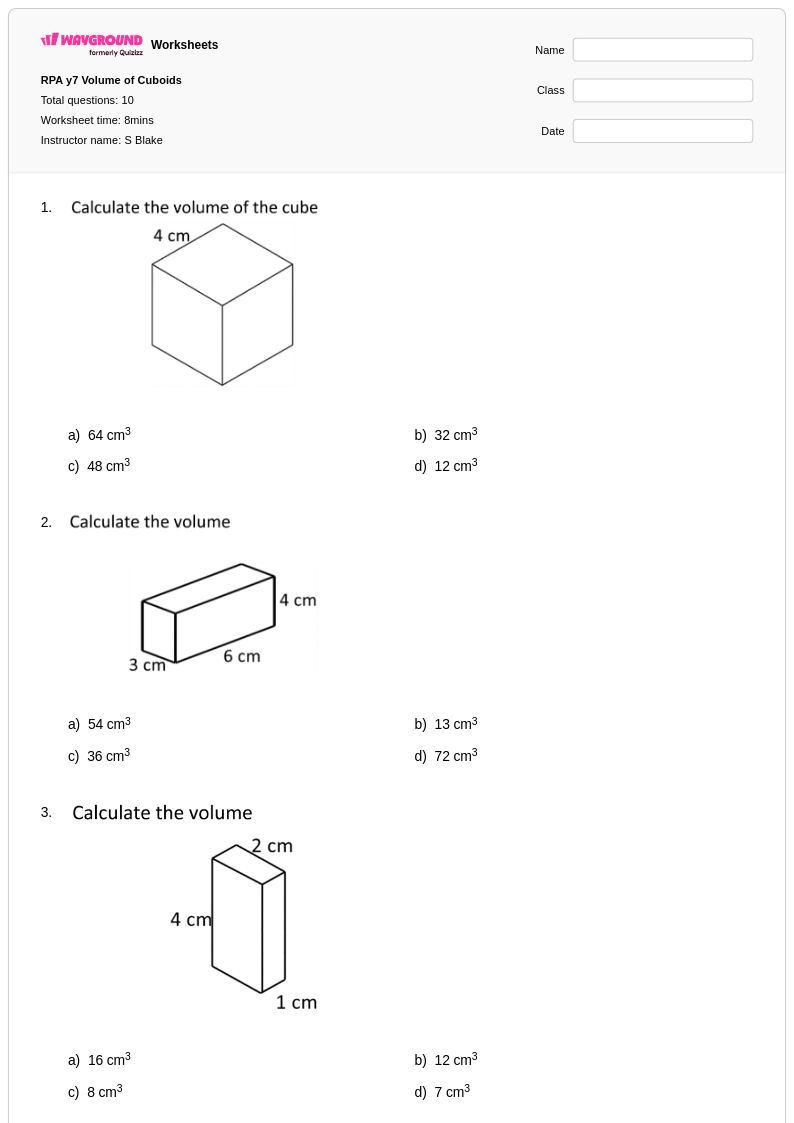
10 Q
7th
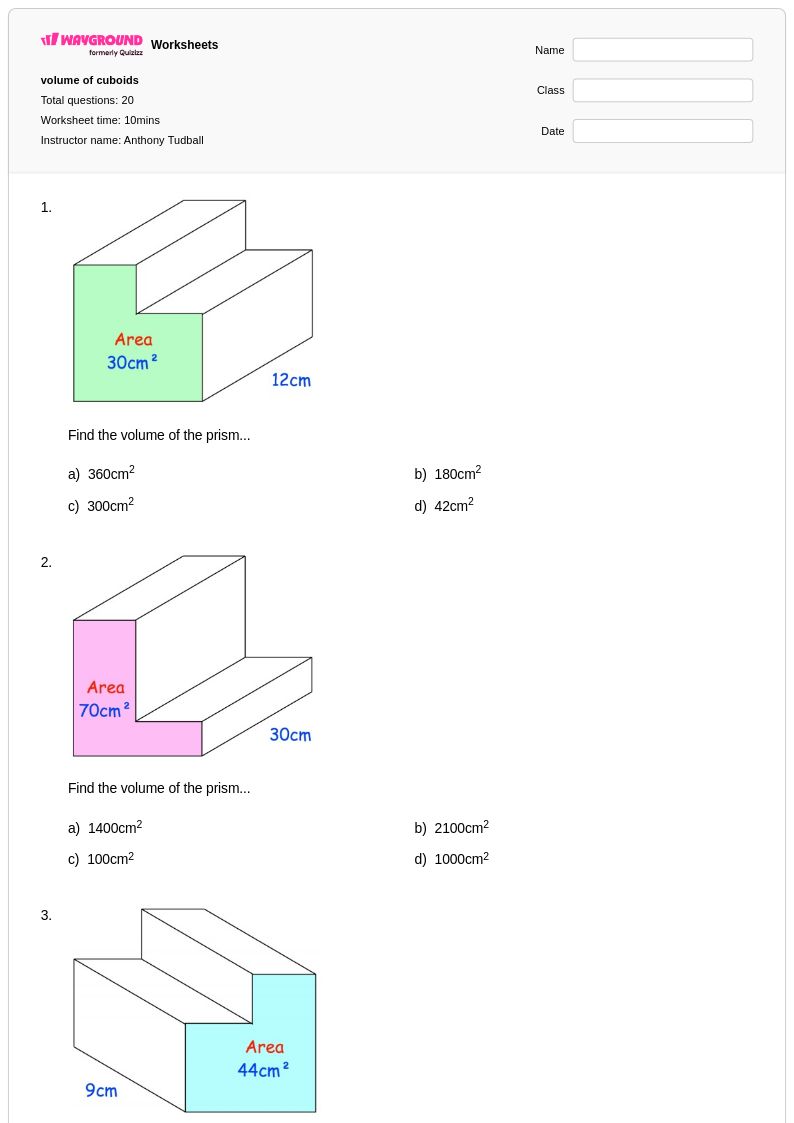
20 Q
8th
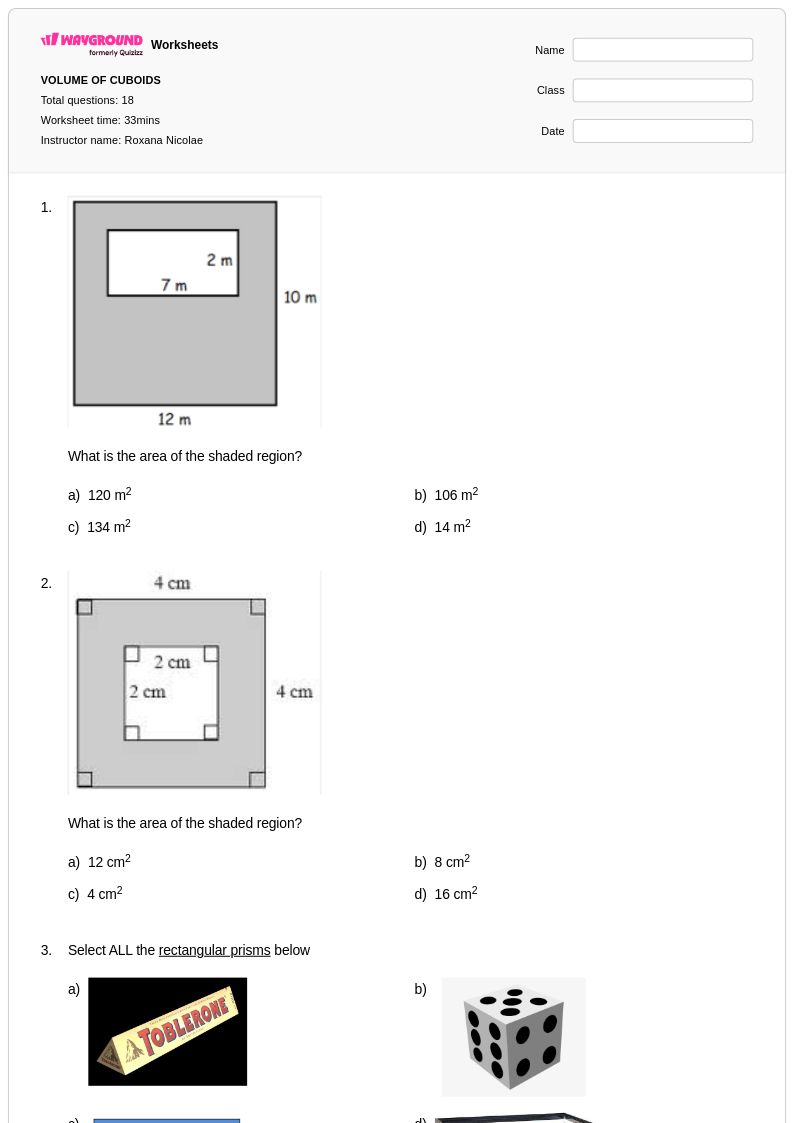
18 Q
7th
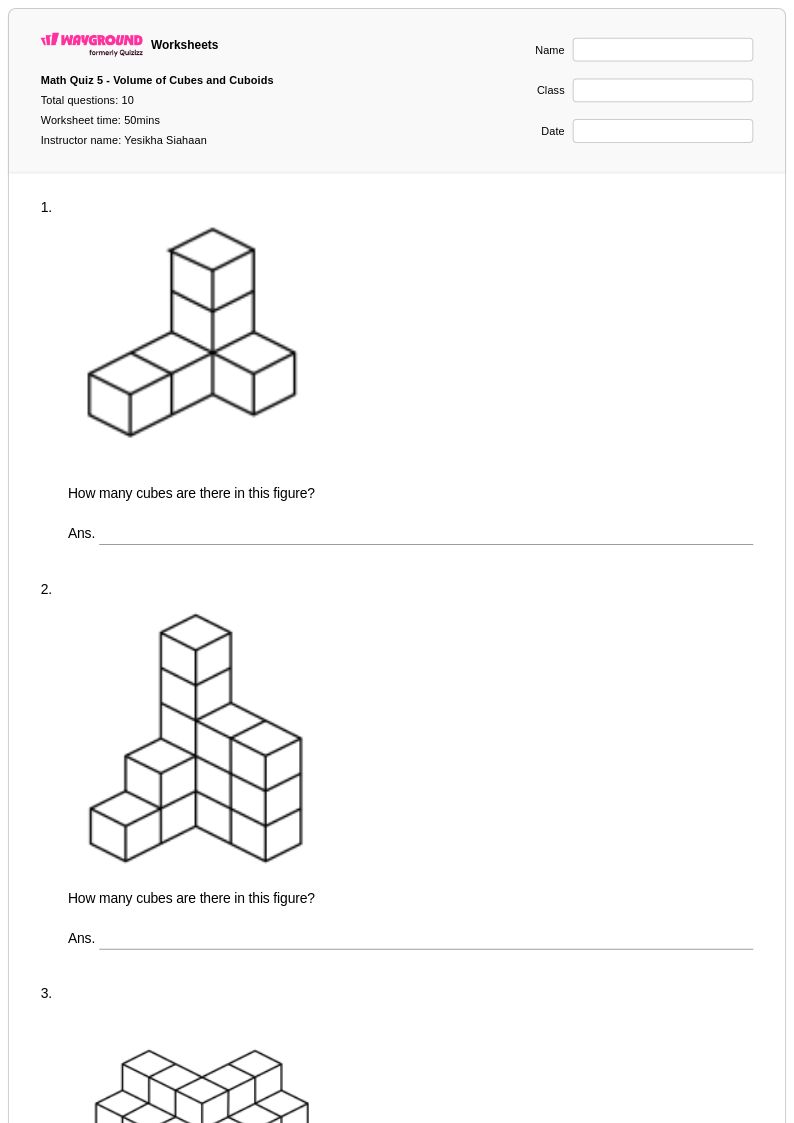
10 Q
5th
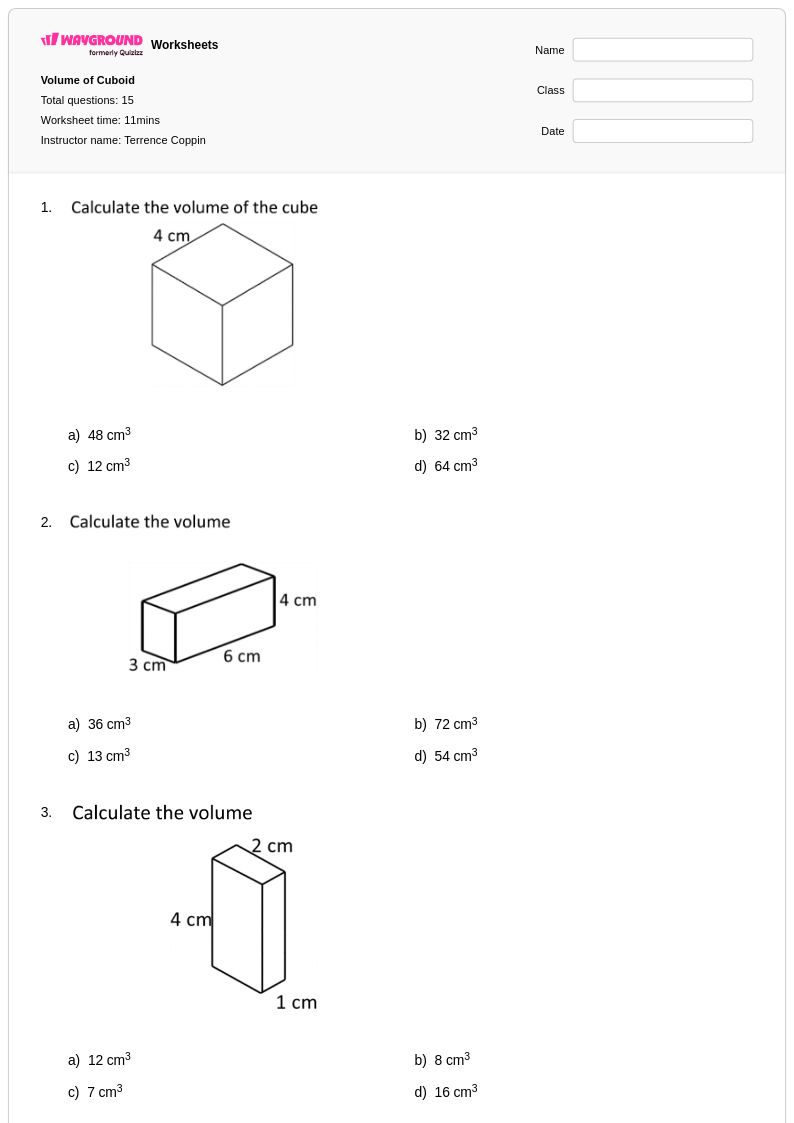
15 Q
10th
20 Q
6th
10 Q
6th - Uni
15 Q
6th
20 Q
7th
Explore Worksheets by Subjects
Explore printable Cuboids worksheets
Cuboids worksheets available through Wayground (formerly Quizizz) provide comprehensive practice opportunities for students to master three-dimensional geometric concepts involving rectangular prisms and their properties. These expertly designed worksheets strengthen essential skills including calculating surface area, volume, and perimeter of cuboids, identifying faces, edges, and vertices, and applying spatial reasoning to solve real-world problems involving rectangular solids. Each worksheet collection includes detailed answer keys and is available as free printable PDFs, making it convenient for educators to implement targeted practice problems that reinforce fundamental geometric principles. Students develop critical mathematical thinking as they work through systematic exercises that build understanding of how length, width, and height measurements relate to cuboid calculations and geometric relationships.
Wayground (formerly Quizizz) supports mathematics teachers with an extensive collection of millions of teacher-created cuboid worksheets that streamline lesson planning and differentiated instruction. The platform's robust search and filtering capabilities allow educators to quickly locate resources aligned with specific learning standards and student ability levels, while customization tools enable teachers to modify existing worksheets or create targeted practice sets for remediation and enrichment purposes. These cuboid worksheet collections are available in both printable and digital formats, including downloadable PDFs, providing flexibility for classroom use, homework assignments, or independent study sessions. Teachers can efficiently address diverse learning needs by selecting from varied problem types and difficulty levels, ensuring that all students receive appropriate skill practice in three-dimensional geometry concepts while maintaining engagement through carefully structured mathematical challenges.
FAQs
How do I teach students about cuboids?
What exercises help students practice cuboids?
What mistakes do students commonly make when working with cuboids?
How can I use Wayground cuboids worksheets in class?
How do cuboids fit into the Common Core math progression?
How can I differentiate cuboids practice for a mixed-ability class?