
10 Q
7th
10 Q
6th
20 Q
7th
10 Q
6th - Uni
15 Q
4th - 7th
8 Q
6th - 8th
20 Q
6th - Uni
8 Q
6th - 10th
20 Q
6th - Uni
12 Q
7th
14 Q
5th - 6th
12 Q
7th
7 Q
6th
20 Q
7th - Uni
10 Q
8th
20 Q
6th - Uni
11 Q
6th
20 Q
6th - Uni
15 Q
6th - Uni
16 Q
6th
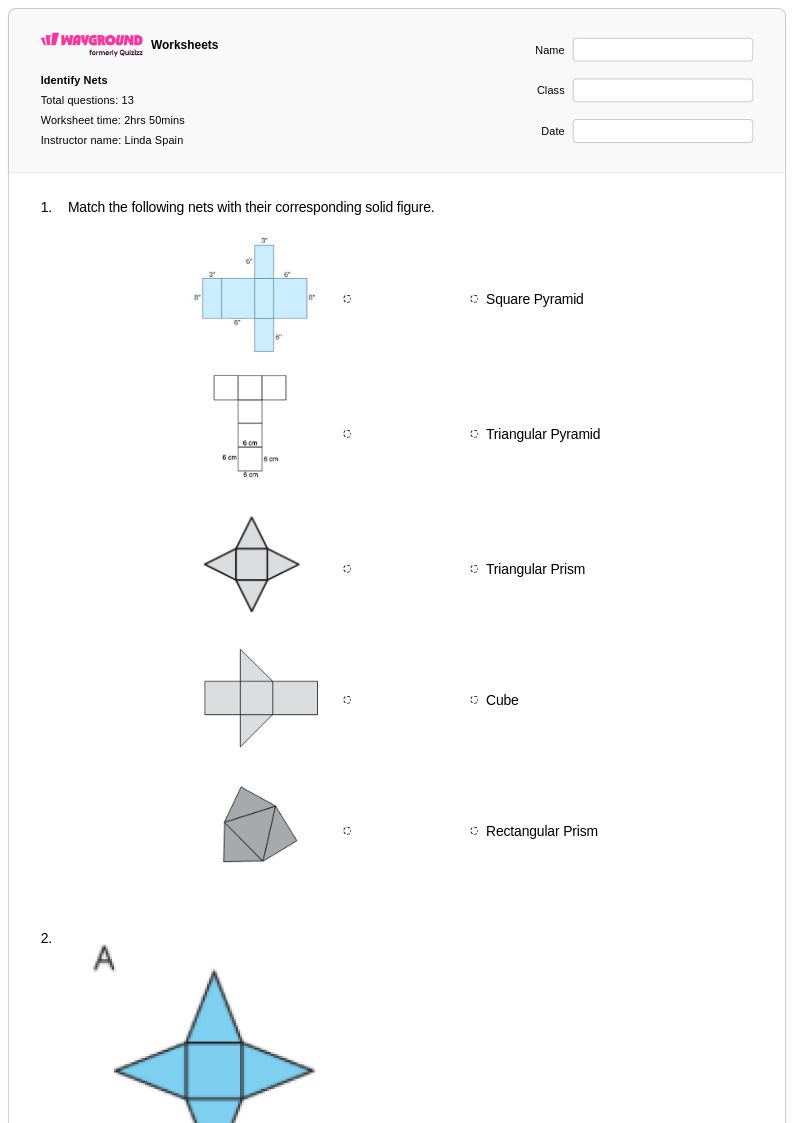
13 Q
6th
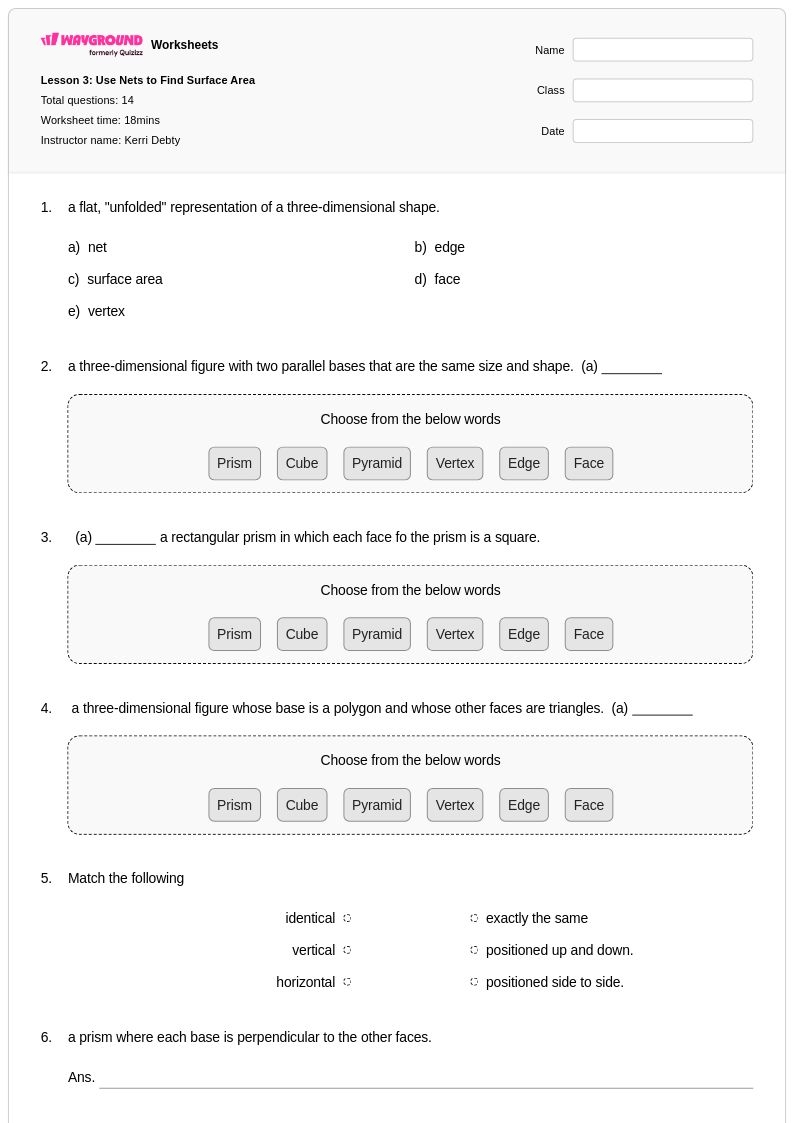
14 Q
6th
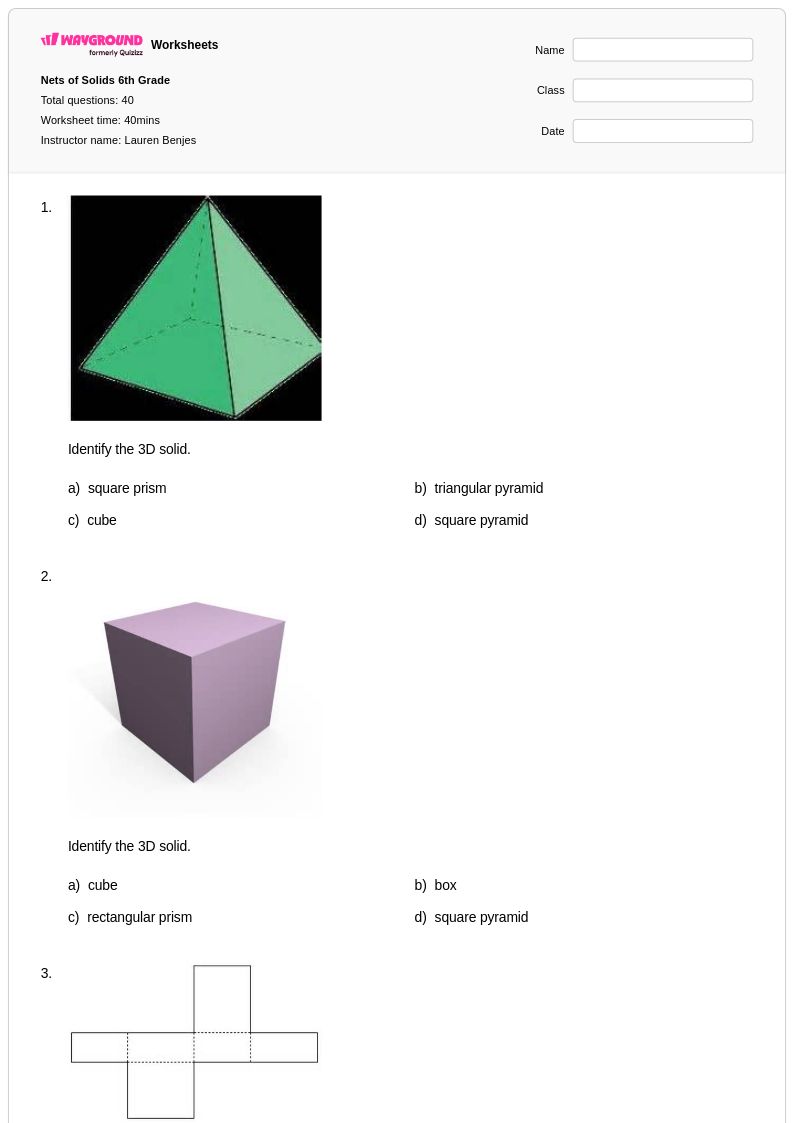
40 Q
6th
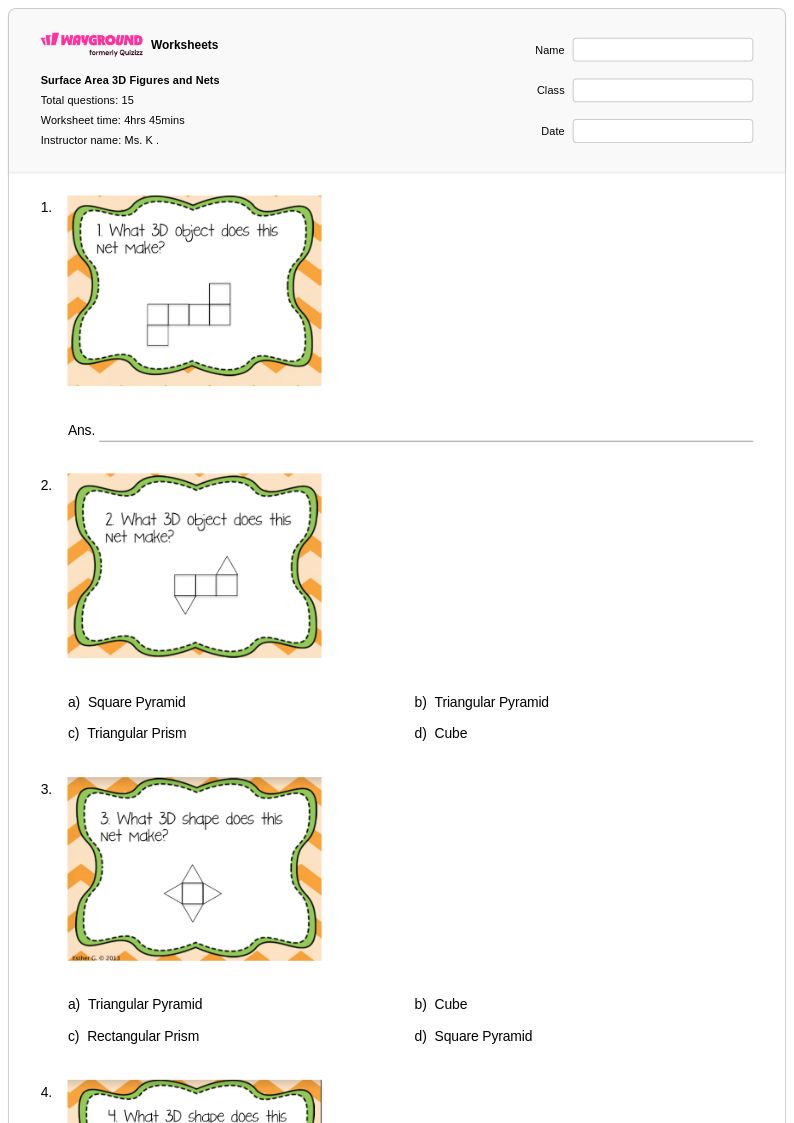
15 Q
6th
Explore Worksheets by Subjects
Explore printable Nets of 3d Figures worksheets
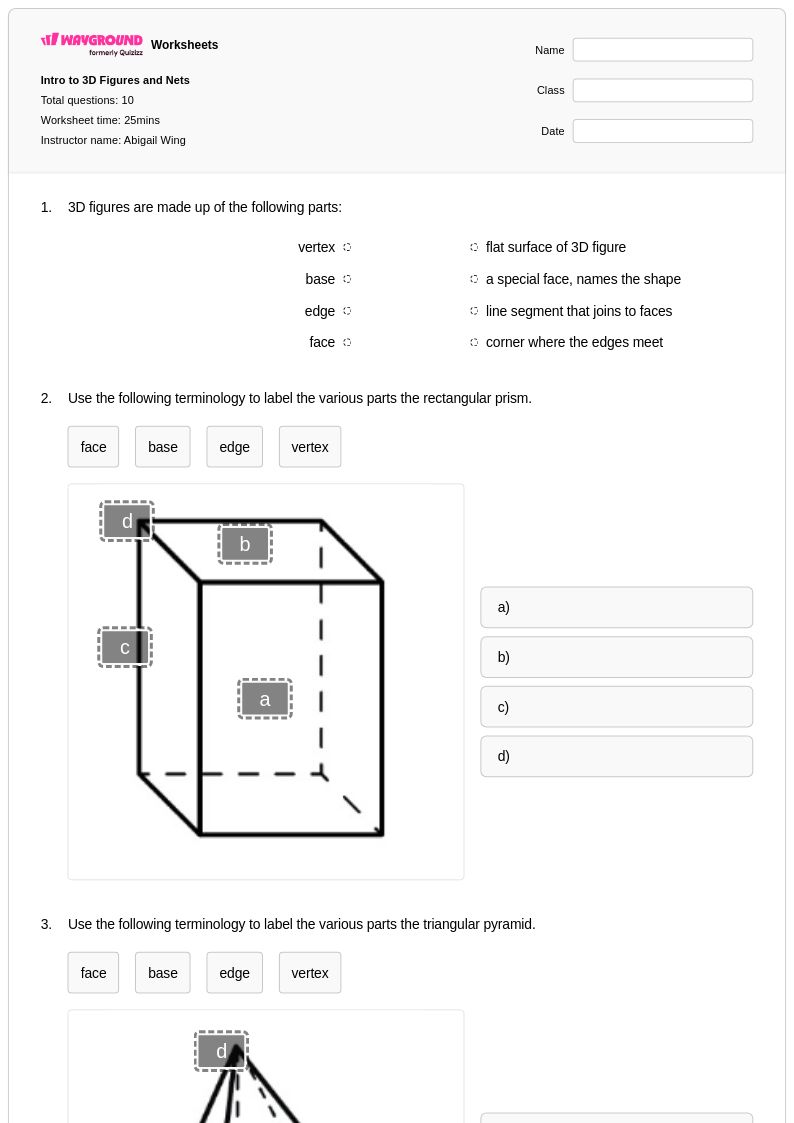
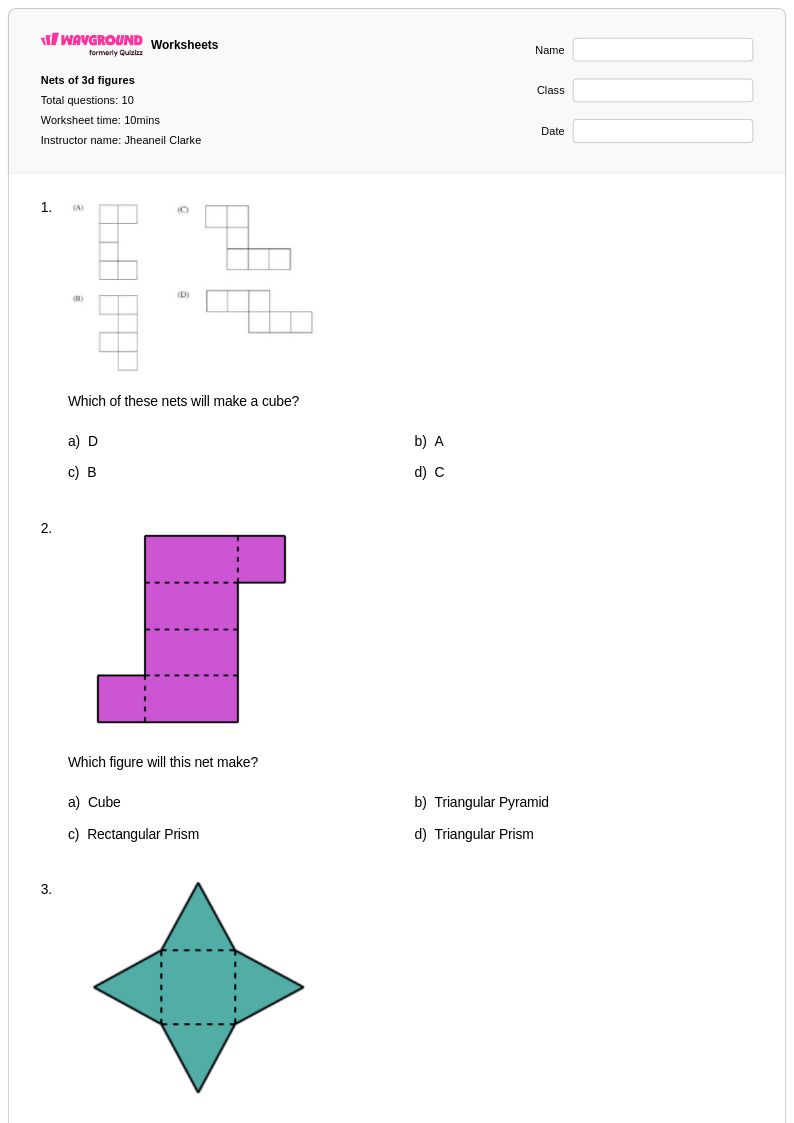
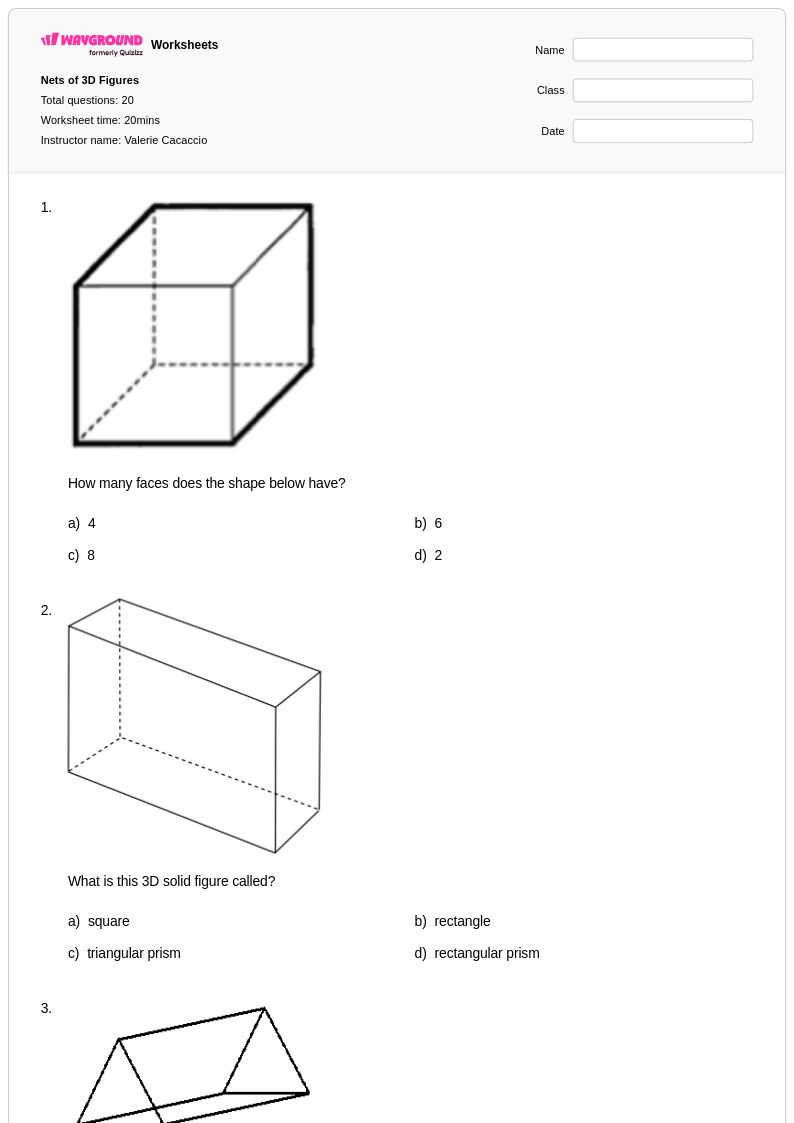
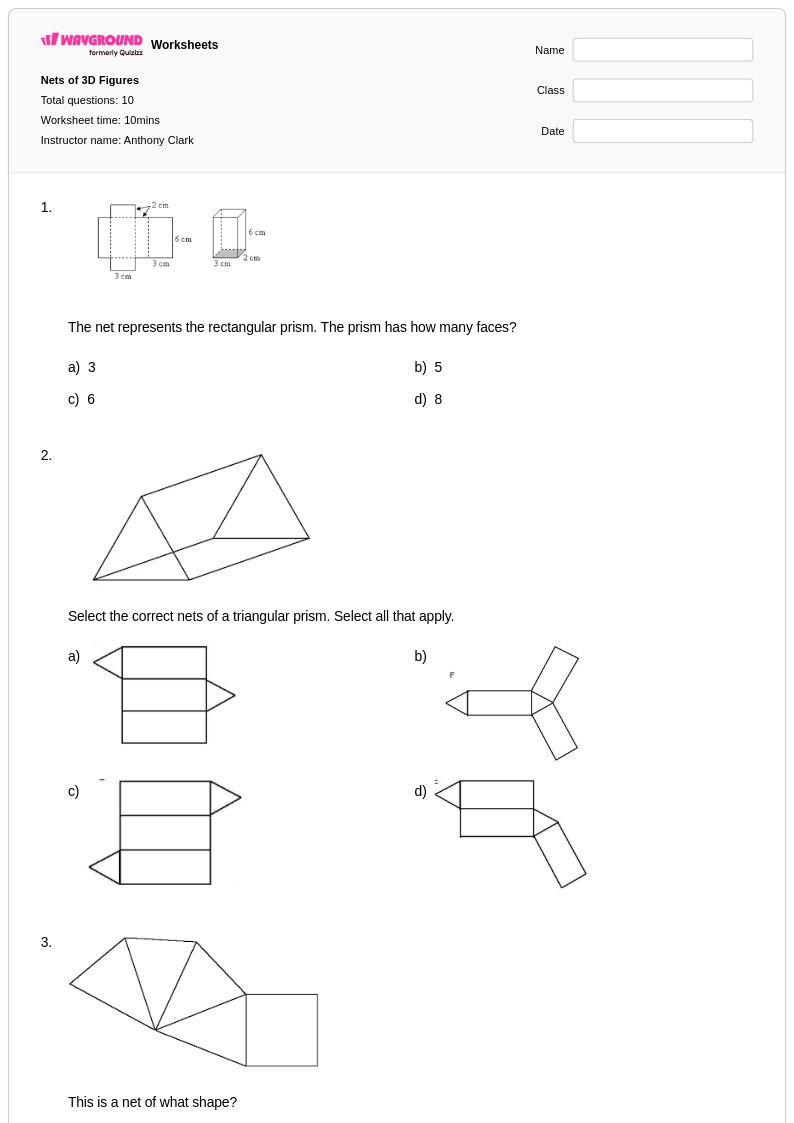
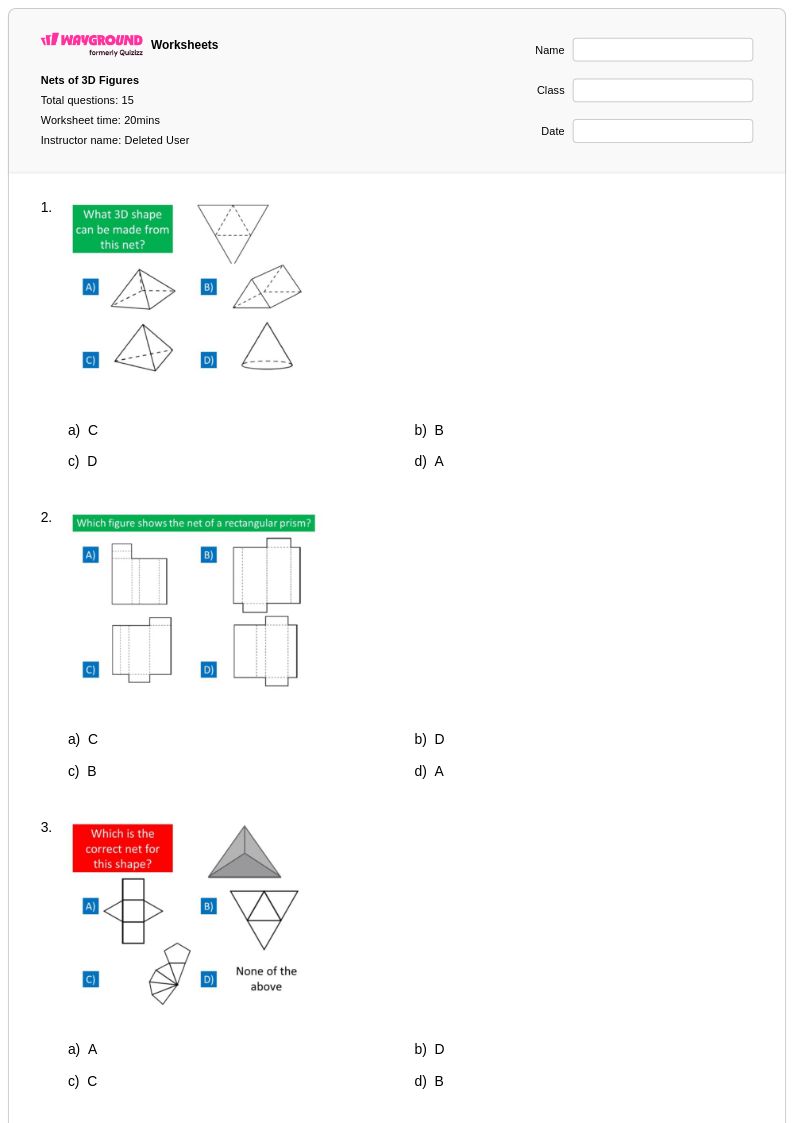
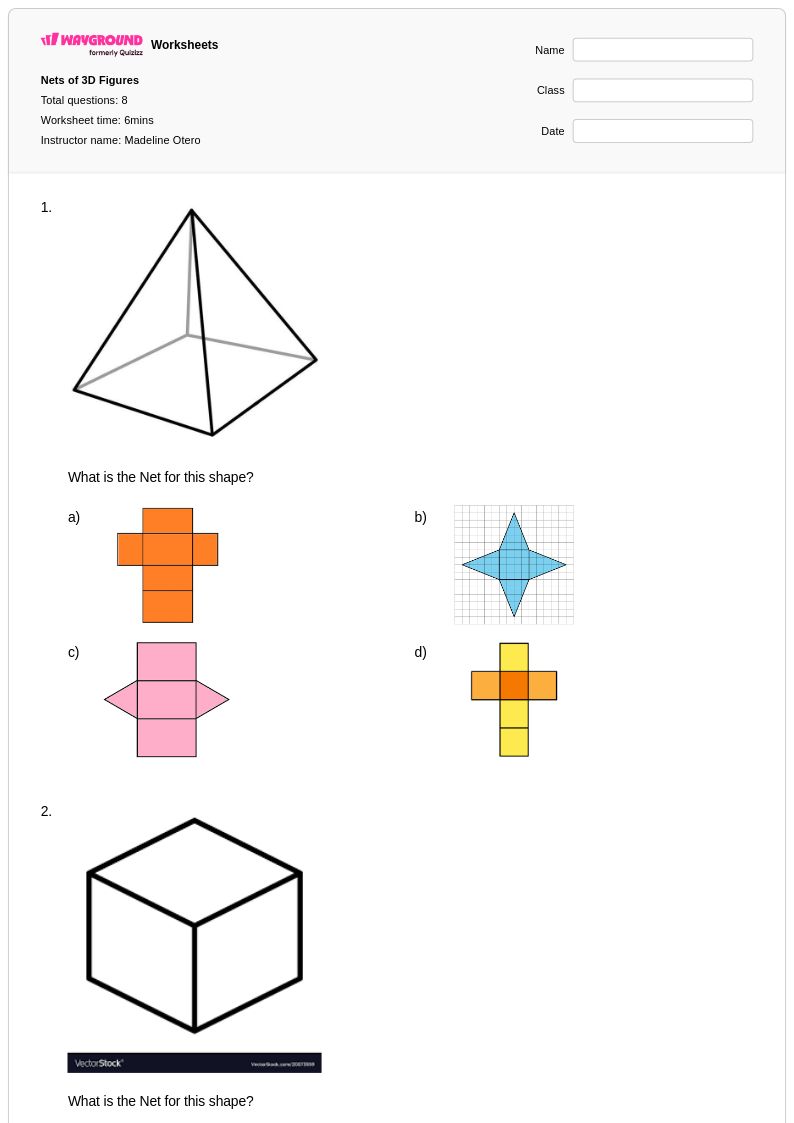
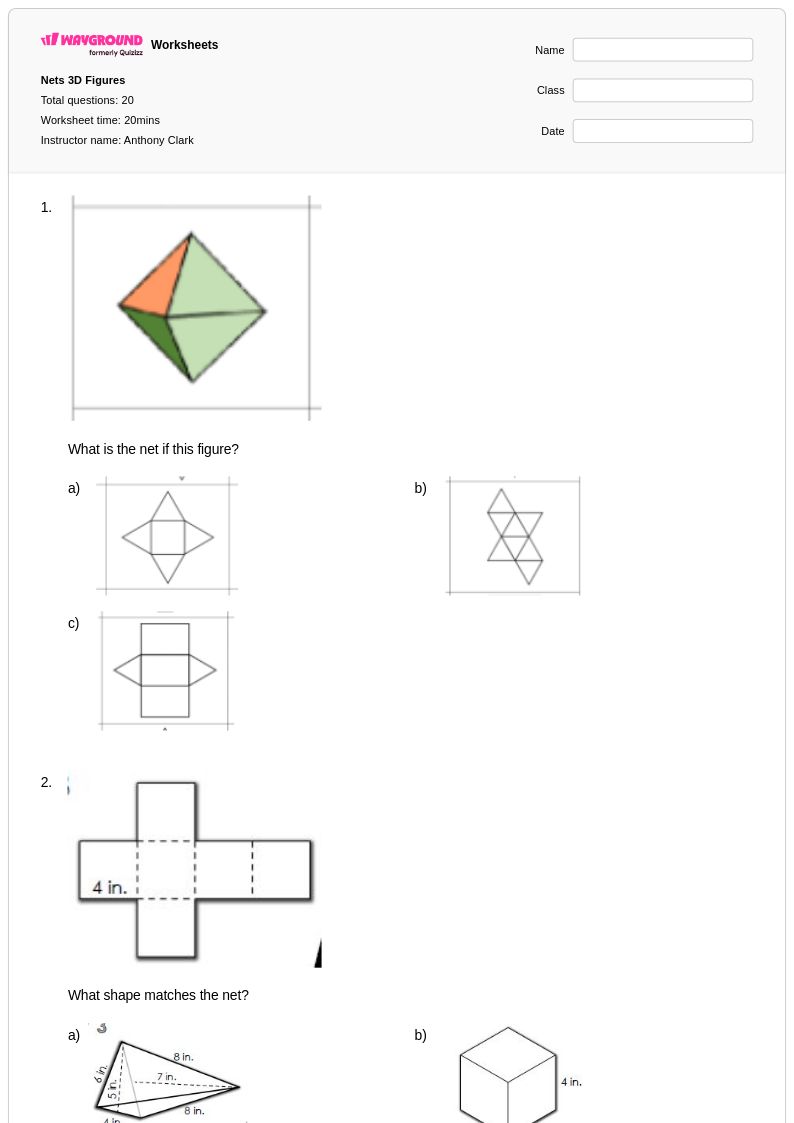
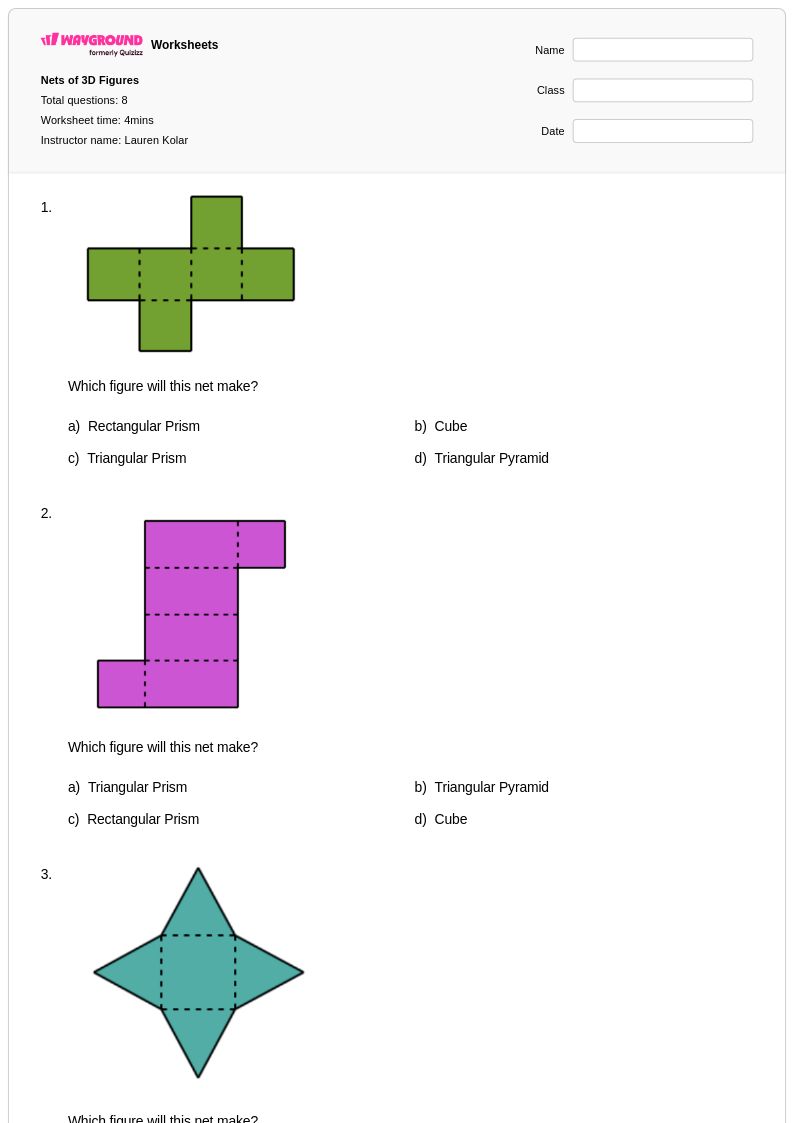
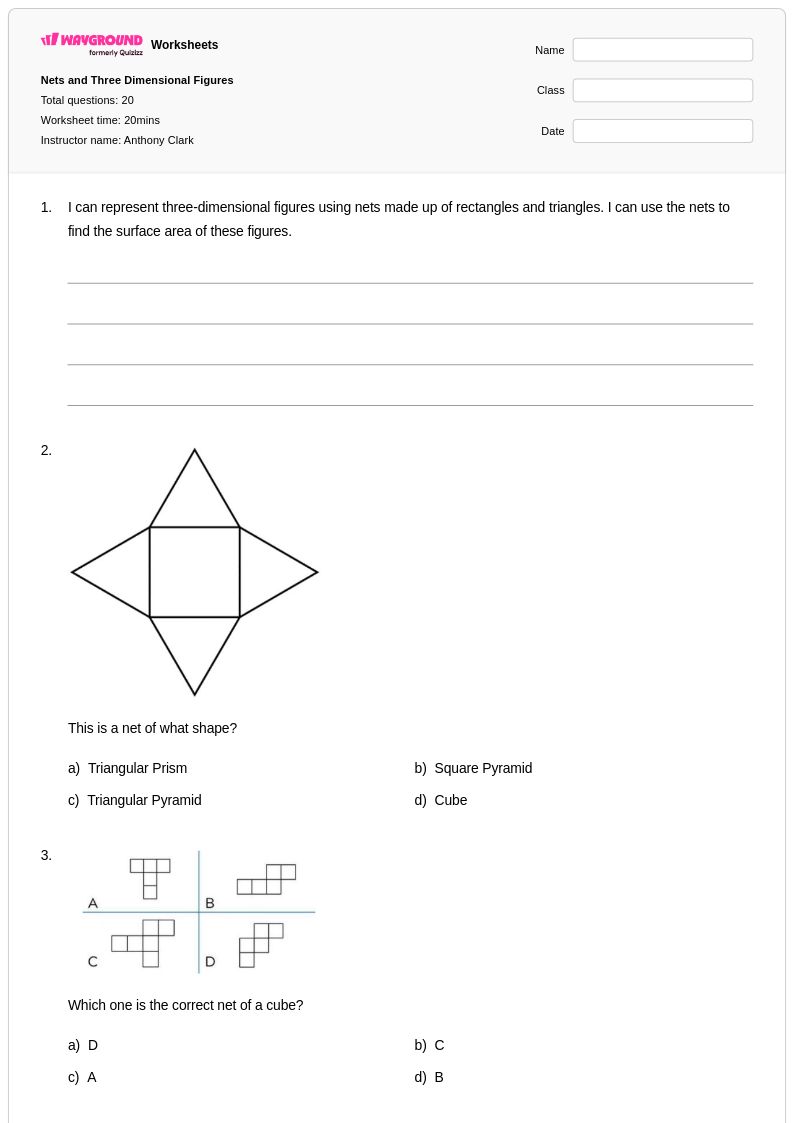
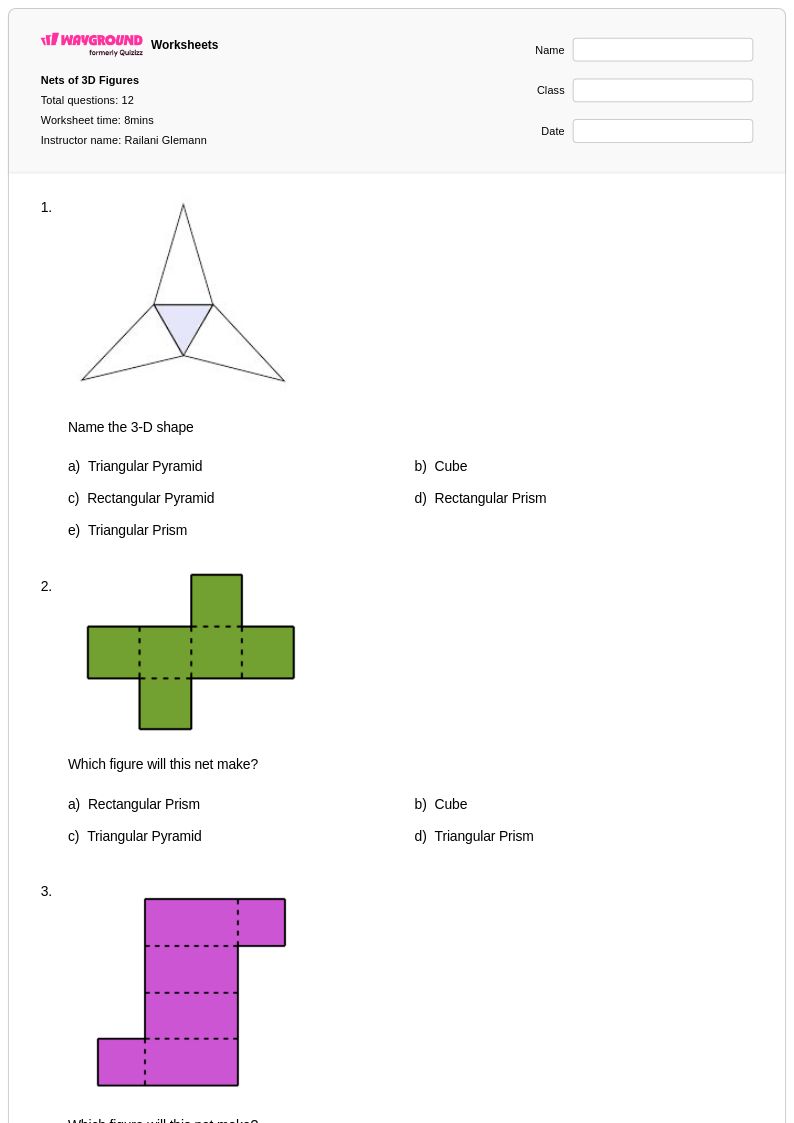
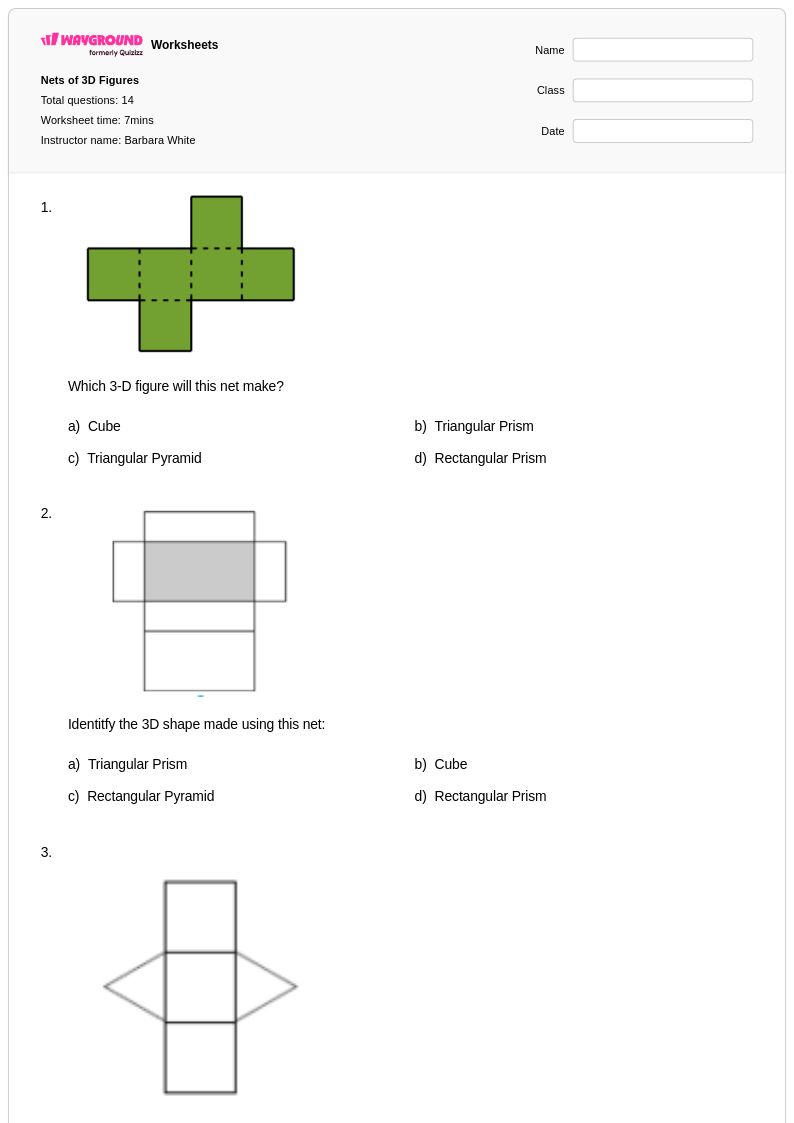
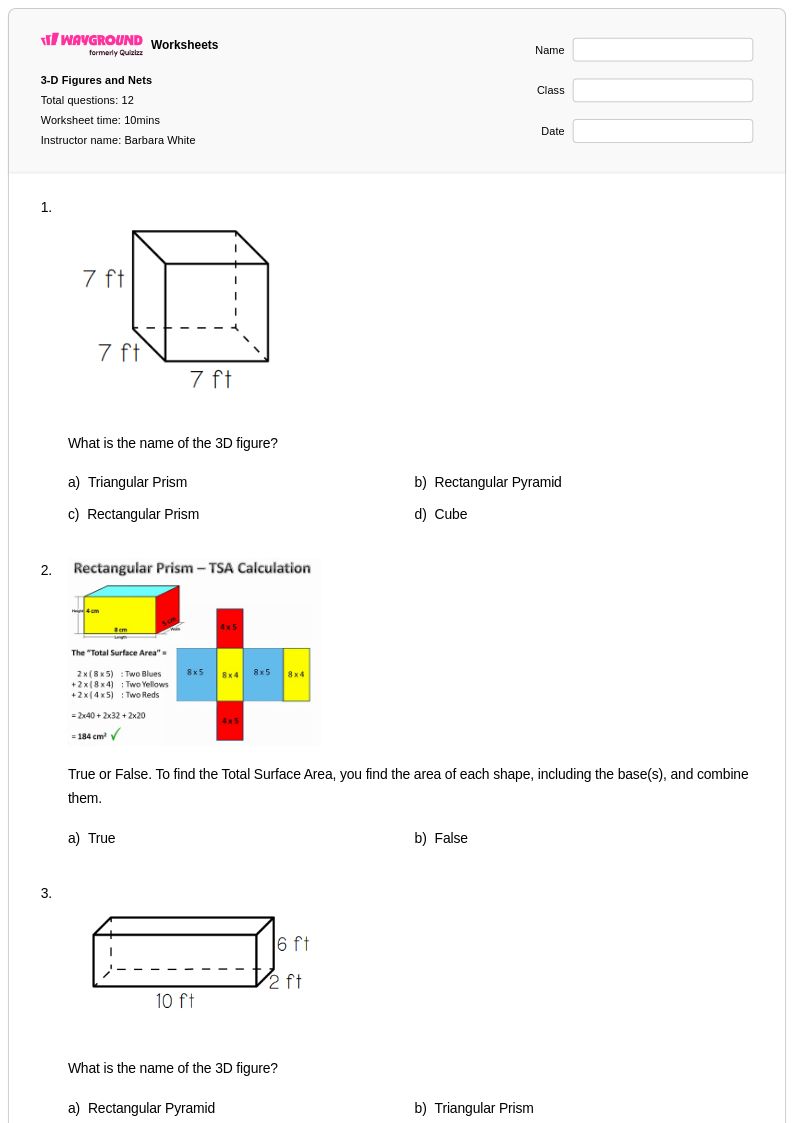
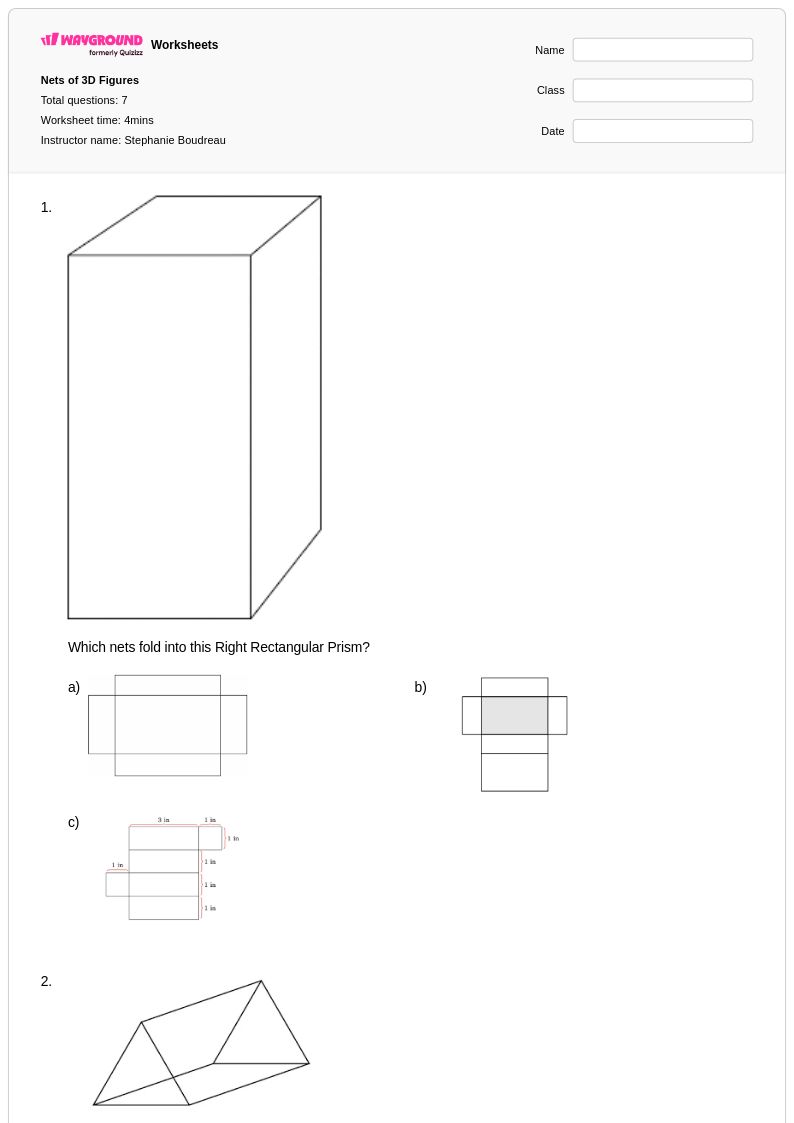
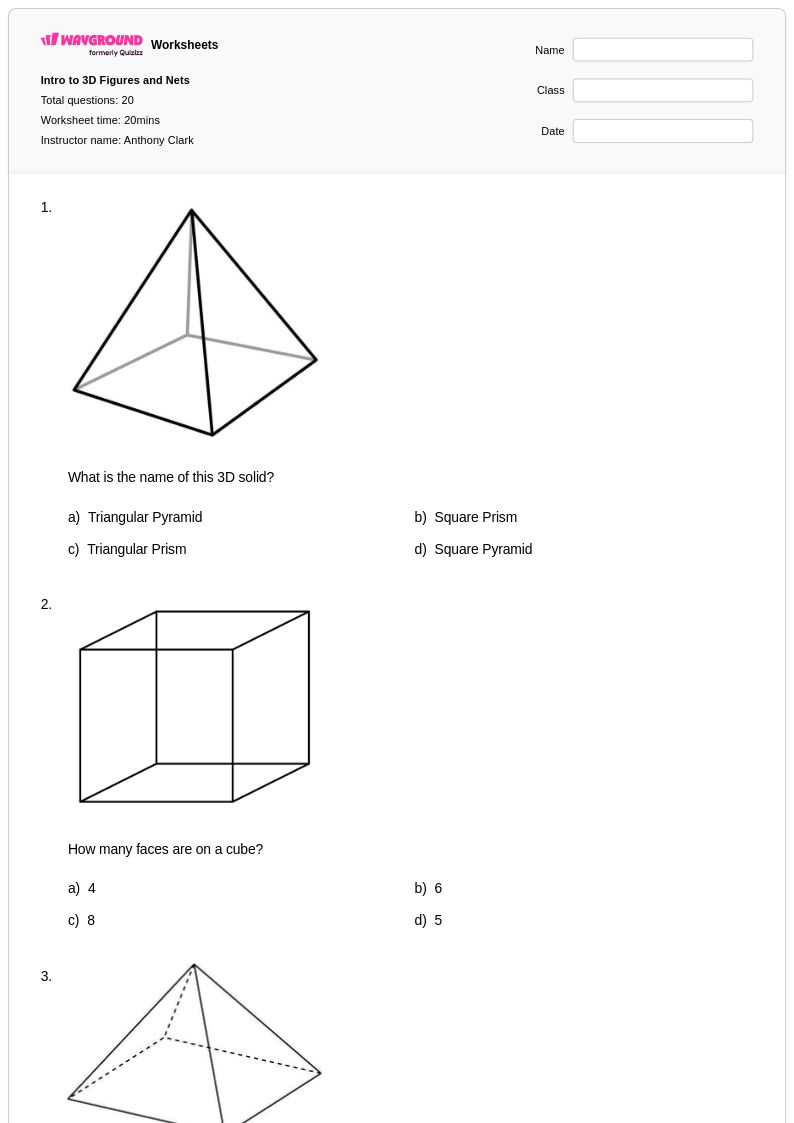
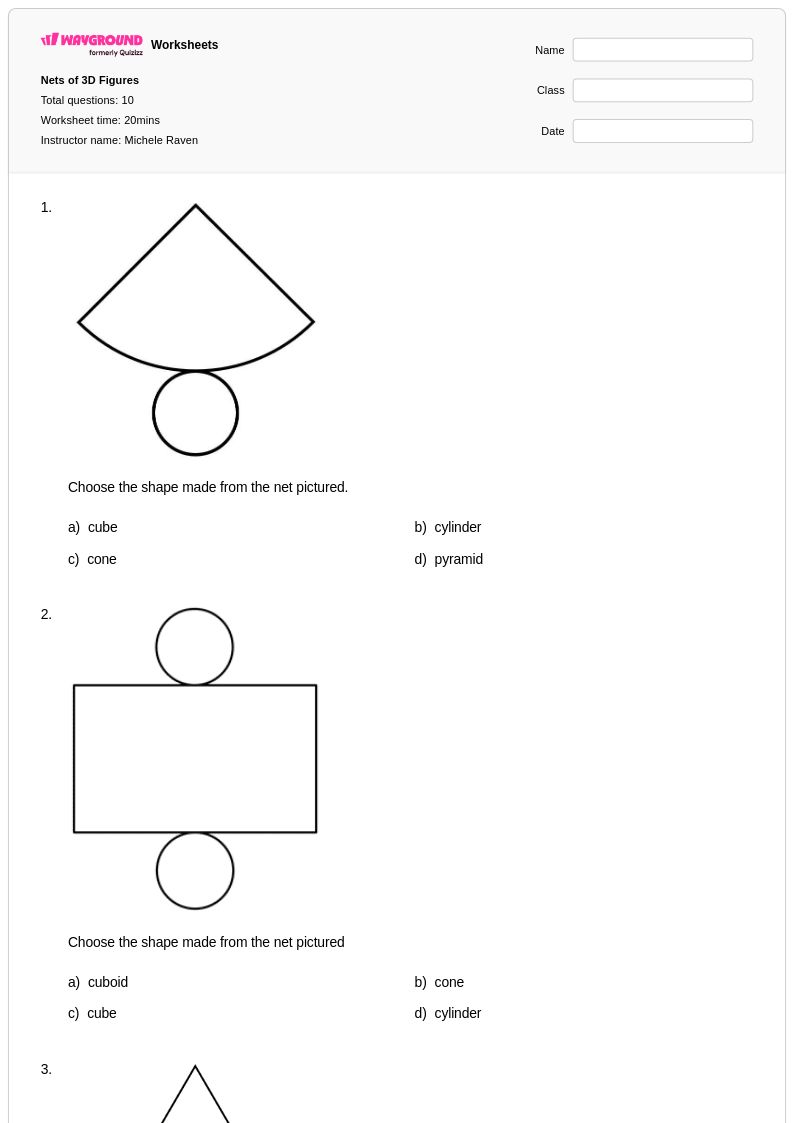
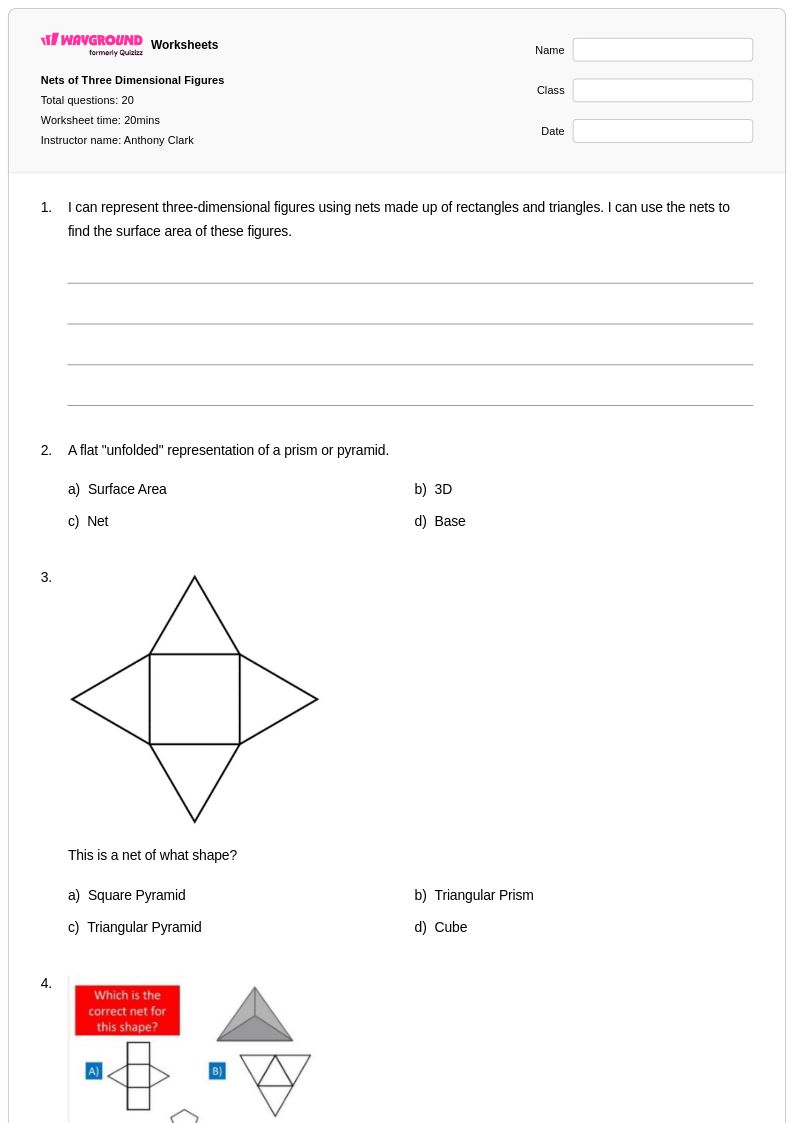
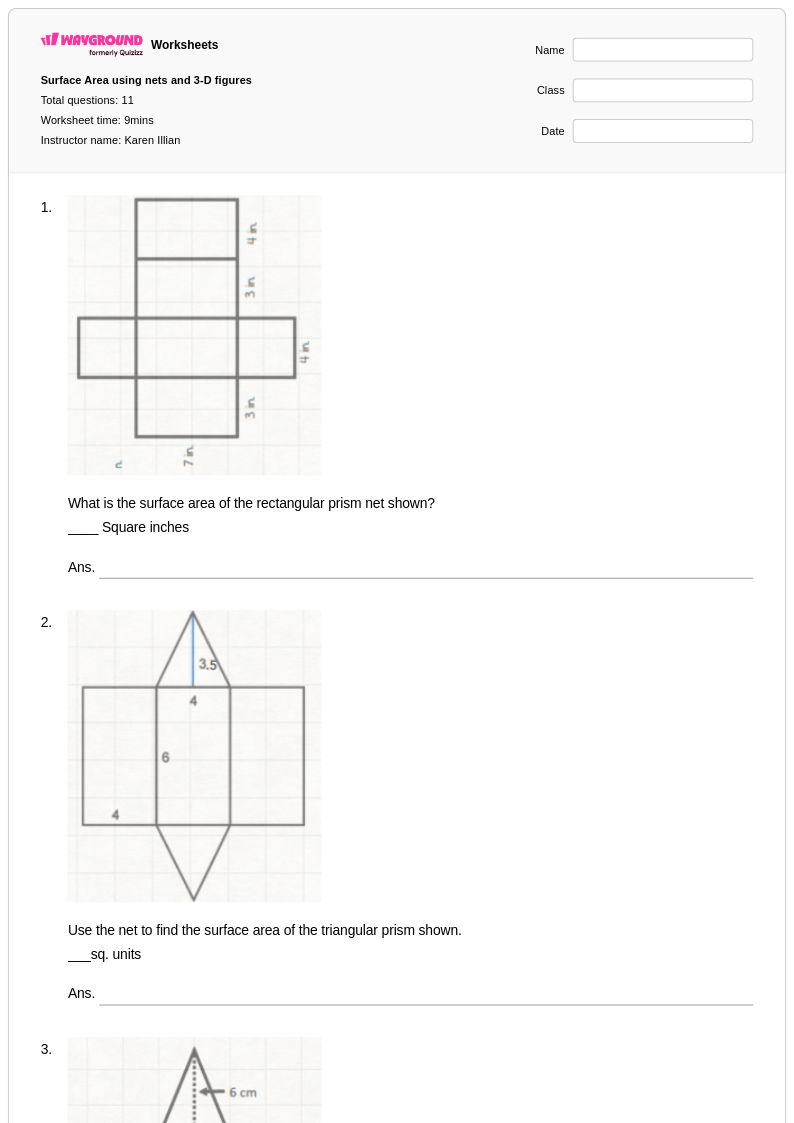
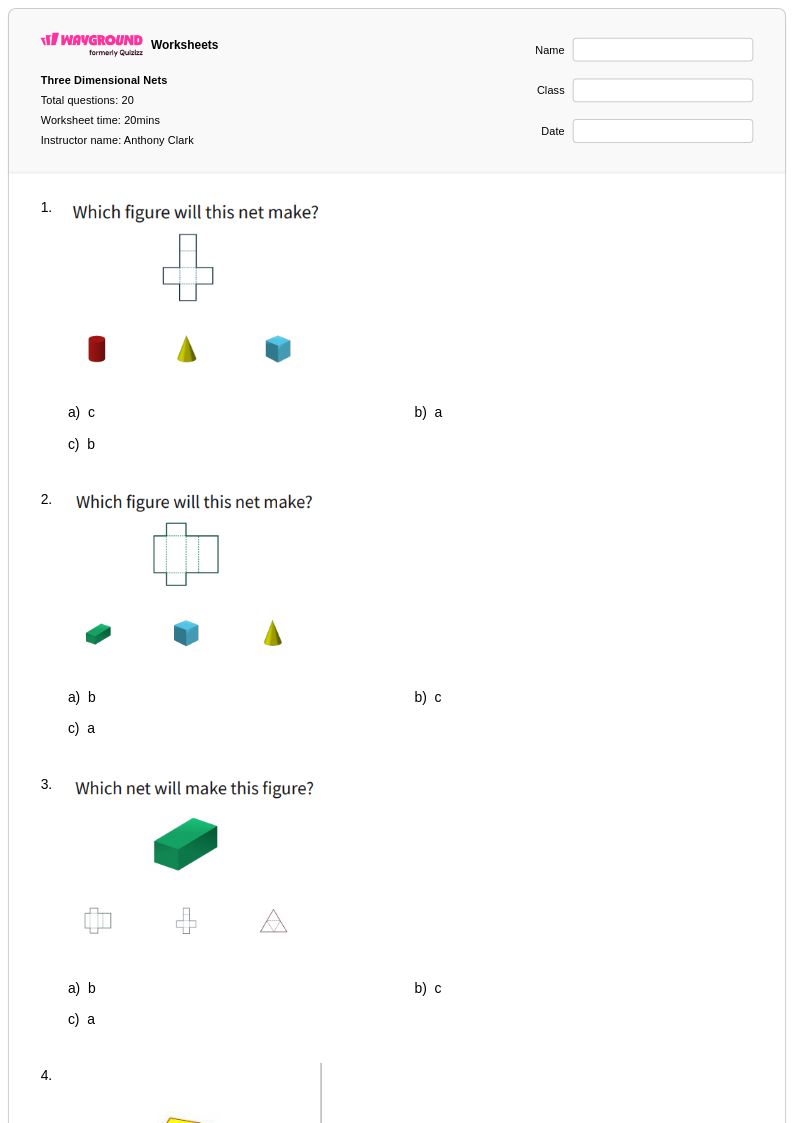
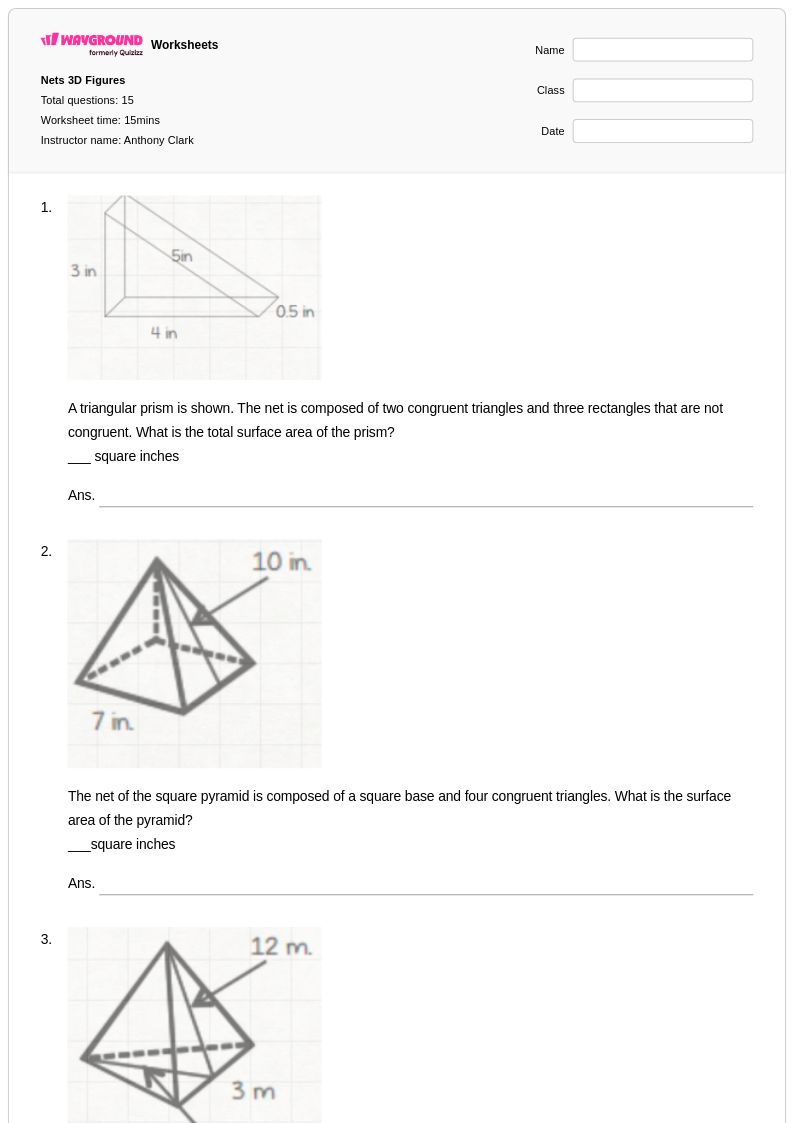
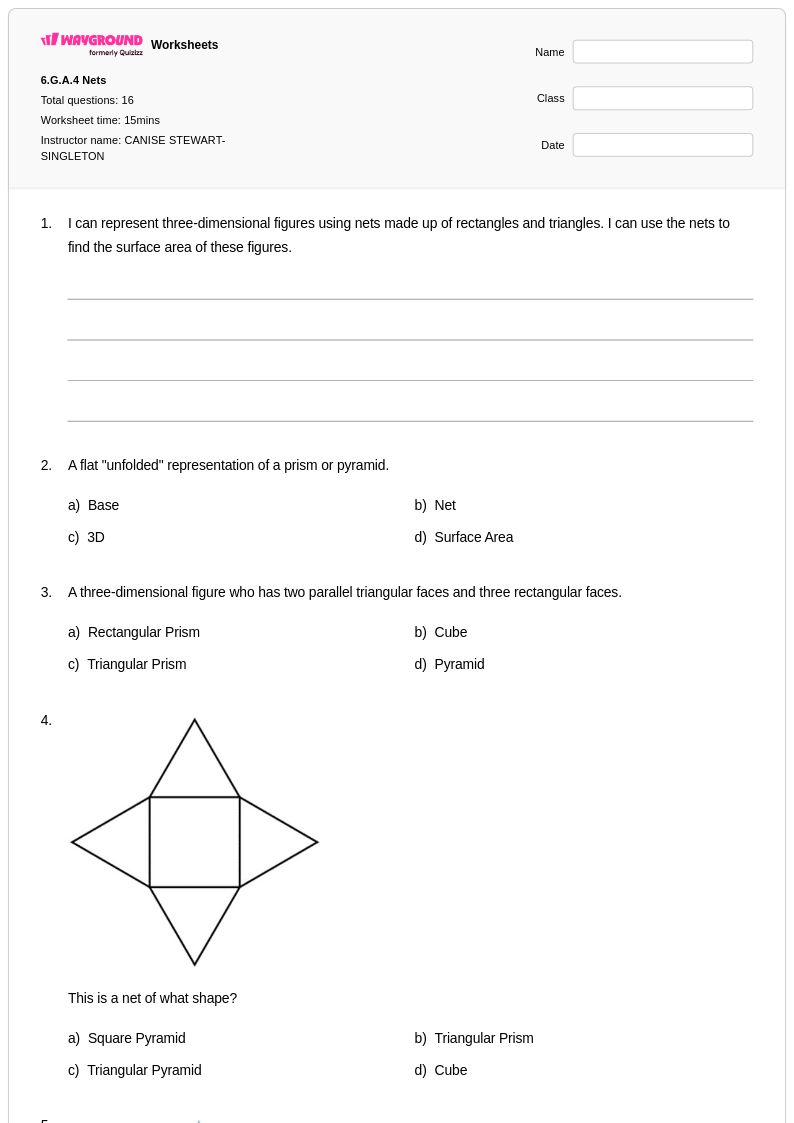
Nets of 3D figures worksheets available through Wayground (formerly Quizizz) provide students with essential practice in visualizing and understanding how three-dimensional shapes unfold into two-dimensional patterns. These comprehensive mathematics resources strengthen spatial reasoning skills by challenging students to identify which flat patterns can fold into specific 3D objects such as cubes, pyramids, prisms, and cylinders. The worksheets feature a variety of practice problems that range from basic net identification to more complex tasks involving surface area calculations and geometric construction. Each printable resource includes detailed answer keys that help educators assess student understanding while providing immediate feedback for independent study. These free educational materials support the development of critical geometric visualization abilities that form the foundation for advanced mathematics and engineering concepts.
Wayground's extensive collection of nets of 3D figures worksheets draws from millions of teacher-created resources, offering educators powerful search and filtering capabilities to locate materials that align with specific curriculum standards and learning objectives. The platform's differentiation tools enable teachers to customize worksheet difficulty levels, ensuring appropriate challenges for students across various skill levels while supporting both remediation and enrichment activities. These versatile resources are available in both printable PDF format and interactive digital versions, allowing for flexible implementation in traditional classrooms, hybrid learning environments, and remote instruction settings. Teachers can efficiently plan geometry lessons by accessing standards-aligned content that systematically builds students' understanding of three-dimensional shapes and their two-dimensional representations, making complex spatial concepts more accessible through structured practice and visual learning opportunities.
FAQs
How can I introduce the concept of 3D figure nets?
What exercises help students practice identifying nets?
What are common mistakes students make when working with nets?
How do nets of 3D figures fit into the Common Core math standards?
How can I use this nets of 3D figures worksheet with my class?
How can I differentiate this topic for diverse learners?