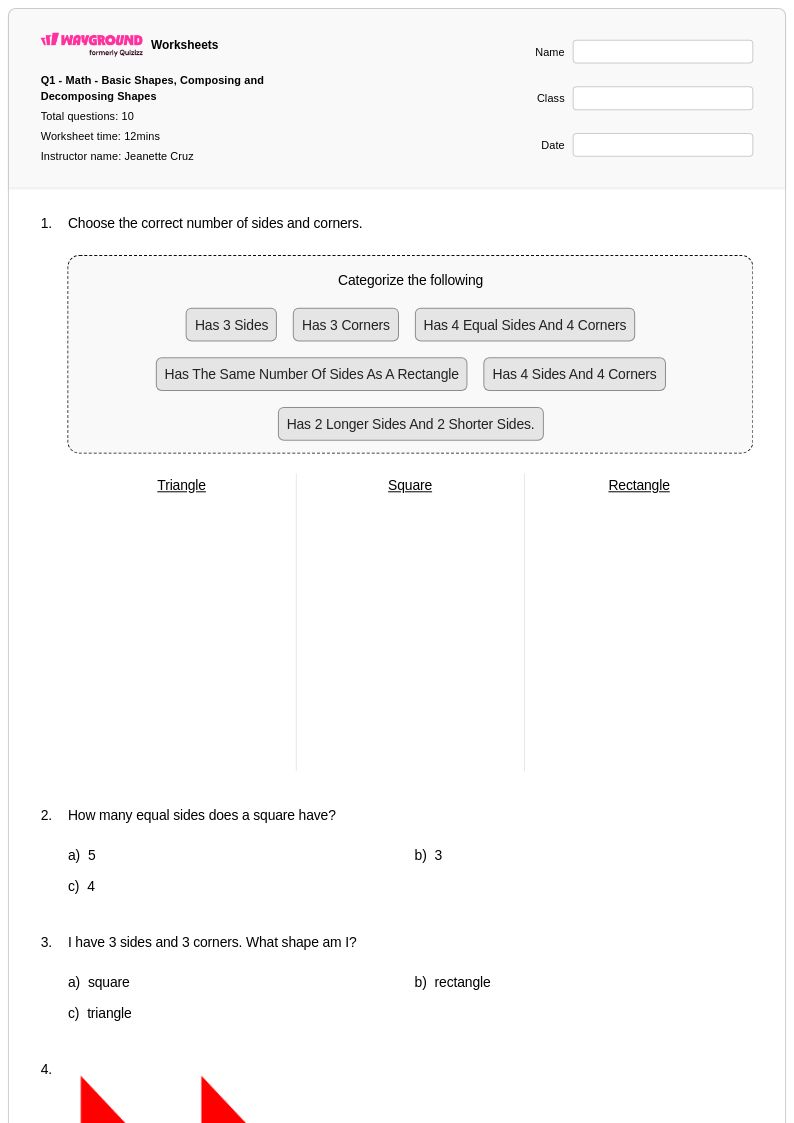
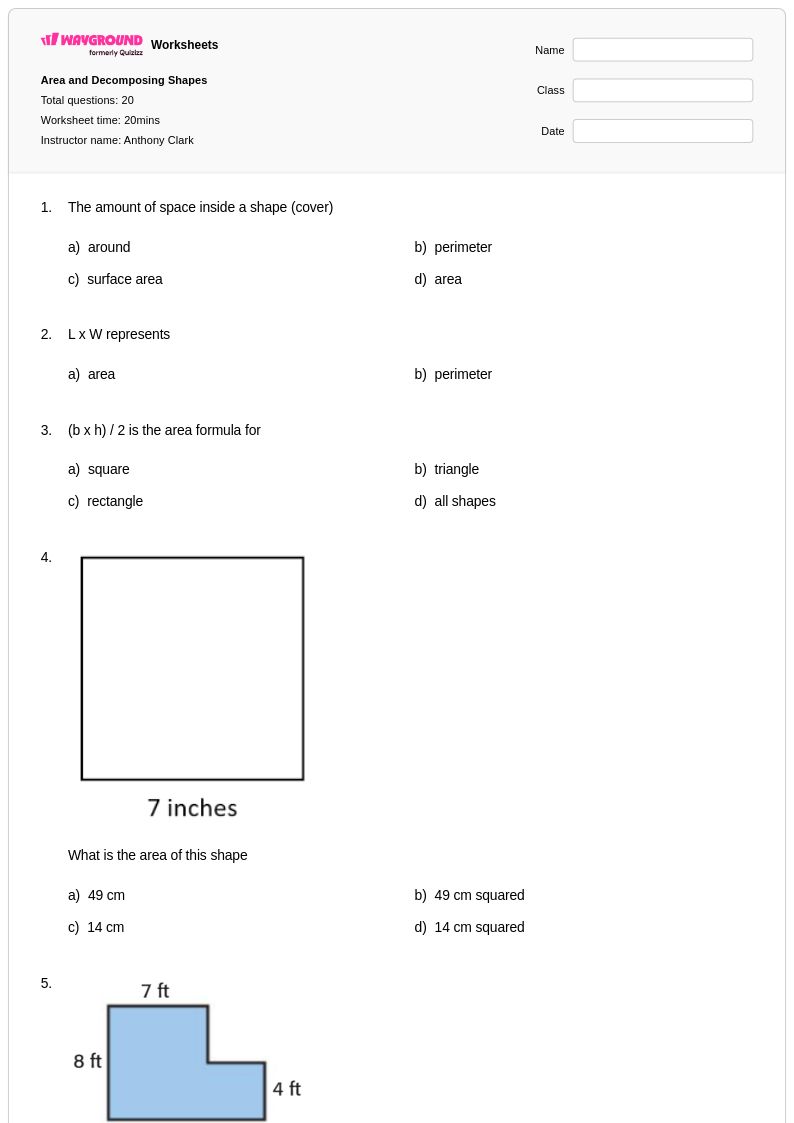
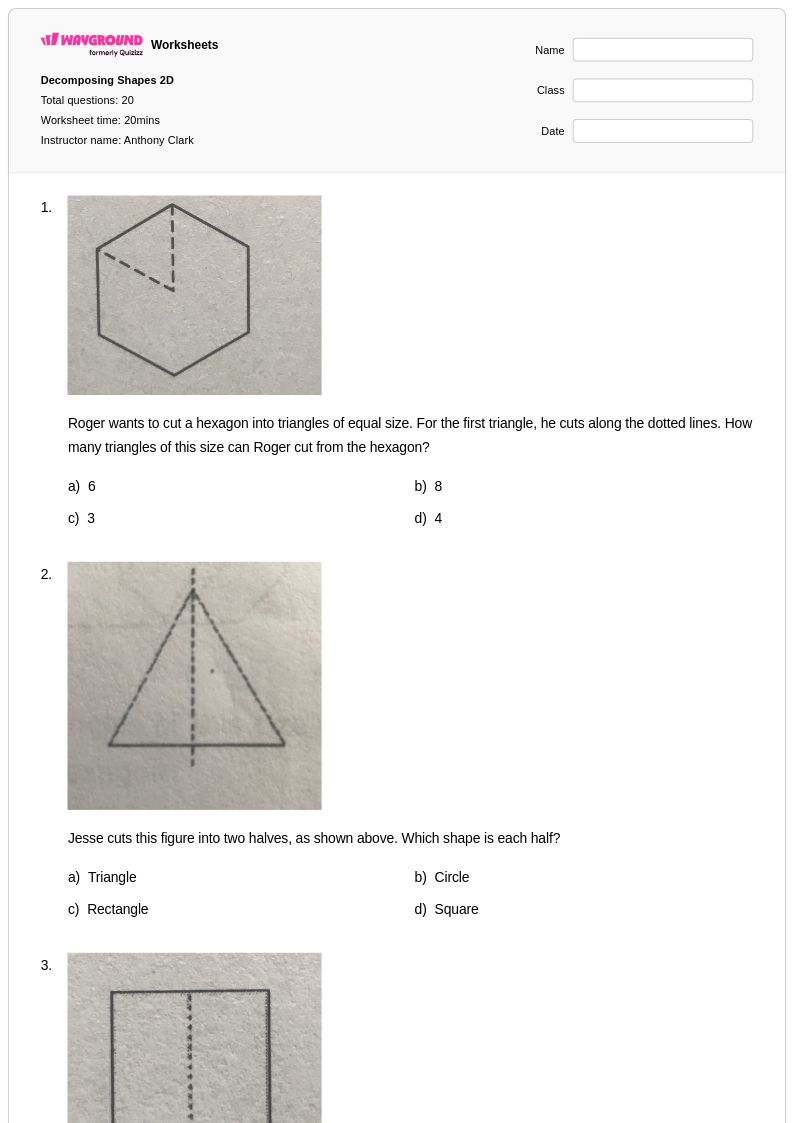
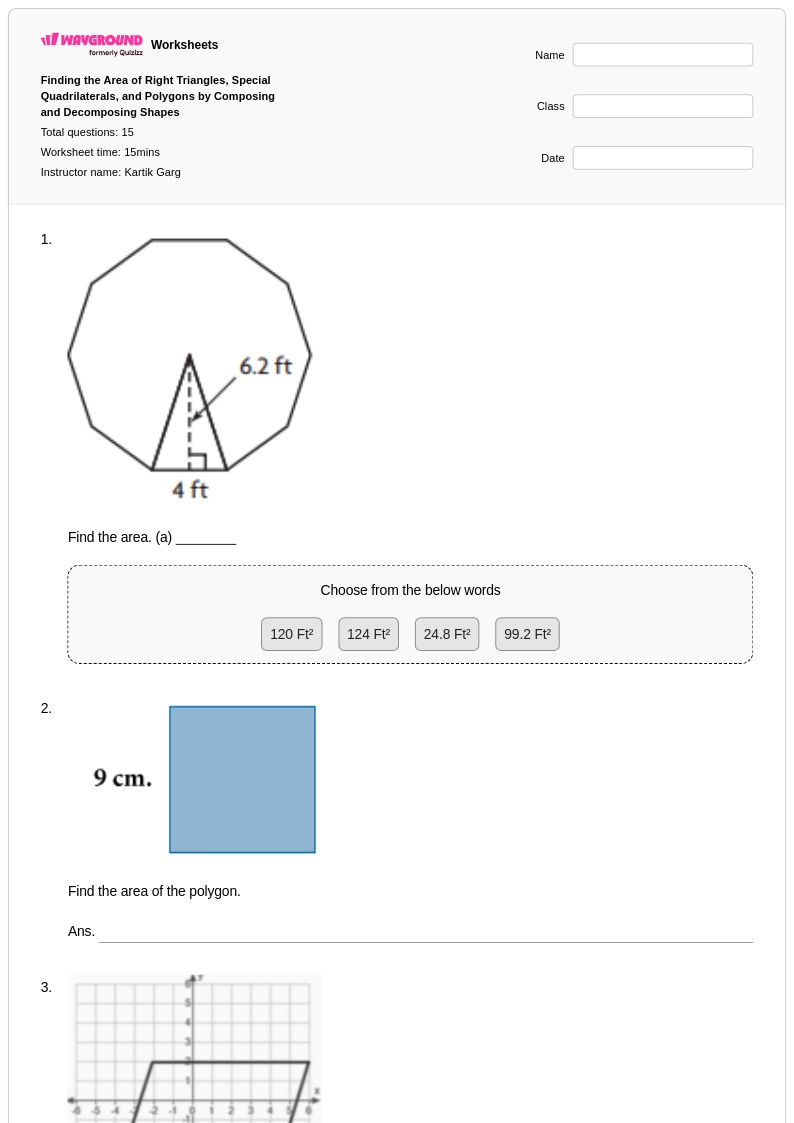
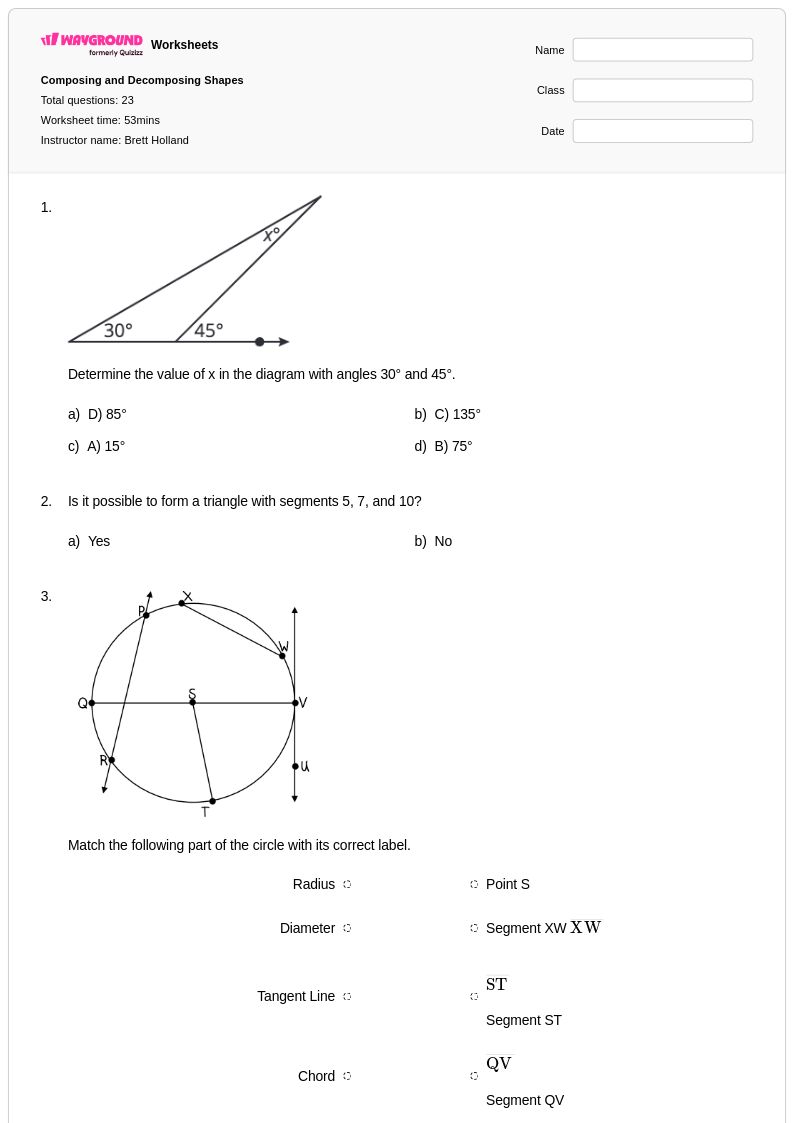
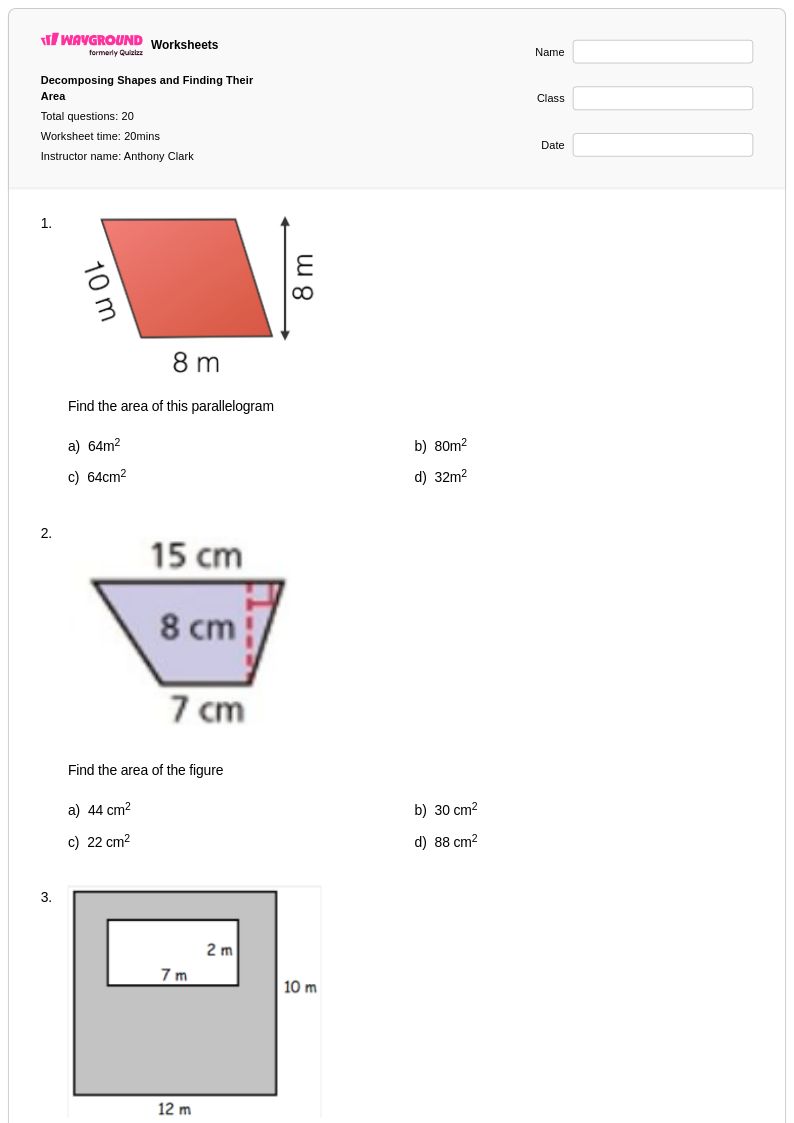
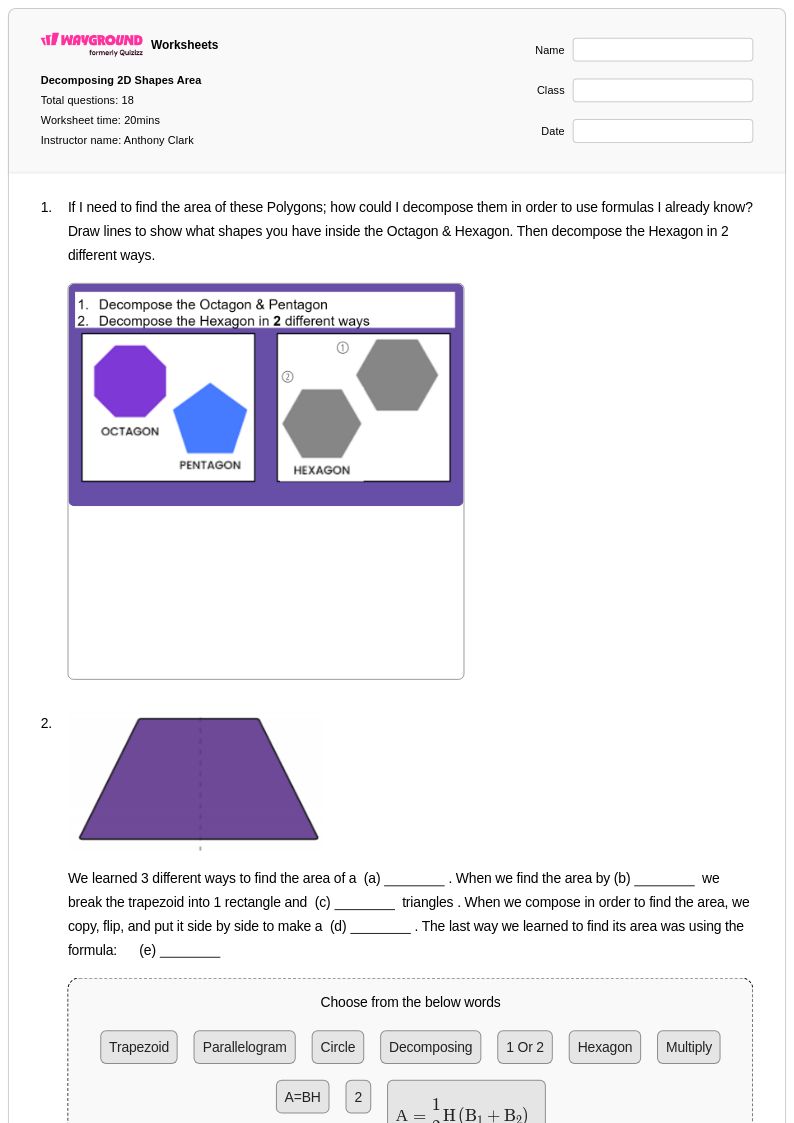
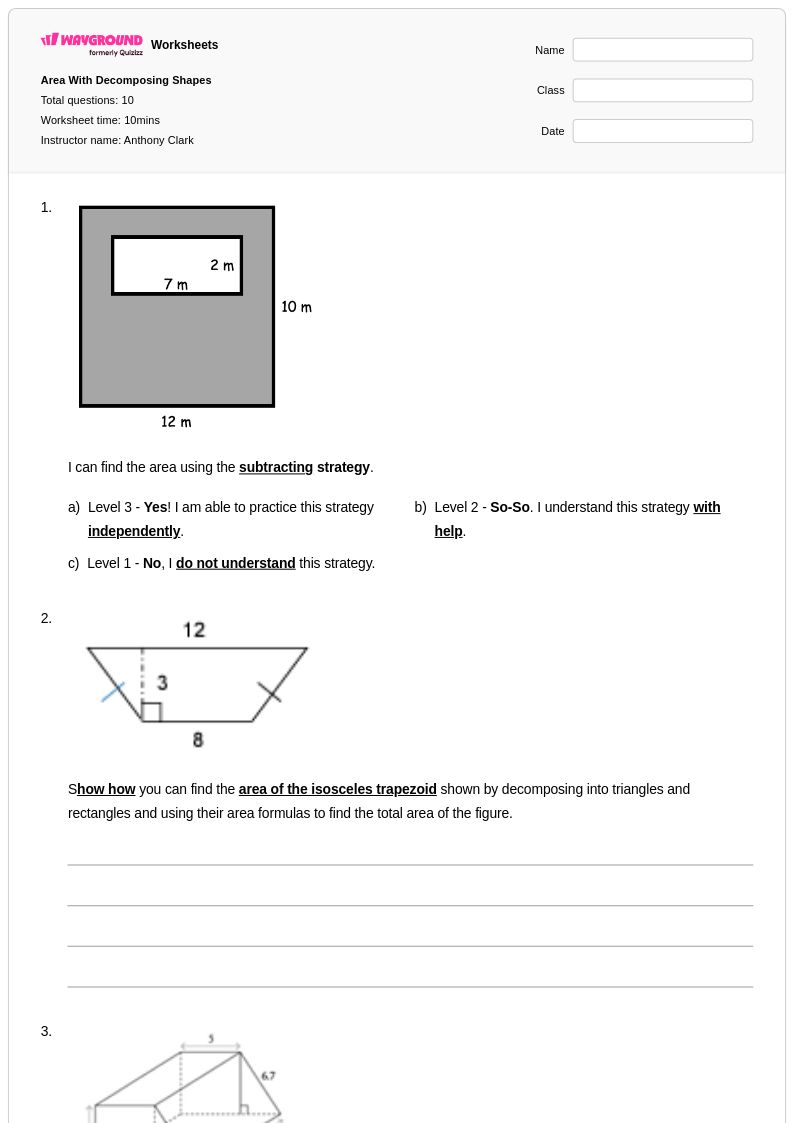
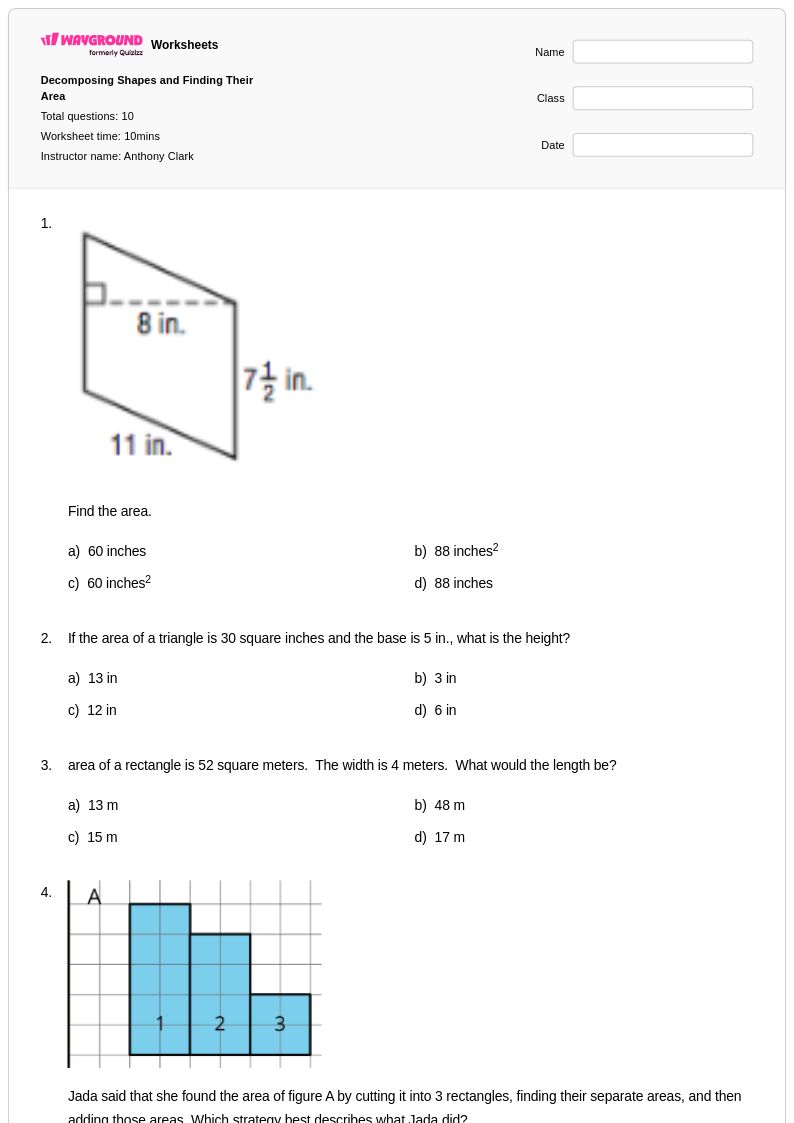
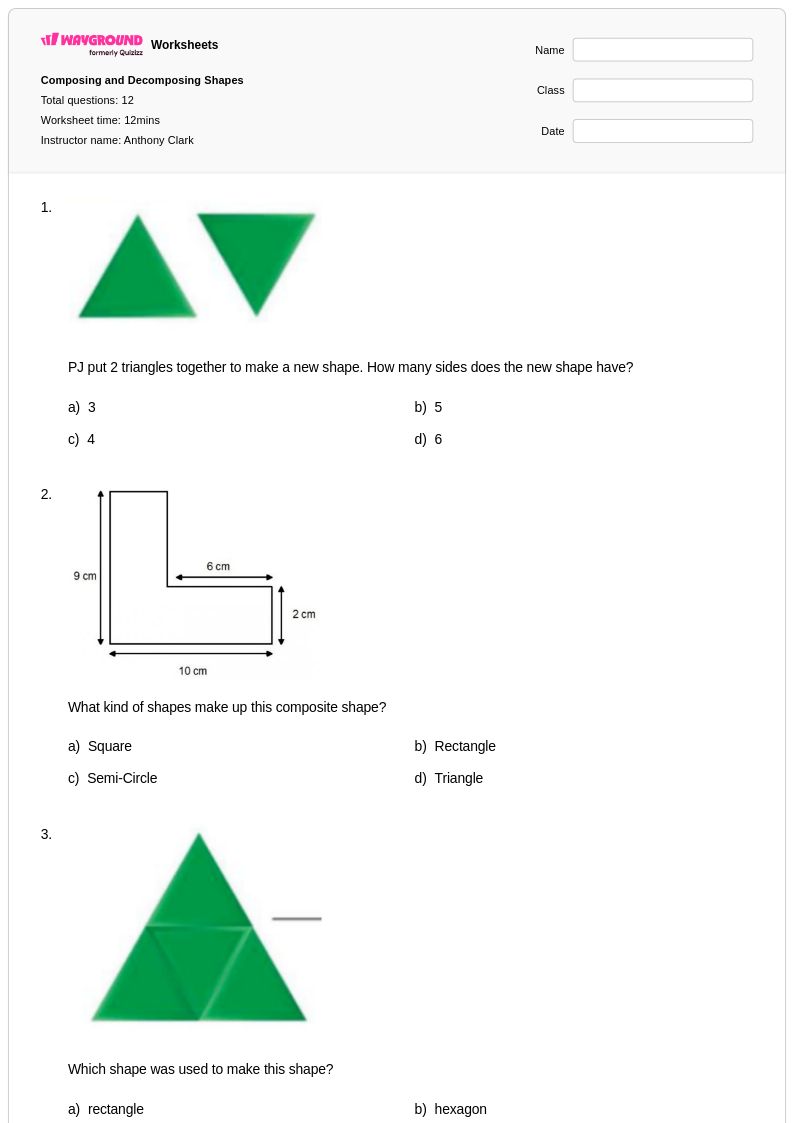
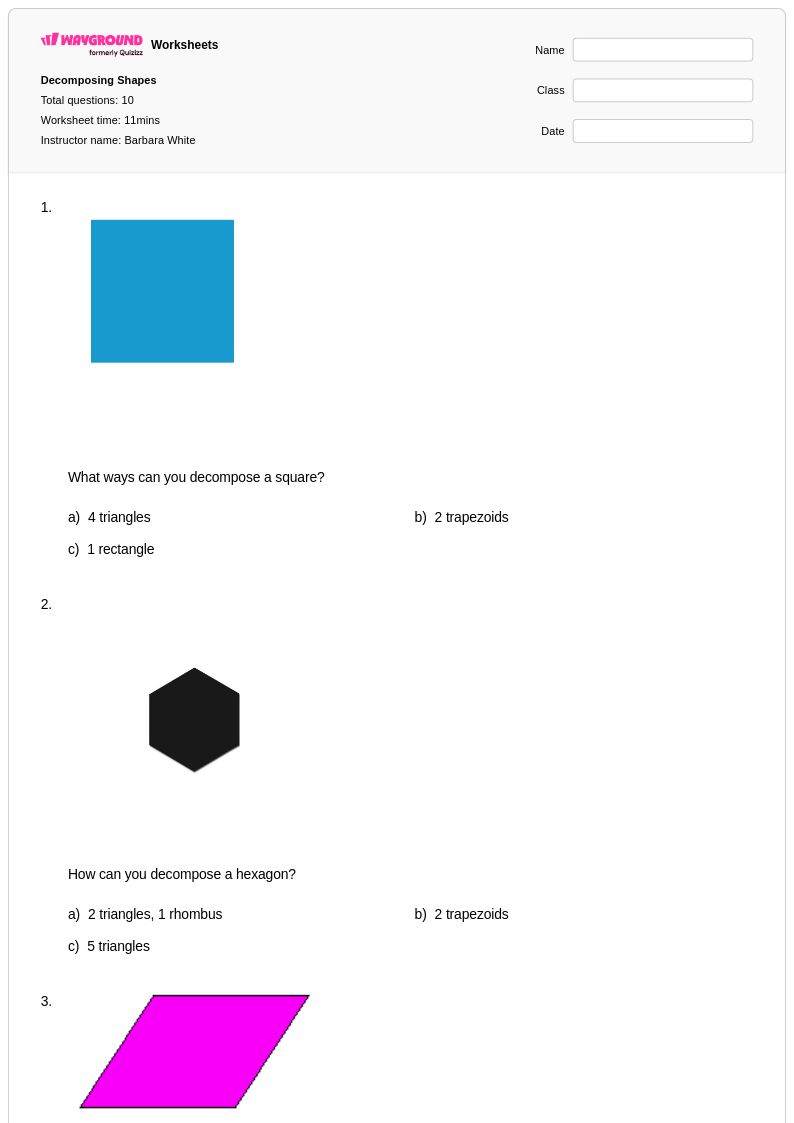
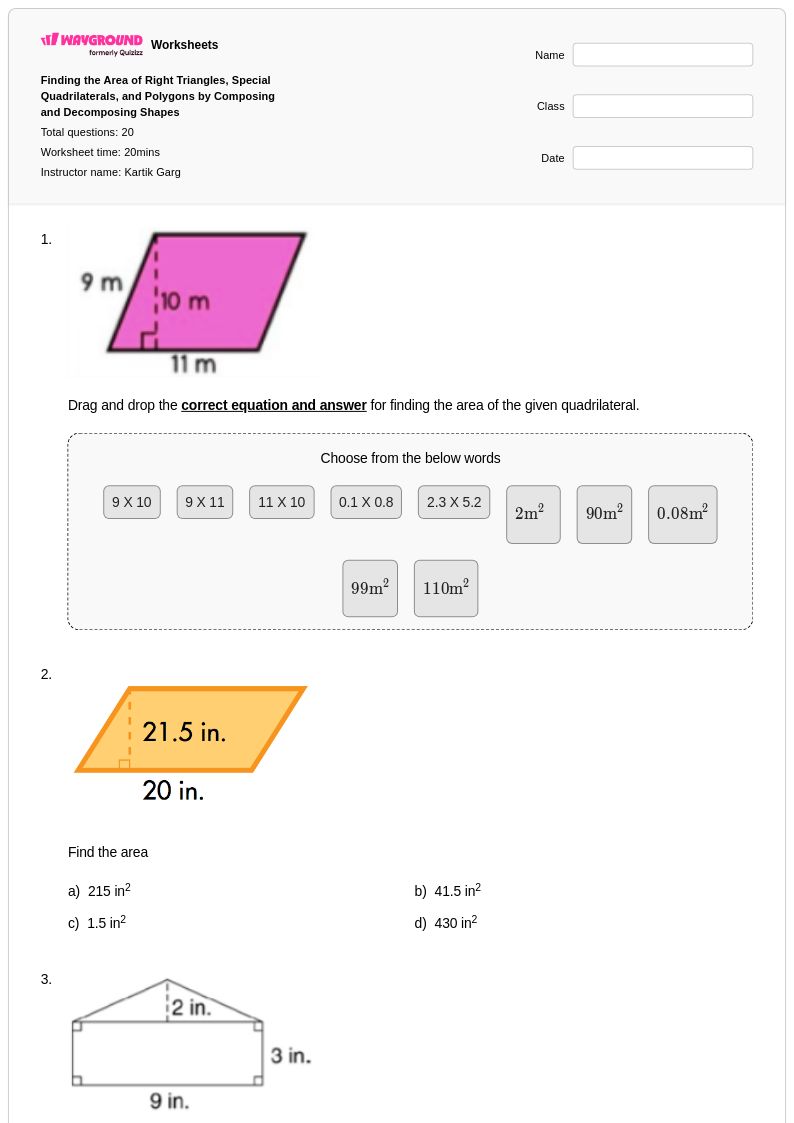
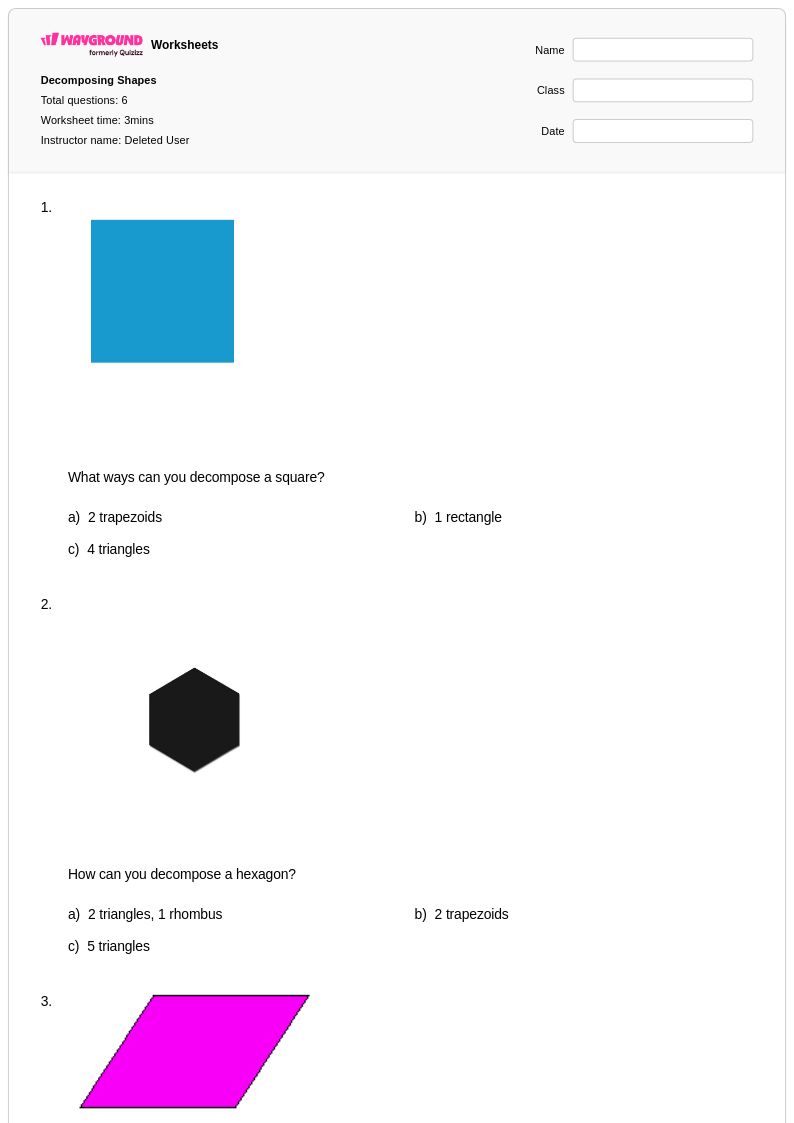
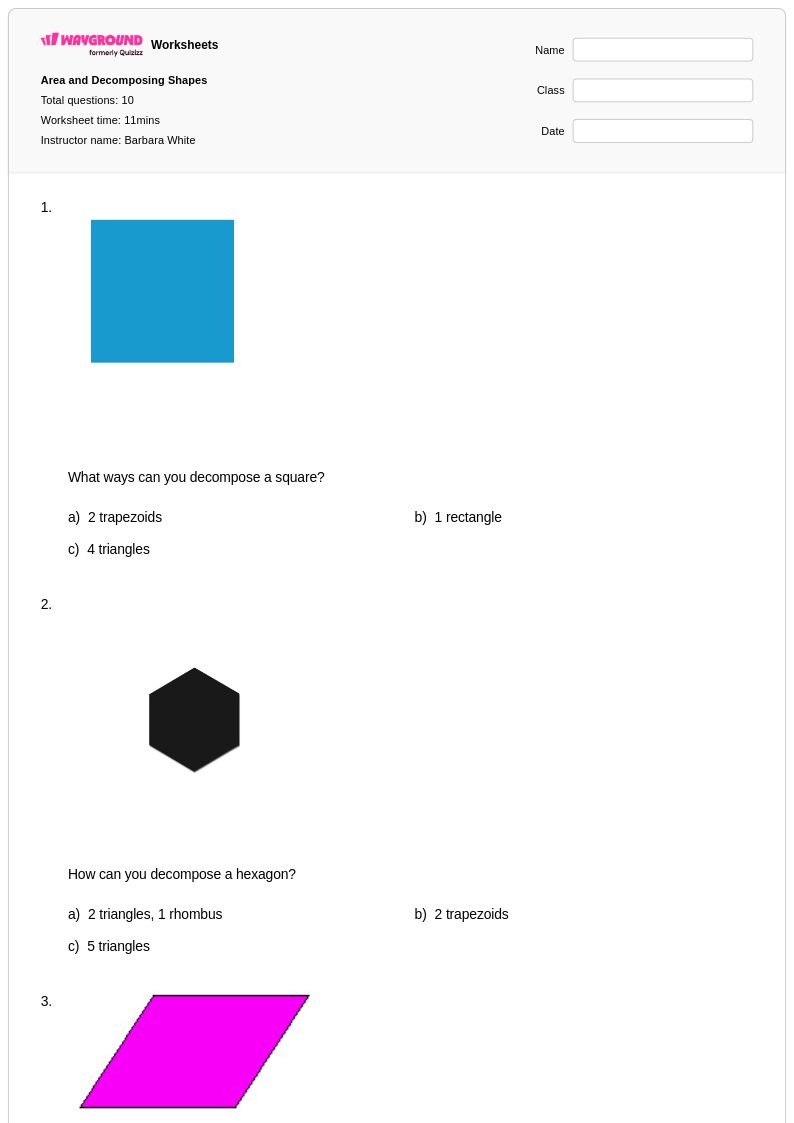
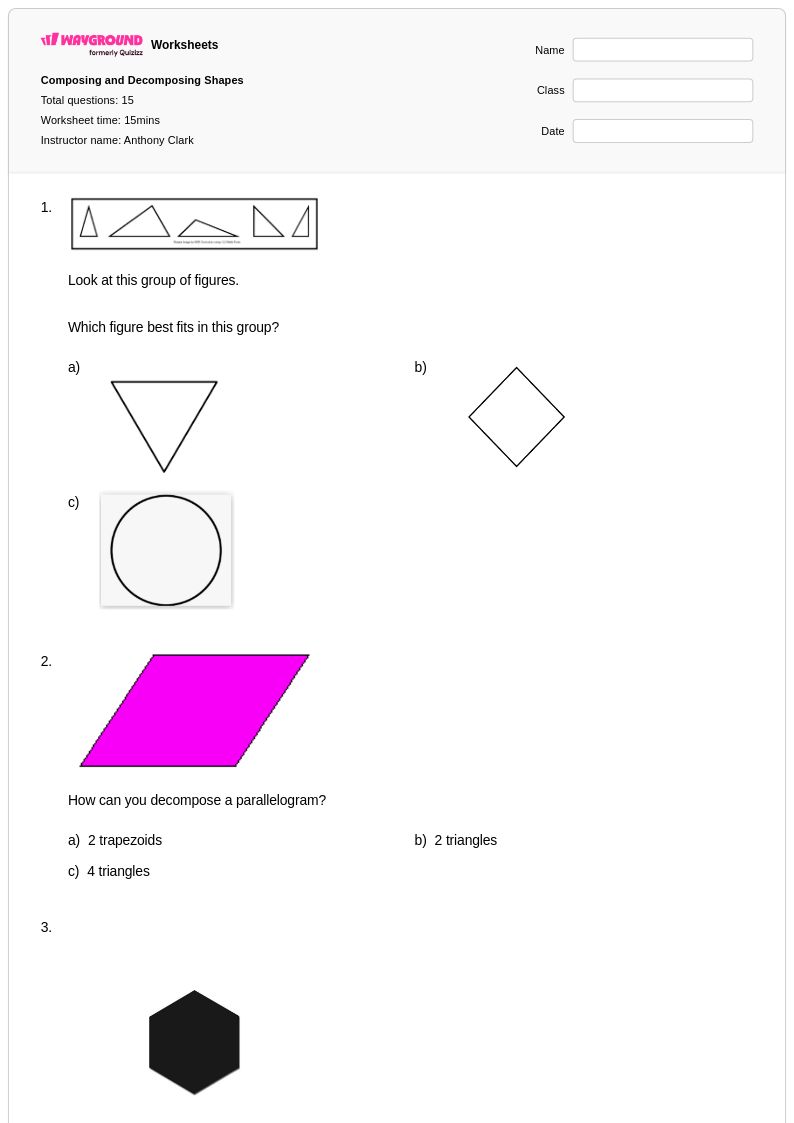
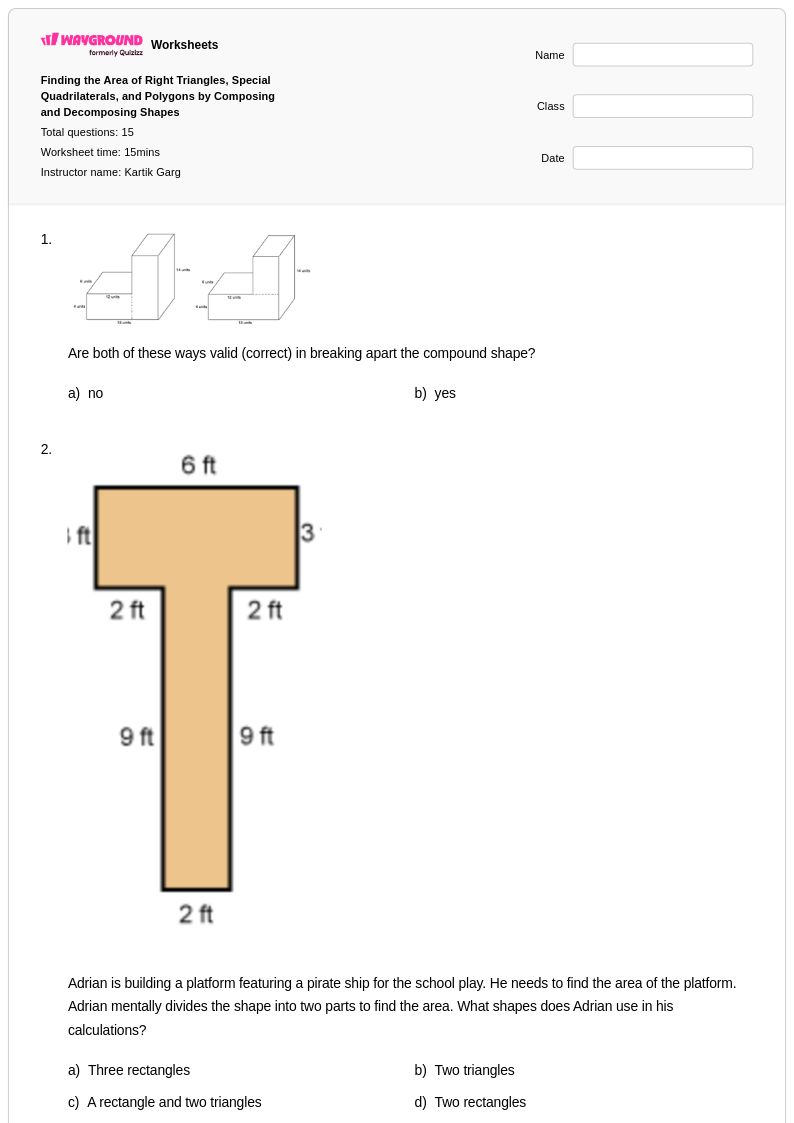
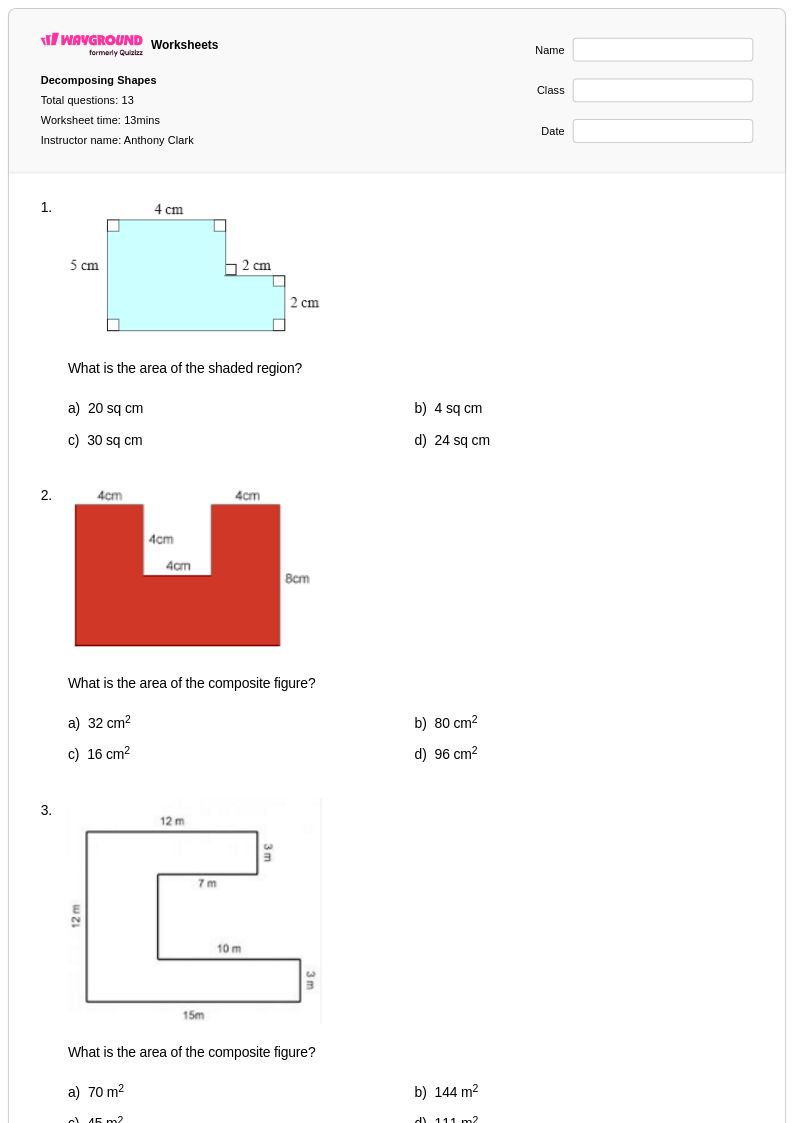
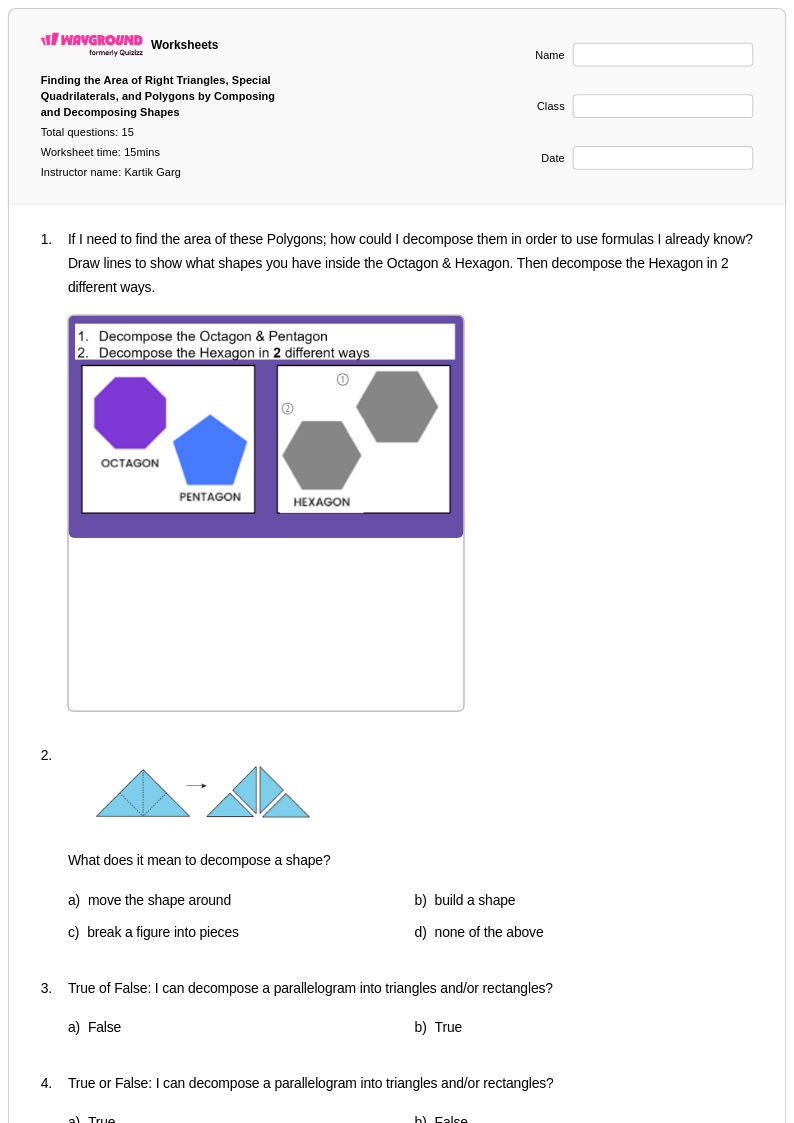
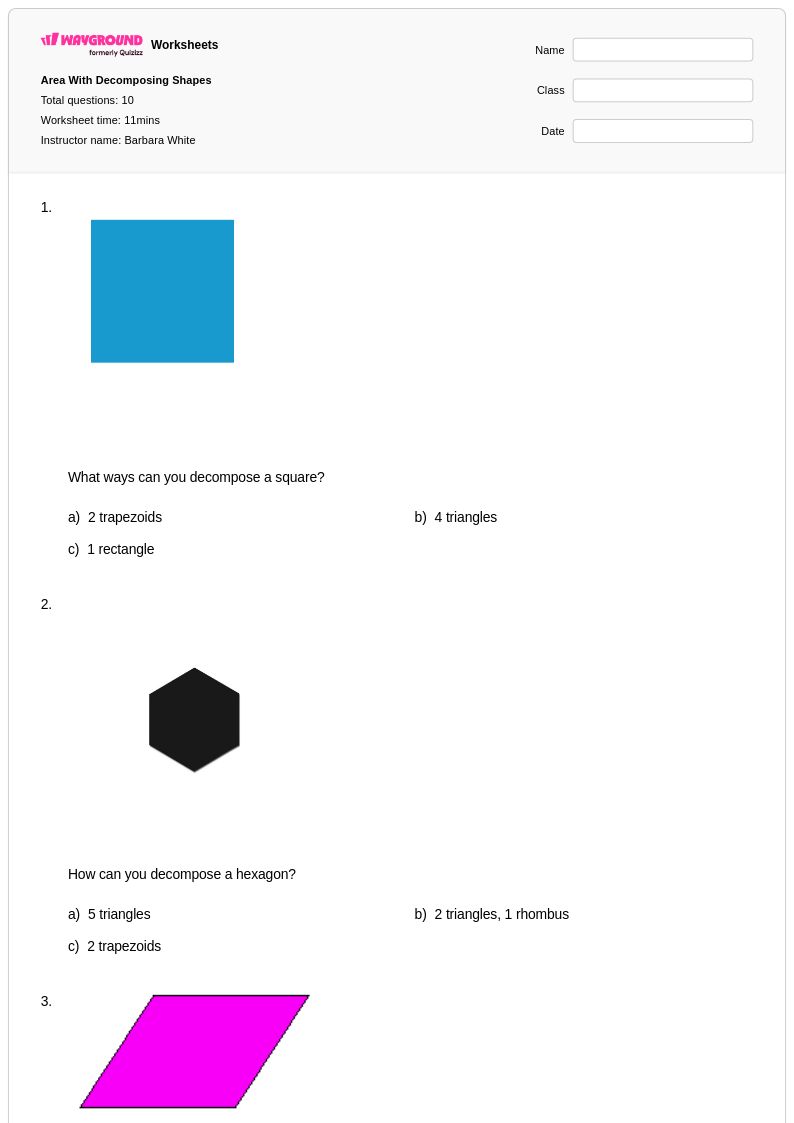
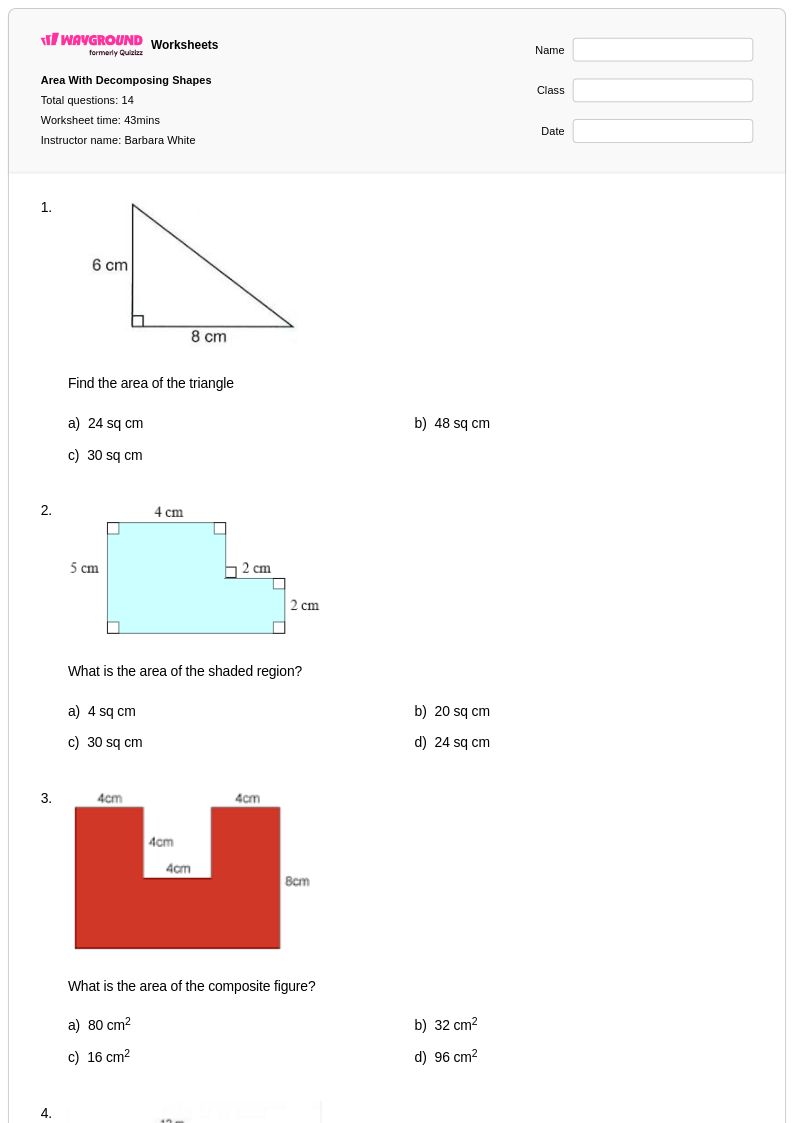
Explore Wayground's comprehensive collection of free decomposing shapes worksheets and printables that help students practice breaking down complex geometric figures into simpler components through engaging problems and complete answer keys.
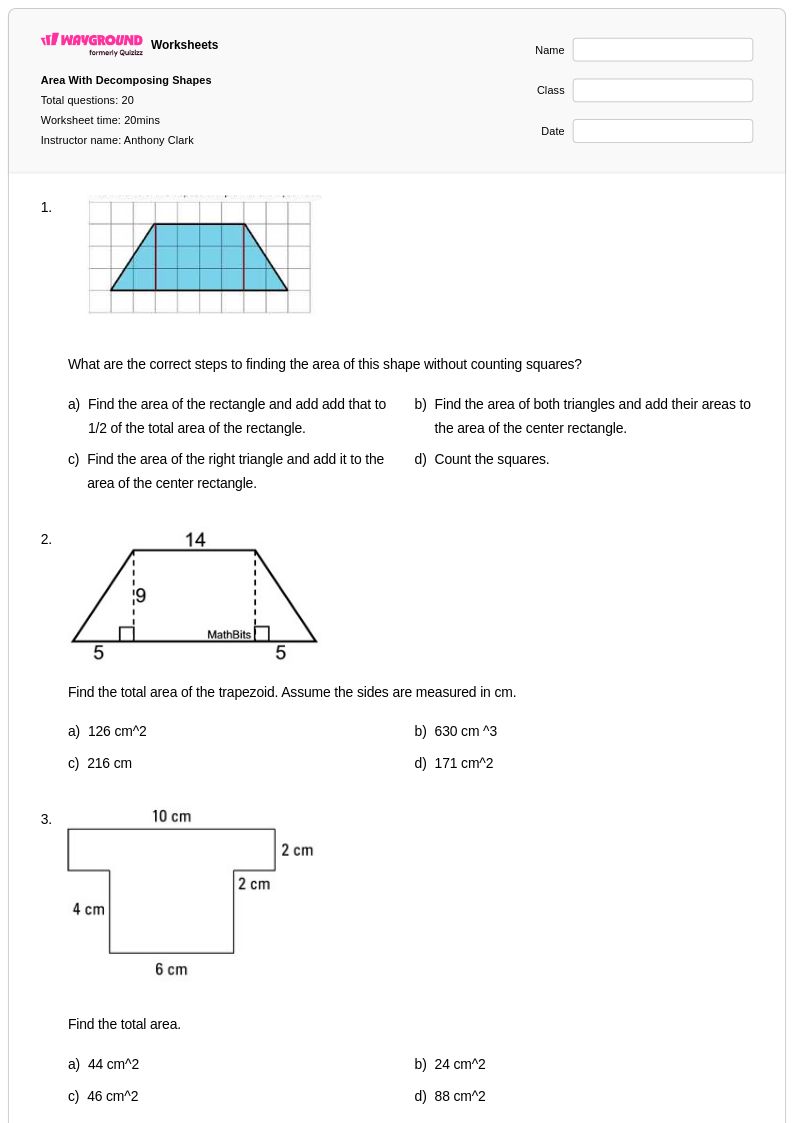
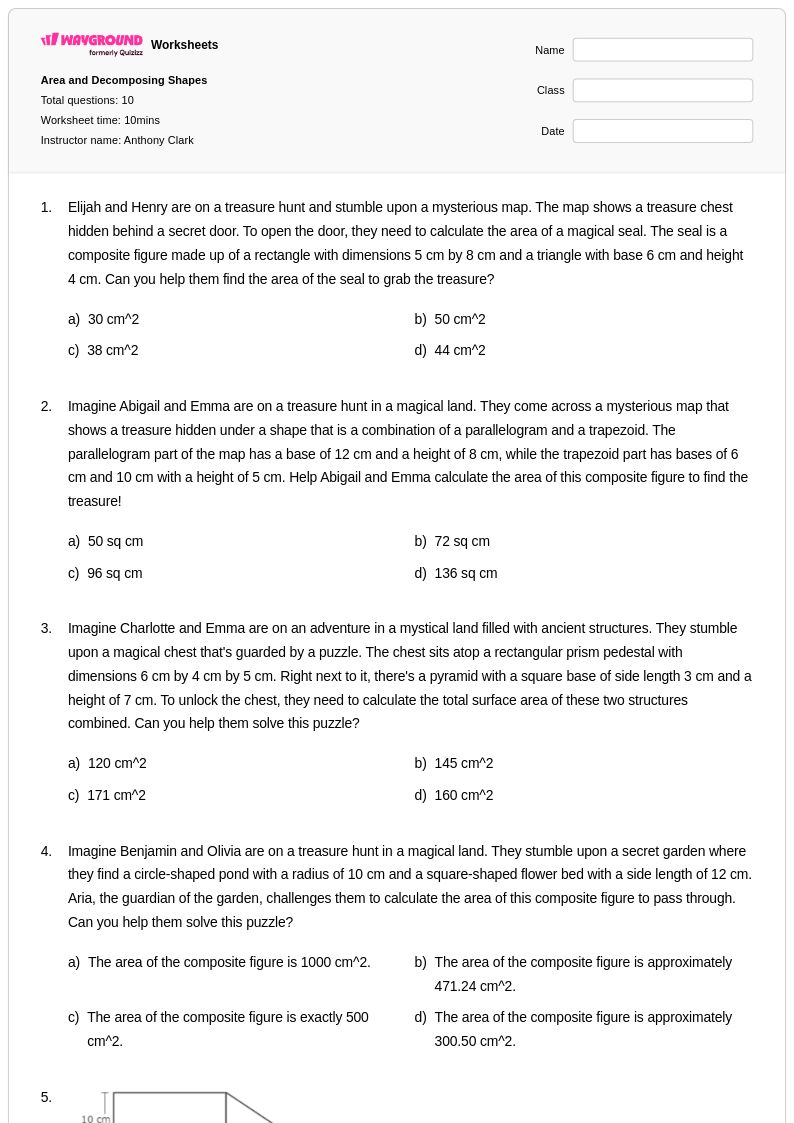
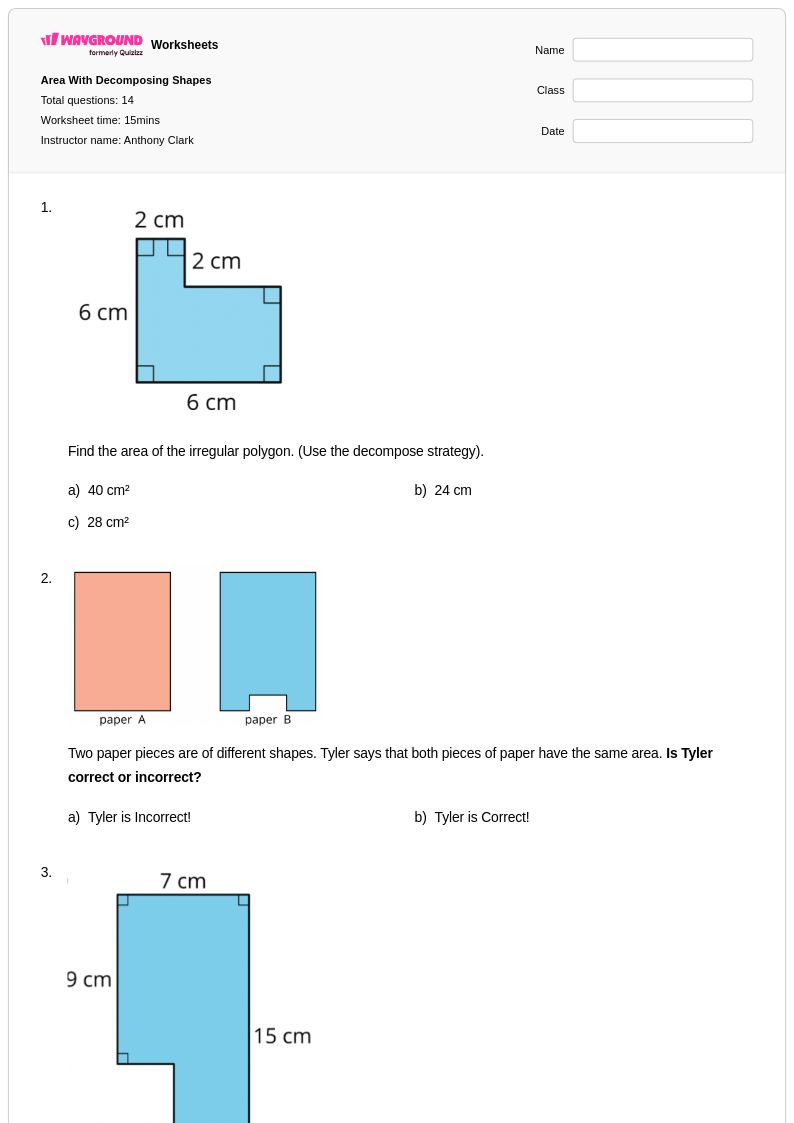
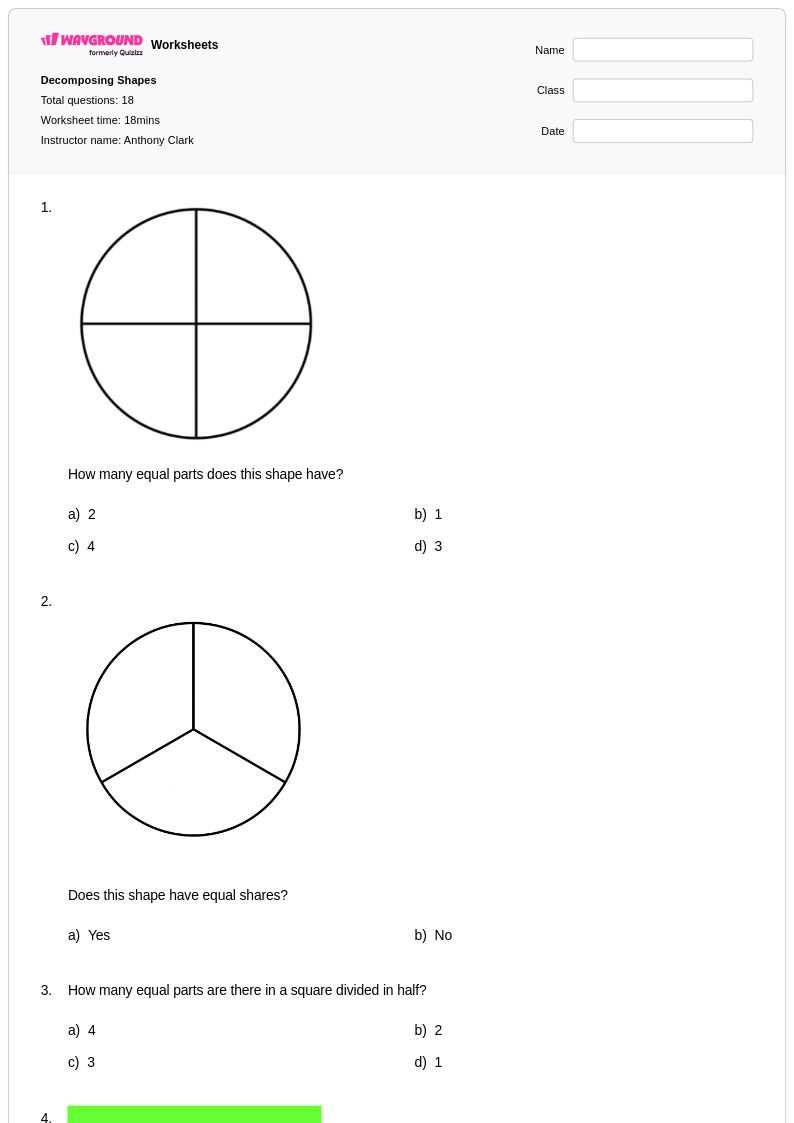
Decomposing shapes worksheets available through Wayground (formerly Quizizz) provide students with essential practice in breaking down complex geometric figures into simpler, recognizable components. These comprehensive resources strengthen critical spatial reasoning skills by challenging learners to identify constituent parts within composite shapes, recognize how basic polygons combine to form more intricate designs, and understand the relationships between different geometric elements. Each worksheet collection includes detailed answer keys and offers both digital and printable pdf formats, ensuring accessibility for diverse classroom environments. The practice problems systematically guide students through the process of visual analysis, helping them develop the foundational skills necessary for advanced geometric concepts like area calculation, spatial visualization, and mathematical proof construction.
Wayground (formerly Quizizz) supports educators with an extensive library of millions of teacher-created decomposing shapes resources, featuring robust search and filtering capabilities that allow instructors to quickly locate materials aligned with specific learning standards and student needs. The platform's differentiation tools enable teachers to customize worksheets for various skill levels, making it simple to provide targeted remediation for struggling learners while offering enrichment opportunities for advanced students. These flexible resources are available in both printable and digital formats, including downloadable pdf versions, allowing seamless integration into lesson planning regardless of classroom technology availability. Teachers can efficiently address diverse learning objectives through carefully curated practice sets that support skill development, assessment preparation, and conceptual understanding of how geometric shapes relate to one another within complex figures.
FAQs
How do I teach students to decompose composite shapes?
Begin by having students trace or outline familiar polygons—such as triangles, rectangles, and squares—inside a composite figure. Ask them to explain where they would draw dividing lines and how the identified parts could be recombined, building the spatial reasoning needed for later work with area and geometric proofs.
What exercises help students practice decomposing shapes?
Useful exercises include drawing partition lines, naming the component polygons, counting repeated shapes, and matching a composite figure to its separated parts. Students can also compare two valid decompositions of the same figure to see that a complex shape may be partitioned in more than one way.
What mistakes do students commonly make when decomposing shapes?
Students may overlook embedded shapes, misidentify polygons when they are rotated, or draw divisions that create unintended or overlapping parts. They may also assume there is only one correct decomposition, so teachers should ask students to verify that their pieces cover the entire figure without gaps or overlaps.
How can I use a decomposing shapes worksheet from Wayground?
Wayground worksheets are available as printable PDFs and digital formats, so teachers can host a worksheet as a digital quiz or print it for paper-based practice. Every worksheet includes a complete answer key, and physical submissions can be scanned or captured and graded with the Wayground for Teachers app; the printable option also supports schools seeking to reduce screen time.
How does decomposing shapes fit into the Common Core math progression?
Common Core geometry develops this concept from identifying and composing basic shapes toward partitioning figures and using decomposition to reason about area. Practice with composite figures helps students connect visual structure, geometric properties, and later measurement strategies without treating shapes as isolated forms.
How can I differentiate decomposing shapes practice for mixed-ability students?
Teachers can scaffold practice by assigning simpler figures with clearly visible parts or challenge students to find multiple decompositions of irregular composite shapes. Wayground also supports extended time, Read Aloud, reduced answer choices, and reading mode, along with alternate worksheet versions using adjusted spacing, larger text, a dyslexia-friendly font, or translation.