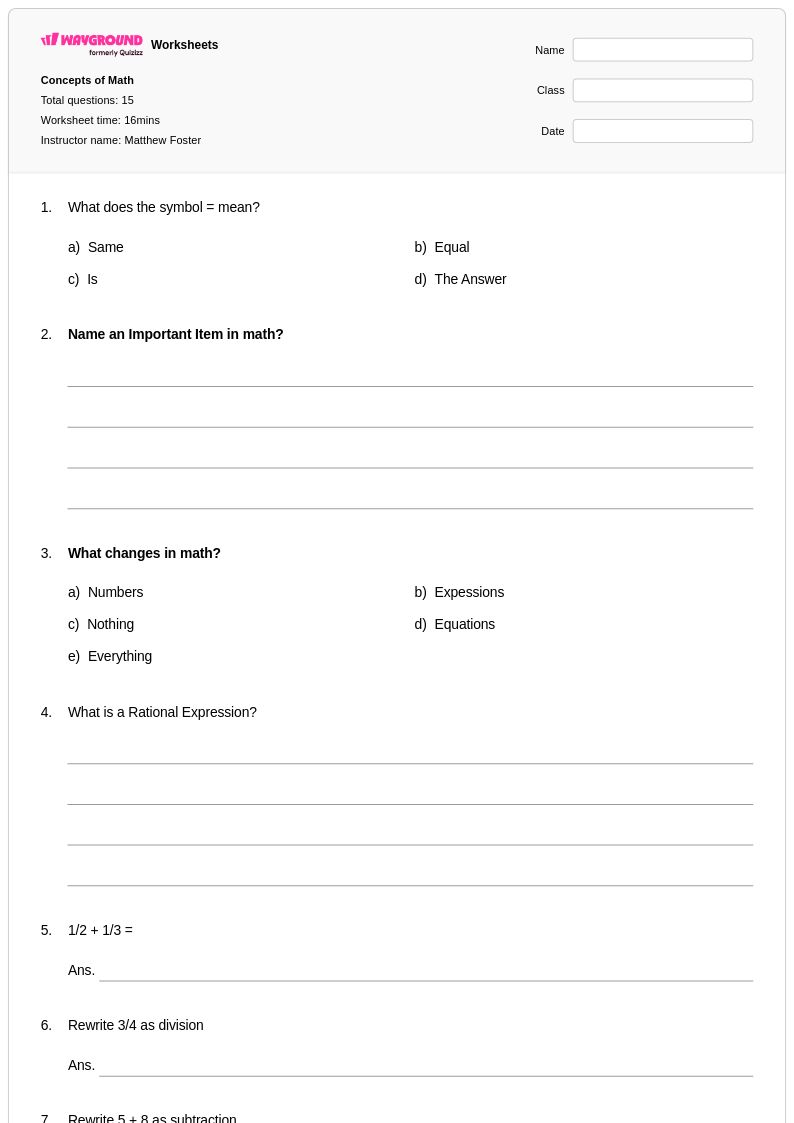
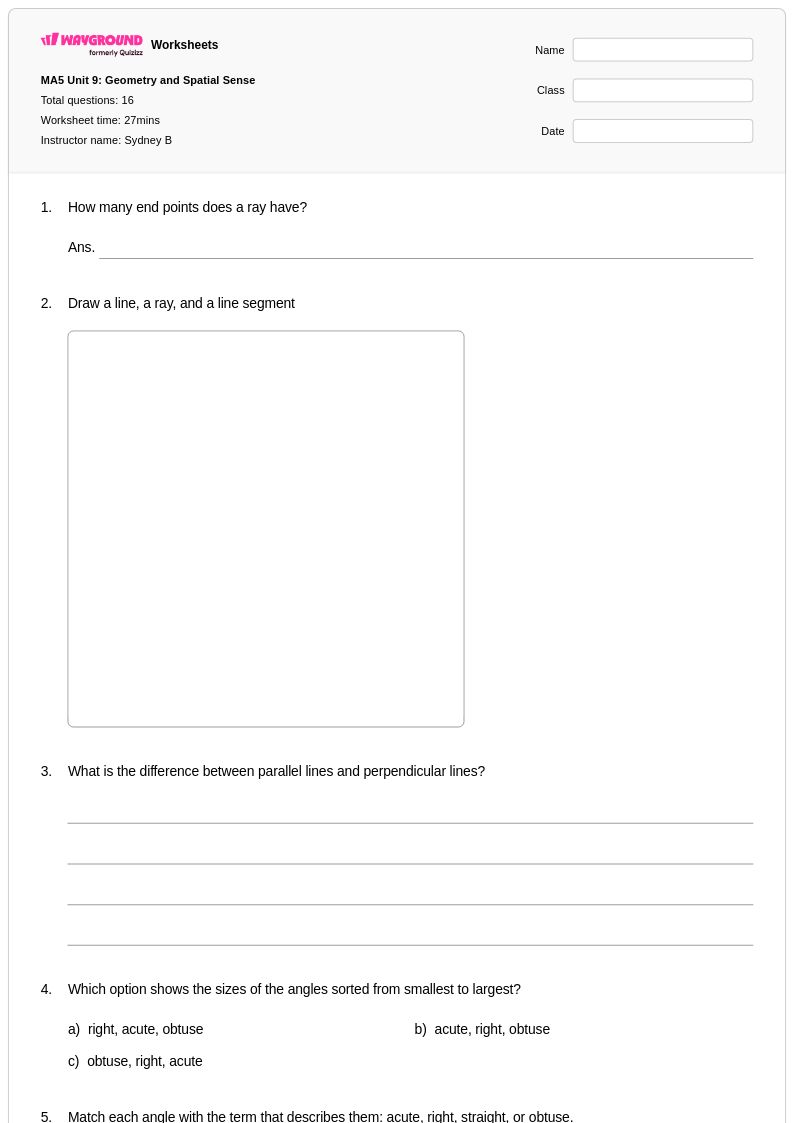
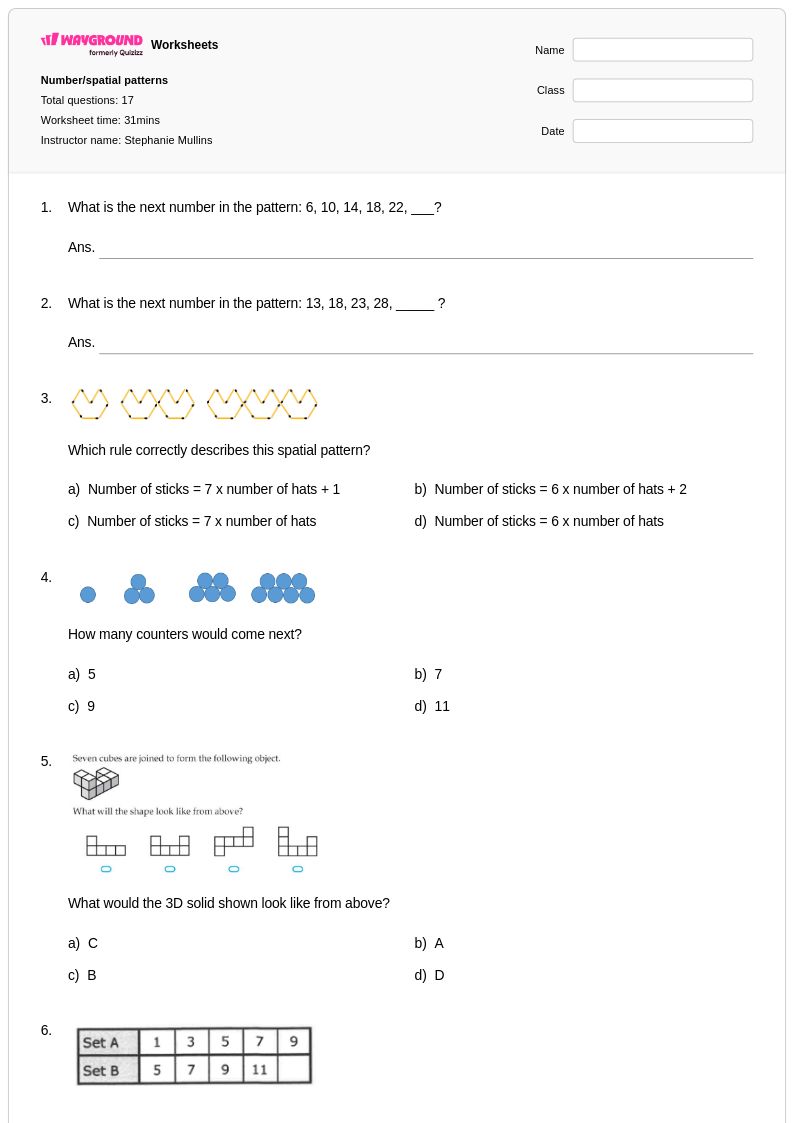
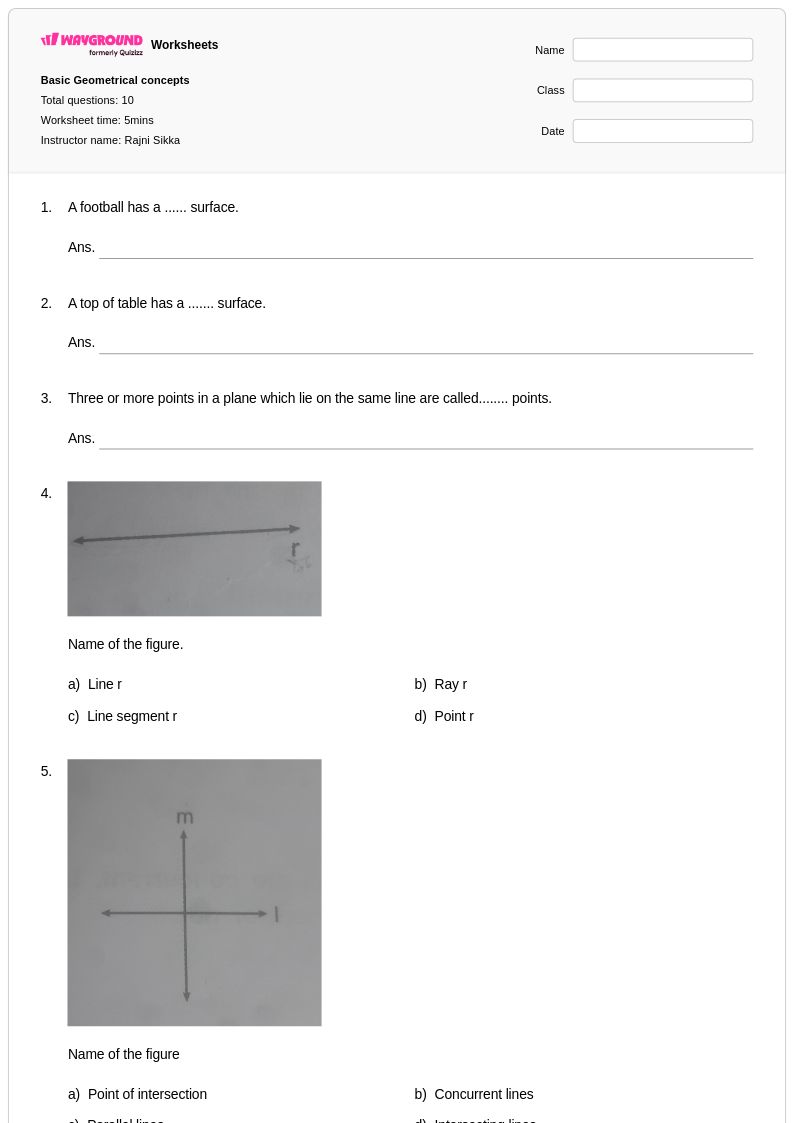
Explore Wayground's free spatial concepts worksheets and printables that help students master geometric relationships, positioning, and three-dimensional thinking through engaging practice problems with comprehensive answer keys.
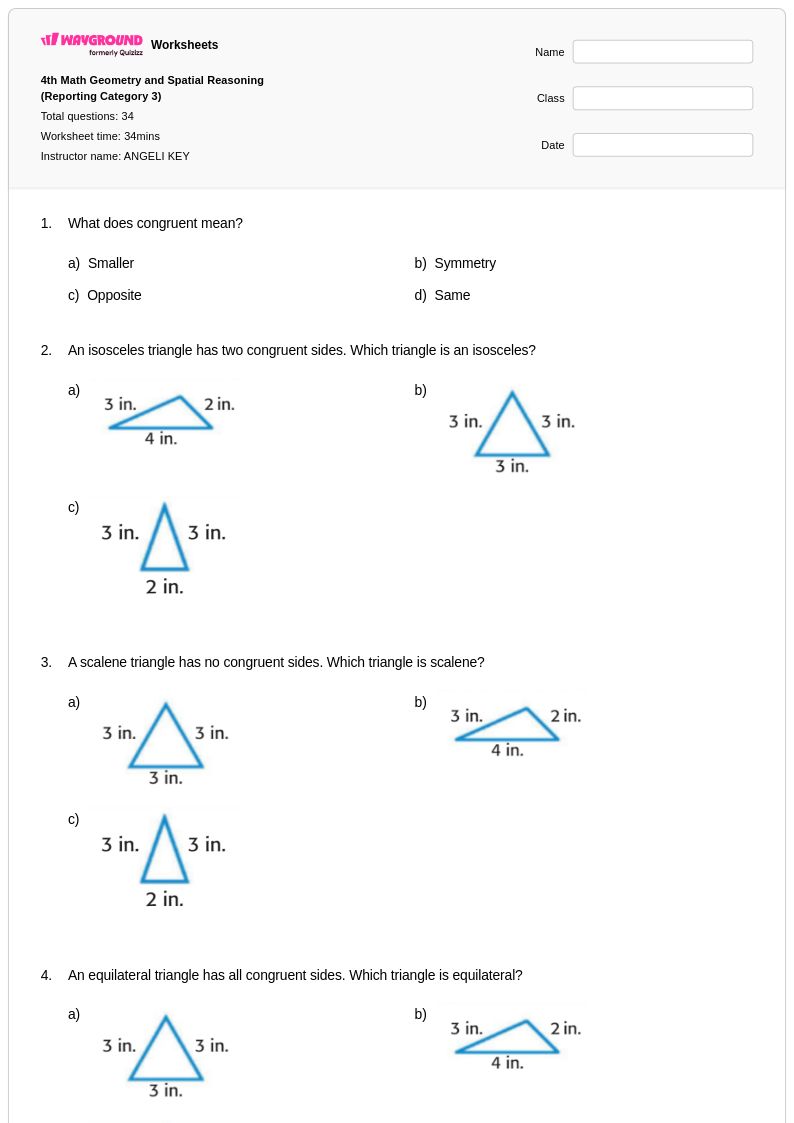
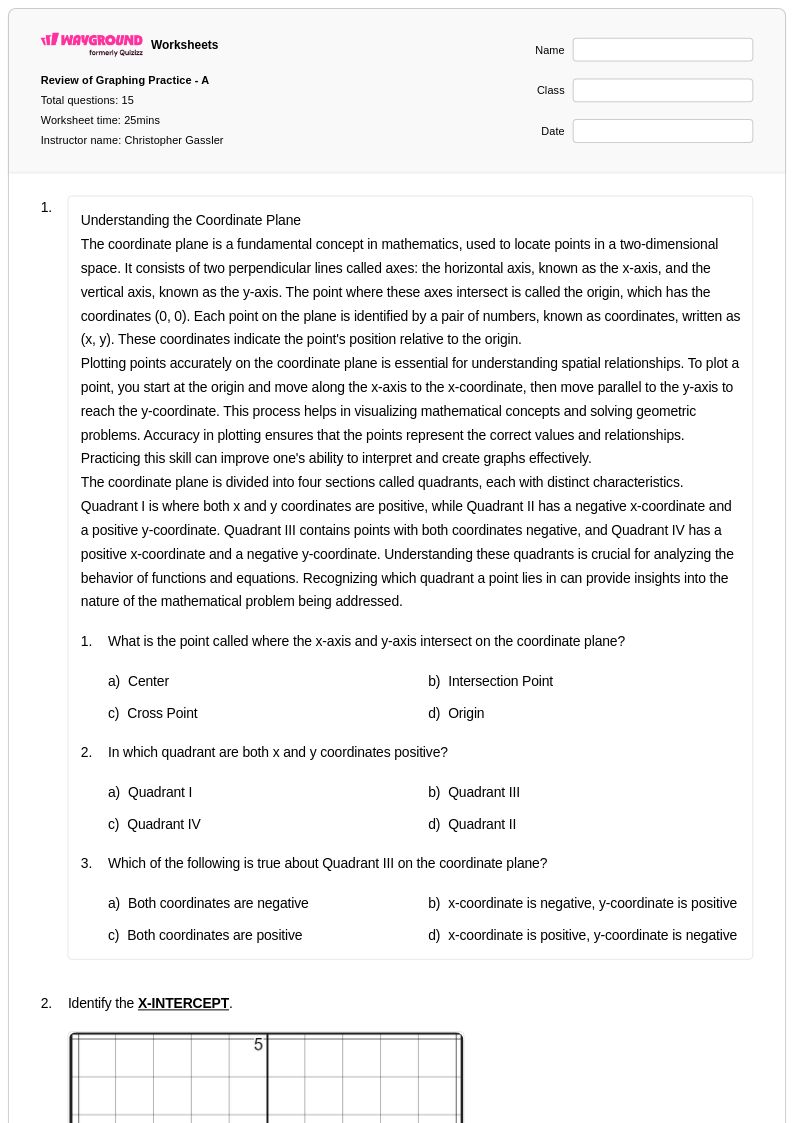
Spatial concepts worksheets available through Wayground (formerly Quizizz) provide comprehensive practice opportunities for students to develop critical three-dimensional thinking and spatial reasoning skills fundamental to geometric understanding. These mathematics worksheets systematically guide learners through essential spatial relationships including position, direction, orientation, and transformation of objects in space. Students engage with practice problems that strengthen their ability to visualize geometric figures from multiple perspectives, understand coordinate systems, and analyze spatial patterns. Each worksheet collection includes detailed answer keys and is available as free printable pdf resources, enabling educators to seamlessly integrate spatial concept instruction into their mathematics curriculum while providing students with structured opportunities to master these foundational geometric skills.
Wayground (formerly Quizizz) empowers educators with millions of teacher-created spatial concepts worksheets that support comprehensive mathematics instruction across diverse learning environments. The platform's robust search and filtering capabilities allow teachers to quickly locate resources aligned with specific standards and learning objectives, while differentiation tools enable customization for varied skill levels and learning needs. These worksheet collections are available in both printable pdf and digital formats, providing flexibility for classroom instruction, homework assignments, and independent practice sessions. Teachers can efficiently plan remediation activities for students struggling with spatial visualization, design enrichment opportunities for advanced learners, and create targeted skill practice sessions that reinforce geometric concepts through systematic, scaffolded exercises that build spatial reasoning competency over time.
FAQs
How can I teach spatial concepts effectively?
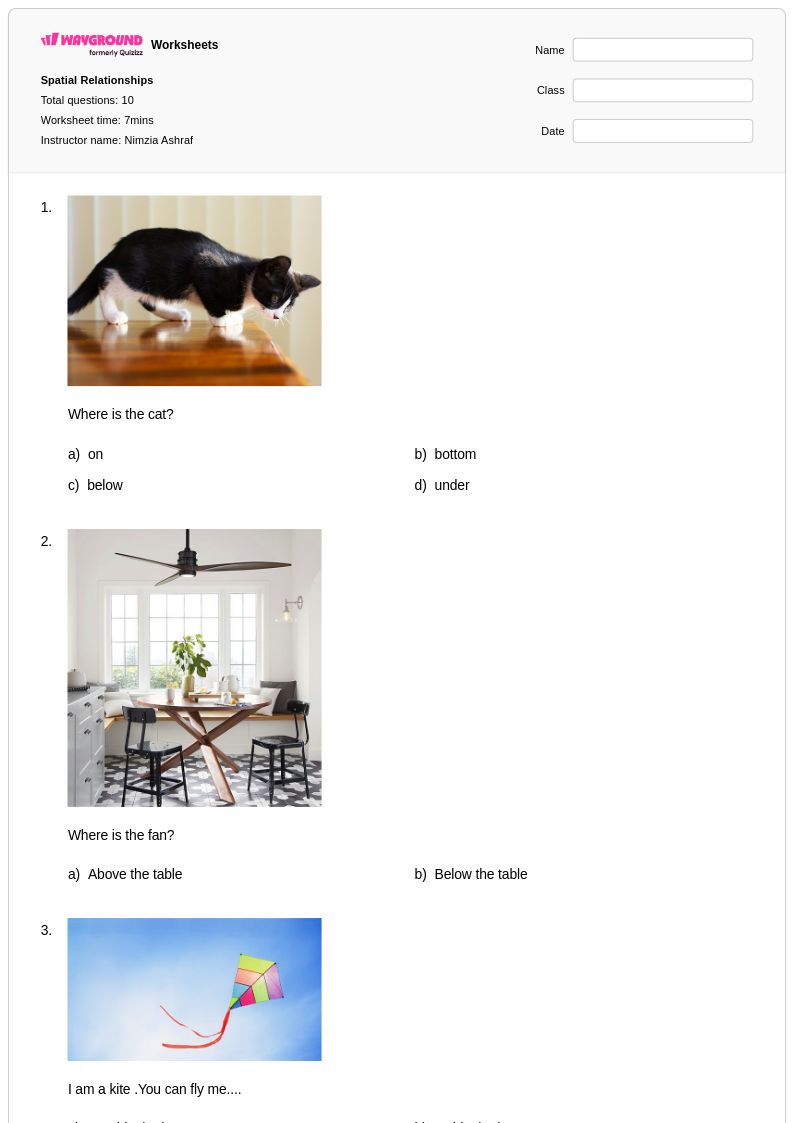
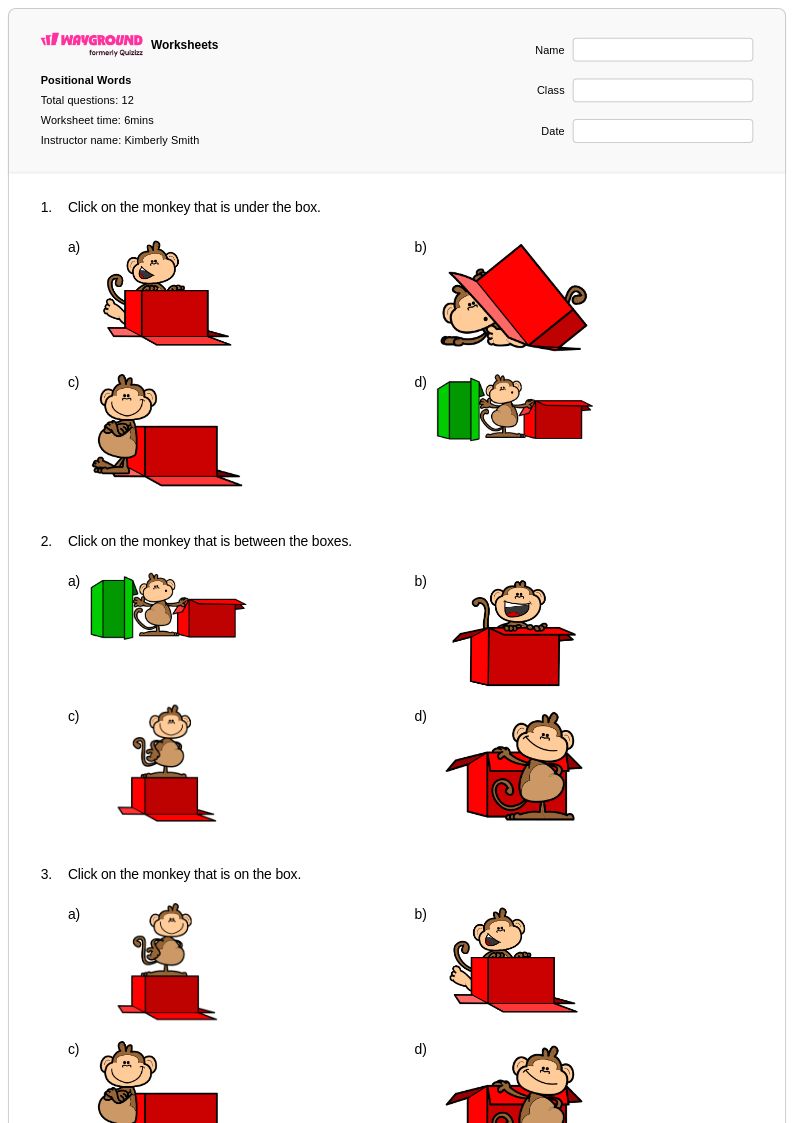
Start with concrete, physical experiences. Use classroom objects and students' own bodies to demonstrate concepts like "above," "below," and "beside." Gradually move to 2D representations on paper, connecting the physical action to the abstract drawing. For older students, introduce grid systems, maps, and coordinate planes to build on this foundation.
What kinds of exercises help students practice spatial reasoning?
Effective practice moves from simple to complex. Start with worksheets that ask students to identify object positions (e.g., "circle the apple under the table"). Progress to activities requiring them to follow multi-step directions or describe routes on a map. For advanced learners, use exercises involving coordinate grids or visualizing 3D shapes from 2D nets.
What are common mistakes students make with spatial concepts?
A frequent error is confusing left and right, especially when an object's orientation is different from their own. Students may also struggle to transition from 3D space to 2D representations, finding it difficult to visualize depth or perspective on a flat page. Another common issue is misinterpreting relational words, like mixing up "in front of" and "behind" when viewing a scene from a specific viewpoint.
How can I use these spatial concepts worksheets with my students?
Wayground's worksheets are flexible for any classroom setup. You can assign them as interactive digital activities on the Wayground platform or download them as printable PDFs for hands-on, offline practice. Every worksheet includes a complete answer key. For printed work, you can use the Wayground for Teachers app to quickly scan and grade student submissions.
How do spatial concepts fit into the Common Core math standards?
Common Core standards for Geometry build spatial reasoning skills from an early age. In Kindergarten, students describe the relative positions of objects using terms like *above* and *next to*. This foundation supports later work in composing shapes and, eventually, understanding the coordinate plane in Grade 5, which is a critical step toward more advanced geometry and algebra.
How can I differentiate instruction for students with varying spatial skills?
For students needing support, use Wayground's digital accommodation tools like Read Aloud to help with positional vocabulary or Reduced Answer Choices to simplify tasks. For the whole class, you can create scaffolded versions of a printable worksheet by adjusting the font size or applying a dyslexia-friendly font to improve readability and focus.