
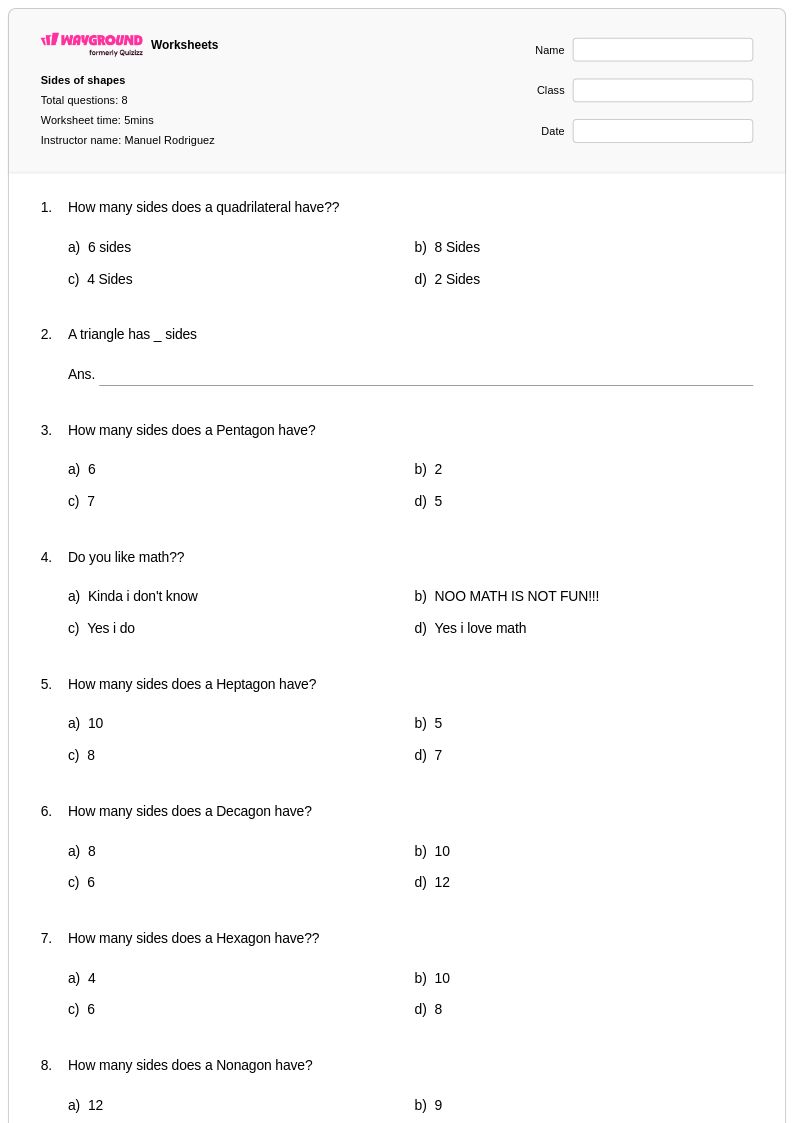
8 Q
KG - Uni
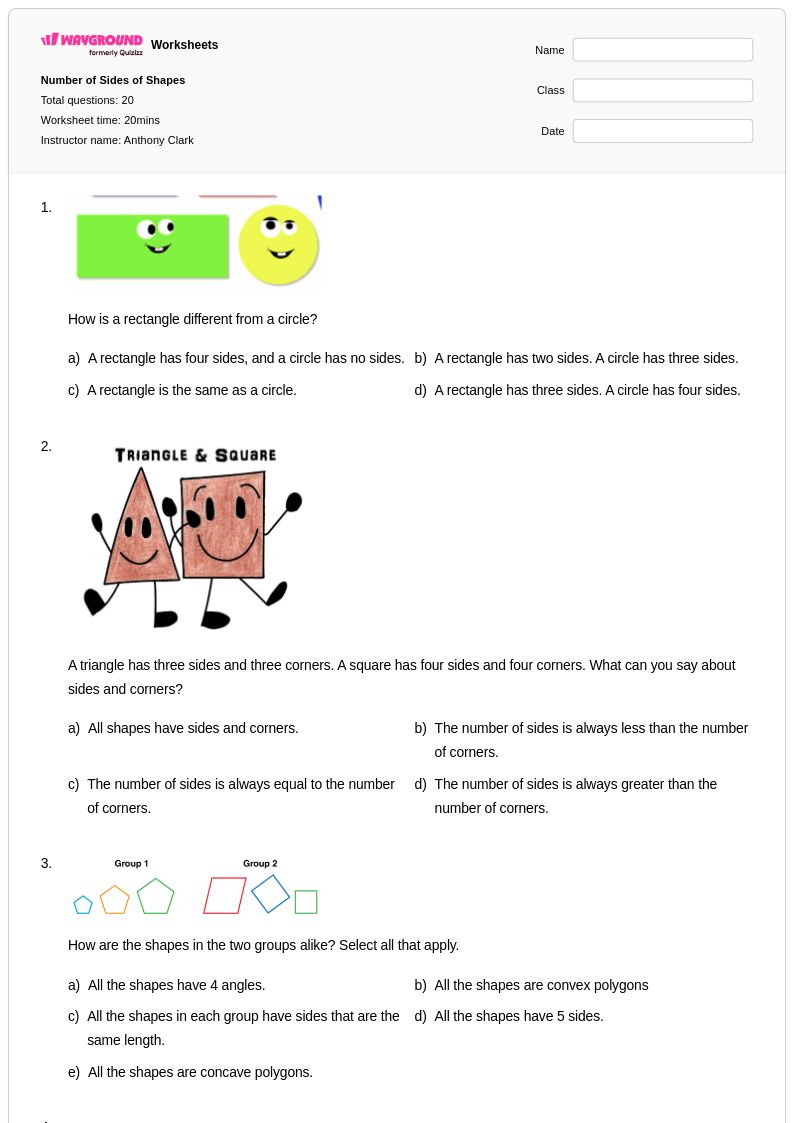
20 Q
3rd - Uni
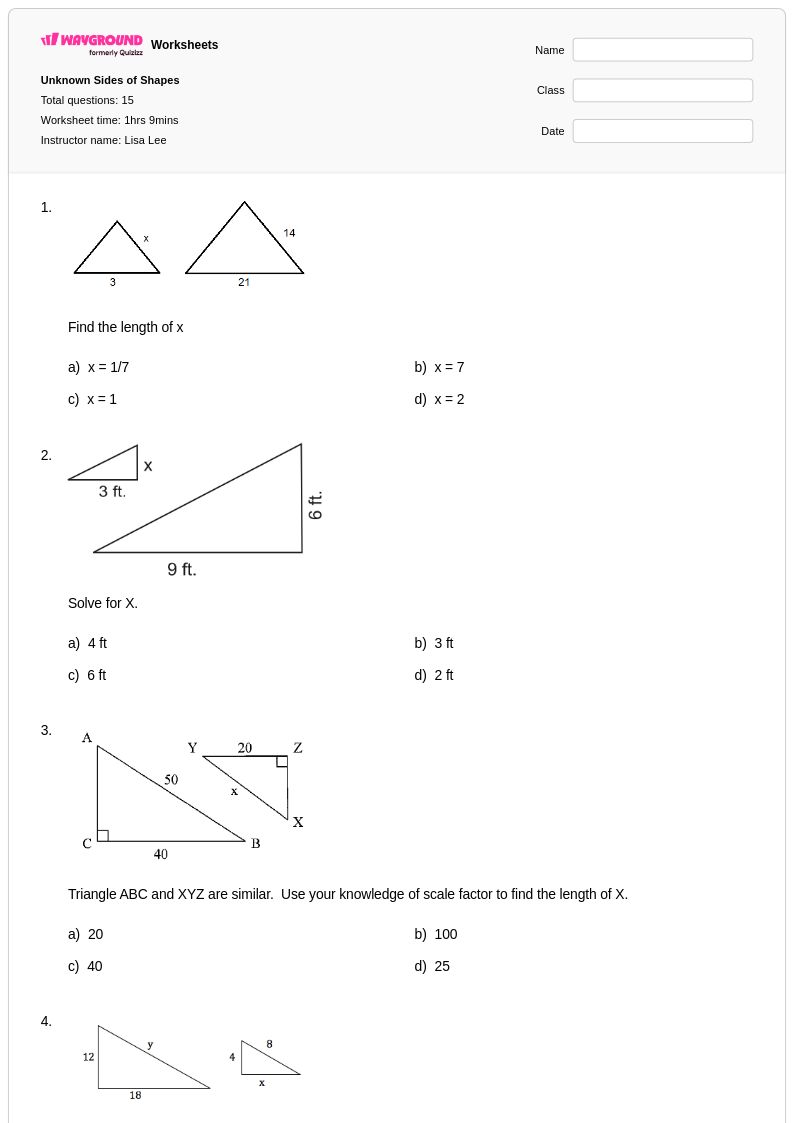
15 Q
7th
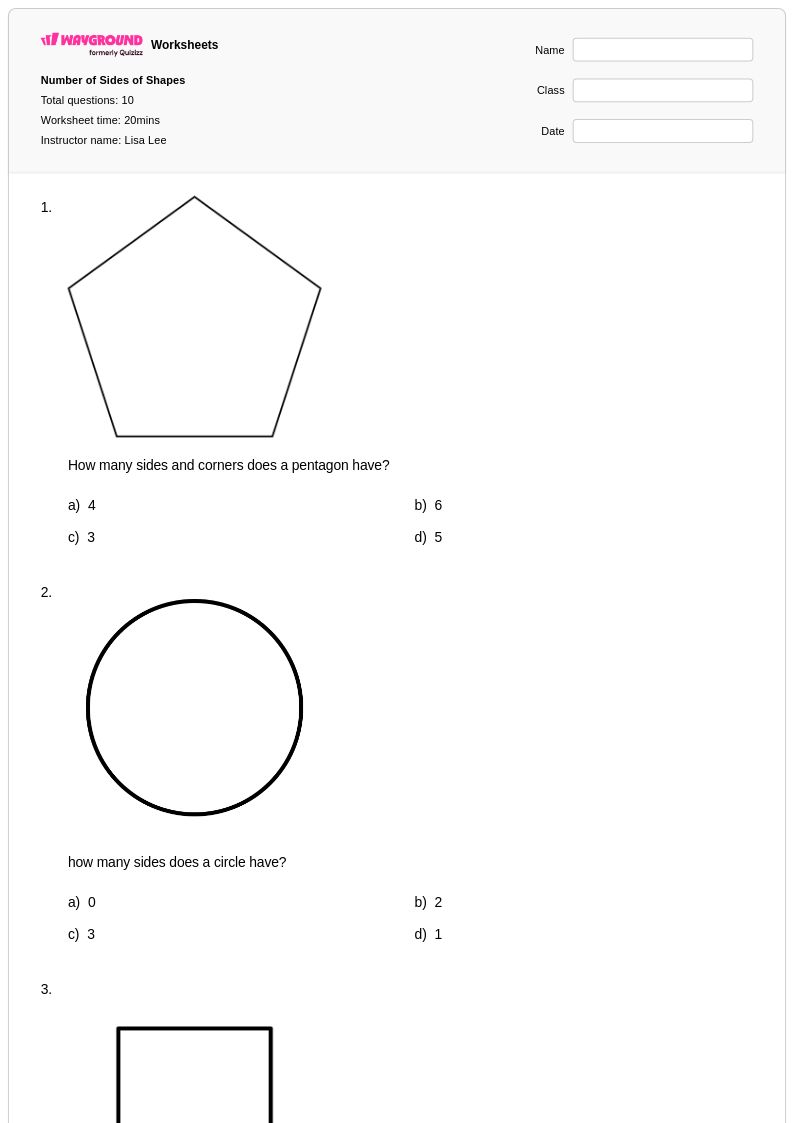
10 Q
KG - 1st
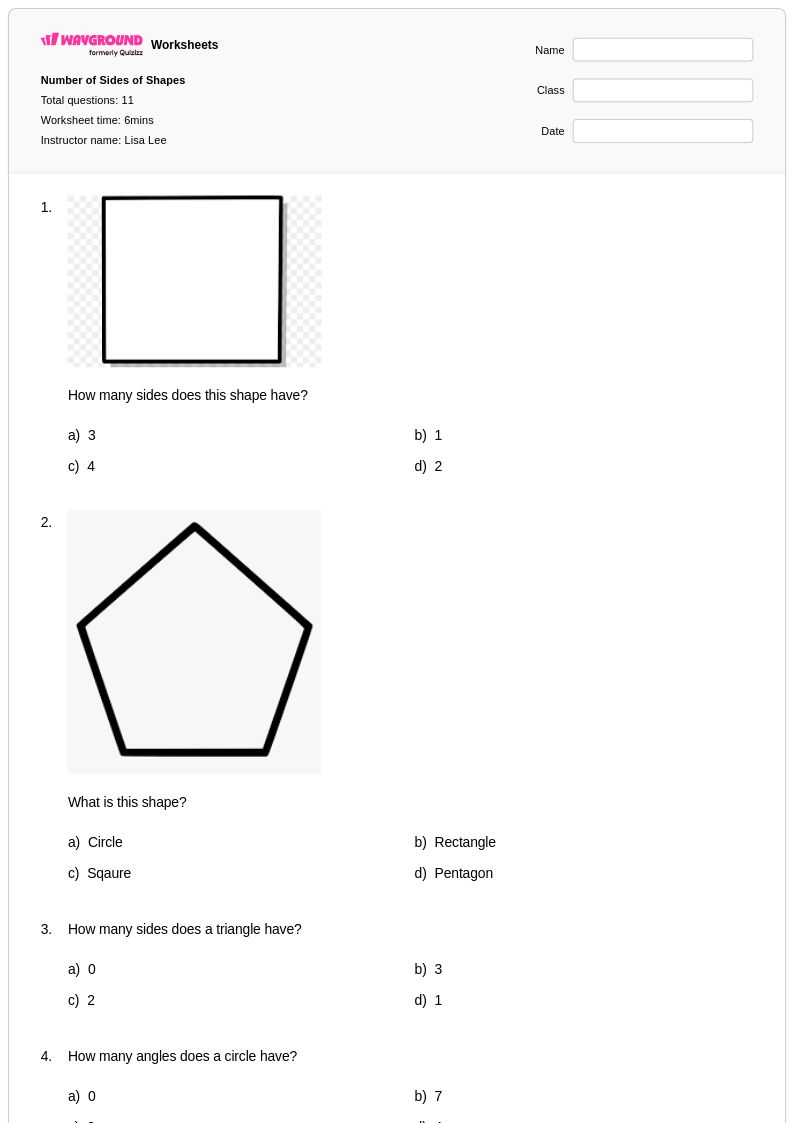
11 Q
1st - 2nd
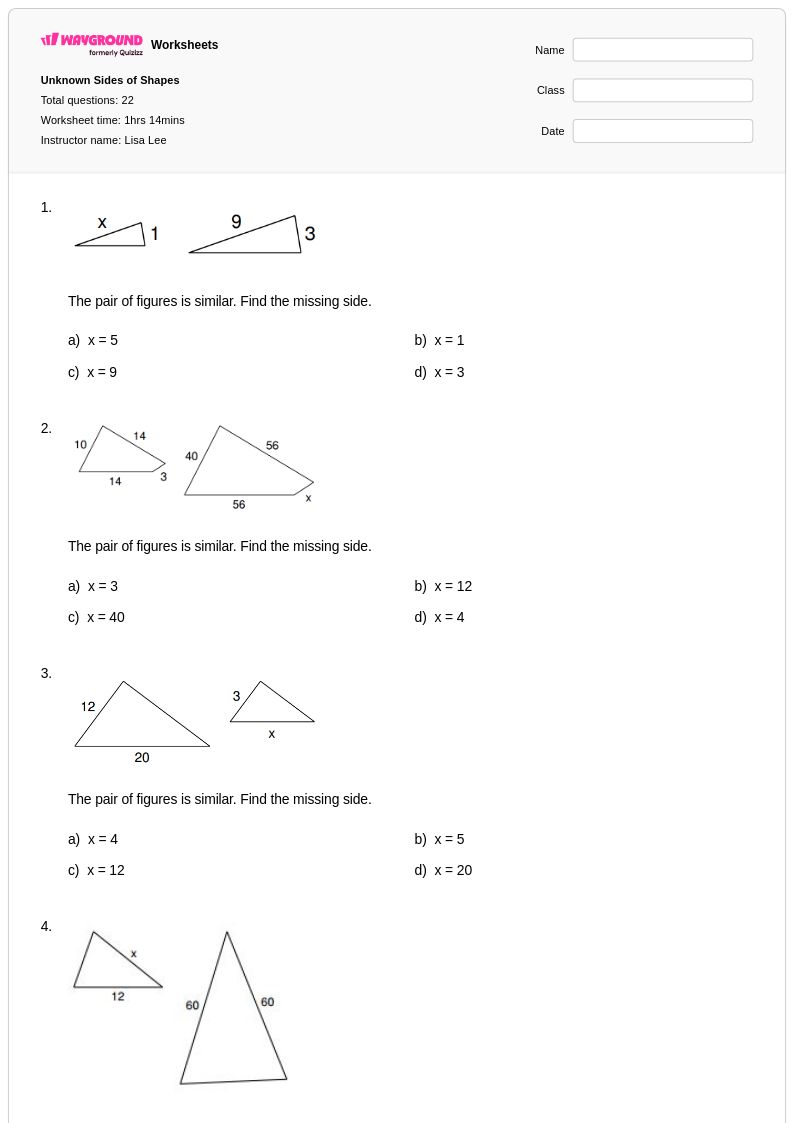
22 Q
7th
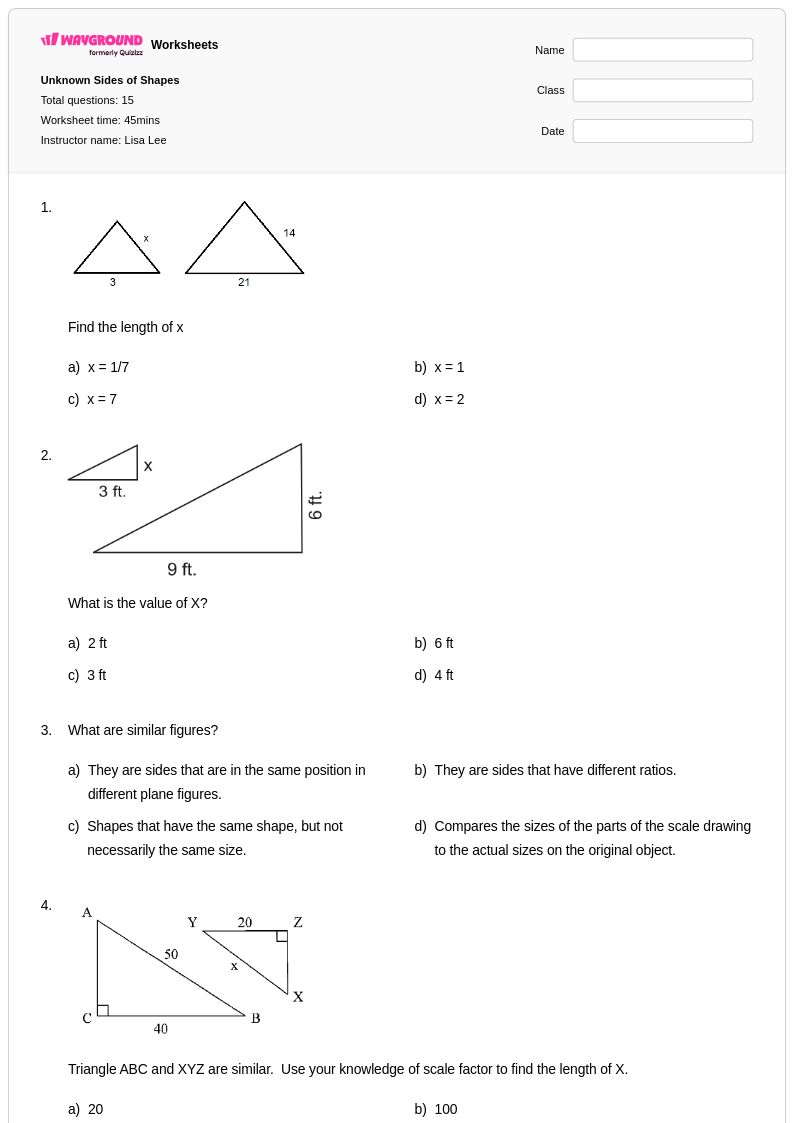
15 Q
8th
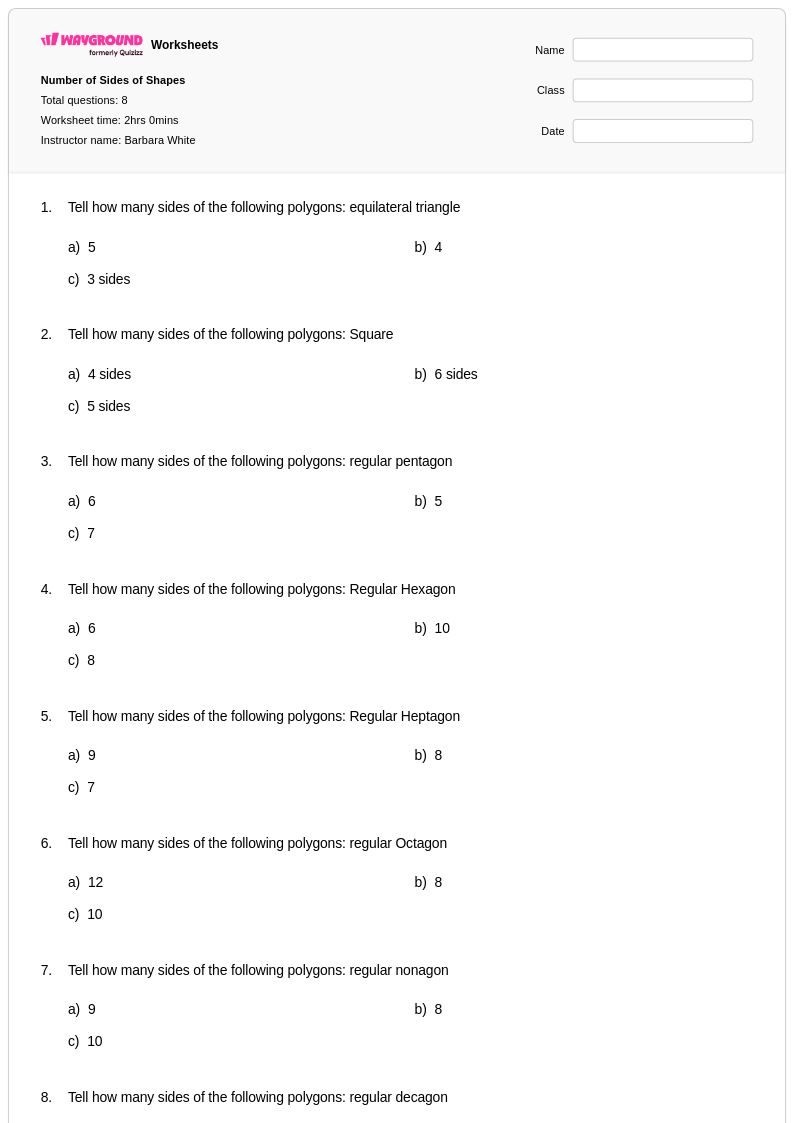
8 Q
3rd
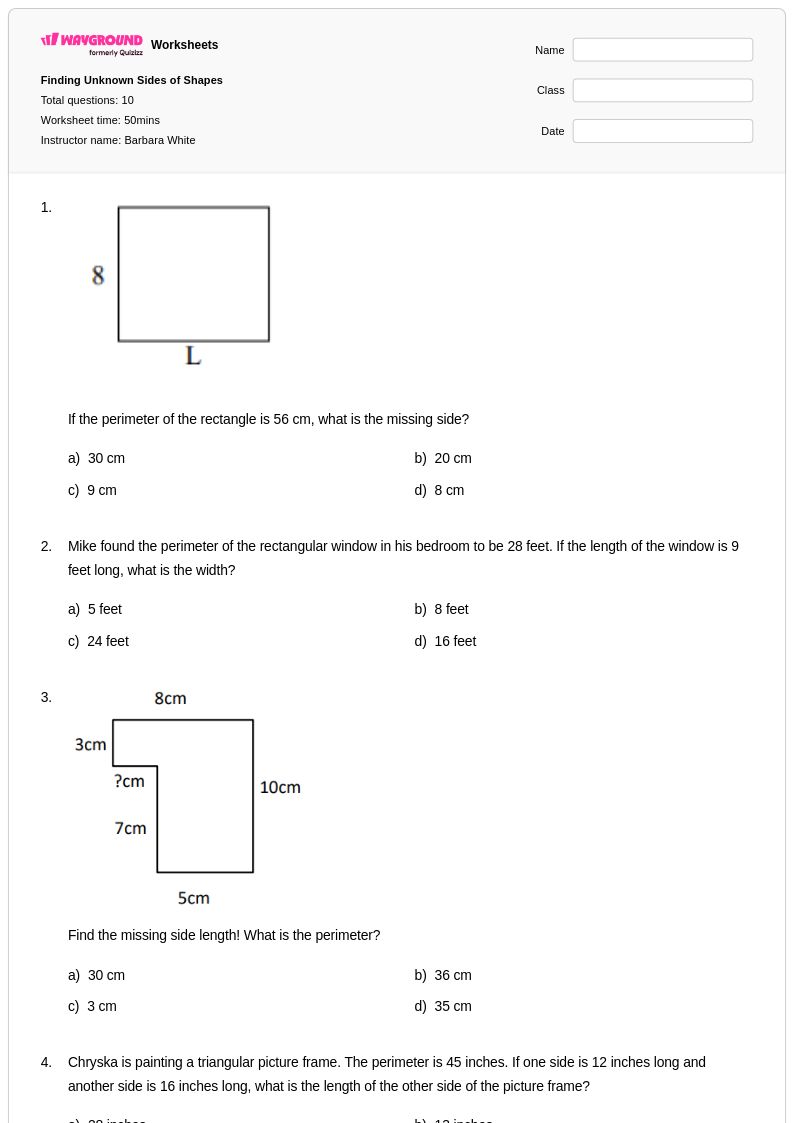
10 Q
3rd
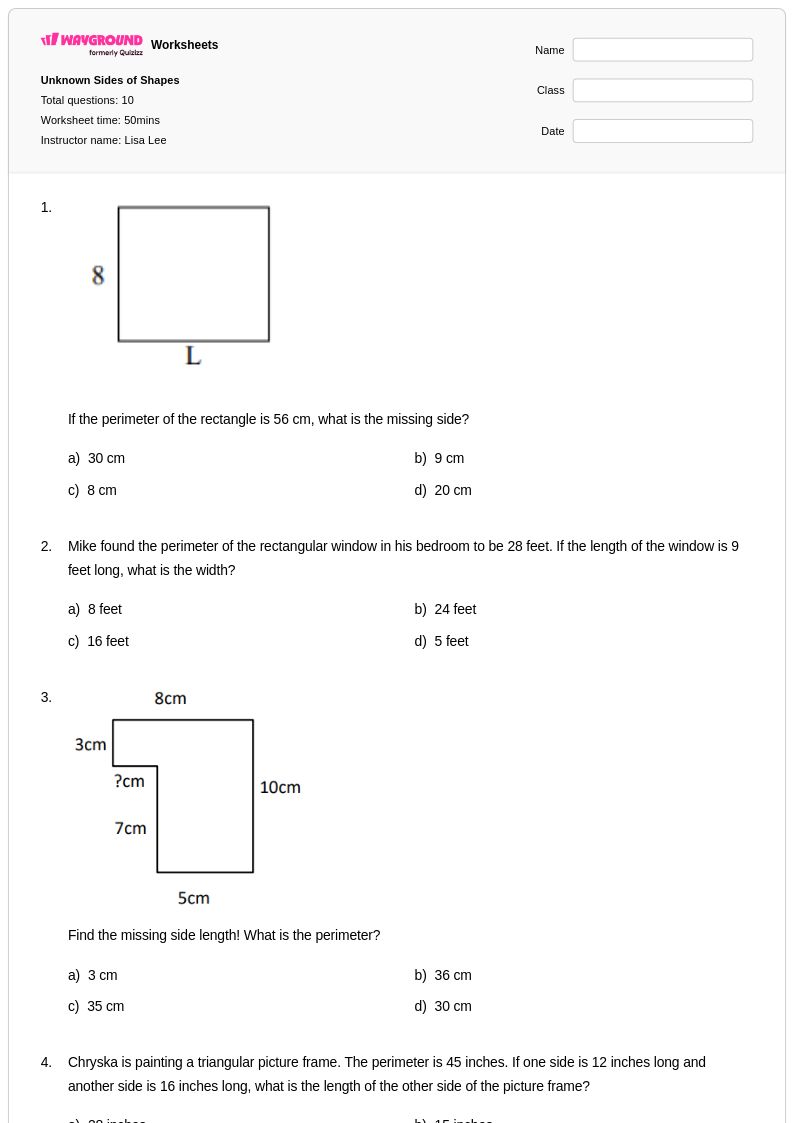
10 Q
3rd
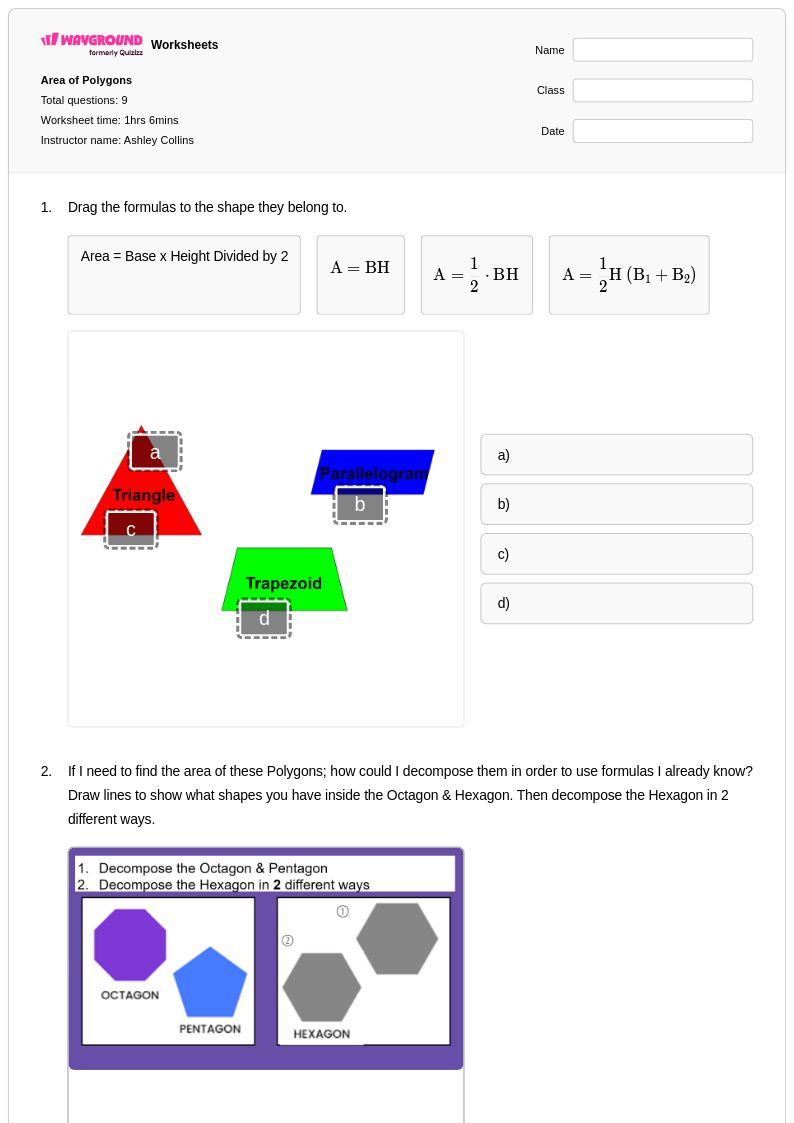
16 Q
6th
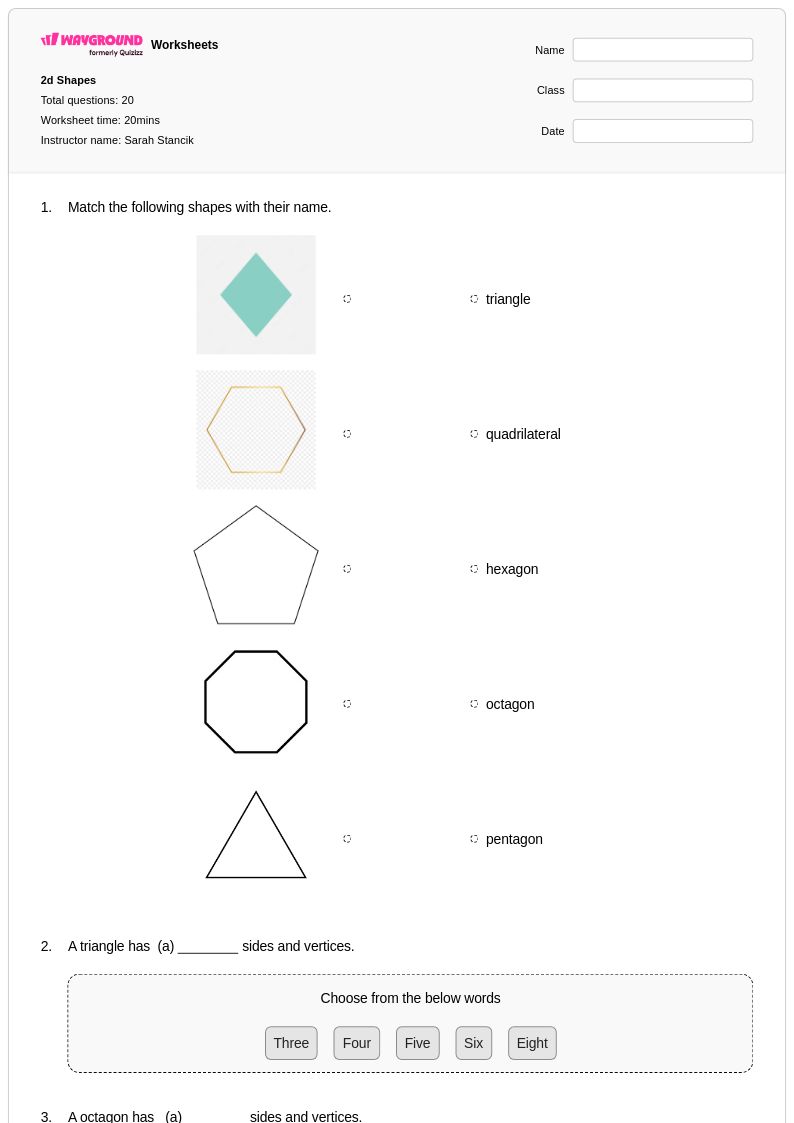
20 Q
3rd
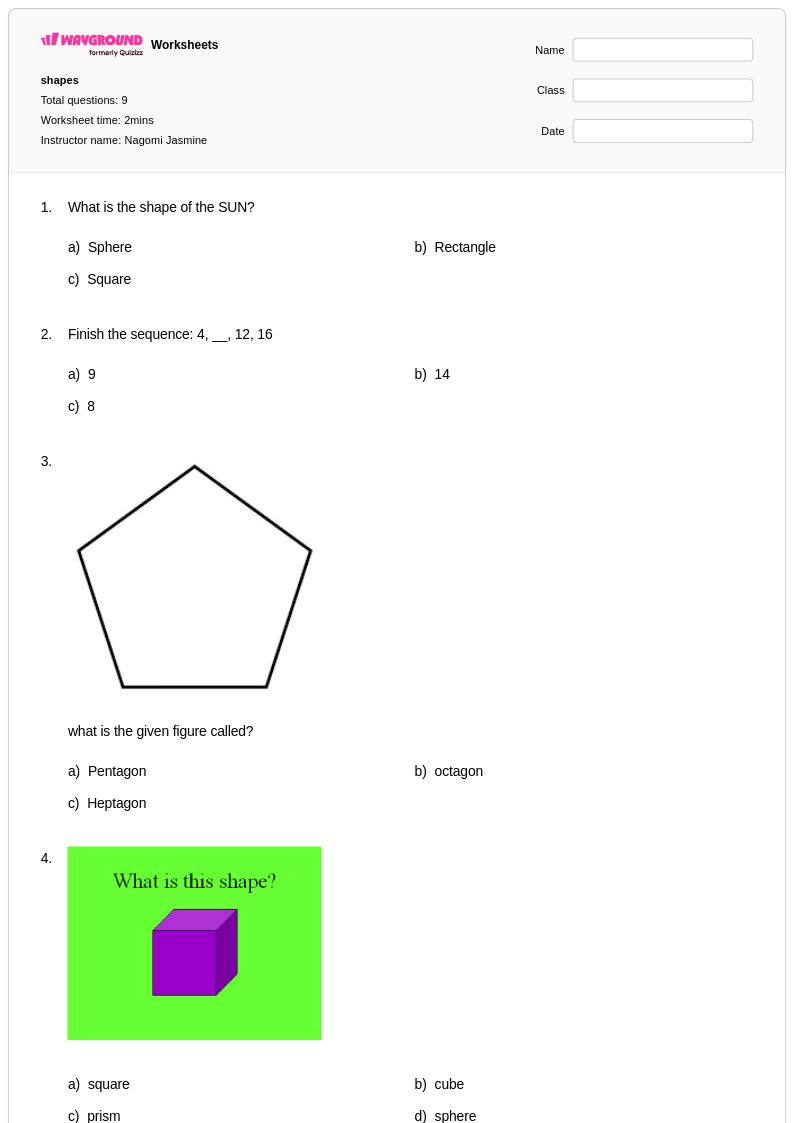
9 Q
1st
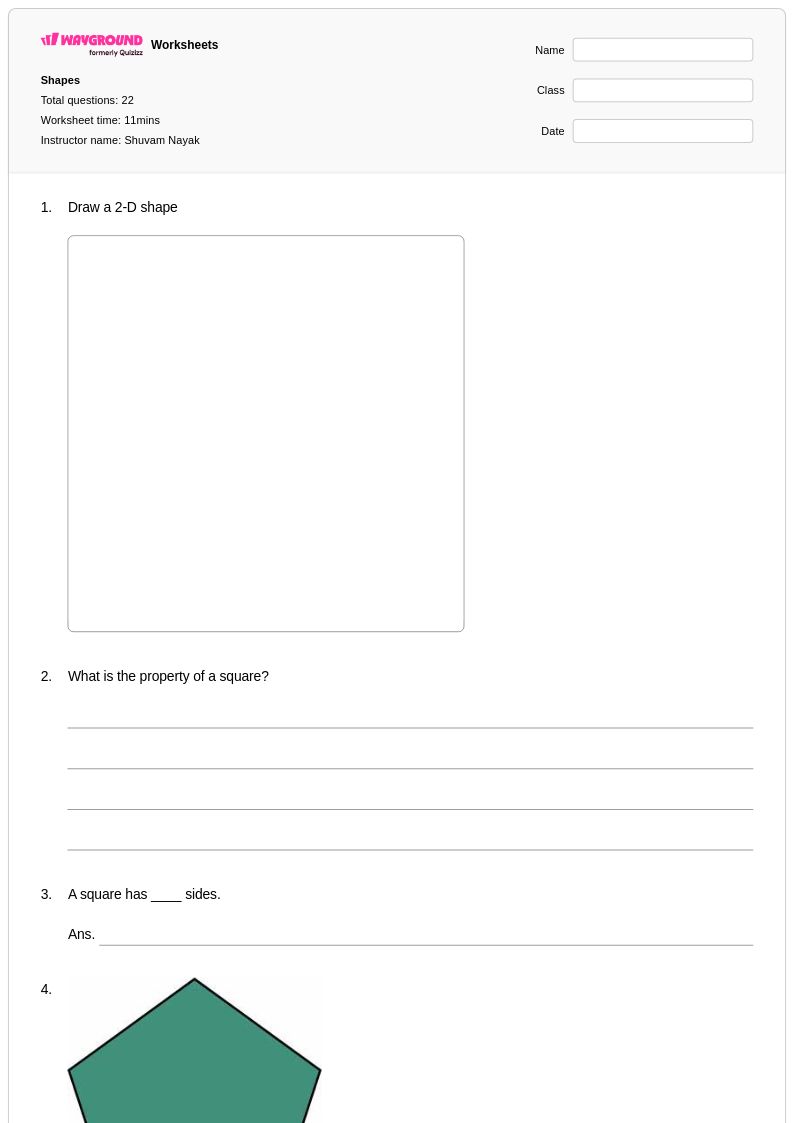
22 Q
1st - 5th
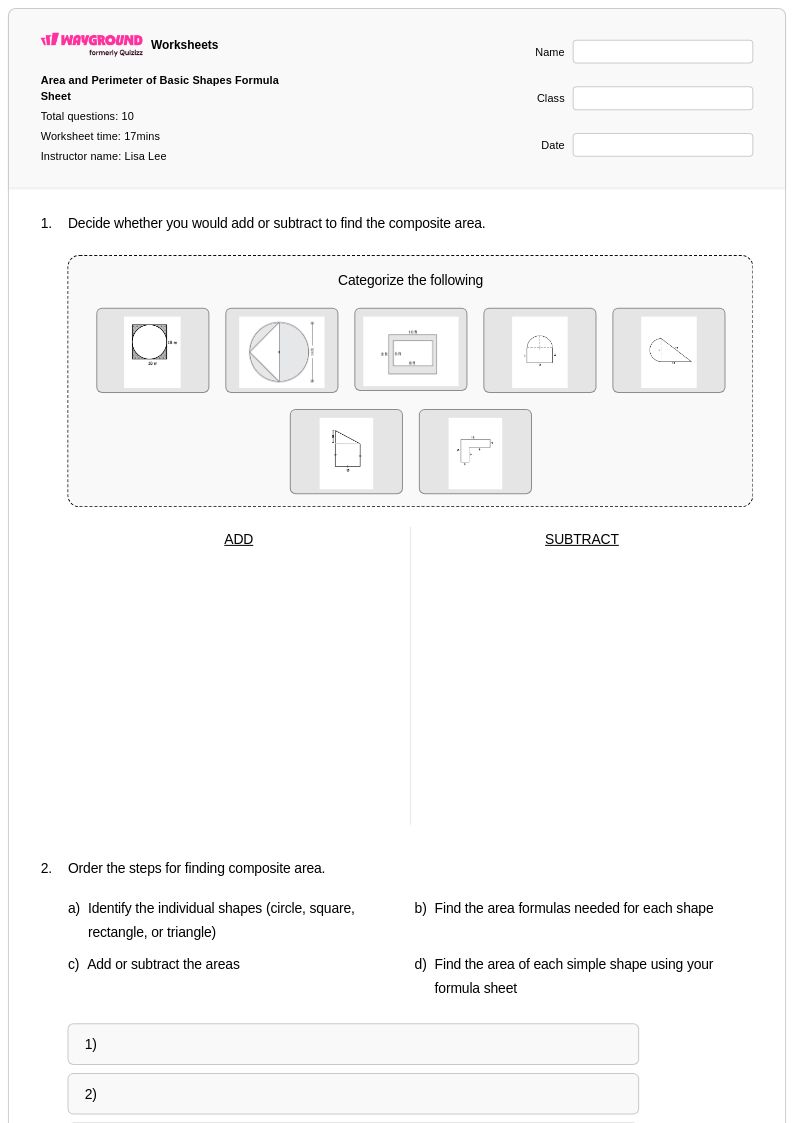
10 Q
8th
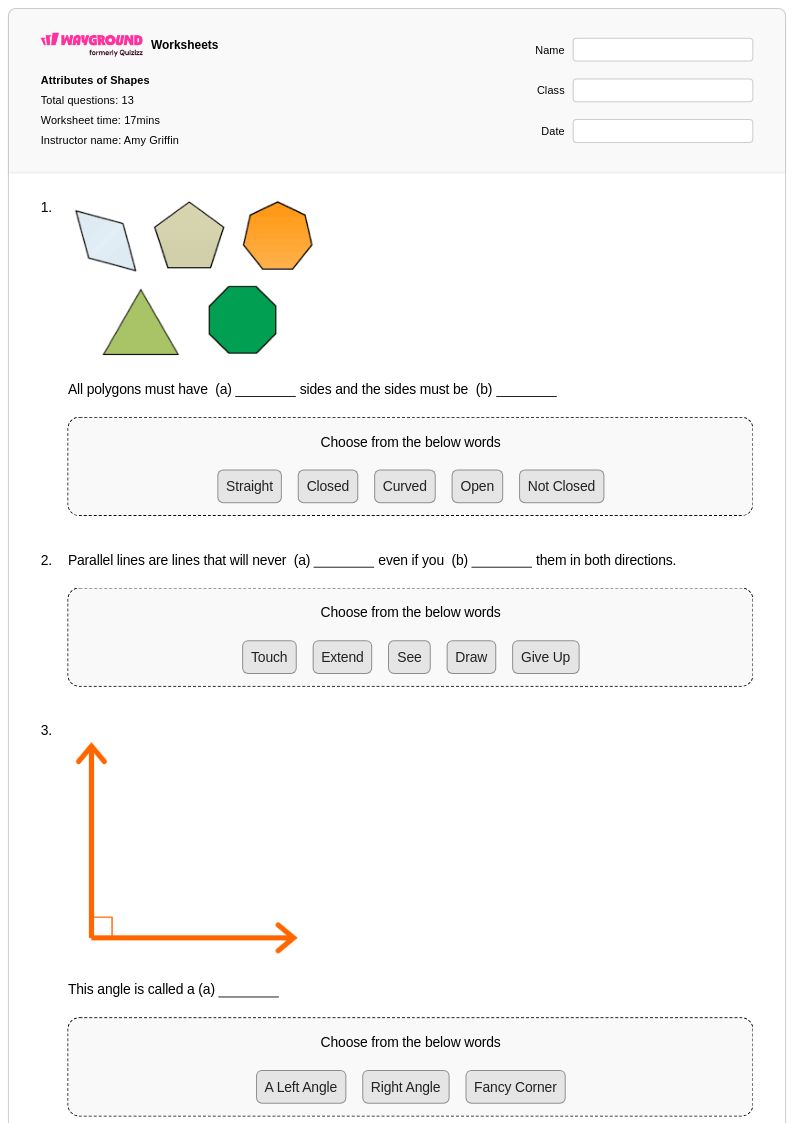
13 Q
3rd
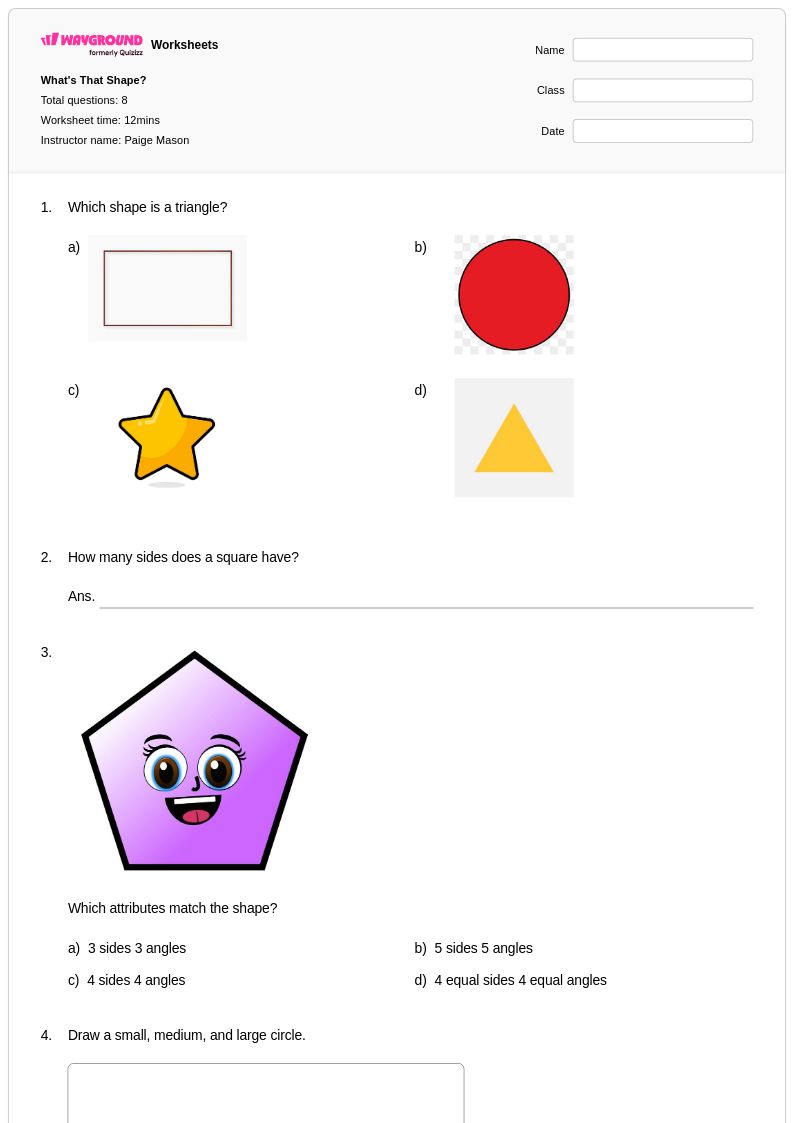
8 Q
2nd
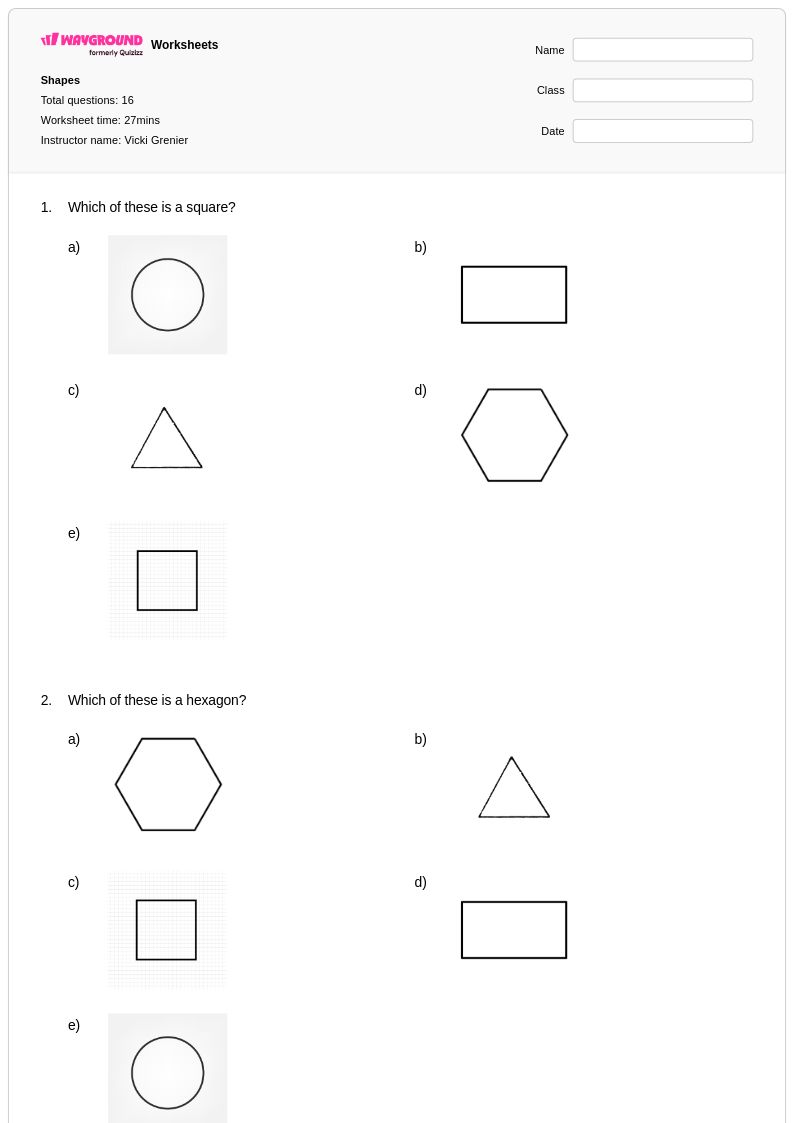
16 Q
KG
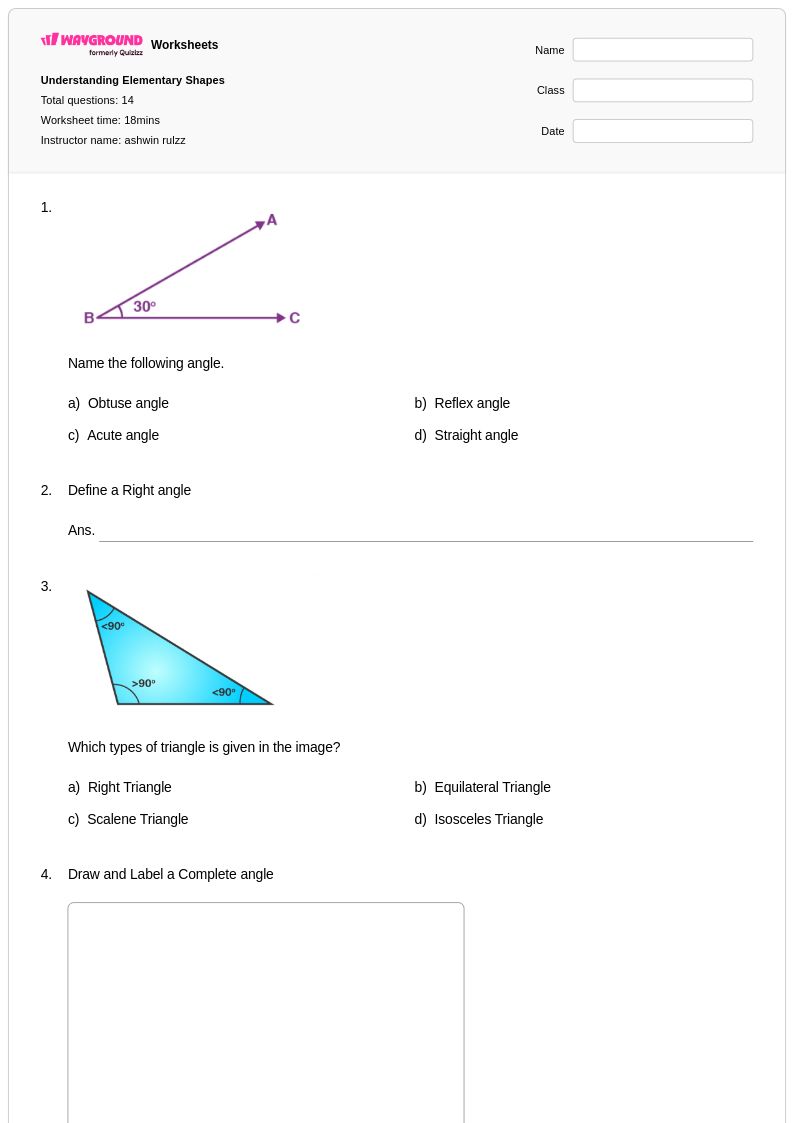
14 Q
6th
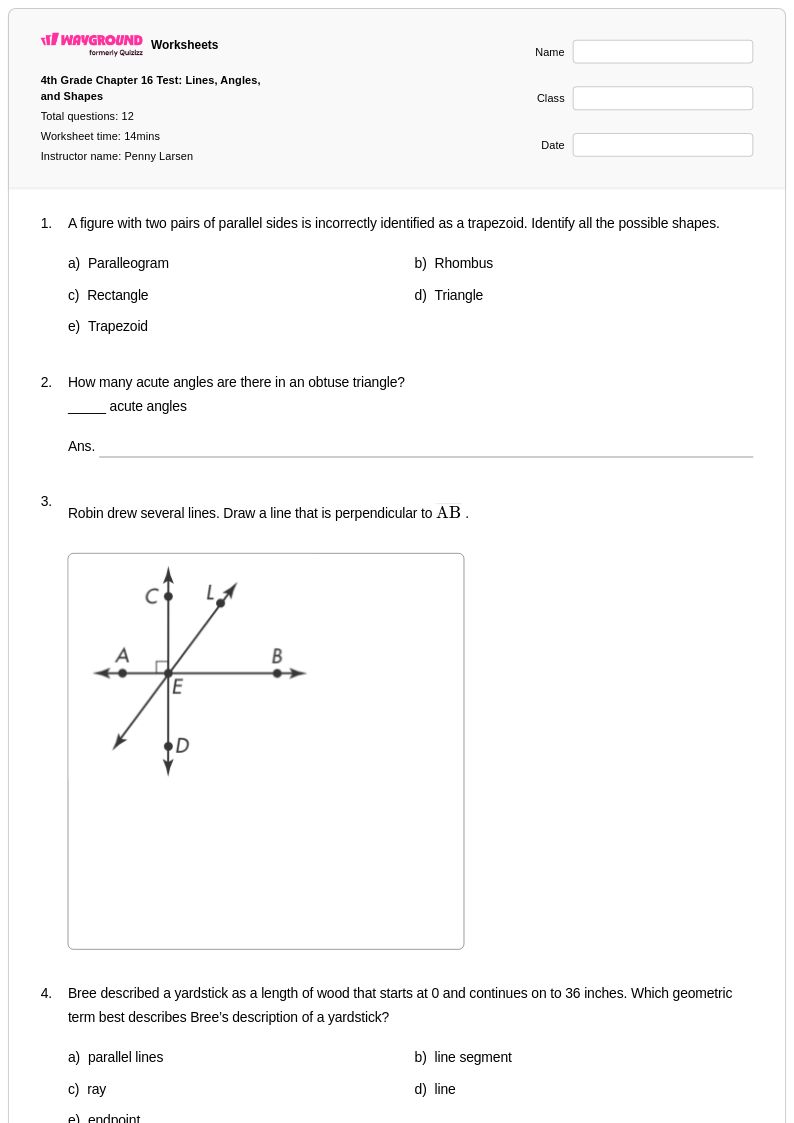
12 Q
4th
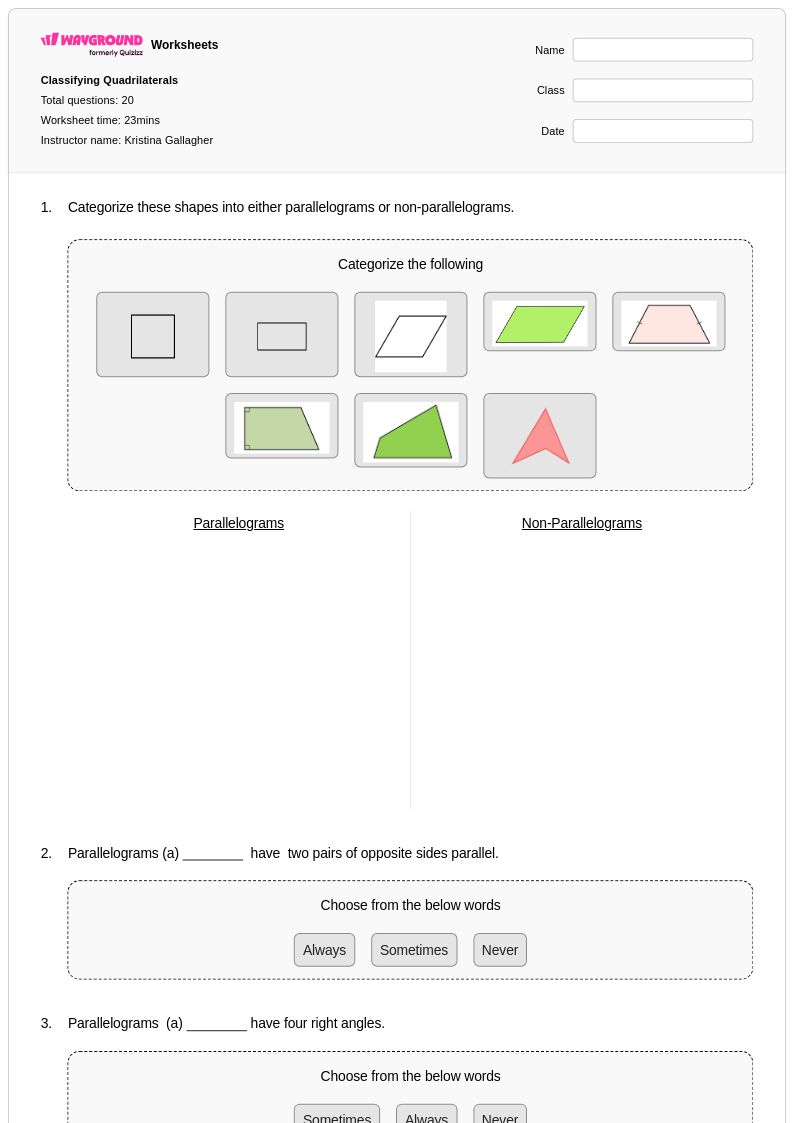
20 Q
5th
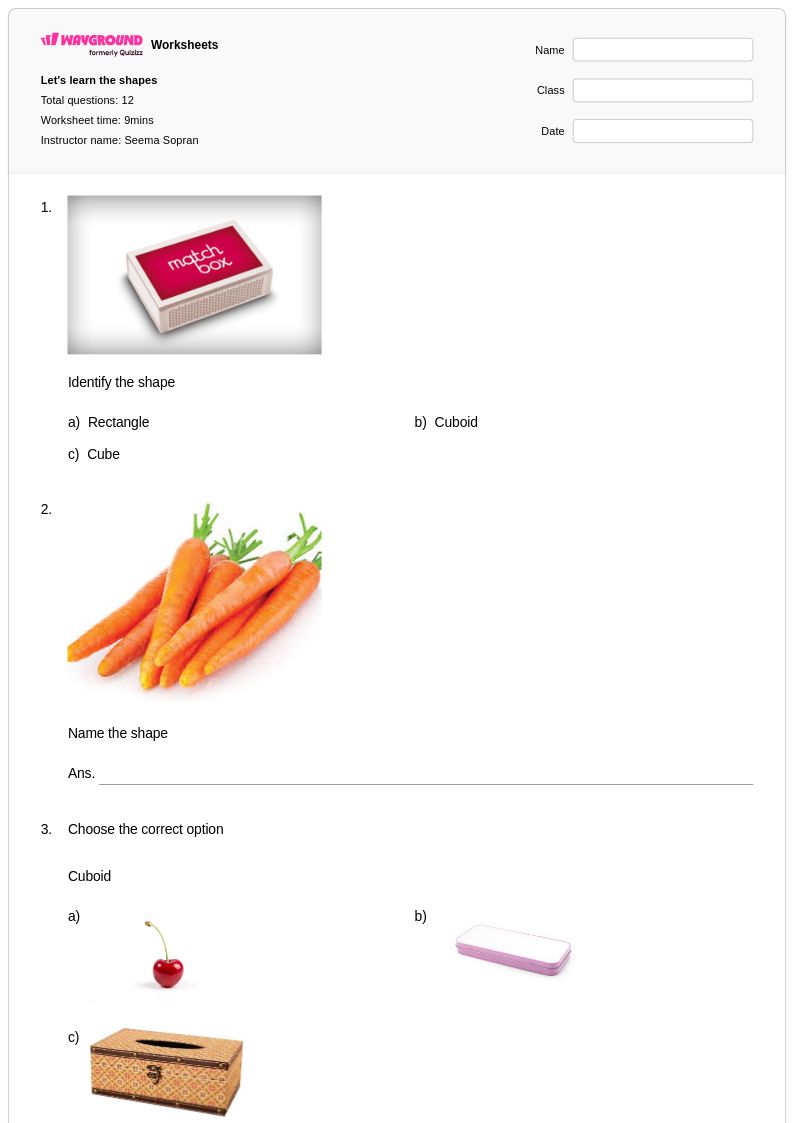
12 Q
1st
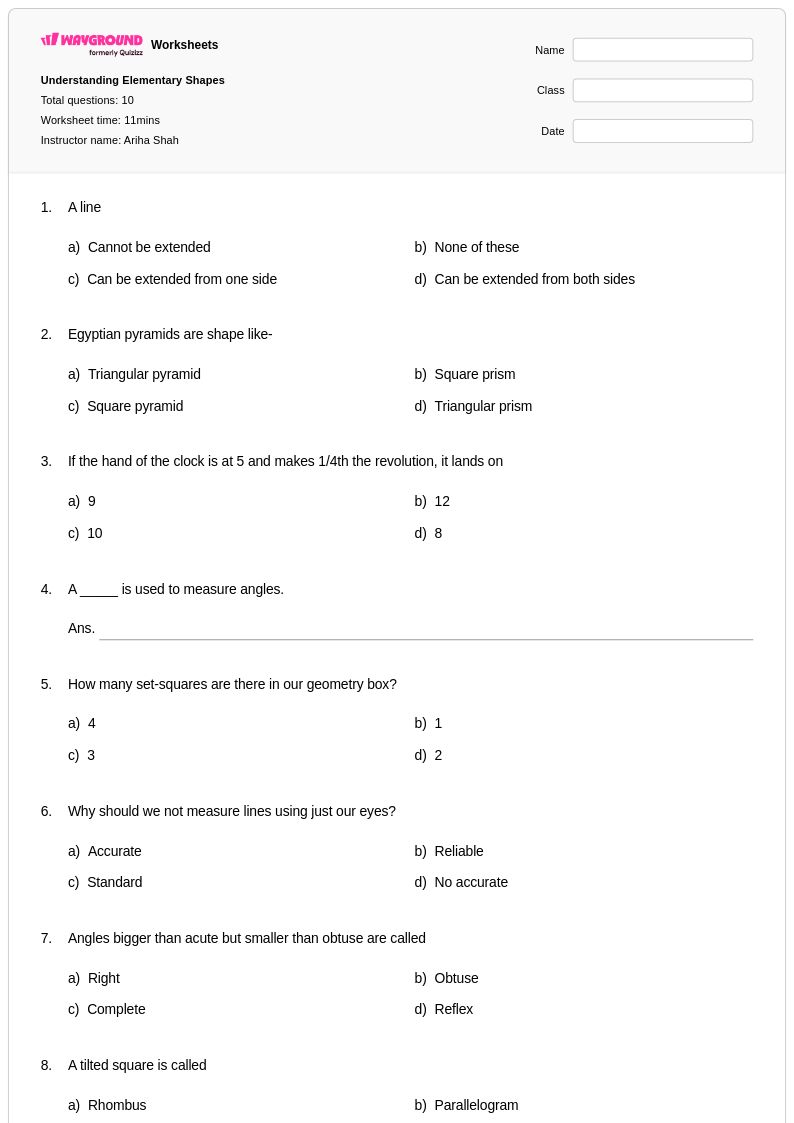
10 Q
6th
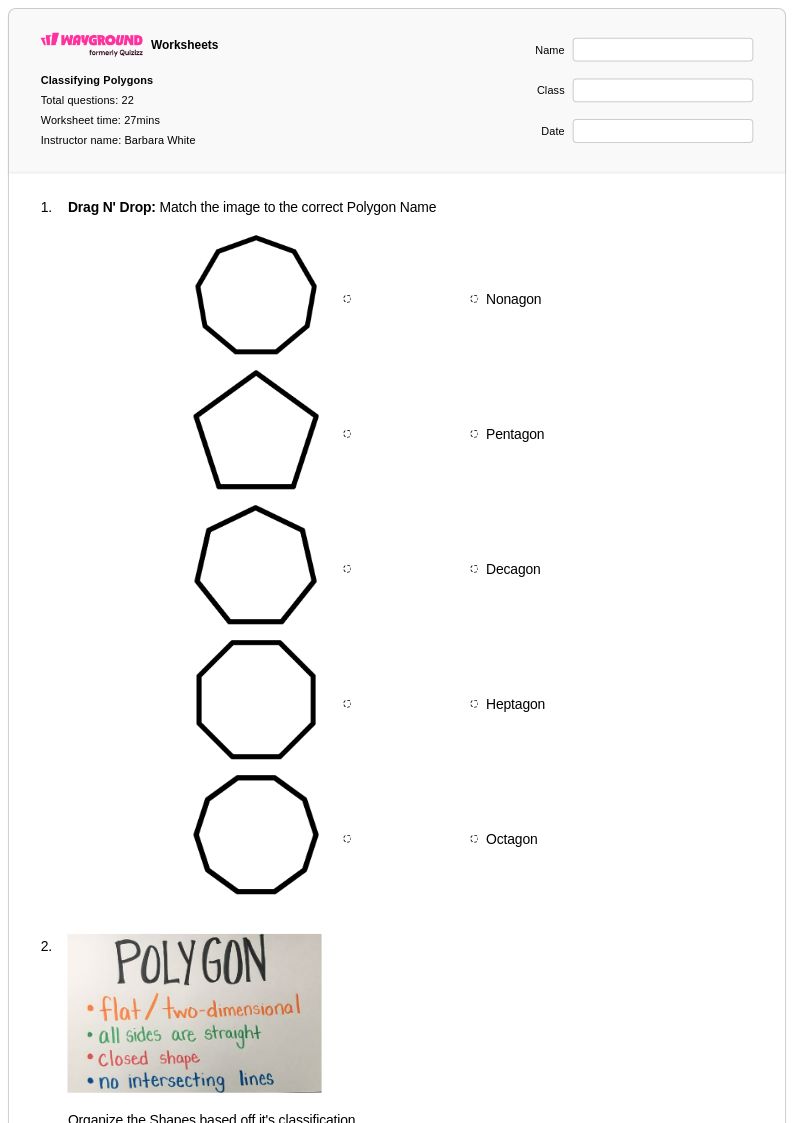
22 Q
5th
Explore Worksheets by Subjects
Explore printable Sides of Shapes worksheets
Sides of shapes worksheets available through Wayground (formerly Quizizz) provide comprehensive practice for students learning to identify, count, and analyze the linear boundaries that define geometric figures. These carefully designed resources strengthen fundamental spatial reasoning skills by engaging learners with triangles, quadrilaterals, pentagons, hexagons, and other polygons through systematic exploration of their side properties. Students develop critical mathematical understanding as they work through practice problems that require them to distinguish between different polygon types based on side count, recognize parallel and perpendicular sides, and understand how side length and arrangement affect shape classification. Each worksheet comes with a complete answer key and is available as a free printable pdf, making it easy for educators to incorporate these essential geometry concepts into their curriculum while providing students with tangible materials they can reference and review.
Wayground (formerly Quizizz) supports mathematics educators with an extensive collection of teacher-created resources that includes millions of sides of shapes worksheets designed to meet diverse classroom needs. The platform's robust search and filtering capabilities allow teachers to quickly locate materials that align with specific learning standards and match their students' skill levels, while built-in differentiation tools enable seamless customization for remediation or enrichment purposes. Teachers can access these geometry resources in both printable and digital formats, including downloadable pdf files that maintain consistent formatting across devices and printing systems. This flexibility proves invaluable for lesson planning, as educators can efficiently select appropriate worksheets for skill practice sessions, create differentiated assignments for mixed-ability classrooms, or generate assessment materials that accurately measure student understanding of polygon properties and geometric relationships.
FAQs
How do I teach students to identify the sides of a shape?
What exercises help students practice counting the sides of shapes?
What are common mistakes when learning about the sides of shapes?
How can I use this sides of shapes worksheet with my class?
How does identifying sides of shapes fit into the math curriculum?