
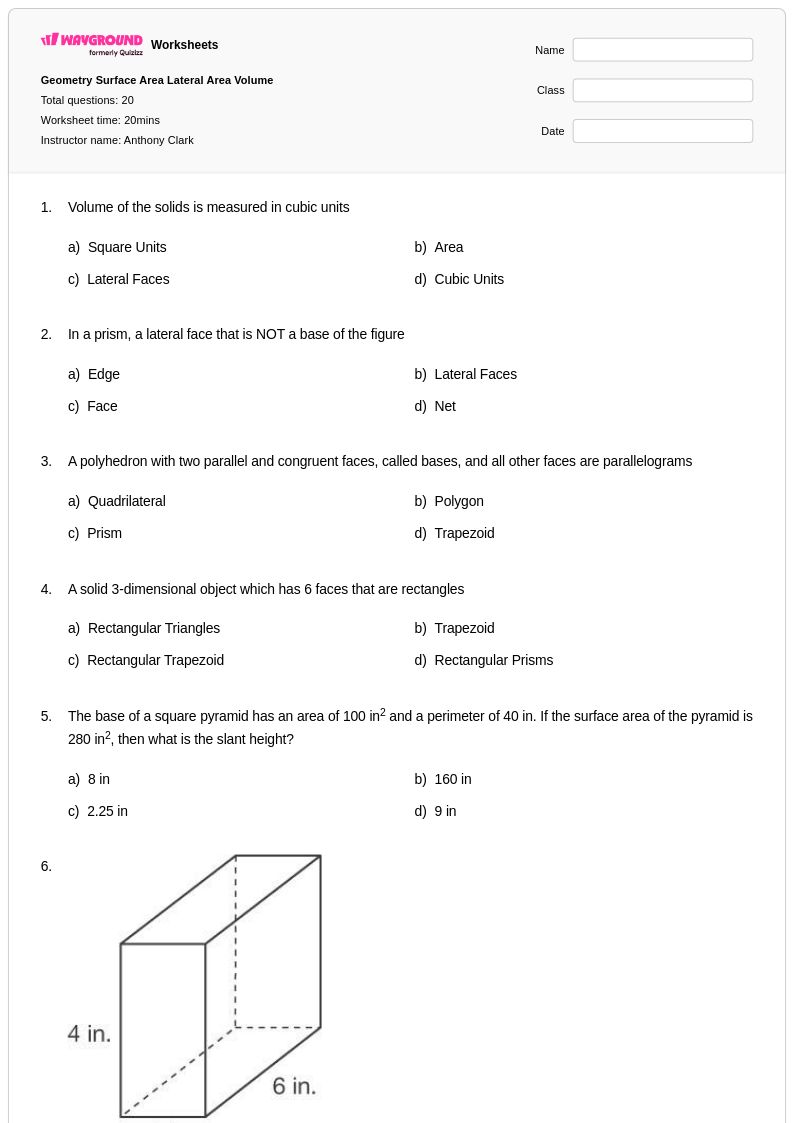
20 Q
8th - Uni
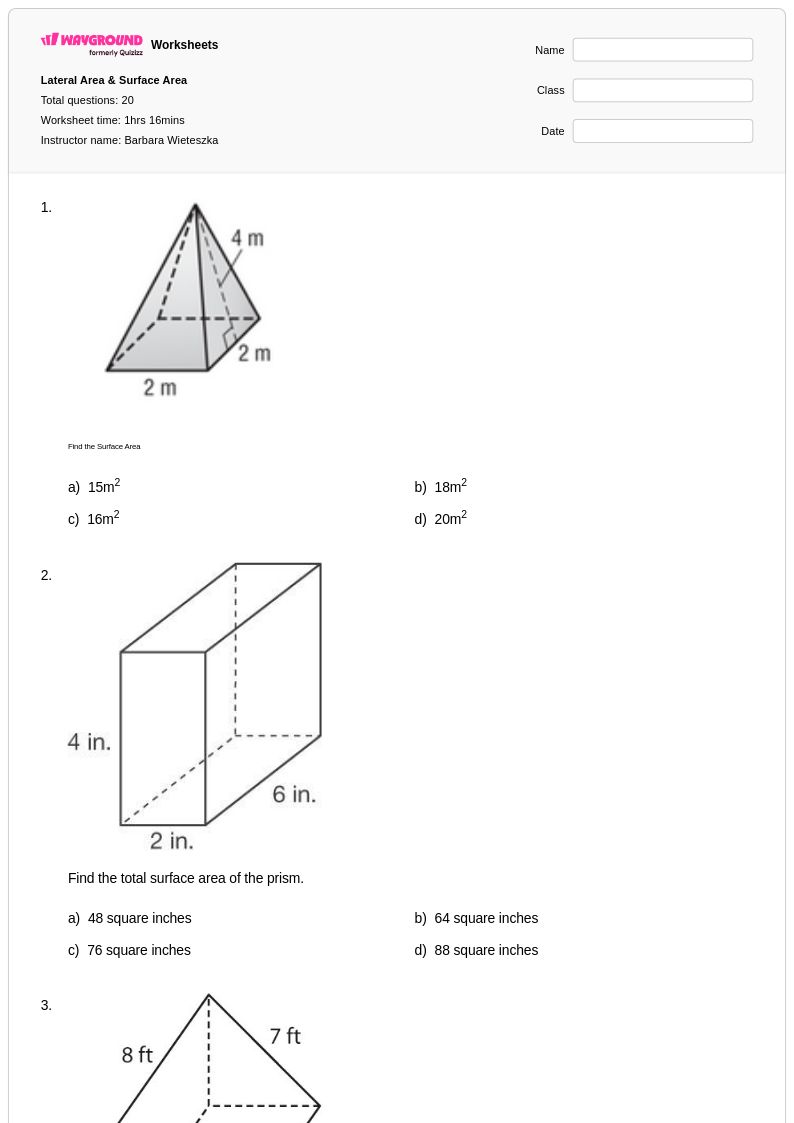
20 Q
10th
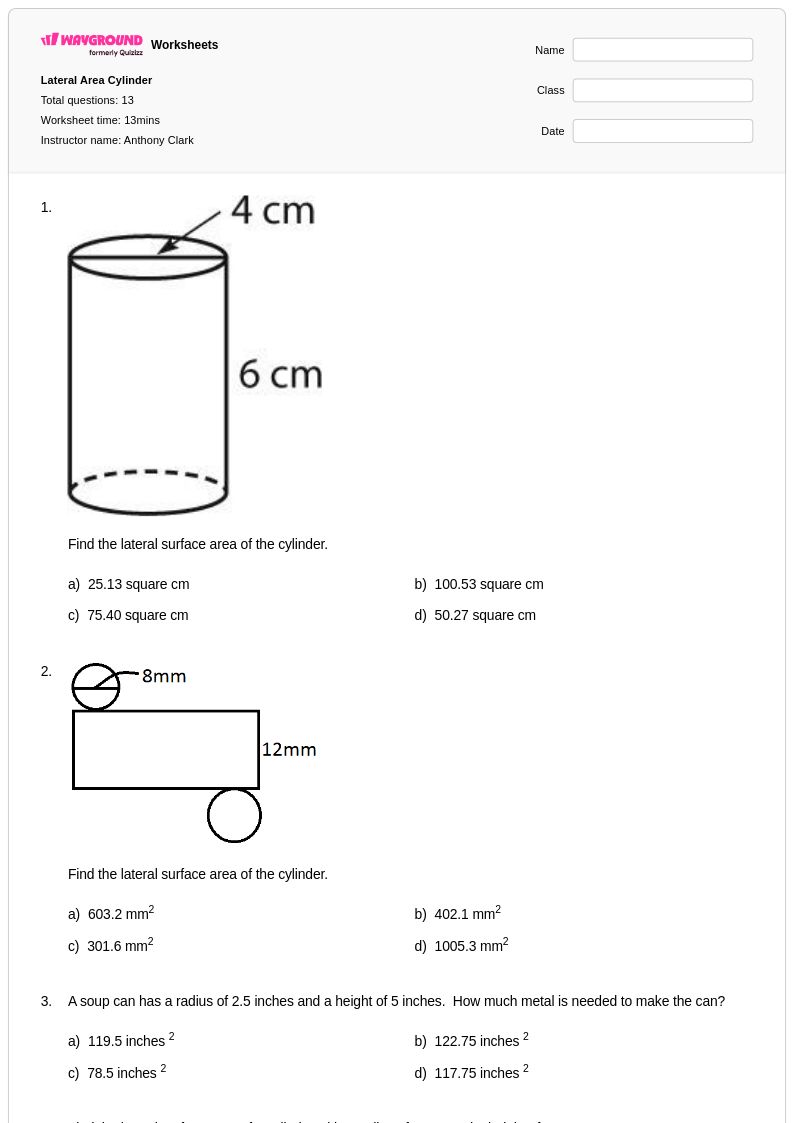
13 Q
8th - Uni
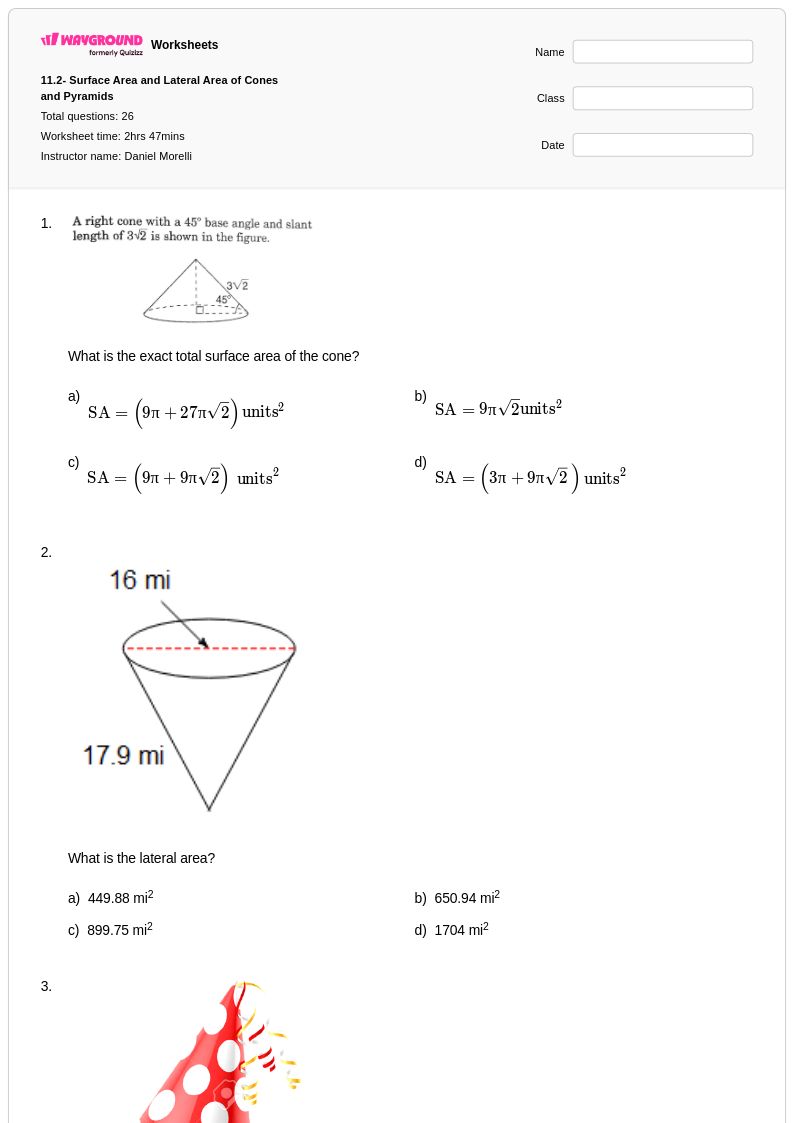
26 Q
10th
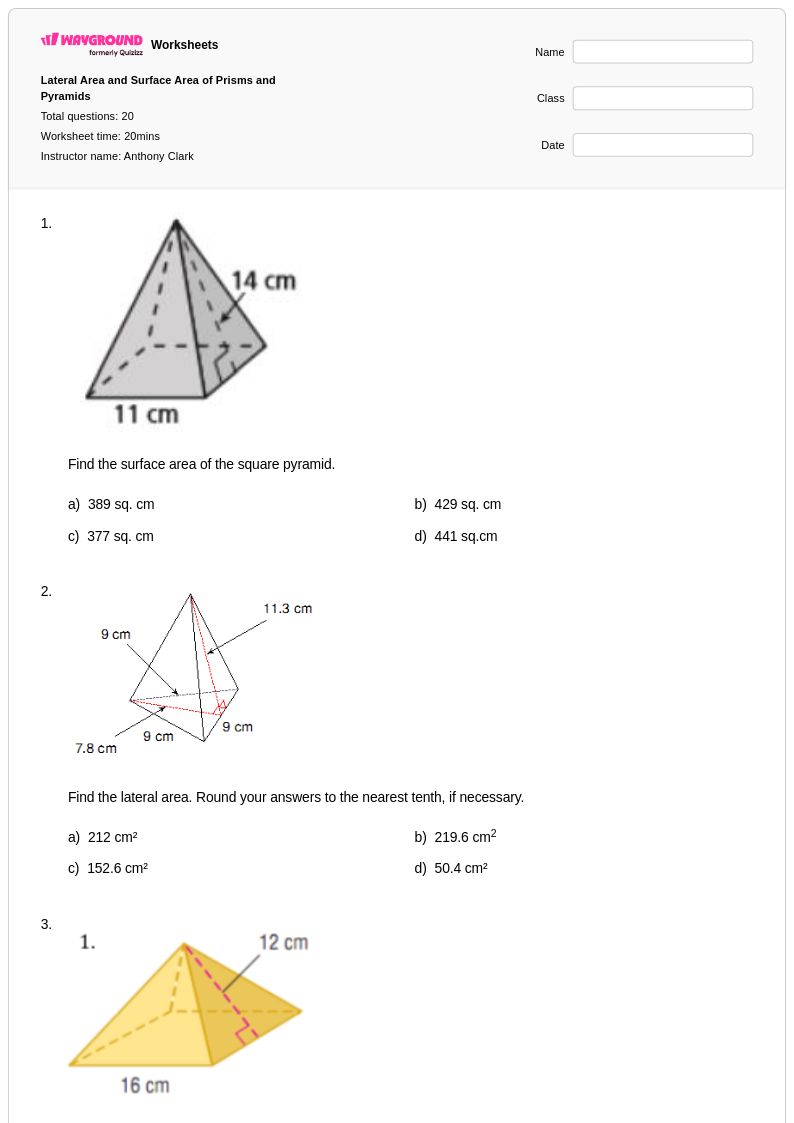
20 Q
7th - Uni
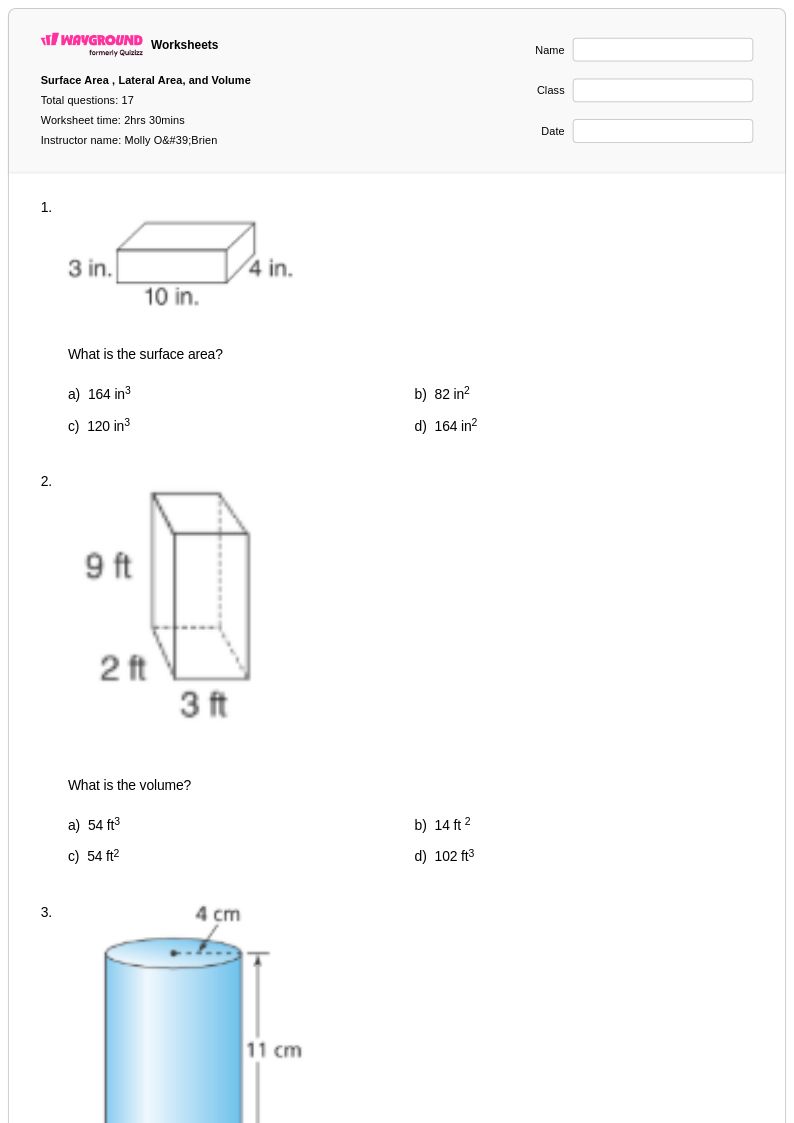
17 Q
9th - 12th
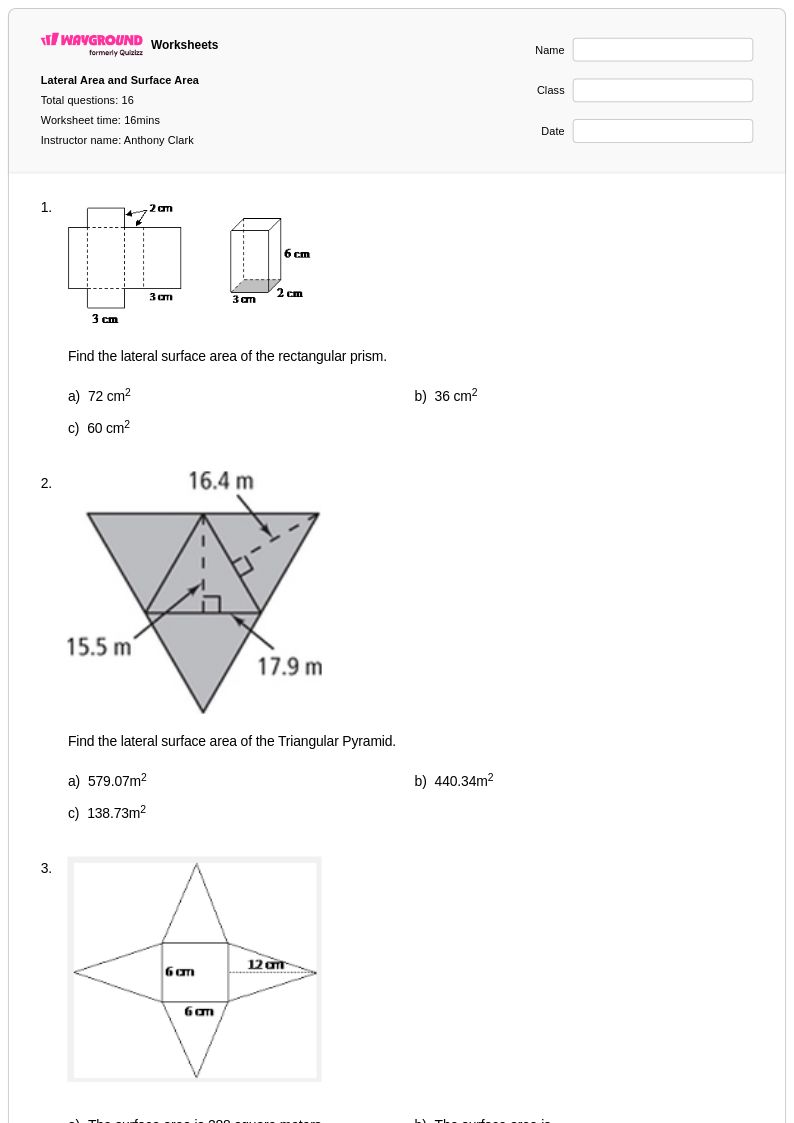
16 Q
7th - Uni
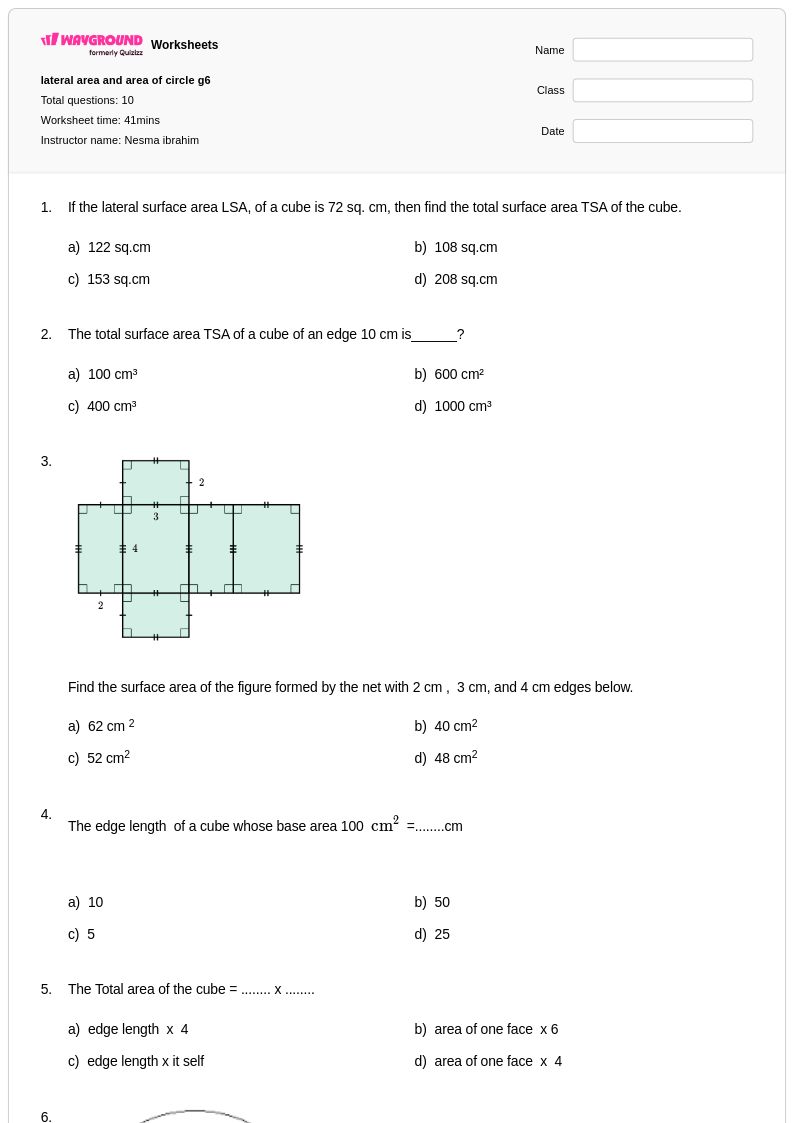
10 Q
6th
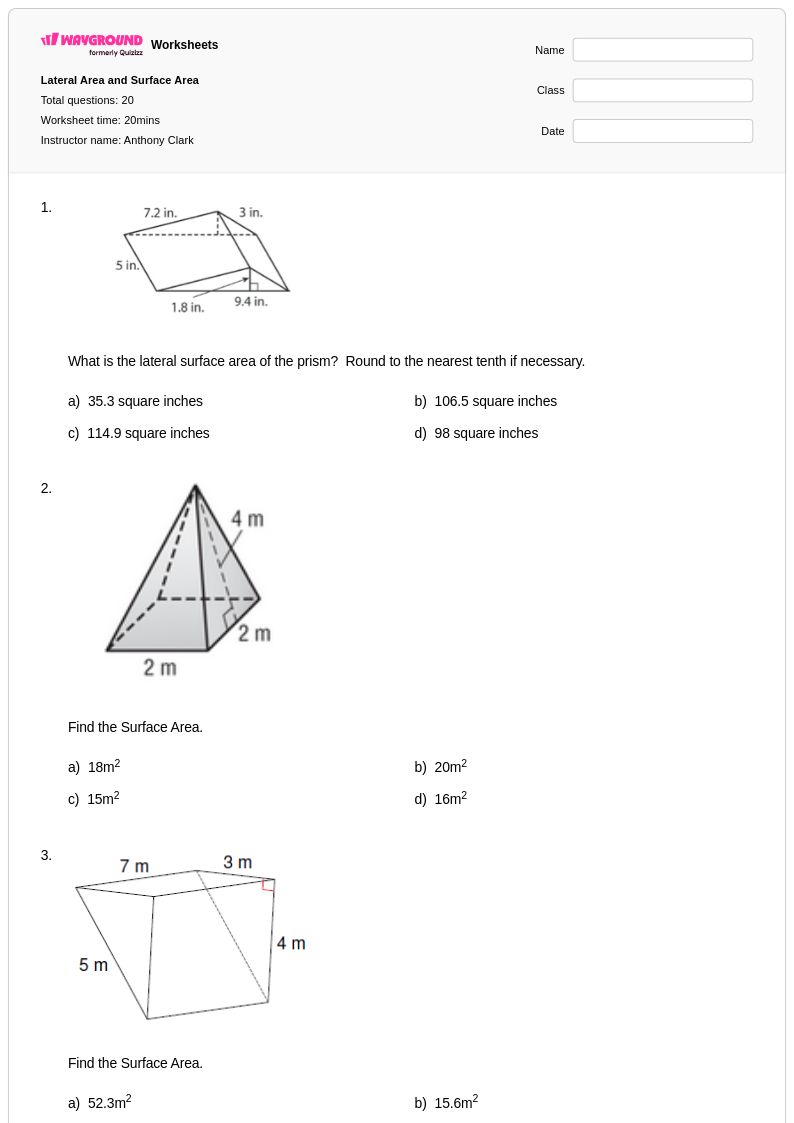
20 Q
7th - Uni
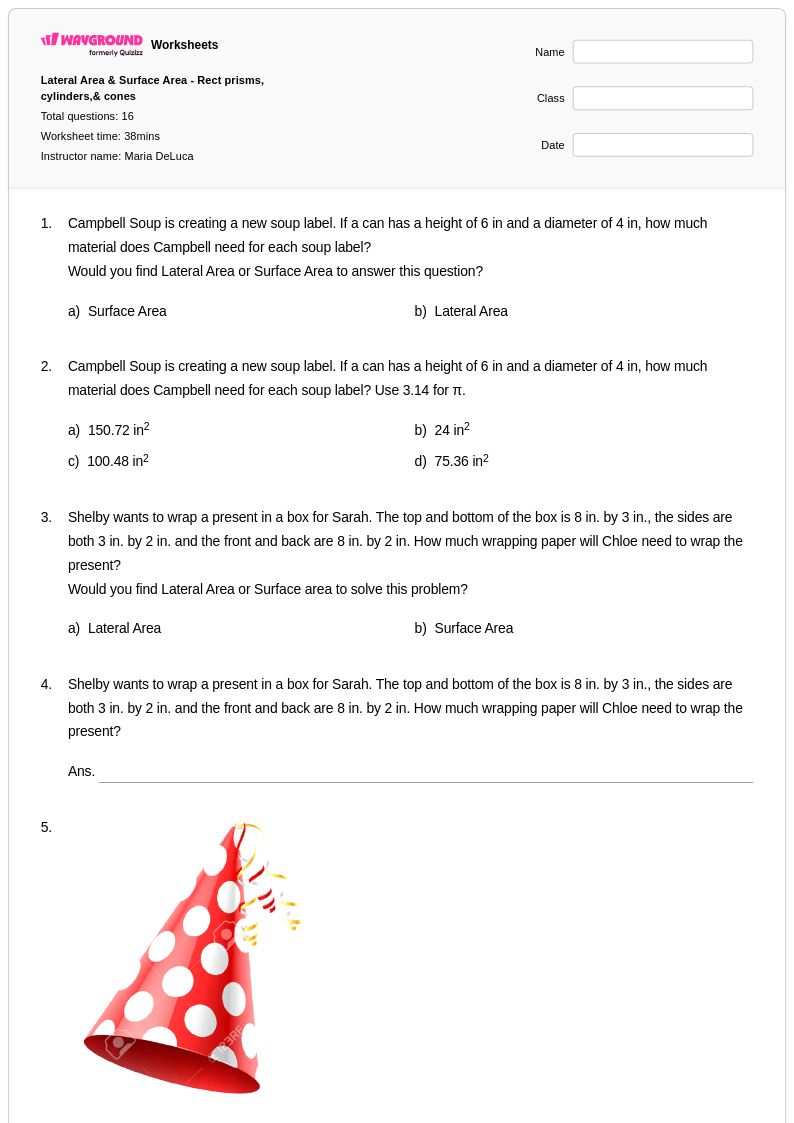
16 Q
9th - 12th
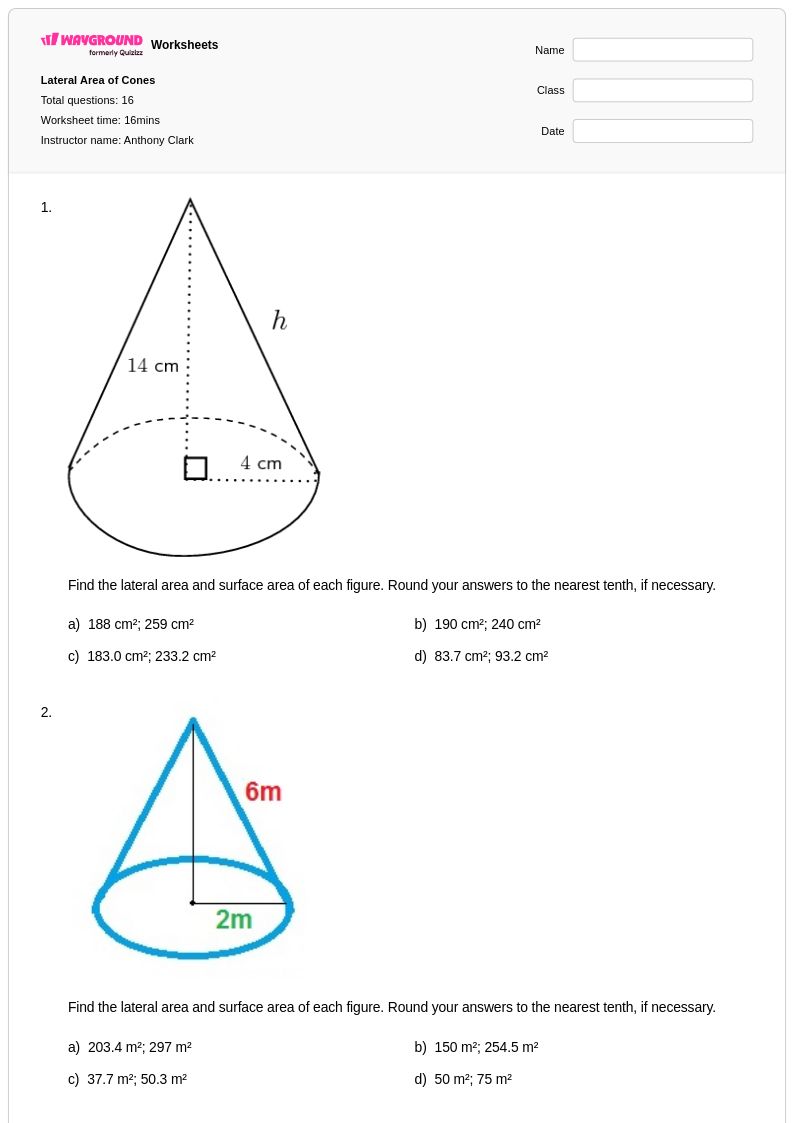
16 Q
10th - Uni
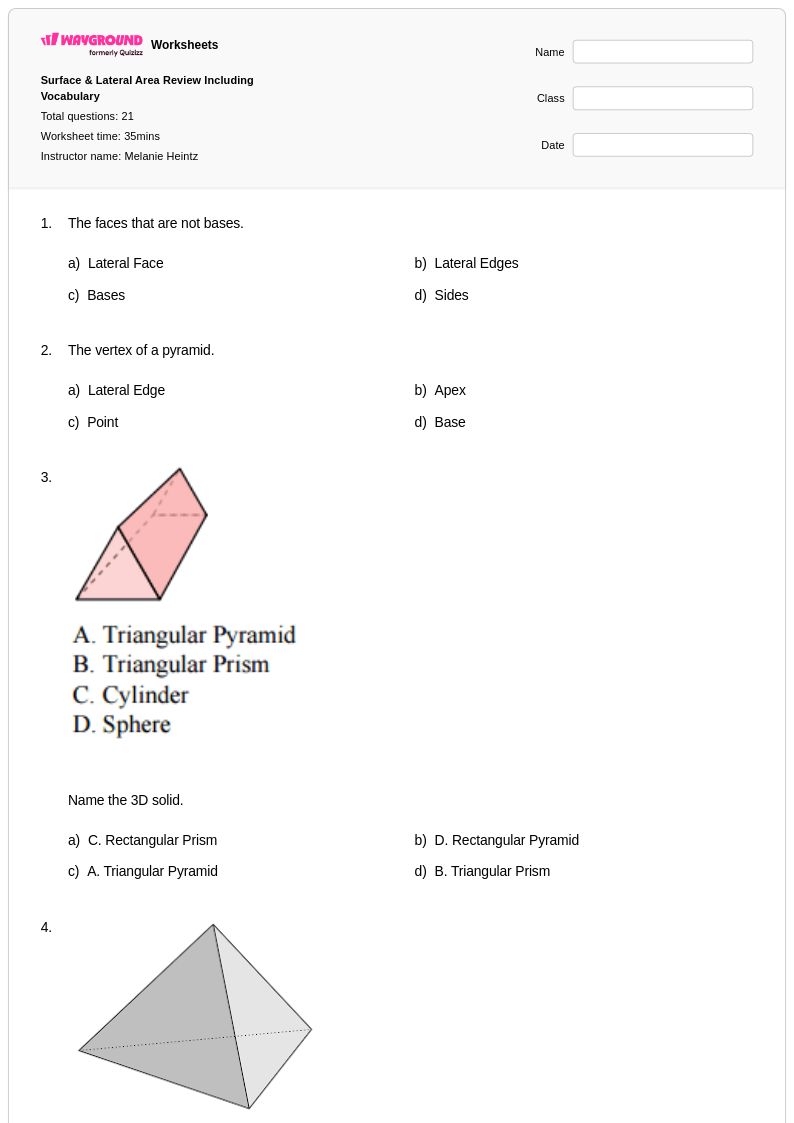
19 Q
9th - 12th
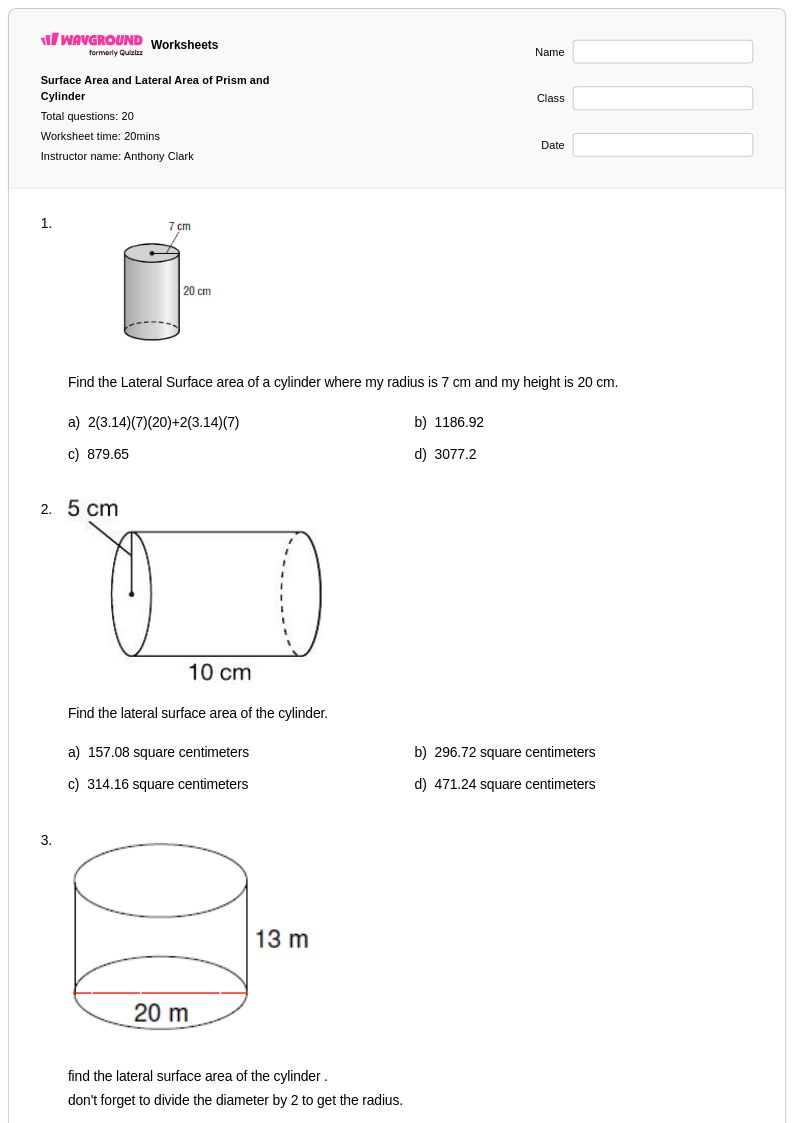
20 Q
8th - Uni
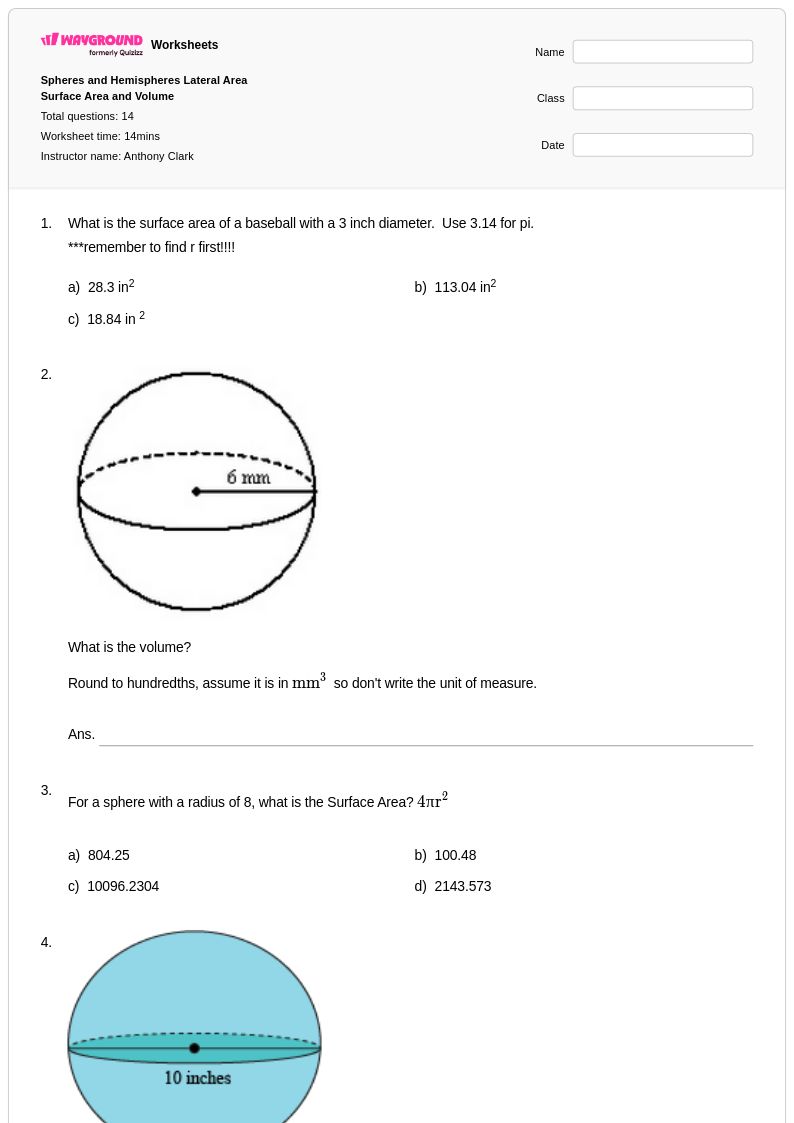
14 Q
8th - Uni
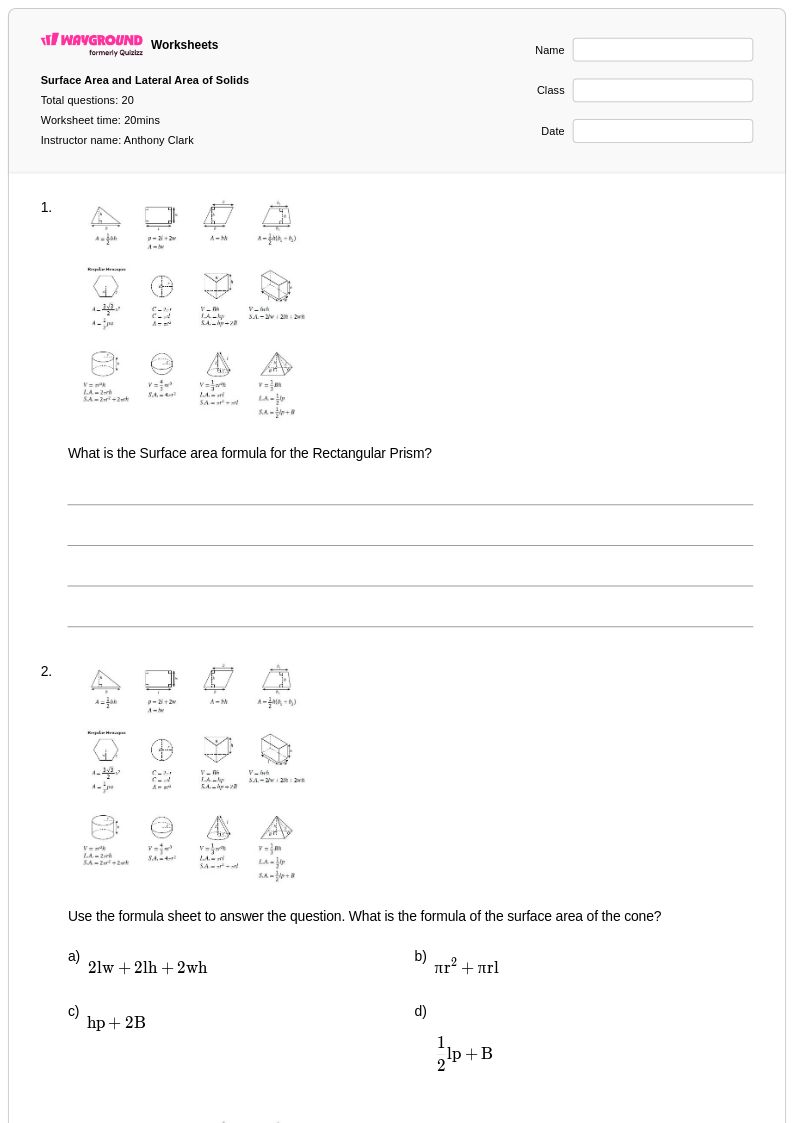
20 Q
10th - Uni
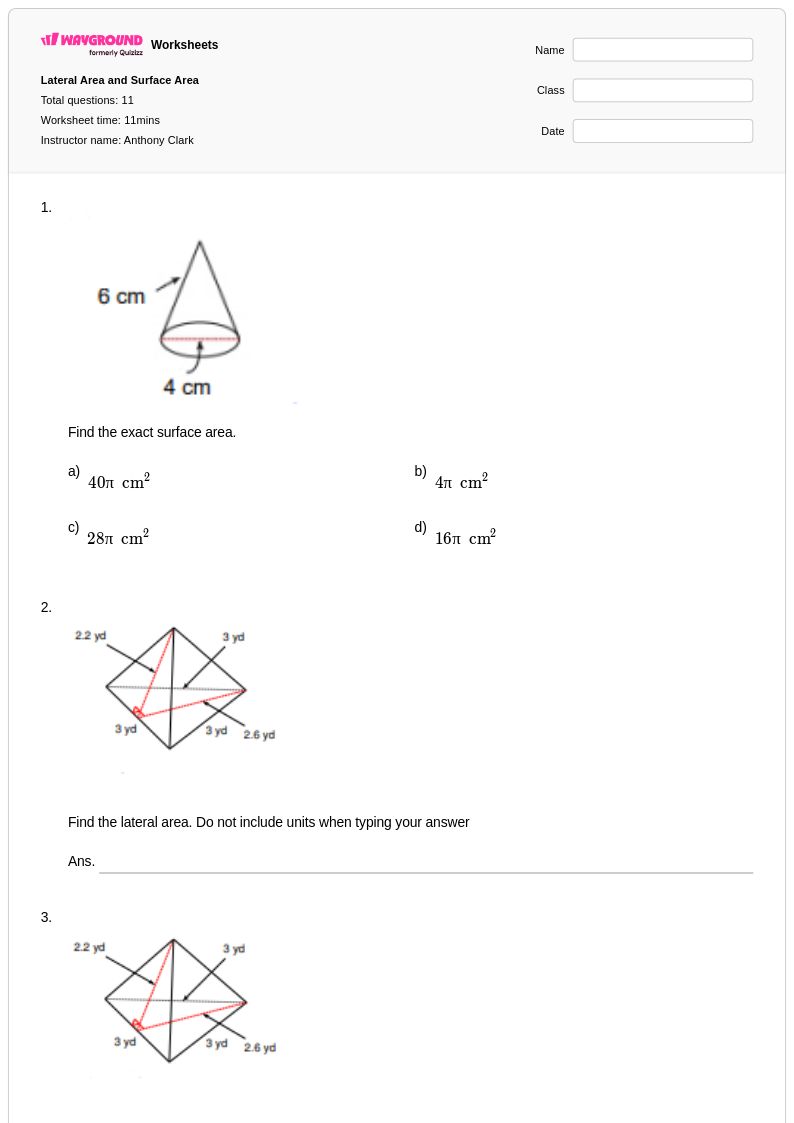
11 Q
10th - Uni
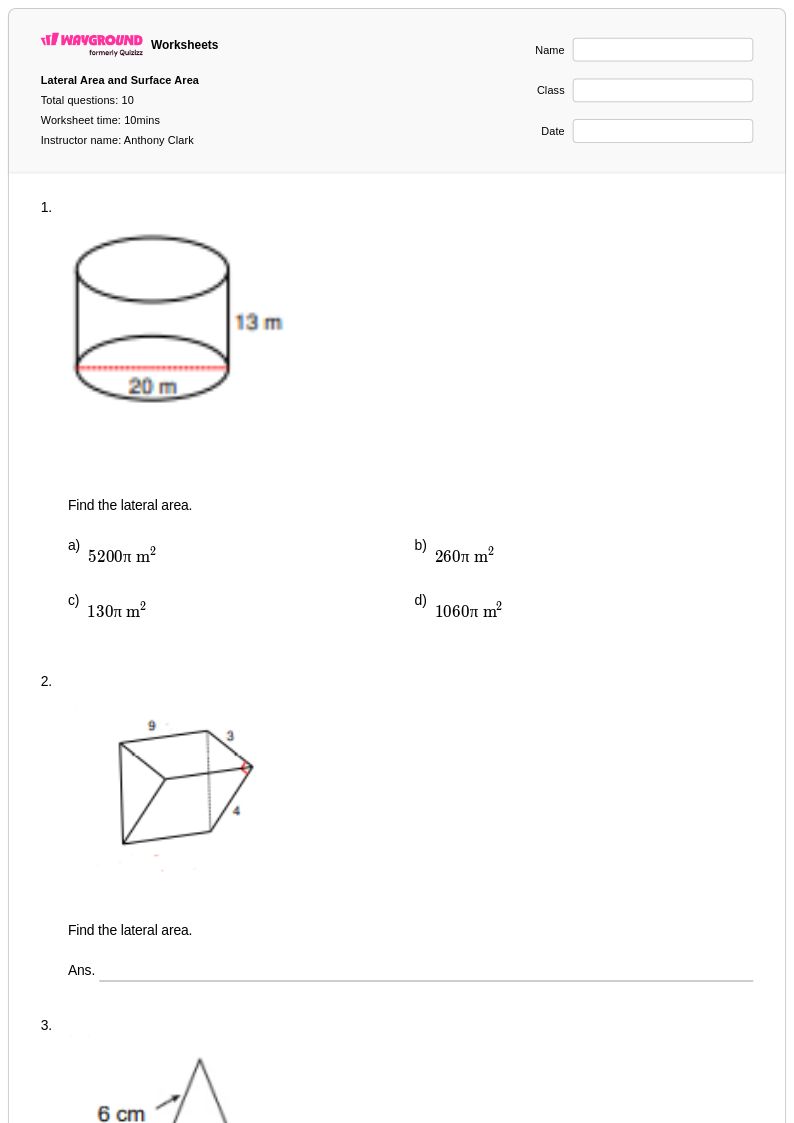
10 Q
10th - Uni
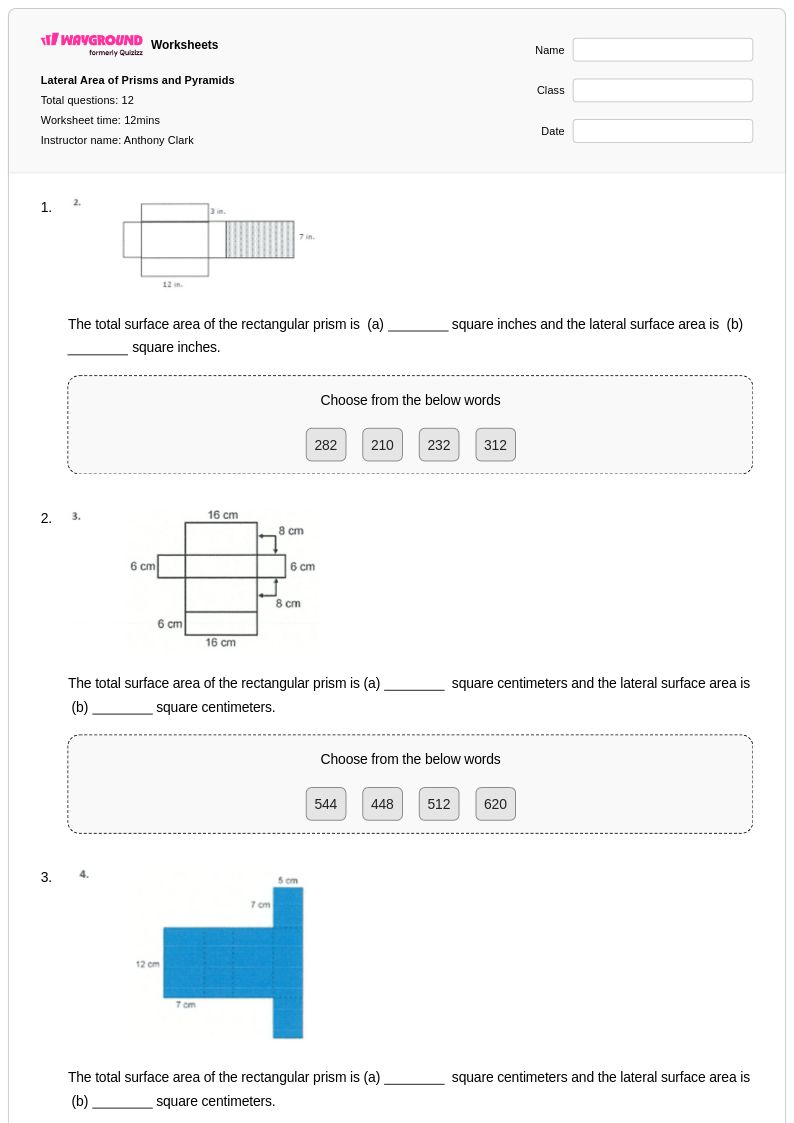
12 Q
7th - Uni
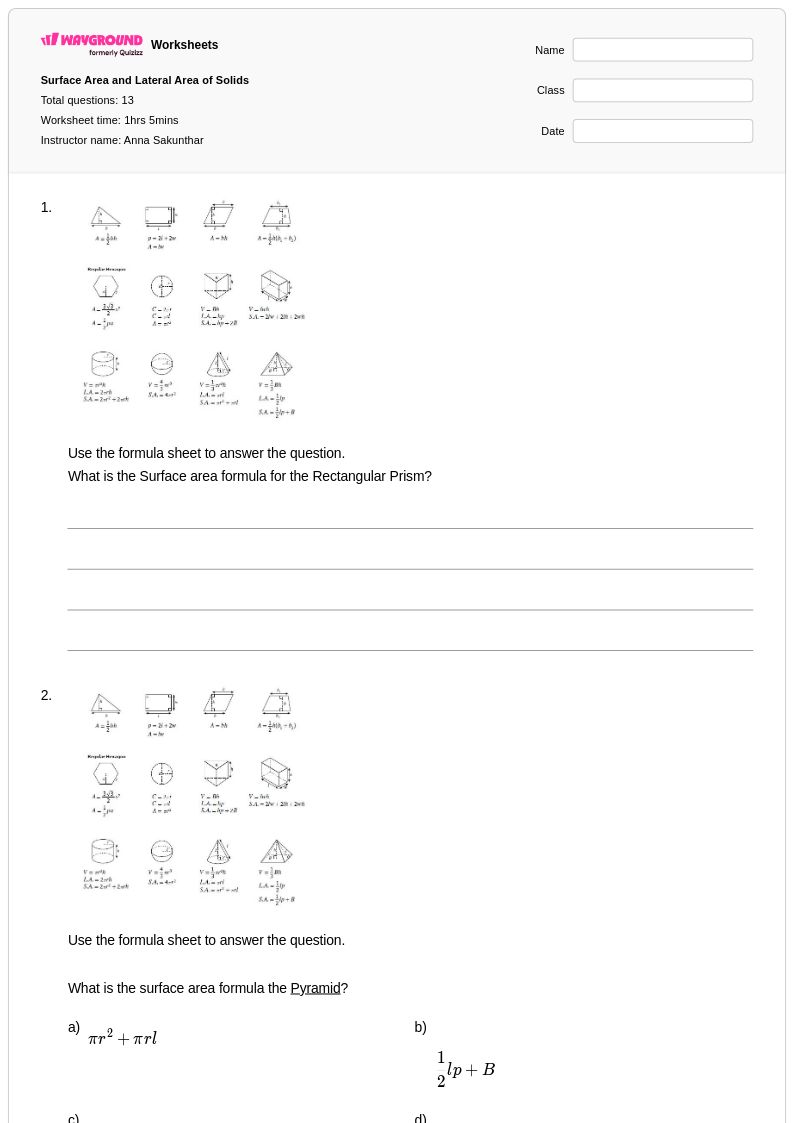
13 Q
7th - 12th
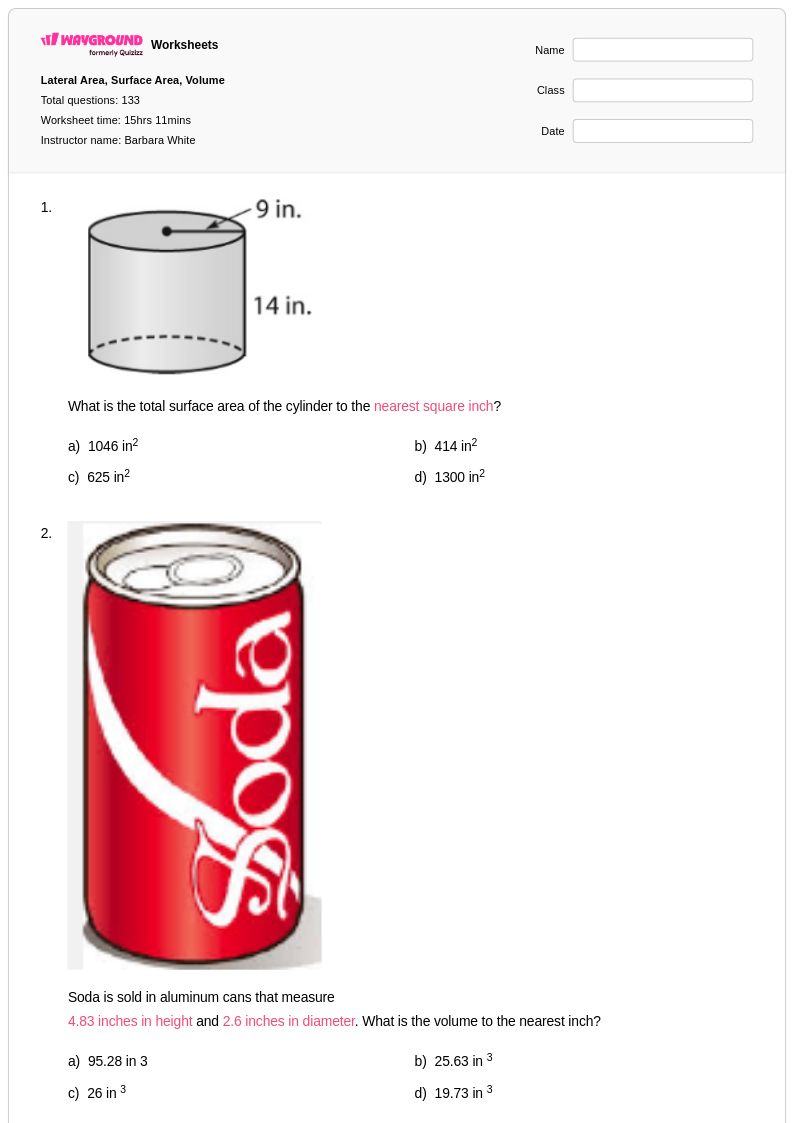
133 Q
7th - 9th
133 Q
7th - 9th
19 Q
9th - Uni
20 Q
8th - Uni
20 Q
7th - Uni
Explore Worksheets by Subjects
Explore printable Lateral Area worksheets
Lateral area worksheets from Wayground (formerly Quizizz) provide comprehensive practice with calculating the lateral surface area of three-dimensional geometric shapes including prisms, cylinders, pyramids, and cones. These mathematics resources strengthen students' understanding of surface area concepts by focusing specifically on the curved or slanted surfaces that exclude the bases of solid figures. The worksheets feature systematic practice problems that guide learners through the application of lateral area formulas, helping them distinguish between lateral area, total surface area, and base area calculations. Each worksheet collection includes detailed answer keys and step-by-step solutions, with materials available as free printables and downloadable pdf formats that support both classroom instruction and independent study.
Wayground's extensive library contains millions of teacher-created lateral area worksheets that support geometry instruction through advanced search and filtering capabilities aligned with mathematical standards. Teachers can easily locate age-appropriate materials and customize worksheet difficulty levels to meet diverse learning needs, whether planning initial concept introduction, providing targeted remediation for struggling students, or offering enrichment challenges for advanced learners. The platform's differentiation tools enable educators to modify problem complexity and adjust the number of practice exercises, while the dual availability of printable pdf worksheets and interactive digital formats accommodates various classroom technologies and teaching preferences. This flexibility empowers teachers to implement focused skill practice sessions that build students' confidence with lateral area calculations across multiple geometric contexts.
FAQs
How do I teach the concept of lateral area?
What exercises help students practice calculating lateral area?
What are common mistakes students make when calculating lateral area?
How can I use this lateral area worksheet with my class?
How does learning lateral area fit into the geometry curriculum?
How can I differentiate this topic for students who are struggling?