Free Printable Atomic Radius Worksheets for Class 9
Explore free Class 9 atomic radius worksheets and printables from Wayground that help students master electron shell patterns, periodic trends, and ionic versus atomic size comparisons through practice problems with answer keys.
Explore printable Atomic Radius worksheets for Class 9
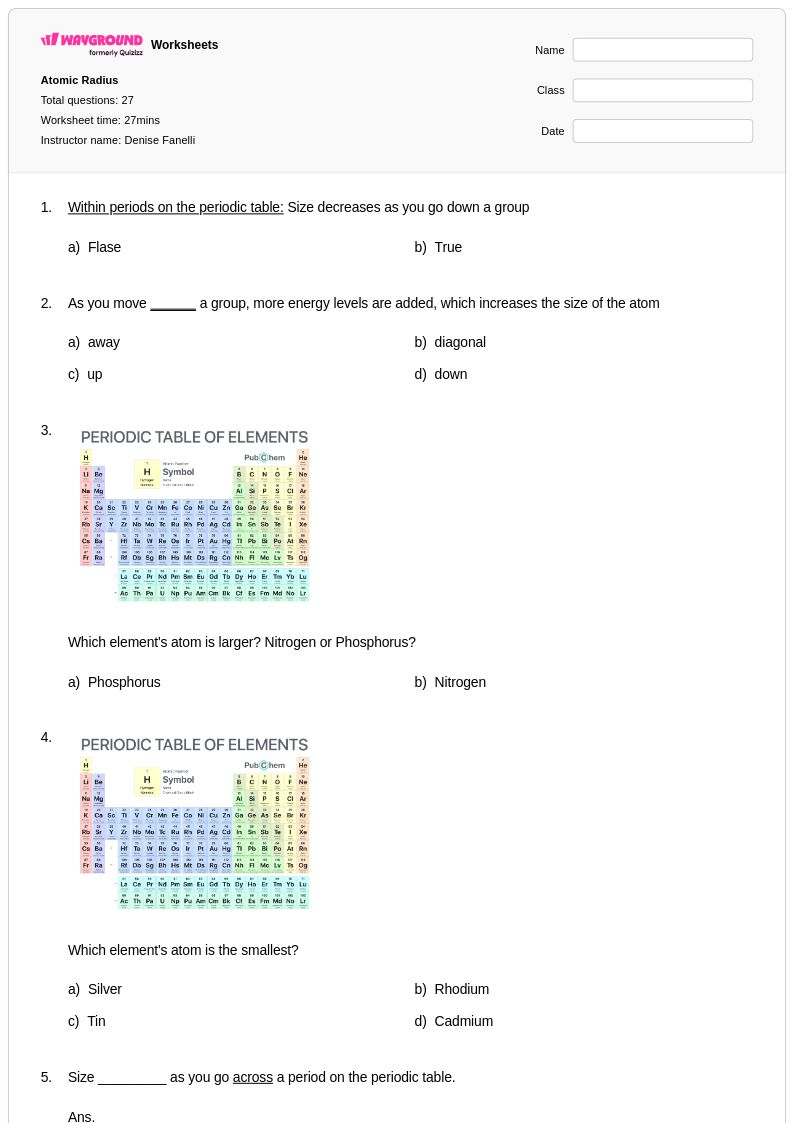
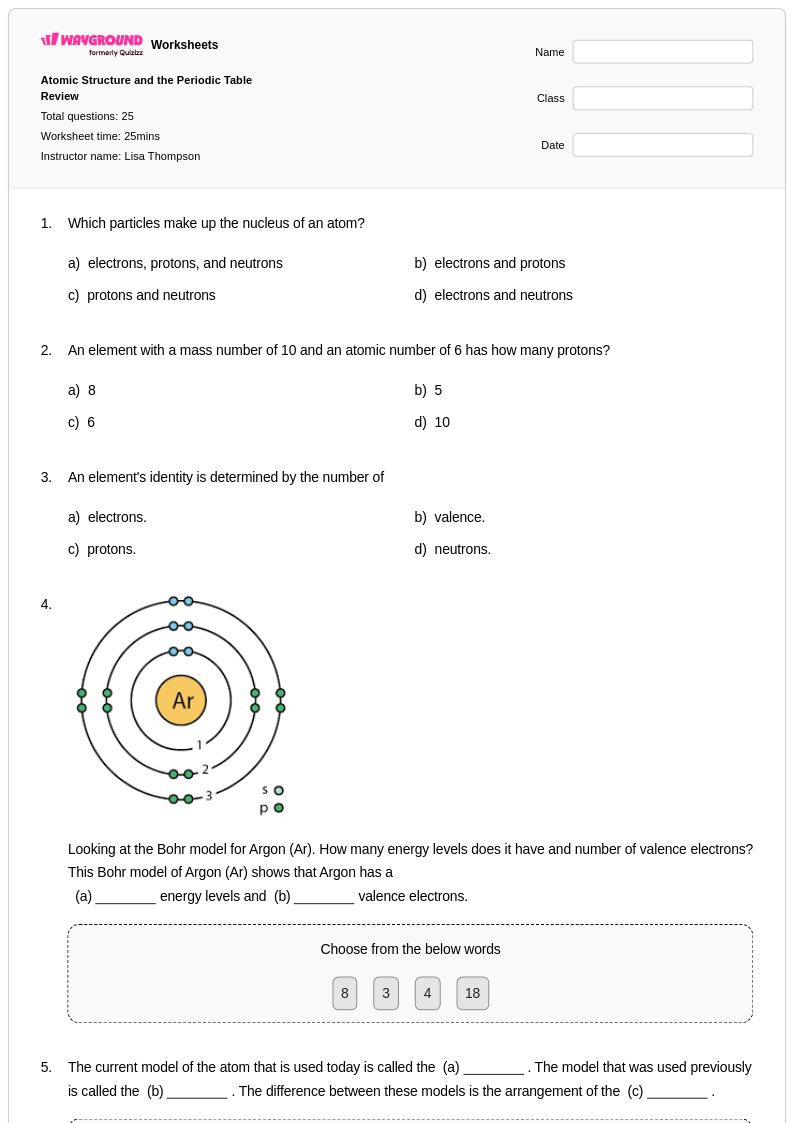
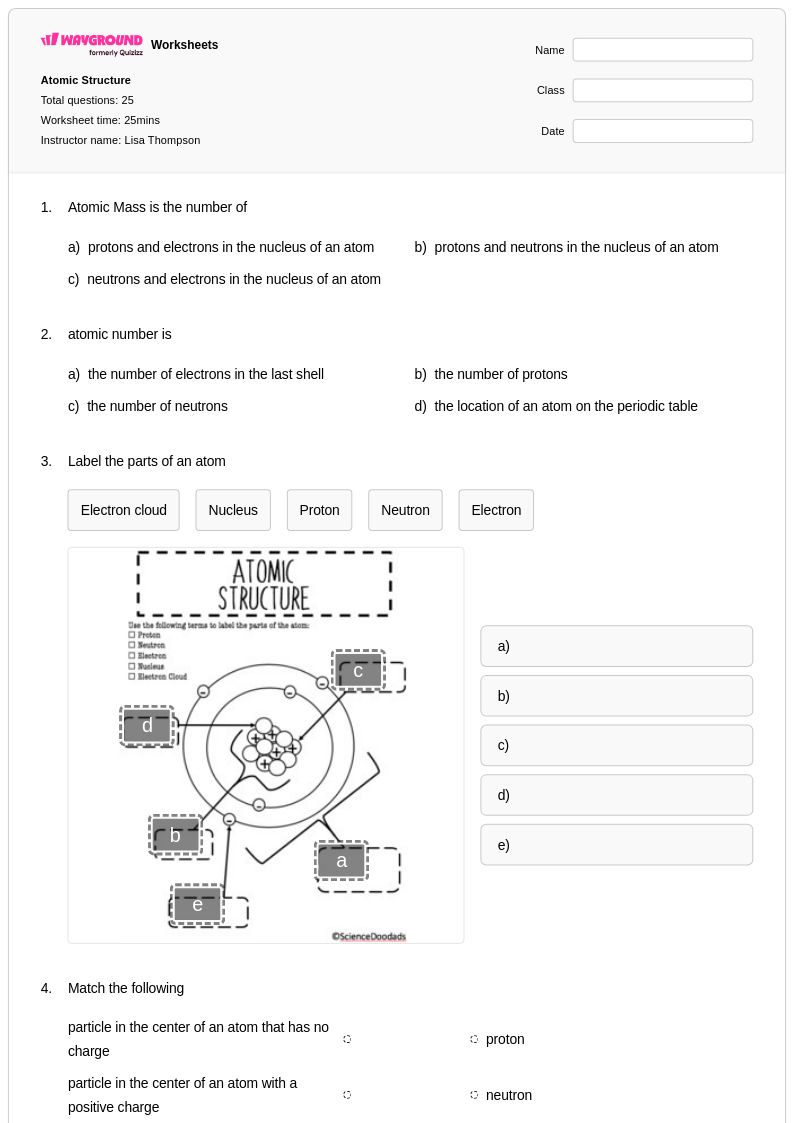
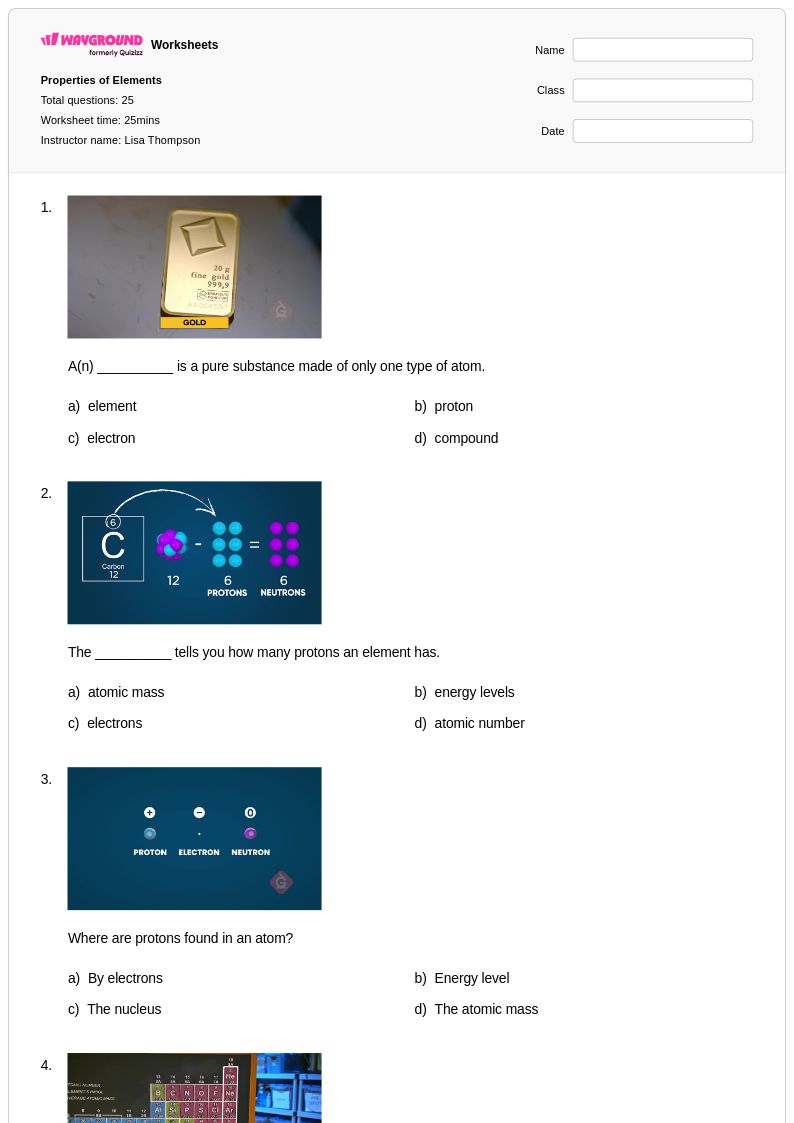
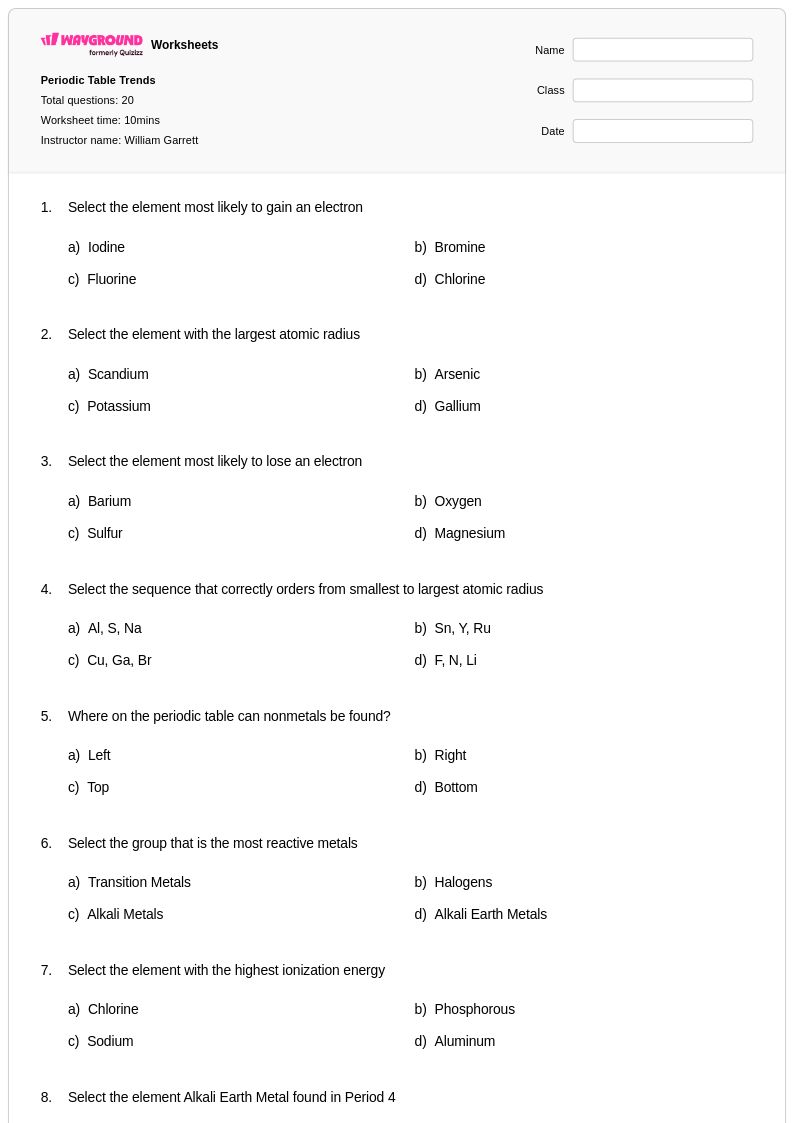
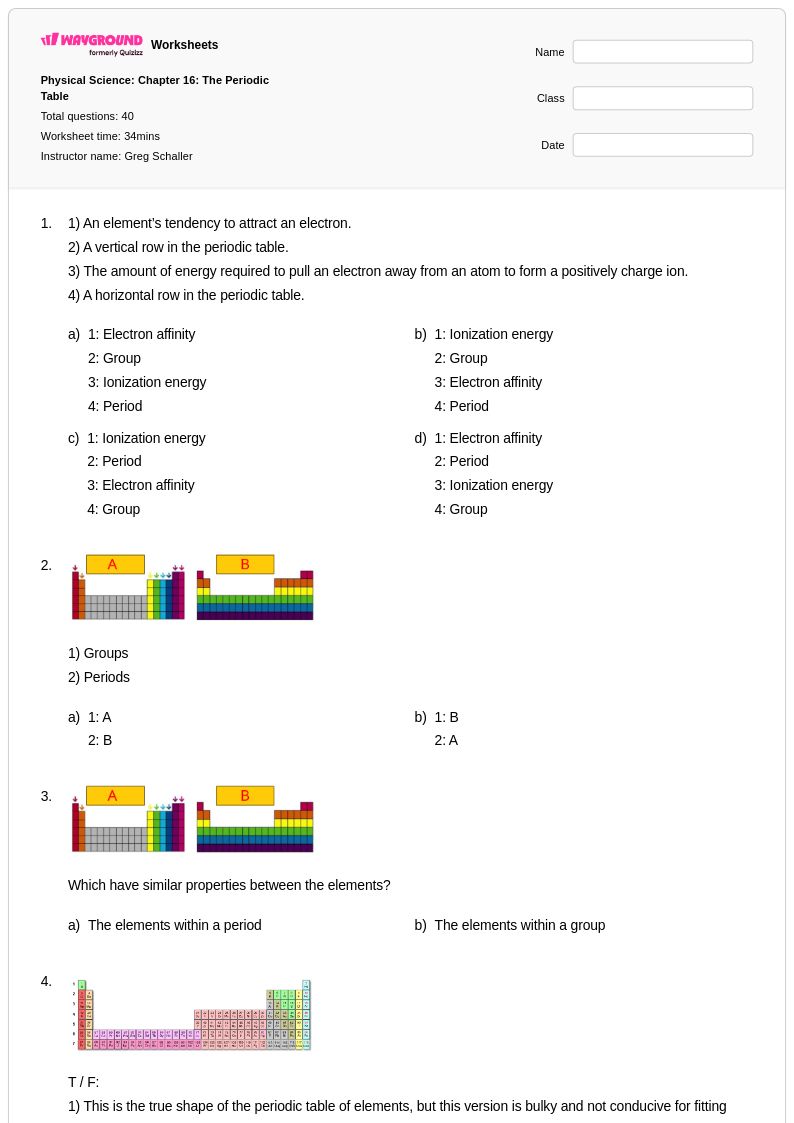
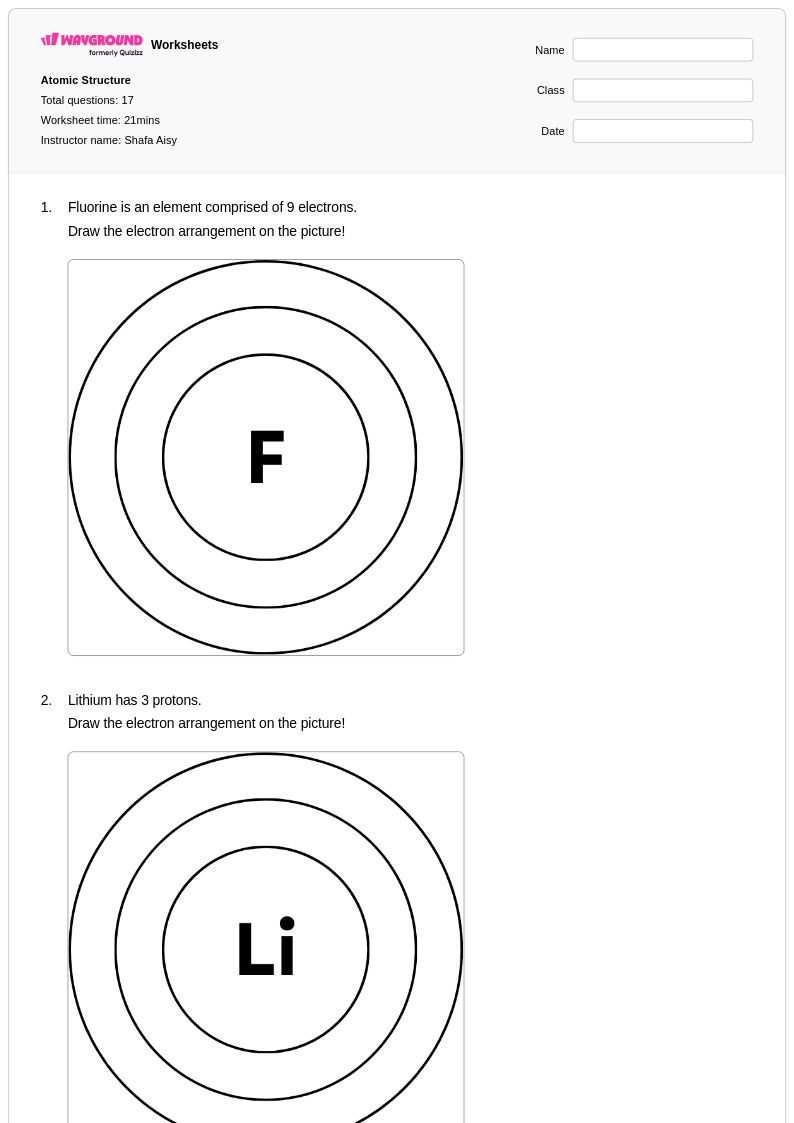
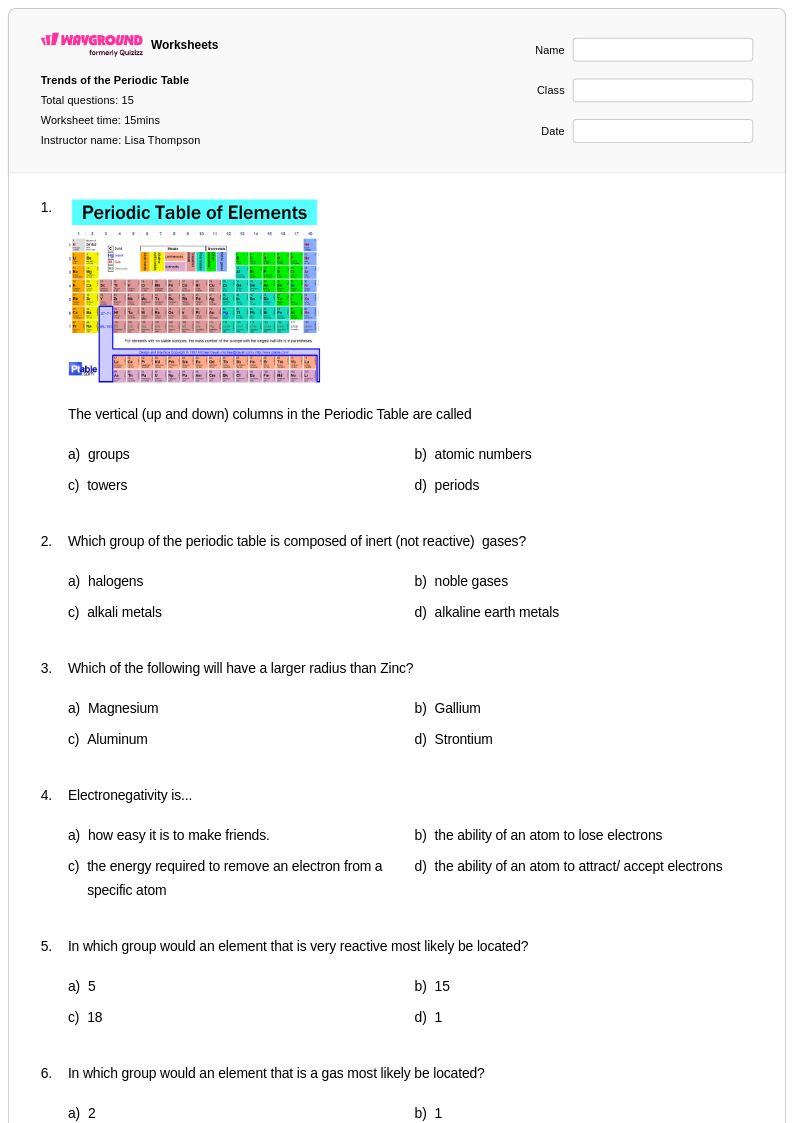
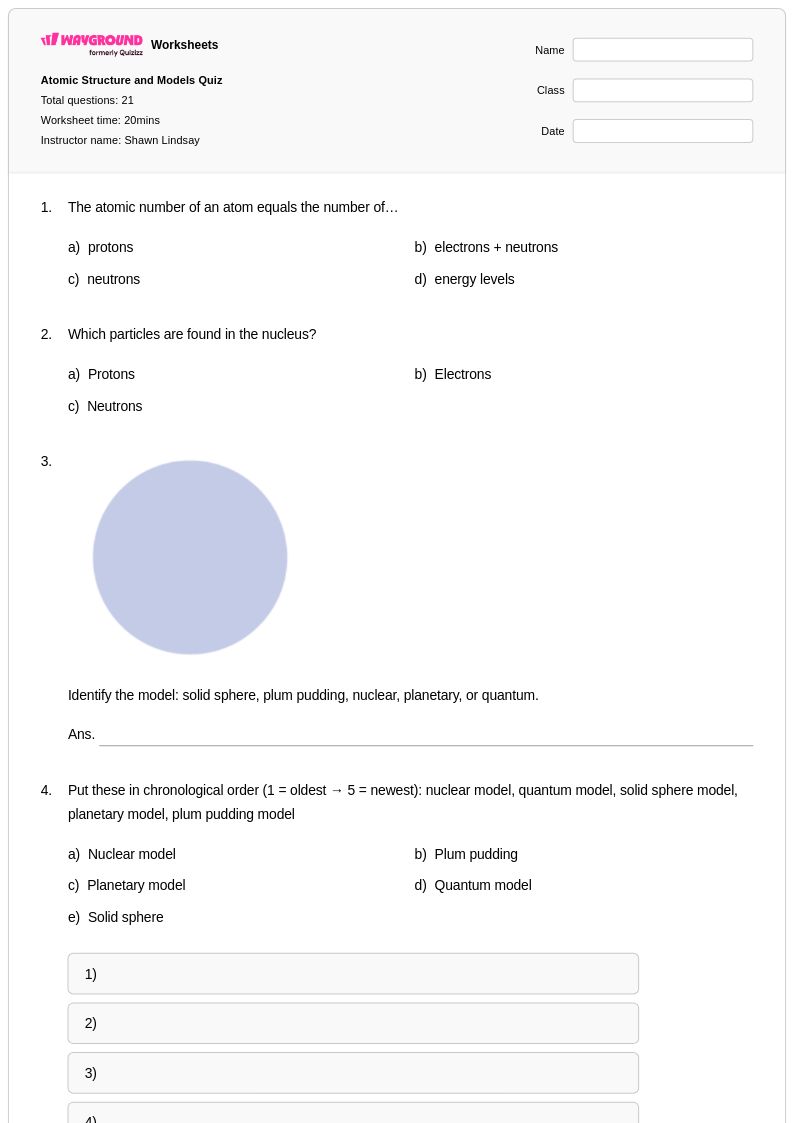
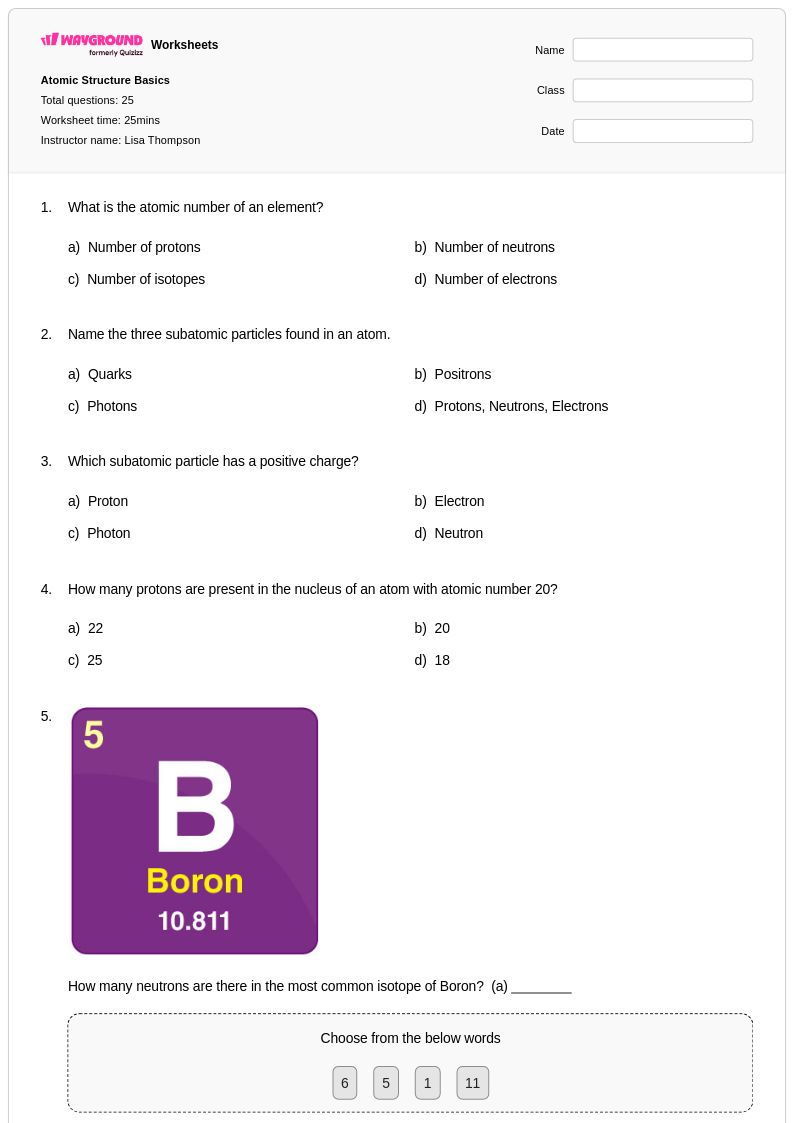
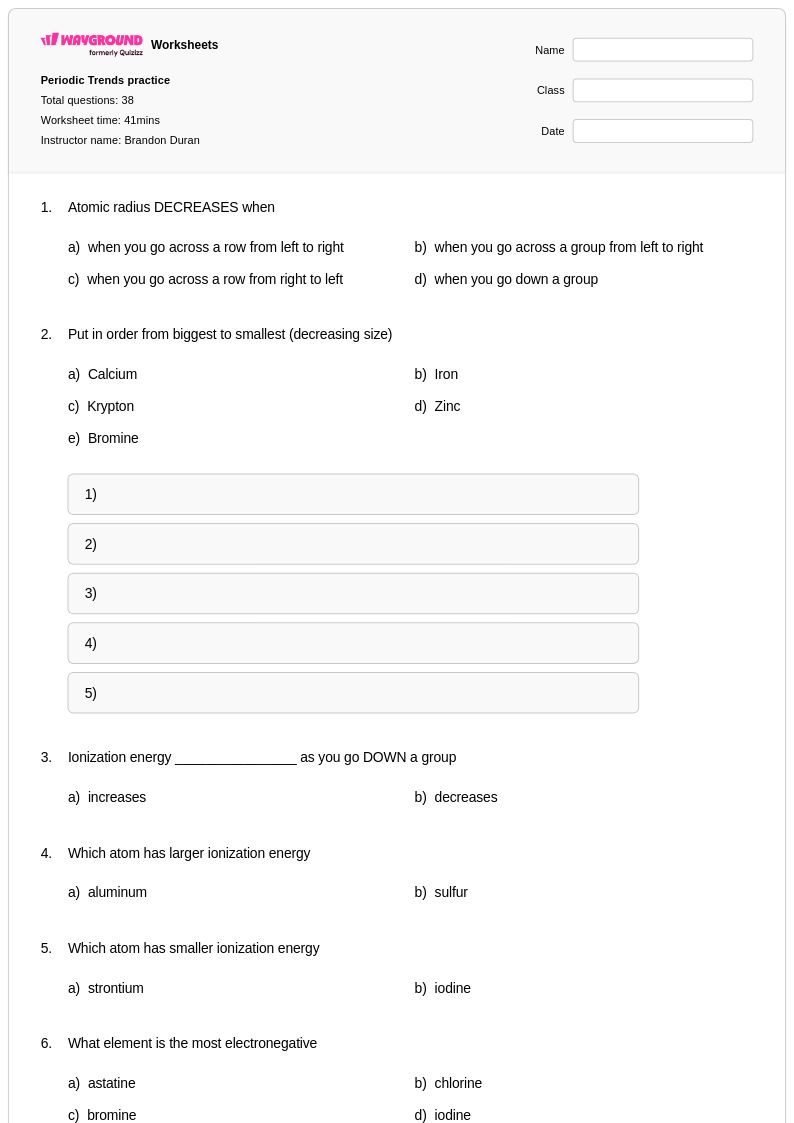
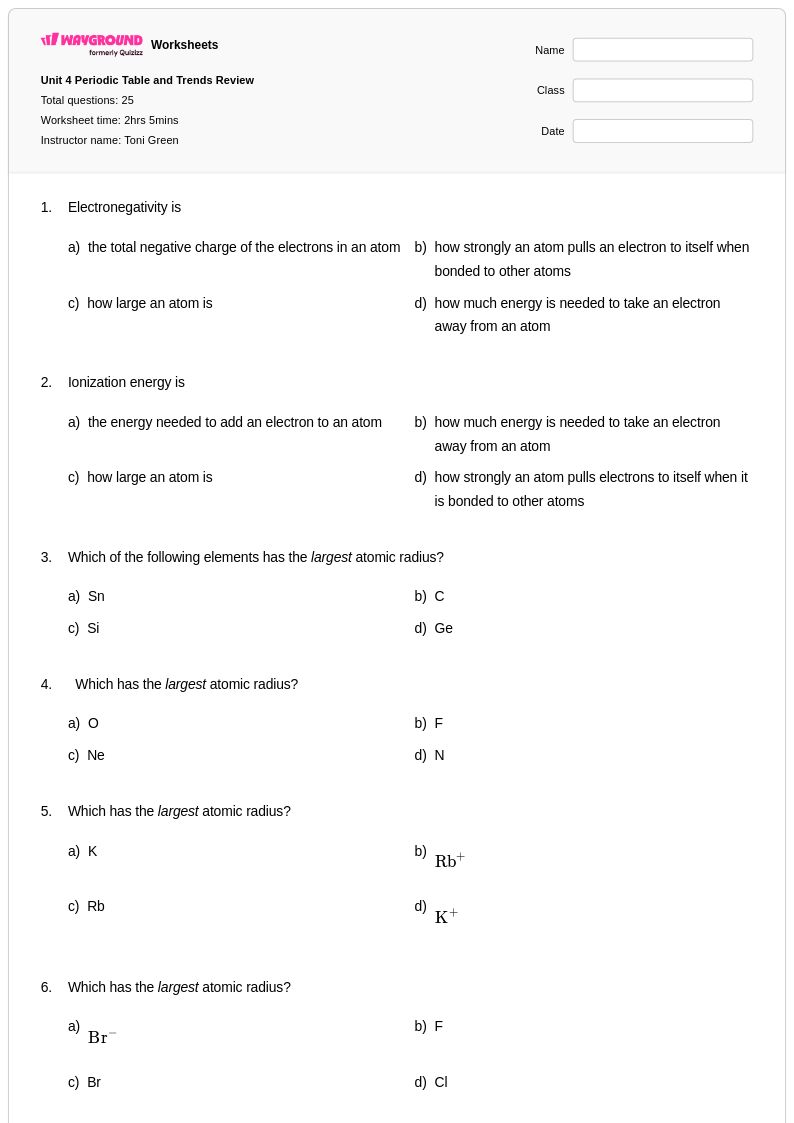
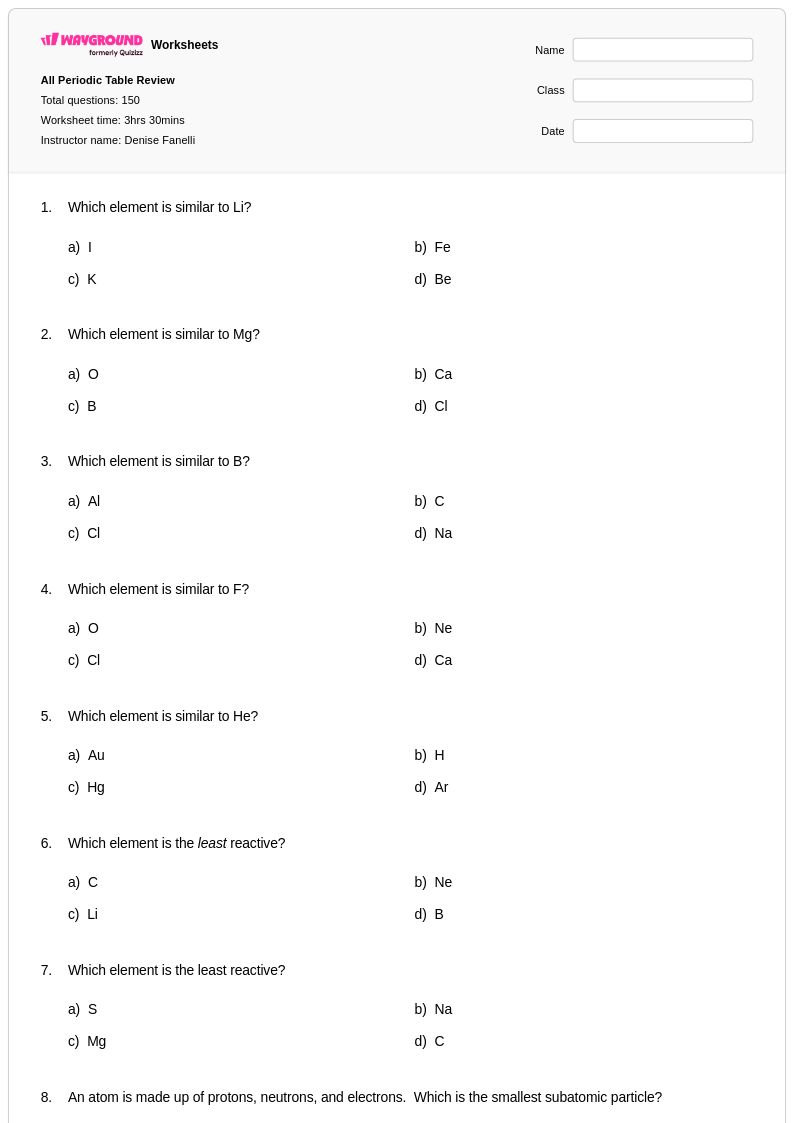
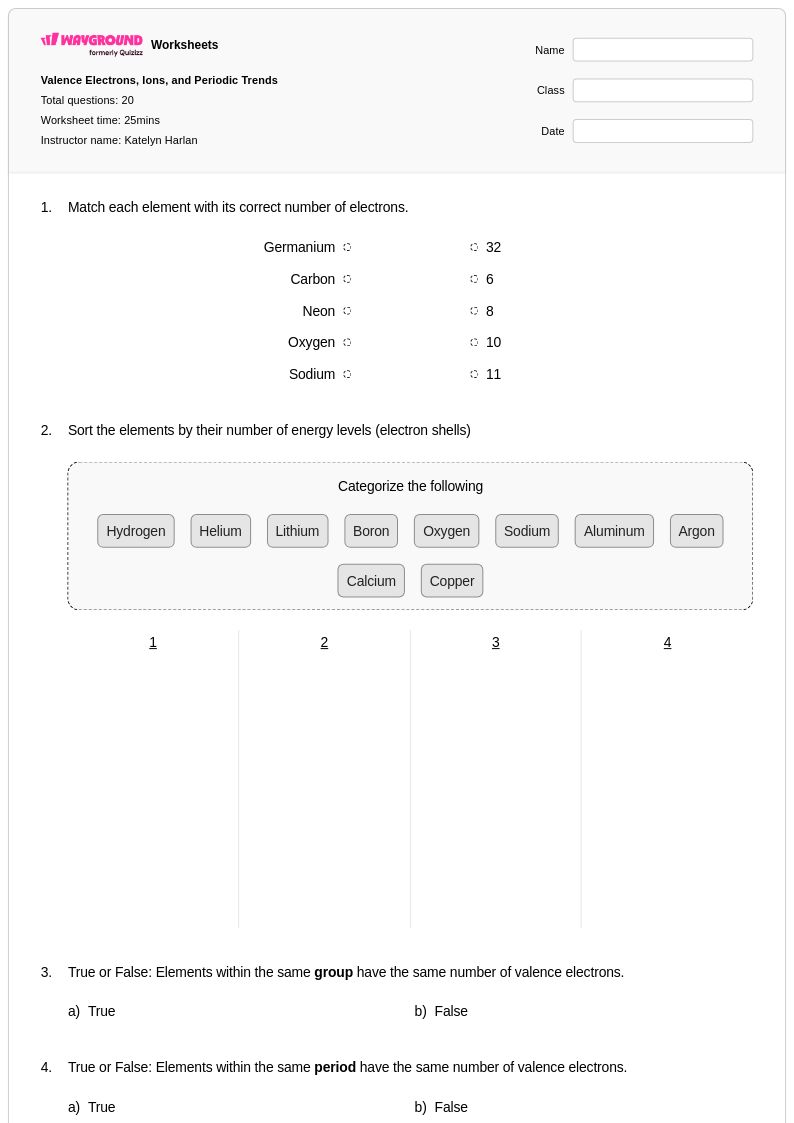
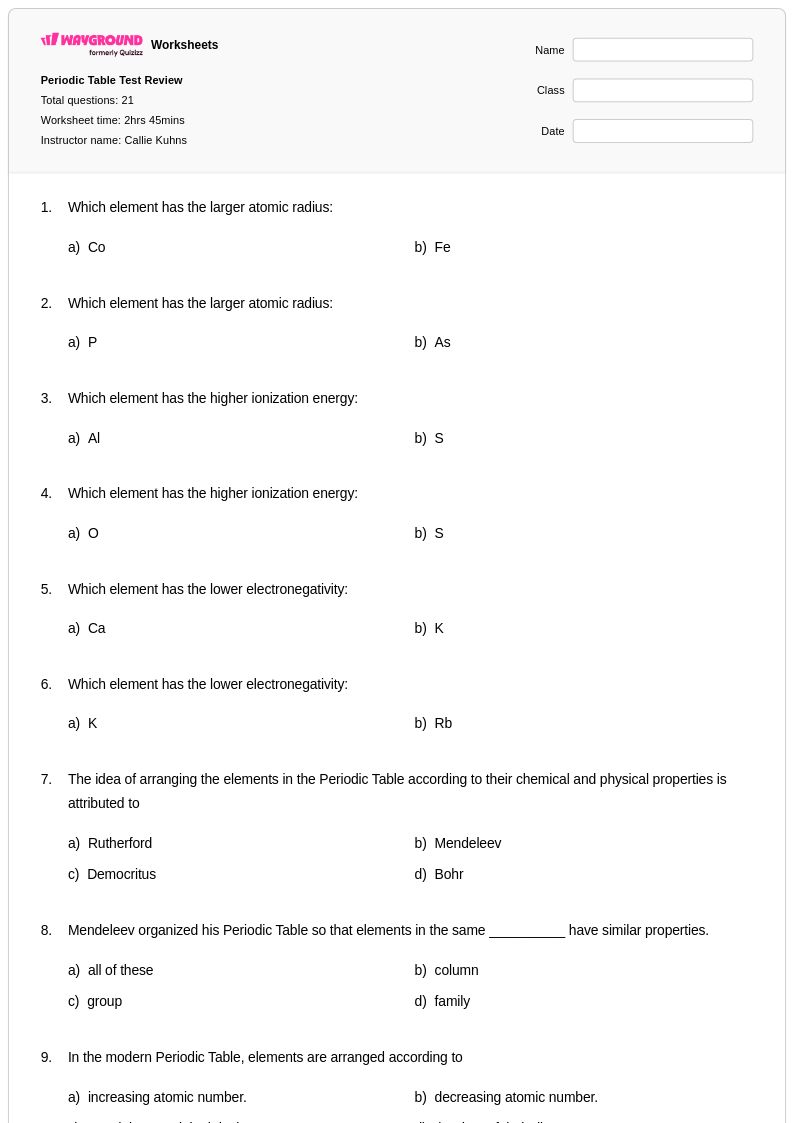
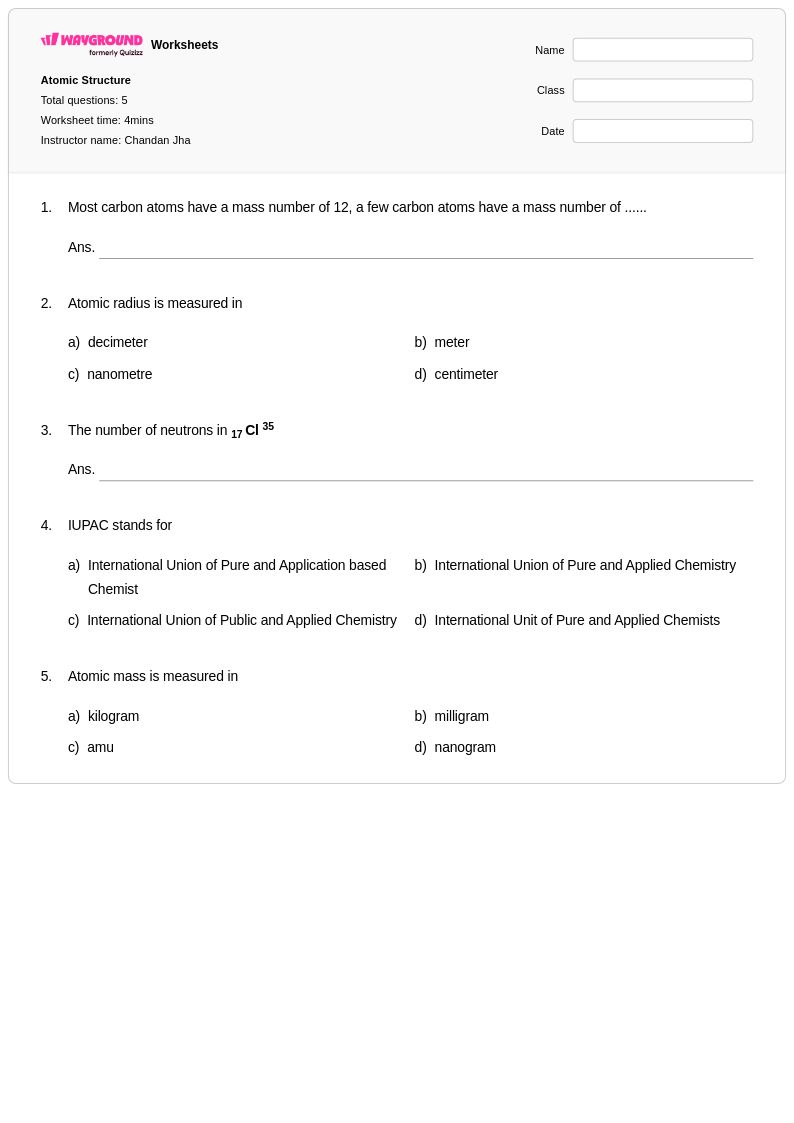
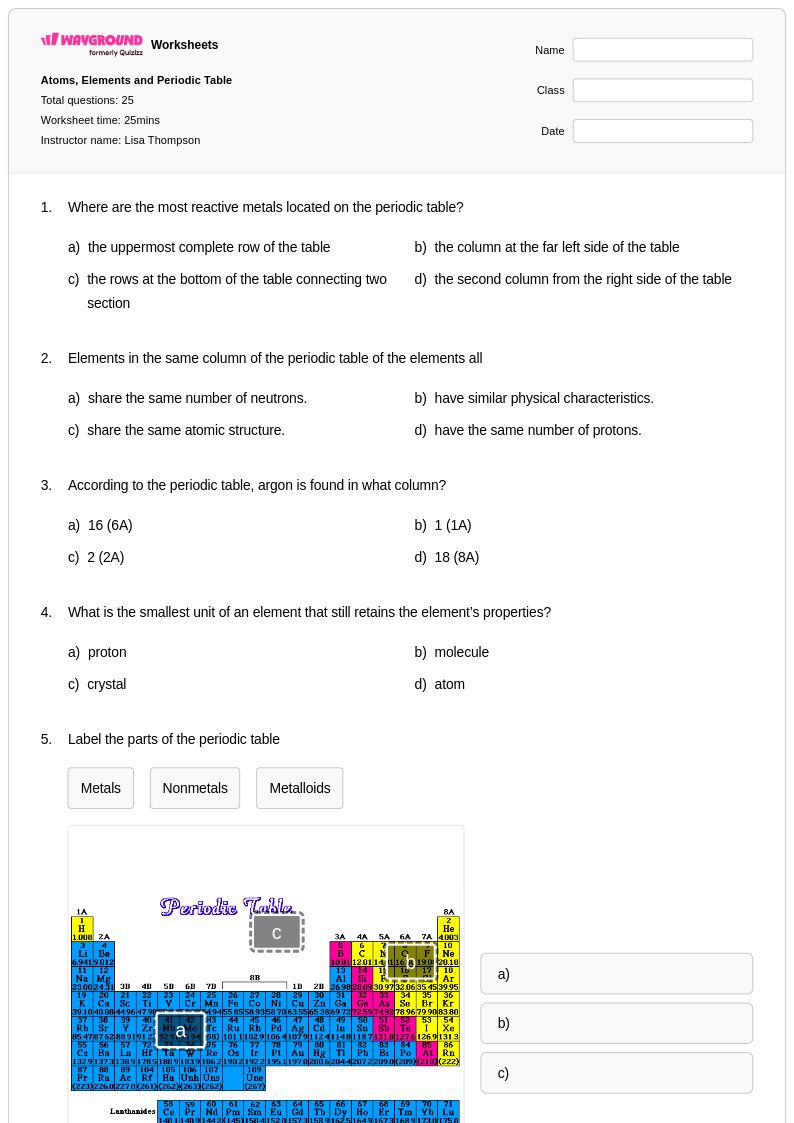
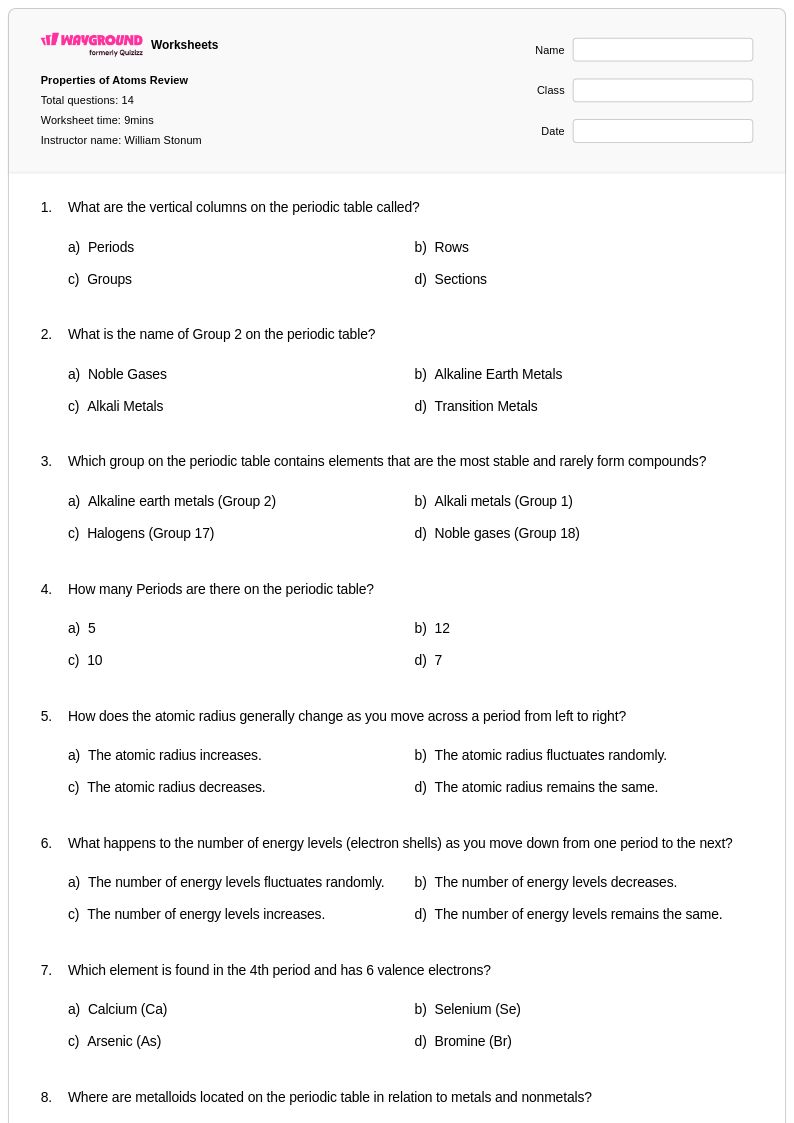
Atomic radius worksheets for Class 9 students available through Wayground (formerly Quizizz) provide comprehensive practice with one of chemistry's most fundamental periodic trends. These carefully designed resources help students master the concept of atomic size and understand how electron shells, nuclear charge, and position on the periodic table influence an atom's radius. Students work through practice problems that require them to predict atomic radius trends across periods and down groups, compare the relative sizes of different elements, and explain the underlying principles that govern these patterns. Each worksheet includes detailed answer keys that guide students through the reasoning process, while the free printable format and downloadable pdf options make these resources accessible for both classroom instruction and independent study.
Wayground's extensive collection of atomic radius worksheets draws from millions of teacher-created resources, ensuring educators have access to diverse approaches and difficulty levels for Class 9 chemistry instruction. The platform's robust search and filtering capabilities allow teachers to quickly locate materials that align with specific curriculum standards and match their students' learning needs. Advanced differentiation tools enable instructors to customize worksheets for varied skill levels, supporting both remediation for struggling learners and enrichment opportunities for advanced students. Available in both printable and digital formats, including convenient pdf downloads, these atomic radius practice materials integrate seamlessly into lesson planning while providing flexible options for skill reinforcement, homework assignments, and formative assessment throughout the chemistry unit.
FAQs
How do I teach atomic radius trends to chemistry students?
Start by grounding students in what atomic radius actually measures, then build the two core rules: radius decreases across a period due to increasing nuclear charge pulling electrons closer, and radius increases down a group as additional electron shells add distance from the nucleus. Visual aids like color-coded periodic tables help students see the trend spatially before they work through quantitative comparisons. Connecting atomic radius to chemical behavior, such as reactivity and ionization energy, gives the concept real-world relevance and helps students see why it matters beyond memorization.
What exercises help students practice comparing atomic radii?
Ranking exercises, where students order a set of elements by atomic radius and justify their reasoning, are among the most effective practice formats for this topic. Trend analysis problems that ask students to predict whether radius increases or decreases as you move in a specific direction on the periodic table reinforce the underlying principles of nuclear charge and electron shielding. Pairing these with periodic table mapping activities, where students annotate a blank table with size trends, builds both procedural fluency and conceptual understanding.
What mistakes do students commonly make when learning atomic radius?
The most common error is confusing the direction of the trend across a period, with many students assuming larger atomic number always means a larger atom. Students also frequently ignore the role of electron shielding when explaining why radius increases down a group, defaulting to a vague explanation about 'more electrons' without connecting it to the shielding effect on effective nuclear charge. Another recurring mistake is conflating atomic radius with ionic radius, especially when comparing elements that commonly form cations or anions.
How can I use atomic radius worksheets to address different skill levels in my chemistry class?
Worksheets that move from basic trend identification to multi-step comparison problems allow you to differentiate by assigning different sections to different learners. When hosting worksheets digitally on Wayground, you can apply individual accommodations such as read aloud support for students who need questions read to them, reduced answer choices to lower cognitive load for students who find ranking problems overwhelming, and extended time for students who need more processing time. These settings are saved per student and apply automatically in future sessions, so differentiation does not require repeated manual setup.
How do I use Wayground's atomic radius worksheets in my classroom?
Wayground's atomic radius worksheets are available as printable PDFs for traditional classroom use and in digital formats for technology-integrated or hybrid learning environments. Teachers can also host a worksheet as an interactive quiz on Wayground, enabling real-time student response tracking. All worksheets include complete answer keys, so they work equally well for guided practice, independent study, or review sessions without additional prep.
How does nuclear charge explain atomic radius trends across a period?
As you move left to right across a period, each element gains one more proton, increasing the nuclear charge without adding a new electron shell. This stronger positive charge pulls the electron cloud closer to the nucleus, resulting in a smaller atomic radius. Because the electrons added across a period occupy the same principal energy level, they do not significantly shield one another from the nucleus, so the increase in effective nuclear charge is the dominant factor.