Free Printable Polarity of Molecules Worksheets for Class 9
Class 9 chemistry students can master polarity of molecules with Wayground's comprehensive collection of free worksheets, printables, and practice problems that include detailed answer keys and PDF downloads.
Explore printable Polarity of Molecules worksheets for Class 9
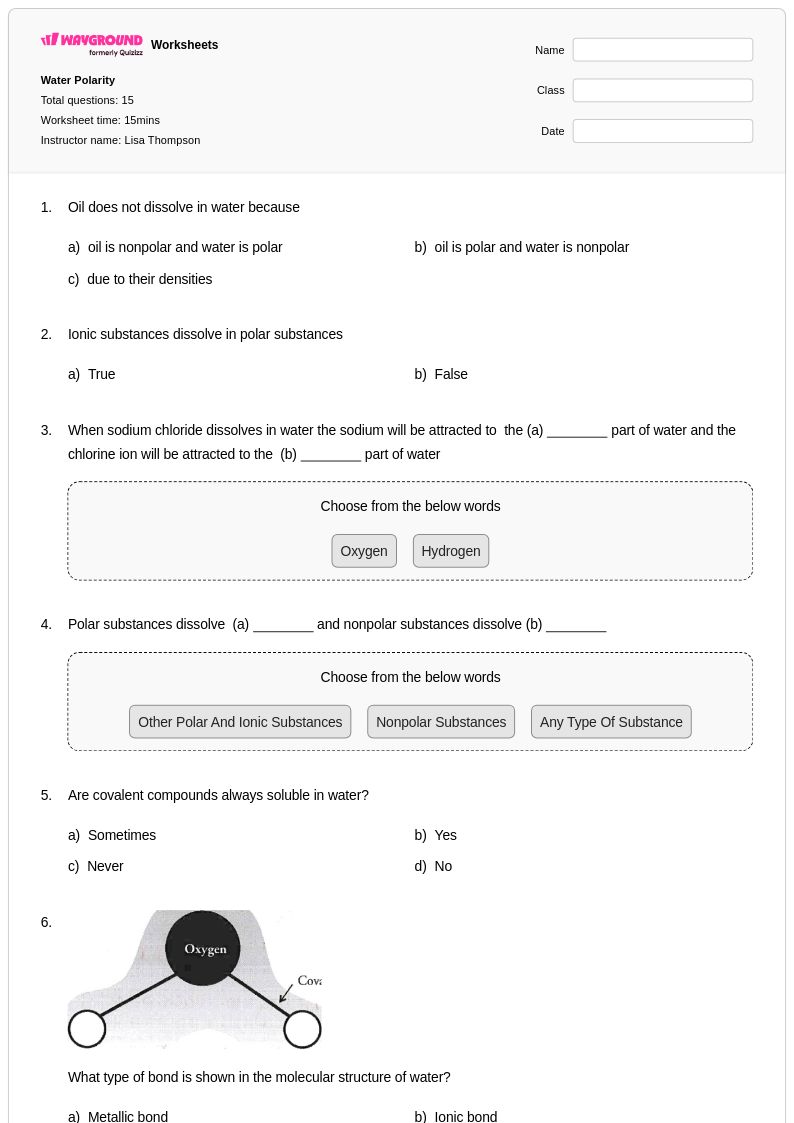
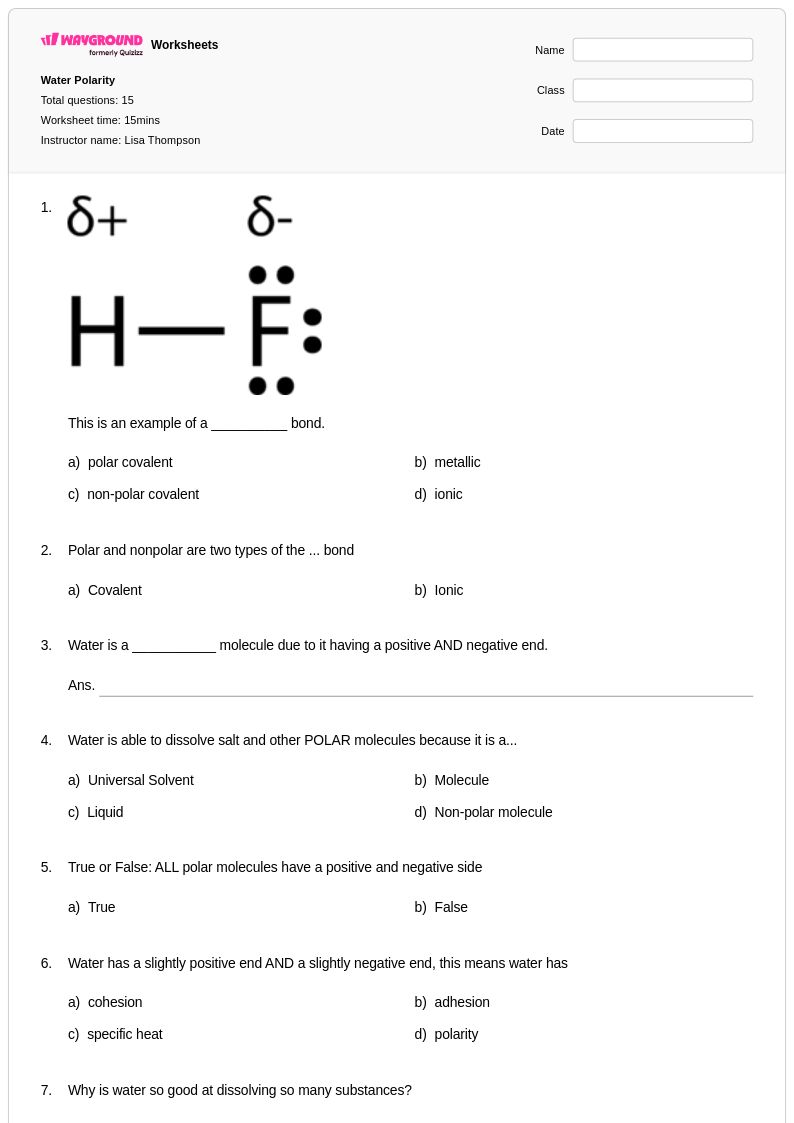
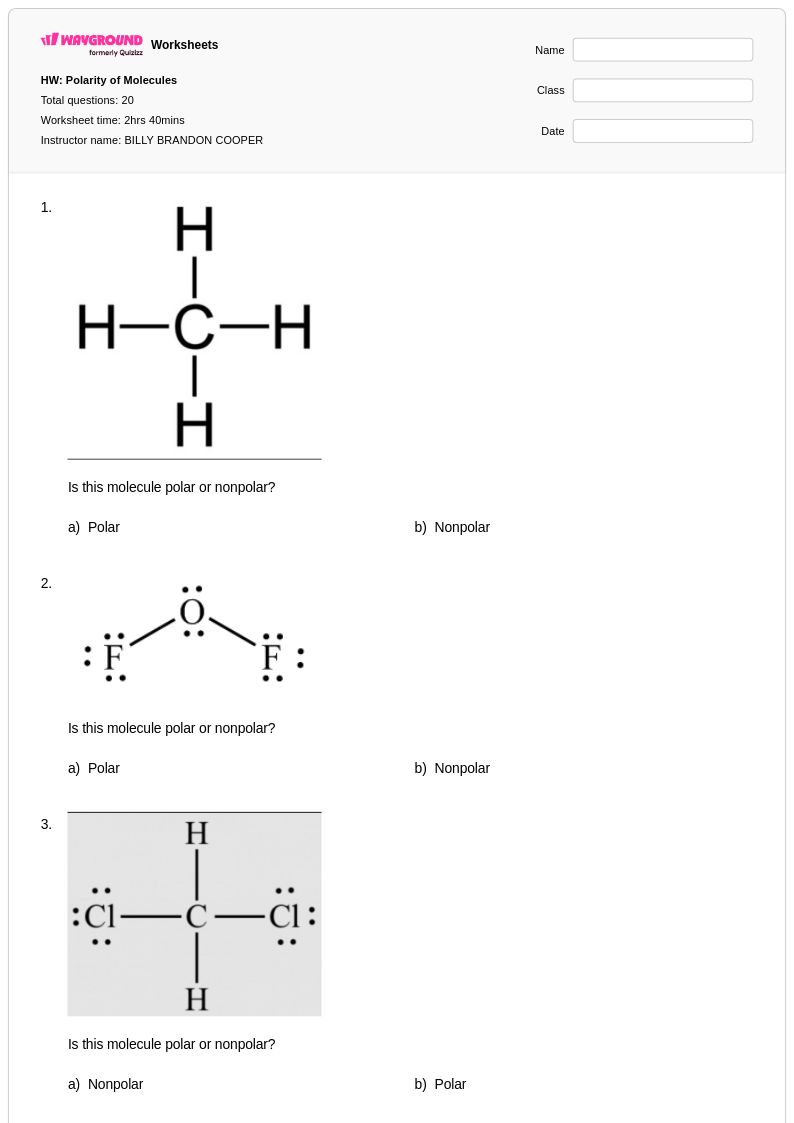
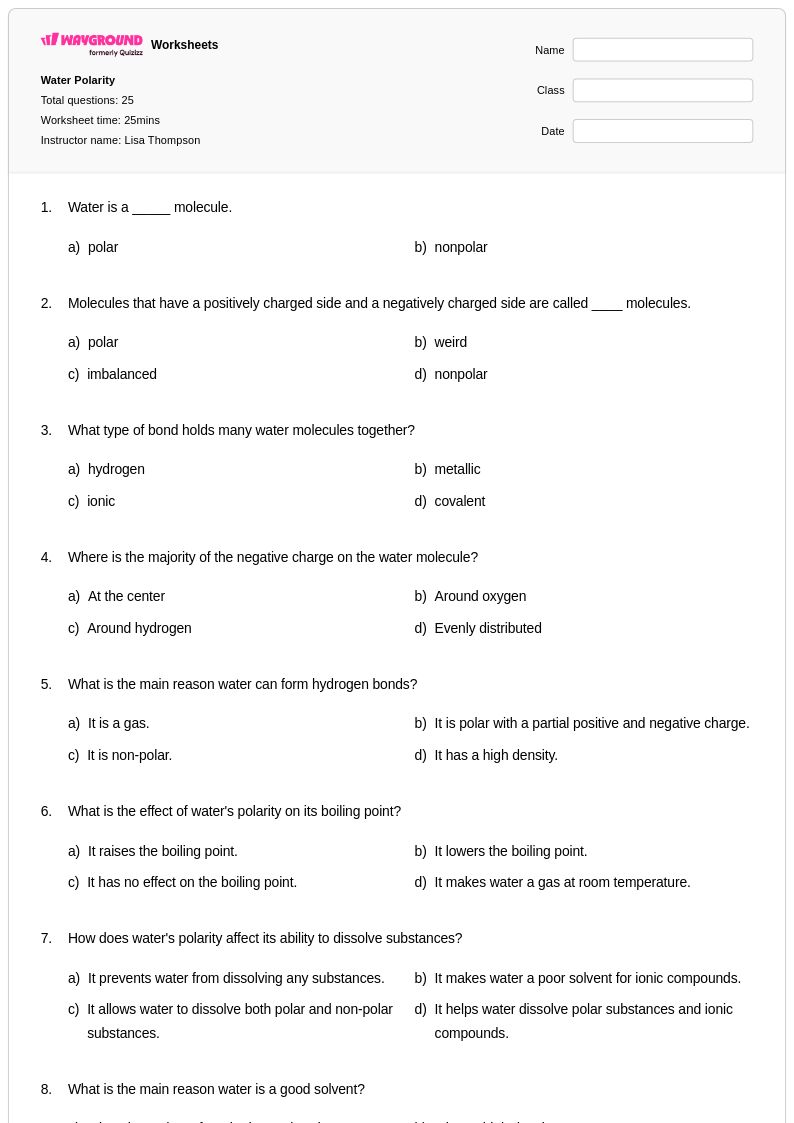
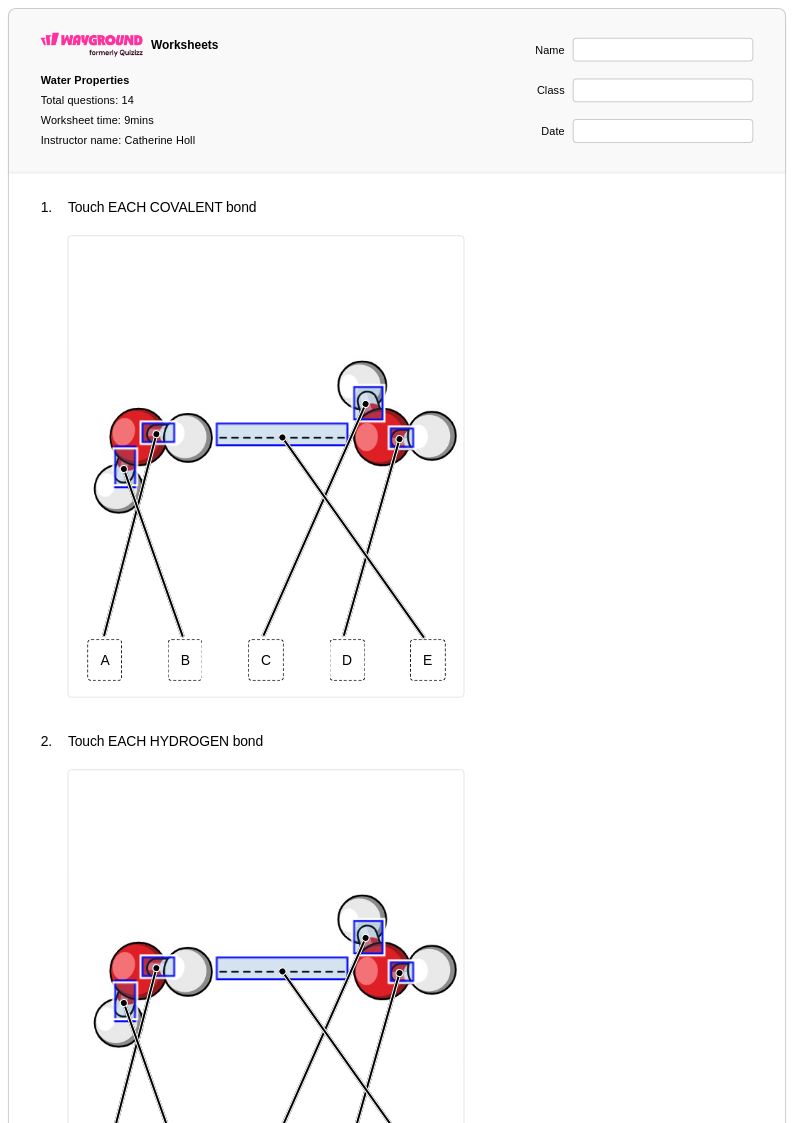
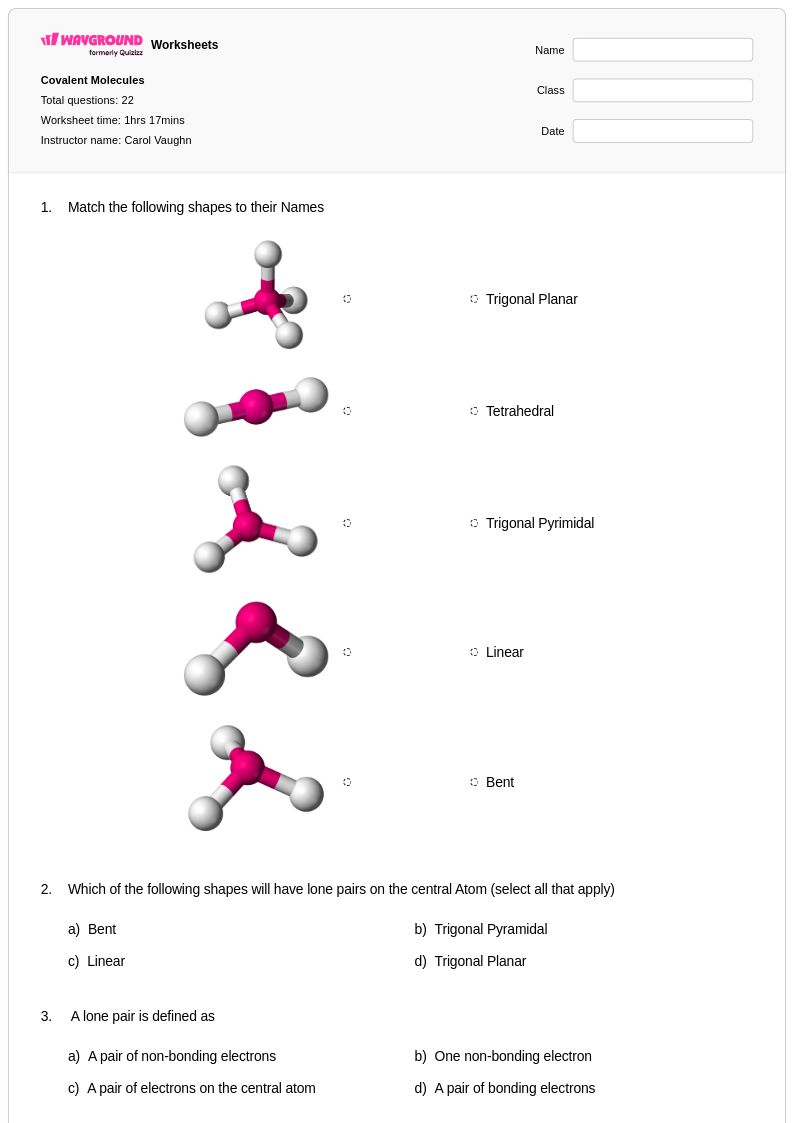
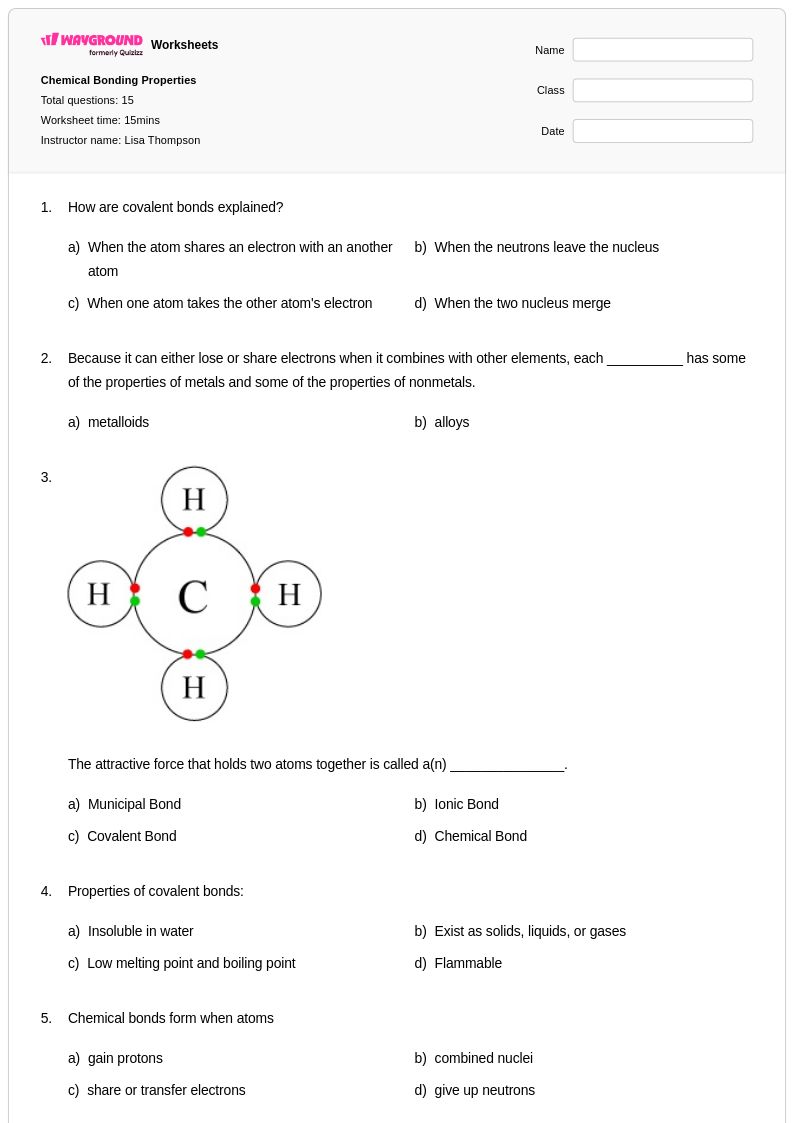
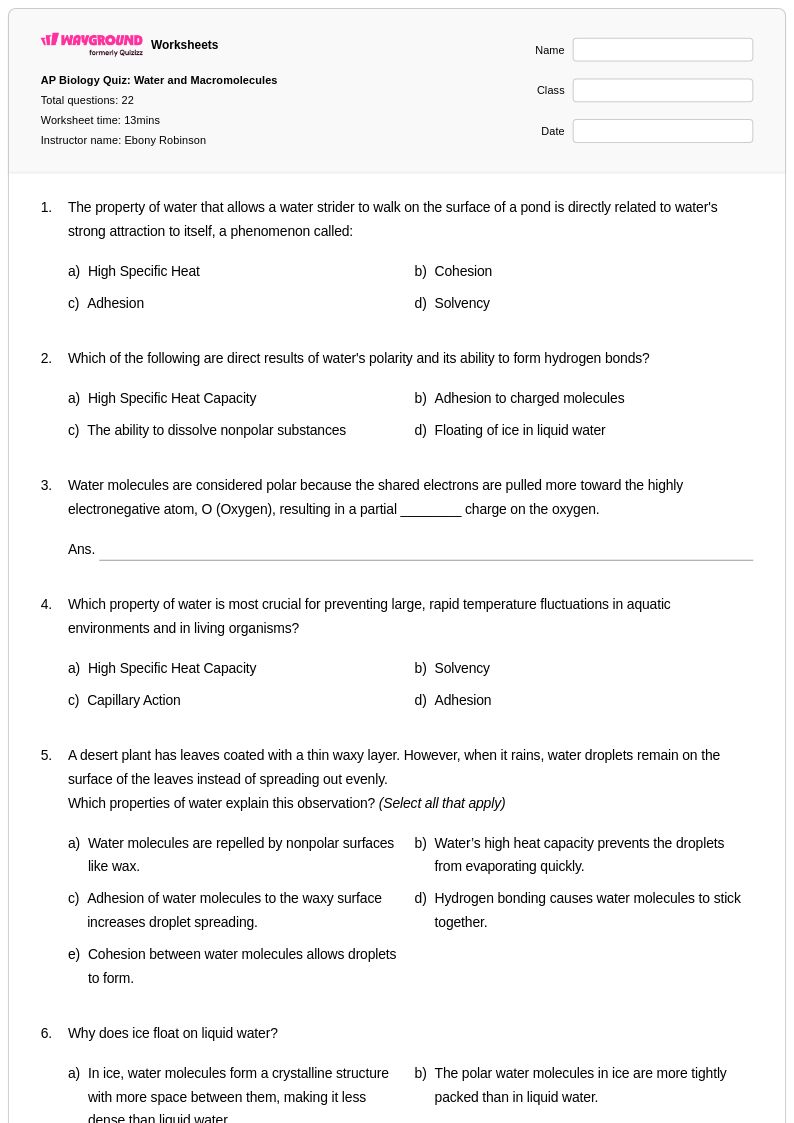
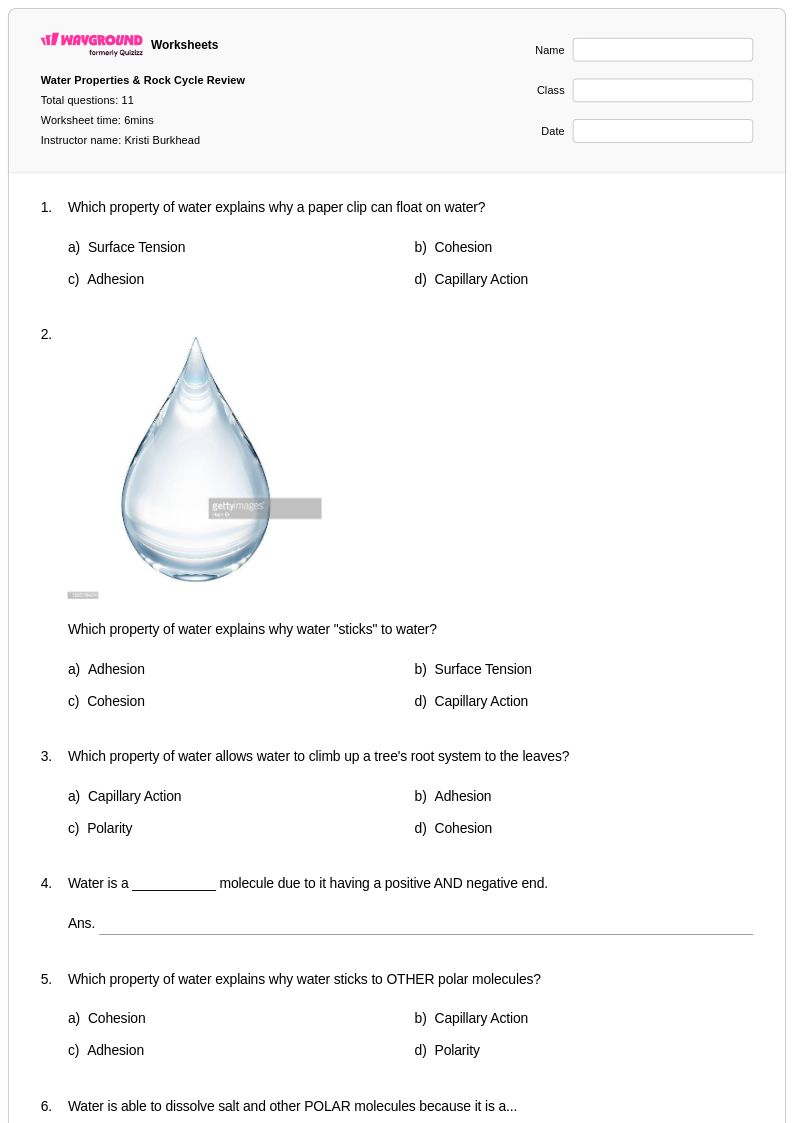
Polarity of molecules worksheets for Class 9 students through Wayground (formerly Quizizz) provide comprehensive practice in understanding molecular geometry, electronegativity differences, and dipole moments that determine whether molecules are polar or nonpolar. These expertly crafted worksheets strengthen critical chemistry skills including predicting molecular polarity using VSEPR theory, analyzing bond dipoles, identifying polar and nonpolar substances, and understanding how molecular polarity affects physical properties like solubility and boiling points. Students engage with practice problems that cover everything from simple diatomic molecules to complex organic compounds, while teachers benefit from ready-to-use materials that include detailed answer keys and are available as free printables in convenient pdf format for seamless classroom integration.
Wayground (formerly Quizizz) empowers chemistry educators with an extensive collection of millions of teacher-created resources specifically designed for molecular polarity instruction at the Class 9 level. The platform's robust search and filtering capabilities allow teachers to quickly locate worksheets that align with specific curriculum standards and learning objectives, whether focusing on Lewis structures, electronegativity charts, or three-dimensional molecular visualization. Advanced differentiation tools enable instructors to customize content difficulty and modify practice problems to meet diverse student needs, supporting both remediation for struggling learners and enrichment opportunities for advanced students. These versatile resources are available in both printable and digital formats, including downloadable pdf versions, making lesson planning more efficient while providing flexible options for in-class practice, homework assignments, and assessment preparation that builds student confidence in predicting and explaining molecular behavior.
FAQs
How do I teach molecular polarity to chemistry students?
Start by building students' fluency with electronegativity values before introducing bond polarity, then layer in VSEPR theory so students can connect molecular geometry to overall dipole moment. A common and effective sequence is: diatomic molecules first, then symmetric polyatomic structures like CO2, then asymmetric ones like water, so students learn to distinguish between polar bonds and polar molecules. Using vector diagrams to show how individual bond dipoles either cancel or combine helps students move beyond memorization toward genuine conceptual understanding.
What practice problems help students learn to predict whether a molecule is polar or nonpolar?
Effective practice should progress from identifying polar bonds using electronegativity differences, to drawing Lewis structures, to applying VSEPR theory to determine molecular geometry, to finally performing vector analysis of bond dipoles to evaluate net polarity. Problems that include both symmetric molecules (like BF3 or CCl4) and asymmetric ones (like CHCl3 or H2O) are particularly valuable because they force students to recognize that polar bonds do not automatically produce a polar molecule. Scaffolded worksheets that build complexity from diatomic to polyatomic structures reinforce this distinction systematically.
What mistakes do students commonly make when determining molecular polarity?
The most persistent misconception is assuming that any molecule with polar bonds must itself be polar, without accounting for molecular geometry. Students often skip the VSEPR step entirely and base their polarity prediction on bond polarity alone, leading to errors on symmetric molecules like CO2 and BF3. A second common error is neglecting lone pairs when predicting geometry, which distorts their vector analysis and produces incorrect polarity conclusions.
How do I help students apply VSEPR theory correctly when predicting molecular polarity?
Emphasize that lone pairs occupy space and influence geometry even though they are not bonded atoms, which is a step many students skip. Require students to write the electron geometry and molecular geometry separately before attempting any polarity analysis, so the distinction between electron arrangement and molecular shape becomes habitual. Practicing with molecules that have lone pairs on the central atom, such as NH3 and H2O, directly targets the error of ignoring lone pair repulsion.
How can I use Wayground's polarity of molecules worksheets in my classroom?
Wayground's polarity of molecules worksheets are available as printable PDFs for traditional classroom use and in digital formats for technology-integrated learning environments, and can also be hosted as a quiz directly on Wayground. The worksheets include complete answer keys, making them practical for both guided instruction and independent practice sessions. Wayground also supports student-level accommodations such as read aloud, extended time, and reduced answer choices, which can be configured individually so that students who need support receive it without disrupting the rest of the class.
How do I differentiate molecular polarity instruction for students at different skill levels?
For students who are still building foundational skills, begin with diatomic molecules and electronegativity tables before introducing geometry, and consider enabling reduced answer choices or read aloud features if working in a digital environment to lower cognitive load. Advanced learners benefit from polyatomic molecules requiring full vector analysis and problems that connect molecular polarity to intermolecular forces and physical properties like boiling point. Grouping problems by skill level within a single assignment allows the same worksheet to serve multiple readiness levels in one class period.