Free Printable Precipitation Reaction Worksheets for Class 9
Enhance Class 9 chemistry understanding with Wayground's free precipitation reaction worksheets and printables, featuring comprehensive practice problems and answer keys to master chemical equations and solubility concepts.
Explore printable Precipitation Reaction worksheets for Class 9
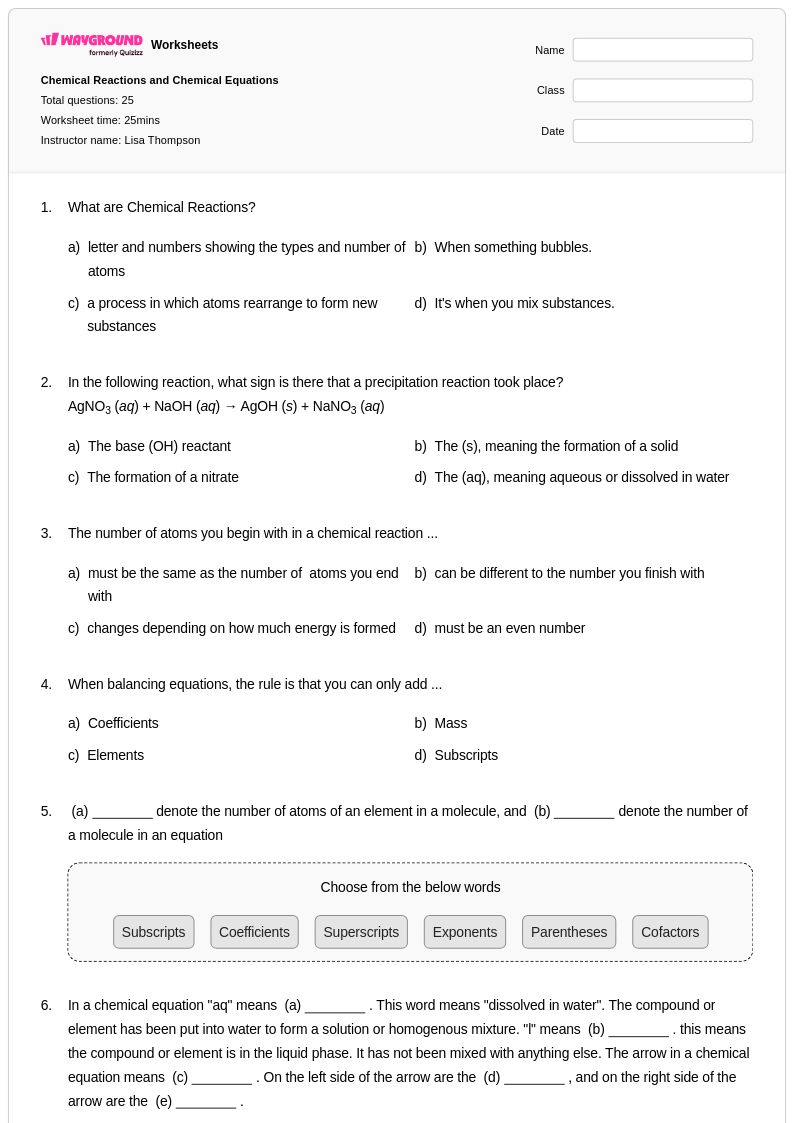
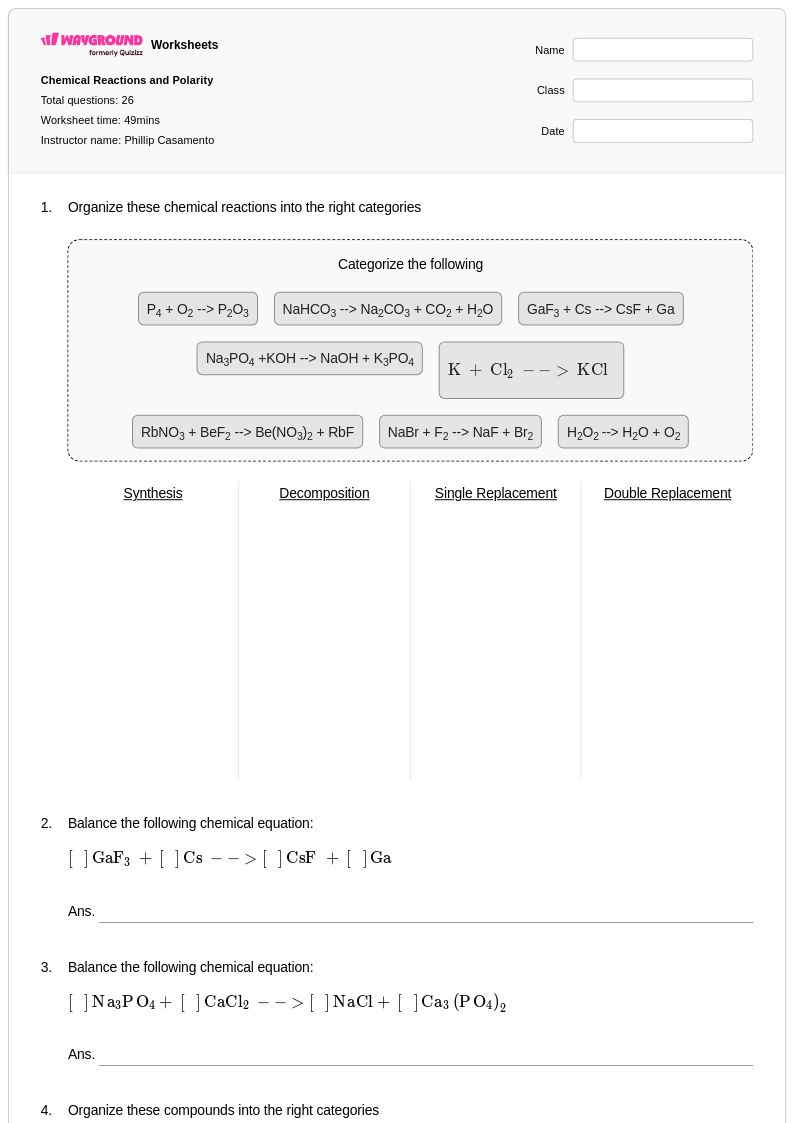
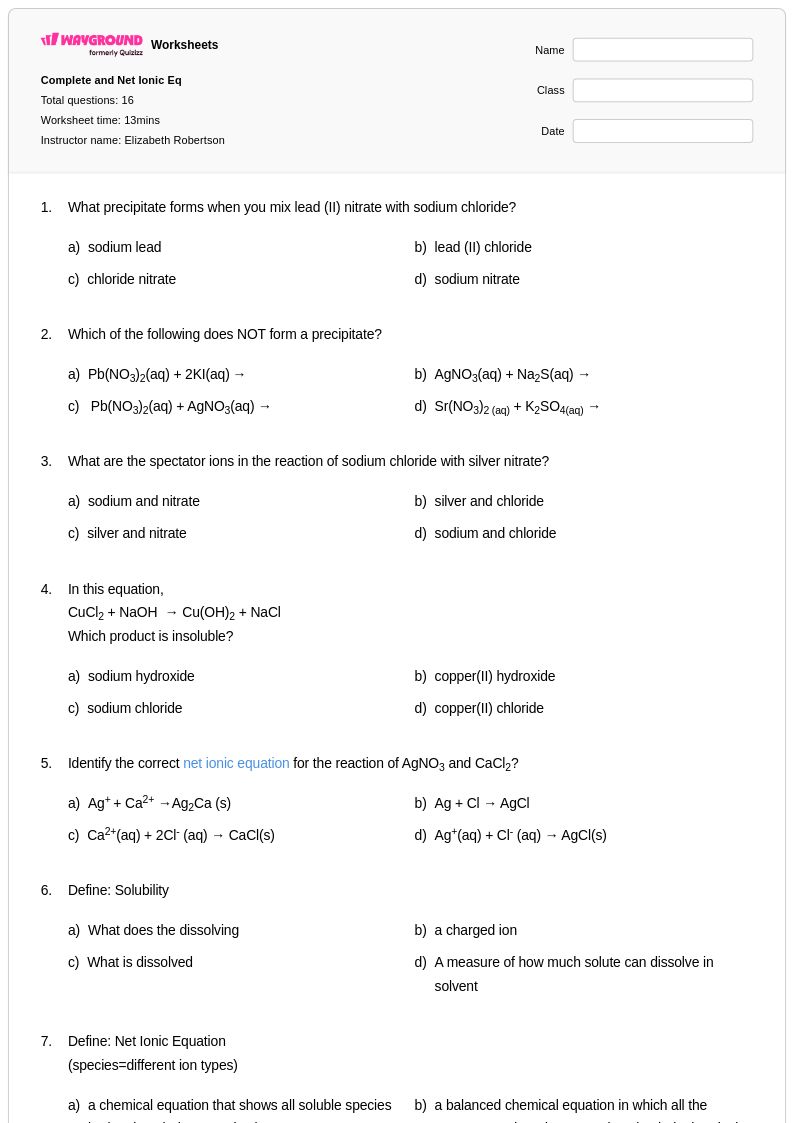
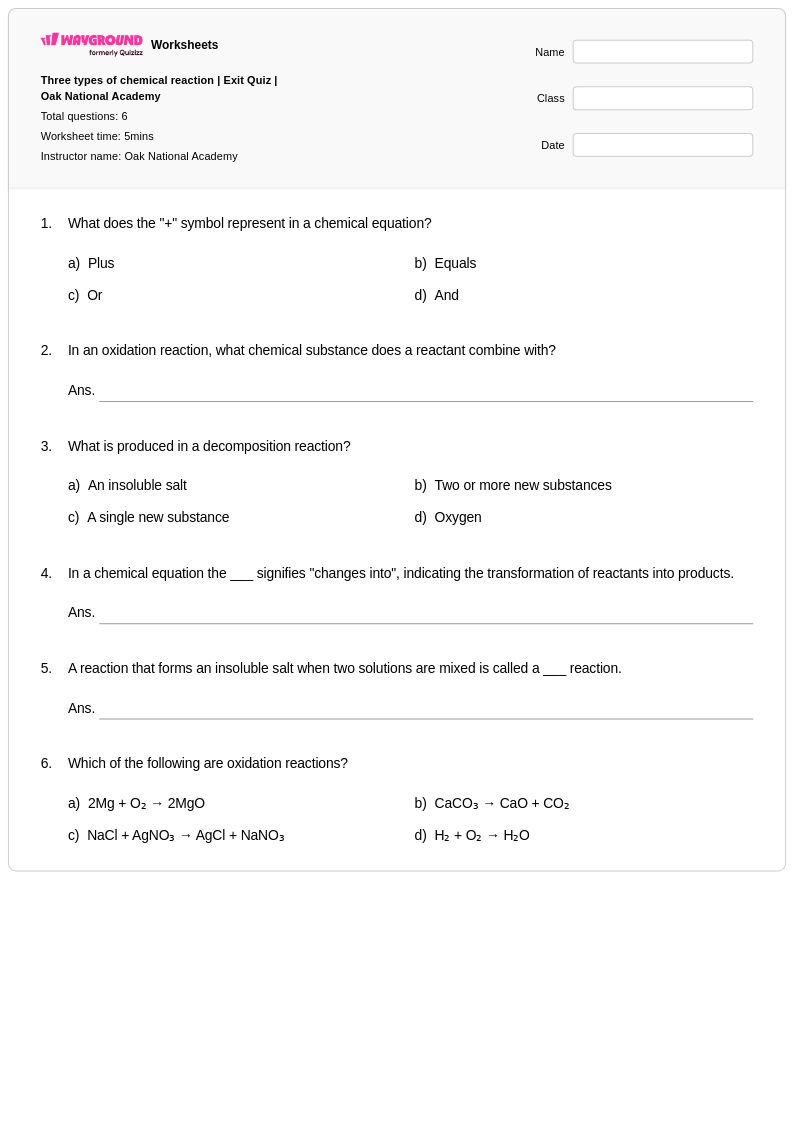
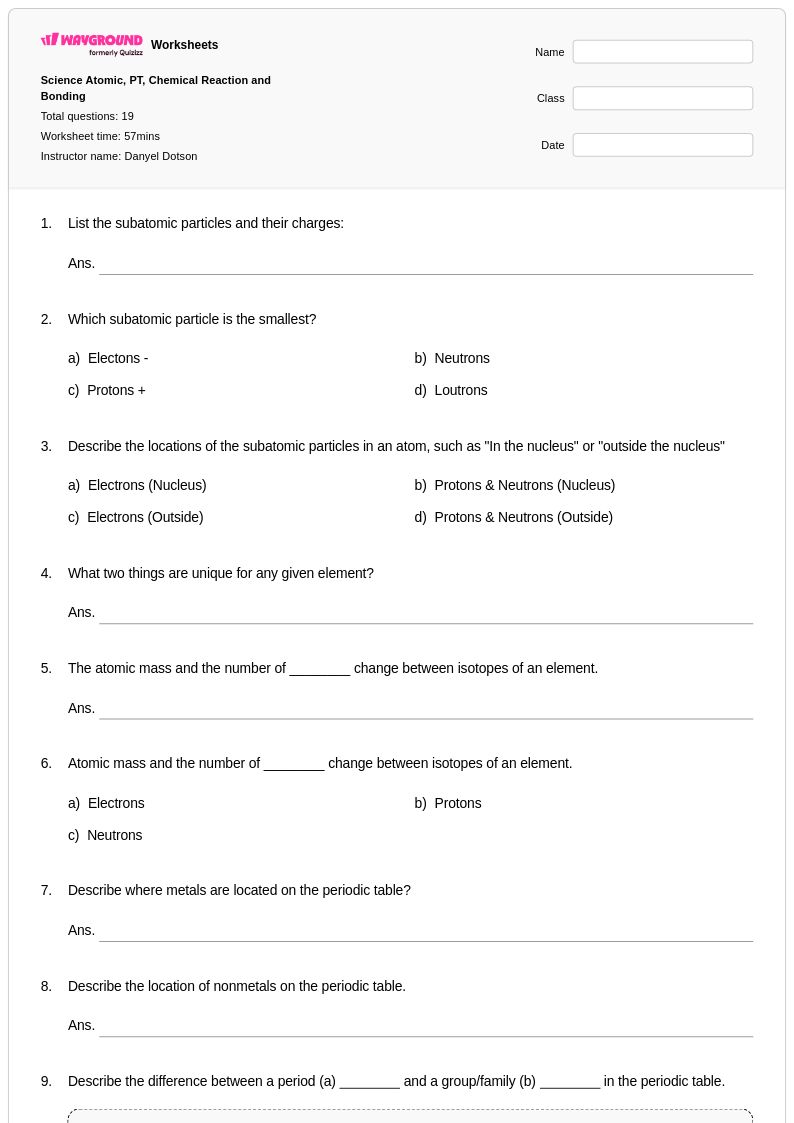
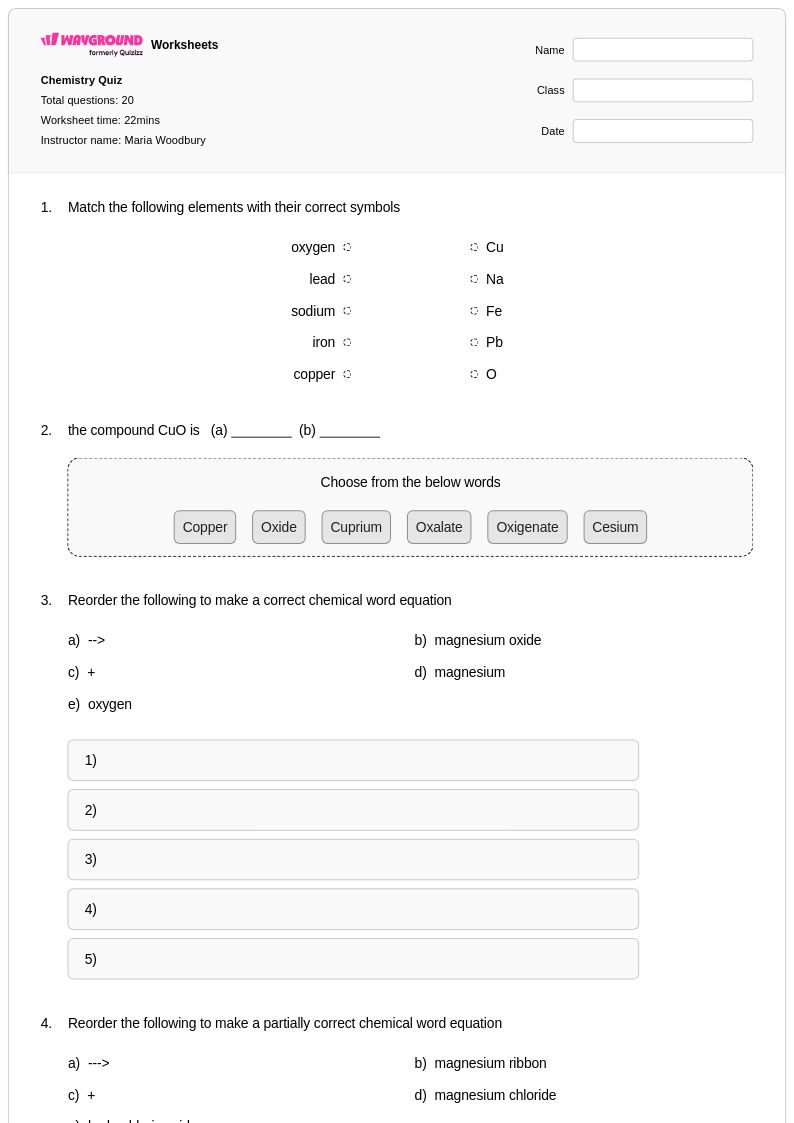
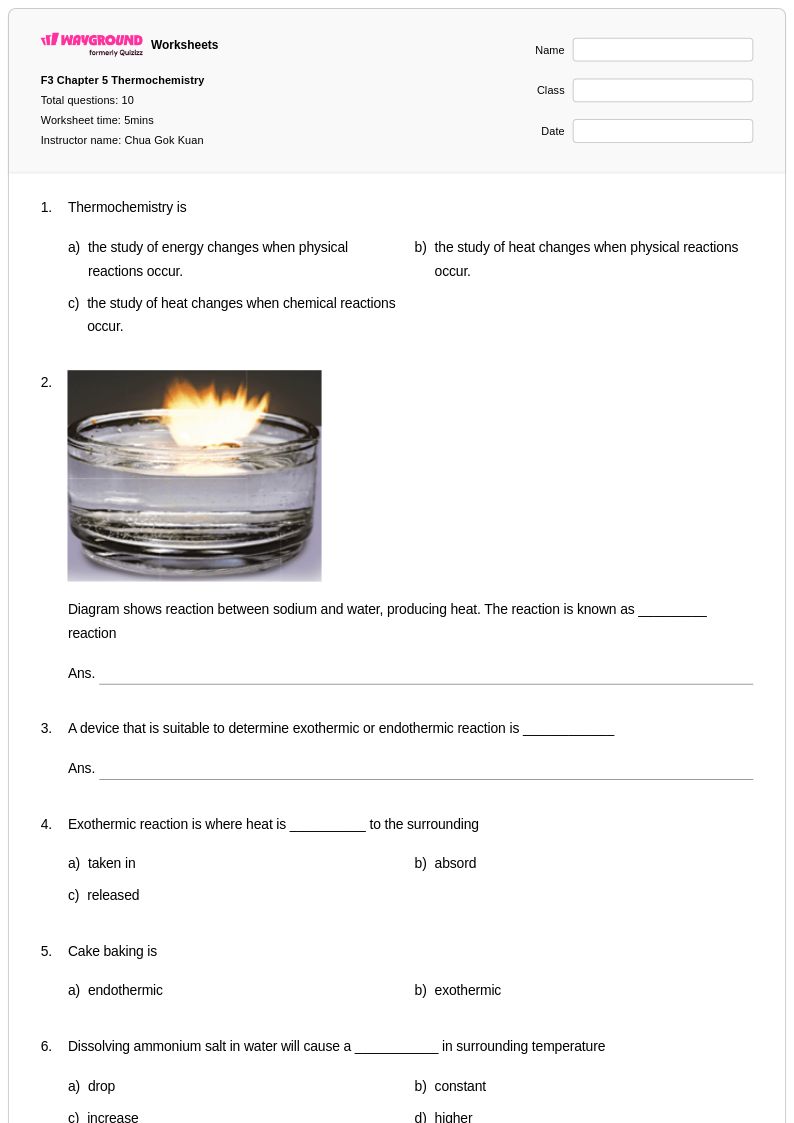
Precipitation reaction worksheets for Class 9 students available through Wayground (formerly Quizizz) provide comprehensive practice opportunities for mastering one of chemistry's fundamental concepts. These educational resources strengthen students' understanding of how ionic compounds form insoluble products when aqueous solutions are mixed, developing critical skills in predicting reaction outcomes, writing balanced chemical equations, and identifying precipitates using solubility rules. The collection includes practice problems that guide students through the step-by-step process of determining whether a precipitation reaction will occur, complete with detailed answer keys that explain the reasoning behind each solution. These free printables cover essential topics such as net ionic equations, spectator ions, and the application of solubility tables, ensuring students build confidence in analyzing chemical reactions through systematic practice.
Wayground (formerly Quizizz) empowers educators with millions of teacher-created precipitation reaction resources that streamline lesson planning and support diverse learning needs in Class 9 chemistry classrooms. The platform's robust search and filtering capabilities allow teachers to quickly locate worksheets aligned with specific curriculum standards, while differentiation tools enable customization based on individual student proficiency levels. These versatile materials are available in both printable pdf formats for traditional classroom use and digital formats for interactive learning experiences, providing flexibility for various teaching environments. Teachers can leverage these comprehensive worksheet collections for targeted remediation sessions, enrichment activities for advanced learners, and regular skill practice that reinforces students' mastery of precipitation reactions throughout the academic year.
FAQs
How do I teach precipitation reactions to chemistry students?
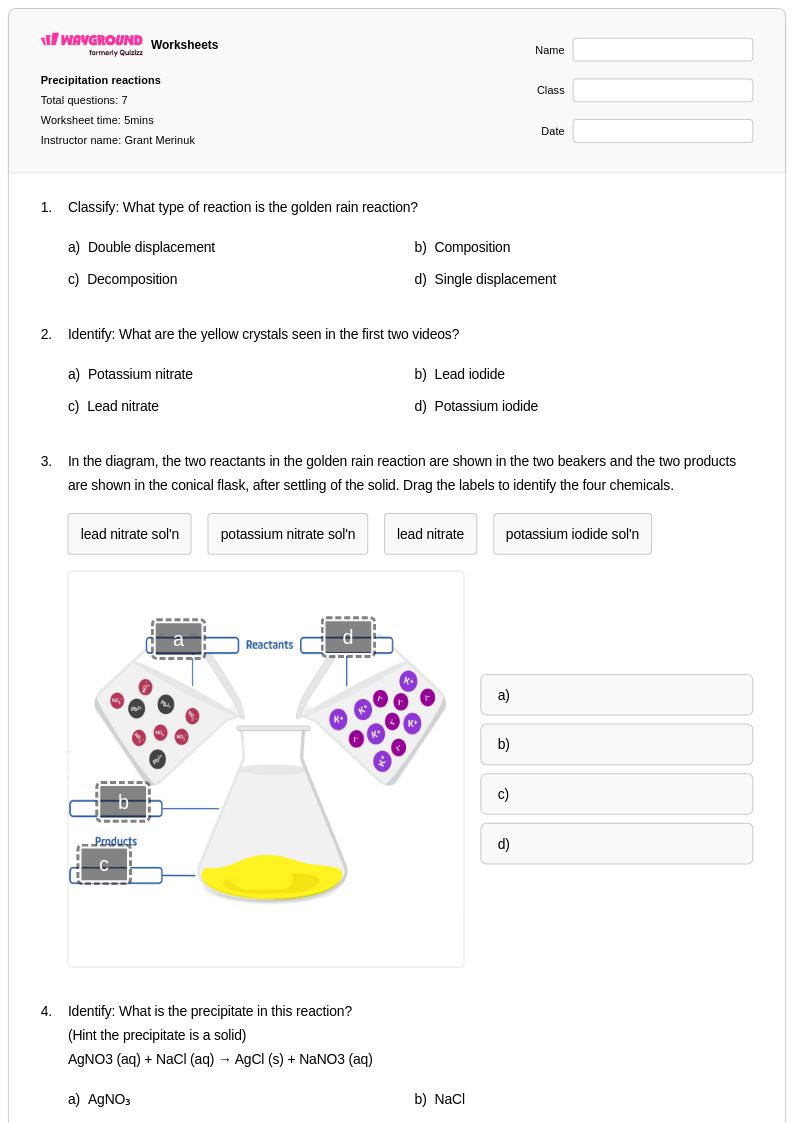
Start by ensuring students have a solid grasp of solubility rules before introducing precipitation reactions, since predicting whether a precipitate forms depends entirely on knowing which ionic compounds dissolve in water. Introduce the concept using visual demonstrations — mixing solutions of lead nitrate and potassium iodide, for example, produces a vivid yellow precipitate that makes the abstract concept concrete. From there, guide students through writing molecular equations, then complete ionic equations, and finally net ionic equations, building complexity incrementally. Reinforcing each stage with structured practice problems helps students internalize the pattern before they encounter unfamiliar compound combinations.
What exercises help students practice writing precipitation reaction equations?
The most effective exercises move students through a progression: first identifying whether a reaction produces a precipitate using a solubility table, then writing balanced molecular equations, and finally isolating the net ionic equation by canceling spectator ions. Practice problems that provide two ionic compounds and ask students to predict the products — rather than just balance a pre-written equation — build the reasoning skills that translate to assessments. Including a mix of reactions where no precipitate forms is equally important, as students must learn to recognize a non-event and explain why using solubility rules.
What mistakes do students commonly make with precipitation reactions?
The most frequent error is incorrectly applying solubility rules, particularly forgetting exceptions such as sulfates with barium or lead. Students also commonly fail to switch ion partners correctly when predicting products, writing the same compounds as both reactants and products. A third persistent issue is writing net ionic equations without first canceling all spectator ions, or canceling ions that are not actually present in both sides in the same form. Targeted practice problems that isolate each of these steps individually can help students identify and correct these misconceptions before they become entrenched.
How can I use precipitation reaction worksheets in my classroom?
Precipitation reaction worksheets on Wayground are available as printable PDFs for traditional classroom use and in digital formats for technology-integrated environments, including the option to host them as a quiz directly on Wayground. Printable versions work well for guided practice, lab pre-assessments, or homework, while the digital format allows for self-paced review where students can check answers immediately. Teachers can also assign digital versions to individual students with accommodations such as extended time or read-aloud support configured through Wayground's student settings.
How do I differentiate precipitation reaction instruction for students at different skill levels?
For students who are still building foundational skills, begin with solubility rule reference charts and reaction types that follow clear patterns before introducing exceptions. More advanced learners can be challenged with multi-step problems involving net ionic equations, spectator ion identification, or connecting precipitation reactions to broader reaction-type classification. On Wayground, teachers can assign worksheets targeted to specific skill levels and apply accommodations such as reduced answer choices or read-aloud for students who need additional support, without affecting the experience of other students in the class.
How do precipitation reaction worksheets connect to broader chemistry standards?
Precipitation reactions sit at the intersection of several core chemistry concepts: solubility, ionic bonding, double displacement reactions, and chemical equation balancing. Mastery of this topic directly supports student performance on topics like solution chemistry, electrochemistry, and qualitative analysis, all of which appear in standard high school and AP Chemistry curricula. Worksheets that include solubility table practice, equation writing, and net ionic equations simultaneously address multiple learning objectives, making them efficient tools for covering interconnected standards in a single assignment.