Free Printable Naming Hydrocarbons Worksheets for Class 9
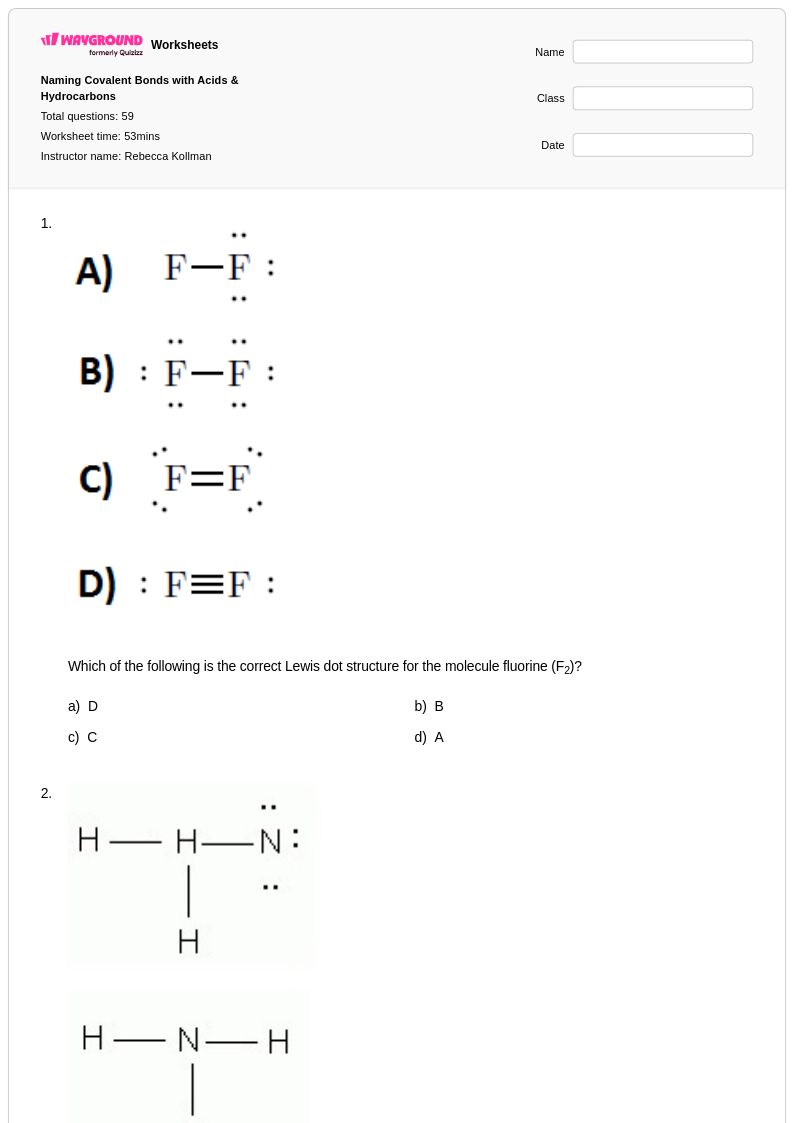
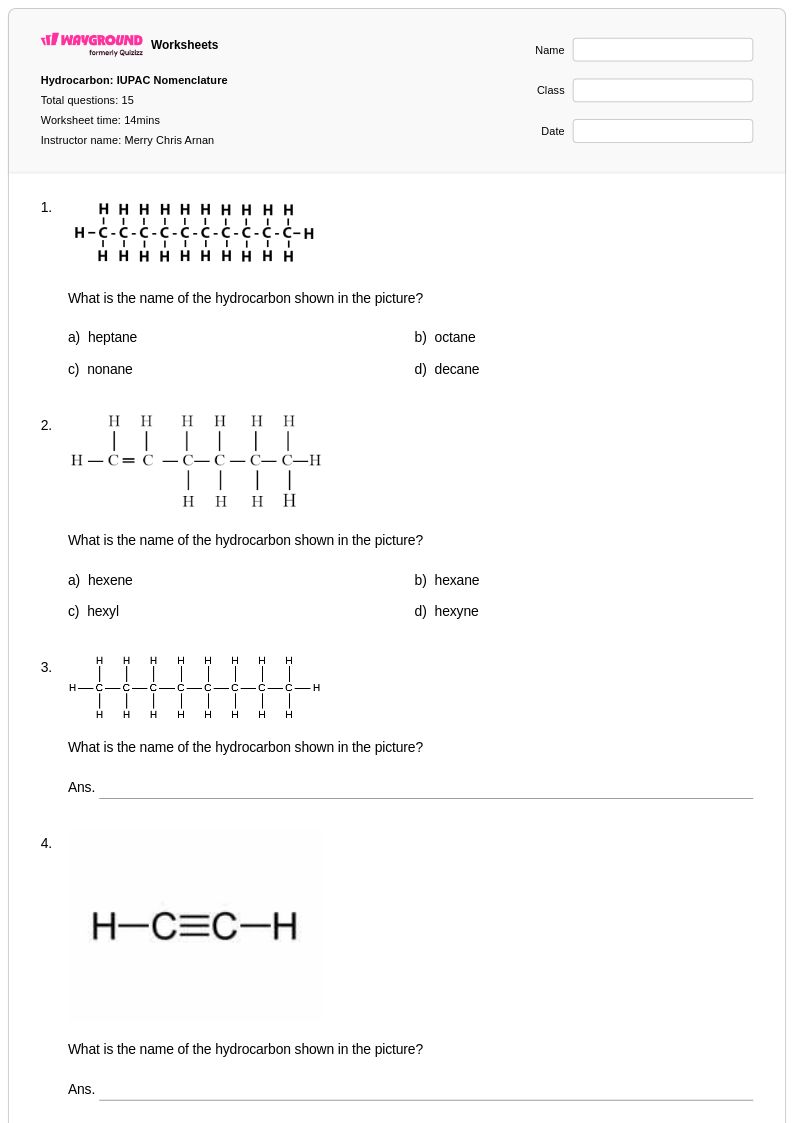
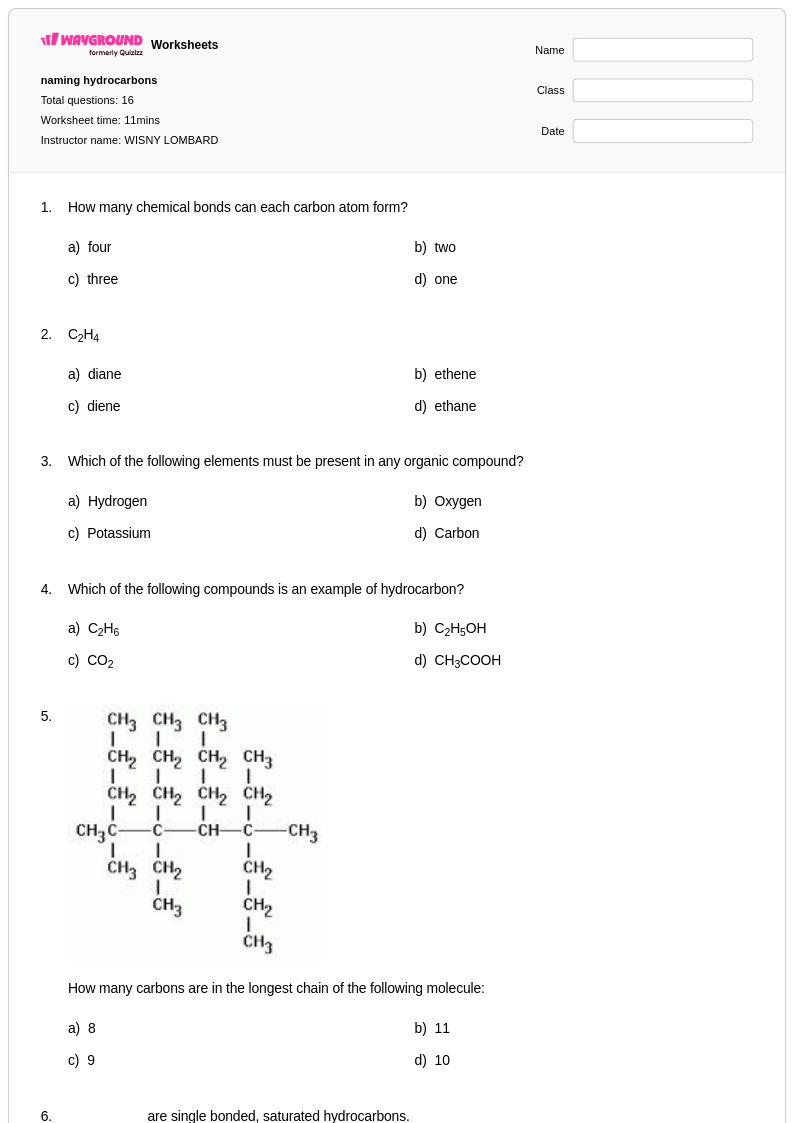
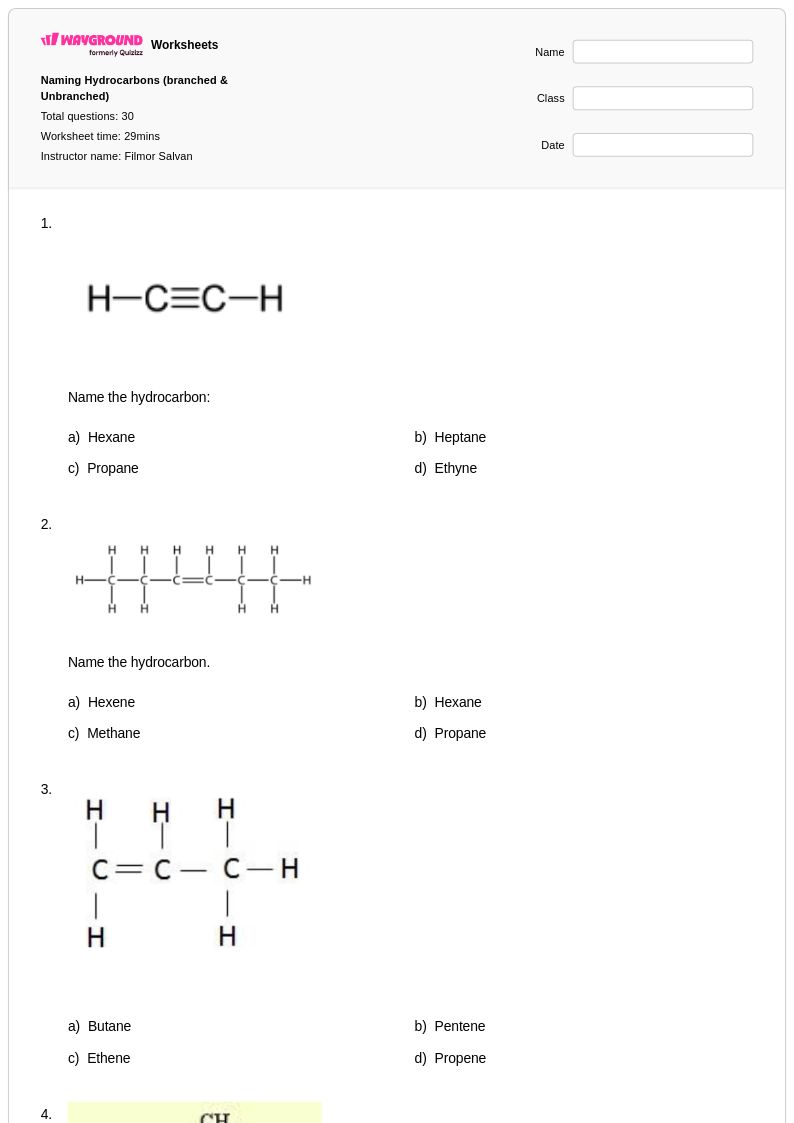
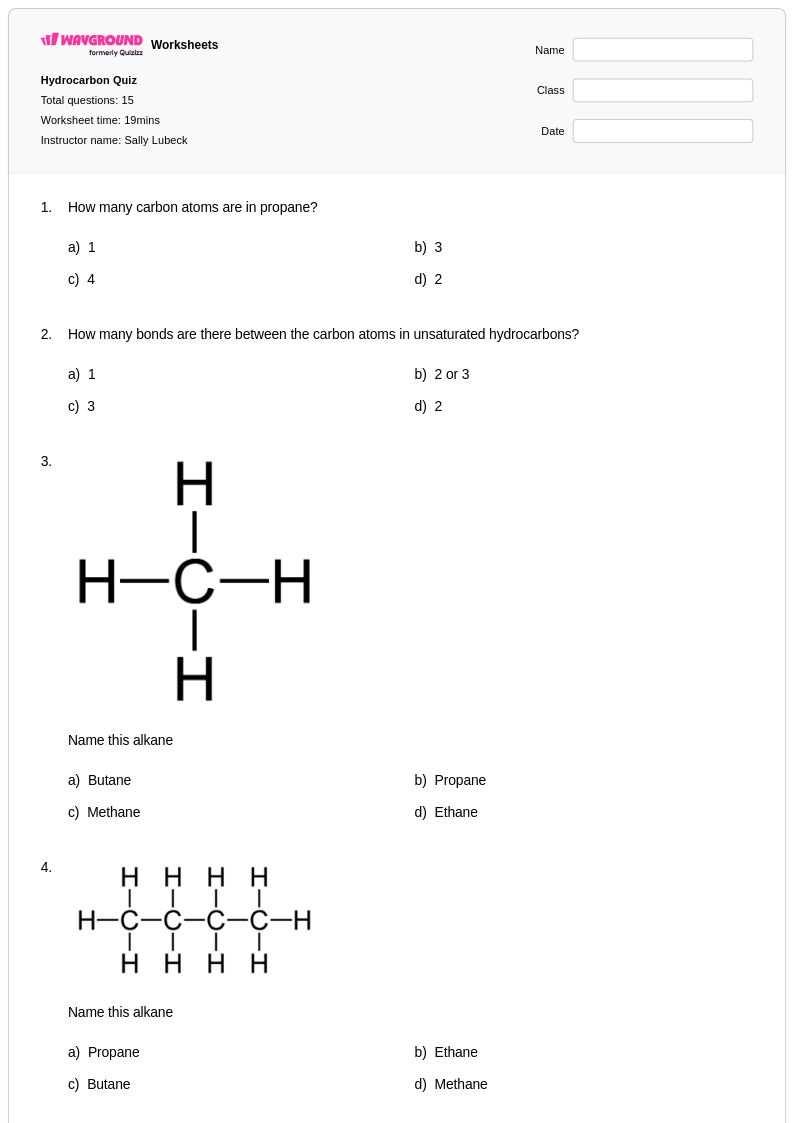
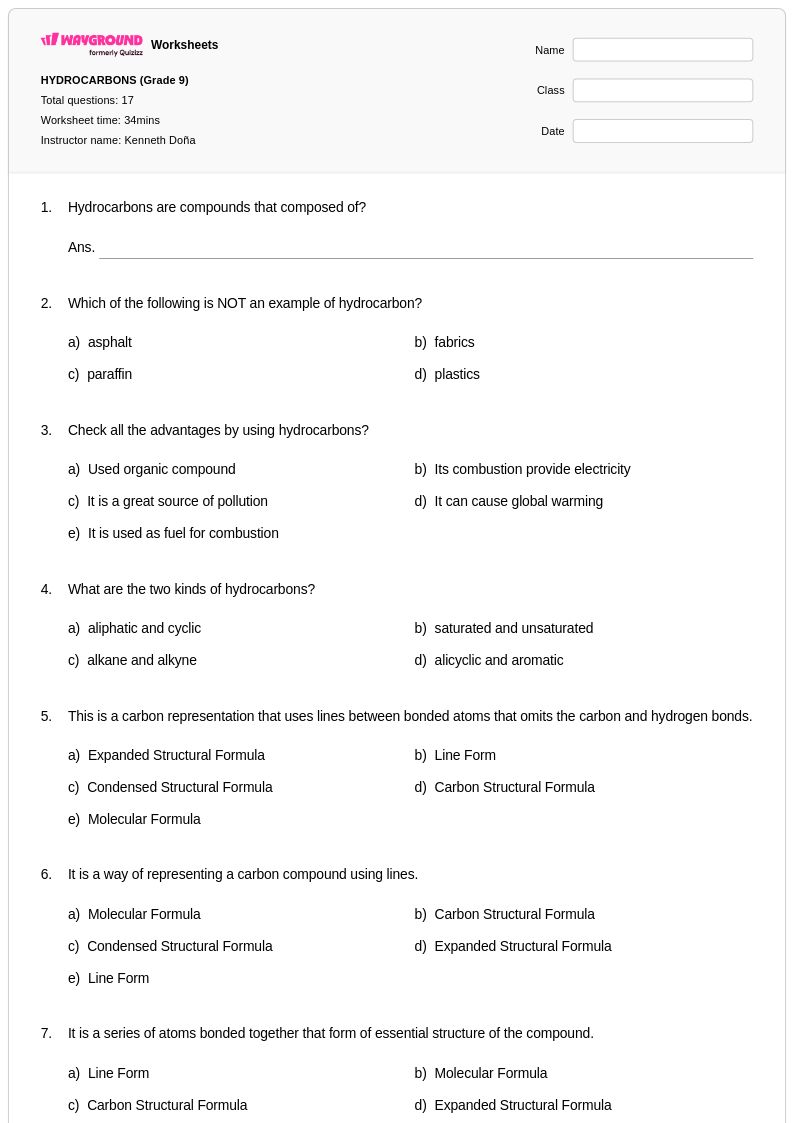
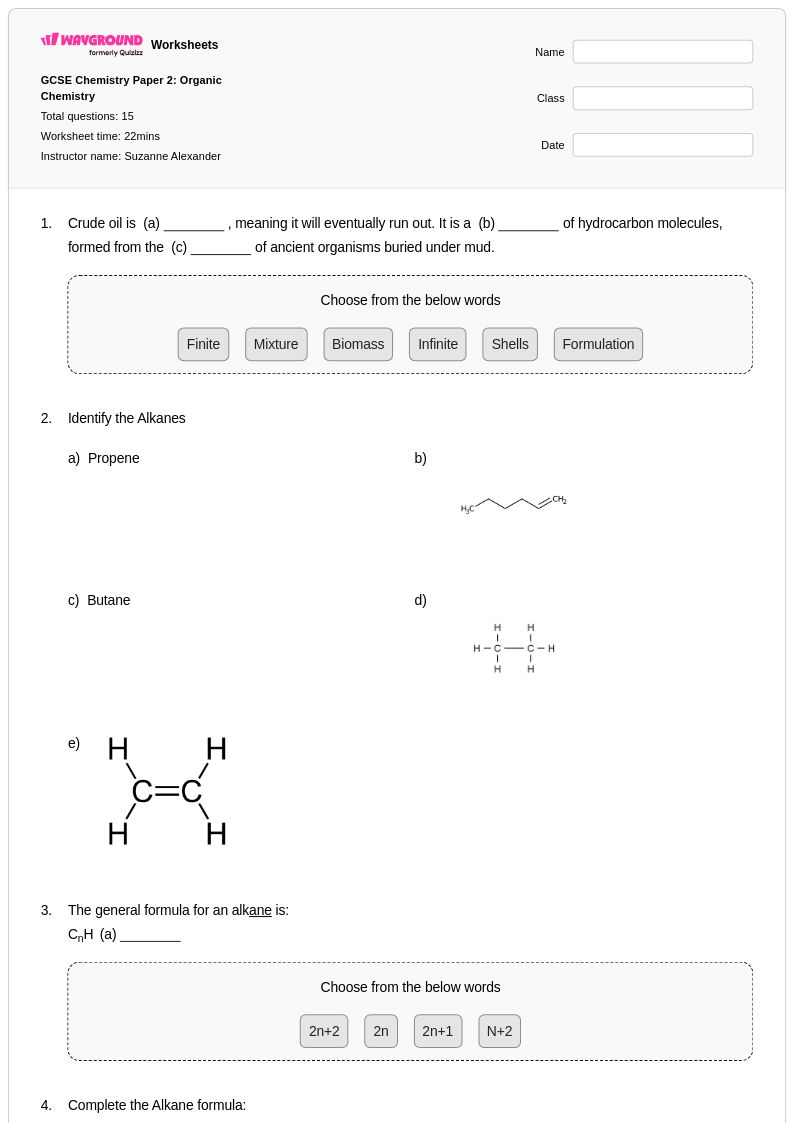
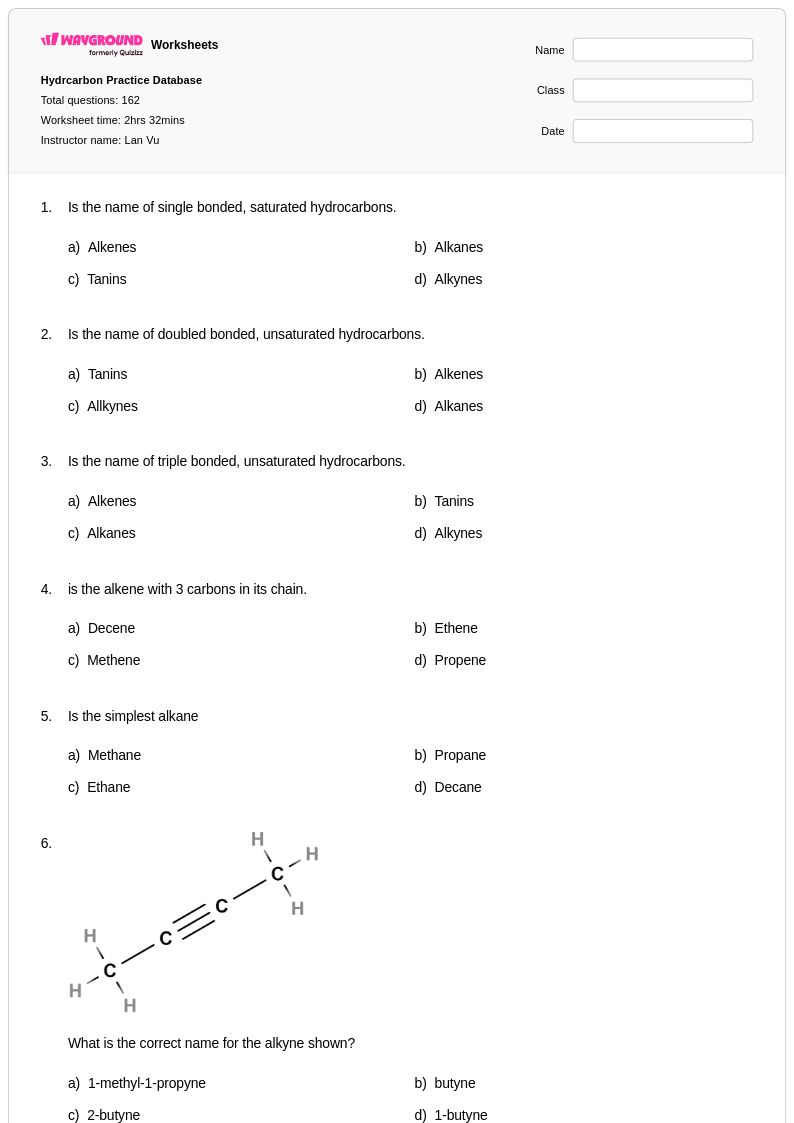
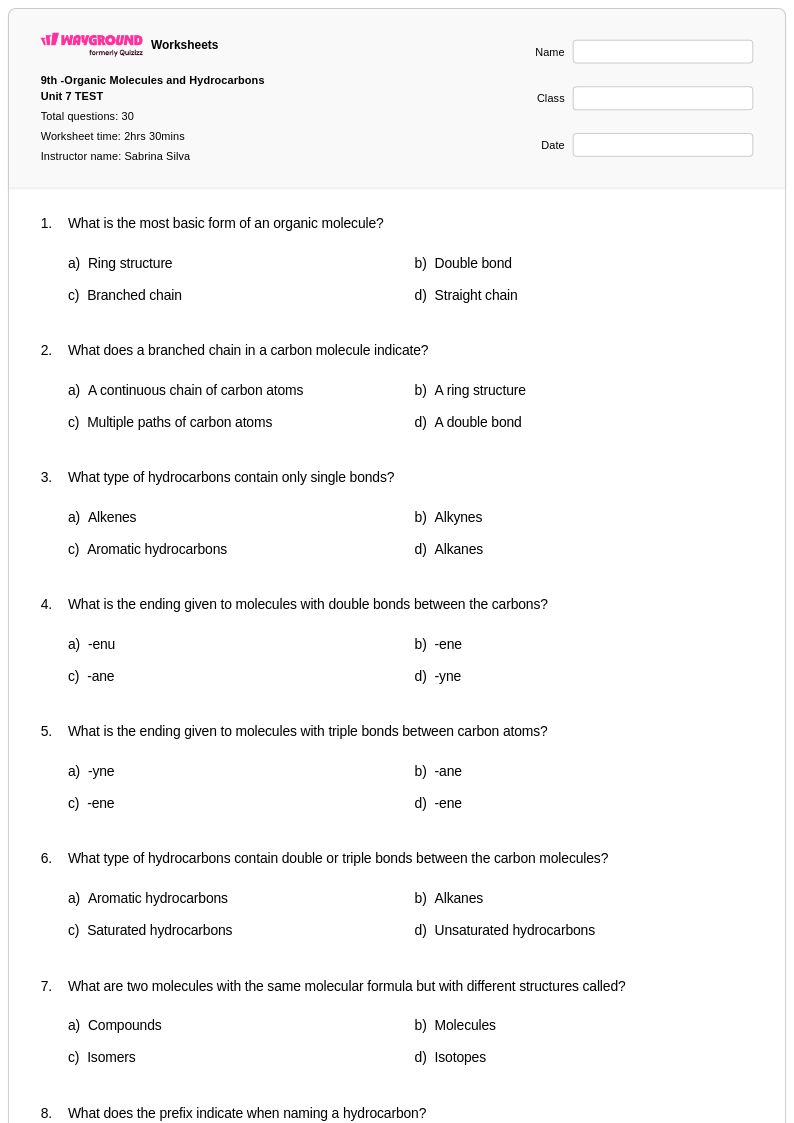
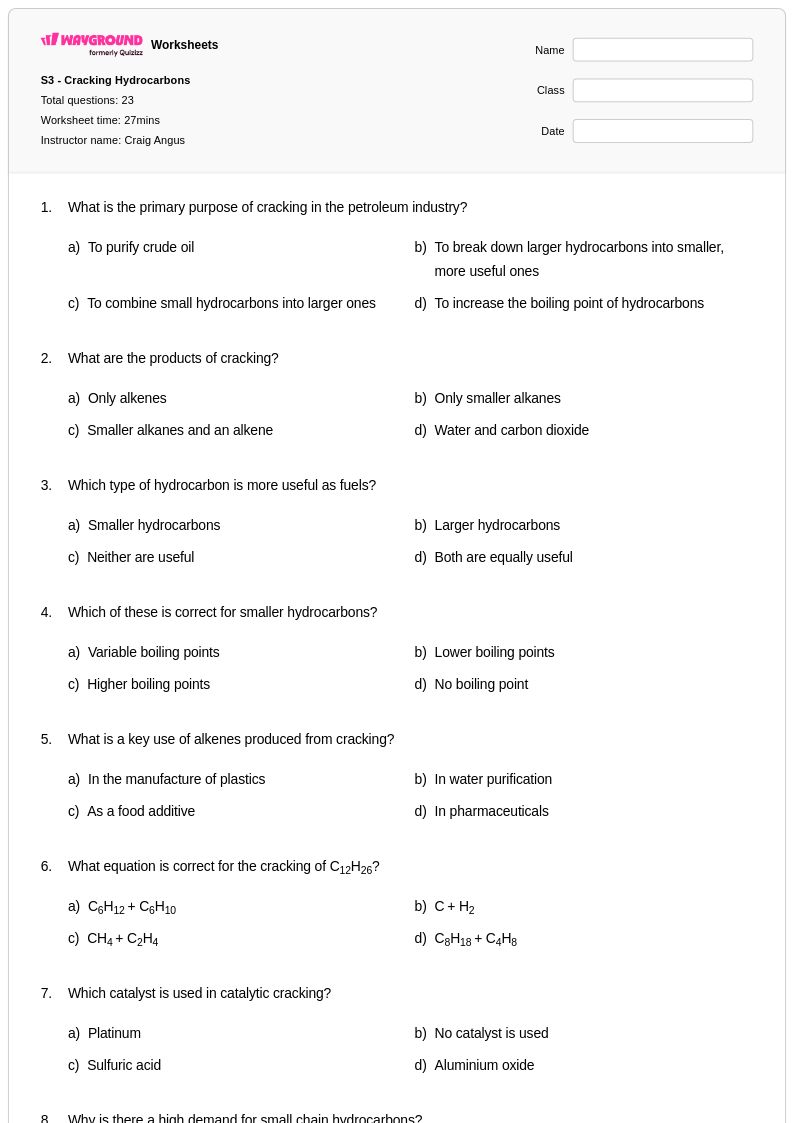
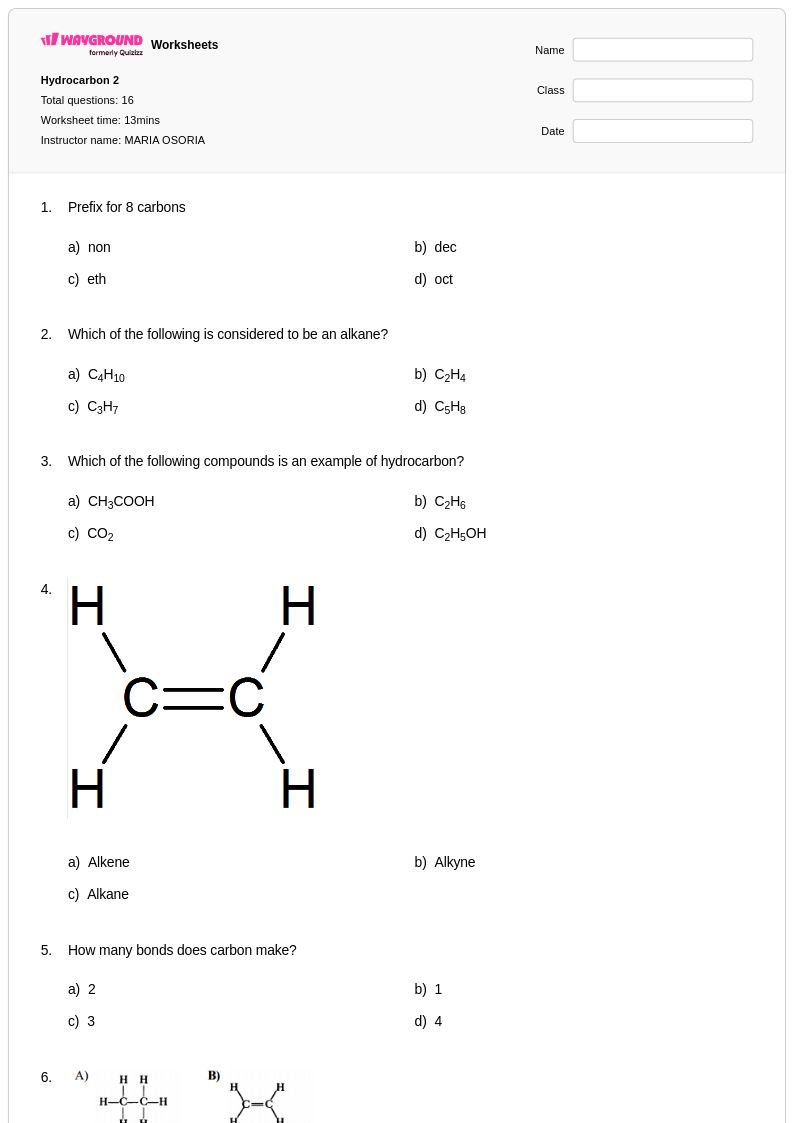
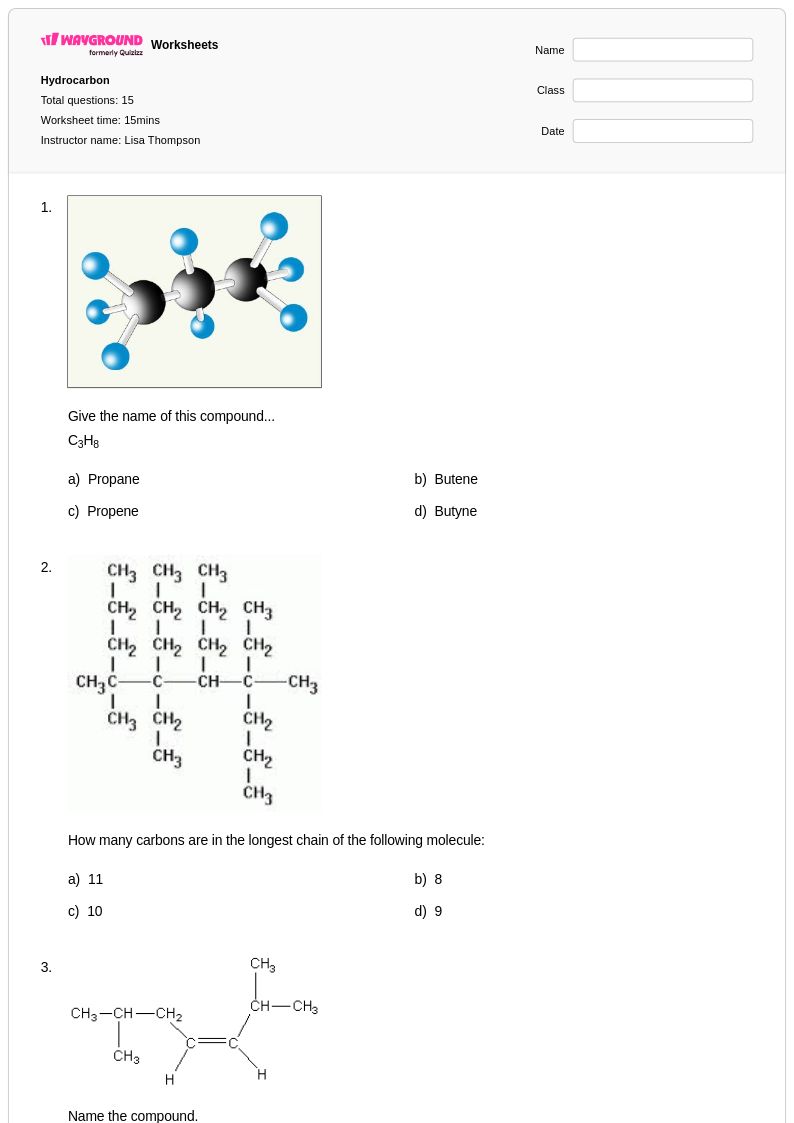
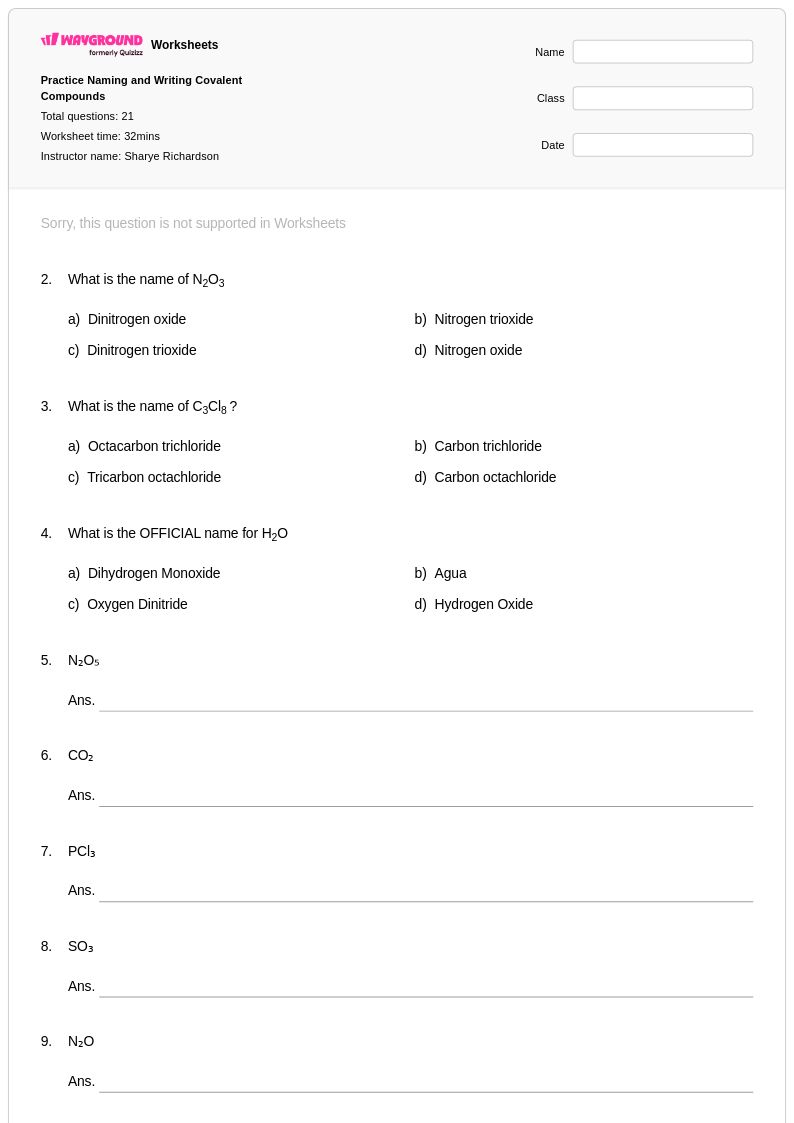
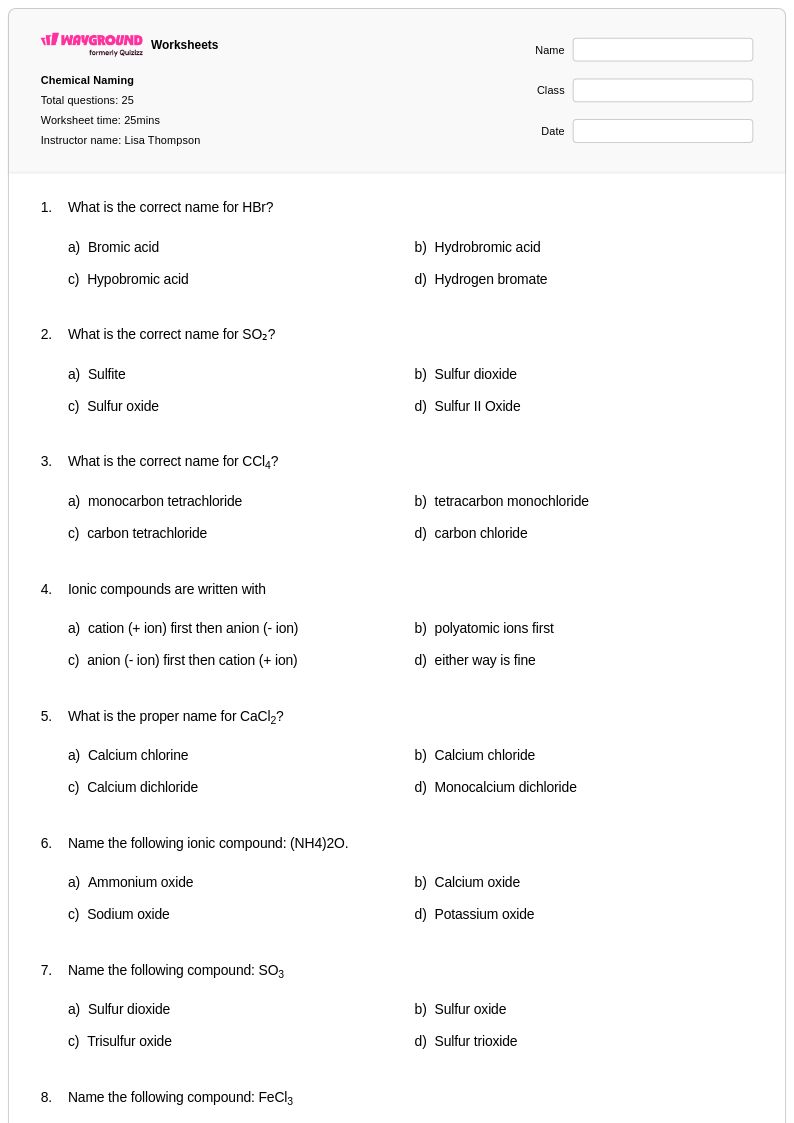
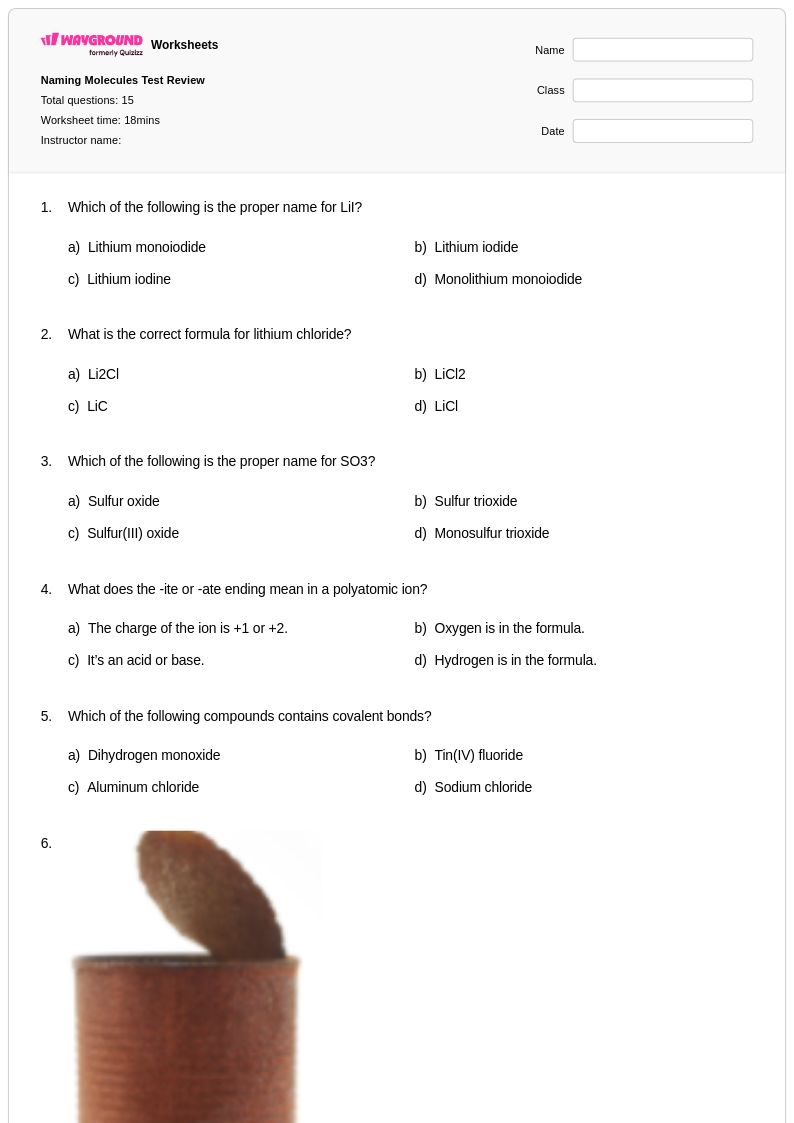
Class 9 naming hydrocarbons worksheets from Wayground provide comprehensive printables and practice problems to help students master organic compound nomenclature, complete with detailed answer keys and free PDF downloads.
Explore printable Naming Hydrocarbons worksheets for Class 9
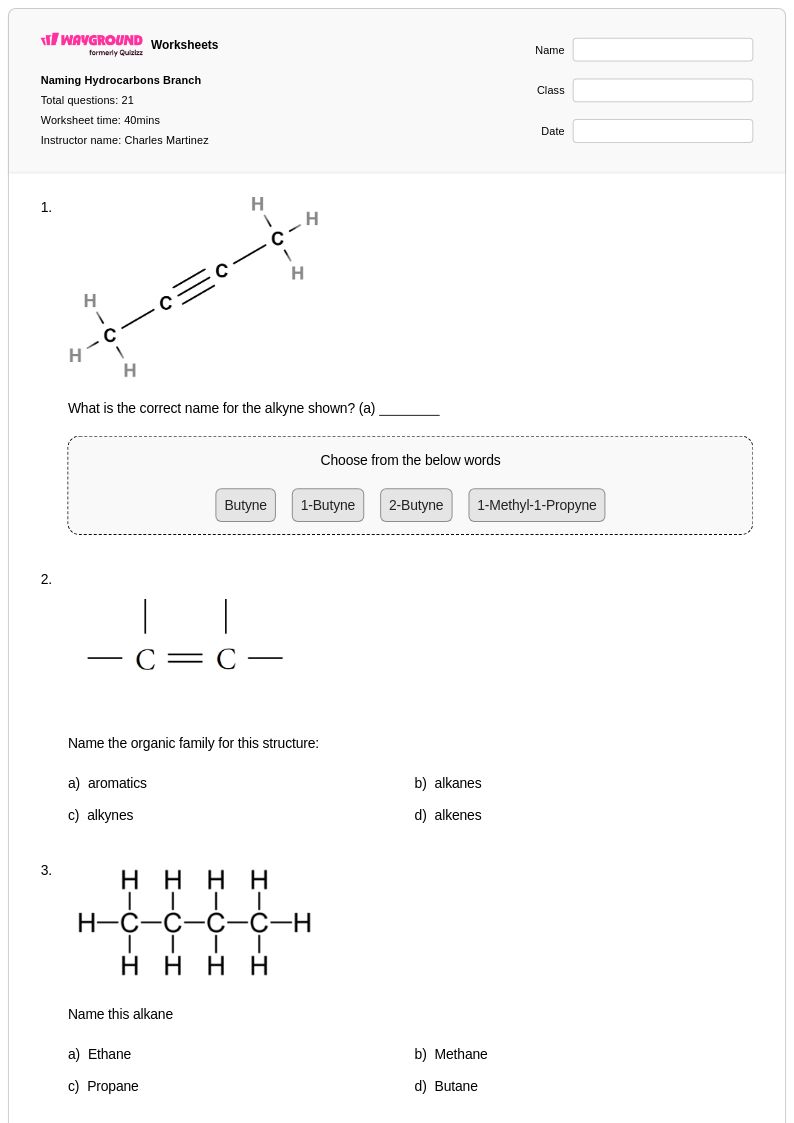
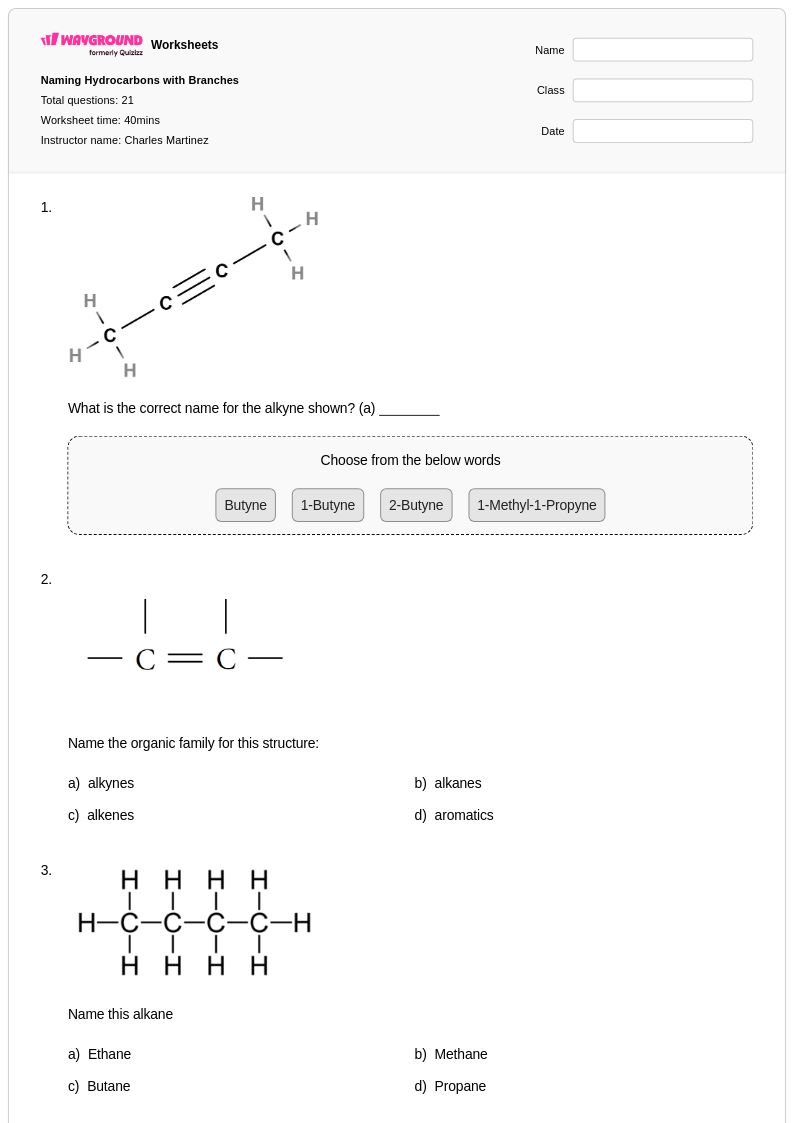
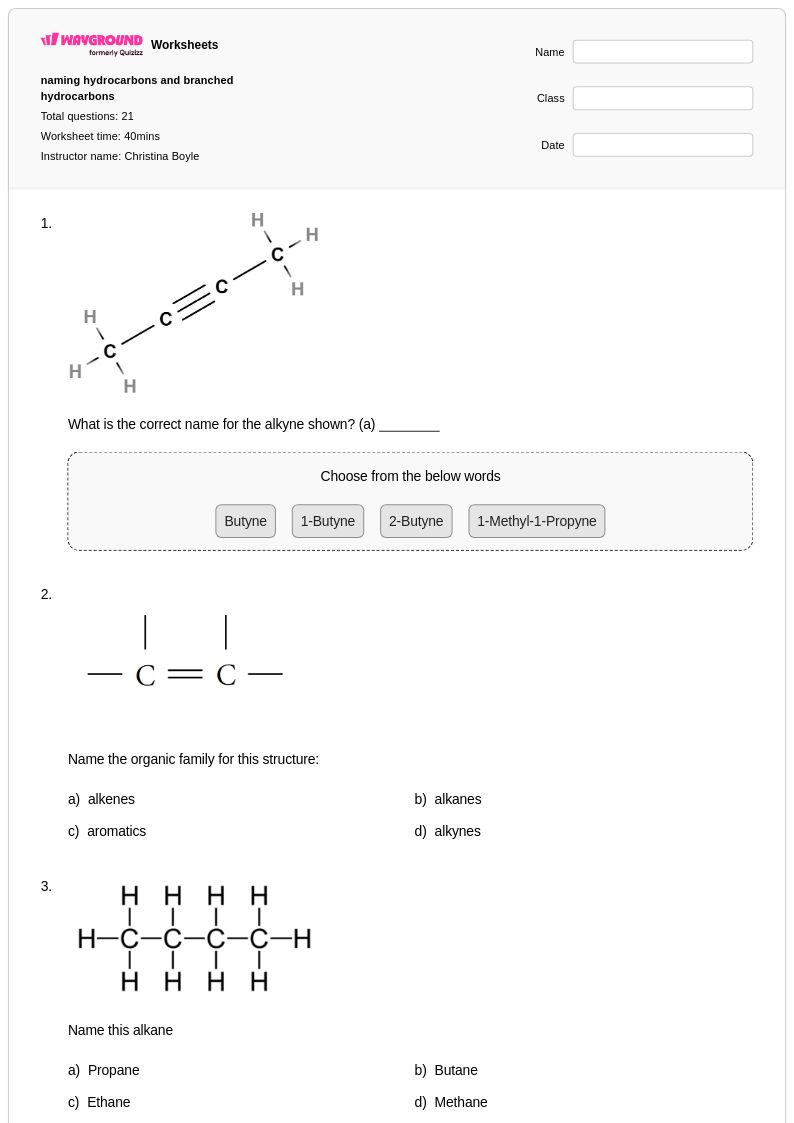
Class 9 naming hydrocarbons worksheets available through Wayground (formerly Quizizz) provide comprehensive practice in the systematic nomenclature of organic compounds, focusing on alkanes, alkenes, and alkynes. These expertly designed worksheets strengthen students' ability to identify carbon chain lengths, recognize functional groups, and apply IUPAC naming conventions with confidence. Each worksheet includes detailed answer keys that guide students through the step-by-step process of determining molecular structure from chemical names and vice versa. The free printable resources feature graduated practice problems that begin with simple straight-chain hydrocarbons and progress to more complex branched structures, ensuring students master both the recognition of structural patterns and the precise application of naming rules that form the foundation of organic chemistry.
Wayground (formerly Quizizz) supports chemistry educators with an extensive collection of teacher-created naming hydrocarbons resources, drawing from millions of contributions that have been refined through classroom use. The platform's advanced search and filtering capabilities allow teachers to quickly locate worksheets that align with specific curriculum standards and match their students' current skill levels. Differentiation tools enable educators to customize content difficulty and focus areas, while the availability of both printable pdf formats and interactive digital versions provides flexibility for diverse learning environments. These features streamline lesson planning by offering ready-to-use materials for initial instruction, targeted remediation for struggling students, and enrichment activities for advanced learners, ensuring that all Class 9 students can develop mastery in this critical chemistry skill through focused, repeated practice.
FAQs
How do I teach students to name hydrocarbons using IUPAC nomenclature?
Start by teaching students to identify the longest continuous carbon chain, which determines the parent name (methane, ethane, propane, etc.). Once they can reliably find the parent chain, introduce substituents and branch naming, then move to functional group priority for alkenes, alkynes, and aromatic compounds. Building complexity gradually — from straight-chain alkanes to branched and substituted molecules — prevents students from applying rules out of sequence before they understand why each step comes first.
What exercises help students practice naming organic compounds?
Practice problems that progress from simple straight-chain alkanes to branched structures and then to molecules with multiple functional groups give students the repetition needed to internalize IUPAC rules. Exercises that require students to both name a drawn structure and draw a structure from a given name are especially effective, since they confirm understanding in both directions. Including problems with common error traps — such as choosing the wrong parent chain or misnumbering substituents — accelerates mastery by forcing students to apply rules carefully.
What mistakes do students commonly make when naming hydrocarbons?
The most frequent error is failing to identify the longest continuous carbon chain, especially in branched molecules where the chain changes direction. Students also commonly number the parent chain from the wrong end, resulting in higher locant numbers for substituents than necessary. A third persistent mistake is confusing the suffixes for alkenes (-ene) and alkynes (-yne) or neglecting to indicate the position of a double or triple bond with a locant number.
How do I differentiate hydrocarbon naming practice for students at different skill levels?
For students who are still building foundational skills, start with straight-chain alkanes before introducing any branching or functional groups. More advanced students benefit from problems involving multiple substituents, multiple functional groups, and aromatic ring systems. On Wayground, teachers can apply accommodations such as reduced answer choices to lower cognitive load for struggling students, while other students receive standard problem sets — all within the same assignment.
How do I use Wayground's naming hydrocarbons worksheets in my classroom?
Wayground's naming hydrocarbons worksheets are available as free printable PDFs for traditional classroom use and in digital formats for technology-integrated or online learning environments. Teachers can also host worksheets as a quiz directly on Wayground, making it easy to track student performance and assign targeted practice. Each worksheet includes a complete answer key, so they work equally well for guided instruction, independent practice, or remediation without requiring additional teacher preparation.
How do I find naming hydrocarbons worksheets that match my curriculum standards?
Wayground's search and filtering tools let chemistry teachers quickly narrow resources by topic and proficiency level, whether you need basic alkane naming practice or advanced exercises involving multiple functional groups. The platform's library of teacher-created resources means you can find materials already aligned to common chemistry curricula without building them from scratch. Teachers can also customize existing worksheets to adjust difficulty or target specific naming rules relevant to their course scope.