Class 9 calorimeter worksheets from Wayground provide comprehensive printables and practice problems to help students master heat measurement concepts, complete with answer keys and free PDF downloads for effective chemistry learning.
Explore printable Calorimeter worksheets for Class 9
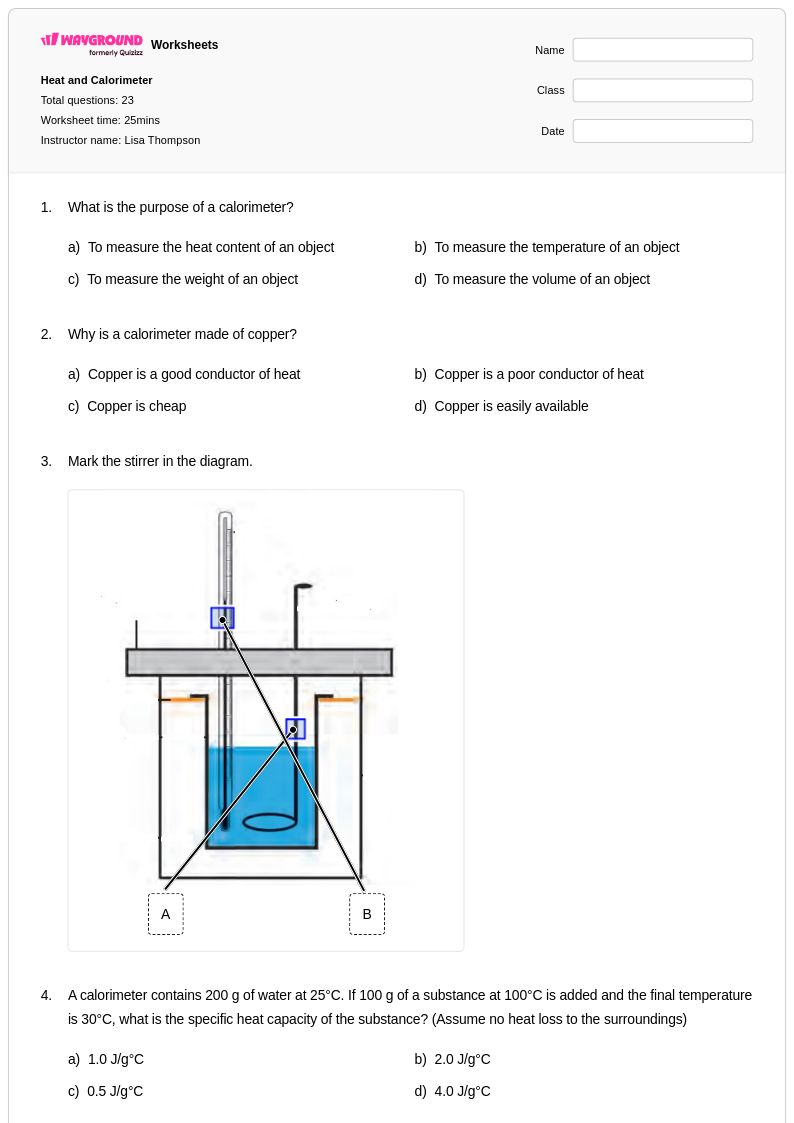
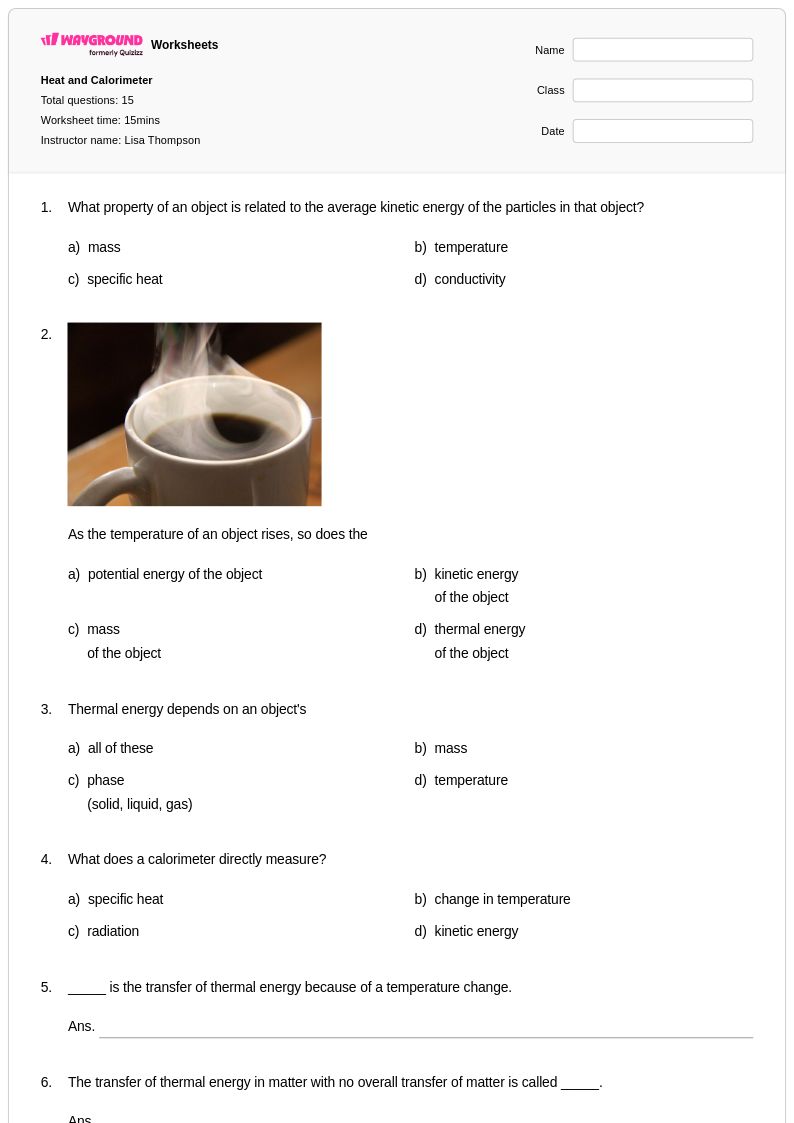
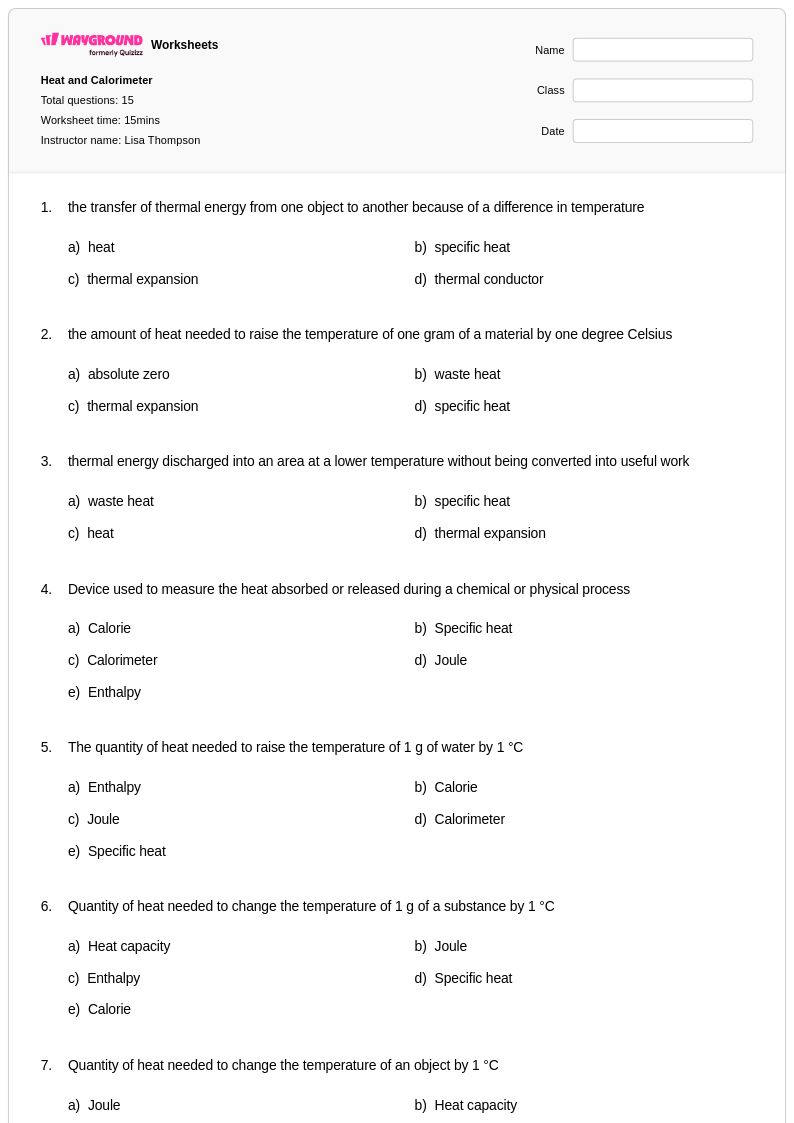
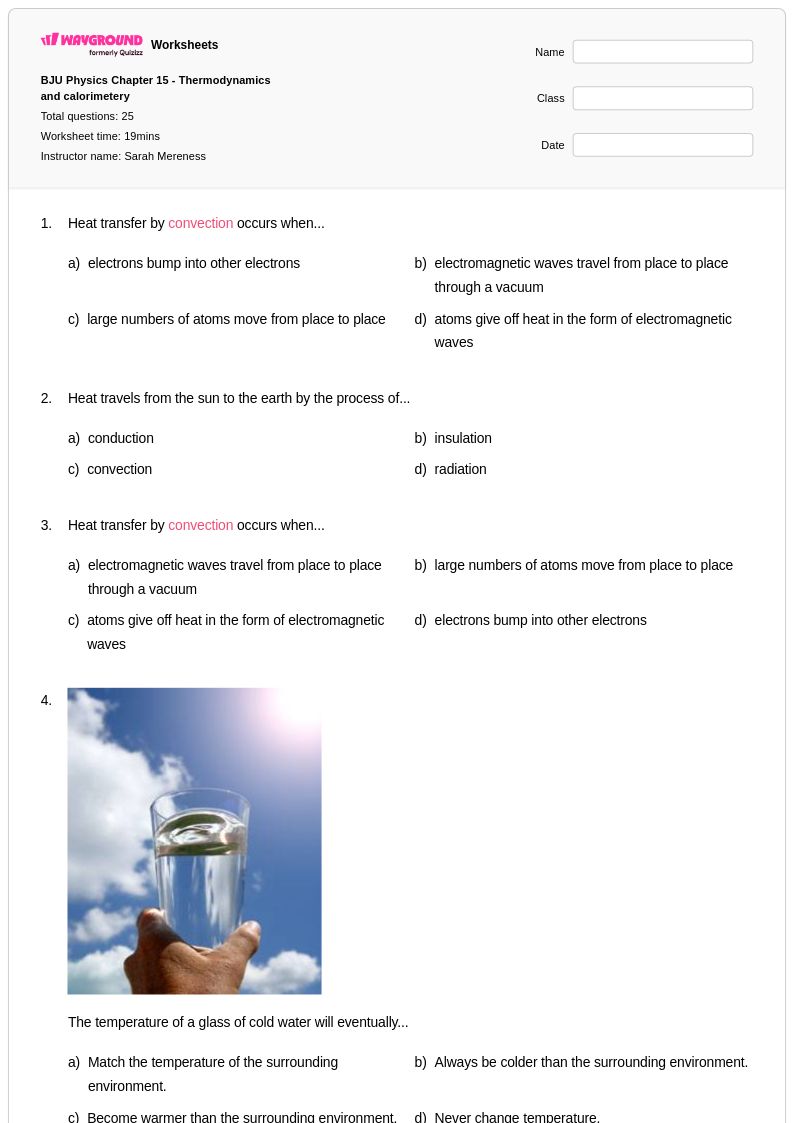
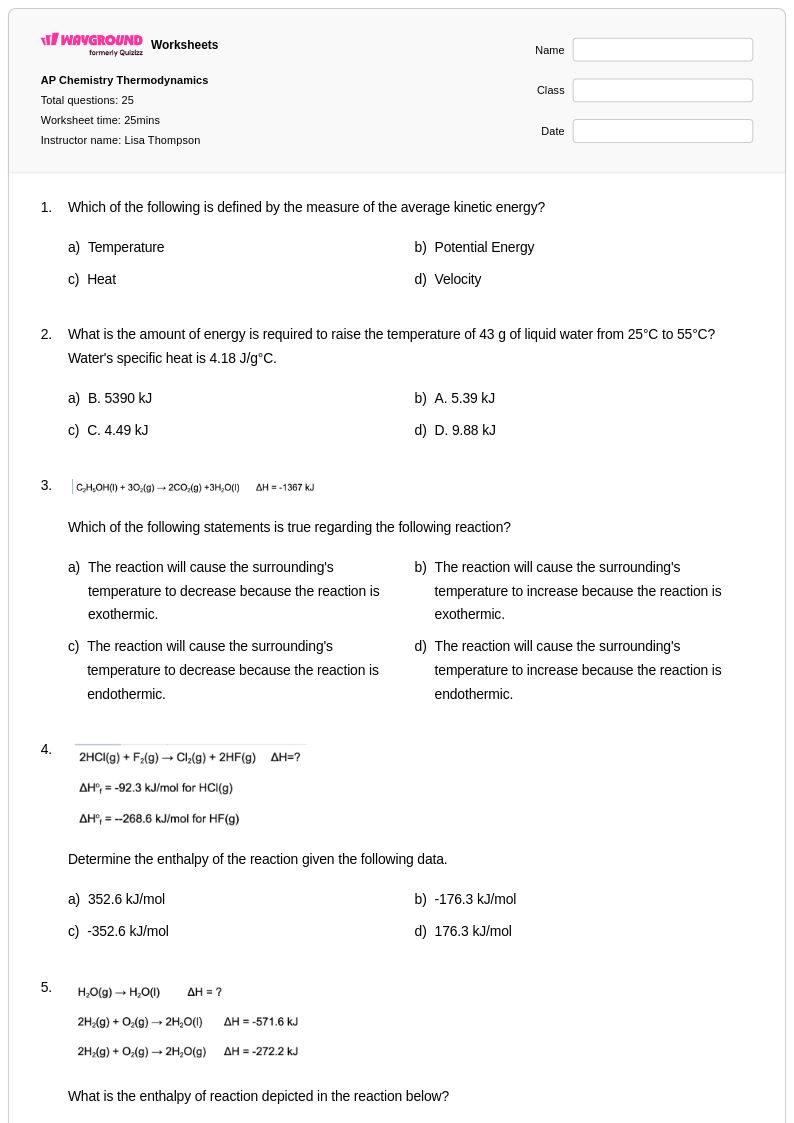
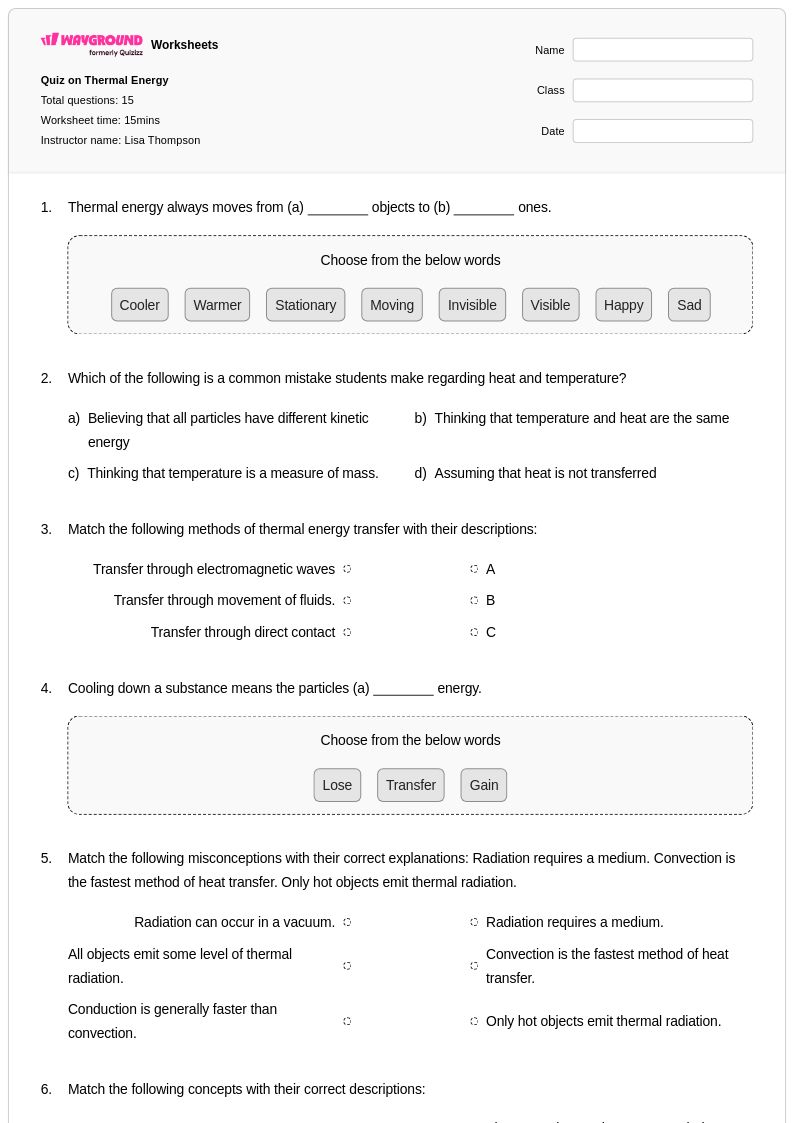
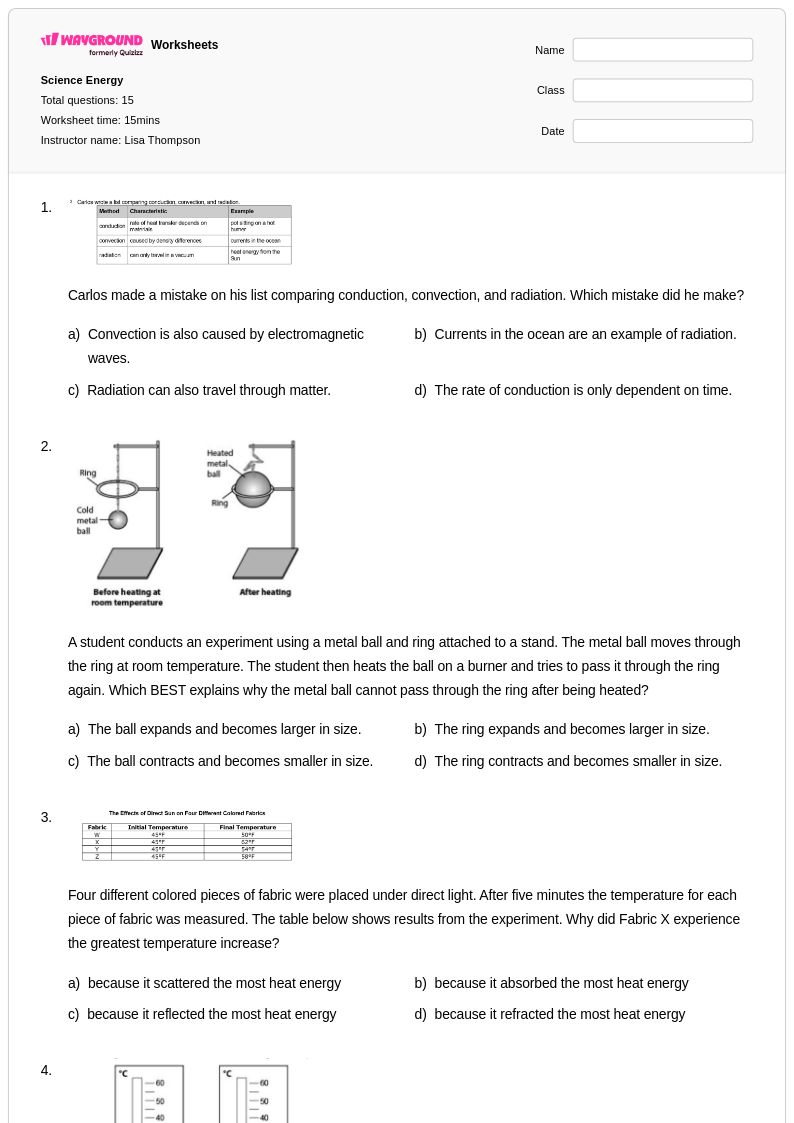
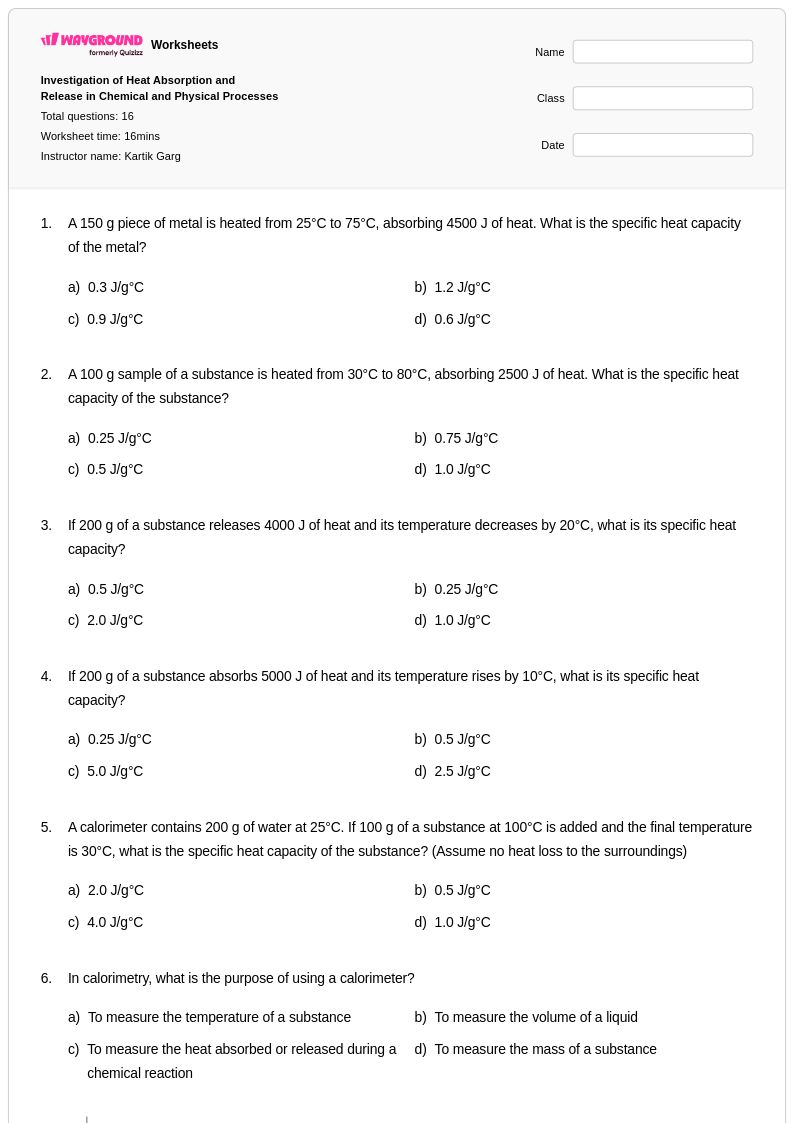
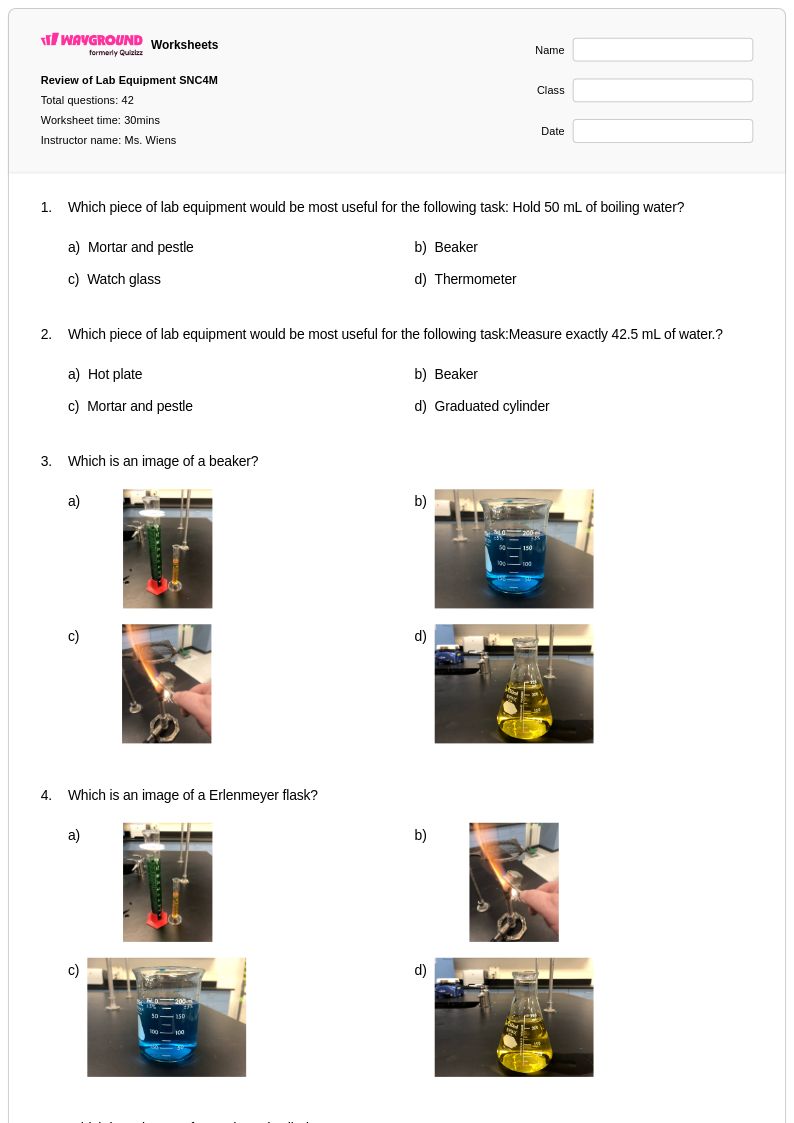
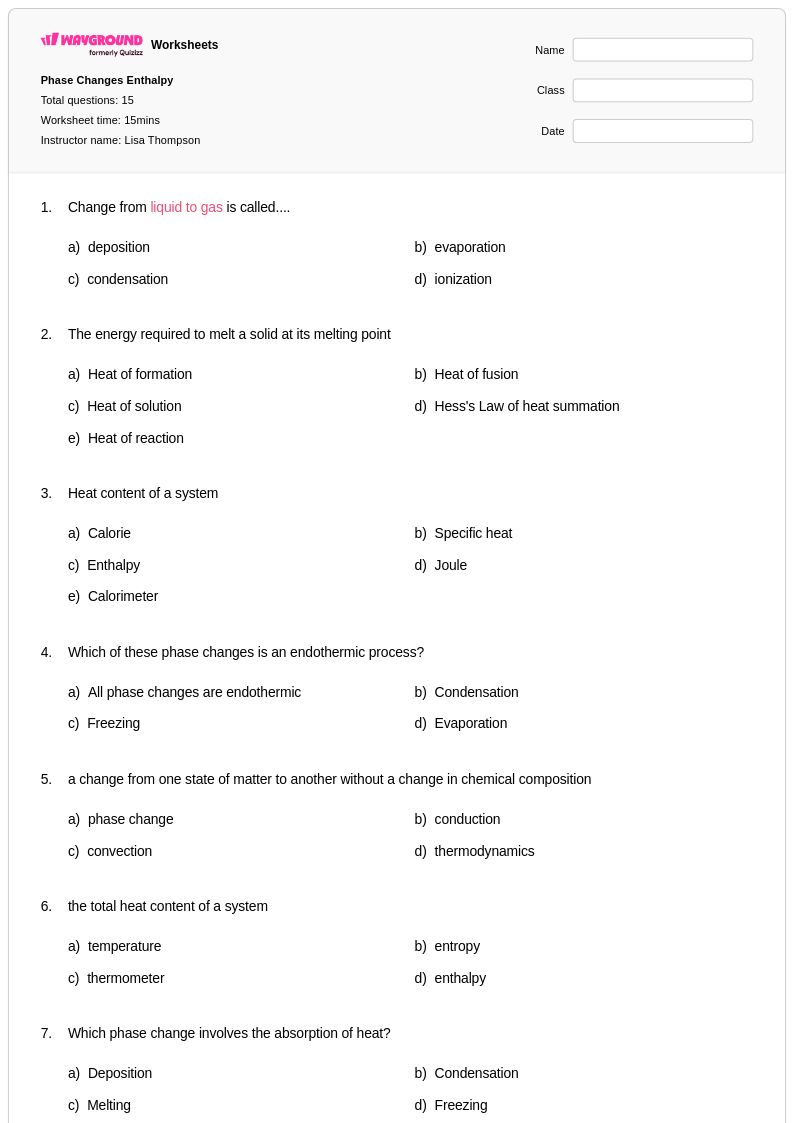
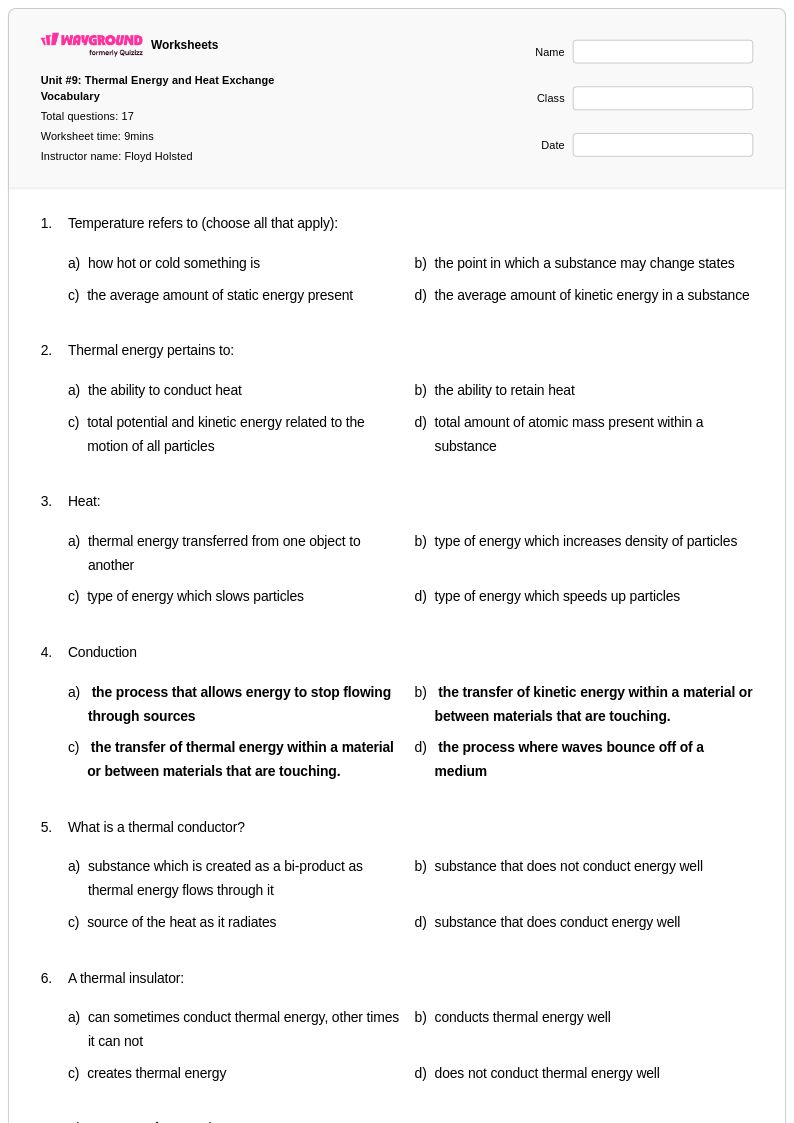
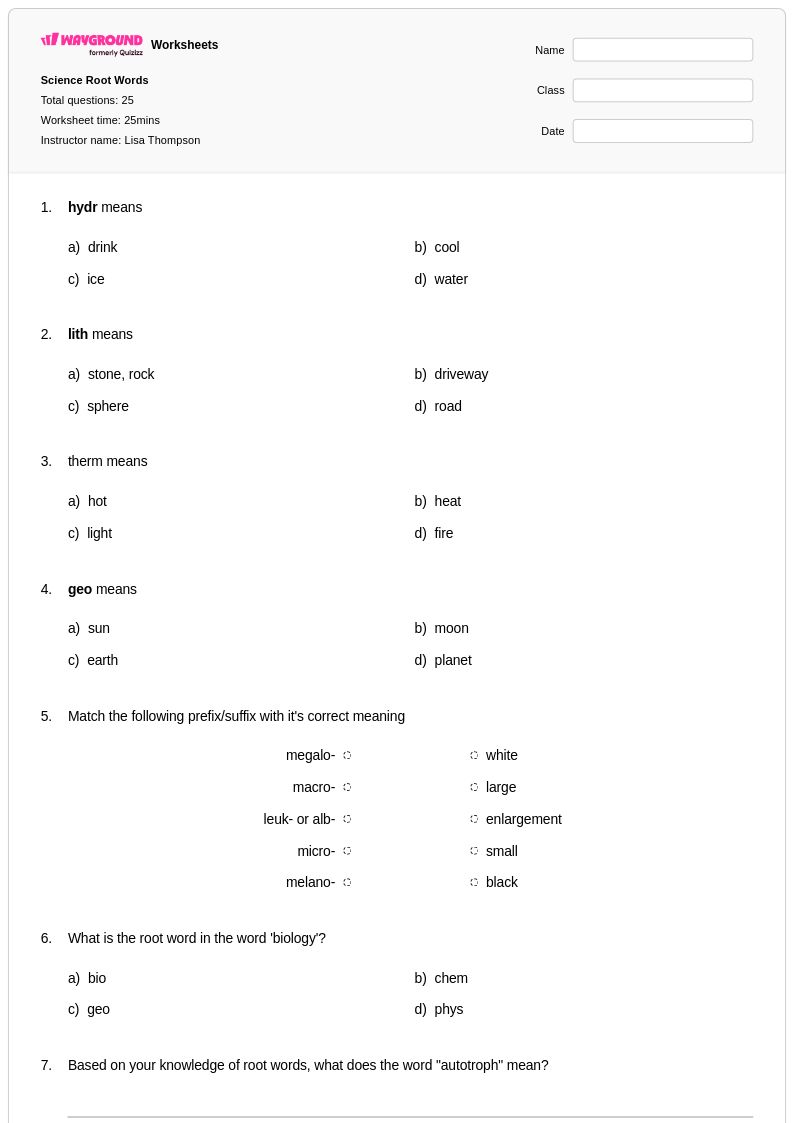
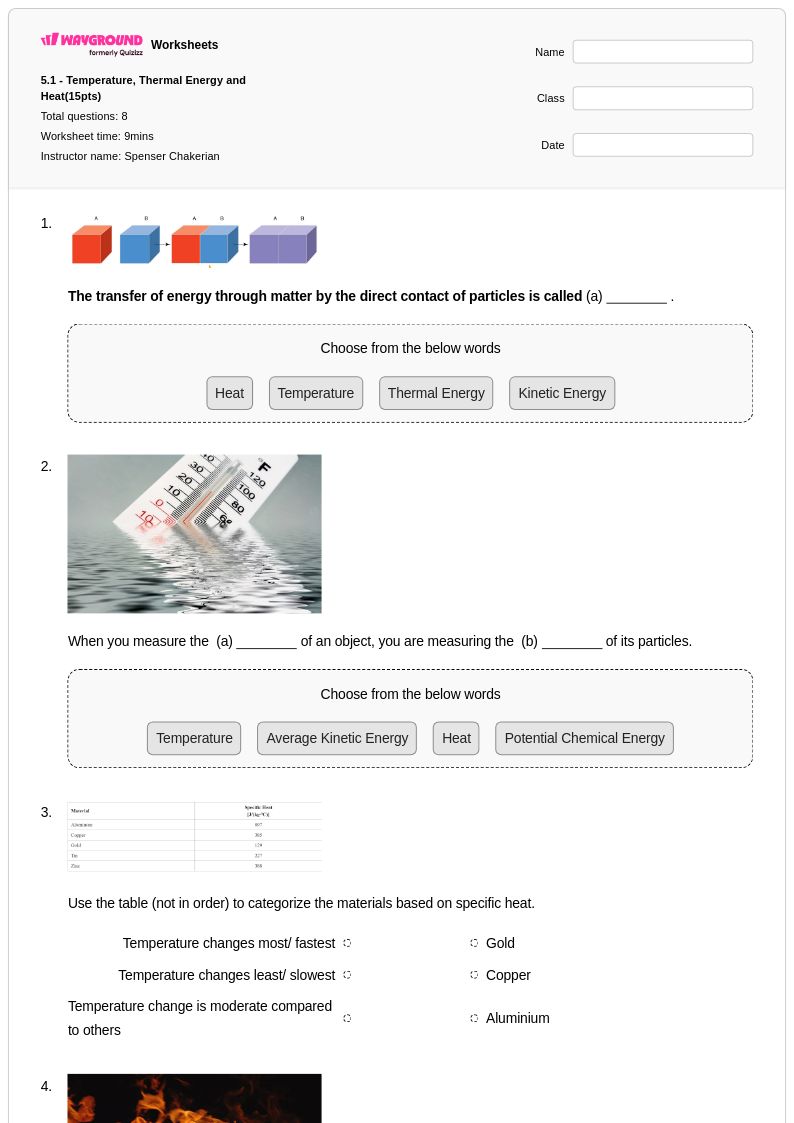
Calorimeter worksheets for Class 9 students available through Wayground (formerly Quizizz) provide comprehensive practice with this essential chemistry instrument used to measure heat transfer during chemical and physical processes. These educational resources strengthen students' understanding of calorimetry principles, including calculating specific heat capacity, analyzing heat exchange in combustion reactions, and applying the law of conservation of energy to thermal systems. The worksheets feature structured practice problems that guide students through calorimeter calculations, data interpretation from experimental results, and real-world applications of heat measurement in laboratory settings. Each worksheet includes detailed answer keys and explanations that help students verify their work and understand the step-by-step problem-solving process, while printable pdf formats ensure easy access for both classroom instruction and independent study sessions.
Wayground (formerly Quizizz) supports chemistry educators with an extensive collection of millions of teacher-created calorimeter resources that can be easily located through advanced search and filtering capabilities aligned with Class 9 chemistry standards. The platform's differentiation tools allow teachers to customize worksheet difficulty levels and modify practice problems to meet individual student needs, whether for remediation of fundamental calorimetry concepts or enrichment activities involving complex multi-step calculations. These flexible resources are available in both printable and digital formats, enabling seamless integration into various instructional approaches from traditional classroom worksheets to interactive online assignments. Teachers can efficiently plan lessons around specific calorimetry objectives, provide targeted skill practice for students struggling with heat calculation concepts, and offer additional challenges for advanced learners ready to explore more sophisticated applications of calorimeter principles in thermodynamics.
FAQs
How do I teach calorimetry to high school chemistry students?
Start by grounding students in the law of conservation of energy before introducing the calorimeter as a measurement tool. Introduce coffee cup calorimetry first, since it uses constant pressure and simpler setups, before progressing to bomb calorimetry and constant volume systems. Connecting each calculation to a tangible lab context, such as measuring the heat released by a hand warmer, helps students understand why specific heat capacity and enthalpy changes matter beyond the math.
What practice problems best reinforce calorimetry skills?
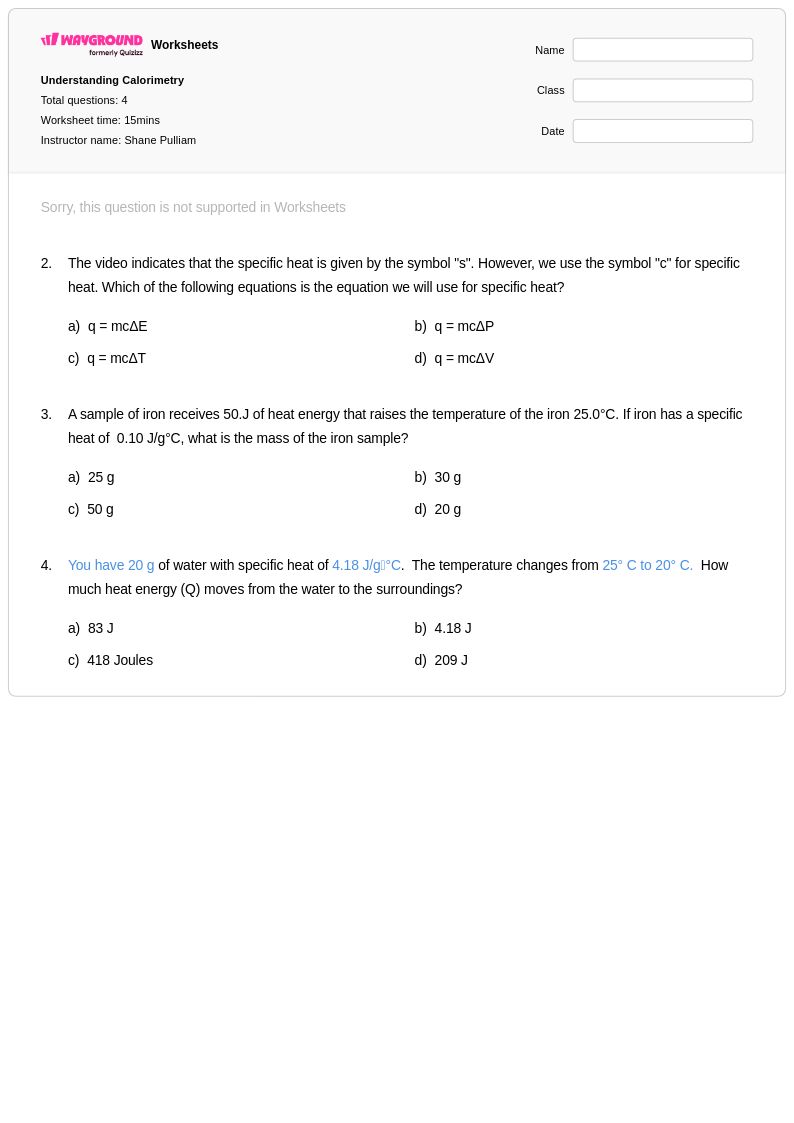
The most effective calorimetry practice problems ask students to calculate specific heat capacity from experimental data, determine enthalpy changes in chemical reactions, and compare results from bomb versus coffee cup calorimeters. Problems that require students to identify which variable is unknown and rearrange the formula q = mcΔT build the algebraic fluency needed for thermochemistry assessments. Including data interpretation questions, where students analyze a temperature-time graph, strengthens both quantitative and conceptual understanding.
What mistakes do students commonly make when solving calorimeter problems?
The most frequent error is sign convention confusion: students often assign a positive value to heat lost by the system instead of treating it as negative. Many also misidentify the substance whose specific heat capacity to use, particularly in coffee cup problems where both the solution and the calorimeter absorb heat. A third common mistake is failing to convert temperature differences from Celsius to the correct unit or forgetting that ΔT is the same magnitude in Celsius and Kelvin, which leads to unit inconsistency across the calculation.
How do I differentiate calorimetry instruction for students at different skill levels?
For students who struggle with the underlying algebra, provide scaffolded problems where the formula is pre-set and only one variable must be solved. Advanced learners benefit from multi-step problems that chain specific heat calculations with enthalpy and stoichiometry. On Wayground, teachers can assign reduced answer choices to students who need additional support, reducing cognitive load without removing the core thermochemistry content, while other students receive the standard problem set without any notification of the adjustment.
How do I use Wayground's calorimeter worksheets in my classroom?
Wayground's calorimeter worksheets are available as printable PDFs for traditional lab follow-up and paper-based assessments, and in digital formats for technology-integrated classrooms or remote learning. Teachers can also host the worksheets as a quiz directly on Wayground, allowing real-time visibility into student performance on specific calculation types. This flexibility makes the materials practical for initial instruction, targeted remediation of heat transfer concepts, and enrichment work for students who are ready to move beyond foundational calorimetry problems.
What is the difference between bomb calorimetry and coffee cup calorimetry, and how do I explain it to students?
Coffee cup calorimetry measures heat transfer at constant pressure and is typically used for reactions in aqueous solution, making it accessible for standard lab setups. Bomb calorimetry measures heat at constant volume inside a sealed steel container, making it more accurate for combustion reactions where gases are produced. The key distinction for students is that constant pressure systems measure enthalpy (ΔH) directly, while constant volume systems measure internal energy (ΔE), and the two values differ by the work done by or on the system during expansion.