Free Printable Behavioral Biology Worksheets for Class 7
Explore Wayground's free Class 7 behavioral biology worksheets and printables that help students understand animal behaviors, instincts, and adaptations through engaging practice problems and comprehensive answer keys.
Explore printable Behavioral Biology worksheets for Class 7
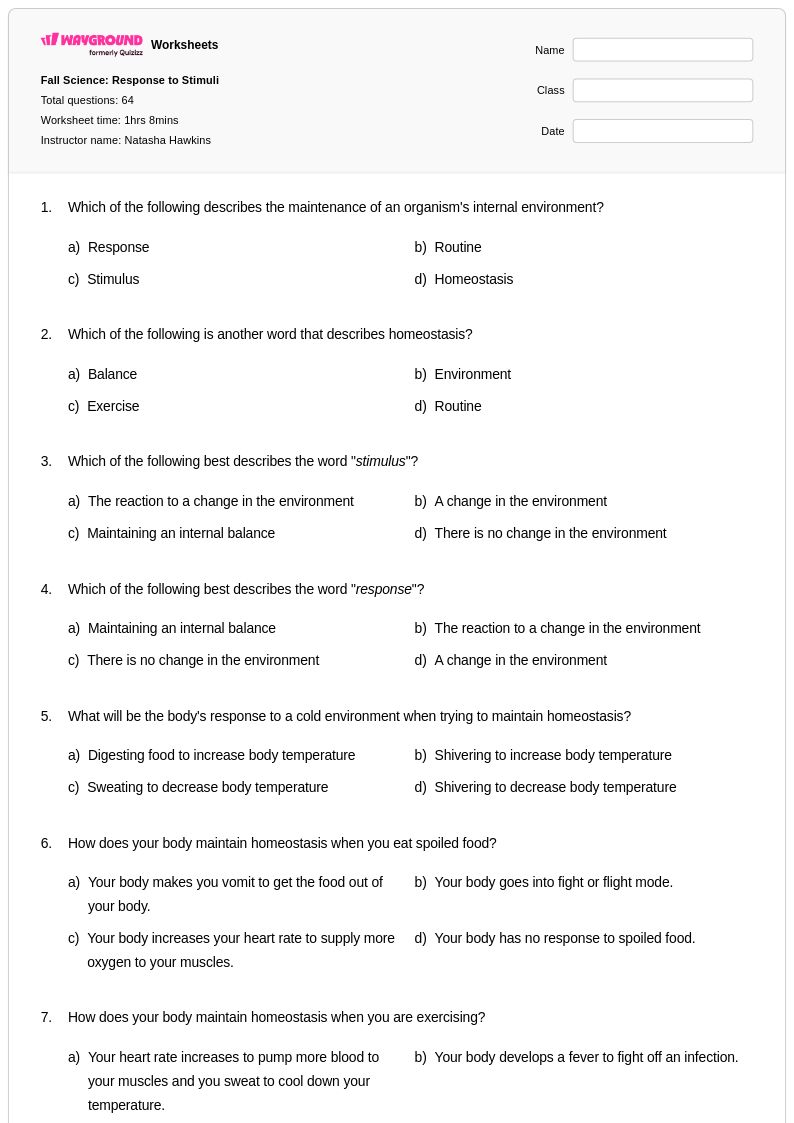
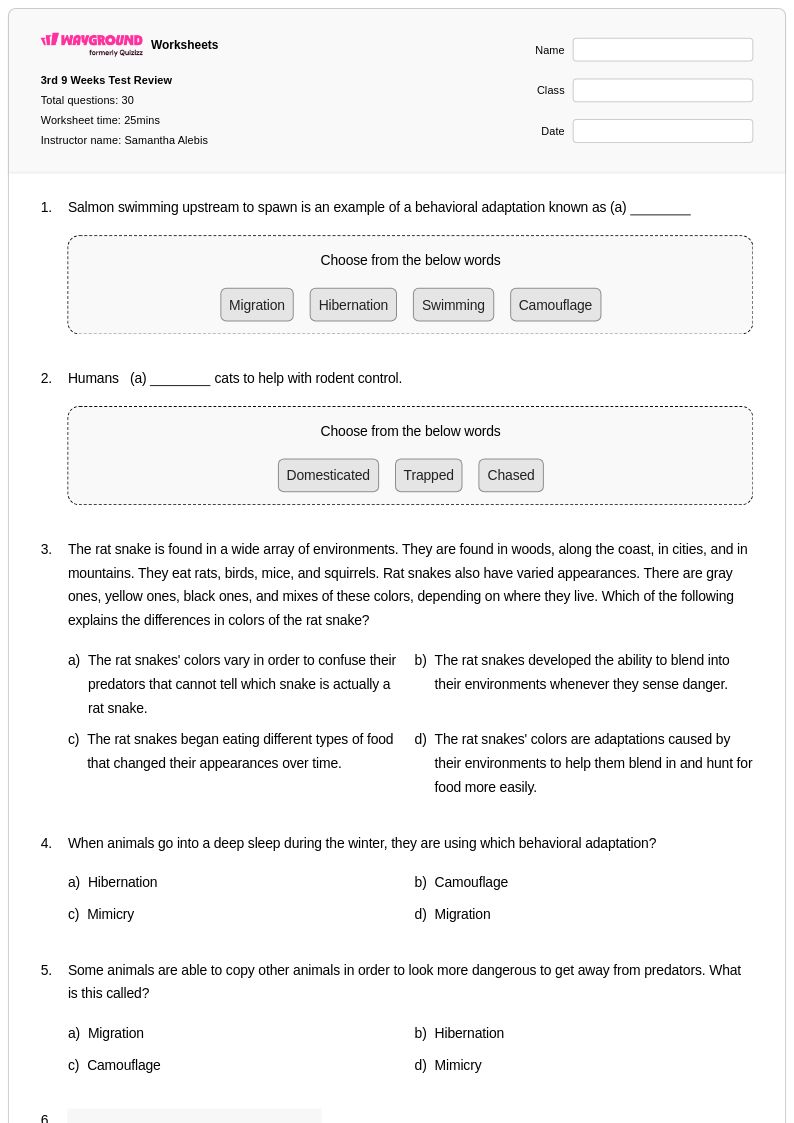
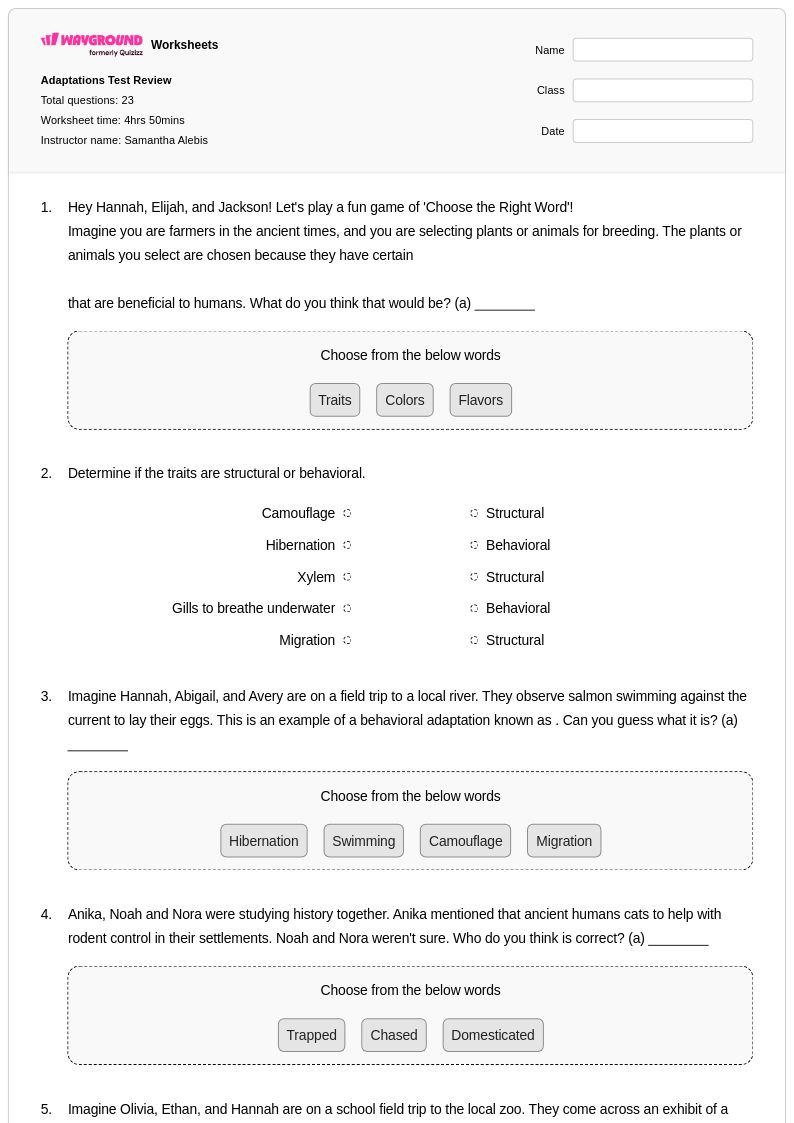
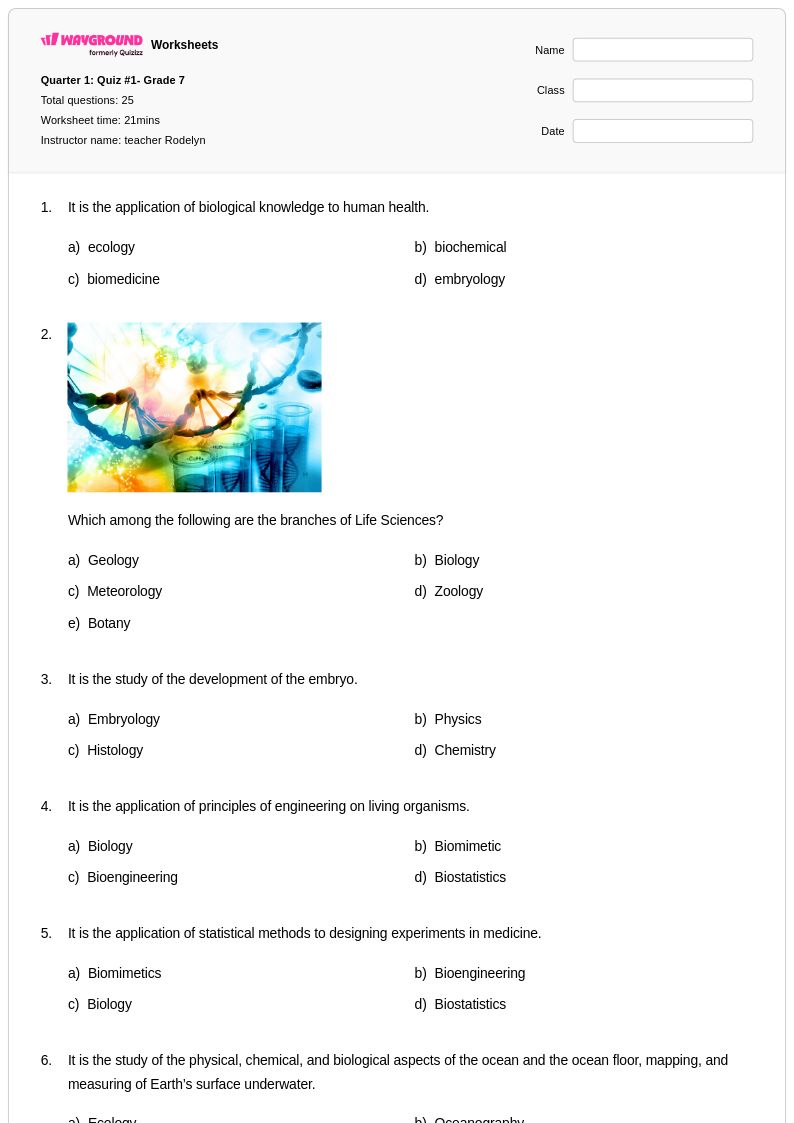
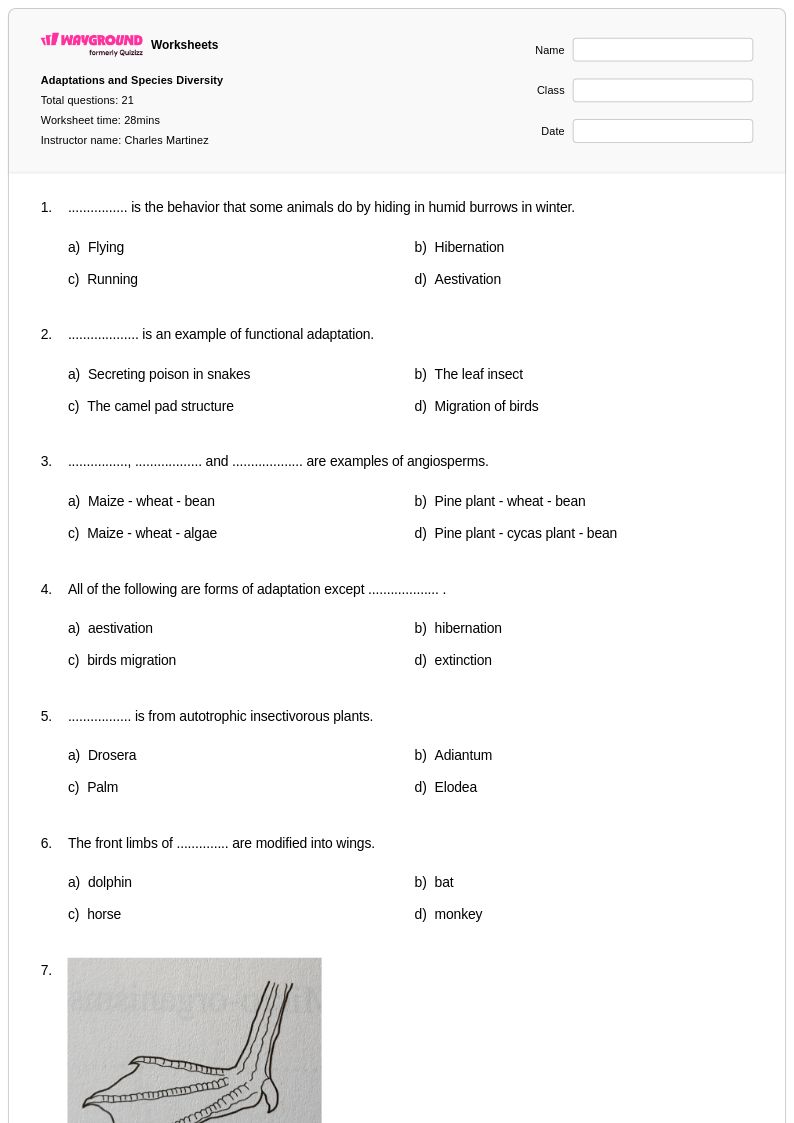
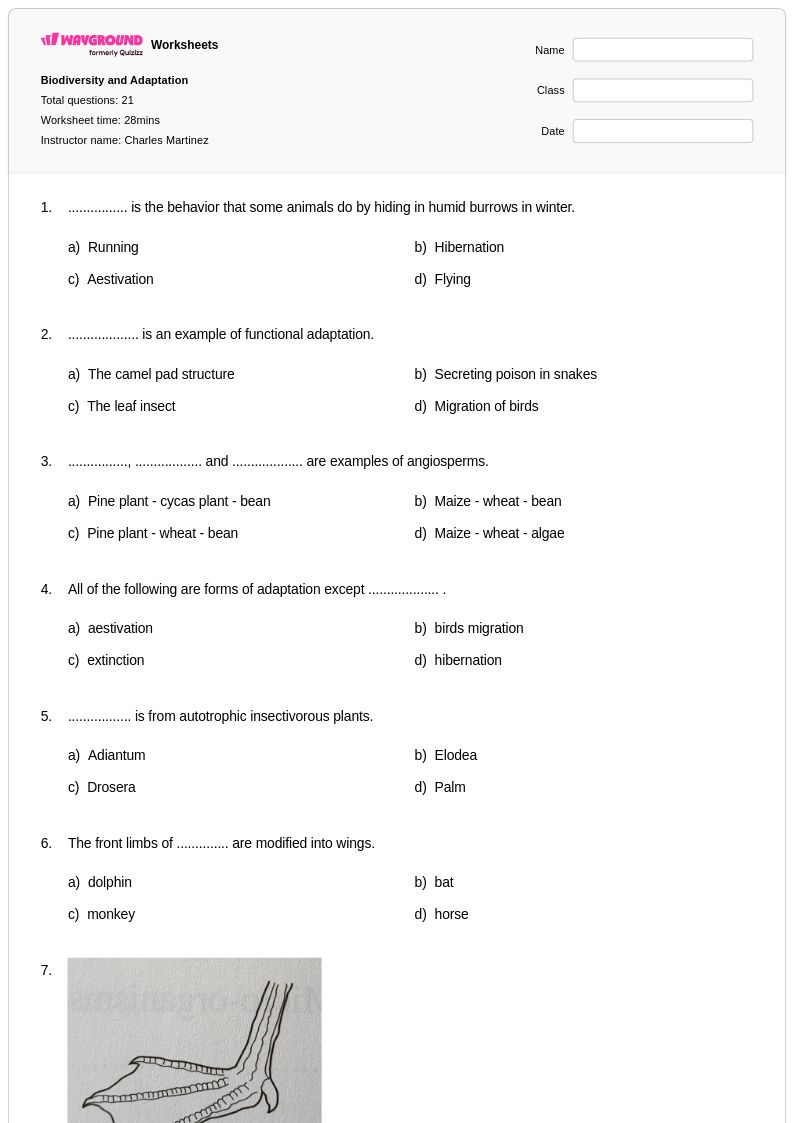
Behavioral Biology worksheets available through Wayground (formerly Quizizz) provide Class 7 students with comprehensive practice in understanding how organisms interact with their environment and respond to various stimuli. These educational resources strengthen critical scientific thinking skills by exploring concepts such as innate and learned behaviors, animal communication, migration patterns, and social structures within different species. Students engage with diverse practice problems that challenge them to analyze behavioral adaptations, compare instinctive versus acquired behaviors, and evaluate how environmental factors influence animal decision-making. The collection includes detailed answer keys that support independent learning and self-assessment, while printable pdf formats ensure accessibility across different classroom settings. These free resources help students develop observational skills and scientific reasoning abilities essential for understanding the complex relationship between organisms and their behavioral responses.
Wayground (formerly Quizizz) empowers educators with millions of teacher-created Behavioral Biology worksheet collections specifically designed for Class 7 science instruction. The platform's robust search and filtering capabilities allow teachers to quickly locate resources aligned with specific learning standards and curriculum requirements, while differentiation tools enable customization for diverse learning needs and ability levels. Teachers can seamlessly adapt worksheets for remediation activities, enrichment opportunities, or targeted skill practice sessions, with flexible formatting options available in both printable and digital formats including downloadable pdf versions. These comprehensive features streamline lesson planning by providing educators with ready-to-use materials that support various instructional approaches, from individual student practice to collaborative learning activities, ensuring that complex Behavioral Biology concepts become accessible and engaging for all seventh-grade learners.
FAQs
How do I teach behavioral biology to students?
Teaching behavioral biology effectively starts with distinguishing between innate and learned behaviors, then building outward to concepts like conditioning, imprinting, territoriality, and social structures. Using real animal case studies alongside direct instruction helps students connect abstract ethology principles to observable behavior. Structured practice with comparative examples across species reinforces how evolutionary pressures shape behavioral adaptations.
What topics are typically covered in a behavioral biology unit?
A behavioral biology unit typically covers innate versus learned behaviors, classical and operant conditioning, imprinting, communication systems, mating rituals, territoriality, and social hierarchies. Students also explore how natural selection drives the evolution of behavioral traits across species. These topics span both animal and human behavior, making the unit relevant to ecology, evolution, and psychology.
What exercises help students practice behavioral biology concepts?
Effective practice exercises for behavioral biology include analyzing scenarios where students classify behaviors as innate or learned, interpreting ethograms, and working through case studies on animal communication or social structure. Practice problems that ask students to apply conditioning principles or explain the adaptive value of a specific behavior build the analytical skills needed for deeper understanding. Worksheets that present cross-species comparisons are particularly useful for reinforcing evolutionary context.
What mistakes do students commonly make when learning behavioral biology?
A common misconception is conflating instinct with all animal behavior, leading students to overlook the role of learning and environmental conditioning. Students also frequently confuse imprinting with general habituation, or misapply classical and operant conditioning terminology. Another frequent error is anthropomorphizing animal behavior, which can distort analysis of social structures and communication systems in non-human species.
How can I use Wayground's behavioral biology worksheets in my classroom?
Wayground's behavioral biology worksheets are available as printable PDFs for traditional classroom use and in digital formats for technology-integrated environments, giving teachers flexibility in how they deliver the material. Teachers can also host worksheets as a quiz directly on Wayground, making them suitable for formative assessment or independent practice. Each worksheet includes a complete answer key, reducing prep time and supporting efficient grading.
How do I support students with different learning needs during a behavioral biology unit?
On Wayground, teachers can apply student-level accommodations such as read-aloud support for students who benefit from audio delivery of questions, reduced answer choices to lower cognitive load for struggling learners, and extended time settings configurable per student. These accommodations can be assigned individually while the rest of the class receives default settings, with no notification to other students. Font size and theme adjustments through reading mode further support accessibility during digital worksheet sessions.