
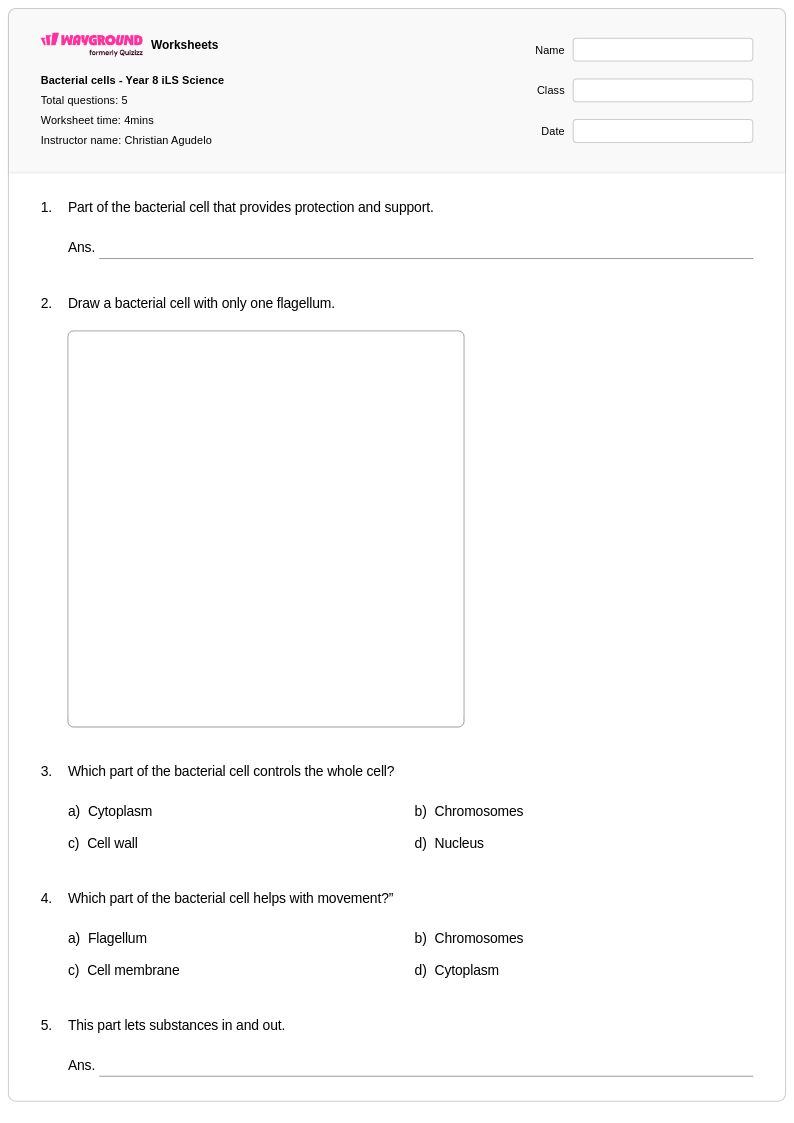
5 Q
7th
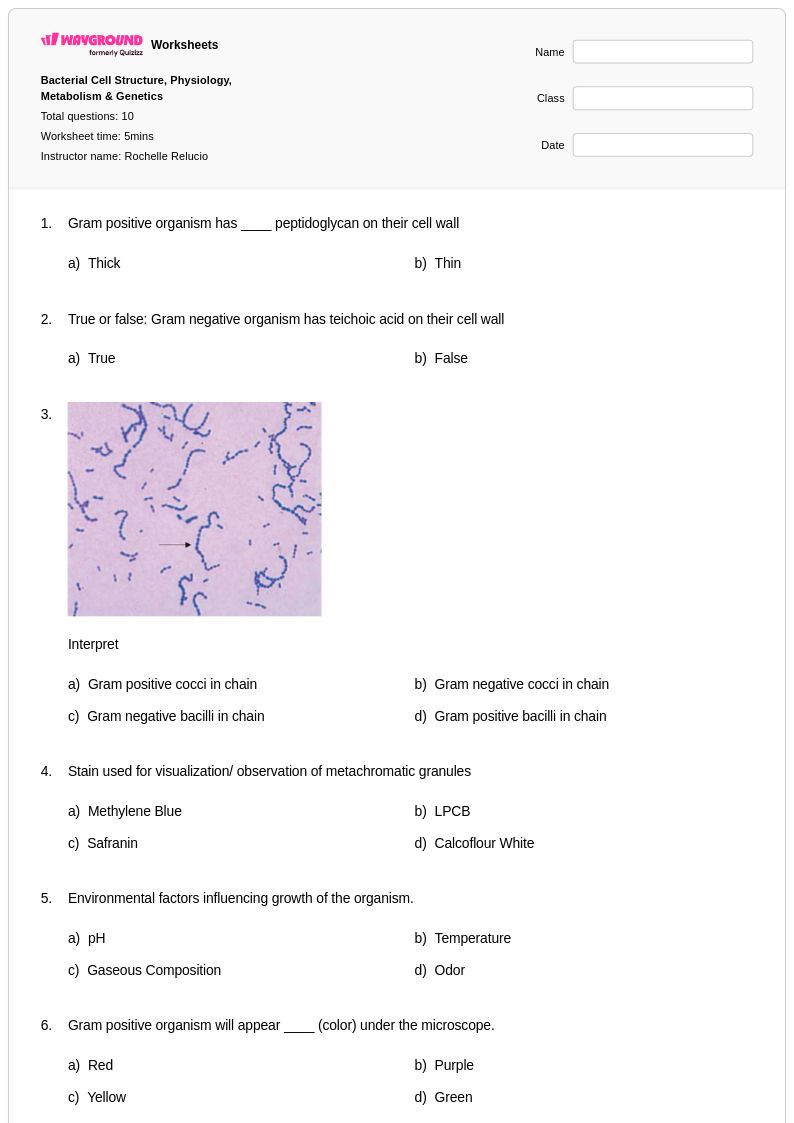
10 Q
1st - 12th
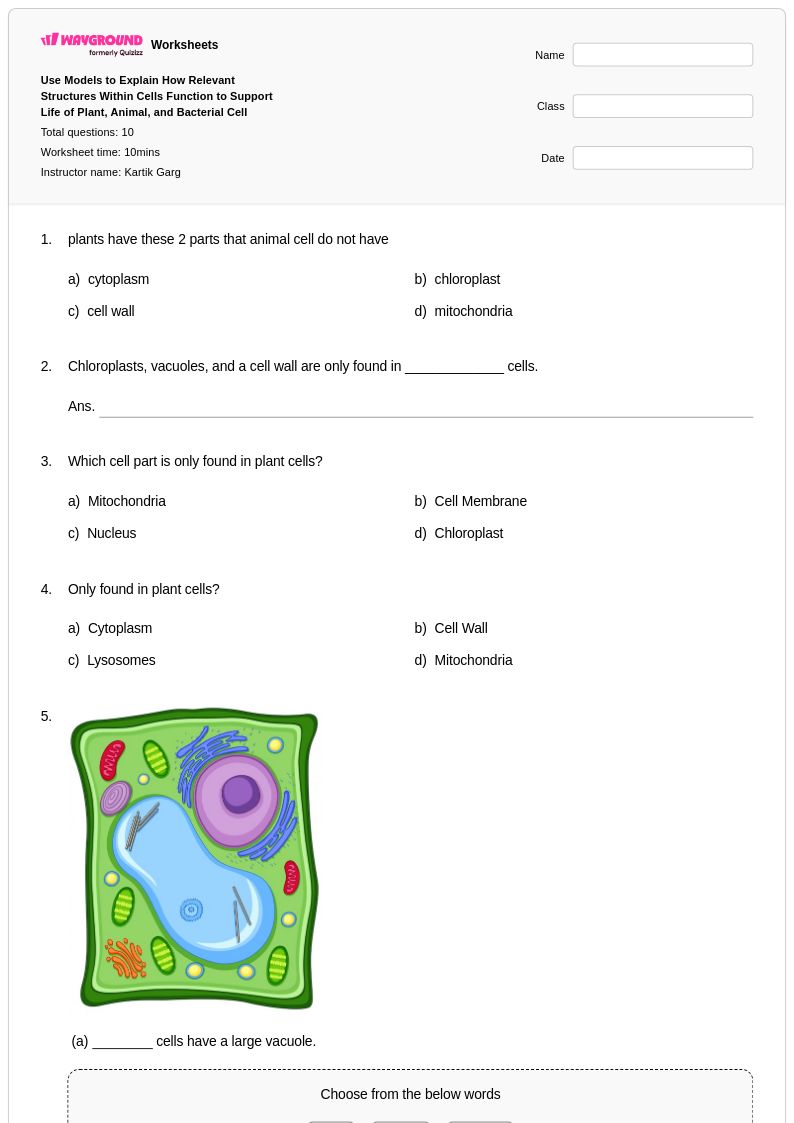
10 Q
7th - Uni
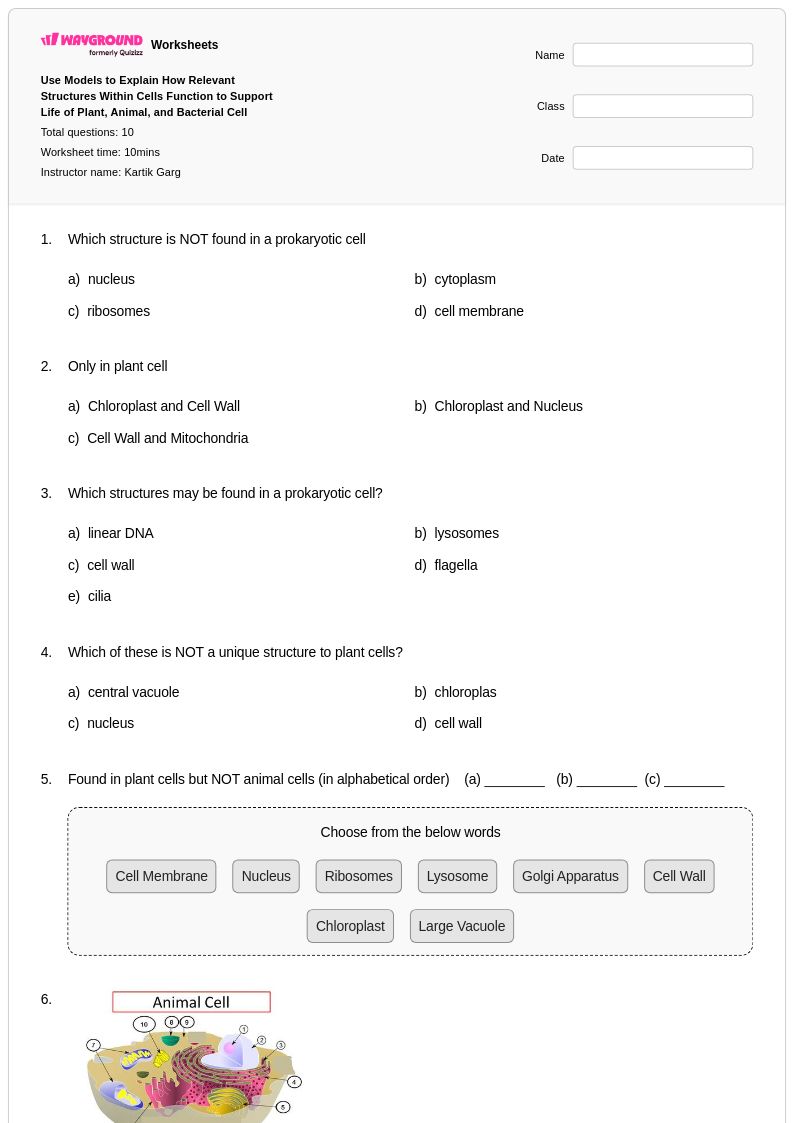
10 Q
7th - Uni
10 Q
7th - Uni
10 Q
7th - Uni
10 Q
7th - Uni
10 Q
7th - Uni
10 Q
7th - Uni
20 Q
7th - Uni
10 Q
7th - Uni
10 Q
7th - Uni
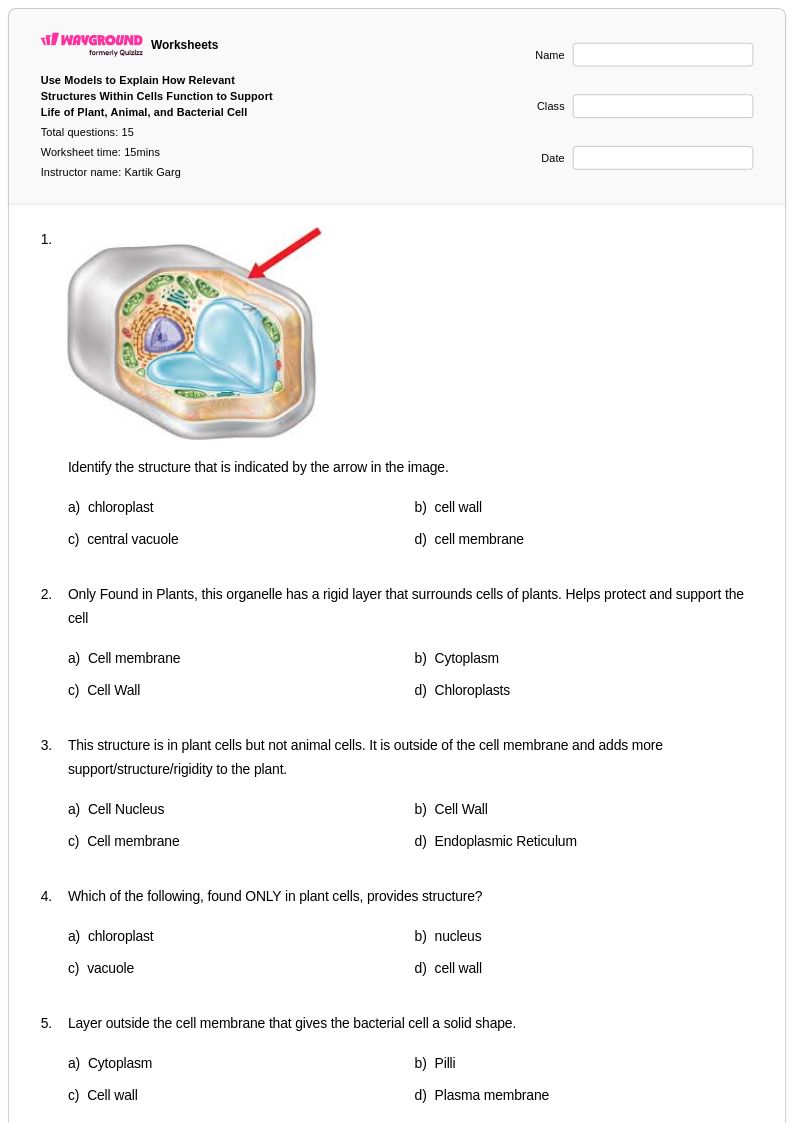
15 Q
7th - Uni
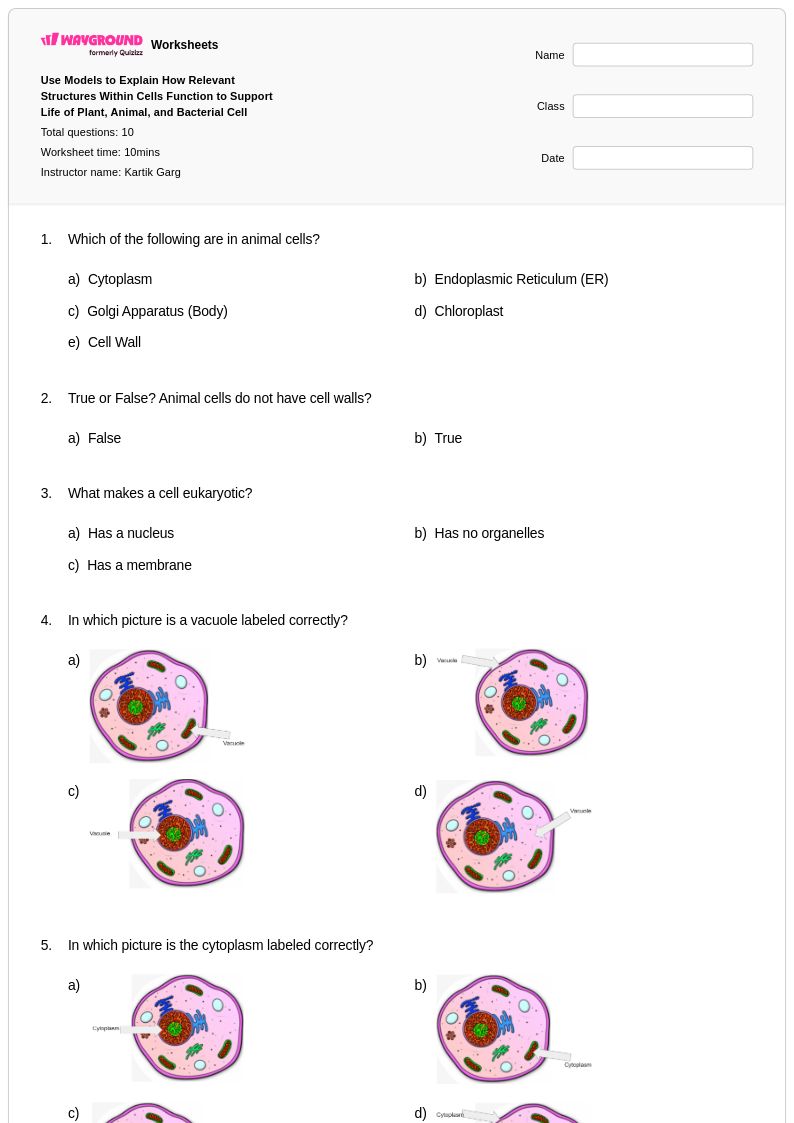
10 Q
7th - Uni
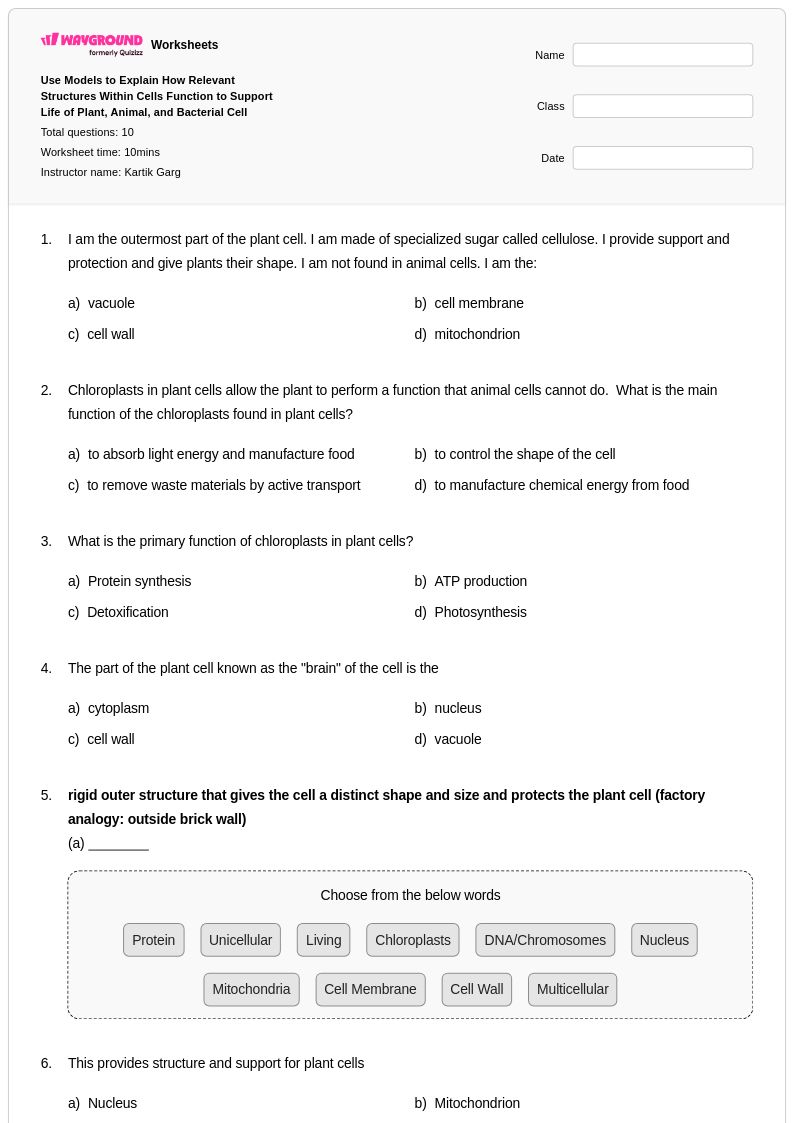
10 Q
7th - Uni
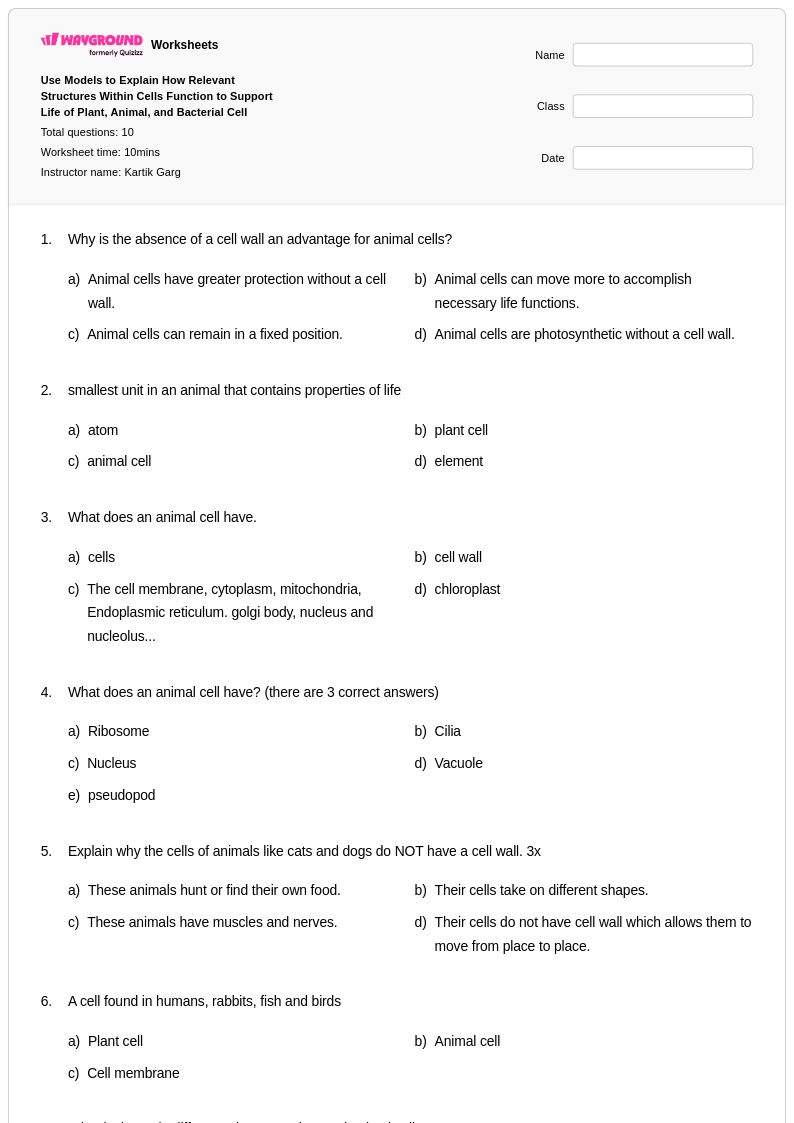
10 Q
7th - Uni
10 Q
7th - Uni
10 Q
7th - Uni
10 Q
7th - Uni
10 Q
7th - Uni
6 Q
7th
10 Q
7th - Uni
10 Q
7th - Uni
10 Q
7th - Uni
Explore Other Subject Worksheets for class 7
Explore printable Bacterial Cell worksheets for Class 7
Bacterial cell worksheets for Class 7 students available through Wayground (formerly Quizizz) provide comprehensive exploration of prokaryotic cell structure and function, enabling students to develop critical understanding of microbiology fundamentals. These educational resources strengthen essential skills including cellular component identification, comparison of prokaryotic and eukaryotic cells, and analysis of bacterial adaptations that allow survival in diverse environments. Students engage with detailed practice problems that examine cell wall composition, nucleoid organization, plasmid function, and the role of ribosomes in protein synthesis. Each worksheet includes an answer key to support independent learning and self-assessment, while the free printables in pdf format ensure accessibility for both classroom instruction and home study, allowing seventh-grade learners to master complex biological concepts through structured scientific inquiry.
Wayground (formerly Quizizz) empowers educators with millions of teacher-created bacterial cell worksheet resources that feature robust search and filtering capabilities aligned to state and national science standards. The platform's differentiation tools enable teachers to customize content difficulty levels and question types to meet diverse learning needs, while flexible formatting options provide both printable pdf versions and interactive digital worksheets for seamless integration into any instructional environment. These comprehensive collections support effective lesson planning by offering varied approaches to bacterial cell education, from basic structural identification exercises to advanced comparative analysis activities, facilitating targeted remediation for struggling students and enrichment opportunities for advanced learners while ensuring consistent skill practice across all proficiency levels.
FAQs
How do I teach bacterial cell structure to my students?
What exercises help students practice identifying bacterial cell components?
What mistakes do students commonly make when learning about bacterial cells?
How do I use Wayground's bacterial cell worksheets in my classroom?
How do bacterial cell worksheets support differentiation for diverse learners?
How should I structure a lesson comparing prokaryotic and eukaryotic cells?