Free Printable Joints and Movement Worksheets for Class 7
Explore Class 7 joints and movement biology worksheets from Wayground that help students master skeletal system mechanics through engaging printables, practice problems, and comprehensive answer keys for effective learning.
Explore printable Joints and Movement worksheets for Class 7
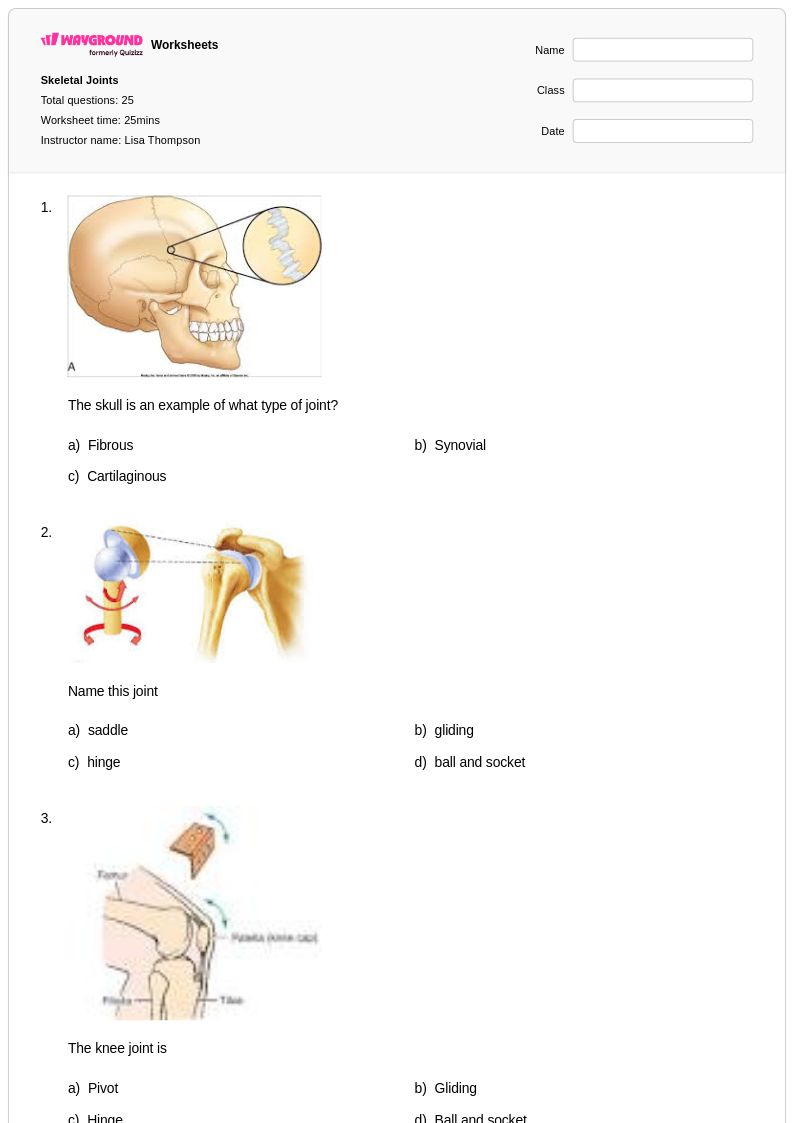
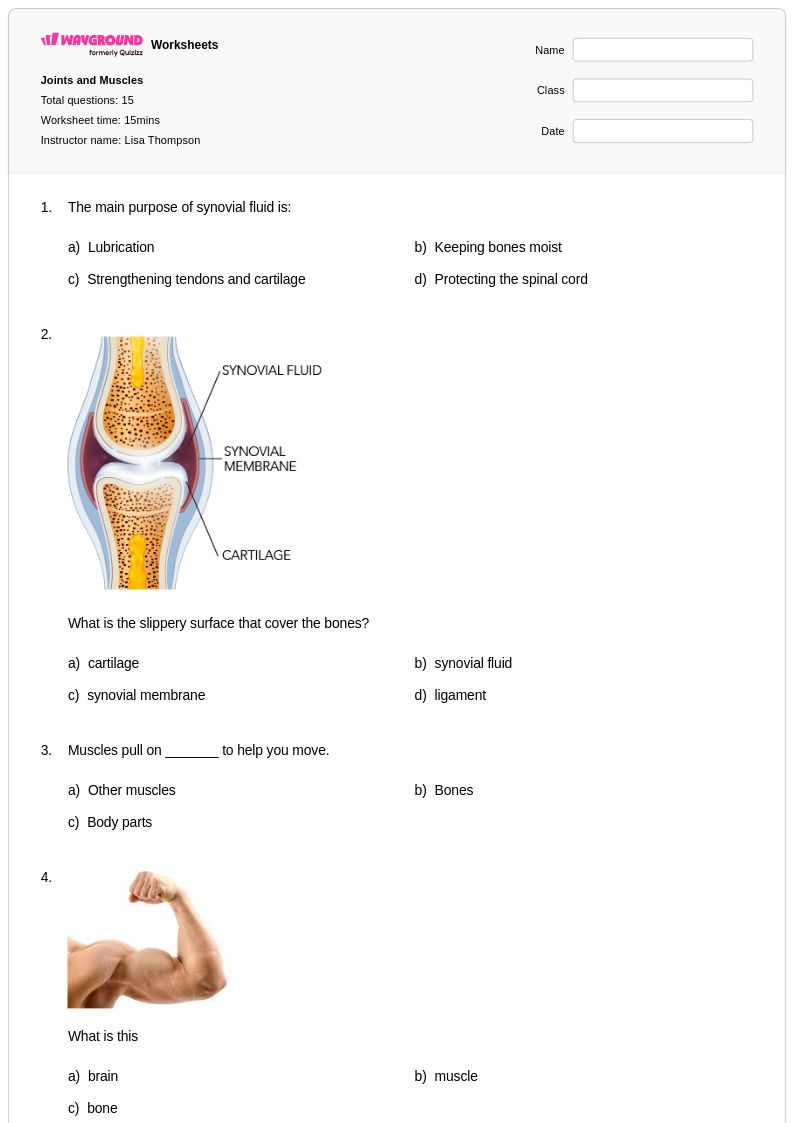
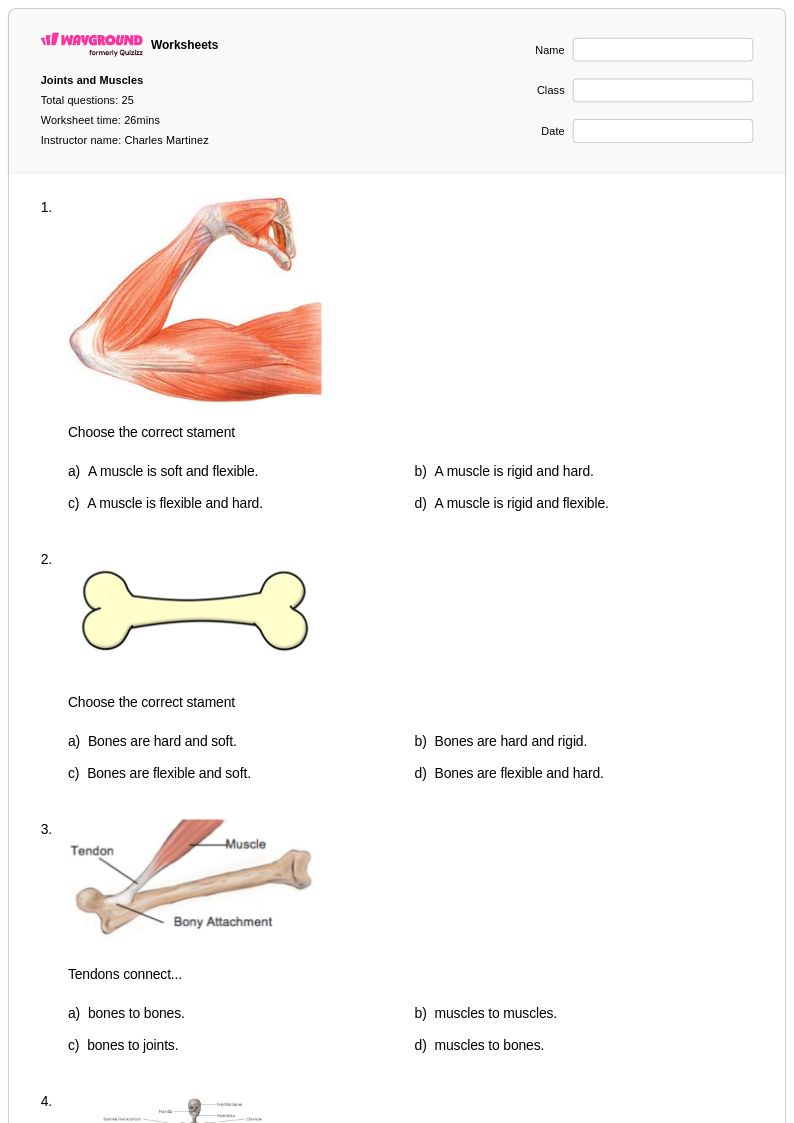
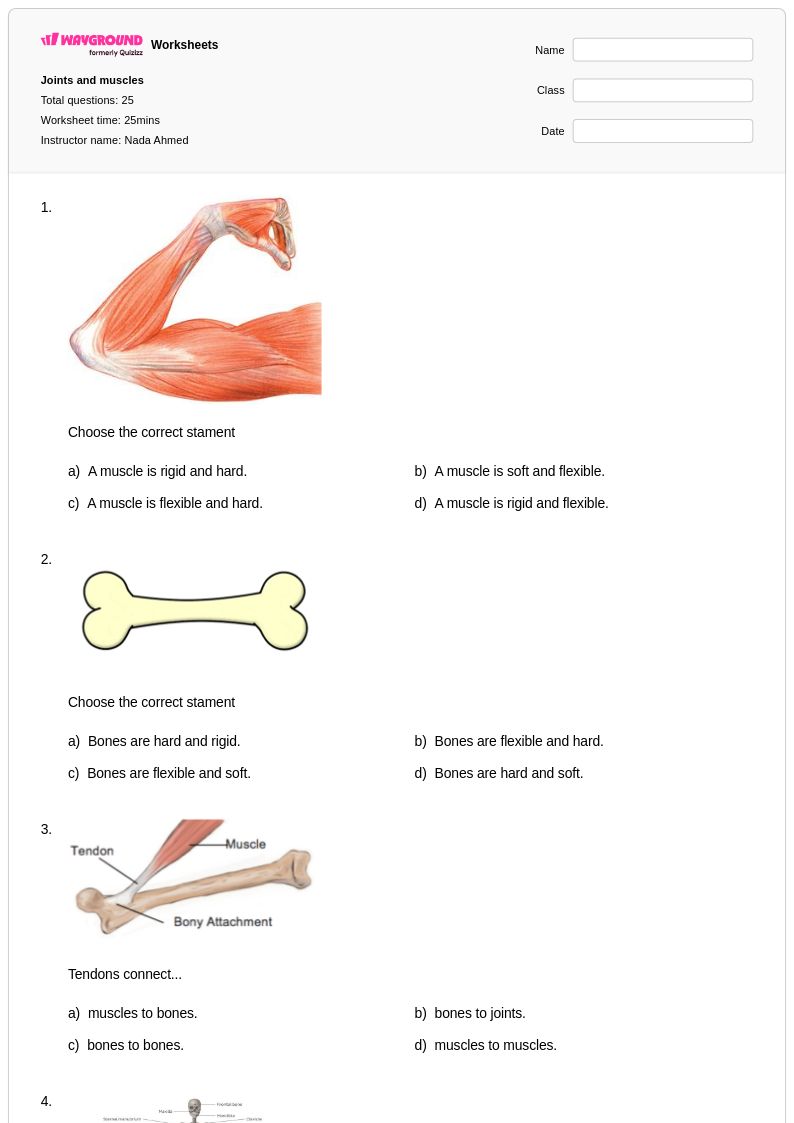
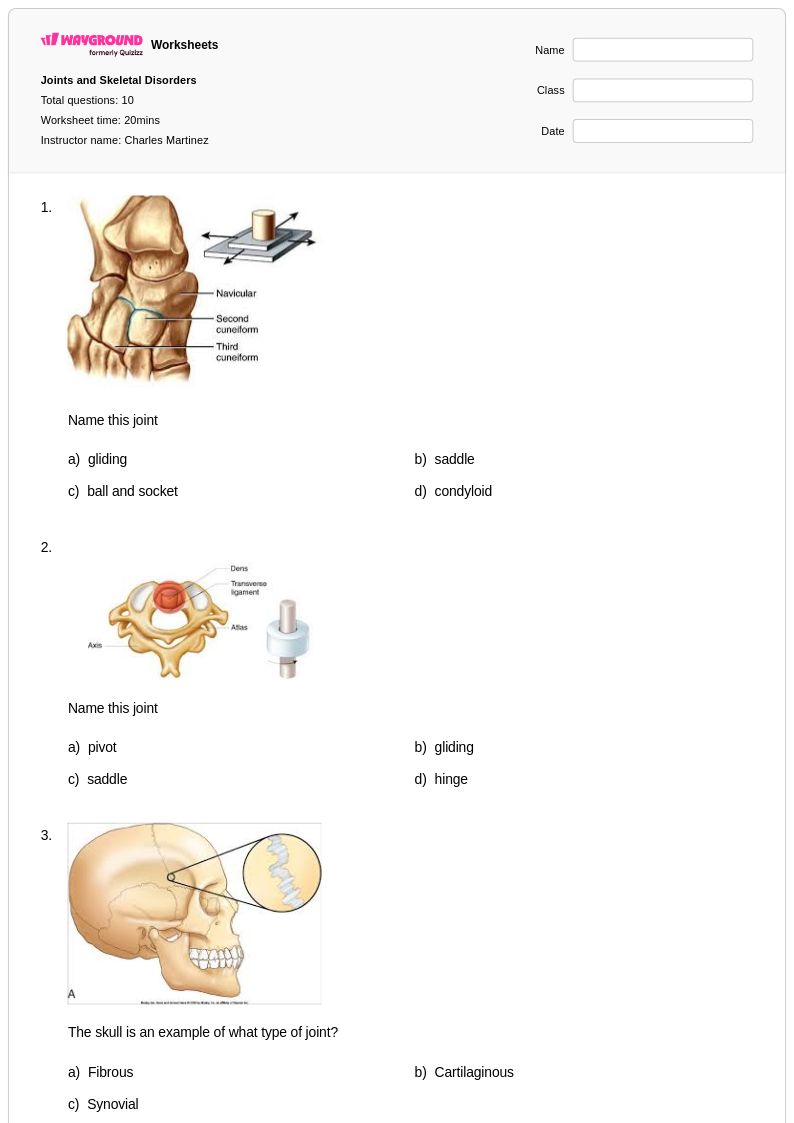
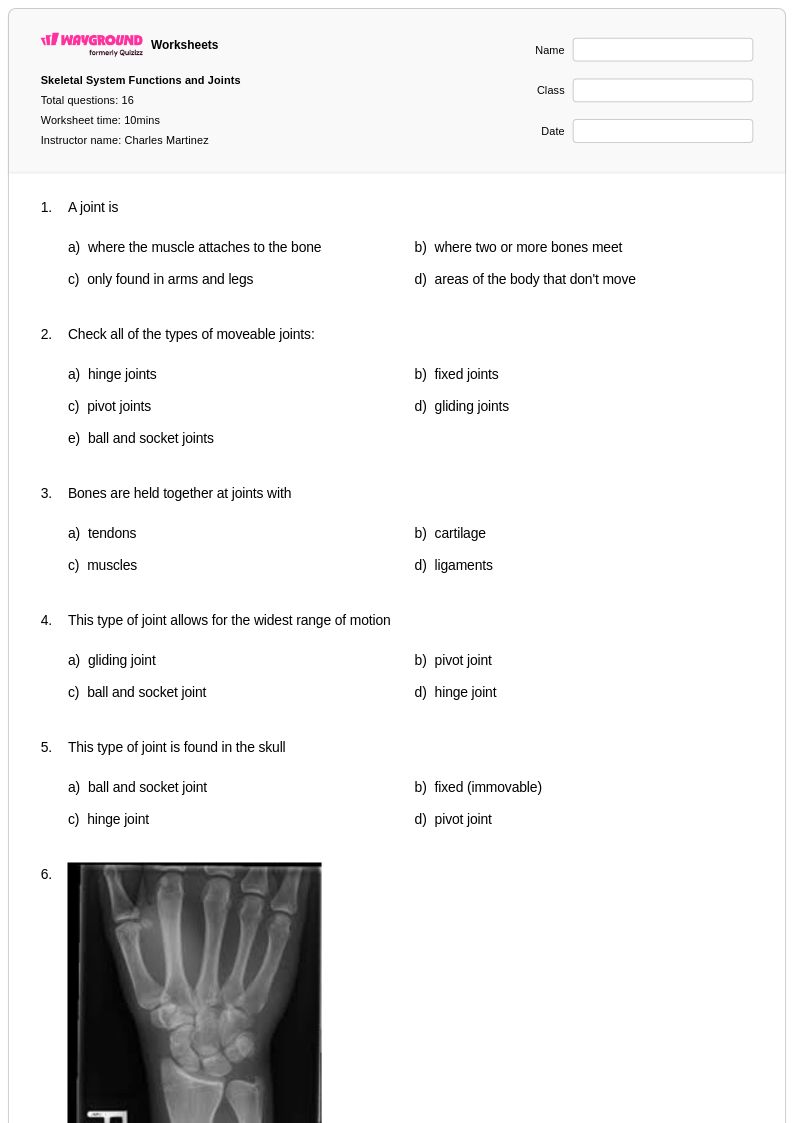
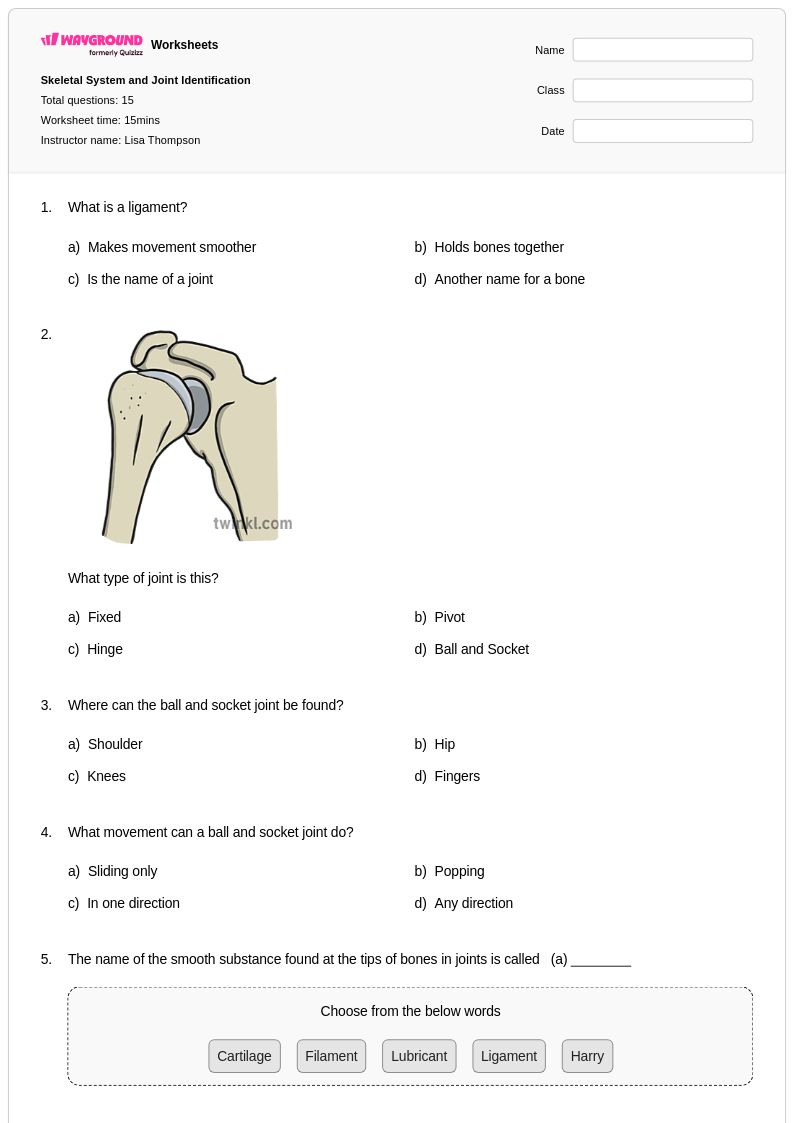
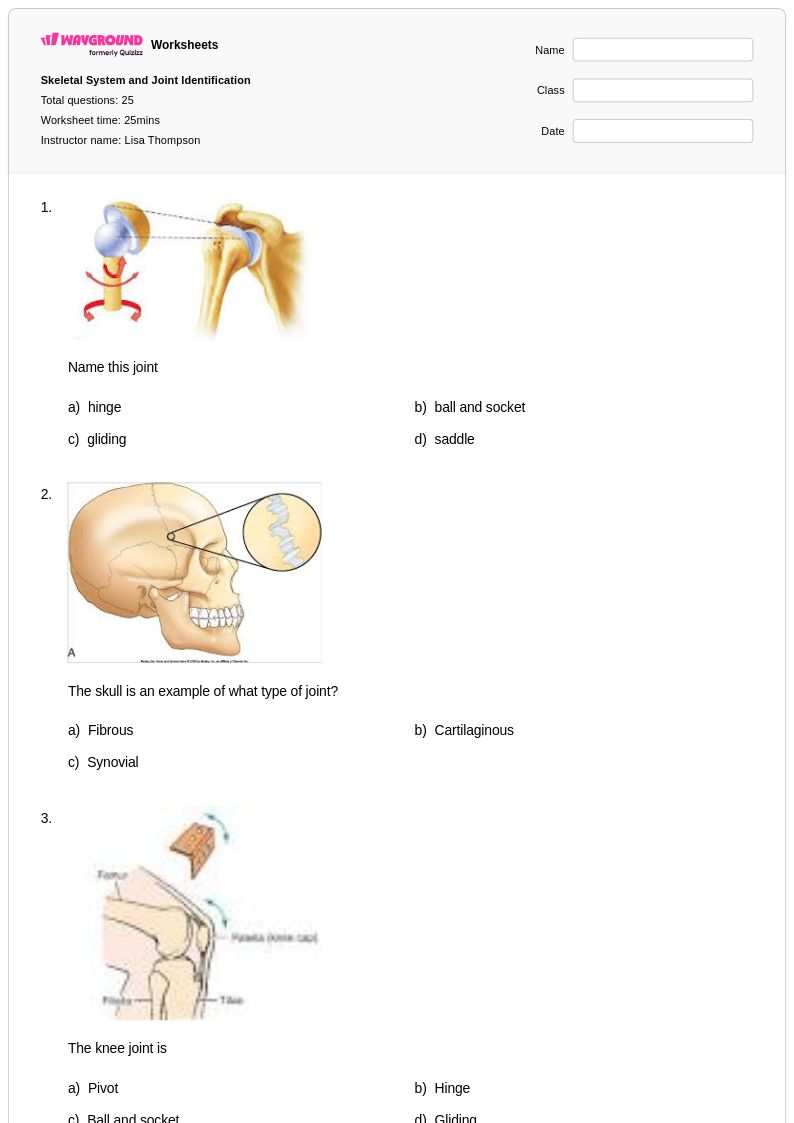
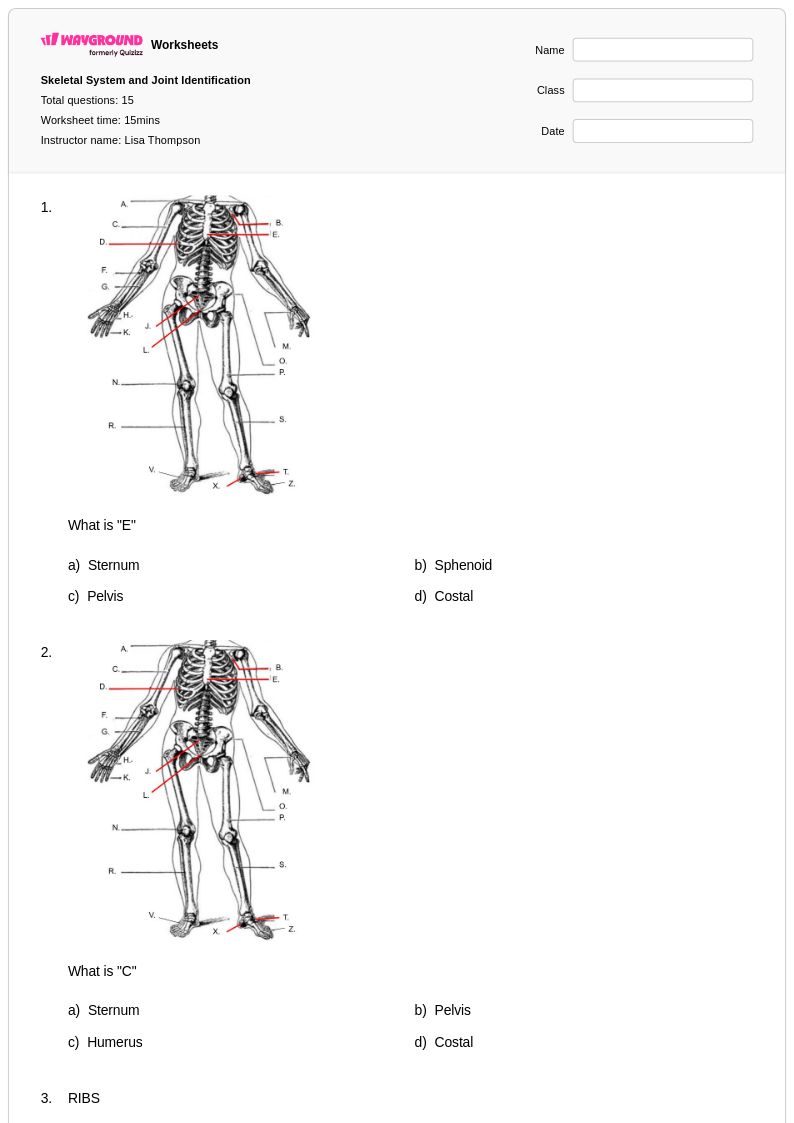
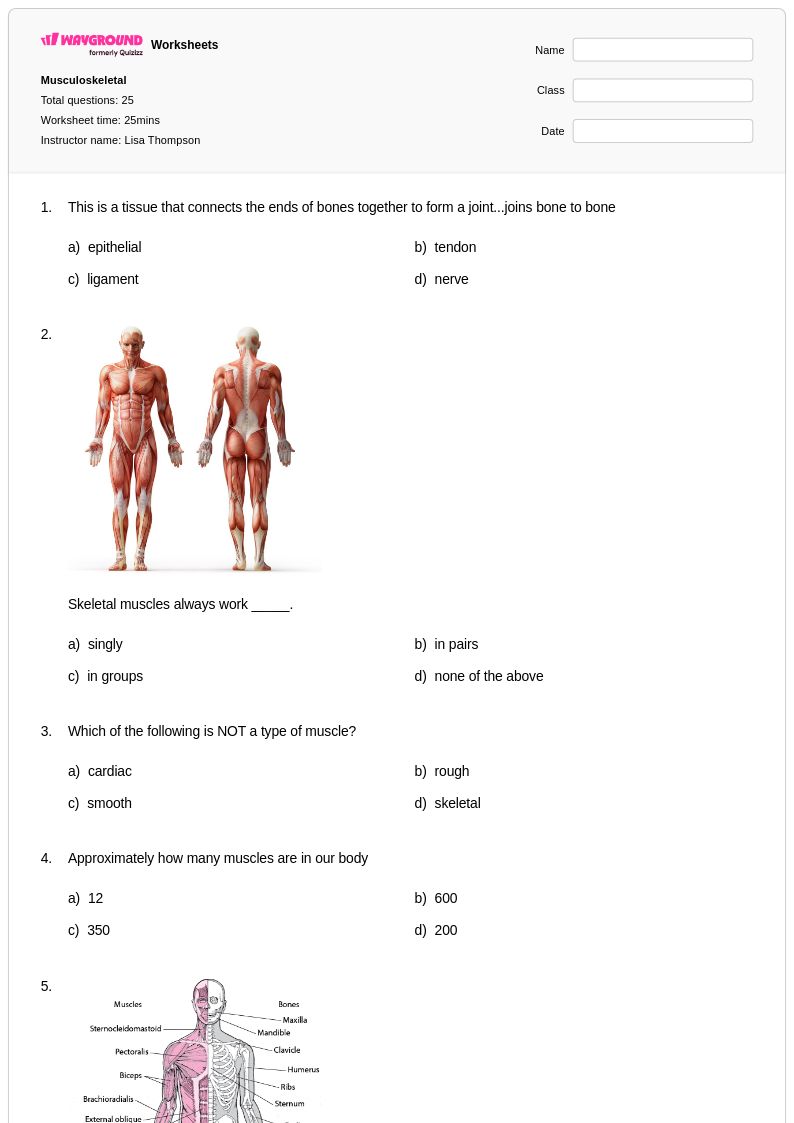
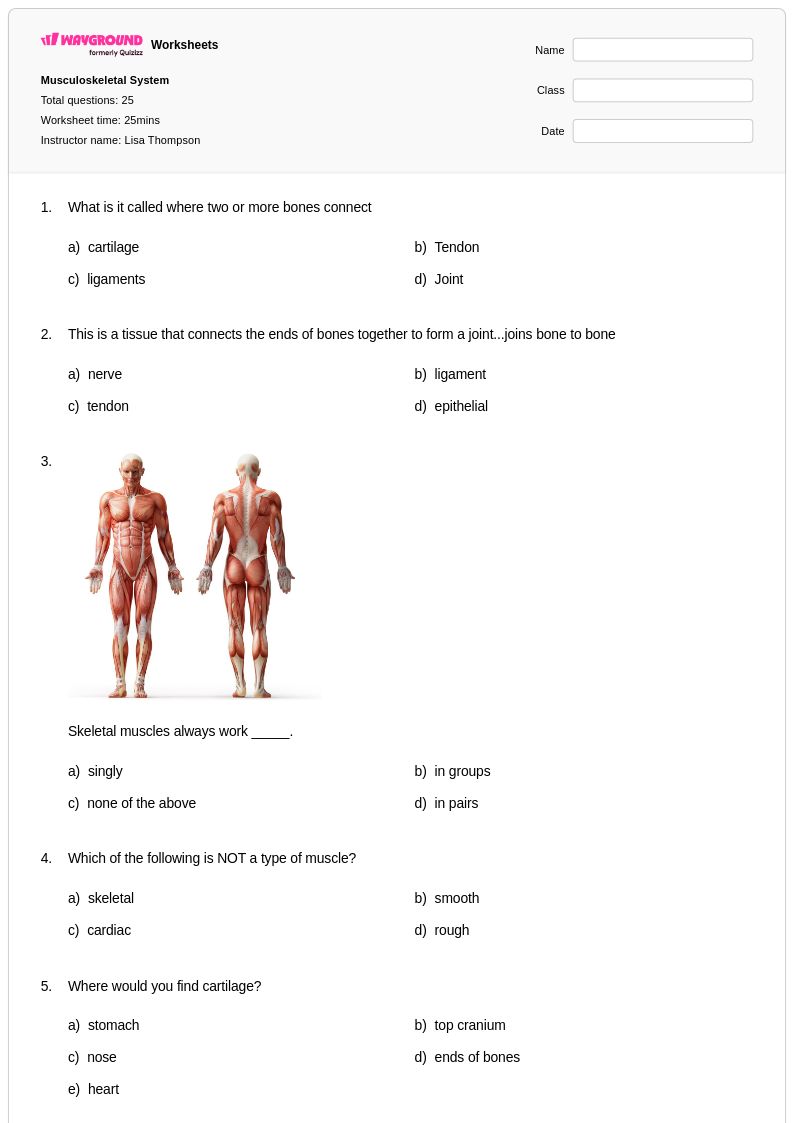
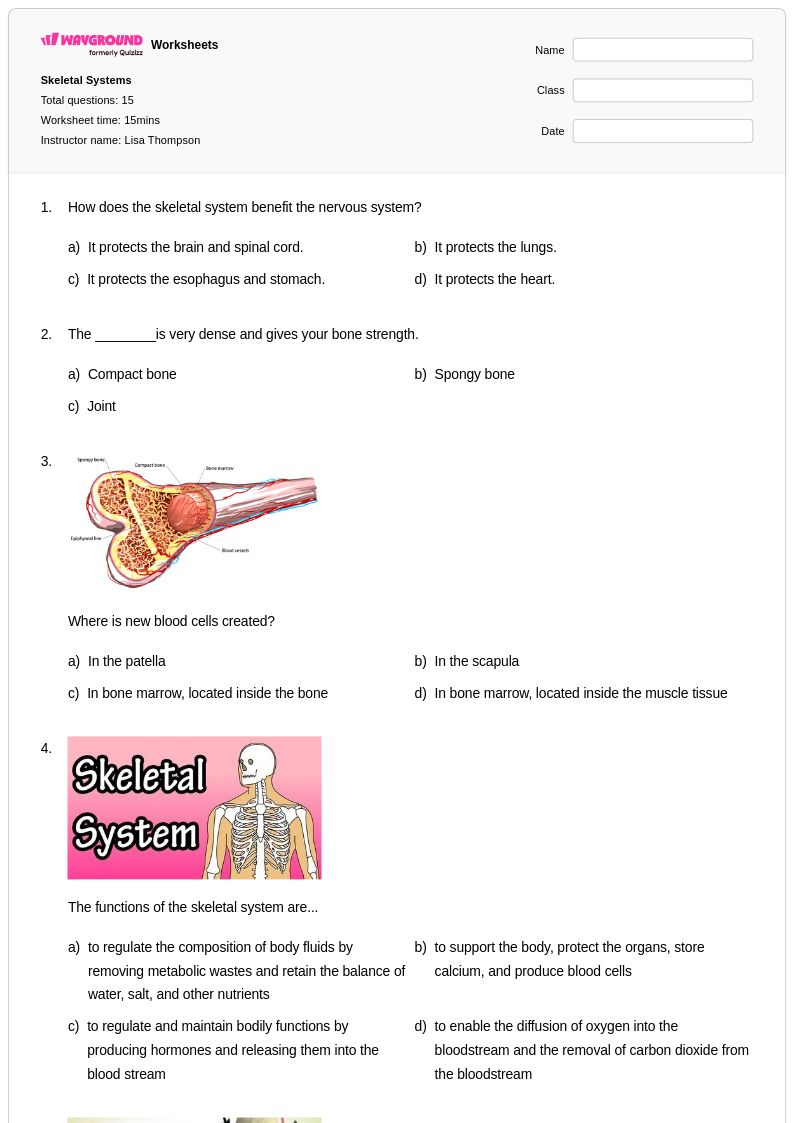
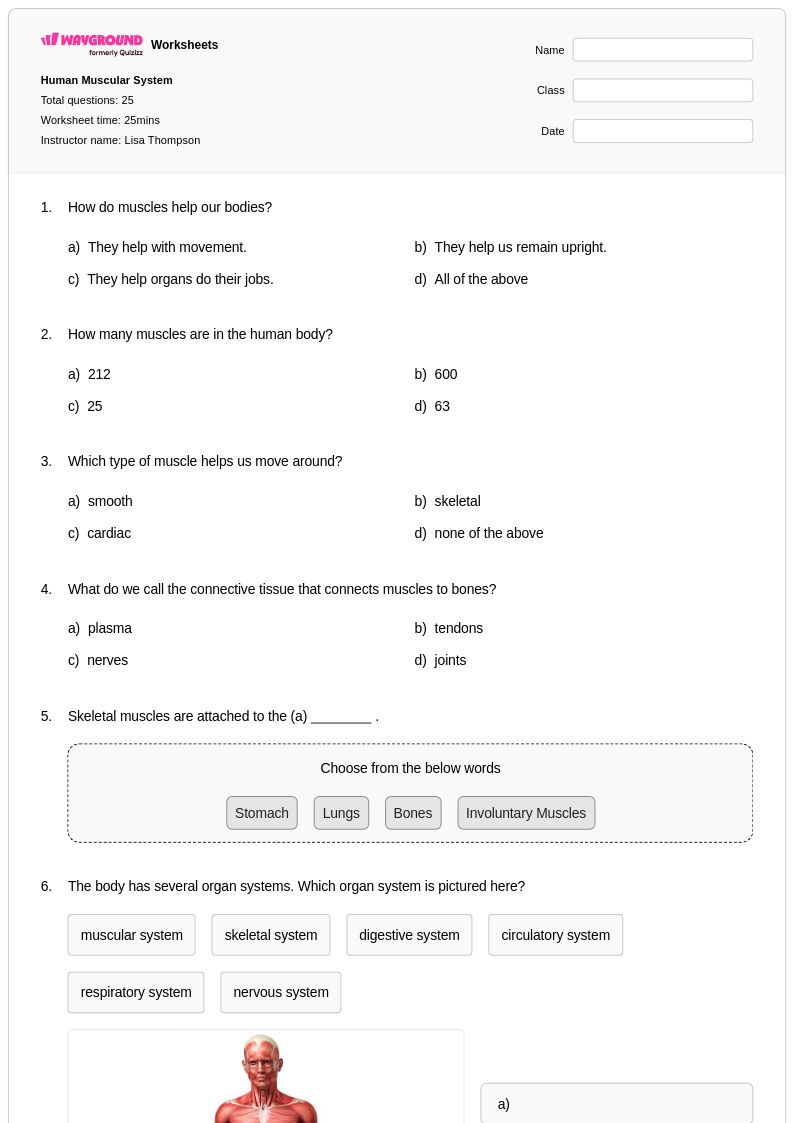
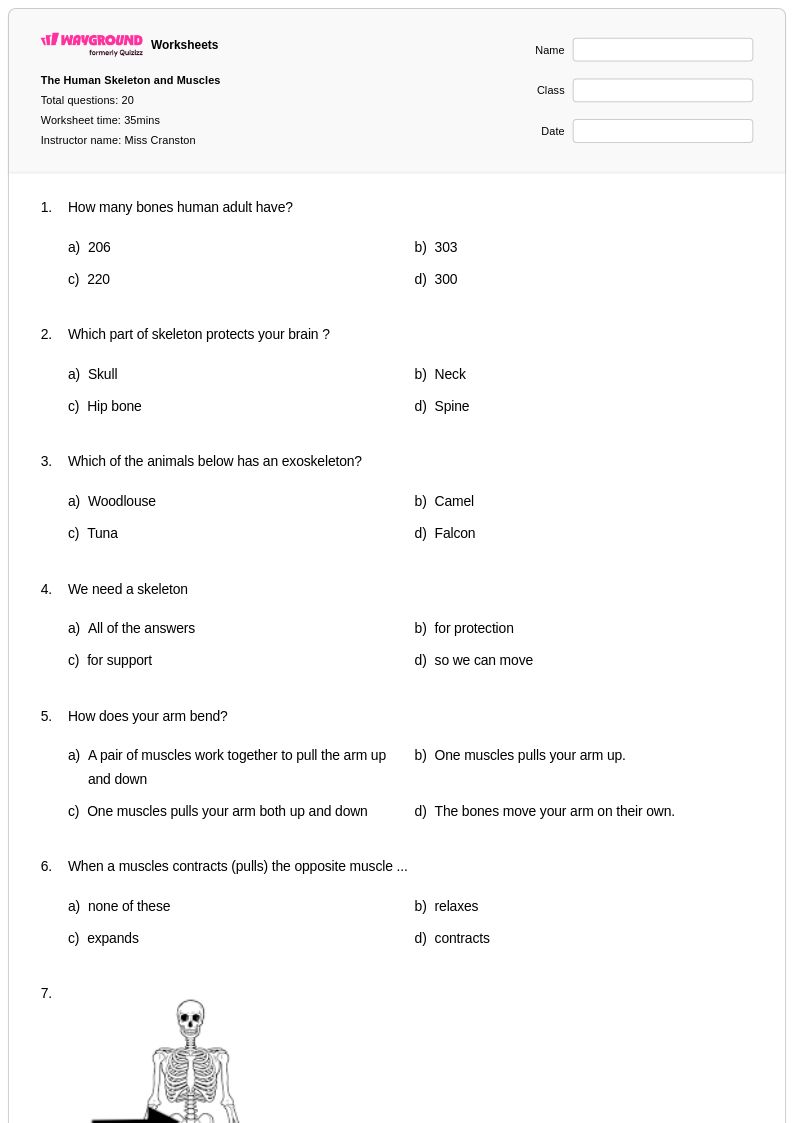
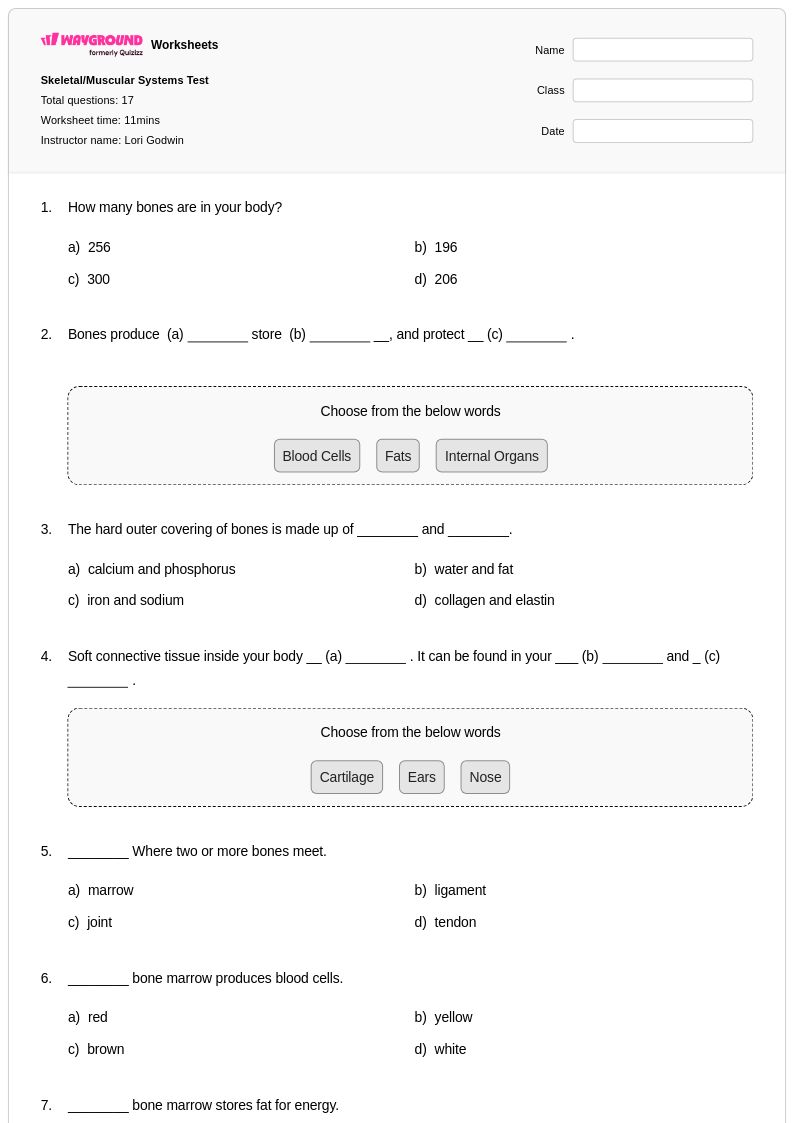
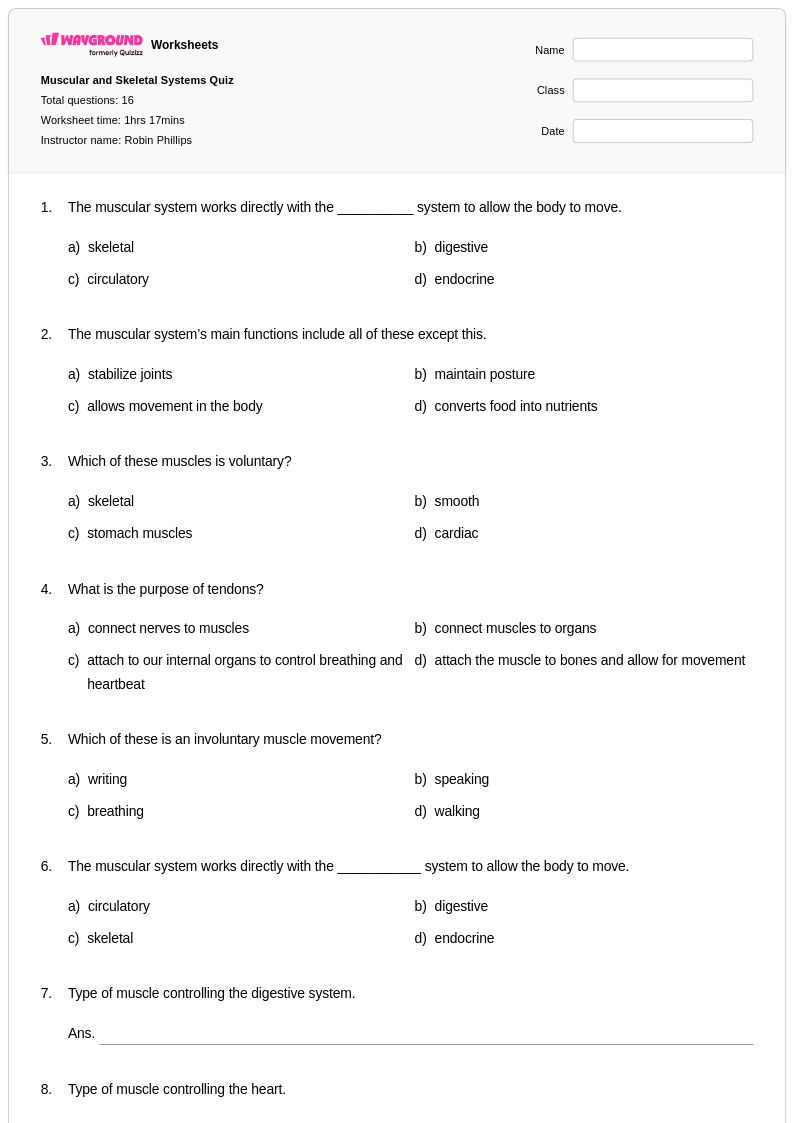
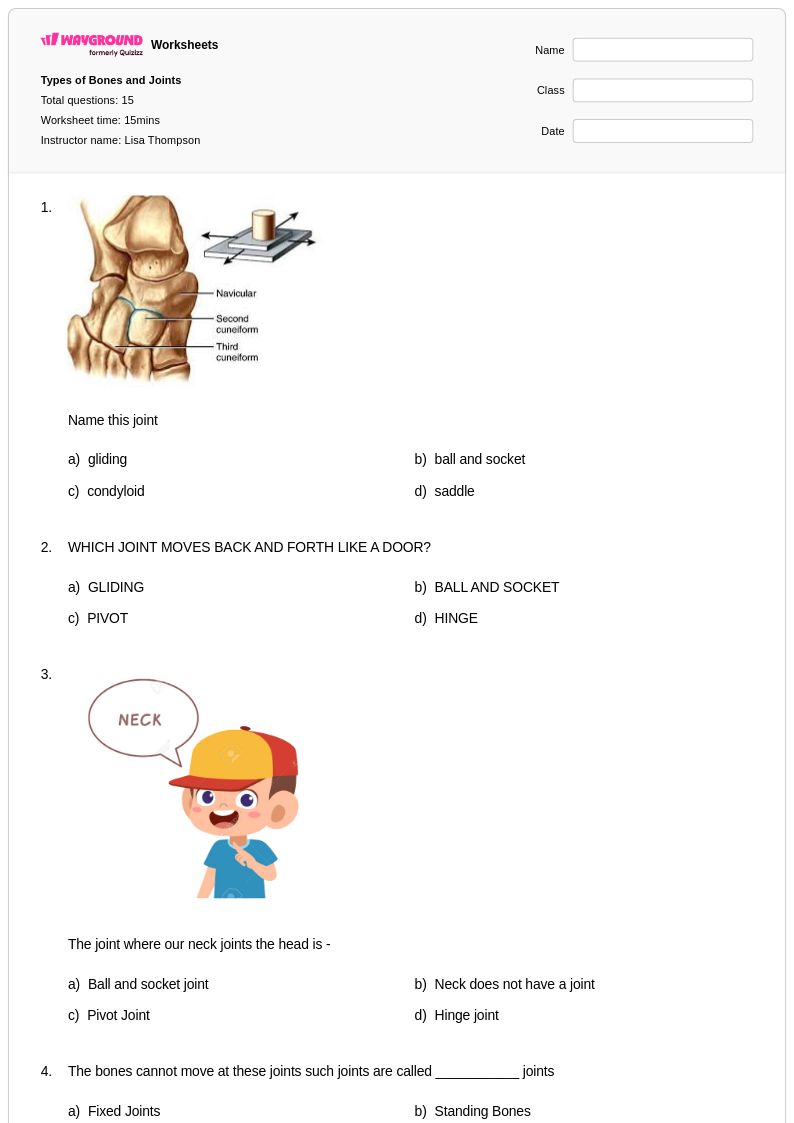
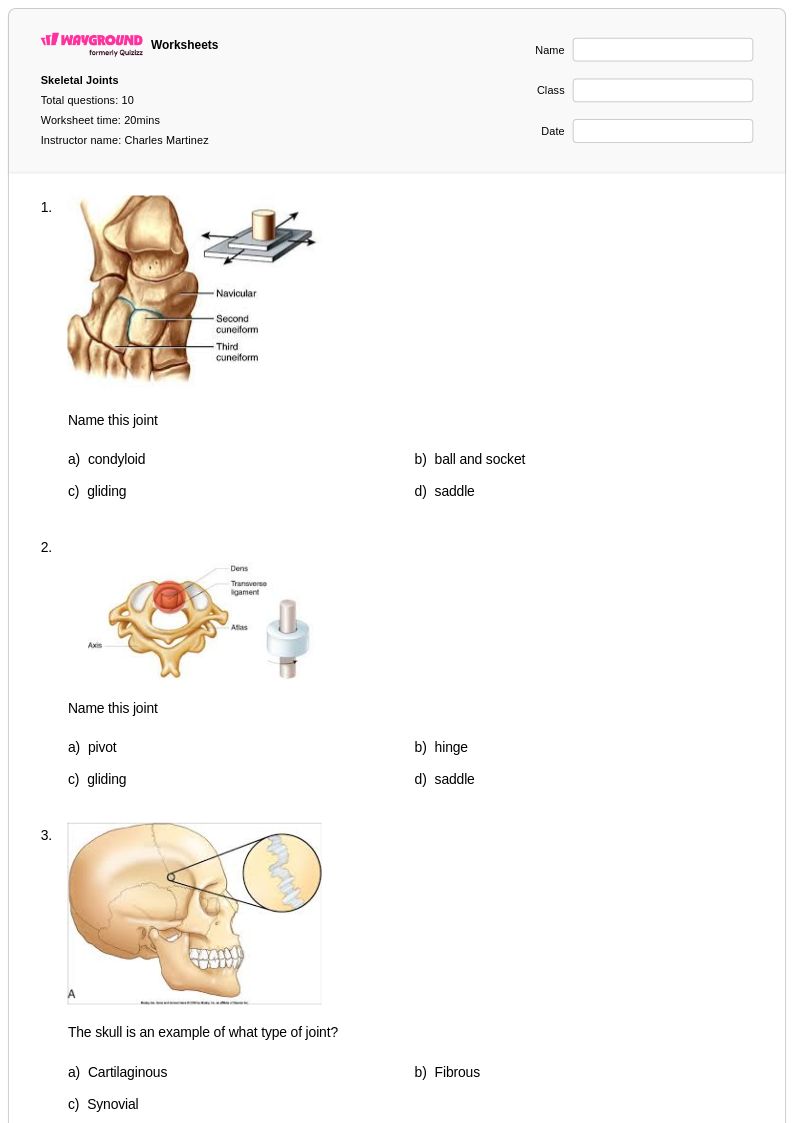
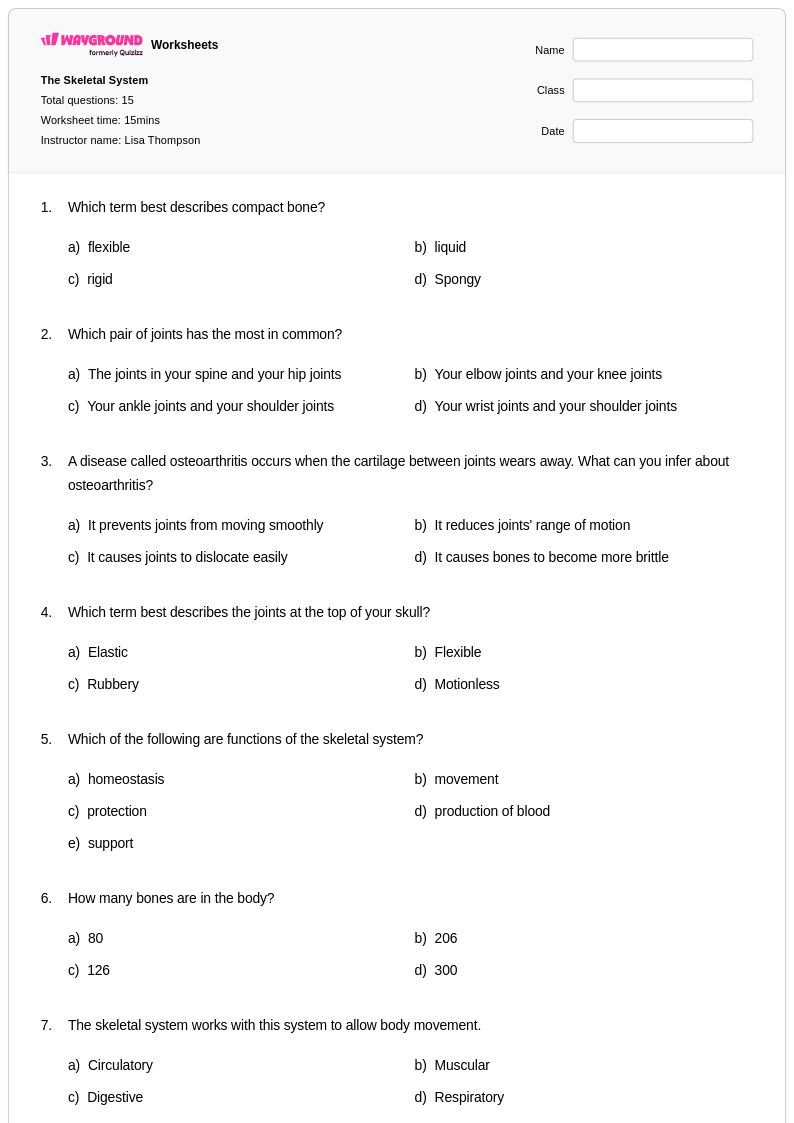
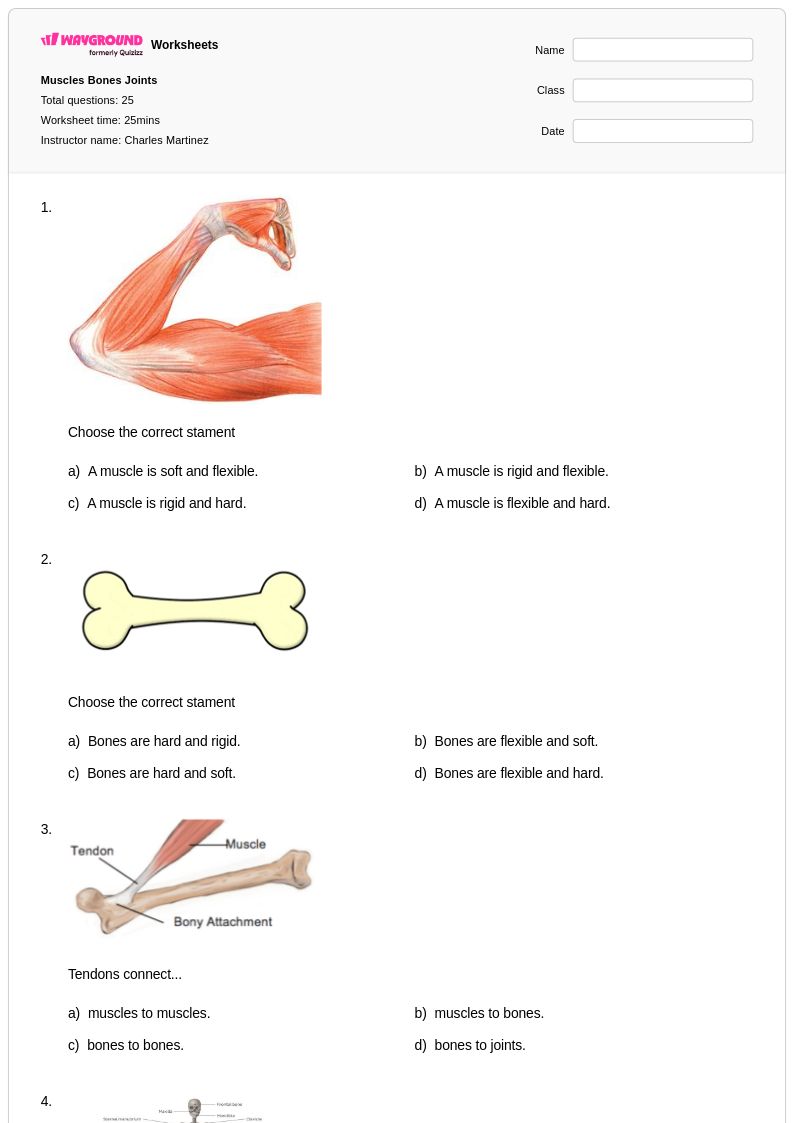
Joints and movement worksheets for Class 7 students available through Wayground (formerly Quizizz) provide comprehensive coverage of the musculoskeletal system's fundamental mechanics and anatomical structures. These educational resources strengthen students' understanding of synovial, cartilaginous, and fibrous joints while developing their ability to analyze how different joint types facilitate specific movements like flexion, extension, rotation, and abduction. The worksheet collection includes detailed practice problems that challenge students to identify joint classifications, predict movement limitations, and connect bone structure to functional mobility. Each resource comes with a complete answer key and is available as free printables in pdf format, making it simple for educators to incorporate hands-on learning activities that reinforce complex biological concepts through visual diagrams, labeling exercises, and real-world application scenarios.
Wayground (formerly Quizizz) supports science educators with millions of teacher-created resources specifically designed for Class 7 biology instruction, featuring robust search and filtering capabilities that allow quick access to standards-aligned materials covering joints and movement concepts. The platform's differentiation tools enable teachers to customize worksheet difficulty levels and modify content to meet diverse learning needs, while flexible formatting options provide both printable pdf versions for traditional classroom use and digital formats for interactive learning experiences. These comprehensive collections facilitate effective lesson planning by offering ready-to-use materials for initial instruction, targeted remediation for struggling learners, and enrichment activities for advanced students, ensuring that all Class 7 students can develop mastery of joint classification systems and movement analysis through structured skill practice and assessment opportunities.
FAQs
How do I teach joints and movement to biology students?
Start by introducing joint classification — hinge, ball-and-socket, pivot, and gliding — before connecting each type to its specific range of motion. Use anatomical diagrams to ground abstract terminology like flexion, extension, abduction, and rotation in real body structures. Pairing structural diagrams with movement analysis exercises helps students understand not just what joints are, but why different joints are built differently.
What exercises help students practice identifying joint types and movements?
Worksheet activities that ask students to classify joints by type, label anatomical diagrams, and match movement terms to specific joint actions are highly effective for reinforcing this content. Practice problems that incorporate real-world scenarios — such as how a hinge joint functions during walking versus how a ball-and-socket joint enables a throwing motion — build applied understanding rather than rote recall. Movement analysis exercises that require students to predict which joints are involved in a given activity deepen biomechanical reasoning.
What misconceptions do students commonly have about joints and movement?
A frequent misconception is that all joints allow the same range of motion — students often conflate joint types and struggle to connect structural differences to functional differences. Many students also confuse movement terminology, using flexion and extension interchangeably or misidentifying abduction and adduction. Targeted practice with labeled diagrams and movement classification tasks can help students correct these errors before they become ingrained.
How does joint health connect to real-world topics like sports and injury prevention?
Understanding joint structure gives students a concrete framework for analyzing why certain injuries are more common in specific sports — for example, why knee injuries frequently involve hinge joint mechanics under lateral stress. Connecting synovial joint function to cartilage wear, inflammation, and recovery helps students see biomechanics as directly relevant to athletic performance and long-term health. Worksheets that embed these real-world applications make abstract anatomy meaningful and memorable.
How can I use Wayground's joints and movement worksheets in my classroom?
Wayground's joints and movement worksheets are available as printable PDFs for traditional classroom use and in digital formats for technology-integrated learning environments, including the option to host them as a quiz directly on Wayground. Teachers can use these materials for initial concept introduction, skill reinforcement, or remediation depending on where students are in the unit. For students who need additional support, Wayground's accommodation tools — including read aloud, extended time, and reduced answer choices — can be configured individually so every learner accesses the material appropriately.
How can I differentiate joints and movement instruction for students at different levels?
For students who are still building foundational knowledge, simplified diagrams with guided labeling tasks and fewer answer choices can reduce cognitive overload while keeping the content accessible. Advanced learners benefit from open-ended movement analysis problems that require them to reason through joint mechanics in novel athletic or clinical scenarios. Wayground allows teachers to assign accommodations like reduced answer choices or extended time to individual students without other students being notified, making differentiation seamless during both practice and assessment.