Free Printable Muscles and Bones Worksheets for Class 7
Explore Class 7 muscles and bones biology worksheets and printables through Wayground that help students master skeletal and muscular system concepts with comprehensive practice problems, free PDFs, and detailed answer keys.
Explore printable Muscles and Bones worksheets for Class 7
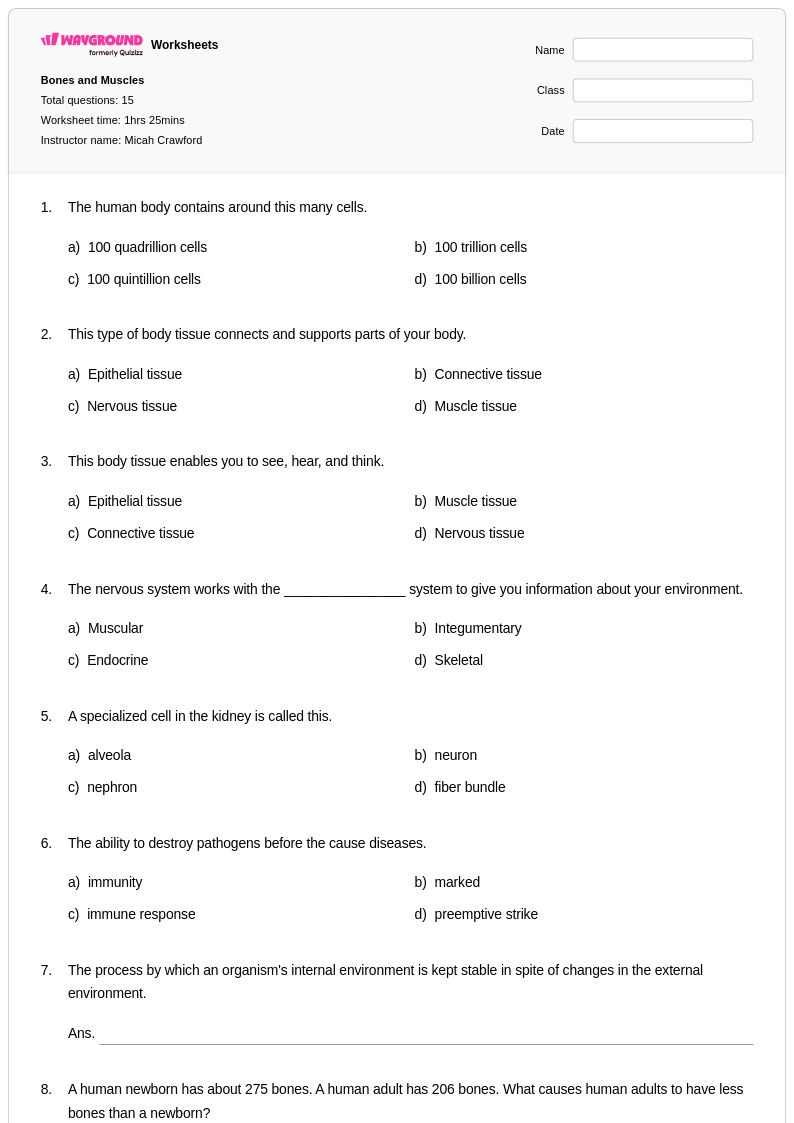
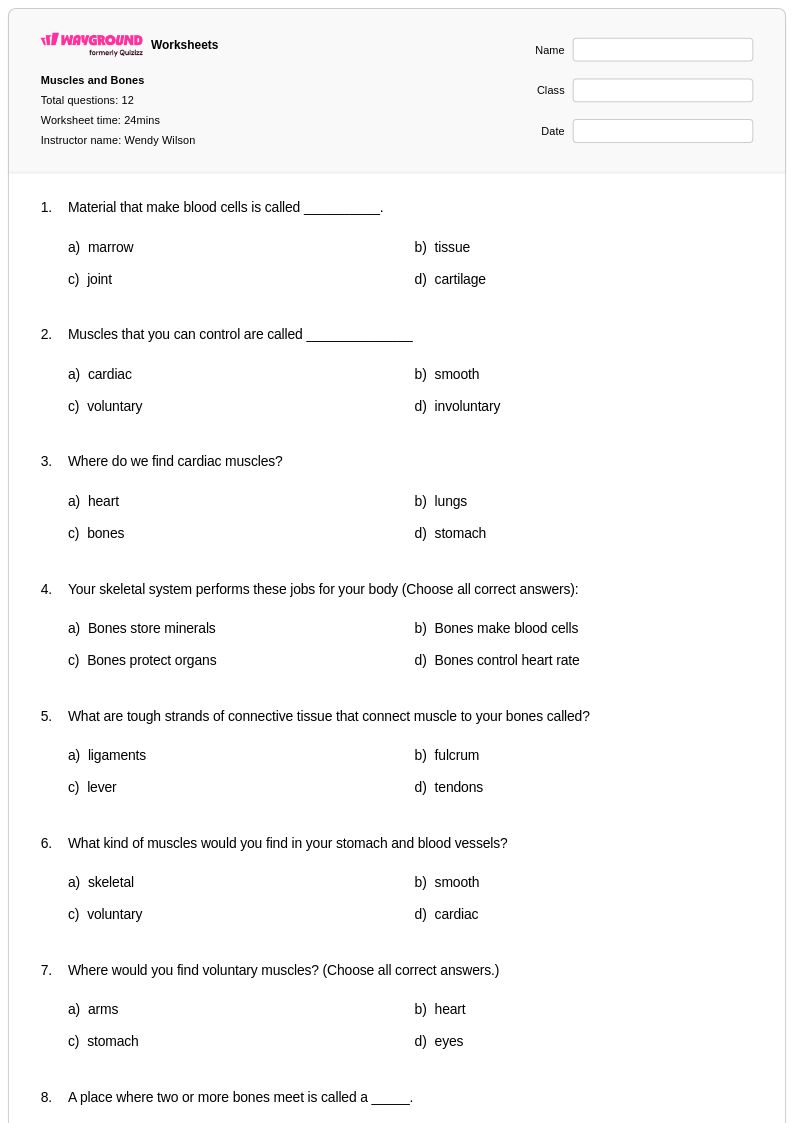
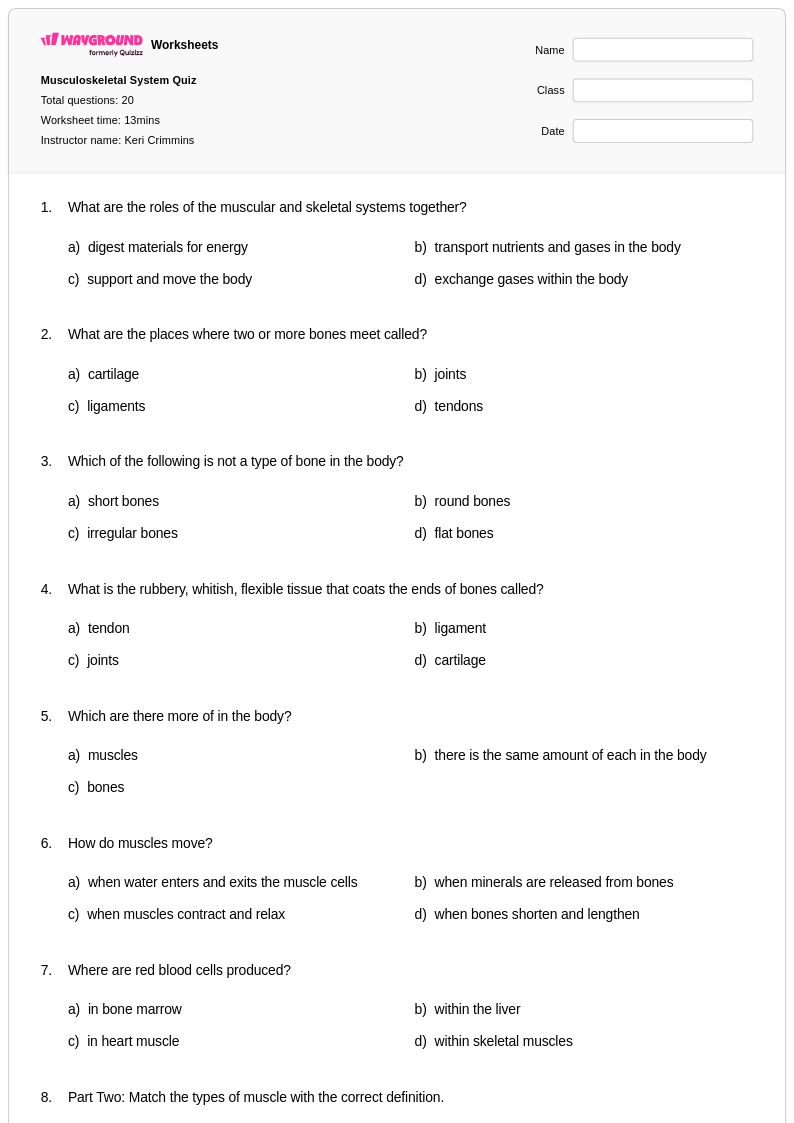
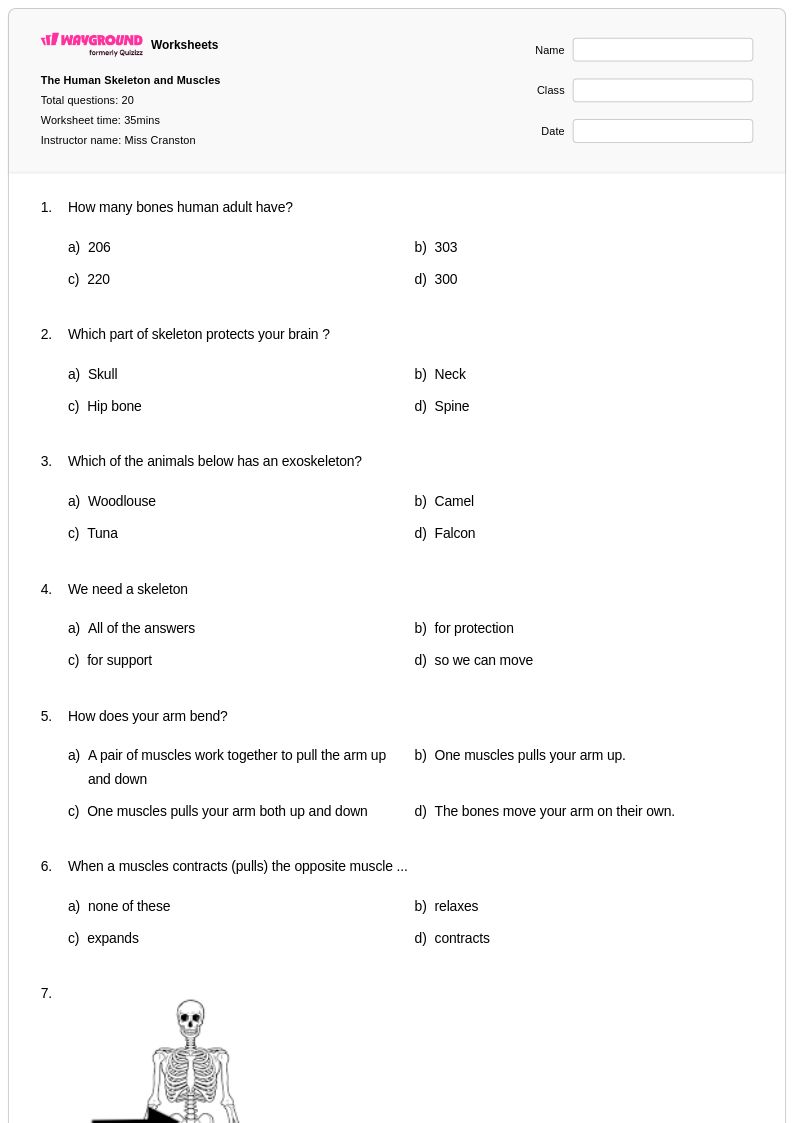
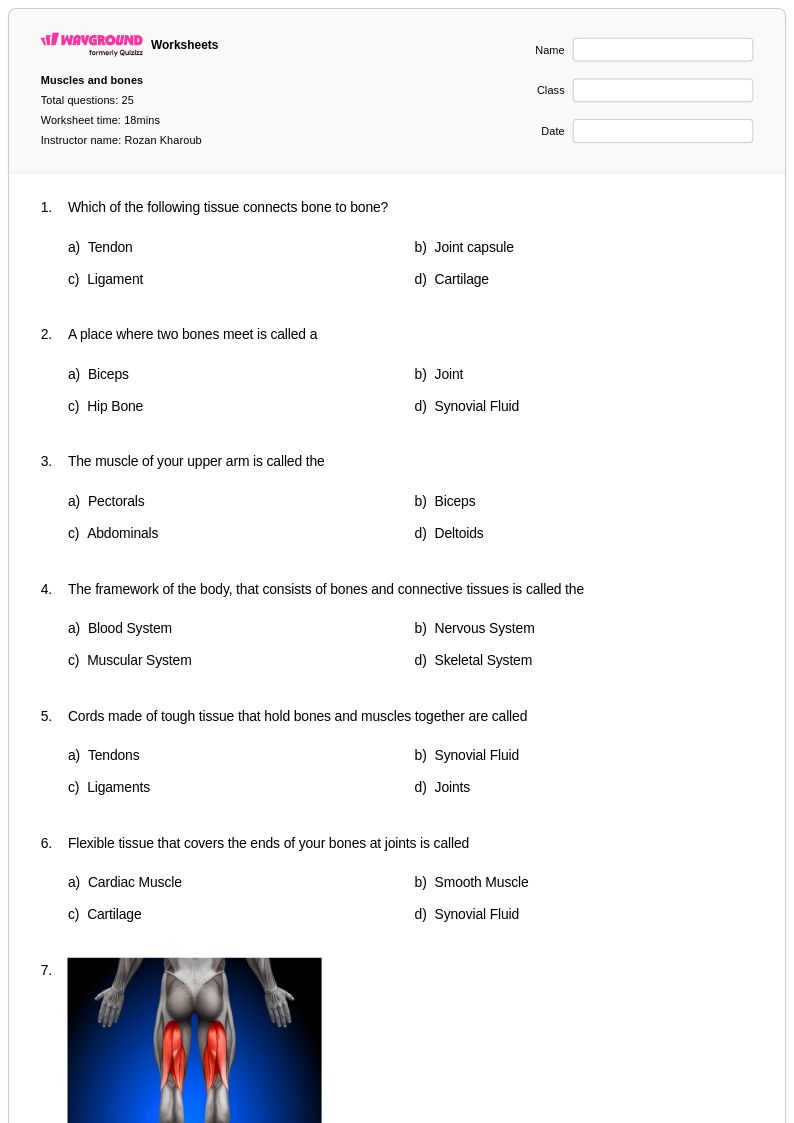
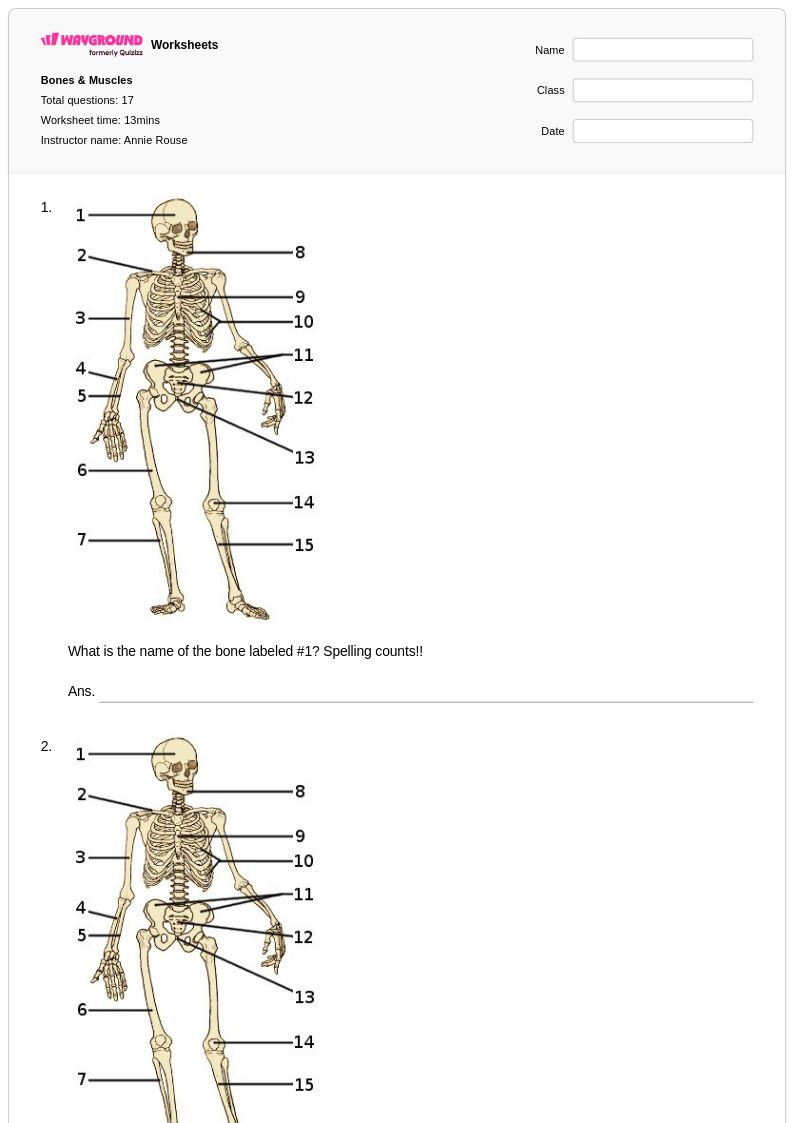
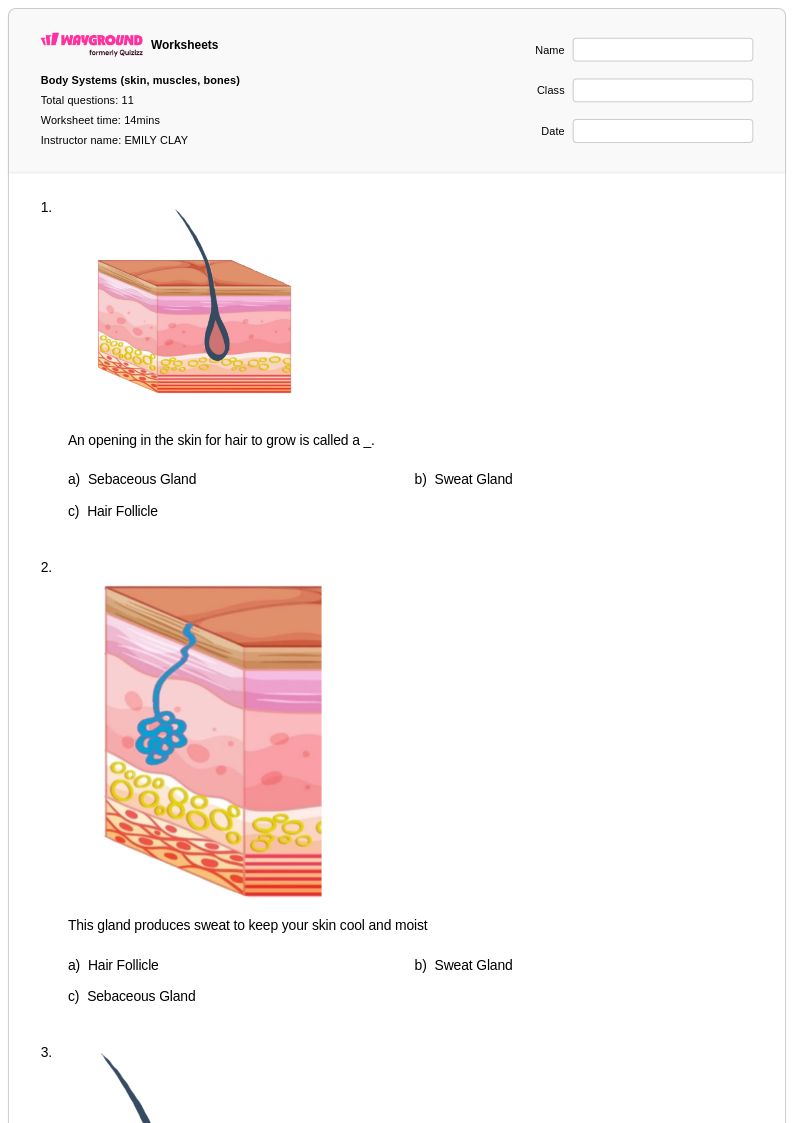
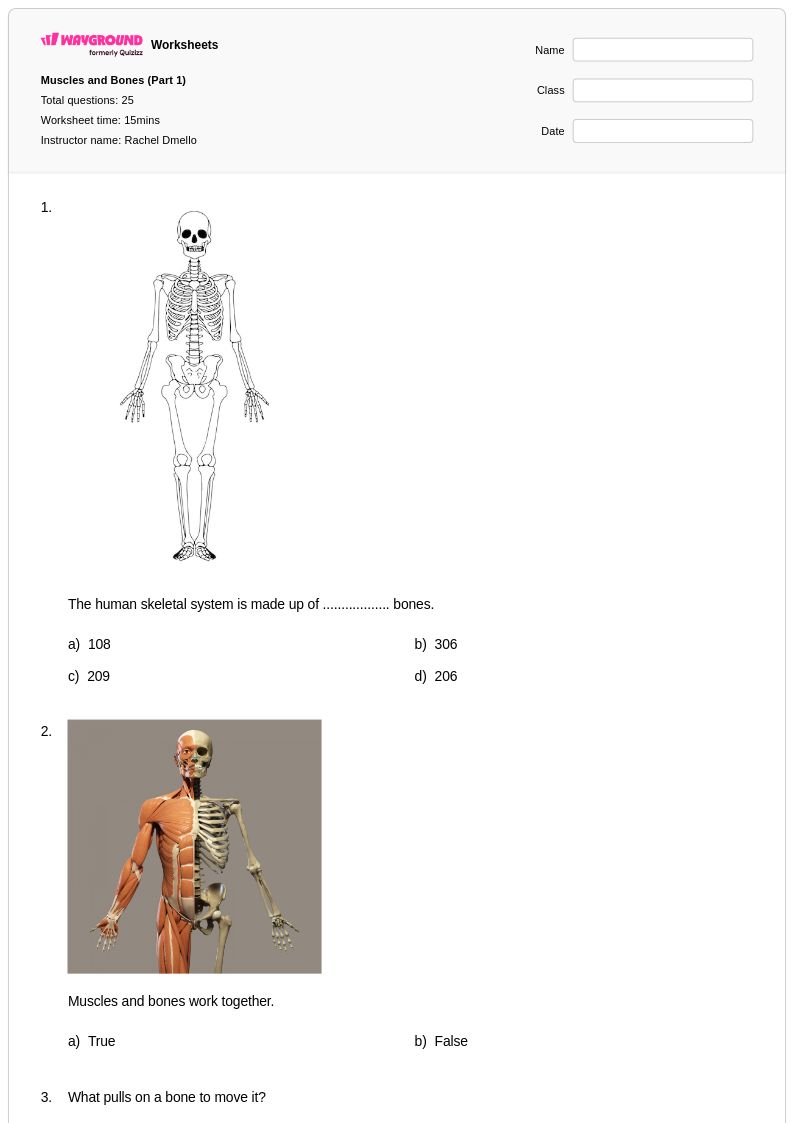
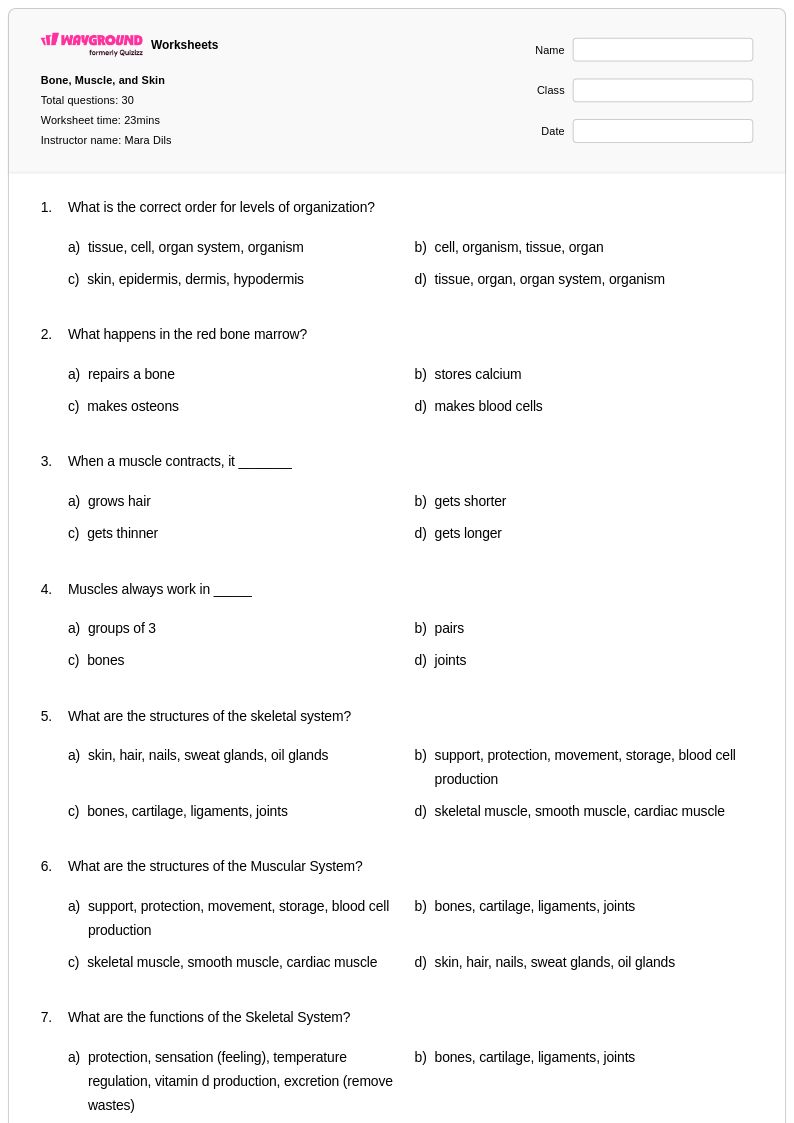
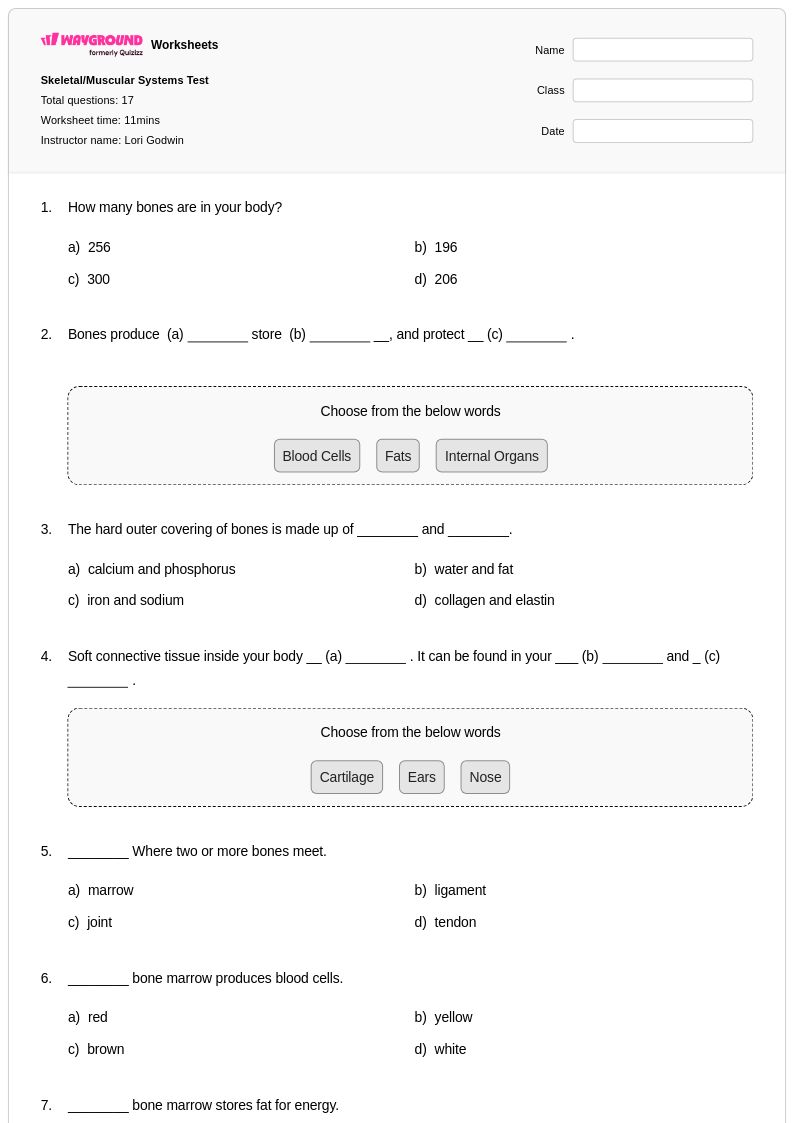
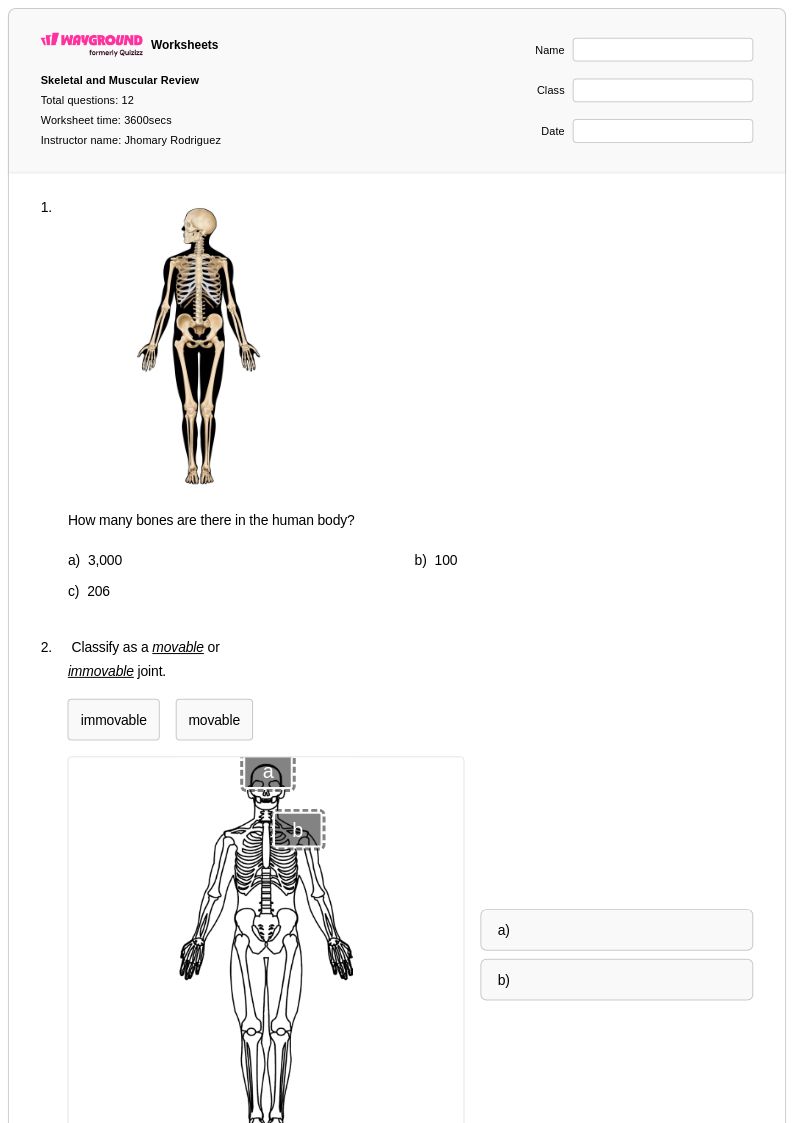
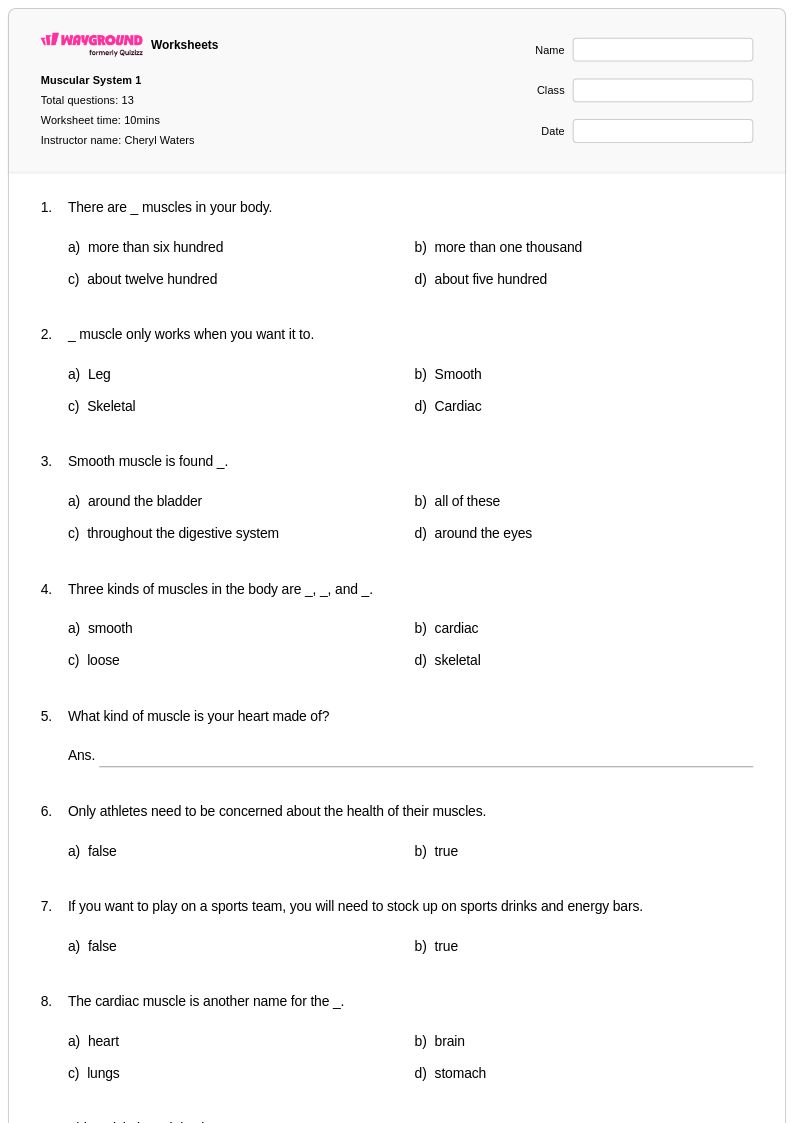
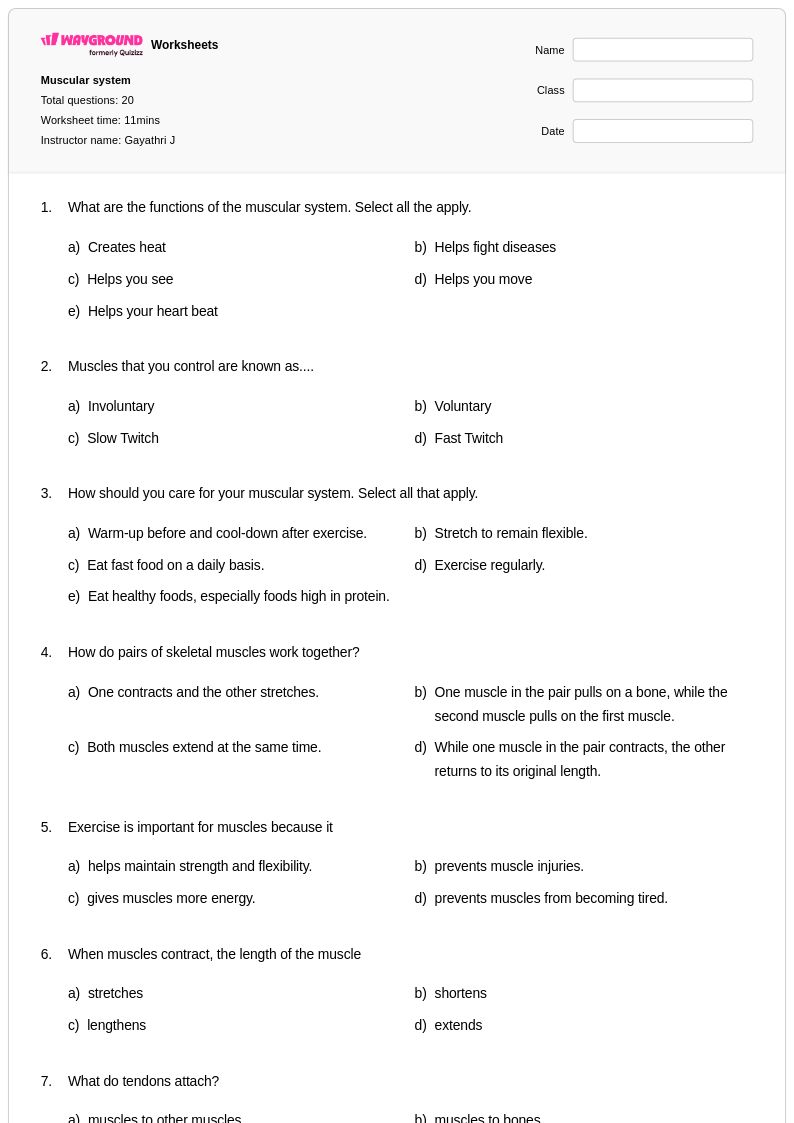
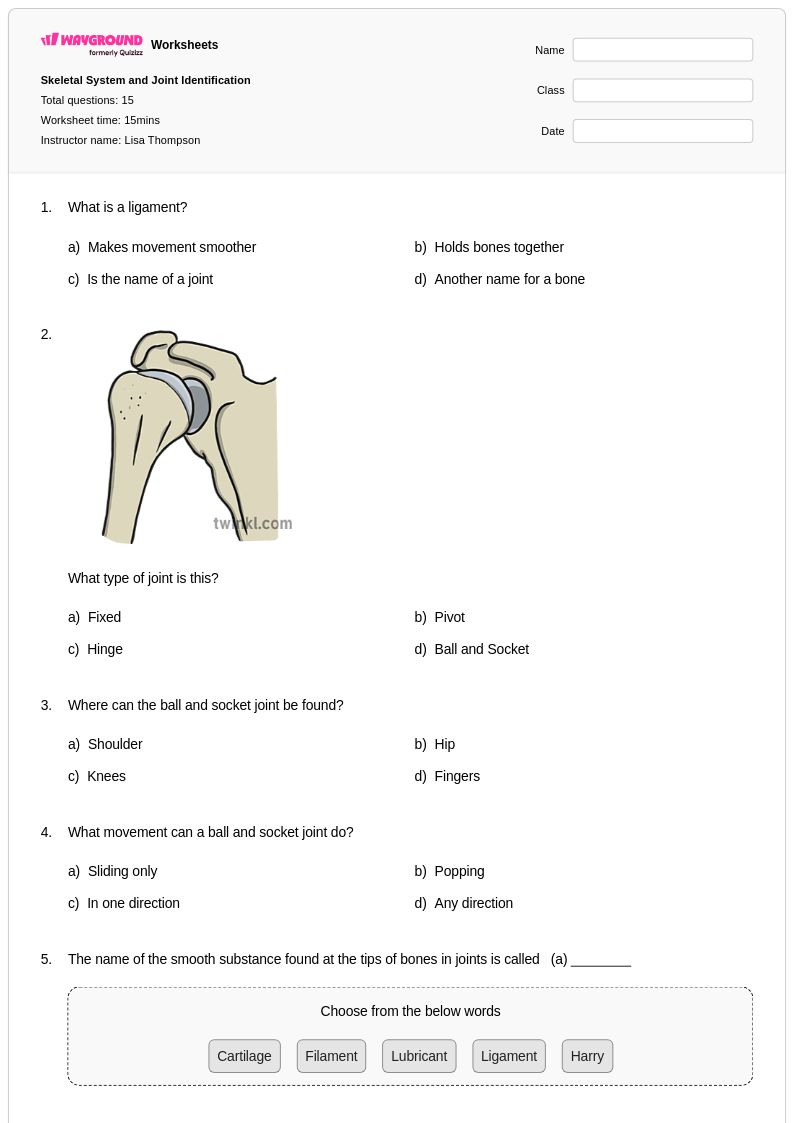
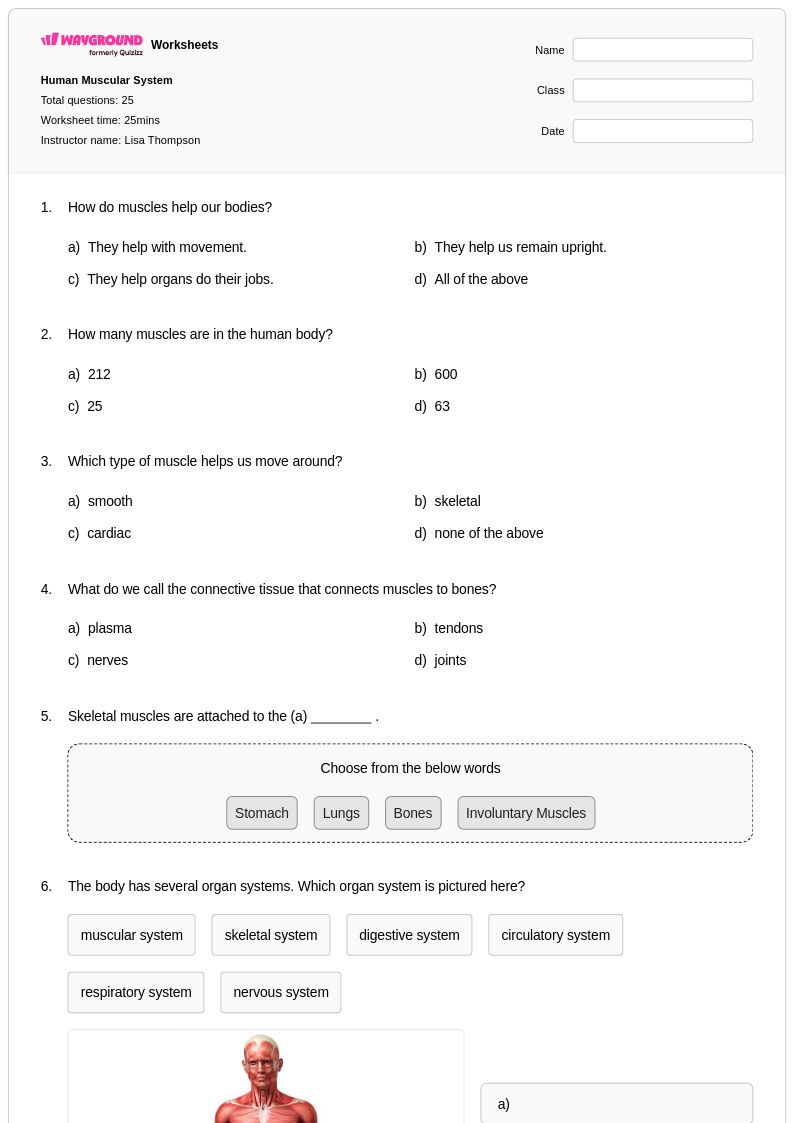
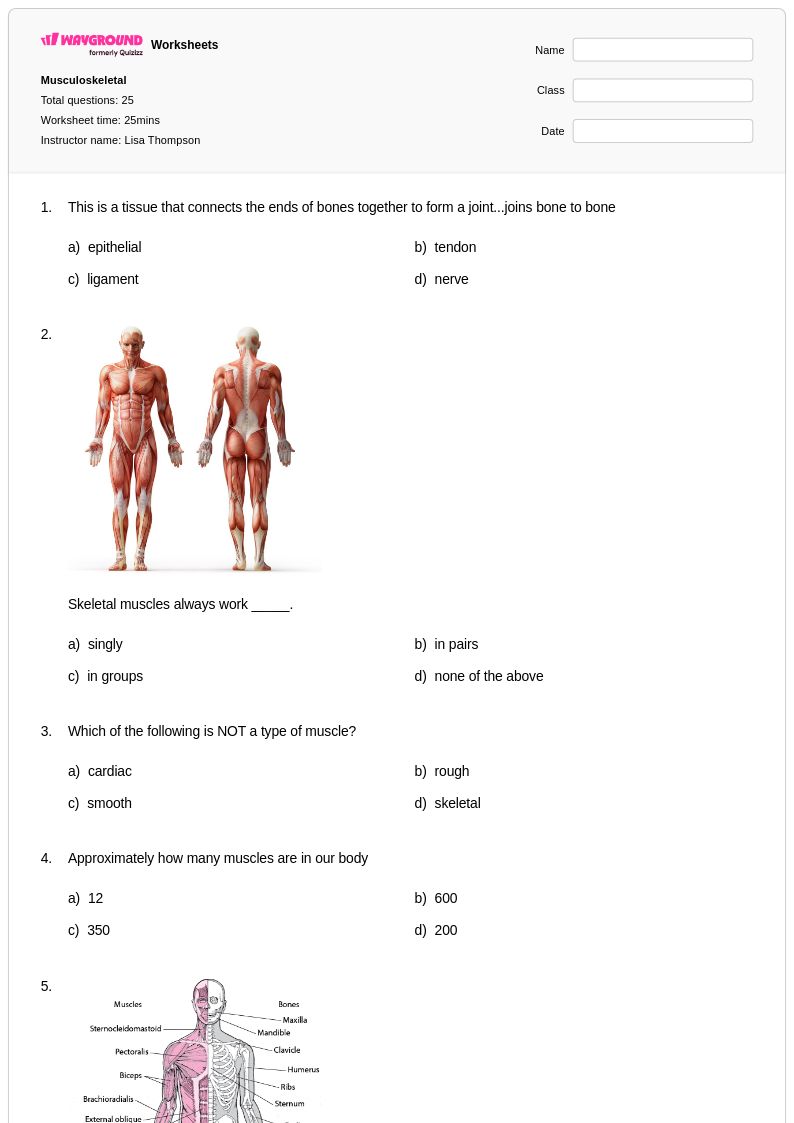
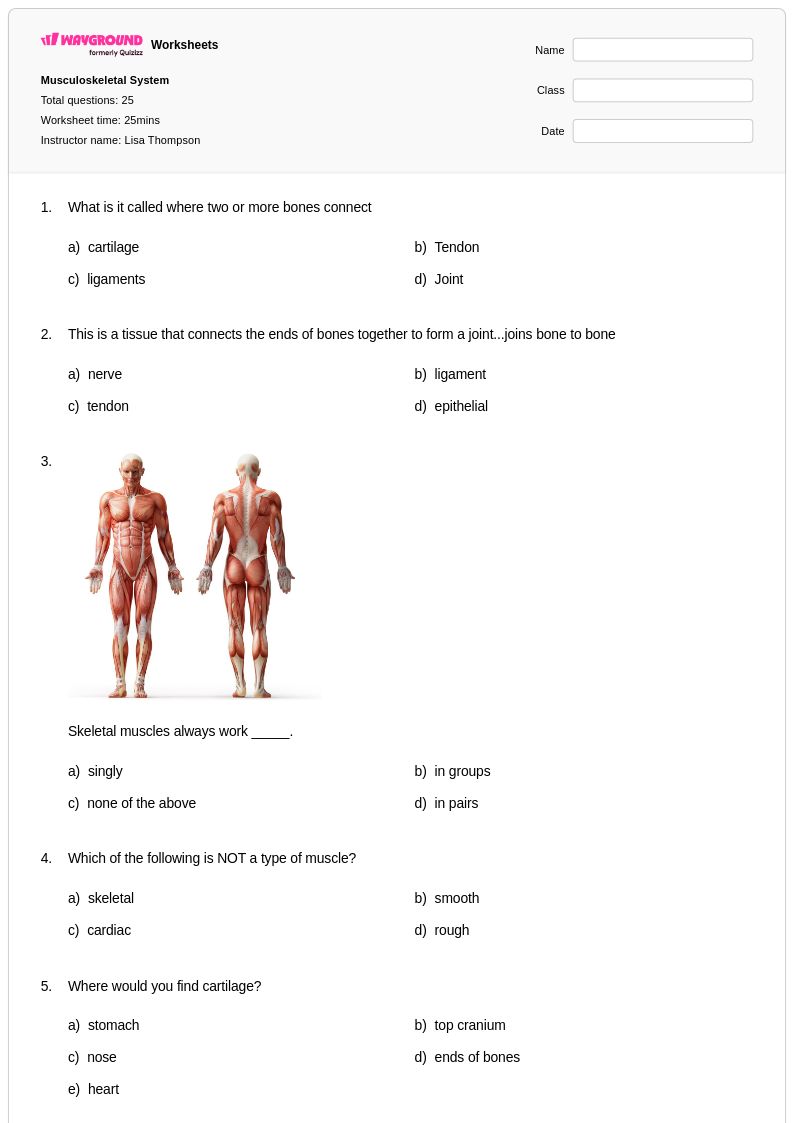
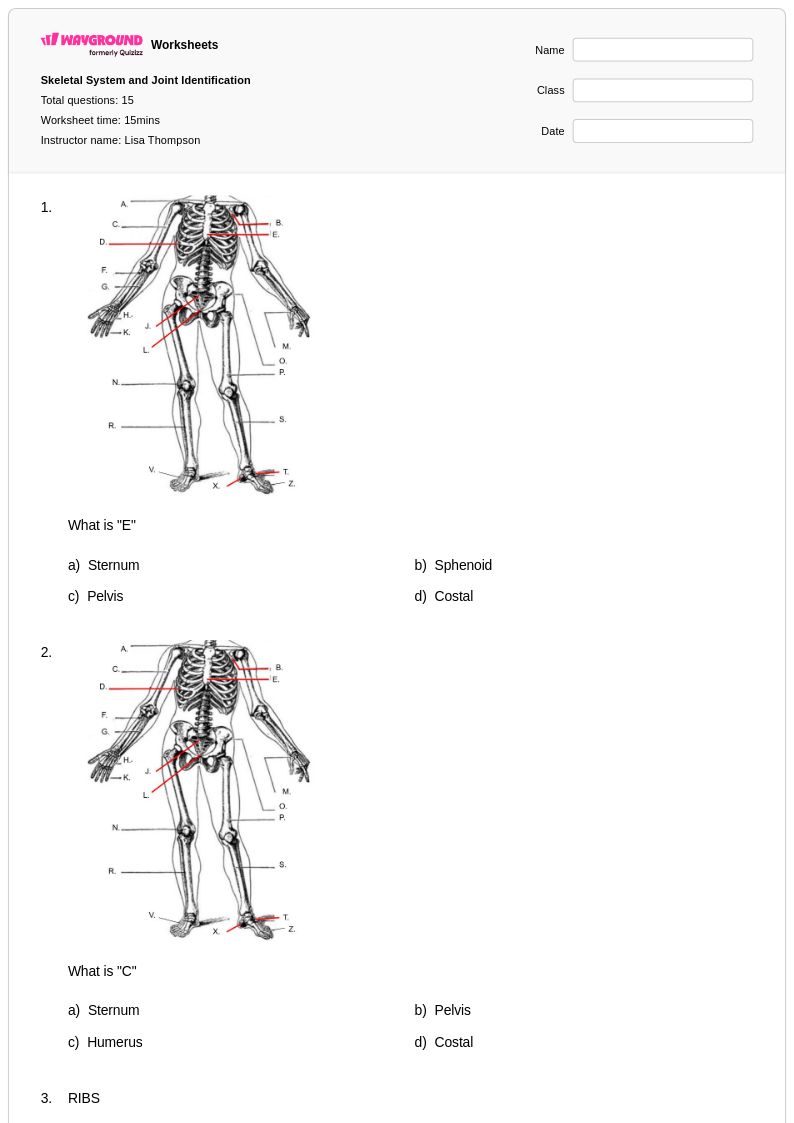
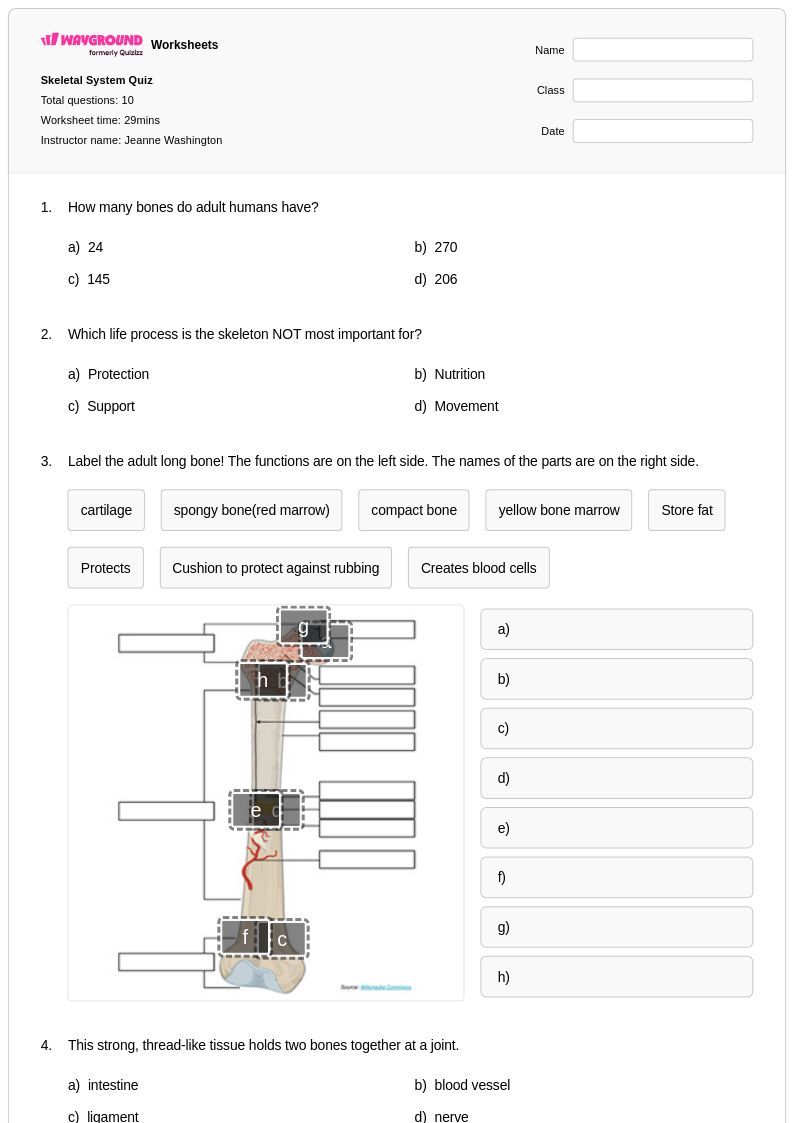
Class 7 muscles and bones worksheets available through Wayground (formerly Quizizz) provide comprehensive coverage of the musculoskeletal system, helping students master fundamental concepts about how bones and muscles work together to create movement and support the human body. These expertly designed resources strengthen critical skills including identifying major bone structures, understanding muscle function and contraction, analyzing the relationship between skeletal and muscular systems, and applying knowledge of joints and movement to real-world scenarios. The collection features diverse practice problems that challenge students to label anatomical diagrams, explain physiological processes, and demonstrate their understanding through both multiple-choice and open-response formats. Each worksheet includes a detailed answer key to support independent learning and self-assessment, with many resources available as free printables in convenient pdf format for classroom or home use.
Wayground (formerly Quizizz) empowers Class 7 science teachers with millions of teacher-created resources specifically focused on muscles and bones topics, supported by robust search and filtering capabilities that allow educators to quickly locate materials aligned with specific learning standards and curriculum requirements. The platform's differentiation tools enable teachers to customize worksheets based on individual student needs, while flexible formatting options provide both printable pdf versions for traditional classroom activities and digital formats for interactive online learning experiences. These comprehensive features streamline lesson planning by offering ready-to-use materials for skill practice, targeted remediation for students struggling with anatomical concepts, and enrichment opportunities for advanced learners ready to explore more complex musculoskeletal relationships. Teachers can efficiently organize their instruction around bone classification, muscle fiber types, joint mechanics, and injury prevention while ensuring all students receive appropriate challenge levels and support.
FAQs
How do I teach the muscular and skeletal systems together effectively?
Teaching muscles and bones as an integrated system rather than separately helps students understand how the body produces movement. Start by grounding students in bone structure and joint classification, then introduce muscle fiber types and contraction mechanisms so students can trace the full chain from neural signal to physical movement. Using anatomical diagrams that show both systems in context reinforces how skeletal muscles attach to bones via tendons and how joints define the range and type of movement possible.
What exercises help students practice identifying bones and muscles?
Labeling diagrams of the skeletal and muscular systems is one of the most effective practice formats for building anatomical identification skills. Students benefit from exercises that ask them to match muscle and bone names to their functions, classify joints by type, and identify the role of specific structures in a given movement. Repeated low-stakes practice with answer keys allows students to self-correct and build accurate mental maps of the musculoskeletal system.
What mistakes do students commonly make when learning about the musculoskeletal system?
A frequent misconception is that bones are static, inert structures rather than living tissue capable of remodeling and growth. Students also commonly confuse tendons and ligaments, misattributing which connects muscle to bone versus bone to bone. Another common error is oversimplifying muscle contraction by assuming muscles both push and pull, when in reality skeletal muscles only pull, requiring antagonistic pairs to produce bidirectional movement.
How can I differentiate muscles and bones worksheets for students at different skill levels?
For students who need additional support, simplifying diagram labels to major structures only and reducing the number of answer choices can lower cognitive load without removing the core learning objective. Advanced learners can be extended with questions on bone remodeling, muscle fiber type recruitment, or the physiological demands of different types of physical activity. On Wayground, teachers can apply accommodations such as reduced answer choices, read aloud, and extended time to individual students, so differentiation happens automatically without singling anyone out.
How do I use Wayground's muscles and bones worksheets in my classroom?
Wayground's muscles and bones worksheets are available as printable PDFs for traditional classroom use and in digital formats for technology-integrated or hybrid environments, including the ability to host them as a live quiz on Wayground. Each worksheet includes a complete answer key, supporting both teacher-led correction and independent student self-assessment. The platform's search and filtering tools allow teachers to quickly find worksheets aligned to specific topics such as joint classification, bone composition, or muscle contraction, making lesson planning more efficient.
How do bones and muscles work together to produce movement?
Bones act as levers, joints act as fulcrums, and skeletal muscles generate the force required to move those levers by contracting and pulling on bones via tendons. Because skeletal muscles can only contract and not push, they are arranged in antagonistic pairs, where one muscle contracts while its partner relaxes to allow movement in both directions. Understanding this mechanical relationship is foundational to explaining not only everyday motion but also how injury to one component, such as a ligament or a muscle group, disrupts the entire system.