
10 Q
1st - 12th
10 Q
7th - Uni
10 Q
7th - Uni
10 Q
7th - Uni
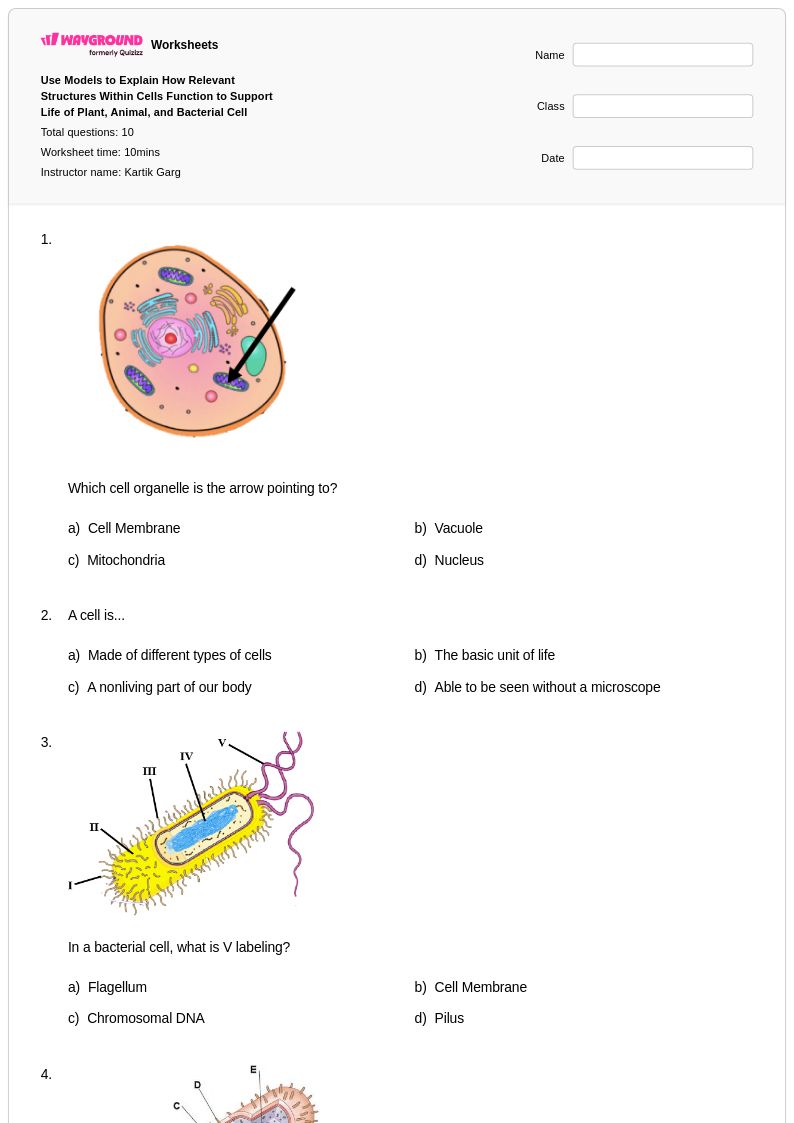
10 Q
7th - Uni
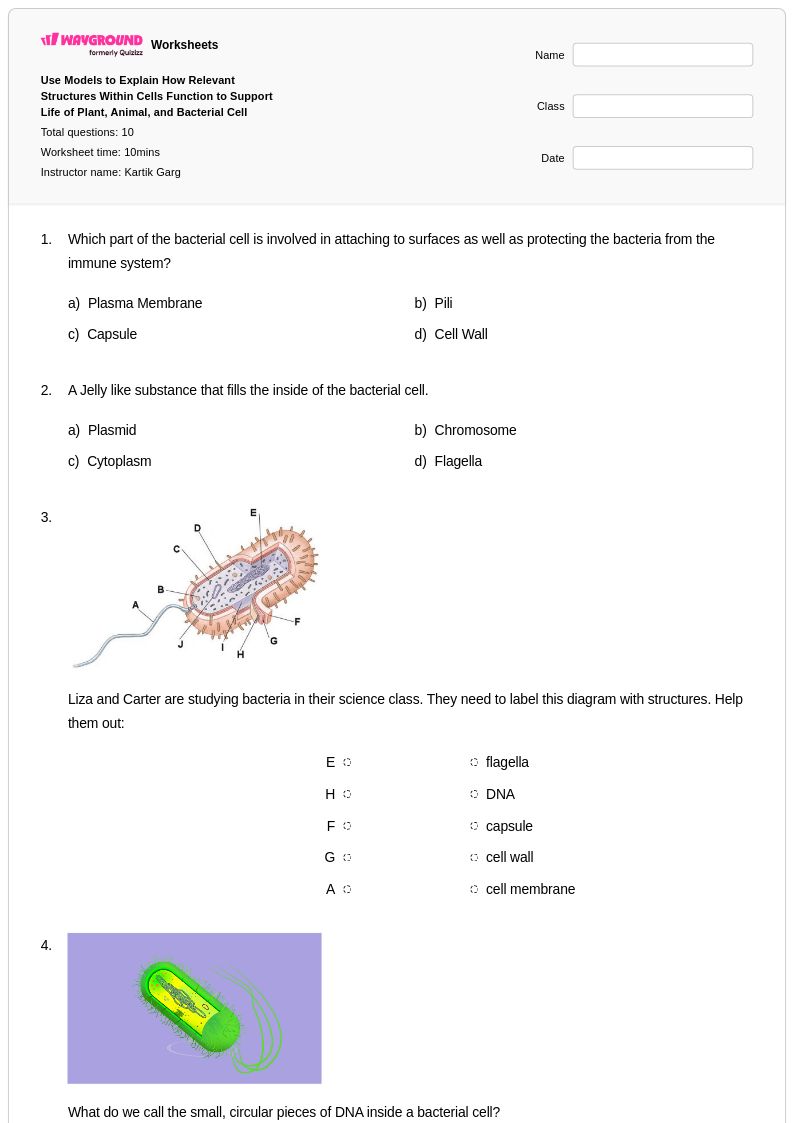
10 Q
7th - Uni
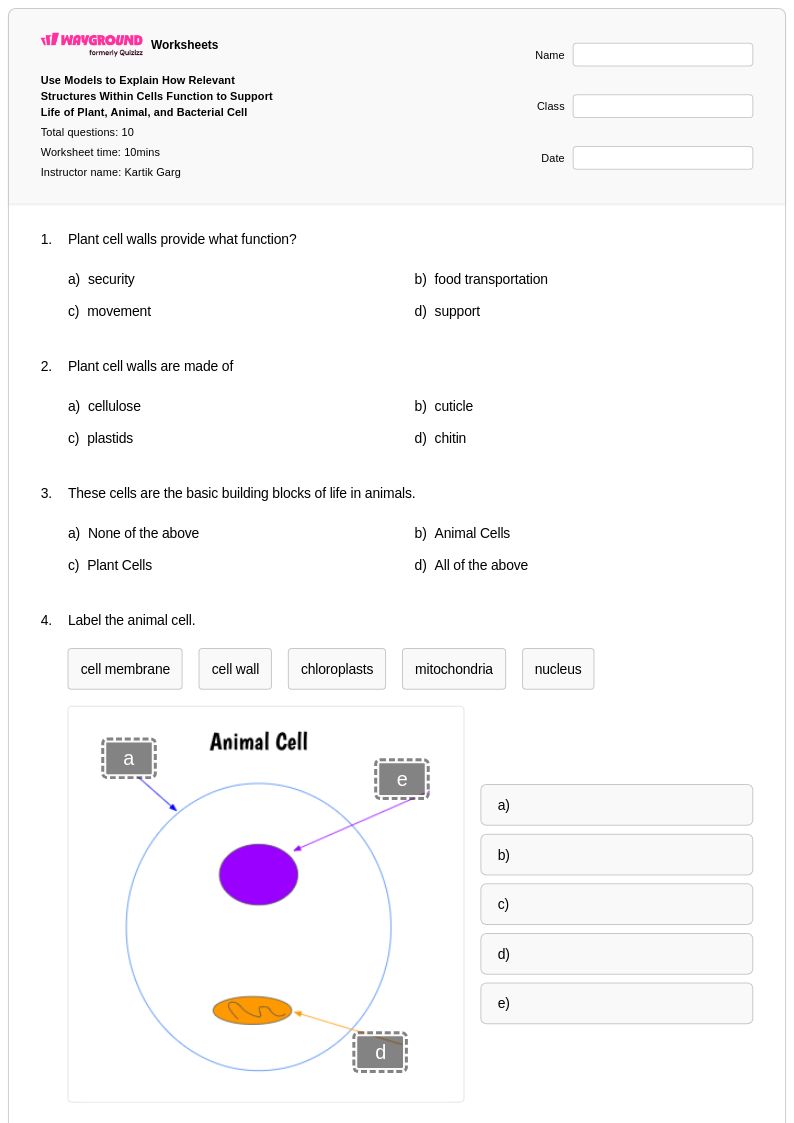
10 Q
7th - Uni
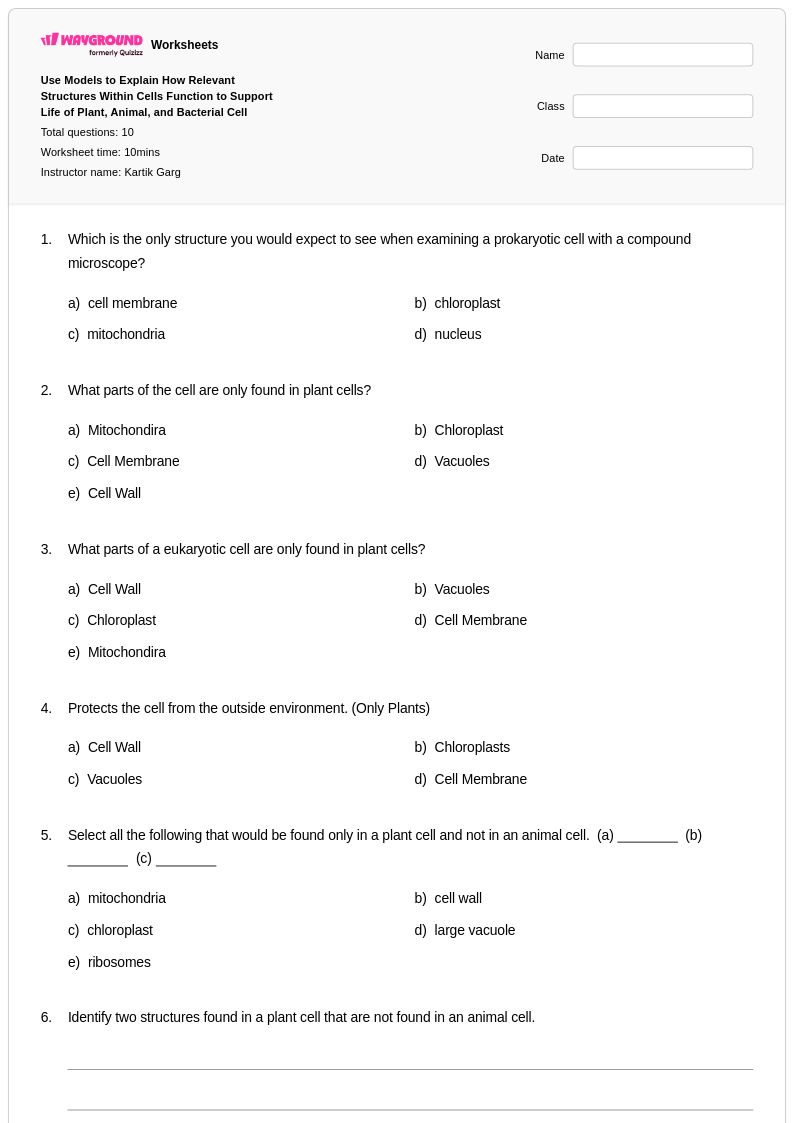
10 Q
7th - Uni
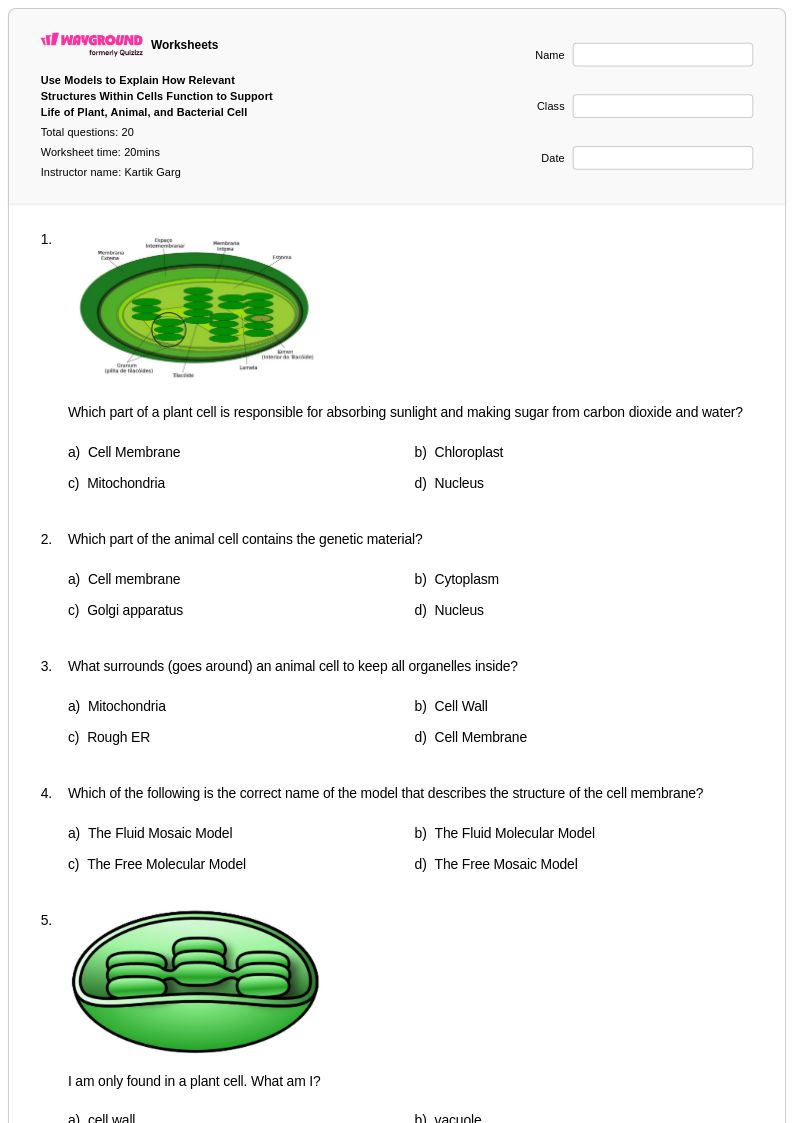
20 Q
7th - Uni
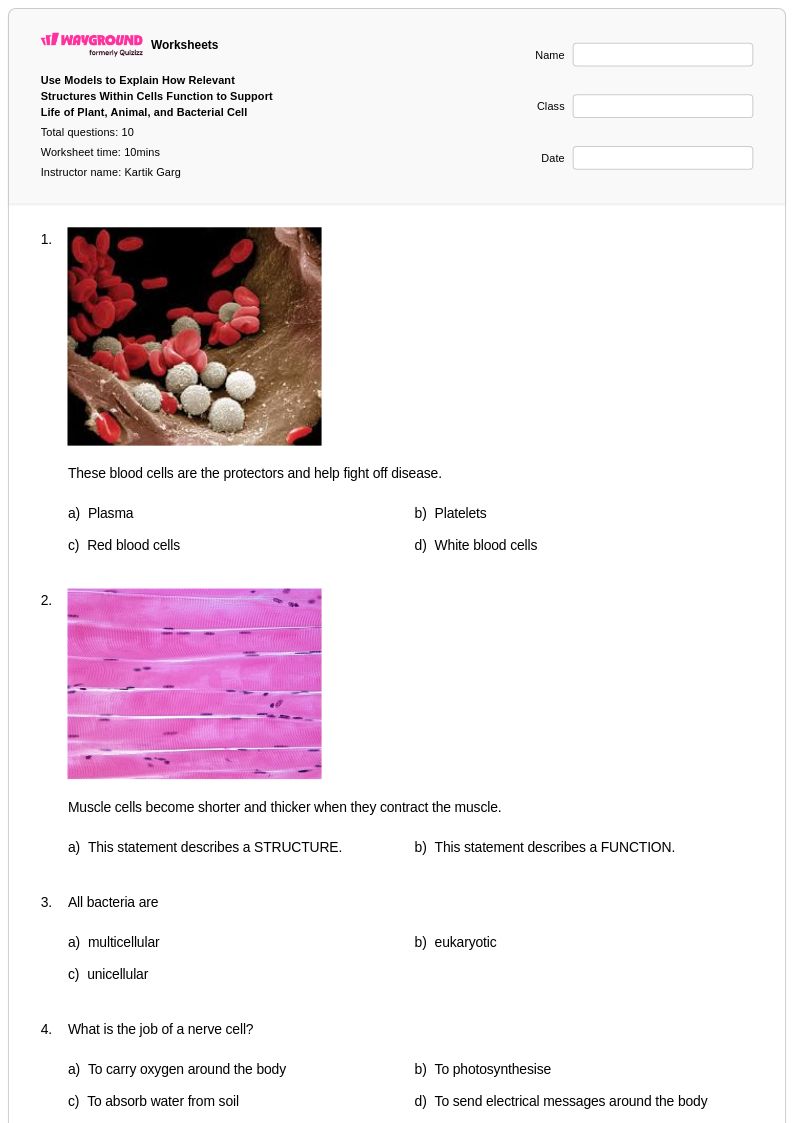
10 Q
7th - Uni
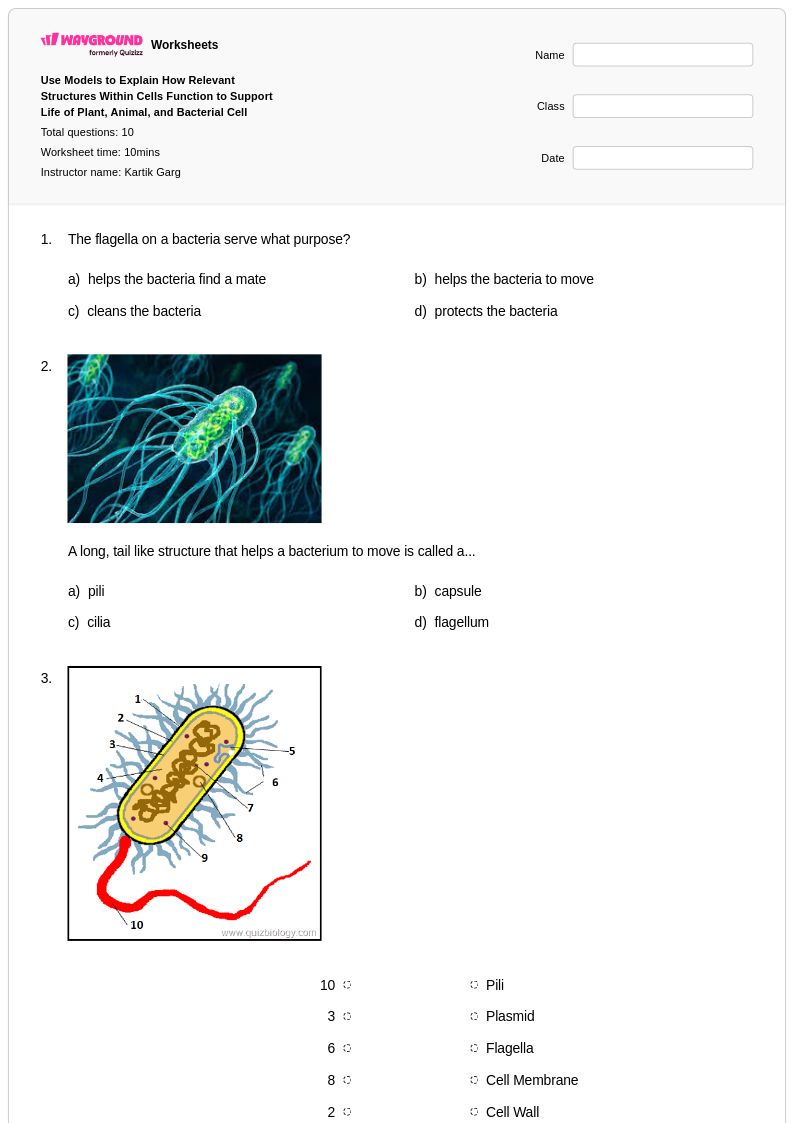
10 Q
7th - Uni
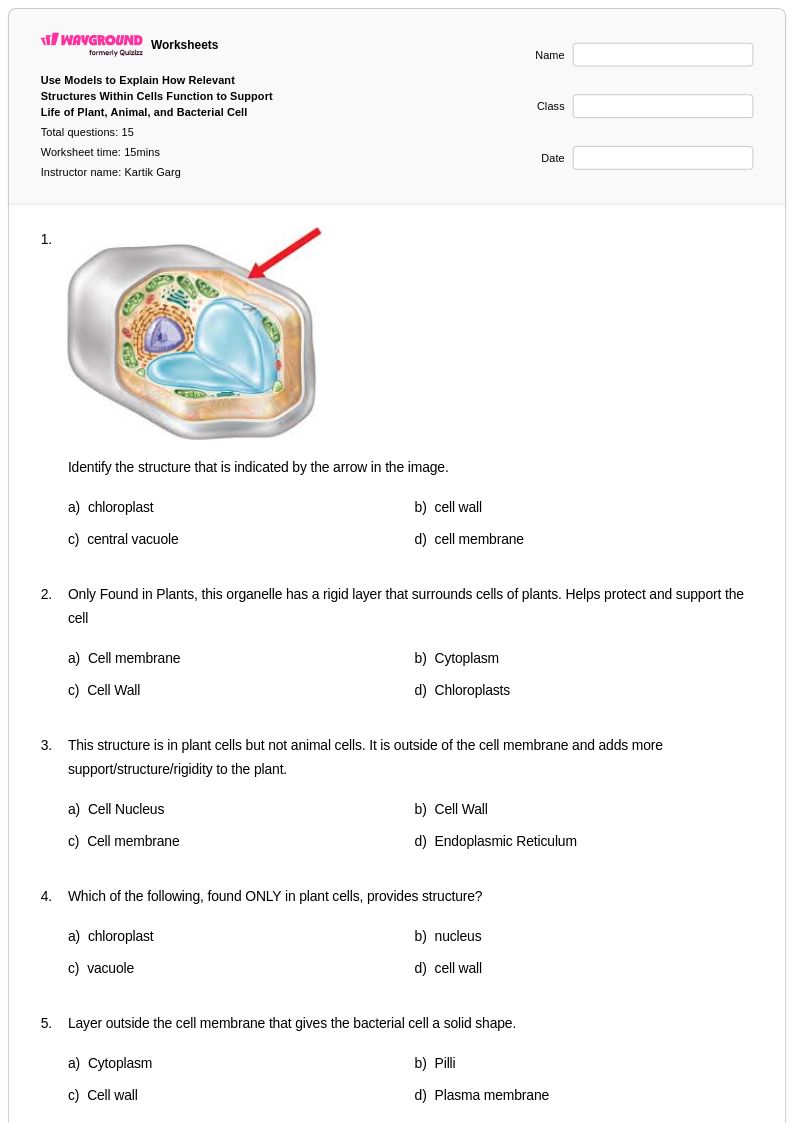
15 Q
7th - Uni
10 Q
7th - Uni
10 Q
7th - Uni
10 Q
7th - Uni
10 Q
8th
10 Q
7th - Uni
10 Q
7th - Uni
10 Q
7th - Uni
10 Q
7th - Uni
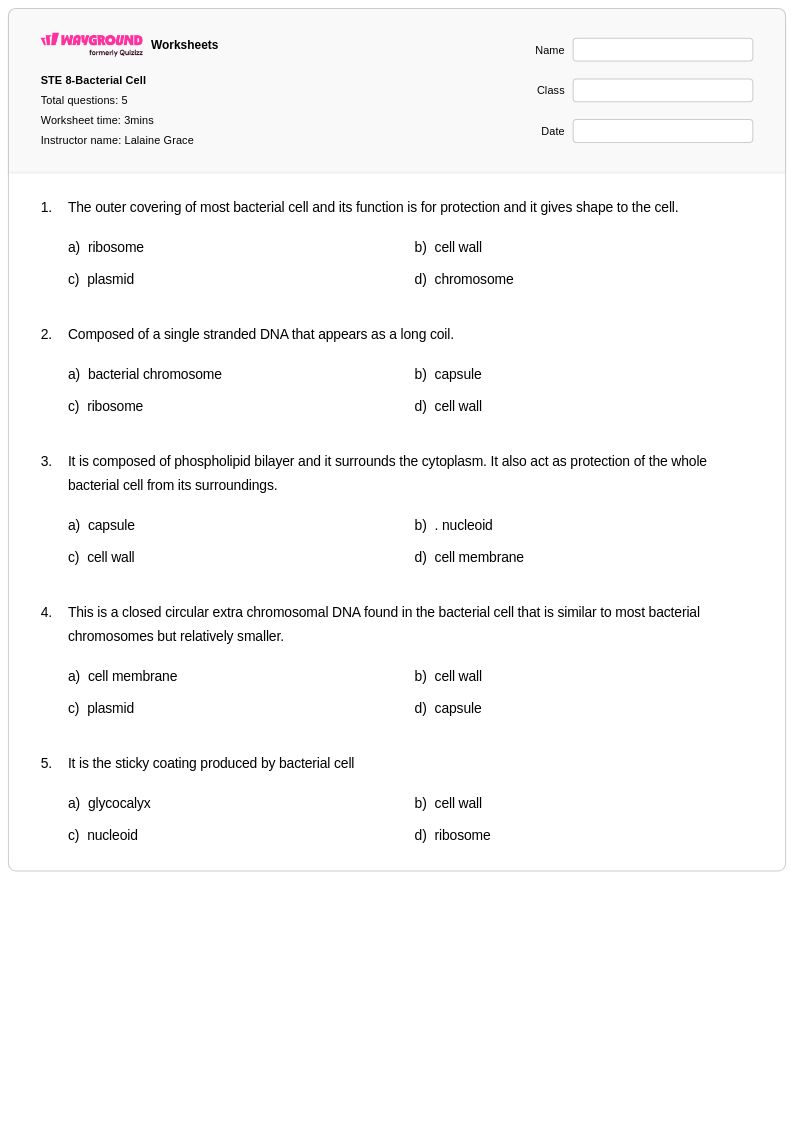
5 Q
8th
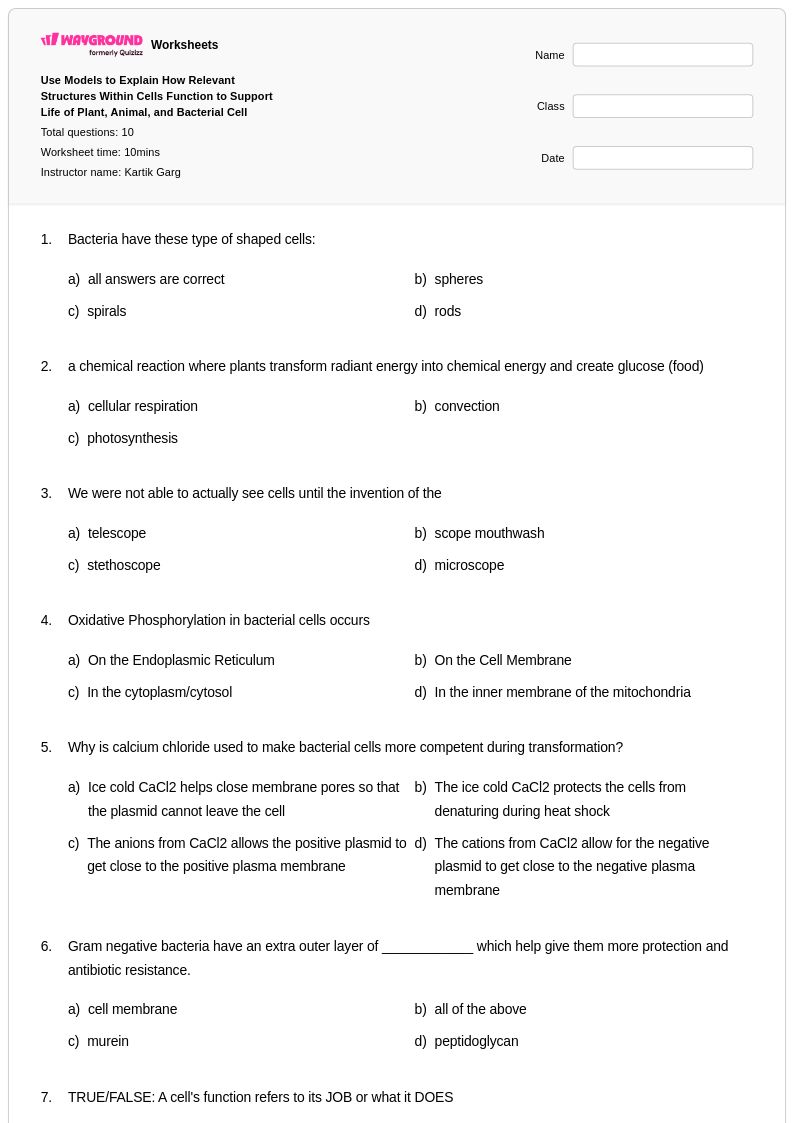
10 Q
7th - Uni
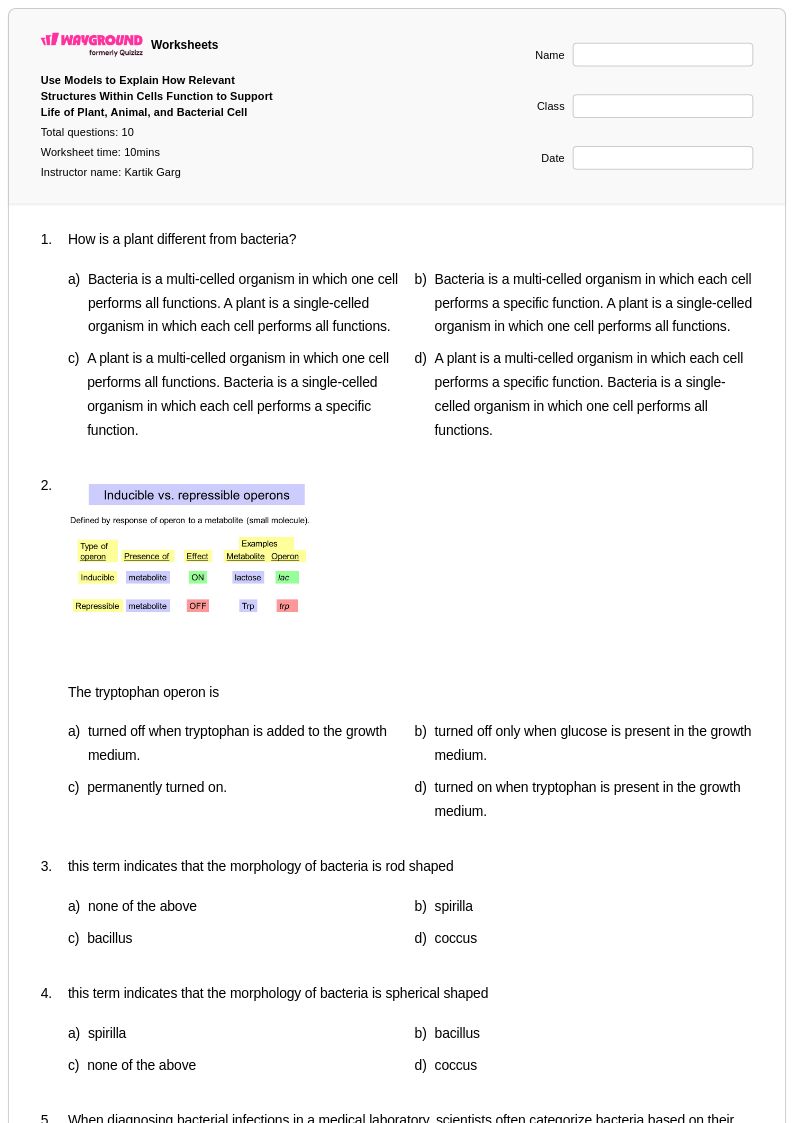
10 Q
7th - Uni
Explore Other Subject Worksheets for class 8
Explore printable Bacterial Cell worksheets for Class 8
Bacterial cell worksheets for Class 8 students available through Wayground (formerly Quizizz) provide comprehensive exploration of prokaryotic cellular structures and functions that are fundamental to biological literacy. These expertly designed educational resources guide students through detailed examination of bacterial cell components including the cell wall, plasma membrane, nucleoid region, ribosomes, and specialized structures like flagella and pili. The worksheets strengthen critical scientific observation skills, microscopic analysis techniques, and comparative understanding between prokaryotic and eukaryotic cells through carefully structured practice problems. Each worksheet collection includes detailed answer keys and is available as free printable pdf resources, enabling teachers to seamlessly integrate bacterial cell studies into their curriculum while providing students with focused practice opportunities that reinforce cellular biology concepts essential for advanced scientific understanding.
Wayground (formerly Quizizz) empowers educators with access to millions of teacher-created bacterial cell worksheets that support diverse instructional needs through sophisticated search and filtering capabilities aligned with educational standards. The platform's comprehensive differentiation tools allow teachers to customize content complexity, modify question types, and adapt visual elements to accommodate varying student learning levels and abilities. These flexible resources are available in both printable and digital pdf formats, enabling seamless integration into traditional classroom settings or remote learning environments. Teachers utilize these extensively curated worksheet collections for strategic lesson planning, targeted remediation of cellular biology misconceptions, enrichment activities for advanced learners, and systematic skill practice that builds student confidence in prokaryotic cell identification and analysis across multiple assessment formats.
FAQs
How do I teach bacterial cell structure to my students?
What exercises help students practice identifying bacterial cell components?
What mistakes do students commonly make when learning about bacterial cells?
How do I use Wayground's bacterial cell worksheets in my classroom?
How do bacterial cell worksheets support differentiation for diverse learners?
How should I structure a lesson comparing prokaryotic and eukaryotic cells?