
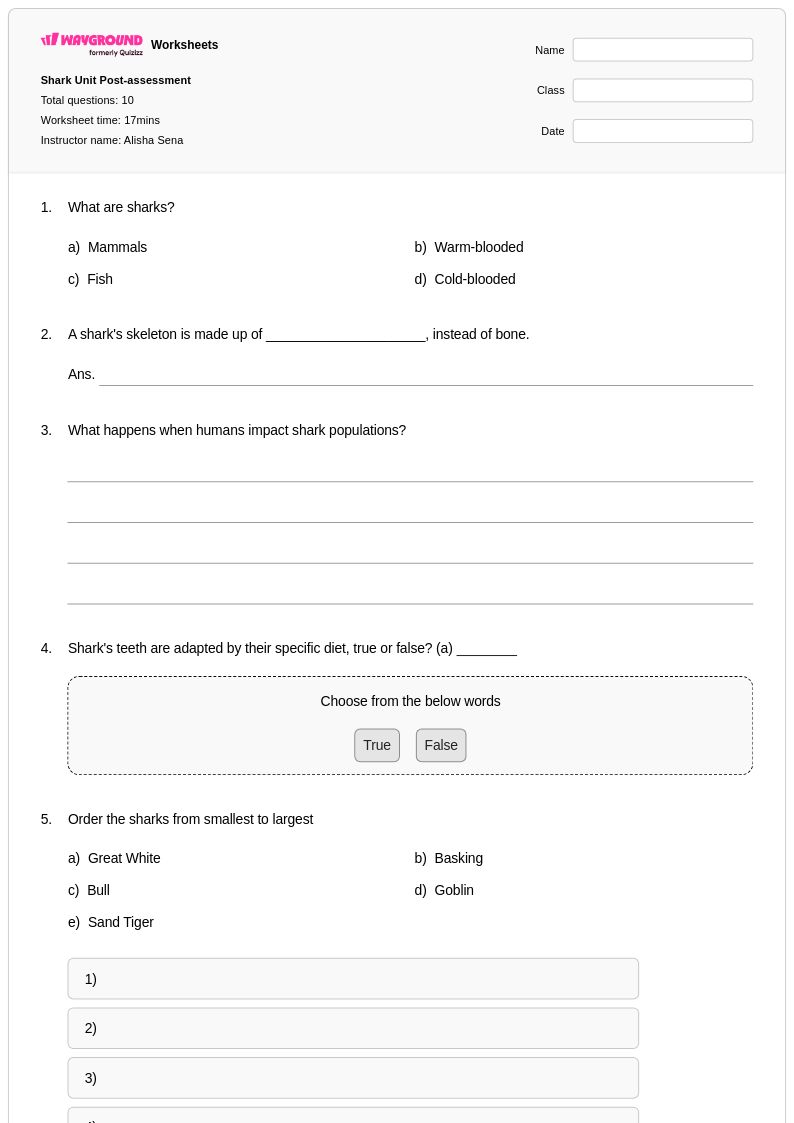
10 Q
6th - 8th
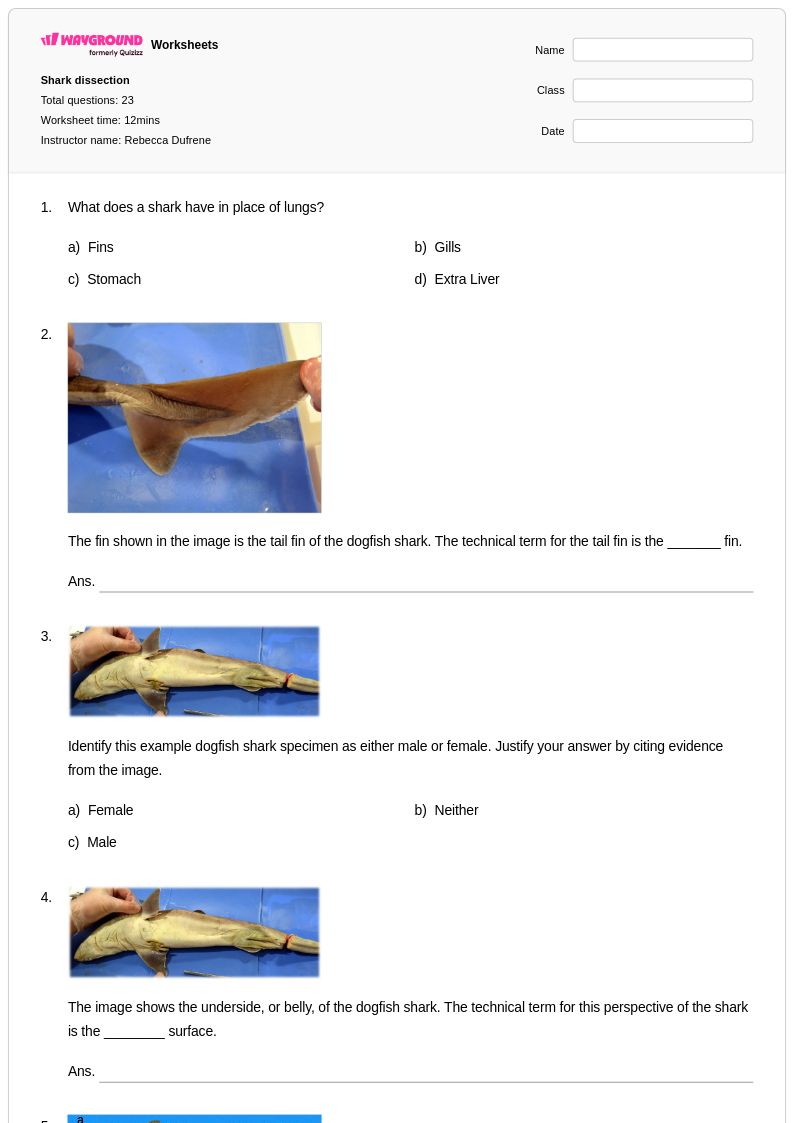
23 Q
6th - 8th
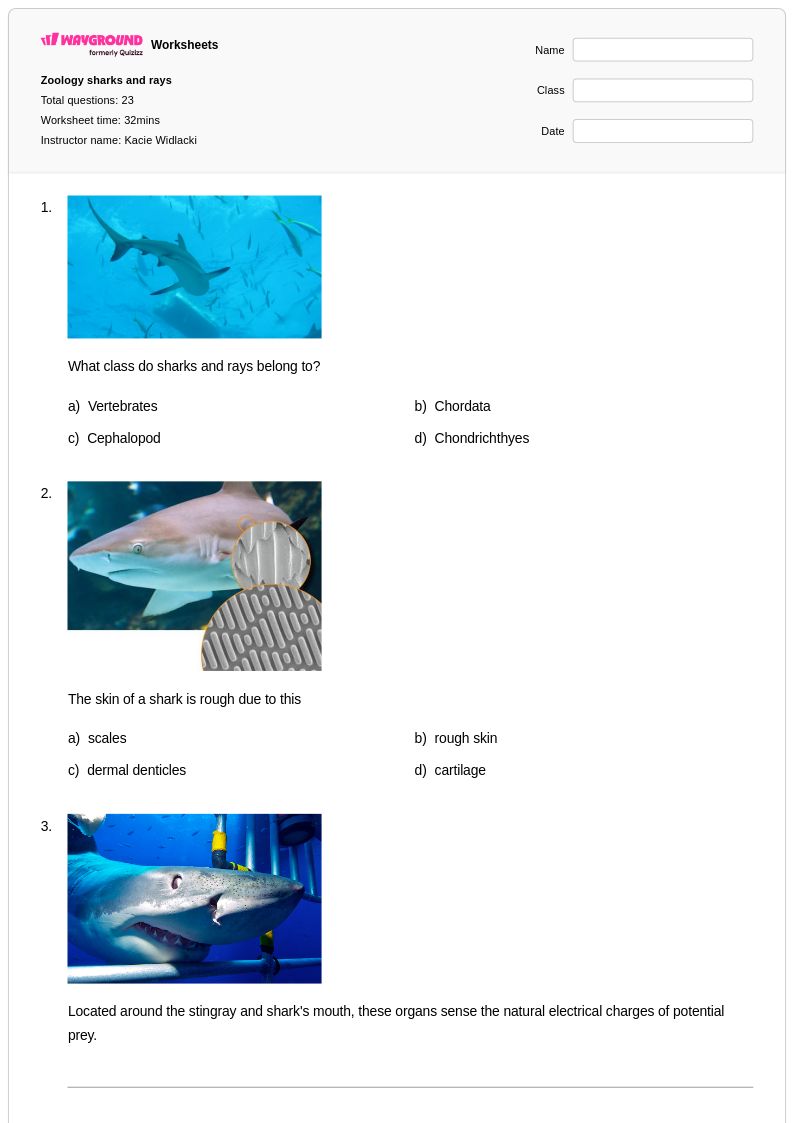
23 Q
8th
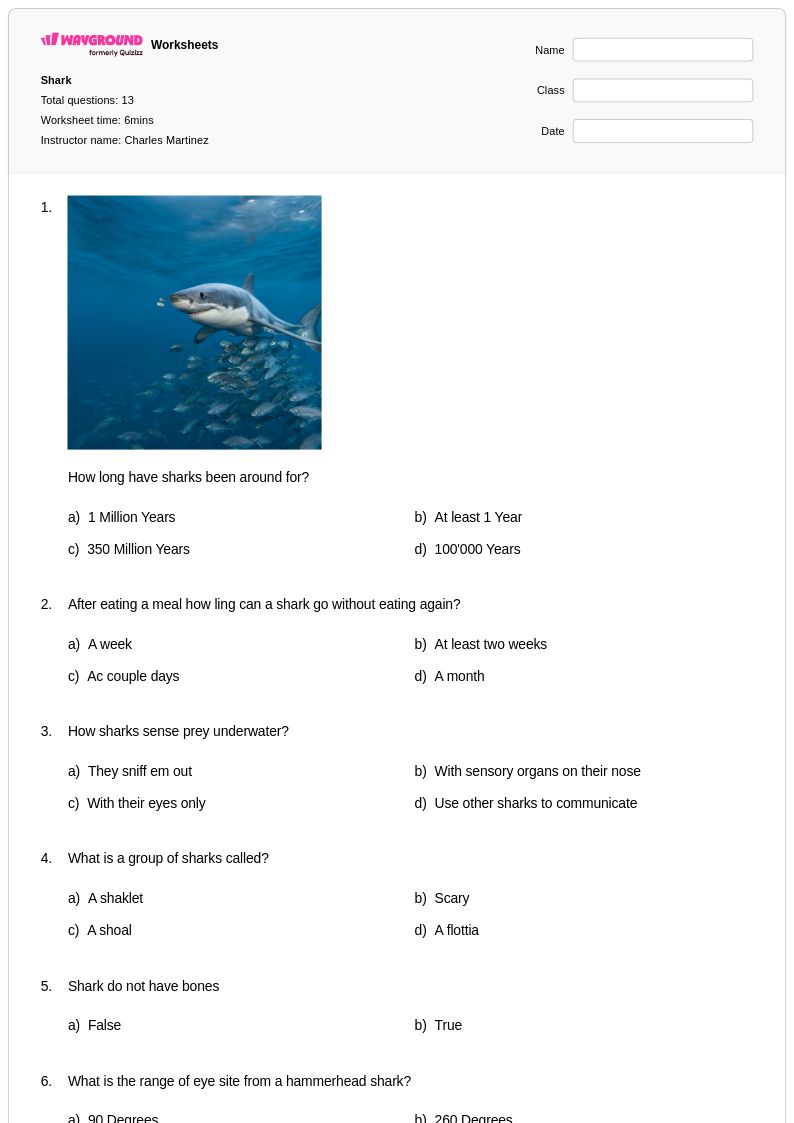
13 Q
6th - 12th
10 Q
7th - 10th
21 Q
6th - 8th
15 Q
7th - Uni
25 Q
6th - 12th
12 Q
7th - Uni
15 Q
6th - Uni
18 Q
4th - 8th
25 Q
5th - Uni
9 Q
6th - 9th
11 Q
8th
15 Q
8th
15 Q
8th - Uni
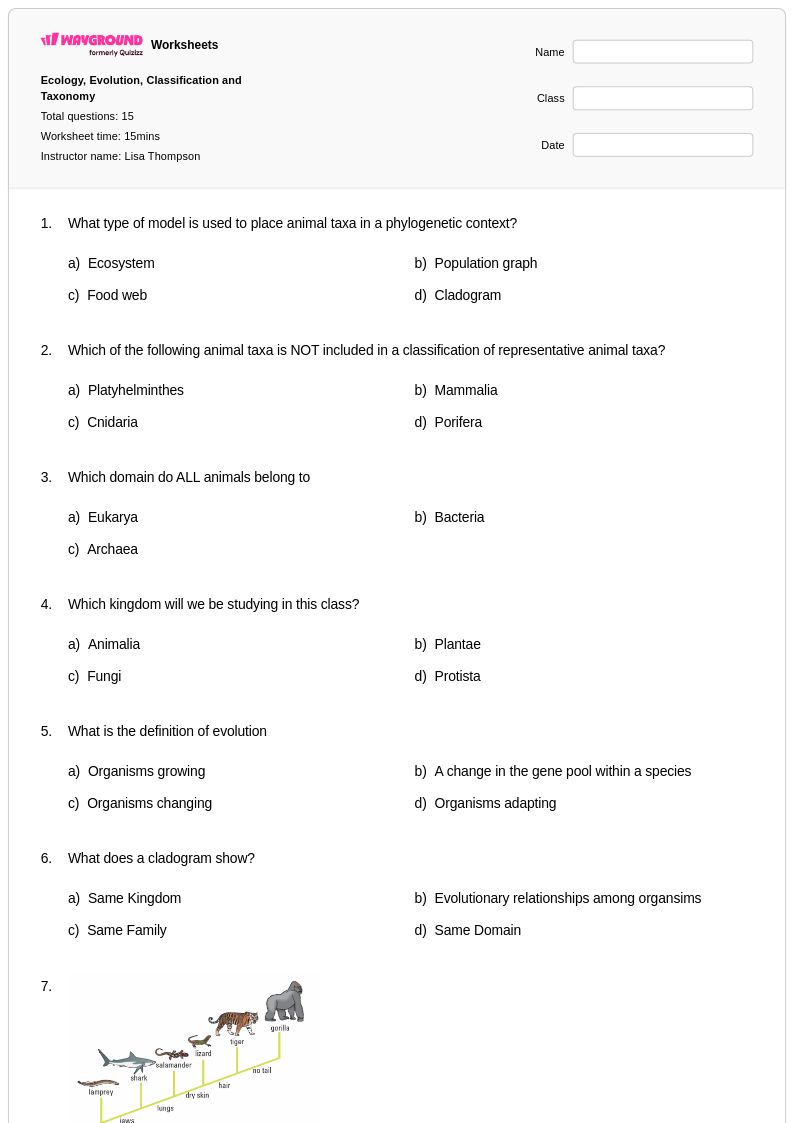
15 Q
7th - Uni
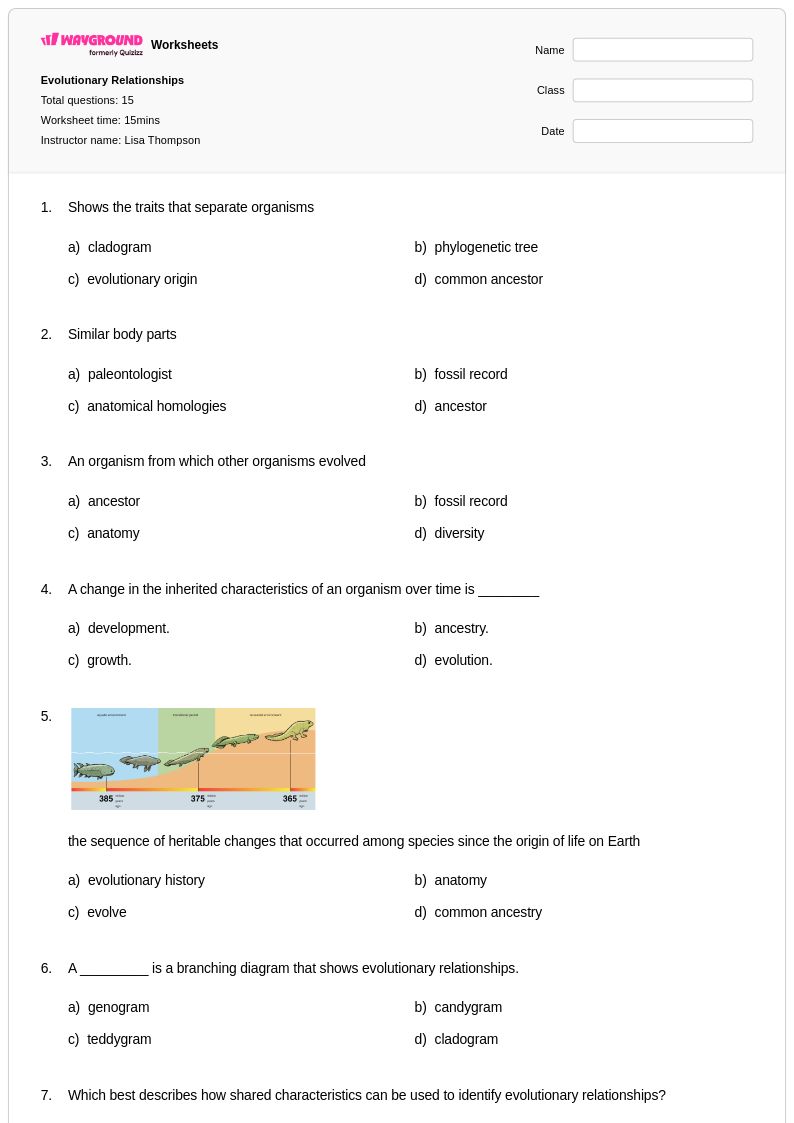
15 Q
8th - Uni
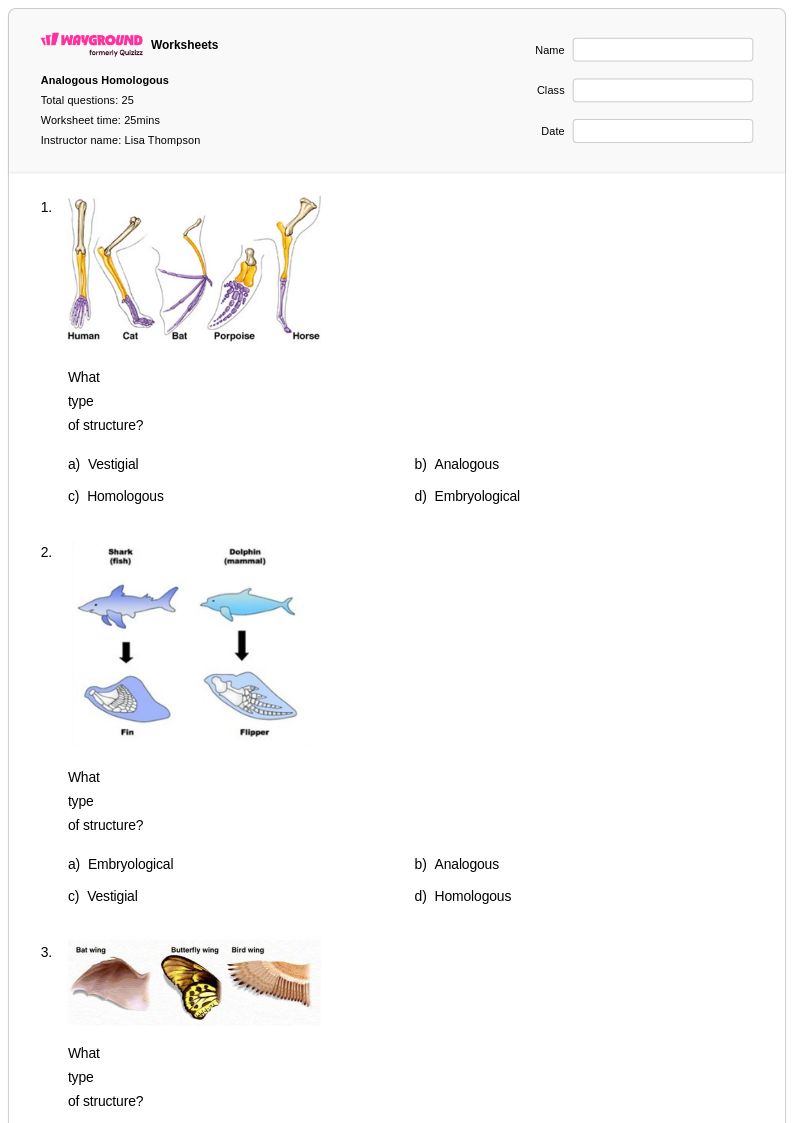
25 Q
8th - Uni
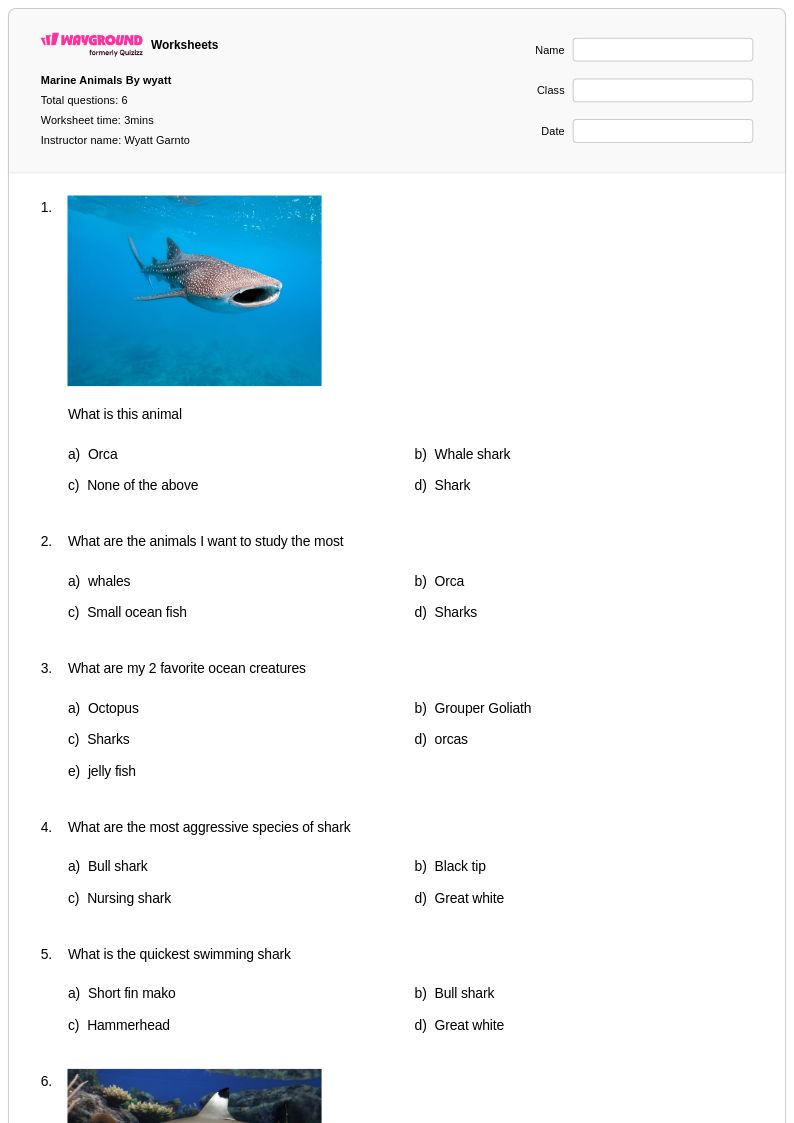
6 Q
8th
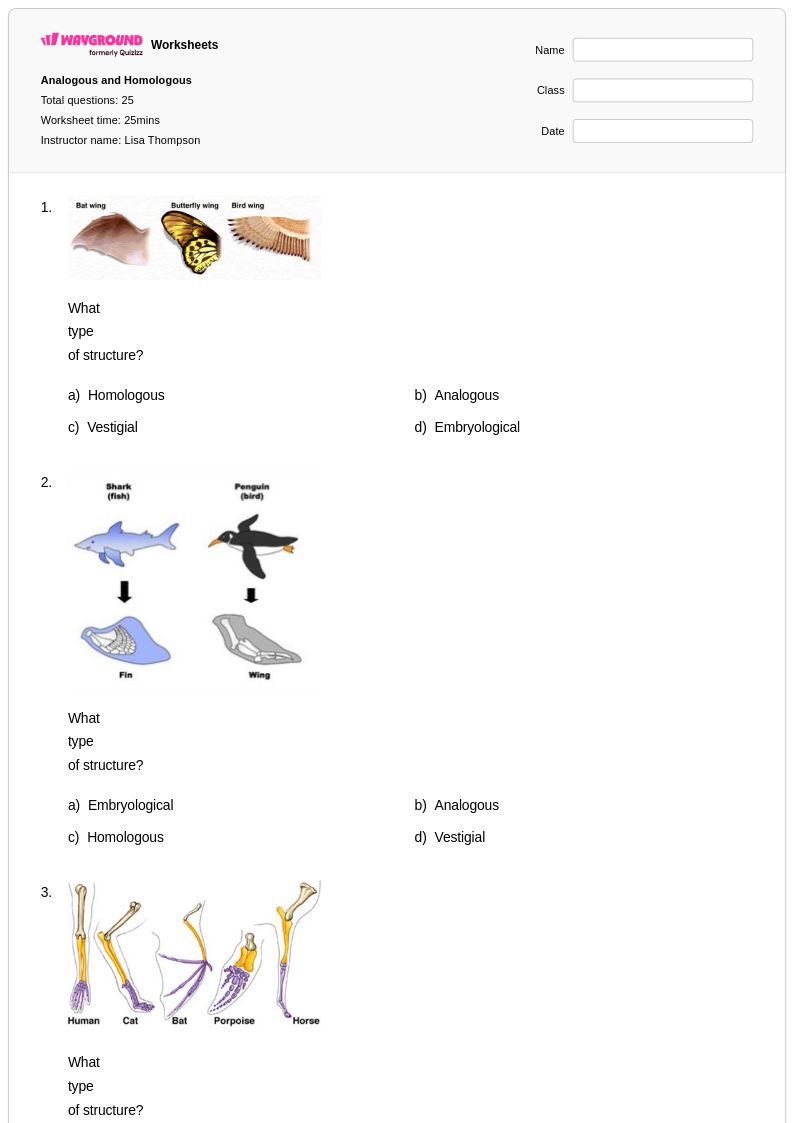
25 Q
8th - Uni
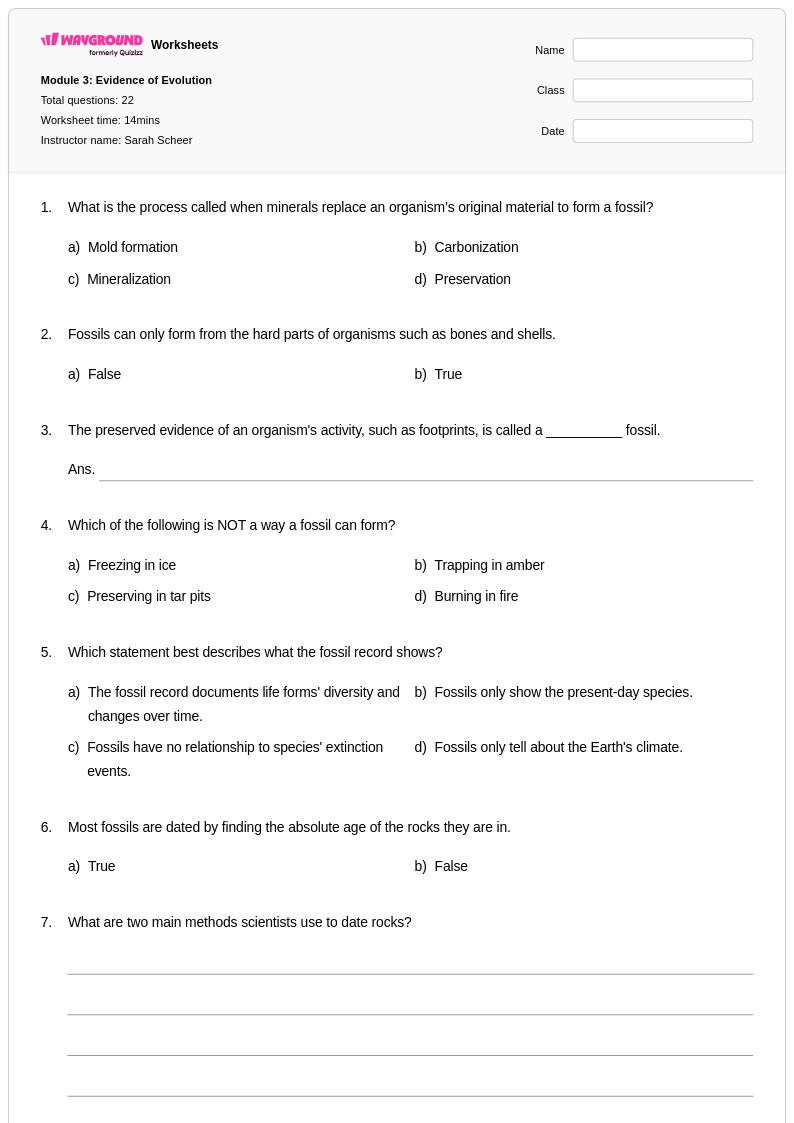
22 Q
8th
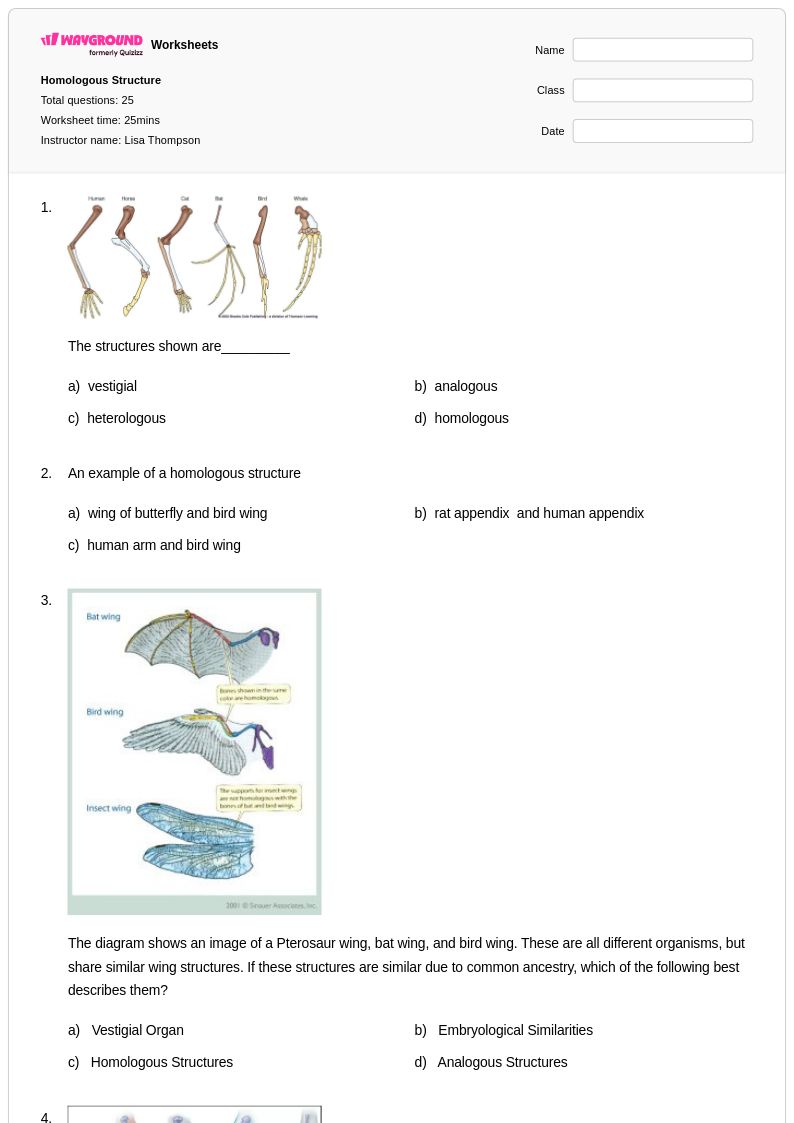
25 Q
8th - Uni
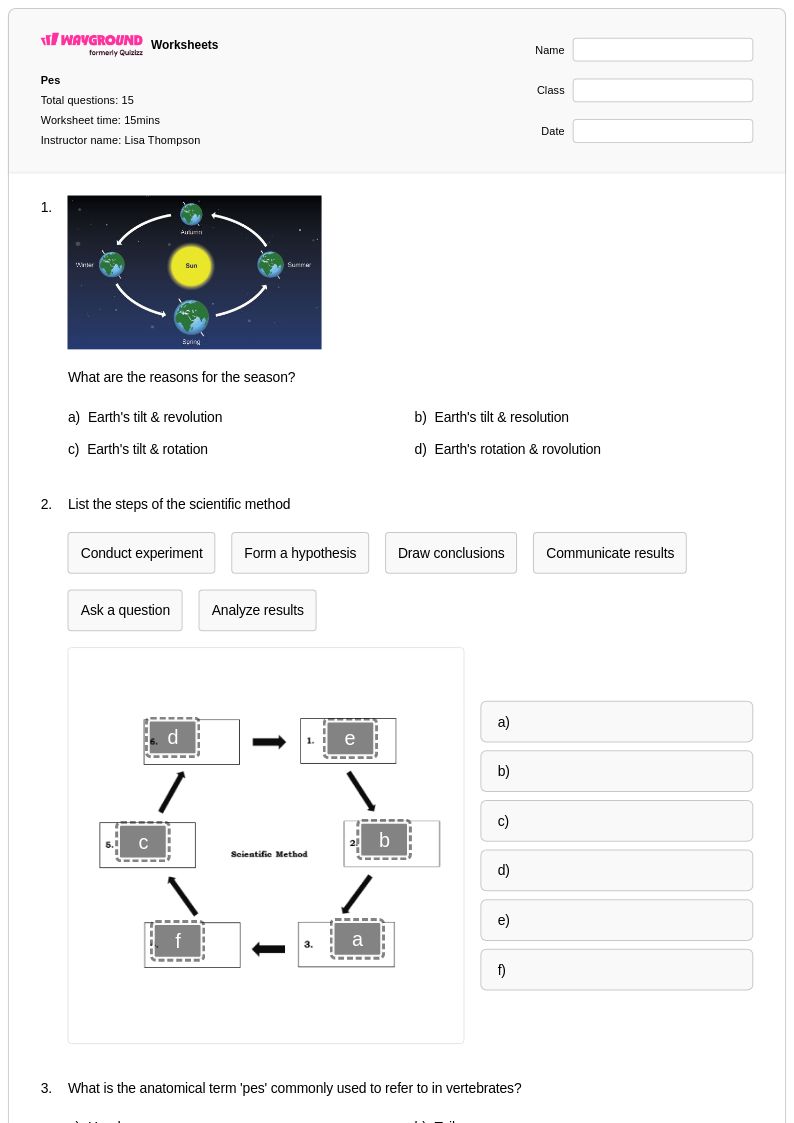
15 Q
5th - Uni
Explore Other Subject Worksheets for class 8
Explore printable Shark Anatomy worksheets for Class 8
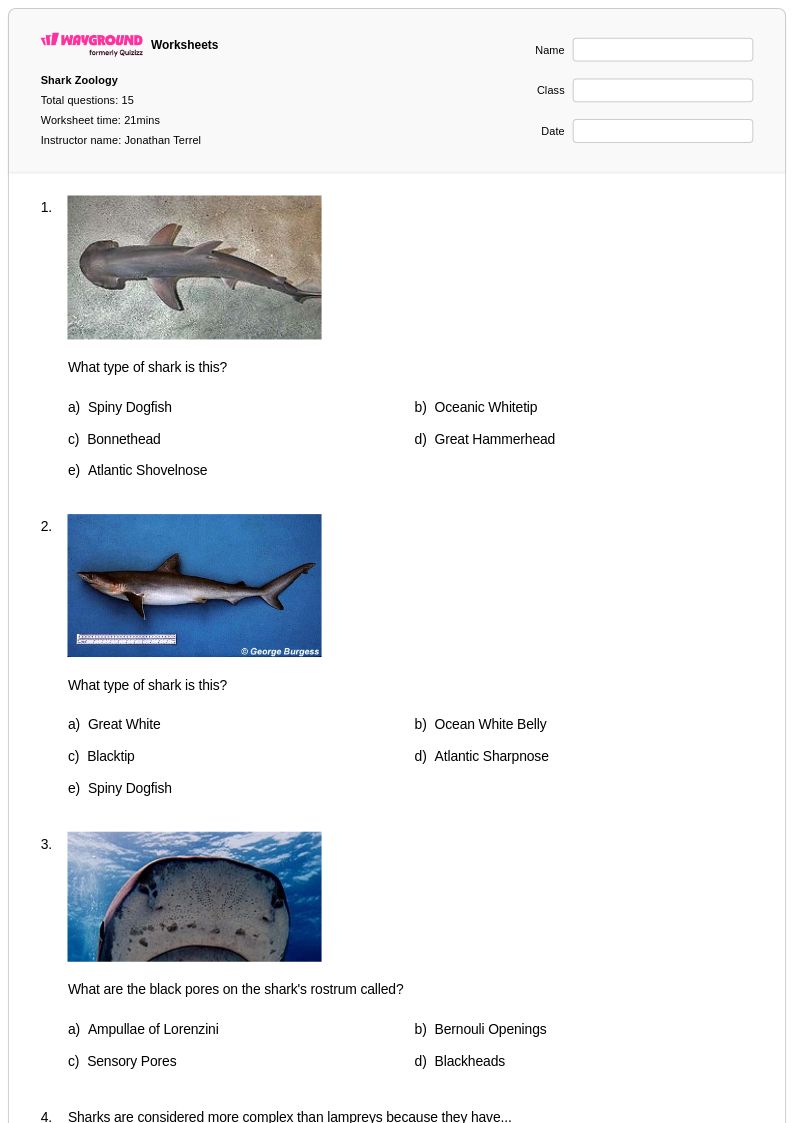
Shark anatomy worksheets for Class 8 students available through Wayground (formerly Quizizz) provide comprehensive exploration of these fascinating marine predators' biological structures and adaptations. These educational resources guide eighth-grade learners through detailed examinations of shark skeletal systems, respiratory mechanisms, sensory organs, and specialized anatomical features that have evolved over millions of years. Students engage with practice problems that challenge them to identify key body parts, understand the function of cartilaginous skeletons, analyze the role of gill slits in respiration, and explore unique adaptations like lateral line systems and ampullae of Lorenzini. The worksheets include detailed answer keys and are available as free printables in convenient pdf format, enabling students to develop critical thinking skills while mastering fundamental concepts in vertebrate biology and marine science.
Wayground (formerly Quizizz) empowers educators with an extensive collection of millions of teacher-created shark anatomy resources specifically designed to support Class 8 biology instruction. The platform's robust search and filtering capabilities allow teachers to quickly locate materials that align with curriculum standards and match their students' specific learning needs. These differentiation tools enable instructors to customize worksheets for various skill levels, providing targeted remediation for struggling learners and enrichment opportunities for advanced students. Available in both printable and digital formats including downloadable pdfs, these resources seamlessly integrate into lesson planning workflows, whether teachers need quick skill practice activities, comprehensive unit assessments, or supplementary materials to reinforce classroom instruction about marine vertebrate anatomy and physiological adaptations.
FAQs
How do I teach shark anatomy to students?
What exercises help students practice identifying shark body parts?
What common mistakes do students make when learning shark anatomy?
How can I differentiate shark anatomy instruction for students at different skill levels?
How do I use Wayground's shark anatomy worksheets in my classroom?