Free Printable Human Reproduction Worksheets for Class 8
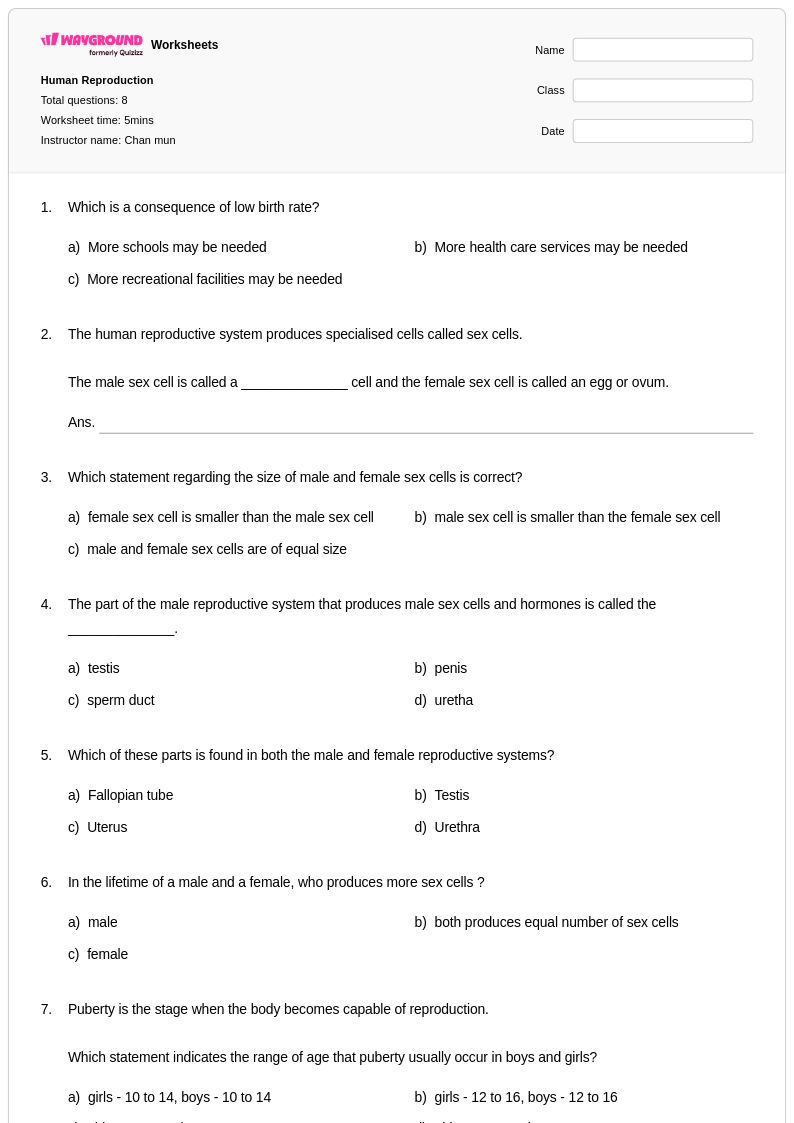
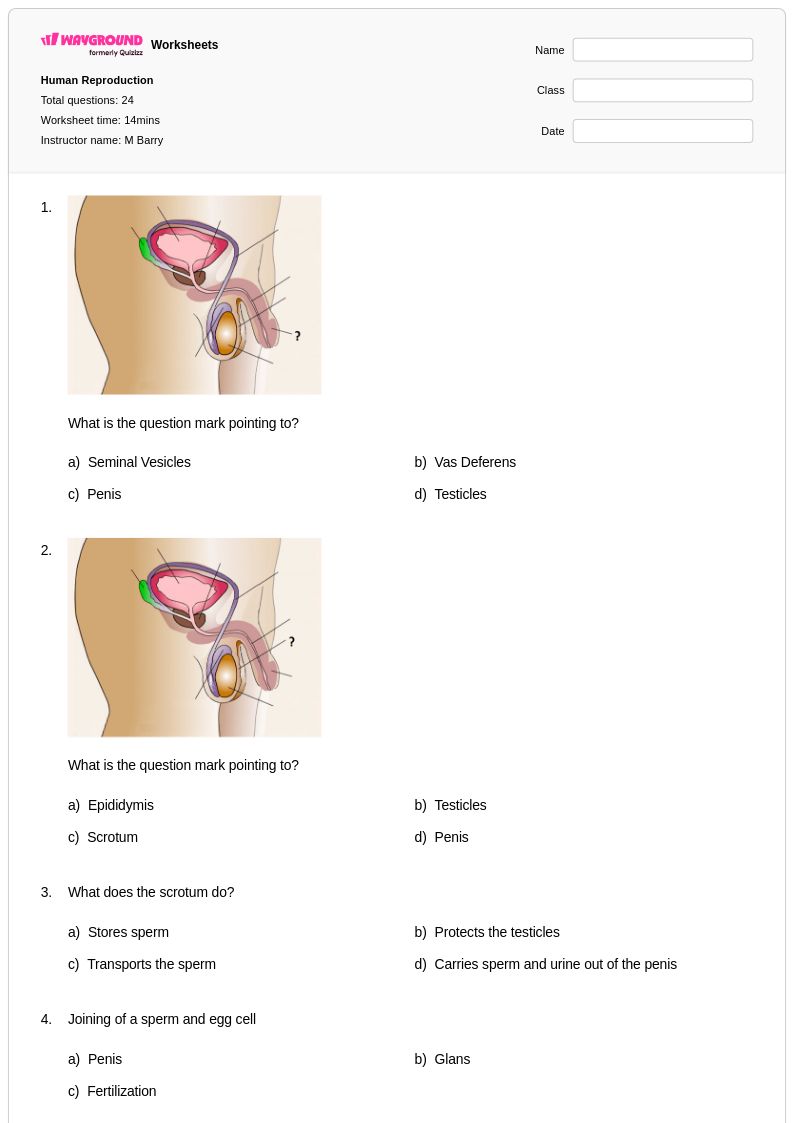
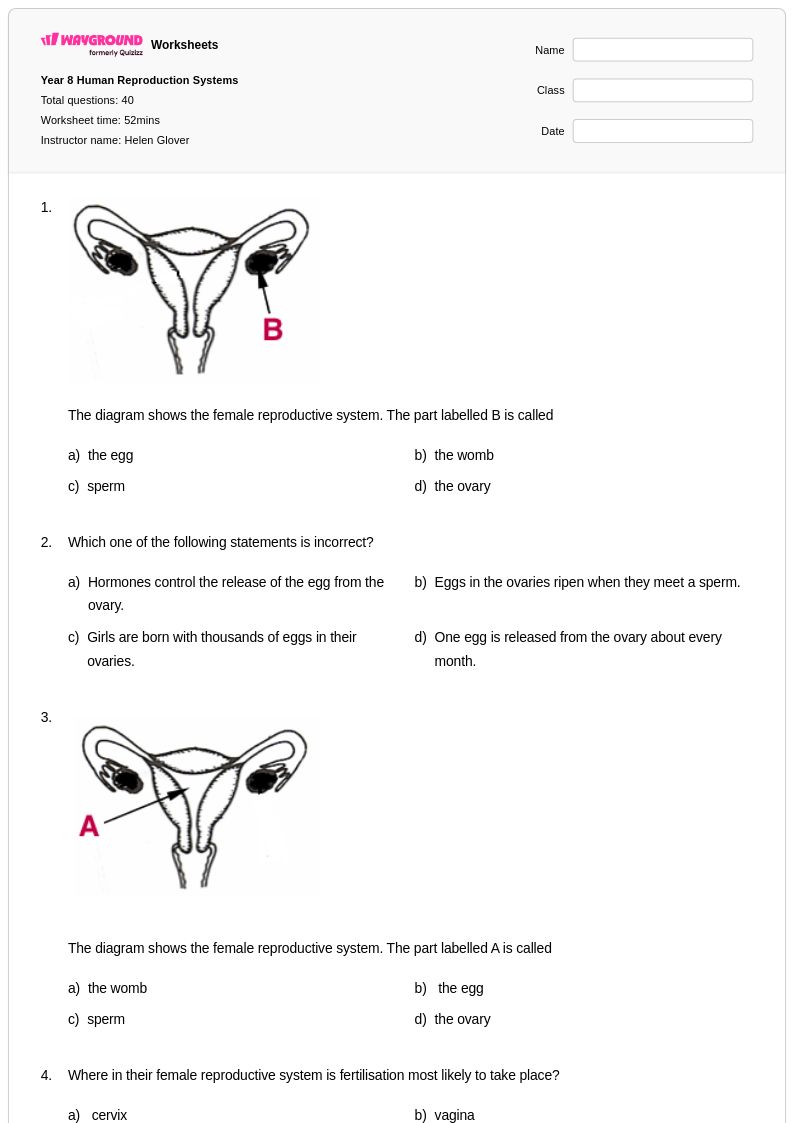
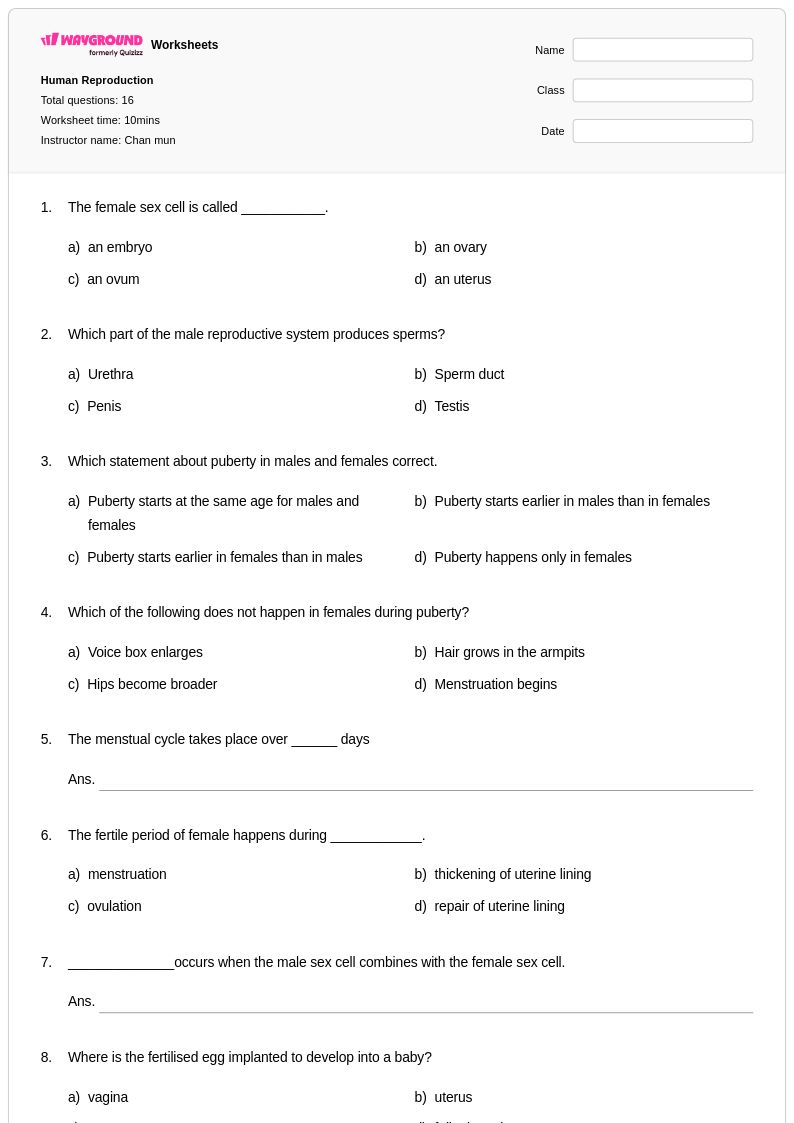
Class 8 Human Reproduction worksheets from Wayground offer comprehensive printables and practice problems covering reproductive systems, hormones, and development cycles, complete with answer keys for effective biology learning.
Explore printable Human Reproduction worksheets for Class 8
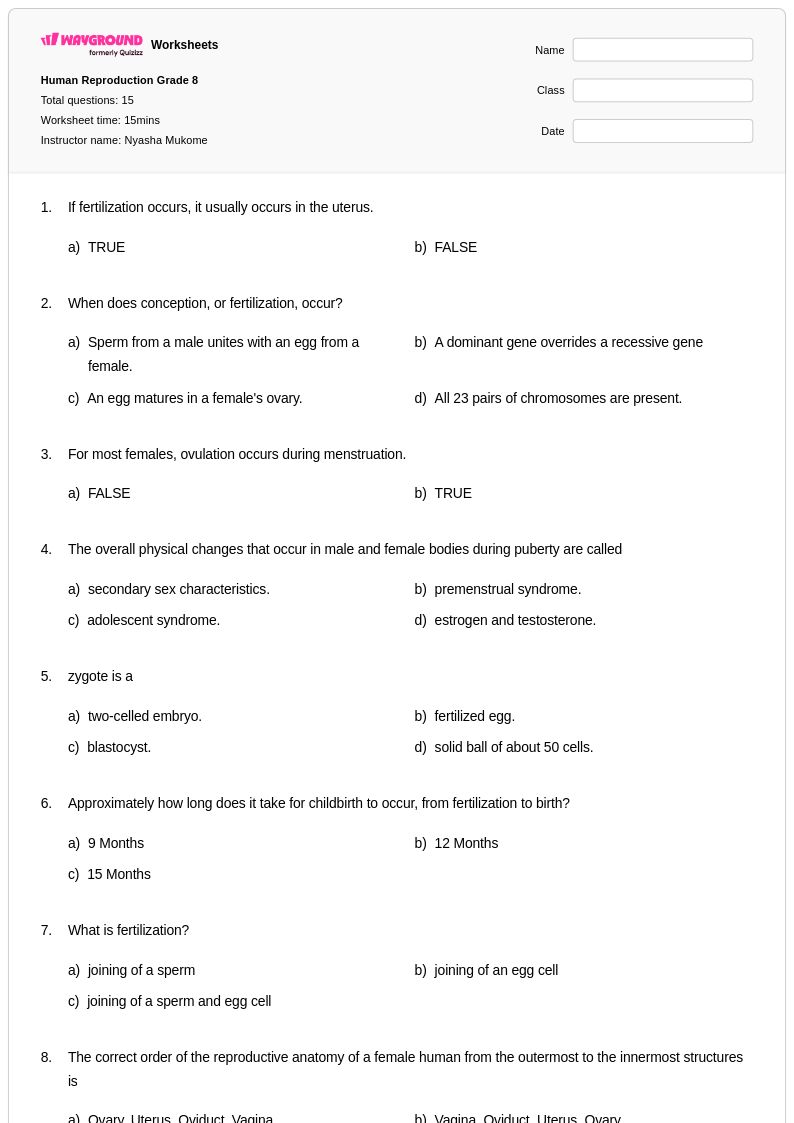
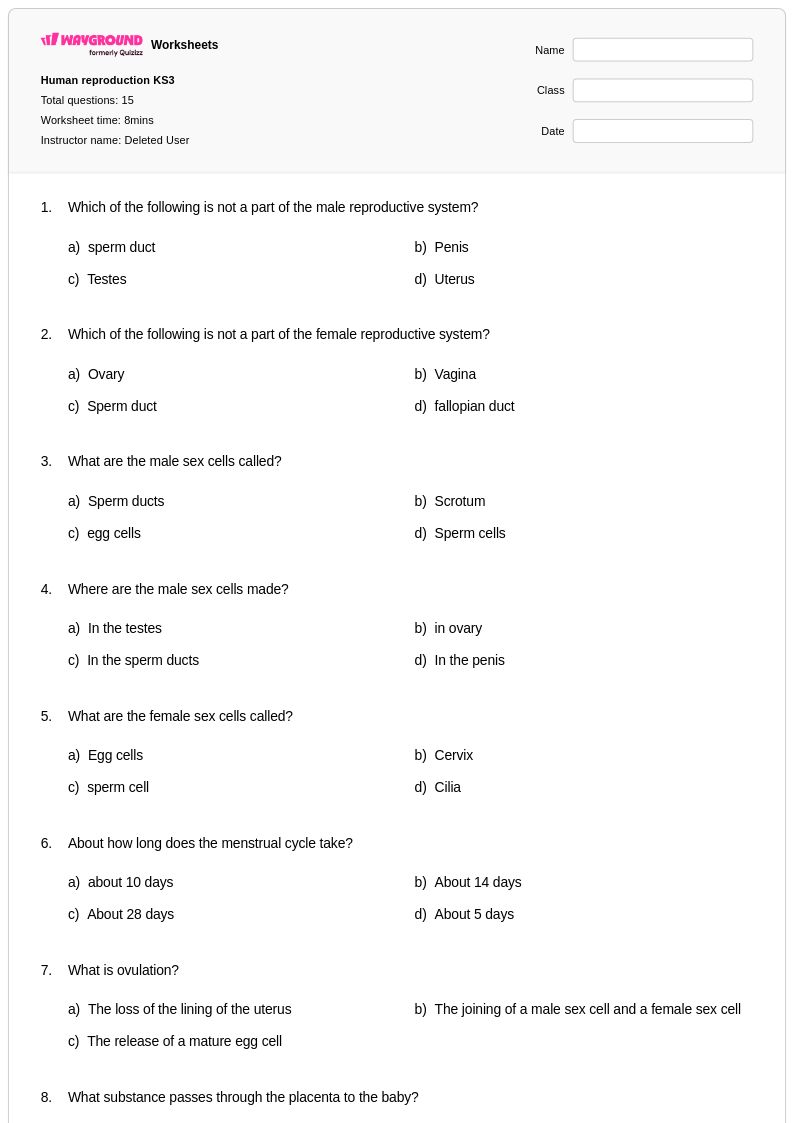
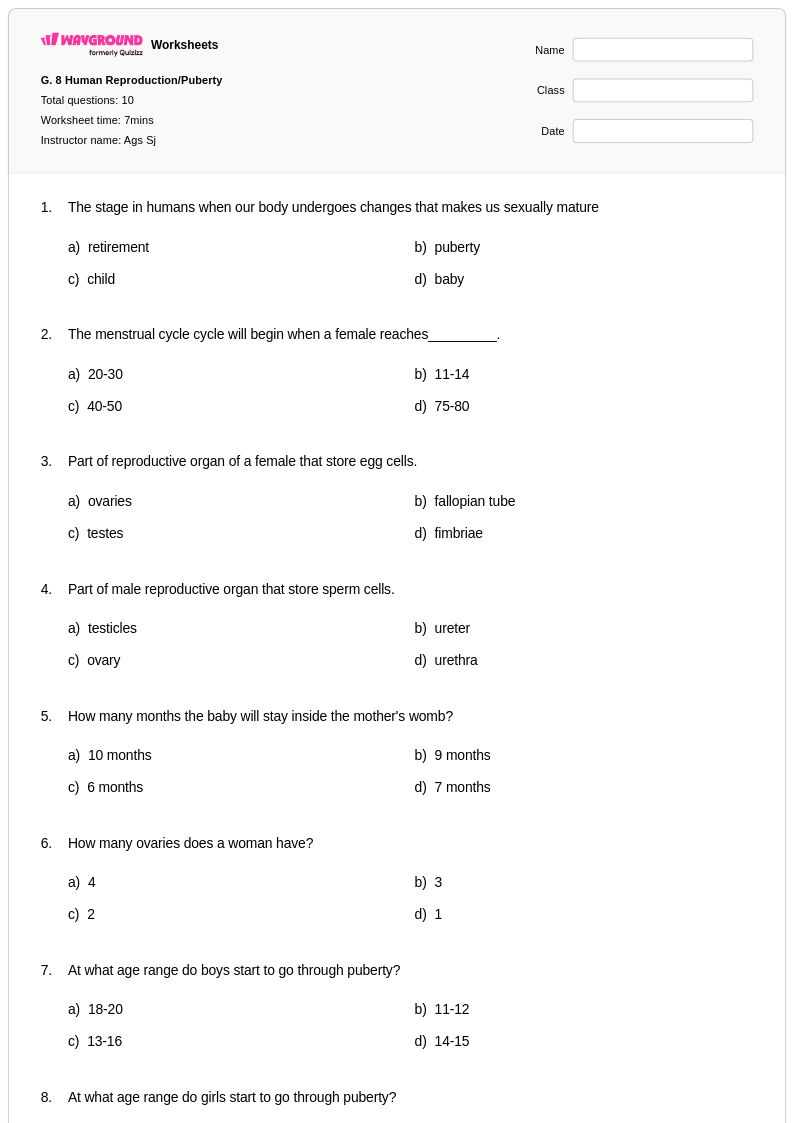
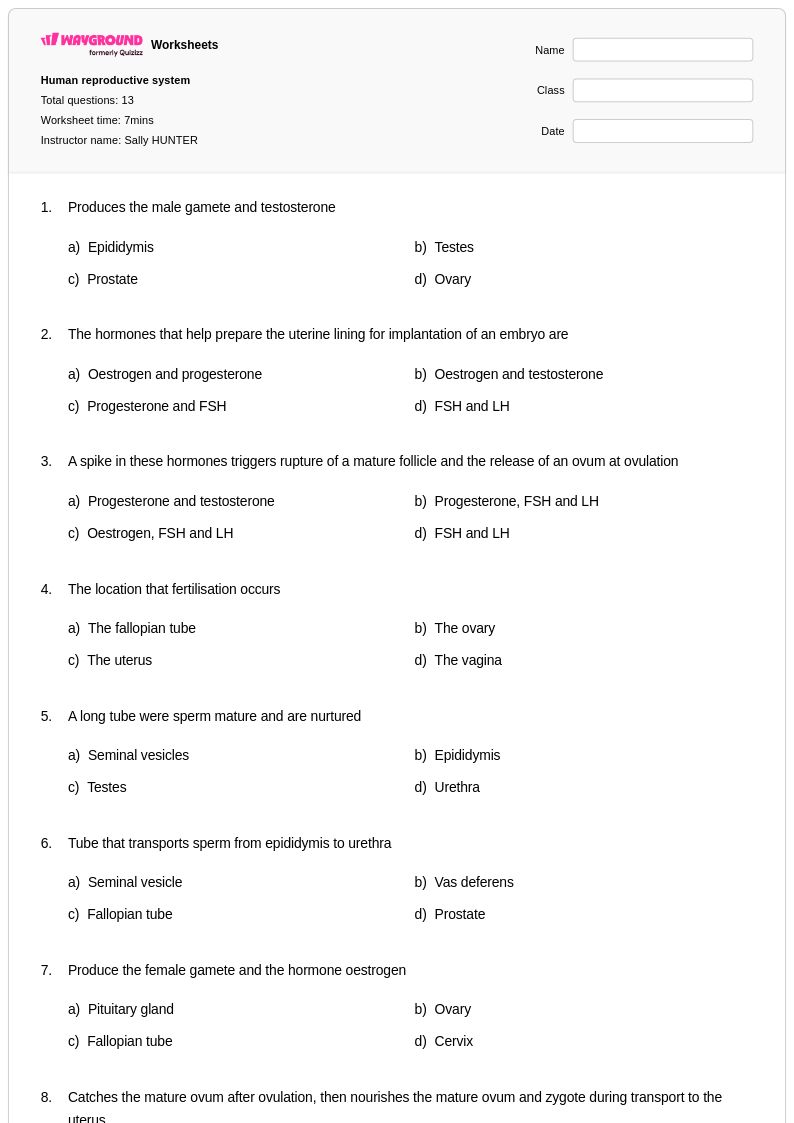
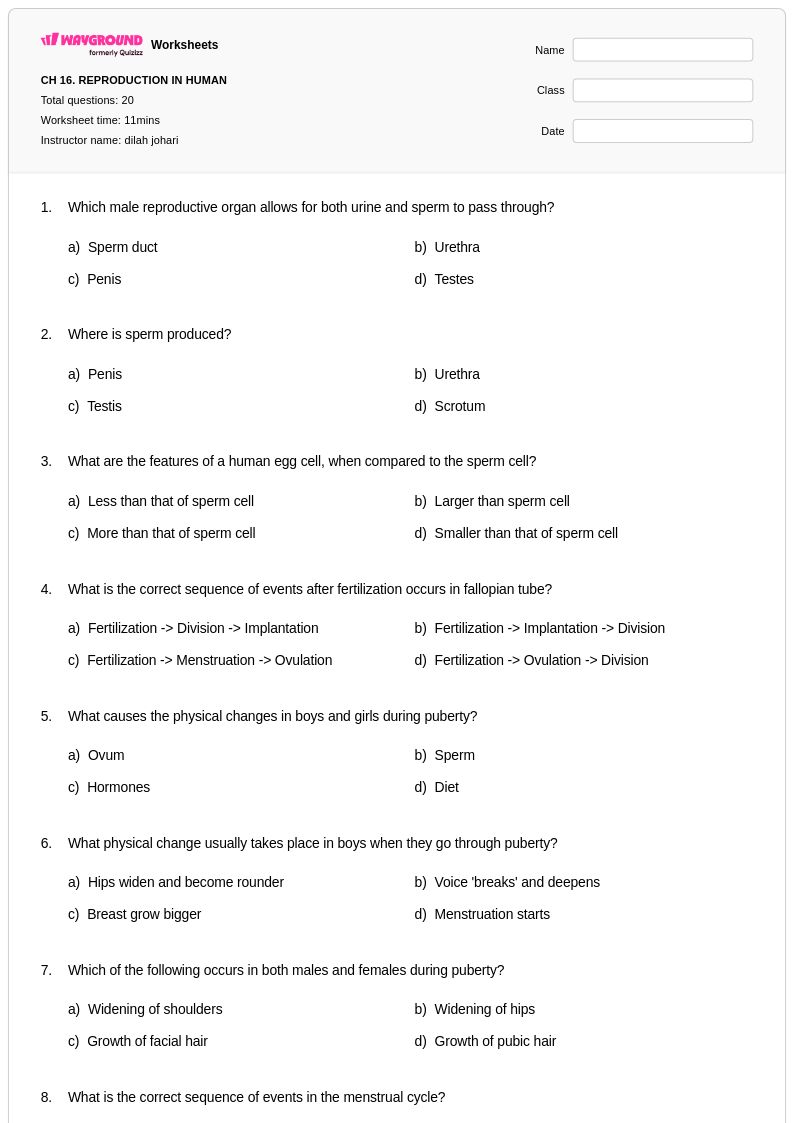
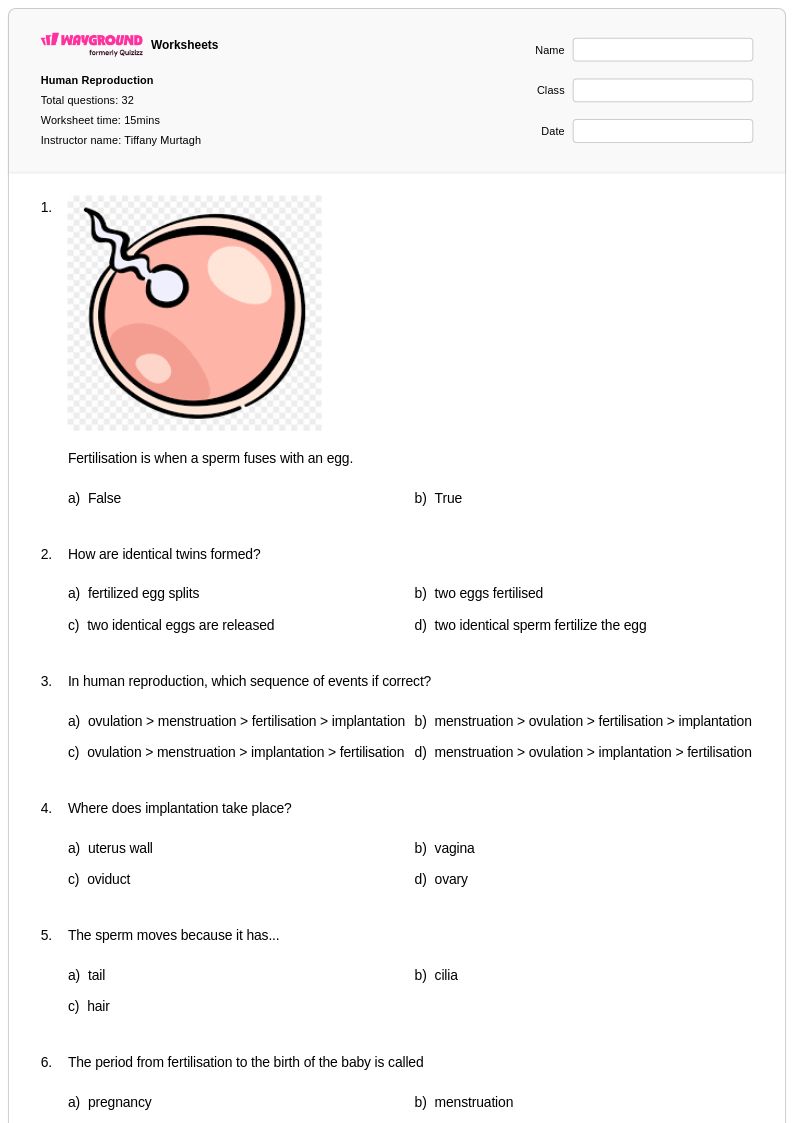
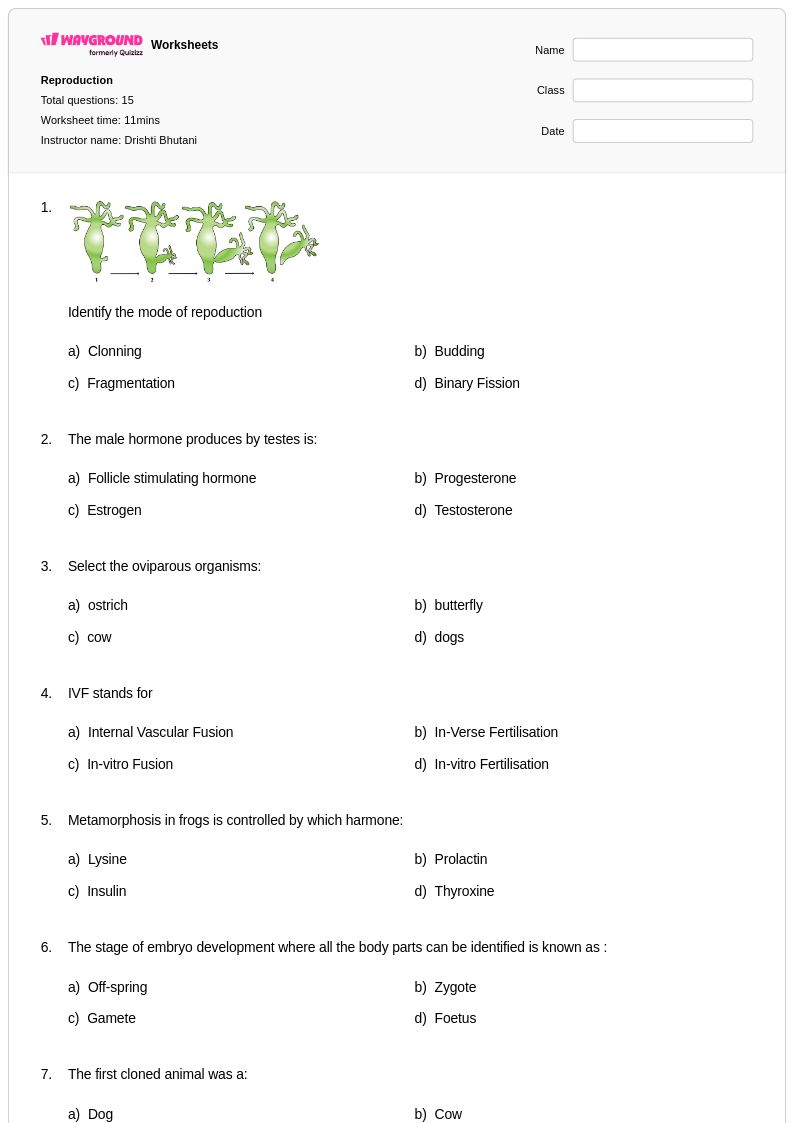
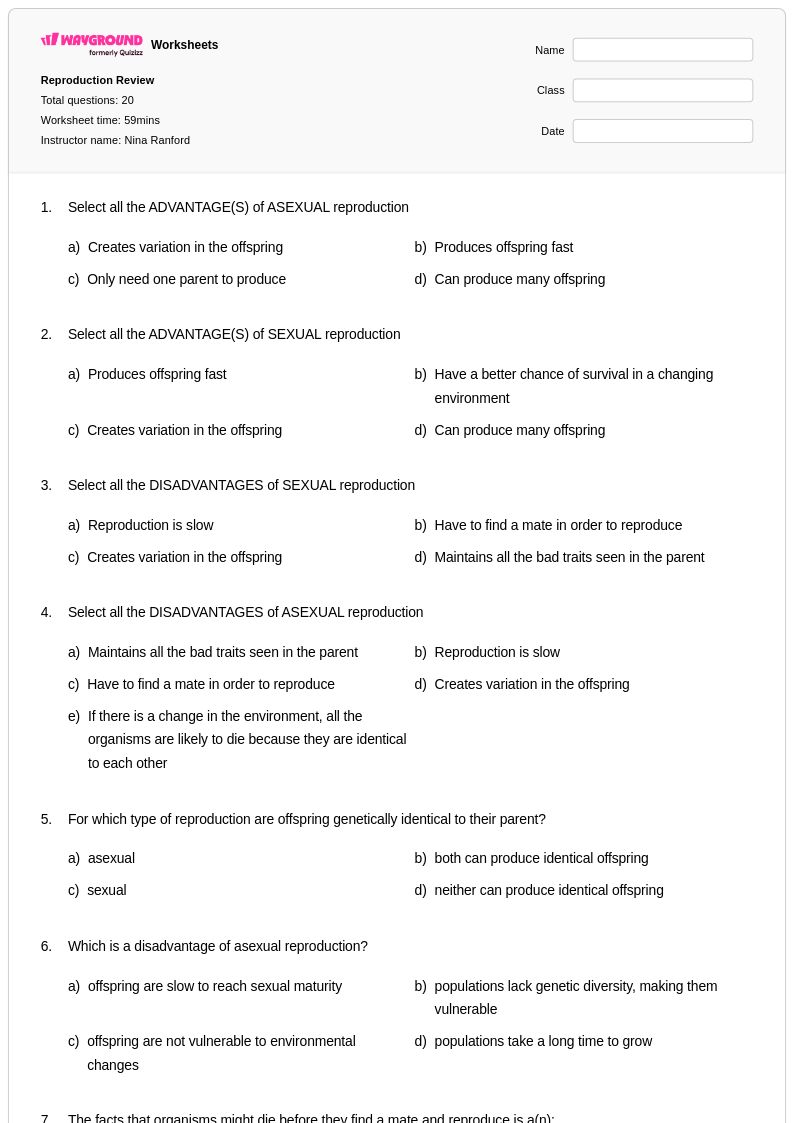
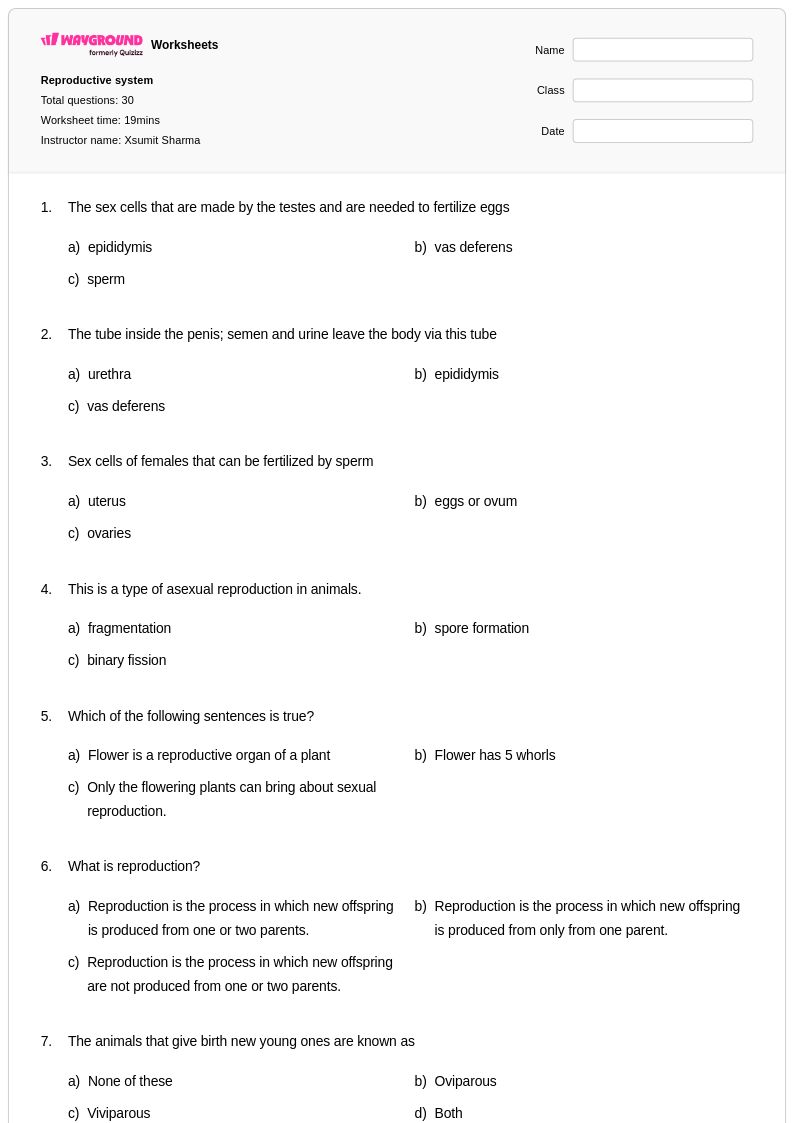
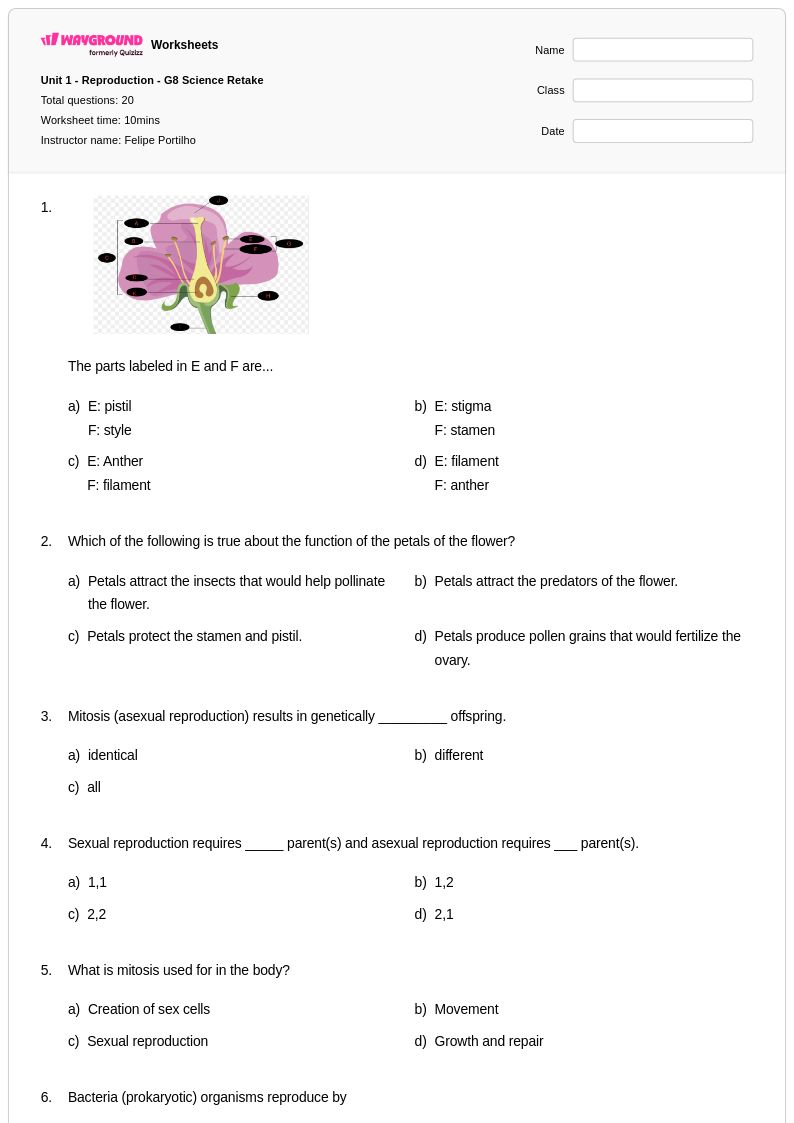
Human reproduction worksheets for Class 8 students available through Wayground (formerly Quizizz) provide comprehensive coverage of the reproductive systems, hormonal changes during puberty, and the biological processes of human development. These educational resources strengthen students' understanding of anatomy, physiology, and the scientific concepts underlying human sexuality and reproduction through carefully designed practice problems that align with eighth-grade science standards. The collection includes free printables with detailed answer keys that help students master complex topics such as the menstrual cycle, fertilization, embryonic development, and the role of hormones in reproductive health, while building essential scientific vocabulary and critical thinking skills through structured exercises and assessments available in convenient pdf format.
Wayground (formerly Quizizz) supports science educators with an extensive library of millions of teacher-created human reproduction worksheets specifically designed for Class 8 biology instruction. The platform's robust search and filtering capabilities allow teachers to quickly locate materials that match their curriculum requirements and student needs, while standards alignment features ensure content meets educational benchmarks for eighth-grade life science. Teachers benefit from powerful differentiation tools that enable them to customize worksheets for varying ability levels, providing both remediation support for struggling learners and enrichment opportunities for advanced students. These resources are available in both printable and digital formats, including downloadable pdf versions, giving educators the flexibility to seamlessly integrate human reproduction content into their lesson planning while supporting diverse learning environments and instructional approaches.
FAQs
How do I teach human reproduction in a biology class?
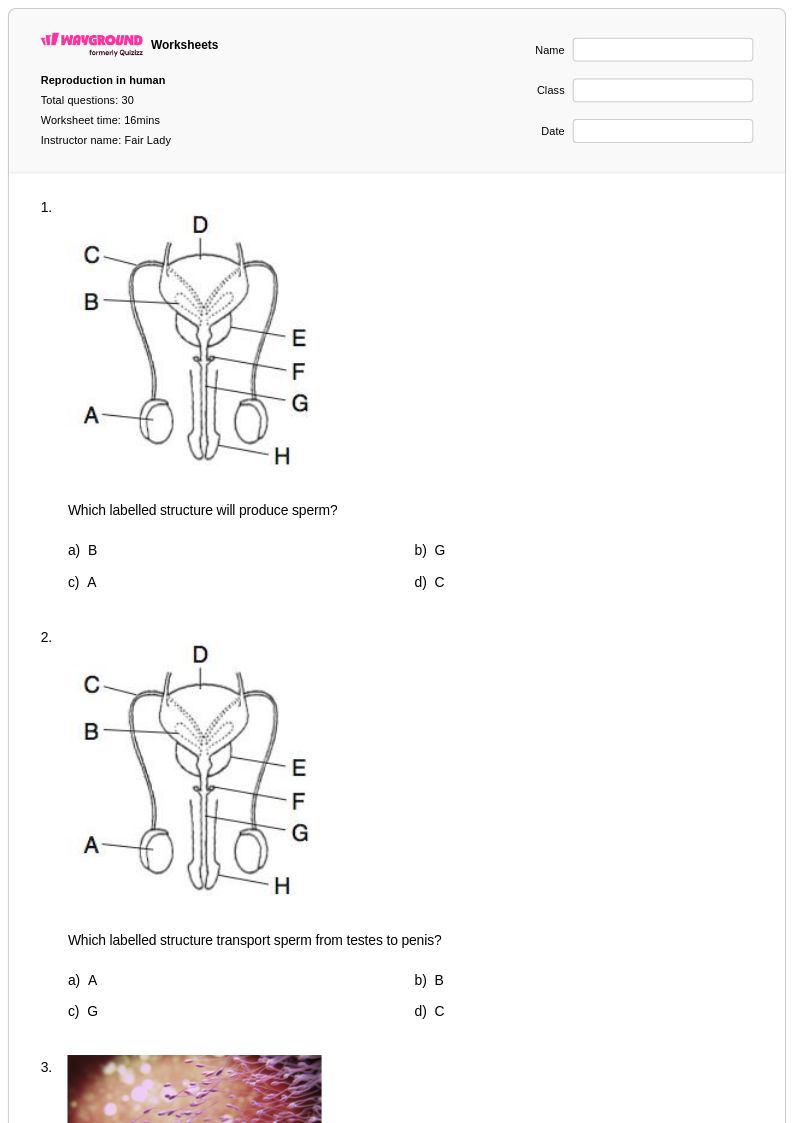
Effective human reproduction instruction typically begins with the anatomy and physiology of male and female reproductive systems before progressing to hormonal regulation, fertilization, and embryonic development. Using labeled diagrams and process sequencing activities helps students visualize abstract biological mechanisms. Connecting each stage — from gamete production to childbirth — with clear cause-and-effect relationships builds a coherent conceptual framework rather than isolated memorization of terms.
What types of exercises help students practice human reproduction concepts?
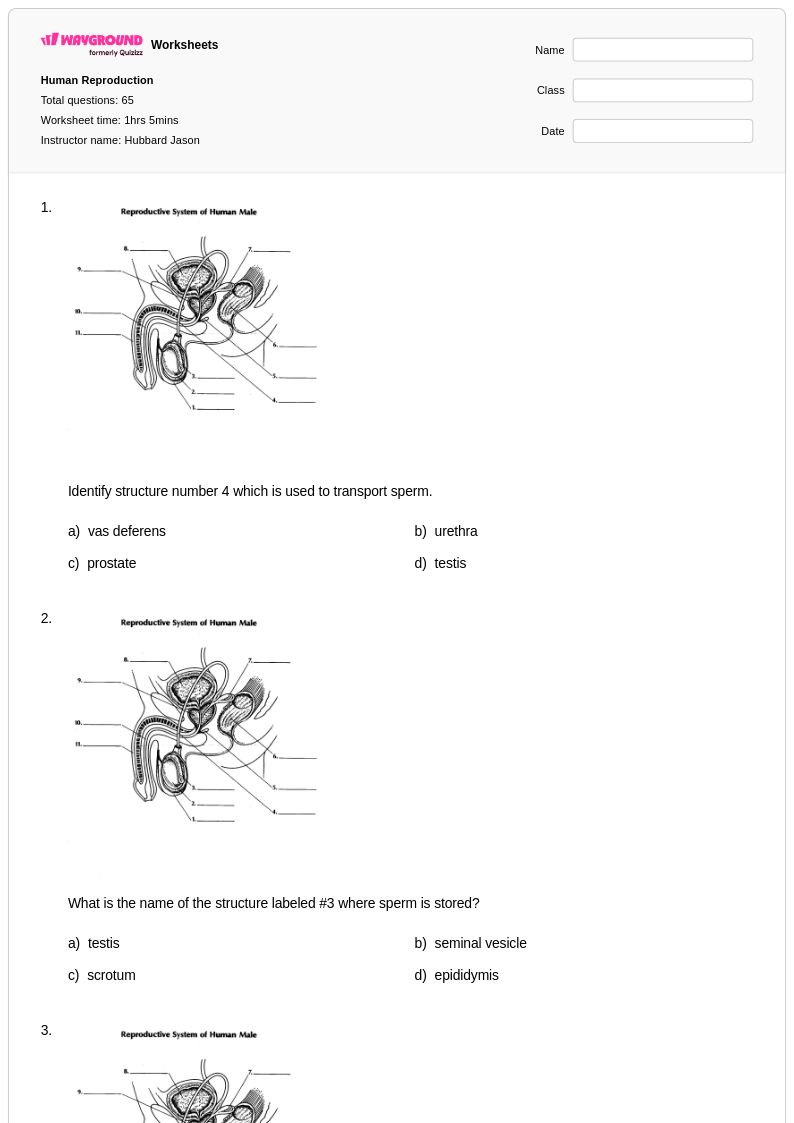
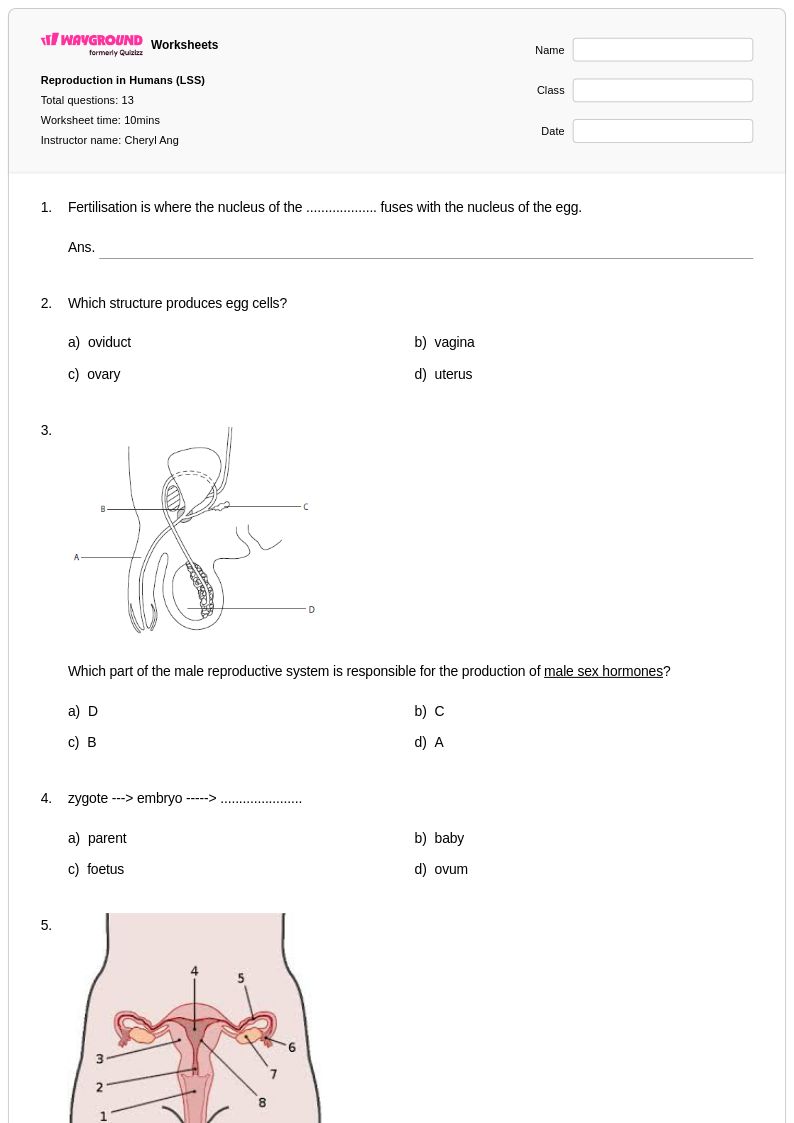
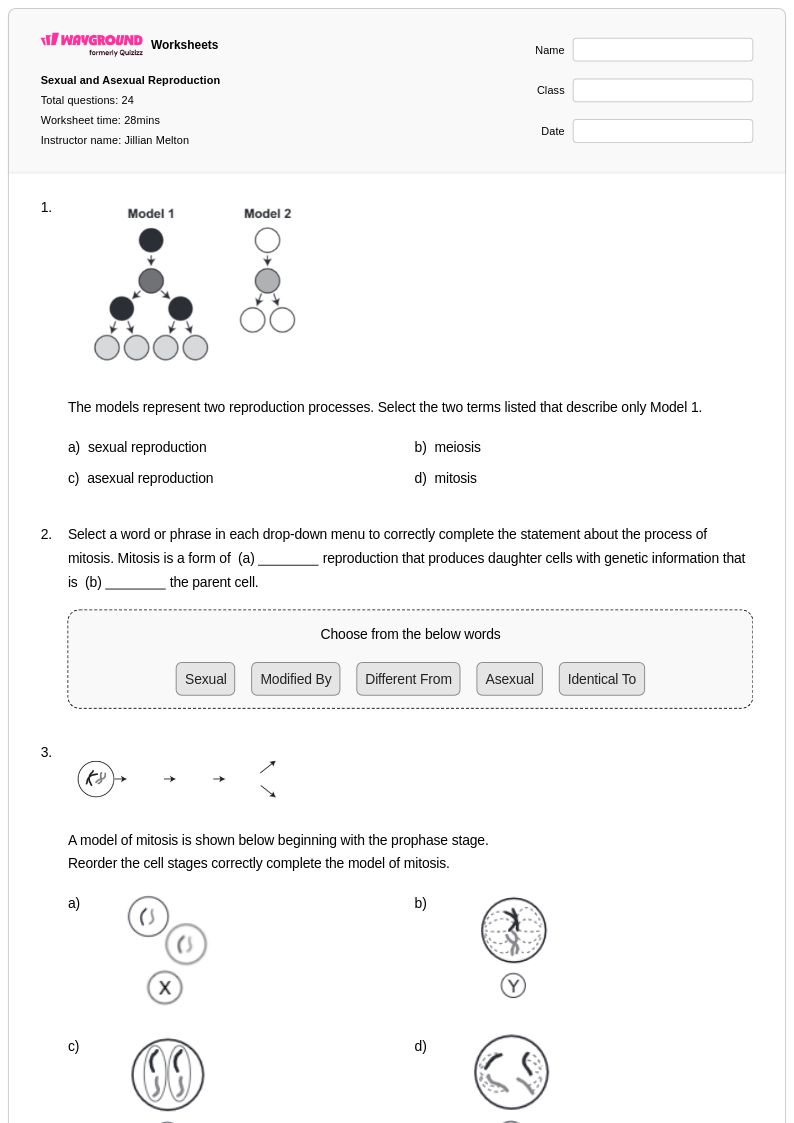
Labeling anatomical diagrams of the male and female reproductive systems reinforces spatial understanding of organ structure and function. Process sequencing activities that walk students through fertilization, implantation, and embryonic development help cement the chronological logic of reproduction. Analytical practice problems focused on hormonal cycles, such as the menstrual cycle and its feedback mechanisms, push students beyond recall into application-level thinking.
What misconceptions do students commonly have about human reproduction?
A frequent misconception is that fertilization and conception occur in the uterus when in fact fertilization typically takes place in the fallopian tube. Students also commonly confuse the roles of hormones such as FSH, LH, estrogen, and progesterone, often misattributing which hormone triggers which phase of the reproductive cycle. Another common error is conflating embryonic and fetal stages of development, which represent distinct phases with different biological milestones.
How do I use human reproduction worksheets to support students with different learning needs?
Human reproduction worksheets on Wayground are available as both printable PDFs and in digital formats, making them adaptable for traditional and technology-integrated classrooms. In digital sessions, teachers can enable accommodations such as read aloud for students who need audio support, reduced answer choices to lower cognitive load, and extended time for students who require additional processing time. These settings can be assigned to individual students while the rest of the class receives default conditions, ensuring differentiated support without disrupting the broader learning environment.
How can I assess whether students understand the hormonal regulation of the reproductive cycle?
The most effective assessment tasks require students to sequence hormonal events across the menstrual cycle and explain how negative and positive feedback loops regulate hormone levels. Questions that ask students to predict what happens when a specific hormone is absent or elevated reveal whether they understand regulatory relationships rather than just hormone names. Analytical practice problems that connect hormonal changes to observable physiological outcomes — such as ovulation or menstruation — are particularly diagnostic of deeper conceptual understanding.
What topics should a comprehensive human reproduction worksheet cover?
A thorough human reproduction worksheet should address the anatomy of both male and female reproductive systems, the hormonal regulation of reproductive cycles, the process of fertilization and early embryonic development, and the stages of pregnancy through childbirth. Reproductive health considerations, including contraception and common reproductive system disorders, round out the content and give students a clinically grounded context for the biology they are learning.