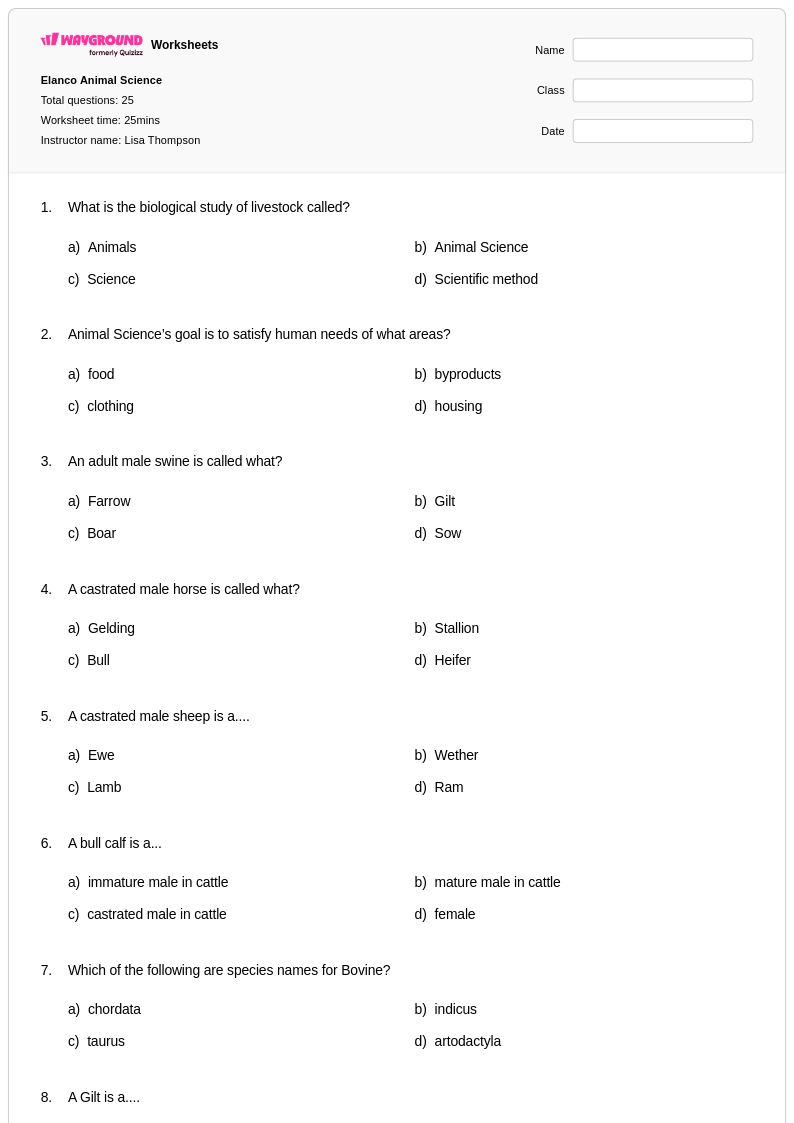
Free Printable Animal Research Worksheets for Class 8
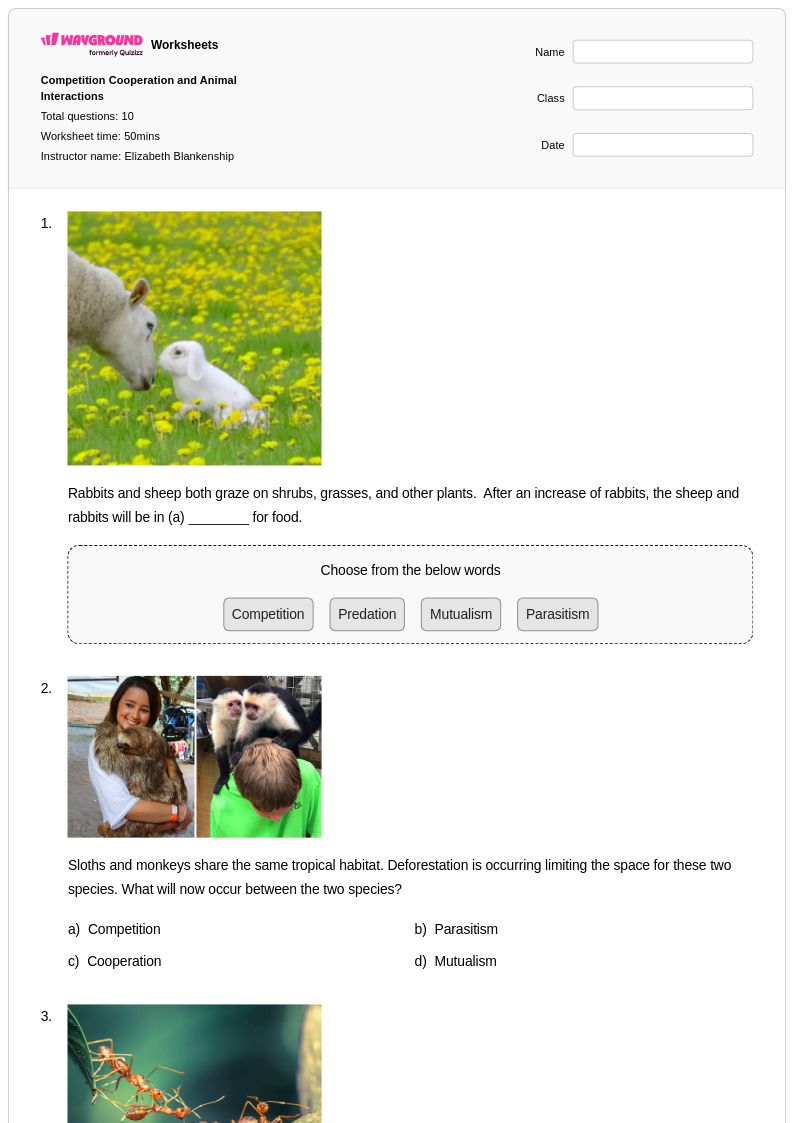
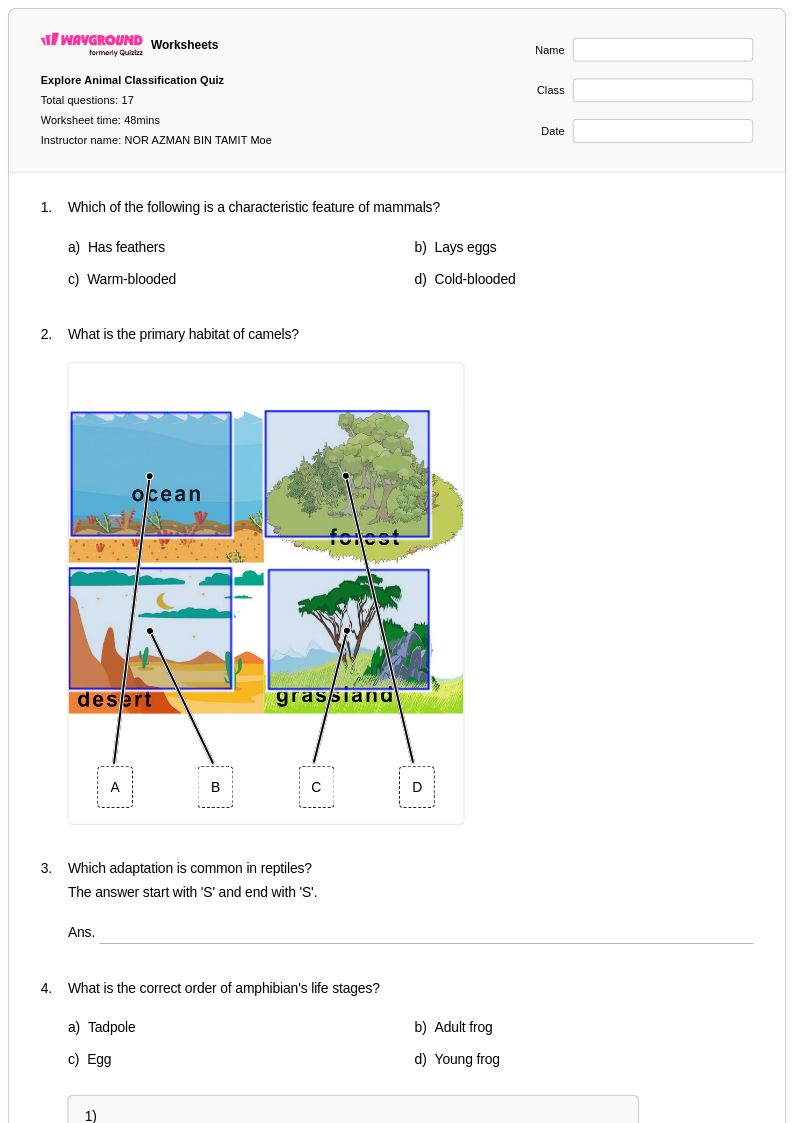
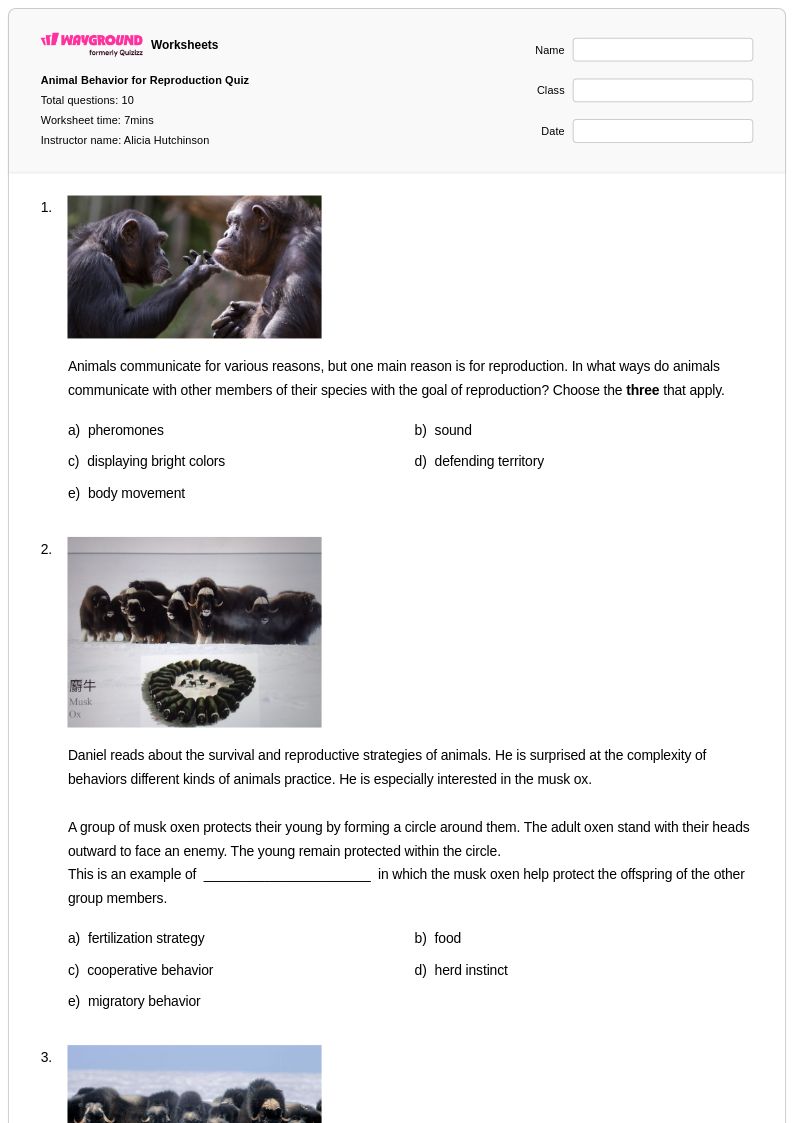
Class 8 animal research worksheets and printables help students explore scientific investigation methods, data collection techniques, and ethical considerations through engaging practice problems with comprehensive answer keys available as free PDF downloads.
Explore printable Animal Research worksheets for Class 8
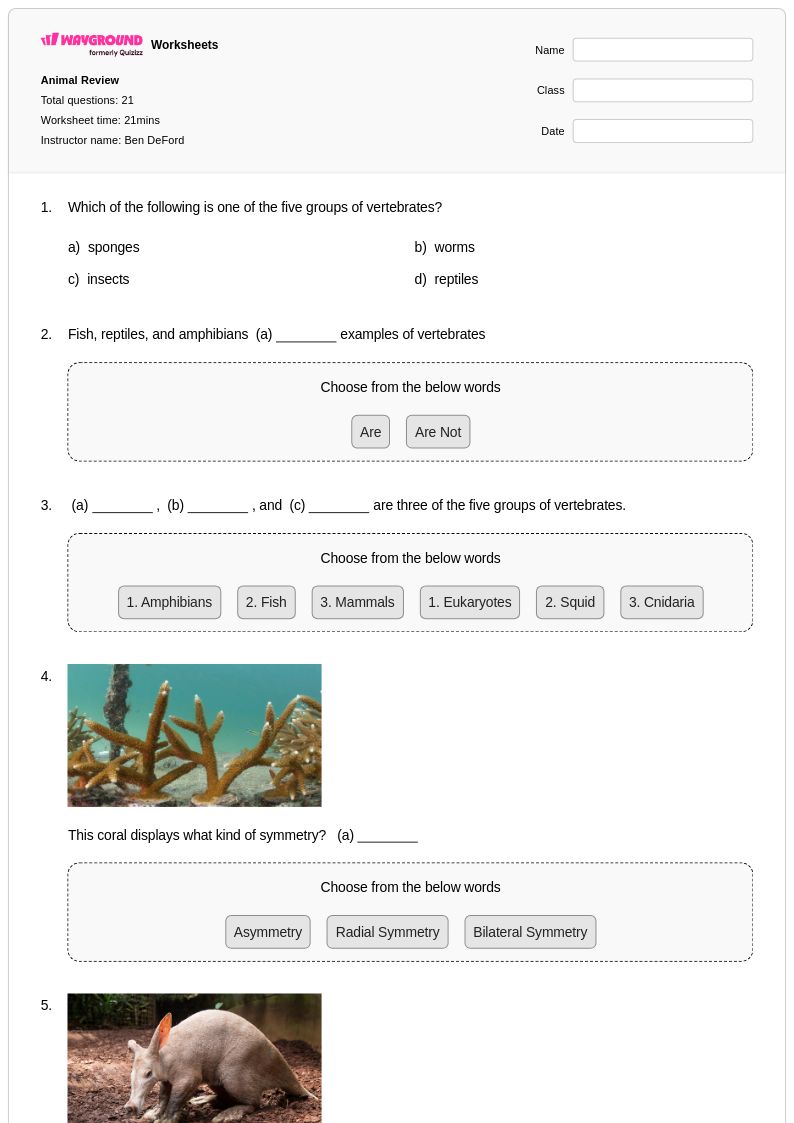
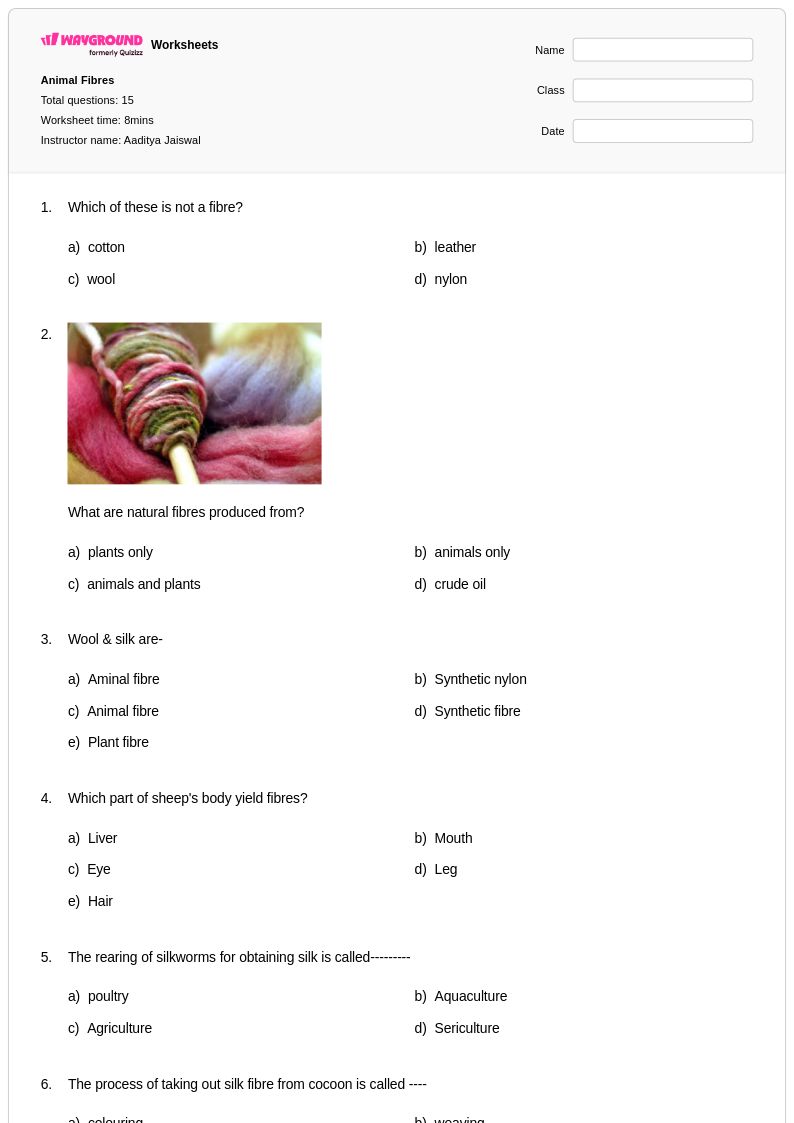
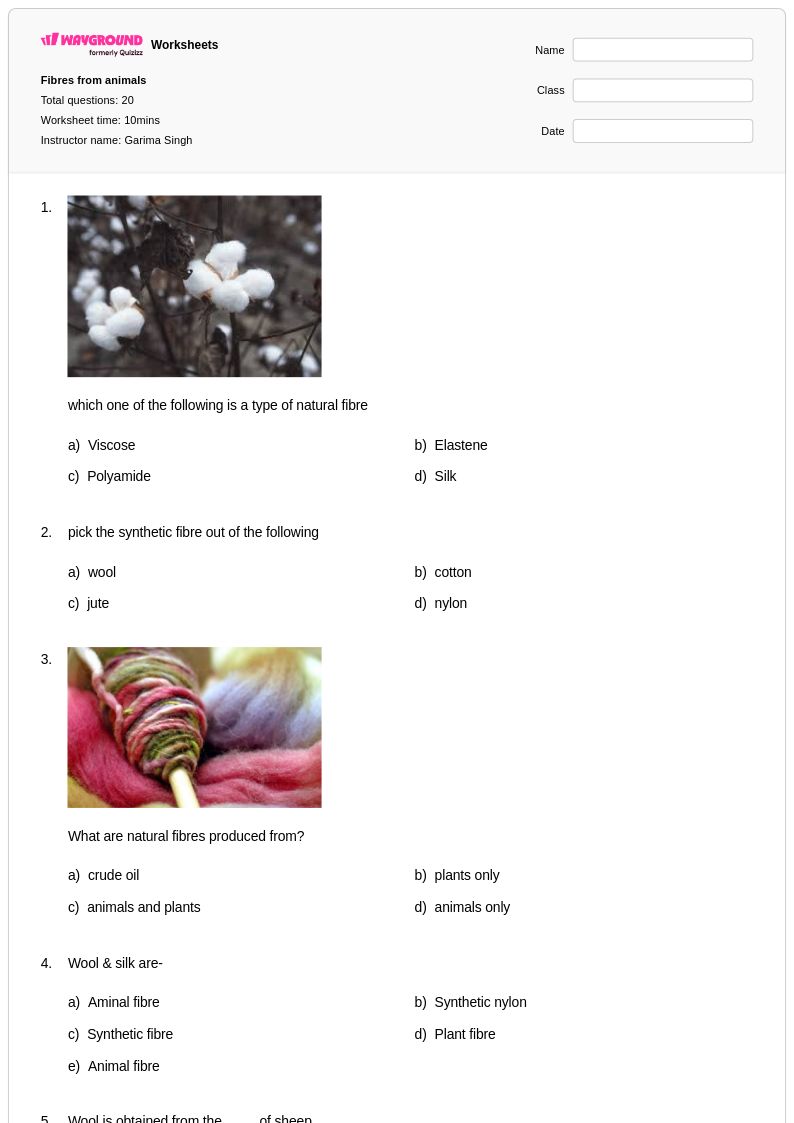
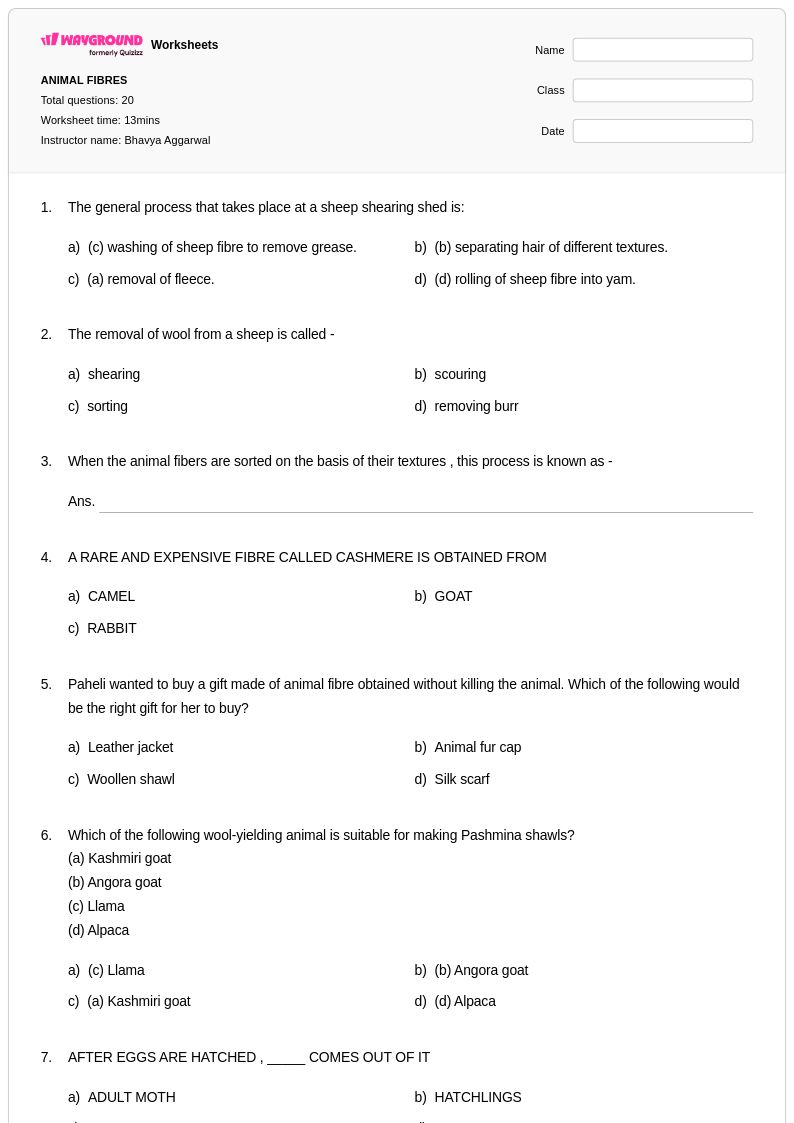
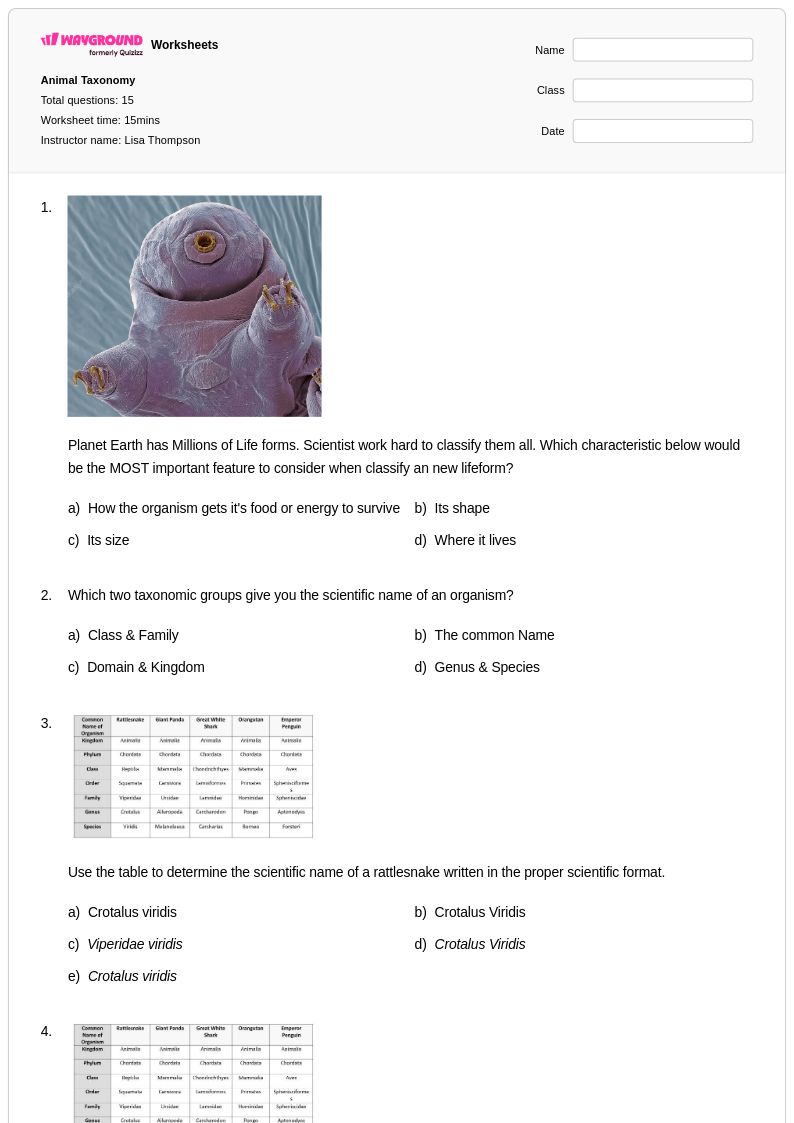
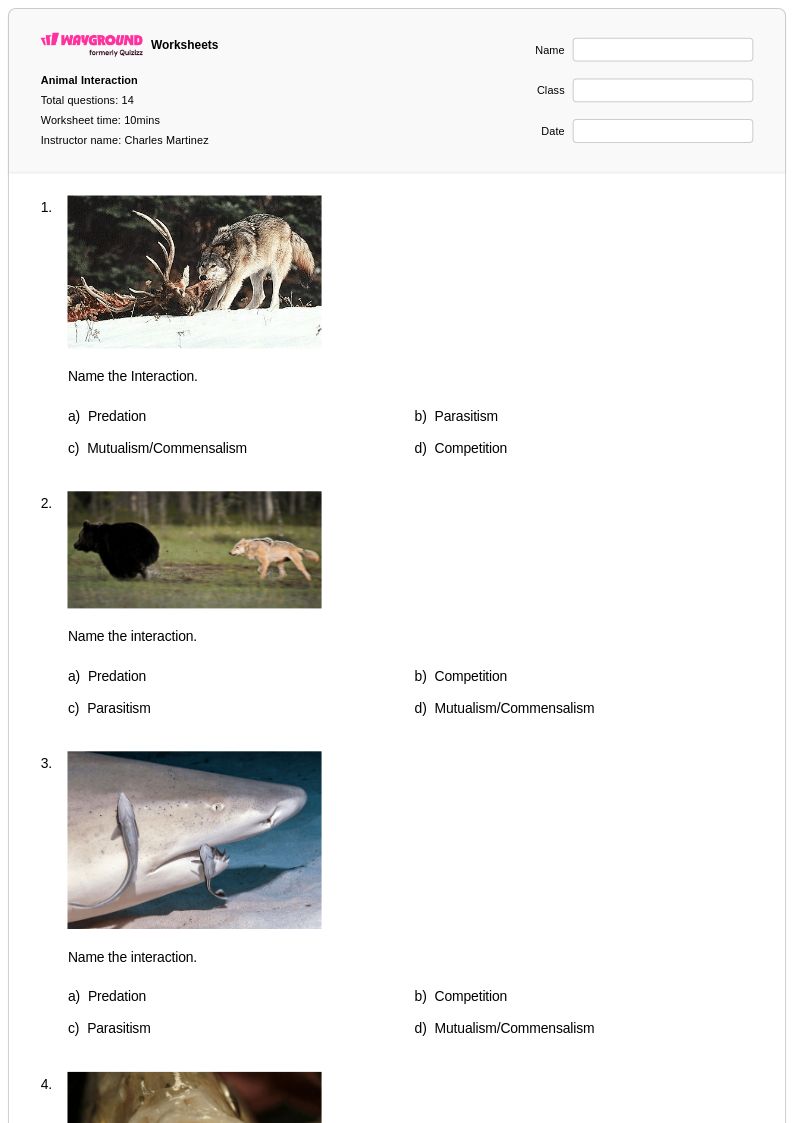
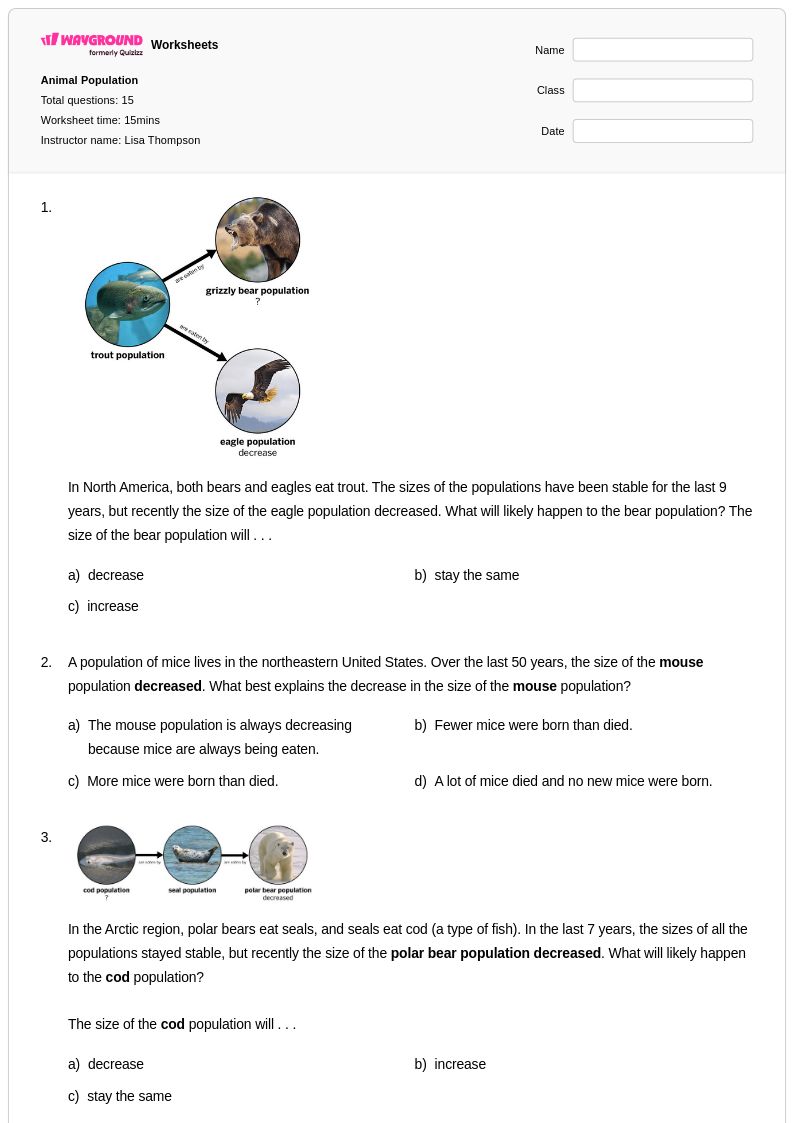
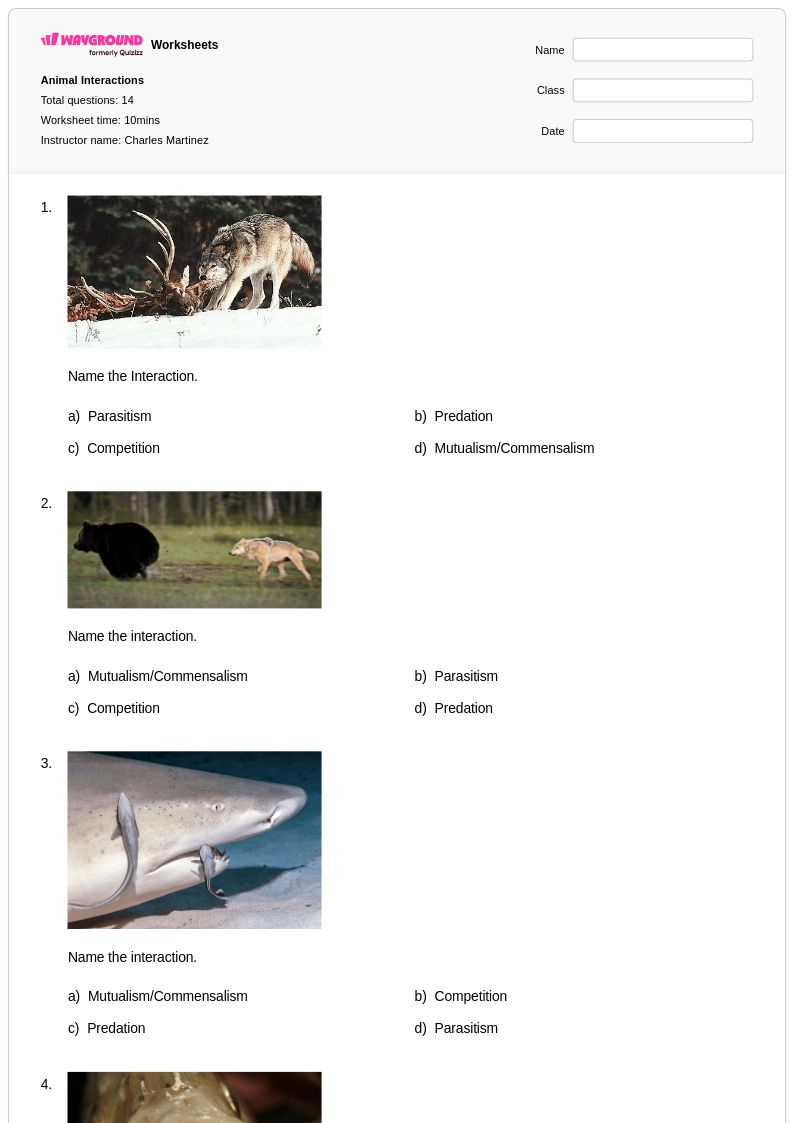
Animal research worksheets for Class 8 students through Wayground (formerly Quizizz) provide comprehensive resources that guide middle school learners through the fundamental principles of scientific investigation using animal subjects. These educational materials strengthen critical thinking skills by teaching students how to formulate research questions, design ethical experiments, analyze data collected from animal studies, and draw evidence-based conclusions about biological processes and behaviors. Students engage with practice problems that cover proper research methodology, ethical considerations in animal experimentation, data collection techniques, and the application of research findings to broader biological concepts. Each worksheet includes detailed answer key materials and is available as free printables in pdf format, ensuring educators have complete instructional support for implementing rigorous scientific inquiry lessons.
Wayground (formerly Quizizz) empowers educators with millions of teacher-created animal research worksheet resources that feature robust search and filtering capabilities, enabling quick identification of materials aligned with specific learning objectives and educational standards. Teachers benefit from comprehensive differentiation tools that allow customization of worksheet difficulty levels, question formats, and assessment criteria to meet diverse student needs within the Class 8 classroom. The platform's flexible digital and printable pdf formats support various instructional approaches, from individual skill practice sessions to collaborative research projects, while built-in assessment features facilitate immediate feedback and progress monitoring. These extensive resources streamline lesson planning by providing educators with ready-to-use materials for remediation support, enrichment activities, and systematic skill development in scientific research methodology and biological investigation techniques.
FAQs
How do I teach animal research methods to students?
Teaching animal research methods works best when students move through the scientific process step by step, starting with forming a testable hypothesis, selecting an appropriate study design, and then practicing data collection and interpretation. Use real or simulated animal behavior scenarios to ground abstract concepts like controlled variables and observational protocols in concrete examples. Connecting ethical considerations to each stage of the research process helps students understand that responsible science is not a separate topic but integral to the methodology itself.
What exercises help students practice animal research skills?
Worksheets that ask students to analyze pre-designed research protocols, identify independent and dependent variables, and evaluate data from animal behavior or physiological experiments are particularly effective for building research literacy. Practice problems focused on distinguishing observational studies from controlled experiments reinforce a foundational distinction that students frequently blur. Including hypothesis-writing exercises tied to specific animal scenarios gives students repeated, low-stakes practice with research design before applying it independently.
What mistakes do students commonly make when learning about animal research?
One of the most common errors is conflating correlation with causation when interpreting data from animal studies, especially in behavioral experiments where multiple variables are at play. Students also frequently overlook ethical considerations as a formal component of research design, treating them as optional commentary rather than integral constraints that shape methodology. Another persistent misconception is assuming that observational studies are less rigorous than controlled experiments, rather than understanding that each serves a distinct scientific purpose.
How do I use animal research worksheets in my classroom?
Animal research worksheets on Wayground are available as printable PDFs for traditional classroom use and in digital formats for technology-integrated learning environments, making them adaptable to a wide range of instructional settings. Teachers can also host worksheets as a quiz directly on Wayground, enabling real-time student responses and streamlined review. Each worksheet includes a complete answer key, so they work equally well for guided instruction, independent practice, or homework assignments.
How can I differentiate animal research worksheets for students at different skill levels?
Wayground's differentiation tools allow teachers to customize worksheets to match varying skill levels, which is especially useful for a topic as layered as animal research where some students may struggle with research design concepts while others are ready for more complex ethical analysis. For students who need additional support, Wayground also offers accommodations such as Read Aloud, reduced answer choices, and extended time, all of which can be configured individually per student without affecting the experience of the rest of the class.
How do I incorporate ethics into an animal research unit?
Ethical considerations in animal research should be woven throughout the unit rather than siloed into a single lesson, because students need repeated exposure to understand how ethics constrain and inform every stage of the scientific process. Effective approaches include presenting students with real research scenarios and asking them to evaluate whether the study design meets ethical standards, or having students revise a flawed protocol to bring it into compliance. This kind of applied reasoning builds both ethical literacy and a deeper understanding of why research methodology looks the way it does.