Class 8 prokaryote worksheets from Wayground help students master bacterial cell structures and functions through engaging printables, practice problems, and comprehensive answer keys for effective biology learning.
Explore printable Prokaryote worksheets for Class 8
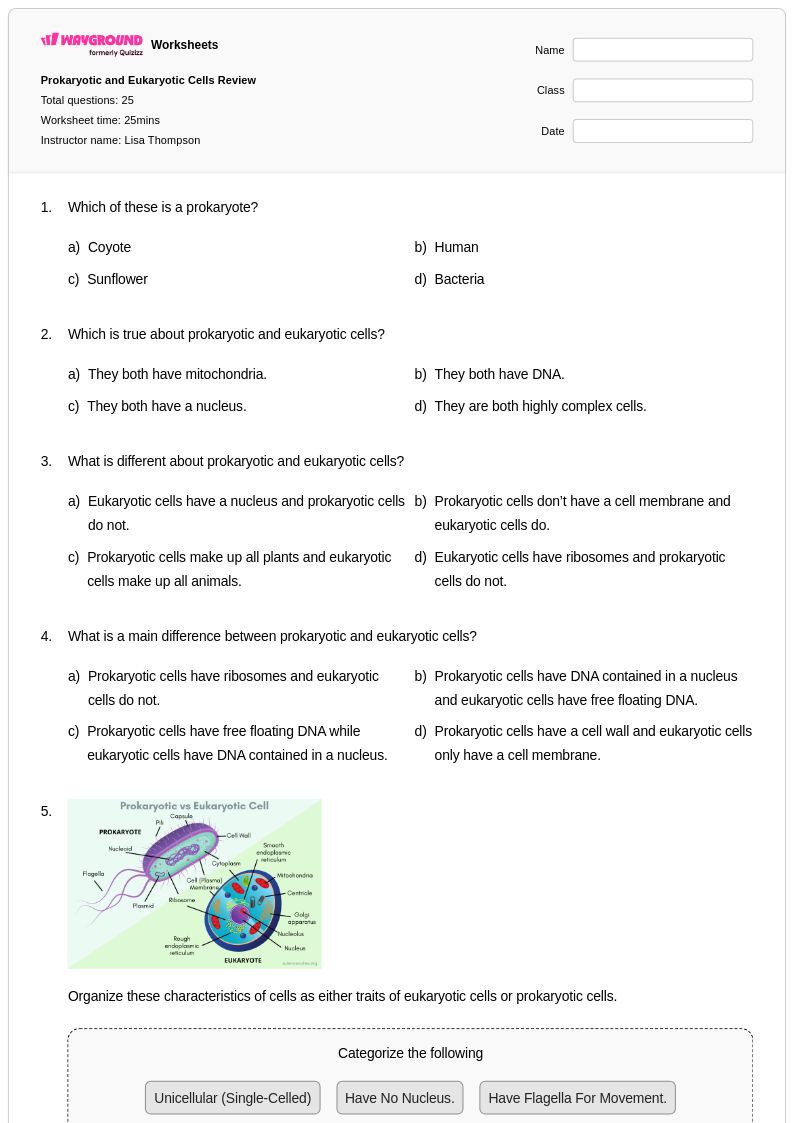
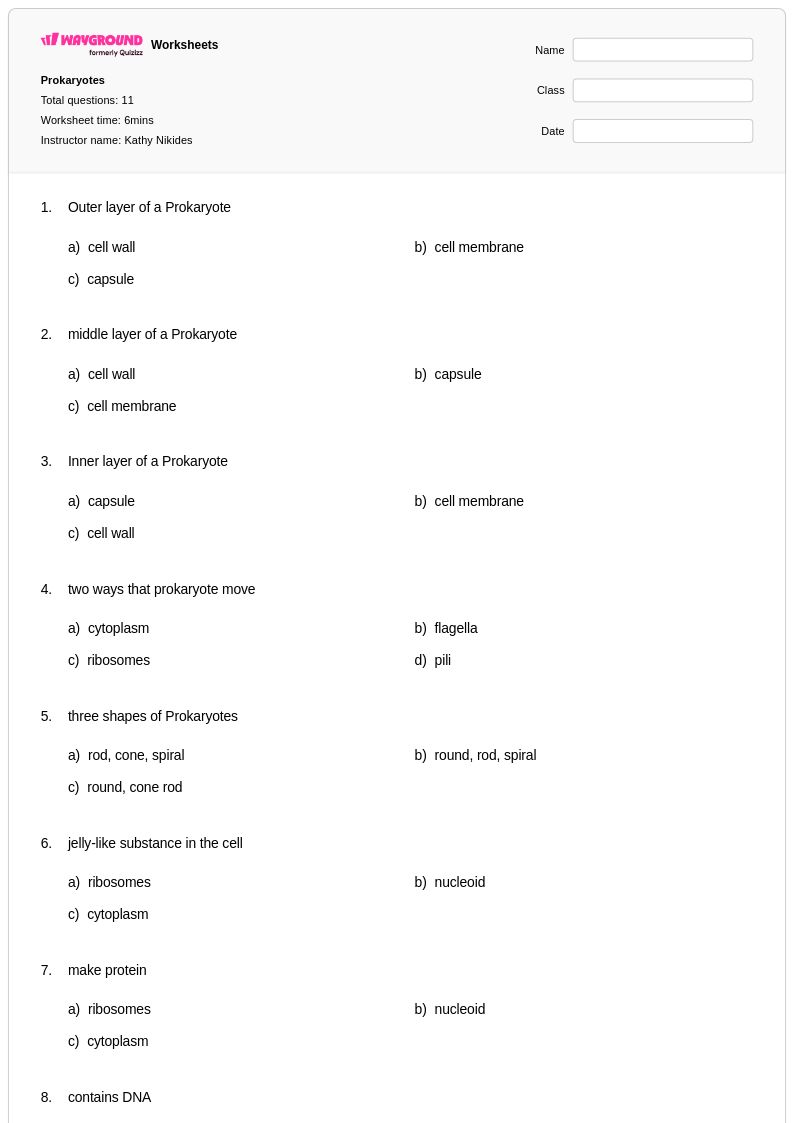
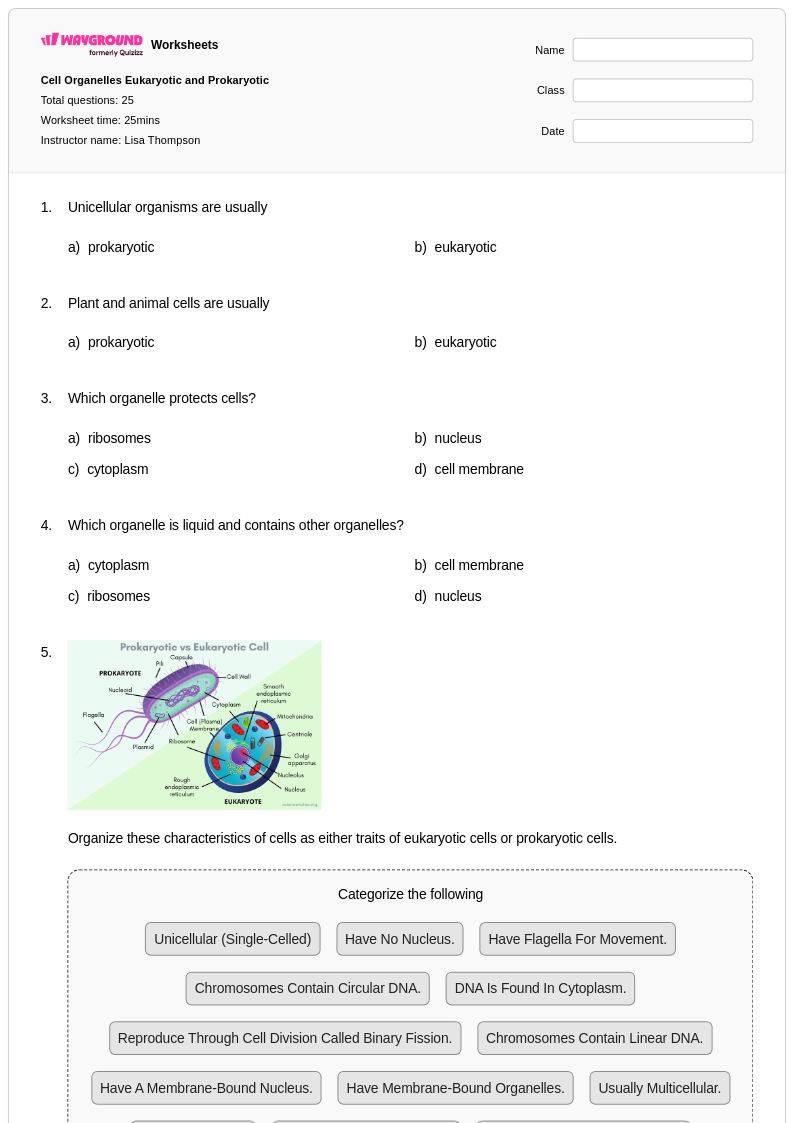
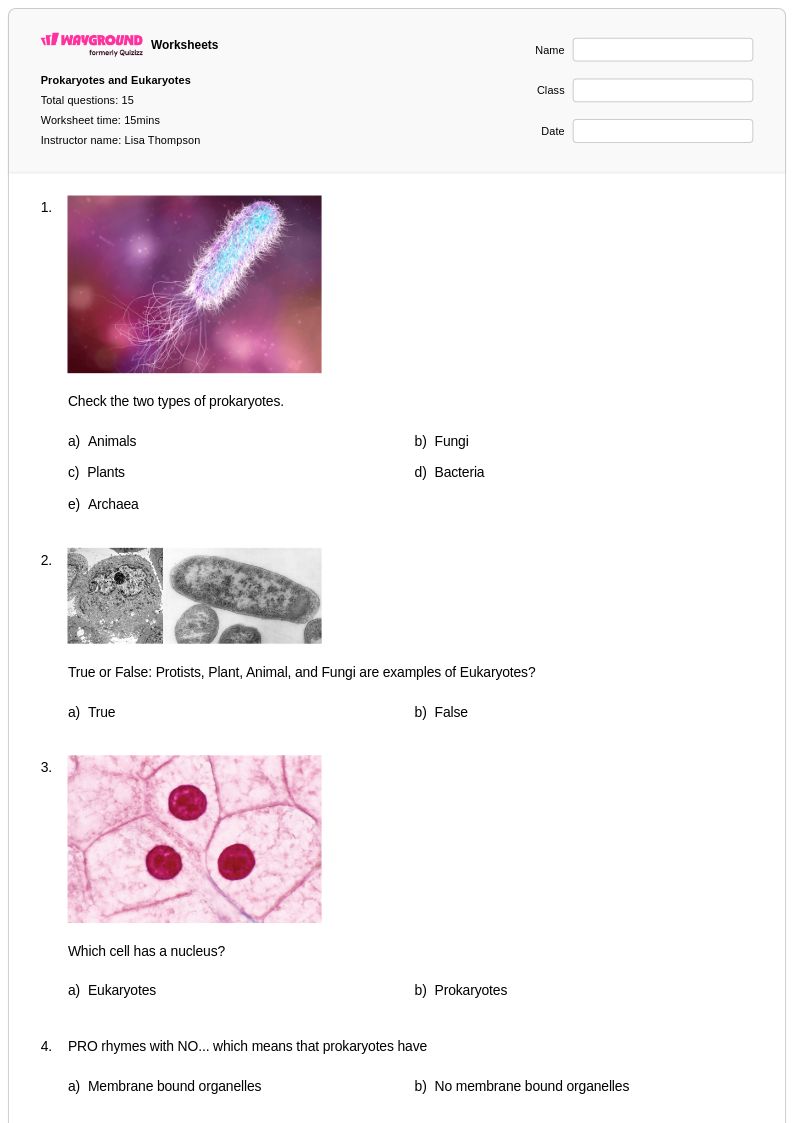
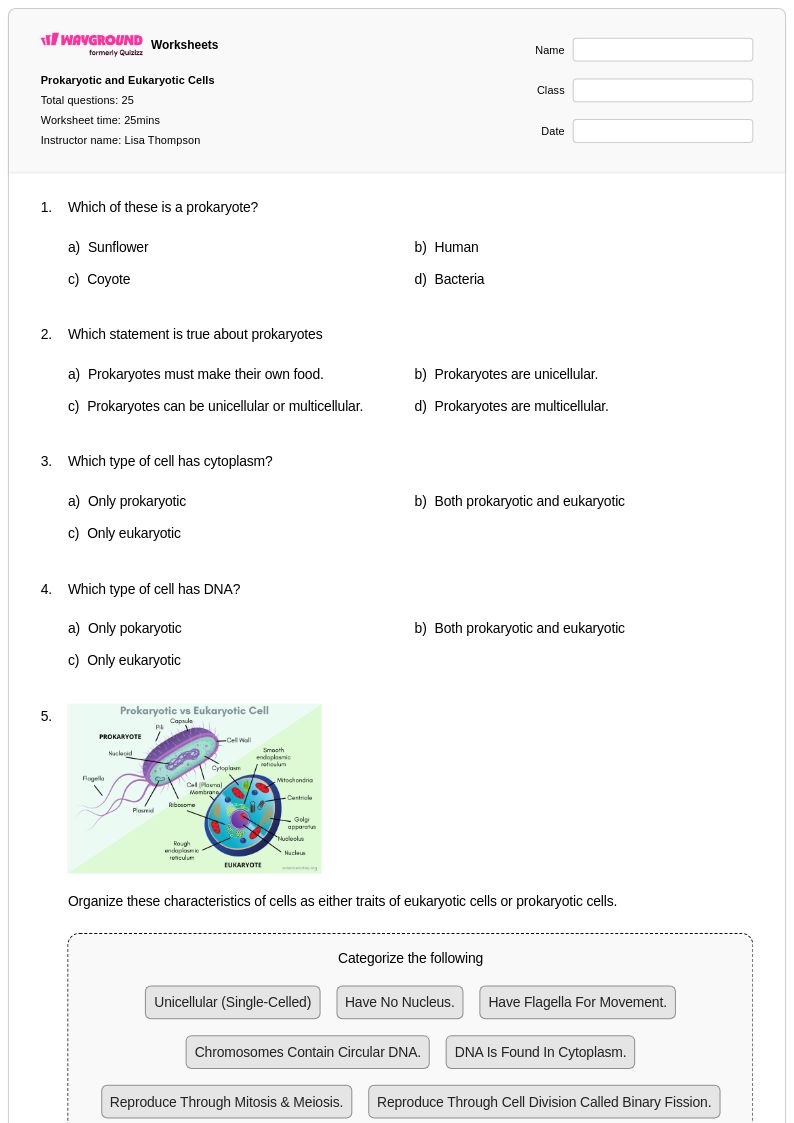
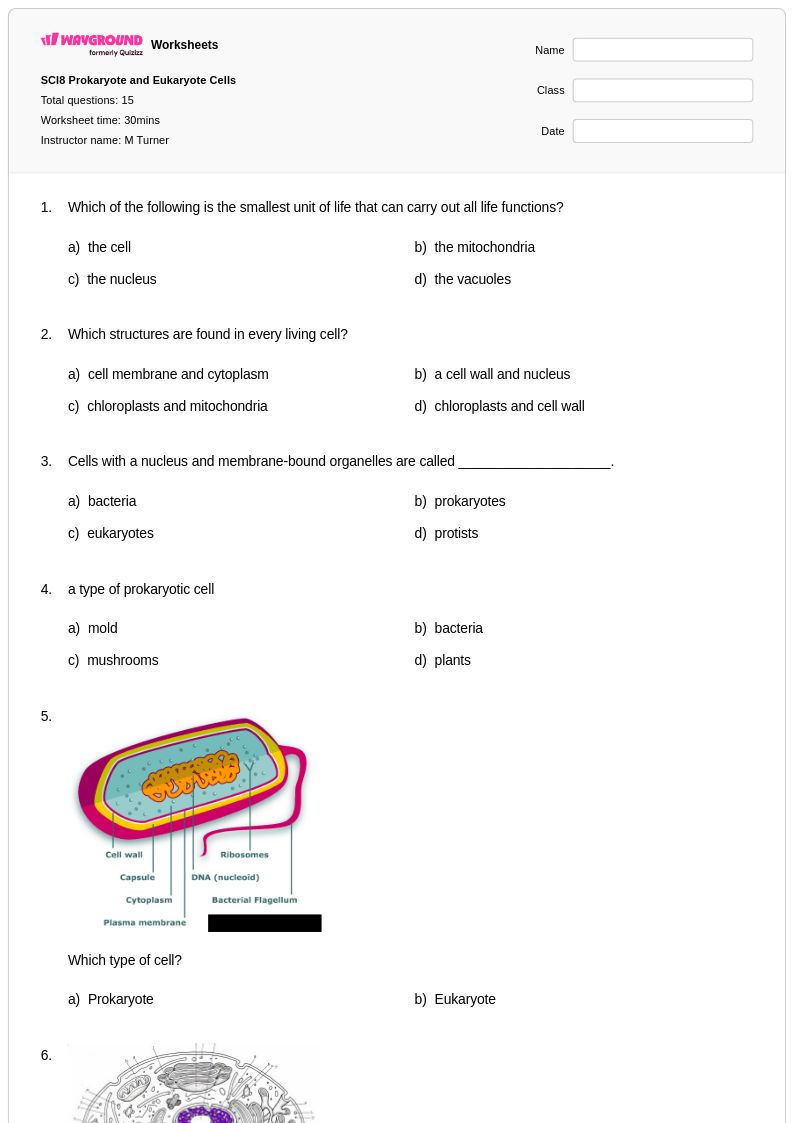
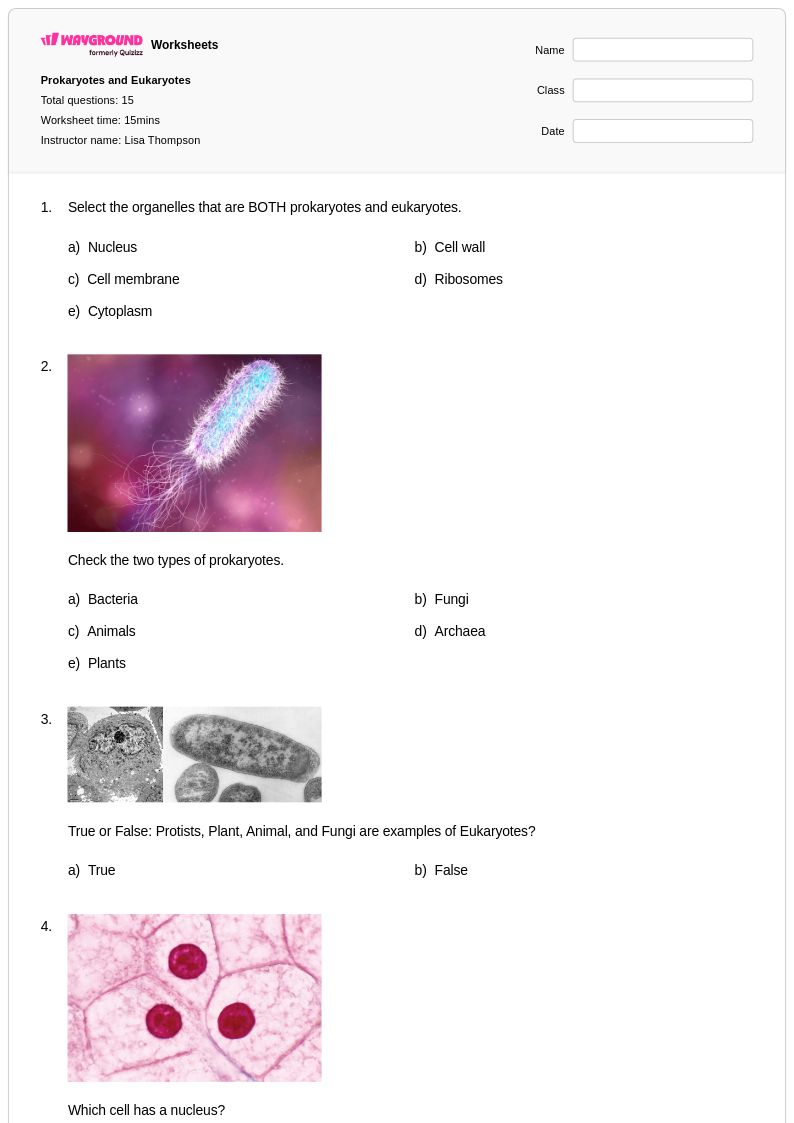
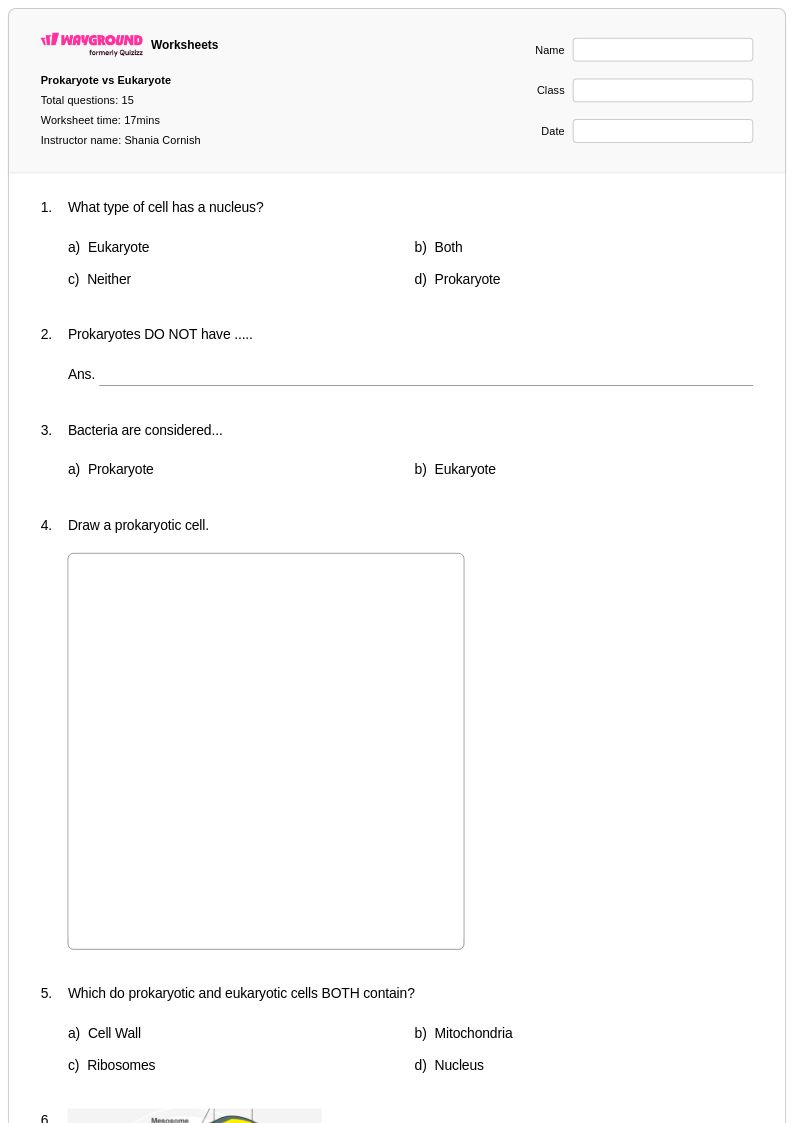
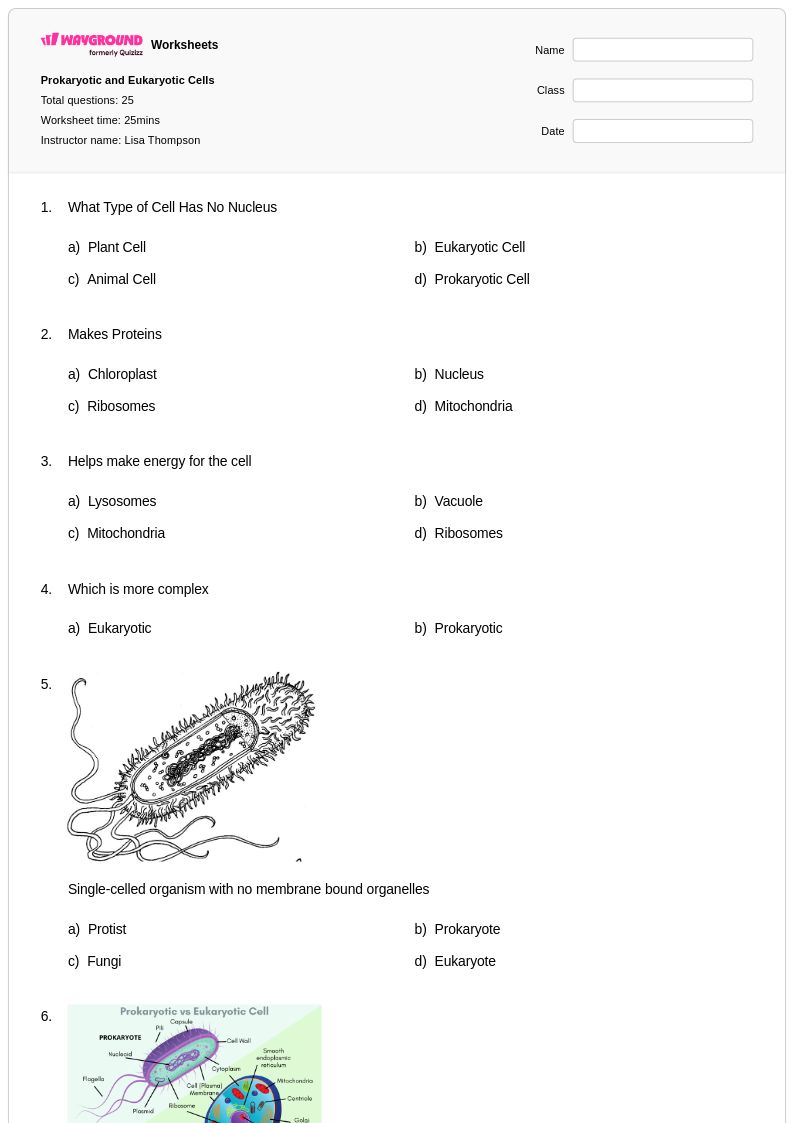
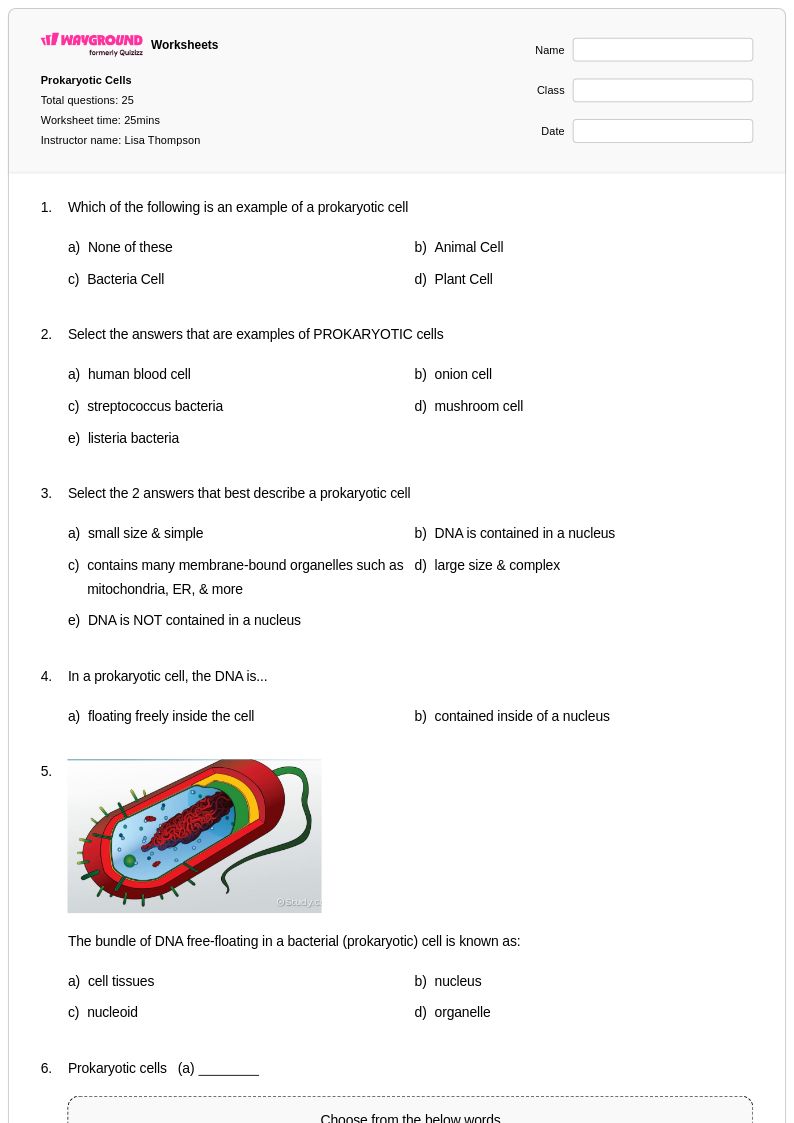
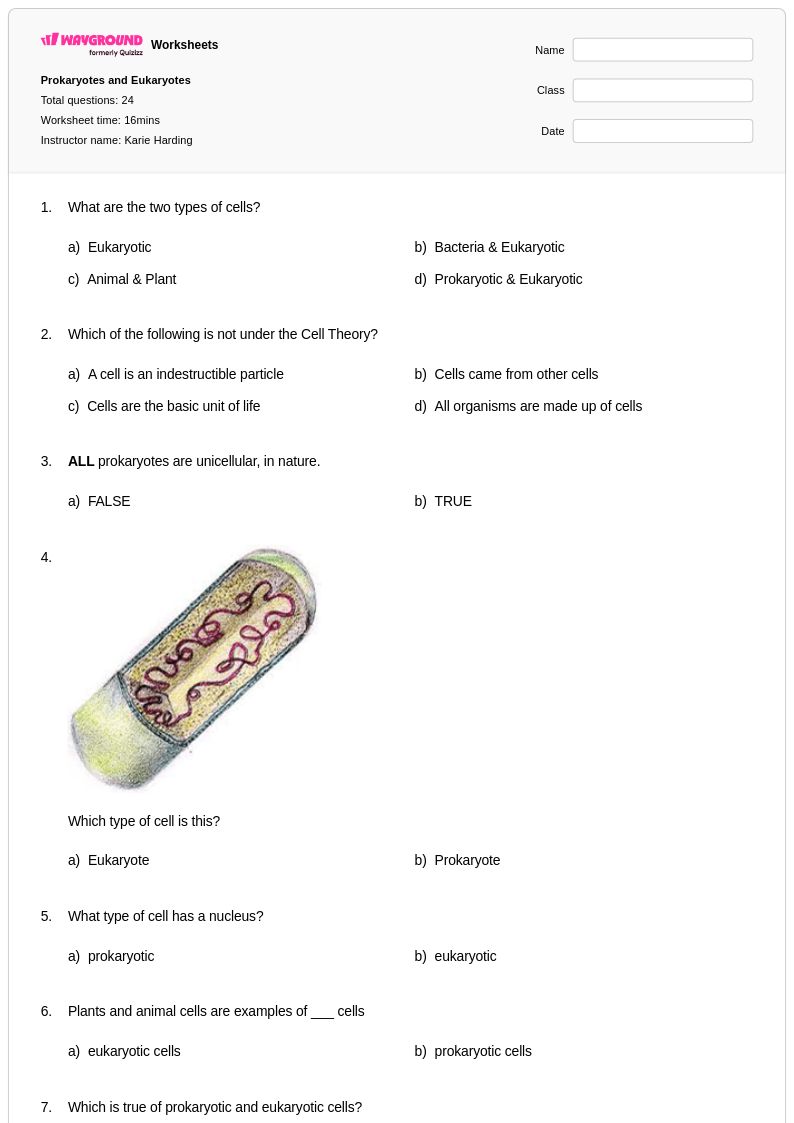
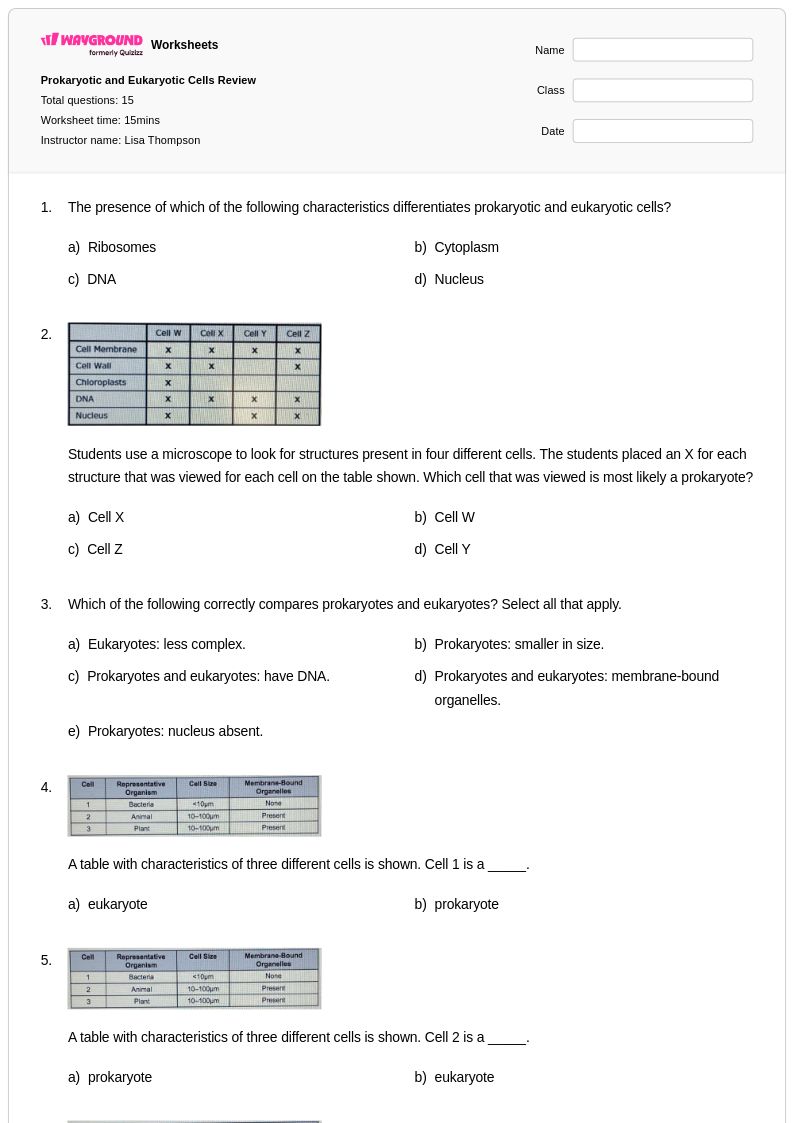
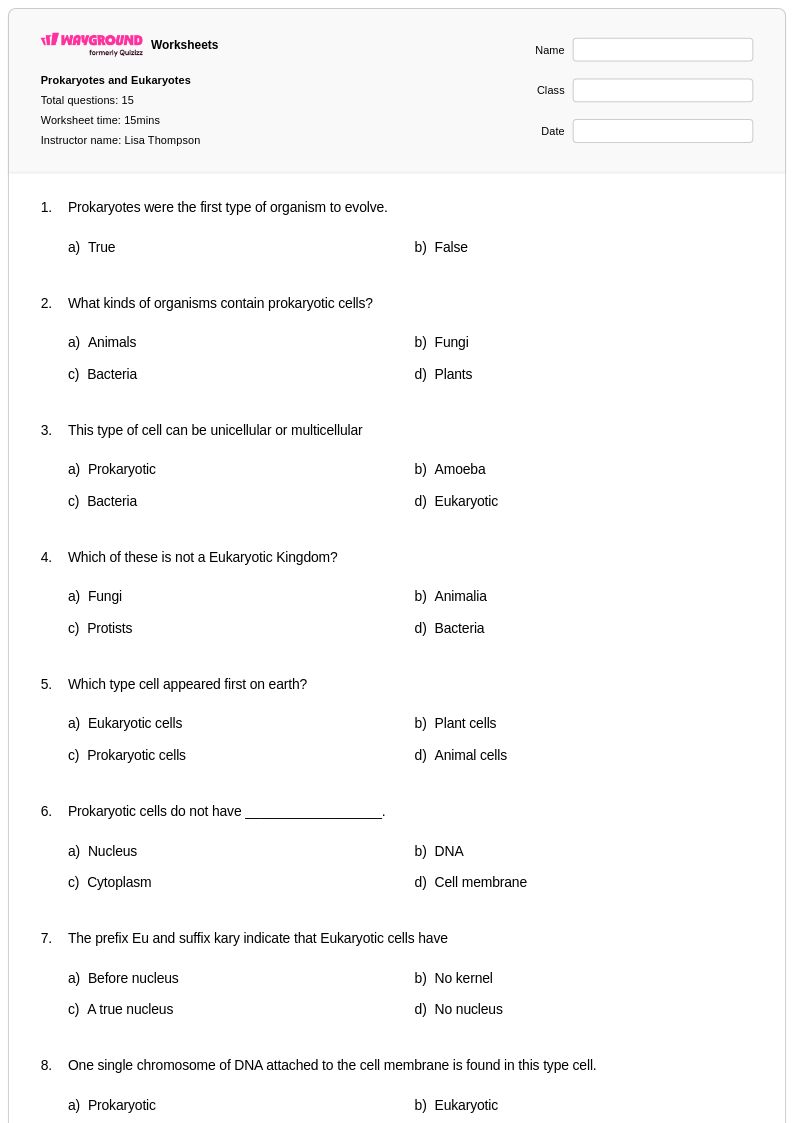
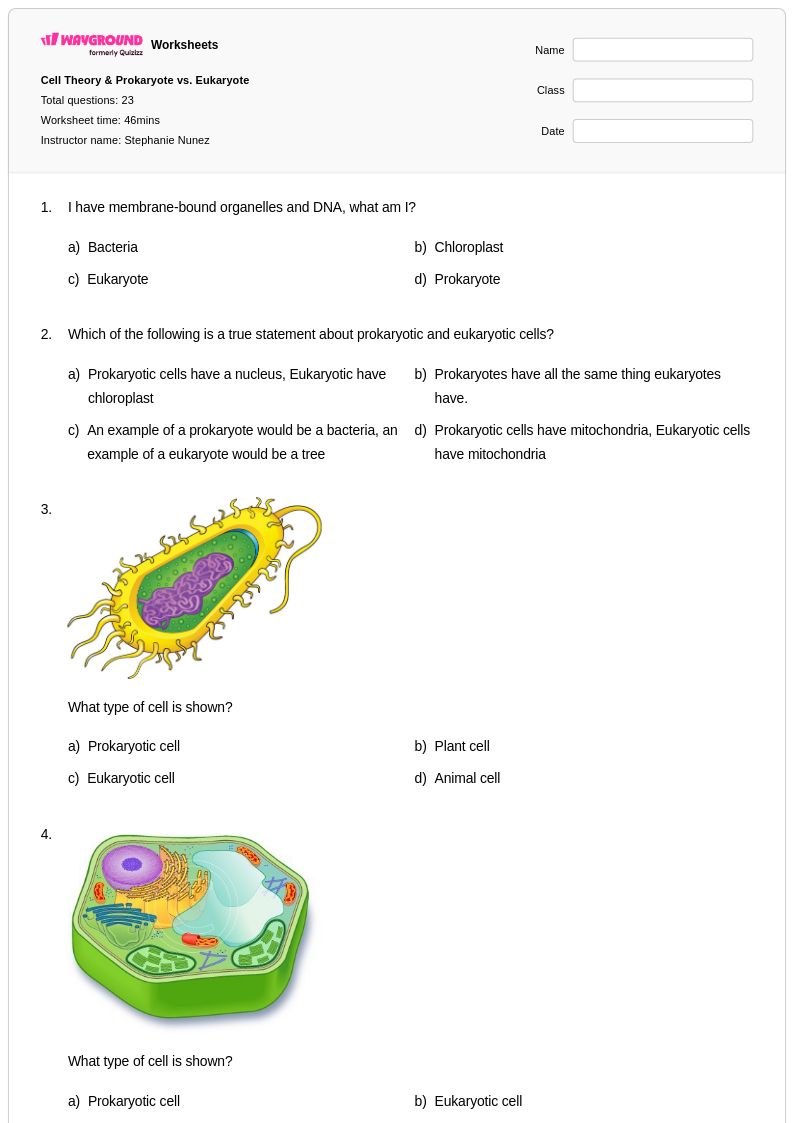
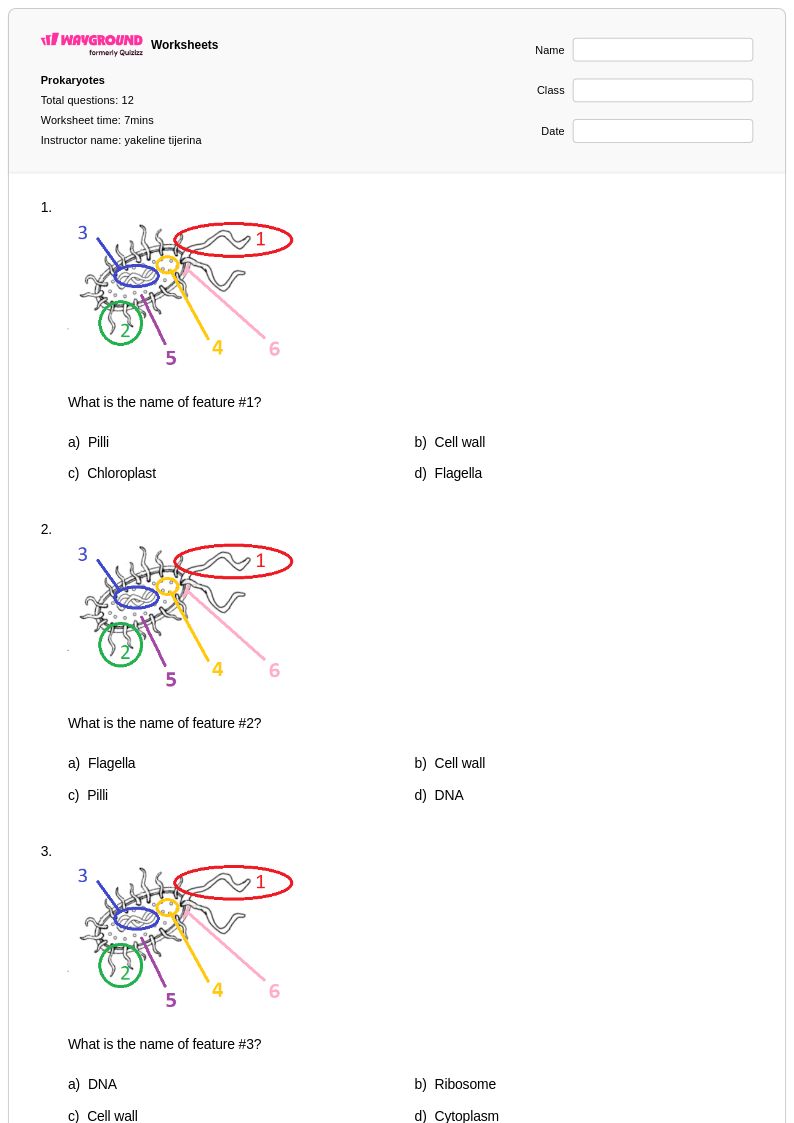
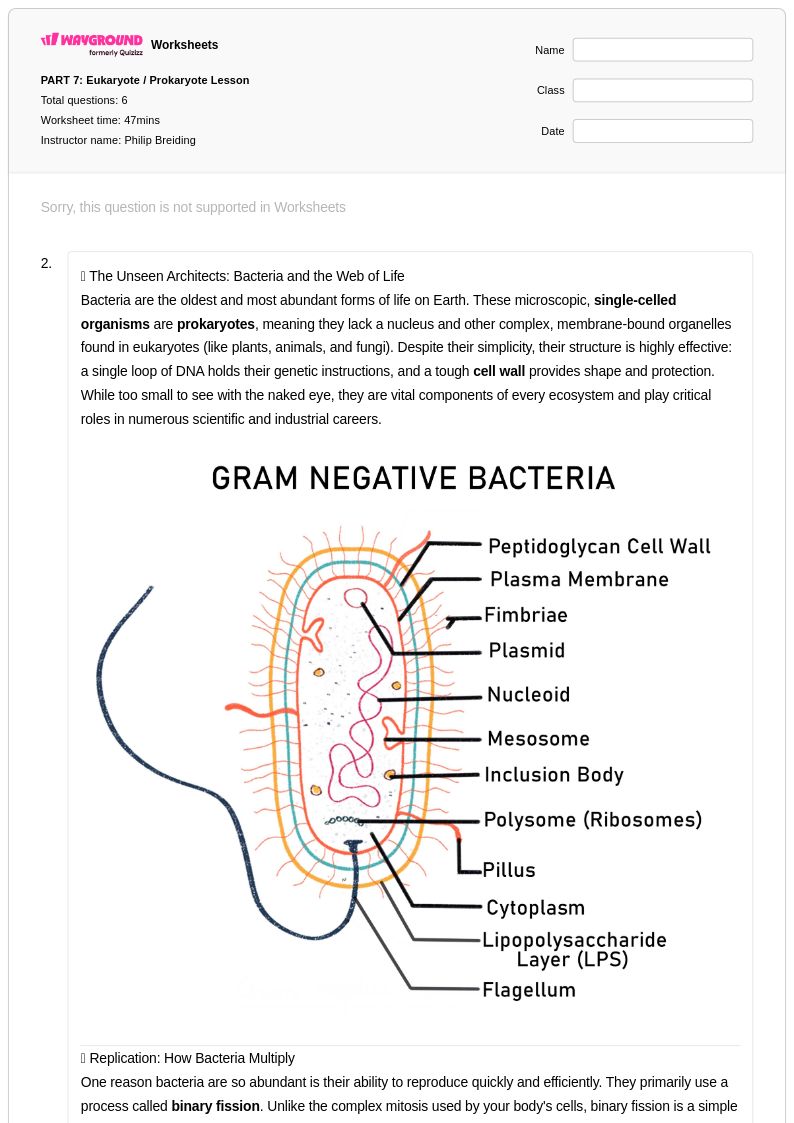
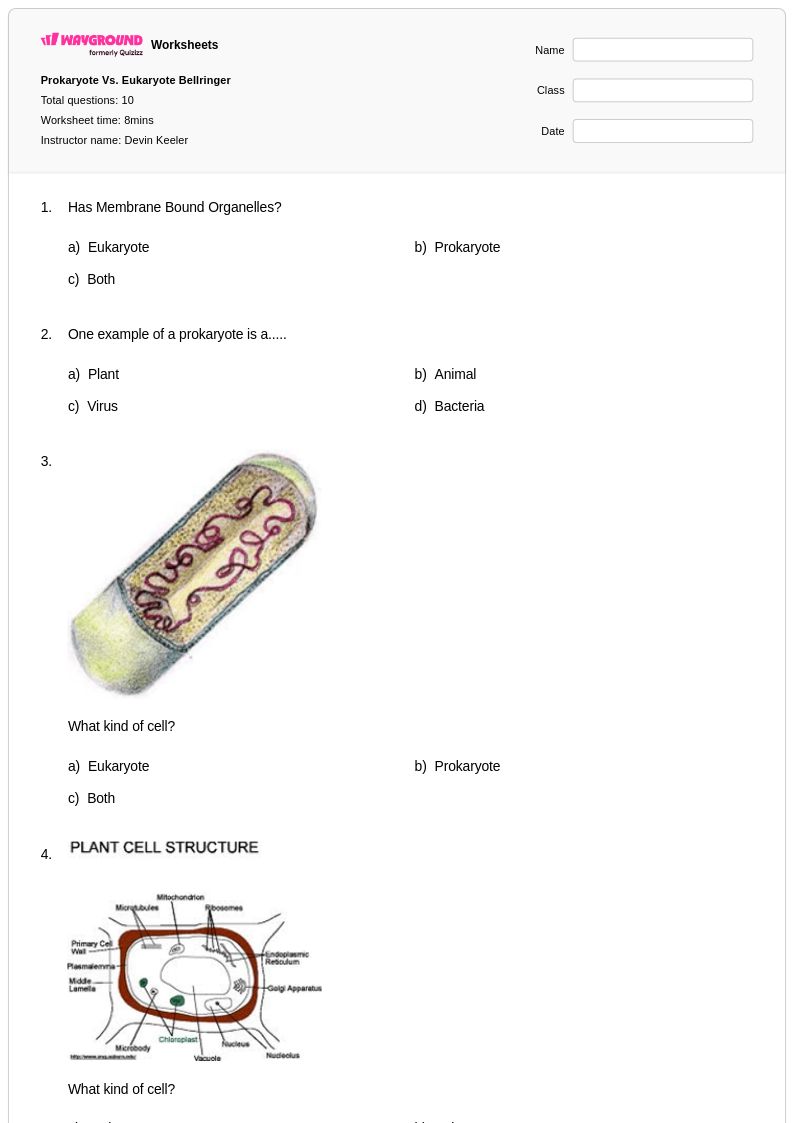
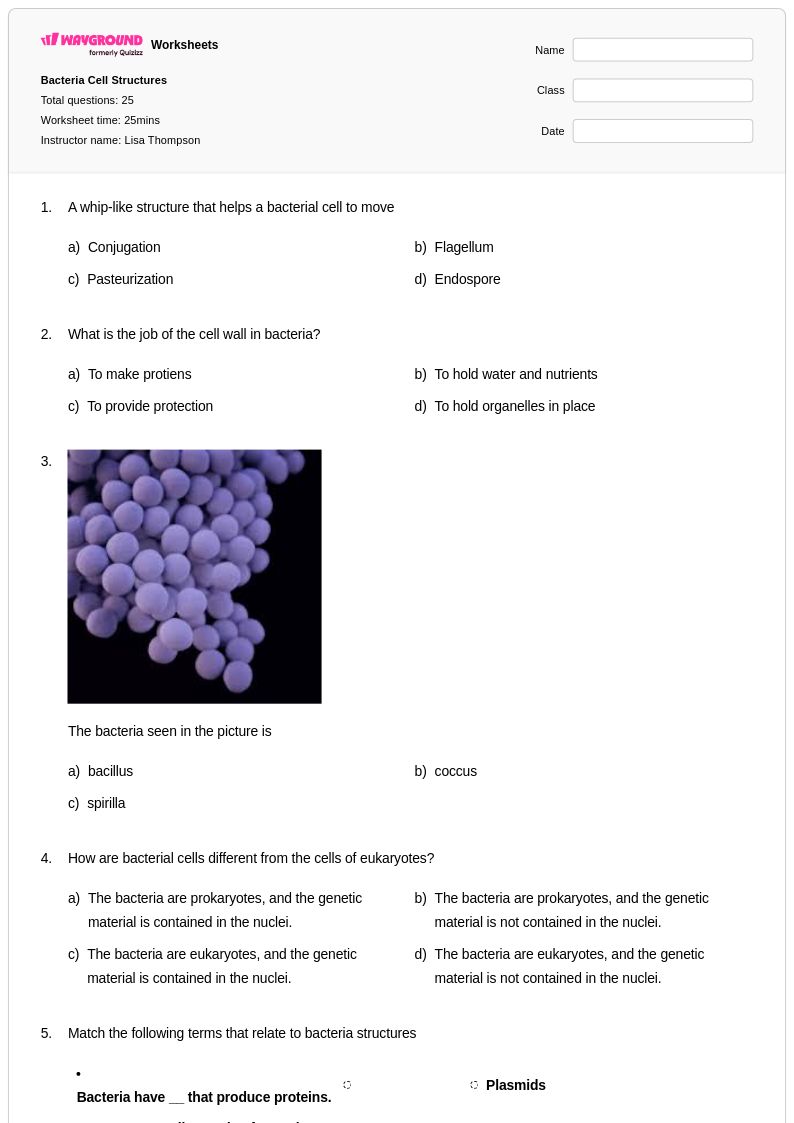
Prokaryote worksheets for Class 8 students available through Wayground (formerly Quizizz) provide comprehensive practice opportunities for mastering the fundamental characteristics and functions of prokaryotic organisms. These carefully designed educational resources strengthen students' understanding of bacterial and archaeal cell structures, metabolic processes, and ecological roles while building critical thinking skills in cellular biology. The worksheet collection includes detailed practice problems that guide students through prokaryotic cell organization, DNA structure in prokaryotes, reproduction methods, and the distinction between prokaryotes and eukaryotes. Each worksheet comes with a complete answer key to support independent learning and self-assessment, and teachers can access these materials as free printables in convenient pdf format for seamless classroom integration.
Wayground (formerly Quizizz) empowers educators with an extensive library of millions of teacher-created prokaryote worksheets specifically curated for Class 8 biology instruction. The platform's robust search and filtering capabilities allow teachers to quickly locate resources aligned with specific learning standards and differentiate instruction based on individual student needs. These prokaryote worksheet collections offer flexible customization options, enabling educators to modify content difficulty, focus areas, and question types to match their curriculum requirements. Available in both printable and digital formats including downloadable pdf files, these resources support diverse teaching approaches from traditional classroom instruction to hybrid learning environments, making lesson planning more efficient while providing targeted practice for skill development, remediation activities, and enrichment opportunities that deepen students' comprehension of prokaryotic life forms.
FAQs
How do I teach prokaryotes to students?
Start by establishing what defines a prokaryote — the absence of a membrane-bound nucleus and membrane-bound organelles — before introducing bacterial cell structures like the cell wall, plasma membrane, ribosomes, nucleoid region, and flagella. Use direct comparisons between prokaryotic and eukaryotic cells to anchor the concept, since students almost always encounter eukaryotic cells first. Diagrams, labeling activities, and classification exercises help students build accurate mental models before moving into reproduction methods and ecological roles.
What exercises help students practice prokaryote concepts?
Effective practice includes cell structure labeling diagrams, prokaryote-vs-eukaryote comparison charts, and short-answer questions on bacterial reproduction methods such as binary fission and conjugation. Metabolic process analysis tasks — asking students to classify prokaryotes as autotrophs or heterotrophs, aerobic or anaerobic — push beyond memorization into application. Practice problems that ask students to connect prokaryotic roles in ecosystems, such as nitrogen fixation or decomposition, reinforce why these organisms matter beyond the cell biology unit.
What misconceptions do students commonly have about prokaryotes?
The most persistent misconception is that prokaryotes are simply 'primitive' or 'incomplete' versions of eukaryotic cells rather than highly adapted, independently functional organisms. Students also frequently confuse prokaryotes exclusively with bacteria, overlooking archaea as a distinct prokaryotic domain with significantly different biochemistry. Another common error is assuming prokaryotes lack any internal organization — students need explicit instruction on the nucleoid region, ribosomes, and specialized structures like pili to correct this.
How do I use Wayground's prokaryote worksheets in my classroom?
Wayground's prokaryote worksheets are available as printable PDFs for traditional classroom use and in digital formats for technology-integrated environments, including the option to host them as an interactive quiz on Wayground. Teachers can use printable versions for in-class labeling and note-taking activities, while digital formats work well for homework, stations, or assessments. Wayground also supports student-level accommodations such as read aloud, extended time, and reduced answer choices, making it straightforward to differentiate for diverse learners without disrupting the rest of the class.
How do prokaryotes differ from eukaryotes, and how should I assess this distinction?
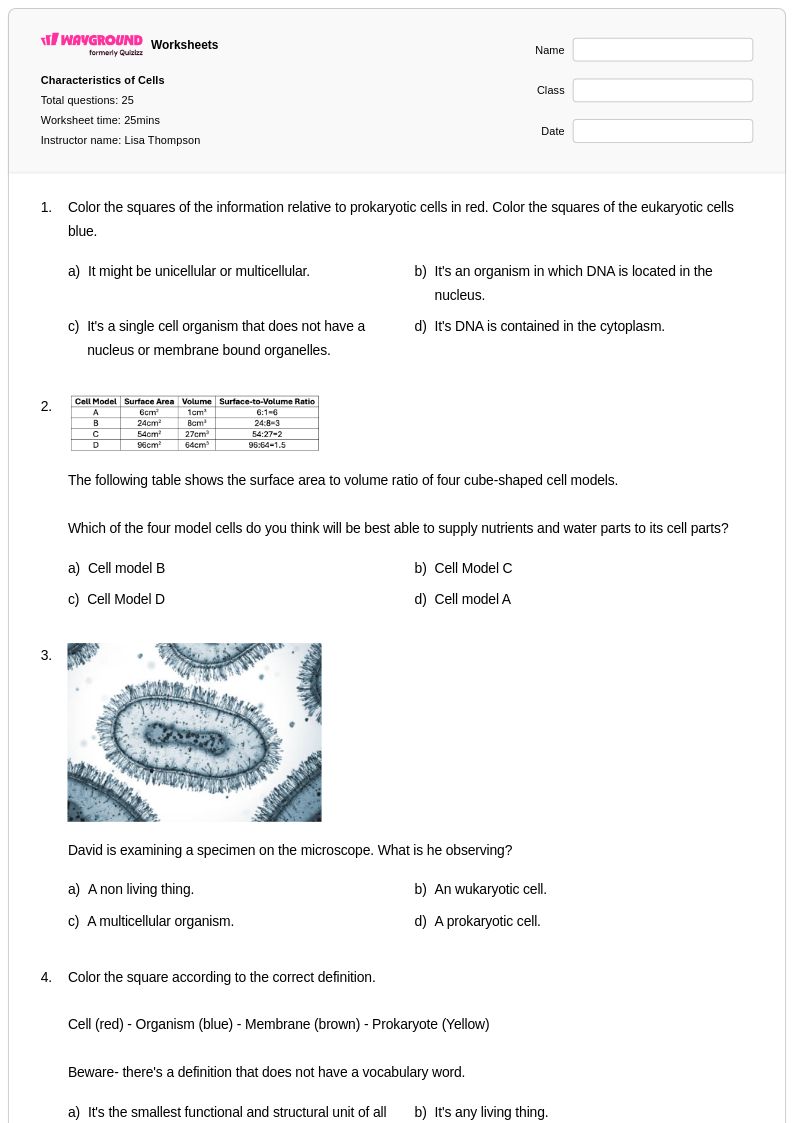
The key structural differences are the absence of a membrane-bound nucleus, the lack of membrane-bound organelles, and the presence of a cell wall in most prokaryotes — features that distinguish them from eukaryotic cells. For assessment, comparison tables and Venn diagrams are effective because they require students to retrieve and organize multiple attributes simultaneously rather than recall isolated facts. Common assessment errors include students listing 'smaller size' as the defining feature rather than the structural absence of a nucleus, so assessment tasks should explicitly probe for that distinction.
How do I differentiate prokaryote worksheets for students at different skill levels?
For foundational learners, focus on cell structure identification using labeled diagrams with word banks, limiting the number of structures students must recognize at once. More advanced students can work with open-ended analysis tasks comparing prokaryotic metabolic diversity — such as chemolithotrophs versus photoheterotrophs — or evaluating prokaryotic roles in biogeochemical cycles. On Wayground, teachers can apply reduced answer choices or read aloud settings to individual students, allowing the same core worksheet to serve the full class while providing targeted support where it is needed.