
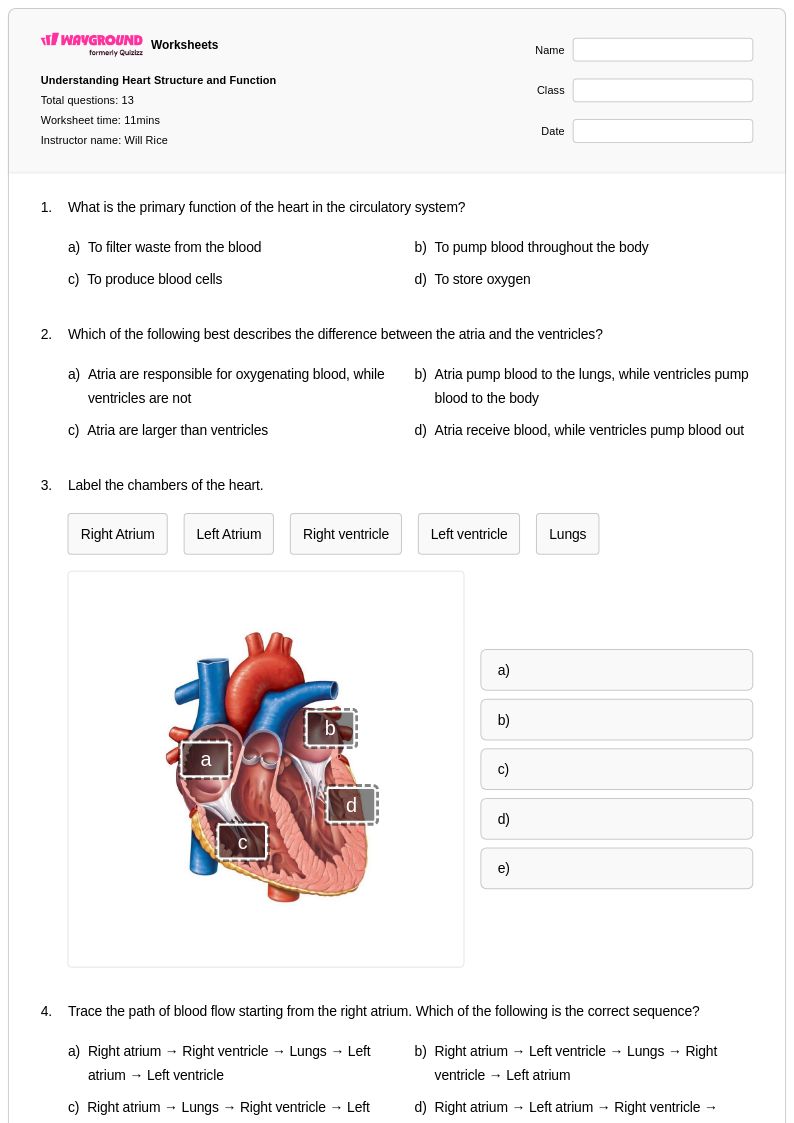
13 Q
7th - Uni
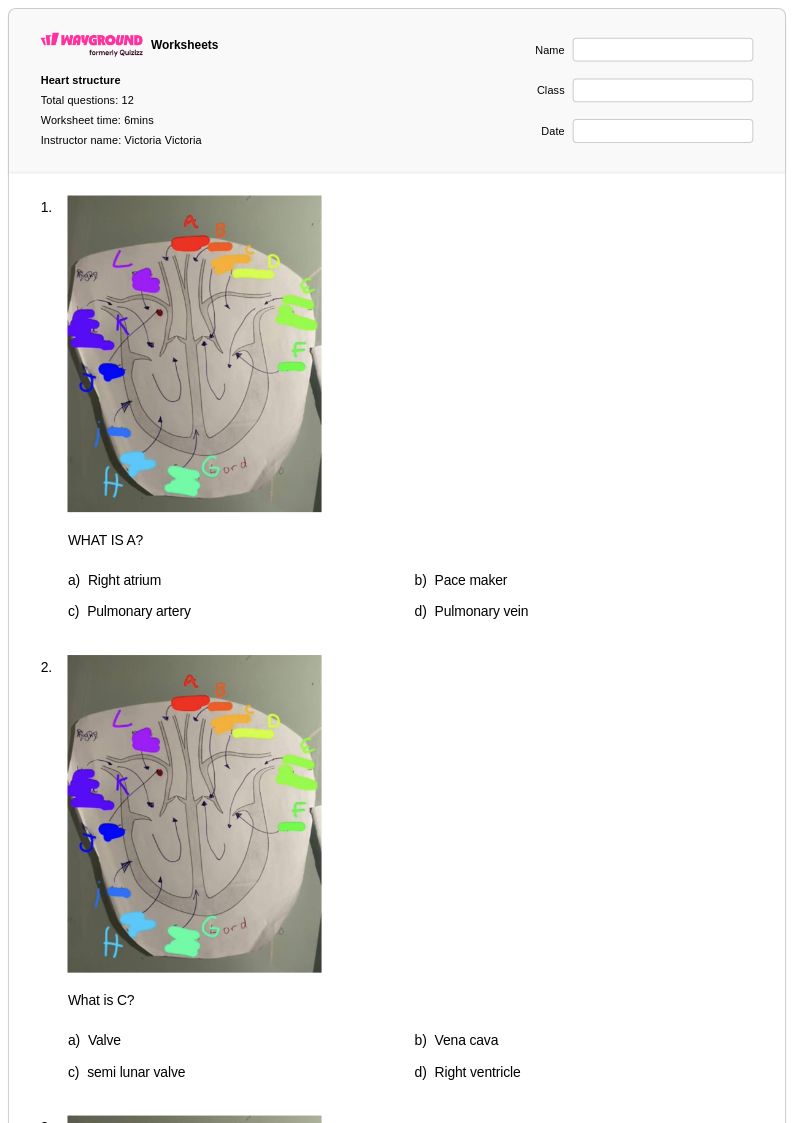
12 Q
4th - 9th
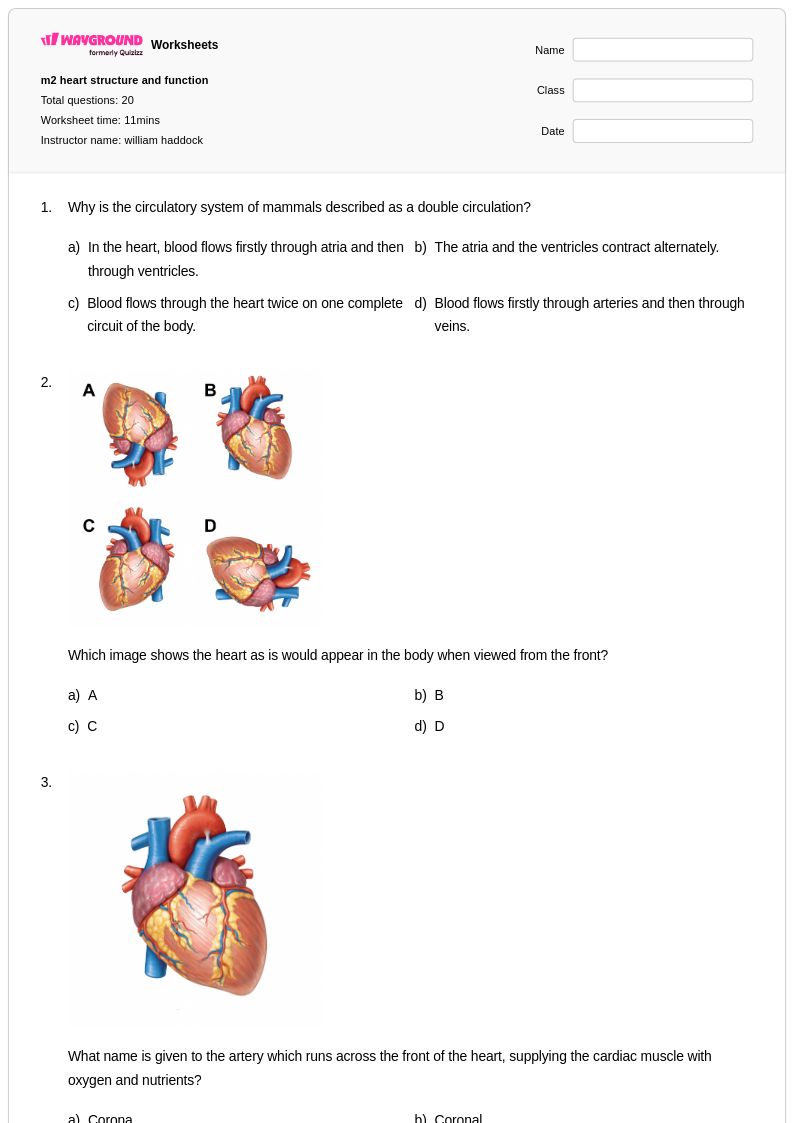
20 Q
8th
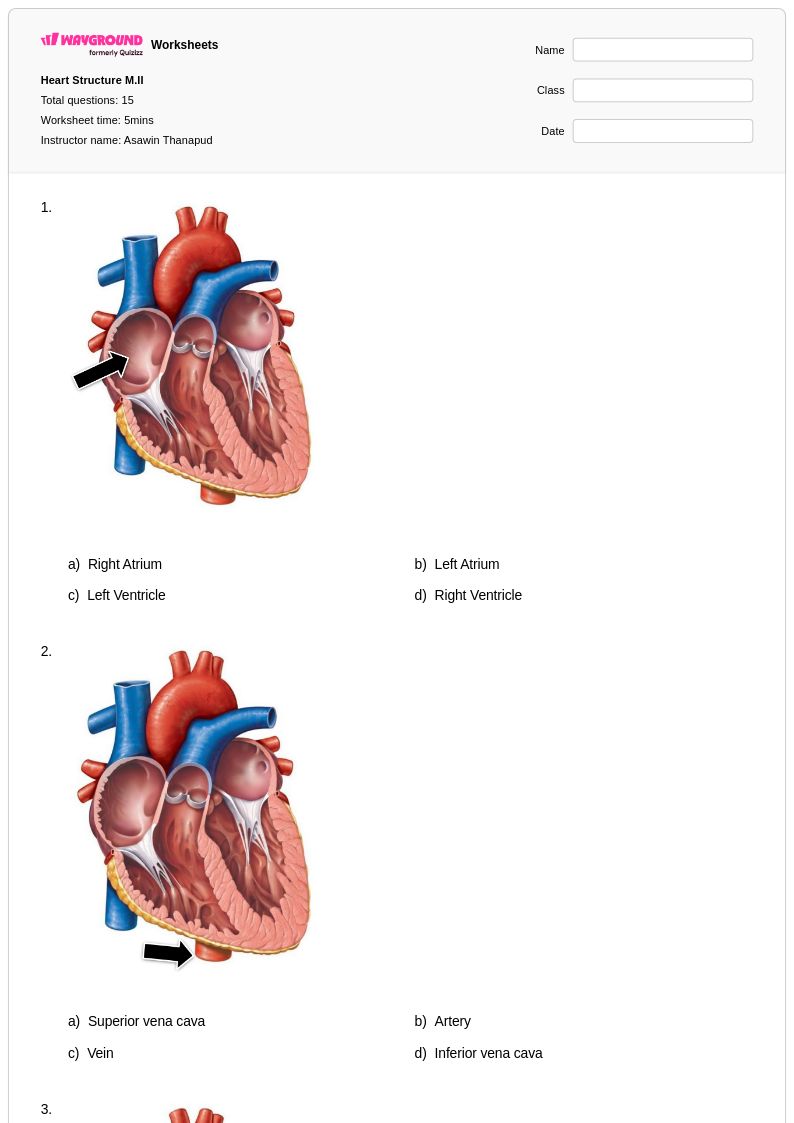
15 Q
7th - 8th
6 Q
8th
26 Q
7th - 8th
10 Q
8th - 11th
9 Q
5th - 8th
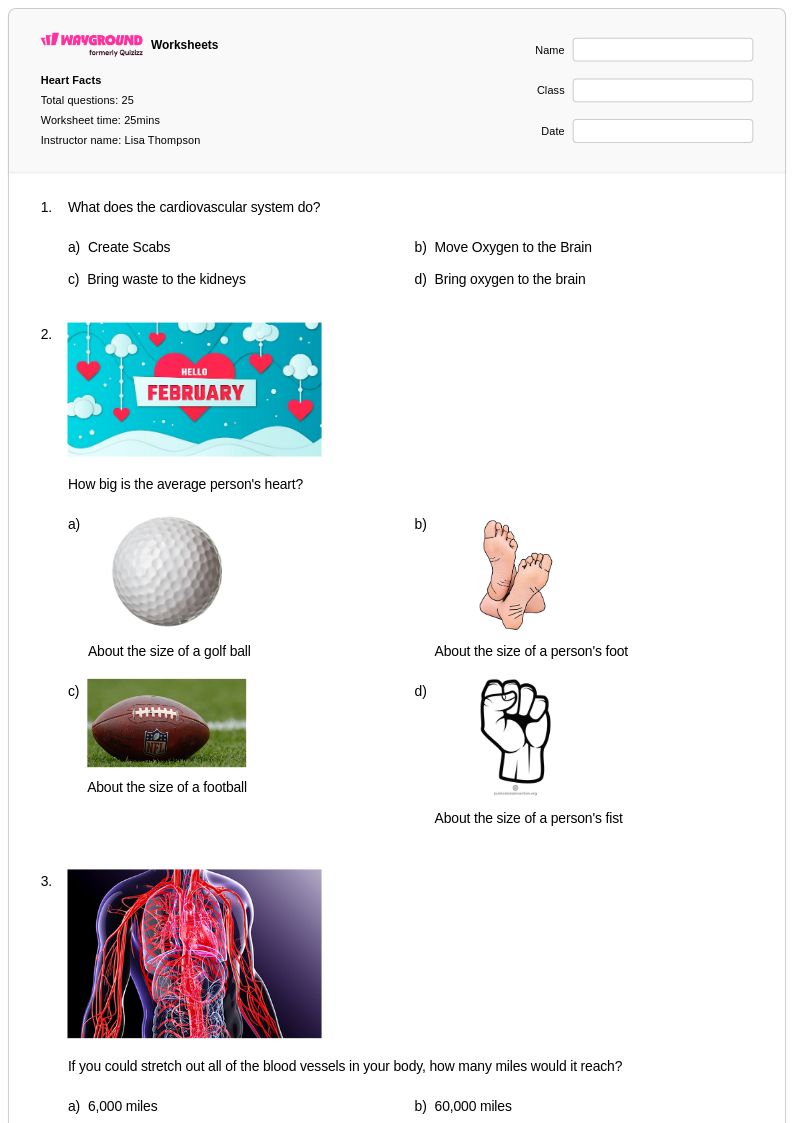
25 Q
7th - Uni
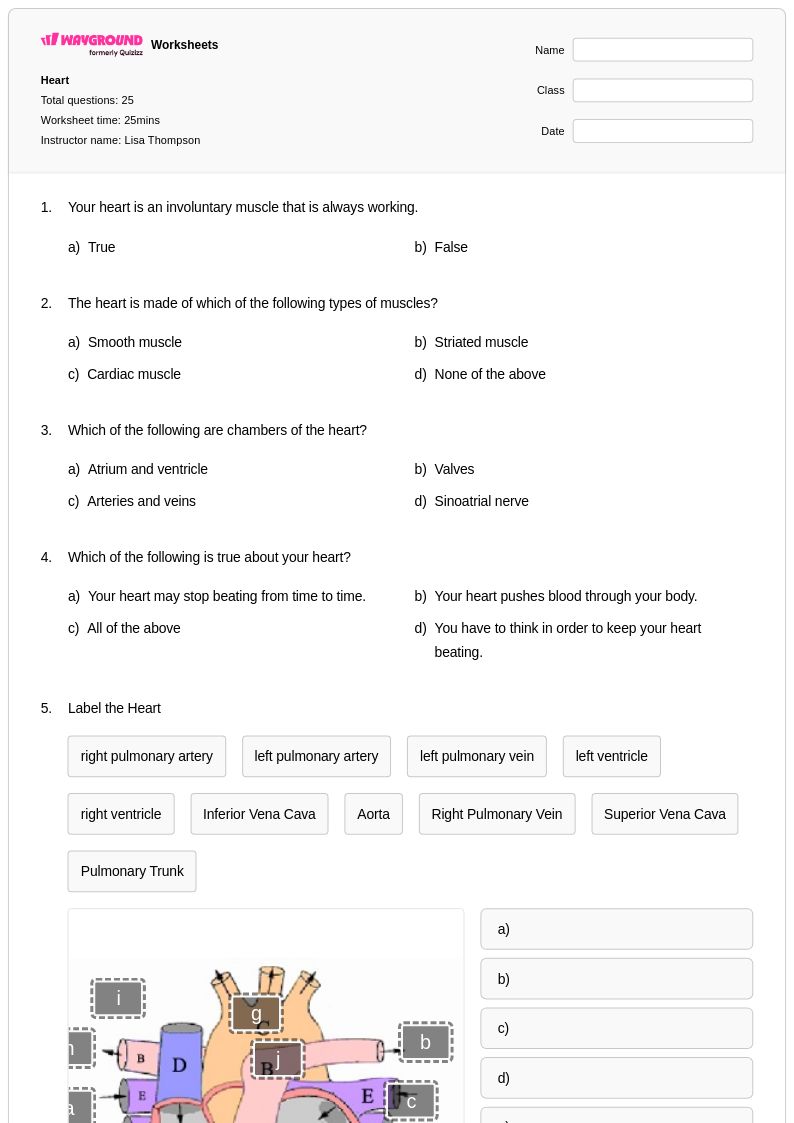
25 Q
7th - Uni
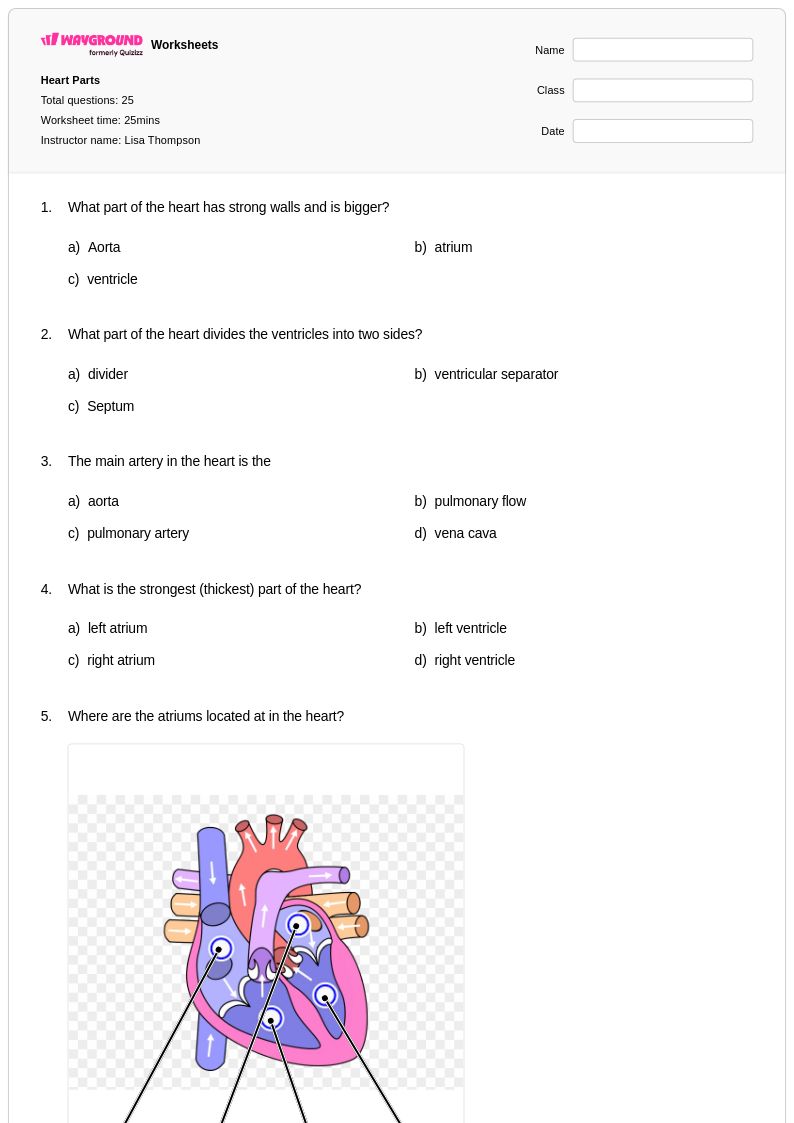
25 Q
7th - Uni
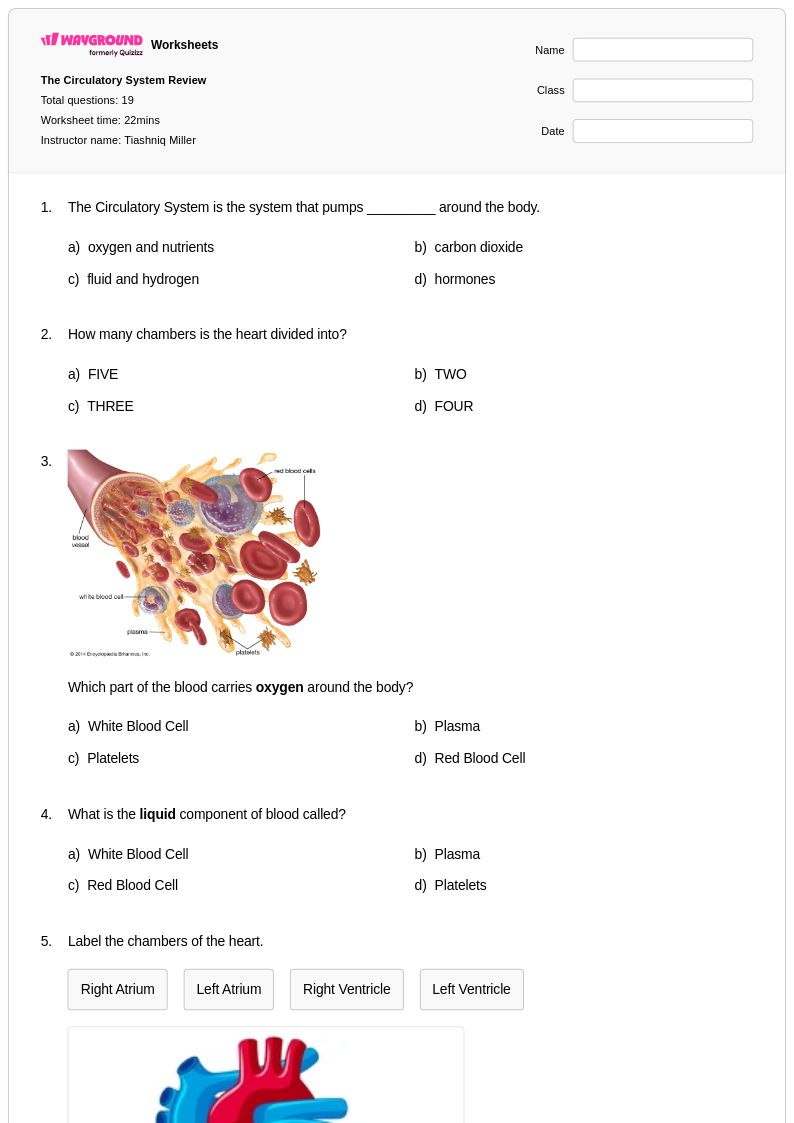
19 Q
8th
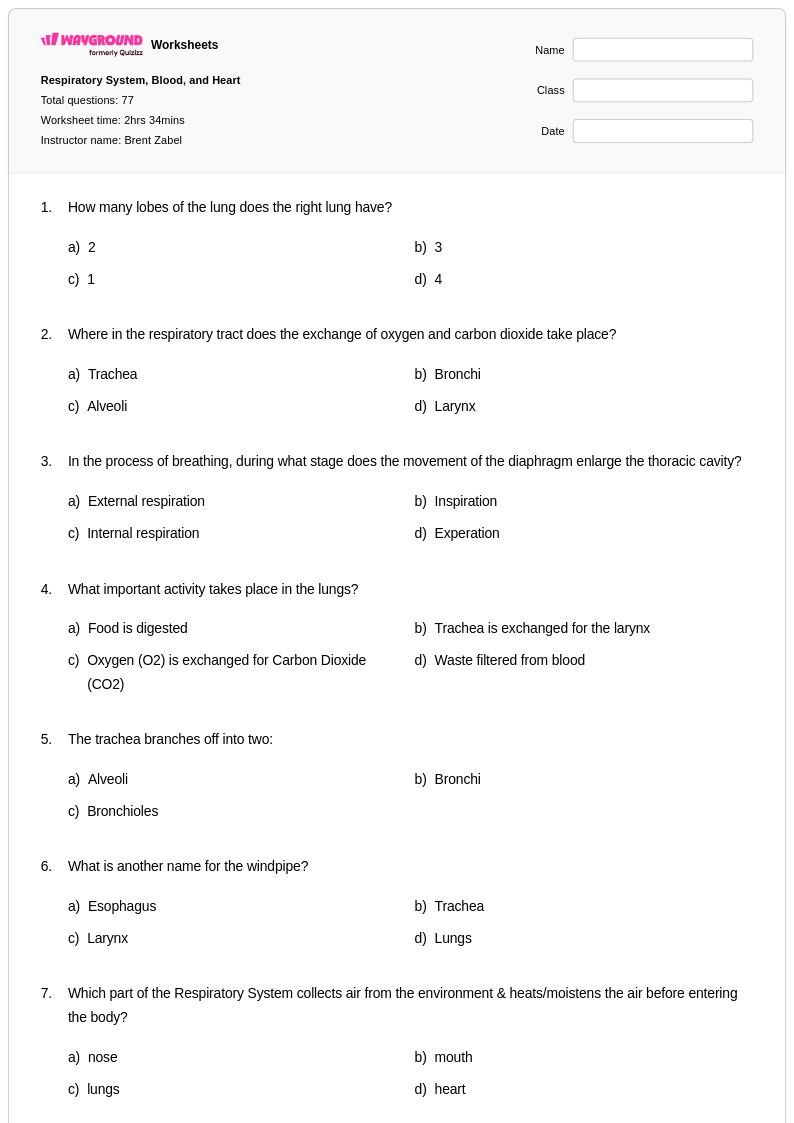
77 Q
7th - 8th
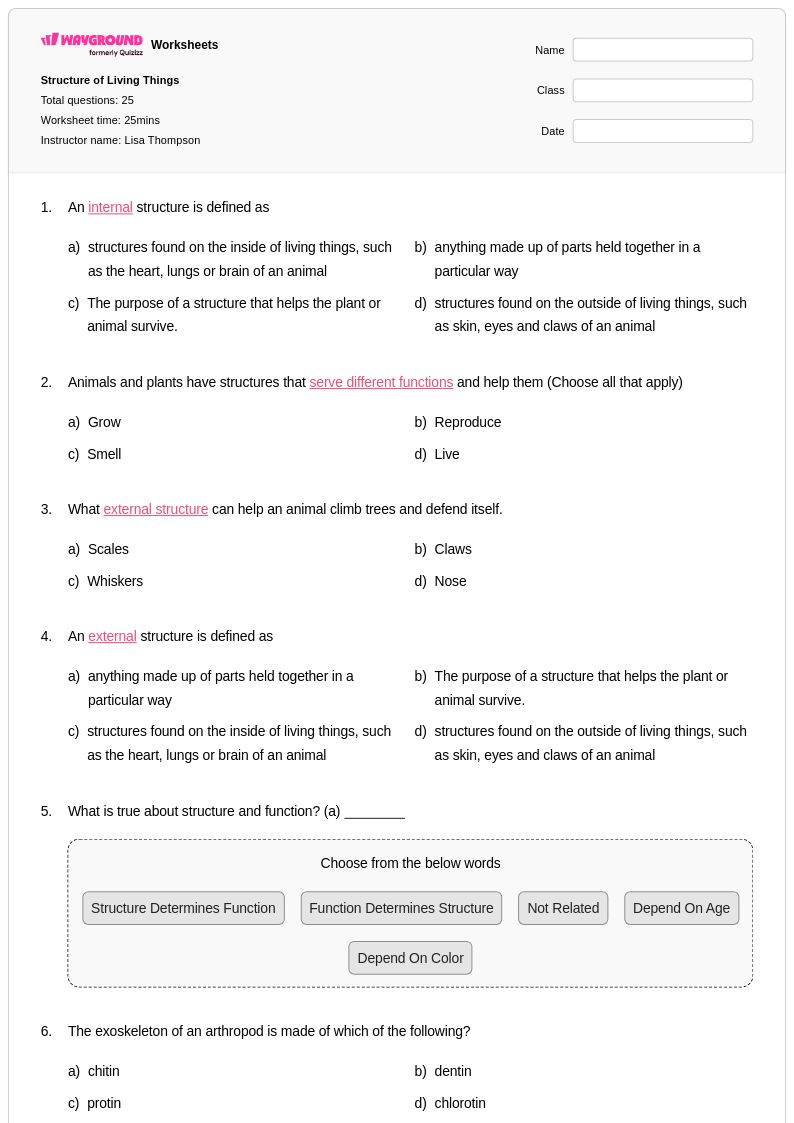
25 Q
5th - Uni
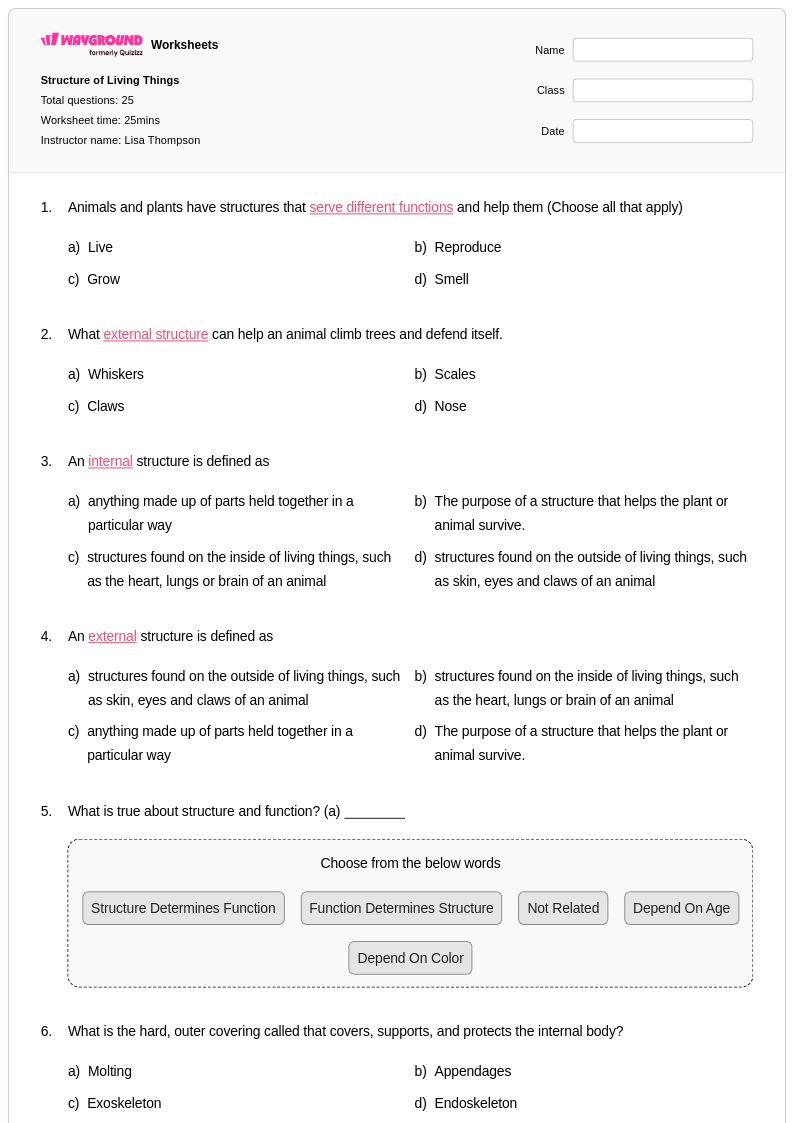
25 Q
5th - Uni
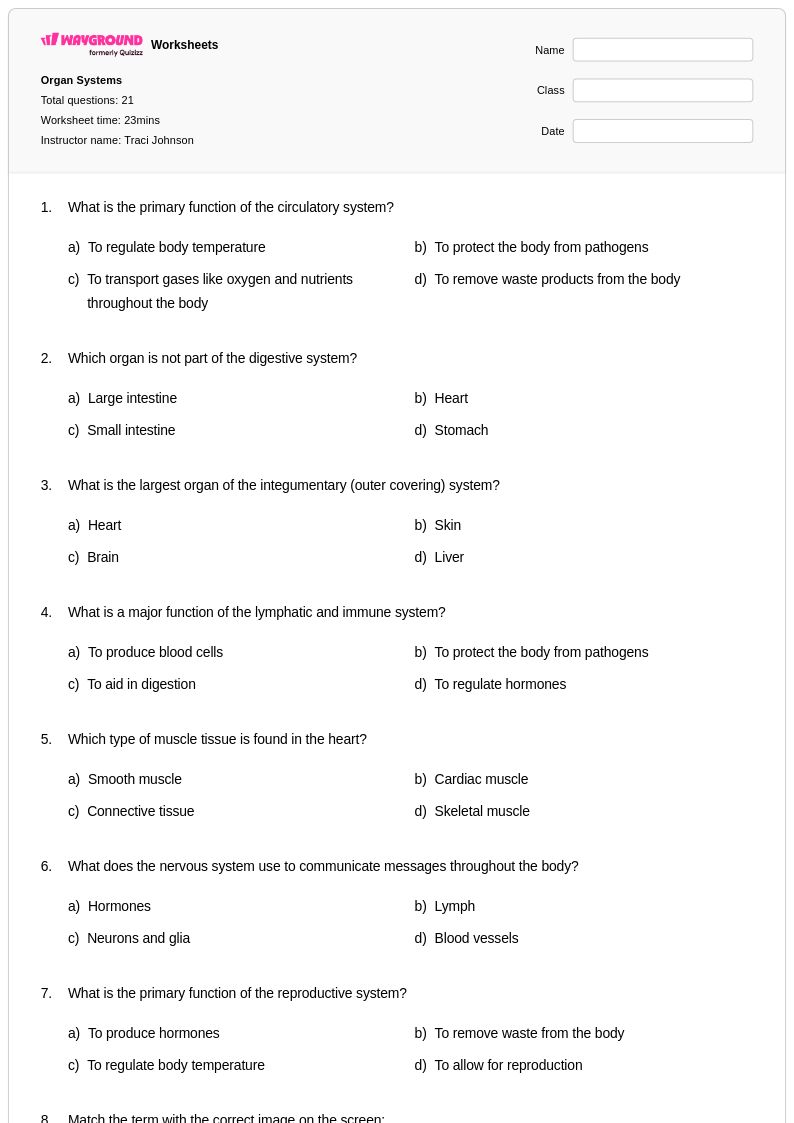
21 Q
6th - 8th
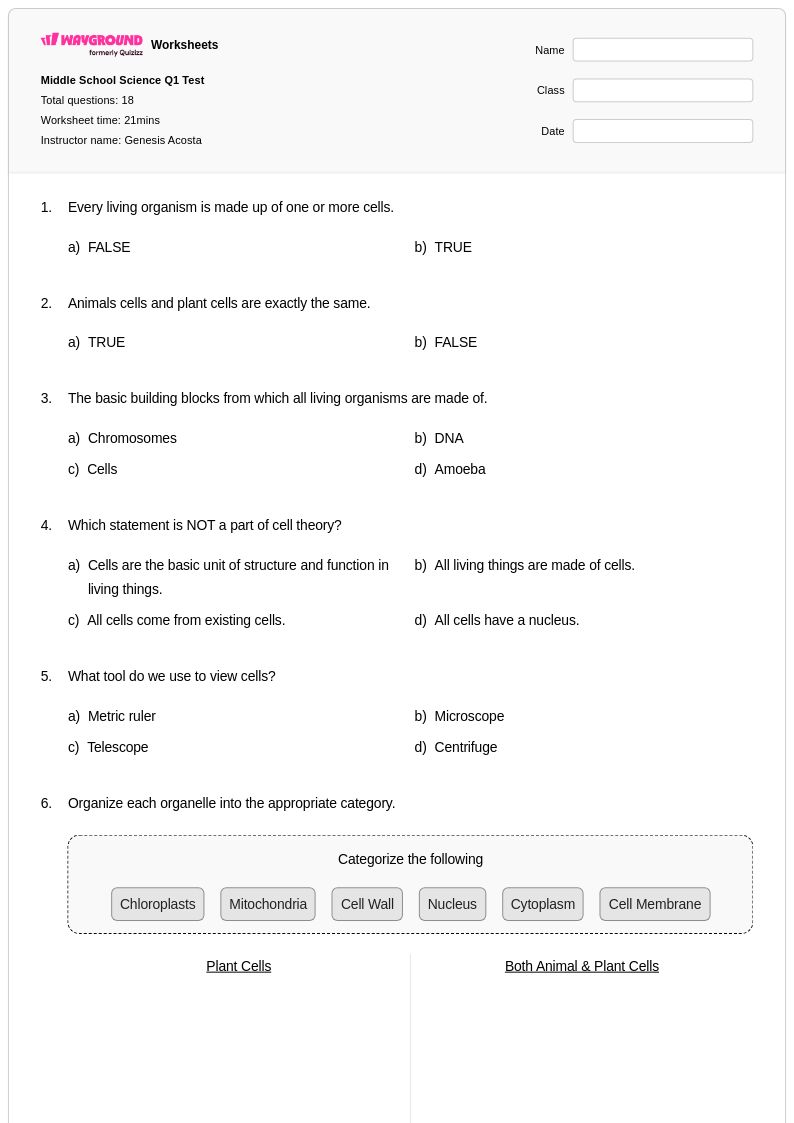
18 Q
6th - 8th
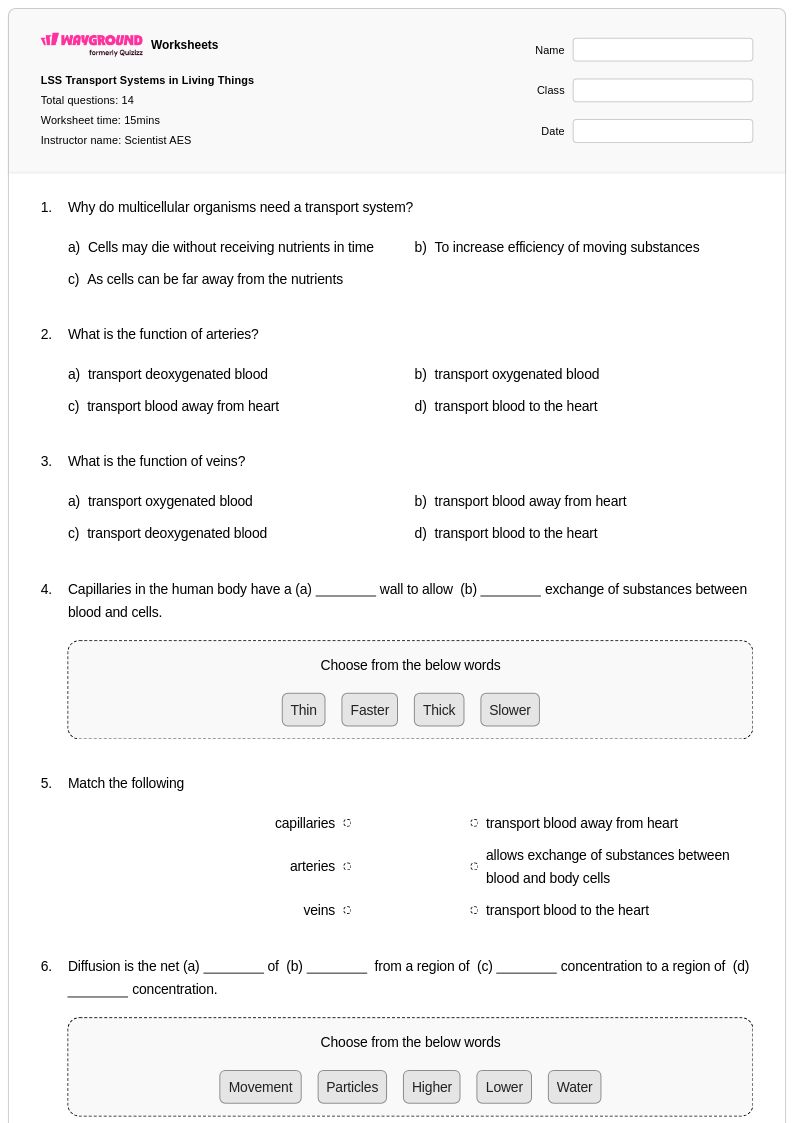
14 Q
7th - 8th
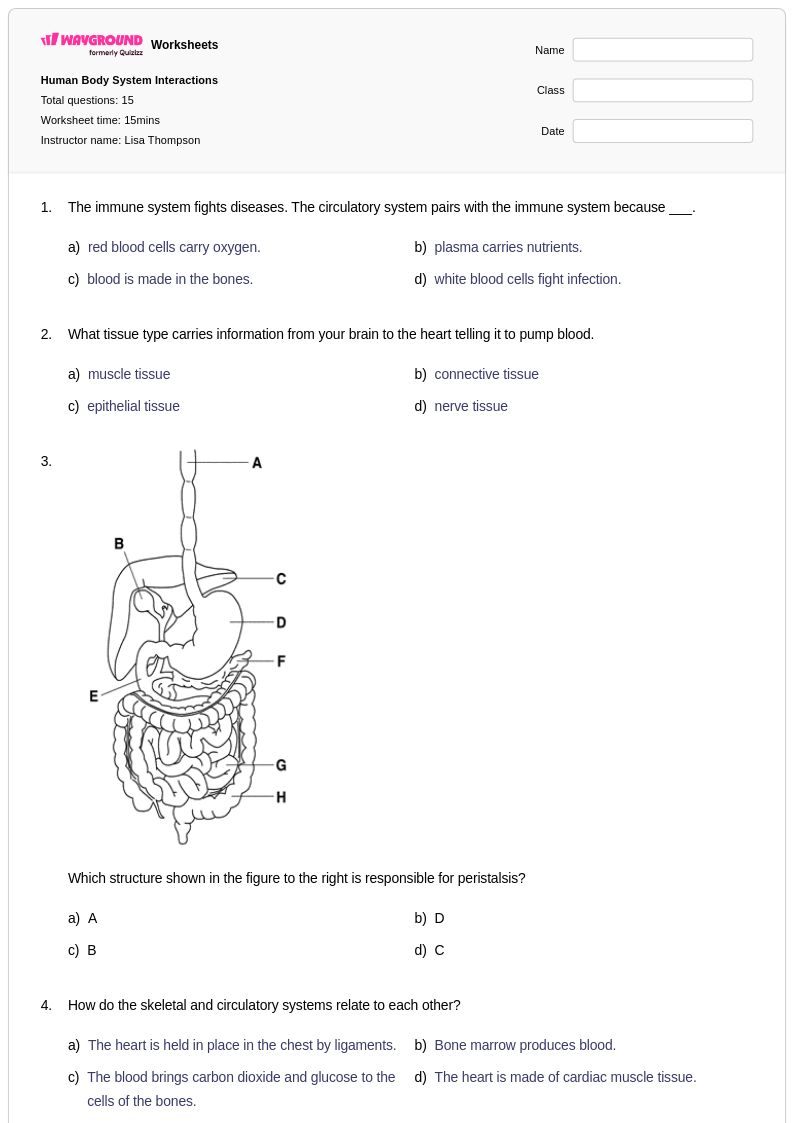
15 Q
7th - Uni
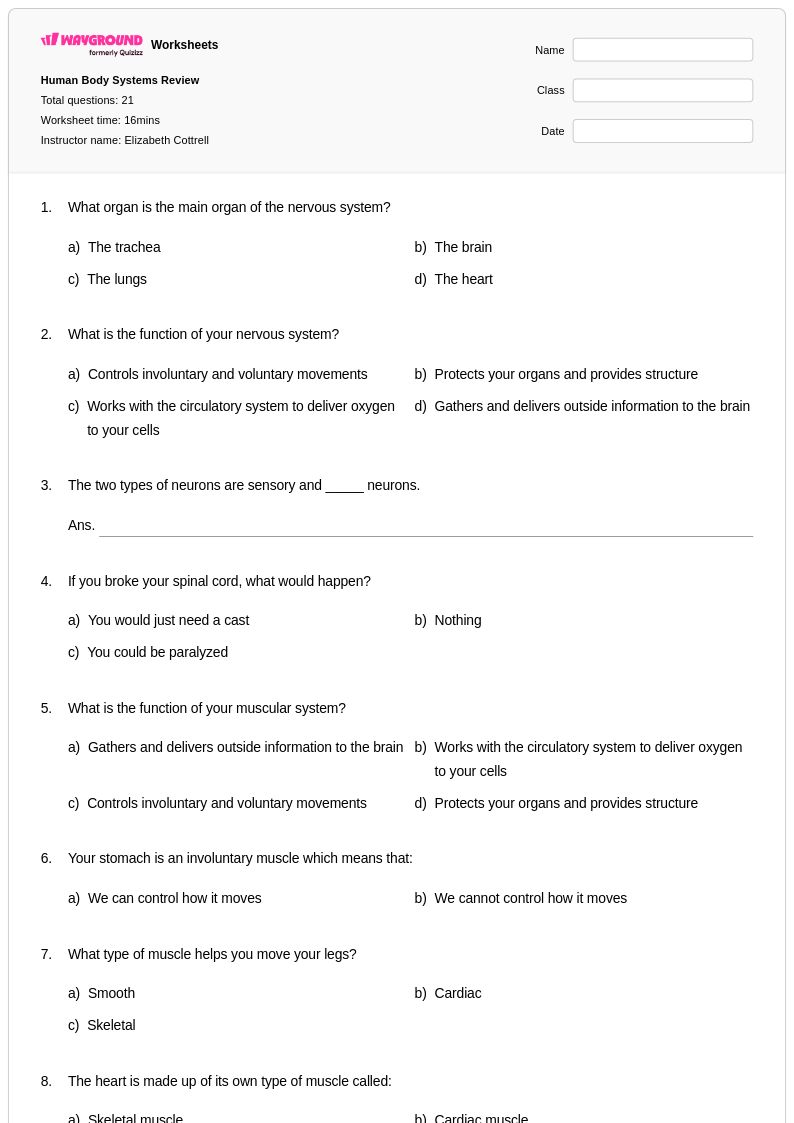
21 Q
7th - 8th
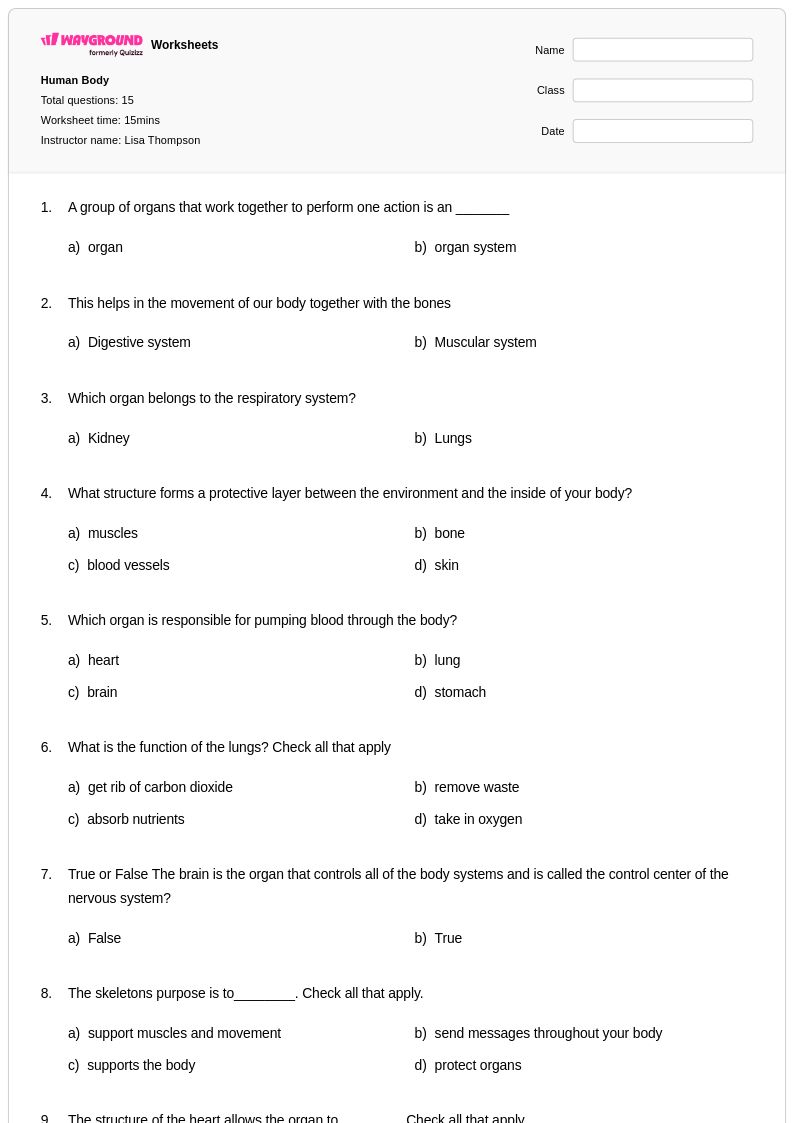
15 Q
3rd - Uni
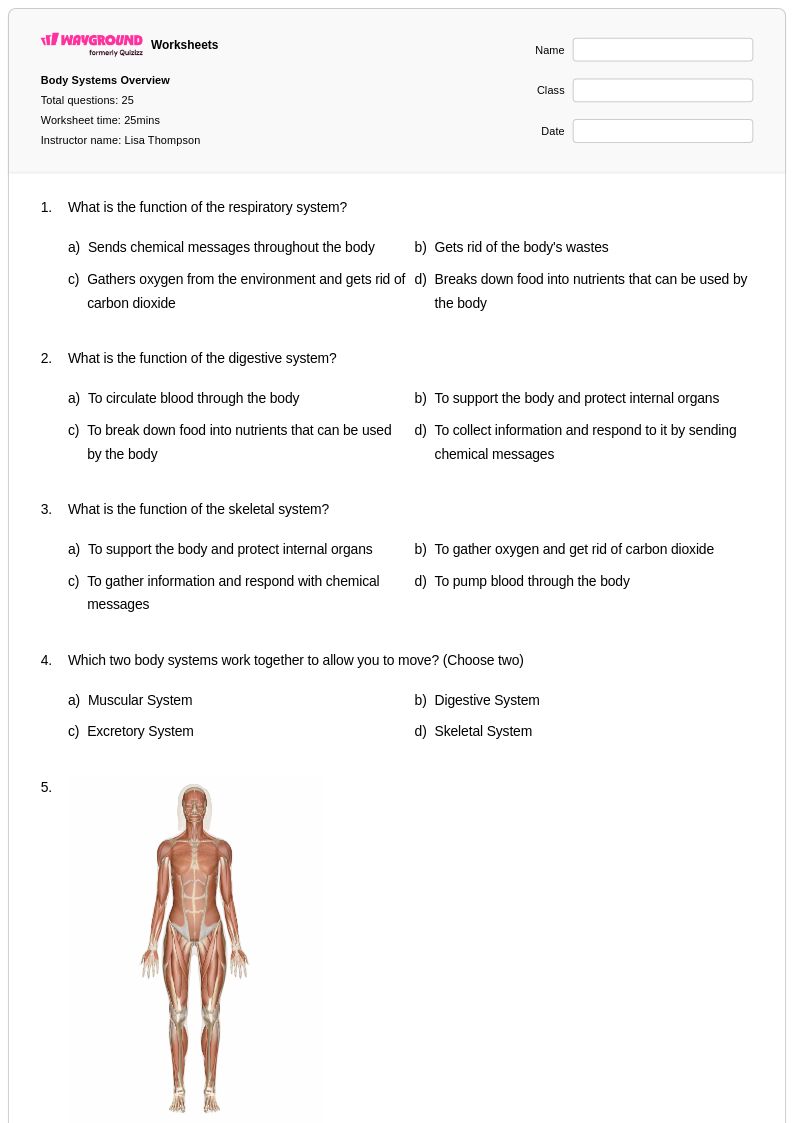
25 Q
7th - Uni
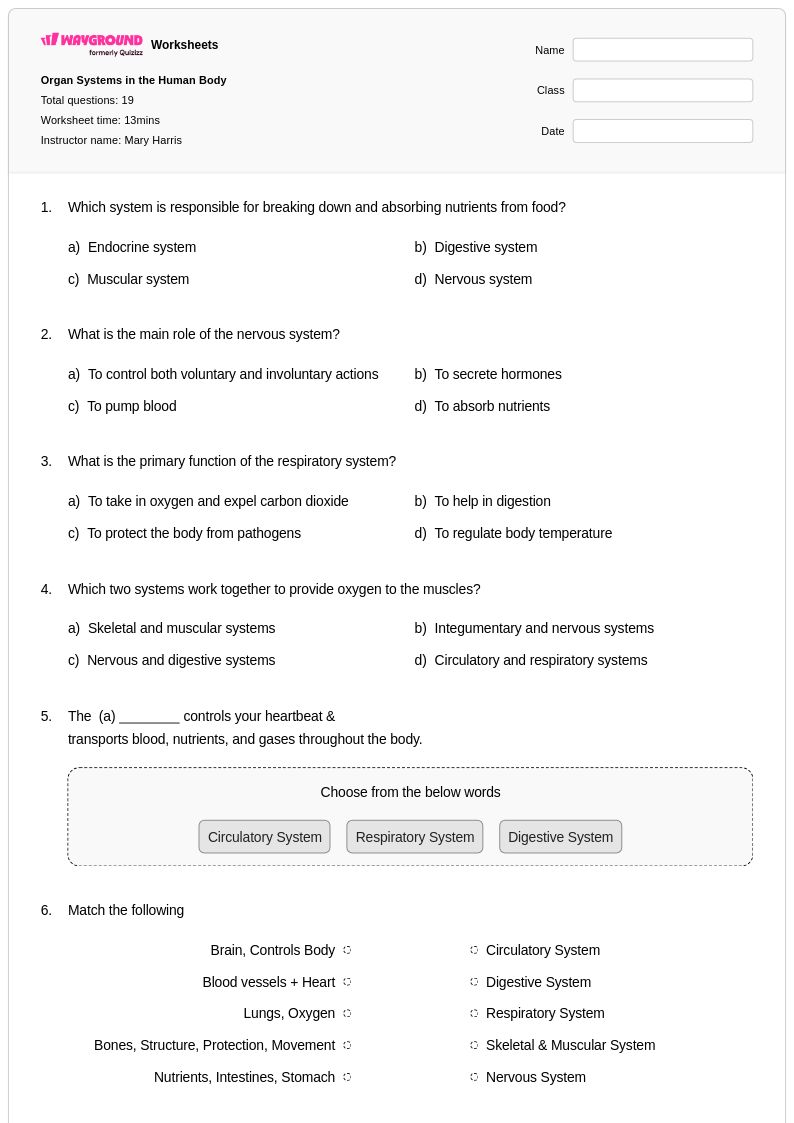
19 Q
6th - 8th
Explore Other Subject Worksheets for class 8
Explore printable Heart Structure worksheets for Class 8
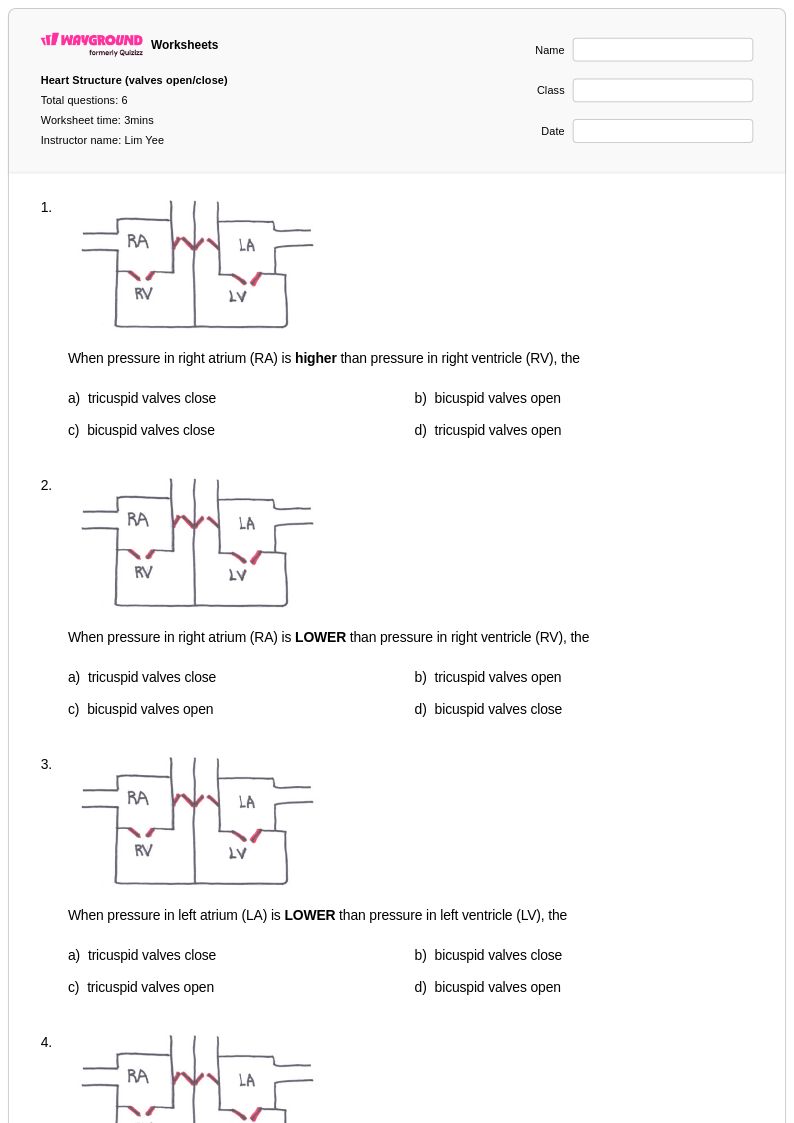
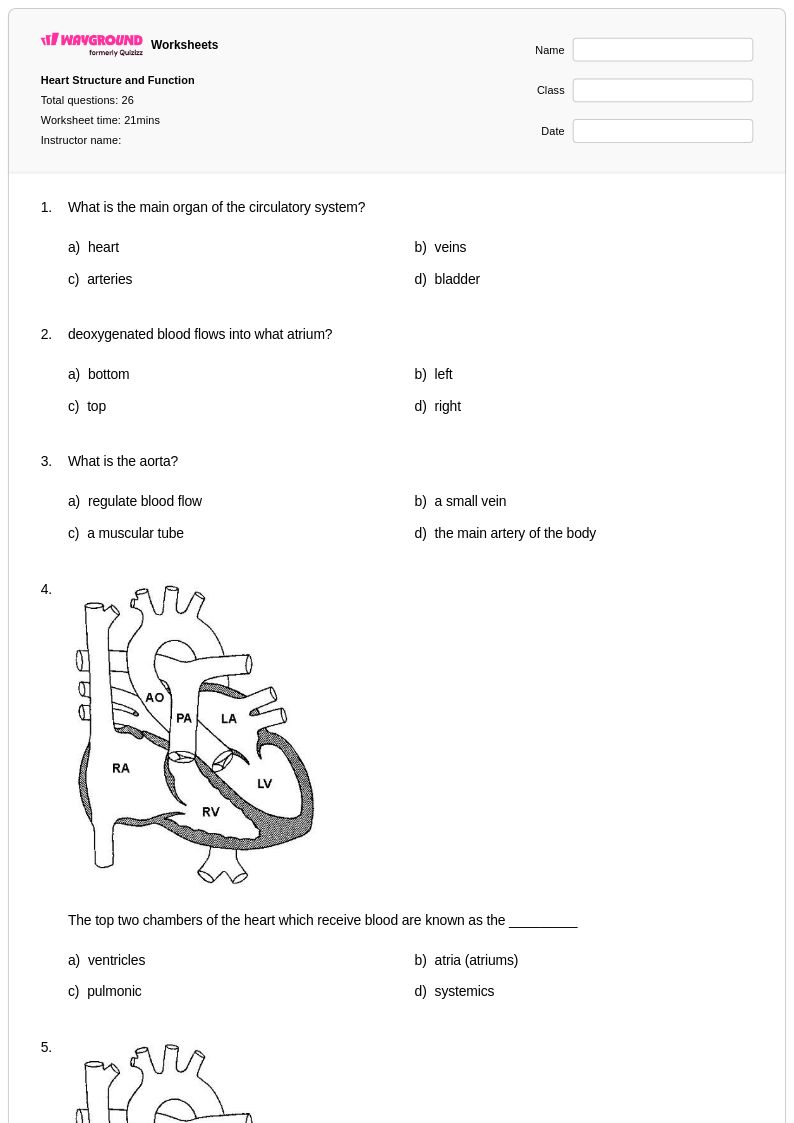
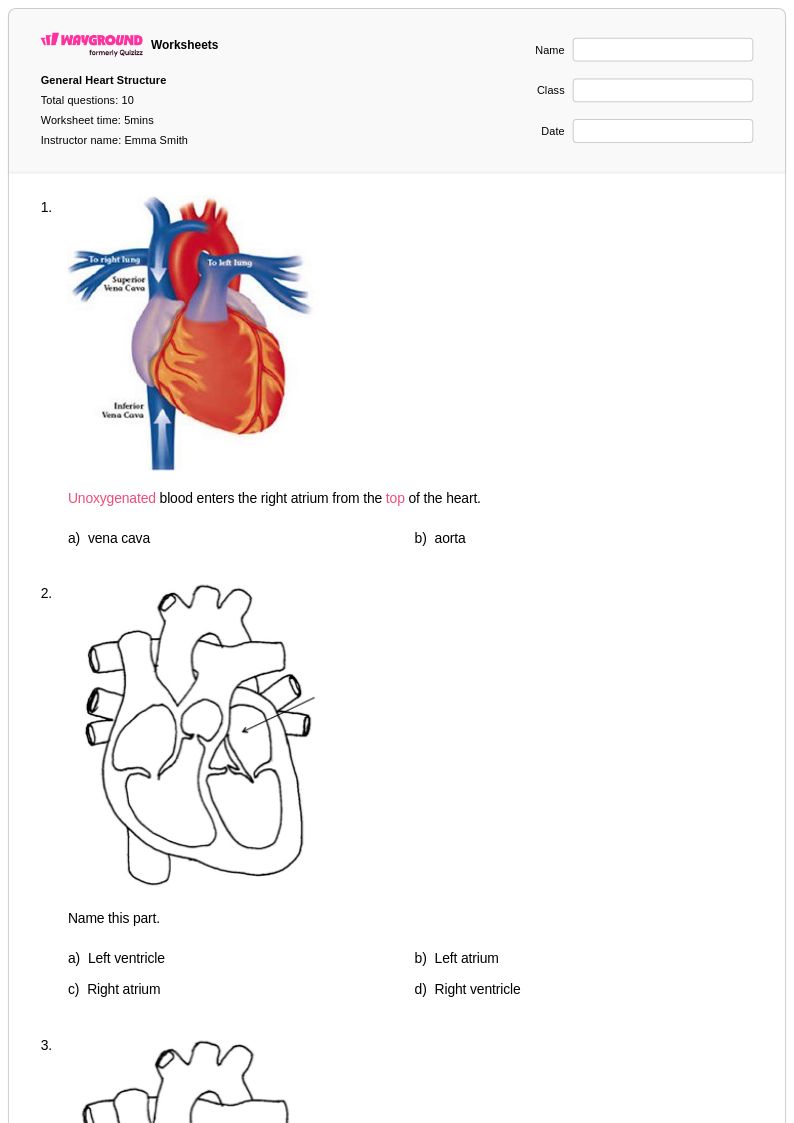
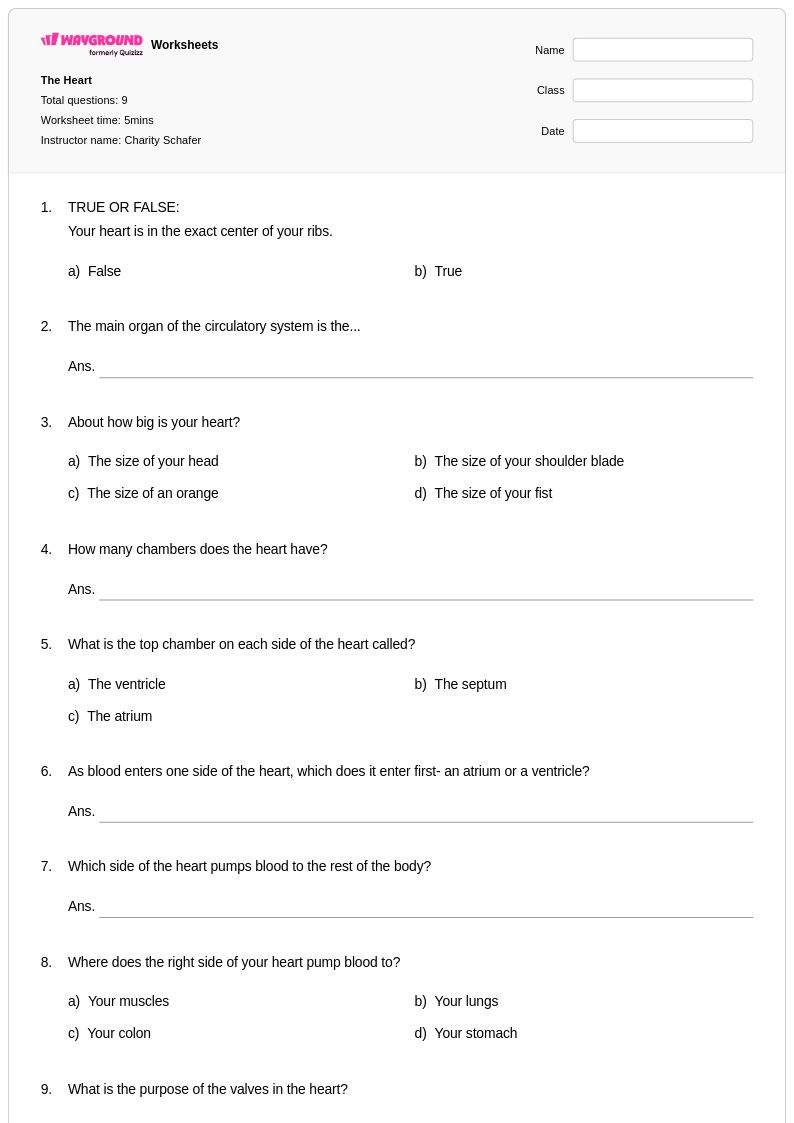
Heart structure worksheets for Class 8 students available through Wayground (formerly Quizizz) provide comprehensive exploration of cardiac anatomy and function, building essential foundational knowledge in cardiovascular biology. These expertly designed resources guide students through detailed examination of the four-chambered heart, including the atria, ventricles, major blood vessels, and specialized cardiac tissues like the sinoatrial node and atrioventricular valves. Students develop critical analytical skills by identifying anatomical structures, tracing blood flow pathways, and understanding the relationship between form and function in cardiac physiology. The collection includes diverse practice problems that challenge learners to apply their knowledge through labeling diagrams, comparing structural adaptations, and explaining how anatomical features support the heart's role as a dual pump. Each worksheet comes with a comprehensive answer key and is available as free printables in convenient PDF format, ensuring accessibility for both classroom instruction and independent study.
Wayground (formerly Quizizz) empowers educators with an extensive library of millions of teacher-created heart structure resources, featuring robust search and filtering capabilities that allow precise targeting of specific anatomical concepts and skill levels. The platform's standards alignment ensures Class 8 heart structure worksheets meet curriculum requirements while supporting differentiated instruction through customizable content that addresses diverse learning needs. Teachers can seamlessly adapt materials for remediation by focusing on basic structural identification or enhance learning through advanced comparative anatomy exercises. The flexible format options include both printable PDFs for traditional classroom use and digital versions for interactive learning environments, facilitating comprehensive lesson planning and skill practice. These sophisticated tools enable educators to efficiently address individual student needs, whether providing foundational support for struggling learners or offering enrichment opportunities for advanced students ready to explore complex cardiovascular relationships and physiological processes.
FAQs
How do I teach heart structure to students effectively?
What exercises help students practice identifying the parts of the heart?
What misconceptions do students commonly have about heart structure?
How can I differentiate heart structure worksheets for students at different skill levels?
How do I use Wayground's heart structure worksheets in my classroom?