Free Printable Microscope Observation Worksheets for Class 8
Class 8 microscope observation worksheets from Wayground help students master proper microscopy techniques and cellular identification through engaging printables, practice problems, and comprehensive answer keys for enhanced biology learning.
Explore printable Microscope Observation worksheets for Class 8
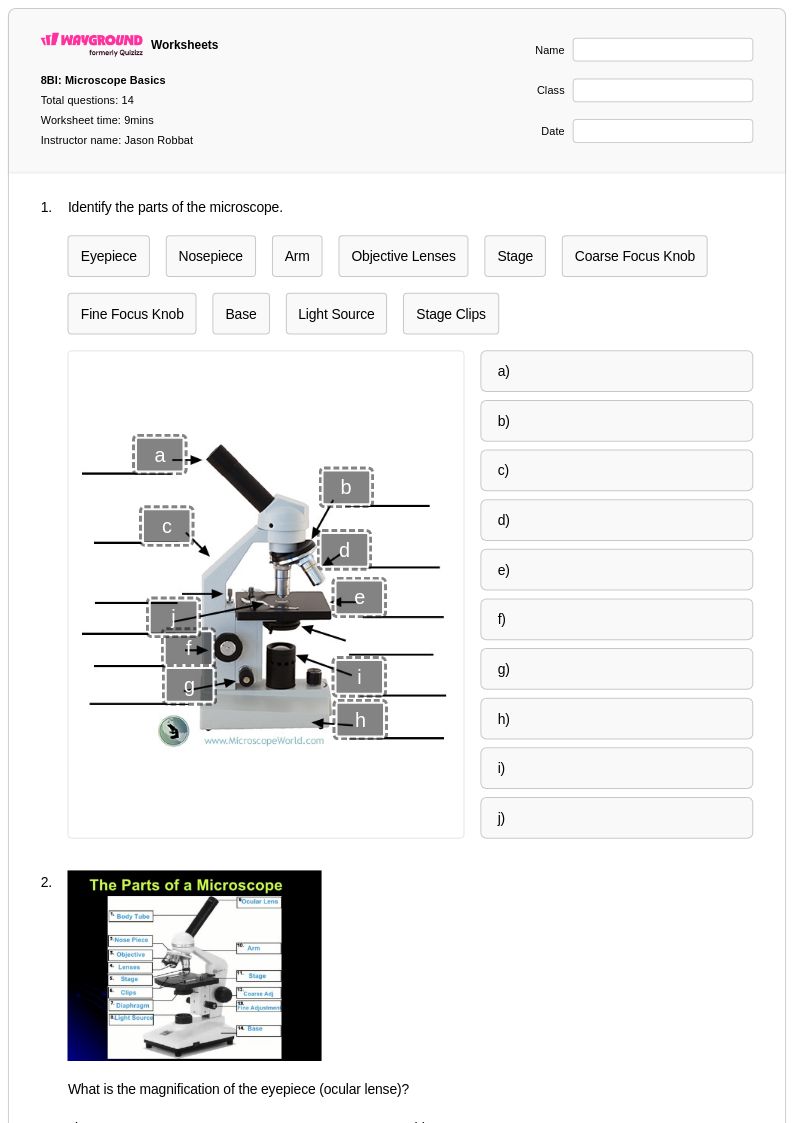
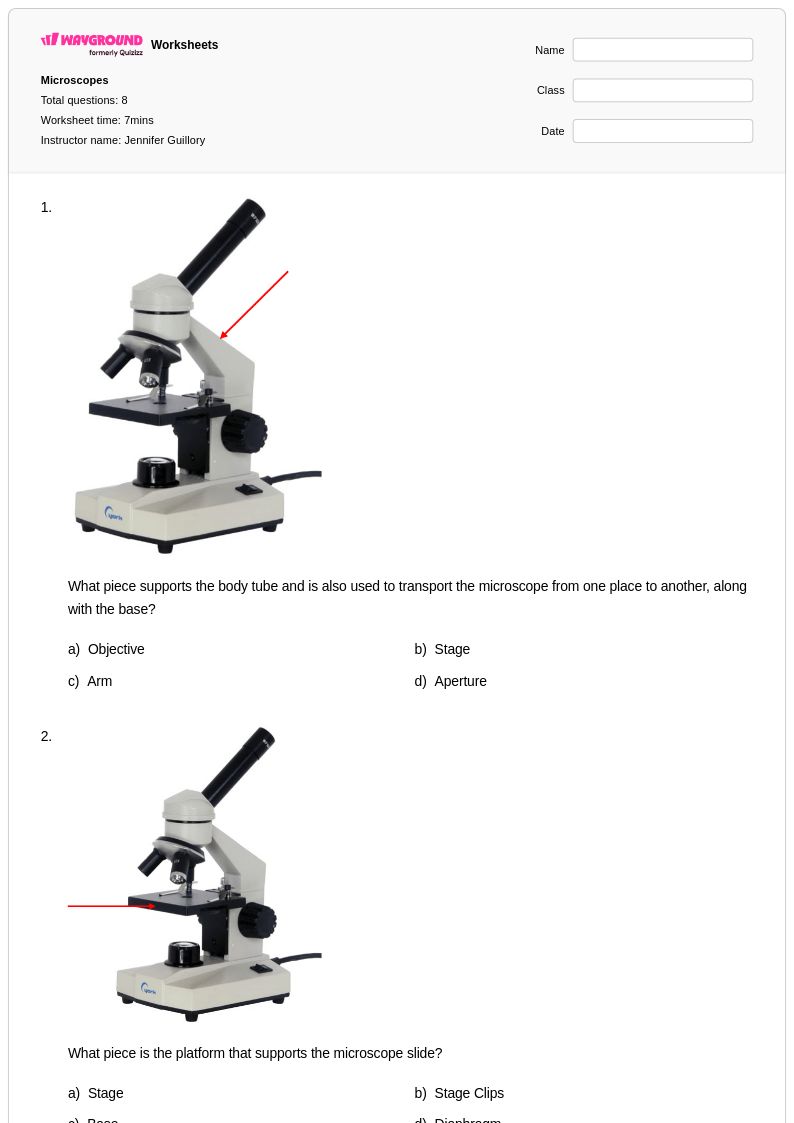
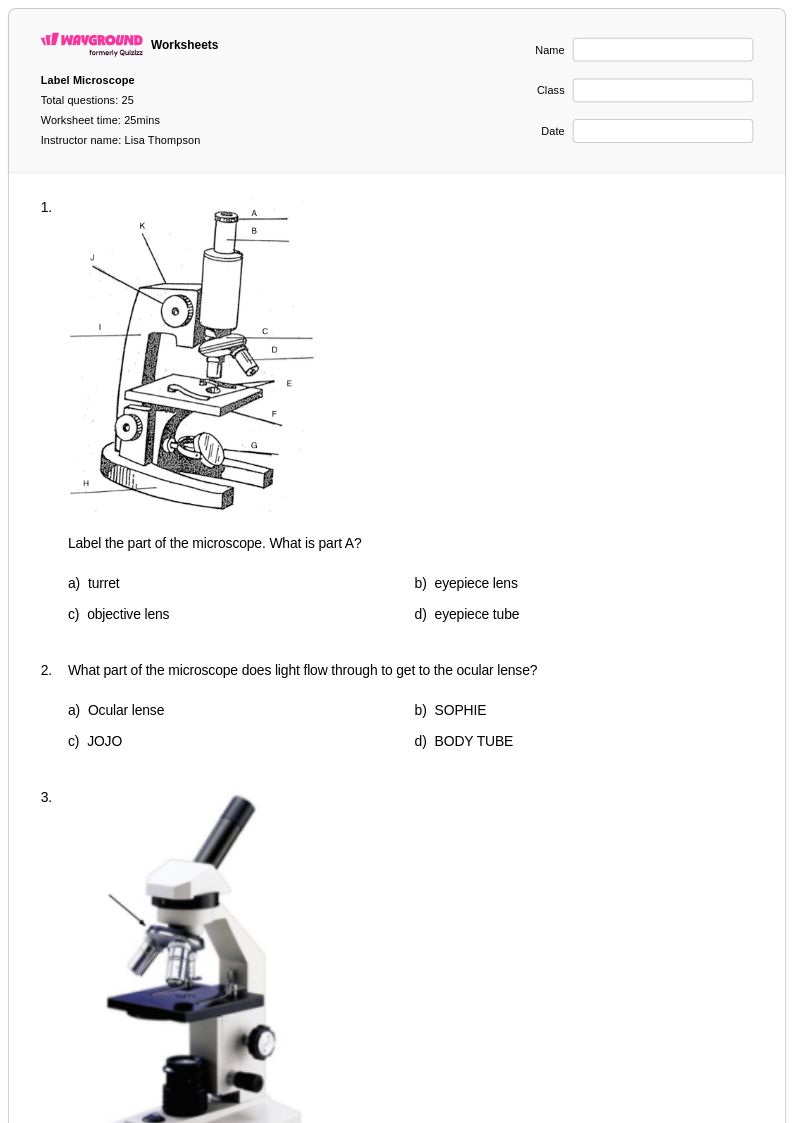
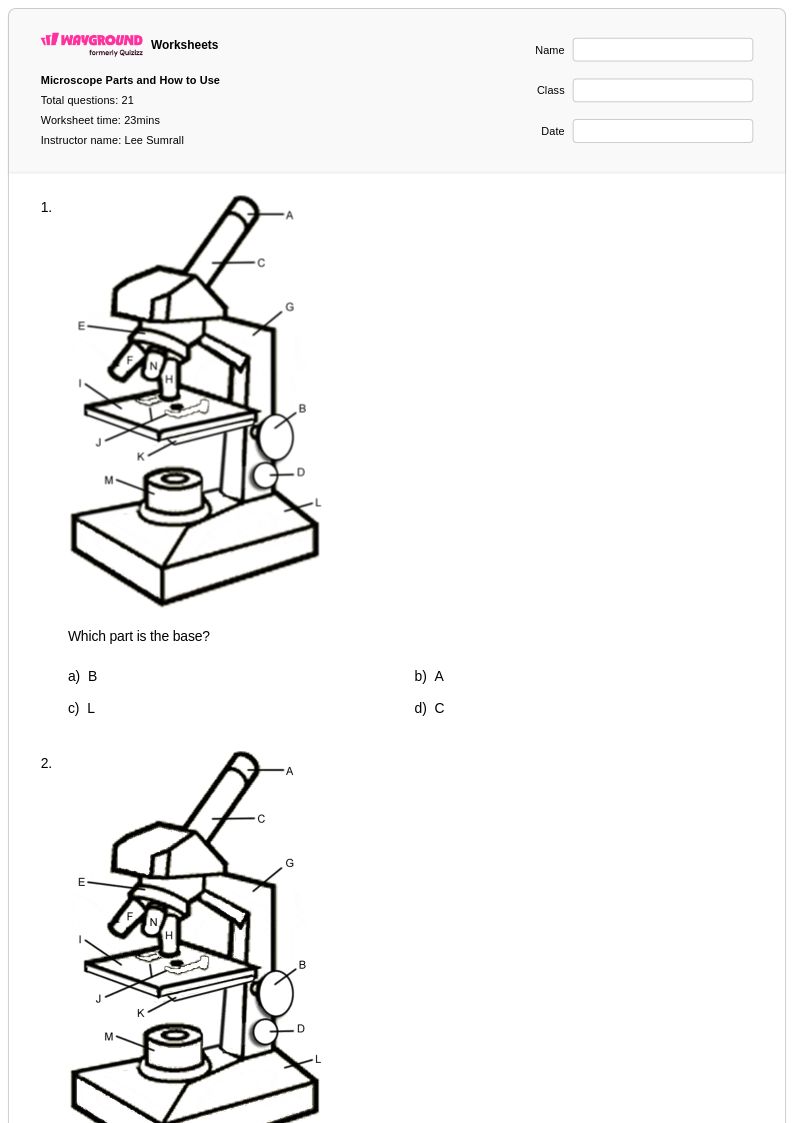
Class 8 microscope observation worksheets through Wayground (formerly Quizizz) provide comprehensive practice materials that develop students' scientific investigation skills and deepen their understanding of cellular structures and microscopy techniques. These expertly designed resources guide students through the fundamentals of proper microscope use, including identifying parts, calculating magnification, preparing wet mounts, and making detailed observations of various specimens from plant cells to microorganisms. The collection includes structured practice problems that reinforce key concepts such as depth of field, resolution, and the differences between compound and stereo microscopes, while answer keys support both independent learning and teacher assessment. Students work through hands-on activities that mirror real laboratory experiences, building essential skills in scientific drawing, measurement, and data recording that form the foundation for advanced biological studies.
Wayground's extensive library of teacher-created microscope observation resources offers educators access to millions of high-quality materials with robust search and filtering capabilities that align with state and national science standards. Teachers can easily differentiate instruction by selecting from worksheets that range from basic microscope operation to advanced cellular observation techniques, with flexible customization options that allow modifications to meet diverse learning needs. The platform's comprehensive collection is available in both printable pdf formats for traditional classroom use and digital versions for interactive learning environments, supporting seamless lesson planning and implementation. These versatile resources prove invaluable for skill remediation, concept reinforcement, and enrichment activities, enabling teachers to provide targeted practice that strengthens students' laboratory skills and scientific literacy while accommodating different learning styles and academic levels within the Class 8 biology curriculum.
FAQs
How do I teach microscope observation skills to biology students?
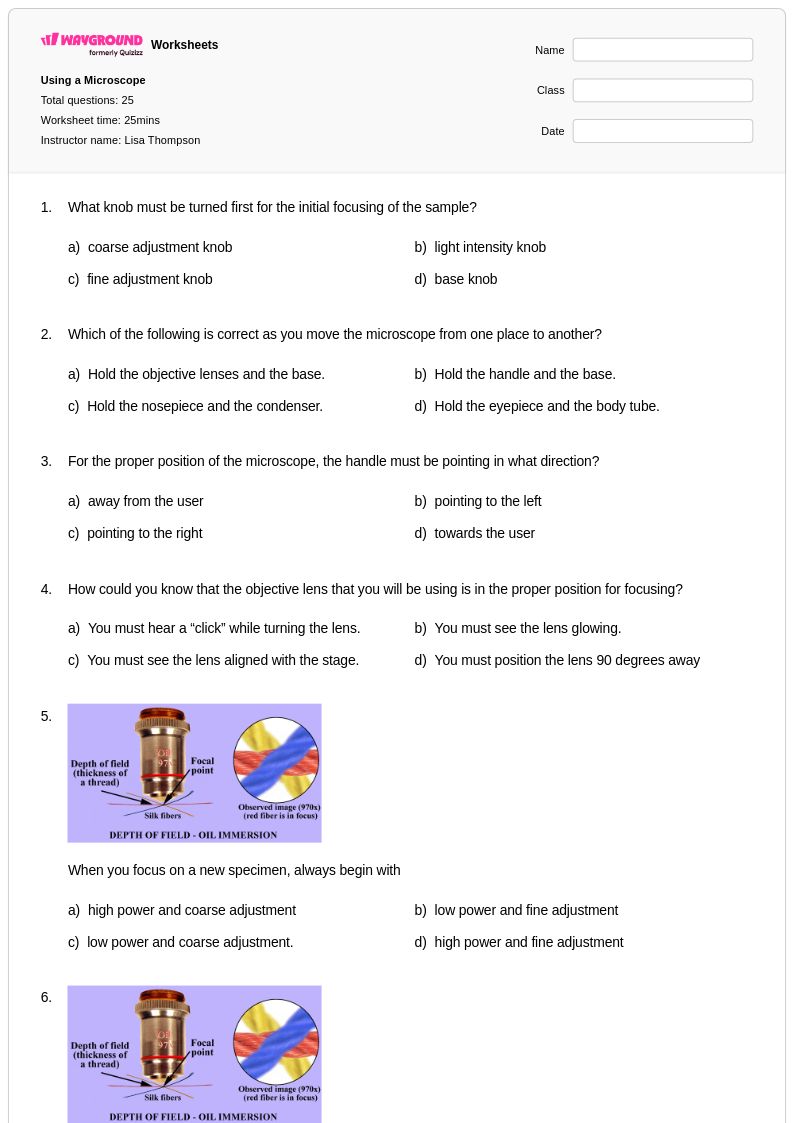
Effective microscope observation instruction begins with explicit modeling of proper technique: how to carry the instrument, adjust coarse and fine focus, and switch between objective lenses. Teachers should sequence lessons from simple prepared slides to more complex specimens like pond water or tissue samples so students build confidence incrementally. Pairing hands-on lab time with structured observation recording sheets helps students develop the habit of documenting findings through labeled scientific drawings and descriptive notes rather than relying on memory.
What exercises help students practice microscope observation and magnification calculations?
Practice exercises should include calculating total magnification by multiplying the eyepiece power by the objective lens power, sketching and labeling cellular structures at different magnification levels, and comparing observations across multiple specimens. Worksheets that prompt students to estimate actual specimen size using field of view measurements add a layer of quantitative rigor to observational practice. Repeated exercises with varied biological samples, from simple onion cells to complex cheek cells, reinforce both technique and analytical precision.
What mistakes do students commonly make when recording microscope observations?
The most common errors include drawing what students expect to see rather than what is actually visible through the eyepiece, failing to label structures with accurate scientific terminology, and neglecting to record the magnification level used during observation. Students also frequently confuse artifacts, air bubbles, or debris on the slide with actual cellular structures. Targeted practice with answer keys that include annotated reference drawings helps students self-correct these errors and calibrate their observational accuracy.
How do I differentiate microscope observation worksheets for students at different skill levels?
For struggling students, use worksheets that focus on identifying basic microscope parts and practicing a single focusing procedure before introducing specimen analysis. Advanced learners can be challenged with exercises involving specialized staining techniques, comparative tissue analysis, or open-ended investigation prompts. On Wayground, teachers can apply accommodations such as Read Aloud for students who need question text read to them, or reduced answer choices to lower cognitive load for students working through foundational microscopy concepts.
How can I use Wayground's microscope observation worksheets in my classroom?
Wayground's microscope observation worksheets are available as printable PDFs for traditional lab settings and in digital formats for technology-integrated or remote learning environments. Teachers can assign digital versions directly to students and host them as a quiz on Wayground to track completion and review responses in one place. Both formats include complete answer keys, making them practical for independent practice sessions, pre-lab preparation, or post-lab review without requiring additional teacher-created materials.