Free Printable Symbiotic Relationship Worksheets for Class 8
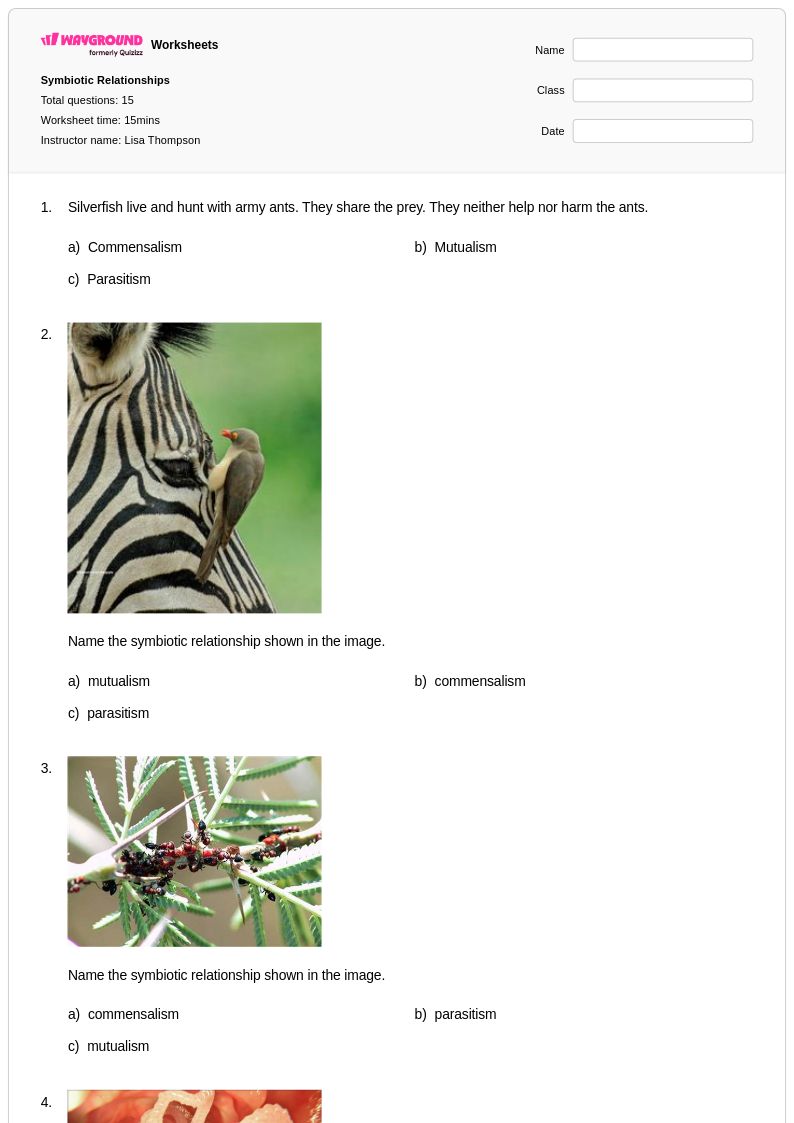
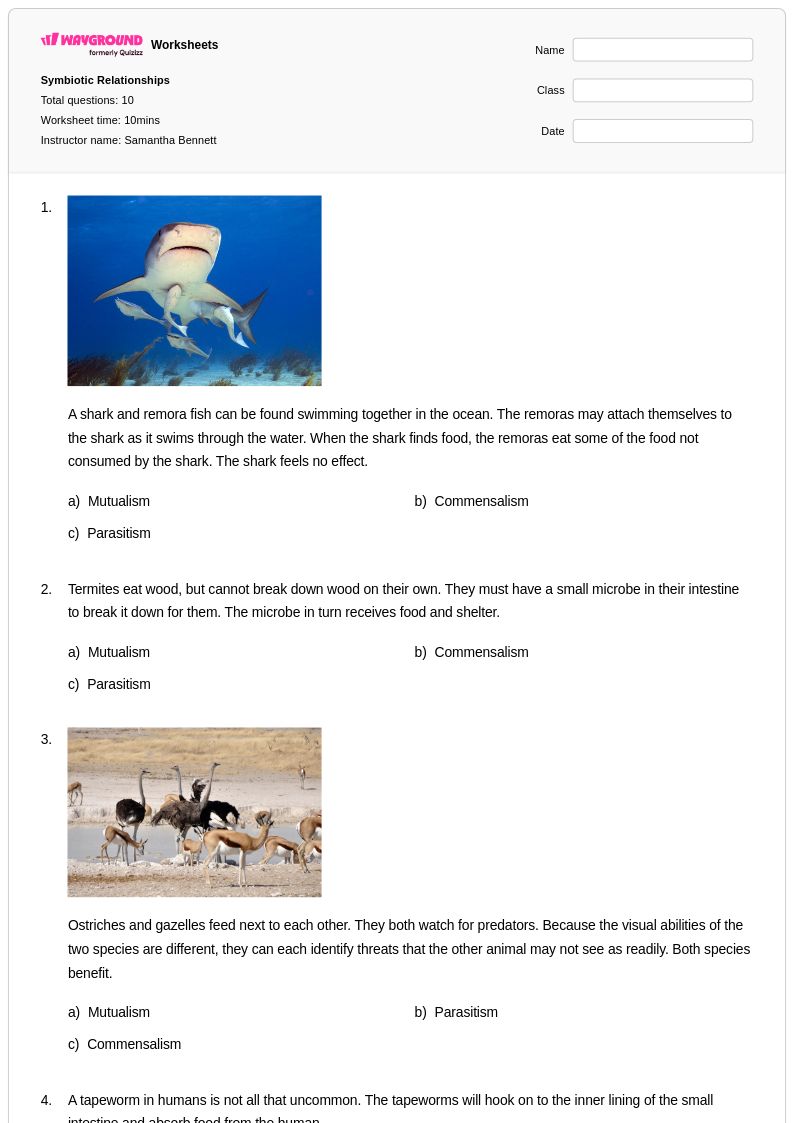
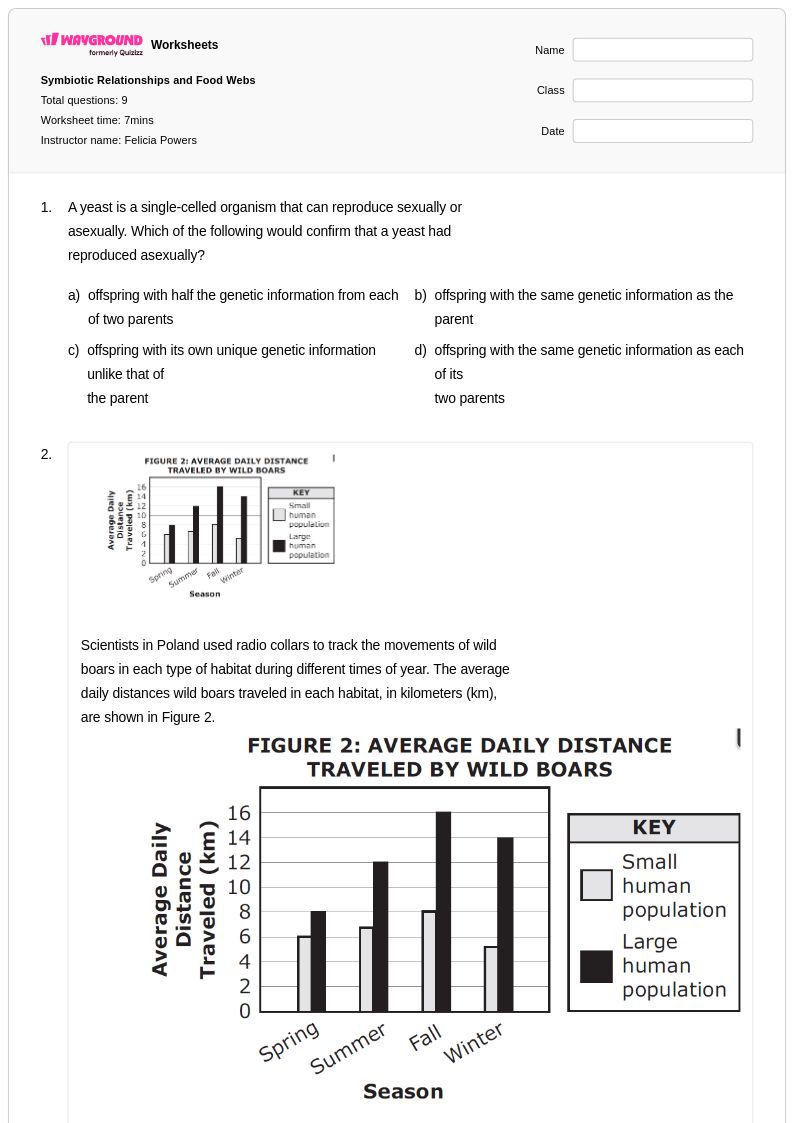
Class 8 Biology worksheets on symbiotic relationships help students explore mutualism, commensalism, and parasitism through engaging printables, practice problems, and comprehensive answer keys available as free PDF downloads.
Explore printable Symbiotic Relationship worksheets for Class 8
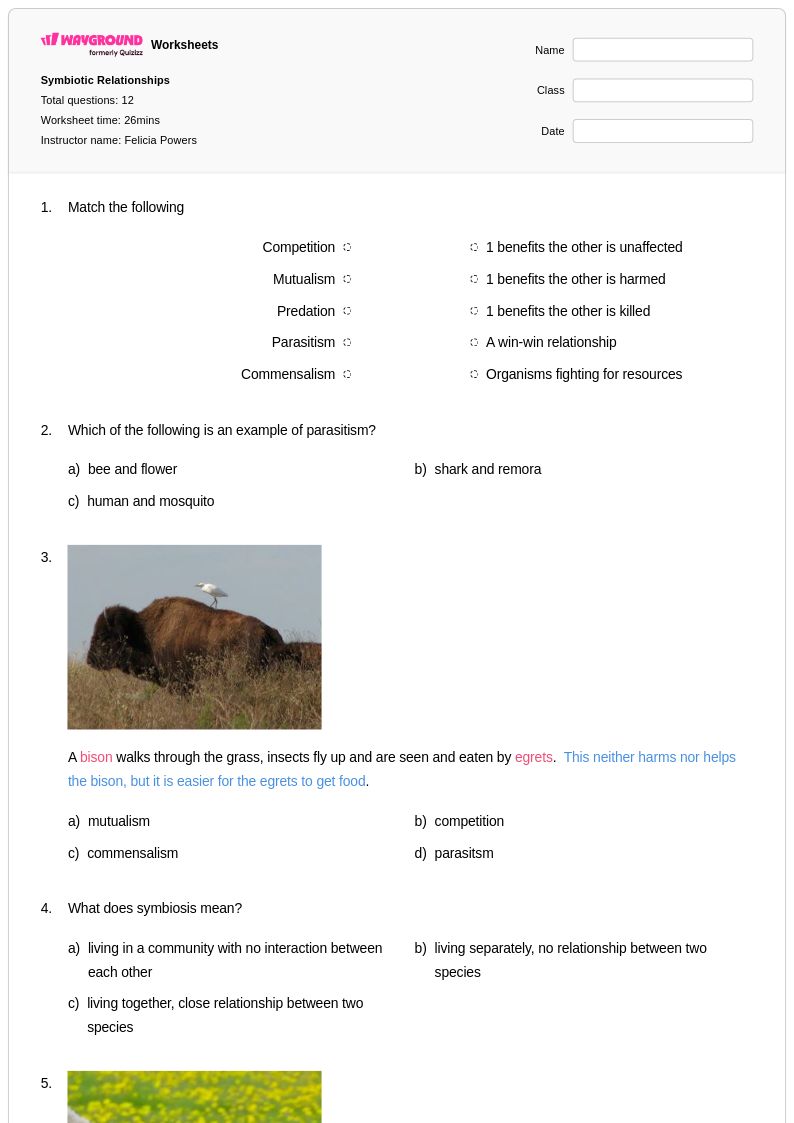
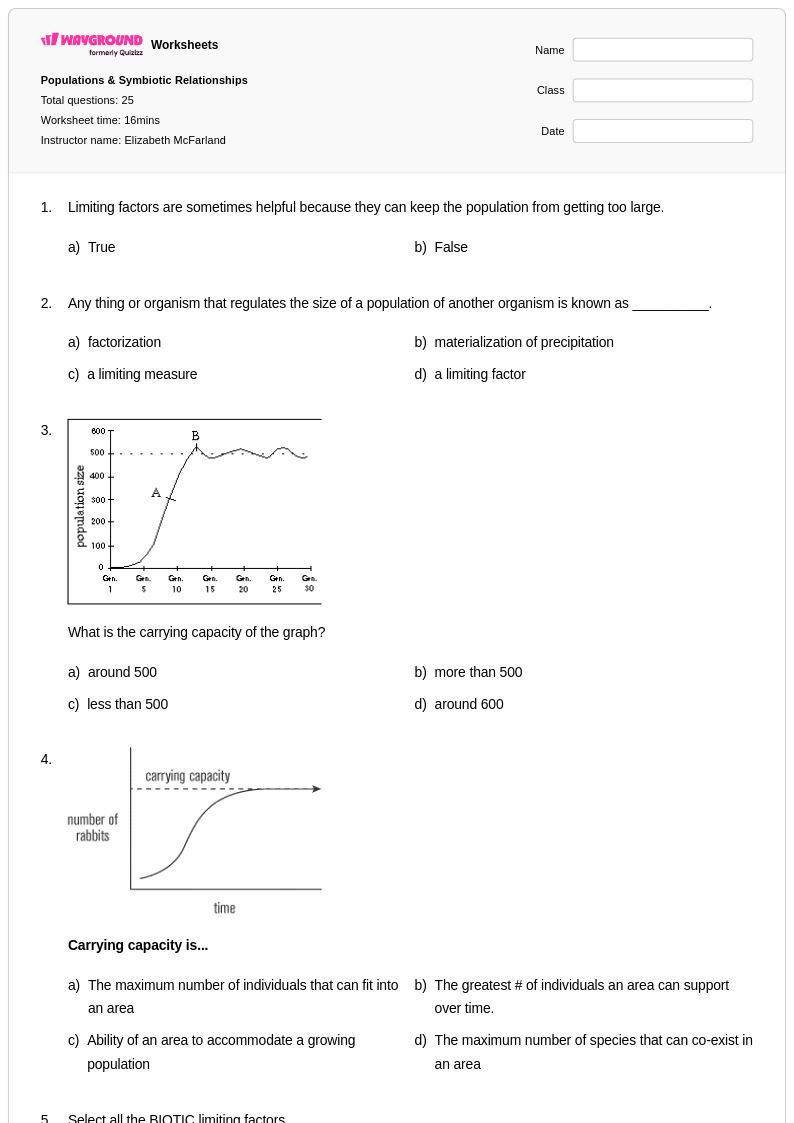
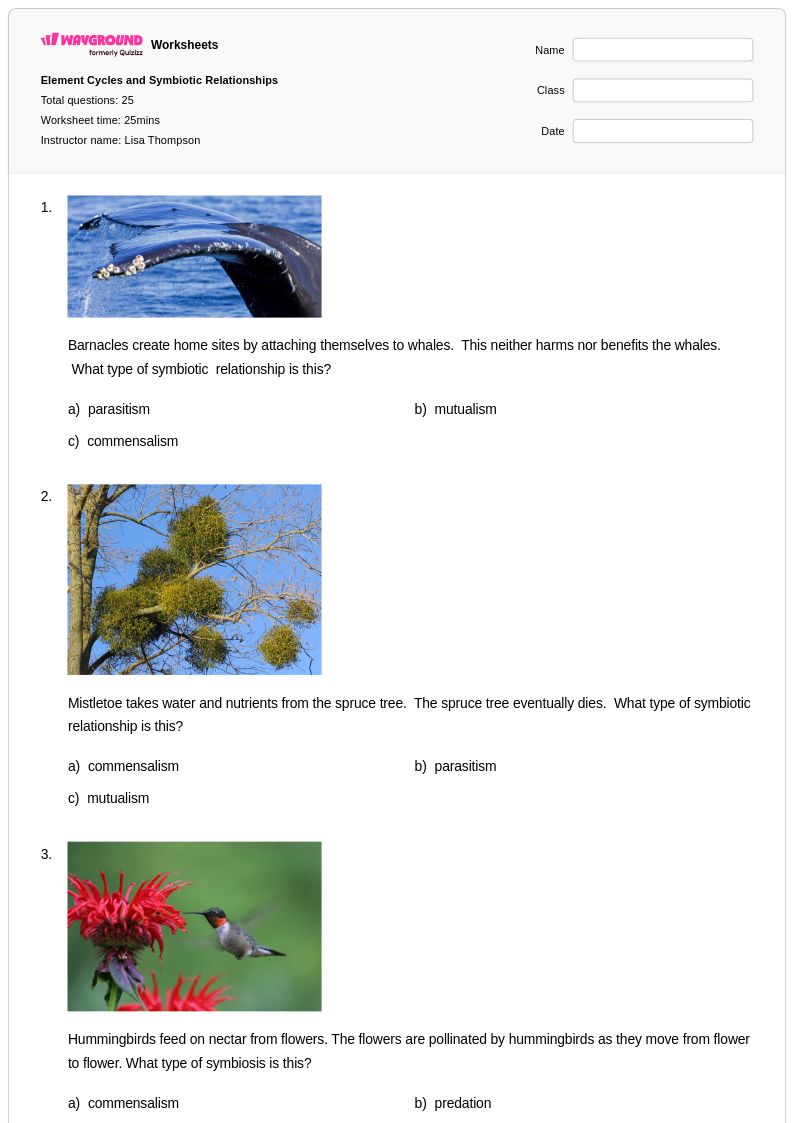
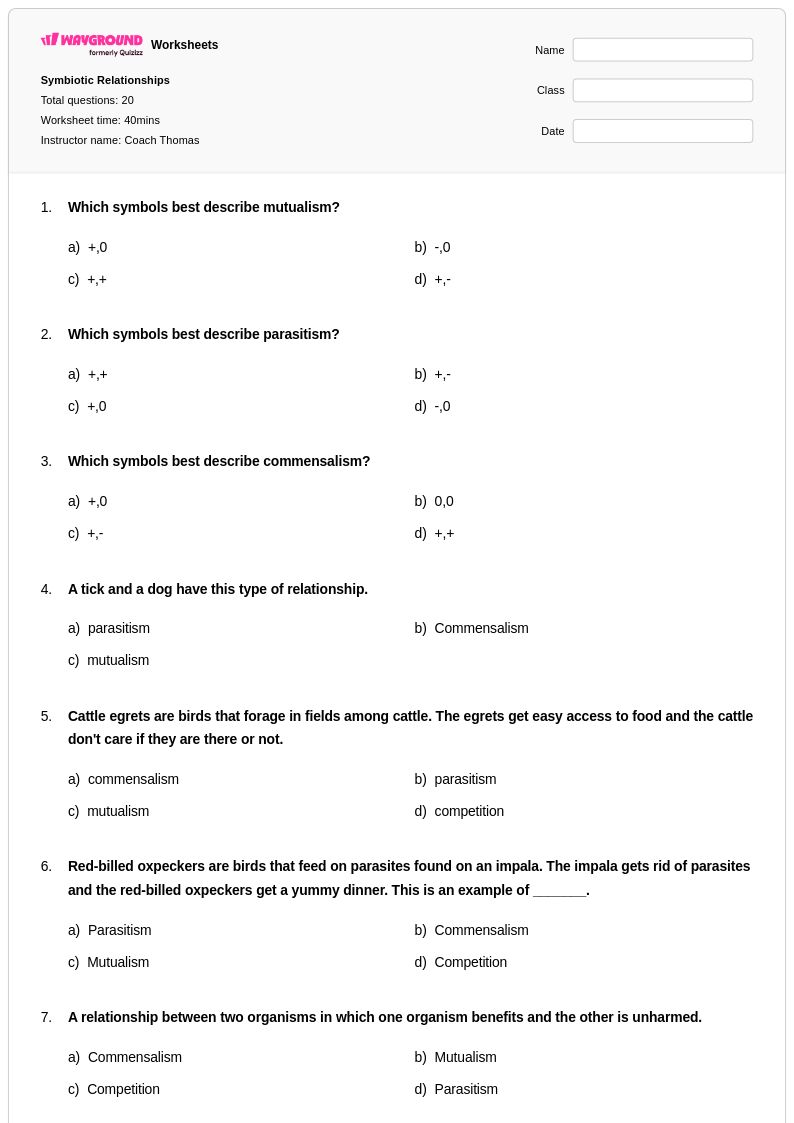
Symbiotic relationships represent one of the most fascinating concepts in Class 8 biology, demonstrating how different species interact and depend on each other for survival. Wayground's comprehensive collection of symbiotic relationship worksheets provides students with engaging practice problems that explore mutualism, commensalism, and parasitism through real-world examples like clownfish and sea anemones, lichens, and tapeworms. These expertly designed printables strengthen critical thinking skills by challenging students to identify relationship types, analyze benefits and costs to each organism, and predict ecological outcomes. Each worksheet comes with a detailed answer key, making them valuable resources for both independent study and classroom instruction, while the free pdf format ensures easy access for teachers seeking to reinforce this essential biological concept.
Wayground, formerly Quizizz, empowers educators with millions of teacher-created resources specifically designed to support Class 8 biology instruction on symbiotic relationships. The platform's robust search and filtering capabilities allow teachers to quickly locate worksheets aligned with specific standards and learning objectives, while built-in differentiation tools enable customization for diverse student needs and ability levels. These resources are available in both printable and digital formats, including downloadable pdfs that facilitate seamless integration into lesson planning and homework assignments. Whether used for initial concept introduction, skill reinforcement, remediation for struggling learners, or enrichment activities for advanced students, these symbiotic relationship worksheets provide the flexibility and depth teachers need to help students master this fundamental ecological principle.
FAQs
How do I teach symbiotic relationships in biology class?
Start by establishing the three categories — mutualism, commensalism, and parasitism — using concrete, familiar examples before moving to more complex ecological scenarios. Anchor each type with a vivid real-world pair: clownfish and sea anemones for mutualism, barnacles on whale skin for commensalism, and tapeworms in a host for parasitism. Once students can label and distinguish these types, push them toward analysis by asking them to identify who benefits, who is harmed, and who is unaffected in each relationship. Connecting symbiosis to broader ecosystem dynamics helps students see why these relationships matter beyond simple classification.
What exercises help students practice identifying types of symbiosis?
The most effective practice tasks ask students to read a description of a species interaction and classify it as mutualism, commensalism, or parasitism, then justify their answer by identifying the effect on each organism. Scenario-based problems drawn from diverse ecosystems — ocean, forest, grassland — prevent students from memorizing a single example and force genuine concept application. Adding a cost-benefit analysis component, where students chart what each organism gains or loses, reinforces the definitional distinctions between the three types and builds the evaluative thinking assessed on exams.
What mistakes do students commonly make when classifying symbiotic relationships?
The most persistent error is confusing commensalism with mutualism — students often assume that if one organism benefits, the other must benefit too, overlooking the neutral outcome that defines commensalism. Students also frequently misidentify predation as parasitism, since both involve one organism harming another; the key distinction is that parasites live on or in the host without immediately killing it, while predators consume prey outright. A third common misconception is treating all close species interactions as symbiotic, when symbiosis specifically refers to long-term, ongoing biological relationships rather than brief encounters.
How can I use symbiotic relationship worksheets to differentiate instruction?
For students who need additional support, reduce the complexity of scenarios to well-known examples and limit answer choices so students are selecting from fewer options rather than generating answers independently — Wayground supports reduced answer choices as a built-in accommodation that can be applied to individual students without disrupting the rest of the class. Advanced students benefit from open-ended analysis tasks that ask them to evaluate how disrupting a symbiotic relationship affects broader ecosystem stability. Wayground also offers extended time and read-aloud settings that can be configured per student, making it practical to run a single assignment across mixed-ability groups without creating separate materials.
How do I use symbiotic relationship worksheets in my classroom?
Symbiotic relationship worksheets on Wayground are available as printable PDFs for traditional classroom use and in digital formats for technology-integrated learning environments, including the option to host them as a live quiz directly on Wayground. Printable versions work well as guided notes during instruction or as independent review assignments, while digital formats support self-paced practice and provide immediate feedback. Each worksheet includes a complete answer key, which allows teachers to use them for formative checks, homework, or stations without additional prep.
At what grade level are symbiotic relationship worksheets most appropriate?
Symbiotic relationships are most commonly taught in middle school life science courses and high school biology, where students are expected to analyze ecological interactions and understand how organisms depend on one another within an ecosystem. Basic classification tasks — labeling mutualism, commensalism, and parasitism — are accessible for grades 6 through 8, while more analytical tasks involving ecosystem impact and cost-benefit analysis are better suited for grades 9 through 10. The concept also appears in AP Environmental Science and AP Biology in the context of population dynamics and community ecology.